
What Is Special In Hikkaduwa? Uncovering What Is Great, Okay, And Ugly In This Sri Lankan Resort Town 

During my trip to Sri Lanka, Hikkaduwa, the resort town, was surely one of the biggest highlights of the southwestern region. 

I took a train journey from Colombo to reach Hikkaduwa, the epicenter of dark tourism in Sri Lanka. 

It was the place where the 2004 Boxing Day Tsunami had hit the most!

However, while this keeps the mood somber and humbling while visiting Hikkaduwa, the town also offers some delightful experiences. 

It is a hotspot for scuba diving and turtle spotting like other southwestern beach destinations, such as Mirissa Beach, Bentota Beach, Unawatuna, and Ahangama and Weligama

Despite so many attractions, this resort town is now facing a serious dip in its tourism industry due to the US-Iran conflicts. 

A report published by The Island Online on 13th May 2026 suggested that there has been a drop of around 80% in tourist arrivals due to this ongoing global tension. 

While I wish for the end of the war and the global crisis (including the conditions in Hikkaduwa) soon, here I pen down my experience in Hikkaduwa. 

I loved a lot of things about it and also felt some things could have been better. So, here is an honest confession. 

The Things I Loved Doing In Hikkaduwa

Hikkaduwa is not an idyllic tropical escape. It is an action-packed beach destination for snorkeling, scuba diving, and swimming with the adorable turtles. 

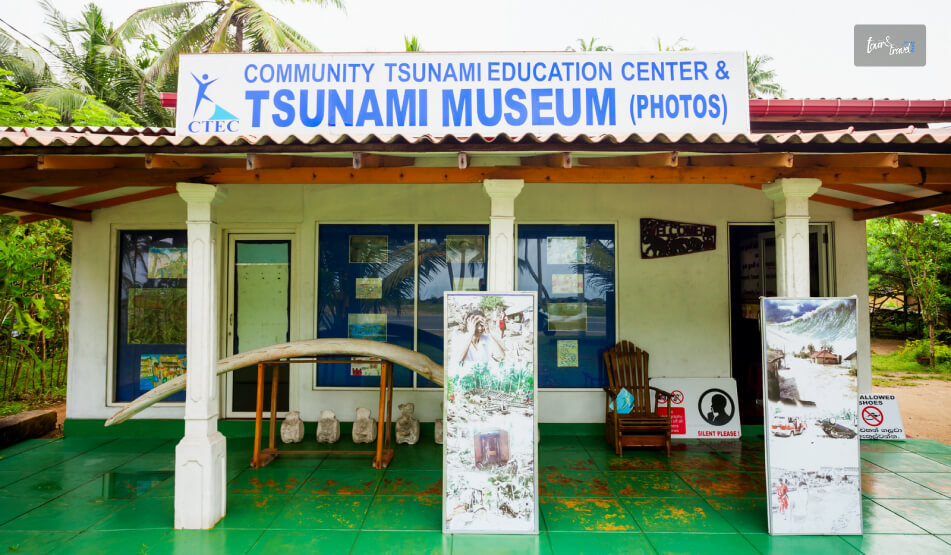
Hikkaduwa also has the Tsunami Museum, which is a must-visit to learn about the calamity that changed the course of the human race. 

Also, it shows the resilience of the human race in surviving such a rampage. 

Nevertheless, here are the best things to do in Hikkaduwa. 

1. The Train Journey From Colombo To Hikkaduwa 

The Train Journey From Colombo To Hikkaduwa

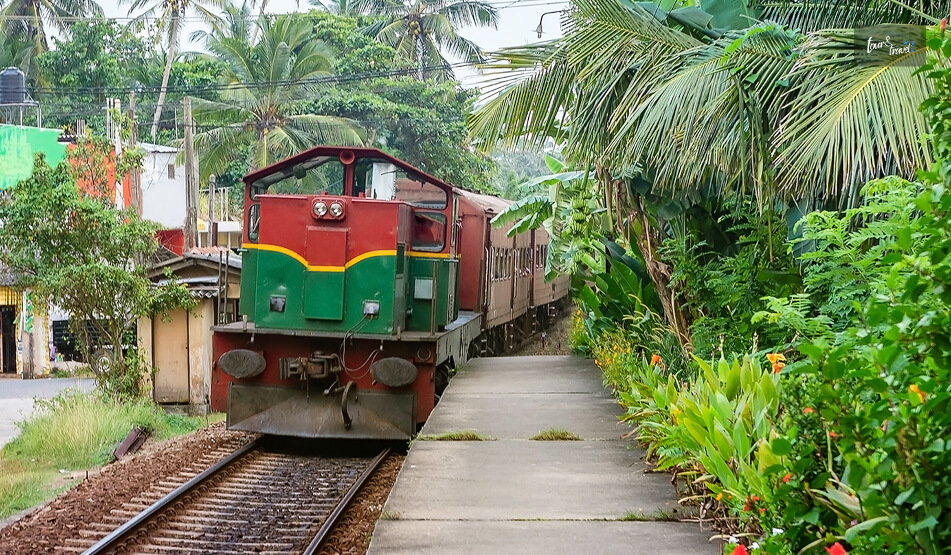
The journey in a third-class train from Colombo Fort to Hikkaduwa had set the mood right for the delightful experiences ahead. 

The distance of 95.14 km by train took around 2 hours to cover. The compartment was windy, and I also got a seat for myself. 

However, once the train started running, I stood close to the door, and the views of the Indian Ocean were iconic. 

The third-class ticket cost me LKR 200. However, if you are traveling in second-class and first-class compartments, the ticket price will be LKR 400 and LKR 800, respectively. 

2. Spotting The Sea Turtles In Hikkaduwa 

Spotting The Sea Turtles In Hikkaduwa

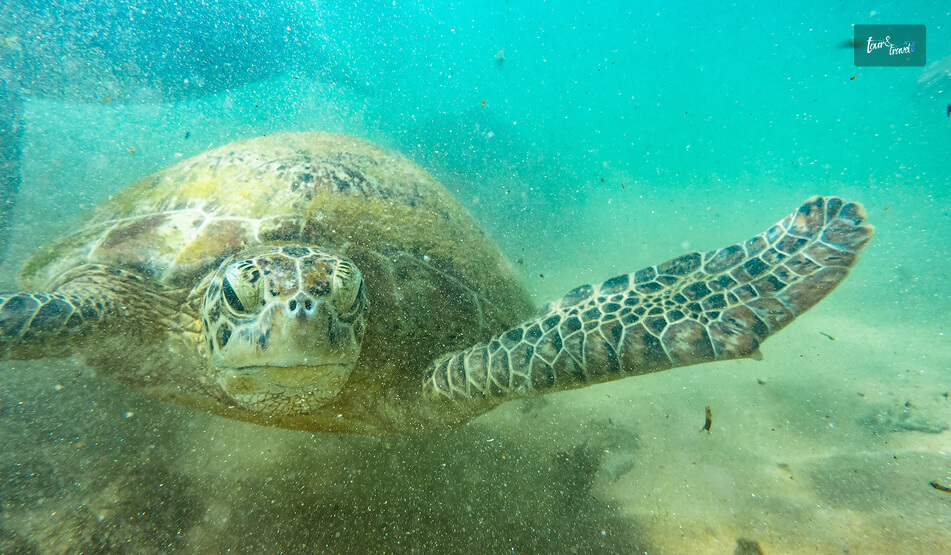
The adorable sea turtles were the reason behind my visiting Hikkaduwa. 

I visited the turtle hatchery first, where I found 3-day-old turtles swimming. Then, I went down the beach to find them on seagrass. 

The Sea Turtle Hatchery & Rescue Center in Hikkaduwa remains open from 9 AM to 6 PM. Furthermore, the ticket price was 2000 LKR for foreigners and LKR 500 for locals. 

April to July is the best time to spot these turtles as it is their nesting season. Also, if you want to spot them on the beach, be present in front of Hikka Tranz at dawn. 

3. Exploring The Coral Reefs At Hikkaduwa 

Exploring The Coral Reefs At Hikkaduwa

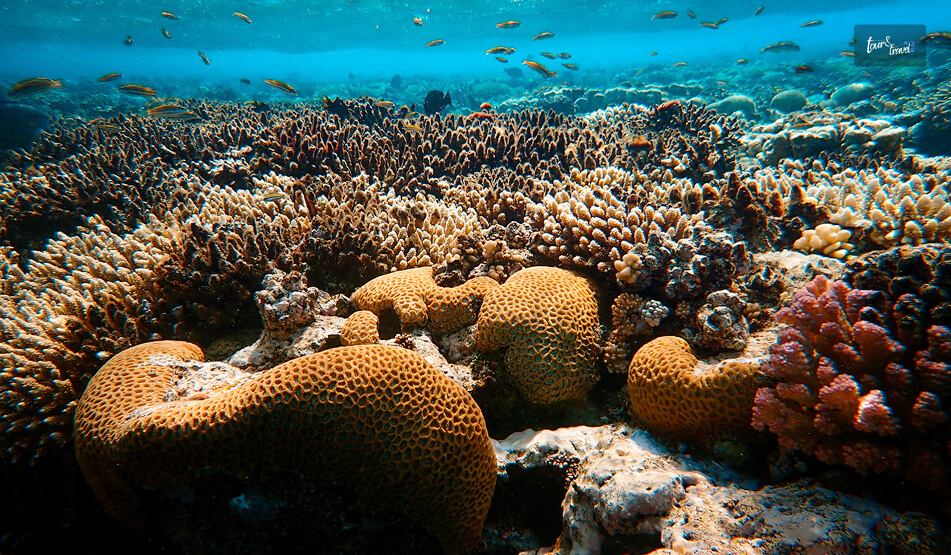
You will find the coral reef of Hikkaduwa just in front of the main hotel strip. So, you can spot them by just walking off the beach. 

You can also snorkel to explore the reef. Also, there are delightful provisions for taking a glass boat tour. 

These tours cost between LKR 3000 and LKR 6000 based on the duration of 30 minutes to 1 hour. 

Furthermore, the Hikkaduwa coral reef is a shallow fringing reef with an average depth of 1 to 5 meters, harboring over 60 species of hard coral and 170 species of reef fish.

Moreover, it has the designation of a marine national park, and it is home to green and hawksbill sea turtles and other adorable marine animals.

4. A Visit To The Ambalangoda Mask Workshop And Museum

A Visit To The Ambalangoda Mask Workshop And Museum

Hikkaduwa was again an eye-opener, showing the cultural richness of Sri Lanka. I have cherished the Tamil Culture in Jaffna, and of course, Kandy was like the textbook

Hikkaduwa, on the other hand, made me familiar with the popular demons in Sri Lankan folklore. Maha Sona was the most powerful among them, and Reeri Yakseya was the most cruel. 

Also, there are other demons associated with various disorders. It is said that these disorders can be cured only by exorcism. 

The exorcists wear different masks of demons and dance to the drum beats. They also make offerings to the demons. 

They believe that the demons will leave the one they have attacked if they are happy with the offerings. 

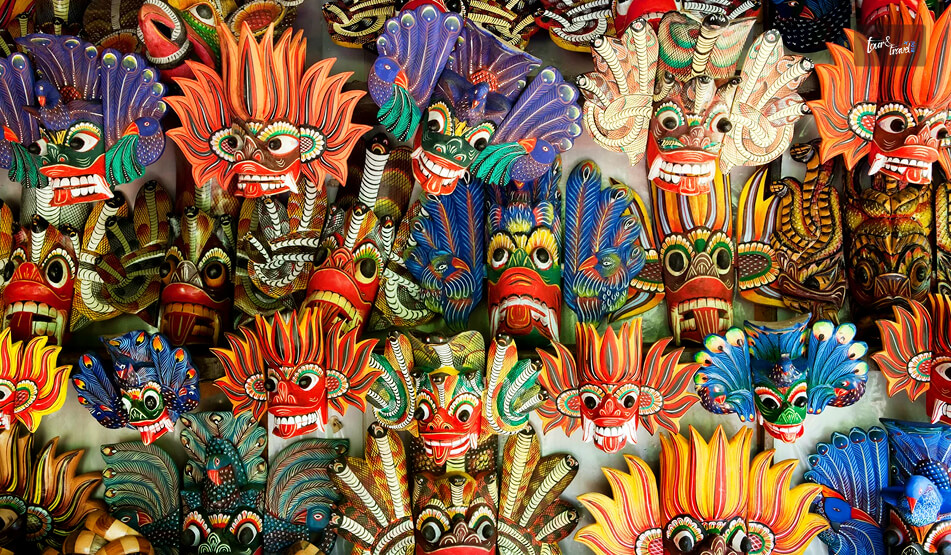
The Ambalangoda Mask Workshop and Museum has a brilliant display of these masks. It is the cradle of Sri Lankan mask making, and the Wijesuriya family has been in charge of the museum for five generations now. 

The museum also has a library and workshop, where seeing the art of mask making was quite an experience. 

Moreover, the museum remains open from 8:30 AM to 5:30 PM, and entry is free. 

5. Shopping In Hikkaduwa

The Hikkaduwa Market was delightful. For me, the best buy was a shell turtle statue. 

Furthermore, many shops had colorful masks, and each of them was unique. 

During shopping, I also had the chance of meeting the locals in Hikkaduwa. I especially cherished the conversations with an old gemstone shop owner. 

He shared how he has been witnessing the changing tourism scenario in this resort town. 

6. Scuba Diving

Scuba Diving

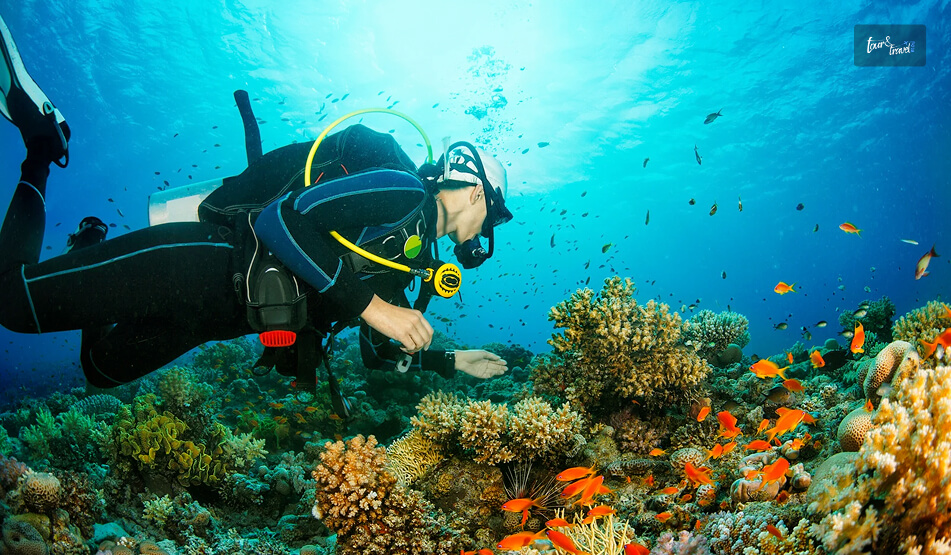
Scuba diving is one of the biggest attractions in Hikkaduwa for sure. It is a delightful experience to go deep into the water and spot the marine life. 

However, I loved diving to find out the mast and rigging of an old sailing ship. 

7. River Tours

I traveled around 50 minutes from Hikkaduwa for a boat tour on the Madu Ganga River. 

It is in a Ramsar wetland and estuary on the southwest coast of Sri Lanka, located in Balapitiya. 

The boat took us through a narrow tunnel with mangroves on both sides. During the journey, we could spot vampire bats, crocodiles, and giant lizards. 

Furthermore, the 2-hour boat tour cost me around LKR 6000 to 15000. 

While the mangrove tunnels were the first stop, we also visited the Cinnamon Island and enjoyed a fish therapy in an enclosed pool for LKR 900. 

Moreover, visiting the Kothduwa Purana Raja Maha Viharaya was a unique cultural experience. 

Do not forget to bring binoculars for these boat tours, as there is a lot to see from a distance. 

8. Visiting The Hikkaduwa Tsunami Museum

Visiting The Hikkaduwa Tsunami Museum

The Tsunami on 26th December 2004 was one of the biggest natural disasters in Hikkaduwa and other parts of the eastern and southern coasts of Sri Lanka. 

The death toll was 30,196, and the waves engulfed the “Queen of the Sea” holiday train with 1700 passengers inside. 

The site now has a giant Buddha Statue as a symbol of peace. 

Many locals visit this statue and the Tsunami Honganji Viharaya, a place of worship to remember their loved ones who have lost their lives in the tsunami. 

After visiting the Tsunami Honganji Viharaya, I headed toward the museum. 

The museum explains the geographical process of how the tsunami happened and how Hikkaduwa survived after that. 

Entry to the museum is free, and it remains open from 8 AM to 8 PM. 

Hikkaduwa Things That Were Okay (But Could Have Been Better)

The first thing that could be better about Hikkaduwa was the roads. It was fun walking on the beach. 

However, walking down the streets was a task, and sometimes it felt like passing through a maze. 

The buses ran even at night, and because of the road conditions, they made the strangest noise. Also, the tuk-tuks were a menace, making taking each step a task. 

Furthermore, despite Hikkaduwa being a popular base and stopover for anyone traveling from Colombo to Galle, in reality, planning trips around it is a task. 

You can still make it to the Yala National Park

However, if local tour operators try to convince you of long-haul trips to Dambulla Royal Cave Temple, Pidurangala Rock, Sigiriya Rock Fortress, or Polonnaruwa, don’t fall prey to them if you don’t have a long travel plan. 

What I Did Not Like About Hikkaduwa

Hikkaduwa is famous for its moonstone mines, turtle tourism, and Ayurvedic herb gardens. However, all of these disappointed me greatly. 

1. The Growing Turtle Tourism 

I came to Hikkaduwa for the turtles, joining crowds feeding this local industry. 

Enterprising “turtle whisperers” hustle for tips, while numerous hatcheries operate nearby. 

I envisioned secluded beaches and wild hatchlings safely reaching the sea. Instead, fishermen sell wild eggs to these hatcheries. 

While they successfully incubate eggs and care for injured mutants, the magic is gone. 

Hatchlings miss that epic first journey, and the world feels a little duller for it.

2. The Herb Garden Experience 

Being from the land of Ayurveda, I was keen to experience how the southern neighbor is adding its own twist to it. 

However, the experience was disappointing to put it politely, and the ones demonstrating the qualities and medicinal properties of local herbs, spices, and fruits were not well informed. 

Moreover, they were more interested in selling miracle potions to “Foreigners” rather than offering insights or knowledge sharing. 

3. The Moon Stone Mines 

Watching the men at work at the moon stone mines was a decent experience. 

However, I did not like how they dealt with the pricing part as I was checking out some jewelry at the workshop on the mine property. 

The charges were bizarre, and I knew it as I had already visited a gemstone shop in the market and bought some souvenirs. 

So, I knew the actual pricing, and I did not like the fact that, given a chance, they would extract more money from a first-timer or a novice. 

Will I Still Visit Hikkaduwa Again? Of Course! 

Despite some “Okayish” and “Not-So-Great” experiences, I would love to visit Hikkaduwa again. 

Why? For the mangrove boat rides, the time spent with the turtles, and discovering a different side of human history in the Tsunami Museum. 

If not anything else, I will return for the train journey that allows me to enjoy the views of the Indian Ocean to the fullest!

Share on Social Media

Sibashree is a travel, culture, and leisure writer who has been writing since the age of 12 and professionally since 2014. With more than a decade of travel writing experience and journeys across India and several parts of the world, she brings a deeply personal and thoughtful perspective to her work. A student of English Literature and Mass Communication, Sibashree has always viewed travel as more than movement — for her, it has been a way of understanding people, cultures, and herself. Her passion for spiritual exploration has also led her to many unusual and meaningful destinations over the years. Outside of writing, Sibashree enjoys watching European cinema, reading about global politics, and reflecting on the stories hidden within everyday places.

Leave a Reply

Your email address will not be published. Required fields are marked *

title-img Related

READ MORE Colombo to Kandy

What Is The Colombo To Kandy Distance? Know How To Travel By Car, Bus, Tuk-Tuk And Train 

BY  Sibashree Mar 24, 2026

Ancient Temples! Colonial Architecture! The Serene Kandy Lake! Beautiful Gardens! And, the Bustling Crowd! All these and more things to do in Kandy make it the cultural and historical capital of Sri Lanka.  And this time, it’s about the Colombo to Kandy distance.  It is now more important to know about the modes of travel because Cyclone Ditwah has devastated the Sri Lankan railway infrastructure, including the Colombo to Kandy route.  So, explore the options.  What Is The Colombo To Kandy Distance? The distance between Colombo and Kandy is around 121 km. The travel time by road through the Kandy Road is around 3 hours and 30 minutes.  However, the travel time will depend on the mode of transport you choose.  So, here is a quick summary. Modes of Transfer from Colombo to KandyTravel Time By Car3 Hours and 30 MinutesBy Train2.5 to 3.5 HoursBy BusAbout 4 Hours Furthermore, from Kandy, you can enjoy the most scenic train ride on the Colombo-Kandy-Ella-Badulla railway through the Nine-Arch Bridge.  Also, Kandy is well-connected to Habarana by train. And Habarana is the gateway to cultural attractions such as the Sigiriya Rock and Ritigala Forest Monastery.  You can even go on a wildlife safari from Kandy to the Kaudulla National Park. How To Travel From Colombo To Kandy?  You can travel from Colombo to Kandy by bus, private transfer, or train. Here are the details.  1. How To Travel From Colombo To Candy By Train? Unfortunately, the Colombo to Kandy train route is still under renovation. So, if you are traveling to Sri Lanka anytime soon, you will not be able to take the train service.  However, according to a report published on Adaderana.lk, a leading 24x7 news portal of Sri Lanka, the train service on this route will resume within 1 year.  In this report dated 11th January, 2026, Prasanna Gunasena, the Deputy Minister of Transport and Highways, has further confirmed that the authority is taking every possible measure to restore the services.  2. What Is The Colombo To Kandy Bus Service? The Colombo to Kandy bus service operates from the Colombo Bastian Mawatha Bus Terminal to the Kandy Good Shed Bus Station.  Bus services are available every 30 minutes, and the travel time by these buses is around 4 hours.  Furthermore, the ticket for the public bus services from Colombo to Kandy costs about 157 LKR, and the tickets for the AC buses can cost close to 3000 LKR.  Also, the public bus service from Colombo to Kandy (Route No: 1) starts from 3:30 AM and the last bus departs at 11 PM.  3. Private Transfers From Colombo To Kandy  Starting from my days in Jaffna to now, this Colombo to Kandy journey, I have always opted for budget-friendly modes of transport in Sri Lanka.  However, if budget is not a constraint for you, you can choose a private transfer from the Sri Lankan capital to the cultural epicenter.  The private rental for this route will cost you around 9000-13000 LKR, and you will also find many online options.  Moreover, if you want the safest option to travel between Colombo and Kandy by road, you can opt for the Uber service.  Yes, it is expensive as the services start from around 48000 LKR, and it is the price for the Uber Go Intercity rentals.  The Uber Sedan Intercity and the UberXL Intercity services cost even more.  What Is The Best Time For A Colombo To Kandy Trip?  Kandy’s central location in Sri Lanka’s highlands gives it a cooler and wetter climate compared to the surrounding lowland coasts.  Plan your trip to Kandy during the right time of the year to get the most out of your visit. The Best Time To Visit  The best time to visit Kandy is between the months of January and April due to the warm temperature and low humidity.  This time frame has the least amount of rain, which is essential for planning out sightseeing activities. The Monsoons The climate of this region is heavily influenced by the monsoon seasons.  The unpredictable weather can be a challenge during the months of May to July and October to December.  A visit in November has the advantage of having fewer tourists compared to other months; however, consistent rain can make visiting outdoor attractions difficult. Important Travel Advice Kandy is extremely busy during the Sinhalese New Year, which occurs twice a year in April.  Avoid traveling during this week as all public and road travel will be extremely congested due to the celebratory travel of the locals.  This will create a frustrating and overwhelming spike in logistical travel obstacles. What Are The Places To Visit On The Route From Colombo To Kandy?  The drive from Colombo to Kandy takes you on an enjoyable journey through beautiful scenery as you travel uphill from a busy, urban environment to the lush tea plantations and mountain peaks shrouded with mist.  If you plan to take this trip, there are many places where you will want to stop so that you can appreciate what is known as the "Gateway to the Hill Country." 1. The Pinnawala Elephant Orphanage The Pinnawala Elephant Orphanage is one of the best-known detention centers for orphaned elephants in the world and has been established for many years.  Now that you know the date, I recommend arriving at least 30 minutes before the start of your visit so that you can watch the elephants walk from the orphanage to the Maha Oya River to have their daily bath. 2. The Ambuluwawa Tower The Ambuluwawa Tower is a great location for Wright Brothers-style views of the area.  It is located within a short distance of Gampola. It is at a multi-religious complex, and this unique white spiral structure offers an exciting, narrow ascent with amazing 360-degree views of the entire central highlands. 3. The Kadugannawa Rock Tunnel  It is a tunnel chiseled from the rock on your way towards Kandy, and also has a legend that British soldiers cut this tunnel so that they could fulfill a prophecy.  The prophecy said that "Those who pierced the mountains will be the ones who take Kandy." 4. The Bible Rock Bible Rock is a flat-topped mountain that is shaped like an open book.  You can spot it at the Kadugannewa Pass. Dawson Tower stands atop the pass; this is a white column built to commemorate the British Engineer who created the road.

READ MORE Mt Fuji day trip from Tokyo

Is an Mt Fuji Day Trip From Tokyo Worth It? How To Plan It? 

BY  Sibashree Mar 26, 2026

Planning a day trip from Tokyo? Mount Fuji is the most obvious destination for such a trip.  But do you know how to travel for a Mt Fuji day trip from Tokyo and why it is so special?  Let’s find all the details in this blog.  Why Is A Mt Fuji Day Trip From Tokyo Special? Is It Overhyped? The volcanic mountain, Mount Fuji, is a UNESCO World Heritage Site. Furthermore, the Fuji Five Lakes area in Kawaguchiko offers amazing scenic views.  Though a rewarding day trip, these days it is often overhyped by Instagram and other social media platforms.  In most of the pictures, you will find a half-snowy Mount Fuji with its stunning landscape.  However, you have to remember that Mount Fuji is also called the “Shy Mountain.” True to its name, it is only visible around 70-80 days in a year.  That is why it is very important to plan the Mt Fuji day trip from Tokyo at the right time.  Do you think the summer months are the best for visiting Mount Fuji? You are making a mistake.  In fact, the summer months are the most humid and the rainiest in Japan.  So, clouds and mist make Mount Fuji rarely visible. Thus, winter months, which are also drier, are the best for a Mt Fuji day trip from Tokyo.  Climbing And Touring Mt Fuji: Which One Is Better?  If you are planning to climb Mount Fuji, you will need at least 2 days for the trip from Tokyo.  However, if you want to take a tour of the mountain from the surroundings, it can be completed comfortably in a day.  So, here is a comparison of climbing Mt Fuji vs. taking a tour of Mount Fuji.  1. Climbing Up Mount Fuji  A sunrise trek to Mount Fuji is very popular, and you will find multiple stations on the trek route.  Furthermore, climbing up the mountain is no easy task, and it takes 5 to 10 hours to complete this high-altitude trek.  Though the Yoshida Trail, among the four trails leading to the summit, is beginner-friendly, you still need training, proper gear, and preparation to complete the trek.  2. Taking A Tour Of Mount Fuji  This is the usual option for regular tourists. You will visit the Fuji Five Lakes and beautiful villages on the way.  Also, if the weather conditions are good, you will get a good view of Mount Fuji.  How To Travel For A Mt Fuji Day Trip From Tokyo?  Yes, you can take a car on rent for a Mt Fuji day trip from Tokyo. However, Japan is famous for its trains.  It also has a well-managed bus network.  So, for a local experience and budget-friendly travel, these are the best options you can opt for.  1. Mt Fuji Day Trip From Tokyo By Train Japan Railway (JR) has a limited express train service called the Fuji Excursion Train. The train runs between the Shinjuku Station and the Kawaguchiko stations and the Mount Fuji Station is between them. The Shinjuku Station is at a distance of about 5 km from Tokyo City.  The train ride takes about 1 hour and 54 minutes, and the ticket price is ¥600 for adults and 400 for children.  Check out the timings of trains from Shinjuku Station and Kawaguchiko, and when they reach the Mount Fuji Station.  I have enlisted the timings for the weekdays. Train timings differ on weekends and holidays (Source: Fujikyu Railway).  Table 1: Train From Shinjuku Railway Station To Mt Fuji  DepartureArrival 7:30 AM9:23 AM8:30 AM10:21 AM9:30 AM11:23 AM10:30 AM12:19 PM11:34 AM1:25 PM Table 2: Train From Kawaguchiko Railway Station To Mt Fuji DepartureArrival 2:08 PM2:16 PM2:58 PM3:06 PM3:39 PM3:47 PM4:48 PM4:56 PM5:41 PM5:49 PM You can directly book the train ticket from the online reservation service of the Japan East Railway. You can also buy a Japan Railway Pass for similar excursions.  Mt Fuji Day Trip From Tokyo By Bus You can also plan a Mt Fuji day trip from Tokyo by bus. Take the Mt. Fuji Highway Bus from the Shinjuku bus stop and get off at the Mount Fuji 5th Station.  Also, the travel time is about 2 hours and 25 minutes.  Furthermore, the ticket price is 3800 JPY for adults and 1900 JPY.  Moreover, you can book the ticket online from Highway-buses.jp.  How To Explore Mount Fuji? You can explore Mount Fuji in a car. However, it is super expensive and costs up to JPY 15000-20000 JPY a day.  Furthermore, if you are planning to drive in Japan, you will need a 1949 International Driving Permit (IDP) as an international tourist.  Overall, it is a lot of hassle.  So, you can choose the bus services available in Mount Fuji to travel in and around the area.  1. Fujikyu Or Omnibuses You can book the Fujikyu Omnibus sightseeing pass for 1 day or 2 days. The pass for 1 day costs 1500 JPY, and for two days, it costs 2000 JPY.  Moreover, these bus services operate in three lines: the Red Line, Blue Line, and Green Line.  So, check your itinerary first and the places you want to explore before boarding a bus.  2. Climbers Bus Are you planning to climb up Mount Fuji? Then, you can plan to take this bus service. However, many of these services are seasonal, and here are the details.  Moreover, these buses depart from the 5th Station and circle the mountain.  Climber Bus RouteLineSeasonal Availability Fuji Subaru Line 5th StationM-LineEverydaySubhasiri 5th Station Q-LineSummer SeasonGotemba New 5th StationZ-LineSummer SeasonFujinomiya 5th StationL-LineSummer Season 3. Bus-Boat Kaba This is a special bus service on water. You can board the bus-boat Kaba and cruise through Lake Yamanaka.  Furthermore, in usual seasons, the ticket price is 3800 JPY for adults, 1900 JPY for children, and 500 JPY for infants. Prices can further go up in the peak tourist season.  Moreover, on weekdays, the bus boat services will run from 11:30 AM, 1:10 PM, 14:00 PM, and 15:40 PM from 1st April, 2026.  On weekends, there are additional services (along with the usual times) at 9:50 AM, 12:20 PM, 2:50 PM, and 4:30 PM.  Moreover, from April to September, there is a bus service at 5:20 PM on weekends.  5. Local Route Bus  You will get buses departing from Mt Fuji and Kawaguchiko Stations to Fujinomiya, Shin-Fuji Station, Kofu, Isawa Onsen, Mishima, and Gotemba.  What Is The Best Time To Plan A Mt Fuji Day Trip From Tokyo? The winter months are ideal for visiting Mount Fuji. Dry weather conditions and a lack of humidity in the air make it ideal for visiting Mount Fuji. Furthermore, spring and autumn months are ideal for a Mt Fuji day trip from Tokyo. These months coincide with the cherry blossom season in Japan and the autumn foliage. Read Also: Tokyo To Hokkaido Distance: Know About Various Modes Of Transportation Are You Planning A Trip To Osaka? This Is Your Quintessential Guide Best Places To Travel Around The World And To See Flowers

READ MORE Oshino Hakkai

What Is Oshino Hakkai Famous For? How To Visit It And More 

BY  Sibashree Mar 31, 2026

Everyone knows that you cannot complete exploring Japan in a day. And I had no choice but to miss Oshino Hakkai on the first trip.  However, on the next trip, I made sure to plan a visit.  Of course, an image on Instagram was my major drive behind being so passionate about a trip to Oshino Hakkai.  I saw a series of houses with thatched roofs along the shore of a pond. The magnificent and snow-covered Mount Fuji stood behind, strong and unshakable, as the eternal truth.  Born and raised in the land of spirituality and the Himalayas, I had to visit Oshino Hakkai.  However, as I have explained in my narrative from Tokyo to Mount Fuji day trip, you have to time your trip really well and have to be extremely lucky to see the snow-capped Mount Fuji.  Also, if you are planning a trip in summer, you will only get to see Mount Fuji partially or fully covered by clouds.  Nevertheless, as Mount Fuji continues to act elusive, here is why Oshino Hakkai will win your heart.  Oshino Hakkai: Why Is Visiting The Eight Springs Of Oshino So Special?  As I stood at the center of where both Lake Kawaguchiko and Lake Yamanakako meet in the small village of Oshino, I was able to look at the eight sacred ponds of Oshino Hakkai.  These sparkling, clear water springs are all that is left from a long-lost sixth lake that existed hundreds of years ago. It's as if time stood still when you visit these sacred areas. When I looked into the water, I didn't see just water, and I saw history. The springs were used by pilgrims (Fuji-ko) during Japan's Edo period to cleanse their bodies and souls before climbing Mt. Fuji. What a magical process the water goes through!  From snow accumulation on the summit of Mt. Rainier, through melting and filtration through approximately 80 years' worth of porous lava before it actually emerges at this location, its absolute perfection.  Moreover, it was crystal clear and pure.  Also, as I walked through the "Natural Monuments," I had an intense feeling of appreciation for the many years of waiting, so that each would have such serenity. How To Reach Oshino Hakkai? The journey to the stunning waters of Oshino Hakkai is as much a part of the experience as the location itself.  Here’s my recommendation for how to get to Oshino Hakkai, depending on whether you want a more convenient (train) or an adventurous (rental car) way of doing so. 1. Reaching Oshino Hakkai From Tokyo When travelling from Tokyo, you have several options available.  Highway bus lines go to Oshino Hakkai directly.  If you plan to take the train, either Fujisan Station (the nearest station) or Kawaguchiko on the Fuji Kyuko Line is your best option.  Once at Fujisan or Kawaguchiko, catch a local bus to get to the village. You may take the Fujikko-go (tourist buses), Mt. Fuji World Heritage Loop, or Uchino or Hirano routes via local bus from Fujisan Station.  Generally, there are 1-2 buses/hour on these routes. At Kawaguchiko Station, there are 11 Fuji-Q buses each day that leave for Lake Yamanaka Oriental side, and the 11 Fuji-Q buses that leave for Gotemba and also the Oshino springs. Just watch out for the Oshino Hakkai or Oshino Hakkai-Iriguchi as their stops. 2. Driving And Village Logistics I rented a car, and it is the most convenient way to visit the nearby Five Lakes region.  Parking here is convenient, and there are many public and private parking spaces.  After parking the car, you can explore the nearby villages.  However, you will need 300 JPY to enter the Hannoki Bayashi Shiryokan Museum.  You can visit the museum from 9 AM to 5 PM every day for a deep understanding of the local history.  Moreover, you will find signage in Japanese and English for every pond. My Trip To Oshino Hakkai I felt a bit out of place when I got to Oshino Hakkai.  I thought it would be a nice, quiet area for reflection and meditation, free of other people.  However, I found a busy and fully built-out village of people, shops selling food, and many shoppers and visitors to the area, as well as people engaging with local merchants about the items that were being sold.  There were also a lot of people around Wakuike Pond, and they were excited to see how clear the water of the pond was and the fish that were swimming in the pond. 1. Finding Solitude And Peace Within The City Although I typically search for the peace of solitude, I did not mind being in a populated environment.  I became curious after wandering among the crowds to find out where my curiosity would take me.  I found a quiet, undeveloped area just minutes from the main road, where I could hear the water from the pond, see ducks on the water, and watch an old man with two little boys quietly fishing right next to me. 2. Folklore And Galactic History The folklore & Galactic history of the 8 springs were fascinating to explore. Especially, that water from Wakuike Pond traveled on the Space Shuttle Challenger in 1983 for a snow-making experiment in space! 3. My Personal Highlight  The highlight for me was the open-air museum at the Hanoki Bayashi Shiryokan. It was a true escape from contemporary living, immersing yourself in the cultural heritage of the area. 4. Hannoki Bayashi Shiryokan: The Main Attraction Of The Trip  To tell the truth, I went to Oshino Hakkai because of Hannoki Bayashi Shiryokan.  One of the most amazing sights I've seen in the Five Lakes region was the thatched-roof farmhouses against a colorful garden and the imposing backdrop of Mount Fuji. I became engrossed in the displays of antique household items and rustic farming implements inside the traditional farmhouse.  The tour was brief, but I stayed by the big pond long after I was done because of the subtle beauty of the architecture.  I couldn't resist making another lap because the landscaping was so welcoming. Read Also: What Are The Things To Do In Jimbocho Book Town? Visit The Best Book Stores And Cafes Cherry Blossom Kyoto Japan: 2026 Season And The Top Viewing Spots Osaka Food: Know What To Eat In The Streets Of Osaka