
What Is The Yala National Park Safari Price? Why Is It One Of The Top Things To Do In Sri Lanka?

I shared my experience of visiting the Kumana National Park recently. Now, it’s time to talk about the Yala National Park, with which the Kumana National Park shares a contiguous border. 

The park is home to lush lagoons, open plains, forests, and dunes. 

As a result, it attracts diverse wildlife and birds. Including elephants, Yala National Park has around 44 species of mammals and 215 species of birds. 

In addition, the Yala National Park safari allows you to spot leopards as it has one of the largest populations of leopards. In just Block 1, you will see around 25 leopards. 

However, this diversity has further posed a problem for the wildlife and ecology of the national park. Mongabay reports that Yala National Park had 380000 visitors in the first half of 2025. 

Backed by the social media boom, this increasing number of visitors has further triggered jeep jams and the problems of speeding jeeps in the national park. 

Conservationists plan to restrict these, and rightly so, to maintain the experience of the Yala National Park safari. 

Nevertheless, in this article, I will talk about the Yala National Park safari price, my experience, location, transportation options, and more. 

Let’s begin with a quick overview of the Yala National Park and the safari price details. 

An Overview Of The Yala National Park 

LocationSouth-Western Sri Lanka
Size– 979 Square Kilometers
– Total Five Blocks with Block 1 as the Main Tourist Spot 
Best for– Birdwatching
– Spotting Leopards
– Watching Sloth Bears, Elephants, and Crocodiles 
Hours Open– 6 AM to 6 PM
Safari Prices (Based on the Safari Blocks Covered)– LKR 16900 to LKR 29,700/
Main Entrance – Palatupana Gate, Close to Tissamaharama

Furthermore, if you are looking for the perfect accommodation, you can check my guide on where to stay in Yala National Park.

Yala National Park Safari Price: A Detailed Breakdown 

Yala National Park Various ZonesDurationSafari Price in 2026 (LKR)
Block 1 (Palatupana)Half Day16,900/=
Block 1 (Palatupana)Full Day28,100/=
Block 1 (Katagamuwa)Half Day16,900/=
Block 1 (Katagamuwa)Full Day28,100/=
Blocks 4 and 5 (Galge)Half Day19,800/=
Blocks 4 and 5 (Galge)Full Day29,700/=

(Source: Yala National Park Official Website). 

Where Is Yala National Park? How Can You Reach There?

Between the mighty Indian Ocean and a dense jungle, the Yala National Park is an expansive wildlife zone in the southeastern region of Sri Lanka. 

Furthermore, it is well-connected to all parts of Sri Lanka. From the southern surf towns such as Ahangama, Weligama, Mirissa, and Hiriketiya to the dramatic Ella and Nuwara Eliya in the highlands, it is easily accessible. 

So, here are the details of how to reach the Yala National Park from various parts of Sri Lanka. 

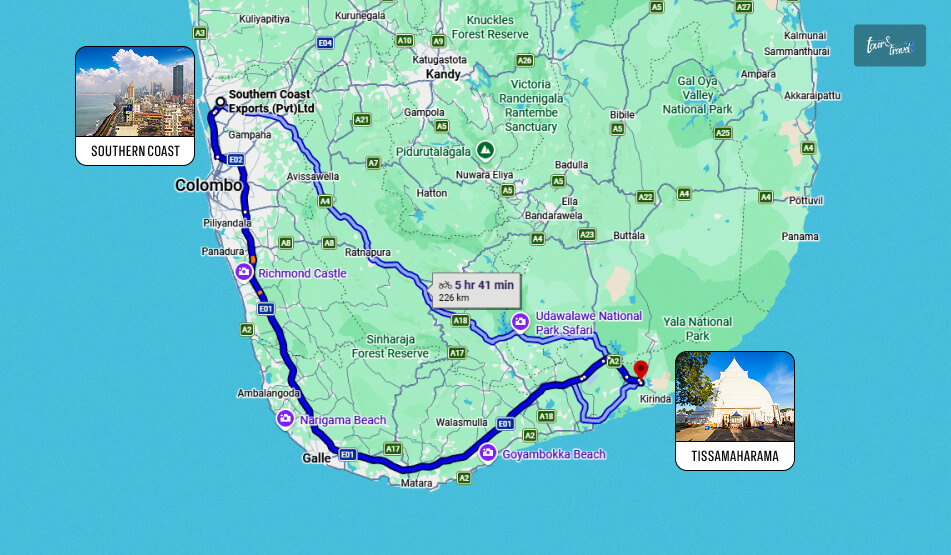
1. From The Southern Coast To Tissamaharama

From The Southern Coast To Tissamaharama

The surfing towns on the southern coast are well connected to the Yala National Park. 

The best way to travel is to take a train from Mirissa to Colombo Fort Station and then walk to the Colombo Bastian Mawatha Bus Terminal to catch a bus to Kataragama. 

From Kataragama, you can hire a 4×4 jeep to reach the Yala National Park. 

Check the table below to know how you can reach the Yala National Park from Mirissa.

Stage 1: Train from Mirissa to Colombo Fort Station – Time: Around 3 Hours
Ticket Price: LKR 250 Onward
Stage 2: Taking a Bus from Colombo Bastian Mawatha Bus Terminal to Kataragama– Time: 5 Hours Onward
Ticket Price: LKR 750
Stage 3: 4×4 Jeep Ride from Kataragama to the Yala National Park Travel Time
– 30 Minutes to Katagamuwa Entrance
– Around 1 Hour to the Main Entrance or the Palatupana Entrance
– Around 45 Minutes to Galge Entrance
Price (Per Vehicle)
– LKR 9000 to 18000 

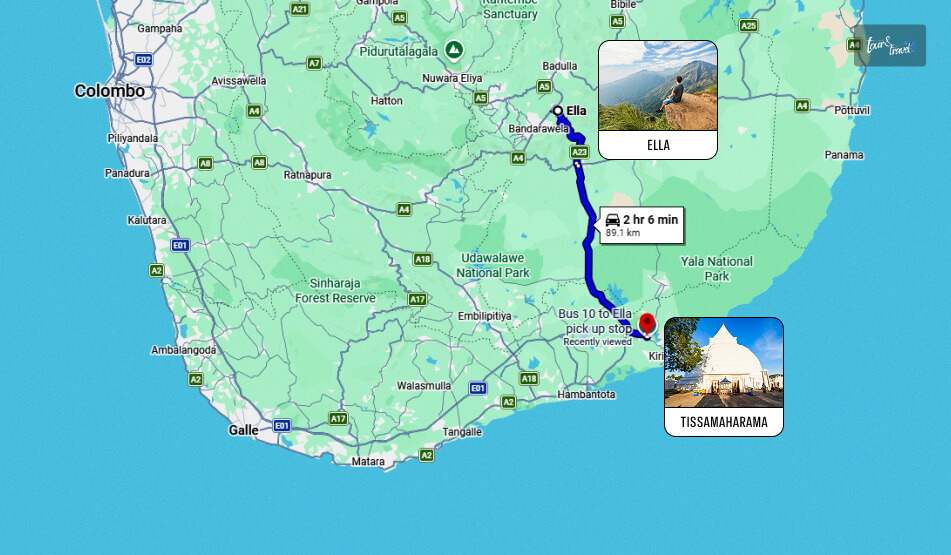
3. From Ella To Tissamaharama

From Ella To Tissamaharama

From Ella, you can either take a bus or a private transport to reach Tissamaharama. 

Bus Ride

The bus passes through Wellawaya and takes 4.5 hours to complete the journey. Furthermore, the ticket price will be around LKR 200. 

Also, a local told me of a bus route from Bandarawela to Kataragama, having Tissamaharama and Ella as stopovers. However, I could not fact-check the availability of such services. 

Private Transfer 

For a premium and flexible travel experience, you can book a private transfer to cover the distance in a shorter time. 

The journey is for 2.5 hours. However, the cost will be around LKR 10000. 

Also, if you are planning to take a private transfer, choose Uber for a safe journey at a reasonable price. 

By Train 

There is no direct railway connectivity to Yala. However, if you are traveling from the southern coast, you can get off at Matara

From Matara, you can take a tuk-tuk, bus, or taxi to reach the Yala National Park. 

What Is The History Of The Yala National Park? 

What Is The History Of The Yala National Park

The history of Yala National Park as a protected wilderness is at least a century old. As an ecotourism zone, it is a bucket-list destination for anyone on a trip to Sri Lanka

However, earlier, it was a hunting ground for the British colonial elites. However, at the beginning of the 20th century, the colonial administration took effective steps for the preservation of the park. 

The Designation As A Wildlife Sanctuary

The British government designated the area as a wildlife sanctuary in 1900. It was an attempt to restrict and regulate game hunting.

The Designation As A National Park 

Under the Fauna and Flora Protection Ordinance, Yala became a national park in 1938. 

Thus, the core activity here became absolute wildlife protection from managed hunting. 

Mid-Century Turmoil And Restoration 

The park faced several challenges during the mid-to-late 20th century. Furthermore, during the 1970s and 1980s, Yala suffered from ivory hunting, illegal poaching, and agricultural encroachment along its borders. 

DWC, or the Department of Wildlife Conservation, along with dedicated non-governmental organizations, launched sustained anti-poaching patrols and habitat restoration initiatives. 

These endeavors established the delicate ecological equilibrium of the national park. Also, the population of the elephants and leopards made a recovery during this time span. 

The 2004 Tsunami And Ecological Resilience 

The coastal fringe of Yala was massively impacted due to the Indian Ocean tsunami on 26th December 2004. 

However, fortunately, deer, leopards, and elephants had fled to higher ground hours before the tsunami hit. 

Furthermore, the land has made a tremendous recovery over the last two decades. There has been a proper regeneration of the coastal scrub, showcasing the profound resilience of this coastal wilderness. 

The Five Blocks Of The Yala National Park 

The expansive area of the Yala National Park has five different geographical blocks for better management of the expansive area. 

Have a look at the table below to understand the uniqueness of each block. 

Blocks in the Yala National Park Uniqueness
Block I (Palatupana)– The Crown Jewel of Yala
– The Most-Visited, Wildlife-Dense, and Most Accessible Block of the National Park. 
– It features an Excellent Mix of open grasslands, monsoon forests, and Brackish Lagoons. 
Block II (Katagamuwa)– A Quiter, Transitional Zone
– It Offers Exceptional Opportunities for Elephant Viewings and Excellent Birdwatching. 
Blocks III, IV, and V– The Deeper and Wilder Interior of Yala
– These Northern Blocks Have Thick Vegetation, Minimal Tourist Infrastructure, and a Rugged Geology
– Authentic Wilderness Experience Devoid of Jeep Convoys. 

The Wildlife Experience I Had On The Yala National Park Safari 

The Yala ecosystem is not just about the elephants and leopards. Furthermore, the ecosystem of Yala relies on a rich web of biodiversity, including hundreds of species. 

1. The Sri Lankan Leopard 

The Yala National Park does not have tigers or lions. Thus, Sri Lankan leopards rule as the undisputed predators of the zone. 

Furthermore, Yala National Park is home to one of the biggest populations of Sri Lankan leopards. As a result, leopards are more visible here compared to different parts of India and Africa. 

2. The Asian Elephants 

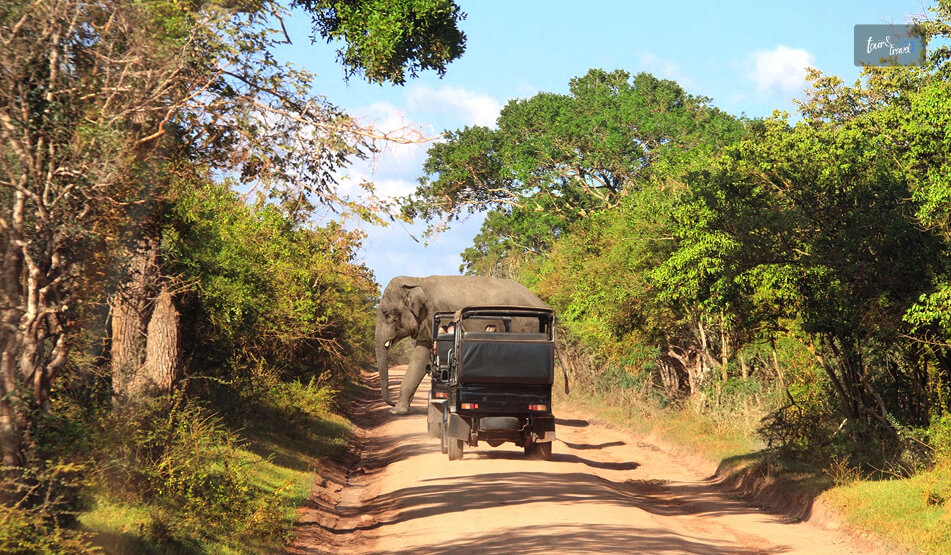
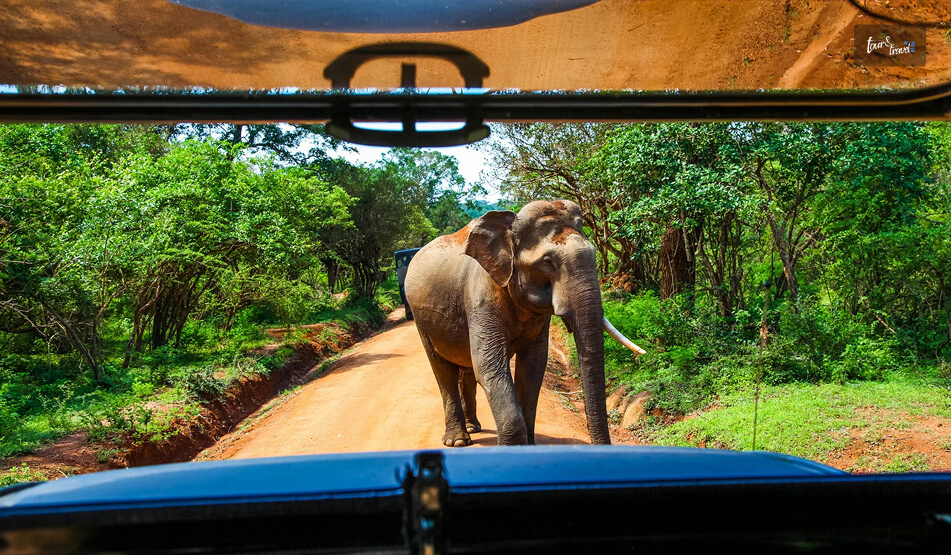
Solitary bull elephants and large herds roam freely in the Yala National Park. These majestic creatures rely on inland lagoons and seasonal watering holes for bathing and feeding. 

3. The Sri Lankan Sloth Bear 

These animals are territorial and highly elusive. Furthermore, these shaggy, insect-eating animals are most frequently spotted during the fruiting season of the Palu tree.

4. Other Wildlife 

The dry zone of the Yala National Park teems with wildlife. Along with these massive mammals, I could even spot a spotted 

  • Deer (Chital)
  • Sambar Deer
  • Wild Boar
  • Tufted Gray Langurs
  • Toque Macaques
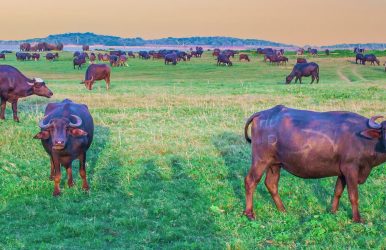
  • Water Buffalo
  • Water Monitor Lizards
  • Mugger Crocodiles

These animals were mostly visible near the water. 

5. A Paradise For Birdwatchers 

Yala National Park is a premier global destination for birdwatching. There are more than 215 bird species in the national park. 

Furthermore, November to January is the ideal time for spotting the migratory waterfowl that fly to Sri Lanka to escape the strong winter of the Northern hemisphere. 

Bird Categories in Yala National ParkKey Species to Spot in Yala National Park 
Endemic Species – Sri Lanka Junglefowl
– Sri Lanka Grey Hornbill
Waterfowl and Waders– Painted Storks
– Lesser Whistling Ducks
– Black-Necked Storks
Predators and Raptors– Crested Serpent Eagles
– White-Bellied Sea Eagles
Vibrant Showstoppers– Green Bee-Eaters
– Indian Peacocks
– Malabar Pied Hornbills

The Fascinating Yala National Park Safari Experience 

The Yala National Park safari offers a sensory and intense experience. Furthermore, the safari experience begins before sunrise. 

1. The Dawn Patrol 

The safari began at 4 AM from Tissamaharama. It was still pitch black, and we took a sip of the local coffee. 

Then, the cold morning breeze touched us, and we advanced with the jeep headlights piercing through the predawn mist. 

Furthermore, by 5:15 AM, we reached the main Palatupana Gate. The drivers waited for the park rangers to issue permits. 

Then, the gates opened at 6 AM, and the vehicles started roaring through the dirt tracks of Block I. 

2. The Landscape And The Sighting 

When the first rays of the Sun touch the Yala National Park, the landscape looks very African. 

It has scattered grasslands, spindly thorn scrub, and flat plains. Furthermore, the air was thick with humidity. 

Then, the driver spotted a leopard suddenly, and the driver made a coordinated dash across the park. 

The leopard was standing tall across a massive granite boulder in the soft morning light. 

3. Midday Solace At Patanangala

As the day progressed, the wild creatures made a retreat deep into the thick shade with surging heat. 

So, our jeep, along with many others, united at the Patanangala Beach picnic area. 

In this part of the park, its rugged self became visible. The crashing waves of the Indian Ocean met the vast rocky outcrops. 

Also, it was the place to stretch our legs and relax. 

4. Exploring The Sacred Ruins In The Scrub 

Along with rich wildlife, Yala National Park also stands out due to its deep historical and cultural footprint. 

Especially in Block I of the national park, you will find some well-preserved ruins that depict the picture of an ancient civilization. 

Sithulpahuwa Rock Temple

This rock temple is around 2200 years old and is a prominent architectural feature of the Kingdom of Ruhuna. 

Once, thousands of Buddhist monks used to live in this temple. Today, you can see its white stupas rise dramatically above the forest canopy from a massive granite peak.

Furthermore, monks still live in this rock temple, and you can see leopards and tigers roaming in the courtyard. 

Magul Maha Vihara

Magul Maha Vihara is on the southern fringes of the Yala National Park. It is believed to be the ancient site where King Kavantissa married Princess Viharamahadevi. 

You can admire the intricate moonstones and stone pillars of the Vihara. 

What Is The Best Time For The Yala National Park Safari? 

What Is The Best Time For The Yala National Park Safari

February to July, or the dry season in the southern coast of Sri Lanka, is the ideal time to plan a Yala National Park safari. 

In these months, the grass in the park thins out, and the secondary waterholes dry up completely. So, the animals have to gather around the water in search of water. 

Furthermore, November to April is the best time for birdwatching in the Yala National Park. 

Also, remember that the Department of Wildlife Conservation typically closes Yala National Park for the entire month of September (sometimes extending into early October).

Yala National Park Safari And The Overtourism Issues 

The rising popularity of the Yala National Park, especially on social media, now impacts the intimate wilderness experience. 

It feels like a rushed safari tour, and by sunrise, hundreds of high-clearance safari jeeps queue at the Palatupana Gate. 

Moreover, drivers are under immense pressure from their clients to find the “Big Three.”

So, whenever there is a radio transmission about a leopard getting spotted, the jeeps get into a frantic race. 

Furthermore, the rush of these jeeps is disrupting the ecology and the natural wildlife behaviors of the national park. 

In an interview with Mongabay, warden Ravindra Kumara, while narrating the controversial case of the male leopard Lucas’ encounter with a jeep, mentioned,

Usually, when a safari jeep is close to an animal, jeep drivers have been advised to switch off the engine. 

But this driver had turned on the engine, and it had scared away the animal. However, Lucas was spotted the following night near Yala junction, the animal’s usual territory, and is in good health.”

However, the driver training programs conducted by the Department of Wildlife Conservation and the Wildlife and Nature Protection Society are proactive measures to avoid such unwanted disturbances. 

In addition, the opening of remote blocks in the park can reduce the concentrated traffic in Block I. 

So, Is The Yala National Park Safari Worth It? 

Yes, the Yala National Park safari is absolutely worth the hype. I could see leopards softly walking through the scrub, elephant herds roaming, and peacocks dancing on open plains. 

Furthermore, the shift in the landscape is dramatic. 

However, the safari of this expansive area is quite demanding, and that is why you need to keep several things in mind.

What Are The Things To Keep In Mind For A Yala National Park Safari? 

The rest stops and toilets are limited, and you will find the facilities near the main gate and the Patanangala Beach. 

Furthermore, you must carry cash, preferably LKR, to pay for the permits and other expenses at the park.

Share on Social Media

Sibashree is a travel, culture, and leisure writer who has been writing since the age of 12 and professionally since 2014. With more than a decade of travel writing experience and journeys across India and several parts of the world, she brings a deeply personal and thoughtful perspective to her work. A student of English Literature and Mass Communication, Sibashree has always viewed travel as more than movement — for her, it has been a way of understanding people, cultures, and herself. Her passion for spiritual exploration has also led her to many unusual and meaningful destinations over the years. Outside of writing, Sibashree enjoys watching European cinema, reading about global politics, and reflecting on the stories hidden within everyday places.

Leave a Reply

Your email address will not be published. Required fields are marked *

title-img Related

READ MORE Osaka food

Osaka Food: Know What To Eat In The Streets Of Osaka 

BY  Sibashree Mar 27, 2026

Osaka food is slowly and steadily surpassing Tokyo as the poster for Japanese cuisine.  Furthermore, it has been just a few days since La Cime in Osaka became the best restaurant in Japan in the Asia's 50 Best Restaurants list in 2026.   However, the soul of the Osaka food lies in the streets. The Dotonbori neighborhood was especially the best when I visited.  In fact, I was so much in love with the street food here that I chose to cancel the previous booking and chose a hotel in Dotonbori instead.  Also, the Dotonbori Market was the epicenter of my food exploration in Osaka.  Moreover, how can you ever forget what Anthony Bourdain had to say about food in Osaka? He said,  “I’m a big believer in winging it. I’m a big believer that you’re never going to find the perfect city travel experience or the perfect meal without a constant willingness to experience a bad one.  Letting the happy accident happen is what a lot of vacation itineraries miss, I think, and I’m always trying to push people to allow those things to happen rather than stick to some rigid itinerary.” So, let’s explore Osaka food at its best in Dotonbori. What Are The Best Osaka Food You Can Try On The Streets?  Osaka, despite its funky and vibrant appearance, has a history that goes back to the Edo Period in the 17th century.  Furthermore, it was a major trading hub during that period. Also, it was the same time when Osaka earned the nickname “Japan’s Kitchen.”  Moreover, Dotonbori extends across a canal that reaches out to the sea. So, you will always find fresh seafood in the local delicacies.  Ramen Udon Torikara Takoyaki These are some of the delicacies served by the local vendors in Osaka.  However, just mentioning these names does not justify the tangible experience of Osaka food.  I saw a big red octopus getting dressed and served, and the lobsters were irresistible.  Nonetheless, these are the best street foods you can try in Osaka.  1. Mitarashi-Dango Pocket-Pinch: 150 JPY  Mitarashi-Dango is the most comforting street food you will try in Osaka. Furthermore, these are great for budget-friendly travelers and backpackers like me.  These rice balls are sweet and chewy, and have a hint of burnt taste due to the unique browning process that takes place once the rice balls are boiled and cooled.  Furthermore, the glaze of the sweet soy sauce makes it perfect!  2. Okonomiyaki Pocket-Pinch: 400-450 JPY  Do you like frittata? Then, you will love these Japanese savory pancakes even more.  Okonomiyaki has all the flavors. However, you never feel heavy after having them. Furthermore, these pancakes are simple, as cabbage, flour, and eggs are the main ingredients.  However, the local street vendors add seafood and scallions to the dish for more flavor and color.  Also, they serve it with barbecue sauce.  3. Daifuku Mochi Pocket Pinch: 350-400 JPY Mochi, the round rice cake, is a staple Japanese delicacy.  It has the chewiness of Mitarashi-Dango. However, it has filling as the daifuku part of the name suggests.  I loved the ones with strawberry filling, and you can also try them with other fruits.  4. Torikara Pocket-Pinch: 300-400 JPY If the USA has its deep-fried chicken, Japan also has Torikara.  I loved them, and the fried potatoes and the variety of sauces will be the most amazing additions.  5. Takoyaki Pocket Pinch: 700-800 JPY  Takoyaki is probably the most famous street food of Osaka and Japan.  Japanese people love these octopus balls, and that’s why the Takoyaki stalls in Dotonbori are countless.  Furthermore, the scallions and flakes of dried fish sprinkled on top make the dish really amazing.  Moreover, the batter is gooey, and it will melt in your mouth.  6. Taiyaki Pocket Pinch: 300 JPY This is a fish-shaped pastry and my silent favorite among everything I tried in Osaka.  The smell is irresistible, and the main attraction is to see it getting ready in front of your eyes.  You can have this vanilla-flavored pastry with cheese, custard, and hamburger meat. However, the red bean paste is the ideal choice if you want to follow the grammar of East Asian cuisine. 7. Udon Pocket Pinch: 650 JPY The hot broth and noodles! I know that I have kept you waiting for the longest time to find this lethal combination on my list.  The noodles in Udon are thick, and with the right seasoning, their taste grows on you. That’s why you can eat udon every day and not get bored.  Furthermore, there are many variations of udon, such as the curry udon, yaki-udon, nabeyaki udon, and tempura udon.  8. Soba Pocket Pinch: 400 JPY Soba has buckwheat noodles in hot broth. Furthermore, these noodles are darker and thinner.  Furthermore, the simplicity of the dish and flavors make it a perfect palate cleanser.  I loved a bowl of soba with scallions.  9. Ramen Pocket Pinch: 700-800 JPY Ramen, of course, is the quintessential wheat noodles the whole world has been eating for quite some time now.  I tried different variations of ramen in Osaka. However, I loved the one with pork the best.  10. Yakitori Pocket Pinch: 1000-1100 JPY Yakitori is the Japanese take on grilled meat.  Furthermore, you will get many variations in the meat used here. You will get bone meat, chicken skin, seafood, and many other varieties here.  11. Sushi  Pocket Pinch: 1200 JPY If Sushi is an emotion, then it runs in the veins of Osaka.  From sea urchin to tuna, eel, and salmon, Osaka spoils you with choices in sushi.  Furthermore, the art of eating sushi is something that you need to understand. It is just not about gulping down some food.  It’s also about being a part of the Japanese culture.  12. Taiko Manju Pocket Pinch: 100-150 JPY You may think that Taiko Manju and Taiyaki are the same, but the origin and texture are very different.  Despite the use of the same ingredients, Taiko Manju is fluffier. Furthermore, their drum shape is inspired by the taiko drums, which are integral parts of Japanese festivals.  Read Also: What Are The Best Day Trips From Tokyo? Most Popular Ones You Will Love Cherry Blossom Kyoto Japan: 2026 Season And The Top Viewing Spots Is an Mt Fuji Day Trip From Tokyo Worth It? How To Plan It?

READ MORE where to stay in yala national park

Where To Stay In Yala National Park? Know The Best Accommodations 

BY  Sibashree Jun 3, 2026

The Yala National Park is the ideal place for a dawn safari. As the first rays of golden light pierce through the canopy and the untamed bush comes to life, you will enjoy an acoustic and raw symphony.  You will listen to the rumble of wild elephants and the exotic birdcalls. Furthermore, you will spot crocodiles gliding into still lagoons.  You will also find monkeys scampering through the treetops, and if you are extremely lucky, you can even see a Sri Lankan leopard.  So, no wonder that Yala National Park is a bucket-list destination when you are on a trip to Sri Lanka.  However, finding the right accommodation, the ultimate sweet spot to explore the Yala National Park, can be a daunting task.  You can find a wide range of accommodations here, including the avant-garde ones and the bush camps.  Furthermore, there are some family-run guesthouses and luxurious canvas cocoons. So, in this guide, I will discuss where to stay in Yala National Park.  Where To Stay In Yala National Park? Pick The Zone Based On The Experience You Want  Before you choose an accommodation for yourself, you must decide on the area you want to stay in.  You need to especially understand the entry points of Yala National Park and the surrounding regions.  It is more so because the logistics of your safari will depend on the base and the entry point to the national park you are choosing.  1. Tissamaharama Or Tissa Tissa is just a distance of 20 minutes from the Palatupana Gate, or the main gate of the Yala National Park.  So, this historic lakeside town serves as the primary gateway to the park. Also, here, you will get to indulge in a sense of wilderness paired with civilization.  Moreover, the town has strong infrastructure, such as  Pharmacies Small Restaurants ATMs Cafes  Moreover, you may not find massive architectural buildings, but you will get boutique lakeside hotels offering easy evenings, proper amenities, and strolling along the water.  2. Kirinda And The Palatupana Coast The Palatupana coast is located to the south of Tissa. Also, it is the place where the jungle collides with the crashing waves of the Indian Ocean. The Palatupana Coast further stretches into Kirinda. Kirinda has the most opulent coastline, with elephants wandering down onto the sand.  Furthermore, here, you will find the ultra-luxurious and specially designed eco resorts.  Also, staying here means that you are very close to the national park.  3. Inside The Buffer Zone  If you want the most immersive experience in the Yala National Park, you can choose one of the high-end camps within the protected buffer zones of Yala.  You will stay in canvas tents here, and you will love the experiences such as open-air dining, lantern-lit pathways, and dawn wake-up calls from wild peacocks. Moreover, you can find many other wildlife roaming around your tents.  The cost of staying in these high-end tents can be on the higher side. However, the experience of sitting around a campfire while the unseen jungle hums around you is unforgettable. 4. Katagamuwa And Kataragama Katagamuwa is on the quieter northern perimeter of Yala. It is a culturally rich and slower alternative to other accommodation zones in Yala.  Furthermore, Katagamuwa backs onto a multi-religious pilgrimage site, rarely visited by Western tourists.  If you choose to stay here as a backpacker, you will enjoy the morning wildlife safaris with a visit to historic sites in the evening.  The camps in these sectors are smaller. However, it is run by locals who have endless tales to share. Also, the camps here offer a highly personalized experience.  So, the warmth and the thrill of knowing the unknown stories about the historic places, more than make up for the lack of luxury.  Where To Stay In Yala National Park?  I have divided the best places to stay in and around the Yala National Park into three categories.  Luxury Accommodations Mid-Range Accommodations Budget-Friendly Stays  The Best Luxury Accommodations In Yala  If you want a perfect safari country reimagined, you can plan a stay at any of the luxury accommodations in Yala.  Here, you will find copper bathtubs and canvas tents beneath wild palms.  These luxury accommodations will offer you unmatched luxury without breaking your connection to the world.  Wild Coast Tented Lodge The Wild Coast Tented Lodge is a definitive and flagship safari lodge in Sri Lanka. It is located at a place where the jungle kisses the ocean.  Furthermore, this tented lodge has an otherworldly feel. The copper-toned canvas "cocoons" are scattered amidst the scrubs.  So, when the Sun is up, these tents look like giant desert beetles.  Moreover, inside the tent, you will find a fusion of colonial and contemporary aesthetics. There are leather campaign chairs, teak floors, canvas walls, and freestanding copper bathtubs.  Best Mid-Range Accommodations In Yala It is okay if you do not want to bear the premium price tags of the accommodations in Yala. The mind-range accommodations in Yala offer you immersive nature experiences, beautiful swimming pools, and superb tracking options.  Cinnamon Wild, Yala Cinnamon Wild is an amazing mid-range accommodation in Yala. It is right inside the active buffer zone of Yala.  Furthermore, its location between a crocodile-frequented freshwater lagoon and the ocean makes it more fascinating.  Also, elephants here stroll through the grounds regularly, and the 68 rustic chalets raised on stilts offer simple timber interiors and comfortable bedding.  Moreover, the property has a rooftop bar that looks across the forest canopy. So, this is ideal for sundowners.  In addition, the restaurant here serves authentic lagoon crab curry.  The Best Budget-Friendly Accommodations In Yala  You don’t need to spend a fortune if you want to experience the magic of Yala Safari. You will get amazing hospitality, clean rooms, and authentic experiences at these budget-friendly accommodations in Yala.  Mahoora Yala You can experience the genuine thrill of a buffer zone in Mahoora Yala.  The glamping camps here come without the price markup.  Furthermore, the safari tents are practical and well-equipped, featuring king beds, fans, and private ensuite bathrooms. Moreover, the camp is directly on the boundary of the park. As a result, the safari trucks will get you deep into leopard territory early in the morning.  Thus, you will be able to avoid the heavy line of the day tourists in the town. Read Also: What Are The Places To Visit In Matara? A Southern Sri Lankan Commercial Hub With Dutch Colonial Heritage Where To Stay In Mirrissa, Sri Lanka In 2026? Know The Best Accommodation Options What Are The Best Sri Lanka Travel Tips? Things You Need To Know

READ MORE Hurulu Eco Park

Hurulu Eco Park Safari: Exploring The Wilder Side Of Sri Lanka

BY  Sibashree Mar 16, 2026

After Kaudulla National Park and Dehiwala Zoo, the Hurulu Eco Park was another destination for me to explore Sri Lanka’s wildlife.  If places such as Jaffna in northern Sri Lanka and Kandy in Central Sri Lanka have been the cultural hubs of the country, these parks have shown how people have lived here since eternity in collaboration with nature and wildlife.  The Hurulu Eco Park is especially very close to Habarana, the epicenter of cultural and historical landmarks such as the Sigiriya Rock Fortress, Pidurangala Rock, Ritigala Forest Monastery, and Ritigala Forest Reserve.  The distance between Habarana and the Hurulu Eco Park, at the edge of the Hurulu Forest Reserve, is just around 3 to 4 kilometers. However, despite the short distance, this eco park is quiet and understated.  Also, you know what makes Hurulu Eco Park different? Here, you relish the art of slow traveling and the scent of wet soil after a fresh spell of rain.  Furthermore, elephants are the heart of this eco park, and watching them grazing through the golden light is a delight.  Here is more about this beautiful eco park in Sri Lanka.  Hurulu Eco Park, Sri Lanka: Quick Details  Hours Open7 AM to 6 PMLast Time to Enter5 PMPark Entrance Fee- $15-25 for an Adult- $5 for Children above 6 Years- Free for Children below 6 YearsSafari Cost$65 OnwardSafari DurationAround 3 HoursBest Time to VisitDecember to June Where Is Hurulu Eco Park And How To Reach?  In Sri Lanka’s North Central Province, Hurulu Eco Park is between the landmarks such as Polonnaruwa (1 hour and 15 minutes), Anuradhapura (1 hour and 50 minutes), Dambulla (45 minutes), and Sigiriya (45 minutes).  So, often there is a safari add-on to explore these ancient cities and the cultural landmarks.  Furthermore, as mentioned, it is closest to Habarana. So, ideally, it should be your base.  Habarana also has many budget, mid-budget, and luxury accommodations. Moreover, most hotels in Habarana, Dambulla, and Sigiriya offer door-to-door safari facilities.  You can expect a pick up around one hour before the safari time.  Moreover, you can take a train from Trincomalee, Kandy, or Colombo to reach Habarana Junction. From there, you can take a 10-minute tuk-tuk ride to reach the eco park.  However, online booking for these train tickets may not work most of the time.  The Landscape Of Hurulu Eco Park  Hurulu Eco Park is a mix of open plains, rock, and jungle.  Furthermore, as a part of the dry evergreen forest area of Sri Lanka, it functions as an important corridor for elephants roaming between Minneriya and Kaudulla National Parks.  So, you can easily spot Sri Lankan elephants here, especially the mothers and babies making small groups and moving.  Along with elephants, you can also spot peacocks, spotted deer, macaques, langurs, and many birds here.  What I Saw At Hurulu Eco Park  I was initially disappointed the day I had to visit the Hurulu Eco Park. I thought that the tropical rain would mess up my safari experience.  However, I opted for an afternoon safari, and by the time I reached Hurulu, except for the heavy dampness in the air, everything was fine.  Also, the mud on the track was not a problem to start the safari in full swing.  After a few turns in the park, I could spot a herd of elephants, and they were winding up leaves and fruits with their trunks. Moreover, they were flapping their ears.  Then, after waiting for 15 minutes, the herd passed by and we continued our safari.  We passed through rocks, canopies, and bushes. I spotted a peacock and monkeys before reaching an open land. And that was the moment of the entire safari.  At least 25 elephants were grazing, and the younger ones were rolling in the mud.   Finally, the air became cooler, and the sky started getting red. So, our jeep driver planned a return.  How To Plan A Safari In The Hurulu Eco Park?  Safaris in Hurulu Eco Park include a guide, a jeep, park entry, and a pickup and drop off from Hurulu Eco Park.  Morning safaris are the best, ideally starting from 7 AM. Furthermore, like me, you can also opt for an afternoon safari at 1 PM.  Furthermore, each jeep carries about 6 tourists. Also, you must carry some water, wear sunscreen, and a hat. What Is The Best Time To Visit Hurulu Eco Park? The best time to visit Hurulu Rco Park is between December and June. Especially, February to April is the ideal time to see the lush landscapes and the biggest elephant herds.  Furthermore, the number of jeeps is quite low in these months.  Again, from May onward, the conditions become drier, and the elephants start moving from the Kaudulla National Park to the Minneriya National Park. So, in Hurulu Eco Park, you will notice smaller herds of elephants.  Moreover, from October to January is the wet season, and the jungle becomes the most vivid. So, these months are the best for photographers.  Photography Tips For Hurulu Eco Park  You will find a mix of open plains, forest shades, and red earth in Hurulu Eco Park. So, the landscape is challenging yet interesting for photographers.  Furthermore, for photography, you must bring a 70-200 mm lens. It is ideal to capture wildlife, and the wider lens is the best to frame the color and scale of Hurulu Eco Park during the golden hour.  Moreover, after the rain, the conditions become more ideal for photography. Grey elephants, red dust, and the green foliage create wonderful frames.  Again, the light filters through the tree branches becomes low in the late afternoon. So, you can capture the texture and warmth of the Hurulu Eco Park. Things To Keep In Mind For A Visit To Hurulu Eco Park  Do not use single-use plastic bottles during the safari to minimize the impact on the environment, wildlife, and marine life.  Furthermore, keep the water use to a minimum level to reduce the pressure on water resources.  Moreover, collect your souvenirs from the local shops and eat at the local eateries to help the economy of the community.