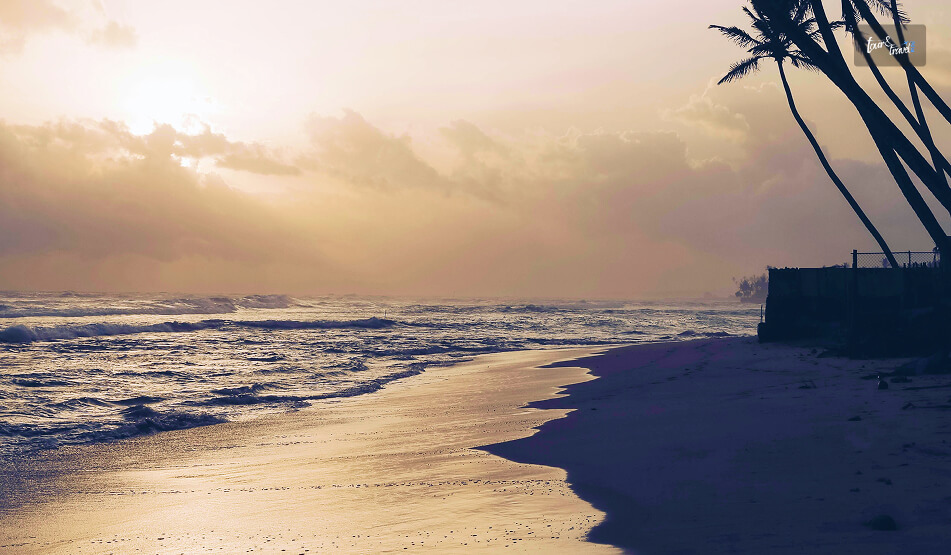


Ahangama: Why Is It More Than Just Another Beach Town In Sri Lanka? 

If you could only cover the beaches in Sri Lanka, you would know how Sri Lanka, despite being a smaller country, carries the spirit of the subcontinent, “Unity in Diversity.” 

If the beaches in Jaffna were a lesson to understand the livelihood of the local fishermen, the Hiriketiya Beach, with its unique horseshoe shape, has been a surfer’s delight. 

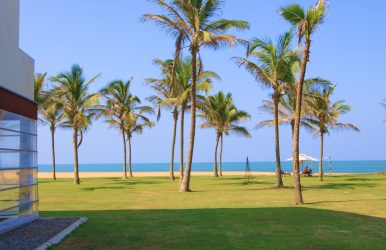
Now, I am going to talk about Ahangama, another popular beach town in Sri Lanka, famous for its cool vibe and surfer breaks. 

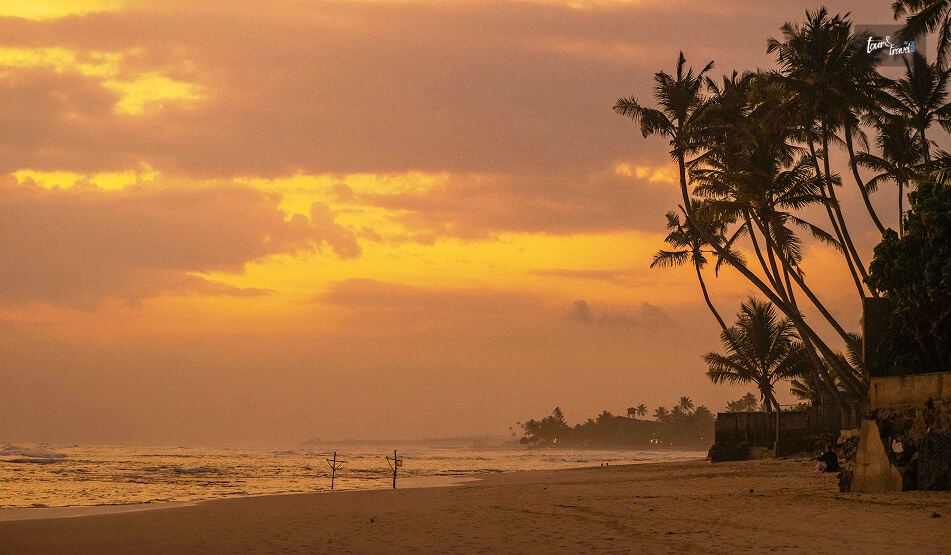
Earlier, it was known for its 19th-century Buddhist temple and the art of stilt fishing. However,  this beach town, in the southern coast of Sri Lanka, is now also known as a lifestyle destination. 

The likes of Condé Nast Traveller are backing its charm as a cool fishing town. 

Also, today, you may even ditch the best hotels in Galle, one of the major cities near the beach, thanks to the cafes such as The KIP, Marshmello Cafe or La Cafe Bistro. 

Nevertheless, while surfing is Ahangama’s claim to fame and the budding food scene is the most happening thing right now, here are more things you can plan here. 

What Are The Things To Do In Ahangama?

What Are The Things To Do In Ahangama

Ahangama is now emerging as a really cool place, as, despite being a beach town in Sri Lanka, it has the right amenities for digital nomads. 

While the surf and beaches offer the right dose of relaxation and the diverse communities offer the most eclectic experience, it also boasts many air-conditioned co-working and co-living spaces. 

In fact, despite Galle getting more attention, if you are planning to try things to do in Galle, Ahangama, around 20 km away, will be a better base due to the presence of cool hotels, good food, and cafes. 

Nevertheless, it is not just about breaking the waves. 

Here are tons of other things to do in Ahangama.

1. Hitting The Surf

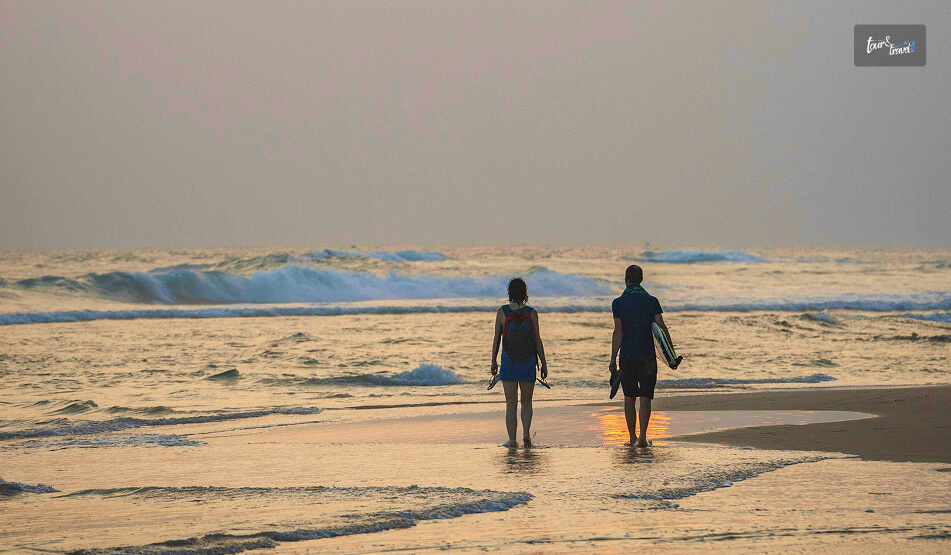
The reef breaks of Ahangama are the best for intermediate and advanced surfers. The waves on the south coast are world-class. 

Kabalana Beach itself is a great place to start your surfing expedition in Ahangama. Furthermore, you will easily get board rentals for around 800 LKR, and the sessions usually cost around 4000 LKR. 

You can also surf near the Kabalana Rock, Sticks Surf Break, Rams Right, and Midigama. 

2. Some Adventure At The Lamana Skatepark

Lamana Skatepark is one of the best places if you want to experience the party scene in Ahangama. 

Local skaters hit the bowl here daily. However, the live bands and the DJ music add some spunk to the air. 

3. Swimming With The Turtles

Dalawella Beach, a short tuk-tuk ride from Ahangama, is the place where you can swim with giant sea turtles. 

Here, meeting the sea turtles was a different experience from how I saw them at the Sea Turtles Conservation Centre near Mount Lavinia Beach

Also, some of the turtles here were around 50 years old, and they weighed around 200 kgs. 

You can rent a snorkeling mask for around 300 LKR. However, stay away from feeding these turtles, 

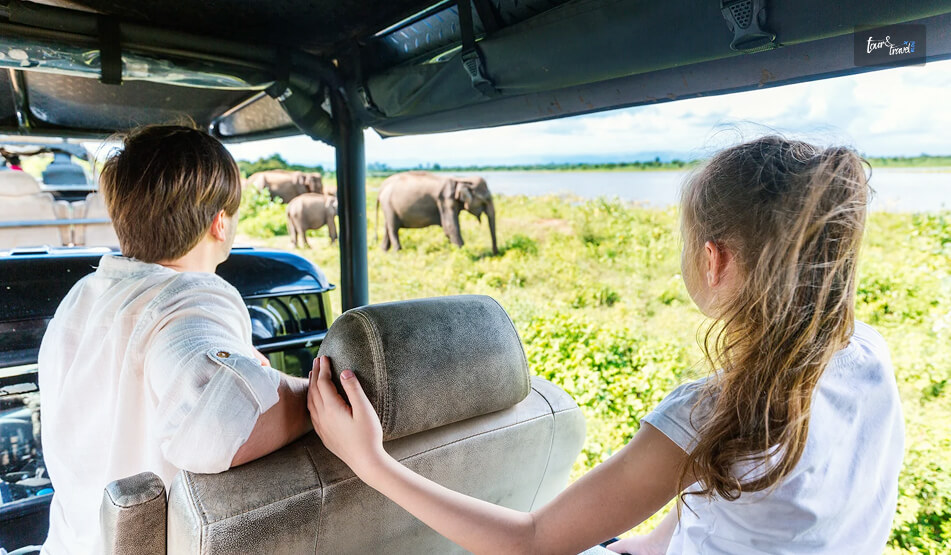
4. Safari At The Udawalawe National Park

Safari At The Udawalawe National Park

If nothing else, I will remember Sri Lanka for the endless and most delightful encounters with elephants. 

I had mentioned spotting the elephants at the Udawalawe National Park as one of the best things to do in Ella

However, as Ella is just 58 km away from Ahangama, you can also plan a safari if the latter is your base. 

Along with the baby and mother elephants, you will also love spotting peacocks, monkeys, and buffalo here. 

Moreover, when you are in Ella, don’t miss the iconic train ride on the Nine Arch Bridge

5. Climbing Devil’s Rock

With jungle walkways and eerie rock formations, the Devil’s Rock feels like a piece of Jurassic Park in Sri Lanka. 

You will find this group of scary rocks as you go east from Ahangama and stop just before Midigama. 

However, the only catch is that you will have to swim through the water with a medium current and during the low tide to reach Devil’s Rock. 

The hike is also quite strenuous. So, it may not be the best thing to do in Ahangama if you are not a pro swimmer or fit hiker. 

6. Scuba Diving In Unawatuna

You have done diving in Raja Ampat, the Maldives, or Bali. However, scuba diving in Unawatuna is something different. 

While you cannot expect the grandeur of these diving sites at Unawatuna, you can definitely find the Lord Nelson Shipwreck, exotic micro critters, coral reefs, and more in the water, at a temperature of around 20 degrees Celsius. 

You can reach Unawatuna by taking a drive for just 15 minutes from Ahangama.    

7. Cruising To Ying Yang Shack

The term “hidden gems” has become so cliché these days! However, places like Ying Yang Shack can still keep the magic of the phrase alive. 

Here, you literally take a ride in a handmade boat, and our boatman confided that he had made this boat with his brother. 

I, along with the other riders to the Ying Yang Shack, had a chilled beer in my hand as our boatman cruised through the water and talked about the lush greenery. 

I also spotted a monitor lizard and majestic eagles. 

Then came the sunset, and our boatman started singing, and his voice echoed as the bats and birds filled the red sky. 

The day ended well as his family made the most delicious and spicy BBQ meal for us.

Where Is Ahangama?

Where Is Ahangama

Ahangama is located in the Galle District of Southern Sri Lanka. It is located between Unawatuna and Midigama. 

Furthermore, this surfing and swimming paradise is located at a distance of around 3 hours from Colombo. 

How To Reach Ahangama?

How To Reach Ahangama

The Bandaranaike International Airport is the closest to Ahangama. The distance is around 143 km, and that can be covered by a car in around 3 hours. 

Furthermore, you can take a train from the Colombo Fort Station and take a train to Ahangama via Galle. 

In addition, you can take a tuk-tuk ride from Midigama or Weligama to reach Ahangama.

Why Is Ahangama More Than Just A Beach Town In Sri Lanka? 

The elite food scene and the amenities for digital nomads make it more than just a beach town in Sri Lanka. 

With brunch spots such as Black Honey and dining spaces such as Coco Kitchen, it can now beat Galle for trying local and fusion cuisines in Sri Lanka. 

Moreover, it offers a steady 30-80 Mbps internet connection, and the cafes and air-conditioned coworking spaces here have the infrastructure to support the lifestyle of digital nomads. 

Ahangama: Frequently Asked Questions (FAQs) 

Here are the frequently asked questions and answers about Ahangama Beach Town.

1. Is Ahangama Better Than Mirissa? 

It is hard to pick a favorite between Ahangama and Mirissa. 
Ahangama is famous for its surfing breaks and a laid-back vibe. On the other hand, Mirissa has a classic beach vibe, and it is more famous for whale watching. 

2. Should I Stay In Ahangama Or Weligama?

Ahangama is your go-to place if you want to enjoy a boho-chic vibe during a beach holiday. On the other hand, Weligama is more of a hub for surfers who are beginning their journey.
Also, despite a happening nightlife, Ahangama is a quieter retreat at night as compared to Weligama. 

3. What Is The Ahangama To Mirissa Distance? 

The distance between Ahangama and Mirissa is around 16 km. The travel time to cover the distance is around 32 minutes by road. 
However, you can also take a train from Ahangama to Mirissa and travel the distance in 19 minutes. 

Share on Social Media

Meet Sibashree Bhattacharya, a travel enthusiast who has a decade-long experience in transcending virtual barriers with her words! Her deep love for travel is apparent from her travel escapades to the mountain, often taking her readers on a journey, her words acting as Portkey! Fun fact: Sibashree loves to dive deep into the history of the places she is about to visit, making her travels even more wholesome. If you were wondering how her articles are not short of time travel, this answers it!

Leave a Reply

Your email address will not be published. Required fields are marked *

title-img Related

READ MORE Osaka food

Osaka Food: Know What To Eat In The Streets Of Osaka 

BY  Sibashree Mar 27, 2026

Osaka food is slowly and steadily surpassing Tokyo as the poster for Japanese cuisine.  Furthermore, it has been just a few days since La Cime in Osaka became the best restaurant in Japan in the Asia's 50 Best Restaurants list in 2026.   However, the soul of the Osaka food lies in the streets. The Dotonbori neighborhood was especially the best when I visited.  In fact, I was so much in love with the street food here that I chose to cancel the previous booking and chose a hotel in Dotonbori instead.  Also, the Dotonbori Market was the epicenter of my food exploration in Osaka.  Moreover, how can you ever forget what Anthony Bourdain had to say about food in Osaka? He said,  “I’m a big believer in winging it. I’m a big believer that you’re never going to find the perfect city travel experience or the perfect meal without a constant willingness to experience a bad one.  Letting the happy accident happen is what a lot of vacation itineraries miss, I think, and I’m always trying to push people to allow those things to happen rather than stick to some rigid itinerary.” So, let’s explore Osaka food at its best in Dotonbori. What Are The Best Osaka Food You Can Try On The Streets?  Osaka, despite its funky and vibrant appearance, has a history that goes back to the Edo Period in the 17th century.  Furthermore, it was a major trading hub during that period. Also, it was the same time when Osaka earned the nickname “Japan’s Kitchen.”  Moreover, Dotonbori extends across a canal that reaches out to the sea. So, you will always find fresh seafood in the local delicacies.  Ramen Udon Torikara Takoyaki These are some of the delicacies served by the local vendors in Osaka.  However, just mentioning these names does not justify the tangible experience of Osaka food.  I saw a big red octopus getting dressed and served, and the lobsters were irresistible.  Nonetheless, these are the best street foods you can try in Osaka.  1. Mitarashi-Dango Pocket-Pinch: 150 JPY  Mitarashi-Dango is the most comforting street food you will try in Osaka. Furthermore, these are great for budget-friendly travelers and backpackers like me.  These rice balls are sweet and chewy, and have a hint of burnt taste due to the unique browning process that takes place once the rice balls are boiled and cooled.  Furthermore, the glaze of the sweet soy sauce makes it perfect!  2. Okonomiyaki Pocket-Pinch: 400-450 JPY  Do you like frittata? Then, you will love these Japanese savory pancakes even more.  Okonomiyaki has all the flavors. However, you never feel heavy after having them. Furthermore, these pancakes are simple, as cabbage, flour, and eggs are the main ingredients.  However, the local street vendors add seafood and scallions to the dish for more flavor and color.  Also, they serve it with barbecue sauce.  3. Daifuku Mochi Pocket Pinch: 350-400 JPY Mochi, the round rice cake, is a staple Japanese delicacy.  It has the chewiness of Mitarashi-Dango. However, it has filling as the daifuku part of the name suggests.  I loved the ones with strawberry filling, and you can also try them with other fruits.  4. Torikara Pocket-Pinch: 300-400 JPY If the USA has its deep-fried chicken, Japan also has Torikara.  I loved them, and the fried potatoes and the variety of sauces will be the most amazing additions.  5. Takoyaki Pocket Pinch: 700-800 JPY  Takoyaki is probably the most famous street food of Osaka and Japan.  Japanese people love these octopus balls, and that’s why the Takoyaki stalls in Dotonbori are countless.  Furthermore, the scallions and flakes of dried fish sprinkled on top make the dish really amazing.  Moreover, the batter is gooey, and it will melt in your mouth.  6. Taiyaki Pocket Pinch: 300 JPY This is a fish-shaped pastry and my silent favorite among everything I tried in Osaka.  The smell is irresistible, and the main attraction is to see it getting ready in front of your eyes.  You can have this vanilla-flavored pastry with cheese, custard, and hamburger meat. However, the red bean paste is the ideal choice if you want to follow the grammar of East Asian cuisine. 7. Udon Pocket Pinch: 650 JPY The hot broth and noodles! I know that I have kept you waiting for the longest time to find this lethal combination on my list.  The noodles in Udon are thick, and with the right seasoning, their taste grows on you. That’s why you can eat udon every day and not get bored.  Furthermore, there are many variations of udon, such as the curry udon, yaki-udon, nabeyaki udon, and tempura udon.  8. Soba Pocket Pinch: 400 JPY Soba has buckwheat noodles in hot broth. Furthermore, these noodles are darker and thinner.  Furthermore, the simplicity of the dish and flavors make it a perfect palate cleanser.  I loved a bowl of soba with scallions.  9. Ramen Pocket Pinch: 700-800 JPY Ramen, of course, is the quintessential wheat noodles the whole world has been eating for quite some time now.  I tried different variations of ramen in Osaka. However, I loved the one with pork the best.  10. Yakitori Pocket Pinch: 1000-1100 JPY Yakitori is the Japanese take on grilled meat.  Furthermore, you will get many variations in the meat used here. You will get bone meat, chicken skin, seafood, and many other varieties here.  11. Sushi  Pocket Pinch: 1200 JPY If Sushi is an emotion, then it runs in the veins of Osaka.  From sea urchin to tuna, eel, and salmon, Osaka spoils you with choices in sushi.  Furthermore, the art of eating sushi is something that you need to understand. It is just not about gulping down some food.  It’s also about being a part of the Japanese culture.  12. Taiko Manju Pocket Pinch: 100-150 JPY You may think that Taiko Manju and Taiyaki are the same, but the origin and texture are very different.  Despite the use of the same ingredients, Taiko Manju is fluffier. Furthermore, their drum shape is inspired by the taiko drums, which are integral parts of Japanese festivals.  Read Also: What Are The Best Day Trips From Tokyo? Most Popular Ones You Will Love Cherry Blossom Kyoto Japan: 2026 Season And The Top Viewing Spots Is an Mt Fuji Day Trip From Tokyo Worth It? How To Plan It?

READ MORE Japanese temple

What Is The Best Japanese Temple To Visit? A Temple Tour In Japan 

BY  Sibashree Mar 31, 2026

The scent of that first Japanese temple I visited, full of damp cedar, ancient dust, and high-quality incense, immediately slowed my pulse.  The architecture felt magnetic, heavy with history that seemed to settle into your bones.  Furthermore, these temples aren't just buildings. They've stood for centuries,  and are a part of Japan's cultural fabric.  Moreover, the connection between nature and devotion isn't just symbolic here, and it's real.  Also, every temple holds stories passed down through generations.  A single stone path or carved gate can carry centuries of meaning. You don't just walk past them. You feel their presence. How Buddhism Shaped The Island And Each Japanese Temple  Buddhism started in India, the land I come from. Then it moved through China and Korea before reaching Japan in the 6th century.  Now, the first official step came when King Seong of Baekje sent Sutras and a Buddha image to Emperor Kinmei.  1. The Rise Of Sects  Over time, new sects poured in from China, changing how Buddhism looked here.  Saicho brought the Tendai sect in 805.  Kukai, later called Kobo Daishi, founded the Shingon sect in 806.  Then, Zen arrived in 1191, and it shifted Japanese art, tea traditions, and samurai life.  Now, Buddhism shares space with Shinto, the local religion.  So, the two coexist side by side without conflict.  Though it's not perfect, that's how things work now. The Architectural Layout Of A Japanese Temple  Once you enter a Japanese temple, you will find the main hall or Hondo. Furthermore, the table below explains the other key features of a Japanese temple. Features of a Japanese TempleDetails PagodasThese have three to five stories. Furthermore, these are the repositories of the sacred relics. Lecture HallsMonks study and teach here. BelfriesThese house massive bronze bells that are rung during the New Year.CemeteriesOften located on the grounds, these emphasize the Buddhist focus on the afterlife and ancestors. What Is The Best Japanese Temple?  I cannot pick a favorite when it comes to choosing the best Japanese temple. However, these are the ones I loved visiting.  1. Kinkaku-ji (The Golden Pavilion), Kyoto Kyoto is not just famous for its cherry blossom season. It also has the Golden Pavilion.  This is the "poster child" of Kyoto, and for good reason.  Two levels of this Zen temple have a covering of gold leaf.  Seeing its glittering reflection in the "Mirror Pond" is one of those travel moments that actually lives up to the hype.  It was originally built as a retirement villa for a Shogun, which is why it has a slightly "king-of-the-hill" air. 2. Todai-ji Temple, Nara A visit to the Todai-Ji Temple is one of the best things to do in Nara.  Standing in front of the great Buddha Hall (Daibutsuden) makes you feel incredibly small.  The structure was once the largest wooden building ever built, and even now, at two-thirds its original size, it still stands with quiet power.  Inside, a 16-meter-tall bronze Buddha dominates the space, and it was cast in 752. 3. Senso-Ji Temple, Tokyo  As Tokyo's oldest temple, Senso-ji pulses with color and movement.  Daytime visits pull you into a sea of people.  After dark, though, the scene shifts entirely.  Vermilion walls glow warmly under lanterns, the air settles, and the five-story pagoda rises softly against the sky. That night view became my favorite moment in four days in Japan. 4. Sanbutsu-Ji Temple, Misasa Here is a temple for the daring ones.  To get a glimpse of the inner hall, Nageiredo, I had to do a really challenging hike up Mount Mitoku.  The hall can be seen right on the cliff's face, supported on stilts over a dangerous drop.  Whenever I looked at it, I kept asking myself how 8th-century monks could have built it without falling off the mountain. Besides, this "National Treasure" might even have to stand the comparison to a scene in an Indiana Jones movie.  5. Tenry-Ji Temple, Kyoto  This temple is right in the heart of the Arashiyama district and is also famous for its garden.  The landscaped grounds of the 14th century surround the central pond walkways.  It was cherry blossom season when I dropped by, and the view of the weeping cherry trees against the forested mountain is a picture I still take out whenever I am stressed. 6. Kongobu-Ji Temple, Koyasan For a deeply immersive experience, head to Mount Koya.  Kongobu-ji, the main temple of Shingon Buddhism, houses the largest rock garden in Japan.  The granite rocks have been carefully arranged to depict dragons arising from a sea of clouds. It's an excellent venue for peaceful meditation. 7. To-Ji Temple, Kyoto While there are other things to see in To-ji, its five-story pagoda is the main draw.  At 57 meters high, it is not only the tallest in Japan but also a city landmark.  Plus, when it is lit up at night in spring, it appears like a golden light rising from amidst the cherry trees. What Are The Best Offbeat Japanese Temples?  Aside from the well-known "Golden" and "Great Buddha" temples, there are also sites that allow you to connect more closely with nature and pilgrimage traditions.  It is at these places that I experienced the most "human" contacts, observing pilgrims dressed in white robes or witnessing monks conducting their daily rituals. 1. Daisho-In Temple, Miyajima While most tourists to Miyajima are attracted by the floating torii gate, Daisho-in, situated at the base of Mount Misen, is the island's true spirit.  The most memorable feature? The 500 Rakan figures. Each one has an entirely different face. So, some are laughing, some are grumpy, and some look like they're whispering a secret. 2. Seiganto-Ji Temple, Nachisan There is probably no other place on the Kumano Kodo pilgrimage that has been as pictured as this one.  You have a vivid red pagoda in the front, and Nachi Falls is the highest waterfall in Japan, thundering down in the background.  It is a wonderful site where the noise of the water and the quietness of the temple together form an ideal spiritual harmony. 3. Zenko-Ji Temple, Nagano The temple sits in Nagano, a town that grew around it.  This is where Japan first received a Buddhist statue.  Though the statue itself isn't visible, you can walk into a pitch-black tunnel under the altar.  The goal? Try to touch the "Key to paradise. " It's creepy, but there's something real about it. A genuine cultural moment. 4. Horyu-Ji Temple, Nara Located just outside Nara, this site holds the oldest wooden buildings still standing.  These structures date back to 607. Standing in them feels like stepping into Japan's earliest days. History lives in the wood and silence of the halls. How To Visit A Japanese Temple Like A Local?  Visiting A Japanese temple is not just about seeing but also experiencing it.  One way to do this is through politeness, talking softly, and following a few simple etiquettes.  You will find a large incense burner (Jokoro) at the temple entrance.  A common practice is to fan yourself with the smoke, as it is said to have medicinal effects. 1. Getting In And Praying You'll most likely have to take off your shoes before going into a building (make sure you have stylish socks! ).  Once inside, you can go up to the altar, put a small coin in the donation box, and silently make a respectful gesture.  In contrast to a Shinto shrine, at a Buddhist temple, you shouldn't clap.  Only a silent bow with hands in the prayer position is the right way to show reverence.  2. Taking Photos In A Japanese Temple  Generally, temples are okay with you taking photos in the outdoor areas.  However, you cannot take photos inside the main worship halls where the statues are.  Also, personally, I feel that when I put my camera away and spend five minutes just sitting on the tatami mats in silence, what I get is a more vivid "picture" than any photo could ever represent. Read Also: What Are The Best Japanese Shrines To Visit? Celebrating Nature Spirits And Inherent Spirituality Is The Japan Rail Pass Worth It In 2026? Should I Buy Or Avoid It As A Conscious Tourist? What Are The Unique Things To Do In Sapporo? Exploring The Capital Of Hokkaido

READ MORE things to do in srilanka

What Are The Things To Do In Sri Lanka? Beaches, Cities, Rocks, Wildlife And Colonial Architecture 

BY  Sibashree Mar 25, 2026

“Love Sri Lanka, Always.” This has been the new campaign of Sri Lanka. Also, this campaign, coming at the time of the ongoing Gulf War, looks quite bold.  It projects the island country as a place that needs constant discovery.  And Sri Lanka has reaped the benefits of launching a bold campaign. It has crossed the mark of 100,000 tourists within the “first 18 days of the March in 2026.” Furthermore, while the marketing campaign has brought Sri Lankan tourism global visibility, the diversity of attractions makes it a powerhouse.  For example, I have been so much in love with Sri Lanka that I have made multiple visits and sometimes to the same place, years apart.  With the changes and developments, the country has still maintained its warmth, lush greenery, and human resilience. The sheer grit of the country has helped it win over the natural disasters such as the Tsunami, Cyclone Ditwah, and endless civil wars.  However, with diverse offerings, it may be difficult to choose the things to do in Sri Lanka. So, here are the places I loved the most.  What Are The Things To Do In Sri Lanka?  Keeping the spirit of the Indian Subcontinent alive, Sri Lanka beautifully portrays an inclusive picture.  For example, its southern and northern zones show a difference in language and culture. However, both are connected through the way of life, sunshine, and more.  Also, Sri Lanka has places such as the Ambuluwawa Tower, which is within a multireligious complex, showing how respectful the country is toward every religion.  1. Exploring The Tamil Culture And Temples In Jaffna Jaffna was the first place I visited in Sri Lanka as a backpacker. It is a hub of strong Tamil culture in Sri Lanka.  Furthermore, Jaffna has beautiful Hindu temples such as the Nallur Kandaswamy Kovil, the Naguleswaram Temple, the Nainativu Nagapooshani Amman Temple, etc.  Also, the beaches in Jaffna showcase the beauty of Northern Sri Lanka.  Moreover, the food in Jaffna is spicier than in any other part of Sri Lanka.  Overall, Jaffna is a world in itself where slow living and staying true to the roots are the best ways.  2. Hiking The Ritigala Forest Monastery Out of all my experiences in Sri Lanka, hiking the Ritigala Forest Monastery has been my silent favorite.  The history of the Ritigala Forest Monastery takes us to the 1st century BC. It has more than 70 caves and was once the abode of the monks of the “Pansukulika” sect.  Furthermore, located inside the Ritigala Forest Reserve, the remains of the ancient monastery are now surrounded by around 96 species of medicinal plants.  The presence of the medicinal plants further makes its association with the Ramayana stronger. 3. Visiting Uppuveli Beach, And Other Attractions In Trincomalee Trincomalee has the famous Uppuveli Beach. However, it would be wrong to assume that the things to do in Trincomalee are limited to beach activities.  You can visit the Thirukoneswaram Kovil Temple, Fort Frederick, Trincomalee Maritime and Naval History Museum, and the Trincomalee Market.  4. Visiting Mount Lavinia Beach The Mount Lavinia Beach is very close to Colombo, the capital of Sri Lanka. This beach has a leisurely vibe with the local folks playing cricket and people taking a sun bath.  However, the main attraction here was the Sea Turtle Conservation Centre. It is located by the beach, and it buys eggs from the locals to hatch them.  5. Climbing Up The Ambuluwawa Tower At the top of the Ambuluwawa Mountain, the Ambuluwawa Tower is an important cultural landmark in Sri Lanka.  Its location is in the Ambuluwawa Biodiversity Complex, in Gampola. Also, it is just 20 km away from Kandy.  You can climb up its spiral stairs to reach the top of the tower and enjoy a panoramic view of the surroundings.  6. Exploring The Cultural Capital, Kandy Kandy, the cultural capital of Sri Lanka, has the beautiful Kandy Lake at the epicenter.  Furthermore, it is fighting with the aftermath of the Cyclone and Ditwah and remains crucial in the political and economic landscape of the country.  The most fascinating things to do in Kandy are visiting the Udawattakele Forest Reserve, bowing before the Bahirawakanda Vihara Buddha Statue, and visiting the Temple Of The Tooth.  7. Climbing Up The Sigiriya Rock The Sigiriya Rock is famous for its mythological significance and history, and its association with Buddhism.  King Kashyapa made the Sigiriya Rock his seat of power in 477-499 AD.  However, before that, it was a Buddhist monastery which later shifted to the Pidurangala Rock.  Also, it has a long history of archaeological discovery, and in 1982, it was designated as a UNESCO World Heritage Site.  8. Climbing Up The Pidurangala Rock The Pidurangala Rock has a history that goes back two millennia. After King King Kashyapa made the Sigiriya Rock his seat of power, the Pidurangala Rock became their refuge on the king’s order.  Furthermore, it has a 1500-year-old Buddha Statue, and it is a protected ancient cave.  Moreover, from the Pidurangala Rock, you will get the best views of the Sigiriya Rock.  9. A Train Ride On The Nine Arch Bridge A train ride on the Nine Arch Bridge is the most iconic experience you can have in Sri Lanka. Also known as the Ella Odyssey, it has been praised by the BBC and Lonely Planet.  Built in 1921, this bridge is a prominent example of the Colonia-era architecture, and it does not have any metal in its construction.  10. Hiking To The Diyaluma Waterfall Hiking to the Diyaluma Waterfall from Poongala is one of the most popular hiking expeditions in Sri Lanka.  Once you reach the Upper Diyaluma Waterfall, you can relax and enjoy a swim in the infinity pools.  From the upper fall, you have to take a further trek of 30 minutes down to reach the Lower Diyaluma Waterfall.  Furthermore, the Diyaluma Waterfall is associated with the tragic love story of a King who fell in love with a lady from a lower caste.  Knowing about their love, the villagers chased them, and the lady fell into the waterfall and died.  11. Visiting The Dehiwala Zoo Since 1936, the Dehiwala Zoo in Sri Lanka has been a favorite spot for a thrilling wildlife experience.  Along with housing monkeys, elephants, fish, and birds, the zoo also has a dedicated section for reptiles.  Moreover, it has always been famous for the animal shows, and it has a Leopard Trail for guided night safari.  12. Spending A Day In Hurulu Eco Park The Hurulu Eco Park near Habarana is one of the best places in Sri Lanka to learn the art of slow traveling.  In the North Central Province of Sri Lanka, it is a great place for spotting elephants.  This dry evergreen is ideal for seeing elephants because it is the corridor between the Kaudulla National Park and the Minneriya National Park.  Take an afternoon safari to enjoy wildlife spotting and your time in nature.  13. Visiting Nuwara Eliya, The Coldest Place In Sri Lanka  Nuwara Eliya, the coldest place in Sri Lanka, is located at an altitude of 1,889 meters. Furthermore, it carries a nickname, “New England,” from the British Era.  Nuwara Eliya is a place of juxtapositions. There are Tudor-style homes, Victorian-style post offices, waterfalls, and jungles, showing the contrast in the landscape and cityscape.  Furthermore, it has natural attractions such as Gregory Lake, Victoria Park, and the Lovers Leap Waterfall.  Also, don’t forget to spend a day in Horton Plains National Park, a UNESCO World Heritage Site.  14. Experiencing A Scenic Train Ride And More In Ella Though Ella has changed in the last 10 years due to rapid development, it has maintained the serene charm with its mountains, rail line, and lush greenery.  Furthermore, it is the place to share a seat with Sir Thomas Lipton and understand how tea runs as the lifeline of the nation.  Also, the Ravana Falls is the place where Ravana hid Sita after abducting her.  Other iconic things to do in Ella are visiting the Nine-Arch Bridge, enjoying a Kandy to Ella train ride, climbing the Ella Rock, watching sunset from the top of the Little Adam’s Peak, etc.  15. Exploring The Galle Fort  Galle is dreamy, and it looks like a movie frame in sepia tone.  However, the Galle Fort, a UNESCO World Heritage Site, is at the epicenter of this once impenetrable trading post.  Walk to the Galle Fort and explore this living museum of art, architecture, and history.  Also, watching the sunset from the Galle Fort is a magical experience.  More things to do in Galle include exploring the beaches beyond the fortress wall.  Also, don’t forget to enjoy a drink in a bar in the cobblestone streets of Galle.  Overall, Galle is a place that unfolds with time. The fortress, the streets, and the colonial buildings make history palpable in every nook of Galle.  In a way, it summarizes the true spirit of Sri Lanka. Visiting the country is not about ticking the bucket-list destinations.  It’s about understanding the culture and soaking in the local vibe.  16. Visiting The Hiriketiya Beach  Hiriketiya Beach is the latest addition to the tourism attractions in Sri Lanka. It is a favorite destination for backpackers and digital nomads.  Furthermore, it is a popular surfing beach with zones dedicated to surfers of different expertise levels.  Here, you can walk to the Blue Island, enjoy great food and beer at Smoke and Bitters, and learn how to cook with Rosie.