
What Are The Things To Do In Mirissa? Unusual Activities You Must Not Miss Here

How many places have you been to where you can see peacocks and the mischievous chipmunks everywhere you look? 

This is Mirissa for you! One of the quietest beach towns in Sri Lanka.  

Also, if surfing at Hiriketiya Beach was a lot of fun, you can plan a one-hour drive to Mirissa for whale watching.  

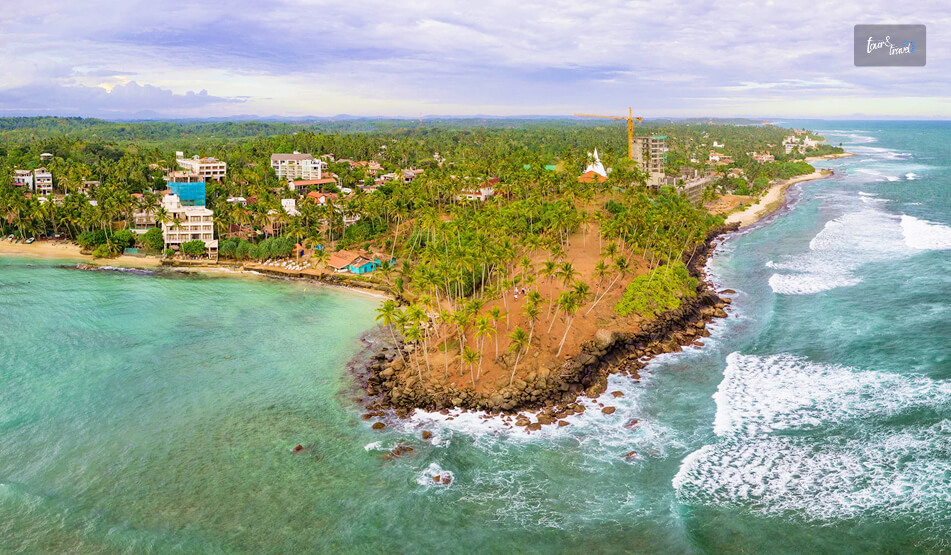
Mirissa has the turquoise Mirissa Beach, the Instagram-favorite coconut tree hill, the secret beach, the parrot rock, and many other natural attractions.  

Also, this quaint beach town is the ideal place to attend a cooking class, enjoy a happening nightlife, and indulge in a relaxing spa experience.   

Furthermore, whale watching and surfing with turtles are some of the most exciting things to do in Mirissa.  

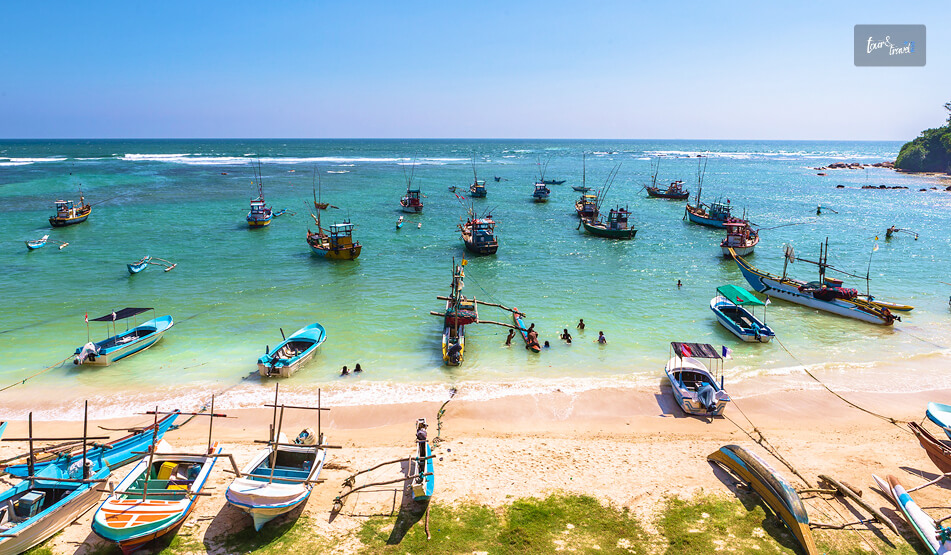
And once you are done exploring Mirissa Beach, you can take a short tuk-tuk ride to Weligama Beach, which is a beginner-friendly surfing destination.  

Here is more about why I loved the Mirissa Beach and town.  

What Are The Things To Do In Mirissa?  

Mirissa was still an emerging destination when I last visited Sri Lanka. Then, it was a welcome break from surfing at Ahangama or Hiriketiya simply because it was less crowded.  

However, thanks to Instagram now and especially due to the popularity of Coconut Hill, it is not a hidden gem anymore.  

Nevertheless, don’t miss these activities when you are in Mirissa.  

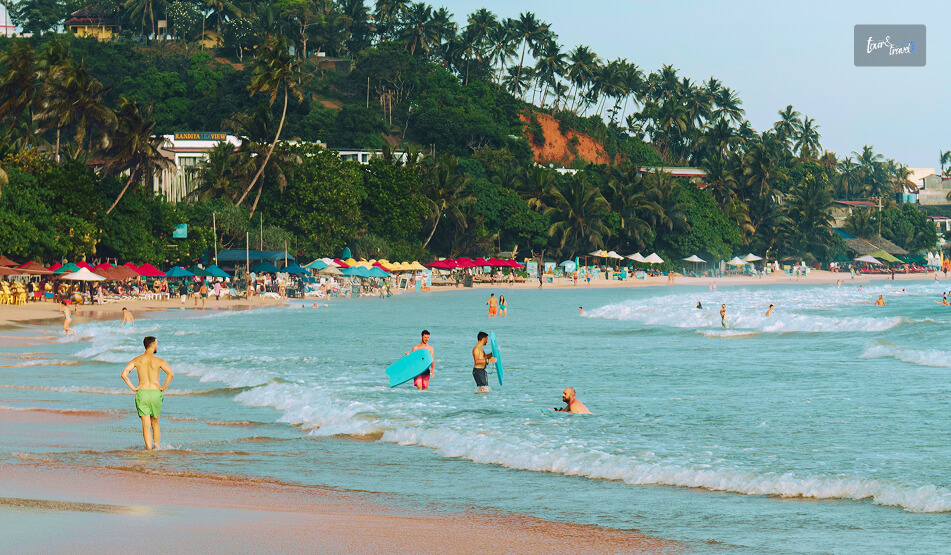
1. Spending A Relaxing Time At Mirissa Beach   

Spending A Relaxing Time At Mirissa Beach

I am not a diver, but I saw a couple renting gear on the beach for diving and spotting turtles. I talked to them as they came out. It was nice talking to Liam and Saoirse.  

I am quoting what Saorise shared, 

The water here is calm, and you just need to go down very little to find the turtles swimming.  

Next, we are going to try Weligma Beach.”  

Nevertheless, for me, Mirrissa Beach was impressive due to its laid-back charm. Like Delft Island in Jaffna, Mirrissa Beach also appeared to be an ideal destination for backpackers.  

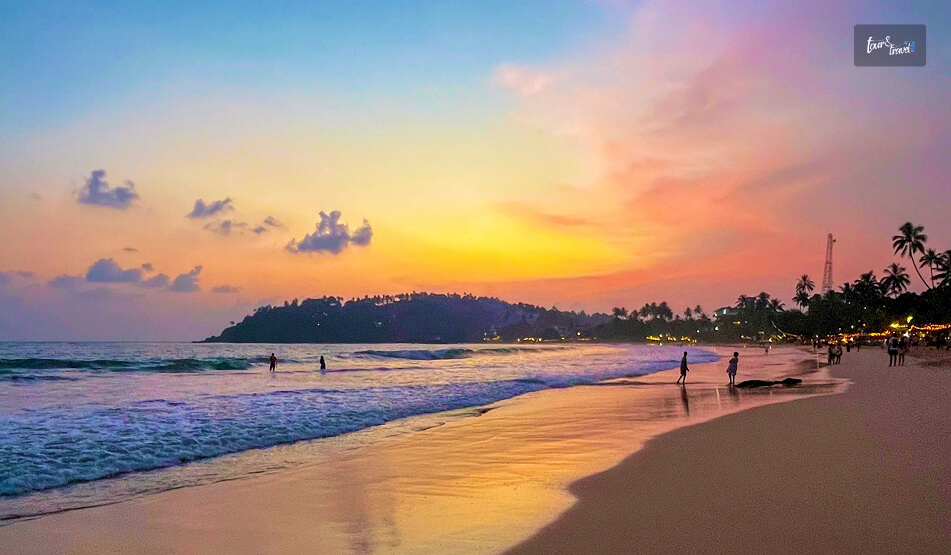
It was sunset time, and as the sky started turning the darkest red, the cafes around the beach came to life.  

I took a stroll toward the Parrot Rock and climbed it to see how the Sun is going to sleep in the ocean. 

If you are not planning to see the sunset here, you can take a 40-minute tuk-tuk ride to Kudawella Beach. There, you will see the Hummanaya blowhole, the second-largest in the world.  

2. Enjoying Solitude At Secret Beach 

Solitude! This is what I enjoyed at the Secret Beach. It is secluded and does complete justice to its name.  

Furthermore, this is a beautiful beach where the sea and the jungle blend.  

Also, this beach has shining golden sands, and the palm trees are so well aligned that they look symmetrical.  

In addition, I enjoyed sunbathing, swimming, and watching the sunset at Secret Beach.  

Now, comes to how I reached the Secret Beach from Mirissa Beach. I took a short tuk-tuk ride for 15 minutes from Mirissa Beach, and it cost me around LKR 300.  

From the spot, you will have to hike for around 200 meters to reach the beach.  

Also, no one talks about the cliff behind the Secret Beach. I had to just take a short walk, taking the left side path from the beach to reach the cliff.  

You can enjoy a 360-degree view of the ocean from the cliff top.  

3. Whale Watching 

Visiting Mirissa Beach during sunset time was worth it.  

I returned the next morning for the whale-watching tour to start. The tour started at 6 AM, and it was a 4-hour tour. The cost was ₹1948 or around 6500 LKR.  

Early morning is the best time for whale spotting at Mirissa Beach, as the water starts getting choppy as the hours pass.  

Furthermore, November to April is the best time for blue whale spotting here, and March and April are the peak months.  

Also, on my tour, along with the blue whales, I also spotted humpback whales, turtles, and dolphins.  

4. Watching Sunset From The Parrot Rock 

Watching Sunset From The Parrot Rock

As I mentioned earlier, Parrot Rock offered the best sunset viewing point on Mirissa Beach.  

This rock island is just a 5-minute walk from the main beach. However, I had to wade through water to find the base of the staircase leading to the top of the Parrot Rock.  

During high tide, the water can be knee-deep. So, here you will need some local guidance regarding when to cross the water.  

So, be careful and carry a small bag and only the things you need if you want to climb up the Parrot Rock.  

5. Exploring The Cocount Tree Hill  

Exploring The Cocount Tree Hill

Now, this Coconut Tree Hill is a rage on Instagram and somehow overhyped.  

However, the tangerine soil and the series of trees here look picturesque, and the views from here are amazing. 

Before I got to the top of the Coconut Hill, I enjoyed a swing ride just below.  

I visited it very early in the morning. The plan was to see the sunrise from the Coconut Tree Hill and then start the whale tour.  

Furthermore, the hike was easy, and it was almost a no-sweat climb.  

6. Enjoying Sunset Drinks, Bites, And Beats 

Mirissa has a really cool nightlife. However, I found the cafes here a little overpriced. Instead, I found a place to relax and watch over the activities on the beach after sunset hours.  

After watching the sunset from the Parrot Rock, I was planning a return for the day, and then I found Petti Petti.  

It has an elevated infinity pool, which is magical. You can even relax sitting in the comfortable beanbags and sip the most refreshing cocktail. 

Petti Petti remains open from 8 AM to 10:30 PM every day.  

7. Surfing At Weligama Beach 

Surfing At Weligama Beach

Surfing at Mirissa Beach is not a pleasant experience. So, it is always better to take a bus ride for 15 minutes to Weligama Beach. 

With a sandy bottom and gentle waves, it is a beginner-friendly place for surfing. I surfed with the AMA Surf School there, and the cost was around ₹7000, and the surfing tour was for 1 hour and 15 minutes.  

8. Enjoying The Cafe Vibe In Mirissa 

Mirrissa has some amazing cafes, but they are still overhyped if you compare them with the craze on Instagram.  

Nevertheless, I loved Aloha Coffee Gallery, which is very close to the Main Street of Merissa.  

I had a French Press coffee and toasts there. Also, I found many young professionals working there, and the Wi-Fi connection was pretty good.  

I found that the place was quite popular among youngsters and digital nomads.  

9. Spotting The Turtles  

Now, many people tell you that Turtle Beach is the best place to spot turtles in Mirissa, and it’s a lie.  

When I reached it at around 10 AM, the beach was already crowded, and naturally, the water was murky.  

I could spot two turtles, but they looked stressed and in a hurry to hide.  

Then, a local told me about a place that was a walk of around 10 minutes west of the beach. There is a Roti shop nearby, in the name of DewMini Roti Shop.  

That was indeed a great place for seeing turtles, as there were no boats and only a few locals hanging around.  

Again, from there, I took a local bus to Polhena Beach, and the ticket price was ₹30. There, the reefs were shallow, and thus these reefs and the turtles were easily visible. 

10. Visiting A Tortoise Hatchery  

I love turtles. So, when I got to know about the Kosgoda Sea Turtle Conservation Project, I decided to take a drive for 2 hours and visit it.  

This conservation center is, in fact, closer to Galle, and there, I saw Hawksbill turtles, Olive Ridley turtles, and loggerhead turtles.  

Many injured or disabled turtles stay in this conservation center, and you will even find baby turtles that are just 3-days old.  

The conservation center also has a program in which you can release the baby turtles into the ocean water. 

Behind the conservation center is a hatchery. There, all the eggs are kept buried for hatching. The conservation center buys these eggs from local fishermen who collect the eggs so that poachers do not take them or predators do not eat them.  

The conservation center remains open from 8:30 AM to 6 PM, and the entry fee is LKR 1000.

Share on Social Media

Sibashree is a travel, culture, and leisure writer who has been writing since the age of 12 and professionally since 2014. With more than a decade of travel writing experience and journeys across India and several parts of the world, she brings a deeply personal and thoughtful perspective to her work. A student of English Literature and Mass Communication, Sibashree has always viewed travel as more than movement — for her, it has been a way of understanding people, cultures, and herself. Her passion for spiritual exploration has also led her to many unusual and meaningful destinations over the years. Outside of writing, Sibashree enjoys watching European cinema, reading about global politics, and reflecting on the stories hidden within everyday places.

Leave a Reply

Your email address will not be published. Required fields are marked *

title-img Related

READ MORE Dambulla Royal Cave Temple

Dambulla Royal Cave Temple: History, Entrance Fee, And More About This UNESCO Heritage Site 

BY  Sibashree Apr 10, 2026

The Dambulla Royal Cave Temple is gearing up for the much-acclaimed “Walk for Peace” which will start from 21st April, 2026.  Respected Paññakāra Thero and 12 other monks from the Maha Sangha will lead the walk.  Furthermore, this walk, originating in the United States, will spread the teachings of Lord Buddha, “Caratha bhikkhave carikam bahujana hitaya bahujana sukhaya lokanukampaya.” It can be roughly translated as a monk should always wander forth out of their compassion for the world and for the happiness and well-being of many.  After the inauguration of the event at Anuradhapura and special observations at Ruwanweliseya premises, the walk will start from the Dambulla Royal Cave Temple, and then it will slowly proceed to Kandy to continue the walk.  Now, it is no wonder that the Rangiri Dambulla Cave Temple has been chosen as the starting point for the walk.  With a history that goes back to the 3rd century BCE, and home to the Buddhist mural paintings and 157 statues, it remains one of the most important Buddhist landmarks in Sri Lanka.  Here is a detailed guide on my experience at Dambulla Royal Cave Temple, its significance, history, entry fee, and more!  The Dambulla Royal Cave Temple: Quick Facts  “Dambulla is an important shrine in the Buddhist religion in Sri Lanka, remarkable for its association with the long-standing and wide-spread tradition of living Buddhist ritual practices and pilgrimage for more than two millennia.” UNESCO World Heritage Convention.  Here are some quick facts about the most well-preserved and largest cave-temple complex in Sri Lanka. Number of Sanctuaries 5Buddhist Mural PaintingsAcross an Area of 2,100 m2Number of Statues157HistorySince the 3rd Century BCEThe Current Interior FormsBuilt in the 18th CenturyType of SculpturesPolychromeOwnership The Asgiriya Chapter of Buddhist monksMonument Protection “Protected Monument under the legal protection of the Department of Archaeology of the Government of Sri Lanka, which administers the Antiquities Ordinance of 1940 (rev. 1998) at the national level.”Entry Fee2000 LKRHours Open7 AM to 7 PM (The Ticket Counter Closes at 5 PM)Steps 300Average Climbing Time20 Minutes  Where Is The Dambulla Royal Cave Temple? (Along With Some Nearby Attractions) The Dambulla Royal Cave Temple is in Dambulla Town. Now, Dambulla itself is the gateway to many places to visit in Sri Lanka.  For example, the Hurulu Eco Park is just a distance of 45 minutes from Dambulla. On the other hand, it is just 52 minutes away from the Kaudulla National Park.  Furthermore, the distance between Dambulla and Kandy is around 73 km. So, many people include a visit to the Dambulla Royal Cave Temple in their itinerary of the things to do in Kandy.  Moreover, Sigiriya is just 17 km away. So, you can plan a combined trip of a visit to the Royal Cave Temple with a hike to the  Sigiriya Rock and Pidurangala Rock.  In addition, you will have a similar experience of exploring an ancient Buddhist monastery and its remains at the Ritigala Forest Monastery, at a distance of 35 km.  Also, if you are a cricket buff like me, don’t miss a visit to the Dambulla International Cricket Ground.  How To Reach The Dambulla Royal Cave Temple? Even if you are not staying in Dambulla, Habarana, or Sigiriya can be your base.  Habarana is just 22 km away from Dambulla, and Sigiriya is just 17 km away.  From both locations, you can take a private taxi or tuk-tuk ride to reach Dambulla Town, which has the Dambulla Royal Cave Temple in the heartland.  Furthermore, from Habarana, you will get Sri Lanka Transport Board - SLTB ICT buses to Dambulla.  Nevertheless, I took a tuk-tuk from Sigiriya to Dambulla, and it cost me around 2500 LKR.  What Is The History Of The Dambulla Royal Cave Temple? As I have mentioned, the history of the Dambulla Royal Cave Temple goes back to the 3rd Century BCE.  Buddhist monks started living here, and these natural caves started functioning as monasteries.  Furthermore, in 100 BCE, King Vattagamani Abhaya (Valagamba) fled his capital and took refuge here for 15 years.  Then, out of his gratitude, he built this majestic Dambulla Royal Cave Temple.  However, most of its constructions, including the sculptures and murals, are from the Anuradhapura and Polonnaruwa periods.  Also, the current interior we see is the outcome of the renovation in the 18th century. In addition, it was designated as a UNESCO World Heritage Site in 1991. Today, it is a part of the prestigious Cultural Triangle of Sri Lanka, along with Anuradhapura, Polonnaruwa, and Sigiriya Rock Fortress.  My Experience Of Visiting The Dambulla Royal Cave Temple (Things To See And Top Attractions) Before I get into the details of my experience at the Dambulla Royal Cave Temple, I want to give you a clear idea about the five main caves.  The Caves of The Dambulla Royal Cave TempleNamesMain Attractions Cave 1Devaraja LenaIt is the Temple of the King of Gods. The reclining Buddha statue here is mesmerizing.Cave 2 Maharaja LenaThis one is the largest among all caves, and it has 56 statues. Moreover, it is the Temple of the Great Kings, and don’t miss the sacred pot with the dripping water here. Cave 3Maha Alut ViharayaThe Maha Alut Viharaya is a wonderful example of 18th-century art. Furthermore, as the Great New Temple, it is home to 18th-century Kandyan-style paintings and statues.  Cave 4Paschima ViharayaIt is the western temple. Cave 5Devana Alut ViharayaIt is the second new temple in the temple complex.  However, to see these caves, you have to take 300 steps. You will not feel the fatigue anyway, as you will love the views and spotting the groups of macaques jumping through branches.  Also, once you reach the top, you will need to take off your shoes and further walk to the cave.  Here are some of the highlights of my visit to the Dambulla Royal Cave Temple.  1. Before Entering The Caves  I entered the cave temple complex, and a massive courtyard opened before my eyes. On one side of the courtyard, there was the shrine and the Bodhi Tree.  Furthermore, on the other side, there is the rock and the cave temples.  The Engraving Of Kirti Nissankamalla I found the engraving of the Kirti Nissankamalla before entering the first cave. Dated to the 12th century, it narrates the contributions of King Nissankamalla to Buddhism.  The engraving, however, is in ancient Sinhalese. So, you can ask a local guide or a local person to help you understand the details.  Or, you can read the translation of the engraving next to it.  2. The Caves  I have already introduced the caves to you. However, everywhere you look, you will find Buddhist murals, depicting the important figures and myths of Buddhism.  Furthermore, there are golden statues of Lord Buddha along the walls, and the lifelike paintings of Buddha-like figures evoke awe.  Moreover, with repeating patterns, the ceilings look kaleidoscopic.  However, the first time I experienced magnificence in these caves was when I saw the reclining Buddha statue.  The Reclining Buddha Statue (1st Cave) The reclining Buddha statue inside the first cave of the complex reminded me of the Lord Vishnu idol of Sree Padmanabhaswamy Temple in Kerala, India.  In fact, in some traditions of the Hindu religion, Buddha is the ninth of the ten Avatars or incarnations of Lord Vishnu. Here, the connection felt real.  The serene expression of Lord Buddha with his head resting on a pillow made me feel peaceful. I offered some fresh lily flowers that I bought on the way up the steps.  Furthermore, the lotus flowers drawn on Lord Buddha’s feet or Buddhapada symbolize spiritual awakening, and these are among the 108 holy marks that represent the holy journey of Buddha on the earth.  The Natural Spring (The Second Cave) It was amazing to find a natural spring in the second cave, and even in the dry season, it has water.  The water of the spring drips through the ceiling, and the drops are collected in a vessel.  Furthermore, it has 56 Buddha statues, and it is the most aesthetic with stunning murals and paintings.  The Series Of Buddha Statues (The Second Cave) Again, inside Cave 2, I found a series of similar Buddha statues in a seated position, and the next one was always a bit bigger than the previous one.  However, instead of the Dhyana mudra or the meditation gesture, the statues here were seated in a Bhumisparsha mudra or as the earth witness. Thus, these statues stare directly into your eyes.  These statues looked more vibrant, and with an earthy tone, they complemented the overall aesthetics of the cave temples.  Also, don’t miss the little lily pond just outside cave 2.  The Stupa Inside The Cave (The Second Cave) The second cave has an entire Stupa built inside it.  Furthermore, the stupa is adorned with an orange robe. Various statues of Lord Buddha in a seated position surround the stupa, and these are accompanied by nagas.  These nagas or snakes play the role of a protector or guardian when Lord Buddha is meditating. Moreover, they symbolize the subjugation of worldly desires and spiritual awakening.  The 3rd cave also has many statues, and the fourth one is smaller with a stupa inside. After exploring the 3rd, 4th, and 5th caves, I finally approached the end of the cave.  You know what stayed with me, that the temples are still alive and they have made people from a different millennium, with humans of today in the same row with the thread of devotion, peace, and love.  Once again, with non-violence and peace having so much power, the current geopolitical situations only look like futility.  3. The Viewpoint  As I got out of the caves, I found a quaint viewpoint behind the entry counter. I saw many young tourists flocking there, and the views from there were simply amazing.  I stopped and took some snaps.  4. The Golden Buddha Statue  I consciously chose a different route while getting down from the caves. I found many aesthetic lampposts along the way.  However, I did not follow the lamp posts and took the left to walk down, and the road was quite steep.  However, the reward I got at the end of the road was absolutely worth it.  There was a magnificent golden Buddha statue on the elaborately designed building of the museum complex.  I could not explore the museum due to a time crunch, and I did not want to dilute what I saw and how I felt at the cave temples. What Is The Best Time To Visit The Dambulla Royal Cave Temple? In a day, early mornings, from 7 AM to 9 AM, or late afternoons, after 4 PM, are the best hours for visiting the Dambulla Royal Cave.  Furthermore, December to February are the best months for visiting these cave temples due to dry and pleasant weather conditions.

READ MORE Jaffna Sri Lanka travel guide

Jaffna Sri Lanka Travel Guide: Is Visiting Jaffna In Sri Lanka Worth It? 

BY  Sibashree Oct 24, 2025

You know what’s so special about visiting quaint and offbeat places? These are the places to make quirky and personal connections.  Jaffna has not been an exception. Let me share a story! It was exploring the Jaffna Public Market. An old lady jokingly refused to sell a tourist a kilo of dried fish. She said, “You don’t look like someone who appreciates the smell of sun-dried fish!” By the end, she laughed and gave him a small bundle for free. The whole thing was so warm. An old lady, who is probably talking to a person for the first time, is very cordial in her behavior. You will not get this shopping experience in any shopping mall or supermarket. Another highlight was when a priest offered me some sweets at the Nallur Kandaswamy Kovil. There were hundreds of visitors, and I don’t know why he came up to me and offered the sweets. He said, “For you, even if you are a stranger, my blessings are for you!” I had tears in my eyes. With moments like this, Jaffna will always remain one of the most beautiful places in the world. It’s not just about the scenic beauty, but the warmth and inclusivity.  In addition, the recent inauguration of the International Cricket Stadium at Mandaitivu Island will be a new landmark of the city. With a capacity of 40000 spectators, it will promote national integrity and more tourism through sports.  Here, I will talk about how to reach Jaffna, the places to visit, the safety quotient, cultural exploration, and more! Keep reading this Jaffna, Sri Lanka travel guide.  You can also follow our Jaffna travel itinerary to plan your trip better.  Cultural Exploration In Jaffna, Sri Lanka: Why Is It So Special? The origin of Jaffna’s name takes us back to its Tamilian roots. There was a blind musician called Yalpanan who used to play an instrument called Yal. Thus, the place got its name as Yalpanam or Yalpanapattinam, meaning the Port of the Iyre.  Furthermore, the historical evidence suggests that Tamil Presence here dates back to at least 300 B.C. Archaeological sites such as Pomparippu are a telltale of the Tamilian presence.  Jaffna was the capital of the Jaffna Kingdom in the medieval days before European colonization happened here.  Moreover, thanks to the Tamilian culture in Jaffna, in recent times, it has become a favorite destination of Indian travelers. A Tour and Travel World report suggests a 325% increase in the searches among Indian travelers.  Direct accessibility to Jaffna from various parts of South India via flights is another reason why Jaffna is so popular among Indian tourists.  You will get flights to Jaffna from cities such as Hyderabad, Thiruvananthapuram, Madurai, and Chennai.  Top 10 Unknown Cultural Things About Jaffna, Sri Lanka 1. Traditional Tamil musical performances during temple festivals.2. Unique Jaffna-style architecture in homes and temples.3. Palmyrah palm-based crafts and products.4. Indigenous Tamil martial arts demonstrations.5. Local storytelling traditions passed down orally.6. Community-led cultural tours and workshops.7. Traditional Tamil wedding customs.8. Seasonal harvest festivals like Thai Pongal.9. Local folklore and legends tied to historical sites.10. Ancient Tamil inscriptions found in temple ruins. Food Culture And Culinary Tours In Jaffna, Sri Lanka  View this post on Instagram A post shared by Kandy Bites by Chef Ceylon (@kandy_bites_) Jaffna cuisine is known for its spicy flavors and unique Tamil dishes. Popular items include Jaffna crab curry, Kool (seafood soup), Odiyal Kool, and Palmyrah jaggery sweets.  Food tours in Jaffna offer cooking classes, market visits, and traditional meal experiences with local families. However, the traditional delicacies of Jaffna tell the stories of the tradition, history, and resilience of Northern Sri Lanka. In addition, Jaffna City, in recent times, has played an important part in changing the food trends of the country and ensuring a lesser reliance on expensive imports.  The increased use of Palmyrah jaggery, palmyrah flour, or even palmyrah vinegar, typical Jaffna ingredients, in Colombian food is an example of how Jaffna is emerging as a crucial destination in the country's food landscape.  Colombo, in fact, now has a Kaachai Varai or Jaffna Market from where seafood, spices, and other ingredients are sourced. This endeavor supports the local fishermen, farmers, and producers.  Moreover, Jaffna is an important location for hands-on culinary tours in northeastern Sri Lanka. For example, celebrated Australian chef Peter Kuruvita conducts a culinary tour in the northeast part of Sri Lanka, and Jaffna is one of the destinations.  On this tour, you will get to know about the art of cooking in clay pots over an open fire. Overall, getting familiar with the local food is one of the top cultural things to do in Jaffna Sri Lanka.  A 3-Day Culinary Tourism Itinerary In Jaffna View this post on Instagram A post shared by ALIYAA (@aliyaa_kl) It’s time to experience the eclectic nature of Jaffna food, where Tamilian, Muslim, and European influences have merged. Here is a 3-day culinary tourism itinerary in Jaffna.  DaysActivitiesDay 1• Arrival in Jaffna and checking in• Having Jaffna-style idiyappam with coconut sambol and mutton gravy• Exploring the Jaffna Market, a gold mine of dried fish and palmyrah jaggery, tamarind, and spices unique to the region.• Trying palm treacle sweets, vadai, and murukkuDay 2• Having Jaffna crab curry or nandu kool (crab soup) with red rice• Pairing the food with poriyal and rasamDay 3• Visit Nallur Kandaswamy Kovil and try nelli juice or Indian gooseberry drink• Booking an Airbnb or a local guide experience and learning to cook pittu, prawn curry, and other local delicacies If you want to extend your culinary tour in Jaffna, you can plan a day trip to Delft Island, where you will find the best coconut toddy and island-style seafood delicacies. Also, you can attend a palmyrah tapping demonstration or explore the northernmost markets in Point Pedro.  A 5-Day History-Focused Itinerary In Jaffna View this post on Instagram A post shared by VIEW LANKA TOURS (@viewlankatour) Mentioned in the ancient Tamil scripture as Naga Nadu, or the land of the Nagas, Jaffna has been ruled by the Pandya, Chola, and Rajarata kingdoms. Later, it also became a colony of the Portuguese and British.  Here are the historical places in Jaffna to see within a 5-day travel itinerary.  DaysActivitiesDay 1• Arrive in Jaffna from Colombo by car or train• Checking into the hotel• Breakfast with traditional Tamil food• Visiting the Jaffna Fort (1618)• Lunch• Visiting the Jaffna Public Library• Walking along the Jaffna Lagoon waterfront near the Dutch Fort AreaDay 2• Breakfast and a visit to Nallur Kandaswamy Kovil• Visiting the Minister’s House or Manthiri Manai• Lunch• A drive to Keerimalai Springs and Naguleswaram Temple• Return to Jaffna TownDay 3• Travel north to Dambakolapatuna Temple, at a distance of 35 km• Lunch and exploring Kankesanthurai• Visiting the 2000-year-old site of Kandarodai (Kadurugoda) Buddhist Monastery• Visiting the St. Mary’s CathedralDay 4• Taking an early ferry to Delft Island (Neduntheevu) from Kurikadduwan Jetty.• Visiting the Delft Fort (Portuguese-Dutch) ruins, Queen’s Tower lighthouse, and Baobab Tree• Spotting the wild ponies• Having local seafood for lunch• A ferry ride to Nainativu Island and spotting places like the Nagapooshani Amman Kovil and Nagadeepa Viharaya• Return to JaffnaDay 5• Breakfast and visiting the Chunnakam Market• Visiting the Jaffna Archaeological Museum• Visiting Point Pedro and attractions such as the Old lighthouse• Farewell dinner A 5-Day Cultural Itinerary In Jaffna Attending the Palmyrah workshop was a memorable event in my Jaffna tour. Also, Point Pedro, the northernmost part, offered the most culturally vivid experience. DaysActivitiesDay 1• Arrival in Jaffna• Exploring the Jaffna Public Library after breakfast• Walking through the Old Park• Exploring Jaffna Fort• Visiting Nallur Kandaswamy Kovil in the eveningDay 2• Visiting Point Pedro Market• Driving to the Palmyrah Handicraft Centre• Having a home-style Tamil Meal• Visiting Manthiri Manai (Minister’s Palace) and Sangilean Thoppu, believed to be the remains of the ancient Jaffna Kingdom’s royal complex.• Attending a Bharatanatyam or Naddu Koothu performanceDay 3• A ferry ride from Kurikadduwan Jetty to Nainativu Island (Nagadeepa)• Visiting Nagapooshani Amman Kovil (Hindu temple) and Nagadeepa Viharaya (Buddhist temple)• Trip to Delft Island (Neduntheevu)• Exploring colonial ruins: the Delft Fort, Queen’s Tower, and Baobab Tree• Ferry ride to JaffnaDay 4• Having kothu roti and Sombol for breakfast• Visiting St. Mary’s Cathedral and Ariyalai Hindu Temple• A visit to the Jaffna Archaeological Museum• Exploring the Chavakachcheri Heritage Houses• Taking part in a home-cooking demonstration with a local familyDay 5• Attending a Palmyrah workshop• Visiting the Kandarodai (Kadurugoda) Buddhist Monastery• Exploring Keerimalai Springs and Naguleswaram Temple• Seafood meal• Shopping in the afternoon Cultural Etiquettes For Foreign Tourists Tourists should dress modestly, especially when visiting the temples in Jaffna.  Shoes must be removed before entering religious sites.  Photography should be respectful, and permission should be sought when capturing images of locals or ceremonies. Must Visit Destinations In Jaffna, Sri Lanka If you want the best cultural and historical experience in Jaffna, don’t miss a visit to the following places.  1. Nallur Kandaswamy Temple Nallur Kandaswamy Temple is the cultural and spiritual epicenter of Jaffna. Dedicated to Lord Murugan, it shows a unique Dravidian-style architecture. Also, the Nallur Kandaswamy Temple festival in July-August attracts a lot of visitors.  2. Jaffna Fort Built by the Portuguese in 1618, the fort is an example of quintessential European military architecture, and it was later occupied by the Dutch.  It overlooks the Jaffna Lagoon, and it is a favorite of photo enthusiasts.  3. Delft Island View this post on Instagram A post shared by Audrey Potvin (@audreypotvin) A popular day-trip destination, Delft Island in the Jaffna Peninsula is known for its Dutch remnants, and it is a great place for spotting ponies.  4. Casuarina Beach As the person in charge of our hostel said, I visited the Casuarina Beach after 5 PM. He said, “The quiet at the beach just before sunset is something unbelievable.” I experienced the magic.  The birds were coming home, and the soft white sand, like a blank canvas, was changing colors every second.  5. Keerimalai Springs Located by the sea, the Keerimalai Springs and Keerimalai Naguleswaram Temple are a unique combination of spirituality and scenic beauty.  The water of these springs has healing properties.  6. Point Pedro View this post on Instagram A post shared by Meerza Iqbal (@meerzaiqbal) Point Pedro has a historic lighthouse, and it is the northernmost tip of Sri Lanka. Furthermore, it has the most vibrant markets for buying fresh seafood produce.  Here, you can also meet the fishermen and have an understanding of their unique ways of living in Point Pedro, as it has the most beautiful beaches in Jaffna.  7. Jaffna Library Tragically destroyed in 1981, the newly built Jaffna Library stands as the symbol of resilience. It is one of the most revered libraries in Asia, and it was first built by the Jaffna Town Development Board on 1st January 1935.  It has a collection of 844 books, 30 magazines, and newspapers.  8. Nagadeepa Vihara View this post on Instagram A post shared by Thambu Illam~Hotel in Jaffna🌴 (@thambu_illam) Nagadeepa Vihara is the place where Lord Buddha visited for the second time. He also ended the dispute between two Naga Kings fighting over the ownership of an ornate throne.  Mahodara and Chulodara, these two Naga kings, became devoted followers of Lord Buddha.  9. Manthiri Manai View this post on Instagram A post shared by FOX Resorts (@foxresorts) Manthiri Manai, or the Minister’s Mansion, stands out thanks to its unique Indo-Islamic and European architecture. Located at a distance of just 1 km from Point Pedro, Manthiri Manai is an archaeologically protected site, and it is said to be the residence of the minister of the medieval Jaffna Kingdom.  How To Reach Jaffna, Sri Lanka? Bandaranaike International Airport in Colombo is the gateway for Jaffna to the rest of the world. From there, you can take a flight to the Jaffna International Airport. Buses and trains are also available from Colombo to Jaffna.  I took the Jaffna train from Colombo Fort. The journey is scenic. However, I remember the 7-8-hour journey for the social experience. People are talking about cricket, sharing coconuts, or humming local tunes.  However, buses departing every 3-4 hours from Colombo to Jaffna are the cheapest option. The ticket price starts at around 1,348.26 Sri Lankan Rupee.  Top Hotels, Resorts, And Stays In Jaffna, Sri Lanka  1. Jetwing Jaffna – Centrally located with modern amenities and rooftop dining.2. North Gate by Jetwing – Offers luxury accommodations near the railway station.3. Subhas Hotel – Historic hotel with spacious rooms and traditional cuisine.4. Thambu Illam – Boutique guesthouse with cultural ambiance.5. Green Grass Hotel & Restaurant – Budget-friendly with local food options. 10 Sustainable And Ethical Travel Tips For Jaffna Sri Lanka 1. Support local businesses and artisans.2. Use refillable water bottles.3. Avoid single-use plastics.4. Respect cultural norms and dress modestly.5. Participate in community-led tours.6. Stay in eco-friendly accommodations.7. Minimize energy and water usage.8. Avoid disturbing wildlife.9. Learn basic Tamil phrases.10. Share positive travel experiences to promote responsible tourism. Jaffna Nightlife And Evening Activities The nightlife in Jaffna is about rejuvenation and introspection. This is the best time of the day to attend temple rituals, enjoy local dining experiences, and attend cultural performances.  Furthermore, Evening walks along the beach and exploring the markets are some delightful experiences in the evening. Best Seasons To Visit Jaffna, Sri Lanka The best time to visit Jaffna is from December to March. You must avoid the monsoon season from October to November due to heavy rains.  Festivals like Thai Pongal in January offer cultural immersion opportunities. Also, July-August is the month of the Nallur Kandaswamy Temple festival.  Budget And Affordability For A 7 Day Travel Vacation in Jaffna, Sri Lanka Jaffna is a budget-friendly destination. You will get diverse food, transportation, and accommodation options. The entry fees to the museums and cultural places are also quite reasonable.  Furthermore, the travel expenses will depend on the type of traveler. Here is a quick breakdown. Types of TravelerExpenses (Approximately)Solo Traveler$300–$400Couple$600–$800Family of 4$1000–$1200 Crime Rates And Safety Tips For Tourists Jaffna is a safe place to travel. The crime rate in different aspects is low to moderate, and here are some essential data (Source: Numbeo) related to crime in Jaffna.  Crime Index46.64Safety Index53.36Level of Crime50:00Armed Robbery35.71Things from Car Stolen46.43 Is Visiting An Off-Beat Location Like Jaffna Worth It? Yes, Jaffna is a must-visit destination to experience the rawness and cultural richness of Northern Sri Lanka. It is a budget-friendly destination with a Tamil origin and a colonial past.  Furthermore, food here is an extension of who the people are. Simple and soulful! Also, the Jaffna tells the story of human resilience and how it has survived a war-torn past! Jaffna Travel Guide: Frequently Asked Questions (FAQs) Here are the frequently asked questions and answers about the Jaffna travel guide. 1. How Many Days Are Enough In Jaffna? Three to four days are enough if you want to explore the major cultural and historical sites. However, if you want to explore the local markets and have a deep cultural connection with the local people, you will need at least 5 to 7 days.  2. Which Part Of Sri Lanka Is Most Beautiful? I cannot pick any particular part of Sri Lanka as the most beautiful, as it has the ancient rock fortress of Sigiriya, a UNESCO World Heritage Site. On the other hand, Kandy, a significant religious hub, is a popular tourist destination.However, Jaffna in northern Sri Lanka stands out with its spiritual vibe, history, and cultural richness. It is a coastal destination with a diverse tourism profile. 3. What Language Is Spoken In Jaffna?  Tamil is spoken in Jaffna. However, it is a little different from the Tamil language spoken in India. The Tamil language here is heavily impacted by the Jaffna dialect.  Read Also: Luang Prabang Travel Guide: Why I Loved It? (Activities, Attractions, History, Itinerary, And More) Cheapest Places To Travel Around The World In 2025: Traveling On A Shoestring Learn All About the Best Solo Trip in India Right Here!

READ MORE Dalawella Beach

Want To Swim With Turtles And Surf At Dalawella Beach? Know The Timings, Entrance Fee, And More

BY  Sibashree Apr 27, 2026

Dalawella Beach is the best beach for families in Sri Lanka in 2026.  It’s not me, and Lonely Planet has conferred this title to Dalawella Beach, which is just south of the Unawatuna resort town.  Furthermore, it is just 20 km from Galle and less than 8 km from Galle Fort, a UNESCO World Heritage Site.  On the same list, the Hiriketiya Beach has become the best beach for amenities, the Mirissa Beach has been chosen as the best beach for whale watching, and Unawatuna Beach has been selected as the best beach overall.  You can take a tuk-tuk from Unawatuna and reach this beautiful beach within 10 minutes. Furthermore, it is a 2-hour journey by road.  Taxis to Dalawella Beach are also available from Galle.  While easy accessibility remains a plus for the beach on the southern coast of Sri Lanka, it stands out because of its rope swing attached to a leaning palm tree. This swing is also called the Dalawella Swing.  Moreover, Dalawella Beach or Wijaya Beach has a sheltered natural pool, formed by a reef and adorable turtles.  So, what are the things to do and the top attractions at this beach? Let’s discuss this in detail in this blog.  How To Reach Dalawella Beach?  As I have said already, you can easily take a tuk-tuk from Unawatuna and reach Dalawella Beach within 10 minutes.  I paid LKR 200 as the tuk-tuk price and got off at the Dream Cabana Hotel. Here, you will find the palm tree that has the famous Dalawella Swing.  You will also get buses from Unawatuna to Dalawella every 15-20 minutes, and the ticket price is LKR 50.  Why Is Dalawella Beach A Must-Visit? (Things To Do In Dalawella Beach) Sri Lanka has the best of many things. It has the famous Buddhist sites, such as the Dambulla Royal Cave Temple, or the Sacred City of Anuradhapura.  These are high-energy places and are soaked in spiritual fervor.  On the other hand, the coastal gateways such as the Uppuveli Beach in Trincomalee or Ahangama Beach Town, offer you the ideal places to relax and unwind.  The Dalawella Beach near Unawatuna is, of course, a nice addition to this list of beaches in Sri Lanka.  While relaxing and enjoying a laid-back vibe is the best thing to do when you are at Dalawella Beach, here are some other activities you must try.  1. Swing Over The Water  The palm tree swing is the top attraction at Dalawella Beach. This swing is attached to the leaning palm tree in front of the Dream Cabana hotel.  You can enjoy this swing ride over the water and have the most amazing experience. A hit on Instragram, this is the perfect spot for photography or making reels at Dalawella Beach.  The cost of taking this swing is LKR 500, which I have seen many travel guides mentioning as the entry fee.  However, entry to Dalawella Beach is free.  2. Watch The Sunset From The Wijaya Rock You will find the Wijaya Rock if you walk a few hundred meters from the Wijaya Rock. The standalone rock comes out of the sand and reaches out into the ocean.  There is a palm tree right beside the rock. So, the overall setup is very Insta-worthy, especially during the hours of sunrise and sunset.  3. Swim With Turtles  Turtles are a major attraction on the Sri Lankan beaches.  Be it the beaches in Jaffna or the Sea Turtles Conservation Centre near Mount Lavinia Beach, these adorable creatures add more delight to the beach experience.  At Dalawella Beach also, I spotted some turtles, and swimming by them in the lagoon was relaxing.  So, you don’t need to snorkel to meet them.  Furthermore, if you don’t want to swim in the water, you can watch them from the top of the Wijiya Rock or use a drone camera to capture their beauty.  4. Surfing Near The Frog Rock  Dalawella Beach is not the best option if you want to enjoy surfing in Sri Lanka. However, it is not the worst either.  You will find the iconic Frog Rock at the end of Dalawella Beach. The natural formation of this boulder makes it look like a frog.  However, the water here is quite shallow, and the reef is a major challenge. So, you will mostly find locals surfing in this area.  Moreover, Dalawella Beach has some delightful cafes and restaurants. You can enjoy seafood and chilled beer here and enjoy amazing sunset views.  What Are The Other Beaches To Visit Near The Dalawella Beach?  As I have mentioned, Dalawella Beach is not that great as a surfing destination, and it does not have a surfing break.  So, you can try nearby beach options such as Ahangama, Kabalana, or Koggala.  The best among them is, of course, Ahangama, and you can easily reach this beach town by a tuk-tuk, and it takes just 20 minutes.  Ahangama is the best because it has around fifteen surf breaks along a few kilometers of the coast.  The Kabalana Beach, around 15 km away from Dalawella Beach, is also a popular surfing destination and has the best A-frame in Sri Lanka.  However, if you want a more peaceful experience at a remote place, you can try Koggala. It is just 10 minutes away, but it can be a little dumpy.  Where To Stay If You Want To Surf At Dalawella Beach?  You will find many hotels to stay at Dalawella dotting the beach. However, it is always better to take a tuk-tuk ride or a short walk to find better options.  For example, the Rockside Cabanas Hotel is the most popular accommodation, and it is within walking distance of the beach. It is also very close to the turtle lagoon.  You can also plan a stay at the Horizon Hill Top Villa. Take a tuk-tuk to reach this hotel in two minutes from the beach.  It serves an amazing breakfast, and it has a lovely pool in the jungle.  What Is The Best Time To Visit Dalawella Beach?  Dalawella Beach remains open 24x7. However, 6 AM to 7 PM is the best time to visit the beach in a day.  Season-wise, December to March or the dry season, is the best time to visit Dalwella Beach.  Moderate temperature with an average of 31-32 degrees Celsius, long sunshine hours, and calm waves make this season ideal for regular tourists and surfers.  Moreover, these months are the best for spotting turtles here.