
Why Is Dickwella Beach Surfing, Turtles, Nightlife And Other Activities Worth It?

If your itinerary of things to do in Sri Lanka is focused on Southern adventures, Dickwella Beach is a must-visit. 

Also, like the Tangalle Beach, it is a place that is less touristy. However, Dickwella Beach is not just a place to relax, and Dickwella surfing is a sought-after experience for backpackers and adventure lovers. 

In this article, I will talk about the location of Dickwella Beach, how to reach it, turtle watching, surfing, and other fun activities at Dickwella Beach. 

Where Is Dickwella Beach? How To Reach It? 

Though the Hiriketiya Beach is a more popular alternative, the Dickwella Beach in Matara is a delightful coastal getaway. 

It is between the towns of Matara and Tangalle in Southern Sri Lanka. Once you reach Hiriketiya Beach, you will easily get buses or tuk-tuks to Dickwella Beach. 

I took a tuk-tuk from Matara to Dickwella Beach, and it cost me around LKR 2000. 

What Are The Things To Do At Dickwella Beach? 

From a peaceful swimming experience in the Indian Ocean to surfing along the waves of the Hiriketiya Bay, Dickwella Beach is a place to have coastal fun without much noise or rushing around. 

Also, spot the turtles, visit the Wewurukannala Vihara Temple, and enjoy every experience awaiting you. 

1. Relaxing At Dickwella Beach

Relaxing At Dickwella Beach

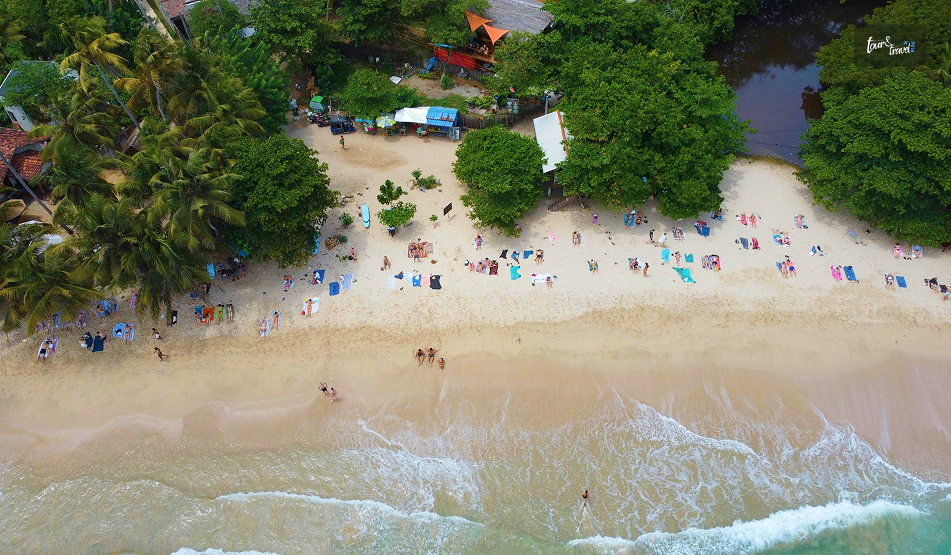
With sandbars and natural reefs, Dickwella Beach is a peaceful place where you can unwind. 

Furthermore, the protection of sandbars and natural reefs makes the water here safe for swimming. So, it is a family-friendly beach with turquoise water and long stretches of golden sand. 

Moreover, here, you will find local fishermen enjoying a boat ride in their traditional boats, and also don’t forget to enjoy a king coconut drink when you are on the beach. 

2. Dickwella Beach Surfing 

Dickwella beach surfing is difficult because of its rocky obstacles. The nearby Hiriketiya Bay is a safer and more powerful choice for surfing. 

The beach break in the center of the Hiriketiya Beach is ideal for beginners and intermediates. It has gentle and rolling waves. 

On the other hand, the reef break on the left side of the bay is ideal for advanced surfers. Here, the wave can swell up to 8 feet, and the water rolls over shallow coral reefs. 

December to April is the best time for surfing in Dickwella Beach. 

3. Visiting The Hummanaya Blowhole

Visiting The Hummanaya Blowhole

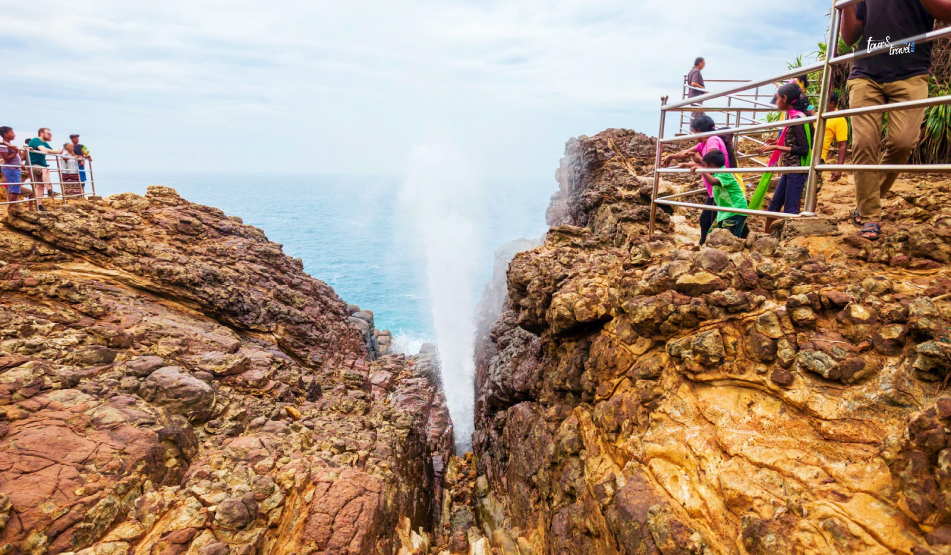
I had mentioned the Hummanaya Blowhole when talking about the Kudawella Beach. It is the largest and only natural blowhole in Sri Lanka and the second largest in the world. 

In Kudawella fishing village, this blowhole looks like a natural water fountain that pushes the water 30 meters upward, and at the same time, it makes a fascinating “Hoo” sound, and eruptions are quite powerful. 

4. Spotting Turtles 

I just took a five-minute tuk-tuk ride to reach Turtle Point Bathigama from Dickwella Beach. This sheltered bay is the haven of green turtles, which frequent the shallow, calm waters to graze on sea moss. 

Furthermore, the conservation rangers here offer ethical snorkeling tours so that you can spot the adorable turtles without any harm to their nests. 

November to April is the best time for spotting turtles here. 

Along with the Turtle Point Bathigama, another fascinating place for finding the sea turtles is the Polhena Beach. It is at a distance of 20 km from Dickwella Beach. 

5. Visiting The Wewurukannala Vihara Temple

Visiting The Wewurukannala Vihara Temple

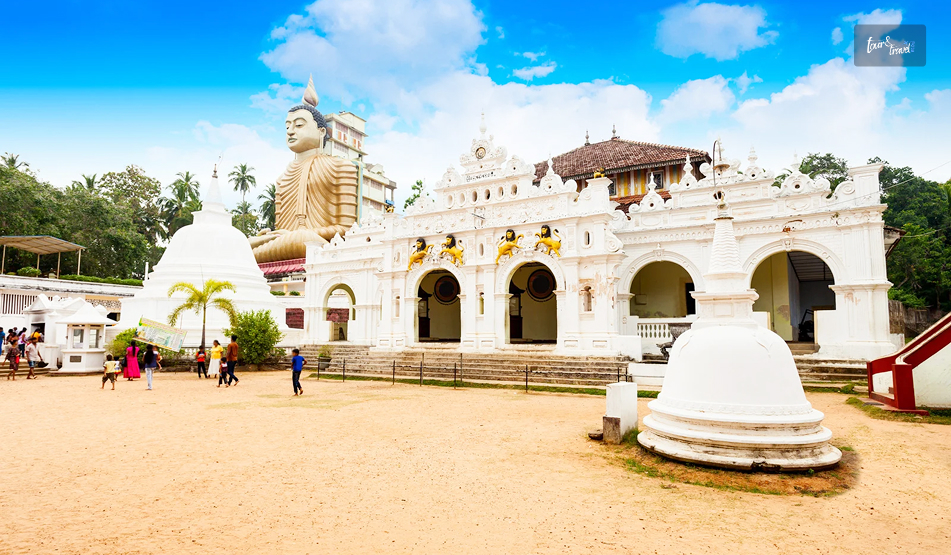
Sri Lanka is a place that impresses you with its Buddhist wonders at every nook. Similarly, if you are in Dickwella Beach, you must not miss a visit to the Wewurukannala Vihara. 

I just took a short drive from Dickwella to reach the Wewurukannala Vihara Temple. It is home to the tallest Buddha Statue in a seated position. 

The towering 50-foot statue humbles you.

Furthermore, the temple complex has various sections, and before I could see the statue, I had to undergo the Tunnel of Hell. 

Here, you will see giant models that depict the consequences of deviating from the path of righteousness. 

Moreover, the temple walls show wonderful illustrations that depict the stories of Buddhism and Buddha’s life. 

These illustrations are also the flagbearers of the rich artistic tradition of Sri Lanka.

6. Snorkeling 

Dickwella Beach, with its protected water, offers the safest and most ethical environment for snorkeling. 

If you are a diver or snorkeler, you will especially love the Pehambiya area, which is on the western side of Dickwella Beach. 

This is an excellent spot for snorkeling, as you will find many vibrant marine animals along with colorful fish in their natural habitat. 

Moreover, October to April is the best time for snorkeling in Dickwella Beach. 

You can either bring your own snorkeling gear or rent it locally to get under the water and explore the most vibrant coral reef. 

7. Swinging Over The Ocean 

Sri Lanka is a rage on social media, and as the Dalawella Beach has its Instagram-favorite swing, you will also find a swing at Dickwella Beach. 

The swing here suspends from a coconut tree, and you can enjoy a ride in it to enjoy the most amazing views of the water from above. 

You will feel like a bird as the ocean breeze caresses your hair. 

Also, sunset is the best time to enjoy a ride in this swing, with stretches of sand and greenery around, which allows you to take the most Instagram-worthy shots. 

8. Having The Best Seafood 

Like Ahangama or other fishing towns in Sri Lanka, Dickwella also has a strong fishing community. 

The fishermen here catch fresh fish, seafood, and especially, you will get amazing prawns here. The fresh prawns taste heavenly with local spices and flavors. 

You can have this spicy prawn dish at the nearby Dickwella Resort & Spa. Or, for a more authentic experience, you can explore the street food stalls in the Dickwella Market. 

The Dickwella Market is most happening on Sundays as the air is filled with rich aromas of spices and flavors. 

Ending The Day At Dickwella Beach With The Ultimate Nighttime Experience 

The nightlife of Dickwella Beach is intimate. The beachside lounging experience here is relaxing, where you can cherish a cocktail and live music. 

Smoke & Bitters is the most high-profile open-air bar in Dickwella. Its creative cocktails are acclaimed internationally, and don’t miss its Sri-Lankan-inspired Tapas.

Share on Social Media

Sibashree is a travel, culture, and leisure writer who has been writing since the age of 12 and professionally since 2014. With more than a decade of travel writing experience and journeys across India and several parts of the world, she brings a deeply personal and thoughtful perspective to her work. A student of English Literature and Mass Communication, Sibashree has always viewed travel as more than movement — for her, it has been a way of understanding people, cultures, and herself. Her passion for spiritual exploration has also led her to many unusual and meaningful destinations over the years. Outside of writing, Sibashree enjoys watching European cinema, reading about global politics, and reflecting on the stories hidden within everyday places.

Leave a Reply

Your email address will not be published. Required fields are marked *

title-img Related

READ MORE things to do in japan

What Are The Things To Do In Japan? Know Why Gen Z Travelers Love Japan The Most  

BY  Sibashree Apr 7, 2026

Japan is now approaching Golden Week, and everyone will have their own list of things to do in Japan.  From 29th April to 6th May, Japan will have the most colorful parades and horse races. This Golden Week celebration is important to hail the rich culture of Japan. And it is this rich culture and a distinct sensory experience that make Japan a favorite among young people, especially Gen Z travelers.  Also, on the Berkshire Hathaway Travel Protection list, Japan has been consecutively securing the 9th position as the safest country in the world for the last 2 years.  Nevertheless, as I was saying, the things to do in Japan that make the country a favorite place to visit are not the same as the run-of-the-mill lists you see on the internet.  So, here, I have tried to keep it honest, based on the places I have visited and tried to decode in respect to those places why Japan is the France of the 21st century.  What Are The Things To Do In Japan?  Japan slowly grows on you. It’s not nuclear power; it has one of the largest domestic energy products (around 40% according to the International Energy Agency).  On the contrary, as Joseph Nye, a political scientist at Harvard, has pointed out, it is the soft power that has helped Japan to emerge as an idea, mode of entertainment, or aesthetics.  Can you call a sushi just Japanese these days? Or, a bowl of ramen? All these are very much present in our daily lives.  So, while exploring authentic local cuisine remains one of the best things to do in Japan, here are more activities you cannot miss.  Also, you can check whether Japan is expensive to visit or not, and the entire cost breakdown. 1. Visiting The Japanese Shrines The Japanese shrines practice the local Shinto religion of Japan. Furthermore, these shrines are places for worshipping Kami, the spirit of nature.  These shrines can be easily identified by the Torii gates. Furthermore, once you enter the Torii gates, you will find the worship hall and the inner sanctum.  Moreover, the most popular Japanese shrines are the Fushimi Inari Shrine in Kyoto, Meiji Shrine in Tokyo, Toshogu Shrine in Nikko, and Itsukushima Shrine in Miyajima.  2. Exploring The Japanese Temples Buddhism and the rise and fall of various sects across centuries have shaped the famous Japanese temples.  Furthermore, these temples are defined by architectural features such as pagodas, lecture halls, bellfries, and cemeteries.  While Todai-ji Temple in Nara remains the most popular temple to visit in Japan, the other temples to visit in Japan are the Senso-Ji Temple in Kyoto, Sanbutsu-Ji Temple in Misasa, Daisho-In Temple in Miyajima, etc.  3. Experiencing Shinjuku Shinjuku was very different from the other parts of Japan I visited. It offered an eclectic fusion of retro vibes and high-tech experiences.  Especially, thanks to the Godzilla Road, exploring Shinjuku is one of the best things to do in Japan if you are traveling with kids.  Along with the roar of Godzilla at the Godzilla Road, the Shinjuku 3D Cat near the Shinjuku Station East Exit is another major attraction for kids here.  Read more about what to do in Shinjuku.  4.  Enjoying The Ultimate Dark Academia Fan Moment At Jimbocho Book Town Uttered with an equal respect as the “Kaifeng and China book towns,” the Jimbocho Book Town is the ultimate place to visit for Dark Academia fans in Japan.  This town started booming when many law schools were established here in the late 19th century and early 20th century.  Today, it has more than 400 book stores, selling vernacular and foreign-language books.  Furthermore, every year, this book town holds the Aozora Kohon Ichiba or the Kanda Used Book Festival from Late October to early November. It is an attraction for book lovers around the globe. 5. Enjoying The Cherry Blossom Season In Kyoto If you want to experience romance in Japan, you have to be present during the cherry blossom season in Kyoto.  The Philosopher’s Walk is the most popular place to experience the cherry blossom scene here. If you are done soaking in the meditative vibe here, you can next head to the Shimbashi Street.  It is the most beautiful street in Asia.  The Kiyomizu-Dera Temple and Maruyama Park are other amazing places to see cherry blossoms in Kyoto.  6. Trying Osaka Food Osaka Food now represents Japanese cuisine worldwide, and it has left Tokyo behind in this regard. Thus, it fully justifies its nickname of “Japan’s Kitchen.”  Furthermore, Dotonbori is the epicenter of the best Osaka food and street stalls.  Takoyaki, Daifuku Mochi, Okonomiyaki, and the staples, Sushi and Ramen, are some of the must-try items here.  7. Visiting Oshino Hakkai Sensory seeking is one of the biggest reasons why young travelers seek Japan, and there has been a 1300% surge in the bookings of young and Gen Z travelers from 2019, according to a report by American Express.  Furthermore, the Instagrammable places in Japan, such as Oshino Hakkai, have played a major role in satisfying this sensory quest.  Now, as I have mentioned in my Oshino Hakkai guide, it is a place I got to know about from Instagram.  You can see the snow-capped peaks of Mount Fuji from Oshino Hakkai, and the eight sacred ponds here were the highlights of my Tokyo to Mount Fuji day trip.  Furthermore, the Wakuike Pond is one of these eight ponds, and its water was carried to space in the Space Shuttle Challenger in 1983 to conduct an experiment on snowmaking in space.  8. Planning A Two-Day Trip To Nara Do you know why Japan attracts anxious young travelers? It kind of strikes a balance. How?  When places in Japan feel like the future, think of Tokyo or the speed of the bullet trains. Some parts of the country bring back the order of the past.  One such place is Nara, the first permanent capital of Japan and home to 8 UNESCO World Heritage Sites. The Todai-ji Temple is the most famous among them.  Before Kyoto became the country’s capital in 794 AD, it served as the seat of power.  Along with the Todai-Ji Temple, you must also visit Kasuga Taisha, Mt. Wakakusa, and the Heijo Palace in Nara.  Read my complete guide on things to do in Nara to understand why you cannot miss a 2-day trip here.  9. Visiting Hokkaido Beach And Sapporo The Hokkaido Beach is in Western Japan, and it looks straight out from the works of Hakura Murakami.  It’s surreal to see the coexistence of the snow-capped peaks and dunes, and it’s only possible in Hokkaido.  Along with the Hokkaido Beach, Sapporo, the capital of Hokkaido, also stands out with its green parks and shrines like the Sapporo Suitengu Shrine.  So, when you are next in Japan, plan a Tokyo to Hokkaido trip.  10. Visiting Hakone  The things to do in Hakone are all about soaking in the quiet moments that are most powerful.  I am glad that I did not follow the usual loop, including the train, cable car, and ship circuit.  If the Open Air Art Museum with 100 sculptures is the highlight of my Hakone visit, the Choan-ji Shrine, with small stone statues of monks, is what will stay with me forever.  Also, another fun part here was washing my money at the Fukazawa Zeniaria Benzaiten Shrine.  I have not got a bigger return yet, but there is no harm in believing in a custom that locals have been following for so many years.  Moreover, if you are in Hakone, don’t forget to take a bath in the Onsen or hot springs. Furthermore, you can relive history by taking a ride on the Hakone Tozan Railway here. So, it is no wonder that visiting Hakone is one of the best day trips from Tokyo you can plan.

READ MORE things to do in Hakone

What Are The Things To Do In Hakone? Know The Top Activities In 2026

BY  Sibashree Mar 31, 2026

The thing is, everyone said "Do 'The Loop'" when I told them about Hakone.  You know the train, cable car, ropeway, and pirate ship circuit.  However, after a few days wandering those forested, winding trails through the volcanic hills, I saw what the crowd missed.  The real magic isn't in the itinerary.  It's in the quiet moments like washing cash in a waterfall, or soaking feet by a Shiba Inu.  It is hard to ignore how deeply those small things connect to the place.  If you've got more than a day or just want to break free from tourist traffic, step off the path. That's where Hakone lives. And here are the things to do in Hakone. What Are The Things To Do In Hakone?  Hakone is the place that defines TheLowDownUnder Travel philosophy. Rush the day, and you miss the magic.  So, without going for ticking a bucket list, here are the things to do in Hakone that offer an immersive experience. 1. Visiting The Open Air Art Museum: A Playground For The Soul This was the one event I'd been hoping for, and it didn't fall short.  Picture 70,000 square meters of green space packed with over 100 huge sculptures. Some of them are traditional Henry Moore bronzes, and others are wild, experimental setups like a giant head with "living hair" grown from plants.  I found a figure lying on its back in the grass at one point.  After weeks in Tokyo's busy streets, that moment felt like a personal hit.  The museum includes a Picasso Pavilion holding 300 pieces.  I don't really dig Picasso much and only skimmed it, but if you're into cubism, you'll be thrilled.  It is open every day of the year, and there is no schedule to worry about.  Try it if you want to walk around without carrying anything heavy. 2. Playing Football With A Furry Friend Soaking feet in mineral water, quiet, simple, real.  The Hakonenomori Footbath isn't on the map like most spots.  It's tucked into a private garden behind a house, hidden from sight.  Google Maps calls it a footbath, but that's not what it really is.  You pay a small amount and get to dip your feet in spring water with a clean towel provided.  Dogs are welcome with no rules, no fuss.  I showed up just as Monaka, a shiba Inu, hesitated over the edge.  Her owners nudged her gently with their hands and voices.  She stayed still, paws raised, like she didn't know where to go.  That moment stopped me in my tracks. If you don't like being naked at an onsen, this feels safe and low-key. 3. The Art of "Ma": Finding The Perfect Onsen But Ma, the pause, is central in Japan. Hakone is where you feel it most.  The Loop can be done in a day from Tokyo, but you miss the real soak.  I stayed at Mount View Hakone. It was cheap but had great facilities.  Public baths were indoors and out.  The highlight was booking a private onsen for solo use.  Tattoos still draw caution in Japan. If you've got ink, go private.  Tenzan Onsen in Hakone-Yumoto is known for being tattoo-friendly, though rules are tight, usually just one inked person per group. 4. Washing Away Your Financial Woes Who doesn't crave wealth on a break?  I stepped off the train at Tonosawa Station and spotted the Fukazawa Zeniaria Benzaiten Shrine right there on the platform.  It's small, tiny even, so glance, and you'll miss it.  The thing is, locals follow a real tradition. They bring a ladle, drop yen in, then rinse it in the mini waterfall.  The legend goes that whatever money you wash and spend later comes back to you, bigger.  I haven't seen my account blow up yet. Still, the ritual feels oddly peaceful. Hard to ignore how quiet everything is. 5. My Absolute Favorite: The Hundreds Of Faces At Choan-ji I really don't know what the rest of the world is doing. This place should be in every guide, as Choan-ji Shrine is just amazing.  The area comprises hundreds of small stone statues of monks, and each one of them has a unique facial expression, laughing, angry, or even a surprised one.  Wandering through the moss-covered statues, I got lost in the silence for a whole hour.  By 5 PM, there were only two more visitors around. It was like a really peaceful place.  Pro Tip: Use insect repellent! The mosquitoes here are as loyal to the shrine as the monks are. 6.  Enjoy The Magic Of The Local Bus This may sound strange, but amongst my top three experiences, one was just traveling by bus.  Though the Hakone Tozan train is famous, it is usually crowded beyond capacity.  I chose to take a bus from Hakone-Yumoto to the ropeway.  For half an hour, the bus ride gave me dozens of gorgeous, twisting mountain scenes which I wouldn't have been able to see from the train.  It was in this bus trip that something glittering blinked at me through the windows. A group of trees glistened like they were covered in thousands of small diamonds.  Then, I signaled to the driver and got out at the stop door without hesitation. Also, to my great surprise, I was standing in front of the Venetian Glass Museum. 7.  Visit The Glass Trees And Blue Beer The Venetian Glass Museum (or Hakone Glass-no-Mori) looks like something Disney would have created if they relocated to Italy.  There are bushes with glass flowers and "Crystal Trees" that sparkle brightly in the sunlight.  It is enchanting, glamorous, and exceedingly informative at the same time.  In case you have extra time, I also suggest the Pola Museum of Art. You must also visit the Narukawa Art Museum. Moreover, the cafe here features a wonderful "Mount Fuji" view, and their famous blue beer comes in a Fuji-shaped glass. 8. Live The Dreams Of Anime Fans And The Wine-Bathers If you're into Evangelion, Hakone is your Mecca (after all, it's the location for Tokyo-3).  At the station, you can spot the themed vending machines as well as the EVA-Ya store.  Also, if you are with your friends, don't do what I did and miss out on Yunessun.  It's an Onsen theme park where you can wear a swimsuit and even take a bath in red wine or coffee.  This time, I was alone and felt a little shy about wine-bathing solo, but next time it is definitely at the top of my list. Read Also: What To Do In Shinjuku As A First Time Traveler? 10+ Attractions You Cannot Miss In 2026 Is The Japan Rail Pass Worth It In 2026? Should I Buy Or Avoid It As A Conscious Tourist? Cherry Blossom Kyoto Japan: 2026 Season And The Top Viewing Spots

READ MORE Is Japan Rail Pass worth it

Is The Japan Rail Pass Worth It In 2026? Should I Buy Or Avoid It As A Conscious Tourist? 

BY  Sibashree Mar 25, 2026

The Shinkansen, or the Japanese Bullet Train, brought a revolution in the transportation system in the 1960s.  It was the need of the hour, considering the rapid growth in the economy. Also, it is an icon of the technological prowess and wealth of Japan.  These days, we have Vande Bharat in India, and no doubt the services and punctuality of these trains are spotless.  However, contrary to popular beliefs, they are never the same.  Why so?  To understand this, you need to take a ride in the Japanese Bullet Train.  However, is Japan Rail Pass worth it for the short and long rides in the Japanese Bullet Train?  In today’s blog, I will discuss its benefits and disadvantages in detail.  Is Japan Rail Pass Worth It?  Japan Rail Pass is a physical pass for train rides. It is only for tourists.  With this pass, you can enjoy unlimited train rides across Japan. Also, these passes include bullet train rides for a specific time span.  Japan Rail Pass Cost Check out the table below to understand the validity period and prices of the Japan Rail Pass.  Japan Rail Pass ValidityOrdinary Japan Rail Pass Cost Green Japan Rail Pass Cost7 Days PassAdult: 70,000 YENChildren: 35,000 YENAdult: 50,000 YENChildren: 25,000 YEN14 Days PassAdult: 110000 YENChildren: 55000 YENAdult: 80000 YENChildren: 40000 YEN21 Days PassAdult: 140000 YENChildren: 70000 YENAdult: 100000 YENChildren: 50000 YEN All ticket prices are sourced from the Japanrailpass.net. Also, remember that children mean kids below 12 years old.  From 12 years onward, they are considered adults.  Is The Japan Rail Pass Worth It? (Considering The Cost)  If you think that buying a Japan Rail Pass would hurt your wallet, you are making a mistake.  Yes, the Japan Rail Pass is expensive, especially if you are buying a Green Japan Rail Pass.  Still, if you want to try individual rides, the cost will be even higher. For example, a single trip to Nara from Tokyo costs 14500 YEN.  A really smart way to decide whether the Japan Rail Pass is worth it or not is to use a Japan Rail Pass Calculator.  Enter the departure and arrival points, check the ticket price for individual rides, and add them. Then, compare the total Japan Rail Pass cost to decide whether you need to buy it or not.  Also, consider the flexibility the Japan Rail Pass offers.  With a Rail Pass, you can complete as many rides as you want within the validity period. Also, there is no rush to buy a ticket every time you board a train.  Is Japan Rail Pass Worth It For Every Train?  The Japan Rail Pass does not cover every train service in Japan. However, it covers most train services.  Check out the details in the box.  Services Covered by Japan Rail PassServices That Japan Rail Pass Does Not Cover - Most Bullet Trains- Express Trains- Local Trains- The Narita Express, Running to Tokyo City from Narita Airport- Tokyo Monorail to and From the Haneda Airport - Joyful Trains in Japan- Bullet Trains Except Mizuho and Nozomi- The Metro Service in Tokyo and Other Cities- The Ferry Service Of Yakushima Where To Buy A Japan Rail Pass From?  You can buy the Japan Rail Pass from an authorized agent based in your country. Sometimes, these passes are available at the Osaka or Tokyo Railway stations or Haneda and Narita airports.  However, these passes are available for a limited time, and they charge around 10-20% extra charges.  Furthermore, upon reaching Japan, you can even buy the pass online at JRailPass.com. You can expect a delivery of the physical pass within 3-5 business days based on your location.  How To Take The First Ride With The Japan Rail Pass?  You have to get your Japan Rail Pass stamped before using it. You have to choose the JR Counter entry at any local and bullet railway station to pass through and board the train.  The JR Officer will check your passport and the JR Pass before stamping it.  From the next ride onward, you just need to show your JR Pass.  Activating your JR Pass at the railway station is always a better idea, as you can activate it only when you need it.  Usually, when you activate the pass at the airport, a day or two is wasted from the validity period, as the city metro services do not accept those passes.  Is Japan Rail Pass Worth It? Frequently Asked Questions (FAQs)  Here are the frequently asked questions and answers about whether the Japan Railway Pass is worth it or not.  1. Which Rail Pass Is The Best For Japan? The best Rail Pass for Japan will depend on your itinerary in Japan. For example, if you need to travel nationwide, you can choose a National Rail Pass for 7 to 21 days.On the other hand, Regional JR Passes are the best if you are focusing on specific regions such as Hokkaido or Kansai. 2. Can I Buy Japan Rail Pass From India? Yes, you can buy a Japan Rail Pass from India. In fact, it is a smart move to buy your Japan Rail Pass from an authorized agent in your country before starting the trip. At the Japanese Airports, buying the JR Pass can cost you 20-30% more. TBi Travels and Klook are some of the authorized services from which you can purchase the JR Pass online. When you buy the pass online from an authorized agent, you will receive an exchange order or a voucher via courier. You have to exchange that at the airport to collect the physical pass.  3. Can I Get Bento Boxes On The Trains In Japan? You can get Bento boxes at any railway station in Japan before boarding the train. You will also find vegan-friendly options for the bento boxes. However, you have to be very mindful about how you dispose of those bento boxes. You can throw them in the trash bins in the train, or after alighting from the train, you can dispose of them in the waste box at the station. You will not find trash cans frequently in Japan. So, you may have to carry them home if you do not dispose of them in time.  Read Also: Are You Planning A Trip To Osaka? This Is Your Quintessential Guide Festivals Of Light And Color: Experiencing Japan’s Vibrant Matsuri Is Japan Really An Expensive Place? Have A look