The first time I reached Batticaloa, a quaint town in eastern Sri Lanka, I did not expect to experience the slow but steady flame of human protest.
It was 9 AM in the morning, and I noticed a small group of people gathering near the Kallady Bridge.
They held up placards written on old sarees, torn clothes, and newspapers.
In a single line, they walked for around 2 kilometers peacefully and ended their walk at the Gandhi Park.
Known as the Batticaloa Justice Walk, it has continued since 12th May 2022, the day after the GotaGoGama (GGG) protest site was attacked by mobs, followed by Prime Minister Mahinda Rajapaksa’s resignation.
This protest walk has been a movement demanding a fundamental change, and the participants demand accountability for the people who disappeared during the period of conflict.
While this protest walk won me over, as I come from the land of Satyagraha and a long history of protests for political, social, and humanitarian reasons, I felt more eager to know the town and explore the top attractions.
What Is The Location Of Batticaloa Town?
Batticaloa Town, the administrative capital of the Batticaloa district, is in the eastern province of Sri Lanka.
This coastal town on a flat island is surrounded by a large lagoon and the Indian Ocean.
Pasikudah, a popular beach destination in Sri Lanka, is just 35 km northwest of Batticaloa Town.
Also, Trincomalee is the nearest major city to Batticaloa, and it is located 111 km south of Batticaloa.
How To Reach Batticaloa?
Batticaloa Town is easy to reach as it is well-connected to Colombo by road, train, and air.
By Train
It has the Batticaloa Railway Station, which receives direct express trains such as Meenagaya from the Colombo Fort Railway Station.
The 6075 Batticaloa Special is the fastest train between these two stations.
It left Colombo Fort at 3:15 PM and reached Batticaloa at 9:52 PM. Also, the third-class ticket price was LKR 1400.
By Bus
Regular bus services are available from the Bastian Mawatha Bus Terminal in Colombo to Batticaloa.
Based on the traffic, the journey will take 6 to 7 hours. The ticket price is around LKR 1500.
Furthermore, the Batticaloa International Airport (BTC) in SLAF Batticaloa is the main hub for regional air and chartered flight connectivity.
The travel time by air is around 1 hour and 15 minutes, and the ticket price will be around LKR 20000.
Transport Within Batticaloa
You will get tuk-tuks for local transportation in this coastal town, and based on the distance covered, the charges will be between LKR 150 and LKR 400.
Also, if you want, you can rent a tuk-tuk for the entire day at a negotiated price.
What Is Batticaloa Famous For?
History, colonial heritage, and spirituality merge in the small town of Batticaloa.
So, next time you are in Sri Lanka, you must plan a visit to Batticaloa. Also, these are the top attractions in Batticaloa.
Top Historical And Cultural Attractions In Batticaloa
Batticaloa is a coastal town rich in colonial history and unique cultural landscapes.
These landmark attractions showcase the area’s diverse heritage, ranging from ancient fortifications to cultural museums.
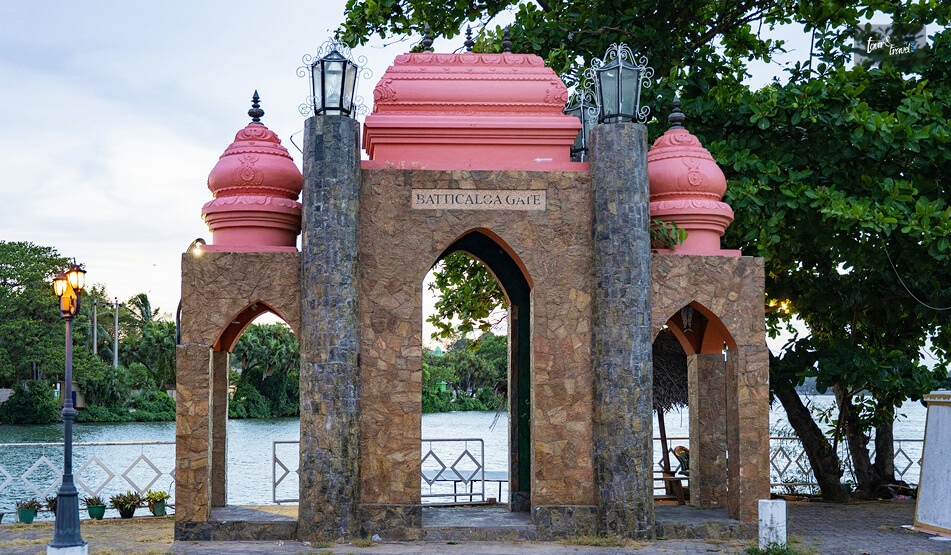
1. Batticaloa Gate
This historic monument marks the official landing site where early British colonial officials first arrived in the region.
It features a grand statue of Mahatma Gandhi and serves as a peaceful, picturesque viewpoint overlooking the tranquil lagoon.
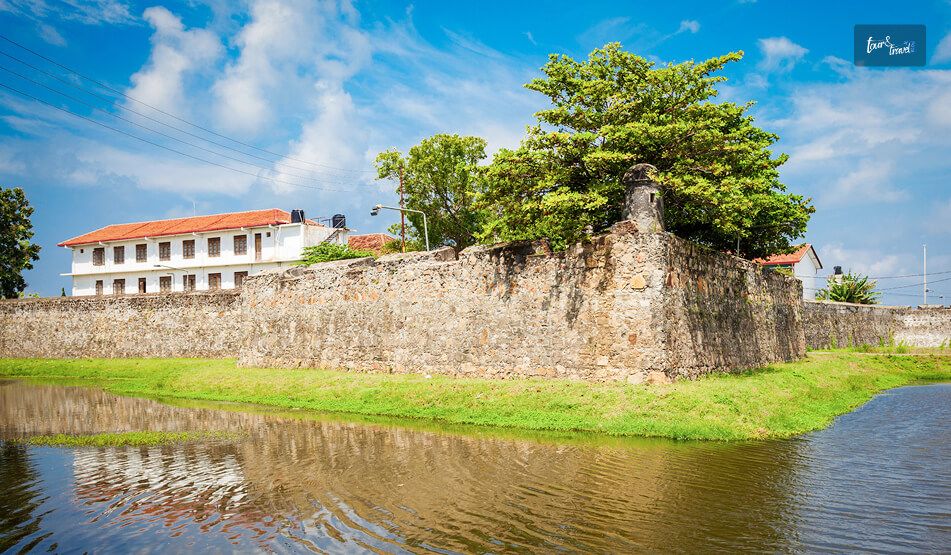
2. Batticaloa Fort
Originally built by the Portuguese in 1628, this structure was later captured and expanded by the Dutch and British forces.
The well-preserved fort is surrounded by a scenic moat and currently houses local government administrative offices.
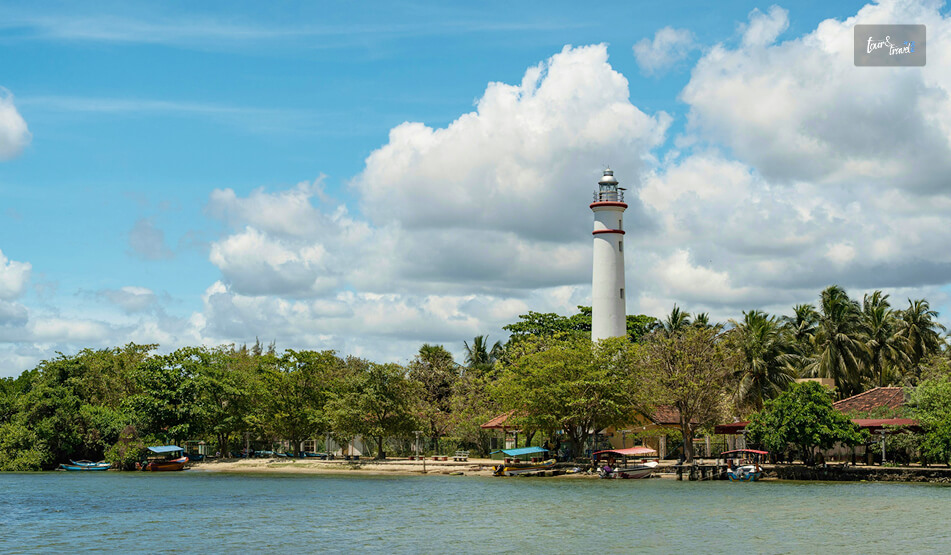
3. Batticaloa Lighthouse
Standing 28 meters tall, this iconic red-and-white beacon was constructed by the British in 1913 to guide ships safely into the harbor.
Visitors flock to this coastal spot to enjoy panoramic views where the lagoon meets the Indian Ocean.
4. Kattankudy Heritage Museum
This specialized cultural museum documents the rich, centuries-old history and unique traditions of the Muslim community in Sri Lanka.
It displays fascinating life-sized exhibits, traditional crafts, ancient weapons, and historical trade artifacts.
The museum remains open from 9 AM to 4 PM Monday to Thursday, and it remains open till 7 PM on weekends.
The ticket price is LKR 100 for local adult visitors, LKR 50 for local children, and LKR 500 for foreign visitors.
Top Religious And Spiritual Places In Batticaloa
Batticaloa, despite being a small coastal town, has the inclusive religious nature of Sri Lanka.
1. St Mary’s Cathedral
St Mary’s Cathedral is a 200-year-old Catholic church in Batticaloa, and despite being located in the middle of the town, it is a very quiet place.
It has a vibrant blue color, and its architecture exudes a quintessential colonial style you will find in Sri Lanka.
2. Hindu Temples
Like Jaffna Hindu temples, the temples in Batticaloa are also an extension of the local Tamil culture and religious beliefs.
Here are the temples that you cannot miss in Batticaloa.
Temple Name
Main Deity
Location
Significance
Major Festival Time
Sri Mamangeswarar Temple (Mamangapillayar)
Lord Shiva and Lord Ganesha
3 Km from the Town Center
Associated with the Ramayana (Prince Rama worshiped here)
10 Days of Festivity in July/August
Kokkadicholai Thaanthonreeswarar Temple
Lord Shiva
15 km southwest of Batticaloa Town
It has a Swayambhu or self-manifested Shiva lingam.
September
Sri Pathirakali Amman Temple
Goddess Kali
Periya Urani
Known for its vibrant ceremonies and festivals
Mahotsavam, a 15-Day Festival in March, and Navratri
Anaipanthy Sri Sithy Vigneswarar Thevalayam
Lord Ganesha
Heart of Batticaloa town (Pulliyanthivu)
Popular community temple
Daily
Sri Sithira Velayutha Swamy Koyil
Lord Murugan
Pulliyantivu
Popular community temple
Daily
Natural Attractions In Batticaloa
A serene coastal town, Batticaloa, has beautiful beaches and a beautiful lagoon.
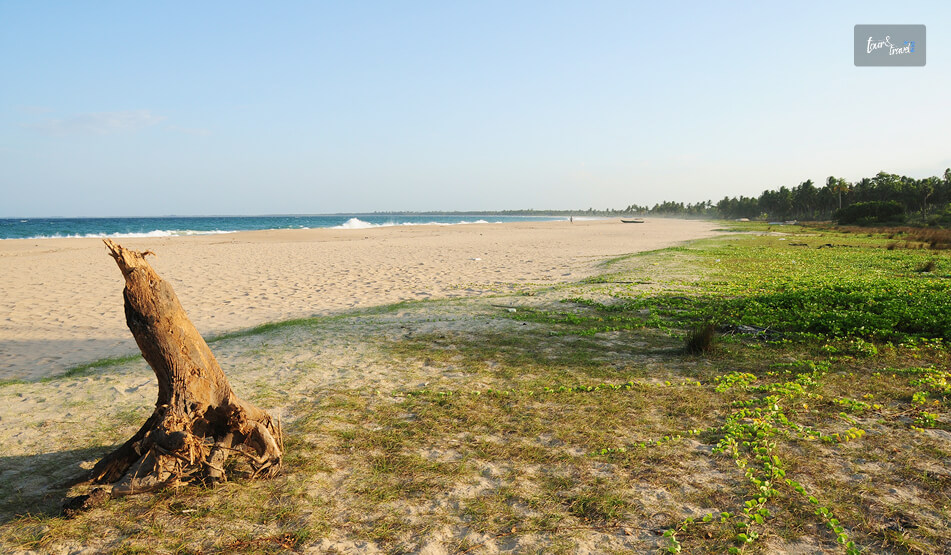
1. Kallady Beach
Kallady Beach is less trodden, and it still bears the signs of the devastation by the 2004 tsunami.
Due to fewer crowds, the beach with golden sands is an ideal place to relax. Also, it looks surreal during dusk.
2. Kalkudah And Passikudah
Around 35 km north of Batticaloa, you will find the Kalkudah cliff.
The twin bay shorelines of Kalkudah and Passikudah are located on either side of the cliff.
An ocean reef protects the twin bays from harsh monsoon winds.
So, these are ideal spots for bathing, windsurfing, sailing, and water skiing.
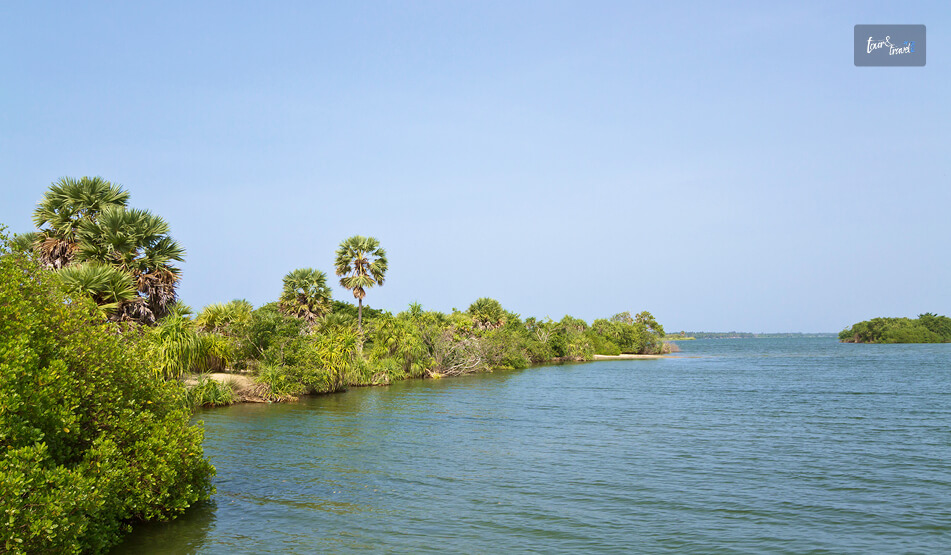
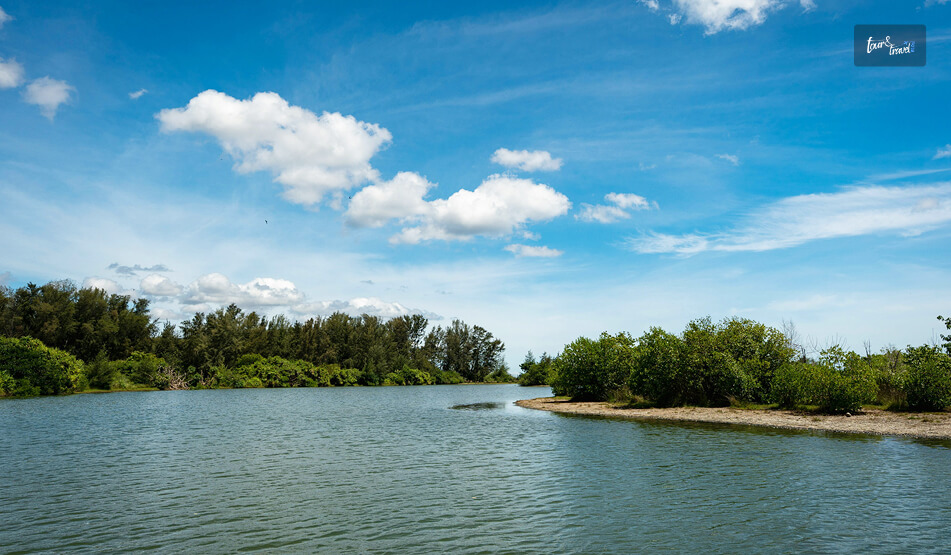
3. Batticaloa Lagoon
A boat ride in Batticaloa Lagoon is a must, and during the boat ride, you can explore Buffalo Island, Bone Island, and Puliayantheevu Island.
Also, I loved my time in the fishermen’s boats.
Architectural Wonders In Batticaloa
The architectural attractions in Batticaloa show deep colonial and indigenous influence.
1. Kallady Bridge
The Kallady Bridge, crossing the Batticaloa Lagoon, connects Kallady with Batticaloa town.
Also known as the Lady Manning Bridge, it is more famous for a local myth.
Deep under the Batticaloa Lagoon, aquatic life produces rhythmic, humming, or musical vibrations that can sometimes be heard echoing into the night.
The best time to listen to the vibration is between April and September, especially on full moon nights.
Also, the trick is to take a boat ride and reach under the Kallady Bridge.
Then, you need to plunge the oar vertically into the lagoon water and keep the dry end of the oar close to your ears to listen to the vibrations.
2. Unnichchai Tank
I rented a bicycle for LKR 800 in Batticaloa. I came across the Unnichchai Tank as I proceeded toward the lagoon from Batticaloa.
The entire route is scenic, with low forest extending over the serene lagoon.
Furthermore, the Unnichchai Tank is an important landmark as it supplies water for the entire area.
Also, its modern concrete architecture emulates the ancient stone structure of the tank.
The modern version of the tank was built in 1919, and it supplies irrigation water for 6,200 hectares of farmland.
What Are The Things To Do In Batticaloa?
Batticaloa is a small town. However, the things to do in Batticaloa are diverse, from temple and museum visits to boat and bicycle rides.
So, here I am presenting a 4-day itinerary in Batticaloa for you.
Day 1: Colonial History And Sunset Views
Time of the Day
Attraction
Key Highlights
Activity
Morning
Batticaloa Fort
1628 Portuguese fortifications and scenic moat walls
Explore colonial buildings and walk the historic ramparts.
Mid-Day
Batticaloa Gate and Town Center
Iconic British landing monument and Mahatma Gandhi statue
Visit the monument and stop for a traditional Sri Lankan rice and curry lunch.
Late Afternoon
Batticaloa Lighthouse
1913 British beacon where the lagoon meets the sea
Enjoy panoramic coastal views and take photographs of the landmark.
Evening
Kallady Beach
Golden sands and the historic Kallady Bridge
Relax by the ocean and learn about the legendary “singing fish” folklore.
Day 2: Cultural Heritage And Sacred Temples
Time of the Day
Attraction
Key Highlights
Activity
Morning
Sri Mamangeswarar Temple
Ancient site linked to the Ramayana
Perform morning prayers and soak in the spiritual vibe
Late Morning
Kattankudy Heritage Museum
Travel south from the town center
Explore exhibits, traditional crafts, and Muslim community history.
Afternoon
Town Exploration
Pulliyantivu district temples
Visit Anaipanthy Sri Sithy Vigneswarar and Sri Sithira Velayutha Swamy Koyil.
Evening
Lagoon Boat Ride
Lagoon Park Area
Hire a local boat for a relaxing sunset cruise on calm waters.
And, Day 3: Spiritual Journey And Southern Coast
Take a scenic drive across the lagoon and move southwest to visit the Kokkadicholai Thaanthonreeswarar Temple.
It is one of the oldest and most revered Shaivaite temples in Sri Lanka, and it has a Swayambhu Shiva Lingam.
Then, head to the Pasikudah Beach in the late afternoon. It has crystal-clear turquoise waters and calm waves.
Day 4: Nature And Hidden Gems
Visit the Unnichchai Tank in the morning.
The ambiance surrounding this massive irrigation reservoir is peaceful, and it is an ideal destination for birdwatching.
Do some souvenir shopping in the afternoon.
Explore the local markets to buy traditional handloom textiles, palmyra palm handicrafts, and local snacks like Aluwa.
Where To Stay In Batticaloa?
The Batticaloa Municipal Council has many listed accommodations if you want to stay in this coastal town.
The most affordable option among them is the Vishna Guest in Batticaloa Town.
The tariff per night will be around 3500 LKR, and you can contact them at +94 71 658 8779.
Also, Sunrise Villa Batticaloa in Kattankudy is another delightful option, despite being a little expensive.
The tariff will be around LKR 11000 per night, and the contact number is +94 76 890 1234.
Important Phone Numbers You Must Keep Handy
When you are in Batticaloa, you must keep the following phone numbers handy.
Contact the Batticaloa Police Station at +94 65 2224422.
Also, you can reach out to the Batticaloa Teaching Hospital at +94 65 222 2261.
Falling In Love With The Resilient Spirit Of Batticaloa
Batticaloa is more than a coastal town with sun-drenched beaches, colonial remnants, and architectural landmarks.
It is a town where history is actively lived.
Furthermore, the quiet dignity of people here complements the serene beauty of the landscape.
Also, on one hand, you can listen to the haunting, melodic mysteries echoing beneath the Kallady Bridge here.
On the other hand, the unyielding footsteps of the Batticaloa Justice Walk at Gandhi Park, this coastal enclave, leave an indelible mark on anyone who visits.
Overall, it reminded me that travel is not just about visiting places.
It is about connecting with the enduring human spirit that defines them.
Sibashree is a travel, culture, and leisure writer who has been writing since the age of 12 and professionally since 2014. With more than a decade of travel writing experience and journeys across India and several parts of the world, she brings a deeply personal and thoughtful perspective to her work. A student of English Literature and Mass Communication, Sibashree has always viewed travel as more than movement — for her, it has been a way of understanding people, cultures, and herself. Her passion for spiritual exploration has also led her to many unusual and meaningful destinations over the years. Outside of writing, Sibashree enjoys watching European cinema, reading about global politics, and reflecting on the stories hidden within everyday places.
Like how I had pulled over for St. Clair's Fall, the same thing happened a few kilometers along the A7.
The driver asked me not to keep my camera aside yet, and suddenly the hillside opened up.
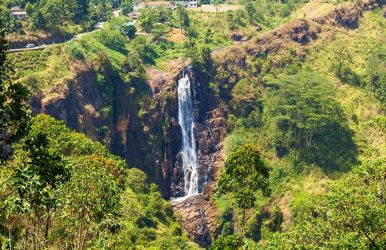
There was a long, narrow ribbon of white water dropping almost straight down into a gorge of tea bushes.
It was Devon Falls, the “Veil of the Valley” in Sri Lanka’s Tea Country. The name comes from how it falls a long way.
So, it more than makes up for the lack of width compared to St. Clair's Waterfall. Here is more about this beautiful waterfall that should be on your Sri Lanka itinerary the next time you visit.
Some Quick Facts About Devon Falls, Nuwara Eliya
Details Information Height Around 97 Meters Number of Drops 3 Tiers River A Tributary of the Kotmale Oya, Part of the Mahaweli River System Location 6 KM West of Talawakele, Nuwara Eliya District, Central Province Elevation Around 1140 Meters Above Sea Level Entry Fee Free and Viewable from Roadside Platform Nickname The Veil of the Valley Rank 19th Highest Waterfall in Sri Lanka
Where Is Devon Falls And How To Get There?
Around 6 kilometers west of Talawakele, Devon Falls is on the A7 highway that connects Colombo to Nuwara Eliya via Hatton.
This waterfall in the Nuwara Eliya District is at an elevation of around 1140 meters. It is in the heart of the Dimbula tea-growing region.
From Nuwara Eliya
The distance between Nuwara Eliya and Devon Waterfall is around 30 kilometers. I took a car from Nuwara Eliya, and it cost me around 3000 LKR.
You can also take a tuk-tuk, which costs around LKR 2000.
The road passes directly above the falls. So, even before you reach the viewpoint, you will get your first glimpse of it through the windscreen.
From Kandy Or Colombo
If you are traveling from Kandy by road, you will reach Devon Falls within 2 to 2.5 hours via Gampola and Nawalapitiya.
Furthermore, from Colombo, it is a 4-hour drive on the Avissawella–Hatton route. Since it is a long journey from Colombo, you can pair it with a night in Hatton or Nuwara Eliya rather than a same-day round trip.
On Foot From The Road
There are two designated car parks along the A7 that double as observation platforms.
Both offer a clear view of the three-tiered drop without any walking required.
If you want a closer look, a short trail leads about a kilometre through the surrounding tea estate toward the base, though the pool itself is not easy to reach.
The Story Behind The Name Of Devon Falls
Devon Falls gets its name from Devon, a pioneering English coffee planter.
His plantation once occupied the land nearby.
When coffee cultivation collapsed across Sri Lanka's hill country in the late 19th century due to a leaf-rust blight, tea took its place.
Today, the falls tumble past neat rows of tea bushes rather than coffee, though the name from that earlier era stuck.
What I found most memorable about Devon Falls was not just its height, but how sudden it feels.
St. Clair's spreads its water wide and slow.
Devon narrows it and lets it drop, almost in a single unbroken curtain through the first two tiers before spreading again near the base.
Moreover, standing at the main viewpoint opposite the Mlesna Tea Centre, you get the full length of the fall in one frame, framed by steep, green escarpments on both sides.
What Is The Best Time To Visit Devon Falls?
Season Months What to Expect Wet Season May to September Fuller, more dramatic flow, though mist can obscure the view Dry Season December to March Clearer skies, better for photography, lighter flow Early Morning Any Season, Before 9 AM Less roadside traffic and softer light on the water
Pairing Devon Falls With St. Clair's
Because the two falls sit only a few kilometres apart on the same road, almost nobody visits just one.
St. Clair's is the wider, more famous of the pair, while Devon is the taller and, to my eye, the more dramatic.
Seeing both in a single stop along the A7 takes less than half a day, which makes this stretch of road one of the most efficient sightseeing detours in the hill country.
A One-Day Itinerary Around Devon Falls
Here's how I'd plan a day trip centred on Devon Falls, starting from Nuwara Eliya or Hatton.
Time Stop Note 8:30 AM Depart Nuwara Eliya or Hatton Aim to reach the falls before the midday tour-bus crowds. 9:30 AM St. Clair's Falls Roadside viewpoint, about 6 km east of Devon. 10:30 AM Devon Falls View from the main platform opposite Mlesna Tea Centre. 11:15 AM Tea estate walk or factory visit Several estates in Dimbula offer short tours. 12:30 PM Lunch in Talawakele Local rice-and-curry spots along the main road. 2:00 PM Onward to Hatton or Nuwara Eliya Or continue toward Adam's Peak if timing allows.
Practical Tips For A Visit To Devon Falls
Both viewpoints are roadside, so no hiking is required if you just want the classic photo.
Traffic along the A7 can be heavy with tour vans in the late morning. So, an early start helps.
Skip swimming here. The pool is difficult to access, and the currents near the base are not considered safe.
Pack a light jacket. At over 1,100 m elevation, mornings can be genuinely chilly even in the dry season.
We only stopped for about fifteen minutes at Devon Falls.
However, it was one of those places that have stayed with me. That long, narrow drop through the tea hills, half-hidden in mist, is hard to shake.
Yes, the Kandy to Ella Train is still closed.
Even if you search for the Kandy to Ella trains on the Sri Lanka Railways website now, it will show,
“The rail line from Kandy to Ella is still under repair.
Please select Ambewela as your closest alternative departure station.”
So, it means that Sri Lanka Railways, especially the iconic Kandy to Ella train route, is still recovering from the destruction of Cyclone Ditwah in 2025.
However, operation of the Ella Odyssey train has resumed from 7th January 2026.
Nevertheless, everyone waits for the Kandy to Ella train route to be fully functional.
And here I want to share my experience of an iconic train ride on this Kandy to Ella route.
I will also share details about the Ella Odyssey Train, now running between Ambewela and Badulla.
Kandy To Ella Train Journey: Quick Facts
FactsDetailsRoute DistanceAround 120 KmBest ClassReserved Second ClassBest Time for the Train JourneyDecember to April The Most Beautiful Stretch Nanu Oya and EllaRail Route Built In1864
The Kandy To Ella Train Journey: Why Is It So Famous?
The Kandy to Ella train service was started in the British period for the transportation of tea to the highlands.
However, today, it is acknowledged as the most beautiful railway route in Sri Lanka.
The best thing is that the scenes outside the train window do not remain static.
From small villages to tea plantations, hills, and waterfalls,
Furthermore, the train on this route passes at a slow pace, making the experience all the more immersive.
So, a train journey on this route is one of the best things to do in Ella and, in fact, one of the top attractions in Sri Lanka.
My Experience Of The Kandy To Ella Train Journey
If you are traveling from Colombo to Kandy, you now have to take a bus.
However, I visited before the devastation caused by Cyclone Ditwah.
So, I enjoyed my train journey from Colombo to Kandy.
From Kandy Lake to the iconic Temple Of The Tooth, the top attractions in Kandy make it the cultural epicenter of the country.
After exploring Kandy, I took a train ride to Ella, and here is how I enjoyed the journey.
1. Train Journey Started From The Kandy Station
Like the city itself, the Kandy Railway Station is also very pretty.
It has a history dating back to the British era.
Even today, behind its modern exterior, you will find a Victorian interior and platforms.
So, once you enter the station, you will feel history and nostalgia becoming palpable before your eyes.
The station is hot and humid, and the crowd may seem a little annoying.
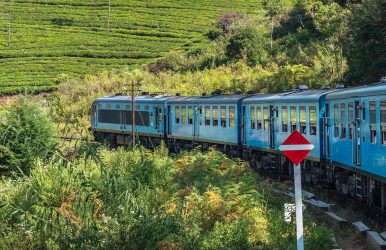
However, a glimpse of the iconic blue train of Sri Lanka will take all irritation away.
2. The Blue Train
The train reached Kandy station, and the color of the Chinese diesel locomotive was turquoise blue.
I boarded the third-class compartment and luckily got a seat.
I already knew about the history of this rail route at the National Railway Museum, Kadugannawa.
The train has been operating since the 1920s. However, passengers started traveling on these trains in the 1960s.
Nevertheless, the train was jolting heavily, and it slowly left Kandy, making its way to the hill country.
Cricket And More
Coming from India, it was fun talking about cricket with the Sri Lankan locals on the train.
They showered their love for every cricketing legend, from Sachin Tendulkar to Virat Kohli.
I also shared my adoration for Kumar Sangakkara and Sanath Jayasuriya.
You know what the best thing about this train ride was?
The train moved slowly. However, the wind coming through the windows got mixed with the voices of the locals singing.
Overall, it was a feeling of freedom and excitement.
The Vendors
The Kandy to Ella train ride will be incomplete without having chai and hot wade.
As the vendors get on board, the fragrance of hot wade and tea immediately makes you hungry.
Also, as soon as the train leaves the Kandy station, you start enjoying the cool breeze.
The View
Ever-stretching tea plantations, misty mountains, and beautiful stations, I got to see everything throughout the train journey from Kandy to Ella.
So, within a few hours, I got a glimpse of the local lives of Sri Lanka.
I also understood why it is called one of the greatest train rides in the world.
Continuing The Kandy To Ella Rail Route Journey: Toward The Nine Arch Bridge And Demodara Railway Loop
Once I got down at Ella after a train ride from Kandy, I took a tuk-tuk to reach the iconic Nine Arch Bridge.
The Nine Arch Bridge is a historic landmark for its role in World War I.
The first train on the bridge passes at 9:30 AM, and the last train passes at 5:30 PM.
Moreover, along with the Nine Arch Bridge, the Demodara Railway Loop is another attraction on this route.
I had the most peaceful experience of train riding at the Demodara Railway Loop.
Unlike the Kandy to Ella train, it was not crowded at all.
The Kandy To Ella Train: Running Between Ambewela And Badulla Now
Train $11015 runs between Ambewela and Badulla except on Wednesdays. It departs the Ambewela station at 3 PM and reaches Badulla at 5:46 PM.
You can buy a first-class ticket, and it costs ₹INR 1000.
Furthermore, the train $11005 leaves the Ambewela Station at 9:30 AM and reaches Badulla at 12:16 PM.
You can buy second-class and third-class train tickets.
A third-class ticket costs ₹575 and a second-class ticket costs ₹770.
Moreover, on Wednesdays, train #111043 departs Ambewela at 1:30 PM and reaches Badulla at 4:15 PM.
The tickets for this train are expensive.
The second-class ticket for this train is ₹2326 per adult.
If you want to learn more about the trains running between Ambewela and Badulla, you can check out the information here.
I had been warned about the leeches before I ever booked a guide for Sinharaja.
Within twenty minutes of entering the forest, I understood why everyone mentions them first.
They are a minor, manageable nuisance. High socks and a quick check every so often took care of it.
However, they are also the forest’s way of telling you have left the manicured, dry-zone version of Sri Lanka behind.
Sinharaja is wet, dense, and alive in a way none of the country's safari parks are.
Also, it doesn't take long inside the canopy to understand why UNESCO calls it the island's last viable stretch of primary tropical rainforest.
The name means 'Lion Kingdom' in Sinhalese.
Also, the forest earned its UNESCO World Heritage status in 1988, a decade after it was declared a National Heritage Wilderness Area in 1978 in response to government-sanctioned clear-felling.
Conservationists and the March for Conservation movement pushed to stop the logging. What is left today, around 8,864 hectares in the country's south-west wet zone, is the reason Sri Lanka still has a rainforest at all.
Sinharaja Forest At A Glance
Location South-West Wet Zone Spanning Sabaragamuwa and Southern Provinces Area About 8,864 Hectares UNESCO Status World Heritage Site since 1988 Main Entrances Kudawa (North) Pitadeniya Deniyaya (South) Morningside Entry Fee Roughly LKR 2,700 (USD 15) Per Person Guide Charges Often Included in Tour Rates Best Time to Visit January to April August to September Known For 26 of Sri Lanka's Endemic Bird Species 60%+ Endemic Tree Cover Guide Required? Yes, Mandatory in the Core Zone
Entry and guide fees are adjusted periodically. So, check current rates before you travel.
Two Ways In: Kudawa Or Deniyaya
Sinharaja has several access points, and which one you choose shapes the whole trip.
Kudawa
Kudawa, on the northern side, is the most established entrance. It is home to the Rainforest Research Centre and the easiest place to arrange a local guide on short notice.
It is the default choice for most first-time visitors.
Deniyaya
It is on the southern side, sits closer to Galle and the south coast, making it the more convenient option if you are combining Sinharaja with a beach stay rather than approaching from the hill country.
There are also quieter entrances at Weddagala and Lankagama, better suited to serious birders who'd rather skip the more-visited trails entirely.
I went in through Kudawa, mainly because I was routing down from Ratnapura, and found it well organised.
A small visitor centre, a board of registered guides, and a clear sense that the rangers here take the guide requirement seriously.
That is not a formality to skip. The trail network inside the core zone isn't signposted, and entering without an assigned guide is not allowed.
Finding A Guide Worth Having
Arrive early by 6:30 or 7 AM if you can to get first pick of guides rather than waiting around mid-morning for whoever's free.
The good ones carry field notebooks, know individual bird calls from memory, and can tell you at a glance which species is endemic and which is not.
It matters a lot in a forest where a large share of what you are looking at exists nowhere else.
Tipping is customary and separate from the guide fee. A 500–1,000 LKR per person for a thorough half-day is a reasonable benchmark.
What You Will Actually See
Sinharaja's reputation rests heavily on its birdlife, and for good reason.
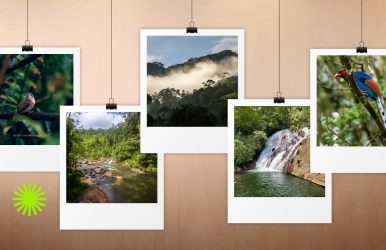
Close to 20 of Sri Lanka's endemic bird species live here. The species include Sri Lanka blue magpie, red-faced malkoha, green-billed coucal, and ashy-headed laughingthrush.
The real spectacle is not a single rare sighting, but the mixed-species feeding flocks locals call 'bird waves.'
A sudden, chattering rush of a dozen or more species moving through the canopy together.
My guide seemed to time our walk around finding one, and when it happened, it was worth the wait.
Mammals
Mammals are a different story.
Leopards and Indian elephants both live in Sinharaja, along with the endemic purple-faced langur.
However, the dense canopy and thick undergrowth make sightings genuinely rare.
So, don't plan your visit around seeing one.
Endemic Plants
What you will see, reliably, is an extraordinary concentration of endemic plant life.
Over 60% of the tree species in the core zone exist nowhere else on Earth, alongside rare amphibians, reptiles, and insects that make Sinharaja one of the world's recognised biodiversity hotspots.
Streams and small waterfalls cut through the forest at several points, and they are some of the best rest stops on a longer walk.
Slippery rocks and mossy banks rather than anything manicured, but a welcome place to sit with the sound of water after an hour of humidity and undergrowth.
Not Untouched, But Genuinely Wild
It is worth knowing that Sinharaja is not pristine wilderness in the strictest sense.
Selective logging continued until the 1970s, and buffer zone villages still use parts of the surrounding land.
But the core zone has regenerated substantially, and walking into it, the canopy closes overhead within minutes in a way that immediately feels different from anywhere else I visited in Sri Lanka.
It is less a technicality than a reminder of how close the country came to losing this forest entirely.
That is why the conservation fight over it in the 1970s still shapes its management today.
Practical Tips For Visiting Sinharaja Forest Reserve
Here are the things you need to keep in mind about what to carry, how to reach Sinharaja Forest Reserve, and the duration of your time here.
What To Wear And Bring
Bring leech socks (available cheaply near the entrances) or high boots tucked into trousers, a light rain jacket regardless of season, binoculars if birding is any part of your interest, and a reusable water bottle.
The humidity is constant, so pack lighter layers than you'd expect for a 'forest' hike.
How Long To Plan For
A guided walk typically runs two to five hours depending on your pace and chosen trail. A standard loop from Kudawa is often around three hours.
If you are serious about birding, build in a full morning. The best activity clusters between roughly 6:30 and 10 AM, after which the forest quiets down and the heat picks up.
Getting There
The nearest major towns are Ratnapura and Galle. Neither entrance has access to direct public transport.
So a hired vehicle or pre-arranged tour is the practical option.
Several south-coast-based tours run day trips from Galle, Bentota, and Hikkaduwa if you would rather not organise transport yourself.
Where This Fits In A Sri Lanka Itinerary
Sinharaja pairs naturally with a hill country or south coast loop. You can visit it either as a detour from Ratnapura's gem country or as a rainforest counterpoint to a beach-heavy stretch of the south.
It is a full-day commitment once you factor in travel, entry, and the walk itself. So, I would avoid trying to squeeze it in alongside another major activity on the same day.





 Related