

Diyaluma Waterfall, Sri Lanka: The Eternal Memoir Of Love (Location, Hiking, And More)

After visiting the Nine Arch Bridge and the iconic blue trains, my next stop was the Diyaluma Waterfall, at a distance of around 45 km. 

Now, Sri Lanka is full of hidden gems. Along with the Ritigala Forest Monastery, this waterfall has also offered me a slice of offbeat Sri Lanka. 

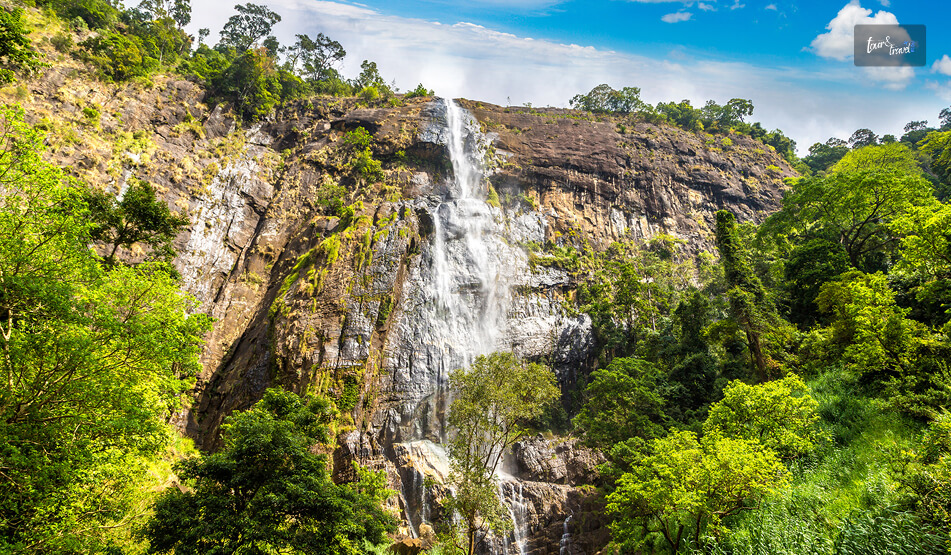
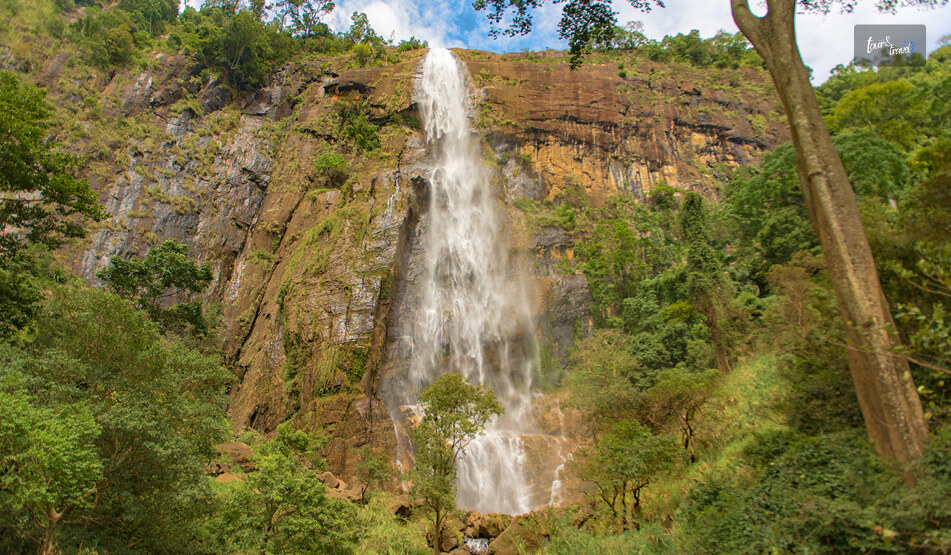
Furthermore, the Diyaluma Waterfall, with a height of 220 meters, is the second-tallest waterfall in Sri Lanka, and it has many natural infinity pools. 

If those were not reasons enough, Diyaluma Waterfall is irresistible for the local tragic love story associated with it. Also, it is a place of great ecological importance. 

Moreover, the journey from Ella to Poonagala and the trek further offer an equally unforgettable experience. 

Here are more details about visiting the Diyaluma Waterfall, its location, transport options, history, hiking experience, and more. 

Where Is Diyaluma Waterfall? 

The Diyaluma Waterfall is on the Colombo-Badulla highway in the Badulla district of Sri Lanka. 

Koslanda, around 6 km west, is the closest town to the Diyaluma Waterfall. 

Furthermore, it is located at a distance of around 30 km from Ella. Also, the waterfall is located about 196 km away from Kandy, the cultural hub of central Sri Lanka

Moreover, the Kirindi Oya River has formed this waterfall. This river starts flowing near Bandarawela and flows across the central part of Sri Lanka. 

How To Reach The Diyaluma Falls, Sri Lanka? 

How To Reach The Diyaluma Falls, Sri Lanka

Tuk-tuks are easily available from Ella to Poonagala. Further, from the Poonagala village at the top, you have to do a short hike to reach the Diyaluma Falls. 

However, you can also hike from Koslanda. This is a bottom-to-top hike and way more difficult than the top-to-bottom hike from Poonagala. 

Also, the tuk-tuk to the Poonagala village cost me LKR 4000. 

Moreover, remember that you have to inform your tuk-tuk driver that you need to go to the upper Diyaluma Falls and trek down from there.

1. Hiking From Poongala To Diyaluma Falls 

Carry an offline map when hiking from Poongala to the Diyaluma Falls as the network is inconsistent here. 

Furthermore, you must take your tuk-tuk driver as a guide or a different local guide for the hike. 

My trek to the falls started from the Makaldenya Junction, and I walked for around 30 minutes to reach the Upper Diyaluma Waterfall. 

The path is even, and that is why you need to wear proper hiking shoes with a good grip. Also, long and dry grasses cover the entire route. 

You will find all the infinity pools here, and taking a bath is a must, considering the heat and strain of walking downhill. 

Then, I took a walk of around 10 minutes to reach the Lower Diyaluma Fall. From there, you can see water falling into the valley from a height of 220 meters. 

Also, this is the moment you realize the meaning of the Diyaluma Waterfalls. The name is a combination of Diya and Haluma. 

Moreover, the name means the “liquid light” or a “rapid flow of water.” 

2. Hiking From Koslanda To Diyaluma Falls 

The hike from Koslanda is difficult. However, it offers an amazing view of the waterfall from the Diyaluma Falls Bridge below. 

Furthermore, the hike takes around 20 to 30 minutes, and on this hiking route, you will find many snacks and coconut shops. 

What Are The Things To Do At Diyaluma Falls? 

What Are The Things To Do At Diyaluma Falls

To enjoy hiking and other activities at the Diyaluma Falls, you have to arrive a little early. The waterfalls are open from 6 AM to 5 PM. 

Then, you can enjoy a bath in the infinity pools, relax on the rocks, or talk to the locals. In fact, I got to know about the history of this waterfall when talking to a local hiker. 

1. Swimming In The Natural Infinity Pools Of The Diyaluma Waterfall

On the edge of the main Diyaluma Waterfall, you will find the main natural infinity pool. Also, you will find many other natural infinity pools formed by the Upper Diyaluma Waterfall. 

However, you must check with the locals and take enough precautions before getting into the water. 

2. Relaxing On The Surrounding Rocks

It may not sound very appealing to you. However, for me, who always cherishes TheLowDownUnder Travel experiences, it is a great thing to experience. 

Sitting on a rock and seeing streaks of water gushing from a height of 220 meters. You don’t get to see these scenes often, right?

Also, don’t forget to bring a towel if you want to sit on the rocks and relax. 

3. Talking To The Locals 

I come from a country where cricket is the religion. Sri Lanka also has a celebrated cricket team and has produced legends such as Sanath Jayasuriya, Kumar Sangakkara, Muttiah Muralitharan, and Arjuna Ranatunga. 

So, it was great fun talking about cricket. 

Then, a local guy shared the history of the Diyaluma Waterfall and the tragic love story associated with it.

The History Of The Diyaluma Waterfall 

A king once fell in love with a lady. However, she was from a lower caste, and the societal norms did not allow them to get married. So, they fled.

Unfortunately, people against it chased them down, and the lady fell into the waterfall and died. 

Safety Norms To Follow While Visiting The Diyaluma Falls 

No set rule exists for the visitors to the Diyaluma Falls, and that is probably the most concerning matter. 

The tourist inflow here is high, and most of them are adrenaline junkie. 

So, stand on the edge and swim in the infinity pools, but with caution.

Moreover, avoid visiting the waterfall in the monsoon season, from September to early December. 

Even if you hike in these months, do not swim in the waterfall. 

Overall, the Diyaluma Waterfall remains the symbol of the grandeur of nature, and the myths associated with it make it more intriguing. 

So, if you are in Sri Lanka, don’t miss a hike to this waterfall, which is also at the epicenter of a unique ecosystem. 

Moreover, enjoy the serenity and spirituality in the air.

Share on Social Media

Meet Sibashree Bhattacharya, a travel enthusiast who has a decade-long experience in transcending virtual barriers with her words! Her deep love for travel is apparent from her travel escapades to the mountain, often taking her readers on a journey, her words acting as Portkey! Fun fact: Sibashree loves to dive deep into the history of the places she is about to visit, making her travels even more wholesome. If you were wondering how her articles are not short of time travel, this answers it!

Leave a Reply

Your email address will not be published. Required fields are marked *

title-img Related

READ MORE Jaffna beach guide

The Ultimate Jaffna Beach Guide: What Are The Best Beaches Near Jaffna, Sri Lanka? 

BY  Sibashree Jan 9, 2026

The northernmost major city of Sri Lanka is famous for its beautiful Hindu temples, such as the Nallur Kandaswamy Kovil and Naguleswaram Temple (Keerimalai). It also stands out with its unique sculptural scenario and great food.  However, very few people talk about the beautiful beaches of Jaffna, such as Kankesanthurai and Casuarina. During my trip to Jaffna, I loved the white sands, calm shallow waters, and Palmyra trees. Also, the Jaffna beaches are a paradigm shift from beach towns like Mirissa.  You will not get the vibrant nightlife or the maddening crowd. The vibe is pristine and slow. And with the Sri Lanka Tourism Development Authority (SLTDA) focusing on Jaffna now for the diversification of the country’s tourism profile, these beaches are going to play a vital role.  In this Jaffna beach guide, I will talk about the most prominent beaches, the amenities, expert tips, and more.  What Are The Best Beaches Near Jaffna Sri Lanka? The beaches in Jaffna show a contrasting vibe in comparison to the beaches near Colombo, such as Bentota or Unawatuna. The Colombo beaches are touristy and offer watersport activities such as parasailing, diving, and surfing.  On the other hand, the shallow water of Jaffna is ideal for swimming. Also, the golden sands of the Colombo beaches are replaced by the soft white sands.  Overall, the beaches in Jaffna focus more on tranquility and show the slow-paced vibe of the city. You know Jaffna Siesta is a real thing!  1. Casuarina Beach (Karainagar) Casuarina Beach Entrance Fee: 500 LKR (Foreigners), 50 LKR (Locals) Distance from Jaffna: 21 Kms As you reach the Casuarina Beach, a wide stretch of casuarina trees, creating a canopy over your head, welcomes you. The beach gets its name from these trees.  The stretches of the soft white sand of the beach are also surrounded by palm trees. Furthermore, the west-facing is known for beautiful sunset views.  What Are The Things To Do In Casuarina Beach?  Casuarina Beach is a place to relax. The shallow water here is ideal for swimming. You can go to the middle of the ocean, where you will find fishermen in action.  The fishermen ride in a raft-like boat. You can join them and have a conversation about their daily lives and how they survive the sea. For me, it was pretty much the “Riders to the Sea Moment.” Also, Kamban, a middle-aged fisherman of Jaffna, shared something about the impact of the Civil War here. He reminded me of a Reuters report published many years back. It talked about how the Puthumathalan beach, around 113 km from Jaffna, was filled with broken medicine bottles, pieces of clothes, and rusty cooking pots as the aftermath of the civil war.  Nevertheless, Kamban said, “You know, we did not have any food. We could not go out for fishing, and we never knew who would be the next to take a bullet.  We are now recovering and getting tourists. Still, we need more support, and the fear will remain among people of my generation and the next one.” Today, Casuarina Beach has some beach clubs and resorts offering water sports activities such as snorkeling and jet skiing.  Still, I feel, it’s a place to relax and ponder over how the locals are showing resilience to maintain the glory of a city devastated by the Sri Lankan Civil War.  Also, the Casuarina Beach is the place to try the authentic food of Jaffna. I loved the crabs and vadai here.  How To Reach Casuarina Beach From Jaffna?  The most convenient way to reach the Casuarina Beach is to take a private taxi to Jaffna. The cost will be around 1200 LKR.  2.  Kankesanthurai (KKS) Beach Entry Fee: Free Distance from Jaffna: 19 Km How to Reach: Take Tuk-Tuks from Jaffna The Kankesanthurai is a navy-maintained beach with sparkling blue water. It is also just 10 minutes away from the Keerimalai Freshwater Springs, one of the iconic landmarks in the spiritual and cultural landscape of Jaffna. Also, the nearby Thalsevana Resort is a place to relax and try authentic Jaffna cuisine while indulging in the beauty of the pristine beach.  You can swim in Kankesanthurai. However, you need to be careful about the current. However, this beach is more popular for the snorkeling activities and is famous for the Keerimalai to Kankesanthurai Walk.  Kankesanthurai (KKS) Beach Snorkeling  Kankesanthurai, with its shallow water and some marine life and corals visible, is a decent snorkeling site. I saw some sea turtles while swimming at Kankesanthurai beach.   The water here is warm, and the calm conditions make it beginner-friendly. May to September is the best time for snorkeling in Kankesanthurai.  However, there is no established snorkeling facility here. So, you need to bring your own gear, including fins and masks.  So, if you want a proper snorkeling experience, you can explore alternative locations in Sri Lanka, such as the Nilaveli Beach of Pigeon Island, which also has the Pigeon National Park.  The Coral Island of Trincomalee and the southern coastal spots such as Hikkaduwa & Mirissa are some of the best locations to try snorkeling in Jaffna.  Keerimalai To Kankesanthurai Walk The distance between Keerimalai and Kankesanthurai is just around 2 km. So, when you start from Keerimalai and walk north toward Kankesanthurai, you will reach your destination in 25-30 minutes.  There is no marked beach trail for the walk. However, as you proceed, you will experience amazing coastal views and fishing activities, especially near the pier and shorefront.  However, if you want to beat the heat, you can take a tuk-tuk to reach the beach from Keerimalai. Manalkadu Sand Dunes: The Hidden Gems Near Jaffna  Manalkadu sand dunes are the ideal location for an off-the-grid camping experience in Jaffna. Also, at times, I want absolute silence around me. Being an introvert, too many interactions and activities often drain me.  Stargazing in those moments works like a therapy for me. If you are also like me and want the world around you to “Shut Up,” you must try stargazing at Manalkadu.  The long chain of sanddunes here stretches to meet the sea, and this is a geologically striking feature. The desert-like setup and the sand dunes offer some “interesting perspectives” for photography, especially while watching the sunset.  And the best way to experience stargazing at Manalkadu? Try off-grid camping here.  Camping At Manalkadu And Stargazing  I set up my tent on the Manalkadu beach, and the wild, open area with almost no light pollution offered the best stargazing experience. Of course, it was not as vivid as stargazing in Great Barrier Island.  Still, the spontaneity and simplicity won me over. However, Manalkadu is not a formal camping or stargazing site. So, you will need to bring your tent, telescope, red light, water, and other essentials.  Also, we spotted some fishing huts on the beach. We sought their permission, and they happily agreed. In fact, they shared their meal with us, allowing me to spend more time stargazing and enjoying the silence. Things To Pack For Camping At Manalkadu  Manal Kadu means sand jungle in the Tamil Language. True to its name, it is a pristine place where desert, jungle, and the sea co-exist.  Also, it is called the “Swimming Pool of the North.” Nevertheless, since it has a primitive setup, you need to carry some essentials.  Tent Sand Anchors or Stakes Plenty of Food and Water Nearby Portable Stove Cooking Gear Headlamp or Lanterns First-Aid Kit Power Banks Trash Bags The Quiet Alternatives: Jaffna Beaches Do you want to enjoy a sunset stroll by the water with no one around? Visit the quieter alternatives such as the Charty Beach and Akkarai Beach. 1. Charty Beach The Charty Beach is on Velanai Island, and it is a 15 km drive from Jaffna City. You will reach the beach from the city within 30 minutes after a journey through the Jaffna–Pannai–Kayts Road.  The warm water here is ideal for swimming, and you can even try near-shore paddling. Changing Facility• Nearby Huts• Rest ShadesFood And Snacks• Local EateriesAccomodation• AC and Non-AC Rooms at Charty Beach ResortLifeguard• Not Available Ideal Season • May to SeptemberBest Time to Visit in a Day• Early Morning• Late Afternoon 2. Akkarai Beach  Take a drive for around 30-40 minutes to reach the Akkarai Beach in Thondamanaru. Lying along the Palk Strait, it stretches toward the Indian coastline.  It is very close to the Lord Murugan Temple and the Thondamanaru Bridge.  Parking FeeFreeResting AreasBenches and Shaded SpotsWashroomFreshwater Wash AreasSwimming ConditionNear-Shore Swimming with the Sandy Bottom Deepening GraduallyLifeguardsNot Available. So, Don’t Swim when the Current is Strong.  Best Months May to SeptemberBest Time to Visit in a Day• Early Morning• Late Afternoon Beach Amenities And Safety Guide Once again, the Jaffna beaches are not the luxury tropical getaways you are looking for. So, you must have a clear idea about what to expect at these pristine beaches.  Also, learn about the safety infrastructure before getting into the water.  1. Basic Beach Amenities  Casuarina Beach has paid changing rooms. However, other beaches have no makeshift provisions for changing and resting.  So, you must carry beach umbrellas and folding chairs if you don’t want to sit on the sand.  There is no official presence of a lifeguard or support on these beaches. Network coverage is decent. However, you can face connectivity issues if the weather deteriorates.  The beaches in Jaffna are accessible from Jaffna City by tuk-tuk and other vehicles. However, in Casuarina Beach, you will have to pay a small fee for entrance and parking your vehicle.  2. Safety And Norms Do not go very far into the ocean water, as there can be strong currents, and there is no formal lifeguard support.  Also, be careful while walking barefoot on the sand,d as there can be seashells and seaweeds.  In addition, dress modestly, shorts and T-shirts are fine! Also, do not leave trash behind.  Exploring The Jaffna Coastline: Know The Expert Tips  Want to explore the coastal beauty of Jaffna to the fullest? Follow these expert tips.  1. Go On Weekdays You will find local buses packed around the Casuarina Beach, and the noise of loud music can be an annoying factor.  Choose a Monday or Tuesday for your ocean visit to spend some moments of quietude. 2. Bring Reef Shoes The Charty and KKS beaches have sharp dead coral very close to the water's edge. So, your feet may get a cut if you don’t wear reef shoes.  3. Have Navy Food  When you are visiting the Kankesanthurai (KKS) beach, you don’t need to eat at a beach shack. You can walk into the Thalsevana Holiday Resort run by the military.  Enjoy a hygienic and tasty lunch and cold beer there while enjoying the ocean view. 4. Riding On Manalkadu? You Will Need A 4X4  You can drive a scooter to Manalkadu. However, you have to park it on the hard road. You cannot take it to ride onto the sand dunes, and the wheels will get stuck.  5. Morning Is The Best Time For The Beach Visit  You cannot visit a beach in Jaffna at noon. The Northern Sun is scorching. So, plan a visit between 7 AM and 8 AM or after 4 PM.  6. You Can Wade In Akkrai But Cannot Swim  The water at the Akkarai Beach is usually knee-deep. So, you can wade through the water of this beautiful beach.  However, swimming does not look like an ideal activity here.  7. Changing Rooms Are Basic The Casuarina Beach has changing rooms. However, these rooms are just concrete stalls with a bucket of water.  You will have to bring your towel and toilet paper.  8. Respect The Fishermen Most beaches in Jaffna are like a workspace for the fishermen. So, there will be fishing boats and nets on the shore.  You cannot step on or lie on them. Do not tamper with them.  9. Drink Thambili To Stay Hydrated  Jaffna beaches do not have places serving fancy cocktails. The best refreshment is to drink the King Coconut or Thambili water.  It replenishes the micronutrients, and it is a must-have when the Sun is scorching. What Are The Authority Voices On Jaffna Beaches And Coastline?  “Casuarina Beach is named after the shady trees that line it, offering a rare respite from the scorching Northern sun. It’s the closest Jaffna gets to a holiday vibe.” - The Lonely Planet.  “Don’t expect the polished tourism of the South. Jaffna’s beaches are raw, working coastlines where fishermen outnumber tourists—and that is their charm.” - Rough Guides.  Jaffna Beach Guide: Frequently Asked Questions (FAQs)  Here are the frequently asked questions and answers about the Jaffna beaches.  1. Can Foreigners Swim In Jaffna Beaches? Yes, foreigners can swim in Jaffna beaches. Casuarina and KKS beaches get many foreign visitors. The KKS beach offers free entry. However, for the Casuarina Beach, the entry fee is 50 LKR for locals and 500 LKR for foreigners. Also, the amenities at the Jaffna beaches are basic. So, a foreigner looking for a luxury beach experience or the resort vibe can feel disappointed.  2. Is It Safe To Wear A Bikini At Jaffna Beaches? There is no formal restriction regarding wearing bikinis at Jaffna beaches. However, the social setup of Jaffna is conservative. So, there can be stares, and you may feel out of place. So, wear shorts and T-shirts while swimming. 3. Are There Sharks In Jaffna?  You will rarely see sharks in the waters of Jaffna. However, you will find sea turtles and coral reefs in the waters here. The water here is very shallow.  4. Which Is The Cleanest Beach In Jaffna?  Kankesanthurai (KKS) is a navy-maintained beach, and it is the cleanest in Jaffna. It also has the Thalsevana Holiday Resort, run by the military. You can have food and drink here.  5. Can I Surf In Jaffna? No, you cannot surf in Jaffna. The water here is shallow and calm like a lagoon. If you want to surf in Jaffna, you can go to Arugam Bay on the East Coast.  6. Are There Hotels On The Beaches Of Jaffna?  Yes, though not frequently, there are some hotels on the beaches of Jaffna. For example, KKS has the Thalsevana Holiday Resort and the Charty Beach has the Tilko Charty Beach Resort. Furthermore, there are smaller guesthouses near the Casuarina beach.  7. What Is The Best Time Of Year To Visit Jaffna Beaches?  May to September is the ideal time for exploring the northeastern beaches of Jaffna. Jaffna has dry weather conditions in these months, and the calm water is ideal for swimming and snorkeling. Jaffna experiences heavy rainfall from October to December. So, avoid these months.

READ MORE Japanese temple

What Is The Best Japanese Temple To Visit? A Temple Tour In Japan 

BY  Sibashree Mar 31, 2026

The scent of that first Japanese temple I visited, full of damp cedar, ancient dust, and high-quality incense, immediately slowed my pulse.  The architecture felt magnetic, heavy with history that seemed to settle into your bones.  Furthermore, these temples aren't just buildings. They've stood for centuries,  and are a part of Japan's cultural fabric.  Moreover, the connection between nature and devotion isn't just symbolic here, and it's real.  Also, every temple holds stories passed down through generations.  A single stone path or carved gate can carry centuries of meaning. You don't just walk past them. You feel their presence. How Buddhism Shaped The Island And Each Japanese Temple  Buddhism started in India, the land I come from. Then it moved through China and Korea before reaching Japan in the 6th century.  Now, the first official step came when King Seong of Baekje sent Sutras and a Buddha image to Emperor Kinmei.  1. The Rise Of Sects  Over time, new sects poured in from China, changing how Buddhism looked here.  Saicho brought the Tendai sect in 805.  Kukai, later called Kobo Daishi, founded the Shingon sect in 806.  Then, Zen arrived in 1191, and it shifted Japanese art, tea traditions, and samurai life.  Now, Buddhism shares space with Shinto, the local religion.  So, the two coexist side by side without conflict.  Though it's not perfect, that's how things work now. The Architectural Layout Of A Japanese Temple  Once you enter a Japanese temple, you will find the main hall or Hondo. Furthermore, the table below explains the other key features of a Japanese temple. Features of a Japanese TempleDetails PagodasThese have three to five stories. Furthermore, these are the repositories of the sacred relics. Lecture HallsMonks study and teach here. BelfriesThese house massive bronze bells that are rung during the New Year.CemeteriesOften located on the grounds, these emphasize the Buddhist focus on the afterlife and ancestors. What Is The Best Japanese Temple?  I cannot pick a favorite when it comes to choosing the best Japanese temple. However, these are the ones I loved visiting.  1. Kinkaku-ji (The Golden Pavilion), Kyoto Kyoto is not just famous for its cherry blossom season. It also has the Golden Pavilion.  This is the "poster child" of Kyoto, and for good reason.  Two levels of this Zen temple have a covering of gold leaf.  Seeing its glittering reflection in the "Mirror Pond" is one of those travel moments that actually lives up to the hype.  It was originally built as a retirement villa for a Shogun, which is why it has a slightly "king-of-the-hill" air. 2. Todai-ji Temple, Nara A visit to the Todai-Ji Temple is one of the best things to do in Nara.  Standing in front of the great Buddha Hall (Daibutsuden) makes you feel incredibly small.  The structure was once the largest wooden building ever built, and even now, at two-thirds its original size, it still stands with quiet power.  Inside, a 16-meter-tall bronze Buddha dominates the space, and it was cast in 752. 3. Senso-Ji Temple, Tokyo  As Tokyo's oldest temple, Senso-ji pulses with color and movement.  Daytime visits pull you into a sea of people.  After dark, though, the scene shifts entirely.  Vermilion walls glow warmly under lanterns, the air settles, and the five-story pagoda rises softly against the sky. That night view became my favorite moment in four days in Japan. 4. Sanbutsu-Ji Temple, Misasa Here is a temple for the daring ones.  To get a glimpse of the inner hall, Nageiredo, I had to do a really challenging hike up Mount Mitoku.  The hall can be seen right on the cliff's face, supported on stilts over a dangerous drop.  Whenever I looked at it, I kept asking myself how 8th-century monks could have built it without falling off the mountain. Besides, this "National Treasure" might even have to stand the comparison to a scene in an Indiana Jones movie.  5. Tenry-Ji Temple, Kyoto  This temple is right in the heart of the Arashiyama district and is also famous for its garden.  The landscaped grounds of the 14th century surround the central pond walkways.  It was cherry blossom season when I dropped by, and the view of the weeping cherry trees against the forested mountain is a picture I still take out whenever I am stressed. 6. Kongobu-Ji Temple, Koyasan For a deeply immersive experience, head to Mount Koya.  Kongobu-ji, the main temple of Shingon Buddhism, houses the largest rock garden in Japan.  The granite rocks have been carefully arranged to depict dragons arising from a sea of clouds. It's an excellent venue for peaceful meditation. 7. To-Ji Temple, Kyoto While there are other things to see in To-ji, its five-story pagoda is the main draw.  At 57 meters high, it is not only the tallest in Japan but also a city landmark.  Plus, when it is lit up at night in spring, it appears like a golden light rising from amidst the cherry trees. What Are The Best Offbeat Japanese Temples?  Aside from the well-known "Golden" and "Great Buddha" temples, there are also sites that allow you to connect more closely with nature and pilgrimage traditions.  It is at these places that I experienced the most "human" contacts, observing pilgrims dressed in white robes or witnessing monks conducting their daily rituals. 1. Daisho-In Temple, Miyajima While most tourists to Miyajima are attracted by the floating torii gate, Daisho-in, situated at the base of Mount Misen, is the island's true spirit.  The most memorable feature? The 500 Rakan figures. Each one has an entirely different face. So, some are laughing, some are grumpy, and some look like they're whispering a secret. 2. Seiganto-Ji Temple, Nachisan There is probably no other place on the Kumano Kodo pilgrimage that has been as pictured as this one.  You have a vivid red pagoda in the front, and Nachi Falls is the highest waterfall in Japan, thundering down in the background.  It is a wonderful site where the noise of the water and the quietness of the temple together form an ideal spiritual harmony. 3. Zenko-Ji Temple, Nagano The temple sits in Nagano, a town that grew around it.  This is where Japan first received a Buddhist statue.  Though the statue itself isn't visible, you can walk into a pitch-black tunnel under the altar.  The goal? Try to touch the "Key to paradise. " It's creepy, but there's something real about it. A genuine cultural moment. 4. Horyu-Ji Temple, Nara Located just outside Nara, this site holds the oldest wooden buildings still standing.  These structures date back to 607. Standing in them feels like stepping into Japan's earliest days. History lives in the wood and silence of the halls. How To Visit A Japanese Temple Like A Local?  Visiting A Japanese temple is not just about seeing but also experiencing it.  One way to do this is through politeness, talking softly, and following a few simple etiquettes.  You will find a large incense burner (Jokoro) at the temple entrance.  A common practice is to fan yourself with the smoke, as it is said to have medicinal effects. 1. Getting In And Praying You'll most likely have to take off your shoes before going into a building (make sure you have stylish socks! ).  Once inside, you can go up to the altar, put a small coin in the donation box, and silently make a respectful gesture.  In contrast to a Shinto shrine, at a Buddhist temple, you shouldn't clap.  Only a silent bow with hands in the prayer position is the right way to show reverence.  2. Taking Photos In A Japanese Temple  Generally, temples are okay with you taking photos in the outdoor areas.  However, you cannot take photos inside the main worship halls where the statues are.  Also, personally, I feel that when I put my camera away and spend five minutes just sitting on the tatami mats in silence, what I get is a more vivid "picture" than any photo could ever represent. Read Also: What Are The Best Japanese Shrines To Visit? Celebrating Nature Spirits And Inherent Spirituality Is The Japan Rail Pass Worth It In 2026? Should I Buy Or Avoid It As A Conscious Tourist? What Are The Unique Things To Do In Sapporo? Exploring The Capital Of Hokkaido
READ MORE things to do in sapporo

What Are The Unique Things To Do In Sapporo? Exploring The Capital Of Hokkaido  
BY  Sibashree Mar 31, 2026

If you want to explore offbeat Japan, you can surely visit Sapporo, the capital of Hokkaido Island.   Hokkaido Island,anyway, teaches the art of slow living and slow traveling.   The scenic beauty here is amazing, the winters are snowy, and the food and beer here are amazing.   Also, it is an amazing year-round destination, and the things to do in Sapporo are as diverse as they can be.   And here are the details. However, before that, let us talk about the best time to visit Sapporo.  What Is The Best Time To Visit Sapporo?   As I have mentioned, you can visit Sapporo throughout the year. However, December to February is the best time to plan a visit.   Especially, February is the month of the winter festival in Sapporo.   Moreover, April to May is the ideal time if you want to experience the Cherry Bloosm Season from the Hokkaido Shrine and Maruyama Park.   Also, the warm and humid summer months are ideal for enjoying the “beer garden events.”   In addition, from September to November, or the autumn months, are great for seeing the fall foliage, hiking, and attending the food festivals.   What Are The Most Unique Things To Do In Sapporo?   More than ticking the bucket list, in Sapporo, you need to soak in the laid-back vibe.   It is way less crowded than Osaka and Tokyo, and despite that, it has an important role to play in the tourism industry of the country.   That is why many people travel from Tokyo to Hokkaido.   1. Visiting The Parks And Gardens  As a nature lover since forever and daily walking the streets and parks of Sapporo, I have learned that Sapporo has lots of green spaces where you can enjoy nature.  The parks of Sapporo are the city's heart.   Odori Park is my usual starting point in the morning when I first walk.   This park is located in the center of downtown and is an ideal and convenient place to take a refreshing morning walk before starting your day.   On days when I want to be more active, I cycle, jog, or photograph all the amazing trees and flowers at Moerenuma Park. It is absolutely stunning how vast the area is!  You will probably find me at Maruyama Park, located next to Hokkaido Shrine, during the spring and fall months.   It’s an incredible place to see the cherry blossoms in full bloom, and it’s usually very pretty to see the fall leaves change color from green to red.   During the wintertime, it becomes a wonderful family-oriented ski resort that I simply love!  For a bit of a deeper dive, I love visiting the Hokkaido University Botanical Gardens. It’s a peaceful retreat where I can admire rare plants and learn about the indigenous Ainu culture.  2. Exploring The Galleries And Museums  Upon arriving in Sapporo, I did not take long to figure out that this is a city that has beautifully integrated its history with modernity, which is a masterclass.   I spent the first day of my trip exploring the history of the island of Hokkaido by visiting the Hokkaido Museum.  Then, I went to the Historical Village, which showed how the early infrastructure and primitive architecture were examples of the area's strength.   The Hokkaido University Museum is also a majestic place, with its enormous collection of extensive academic research and archaeological artifacts through the ages.  Of course, I couldn't resist a detour to the Sapporo Beer Museum. Learning the history of Japan’s iconic brew made that final tasting session feel well-earned.  As a fan of art, I was spoiled for choice with several locations from which I could pick my favorites.   The JR Tower Art Gallery has an impressive array of artwork, and at the Sapporo Art Park, there are some unbelievably large sculptures sitting throughout the grounds.   I was amazed at how much creativity and energy could be found in the city of Sapporo.   While looking at all the galleries, you can also plan a trip to Uji, located approximately 500 km south.   A visit to Japan would not be complete without enjoying a cup of matcha at this city's matcha capital.  3. Visiting The Shrines And Temples  Kyoto may have the most amazing shrines, but Sapporo also has some beautiful ones.   The Hookaido Shrine is the most popular among them, and you will find it just next to the Maruyama Park.   Furthermore, the Sapporo Suitengu Shrine is another place where families and pregnant women visit for a healthy baby.  Moreover, if you are a seeker and want some spiritual guidance, Joganji Temple is your place. It has the most meditative environment.  4.  Exploring The Historical Landmarks Of Sapporo  Sapporo has many historical places to visit, and you can start with the “Former Hokkaido Government Office.”   It has beautiful gardens, and with its insightful exhibitions, it offers a deep understanding of the local history.   The next place you can visit is the Sapporo TV Tower. It is an important landmark for broadcasting and tourism.   Furthermore, from the TV Tower, you can enjoy an amazing view of Odori Park and its surroundings.   The Clock Tower is another important landmark in Sapporo. It has been standing there since 1878.   However, for me, the most iconic historical landmark in the city was the Hoheikan Guest House.   This 1880 guest house in Nakajima Park had many important guests, including the royal family and important foreign guests.   In addition, for a culturally immersive experience, you can explore the Hokkaido historical village. It is like an open-air museum with distinct architecture, buildings, and Japanese townscapes.  5.  Souvenir Shopping   It’s a sin to visit Sapporo and not do some serious shopping.   Furthermore, souvenir shopping is one of the best things to do in Sapporo because of the diversity of stuff you can procure.   Firstly, the sweets here are amazing. You must try Marusei butter sandwiches and Royce chocolates.   Also, you will find skincare products made of horse oil.   In addition, you will love local crafts such as Ainu crafts and Otaru glassware.   Moreover, the best places for shopping in Sapporo are “Ario Sapporo Mall,” “Apia Mall,” “Sapporo Stellar Place Mall,” and “Tanukikoji Shopping Street.”