Lord Murugan is the God of valor, eternal youth, and the destruction of ignorance.
The Vel, or spear, in his hand stands for divine wisdom.
He has six faces, which represent the five senses and the mind.
These symbolize his mastery over all these faculties.
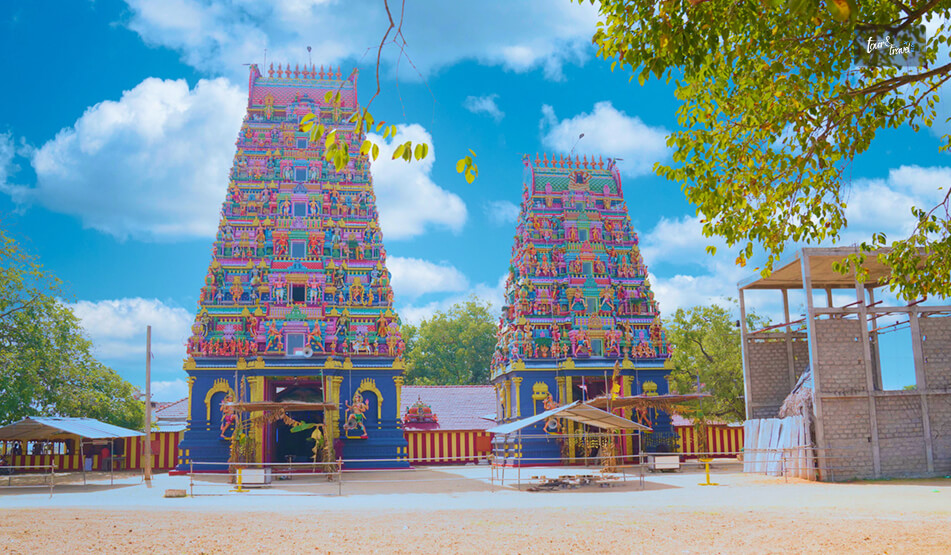
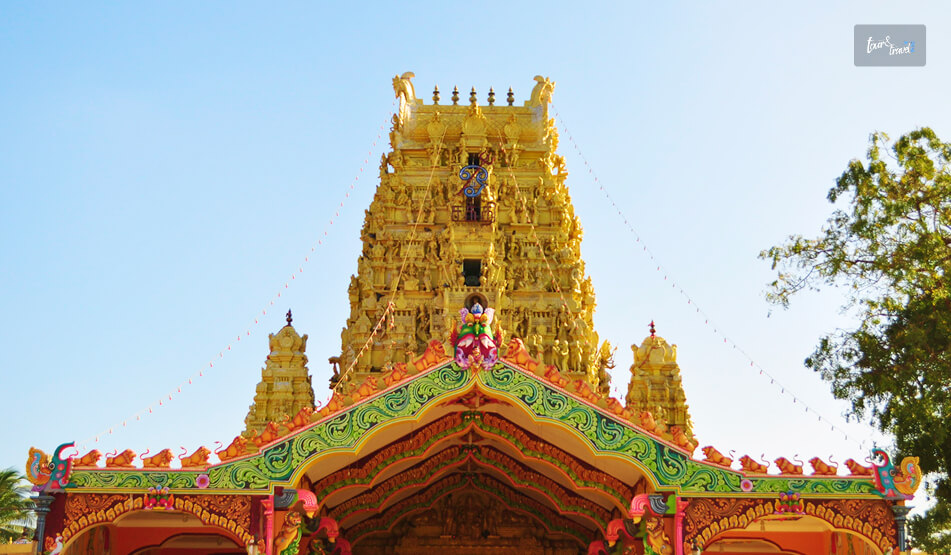
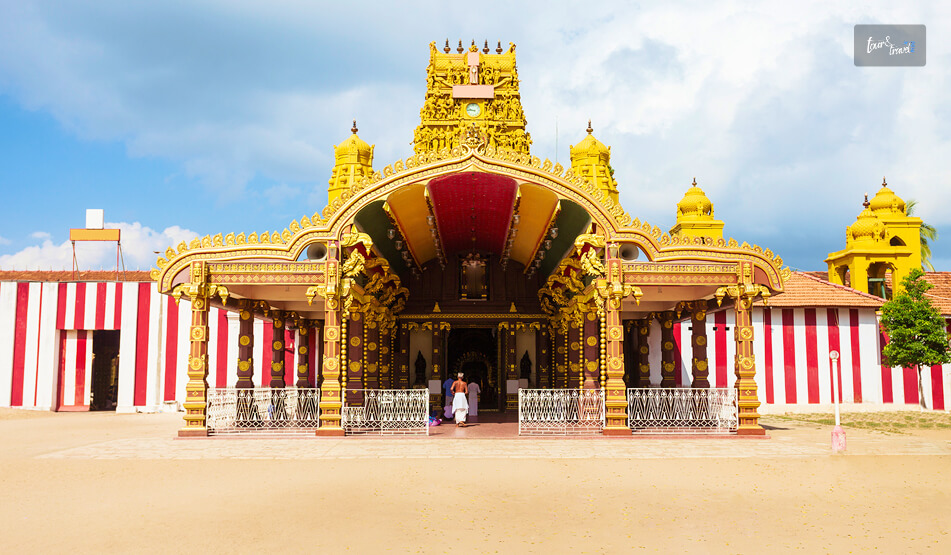
The first thing I noticed was the magnificent golden Gopuram with detailed carvings.
As I entered the temple, I felt calm instantly with the smell of the incense sticks.
History And Significance Of Nallur Kandaswamy Kovil (Lord Murugan)
The current architecture of the Nallur Kandaswamy Kovil temple is of the 18th century, specifically in 1734.
However, the origin of the temple goes back to 948 AD.
The temple was further built in the 13th century by Puvenaya Vaku.
He was a minister to King Kalinga Magha of the Jaffna Dynasty. Nallur was the capital of this dynasty.
Currently, the descendants of Ragunatha Maapaana Mudaliyar and a private trust are in charge of the temple.
The Golden Arch And Architecture
With the Dravidian style as the base, the Nallur Kandaswamy Kovil beautifully integrates water, wind, space, fire, and earth, the five elements that constitute the universe.
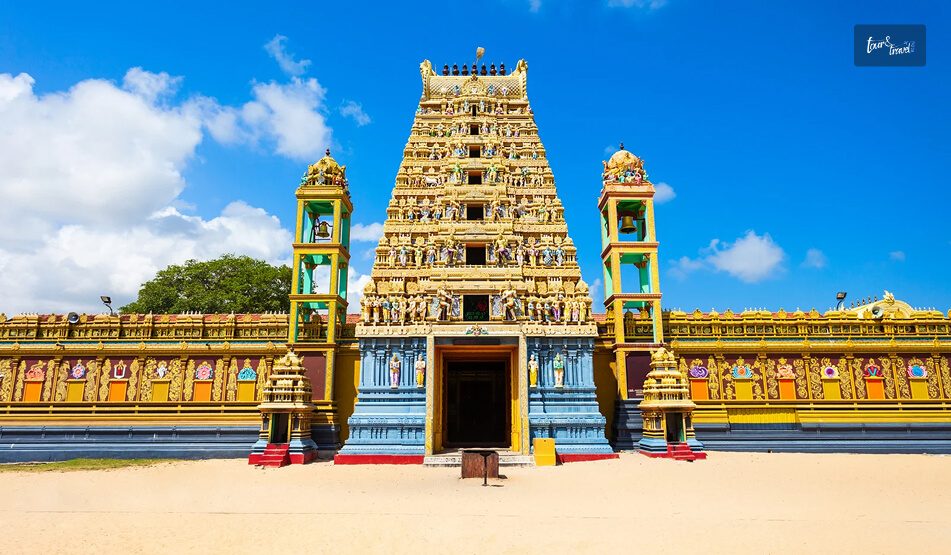
Furthermore, the temple has four gates, and its multi-tiered gopurams feature sculptures of important mythological figures and Hindu deities.
Again, the large halls (Mandapas) and compounds are ideal for gatherings and celebrations.
These features show how these temples are important for community activities in Jaffna.
Visitor Rules: The “Shirtless” Law Explained
The Nallur Kandaswamy dress code requires men to wear dhotis with their chests bare.
Women need to wear modest clothes with their shoulders and knees covered.
Sarees, long skirts, and blouses are the ideal outfit for women.
Like any other temple, here also, you need to take off your shoes before entering.
Nallur Kandaswamy Kovil Temple Timing
Check out the table below for details on the temple timing and rituals.
Temple Timing
Hours
Doors Open
4 AM
Morning Palliyarai Pooja
4:30 AM
Ushathkala Pooja
5 AM
Temple Doors Reopen, Morning
7:30 AM
Kalasandhi Puja
10 AM
Uchikala Puja
12 PM
Temple Doors Reopen, Evening
3 PM
Sayarakshai Pooja
4 PM
Second Kala Pooja
5 PM
Evening Palliyarai Pooja and Arthasama Pooja
6 PM
Major Festival At Nallur Kandaswamy Kovil
The annual Nallur Festival, observed for 25 days in August, is a major event at the temple.
The celebration starts with a flag-hoisting ceremony, and there are daily processions with Nadaswaram music, dancers, and idols.
Furthermore, on the 24th day, the devotees pull colossal chariots.
This festival has a deeper cultural significance as it celebrates the Tamil identity of the Sri Lankan people.
The Karthigai Festival, celebrated in the Tamil Month of Karthigai (November-December), is another major festival here.
It is a festival of lights.
How To Reach Nallur Kandaswamy Kovil?
I took a cab from Jaffna to reach Nallur Kandaswamy Kovil.
I reached the temple within 5 minutes, and the price was INR 90.
2. Naguleswaram Temple (Keerimalai)
Naguleswaram Temple is the most revered among the Pancha Ishwarams of Sri Lanka, or the five prominent Shiva Temples in Sri Lanka.
Furthermore, this Hindu shrine has all the features, such as the deity (Moorthy), the holy water (Teertham), and the temple with its precinct (Thalam).
The temple remains open from 6 AM to 11 AM and 4 PM to 7 PM.
Naguleswaram Temple History
The Naguleswaram Temple or Keerimalai gets its name from Nagulam or Keeri, which means mongoose.
It is associated with the myths of Nagula Muni or Nakula Swami, who was said to have a mongoose-like face due to a curse by another sage, Yamathagini.
Nagula Muni was originally called Sudhama, and he got this name for a sacrifice he made during his penance.
He regained his human form after a holy bath in the Keerimalai spring.
A devout follower of Lord Shiva, Nagula Muni, built the shrine.
That is why it is called the Naguleswaram Temple.
This temple is mentioned in the Dhakshina Kailaya Puranam and Suta Samhita, a part of the Skanda Purana, which is also a prominent work on Shaivism.
Thus, the temple is a prominent landmark in the spread of Shaivism in ancient Jaffna.
Also, the Keerimalai spring here is mentioned in the ancient texts.
It has water from the Ganga Samudra Sangamam or the sea and the coastal springs.
Thus, the spring is seen as a symbol of the holy union of Lord Shiva and Shakti, the divine masculine and feminine.
The spring water is believed to have curative properties, and it has an association with the Ramayana, as Lord Rama took a bath here.
Naguleswaram Temple Destruction, Restoration, And Architecture
The Naguleswaram Temple you see today is a reconstructed form from the Mahakumbhabhishekam in 2012 under the leadership of the chief priest.
The temple was severely damaged after the bombing by the Sri Lankan Army in 1983.
Nevertheless, the first restoration of the temple took place by Prince Vijaya in 543-505 BCE.
Then, in 1621, the Portuguese destroyed it.
Again, nearly 400 years later, Arumuka Navalar revived it in 1894.
Then, in 1918, it was destroyed by fire and later reconstructed.
Moreover, the final blow was the bombing by the Sri Lankan Army, and it was restored in 2012.
The Current Architecture Of Naguleswaram Temple
True to the Dravidian style, the temple has big pillars, towering Gopurams, and intricate sculptures.
However, with restorations over different ages, the temple now shows eclectic influences.
So, along with granite stones, concrete and cement are widely used in the construction of these temples.
Naguleswaram Temple Festivals
Aadi Amavasai is the main festival at the Naguleswaram Temple.
It is the New Moon night in the Tamil month of Aadi.
The Moon ascending in the Kataka rasi is occupied by the Sun.
So, it is seen as the confluence of Shiva and Shakti.
On this day, the Sri Lankan Hindus pay respect to their ancestors.
How To Reach Naguleswaram Temple (Keerimalai)?
The Naguleswaram Temple is located at a distance of 25 km from Jaffna.
You will get tuk-tuks and public buses (768 and 769) from Jaffna to this temple.
Of course, you can book a private car to travel the short distance.
3. Nainativu Nagapooshani Amman Temple
Located at Nainativu Island, the Nagapooshani Amman Temple is located at a distance of around 35 km from Jaffna City.
It is one of the 64 Shaktipeethas in the region, and Goddess Nagapooshani, an avatar of Devi Durga, is the presiding deity here.
The goddess gets her name as Nagapooshani because the idol depicts a 5-headed cobra around her head.
This also relates to her other name, Bhuvaneshwari, or the Queen of the Universe.
She is also called Indrakshi, as she eliminated the curse of Lord Indra by transforming his wounds into eyes.
Gautama Maharishi cursed Lord Indra, who then received the blessings of the goddess after penance.
The History And Architecture Of The Nagapooshani Amman Temple
The current form of the temple is the restored version, which took place after the Portuguese attack in 1620.
However, the restoration took place much later, between 1720 and 1790.
Nainativu has been an important strategic location for the people of South India and the Hindus of Sri Lanka, as it was on an important trade route in the medieval era.
The temple today has four large Gopurams, and the main Gopuram, or the Raja Raja Gopuram, rises to the height of 108 feet.
The idol of Goddess Nagapoosani is also very unique here. The idol has a ten-headed statue of Ravana at the base.
How To Reach The Nagapooshani Amman Temple
I took the bus 776 to reach the Kurikkaduwan Jetty from Jaffna city center.
The journey took an hour, and from there, I boarded a ferry to Nainativu Island, and it cost LKR 160 for a round trip.
The ferry ride took us around 20 minutes.
Major Festival At Nagapooshani Amman Temple
The Mahostavam or Thiruvilla is the biggest festival at the Nagapooshani Amman Temple.
It is a 16-day observance during the months of June and July. More than 100000 devotees attend this ceremony.
The Nearby Nagadeepa Buddhist Temple
The Nagadeepa Buddhist Temple is within 700 meters of the Nagapooshani Amman Temple.
The Mahavamsa Buddha, an ancient Pali text, records that Lord Buddha visited this island for the second time in the 6th century BCE.
He made this visit for the pacification of two Naga kings who were at loggerheads.
Today, it has a main Stupa and a Bodhi Tree. Of course, the ambience is very peaceful.
Hidden Gems: Lesser-Known Temples For Culture Lovers
Along with these major Hindu temples, Jaffna also has many lesser-known temples.
Here, I will share details about the ones I loved.
1. Vallipuram Alvar Vishnu Kovil (Point Pedro)
Built by the Vijayanagar kings, the Vallipuram Alvar Vishnu Kovil is one of the ancient temples in Jaffna.
The Maha Vishnu Utsavam festival here in September and October is the biggest celebration here.
The pillars of this temple have intricate carvings.
2. Selva Sannithi Murugan Temple
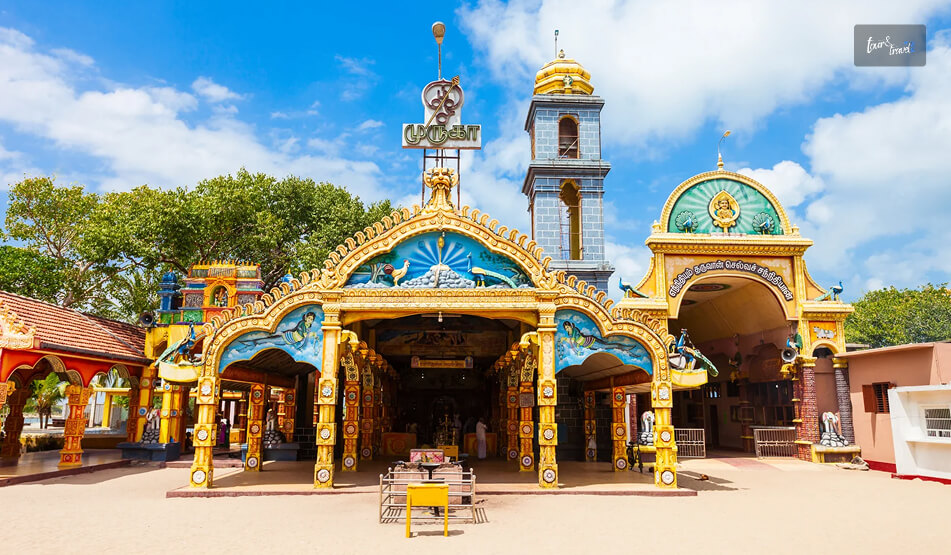
The Selva Sannithi Murugan Temple near the Thondaimanaru Aru stream has Lord Murugan as the presiding deity.
Chola King Kulottunga first built the temple from 1070 to 1122 A.D.
3. Maviddapuram Kandaswamy Temple (The Historic Royal Temple)
King Thissai Ukkirasinga Cholan built this temple dedicated to Lord Murugan around 789 AD.
He built the temple after his daughter, Maruthapuraveegavalli, got rid of her congenital deformity, a horse-like face, by the grace of Lord Murugan.
Maviddapuram also literally means the holy city (Puram) where the horse (Ma) was removed (Vidda).
Cultural Immersion: The Annual Festival Of Nallur Kandaswamy Kovil
The Annual Nallur Festival, centered on the Nallur Kandaswamy Kovil, is a deep spiritual and cultural experience.
A local friend of mine shared that more than 60 priests were present at this festival.
The best thing is the inclusive spirit and vibe of the temples.
There are no VIP gates or lines. Everyone is treated equally.
The Festival Experience
From the grand chariot festival to devotees performing penance, the 25-day celebration is quite eventful.
It begins with Kodiyetram, or the flag hoisting ceremony.
The Chariot Festival, or Ther, and the Water Cutting Ceremony, or Theertham, are the other highlights of the festival.
It culminates with Tirukalyanam, or the divine marriage ceremony.
Cultural And Spiritual Highlights
The festival is dedicated to Lord Murugan (also known as Kandaswamy or Skanda), who is worshipped here in the form of the Vel (sacred spear).
1. Discipline And Purity
The people of Nallur are very particular about punctuality, and they adhere to their traditions.
You have to maintain silence inside the inner sanctum, and the atmosphere there is meditative.
2. The Chariot Procession (Ther Thiruvizha)
The 24th day of this 25-day-long festival is reserved for the grand chariot procession.
In 2025, the Annual Nallur festival started on 29th July, and the chariot procession took place on August 22nd.
Devotees pull the wooden chariot of Lord Murugan by thick hemp ropes.
“When we pull the ropes, we feel that he is among us! The divine.” A temple volunteer shared with me.
3. Acts of Devotion (Penance)
•Kavadi Attam
Kavadi Attam is a rhythmic dance where devotees carry decorated semicircular structures, or Kavadi, in their hands.
•Angapirathshanam
Some people perform an extreme level of penance by rolling their bodies along the hot sands surrounding the temple.
This is a form of prayer and humility.
•Self-Mortification
Again, this is not for the faint-hearted.
The devotees pierce their skin with small silver spears to fulfill vows.
4. The Atmosphere In Jaffna
The air reverberates with the resonance of the Nadaswaram, a long pipe instrument, and the drum, or Thavil, during these 25 days.
The environment is trance-like.
Also, the streets are decked out in a sea of white, gold, and red, the temple’s signature colors.
You can try the famous Nallur ice cream, Vadai, and Murukku, and the traditional food of Jaffna at the temporary street stalls.
However, as I mentioned earlier, the festival’s greatest asset is unity.
People from all walks of life and irrespective of their social status stand shoulder-to-shoulder to pull the chariot.
Practical Tips For Visitors
You have to be an early bird to see the Chariot Festival, as the temple grounds get filled by 5 AM.
You cannot take photos inside the inner sanctum, and it is disrespectful to turn your back to the deity and take selfies.
The Sun is scorching in Jaffna during this festival. So, carry water.
If you want to donate, do so only in the designated boxes or areas of the temple.
A Jaffna Temple Guide: Tips From Experts
People of Jaffna are warm and inclusive. However, they are very sincere about their traditional practices. So, follow these tips.
“The temple is not a tourist attraction; it is a living organism of devotion.
Every renovation and every ritual is done to enhance the ‘Vibration’ (Shakti) of the space, not just its beauty.”
– A Temple Trustee Member Shared.
1. Evening Puja Feels Different
I visited the Nallur Temple at around 4:30 PM. The atmosphere was electric with the trumpet and drumming music. Also, it was less crowded.
2. You Will Get The Archana Or Fruit Basket Outside The Temple
Buy the fruit basket for $2-3 and hand it to the priest after entering the temple. Be a part of the ritual.
3. Be Respectful To The Vibuthi Or Holy Ash
When the priest offers you the Vibuthi or the Kungumam (Red Powder), you must put it on your forehead.
4. Carry Extra Clothes For Keerimalai Dip
At Naguleswaram, pack a change of clothes.
You can bathe in the historic Keerimalai ponds next to the ocean. It’s said to cure skin ailments.
5. Carry Cash For Shoes
You will always find a shoe keeper at the gate.
Keep a small change of 50-100 handy.
6. The Island Commute
If you are traveling to Nainativu, arrive at the Jetty by 8:00 AM.
It will help you avoid long queues and the Sun in the open sea.
Temple-Specific Architecture And Jaffna Architecture Photography
You will notice a fusion of the Dravidian style of architecture and Portuguese, Dutch, and British styles in the Jaffna temples.
Furthermore, these colorful temples of Sri Lanka have wide circumambulatory paths and sturdy outer walls.
Unfortunately, you cannot take photographs inside these temples.
For Gopuram photography in Jaffna, you have to capture the golden-ochre Gopurams from the surrounding roads, like Point Pedro Road, during “Golden Hour.”
In July and August, especially during the Nallur Annual Festival, you will love capturing the street photos and the devotees in action.
Jaffna Temple Visit Itinerary: Nallur And Nainativu
Here is a combined itinerary of Nallur Kandaswamy Kovil and Nainativu Nagapooshani Amman Kovil.
Morning in Nallur
•5 AM to 6:30 AM – Attending the first puja at the Nallur Kandaswamy Kovil
• 07:00 AM: Having hot Jaffna Dosa for breakfast.
Mid-Day: The Island Pilgrimage (Nainativu)
• 08:30 AM: Depart Jaffna for the Kurikadduwan (KKD) Jetty.
• The drive takes about 1 hour across the scenic Kayts and Pungudutivu causeways.
• 09:45 AM: Board the ferry to Nainativu Island.
• The Ferry: It is a public service (approx. 80–100 LKR). The ride takes 15–20 minutes.
• 10:15 AM – 12:30 PM: Explore the two major sites on the island: Nagapooshani Amman Kovil and Nagadeepa Purana Vihara (A 5-minute walk or short tuk-tuk ride away).
Afternoon: The Return & Coastal Views
• 01:00 PM: Catch the ferry back to the mainland.
The last public ferry usually departs around 4:00 PM, but schedules can shift.
• 02:30 PM: Stop at the Baobab Tree on Pungudutivu Island on your way back.
It is a massive tree planted by Arab traders centuries ago.
• 04:00 PM: Arrive back in Jaffna.
Visit the Jaffna Fort for sunset to capture the coral-stone walls against the sea.
Here are the frequently asked questions and answers about the Jaffna temple guide.
1. Can Non-Hindus Enter Jaffna Temples?
Yes, non-Hindus can enter Jaffna temples.
However, you need to be respectful of the temple’s customs.
Be careful about the dress code, as women need to wear modest clothes and men need to wear dhotis with a bare chest.
2. Is It Safe To Travel To Jaffna Now?
Jaffna is currently recovering from the aftermath of Cyclone Ditwah.
Also, the recent Chikungunya outbreaks have been a concern.
Still, Jaffna is one of the most popular bucket-list destinations in 2026.
Also, politically, it is stable, and there is increased landmine safety with military installations in multiple places.
However, you must always carry your original ID and passport.
3. How Long Does A Temple Visit Take?
It will take around 45 to 60 minutes to explore each temple in Jaffna.
However, if you want to attend the Pujas or talk to the trustee members about the history and significance of the temple, you may need an additional 45 minutes to one hour.
4. Are There Guides Available At The Temples?
No, there are no official guides available at the temples in Jaffna.
However, you can hire a local guide.
You can even get in touch with the temple volunteers and trustee members for more guidance on the temples and the protocols of visiting them.
5. What Is The Red Dot Placed On The Forehead?
The red dot placed on the forehead is called Pottu or Tilak.
It is a blessing from the deity, and it symbolizes divine wisdom.
You must be respectful when the priest applies the red dot on your forehead.
Sibashree is a travel, culture, and leisure writer who has been writing since the age of 12 and professionally since 2014. With more than a decade of travel writing experience and journeys across India and several parts of the world, she brings a deeply personal and thoughtful perspective to her work. A student of English Literature and Mass Communication, Sibashree has always viewed travel as more than movement — for her, it has been a way of understanding people, cultures, and herself. Her passion for spiritual exploration has also led her to many unusual and meaningful destinations over the years. Outside of writing, Sibashree enjoys watching European cinema, reading about global politics, and reflecting on the stories hidden within everyday places.
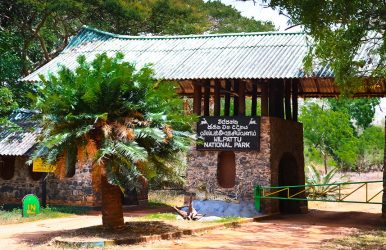
My driver, Dasun, stopped the jeep beside a villu, one of the signature natural lakes of Wilpattu.
Our jeep had been idling by villu for around 20 minutes. Then, suddenly, our tracker killed the chatter and pointed.
I spotted a leopard moving along the far treeline. His body language was unbothered, and it seemed that he was in no rush at all.
Also, there were no jeeps fighting to capture the spot for taking a photo. The absence of radio crackling and other trackers converging on the spot further added to the experience.
Overall, the moments here told me everything about why Wilpattu is quietly considered Sri Lanka's most serious leopard park, even though Yala National Park gets most of the international attention.
Furthermore, Wilpattu is the largest in Sri Lanka, and it feels like it.
Also, I noticed a clear difference between Yala and Wilpattu. Yala’s blocks can feel congested because of the safari traffic in peak season.
However, the sheer scale of Wilpattu and its remoteness from the southern tourist circuit keeps visitor density low even when sightings are excellent.
Wilpattu National Park At A Glance
Wilpattu is in the North Western and North Central Provinces of Sri Lanka.
It straddles the boundary near Puttalam and Anuradhapura districts.
The villu system defines this national park. The villu system has a network of roughly 60 natural, sand-rimmed lakes scattered through dense scrub and forest.
Also, it is the villu system from which the park gets its name. The meaning of Wilpattu is “The Land of Lakes” in English.
Moreover, thanks to the water network, the park has many predictable spots for animal concentration.
So, despite the massive scale, the chances of spotting wildlife here are excellent.
DetailInformationLocationNorth Western and North Central Provinces, near Puttalam and AnuradhapuraAreaApprox. 1,317 Square KilometersIt is Sri Lanka's Largest National ParkKey FeatureAround 60 Natural "Villu" Lakes Set in Dense Dry-Zone ForestSignature WildlifeSri Lankan LeopardSloth BearElephantSpotted DeerMugger CrocodileNearest CityAnuradhapura: Approximately 30 KmPuttalam: Approximately 40 KmRecommended Visiting MonthsFebruary to October
How To Reach Wilpattu National Park?
You can approach Wilpattu from the Cultural Triangle via Anuradhapura.
Also, you can take the northwestern coastal route via Puttalam and Kalpitiya.
Both these routes are straightforward and sealed.
However, the final stretch to the main Hunuwilagama entrance narrows into a quieter rural drive.
FromApproximate DistanceApproximate Drive TimeAnuradhapura30 Km45 MinutesPuttalam40 Km1 HourKalpitiya75 Km1.5–2 HoursColombo180 Km3.5–4 HoursNegombo150 Km3 Hours
Again, there is a second and less-used entrance on the Mannar side of the park.
It is for those travelling the north-south coastal route, though most safari operators and lodges are clustered around the main Hunuwilagama gate near Anuradhapura.
Inside The Park: My Safari Experience
I planned a full-day safari in Wilpattu National Park, and it was from 6 AM to around 4 PM.
A park safari is the best way to see Wilpattu properly. A half-day barely gets you past the entrance loop before you have to turn back.
The Villus: Wilpattu's Signature Lakes
The villus make the ecology of Wilpattu different than any other national park in Sri Lanka.
These are not man-made reservoirs. These are natural rain-fed lakes ringed with pale sand, and the jeep tracks are laid out to string several of them together.
Also, every meaningful sighting I had came from parking quietly at a villu edge and waiting rather than driving in search of animals.
Crocodiles were basking at the waterline, and elephants were drinking water. Finally, the leopard appeared along the treeline.
Leopards And The Chance Of A Sighting
Wilpattu is often described by naturalists as having a leopard density comparable to Yala's famous Block 1, without anywhere near the crowd.
Sightings are not guaranteed on any single visit, and practically no park can promise that.
However, the odds, combined with the calmer viewing experience when a leopard does appear, are a big part of why serious wildlife photographers increasingly prefer Wilpattu over Yala in peak season.
Elephants, Sloth Bears, And Birdlife
As I have mentioned, elephants are frequent around the villus and the drier months are the best time to spot them.
Also, the park has around 30 recorded mammal species, including sloth bear, water buffalo, sambar, and mongoose.
Furthermore, it has a strong birdlife presence. I could spot painted storks and several kingfisher species around the lake edges.
Peacocks and hornbills are more common sightings among birds in this park.
What Is The Best Time To Visit Wilpattu National Park?
You can take part in safaris year-round.
However, the park is ideal between February and October. These months are ideal for avoiding the heavier northeast monsoon rains.
Rain makes interior tracks difficult and reduces visibility.
Also, in a day, early morning and late afternoon remain the most productive windows for activity, as the midday heat pushes most animals into cover.
Entrance Fees And Safari Costs
Wilpattu is among Sri Lanka's higher-tier national parks for entrance pricing.
The entry fee is less than Yala National Park.
However, it is above smaller Category 2 parks.
Recent traveller reports and 2026 pricing guides put the all-in foreign adult entrance cost, including entry, service charge, vehicle fee, and VAT.
It is roughly USD 29–30 per person, with jeep hire priced separately and negotiated locally.
Fee ComponentApproximate Cost (Foreign Adult)Park EntranceServiceVehicleVATUSD 29.50 per AdultUSD 17.70 Per Child (6 to 12 Years)Guide/Tracker Fee$7 to $10It is Often Bundled into the Jeep PackageHalf-Day Jeep HireApproximately LKR 12,500 (6 AM to 10:30 AM)Full-Day Jeep HireApproximately LKR 25,000 (6 AM to 6 PM)
A Full-Day Wilpattu Itinerary
Given the park's size, a full day is genuinely worth the early start. Here is roughly how my day broke down.
TimeActivity5:30 AMDepart lodge and arrive at Hunuwilagama entrance.6:00–9:00 AMMorning safari loop through the northern villus. 9:00–9:30 AMBreakfast break at a designated stop inside the park.9:30 AM to 12:30 PMContinue tracking toward the larger central villus.12:30 PM to 1:30 PMMidday rest as animal activity drops with the heat.1:30 PM to 4:00 PMAfternoon loop, best window for leopard and elephant activity.
Where To Stay Near Wilpattu?
You can choose from simple guesthouses in Anuradhapura, which put you within easy reach of both Wilpattu and the ancient city's ruins, to dedicated eco-lodges and tented camps right on the park's buffer zone near Hunuwilagama.
Staying inside or immediately adjacent to the buffer zone shaves a meaningful amount off your pre-dawn drive time, which matters if you want to be at the gate for the 6 am opening.
The guesthouses in Wilpattu cost around LKR 3500 per night, and if you are staying in the ecolodges around the buffer zone, the charges will be approximately LKR 7500.
Tips From My Visit
A few things I would tell anyone planning a Wilpattu trip.
Book the full day rather than a half-day if your schedule allows, since the best villus are further from the entrance.
Pack your own food and water, as very little is available once you are inside. Also, pay for the jeep and entrance in Sri Lankan rupees only, since foreign currency isn't accepted at the gate.
Places To Visit Near The Wilpattu National Park
Wilpattu's location makes it an easy pairing with the cultural triangle.
Anuradhapura's ancient stupas and monasteries are barely half an hour away, and it is a natural stop for anyone routing between the north and the northwestern coast.
Travelers continuing toward the coast often carry on to Kalpitiya for kitesurfing and dolphin watching, or further north toward Mannar and Vavuniya.
Again, Chilaw, with its lagoon and temple circuit, also makes a workable stop if you're driving down from Wilpattu toward Colombo.
I have been to Japan many times, and the cultural richness and the sensory delights the country offers make the experience worth it!
However, these days, I see a lot of people asking, “Is Japan expensive to visit?”
Another question in this regard is why Japan is witnessing a major boost in travel booking.
Now, first, let me answer that Japan is not as expensive as people are projecting it. Be it the day trips from Tokyo or exploring the cherry blossom season in Kyoto, if you plan an itinerary and the modes of transport well, you can complete the trip within a decent budget.
Furthermore, thanks to smart tools such as the Japan Rail Pass, you can now make transport more convenient and flexible.
Also, whether Japan is expensive or not will depend on the country you are traveling from and how the currency of your country fares against the Japanese Yen.
On the other hand, Japan is enjoying a massive surge in popularity among Gen Z tourists due to many reasons. However, sushi, manga, and anime are the three major factors driving this rise.
While Japan can be managed on a moderate budget, and I have shared the three main reasons behind the rising popularity of Japan, let’s delve deeper into how much a trip to Japan costs and the other factors causing a rise in Japanese tourism.
Why Is Japan Expensive To Visit? Is It The Growing Craze?
Do you know that American Express Travel data shows a 1300% hike in the number of Americans visiting Japan since 2019?
Furthermore, Netflix has confirmed that Anime viewership has gone 3 times up in 2025.
Now, these pieces of information show how young Americans, especially the Gen Z travelers, are passionate about Japan.
The country is now a cultural superpower with its “Soft Power” that it has used to build the global landscape of entertainment, aesthetics, and ideas.
Joseph Nye, a political scientist at Harvard University, has highlighted the strength of Japan’s soft power.
Overall, Japan is not just a new country to visit for these young travelers. It is an escape to the land of rich culture, great food, and soaking in the spirit of slow tourism.
However, the rising craze among young travelers is not the reason behind Japan being labelled as an expensive destination.
In fact, it is amazing to see tourism in Japan growing despite the high travel expenses being
high.
Key Reasons For Japan Being An Expensive Destination To Visit
Japan is expensive as a destination primarily for three reasons. First of all, the Shinkansen bullet trains, extensively used for transportation, are very expensive.
Also, while I found Osaka food from the street stalls quite affordable, trying Sushi, Ramen, or other Japanese staples in a fine dining restaurant can be very expensive.
Furthermore, Japan almost entirely depends on imported energy.
Despite an improvement of 22.4% in the net energy import during the period of 2020 to 2024, the net energy import of Japan in 2024 was 87.4% of the total energy supply, according to the International Energy Agency (IEA).
Thus, the fuel cost is always high in Japan, impacting the transportation expenses, the cost of essential commodities, and every other sector in a direct or indirect manner.
Is Japan Expensive To Visit? A Breakdown Of Tourist Costs
So, Japan is expensive to visit. However, what can be the overall expense tentatively?
What will be the expenses on food, transportation, and accommodation? Here is a detailed breakdown.
1. Tourist Accommodation Cost In Japan
Japan is very sincere about the hospitality it offers. So, even if you are staying at a budget hotel or hostel, you will find good hygiene and the basic amenities.
Furthermore, along with hostels, Japan has unique accommodation provisions such as the capsule hotels.
These are basically sleeping pods, and the cost is similar to staying in hostels.
On the other hand, you will find a minshuku, which is like a Japanese version of homestays. You will get bed and breakfast facilities at these accommodations run by local families.
Nevertheless, have a look at the table below to understand the different types of accommodation for tourists in Japan and their average costs.
Types of Tourist Accommodation in JapanTentative Cost Hostels and Capsule Hotels2000-4500 JPYBudget Hotels5000-10000 JPYBread and Breakfast 5000-8500 JPYStandard Hotels10000 JPY Onward
Moreover, if you’re looking to move to Japan after your trip there, check out reliable websites to know the best places for foreigners where you can call home.
2. The Cost Of General Public Transport In Japan
The Japanese Bullet Train or Shinkansen is the most preferred mode of transport in the country.
The Cost Of Traveling In A Bullet Train And The JR Pass
However, the travel cost is very high if you are traveling by these bullet trains.
On average, and based on the departing station or the destination, the cost will be around 16000-20000 JPY per ride (the ticket price can go much higher).
For example, if you take a bullet train from Tokyo to Shin Amori, the price for a reserved seat will be 21340 JPY.
On the other hand, for the Green Seat and the GranClass Seats, the ticket prices will be 27410 JPY and 34410 JPY, respectively.
On the other hand, a Tokyo to Kyoto bullet train ticket starts from 16550 JPY.
Now, this is where a Japan Rail Pass becomes handy. As a tourist, you can buy a Japan Rail Pass for 7 days, and the cost starts from 50,000 JPY for an adult. For a child, it is 25000 JPY.
You can even buy passes for 14 days or 21 days. With this pass, you can enjoy unlimited rides during the validity period.
Moreover, if you want to focus on Tokyo and its nearby areas, the Regional Pass will be a more budget-friendly option.
Also, cabs are pretty expensive in Japan. For a ride of 1 to 2 kilometers, you will have to pay around 500 to 700 JPY.
After that, a fee of 80-100 JPY will be added for traveling every 250 to 300 meters.
3. The Cost Of Hiring A Tour Guide In Japan
The cost of hiring a tour guide in Japan is between 25000 and 60000 JPY per month. However, the cost of the travel guide will depend on the services you opt for.
You can choose a guide for a full day, and the cost can be up to 80000 JPY, and for a half day guide, it will be around 25000-47000 JPY.
Furthermore, if you are traveling in small groups or vans, the cost of hiring a guide will be around 24000 JPY.
So, hiring a personal travel guide is expensive in Japan. However, you can save the cost of hiring a guide by seeking help from the local tourist centers or the national tourist departments.
4. Food And Drink Cost In Japan
Food is one of the most important factors for Gen Z travelers visiting Japan. A survey said that around 50% of the visitors planned a trip just because they wanted to visit a restaurant or try some specific food.
Also, food and drinks are available in various cost ranges.
So if you are planning to take the authentic taste of sushi, you will get plenty of options available there.
From the expensive designer boutiques to Kaiten-zushi style shops everywhere, the multiple authentic sushi dishes are valuable.
You can select the place according to your requirements.
In the boutique’s style restaurant, you have to spend nearly 51000 JPY for sushi, but if you prefer the sushi in a low-cost range, you have to spend only 1593 JPY for sushi.
If you want to explore Japan on a budget. You can quickly shift your choices to Japanese cuisine and cut your travel budget by cutting the foreign food items.
How To Plan Budget-Friendly Travel In Japan?
Do you want to travel in Japan on a budget? Here are the tips you can follow.
1. Make A Tour Plan In The Off Season
Off-season tour plans are always budget-friendly. The Autumn season is an off-season to travel in Japan, and this time the tourist rush is not very high.
2. Take The Railroad
Take the railroad to explore the city and buy the railway card to see the tourist places in the country.
3. Focus On Local Cuisine
Focus on the local, authentic, fresh Japanese dishes. If you’re looking for cheap food in Japan, you can buy it in small restaurants, street food stalls, and even vending machine cafes.
However, if you stay in the country for an extended period, you can save money on your travel by preparing and cooking most of your meals from scratch.
4. Find An Accomodation Far From The Main Crowded Cities
Try to find accommodation that is a little bit far from the main crowded cities. Make sure to book your accommodation ahead of time to save a lot of money.
Hostels and the local guest houses are also charming, clean places to stay. However, when planning a Japan tour, it is better to keep away from the expensive luxury boutique-type accommodations.
5. Look For Free Attractions
Look for free attractions and events to save money.
Whether you want to spend a fun day in a national park or visit a museum, there are incredible activities that allow you to enjoy Japan without paying anything.
The Yala National Park is the ideal place for a dawn safari. As the first rays of golden light pierce through the canopy and the untamed bush comes to life, you will enjoy an acoustic and raw symphony.
You will listen to the rumble of wild elephants and the exotic birdcalls. Furthermore, you will spot crocodiles gliding into still lagoons.
You will also find monkeys scampering through the treetops, and if you are extremely lucky, you can even see a Sri Lankan leopard.
So, no wonder that Yala National Park is a bucket-list destination when you are on a trip to Sri Lanka.
However, finding the right accommodation, the ultimate sweet spot to explore the Yala National Park, can be a daunting task.
You can find a wide range of accommodations here, including the avant-garde ones and the bush camps.
Furthermore, there are some family-run guesthouses and luxurious canvas cocoons. So, in this guide, I will discuss where to stay in Yala National Park.
Where To Stay In Yala National Park? Pick The Zone Based On The Experience You Want
Before you choose an accommodation for yourself, you must decide on the area you want to stay in.
You need to especially understand the entry points of Yala National Park and the surrounding regions.
It is more so because the logistics of your safari will depend on the base and the entry point to the national park you are choosing.
1. Tissamaharama Or Tissa
Tissa is just a distance of 20 minutes from the Palatupana Gate, or the main gate of the Yala National Park.
So, this historic lakeside town serves as the primary gateway to the park. Also, here, you will get to indulge in a sense of wilderness paired with civilization.
Moreover, the town has strong infrastructure, such as
Pharmacies
Small Restaurants
ATMs
Cafes
Moreover, you may not find massive architectural buildings, but you will get boutique lakeside hotels offering easy evenings, proper amenities, and strolling along the water.
2. Kirinda And The Palatupana Coast
The Palatupana coast is located to the south of Tissa. Also, it is the place where the jungle collides with the crashing waves of the Indian Ocean.
The Palatupana Coast further stretches into Kirinda. Kirinda has the most opulent coastline, with elephants wandering down onto the sand.
Furthermore, here, you will find the ultra-luxurious and specially designed eco resorts.
Also, staying here means that you are very close to the national park.
3. Inside The Buffer Zone
If you want the most immersive experience in the Yala National Park, you can choose one of the high-end camps within the protected buffer zones of Yala.
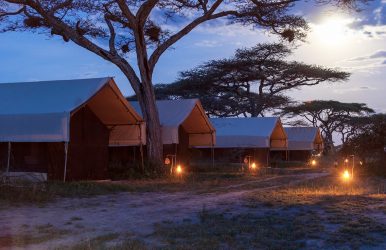
You will stay in canvas tents here, and you will love the experiences such as open-air dining, lantern-lit pathways, and dawn wake-up calls from wild peacocks.
Moreover, you can find many other wildlife roaming around your tents.
The cost of staying in these high-end tents can be on the higher side. However, the experience of sitting around a campfire while the unseen jungle hums around you is unforgettable.
4. Katagamuwa And Kataragama
Katagamuwa is on the quieter northern perimeter of Yala. It is a culturally rich and slower alternative to other accommodation zones in Yala.
Furthermore, Katagamuwa backs onto a multi-religious pilgrimage site, rarely visited by Western tourists.
If you choose to stay here as a backpacker, you will enjoy the morning wildlife safaris with a visit to historic sites in the evening.
The camps in these sectors are smaller. However, it is run by locals who have endless tales to share. Also, the camps here offer a highly personalized experience.
So, the warmth and the thrill of knowing the unknown stories about the historic places, more than make up for the lack of luxury.
Where To Stay In Yala National Park?
I have divided the best places to stay in and around the Yala National Park into three categories.
Luxury Accommodations
Mid-Range Accommodations
Budget-Friendly Stays
The Best Luxury Accommodations In Yala
If you want a perfect safari country reimagined, you can plan a stay at any of the luxury accommodations in Yala.
Here, you will find copper bathtubs and canvas tents beneath wild palms.
These luxury accommodations will offer you unmatched luxury without breaking your connection to the world.
Wild Coast Tented Lodge
The Wild Coast Tented Lodge is a definitive and flagship safari lodge in Sri Lanka. It is located at a place where the jungle kisses the ocean.
Furthermore, this tented lodge has an otherworldly feel. The copper-toned canvas "cocoons" are scattered amidst the scrubs.
So, when the Sun is up, these tents look like giant desert beetles.
Moreover, inside the tent, you will find a fusion of colonial and contemporary aesthetics. There are leather campaign chairs, teak floors, canvas walls, and freestanding copper bathtubs.
Best Mid-Range Accommodations In Yala
It is okay if you do not want to bear the premium price tags of the accommodations in Yala.
The mind-range accommodations in Yala offer you immersive nature experiences, beautiful swimming pools, and superb tracking options.
Cinnamon Wild, Yala
Cinnamon Wild is an amazing mid-range accommodation in Yala. It is right inside the active buffer zone of Yala.
Furthermore, its location between a crocodile-frequented freshwater lagoon and the ocean makes it more fascinating.
Also, elephants here stroll through the grounds regularly, and the 68 rustic chalets raised on stilts offer simple timber interiors and comfortable bedding.
Moreover, the property has a rooftop bar that looks across the forest canopy. So, this is ideal for sundowners.
In addition, the restaurant here serves authentic lagoon crab curry.
The Best Budget-Friendly Accommodations In Yala
You don’t need to spend a fortune if you want to experience the magic of Yala Safari. You will get amazing hospitality, clean rooms, and authentic experiences at these budget-friendly accommodations in Yala.
Mahoora Yala
You can experience the genuine thrill of a buffer zone in Mahoora Yala.
The glamping camps here come without the price markup.
Furthermore, the safari tents are practical and well-equipped, featuring king beds, fans, and private ensuite bathrooms.
Moreover, the camp is directly on the boundary of the park. As a result, the safari trucks will get you deep into leopard territory early in the morning.
Thus, you will be able to avoid the heavy line of the day tourists in the town.
Read Also:
What Are The Places To Visit In Matara? A Southern Sri Lankan Commercial Hub With Dutch Colonial Heritage
Where To Stay In Mirrissa, Sri Lanka In 2026? Know The Best Accommodation Options
What Are The Best Sri Lanka Travel Tips? Things You Need To Know






 Related