
Climbing The Sigiriya Rock In Sri Lanka: Ravana’s Golden Palace Or An Ancient Buddhist Monastery?

The Sigiriya Rock was my next big cultural stop in Central Sri Lanka after the Ritigala Forest Monastery

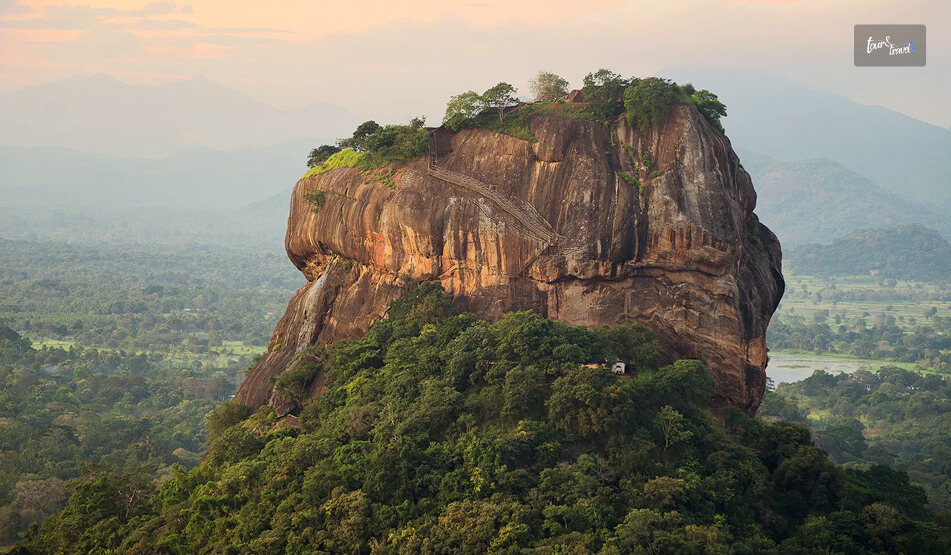
Also known as the “Lion Rock,” it is a UNESCO World Heritage Site with whiffs of mythology and major archaeological importance. 

Despite the absence of any archaeological evidence, there is a strong mythological belief that it is the place of Ravana’s Golden Palace. 

However, scientific evidence says that the rock fortress with its massive columns was once the seat of power of King Kashyapa (477-495 AD). 

He built the fortress with magnificent frescoes and the palace at the top of the rock column. Also, the palace got such a name because one had to access the fortress through the mouth of an enormously carved lion. 

The area was earlier used as a Buddhist monastery from the third to the first century BCE. 

So, along with the Hindu temples of Jaffna and the Ambuluwawa Tower, which has Hindu, Buddhist, Christian, and Muslim sites, the Sigiriya Rock also remains a major attraction for religious and spiritual seekers. 

Hi, in today’s blog, I will talk about the location of the Sigiriya Rock, how to reach it, the climbing experience, history, the entry fee, the structure, and other details. 

What Is The History Of The Sigiriya Rock? 

What Is The History Of The Sigiriya Rock

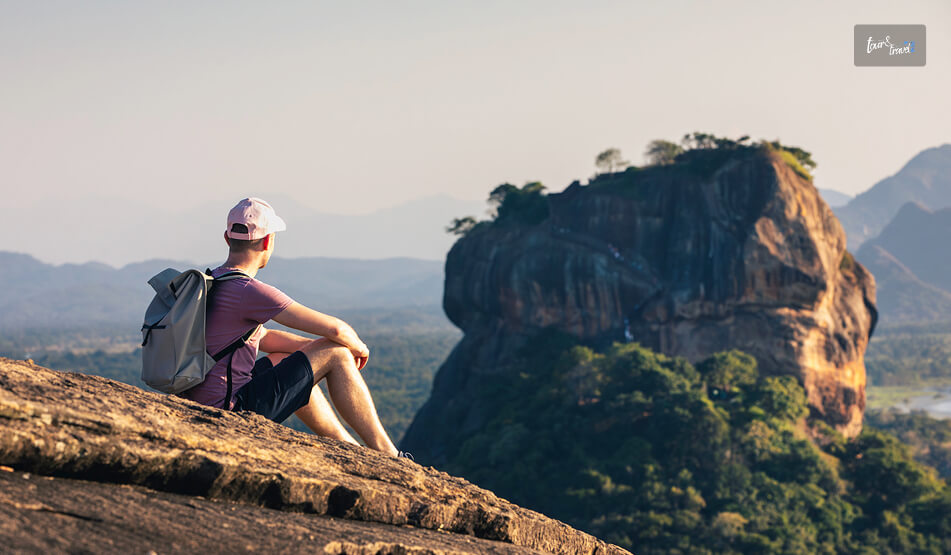
Sigiriya Rock was a Buddhist Monastery. It rose in prominence after King Kashyapa took the throne and shifted the monks to Pidurangala, a nearby outcrop. 

He found the top of this near-vertical rock formation more defensible and built a fortress on its top. It had a magnificent moat, water gardens, temples, and meeting halls. 

However, deserted by his own force, King Kashyapa killed himself as he did not want to be a captive of his brother. 

The Sigiriya Rock again became a monastery after Anuradhapura became the capital again. 

However, after a few years, the place was abandoned until George Turnour translated the Buddhist texts and identified the Sigiriya Rock.

Further, in 1831, Jonathan Forbes located the city. Then, after 20 years, Harry Bell, the Archaeological Commissioner of Ceylon, at that time discovered the Lion’s Paws. 

Finally, the Sigiriya Rock became a UNESCO World Heritage Site in 1982. 

Where Is The Sigiriya Rock? How To Reach The Sigiriya Rock? 

Where Is The Sigiriya Rock How To Reach The Sigiriya Rock

The Sigiriya Rock is located in the central region of Sri Lanka. Dambulla is the closest town, and it is the gateway to the Sigiriya Rock by road from Colombo and Kandy, the capital of the central province. 

The distance is around 17 km, and the travel time is close to 25 minutes. 

The distance between Kandy and the Sigiriya Rock is around 89 km, and the travel time by road is close to 2 hours and 31 minutes. 

Furthermore, the distance from Colombo to the Sigiriya Rock is 177 km. So, the travel time is around 3 hours and 50 minutes. 

Nevertheless, I took a bus from Dambulla to the Sigiriya Rock. The bus ticket price was around 50 LKR. 

You will also get taxis and tuk-tuks from Dambulla. 

Moreover, Habarana railway station, at a distance of around 20-30 minutes, is the closest to the Sigiriya Rock.

Once you are done exploring Colombo or the things to do in Trincomalee, you can easily take a train ride to the Habarana railway station and take a taxi or tuk-tuk from there to the Sigiriya Rock. 

What Are The Opening Hours And Entry Fee To The Lion Rock And Museum? 

What Are The Opening Hours And Entry Fee To The Lion Rock And Museum

Sigiriya remains open from 7 AM to 6 PM. However, 5:30 PM is the latest time you can enter. 

The entry fee to the Sigiriya Rock is around 11,149 LKR or 36 USD. This charge includes the museum entry fee. 

However, you can also visit the museum on a different day and pay a fee of $5 or 1600 LKD. 

Climbing The Sigiriya Rock 

Climbing The Sigiriya Rock

I started from the ancient water garden with the caves on the left. Furthermore, the octagonal man-made lake was in the shadow of the massive monolith. 

As I proceeded, I found two big boulders forming a natural arch and creating a circular road upward. The path took a turn to the left. 

The entire path was a part of the natural rock garden and was a sheer contrast against the water gardens below. 

I met some spiders, monkeys, and street dogs on the way until I reached the Lion’s paws.

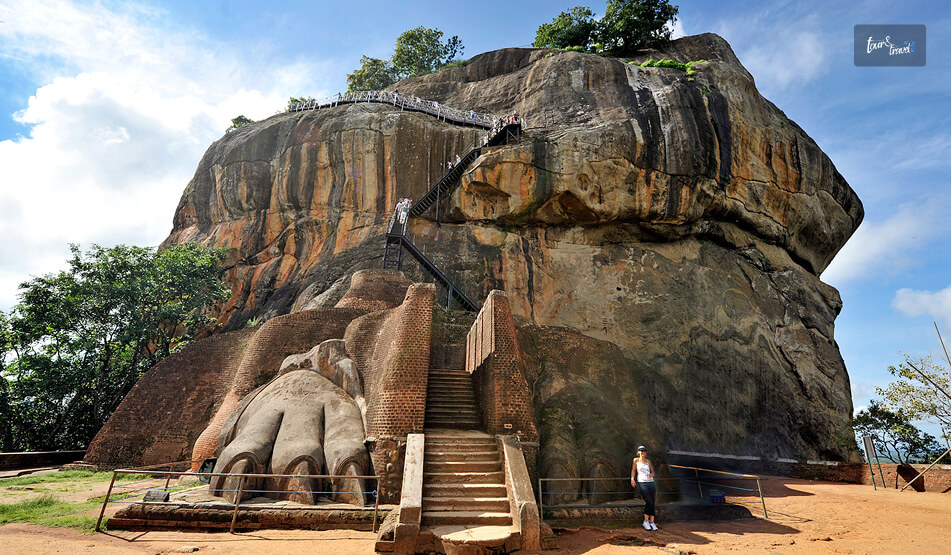
1. The Lion’s Paws

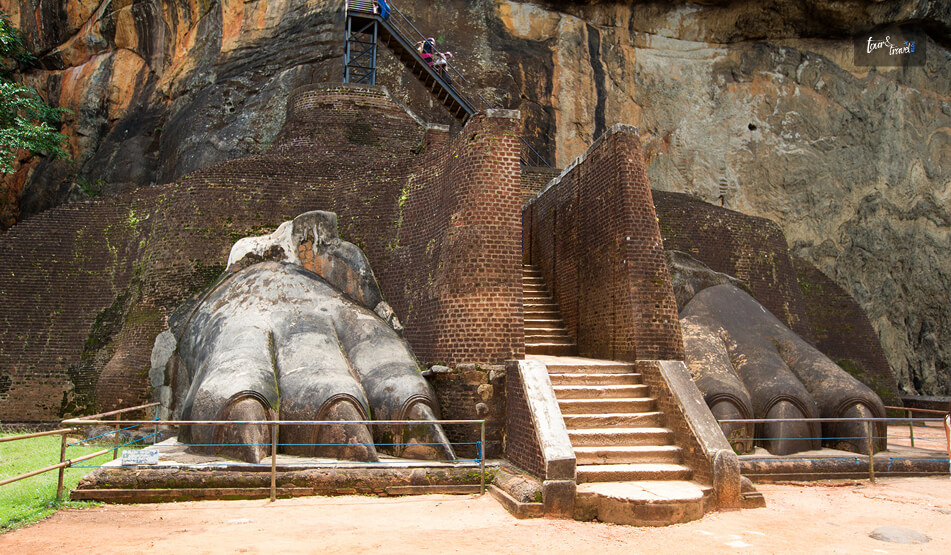
The Lion’s Paws had a staircase in the center. This stone-made staircase is ancient, and the claws with the Lion’s paws are now the only remnants explaining why the Sigiriya Rock has the nickname of the Lion Rock. 

The head and body of the lion are decayed and mostly engulfed by the jungle. 

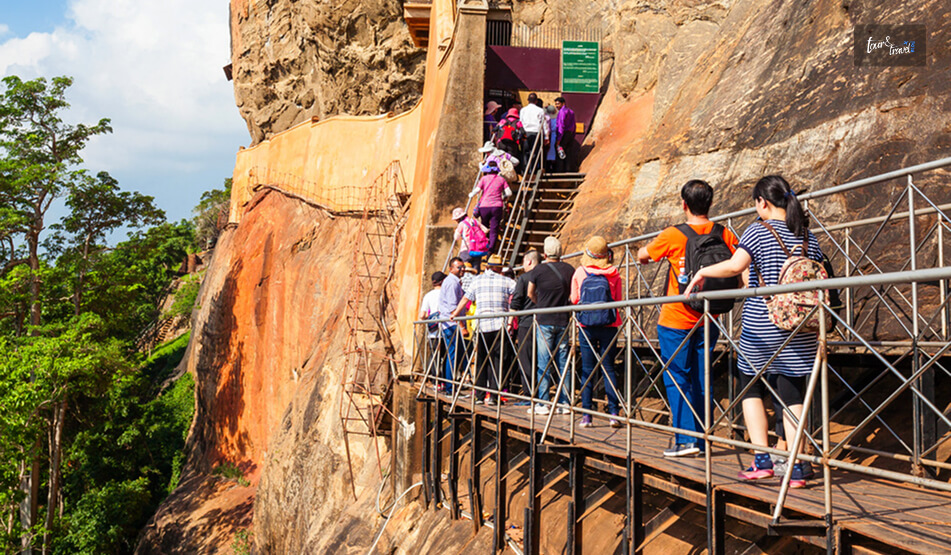
Furthermore, this ancient stone staircase is like a transition from history to the metal route up the mountain. 

However, here, you have to be careful and be as silent as possible to avoid the wasp attacks. 

2. From The Top Of The Lion Rock

After climbing around 1200 steps, I reached the top of the Lion Rock. As Sigiriya is the tallest peak in the region, it offered me a 360-degree view of the surroundings.

The sparkling rivers and lakes and the lush greenery of Central Sri Lanka won me over. The Pidurangala Rock was to the north, and it rose like a little volcano from the forest beneath. 

3. The Mirror Wall 

I walked through the remnants of the Sigiriya Rocks, the platforms, and the pools before I finally reached the Mirror Wall. 

On my way, I also had an encounter with a giant lizard and a street dog who just knew how to pose. 

Between the first plateau and the Lion’s Paws, there is a fork in the path. I took that path and turned left to come across the Mirror Wall. 

With a plaster casing, the ancient Mirror Wall used to shine and reflect light. Also, today, when you visit the mirror wall, you can see thousands of graffiti.

4. The Frescoes

From the Mirror Wall, I took a spiral staircase to reach the frescoes. However, for me, the cave paintings were more fascinating.

There is a major debate about the figures drawn on the caves. Some claim that these are holy entities and they make offerings to them. 

On the other hand, many say that these depict the concubines from the harem of the king. 

5. The Cobra Head 

I spotted the Cobra Head Cave while descending from the Sigiriya Rock. The cave resembles a cobra, which is ready to attack you with its fangs. 

Furthermore, I spotted a reception hall and an ancient urinal. 

Wildlife And Safety While Climbing The Sigiriya Rock 

Wildlife And Safety While Climbing The Sigiriya Rock

I could spot many monkeys while climbing the Sigiriya Rock. Also, the moat has signs that crocodiles can be spotted here. However, I could not find any. 

Having said that, the lizards here are huge, and they are no less scary than crocodiles. 

Furthermore, there is a caution regarding elephants roaming in the water gardens after dark. 

Now, the scariest part. You will see huge wasp nests across various sections of the Sigiriya Rock. Keep silent and be responsible not to disturb those nests. 

Amenities Available At The Sigiriya Rock Site

There are toilet facilities at the base of the Sigiriya Rock. Furthermore, you will get a cafe or food stall near the ticket counter. 

You can collect chips, ice creams, soft drinks, and water for this cafe. 

Also, you can refill your bottle from the free fountain. 

Tips And Tricks While Visiting The Sigiriya Rock 

You have to carry enough water while climbing the Sigiriya Rock. Otherwise, you will be dehydrated, especially when climbing up after 8 AM. 

Furthermore, you cannot take photos of the frescoes and cave paintings. Noone will allow you to ruin the historical artwork which has been there for more than 1600 years now. 

Moreover, the stairs and paths are steep. So, if you have vertigo issues, you have to take precautions. Also, the path is full of wasps. So, be careful while climbing up the rock. 

Share on Social Media

Meet Sibashree Bhattacharya, a travel enthusiast who has a decade-long experience in transcending virtual barriers with her words! Her deep love for travel is apparent from her travel escapades to the mountain, often taking her readers on a journey, her words acting as Portkey! Fun fact: Sibashree loves to dive deep into the history of the places she is about to visit, making her travels even more wholesome. If you were wondering how her articles are not short of time travel, this answers it!

Leave a Reply

Your email address will not be published. Required fields are marked *

title-img Related

READ MORE Best Time to Go Trekking in Nepal

Best Time to Go Trekking in Nepal

BY  Sibashree Mar 21, 2025

If you wish to come here, book slots for any time between Autumn and Spring. The season lasts from September to November and from March to May. That’s the Best Time to Go Trekking in Nepal.  If you're here, only for the climate and the peaks, come anytime. Barring the rains. Otherwise, Nepal always offers mild temperatures, good food, and cozy retreats along with marvelous nature.  The Himalayas  Nepal is the doorway to the Himalayas for you. What’s best- Nepal suffers the least of abrupt snowfalls and rains. So, you can surely enjoy a delectable trekking experience here. The clear skies and soothing weather will assist you.  Ideals Times for Trekking in Nepal (Autumn and Spring)  Do you know which is the Best Time to Go Trekking in Nepal? The autumn and spring for sure. What else? Autumn (September to November)  This post-monsoon season is considered the best trekking period in Nepal. This season rewards you with stable weather that is perfect for trekking. In addition, the skies are clear, offering great views of the snowy peaks. The autumn air is fresh and cool. The post monsoon landscapes in this season are lush green which is phenomenal to trek. There are no dusk cloaks. So, the visibility would never be an issue. You will also get a magnified view of the ranges that stand tall before your eyes. Meanwhile, an exceptional view of the unfrozen alpine lakes waits for you in Nepal.  In essence, you can book the popular Gokyo Lake Trek. The trek is best during the autumn. At this time of the year, you get the best view of the clean and vibrant Gokyo Lakes. Likewise, you can also opt for the Annapurna Circuit Trek, this month.  Choose this trek if you want to see the virgin beauty of the Gangapurna lake here. At the same time, try completing the Tilicho Lake Trek at a go! The Ranges in Sight  Other than lakes, the mountain peaks are there to amaze you. If you’ve selected the Langtang Trek, you can enjoy the retreat of the popular Kyanjin Ri. Then, there is the glamorous Langtang Lirung and other peaks in front of you. Trot some kilometers from there and you can see Naya Kanga. That and many other amazing ranges can be accessed from this vantage point.  Other Peaks  Simultaneously you can enjoy breathtaking views of the Gurja, Tukuche, and most importantly the Annapurna in Nepal. When you climb the Poon Hill, you can see all these peaks and much more at a stretch.  But, here’s the catch. To view these beauties, you have to go to the Annapurna Base Camp Trek. With all these, the exceptional Kala Patthar and Mt. Everest are also visible during the trek.  If you wish to see these peaks and treat yourself, come during the autumn. At other times, the weather is overcast. Or snows impair your visibility.  During treks, you may be caught between high winds or heavy rainfall too. So, it is better to avoid the random seasons. For an uninterrupted journey, choose the two seasons I spoke of.  Spring (March to May) During Spring, you can witness Nepal 2.0. Surely, this is another best Time to Go Trekking in Nepal. Most importantly, the weather is fine and the temperature is moderate. Moreover, clear skies will welcome you. Therefore, you can witness warm and often breezy mountain views.  Trekkers say that it is an ideal climate to trek the Base Camp. or you may also go for the Manaslu Circuit Trek.  Additional treats  If you are trekking during Spring, these are some of the pleasurables you will come across. Don’t miss the rhododendrons. The rest of the flora is also surreal. No wonder, more than 50% of the trekkers choose springtime treks in Nepal. But you can come here and amaze yourself with something else.  The daylight lasts till 8 p.m. during Springs. So you can trek for a long. Or view the serenity of the trekking paths for a long time.  But the peaky areas may be still frozen. So, you can’t miss your woolen and trekking jumpers when you visit Nepal during spring. But with time, the temperatures gradually rise. During later May, you may witness rain showers too. So, don’t miss out on rain gears, if you are planning to stretch your stay.  Reservation The Spring is one of the most popular travel seasons in Nepal. So, you must book your slots in advance. You may book teahouses while trekking. But you need to make booking if you need to get hold of the popular ones along the track.  The Annapurna base camp trek has a lot of them along the way. And almost all of them accept advance online booking. You may also book your teahouse from Kathmandu city offices.  Trekking in Off-Seasons  Off-season treks may be your thing if you want to see another side of Nepal. How’s the weather and what are the challenges of coming here during these months?  Winter Season (December to February) Winter trekking is serene but it is also challenging. During this season, the trails of high-altitude areas are covered with a thick layer of snow. In addition, the temperature drops significantly during this time.  Therefore, trekking can be challenging for those who are not accustomed to the cold weather in the mountains. While moderate-altitude treks can be completed smoothly, high-altitude treks require proper planning, support from expert guides, and thoughtful packing. It is essential to check the weather regularly before heading out for the treks during the winter months. The high altitude passes like Larkya La of Manaslu Circuit and Thorong La of Annapurna Circuit Trek can be impassable or difficult to navigate. The heavy snowfall poses all the challenges.  In addition, the accommodation may not be available at the higher zones as locals shift to lower elevations because of the bitter cold. Thus, it is essential to inquire about the availability of accommodation before making plans for high-altitude treks. Even though there are significant challenges, the winter landscapes are ethereal. You can witness the beauty of winter wonderland and feel the serenity of nature as there are fewer people on the trails. In addition, the adventurers who are experienced can be thrilled to traverse the snowy winter paths. The views of peaks covered with dense snow in this season are majestic. As higher altitudes are bitterly cold, it is essential to pack down jackets, sweaters, gloves, socks, warm caps, sleeping bags, and layers of insulated clothing. If you are well prepared and navigate with caution, then you will have a wonderful time trekking in Nepal this season. Monsoon/ Summer Season (June to August) In the Monsoon/ Summer season, the trekking regions in Nepal receive heavy rainfall. The trails of the different trekking trails are slippery and muddy, making navigating challenging. In addition, at the forest areas of the trekking sites, leeches may be found which makes the journey unpleasant.  The weather is unpredictable during monsoon/ summer months, with frequent rain showers, which may obstruct visibility and make traversing difficult. In addition, the trails can be blocked, because of landslides interrupting the trek.  However, monsoon trekking also presents some unique rewards. The views of misty mountains and ethereal cloud formations are fascinating. The landscape gets nourished by rainfall turning it into a green paradise.  Even the trails of popular treks are serene as fewer trekkers embark on this time. So, it can be a good choice for those who are seeking a tranquil journey in the Himalayas.   There are indeed some good sides to trekking in this season. However, it is important to consider the challenges. You need to be well prepared for the trek and check the weather forecast. Being flexible and cautious helps you ensure a smooth journey during this time. The Final Call The climatic conditions influence the overall trekking experience. When you know the best Time to Go Trekking in Nepal,  you can complete the trek with maximum safety and comfort. In addition, the primary goal of most trekkers is to witness exceptional mountain scenery and connect with nature.  The best times to visit Nepal are autumn and spring. The other seasons offer some challenges for tourists. But these two seasons come with decent weather, moderate clime, and visible trekking trails. So, go on and enjoy your trekking experience. 

READ MORE Mount Lavinia Beach

Mount Lavinia Beach: Sand, Sea Turtles, Food And More

BY  Sibashree Feb 17, 2026

Just outside Colombo City, I found the Mount Lavinia Beach. I did not know that such a beautiful sea bathing spot was located so close to Colombo. It is swimmable and has the most amazing sunset views.  The beaches in Jaffna will be my silent favorite. However, I was happy to find this quaint place and met adorable sea turtles here.  Here is more about a day at Mount Lavinia Beach.  How I Reached The Mount Lavinia Beach?  The closest railway station to Mount Lavinia Beach is the Mount Lavinia Railway Station. I took a train from the Kollupitiya railway station, and the train ticket cost me around INR 10 or 30 LKR.  It was a train journey of 20 minutes, and as the train started getting closer to Mount Lavinia, I could smell the sea, and young men were all near the doors of the train carriage, enjoying the breeze and soaking in the vibe.  The Mount Lavinia Beach: A Day Well Spent By The Sea  It was late afternoon when I reached Mount Lavinia Beach. Everyone was playing cricket or rugby, and some young couples were taking selfies.  I joined the bunch playing cricket, and it was a lot of fun talking about Kumar Sangakkara and Sanath Jayasuriya, two Sri Lankan cricket icons. They were happy to know that I was from India, and we talked more about the cricket that we played.  After I played with them for one hour, they accompanied me for lunch at a special door. The place was indeed special, as I watched the trains pass with thunder and even could cross the tracks.  Meanwhile, the Sun was about to set, and I planned to have some beer and watch the sunset. The plastic chairs and tables were in dilapidated conditions, but I cherished my beer time.  As the sky turned blue from orange, and then purple and black, I patted my back for deciding to spend an afternoon at Mount Lavinia Beach.  Sea Turtles And Food At Mount Lavinia Beach  I visited the Sea Turtles Conservation Centre before hitting the beach, and the food I had here deserves a special mention.  Here is more about the highlights of my Mount Lavinia Beach experience.  1. Sea Turtles Conservation Centre, Colombo  Ticket Price: INR 180 The Sea Turtles Conservation Centre was the first place I visited after getting off at the Mount Lavinia station.  I walked through makeshift shacks and beach houses between the Mount Lavinia Railway track and the beach to reach the Sea Turtles Conservation Centre.  It is a small beachside rescue center that buys turtle eggs from locals and raises them. It is an attempt to stop the selling of tortoise eggs or tortoise meat as food.  Furthermore, it is a place where injured turtles are nursed, and their health is restored. I saw adorable Albino Loggerheads, tiger turtles, and leatherbacks here.  Also, I was elated seeing the tank where tiny, 1-week-old baby turtles were swimming. I am a tactile person, and the best thing was that they allowed me to hold the turtles.  They also explained the volunteering opportunities here and how the entire preservation project is managed.  Overall, it was a fulfilling experience. 2. The Galkissa Beach My experience in Sri Lanka began with a trip to Jaffna. I have also hiked the Ritigala Forest Monastery and Trincomalee.  By now, I must have been aware of how Google Maps can be deceiving in Sri Lanka. However, overjoyed with the turtle experience, I did not notice that I had walked in the wrong direction from the railway station.  I could sense the mistake when I could see a stretch of sand with fishing nets lying before me. There were no bars or restaurants as I had seen in the images of the Mount Lavinia Beach.  People were playing with kites and swimming there.  I waited there for five minutes. Oh, the introvert in me really becomes unbearable sometimes.  Nevertheless, I tried to be at the best of my best social skills and asked a local about the place. He told me that it was the Galkissa Beach.  I took some photos of the place and then started walking toward Mount Lavinia Beach.  3. Food On The Mount Lavinia Beach Finally, I reached the Mount Lavinia Beach, and it was exactly like the photos I had seen of it. I was at the beach around July, and the waves were quite strong.  So, people were more into paddling than swimming. Also, after playing some cricket, as I have mentioned, my stomach was rumbling, and thanks to the guys I was playing cricket with, I got to grab a place at a bar cum restaurant.  I ordered some seafood fried rice and prawn curry with chilled Lion beers.  Food was good and spicy, and with occasions sweats! Though the food here was not as spicy as the food in Jaffna.  After finishing my lunch, I decided to go for another stroll along the beach and watch the sunset. Finally, it was time to bid goodbye to the waters and take a train to the Kollupitiya railway station.  Mount Lavinia Beach: Frequently Asked Questions (FAQs) Here are the frequently asked questions and answers about the Mount Lavinia Beach.  1. What Is Mount Lavinia Famous For?  Mount Lavinia is famous for its golden sand beach and the heritage Mount Lavinia Hotel. The beach is an ideal place for swimming, paddling, beach crickets and enjoying a vibrant nightlife. Furthermore, the hotel was built in 1806. It was the former residence of the governor of Sri Lanka, and thanks to its old-world charm is one of the most celebrated hotels in Sri Lanka. Moreover, romance is in the air of Mount Lavinia. British Governor of Ceylon, Sir Thomas Maitland, fell in love with Lovina Aponsuwa, who was a Sinhalese-Portuguese dancer in the 19th century. Sir Thomas Maitland named the area and the hotel after her name.  2. Is Mount Lavinia Beach Safe To Swim?  Yes, Mount Lavinia Beach is safe to swim. It has shallow areas, calm waters, and a shoreline patrolled by lifeguards. So, it is an ideal place for swimming and a favorite among the locals for a family visit. Having said that, November to April is the best time for swimming at Mount Lavinia Beach. Also, weather conditions can change anytime. So, check the local safety flags and listen to the advice of the lifeguards before getting into the water.  3. What Is The Mount Lavinia Beach To Colombo Airport Distance? The distance between Mount Lavinia Beach and Colombo is around 44 km. The travel time via the Colombo - Katunayake Expressway is around 1 hour and 5 minutes. The best option is to take an airport transfer from the Colombo Airport. 

READ MORE Fishing Charters San Diego

San Diego Fishing Adventure: Private Charters For Every Angler

BY  Ankita Feb 14, 2024

Get ready to set sail on your next fishing adventure. Choose a private charter that meets your needs, inshore or offshore. Depending on what kind of fishing experience you want, you can choose from various offshore and inshore charter options that match the plans you have for your next sea excursion.  If you're a more experienced angler, try something more challenging than you're accustomed to, such as fishing for your trophy catch in an offshore charter. Or you may enjoy the thrill of tackling sea creatures in deeper waters. Whatever floats your boat, there's a private charter for every angler, regardless of experience.  For those looking to relax, consider a less intensive fishing experience, like inshore fishing. For something unique, book an island charter adventure; this caters to both beginner and seasoned anglers. Read on to learn more about the Private Fishing Charters San Diego options you can choose from and start planning your trip.  Inshore Private Charters Enjoy a half-day exploration of inshore fishing. With this style, you'll be closer to shore, which is the perfect place to catch yellowtail, bass, and rockfish. For those new to ocean fishing, inshore private charters are the way to go. Since you'll be closer to the shoreline, you can enjoy fishing without as much effort as offshore fishing typically entails.  Offshore Private Fishing Charters San Diego For angler experts or beginners, head out on an offshore private charter to catch tuna, dorado, shark, and more. If you're ready to dive in and catch big game fish, head out on an offshore venture and catch some massive trophy fish in prime fishing locations. Keep in mind that offshore charters go farther into the ocean than inshore charters. If you’re comfortable traveling farther out to sea, consider booking an extended Private Fishing Charters San Diego trip to make the most of your time in the sea. The private charter provider you go with will have various options for trip durations. Most of the time, you can typically choose from a half-day to a full-day trip or even an extended trip for certain charters. No matter your experience level, you can enjoy a safe and memorable offshore fishing experience with the guidance of a licensed crew onboard. Island Fishing Charters Island charters are ideal for those looking to catch some of the more boast-worthy catches, including lingcod, tuna, and bonito. This private charter option allows you to fish for various fish in waters past the shore. You'll fish near the islands, take in scenic views, and fish for impressive species like halibut, calico bass, and rockfish. Whether you're new to sport fishing or an expert angler, you can enjoy island fishing through charter providers like Private Fishing Charters San Diego.  Kids Private Charters You can even book a charter for your young anglers. Designed with their needs and safety in mind, the charter will allow your kids to enjoy a safe and fun fishing environment and experience the fun of deep-sea fishing. Kids will catch interesting fish and gain an appreciation for the marine life around them when you book a kid’s private charter through Private Fishing Charters San Diego. Benefits Of Private Charters What can be more fun than to use a high-quality fishing boat which you do not have to maintain? There are a variety of locations where people can go fishing, so you can enjoy a day out in the water. Renting the private charters for a few times will help you decide about a boat, if you ever got one for your own privately. It is a terrific method to test out boats however, a fun one. You will have a top-notch experience of the local fishing as it is much less expensive as compared to you owning a fishing boat. Quality matters when it comes to having access to the best gear and tackle in the fishing boat. If you did not own your own boat, it is a lot less work especially when it comes to efficiency and safety. A rented private charter is much well maintained which helps in water navigation. With the private charter boats, you can explore new areas in the water. easily towing the boat into unknown territories exploring the location along with experiencing some of the best fishing experiences while on the boat. There are professional captains who work actively to maintain and operate the charter boats. The proud boat owners rent these boats out based on their conveniences. At times, they also enjoyed taking the boat out to sit back, relax and catch fish. Drawbacks Of Private Charters Of course there are some concerns when it comes to renting private charters. It was not directly impacting your experiences but there are concerns. The first concern was that the private charters are not as spontaneous as it seems! One major issue is preference. There are times when you might like one private charter especially if you have children or friends for company, you might have some specific requirements. However, you might not always have the boat you always prefer. Maybe the boat is already rented out to someone else or the owners are present that day hence, it is not available for renting. So, it will be difficult for you to rent the specific boat you require. If you are someone who likes owning things, this is something you will miss when you rent a private charter. You do not get to own a boat nor can you share the joy of sharing anecdotes or professional guidelines regarding the ownership. Customizing Your Trip For those on a budget, inshore fishing is the most affordable option for a Private Fishing Charters San Diego. You'll see a diverse range of marine life and have all the fun of sportfishing in less time. If you're prone to seasickness, inshore fishing is best, as you can keep fishing for intricate fish species without going very far out into the sea.  Exploring the sea through private charters like Private Fishing Charters San Diego is customizable. Personalize your trip to meet your plans, whether you want to relax on a peaceful fishing trip, fish for yellowtail and barracuda, or celebrate a corporate or family event. You can even book your kids a charter and watch them safely explore the world of ocean fishing.  Of course you will have some of the best experiences when it comes to fishermen and how they consider the quality of the boat well maintained. There are different types of boats, all of which you can experience if you keep chartering private boats. It might not have the flexibility of owning a boat but it does benefit you regarding having a fully fueled, rigged up or cleaned fishing boat. While you own a boat, you might forget to maintain the boat’s tools. There might have been concerns regarding the fuel or all the technological equipment functioning fine! If you are not a professional captain for boats or ships, it is better to rent because you are in the hands of experts. Planning Your Trip and Making Memories  Whatever your goals for your fishing adventure, there's a private charter for you. Contact a private charter company like Private Fishing Charters San Diego and inquire about planning your trip. Customize your plans for a trip filled with memories you’ll cherish forever. Learn More About: Road Trip USA: Adventures Across The States Bali Beyond The Beaches: Exploring The Hidden Gems Of The Island 8 Things You Need To Know About Using E-Bikes For Your Hunting Adventures