
What Are The Ambuluwawa Tower Timings, History And Important Things To Know?

Feb 18, 2026

Last Updated on: May 29, 2026

Travel Guides

During my last trip to Jaffna, I got an idea about the inclusive soul of Sri Lanka.

The Ambuluwawa Tower is another prominent example of how the country practices a peaceful, multi-religious coexistence. 

Along with the top Hindu temples in Jaffna and the Ritigala Forest Monastery, this 48-meter-tall tower has been a highlight of the religious scene in Sri Lanka for me. 

This tower has Hindu, Christian, Buddhist, and Muslim sites.

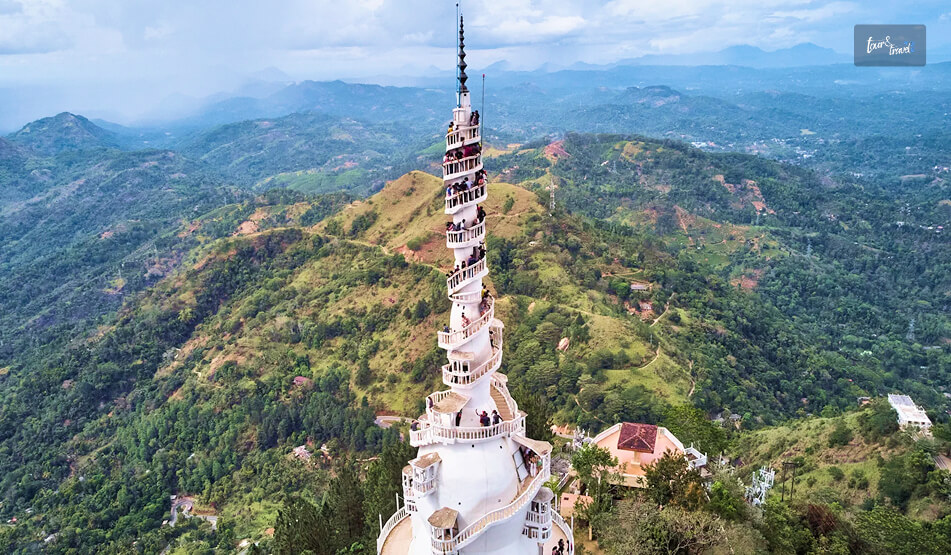
Also, it rises above the mountain and is truly called “Nature’s Stairway to Sri Lanka” for the views of the Knuckles Range and other surrounding mountain ranges. 

Hi, in today’s blog, I will talk about the Ambuluwawa Tower in Sri Lanka.

Let’s find out how it combines the beauty of nature with the excellence of human craftsmanship. 

I will cover topics such as the location of the tower, how to reach it, what is so special about it, safety tips, and more. 

What Is The Ambuluwawa Tower? 

What Is The Ambuluwawa Tower

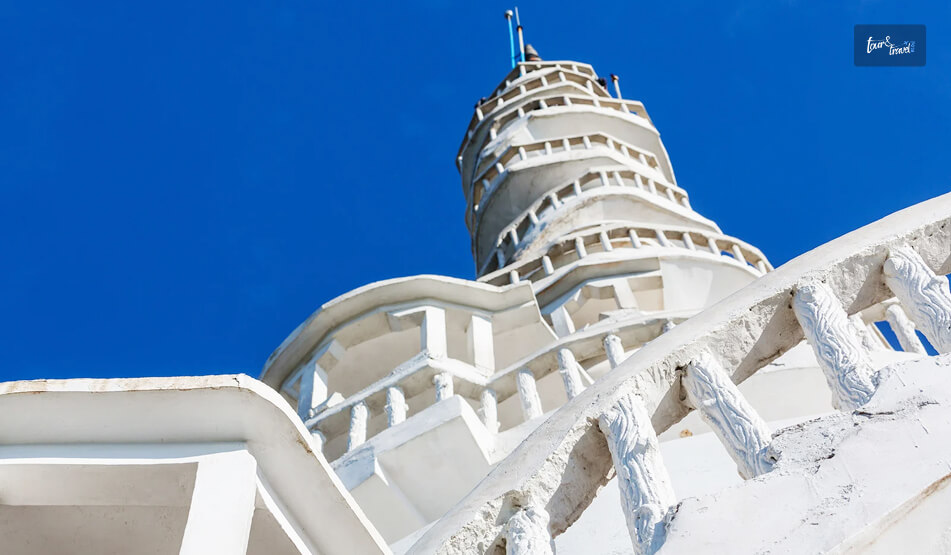
Ambuluwawa Tower is a human-made structure atop the magnificent Ambuluwawa Mountain, which has a height of 3,567 feet. 

It is a part of the Ambuluwawa Biodiversity Complex, which celebrates nature and the diverse religious philosophies. 

Along with the surrounding mountains and peaks, on a clear day, you can see even Adam’s Peak from this tower. 

Furthermore, the park has different religious sites, as I have mentioned. 

Also, once you climb up the tower, you can experience the true beauty of Ambuluwawa and see how the clouds kiss the mountains. 

Ambuluwawa Tower Quick Facts 

Completed in 2006
Height48 Meters
Elevation from the Sea Level1087 Meters
Number of Stairs to Climb 55
ViewA 360-Degree Embracing View
Hours Open7:30 AM to 5:30 PM
Entry Fee2,750 LKR or Around 806 INR 
• With Bike: 2850 LKR
• With Car: 3200 LKR

Where Is Ambuluwawa Tower Located? 

Where Is Ambuluwawa Tower Located

Atop the Ambuluwawa Mountain, Ambuluwawa Tower is in Gampola, Sri Lanka. It is in the southwest of Kandy. The distance is around 20 kilometers. 

It takes around 1 hour by road to reach the Ambuluwawa Tower from Candy. The duration may differ based on the traffic conditions. 

You can even combine your visit to the Ambuluwawa Tower with the places to see in Kandy.

As Jaffna is famous for its Tamil culture, Kandy remains a rich hub of history and Buddhist religious attractions. 

The places to visit in Candy are the Commonwealth War Cemetery, the International Buddhist Museum, the Bahiravokanda Vihara Buddha Statue, etc. 

You can even extend your itinerary by planning a trip to Nuwara Eliya, the coldest place in Sri Lanka. 

How To Reach The Ambuluwawa Tower?

Ambuluwawa Tower is a common stopover when someone is traveling from Kandy to Nuwara Eliya.

1. By Car Or Private Taxi 

You can take a taxi or car to reach Ambuluwawa from Kandy in 1 hour. The cost will be around INR 3500. 

However, the travel time can be more than an hour depending on the traffic conditions. 

2. By Train

However, I took a train from Kandy to Gampola. It is lighter on the pocket, and the commute time is a little less. 

Moreover, it is perfect for someone like me who believes in the philosophy of TheLow DownUnder Travel

Trains depart from Kandy to Ambuluwawa three times a day. 

The first train departs at 3:35 AM and reaches Ambuluwawa at 4:18 AM. Furthermore, the next train departs at 8:47 AM and reaches Ambuluwawa at 9:32 AM. 

However, the fastest train from Kandy to Ambuluwawa departs at 11:10 AM and reaches at 11:36 AM. Also, the average ticket price for this train journey is around INR 380. 

Moreover, tuk-tuks are easily available from the Gampola Station to the Ambuluwawa Tower. You have to negotiate a bit, and for me, it cost around INR 400.

From the station, you will reach the tower entrance in 15-20 minutes. 

3. Reserve A Tuk-Tuk 

Tuk-Tuks are the best for exploring Sri Lanka. A ride in Tuk-Tuks is fun and adventurous. Also, today, there are platforms such as tuktukrental. com to make your rides easier. 

A reserved tuk-tuk ride from Kandy to Ambuluwawa will cost around INR 1500. 

If you have reserved a tuk-tuk, the entry fee to the park for one adult will cost 2900 LKR, which is around INR 850. 

Furthermore, you can get dropped off at the entrance and then book a taxi-tuktuk or walk the rest of the distance. 

Reserved Tuk-Tuk, Taxi Tuk-Tuk, And Walk: Which Option Is The Best For You? 

I got down at the entrance of the Ambuluwawa Park and then took a taxi tuk-tuk. It cost me around INR 400, and these are the best options because they are souped up and they can climb up the mountain faster. 

I found these taxi tuk-tuks at the entrance, and the drivers were friendly. The price was around 400 INR or 1500 LKR. 

You can even take your own tuk-tuk. However, I saw many tuk-tuks getting stuck in the middle. Then, the passengers had to walk for the rest of the route. 

Now, walking here or on the ascent is not everyone’s cup of tea. It is very steep. 

Visiting The Ambuluwawa Tower? Keep These Tips In Mind 

Visiting The Ambuluwawa Tower Keep These Tips In Mind

Early morning or late afternoon (just before sunset) is the best time of day to climb up the Ambuluwawa Tower. Moreover, in the middle of the day, the view can become foggy. 

So, here are a few more things to remember. 

1. Enjoy The Unique Ascent Experience At The Ambuluwawa Tower

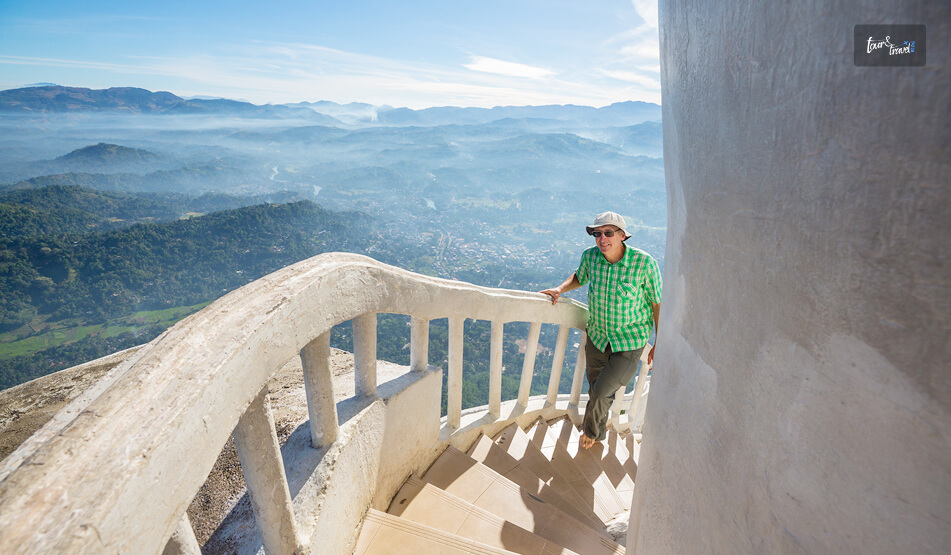
You have to climb up 55 stairs to reach the top of the tower. 

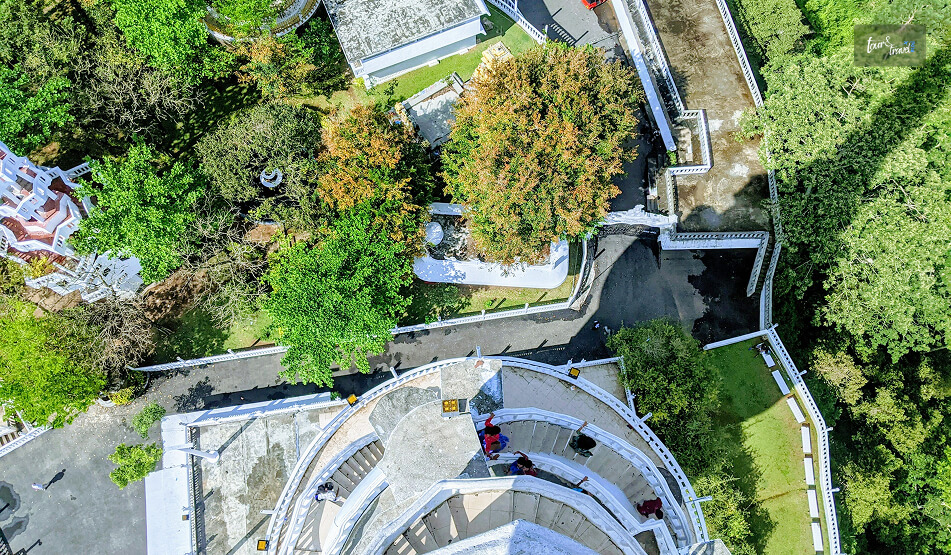
However, the staircase is narrow and spiral, and as I kept climbing up, the staircase started getting narrower. 

Still, enjoy the 360-degree view before your eyes as you keep climbing up the stairs. 

2. Combine Your Tower Visit With Other Activities

Once you are done visiting the tower, you can visit the nearby Java Lounge or souvenir shop. You can also have an adrenaline rush at the Adventure Park.  

Furthermore, you can combine a historical and cultural tour of Kandy with a visit to the Ambuluwawa Tower. You can even travel to Nuwara Eliya. 

Moreover, there are many nearby tea plantations to explore.  

3. Insider Tips 

Layered clothing and comfortable shoes are a must as you need to climb up 55 stairs. Also, at the top, it is very windy. 

Moreover, you have to hold your mobile phone or camera firmly as the wind is harsh at the top. 

Also, you need to carry enough water and snacks.

Is It Safe To Visit The Ambuluwawa Tower? 

Is It Safe To Visit The Ambuluwawa Tower

Yes, the Ambuluwawa Tower is safe to climb. However, the staircases are narrow and can sometimes be slippery. 

Also, sometimes the crowd can move in the wrong direction, creating unnecessary traffic in the staircase. 

Furthermore, it may be difficult for you if you have health issues such as vertigo and spondylitis. 

Nevertheless, wear comfortable and sporty shoes and stay hydrated to eliminate most hazards while climbing up the stairs. 

Where To Stay Near The Ambuluwawa Tower? 

You can stay in Kandy or Gampola for a comfortable visit to the Ambuluwawa Tower.

However, Kandy is a better option to find an accommodation if you want to combine the tower visit with other day trips. 

Nevertheless, there are some of the best places to stay in Kandy. 

1. Kandu

This guesthouse is simple, and it is ideal for budget-friendly travelers. Furthermore, it is very close to the City Center, and you will get a complimentary breakfast here. 

2. SWP Eco Lodge

It is the most scenic of all the accommodations in Kandy, as it is on the Kandy Lake. So, it overlooks the Temple of the Tooth and the lake. 

Furthermore, the rooms here have large balconies. 

3. The Summit

The Summit is known for its beautiful terrace. However, it is a bit pricey. So, it is ideal for luxury travelers. 

4. McLeod-Inn

I stayed at McLeod Inn. I chose it because of its location up the hill. Tuk-tuks are frequently available, and they took me to the McLeod Inn. 

Moreover, the ambiance was very peaceful there, and the views were amazing.

Ambuluwawa Tower: Frequently Asked Questions (FAQs)

Here are the frequently asked questions and answers about the Ambuluwawa Tower. 

1. How Long Does It Take To Climb The Ambuluwawa Tower?

As you take the tuk-tuk from the entrance, you will reach the base of the tower in 20-30 minutes. 
Furthermore, from the base, it will take around 15-20 minutes to climb up the tower.

2. Can I Visit The Ambuluwawa Tower With Children?

Yes, you can visit the tower with young children. However, one has to climb 55 steep stairs to climb up the tower, and the stairs can be narrow. 
Also, it is very windy atop. So, I think, bring your children at least when they are 6-7 years old. 

3. Who Built The Ambuluwawa Tower? 

The completion of the Ambuluwawa Tower was done in 2006. The Local Government of Gampola and the Central Environmental Authority started the construction of this tower. 
Moreover, celebrating the religious harmony and inclusive spirit of Sri Lanka was the main intention behind the construction of this tower. 

Share on Social Media

Sibashree is a travel, culture, and leisure writer who has been writing since the age of 12 and professionally since 2014. With more than a decade of travel writing experience and journeys across India and several parts of the world, she brings a deeply personal and thoughtful perspective to her work. A student of English Literature and Mass Communication, Sibashree has always viewed travel as more than movement — for her, it has been a way of understanding people, cultures, and herself. Her passion for spiritual exploration has also led her to many unusual and meaningful destinations over the years. Outside of writing, Sibashree enjoys watching European cinema, reading about global politics, and reflecting on the stories hidden within everyday places.

Leave a Reply

Your email address will not be published. Required fields are marked *

title-img Related

READ MORE card-img

Dark Tourism in India Exploring Shadows and Must-Visit Sites

BY  Sibashree Sep 30, 2024

India is leading the dark tourism scenario With an expected CAGR of 5.1% (2024-2034),. Dark tourism in India thrives as it is the land of history and heritage. Also, travel a few miles, and you will get to know folklore or common myths related to paranormal activities.  So, dark tourism in India takes you to places associated with human tragedy or something that raises our curiosity. Endless warfare and the rule of various dynasties have drenched its soil in blood from time immemorial. Further, superstitions and oppressive customs in various parts of the country have caused human casualties that can give you a chill down your spine.  However, dark tourism in India or any part of the world is not just about people’s fascination with the macabre or its inclination to encounter the grey zone. Many dark tourism sites like the Cellular Jail in the Andaman and Nicobar Islands or Jallianwala Bagh tell the tales of a collective past.  So, these are often popular destinations for educational tourism or excursions. With endless stories and mysteries spread in every corner, India will spoil you with the choices of dark tourism spots. Here is a list of places you just can’t miss! Dark Tourism In India: These Are The Places You Need To Visit  For me, dark tourism in India is like communicating with the past. These places and the remnants there convey a message that can trigger our moral emotions such as empathy, gratitude, disgust, or sadness. Further, these moral emotions can change our perspective about ourselves, various communities, and society.  Moreover, curiosity is present in people’s love for the occult. Some categories of dark tourism, such as ghost tourism, thana tourism, and disaster tourism, especially urge many to get into the shadows. We absolutely agree with Karan Anand, the Head of Relationships at Cox & Kings. So, which places does dark tourism in India take us to? Here is a curated list! 1. Port Blair Cellular Jail | Kala Pani | The Prison Of Death Location: Andaman and Nicobar Islands  One of the most prominent witnesses of British atrocities in the country, the Port Blair Cellular Jail tops almost all the lists of dark tourism in India.  The British government made a hell of concrete in 1906 in the form of a prison, and it was almost impossible to escape or come out of it.  Vinayak Damodar Savarkar, a freedom fighter in India, was the only person who had escaped the Port Blair Cellular Jail.  The British Raj sent convicts with the highest punishment to this jail. Once, this jail housed as many as 80000 prisoners, and among them, at least a few hundred were the freedom fighters. The freedom fighters received the “Kalapani ki Saza” to lead a life of isolation.  Constructed in the shape of a starfish, the Port Blair Cellular Jail is witness to inhuman tortures and genocides. Along with the atrocities of the British Raj, it has also seen the genocides operated by the Japanese.  When at the Cellular Jail, don’t forget to attend the “Light & Sound” show in the evening. It is like time travel, giving you goosebumps.  2. Jallianwala Bagh Location: Amritsar City, Punjab The 13th of April 1919 saw one of the worst examples of British acts of barbarity in India. Innocent people had gathered at Jallianwala Bagh in Amritsar City to peacefully protest against British rule. Jalianwala Bagh was blocked from all sides, and Brigadier-General Dyer ordered his men to open fire at these innocent and unarmed people. The 1650 rounds of firing continued for 10-15 minutes, taking the lives of more than 500 people.  Today, when you visit Jallianwala Bagh, you can see many bullet holes struck in the structures there. In 1951, a memorial was built here to pay respect to the Indian revolutionaries. Further, in 2019, the inauguration of the Yaad-e-Jallian Museum took place. The museum depicts the most authentic account of the massacre.  A century later, in 2019, an official acknowledgment of “regret” came from British Prime Minister Theresa May on the Jalianwala Bagh massacre. This substantiates how grave and gruesome the act of mass killing was.  3. Roopkund Lake  Location: Uttarakhand Located at a 5000-meter altitude, Roopkund Lake is one of the most popular trekking destinations in Uttarakhand, India.  However, you can see hundreds of human skeletons near the lake, named  the “Lake of Skull.”  Researchers have found that around 200 pilgrims died of heavy snowfall in the place in the 9th century. So, there are so many skeletons around the lake. Roopkund Lake is also known as the “Mystery Lake,” and there are stories about the pilgrims getting turned into stones or the Goddess getting angry.  However, Veena Mushrif-Tripathy, a member of the 2004 investigation and a professor of archaeology at Deccan College in Pune, mentioned that the theory of the pilgrims was reasonable as there were no traces of weapons.  4. Shaniwar Wada Location: Pune, Maharashtra Shaniwar Wada, built in 1732 by Bajirao I, is a historically significant fort and stands out for its architectural excellence. This fort was once the seat of the Maratha Peshwas. This fort became a tourist attraction after the 2015 magnum opus of Sanjay Leela Bhansali, Bajirao Mastani. However, Shaniwar Wada is a favorite dark tourism in India destination because of a popular ghost story or folklore associated with it. Narayanrao, the son of Bajirao I, was killed by his uncle Raghunathrao in 1773 in this fort. Since then, people have experienced paranormal activities in the fort. Many have claimed to have encountered the dead prince.  5. Kuldhara  Location: Jaisalmer, Rajasthan How about visiting a village abandoned by its people around 200 years ago? Kuldhara, the cursed village of Jaisalmer, was the residence of the Paliwal Brahmins. They left the village because of water scarcity and the high taxes imposed by Diwan. Another story is about Salim Singh, the local prime minister, who wanted to marry the daughter of the village head. The villagers did not agree to his demands and vacated the place overnight. They also cursed the place, saying that no one could settle there.  Further, some even associate the overnight evacuation with paranormal activities. Whatever the reason, many people have tried but failed to spend a night in this village. Today, abandoned houses, temples, and other architecture speak of excellence, craftsmanship, and intrigue. It is also a favorite destination for movie-makers and photographers today. Films like “Agent Vinod” are shot here. Moreover, the village is now a “Protected Monument of the State Archaelogy Department.”  6. Dumas Beach Location: Surat, Gujarat Dumas Beach is one of the most haunted places in Gujarat. With its black sand and paranormal activities, this beach transforms into a hellish spot as the Moon shows up.  The beach was earlier a cremation ground. The black color of the sand comes from the ashes of those corpses. While we could not see the moving orbs or any prominent paranormal activity, I felt eerie at the beach. Also, I can’t explain, but there is something very depressing about this beach. It feels like you can hear the whispers of the lost here, and someone will suddenly appear in the shadows.  There have been reports of many tourists going missing from Dumas Beach. Also, one day, local people discovered the corpse of a man at the beach. His tongue was popping out. To date, no explanation has been found behind these tragic incidents.  7. Bhangarh Fort In the Aravallis, the Bhangarh fort has the remains of a deserted marketplace, Havelis, and temples. The architectural excellence of the fort is beyond question, and it speaks of a prosperous past.  However, Bhangarh Fort is the most haunted place in India. It has stories and myths enough to scare you to bits.  Bhangarh Fort Story: 1 The Archaeological Survey of India has banned entering or staying in the Bhangarh Fort after the Sunset. According to the local people, no one entering the fort at night has been able to come out alive. The fort becomes a site of paranormal activities in the darkness.  Bhangarh Fort Story: 2 Guru Balu Nath used to meditate at this place. When Raja Madho Singh visited him with a request to build a fort here, he agreed on one condition. He asked the king to promise that the shadow of the fort would not touch him. Despite the king’s promise, it did not happen. Furious, the hermit cursed the castle and the village.  Bhangarh Fort Story: 3 No house in the area has a roof. People believe that the roofs of those houses were destroyed due to the curse of the hermit. All attempts to rebuild the roofs went in vain. Many of those roofs also collapsed, causing human casualties.  Bhangarh Fort Story: 4 (Accidents And Deaths) Three people once decided to stay in Bhangarh Fort at night. They had a powerful torch, but one group member fell into a well. The two others rescued him and took him to the nearby hospital. However, they met with a fatal accident on the way to the hospital and lost their lives.  Do you want to explore more sites that are suitable for dark tourism in India? Visit the Taj Palace Hotel in Mumbai, Union Carbide Factory, Bhopal, Sites Of Indus Valley Civilization, Savoy Hotel, Mussoorie, and Gandhi Smriti, Delhi.  Listen to hushed murmurs and the stories these places have to share to make a journey to the past!  Also read Top 10 Most Popular Paraguay Food That You Must Try. Top 13 Famous Wonders Of India That You Must Visit! [Updated 2024]

READ MORE things to do in fiji

You Won’t Believe The Best Things To Do When In Fiji!

BY  Mashum Aug 5, 2023

Is your heart craving some natural beauty that will help you relax? Why don't you visit Fiji, situated in the middle of nowhere, not exactly nowhere! You will forget all your worries with the endless South Pacific around you. Want to know what are the things to do in Fiji? A travel destination that is nothing short of heaven, Fiji is home to 333 tropical islands. It is in the middle of the South Pacific, with authentic flavors, enticing culture, and beautiful nature. Read the article to learn more about what to do when in Fiji! There are a variety of activities that travelers can experience with the abundant collection of flora and fauna. There is also the tribal culture for you to experience unique and thrilling events. You Won't Believe When I Say About The Best Things To Do In Fiji! Fiji is more than just a travel destination. Instead, you will experience an authentic culture when you visit Fiji. If you are traveling from the US, you do not need a visa; your stay can be as long as four months. You can book tickets on the 10 hours long direct flight from Los Angeles to Fiji. The destination in Fiji is Nadi International Airport; hence, if you live closer to Los Angeles, you are in luck. However, if you live elsewhere, you must travel to Los Angeles and then fly. Fiji Airways and Air New Zealand are two airlines that operate in Fiji, and they both offer regular flights daily if you travel from the USA, Europe, or the UK. You could visit Fiji between May and September to experience clear blue skies. You can go between October to April if you want to experience the rain. However, you do stand at the risk of experiencing a storm or cyclone. Some of the best resorts in Fiji are Sheraton Resort & Spa, situated on Tokoriki Island, InterContinental Fiji Golf Resort & Spa, Fiji Marriott Resort Momi Bay, and others. 1. Go For A Safari To The Sigatoka River! The Sigatoka River Safari is very entertaining. It takes you around the Sigatoka River Valley, where you can visit villages, eat Fijian delicacies, drink Kava or Yaqona, a sedative and narcotic Figian drink, and dance. The drink is made with the crushed root of Yaqona and further strained with water. The safari also includes coastal Inland Tours, including a river cruise, The Cannibals Cave Tour, or visiting a waterfall. The river safari lasts 4 hours, including the Kava ceremony in the local villages, where people drink from a big communal bowl. A busy market is situated at the banks of the Sigatoka River across 4 km inland! You can visit this hub which gives glimpses of urban life in the provinces of Fiji. The market has small-scale shops creating a strong and bustling network of sellers and curry restaurants. There is also the Sigatoka Sand Dunes National Park to visit if you want something exciting. The dunes are spread across 650 hectares while stretching across 3 km at the mouth of the river. You can have some fantastic views, especially when the dunes rise to 80m in some places. 2. Visit Kula Wild Adventure Park One of the largest collections of native wildlife is boasted by Kula Eco Park, situated in a temperate forest. Tourists can use boardwalks to walk around and explore the wilderness. The collection of water birds, doves, patrons, and reptiles is to look for! There are reptile enclosures, a reef fish aquarium, and aviary cages where the huge crested iguanas are the highlight considering they are only found in limited islands in Fiji such as Yasawa and Vanua Levu. Marine displays such as soft and hard corals, tropical fish, and ocean turtles exist. 3. Stroll Around The Garden Of The Sleeping Giant! The Garden of the Sleeping Giant is 35 acres of rainforest that acts as an adventure park. There are zip wires which are used by travelers, mostly adventure junkies, who can fly across the jungle through these at a speed of 60 km per hour. Also, there are ropes for swinging, pools for swimming, and you can also spot parrots. There are waterfalls to which you can walk around, or you can also get a 1 hour guided walk, a part of the package when you buy the entrance tickets. The adventure park was founded by the actor Raymond Burr, also known as Perry Mason! A collection of flowering plants, orchids, and trees spread across the gentle trails across the landscape. The park is situated just north of Nadi, so you can also take a guided tour to Nadi to experience the culture there. You can also take a dip in the thermal pools, which are pretty restorative! 4. Explore Nadi One of the most authentic places to visit in Fiji is Nadi, a multicultural town with the perfect feel of the vibrant culture. You can enjoy the place, explore the shops, relish some authentic and native drinks, and eat delicious cuisine. So to answer, things to do in Nadi Fiji, read along! A live tourism spot, Nadi creates opportunities for some of the most exciting things to do in Fiji. You can try the zip lining experience with Zip Fiji's newest ziplining expertise, which only lasts 35 minutes and creates a beautiful and exciting adventure. There are 5 km of zip lines across the canyons, mountain tops, and caves. If you like speed, you will love this experience as they create a jaw-dropping experience where you can take in the breathtaking ocean views and the limestone cave exploration. What can be more exciting than experiencing 3 diverse ecosystems? There is also the Tifajek Mud Pool & Hotspring and Sabeto Hot Spring Mud Pool and Tours for you to dip and relax! Further, you can explore the souvenir market, which is open-air, where you will find cannibal forks, hand-painted clothes, wooden kava bowls, and others. 5. Try Sea-Kayaking! Sea-Kayaking is one of the best things to do in Fiji! Sea-Kayaks are available in every resort for the guests to experience the beautiful sea and are usually addressed as a complimentary activity. It is important to inform someone of your attempting the activity and wear a life jacket because it is important that you are safe. A sudden squall storm or dangerous current might be a risk. Hence, informing your resort regarding your activities would be best. One of the best experiences you can get for Kayaking is visiting the Lavena Coastline, situated on Taveuni within the Bouma National Heritage Park. You will need to make a half-day trip to the coastline. You can also access packages inclusive of camping on the beaches, snorkeling at the lagoons, overnight visits at villages, and Kayaking offered by two companies Tamarillo Tropical Expeditions and South Sea Ventures. The packages will give you a wholesome experience, along with helping you save some money. 6. Enjoy A Stunning View After Hiking The Waya Island If you are in Fiji for stunning views of nature, worry not! We have got you covered. Waya Island is one of the most beautiful locales to offer spectacular views with its photogenic views and amazing hiking trails. Hiking is one of the things to do in Fiji island. You will find rock protrusions, fantastic collections of flora and fauna, and ridges with knife edges, creating a beautiful view of the island. These elements create a picture where it seems as if a giant is peering from the island, floating in the sea, and slanting back! There is the Octopus Resort situated on the northwest coast, where you can start your walking trails along the hills with or without a guide exploring the interiors of the island. There is also a beautiful, unguided coastal walk you can enjoy with your partner or family. It is completely safe and offers a wonderful experience. 7. Walk Through The Fijian Markets Wondering what to do in Fiji? If you are a people person, you must visit the Fijians Market as it is a mesmerizing place with exotic seafood, vegetables, and fruit collection. Due to heavy import duties, you might not find fashion and expensive lifestyle products. Isolation is another factor that might make you feel that there is a lack of fashion and design, yet you must visit the urban municipal markets. Filled up to the brim with local produce, designs, and native culture, you will experience a mix of character, authenticity, and exoticism. If you are one of those travelers who love connecting with the place when you visit, the handicrafts and local produce will steal your heart and money! (wink) 8. Live At Savusavu The significant tourist center in Vanua Levu, Suvasavu, is the place to be if you want to experience rolling hills, sunsets, and a chilling beer. There is a perfect place for scuba diving in the Namena Lagoon while Yachts anchor around Savusavu, creating the ideal locale for experiencing a social hub. Many bars and restaurants on the waterfront create a perfect place for a romantic dinner or family outing. so, it is one of the best places to visit in Fiji! You can also take a peaceful walk around the Savusavu hills. Good options for fishing in the bay can also be attempted. 9. Attempt Snorkeling! Have you ever tried snorkeling? It is one of the best experiences to have if you are an adventure lover. With vibrant coral reefs across most of Fiji islands, you should try snorkeling and scuba diving to explore diverse fish species. Diving is available the whole year. However, it is the best experience, especially during October and November. The corals across Fiji are world known, especially due to their nutrient-rich channels spread between the larger islands such as Beqa Lagoon, Viti Levu, Vanua Levu, Taveuni, and the rainbow reef. 10. Turn Up At The Fijian Meke Dance Night! If you visit Fiji, you must attend the classic Figian night out, where the feast is complete with the underground oven-roasted pig. There is a song and traditional dance involved, which is called make. The tradition has been passed down through generations, thus, creating specific artistic expressions for Fijians. The music that people enjoy on the dance night includes rhythmic clapping and chanting and the addition of Lali drum hits and bamboo sticks. Lali is a hollowed wood that is used in creating the rhythm. Recently, ukulele and guitar have also been introduced at dance nights. Group dancing includes males or females; however, in recent times, the pakalolo dance has been introduced, where both males and females can dance together. 11. Take A Dive In Beqa Lagoon With The Sharks! Do you want to check out tiger and bull sharks? Visit Beqa Island, situated south of Pacific Harbour, some 12 km away, and experience the shark-feeding dive-off. You will see some mean-looking sharks, such as Silvertips, sickle-fin lemon sharks, bull sharks, reef sharks, and tawny nurse sharks. If you want one of the safest experiences, go with the Beqa Adventure Divers and Aqua Trek Beqa, as they claim the highest safety records. Apart from the sharks, you can also have a peaceful diving experience in the lagoons when Shark-feedoff is closed. 12. Try Skydiving! Want to experience an adrenaline rush? Go and try skydiving in Fiji! Jump off the planes to ride the waves of the clouds and experience the beautiful view of Fiji from up above! Free fall and experience Fiji's sandy beaches, coral reefs, and turquoise waters, creating a grandiose visual experience. It is a once-in-a-lifetime experience that you must not miss at any cost. You will be charged somewhere around $300, which can go up to $650. The Skydive Fiji was established in 2004, and its safety record is among the highest. Have an exhilarating experience with supporting staff on the ground and in the air. There are licensed pilots and instructors who ensure that people have an understanding of a lifetime of collecting priceless memories. 13. Have A Go At Birdwatching! Carry your binoculars and travel feet! Fiji has a collection of exotic bird species, including the red-throated lorikeet and rare collared lory. Some endangered bird species can also be found; hence, lovers of aviaries or bird enthusiasts, plan that trip and explore the thick Kula WILD Adventure Park! Conclusion Fiji is never disappointing! Do you think you can be bored with such a variety of things to do in Fiji? It is a haven for travelers, especially the ones who are easily inspired by nature, attracted to the sea, and in love with mountains. I have often realized that places with diverse ecosystems are perfect for people who are wanderers by nature. Fiji embraces travelers with all its beauty and diverse culture, so do not miss out on it! Start planning and comment below to let us know about your choice of thing to do in Fiji! Read Also: Top 12 National Parks In Florida That You Must Visit Is Machu Picchu Closing In 2023? Know It All Here! Best 10 National Parks In New Mexico To Visit

READ MORE Chios Greece travel guide

Chios Greece Travel Guide: How To Explore Chios Beyond Santorini? 

BY  Sibashree Oct 29, 2025

Afternoon siesta is a cherished luxury where I come from. Thousand miles away, I did not expect to experience something similar in Chios, Greece. I was driving through Mesta, and the faint, sweet-spicy scent of mastic trees overtook me.  I noticed one strange thing! Not a single shop was open, and even the ATMs were closed, despite it being a weekday. Curious, I asked my guide, and he said,  “We loved our naptime in the afternoon. The shops are closed from 2 to 5 PM. We value our food and rest! There is nothing to rush!” This is the moment I felt at home in Chios.  Chios in the eastern Aegean was hit by one of the largest wildfires of recent times in June and August 2025. These incidents were a major blow to the mastic trees and the entire region, with many trees destroyed by the wildfire.  However, a few months down the line, Chios, Greece, is experiencing a positive rebound in its tourism landscape. Despite being a relatively new name compared to Santorini or the Amalfi Coast, it is gaining attention for its genuine charm.  Despite an increase in interest, the tourism model here is focusing more on sustainability. Also, it is avoiding mass tourism to preserve its cultural heritage.  In terms of accessibility, Chios is going to get a new airport very soon. Also, for hospitality, this eastern Aegean island depends heavily on family-run lodges. Moreover, the island is capitalizing on its natural beauty and medieval villages to stay true to the official theme of “Experience Chios.”  Hi, in today’s blog, I will talk about the Chios, Greece travel guide that takes you to local artisan workshops, cooking classes, adventurous places, and more. Exploring The Local Artisan Workshops And Experiences  The mastic resin is the signature product of the region. The Pistacia lentiscus var. chia trees produce this resin. These are called the “tears” of Chios. The aroma is faint, but it lingers just like the most beautiful melody of a flute. My mastic harvesting tour was already set, and the experience I had will stay with me forever. We talk about environmental protection and sustainability. The people of Chios practice it in their lives.  Nevertheless, along with the mastic harvesting tours, attending the weaving workshops, pottery classes, and distillation plants were the best local experiences in Chios. I also enjoyed my time at the local tavernas.  1. Mastic Harvesting Tours In Mastichochoria Pyrgi, Mesta, or other villages in the south are ideal for farm tours. These have cooperatives and farms, where harvesting takes place during August and September. I was lucky to be in Chios in August.  The farmers here “wound” the trees so that they weep, and the tears are collected. Then, the tears are cleaned using a process called “Kefalari,” and watching the entire process is an immersive slow travel experience.  I talked to an old man in Mesta who was collecting the resin by hand. As I approached him, he said, “We treat the trees like family. If one dies, we plant another. We also pass on these trees to our future generations.”  Standing there, I could almost hear my grandfather, who used to say the same things about the trees he planted.  In Mesta and Pyrgi, I saw the soil getting hardened wherever the resin had fallen. Children love collecting those.  If you want to learn more about mastic harvesting in Chios, you can visit the Chios Mastiha Growers Association (CMGA). It now has around 4500 members from the 20 primary cooperatives spread across 24 villages.  2. Weaving Workshops In Pyrgi The houses in Pyrgi look wonderful, with distinct black geometric decorations. On some walls, I saw diamond shapes; others had stripes, and some even featured crisscross patterns. There is also a personalized touch in these geometrical shapes. I was standing near a house appreciating the diamond-shaped designs on the walls. An old lady peeped, and I asked her whether she had done the design or not! She started giggling like a little girl and said, “I have hidden the name of my husband in these diamond designs. It was a lot of fun when I asked him to spot his name for the first time.”  Once again, I felt that emotions are universal and the art of finding joy in little things.  The village also has a tradition of weaving. Explore the traditional looms and try your hand at the craft.  3. Pottery Classes In Armolia Armolia is the epicenter of pottery traditions in Chios, Greece. It is like a kingdom of brightly colored ceramics. Kefalakia, a one-necked Chian ceramic jug, is a must-buy.  I tried my skills at a hands-on pottery class, and I must say that I was not so proud of what I made!  4. Soap-Making And Herbal Distillation Chios has the best flowers and herbs. So, you will find many small family-run businesses here, including soap-making and herbal distillation. They also make local olive oil, mastic oil, and distilled water.  These small businesses have kept alive the heritage of natural wellness in Chios.  5. Getting Lost In The Alleys Of Mesta At Night View this post on Instagram A post shared by ᴍᴇꜱᴛᴀ ᴄʜɪᴏꜱ (@mesta.chios) It may sound a little scary, but it was fun for me. Mesta is like a labyrinth, and exploring this fortified village was like a treasure hunt. Indeed, it was planned this way to confuse the pirates who wanted to rob the town.  After my dinner at the guesthouse, I wanted to take a quick stroll around, and after half an hour, I was clueless about the road to take.  The alleys twisted and turned until I stood before a stone archway and a dead-end courtyard filled with vines. I could listen to my footsteps on the cobblestone road, and after a few minutes, I sat on a rock.  Suddenly, something magical appeared before the eyes. The stars over the Aegean were unreal, and the absence of light pollution made it look like I could reach them by stretching my arm.  I cannot tell you how long I waited there, and suddenly a call from my guesthouse broke my trance. The receptionist asked me to wait for a while and sent a guide from the guesthouse to guide me back.  6. Eating And Drinking At A Local Taverna Most tavernas I visited during my stay on Chios did not have a printed menu. That’s actually good, considering the menu is decided based on the fresh produce available on that day.  My guide used to ask “Ti echete simera?” or “What do you have today?” The waiter used to read from the list of items that were offered for the day.  Wellness And Retreat Travel In Chios, Greece  View this post on Instagram A post shared by Royal Pearl Island Chios Hotel & Spa (@royalpearlisland) Chios opened its first luxury wellness retreat, Pearl Island Chios Hotel & Spa, last year. Nevertheless, Chios has been celebrating its unique wellness tradition for years now.  1. Mastiha And The Herbs Of Chios Furthermore, Chios has been harvesting mastiha for more than 2500 years, and this natural product has medicinal properties. In fact, this knowledge of cultivating mastiha has been identified as an Intangible Cultural Heritage of Humanity by UNESCO.  Mastiha gum has anti-inflammatory properties, it helps heal wounds, and it improves oral health and the digestive system.  However, mastiha is not the only herbal ingredient grown here. The region also has chamomile, sage, thyme, and oregano. Furthermore, Souma, a traditional fig-based spirit is a crucial element in the wellness tradition of mastic oil and mastiha, the signature of Chios.  2. Holistic Healing In Chios  The holistic healing facilities in Chios include meditation sessions near Mavra Volia beach. Furthermore, you can look for yoga retreats in secluded coastal villas and thermal spa visits in nearby Volissos.  Away from the crowd, the thermal spa visit near Amani was the ultimate rejuvenation for me after a busy day.  Cooking Classes And Culinary Tour In Chios, Greece I visited a cafe called Citrus Memories inside an old estate near Chios town. They served a citrus drink made with local fruits grown in Kampos.  The juice was not very sweet. In fact, the hint of bitterness in the drink was the kick. The garden of the old estate had orange trees and stone walls around. So, it was like being in a different era.  The citrus smell of the oranges offered the most refreshing olfactory experience, while the sound of cicadas was somehow felt healing. This was one of the best experiences of food and beverage in Chios, Greece.  1. Mastic Liqueur Tastings I tasted mastic liquor at a local taverna in Mesta. My guide told me that having the mastic liquor after food helps with faster digestion.  The one I tasted had just the right hint of anise. However, it did not overpower the drink's citrusy finish. The texture of the drink was clean, and it cleansed my palate.  2. Cheese-Making Workshops I took a guided tour of the Sinanis' family's traditional cheese workshop. You will notice a wonderful fusion of modern and traditional techniques in cheese-making. Furthermore, you will get to taste their cheese along with other local produce.  3. Traditional Bread Baking In Wood-Fired Ovens Making bread in wood-fired ovens is one of the most cherished culinary traditions of Chios. I was fortunate enough to visit the Klossas bakery in the village of Volissos.  Started in 1955, it is still run by the same family. The setup still has a traditional setup without windows, and they bake a limited variety of bread.  4. Farm-To-Table Cooking Classes With Local Chefs Many local chefs organize a farm-to-table cooking class using locally produced olive oil, citrus fruits, and seafood. I learned to make ipovrihio, a special sweet made using mastic. It is a flavored sugary paste served in cold water.  5. Festivals Celebrating The Food Of Chios  I was lucky enough to be in Chios in the month of August. I could attend many festivals celebrating the local food.  FestivalsSignificanceTimingSouma Festival• Celebrates the Souma spirit made from figs• Celebrated with local delicacies and traditional dance • First two weeks of AugustMountain and Livestock Festival• A three-day festival in Pityos• Vendors selling local produce directly to the public• July or early AugustAmateur Fishermen's Festival• Celebrated in Mesta• Kakavia, or fish soup, is served as part of the marine tradition• AugustPanagia Festival and Saint Markella Festival• Food and drink are shared at the village square • August and July, respectively Moreover, festivals celebrating local saints, such as the Feast of Agios Ioannis the Theologian, are ideal for enjoying local food and beverages. Goat or hake delicacies are served at the end of the religious ceremonies.  Adventure Activities Beyond Hiking The diverse geography of Chios makes it an ideal place for nature walks and hiking. However, it offers many unique adventures. For example, swimming in the tiny coves near Vroulidia and Agia Dynami was the best experience for me.  I started swimming at Agia Dynami early in the morning. The water was so clear that it felt like glass. I could see schools of tiny fish flickering like silver confetti.  Also, after the swim, I went to the taverna up the hill. The owner there served grilled fresh sardines. The dog under the table, taking a nap, made the picture perfect.  Nevertheless, sea kayaking, rock climbing, cave exploration, and mountain biking are some adventure activities in Chios, Greece. 1. Sea Kayaking Along Volcanic Beaches The southern coast around Emporios and Mavra Volia of the Black Pebble Beach is dramatic. The clear water here creates the perfect contrast with the dramatic volcanic beach.  I loved kayaking here and explored the surreal geological formations that we cannot reach on foot.  2. Rock Climbing In Kambia Climbing the limestone cliffs in Kambia offers serious adventure. The crowd here is smaller. Also, you will enjoy the most amazing views of the Aegean from the cliff top.  3. Cave Exploration In Olympoi Olympoi Cave is an active sinkhole. It has a unique geological formation surrounded by stalagmites and stalactites. It is a cooler retreat from the summer Sun, and every formation here tells the stories of the rich geological past of Chios, Greece.  4. Mountain Biking In The North The Amani Forest and the northern mountain ranges have many trails challenging the skills of a mountain biker. As the biker winds through the pine forests, they get to see the panoramic views of the surroundings.  Hidden Historical Sites In Chios, Greece If you are a history buff, you can explore the following locations in Chios, Greece.  • Daskalopetra (Homer’s Stone)  View this post on Instagram A post shared by Hidden Chios (@hiddenchios) Daskalopetra, or the stone formation at the center of this archaeological site near Vrontados, is said to be the birthplace of Homer. The ancient poet of the Iliad and the Odyssey.  Steeped in mythology, the place looks over the sea. It offers moments of quietude and looks the most beautiful during the sunrise hours.  • Anavatos Ghost Village  The location of the Anavatos Ghost Village on a sheer granite cliff itself looks surreal. Also known as the “Mistress of the Wind,: Anavatos has been lying vacant since the 1822 Chios Massacre.  I was walking through its alleys just before the sunset hours, and I felt history coming alive and the island celebrating its resilience at the same time.  • Phanai Archaeological Site  The Phanai Archaeological Site is at the southern tip of the island. It has the ruins of an ancient temple dedicated to the God Apollo.  This site does not receive many visitors. So, exploring the remnants of the Hellenic civilization was quite thrilling. The beautiful coastal views add to its appeal.  • Byzantine Churches  Everyone talks about the UNESCO-listed Nea Moni Monastery. However, in search of something lesser known but equally meaningful, I reached Byzantine churches in the mountain villages of the north. These offer stunning iconography and architectural details, often overseen by a single, welcoming caretaker ready to share local lore. Interactive Cultural Places In Chios, Greece If you are traveling with your family, you can explore the following interactive cultural places. These are ideal for multigenerational tourists.  1. Chios Mastic Museum Hours Open: 1st March to 15th October (10 AM to 6 PM) and 16th October to 28th February (10 AM to 5 PM) Entry Fee: Standard Ticket - €3, Concession Ticket: €1.5, Free on Specific Days Such as 18th May, 5th June, and the Last Weekend of September View this post on Instagram A post shared by Çeşme - Chios Ferry Tickets (@sunrise_lines) The Chios Mastic Museum celebrates the tradition of mastic production, an intangible UNESCO heritage. Located in the Pyrgi Village, the museum is inside an eco-friendly building.  This museum focuses on the uniqueness of mastic as a versatile product. Further, it shows how cooperatives have played an important role in the production of mastic products in the recent past.  2. Chios Castle Hours Open: 8 AM to 3:30 PM (Tuesday Closed) Entry: Free View this post on Instagram A post shared by Nazli Usta Lazaris (@yunanistandannotlar) Located in the north of the town center, Chios Castle used to be the fortified core of the town, starting from the Genoese period. Spanning over an area of 180,000 m2, the castle is still inhabited.  3. Giustiniani Palace Inside the Chios Castle, the Giustiniani Palace was the headquarters of the Genoese administration. As a museum, it holds archaeological and art exhibitions.  4. Chios Archaeological Museum Hours Open: 8 AM to 7 PM (Closed on Mondays in Winter) (Temporarily Under Renovation) Entry Fee: 10€ The Archaeological Museum of Chios has art exhibits from the Neolithic period to the Roman era. Furthermore, sculptures from the Prehistoric settlements, coins, inscriptions, mosaics, and more are exhibited in the museum.  5. Chios Maritime Museum Hours Open: 9 AM to 2 PM (Tuesday, Wednesday, and Thursday) Standard Fee: €3.00 Concession Fee: €2.00 Nestled in a neoclassical building, Chios Maritime Museum celebrates the rich maritime history of the island. It has nautical artifacts and ship models.  Beaches In Chios, Greece  Agia Dynami will always be my favorite with its calmness and the absence of any loud beach amenities.  However, Mavra Volia is a more touristy one, with its dramatic black pebbles and sapphire water.  Elinda Beach is another beach on the west of the island. It has a hidden cover, and it is famous for amazing sunset views of the Aegean.  A 5-Day Itinerary In Chios, Greece They say that 3-4 days are enough in Chios. However, for me, even the five days I spent here were not enough.  This is how I spent the days. DaysActivitiesDay 1• Mastic Harvesting Tour• Pottery Class in Armolia• Sea Kayaking near Mavra Volia• Attending the Souma Festival• Dinner at a TavernaDay 2• Early Morning Swim in Agia Dynami• Exploring Pyrgi and its Weaving Scene• Visiting the Mastic Museum• Visiting the Phanai Archaeological Site• Attending a Bread Baking ClassDay 3• A Trip to Daskalopetra and the Byzantine Churches• Visiting the Chios Castle• Exploring the Anavatos Ghost Village before Sunset Hours• Feasting at the Amateur Fishermen's Festival • An After-Dinner Stroll and Getting Lost in the Alleys of ChiosDay 4• Visiting the Chios Archaeological Museum• Mountain Biking near Kambia• Attending a Soap Making ClassTaking a tour of the Sinanis' Family's Traditional Cheese Workshop• Back to Chios in the Evening• Thermal Spa Visit near AmaniDay 5• Attending A Farm-to-Table Cooking Class• Collecting Olive Oil and Mastic Products• Off to the Airport Things To Remember For A Trip To Chios, Greece Here are some essential things you need to keep in mind for a trip to Chios, Greece.  Family Travel Tips• Visit shallow beaches like Agia Fotini• Choose kid-friendly tavernas with playgrounds.• Visit interactive museums and farms Eco-Tourism & Sustainability Tips• Stay in an eco-lodge• Visiting the Amani Forest and its protected eco trailsEco-Lodges and Sustainable Travel• Mastic Eco Retreat• Volissos Earth Homes• Amani Forest CabinsPhotography Spots & Sunrise/Sunset Locations• Sunrise at Daskalopetra• Sunset over Volissos Castle• Colorful alleys of Pyrgi• Black pebble beach of Mavra Volia• Panoramic views from Anavatos How To Reach Chios, Greece?  You have to reach Chios by air or sea. Here are the details. Also, many people include Chios as an extension of the coastal tour of Turkey, which is just a 30-45 minute ferry ride away.  Nevertheless, here are the details. By Air• Route: Direct flights from Athens International Airport (ATH).• Airlines: Aegean Airlines/Olympic Air and SKY Express.• Duration: The flight takes only 50 minutes.By Ferry• Route: Piraeus Port (Athens) to Chios Town Port (or sometimes Mesta Port)• Operator: Primarily Blue Star Ferries.• Duration: 7.5 - 10.5 Hours.From Turkey• Route: Çeşme, Turkey to Chios Town Port.• Duration: An incredibly short 30–45 minutes by high-speed ferry. Taking a car rental is the only way to explore Chios. However, if you drive, make sure that you can manage driving on the cobblestone streets.  What Is The Best Time To Visit Chios, Greece? April to October is the best time to visit Chios, Greece. Furthermore, April to June is the ideal time for adventures, and July and August are the ideal time for mastic harvesting tours, hitting the beaches, and taking part in the festivals.  September onward, the crowd becomes less, and you can enjoy the beauty of the quiet autumn here till October. November onward, the island does not have many tourists, and many facilities also shut down during these months.  Budget For The Chios Trip My trip to Chios cost me around $2000. However, that does not mean that Chios is a very expensive place. Here is a quick breakdown of the expenses.  ExpensesCostFlights$1200Accommodation for 4 Nights$180Food and Drink$150Local Transport$75Activities$150Total $1755 So, get ready to experience offbeat Greece and the most authentic Chios. Kaló taksídi! Chios Greece Travel Guide: Frequently Asked Questions (FAQs) Here are the frequently asked questions and answers about Chios, Greece. 1. Is Chios A Nice Island? Less than an hour away from Turkey’s coast, Chios is the fifth-largest island of Greece. It is a nice island with a pristine vibe and a rich heritage around mastic production, natural healing, pottery, and weaving. Furthermore, its historical ruins have many stories to share about the vivid past of the island.  2. Does It Snow In Chios? No, it does not snow in Chios because the air is typically around 62% humid. However, temperatures drop significantly in the months of January and February, and the temperature is around 6 to 12 degrees Celsius.  3. What Is Chios Food? Chios food is an extension of what is available as local produce. So, you will find the use of citrus fruits such as mandarin, local cheese such as mastelo, fish, and mastic resin. Furthermore, despite its distinct culinary heritage, food here shows an influence of the nearby Asia Minor.