

A DIY Jaffna Food Tour: A Culinary Guide To Sri Lanka’s North

Jan 5, 2026

Last Updated on: Jan 15, 2026

Travel Guides

For me, the Jaffna food tour was like walking into the locals’ way of life. If the Jaffna temples show how the city is sincere about its culture, the food, and the art of having it, they show how rooted the entire Tamil community in Jaffna is. 

How they mix the rice and curry with their right hands and consume the food is an art you will love, and it is the way to truly appreciate the flavor profile. 

Furthermore, Jaffna has maintained its spicy soul in food despite years of colonization by European forces and civil wars. The Tamil cuisine here is not similar to the coconut-milk-rich curries you find in South India. Also, they use roasted spice powder instead of raw ones. 

From the first bite, my taste buds knew it, and the no-frills service at restaurants made me feel comfortable and concentrate only on the steaming hot food. 

So, do you want to try these authentic Jaffna dishes and experience how this Northern Sri Lankan city preserves an authentic Tamil culture? Read my complete Jaffna Sri Lanka Travel Guide, where I talk about an inclusive and hospitable city. 

Jaffna Food Tour For Breakfast: What To Eat And Where To Eat? 

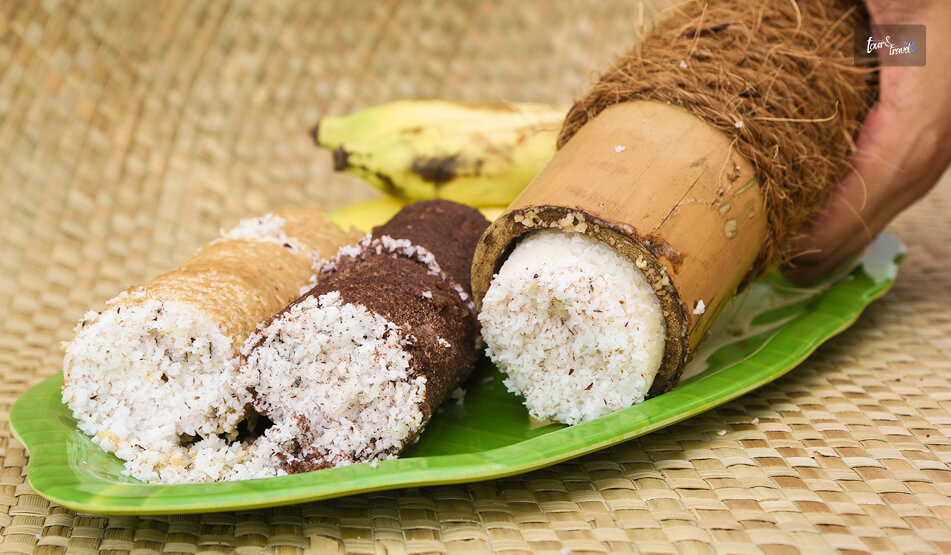
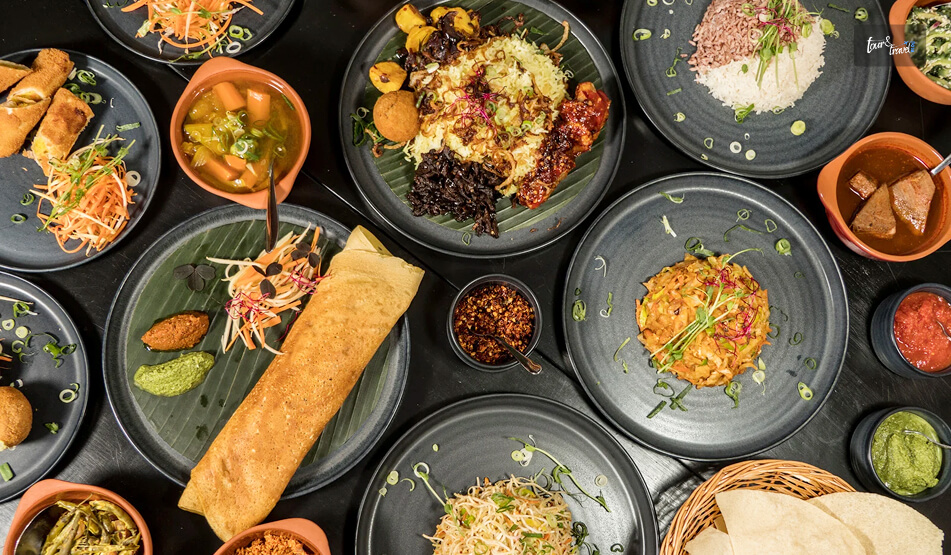
The streets of Jaffna smell of freshly made Indiappa, steamed rice noodle nests, and Puttu, a steamed cylinder of rice flour and coconut. The acidic and mildly sweet taste of these dishes goes well with spicy black chickpea curries, Pol Sambol, and Onion Sambol. 

You can also definitely have Pol Roti or coconut Roti and Dosas for breakfast. Here are the places that you can visit for breakfast in Jaffna.

1. Malayan Café: The Old World Charm

The Malayan Cafe at C Ponnampalam Road is the best place to have Indiappa in Jaffna. It tastes great with Pol Sambol and Sothi or coconut milk gravy.

This eatery has marble tables and old photos on display. So, it almost feels like time travel. It remains open from 7:30 AM to 9 PM, and on Saturdays, it opens at 8:30 AM. 

They served me food on banana leaves and in steel utensils. Also, remember that they only accept cash. You must make a visit to the Malayan Cafe a part of your Jaffna travel itinerary

2. The Red Rice Puttu Experience

The Red Rice Puttu Experience

I tried the red rice puttu at a small local eatery. These eateries are called Saapadu Kades in the local language. I was blown away by the earthy and subtly sweet taste of the puttu. 

The spicy chickpea curry perfectly complemented it. I also tried some Babat (Tripe) curry and fish kool. 

The Lunch Stops And Specials 

The food of Jaffna and Northern Sri Lanka has become so popular that Peter Kuruvita now conducts a food tour of the region. A tour of the Jaffna Market and attending the local cultural dance here is a prominent part of his food tour itinerary. 

However, this tour offered by the Australian Chef is expensive, and you will have to spend between AUD 1885 and 6720 to be a part of the tour. 

As a budget traveler, you can see much more and experience the food scene here better by walking around the city and talking to the locals. 

There is so much authenticity in these DIY tours. Also, one great thing about the lunch staples in Jaffna is the variety. While the crab curry gets all the glory, there is something very comforting about the Sattvik food served here, including rice, different types of curries, and dal. 

Let’s find out what to eat and where to eat. 

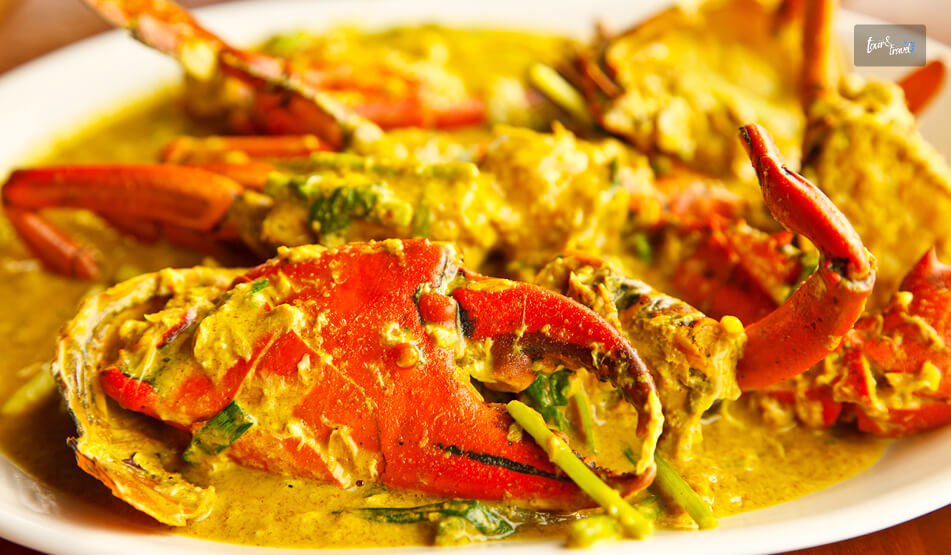
1. Jaffna Crab Curry

Jaffna Crab Curry

Jaffna crab curry is just the way I want to have the crab. It needs to be spicy and hot without adulterating the authentic taste of a crab. I had the crab curry at Cosy Hotel & Restaurant on Stanley Road. 

However, let me tell you that Cosy Hotel is expensive, and I did not mind because we were a group of 5, travelers bonded over food, and our local guide. If you are traveling solo, the pocket-pinch will be around USD 20. 

You can even try the crab curry at the small eateries in the streets of Jaffna. They don’t “look” impressive, and you may raise eyebrows about the hygiene. Still, they serve piping hot food, and the locals have it. So, they are safe.

2. Vegetarian Thali On A Banana Leaf At Nallur Bhavan

During my temple visit in Jaffna, I found the Nallur Bhavan very close to the Nallur Kovil. They serve Sattvik food on banana leaves and in steel plates. 

Most people were having Dosa here. However, I had some Chilli Kothu Parotta, and it was yum. 

For a more comforting and filling experience, you can try rice with rasam and different types of sabzi here. The restaurant opens from 7 AM to 10 PM, and you can contact them at +94-212225556. 

Evening Snacks And Cool Downs In Jaffna 

The evenings in Jaffna are suitable for ice creams and snacks like Vadai. Check out where to find them. 

1. Rio Ice Cream

Rio Ice Cream at Point Pedro Road is an iconic institution if you want to try the signature Jaffna-style dessert. The Special Rio Sundae with neon jelly, nuts, and ultra-sweet syrup is out of this world. 

It’s great for me or anyone with a sweet tooth, but if you are up for something milder, it may be too sweet to appease your cravings. 

The Rathinam Industrial Organisation (RIO) opened its doors in 1970. So, tasting the ice cream here is like cherishing the 55-year-old heritage of a city. 

So, what Rio offers is nostalgia and not a gourmet experience. 

Don’t go to Rio Ice Cream expecting Italian Gelato. It is sugary, gelatinous, and nostalgic. Go for an authentic Jaffna cultural experience of seeing 500 locals enjoying it on a Friday night.

2. Point Pedro Vadai

This is a deep-fried savory snack that comes in a disc shape. It is a crispier, crunchier, and thinner version of the South Indian Vada you have been eating so far. Also, with each bite of the vadai, you will get a taste of chillies, whole cumin, and curry leaves. 

The street carts near the Nallur Temple are the best places to buy these Point Pedro Vadai. Point Pedro has some of the most beautiful beaches in Jaffna. Relish the snack with the pleasant sea breeze. 

Dinner In Jaffna 

Are you looking for something comforting and hearty for dinner in Jaffna? Let’s gorge on Odiyal Kool and Dosa.

1. Odiyal Kool Or The Seafood Soup

This is the dish that makes you understand the power of slow cooking in Jaffna, Sri Lanka. It is Jaffna’s take on seafood soup with palmyra root flour, crab, cuttlefish, and prawns as the main ingredients. 

Odiyal Kool is not fast food. It is a slow-cooked seafood bisque thickened with Palmyra flour. It takes around 3-4 hours to cook Odiyal Kool. So, if you want to have it for dinner, you must pre-order. 

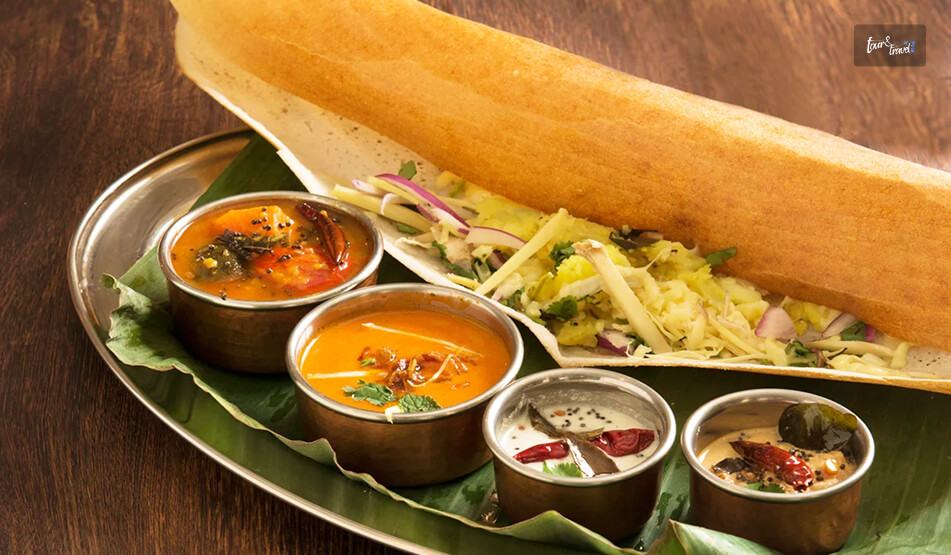
2. Dosa

Dosa

Jaffna serves many other variations of Dosa, along with the typical Plain Dosa and Masala Dosa we are familiar with. For a richer culinary experience, you can try the Ghee roast Dosa. 

Also, you can choose a healthier version with Siri Dhaniya, made with multiple millets. Adai Dosa is a protein-rich variation of Dosa with ingredients such as Urad Dal, Channa Dal, and Toor Daal. It has dried cumin and chillies. 

Kondakadalai Dosa is a different take on the Adai Dosa, and here, kondakadalai or white chickpeas are the main ingredients.

Vegan Food Options In Jaffna 

Some authentic vegetarian dishes in Jaffna are also vegan. So, if you are a vegan and you want to try the authentic local food, Jaffna will be your paradise. 

You can have steamed rice and curry made with long beans, drumsticks, spinach, and dhai. These coconut-milk-based curries are simple and flavorful. 

Dosa and Idli are, of course, the Tamil staple any vegan can eat. These are made using rice and lentils. Ponggal, a savory rice dish, and pumpkin and tapioca dishes are the other variations you can try in Jaffna.

Nallur Bhavan and Malayan Cafe are the two reliable places to have vegan food in Jaffna. 

Essential Jaffna Food Vocabulary 

Want to know about the local names of Jaffna food and their spice levels? Have a look at the table below.

Tamil Name (தமிழ்)English DescriptionSpicy Level
சோறு (Sōru)Steamed RiceNone
கறி (Kari)Spicy Curry with Vegetables/Fish/Chicken/Meat/Crabs and Other SeafoodMild to Hot
மீன் குழம்பு (Mīn Kuzhambu)A Fish Curry with Spices and TamarindHot
நண்டு குழம்பு (Naṇḍu Kuzhambu)
Jaffna Crab Curry
Very Hot
இறால் கறி (Iṟāl Kari)

Prawn Curry
Medium to Hot
கோழி கறி (Kōḻi Kari)Chicken CurryMedium to Hot
ஆட்டு கறி (Āṭṭu Kari)Mutton/Goat CurryMedium to Hot
ஒடியல் கூழ் (Odiyal Kūḻ)Palmyrah Root Flour Rich Seafood SoupMild
ஒடியல் பிட்டு (Odiyal Pittu)Steamed Palmyrah Flour & Coconut Dish
None
பிட்டு (Pittu)Steamed Rice Flour and Coconut DishNone
தோசை (Dōsai)A Crispy Pancake Made with Fermented Rice PasteNone (Can be Customized)
இடியாப்பம் (Idiyāppam)String Hoppers or Rice NoodlesNone
சாம்பார் (Sāmbār)A Lentil and Vegetable Curry with Tamarid Pulp. 
Ideal for Having with Dosa, Idli, or Rice.
Mild to Medium
ரசம் (Rasam)Tamarind and Pepper Soup to be Had with Rice or Idlis. Mild
சம்பல் (Sambal)A Relish Made of Chillies and Fresh CoconutHot
தேங்காய் சம்பல் (Thēṅgāy Sambal)Coconut SambalMedium to Hot
பால்சம்பல் (Pāl Sambal)Sambal with Coconut MilkMedium
வறுவல் (Varuval)Dry-fried Seafood or MeatHot
பொரியல் (Poriyal)Stir-fried Vegetables Mild
அப்பம் (Appam)Fermented Rice HoppersNone
வடை (Vadai)Deep-fried Lentil FrittersMild to Medium 

A DIY Jaffna Food Tour: Listen To What The Experts Are Saying 

A DIY Jaffna Food Tour Listen To What The Experts Are Saying

Are you planning to have Indiappa or string hopper for lunch or dinner? You may not find them unless you have pre-ordered somewhere. It is a breakfast staple. 

So, when you are new to Jaffna, you need to be familiar with the local customs about food and eating.

1. You Cannot Fear The Ghee In Jaffna

Jaffna Dosas, in many restaurants, are served drenched in ghee. The use of ghee or clarified butter makes the dish more flavorful and richer. It also makes the Dosas more filling. 

2. The “Bone” Warning

When you are having chicken or mutton curry in Jaffna, you will get pieces chopped with bones in them. The bones release the flavor into the curry, and sucking the marrow out of the bone (for mutton) is the ultimate pleasure the locals relish. 

So, you must be mindful while chewing your food. 

3. Wash Your Hands Before You Sit

Jaffna can be yout guide for “Eating with Hands 101.” Every hotel or restaurant has a wash basin so that you can wash your hands thoroughly before or after eating your food. 

If you are confused about how to eat the mix of rice and daal, follow how the locals are doing it. 

4. Jaffna Foods Are Really Spicy

Jaffna foods are hot and spicy. So, if you have a poor stomach, a buttermilk drink (Chanch) or lassi (sweet buttermilk) is going to be your savior. Also, always choose the “mild” option. 

In fact, the dishes in Jaffna are way spicier than the ones in Colombo. Foods that are red hot in Colombo are labelled as “medium spicy” in Jaffna. 

5. Point Pedro Vadai Lasts Weeks

Point Pedro Vadai are harder and crispier. So, unlike the soft vadai, which becomes inedible in a day, the Point Pedro Vadai lasts more than a week. 

So, these are even great for carrying when you are traveling. You can also take these snacks back home as souvenirs. 

6. Look For The “Hotel” Sign

Small restaurants in Jaffna or Sri Lanka are often labelled as hotels. These are humble places for having tea, snacks, lunch, or dinner. 

Do not expect any lodging facility there unless separately mentioned. 

7. Sunday Closure

Jaffna is fairly conservative. Many authentic local spots may close or have limited menus on Sundays or Poya days.

Authority Voices On Jaffna Food: People Who Know It The Best 

  1. Jaffna cuisine is the untamed sibling of Sri Lankan food. The Crab Curry here isn’t just a dish; it’s a ceremony of spice and sweat.” – Peter Kuruvita (Chef & Author).
  1. The flavor of the roasted curry powder in Jaffna is unlike anything else in the world. It hits you with an aroma that is deep, smoky, and incredible.” – Mark Wiens (Food Vlogger).

Jaffna Food Tour: Frequently Asked Questions (FAQs) 

Here are the frequently asked questions and answers about the Jaffna food tour.

1. What Is The Most Famous Dish In Jaffna?

Jaffna crab curry is the most famous dish in Jaffna. It is cooked using murunga or drumstick leaves. Also, the curry is fiery with roasted spices. 

However, for a more comforting experience, Odiyal Kool or the slow-cooked seafood is a close second for me. While this soup is also quite spicy, the spiciness is balanced with the use of tamarind pulp and jackfruit seeds, tapioca, and long beans, which add flavors and texture to the dish.

2. Is Jaffna Food Suitable For Vegetarians?

Yes, due to the strong presence of Hindu Culture, Jaffna has suitable vegetarian and vegan options. You will find Rasam, different types of daal, curries, or Sabzies made with pumpkin, drumsticks, beans, chickpeas, tapioca, and more. 
Even the basic Idlis and Dosas are vegetarian and vegan-friendly food options. Nallur Bhavan, Mangos Indian, and Vishnu Bhavan are some of the best options for having vegetarian food in Jaffna. 

3. Is The Food Spicier Than In The South?

Yes, the food in Jaffna and the northern part of Sri Lanka is spicier than the food in the south. So, despite the use of coconut milk or tamarind pulp, your taste buds can have the heat of black pepper and dried chillies. 

So, what you say is fiery hot in Colombo is actually medium spicy in Jaffna. Also, the heat of the spice and the flavors are so prominent because the spices are first roasted and then turned into a paste before being used in curries. 

In this context, you must know that Jaffna Market is the ideal place for buying roasted spices and everything that makes Jaffna food stand out. Bring home essentials such as roasted curry powder, dried chillies, and palmyra jaggery. 

You can even enrich your kitchen by bringing home things like palmyra root flour and some tubar snacks home. 

4. Where Can I Drink Alcohol With My Meal?

Jaffna has a conservative society, and they are true to their culture. So, you will not find alcohol in the local eating houses. 

You have to visit hotels like the Valampuri Hotel or specific bars such as Machang Jaffna at Station Road if you want to have alcohol. 

Remember, alcohol in Jaffna is more expensive than in other parts of Sri Lanka. However, you can talk to the locals and try Arrack or local beer. 

5. What Is Odiyal Kool?

Odiyal Kool is a seafood soup and a dinner staple in Jaffna. This soup has vegetables, prawns, crabs, and a generous amount of roasted spices. 

The flavor balance in the soup comes from the use of coconut milk in the gravy. Also, the gravy is made thicker by adding palmyra root flour.

Furthermore, this dish is made using a slow cooking method, and at least 3-4 hours are needed to make this dish. 

6. Can I Drink The Tap Water?

No, you cannot drink the tap water in Jaffna. There are chances of bacterial contamination. Furthermore, groundwater contamination is very common in the Jaffna Peninsula. There can be a massive presence of chemicals due to agricultural and other human activities. 

In addition, the groundwater of Jaffna has high limestone content. 

So, when you are in Jaffna, you must only drink packaged or bottled drinking water. 

7. What Is The Best Time To Visit Malayan Café?

The best time to visit Malayan Café is between 8:00 AM and 10:00 AM. It is the time for the freshest breakfast buzz.
Also, having a glass of filter coffee here early in the morning can lead to a great start to your day. 

8. How Much Does A Meal Cost In Jaffna?

The cost of your meal in Jaffna will depend on the place you are having the food from. For example, if you are having Dosa or Vada from a street food vendor, it will cost around $1-2. 

Furthermore, if you are having a full crab curry meal at a decent budget-friendly restaurant, the cost will be around $10. 

9. What Is “Jaffna Curry Powder”?

You can identify Jaffna curry powder from its rich red color and strong aroma. The heat in this spice blend comes from the copious use of roasted red chillies, cloves, and black pepper. 
The earthy flavors these spice mixes bring come from the following roasted spices. 
• Turmeric
• Black Pepper
• Cumin
• Coriander
• Cardamom
• Cinammon
• Fennel
• Fenugreek
• Cloves
You can also add roasted mustard powder and roasted curry leaves paste to make the flavor profile even richer. 
This spice mix gives the food in Jaffna the signature heat and earthy taste. 

10. Do I Need To Tip In Jaffna?

If you are having food at small Kades or local street stalls, you can just round up the bill to show your appreciation. Dosa
However, if you are having food at Mangos or any other big restaurant here, a 10% tip is appreciated. 


Share on Social Media

Meet Sibashree Bhattacharya, a travel enthusiast who has a decade-long experience in transcending virtual barriers with her words! Her deep love for travel is apparent from her travel escapades to the mountain, often taking her readers on a journey, her words acting as Portkey! Fun fact: Sibashree loves to dive deep into the history of the places she is about to visit, making her travels even more wholesome. If you were wondering how her articles are not short of time travel, this answers it!

Leave a Reply

Your email address will not be published. Required fields are marked *

title-img Related

READ MORE luxury villas Provence le collectionist

The Best Luxury Villas Provence Le Collectionist: Why Are They Unique And How Do They Contribute To Luxury Tourism?

BY  Sibashree Jul 29, 2025

Luxury Villas Provence Le Collectionist Key Highlights: How do these luxury villas Le Collectionist, add to luxury tourism in Provence? Why are the best luxury villas Provence Le Collectionist unique? The best luxury villas Provence Le Collectionist with tariff? How to reach the best luxury villas Provence Le Collectionist? What is the best time to stay at luxury villas Provence Le Collectionist? How to reach the Le Collectionist luxury villas in Provence? How To Book The Best Luxury Villas Provence Le Collectionist Are The Luxury Villas Provence Le Collectionist Worth It? What Is Everyone Saying FAQs Provence is taking the luxury tourism landscape of France to new heights. The luxury tourism market in France, expected to reach $53.63 billion by 2030, features the luxury châteaux of Provence and its vast vineyards.  Furthermore, in Provence, the châteaus hotels and high-end accommodations such as luxury villas Provence Le Collectionist offer an immersive experience to the high-net-worth travelers. They offer you a slice of history, a cultural experience, and a chance to encounter nature.  These accommodations offer personalized services, wellness, relaxation, and a fine dining experience.  Moreover, these accommodations will play a crucial role in helping the tourism and hospitality industry achieve a sustainable future by adopting eco-friendly practices, such as the use of green energy and technology.  What more do these premium accommodations, such as luxury villas Provence Le Collectionist, offer? Let’s decode in this Tour and Travel Blog.  Why Are The Best Luxury Villas Provence Le Collectionist Unique? View this post on Instagram A post shared by Le Collectionist (@lecollectionist) The best luxury villas Provence Le Collectionist are unique because they organize all the amenities of luxury traveling for you without compromising your freedom or the pace at which you want to explore Provence.  Also, the Le Collectionist luxury villas in Provence define singularity and redefine the art of luxury tourism in Southern France.  Here is more about what makes Le Collectionist villas in Provence unique.  1. Aix-En-Provence Is Magical  Aix-en-Provence in Southern France is the birthplace of the post-impressionist, Paul Cézanne. Now, this quaint city in France is nothing short of a picture.  The air here is filled with the scent of thyme and Rosemary. Also, it exudes quintessential French romance in its vibe.  2. A Mas In Provence Is The Ultimate Magic The luxury villas in Provence have beautiful rose gardens, lush greenery, and the pristine appeal of nature around us.  Also, the luxury Le Collectionist villas in Provence have pools. Enjoy your drink and the delicacies prepared by the best chefs using local ingredients to immerse yourself in the magic of slow travel.  In fact, Max Aniort, the CEO and one of the founder members of Le Collectionist, once mentioned in a Forbes interview, “...touring open markets in Provence with a Michelin-starred chef and stealing his best Provencal recipes” is one of the best experiences Le Collectionist villas can offer.  Now, Aniort has also been a lifelong traveler. So, he knows how to do it in real style.  3. The Luxury Villas In Provence Offer A Tailor-Made Experience You can explore Aix-en-Provence as a local by choosing the luxury Le Collectionist villas as accommodations. Furthermore, you can avail yourself of the concierge services of the luxury villas in Provence by Le Collectionist.  Moreover, you can explore the most happening gastronomic restaurants of the Luberon.  Also, you will love exploring the villages in Alpilles. In addition, you can take a hot air balloon ride to enjoy a hawk-eye view of the beautiful countryside. The Best Luxury Villas Provence Le Collectionist With Tariff View this post on Instagram A post shared by Le Collectionist (@lecollectionist) While choosing the best luxury villas Provence Le Collectionist, you have to consider the kind of experience you want.  Want to cherish the beauty of a Southern French city? Choose the family villas in Bastide Syrah. You can also choose a luxury mas under the Sun, Provence villas with a private pool, and the villas in the heart of the Alpilles.  1. Family Villas In Aix En Provence Aix-en-Provence is hands down one of the most beautiful places in Southern France. You can choose any of the luxury family villas here.  Mas Des Glycines Tariff for 7 Nights: $37,160 Area: 1000 sqm Bedrooms and Bathrooms: 6 Bedrooms and 7 Bathrooms Suitable for: 12 Guests Check-In: 5 PM  Check-Out: 10 AM Close to Bonnieux, Mas des Glycines is a beautiful stone house surrounded by wisteria.  Further, during your stay here, you can listen to the sound of cicadas when the Sun is down. Moreover, it is an ideal accommodation if you want to explore the gastronomic scene of the Luberon.  Key Amenities Sauna Petanque Barbecue Fitness Room Bastide M Tariff for 7 Nights: $19,490 Area: 450 sqm Bedrooms and Bathrooms: 8 Bedrooms and Bathrooms Suitable for: 16 Guests Check-In: 5 PM  Check-Out: 10 AM Bastide M is the best villa to enjoy the pastoral beauty of Luberon. Modern architecture and minimalist decor of the villa also exude a bohemian charm.  The beautiful pool and lounge further add to its appeal.  Key Amenities: Petanque Airconditioning Fitness room Heated Swimming Pool 2. Luxury Mas Under The Sun Do you want to soak in the rustic charm of Southern France? Why don’t you choose a mas or a farmhouse with stone structures? Mas Des Citronniers Tariff for 7 Nights: $25,480 Area: 400 sqm Bedrooms and Bathrooms: 7 Bedrooms and 5 Bathrooms Suitable for: 14 Guests Check-In: 5 PM  Check-Out: 10 AM You will fall in love with the Provençal architecture of Mas Des Citronniers. The warm interior ensures a comfortable stay here.  On the other hand, while staying here, you can stroll through the alleys of Saint-Rémy.  Key Amenities: Tennis Court Fireplace Grill Airconditioning Mas De La Badelle Tariff for 7 Nights: $17,990 Area: 330 sqm Bedrooms and Bathrooms: 6 Bedrooms and Bathrooms Suitable for: 14 Guests Check-In: 5 PM Check-Out: 10 AM Surrounded by olive trees, Mas De La Badelle is one of the most family-friendly accommodations in Provence.  Furthermore, in its architecture, it shows a wonderful fusion of contemporary design and rustic charm.  Key Amenities: Floor Heating System Fireplace Partial Airconditioning Grill 3. Villas In Provence With A Private Pool Are you visiting Provence in the summer months? Choose any of these luxury villas Provence Le Collectionist with a private pool.  Le Mas Des Etoiles Tariff for 7 Nights: $21,100 Area: 423 sqm Bedrooms and Bathrooms: 7 Bedrooms and Bathrooms Suitable for: 14 Guests Check-In: 5 PM  Check-Out: 10 AM Off to Gordes and its beautiful surroundings? Le Mas des Étoiles is a luxury villa that adds magic to your holidays.  The architecture of the villa, inspired by the stone bories, is complemented by the pine trees around. You will love a convivial lunch under the shade of the trees here and stargazing once the Sun is down.  Key Amenities  Barbecue Petanque Villa Mahëva Tariff for 7 Nights: $11,635 Area: 330 sqm Bedrooms and Bathrooms: 5 Bedrooms and Bathrooms Suitable for: 10 Guests Check-In: 5 PM  Check-Out: 10 AM Close to the center of L’Isle-sur-la-Sorgue, Villa Mahëva is one of the best luxury villas in Provence for friends.  With a beautiful lawn and pergola, it is the ideal villa to relax and rejuvenate away from the hustle and bustle.  Key Features Sauna Fitness Room Heated Swimming Pool Petanque Barbecue 4. In The Heart Of The Alpilles Here are our top picks for the luxury villas Provence Le Collectionist in the Alpilles.  Mas Lou Tariff for 7 Nights: $20,975 Area: 600 sqm Bedrooms and Bathrooms: 9 Bedrooms and 6 Bathrooms Suitable for: 22 Guests Check-In: 5 PM  Check-Out: 10 AM Mas Lou in Saint-Remy-de-Provence is the best place for the ultimate Southern French experience. Start your day with the brightest Sunlight and watch the Sun setting from the terrace with its colors reflecting in the pool.  Key Amenities Petanque Proximity to Golf Course Fireplace Football Field Jacuzzi Outdoor Swimming Pool Villa Allure Tariff for 7 Nights: $29,975 Area: 520 sqm Bedrooms and Bathrooms: 5 Bedrooms and Bathrooms Suitable for: 10 Guests Check-In: 5 PM  Check-Out: 10 AM Surrounded by matchless natural beauty, Villa Allure offers the perfect fusion of Provincial charm and proximity to the town centre.  Furthermore, the French Garden and terrace here are the perfect spots for enjoying leisure with your family.  Key Amenities Movie Room Fireplace Swimming Pool Golf Course Fitness Room How To Reach The Best Luxury Villas Provence Le Collectionist? View this post on Instagram A post shared by Le Collectionist (@lecollectionist) You can reach Provence or the Le Collectionist luxury villas here by train, flight, or car.  1. How To Reach Provence By Train? You can board the TGV train from Paris, Nantes, Lyon, and other major cities in France. You can even take the train from Amsterdam to London.  The train will drop you at Avignon, or you can get off at Aix-en-Provence.  2. How To Reach Provence By Plane? You can fly to the Marseille airport or Avignon-Caumont airport to reach Provence.  3. How To Reach Provence By Car? You can avail yourself of the luxury concierge services of Le Collectionist and rent a car to reach Provence and the holiday villas in the Alpilles or the Luberon.  What Is The Best Time To Plan A Stay At The Luxury Villas Provence Le Collectionist? June, July, and August, or the summer months, are the best time to plan a stay in the luxury villas Provence Le Collectionist.  Why? Because it is the season of lavender flowers and the Avignon Festival. Furthermore, the warm weather and the bright Sun make Provence ideal for outdoor activities in summer.  However, if you love slow tourism and are a connoisseur of Bon La Vie, April to May and September to October will be the best months to plan a stay at Le Collectionist villas.  Due to fewer crowds, these months offer you the chance to explore the beautiful villages nearby and gorge on the best cuisines.  How Do I Book A Luxury Villa In Provence With Le Collectionist?  You can easily book a luxury villa in Provence with Le Collectionist by calling +33173030202. Call this number between 1:00 PM and 10:00 PM according to the local standard time.  Also, you can book a villa from the official website of Le Collectionist.  1. Select the location as Provence, and then you will get multiple options so that you can choose a villa based on the experience you want.  2. Further, choose a location and a villa, check the tariff and other details mentioned on the right side of the page.  3. Then, click on the “Make a Request” tab. A box will pop up, where you will have to fill in your name, email ID, and phone number. Now, you will have to agree to the terms and conditions and submit the form so that an advisor can contact you.  4. However, if you select the “Reserve” button, you will proceed to the next level. At this stage, the tariff and the advance amount to be paid are confirmed.  5. Now, you will have to log in using your email ID, where Le Collectionist will send a verification code. Enter that code to proceed to advance payment using your card.  Can I Book A Villa Near Famous Provence villages? Choose A Location That Adds To Your Southern France Holiday  The best Le collectionist villas in Provence are spread across magical locations such as the Alpilles, the Luberon, Saint-Rémy-de-Provence, Maussane-les-Alpilles, Gordes, and Eygalieres.  So, yes, you can book a villa near famous Provence villages.  Let’s briefly know these locations to reserve your dream luxury Le Collectionist villa in Provence. 1. The Luberon The Luberon looks pretty with its vast lavender and poppy fields. However, today, the Luberon is more celebrated for its culinary richness.  You will love La Melonnette or the combination of melon and chocolate ganache, Gibassier or the crumbly cake, and local lamb dishes here.  2. Saint-Rémy-de-Provence Saint-Rémy-de-Provence is the ultimate destination in Provence for the curious and artistic minds.  Did you know that Saint-Rémy-de-Provence was the birthplace of Nostradamus? Also, Van Gogh spent a year at the Saint-Paul asylum here from May 1889 to May 1990. During his stay here, he produced around 150 works, including his most celebrated creation, “The Starry Night.” Also, Glanum, just outside Saint-Rémy-de-Provence, is an ancient Roman city with ruins. The preserved monuments, or Les Antiques, include the triumphal arch, which is one of the oldest in France.  3. Maussane-les-Alpilles View this post on Instagram A post shared by byvince - Vincent Pluta (@byvince) The Fountain of the Four Seasons, ancient Roman roads, and the Sainte-Croix church are telltale signs of the rich heritage of Maussane-les-Alpilles.  Located at the southern foothills of the Alpilles mountain, Maussane-les-Alpilles is also blessed with abundant natural beauty.  Moreover, it is one of the leading olive oil-producing regions in Southern France.  4. Gordes Les Plus Beaux Villages de France has recognized Gordes as “one of the most beautiful villages in France.” Additionally, it holds the honor of the Croix de Guerre, having demonstrated French resistance during World War II.  The historical landmarks in this village are the Chateau de Gordes and the Abbey of Sénanque.  5. Eygalieres Home to the Saint-Sixte Chapel, Eygalieres is a quintessential French village with natural beauty in abundance.  Also, you will love the stone houses and quaint alleys here.  What’s more? Explore the Friday market to collect local crafts and specialties as souvenirs. Are The Luxury Villas Provence Le Collectionist Worth It? What Is Everyone Saying? View this post on Instagram A post shared by Le Collectionist (@lecollectionist) Le Collectionist received “The Conde Nast Traveller 2024 Readers' Choice Awards” in 2024. It secured the fourth position with a score of 95.41%.  However, along with the endless awards and laurels, the guest reviews about Le Collectionist luxury villas have always been satisfactory and delightful.  Here are a few of them.  Jonathan Mathew P. writes in June 2025, “Whether the pictures will match the home is always a concern when travelling. However, with Bastide M the pictures accurately depict the home and matched our expectations. We were very happy with the experience and would rent the property again.” In 2023, Matthew B. wrote, “Bastide M was the perfect home for our family and our vacation! Spectacular views, modern and well-finished, a variety of spaces for different needs...the home was exceptional in every way. We plan to return to Bastide M yearly, if not more frequently.” Moreover, based on the 398 reviews shared on Trustpilot, Le Collectionist has a 4.5 rating out of 5. Why Choose Le Collectionist Luxury Villas Over Other Luxury Villas?  CV Villas in Provence is a luxury holiday accommodation provider. However, despite operating in the same industry niche, it has a different focus.  To explain further, Le Collectionist positions itself as a luxury brand and it curates iconic global properties. It also has historic homes. Furthermore, it has a strong focus on personalized services.  In addition, Le Collectionist wants to cover global destinations.  CV Villas, on the other hand, is a UK-based company with more focus on offering family-friendly and pet-friendly villas. It has prominent presence in zones such as Europe, the Caribbean and Morocco.  Here is a more detailed comparison of CV Villas and Le Collectionist lury villas.  Comparing FactorsLe CollectionistCV VillasCompany History• Founded in 2013• The focus in on finding the “Most beautiful homes in the world.” • Founded in 1972.• It is the first specialist villa company in the UK. Property Portfolio• Around 3000 villas, apartments and villas worldwide• Curated properties, including only the ones that meet their standards• Around 800 pet-friendly and family-friendly villas• Luxury ABOVE Collectionist for high net-worth travelersDestinations• Le Collectionist has a global presence with a strong focus on Europe, • CV Villas are primarily present in Europe, the Caribbean, and Morocco. Key Features• Creates luxury experiences• Concierge services• Focus on customization• Concierge services• Wider price points  If you are looking for a villa service with a long history and a wider range of price points, CV Villas will be the more ideal choice for you. Furthermore, CV Villas are more suitable for family-friendly and pet-friendly travel experiences.  On the other hand, Le Collectionist is more luxurious and it primarily works on creating luxury experiences. Also, the properties curated are one-of-a-kind.  Luxury Villas Provence Le Collectionist: Frequently Asked Questions (FAQs) Here are the frequently asked questions and answers about luxury villas Provence Le Collectionist. 1. What Amenities Can I Expect In A Le Collectionist Villa?  You can expect amenities such as private pools, air conditioning, a spa, beautiful gardens, fitness rooms, fireplaces, petanque, grill, and more at Le Collectionist luxury villas.  2. Are Le Collectionist Villas Suitable For Romantic Getaways? Yes, Le Collectionist villas are suitable for romantic getaways as they offer the perfect fusion of privacy and high-end amenities. Further, they offer tailored concierge services based on the specific interests of couples.  3. Are The Villas Family-Friendly Or Suitable For Groups? Yes, many Le Collectionist luxury villas are child-friendly and suitable for families and large groups. Some even organize specialized activities or tours for children. In addition, the large villas have safe swimming pools, gardens, and private dining spaces for families and large groups. You can especially choose family villas in Aix-en-Provence, such as Mas des Glycines, Bastide M, and Bastide Syrah.  4. Do I Need To Pay A Security Deposit? Yes, you will have to pay a security deposit for your stay at Le Collectionist. The amount will be mentioned in your rental contract. However, you will get a complete refund of the amount if no damage is caused during your stay.  5. Can I Check In Early Or Check Out Late? Based on the availability of the property and the approval of the owner, there are provisions for early check-ins and late check-outs. However, the standard check-in and check-out timings at Le Collectionist villas are 5 PM and 10 AM. So, you will have to inform the property owner well in advance of your early check-in and late check-out plans. 6. What Are The Cancellation Terms For Booking Le Collectionist Luxury Villas? If your booking is confirmed and you cancel it at least 60 days before your visit, you will get a 50% refund of the entire rental amount. After that, Le Collectionist will charge 100% of the rental amount. However, if you are booking the villas online, you will get a complete refund of the online pre-booking amount until the reservation is confirmed.  Read Also: The Best Luxury Villas Greece Le Collectionist: Why Are They Unique? Luxury Villas Italy Le Collectionist: How Is It Reimagining Tourism In Italy? Why Are They The Best? Best Luxury Villas Ibiza Le Collectionist: What Are The Most Unique Features? (In Relation To Luxury Tourism In Ibiza)

READ MORE most dangerous country in the world

Navigating The Unseen: Exploring The Most Dangerous Country in The World

BY  Abdul Aziz Dec 26, 2023

One of life's greatest pleasures is always traveling. In addition to looking for and visiting the safest places, it's critical to understand the risks and dangers that exist in different parts of the world. This article will talk about the most dangerous country in the world, emphasizing elements like political unrest, crime, and conflict. Travelers can use this information to make well-informed decisions about their foreign experiences. Most Dangerous Country In The World Some countries are known for their beauty. Some are known for their infrastructure and standards of living. And then there are some countries that are notorious for something that scares people away. Curious? If you want to know about the most dangerous country in the world, here they are: Syria Syria is one of the most violent countries in the world because of the devastation caused by the ongoing conflict. With multiple armed groups fighting for control of territory and resources, the nation has become a hotspot for violence and instability since the civil war broke out in 2011. The most recent devastating incident was the earthquake that struck Turkey and Syria in February 2023. Sadly, the earthquake killed over 50,000 people, leaving a terrible death toll. Significant damage affected 116 medical facilities because of the disaster, depriving a large number of people of access to essential medical care. Consequently, estimates suggest that 18 million people require immediate humanitarian aid. The World Food Programme (WFP) revealed that a startling 90% of Syrians were living below the poverty line and that at least 12 million of the country's remaining 16 million people were facing food insecurity. Yemen Yemen, which is one of the world's most dangerous travel destinations, stands on the southernmost point of the Arabian Peninsula. The nation is in a state of civil war since 2015, with different groups fighting for control of the government. As a result, it led to extensive violence, mass migration, and a humanitarian crisis that has left millions of people in need of immediate assistance. The danger facing tourists is increased by the rise in criminal activity in Yemen, which includes armed robberies and kidnappings. At 68.93%, its crime rate is also the highest in the world when compared to other nations. Major Yemeni tribes are involved in criminal activities like kidnapping and looting. They are highly armed and enjoy independence within their sphere of influence. Unfortunately, visitors run the risk of being abducted and abused by these tribes, and they might have to pay a large ransom to get them back. Traveling here is now risky and challenging due to the heavy rains and flooding that impacted most of the cities. Floods have damaged roads and bridges, making land travel hazardous and difficult. It is now impossible to drive in some areas due to completely washed-out roads and collapsed bridges. Over 11 million children in this country need humanitarian aid, with millions experiencing food insecurity and a lack of basic services, according to UNICEF. There are currently more than 540,000 under-five children suffering from severe acute malnutrition. Remarkably, one child dies from avoidable causes every ten minutes. Travelers to Yemen run a significant risk of becoming targets of extremist organizations. People frequently get caught in the crossfire of the protracted conflict. Afghanistan Afghanistan is the most dangerous country in the world, as per the Global Peace Index. This dubious distinction is a result of the nation's turbulent past, ongoing conflict, and high levels of violence. The country's high concentration of extremist groups is the most concerning factor. For more than twenty years, the Taliban, for instance, have been waging a bloody insurgency against the Afghan government. Many deaths of soldiers and civilians are attributed to them. The presence of other organizations like Al Qaeda and ISIS in the nation has exacerbated instability. Airports and places of worship are frequently the target of terrorist attacks, especially during holy seasons like Ramadan. Somalia Somalia has established a reputation as one of the world's most dangerous nations due to decades of anarchy and lawlessness. Devastated by hunger, piracy, and civil war, it is a place where anarchy is the norm. An offshoot of the infamous Al-Qaeda, the militant organization Al-Shabaab continues to terrorize the country by carrying out deadly attacks on both government forces and civilians. The situation has become worse, with rival clans and factions fighting for control in the absence of a stable government. The standard of living for the typical Somalian citizen is sub-par.  There is widespread corruption and a dearth of essential infrastructure. Enter this dangerous area with extreme caution. Iraq Iraq is a very dangerous country to visit and has experienced many difficulties over the years as a result of war and conflict. Despite their fall, the remnants of ISIS still represent a serious threat to Iraqi forces and civilians. In many regions of the nation, sectarian violence, assassinations, and suicide bombings continue to be commonplace. Both locals and visitors always feel like they're in danger. Complexity is increased due to the conflict between the autonomous Kurdish region and the central government. It has escalated hostilities and led to violence, further destabilizing the situation. Iraq's infrastructure has suffered greatly as a result of years of hostilities. With many businesses finding it difficult to survive, the economy is hit brutally. Read More: Is Costa Rica Safe For Visit For Travelling? Libya Numerous factors have contributed to the conflict, including the competition for control of the nation's enormous oil reserves. Since Gaddafi's downfall, a number of armed organizations and militias have seized control of various parts of the nation. The unpredictability and danger in Libya have increased due to the presence of extremist groups like ISIS. These organizations committed targeted murders and acts of terrorism. They are further destabilizing the nation and posing a challenge to the authority of any government. Naturally, the population of Libya has suffered greatly as a result of the ongoing violence. Many Libyans are struggling to make ends meet as a result of displacement, violence, and limited access to basic services. Numerous schools, hospitals, and other vital services are in poor condition. While progress was necessary, the United Nations and other international organizations have attempted to mediate a peace agreement between the opposing factions. Read More: Is Cabo San Lucas Safe? – Let’s Find Out! Sudan Following a January referendum, South Sudan gained independence on July 9, 2011. Even with the initial exuberance and expectations of a prosperous future, the nation has had difficulty preserving stability. Political power struggles and ethnic tensions have made matters worse since then. Since South Sudan's independence, President Salva Kiir and his former vice president, Riek Machar, have not gotten along. Their conflict over dominance turned into a civil war in December 2013, which displaced millions of people and killed thousands. Rape, murder, and the enlistment of children as soldiers are just a few of the horrific crimes that have occurred during the conflict on both sides. As a result, it ranks first on a list of the world's most dangerous nations. Famine and disease are widespread throughout South Sudan, making the country's humanitarian situation terrible. Over 7 million people in the nation require humanitarian aid as the UN has declared a famine in some areas. Journalists and relief workers have also been the targets of armed groups. Despite having an abundance of natural resources, such as gold, oil, and fertile land, South Sudan has not yet experienced prosperity from these resources. Instead, as various groups compete to control these resources, they have fueled even more conflict and corruption. There have been allegations against the government for mishandling these resources, with minimal advantages for the populace. Wrapping Up You can be sure that there are lots of welcoming and safe places to call home. Even though there is a chance of crime, terrorism, and natural disasters, a lot of daring travelers visit some of the world's most dangerous nations for the temptation of it. Intrepid people are always ready to take the risk, whether it's for employment, adventure, or giving back to their communities. Don't be afraid to see the world, but remember to stay prepared and cautious. If you have thoughts to share or questions to ask about the most dangerous country in the world, please leave a comment below. We would love to hear from you! Read Also: Heatwaves And Adventure: Traveling To The World’s Hottest Destination Crime And Caution: Navigating The Dark Side Of California’s Cities Hidden Gems: Unearthing The Best Things To Do In Nottingham

READ MORE certified translation for immigration

How to Navigate Visa & Immigration Translations When You Travel Long-Term

BY  Sibashree Oct 22, 2025

Traveling long-term or moving abroad is an exciting adventure. But if your journey involves applying for visas, immigration permits, or residency, you’ll quickly discover that documentation is one of the biggest hurdles. Among the most common requirements are visa translation services and certified translations of official documents. Whether you are applying for a student visa, a work permit, or reuniting with family overseas, presenting correctly translated documents can make or break your application. Authorities want clear, accurate, and verifiable translations, and failure to meet those standards often leads to delays or even rejections. This guide explains everything you need to know about visa and immigration translations, including why certified translations are required, what documents usually need them, and how to avoid common pitfalls. Why Visa Translations Are Crucial When immigration officers review applications, they must be able to fully understand the documents submitted. If your birth certificate, marriage certificate, or bank statement is in another language, it must be translated into the official language of the country you are applying to. Here’s why translations are necessary: Legal clarity: Immigration authorities cannot legally assess documents they don’t understand. Consistency: Translations ensure names, dates, and details match across multiple documents. Compliance: Many countries require certified translations to confirm that translations are accurate and complete. What Are Certified Translations? Not all translations are equal. For immigration, you need certified translations. A certified translation includes: A complete and accurate translation of the original document. A signed statement (certificate of accuracy) by the translator or translation company confirming the translation’s authenticity. Contact details of the translation provider for verification if needed. This certificate is essential because it gives immigration officers confidence that the document is trustworthy and complies with their standards. Common Documents That Require Certified Translations When applying for visas or residency, the following documents are often requested in translated form: Birth certificates Marriage or divorce certificates Death certificates (in cases of dependent claims) Passports and ID cards Academic transcripts and diplomas Criminal record checks Medical records or vaccination certificates Bank statements and tax returns Employment contracts or pay slips Before submitting your application, carefully check the requirements of the immigration authority you are applying to, as these can vary from country to country. How to Handle Certified Translations for Visa Applications If you are preparing for long-term travel or immigration, here’s how to approach the translation process: Identify which documents need translationReview the checklist from the immigration authority. Don’t assume that only personal records need translation—financial and academic documents are often required too. Choose a reliable certified translation providerLook for services that are recognized by immigration authorities. For example, Certling offers certified translations accepted by USCIS in the U.S., UKVI in the U.K., and IRCC in Canada. Submit clear scans or photos of your documentsHigh-quality images prevent errors and ensure no details are missed in the translation. Check turnaround timesVisa applications often have strict deadlines. Many providers offer standard and express delivery options—use express services if you’re short on time. Verify acceptance guaranteesEnsure the translation provider guarantees compliance with immigration authorities. This gives peace of mind if your documents are ever questioned. Innovation in Visa Translations The translation industry has modernized significantly. Companies like Certling use AI and machine vision to analyze documents, count words instantly, and provide transparent per-word pricing. This innovation eliminates overcharging based on per-page pricing models and saves applicants money. Other key advancements include: Selective translation tools: Applicants can exclude unnecessary sections of documents, such as logos or stamps, lowering costs. Secure file handling: Professional providers use encrypted systems and delete documents after delivery to protect your data. Instant online quotes: You can now upload documents and get pricing within seconds, reducing guesswork. FAQs on Visa & Certified Translations Do I always need certified translations for visa applications? Yes, in most cases. Immigration authorities typically require certified translations of any foreign-language documents. Can I translate the documents myself? No. Self-translations are not accepted. Certified translations must come from a qualified translator or company. How long does the process take? This depends on the provider. Standard services may take a few days, while express options can deliver certified translations within 24 hours. What happens if immigration rejects my translation? Reputable companies often provide corrections or revisions free of charge if authorities raise issues. Certling, for example, includes this as part of their service. Are digital copies of certified translations acceptable? Yes, many immigration authorities now accept certified translations in PDF form. However, some may request physical copies, so confirm with your local authority. The Role of Certified Translation Services in Your Journey Securing a visa or residency isn’t just about submitting the right forms. It’s about presenting complete, clear, and compliant documentation. Certified translation is a critical part of this process. Providers like Certling specialize in certified translations for immigration and visa applications. They offer word-based pricing, fast turnaround, and acceptance guarantees for major authorities across the U.S., U.K., Ireland, and Canada. While your focus may be on the exciting parts of long-term travel, taking care of certified translations early ensures your journey won’t be delayed by paperwork. Final Thoughts Navigating the visa application process can be overwhelming, especially when traveling long-term or moving abroad. Certified translations are not just a formality—they are a legal requirement that can significantly affect your success. By understanding what certified translations are, why they matter, and how to get them done correctly, you’ll be better prepared to handle the complexities of immigration paperwork..