
What Are The Tangalle Beach Places To Visit? Is It Worth It? 

Tranquility, raw energy of nature, and the thrill of standing on the southernmost tip of Sri Lanka! 

You get all of these when you are at Tangalle Beach. Also, with serenity and relaxation being two essential experiences here, you will get ample time to photograph the picture-perfect shoreline. 

So, if you want to explore pristine beaches, have some fun spotting the turtles, and try some amazing local food, you must include a visit to Tangalle Beach in your Sri Lankan itinerary

Why I Loved Tangalle Beach? 

Why I Loved Tangalle Beach

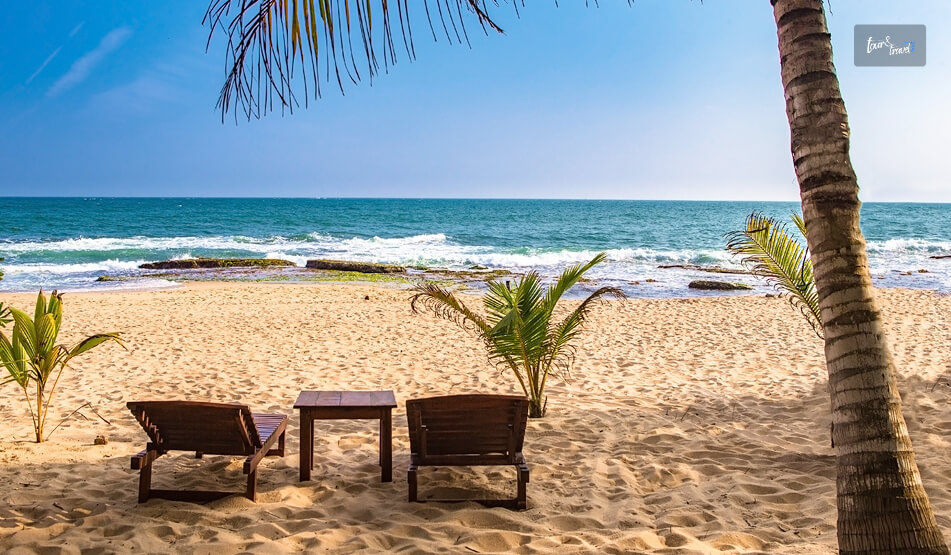
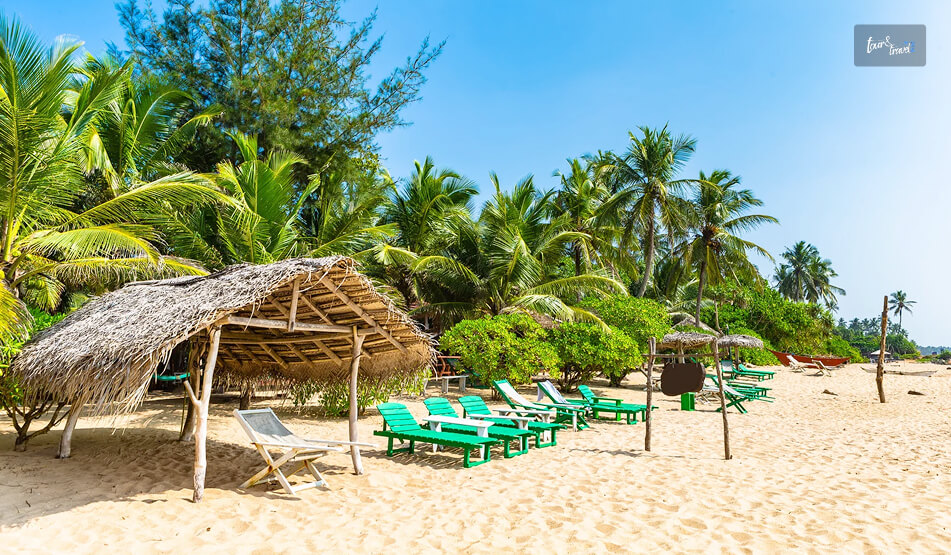
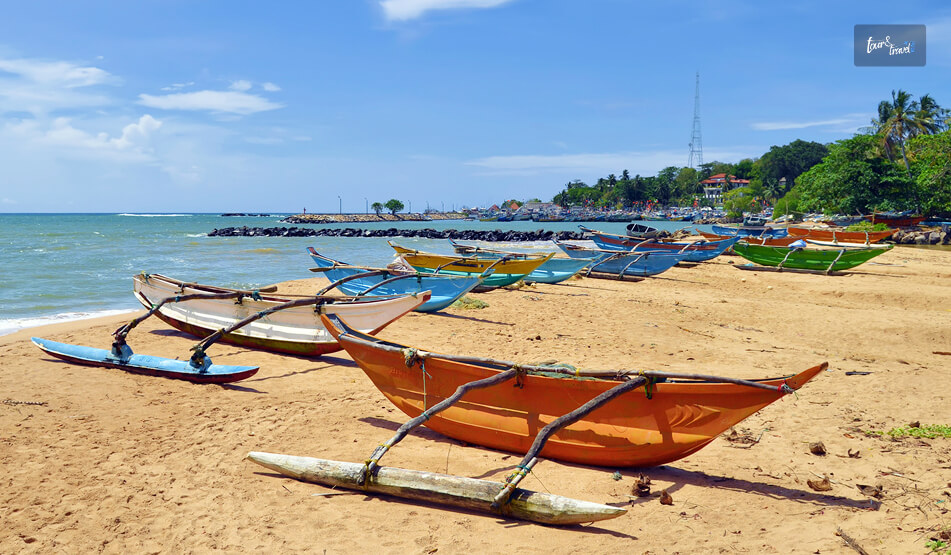
The quaint Tangalle Beach immediately impressed me with its stretches of golden beaches. Also, from the traditional fishing town of Ahangama to this small fishing village, it has been a lifetime experience for me to see how people here live in coexistence with nature. 

Furthermore, the Rekawa Turtle Conservation Project was the biggest highlight of my Tangalle Beach visit. 

Also, I could soak in the paradisiacal feel of this coastal town, unlike more prominent places such as the Hiriketiya Beach or the Kandy to Ella train, the crowd was way fewer. 

That undertourism is a blessing in disguise, as in this way, the nature and wildlife of Tangalle Beach remain untouched. 

Furthermore, I found a small but warm homestay on the east side. On the west, there are more high-end accommodations. 

So, from backpackers to luxury travelers, everyone will enjoy Tangalle Beach, and you just need to place your feet on warm and golden sand.

What Are The Things To Do In Tangalle Beach?

What Are The Things To Do In Tangalle Beach

Tangalle Beach offers a Bali vibe. As I have mentioned, it is the ultimate place to relax, and along with that, you can indulge in various adventure activities here. 

You can even have a delightful wildlife experience here. 

A Visit To The Udawalawe National Park

A Visit To The Udawalawe National Park

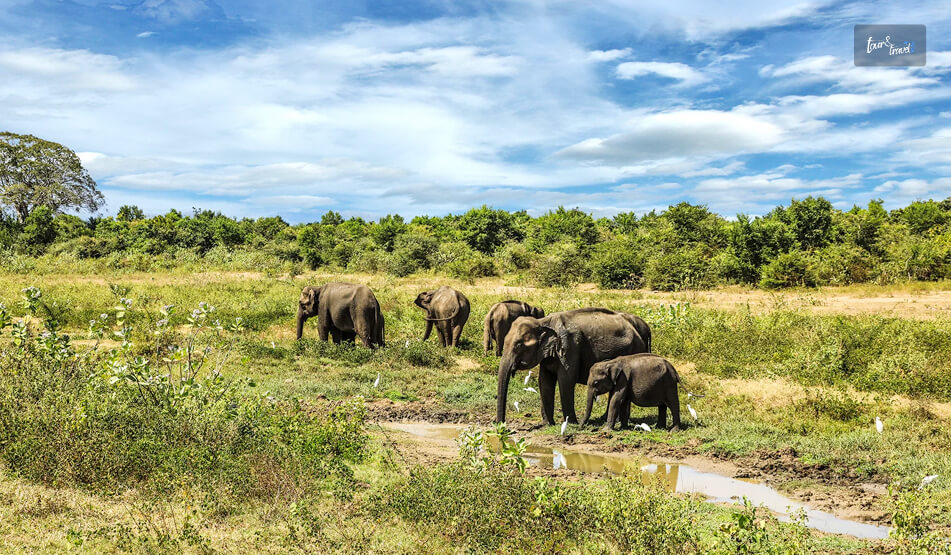
At a distance of around 71 km from Tangalle Beach, the Udawalawe National Park is a must-visit. 

Furthermore, as a home to around 400 elephants, it is one of the top attractions near Ella

I loved the jeep safari here, and unlike many other national parks, spotting an elephant here on a jungle safari is almost guaranteed. 

The entry fee to the national park is LKR 13,420, and the jeep safari charged me LKR 10000 during the last visit. 

I was impressed with the entire conversation process, and it operated around the Elephant Transit Home (ETH). 

The Department of Wildlife Conservation established it in 1995, and it runs on a strict 3-tier process. 

  • Rescue
  • Rehabilitate
  • Release 

This process ensures very little human interaction, and it works for the release of the orphaned elephants back into the wild. 

Also, the conservation job does not end with the release of the elephants. The conservationalists keep monitoring the movement of the reintroduced elephants in the wild. 

Watching Turtles At Tangalle Beach 

Like Dalawella Beach, Mirissa Beach, and Mount Lavinia Beach, Tangalle is also a wonderful place for spotting endangered turtles. 

The types of turtles you can see here are:

  • Loggerheads
  • Leatherbacks
  • Hawksbills

These turtles visit the beach when they want to lay eggs. Now, this is a huge advantage Tangalle enjoys as it is free from the impact of overtourism. 

A Visit To The Rekawa Turtle Conservation Project

Now, many tourists claim that if you visit the Rekawa Turtle Conservation Project between April and July, you can see the turtles hatching eggs. 

However, this is not entirely true. There is no guarantee that you will see a turtle laying eggs or hatching. 

There is an official announcement from the Rekawa Turtle Conservation Project. They have mentioned that there are high chances of seeing a turtle laying her eggs between 7:30 PM and 8:30 PM. 

Furthermore, the conservation center offers a guided tour to the beach for spotting turtles between 7 PM and 6 AM. 

Moreover, you cannot use flashlights or flash photography at this conservation center. 

Whale Watching At Tangalle 

Whale Watching At Tangalle

During my stay in Tangalle, I booked an early morning tour that took me west to Mirissa Harbour. 

We set sail at 6:30 AM into the calm Indian Ocean. About an hour out, the captain cut the engine. 

Suddenly, a massive blue whale breached just seventy meters away, spraying a giant plume of water before diving and flashing its enormous tail flukes. It was breathtaking.

While Tangalle itself lacks a major boat harbor, it serves as an excellent base. Most local operators provide seamless hotel pickups for the 60-to-90-minute drive to the boats.

December to April is the best time for spotting whales and spinner dolphins at Tangalle Beach. 

Also, if you are planning a whale watching tour, you must take sea-sickness pills before boarding. 

A Visit To The Mulkiligara Raja Maha Vihara 

Sri Lanka is the place where you will find the gems associated with Buddhism in every nook. The Mulgirigala or Mulkiligara Raja Maha Vihara is one such place. 

It is an ancient Buddhist rock temple complex, and if you have loved the Dambulla Royal Cave Temple, you will also cherish this. 

At a height of 205 meters, it also has the nickname of Little Sigiriya Rock or Punch Sigiriya. 

Furthermore, this ancient rock temple complex is revered as an archaeological site. It harbors a religious history of around 2000 years. 

King Saddhatissa of Anuradhapura built this Maha Vihara in the 3rd century BCE, and King Kawantissa and King Valagamba expanded it later. 

Moreover, it is one of the designated temples in Anuradhapura to receive the Jaya Sri Maha Bodhi sapling. 

After years of abandonment, it was finally reconstructed by King Keerthi Sri Rajasinghe in the 18th century. 

Why I Loved Mulkiligara Raja Maha Vihara

The temple complex spans across five different cave levels, and there are seven cave shrines. 

The caves are home to brilliant frescoes, murals, and paintings depicting the stories of the Jataka, Lord Buddha, and other Hindu deities. 

What is interesting here is that some of the artwork shows a prominent influence of the Dutch style. 

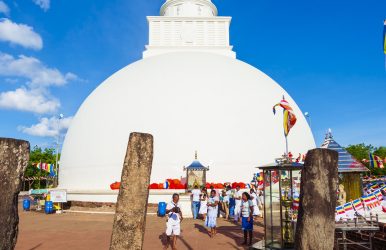
Furthermore, after climbing 533 peaks, I reached the summit of the Stupa. At the summit, there is a small pagoda that houses sacred relics of Lord Buddha. 

In addition, the unmarked dirt train behind the courtyard took me to a cliff ledge from where I enjoyed amazing views of the surrounding jungles and palm trees. 

Share on Social Media

Meet Sibashree Bhattacharya, a travel enthusiast who has a decade-long experience in transcending virtual barriers with her words! Her deep love for travel is apparent from her travel escapades to the mountain, often taking her readers on a journey, her words acting as Portkey! Fun fact: Sibashree loves to dive deep into the history of the places she is about to visit, making her travels even more wholesome. If you were wondering how her articles are not short of time travel, this answers it!

Leave a Reply

Your email address will not be published. Required fields are marked *

title-img Related

READ MORE Jimbocho Book Town

What Are The Things To Do In Jimbocho Book Town? Visit The Best Book Stores And Cafes 

BY  Sibashree Mar 30, 2026

Jimbocho Book Town is a massive book district or book town with more than 400 book stores.  It is one of the oldest and biggest in the world and is often uttered with respect equal to the Kaifeng and China book towns.  Also, it is a great place for dark academia fans, students, and readers, as they will find most of the second-hand books in Japan here.  Furthermore, it’s not just about the love for the book and the “intellectual” aspect of it.  Time Out has named it the best neighborhood in the world in 2025.  But do you know about the best book stores and cafes in the Jimbocho Book Town? Here is a detailed list.  However, let’s talk about the history, accessibility, and the best things to do in this book town.  Jimbocho Book Town: A Neighborhood That Survived World War II The Kanda-Jinbōchō area started getting many law schools in the late 19th century and early 20th century, and this is how the book town came.  Many bookshops opened then, and students of the law schools often sold their old books to these shops at a cheaper rate. Thus, this concept of second-hand books came.  New students used to buy these books because they were cheaper.  Furthermore, it is nothing short of a miracle that this book town survived the bombing and destruction during World War II.  Jimbocho started flourishing as a book town once World War II was over, and today, it is the most fascinating place for bibliophiles.  Furthermore, Shūeisha (Jump Manga Magazines), Iwanami, and many other leading publication houses have their headquarters in the Jimbocho Book Town.  Moreover, the curry restaurants and cafes here have been hosting the most famous authors for the longest time.  I must mention Ladrio in this context. It was built in 1949 as the reading room of a bookstop. It was also the first place that brought Viennese coffee to Japan.  Now, it was more than an elevation in the texture and flavor. The whipped cream helped to keep the coffee warm for longer as the intellectuals here took part in debates and hot discussions.  How To Reach The Jimbocho Book Town?  The central location of Jimbocho in Tokyo makes it easy to visit. You can take a ride on the Subway network to make this commute.  Reach Jimbocho Book Town By Subway  The nearest subway station is the Jimbocho Station. You will take the subway to the station on the following lines.  Toei Mita Line Tokyo Metro Hanzomon Line And, Toei Shinjuku Line Moreover, once you reach the subway station and exit from A5 or A6, you can find the book stores along Yasukuni-dori.  Reach Jimbocho Book Town From Shinjuku And Shibuya The journey through the Toei Shinjuku Line from Shinjuku Station is the easiest way to reach the Jimbocho Book Town. It does not need any transfer.  Furthermore, the travel time is about 15 minutes.  On the other hand, from Shibuya Station, you can take a ride through the Tokyo Metro Hanzomon Line to reach Jimbocho Station within 20 minutes. Reach Jimbocho Book Town From Tokyo Station From Tokyo Station, you have to take a Rapid ride on the R Chuo Line and reach Kanda Station.  Then, you have to reach the Toei Mita Line or the Toei Shinjuku Line to complete the journey in 5 minutes. Shopping For Old And Rare Books And Magazines: The Best Thing To Do In Jimbocho Book Town  From antiquarian books and documents to specialized books and first editions, you will find all the books in the Hakusan-dori and Yasukuni-dori intersections of the Jimbocho Book Town.  Starting from the Meiji Era(1868-1912) to today, it has been a book town par excellence.  Furthermore, the Aozora Kohon Ichiba, or the annual Kanda Used Book Festival, draws book lovers across the globe to the Jimbocho Book Town.   This festival is held in late October or early November, and it was celebrated from October 24th to November 3rd in 2025.   What Are The Book Stores You Must Visit In The Jimbocho Book Town?  Do you think that the Jimbocho Book Town only has Japanese books? You will get books in various languages in the book stores here.  Here are the book stores you must visit.  1. Kitazawa Book Store  The Kitazawa Book Store is the best book store to find English books and classics in the Jimbocho Book Town.  It started in 1902 and has thus completed more than 125 years in serving as a beacon of Western literature connoisseurs in Jimbocho Book Town.  You will mostly find foreign and humanities-related books here.  2. Magnif Zinebocho Magnif Zinebocho is a paradise for readers and lovers of retro magazines. You will mostly find lifestyle and fashion magazines from the last few decades here.  Though it mostly sells Japanese retro magazines, you will also find magazines that overcome language barriers.  Furthermore, the Mondrian artwork on the bookstore’s facade is really impressive, and you will find retro magazines such as Olive and Relax. 3. Books Tokyodo Built in 1890, Books Tokyodo is one of the oldest book stores in the Jimbocho Book Town. Here, you will find books of different genres from the bygone eras and modern times.  Furthermore, it is one of the book stores that has helped to create a community of book lovers, and that is the most cherished thing about it.  4. Komiyana Tokyo The history of Komiyana Tokyo goes back to 1939. It is a dedicated 4-story building with each floor offering distinct attractions to book and art lovers.  You will find here books on history, Japanese art, Western art, and fashion.  Furthermore, it has the widest collection of photo books, and most of them are by the original photographers or painters.  Also, watch out for the weekend “Garage Sale” behind the shop.  You never know when you can find a diamond.  5. Bohemian’s Guild  The Bohemian’s Guild is a great place to find vintage books on visual art and design.  Furthermore, the bookstore has been there since the Taisho era (1912-1926). The first floor of the store has all the books and a warm lighting that, along with the brown wooden floor, creates an inviting atmosphere.  Furthermore, on the second floor, the book gallery allows you to explore the lithographs, paints and prints.   What Are The Best Cafes To Visit In The Jimbocho Book Town?  Kissaten, or the coffee house culture of Japan, is unique. The best cafes in the Jimbocho Book Town allow you to get familiar with that.  Furthermore, the cafes here celebrate the history and origin of the book town. So, here are my favorites. 1. Sabouru With an origin in 1955,  Sabouru stands out with its unique Showa-era charm and nostalgic vibe.  You must try the cream soda here, and it is available in seven colors. They also make an excellent strawberry juice smoothie.  Moreover, the adjacent Sabouru 2 is a popular place here to have classic “Japanese Napolitan Spaghetti.”  2. Milonga Nuova Built in 1953, Milonga Nuova is a paradise for Tango lovers.  Furthermore, the charcoal-roasted coffee here hits different, and that is often accompanied by the signature desserts.  Moreover, you will find more than 30 varieties of imported beers here.  Along with these cafes, Jimbocho Book Town also has various curry restaurants. From Mandala to Bondy, these restaurants celebrate the tradition started in the Meiji era.  The book lovers found it very convenient to eat curry with one hand while the other hand was busy holding the book or flipping the pages.  Read Also: Is The Japan Rail Pass Worth It In 2026? Should I Buy Or Avoid It As A Conscious Tourist? Cherry Blossom Kyoto Japan: 2026 Season And The Top Viewing Spots Osaka Food: Know What To Eat In The Streets Of Osaka

READ MORE talalla beach

Where Is Talalla Beach? Know The Top Attractions And The Best Time To Visit 

BY  Sibashree May 4, 2026

The southern shores of Sri Lanka have many amazing beaches stretching from Tangalle to Dondra Head, or the southernmost tip of the country.  Talalla Beach is one of them, and it has sea vines, golden sands, and sleepy hotels lining the coast.  Furthermore, if you are a fan of the TheLowDownUnder Travel philosophy, Talalla is the perfect pick.  Again, if you are visiting the Hiriketiya Beach or the Kudawella Beach, the Talalla Beach is just a short tuk-tuk ride away.  Moreover, it is a peaceful place to see the turtles hatching and surf.  Here is more about the things to do in Talalla Beach, the nearby attractions, and other details. Where Is Talalla Beach?  Talalla Beach is just 6.5 km away from the Dondra Head, the southernmost part of Sri Lanka.  Also, it is between Dickwella and Matara towns.  You can, of course, take a taxi from Colombo to reach Talalla Beach after a journey of 3.5 hours.  However, if you are also traveling on a budget like me, you can take a train from Colombo to Matara, and then you can take a tuk-tuk ride from there. It costs around LKR 1500.  Also, from Matara, you will get a local bus to Talalla Beach, and the ticket price will be LKR 50.  Nevertheless, I was already at the Kudawella Beach, which is around 7 km away. So, I boarded a tuk-tuk, and it charged me 500 LKR. Surfing And More: What Are The Things To Do At Talalla Beach?  Now, many travel guides claim that surfing is one of the best things to do in Talalla Beach. However, the reality is that Talalla Beach is not a surfing spot.  Still, if you are visiting Talalla Beach, you will find many surfing breaks or spots on the southern coast of Sri Lanka nearby.  1. Surfing Near Talalla Beach  Starting from the west to the east, these are some places to surf near the Talalla Beach.  Madiha  The left and right reefs at Madiha are one of the most challenging breaks in the southern coast of Sri Lanka. Early morning is the best time for surfing here. SK Town  SK Town is around 20 minutes away from Talalla Beach.  However, SK Town is still an emerging place for beginners and intermediate surfers.  The A-frame peaks here are powerful, and you will find a sandy bottom.  Dawn and late evening sessions are the best times for surfing in SK Town. Hiriketiya Hiriketiya is the most prominent place for surfing near Talalla Beach. You can do a surf camp here and explore the semi-hollow and fast left-hand break.  However, Hiriketiya is touristy, and that can be a problem for surfers.  Kudawella  If you have never tried surfing before, you must visit the Kudawella Beach.  The beach has its own break, and it is even more protected than Hiriketiya.  2. Watching Turtle Hatching From Mount Lavinia to Uppuveli Beach in Trincomalee, the beaches in Sri Lanka are famous for turtles.  However, at Talalla Beach, I had the unique experience of seeing turtles hatching from their eggs.  The small turtles break the egg shells and come out. Then, they immediately crawl toward the sea.  Furthermore, if you visit the beach at night, you can see turtles laying eggs.  3. Visiting The Lace Factory Now, the lace factory is not a tourist attraction in Talalla Beach. I luckily came to know about it from a local.  It was just a walk of 5 minutes from the beach, and the artwork I saw inside the factory was fascinating.  It was a great cultural experience seeing the locals preserving the traditional art form of the country.  4. Yoga Sessions The Talalla Beach Resort has a Yoga Shala.  If you are an early morning person, you can attend a Yoga session here and rejuvenate your mind and body.  5. Getting An Ayurvedic Massage  Like Southern India, Sri Lanka also has a tradition of Ayurvedic treatments.  You can avail yourself of some relaxing ayurvedic therapies and massages at the Taltalla beach houses. What Are The Places To Visit Near Talalla Beach?  You can combine your time at Talalla Beach with a fascinating wildlife experience, enjoying town life at Matara, and a delightful swimming experience at the Seethagalla natural seawater pool.  1. Udawalawe National Park Spotting elephants in the Udawalawe National Park is one of the best things to do in Ella.  Despite a distance of 161 km, a trip to Udawalawe National Park from Talalla Beach is worth it.  You just cannot miss the early morning safari here and spot the baby elephants and their mothers.  2. Matara  I loved Galle Fort. However, to me, Matara, at a distance of around 44 km, felt more intimate.  I enjoyed the cheerful voices and the sound of the balls getting struck when the youngsters were playing cricket inside the old fort.  Furthemore, I visited the Mid Mountain Tea & Spices here and collected some local brews as souvenirs.  3. Seethagalla Natural Seawater Pool The Seethagalla Beach is to the east of the Talalla Beach. It has sand with black patches and coconut trees.  Furthermore, this rugged cove has a tidal pool. It was a lovely swimming experience.  Where Is The Best Time To Visit The Talalla Beach?  The dry season, from November to March, is an ideal time to plan a trip to Talalla Beach.  These months offer the best wave conditions for swimming and surfing. Especially November to early January is the best window for surfing.  However, the temperature in these months ranges between 32 and 37 degrees Celsius. Moreover, the high humidity in the air makes it stuffy sometimes.  In addition, there can be sudden downpours.  Also, in a day, early mornings and late evenings are the best times for surfing as the winds are the weakest.  Moreover, if you are in Sri Lanka in April onward, you must look further east. Arugam Bay, especially, is a delightful location for surfing on the eastern coast of Sri Lanka in the wet season.   Where To Stay Near The Talalla Beach? Talalla Beach has limited accommodation options. However, the Talalla Sunshine Beach is a delightful option with 10 beautiful rooms and an uninterrupted view of the sea.  Also, it is just a few steps away from the beach. So, you can even walk to the beach at night for a serene experience.  Another popular option here is the Talalla Resort, which also functions as a retreat center and has spa and yoga facilities.

READ MORE Japanese temple

What Is The Best Japanese Temple To Visit? A Temple Tour In Japan 

BY  Sibashree Mar 31, 2026

The scent of that first Japanese temple I visited, full of damp cedar, ancient dust, and high-quality incense, immediately slowed my pulse.  The architecture felt magnetic, heavy with history that seemed to settle into your bones.  Furthermore, these temples aren't just buildings. They've stood for centuries,  and are a part of Japan's cultural fabric.  Moreover, the connection between nature and devotion isn't just symbolic here, and it's real.  Also, every temple holds stories passed down through generations.  A single stone path or carved gate can carry centuries of meaning. You don't just walk past them. You feel their presence. How Buddhism Shaped The Island And Each Japanese Temple  Buddhism started in India, the land I come from. Then it moved through China and Korea before reaching Japan in the 6th century.  Now, the first official step came when King Seong of Baekje sent Sutras and a Buddha image to Emperor Kinmei.  1. The Rise Of Sects  Over time, new sects poured in from China, changing how Buddhism looked here.  Saicho brought the Tendai sect in 805.  Kukai, later called Kobo Daishi, founded the Shingon sect in 806.  Then, Zen arrived in 1191, and it shifted Japanese art, tea traditions, and samurai life.  Now, Buddhism shares space with Shinto, the local religion.  So, the two coexist side by side without conflict.  Though it's not perfect, that's how things work now. The Architectural Layout Of A Japanese Temple  Once you enter a Japanese temple, you will find the main hall or Hondo. Furthermore, the table below explains the other key features of a Japanese temple. Features of a Japanese TempleDetails PagodasThese have three to five stories. Furthermore, these are the repositories of the sacred relics. Lecture HallsMonks study and teach here. BelfriesThese house massive bronze bells that are rung during the New Year.CemeteriesOften located on the grounds, these emphasize the Buddhist focus on the afterlife and ancestors. What Is The Best Japanese Temple?  I cannot pick a favorite when it comes to choosing the best Japanese temple. However, these are the ones I loved visiting.  1. Kinkaku-ji (The Golden Pavilion), Kyoto Kyoto is not just famous for its cherry blossom season. It also has the Golden Pavilion.  This is the "poster child" of Kyoto, and for good reason.  Two levels of this Zen temple have a covering of gold leaf.  Seeing its glittering reflection in the "Mirror Pond" is one of those travel moments that actually lives up to the hype.  It was originally built as a retirement villa for a Shogun, which is why it has a slightly "king-of-the-hill" air. 2. Todai-ji Temple, Nara A visit to the Todai-Ji Temple is one of the best things to do in Nara.  Standing in front of the great Buddha Hall (Daibutsuden) makes you feel incredibly small.  The structure was once the largest wooden building ever built, and even now, at two-thirds its original size, it still stands with quiet power.  Inside, a 16-meter-tall bronze Buddha dominates the space, and it was cast in 752. 3. Senso-Ji Temple, Tokyo  As Tokyo's oldest temple, Senso-ji pulses with color and movement.  Daytime visits pull you into a sea of people.  After dark, though, the scene shifts entirely.  Vermilion walls glow warmly under lanterns, the air settles, and the five-story pagoda rises softly against the sky. That night view became my favorite moment in four days in Japan. 4. Sanbutsu-Ji Temple, Misasa Here is a temple for the daring ones.  To get a glimpse of the inner hall, Nageiredo, I had to do a really challenging hike up Mount Mitoku.  The hall can be seen right on the cliff's face, supported on stilts over a dangerous drop.  Whenever I looked at it, I kept asking myself how 8th-century monks could have built it without falling off the mountain. Besides, this "National Treasure" might even have to stand the comparison to a scene in an Indiana Jones movie.  5. Tenry-Ji Temple, Kyoto  This temple is right in the heart of the Arashiyama district and is also famous for its garden.  The landscaped grounds of the 14th century surround the central pond walkways.  It was cherry blossom season when I dropped by, and the view of the weeping cherry trees against the forested mountain is a picture I still take out whenever I am stressed. 6. Kongobu-Ji Temple, Koyasan For a deeply immersive experience, head to Mount Koya.  Kongobu-ji, the main temple of Shingon Buddhism, houses the largest rock garden in Japan.  The granite rocks have been carefully arranged to depict dragons arising from a sea of clouds. It's an excellent venue for peaceful meditation. 7. To-Ji Temple, Kyoto While there are other things to see in To-ji, its five-story pagoda is the main draw.  At 57 meters high, it is not only the tallest in Japan but also a city landmark.  Plus, when it is lit up at night in spring, it appears like a golden light rising from amidst the cherry trees. What Are The Best Offbeat Japanese Temples?  Aside from the well-known "Golden" and "Great Buddha" temples, there are also sites that allow you to connect more closely with nature and pilgrimage traditions.  It is at these places that I experienced the most "human" contacts, observing pilgrims dressed in white robes or witnessing monks conducting their daily rituals. 1. Daisho-In Temple, Miyajima While most tourists to Miyajima are attracted by the floating torii gate, Daisho-in, situated at the base of Mount Misen, is the island's true spirit.  The most memorable feature? The 500 Rakan figures. Each one has an entirely different face. So, some are laughing, some are grumpy, and some look like they're whispering a secret. 2. Seiganto-Ji Temple, Nachisan There is probably no other place on the Kumano Kodo pilgrimage that has been as pictured as this one.  You have a vivid red pagoda in the front, and Nachi Falls is the highest waterfall in Japan, thundering down in the background.  It is a wonderful site where the noise of the water and the quietness of the temple together form an ideal spiritual harmony. 3. Zenko-Ji Temple, Nagano The temple sits in Nagano, a town that grew around it.  This is where Japan first received a Buddhist statue.  Though the statue itself isn't visible, you can walk into a pitch-black tunnel under the altar.  The goal? Try to touch the "Key to paradise. " It's creepy, but there's something real about it. A genuine cultural moment. 4. Horyu-Ji Temple, Nara Located just outside Nara, this site holds the oldest wooden buildings still standing.  These structures date back to 607. Standing in them feels like stepping into Japan's earliest days. History lives in the wood and silence of the halls. How To Visit A Japanese Temple Like A Local?  Visiting A Japanese temple is not just about seeing but also experiencing it.  One way to do this is through politeness, talking softly, and following a few simple etiquettes.  You will find a large incense burner (Jokoro) at the temple entrance.  A common practice is to fan yourself with the smoke, as it is said to have medicinal effects. 1. Getting In And Praying You'll most likely have to take off your shoes before going into a building (make sure you have stylish socks! ).  Once inside, you can go up to the altar, put a small coin in the donation box, and silently make a respectful gesture.  In contrast to a Shinto shrine, at a Buddhist temple, you shouldn't clap.  Only a silent bow with hands in the prayer position is the right way to show reverence.  2. Taking Photos In A Japanese Temple  Generally, temples are okay with you taking photos in the outdoor areas.  However, you cannot take photos inside the main worship halls where the statues are.  Also, personally, I feel that when I put my camera away and spend five minutes just sitting on the tatami mats in silence, what I get is a more vivid "picture" than any photo could ever represent. Read Also: What Are The Best Japanese Shrines To Visit? Celebrating Nature Spirits And Inherent Spirituality Is The Japan Rail Pass Worth It In 2026? Should I Buy Or Avoid It As A Conscious Tourist? What Are The Unique Things To Do In Sapporo? Exploring The Capital Of Hokkaido