

Where To Stay In Yala National Park? Know The Best Accommodations 

The Yala National Park is the ideal place for a dawn safari. As the first rays of golden light pierce through the canopy and the untamed bush comes to life, you will enjoy an acoustic and raw symphony. 

You will listen to the rumble of wild elephants and the exotic birdcalls. Furthermore, you will spot crocodiles gliding into still lagoons. 

You will also find monkeys scampering through the treetops, and if you are extremely lucky, you can even see a Sri Lankan leopard. 

So, no wonder that Yala National Park is a bucket-list destination when you are on a trip to Sri Lanka. 

However, finding the right accommodation, the ultimate sweet spot to explore the Yala National Park, can be a daunting task. 

You can find a wide range of accommodations here, including the avant-garde ones and the bush camps. 

Furthermore, there are some family-run guesthouses and luxurious canvas cocoons. So, in this guide, I will discuss where to stay in Yala National Park. 

Where To Stay In Yala National Park? Pick The Zone Based On The Experience You Want 

Where To Stay In Yala National Park Pick The Zone Based On The Experience You Want

Before you choose an accommodation for yourself, you must decide on the area you want to stay in. 

You need to especially understand the entry points of Yala National Park and the surrounding regions. 

It is more so because the logistics of your safari will depend on the base and the entry point to the national park you are choosing. 

1. Tissamaharama Or Tissa

Tissa is just a distance of 20 minutes from the Palatupana Gate, or the main gate of the Yala National Park. 

So, this historic lakeside town serves as the primary gateway to the park. Also, here, you will get to indulge in a sense of wilderness paired with civilization. 

Moreover, the town has strong infrastructure, such as 

  • Pharmacies
  • Small Restaurants
  • ATMs
  • Cafes 

Moreover, you may not find massive architectural buildings, but you will get boutique lakeside hotels offering easy evenings, proper amenities, and strolling along the water. 

2. Kirinda And The Palatupana Coast

The Palatupana coast is located to the south of Tissa. Also, it is the place where the jungle collides with the crashing waves of the Indian Ocean.

The Palatupana Coast further stretches into Kirinda. Kirinda has the most opulent coastline, with elephants wandering down onto the sand. 

Furthermore, here, you will find the ultra-luxurious and specially designed eco resorts. 

Also, staying here means that you are very close to the national park. 

3. Inside The Buffer Zone 

If you want the most immersive experience in the Yala National Park, you can choose one of the high-end camps within the protected buffer zones of Yala. 

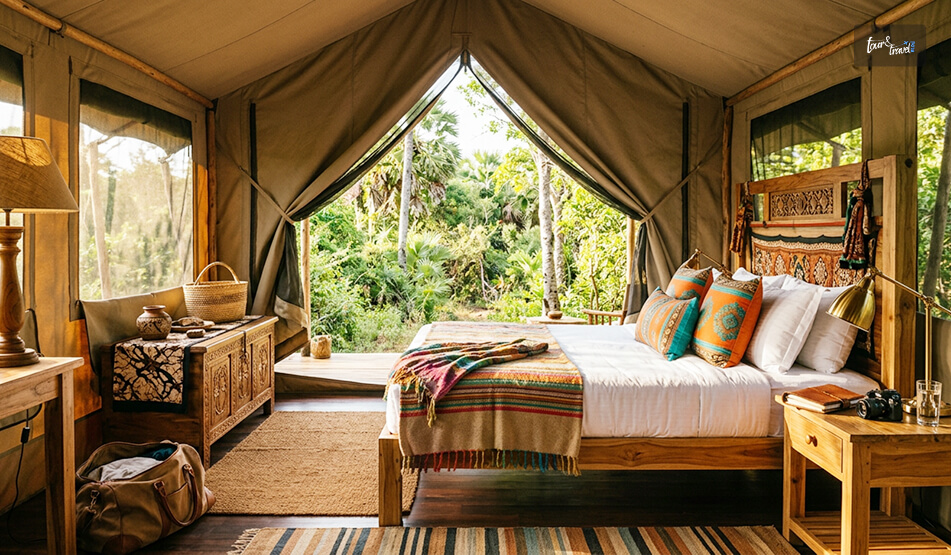
You will stay in canvas tents here, and you will love the experiences such as open-air dining, lantern-lit pathways, and dawn wake-up calls from wild peacocks.

Moreover, you can find many other wildlife roaming around your tents. 

The cost of staying in these high-end tents can be on the higher side. However, the experience of sitting around a campfire while the unseen jungle hums around you is unforgettable.

4. Katagamuwa And Kataragama

Katagamuwa is on the quieter northern perimeter of Yala. It is a culturally rich and slower alternative to other accommodation zones in Yala. 

Furthermore, Katagamuwa backs onto a multi-religious pilgrimage site, rarely visited by Western tourists. 

If you choose to stay here as a backpacker, you will enjoy the morning wildlife safaris with a visit to historic sites in the evening. 

The camps in these sectors are smaller. However, it is run by locals who have endless tales to share. Also, the camps here offer a highly personalized experience. 

So, the warmth and the thrill of knowing the unknown stories about the historic places, more than make up for the lack of luxury. 

Where To Stay In Yala National Park? 

Where To Stay In Yala National Park

I have divided the best places to stay in and around the Yala National Park into three categories. 

  • Luxury Accommodations
  • Mid-Range Accommodations
  • Budget-Friendly Stays 

The Best Luxury Accommodations In Yala 

If you want a perfect safari country reimagined, you can plan a stay at any of the luxury accommodations in Yala. 

Here, you will find copper bathtubs and canvas tents beneath wild palms. 

These luxury accommodations will offer you unmatched luxury without breaking your connection to the world. 

Wild Coast Tented Lodge

Wild Coast Tented Lodge

The Wild Coast Tented Lodge is a definitive and flagship safari lodge in Sri Lanka. It is located at a place where the jungle kisses the ocean. 

Furthermore, this tented lodge has an otherworldly feel. The copper-toned canvas “cocoons” are scattered amidst the scrubs. 

So, when the Sun is up, these tents look like giant desert beetles. 

Moreover, inside the tent, you will find a fusion of colonial and contemporary aesthetics. There are leather campaign chairs, teak floors, canvas walls, and freestanding copper bathtubs. 

Best Mid-Range Accommodations In Yala

It is okay if you do not want to bear the premium price tags of the accommodations in Yala.

The mind-range accommodations in Yala offer you immersive nature experiences, beautiful swimming pools, and superb tracking options. 

Cinnamon Wild, Yala

Cinnamon Wild is an amazing mid-range accommodation in Yala. It is right inside the active buffer zone of Yala. 

Furthermore, its location between a crocodile-frequented freshwater lagoon and the ocean makes it more fascinating. 

Also, elephants here stroll through the grounds regularly, and the 68 rustic chalets raised on stilts offer simple timber interiors and comfortable bedding. 

Moreover, the property has a rooftop bar that looks across the forest canopy. So, this is ideal for sundowners. 

In addition, the restaurant here serves authentic lagoon crab curry. 

The Best Budget-Friendly Accommodations In Yala 

You don’t need to spend a fortune if you want to experience the magic of Yala Safari. You will get amazing hospitality, clean rooms, and authentic experiences at these budget-friendly accommodations in Yala. 

Mahoora Yala

You can experience the genuine thrill of a buffer zone in Mahoora Yala. 

The glamping camps here come without the price markup. 

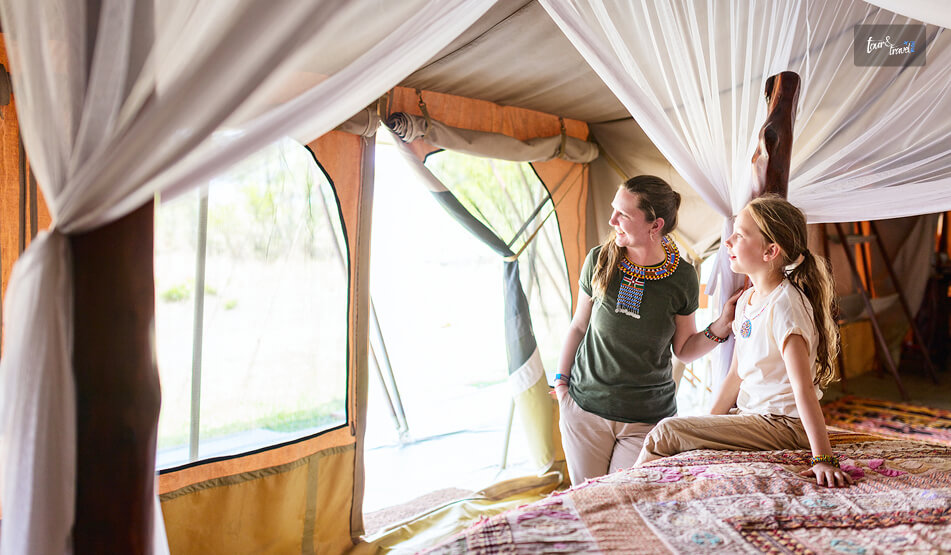
Furthermore, the safari tents are practical and well-equipped, featuring king beds, fans, and private ensuite bathrooms.

Moreover, the camp is directly on the boundary of the park. As a result, the safari trucks will get you deep into leopard territory early in the morning. 

Thus, you will be able to avoid the heavy line of the day tourists in the town.

Read Also:

Share on Social Media

Sibashree is a travel, culture, and leisure writer who has been writing since the age of 12 and professionally since 2014. With more than a decade of travel writing experience and journeys across India and several parts of the world, she brings a deeply personal and thoughtful perspective to her work. A student of English Literature and Mass Communication, Sibashree has always viewed travel as more than movement — for her, it has been a way of understanding people, cultures, and herself. Her passion for spiritual exploration has also led her to many unusual and meaningful destinations over the years. Outside of writing, Sibashree enjoys watching European cinema, reading about global politics, and reflecting on the stories hidden within everyday places.

Leave a Reply

Your email address will not be published. Required fields are marked *

title-img Related

READ MORE day trips from Tokyo

What Are The Best Day Trips From Tokyo? Most Popular Ones You Will Love 

BY  Sibashree Mar 26, 2026

If you are like me, your first trip to Japan probably started off in Tokyo, surrounded by bright neon lights and an astounding number of people moving around to get from place to place. Tokyo is a logical starting point because of the many inexpensive daily flights that arrive, as well as its efficient public transportation, making it very easy to get around and communicate with those whom you meet there, because they speak some English. But let me tell you a little secret I learned from spending two different trips to Japan over the course of three weeks. Although I had fun in Tokyo, I’m definitely not a big progressive city person. The real beauty and the heart of Japan are found away from the chaos of Tokyo. The true essence of Japan can be experienced at its best in either the peaceful mountains high above the sea or in the salty air along the coast of Japan. So if you are planning on staying in Tokyo for more than three days, do yourself a favor and venture outside of the city limits.  These are my favorite day trips from Tokyo. You can travel to each of these destinations within 1 to 2 hours. What Are The Best Day Trips From Tokyo?  Tokyo is an incredible gateway. However, Japan’s true magic is often found in the places where the skyscrapers disappear.  Whether you want the spray of the ocean in Kamakura or the mountain air of Hakone, I promise that leaving the city for just a day will change how you see the country. From Mount Fuji to Kyoto, the Soul of Japan, the day trips from Tokyo are as diverse as they can be.  Here is a detailed account of my experience in those places.  1. Mount Fuji And Kawaguchiko: The Icon Travel Time: 2 Hours  How to Reach There: Highway buses from Shinjuku or Shibuya (~¥1,250–¥2,000 one way). If I can only recommend one escape, it will be Kawaguchiko, a town located right at the foot of Mt. Fuji.  "Shy" Fuji hides behind a curtain of clouds and can be quite elusive. While I visited, Fuji showed off for me on several occasions. I spent an entire day in this beautiful town, but would recommend an overnight stay at one of the many traditional ryokans situated on the lake if possible. There, you will notice the the juxtaposition of Fuji's reflection on Lake Kawaguchi at sunrise will be a once-in-a-lifetime experience. Highlights From My Visit Climbing the 398 steps of Chureito Pagoda was strenuous. However, the meditation-like calm through the forest made it worthwhile. I was fortunate enough to see the iconic site of the Red Pagoda with Mt. Fuji as a backdrop, as the clouds rolled in and covered the summit of Fuji. Hōtō noodles are a local specialty and are made up of thick, flat noodles cooked in a Japanese miso broth. Eating them will feel like a warm hug! So, don’t forget to try it.  2. Nikko: A Place Of Mist And Masterpieces Travel Time: 2 Hours How to Get There: Tobu Railway from Asakusa to Tobu-Nikko Station. When you visit Nikko, you will see all that it has to offer in the stunning, misty forests and cedar trees. Moreover, the detailed and ornate shrines seem to be jewelry boxes.    Insider Tip:  Arrive before 9 am at Lake Chuzenji to witness how the morning light creates an incredibly peaceful scene on the water.  If you arrive later than 9 am, visit the Toshogu Shrine first, which is where Shogun Tokugawa Ieyasu is buried and features the famous three monkeys, "See no evil, hear no evil, speak no evil". Many people come to see Kegon Falls, but it can be crowded due to the high tourist volume.  Unless you arrive at dawn, I would recommend skipping Kegon Falls and enjoying the calm waters of the lake instead. 3. The Coastal Soul Of Japan: Kamakura Travel Time: 1 hour How to Get There: JR Yokosuka Line from Tokyo Station (¥940 one way). Kamakura is also popular as the "Kyoto of the East," and I can see why.  Although it is an hour from Tokyo, when you are there, you will be surrounded by the smell of salt and incense from the temples instead of exhaust from busy streets. Be sure to see the Great Buddha (Daibutsu) at Kotoku-in.  This is a large bronze hollow statue located outside.  Standing there, surrounded by trees and soft sea light, I felt a sense of peace and tranquility.  After visiting the Great Buddha, I walked to Yuigahama Beach to watch the surfers and the sunset before enjoying a meal of sukiyaki or shabu-shabu. 4. Hakone: A Breath of Mountain Air Travel Time: 2 Hours How to Get There: Odakyu “Romancecar” from Shinjuku. I recommend the Hakone Free Pass. Tokyo is the pulse of Japanese culture, and it is in Hakone where you'll find peace after the city's frenzied pace. Hakone is a beautiful blend of modern and ancient.  The first stop for my visit was at the Hakone Open-Air Museum, where I walked among sculptures created by some of the most famous artists in the world, surrounded by natural beauty all around me.  Then, I took the Hakone Ropeway across the Owakudani Valley.  It is an active volcanic area where steam rises out of the ground, creating a picture of a living canvas.  On clear days, you may see Mt. Fuji as well.  The day was capped off with a boat ride on Lake Ashi aboard a vessel that resembled a "pirate ship."  I was hesitant about it being cheesy, but the sights were gorgeous. 5. The Easy Escape To Yokohama  Travel Time: 30 Minutes How to get there: JR Tokaido or Keihin-Tohoku Line from Tokyo Station (¥480). When I need to relax from the chaos of Tokyo, I tend to go to Yokohama.  Yokohama is the 2nd largest city in Japan. However, it has a much more relaxing atmosphere due to the harbor.  I enjoy taking a stroll along Minato Mirai, which is another word for "harbor view," while enjoying the ocean breeze.  For something "quirky", I went to the Cup Noodles Museum to create my own cup of noodles and to learn about the history of Nissin Food Products.  However, the highlight was visiting China Town, which is the largest in Japan.  My recommendation is to arrive at China Town around 4:00 or 5:00 PM.  It will be early enough to beat the dinner rush and late enough to see the entrance of all the glow from the lanterns.  Take a bag of roasted chestnuts and enjoy the view of the skyline from the water while riding on the Cosmo Clock 21 Ferris Wheel. 6. A Trip Back In Time To Kawagoe Travel Time: 1 Hour How to get there: Tobu Tojo Line from Ikebukuro or JR from Shinjuku. If you want a taste of the Edo period without trekking all the way to Kyoto, go to Kawagoe.  It’s a walkable town full of clay-walled warehouses and wooden merchant houses. When I arrived at 8 AM, I heard the Toki no Kane (Bell of Time) tolling in the stillness of the morning.  I went back 200 years in time.  If you have time to go to Candy Alley, everything is made from sweet potatoes, cakes, chips, and even ice cream!  I know it sounds strange, but I assure you that it is really good! 7. Kyoto: The Soul Of Japan Travel Time: 2 Hours (by Shinkansen) How to get there: Tokaido Shinkansen from Tokyo Station (¥13,320 one way). I usually tell people to stay at least two days in Kyoto, but if a day trip is all you can manage, do it. It is expensive, but it is worth every yen. To appreciate Kyoto fully, you should focus on finding peace and serenity rather than simply marking off temples from a to-do list.  Instead of fighting the crowds at the bamboo groves, I found my peace by sitting in the wonderful gardens of Kennin-Ji Temple and breathing the incense they burned there. 8. Enoshima: Islands And Icons  Travel Time: 2 Hours How to get there: Odakyu Line from Shinjuku to Katase-Enoshima Station. Enoshima is where Japan’s coastal charm meets its spiritual side.  It’s a small island with a bridge and shrines dedicated to the goddess of the sea. Prepare to take many steps as you make your way to Iwaya Caves on the opposite end of the island.  The sound of waves'll surround you as you leave the noise of the city behind.  Furthermore, inside the caves, it’s a different world! After you leave the caves and head back, stop at a vendor and buy some grilled fish or seafood so you can enjoy the smoky aroma of the grilled fish while walking through Enoshima Island. 9. Chichibu: Mountains And Moss Travel Time: 2 Hours How to Get There: Seibu Line from Ikebukuro to Seibu-Chichibu Station. Chichibu is an outdoorsy place if you love the outdoors!  It's got mountains and has a strong cultural heritage.  If your timing is right in the spring, Hitsujiyama Park gets huge patches of pink and white moss phlox in bloom. This area has deliciously filling meals, including miso potatoes and waraji katsu (a pork cutlet that’s named after a straw sandal because of how large it is). 10. Karuizawa: The Alpine Retreat Travel Time: 1 Hour How to get there: Hokuriku Shinkansen from Tokyo Station. Finally, there is Karuizawa. This is where Tokyo’s elite found an escape from the summer heat, and it still feels incredibly sophisticated. Renting a bicycle is one of the best ways to experience this area.  I spent my first morning biking through beautiful pine tree forests until I arrived at Kumoba Pond. The pond has such calm water that it feels like looking into a huge mirror!  In the winter, it turns into a beautiful, snowy retreat perfect for relaxing after spending several days in the city.  Read Also: Is The Japan Rail Pass Worth It In 2026? Should I Buy Or Avoid It As A Conscious Tourist? What Are The Things To Do In Oahu For Free? A Guide For Budget Travelers Festivals Of Light And Color: Experiencing Japan’s Vibrant Matsuri

READ MORE Tangalle Beach

What Are The Tangalle Beach Places To Visit? Is It Worth It? 

BY  Sibashree May 18, 2026

Tranquility, raw energy of nature, and the thrill of standing on the southernmost tip of Sri Lanka!  You get all of these when you are at Tangalle Beach. Also, with serenity and relaxation being two essential experiences here, you will get ample time to photograph the picture-perfect shoreline.  So, if you want to explore pristine beaches, have some fun spotting the turtles, and try some amazing local food, you must include a visit to Tangalle Beach in your Sri Lankan itinerary.  Why I Loved Tangalle Beach?  The quaint Tangalle Beach immediately impressed me with its stretches of golden beaches. Also, from the traditional fishing town of Ahangama to this small fishing village, it has been a lifetime experience for me to see how people here live in coexistence with nature.  Furthermore, the Rekawa Turtle Conservation Project was the biggest highlight of my Tangalle Beach visit.  Also, I could soak in the paradisiacal feel of this coastal town, unlike more prominent places such as the Hiriketiya Beach or the Kandy to Ella train, the crowd was way fewer.  That undertourism is a blessing in disguise, as in this way, the nature and wildlife of Tangalle Beach remain untouched.  Furthermore, I found a small but warm homestay on the east side. On the west, there are more high-end accommodations.  So, from backpackers to luxury travelers, everyone will enjoy Tangalle Beach, and you just need to place your feet on warm and golden sand. What Are The Things To Do In Tangalle Beach? Tangalle Beach offers a Bali vibe. As I have mentioned, it is the ultimate place to relax, and along with that, you can indulge in various adventure activities here.  You can even have a delightful wildlife experience here.  A Visit To The Udawalawe National Park At a distance of around 71 km from Tangalle Beach, the Udawalawe National Park is a must-visit.  Furthermore, as a home to around 400 elephants, it is one of the top attractions near Ella.  I loved the jeep safari here, and unlike many other national parks, spotting an elephant here on a jungle safari is almost guaranteed.  The entry fee to the national park is LKR 13,420, and the jeep safari charged me LKR 10000 during the last visit.  I was impressed with the entire conversation process, and it operated around the Elephant Transit Home (ETH).  The Department of Wildlife Conservation established it in 1995, and it runs on a strict 3-tier process.  Rescue Rehabilitate Release  This process ensures very little human interaction, and it works for the release of the orphaned elephants back into the wild.  Also, the conservation job does not end with the release of the elephants. The conservationalists keep monitoring the movement of the reintroduced elephants in the wild.  Watching Turtles At Tangalle Beach  Like Dalawella Beach, Mirissa Beach, and Mount Lavinia Beach, Tangalle is also a wonderful place for spotting endangered turtles.  The types of turtles you can see here are: Loggerheads Leatherbacks Hawksbills These turtles visit the beach when they want to lay eggs. Now, this is a huge advantage Tangalle enjoys as it is free from the impact of overtourism.  A Visit To The Rekawa Turtle Conservation Project Now, many tourists claim that if you visit the Rekawa Turtle Conservation Project between April and July, you can see the turtles hatching eggs.  However, this is not entirely true. There is no guarantee that you will see a turtle laying eggs or hatching.  There is an official announcement from the Rekawa Turtle Conservation Project. They have mentioned that there are high chances of seeing a turtle laying her eggs between 7:30 PM and 8:30 PM.  Furthermore, the conservation center offers a guided tour to the beach for spotting turtles between 7 PM and 6 AM.  Moreover, you cannot use flashlights or flash photography at this conservation center.  Whale Watching At Tangalle  During my stay in Tangalle, I booked an early morning tour that took me west to Mirissa Harbour.  We set sail at 6:30 AM into the calm Indian Ocean. About an hour out, the captain cut the engine.  Suddenly, a massive blue whale breached just seventy meters away, spraying a giant plume of water before diving and flashing its enormous tail flukes. It was breathtaking. While Tangalle itself lacks a major boat harbor, it serves as an excellent base. Most local operators provide seamless hotel pickups for the 60-to-90-minute drive to the boats. December to April is the best time for spotting whales and spinner dolphins at Tangalle Beach.  Also, if you are planning a whale watching tour, you must take sea-sickness pills before boarding.  A Visit To The Mulkiligara Raja Maha Vihara  Sri Lanka is the place where you will find the gems associated with Buddhism in every nook. The Mulgirigala or Mulkiligara Raja Maha Vihara is one such place.  It is an ancient Buddhist rock temple complex, and if you have loved the Dambulla Royal Cave Temple, you will also cherish this.  At a height of 205 meters, it also has the nickname of Little Sigiriya Rock or Punch Sigiriya.  Furthermore, this ancient rock temple complex is revered as an archaeological site. It harbors a religious history of around 2000 years.  King Saddhatissa of Anuradhapura built this Maha Vihara in the 3rd century BCE, and King Kawantissa and King Valagamba expanded it later.  Moreover, it is one of the designated temples in Anuradhapura to receive the Jaya Sri Maha Bodhi sapling.  After years of abandonment, it was finally reconstructed by King Keerthi Sri Rajasinghe in the 18th century.  Why I Loved Mulkiligara Raja Maha Vihara The temple complex spans across five different cave levels, and there are seven cave shrines.  The caves are home to brilliant frescoes, murals, and paintings depicting the stories of the Jataka, Lord Buddha, and other Hindu deities.  What is interesting here is that some of the artwork shows a prominent influence of the Dutch style.  Furthermore, after climbing 533 peaks, I reached the summit of the Stupa. At the summit, there is a small pagoda that houses sacred relics of Lord Buddha.  In addition, the unmarked dirt train behind the courtyard took me to a cliff ledge from where I enjoyed amazing views of the surrounding jungles and palm trees. 

READ MORE places to visit in Matara

What Are The Places To Visit In Matara? A Southern Sri Lankan Commercial Hub With Dutch Colonial Heritage

BY  Sibashree May 4, 2026

Matara, the second-largest city in southern Sri Lanka, is an important gateway to Dickwella Beach, Hiriketiya Beach, or Talalla Beach.   However, beyond that, Matara is a place where the Dutch colonial heritage meets vibrant culture.  Now, talking about this part of Sri Lanka, places such as Mirissa or Galle get more prominence.  However, as I have also mentioned on my blog on Talalla Beach, Matara felt more intimate.  First of all, it was not tourist-heavy, and it is yet to get out of its shell of a hidden gem. Secondly, from beaches to historical landmarks and spiritual retreats, you will find everything in and around Matara.  So, in this blog, I will talk about the places to visit in Matara in detail.  What Are The Best Places To Visit In Matara?  Matara is now gearing up for the Sri Buddha Year 2570 State Vesak Festival on 27th May 2026.   It will take place at the Midellawala Ancient Temple premises at Thihagoda in Matara.  The program involves a week-long celebration and will continue till 2nd June, 2026.  From moral teaching to spiritual learning and sessions on environmental conservation, this week will be significant for the people of Matara and the followers of Buddhism in the country.  Nevertheless, if you are in Matara, do not forget to visit these places.  1. Polhena Beach: Swim, Snorkel, And Relax Polhena Beach impresses at first sight with its calm water. The water here is shallow, making it one of the most family-friendly beaches in Sri Lanka.  Furthermore, the protected coral reef here makes it ideal for snorkeling, even for beginners.  When you snorkel or swim here, you can find many species of reef fish. I could even spot a few sea turtles here as I walked a few meters from the shore.  Above all, Polhena Beach is a great place to unwind. Also, watching the sunset here was a wonderful experience, with the sky changing colors and those colors reflecting in the water.  2. Matara Fort: A Must-Visit For A History Buff  If you are fascinated by the colonial history of Sri Lanka, Matara Fort is a must-visit.  You know, the Galle Fort is iconic. However, the Matara Fort also has a history of Portuguese and Dutch colonialism in this part of the world.  The Portuguese built this fort, and later in the 17th century, the Dutch reinforced it.  Furthermore, the best part of the Matara Fort is how it still has an active presence in the daily life of the town.  There are schools, government offices, and shops inside the wall. Moreover, when I reached, I heard the noise of local boys who were playing cricket inside the fort.  I started talking to them, from Sangakkara to the rising P Nissanka, we covered a lot of players from the country in our discussion.  It was a fun interaction. Now, talking about cricket has been one of the most important things to do in Sri Lanka for me.  Again, as I walked through the fort, I visited the old Dutch church, which was built in 1706. Moreover, from the Matara Fort, I enjoyed amazing views of the Indian Ocean.  Being a public district, the fort does not have an entry fee, and you can enjoy a walk anytime you want.  3. Paravi Duwa Temple: One Of The Best Spiritual Places To Visit In Matara  The floating temple, or the Paravi Duwa Temple, is on a small island called Pigeon Island or Paravi Duwa.  You have to walk through the footbridge connecting the mainland and the island. If Matara Fort offers you an insight into the region’s history, this floating temple is all about serenity.  The temple has many stunning Buddha statues and a golden Stupa. However, the most fascinating thing is the replica of the footprint on Adam’s Peak.  Furthermore, here, you will enjoy a stunning coastal backdrop.   The temple remains open from 6 AM to 6 PM, and it is best if you walk through the bridge during the sunrise.  4. Weherahena Temple: A Proud Example Of Modern Buddhist Architecture  On the east side of Matara, the Weherahena Temple has the biggest seated Buddha Statue of Sri Lanka.  The statue is 39 meters tall, and here you will find an underground tunnel.  Now, walking through the tunnel was a fascinating experience. There, you will see more than 200 murals about the life of Lord Buddha.  Moreover, the tunnel remains open from 6 AM to 8 PM.  5. Star Fort: A Dutch Colonial Heritage  The Star Fort, close to the Matara Fort, originally went by the name of Redoute Van Eck.  It is a hidden gem in Matara, but the architecture here is equally fascinating.  Furthermore, the fort gets its name from its unique six-pointed star shape. Built in 1765, the fort had a strategic position to prevent attacks from the land.  The Matara Fort, however, was more instrumental in protecting against attacks from the sea.  Also, you must not miss a visit to the Star Fort museum, which offers insights into the Dutch colonial history of Sri Lanka.  The fort remains open from 9 AM to 4 PM, and I had to pay an entry fee of around ₹100.  6. Dondra Head Lighthouse: Sri Lanka’s Southernmost Part  I took a short tuk-tuk ride from Matara to Dondra, the southernmost part of Sri Lanka.  The Dondra Light House, with a height of 49 meters, is the tallest lighthouse in the country, and this 1889 fort offers an amazing view of the Indian Ocean.  However, they did not allow the visitors to climb up the lighthouse. So, instead, you can enjoy a coastal walk and take the best snaps for your socials.  7. Matara Local Markets: Offering Insights About Local Culture And Flavors  I always believe that to know a place, you have to explore its local markets. The Matara local market smells of handicrafts, tropical fruits, and spices.  Moreover, here, you will enjoy prawn fritters or isso wade and pol sambol, even kottu roti, the authentic delicacies of Sri Lanka.  Furthermore, despite the language barrier, the crowd there was so friendly and knowing I am from India, some of them even shared how they feel the solidarity.  So, the next time you are in Matara, don’t just treat it as a stopover for the popular southern Sri Lankan beaches.  Try to soak in the history, culture, and spiritual vibe of this beautiful coastal town.