As the names of the World’s 50 best beaches get declared, three beaches in Thailand get shoutouts. These are the Freedom Beach, Paradise Beach, and Donald Duck Bay.
Also, with popular hubs such as Pattaya and Phuket, beach tourism is a major driver of the blue economy and the GDP of the country.
However, beyond these facts and accolades, the best beaches in Thailand, for me, are important because of the “Feel.”
The clear water, soft sand, and the warm hospitality of the place make it one of a kind. Furthermore, the landscapes starlight out of a storybook offer the quintessential tropical charm.
However, while traveling with my kids, I decided to focus more on the best beaches in Thailand beyond the commercial hubs such as Phuket. I wanted to take them to smaller regions where they could relax and feel the intimacy.
So, in this article, I will talk about the best beaches in Thailand for families, with Ao Nang in focus. I have also included the names from Phuket and Koh Lanta.
Ao Nang In Focus: The Best Beaches In Thailand For Family
As I have mentioned, despite Phuket getting most of the attention, Ao Nang is more suitable for a family vacation.
It has calmer waters, dramatic scenery, and a more authentic, community-centric environment for children.
No wonder that Ao Nang in Krabi Province has emerged as the most overlooked gem among the beaches in Thailand.
The overall experience here is more authentic, and it offers a community-centric environment for children.
And here are the best beaches in Ao Nang I visited and loved.
Pai Plong Beach: The Ultimate Jungle Adventure
Pai Plong is one of the best beaches in Thailand for families because of the soft golden sand.
Furthermore, reaching the Pai Plong Beach is an adventure in itself. Children especially will love it.
How To Reach The Pai Plong Beach Via The Monkey Trail?
To reach the hidden cover, we took a walk along the main Ao Nang beachfront until we reached the start of the famous Monkey Trail.
This hiking path passes through a lush and dense jungle. Walking was quite adventurous but convenient with elevated boardwalks and wooden steps.
Furthermore, my kids were thrilled to have such close encounters with local monkeys. So, the excitement built up even before hitting the ocean.
Scenery And Swimming Beauty At The Pai Plong Beach
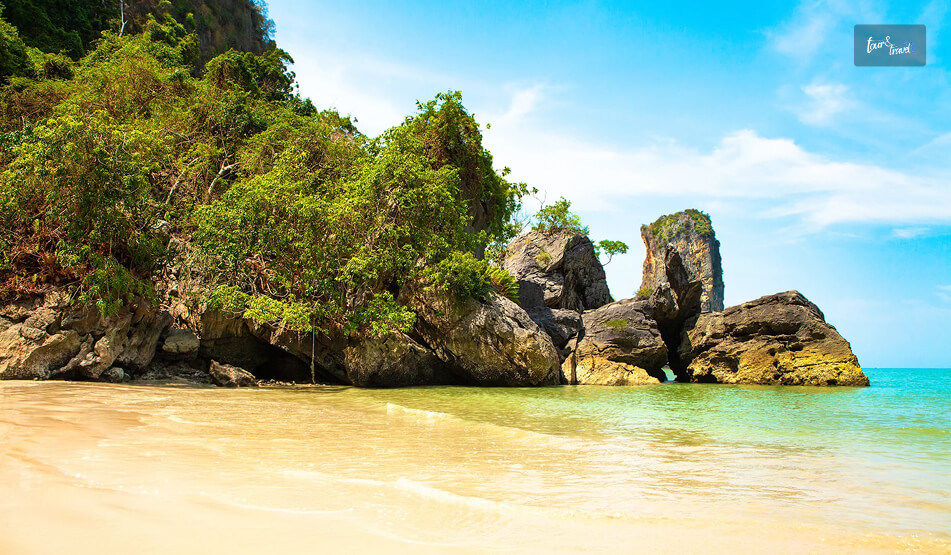
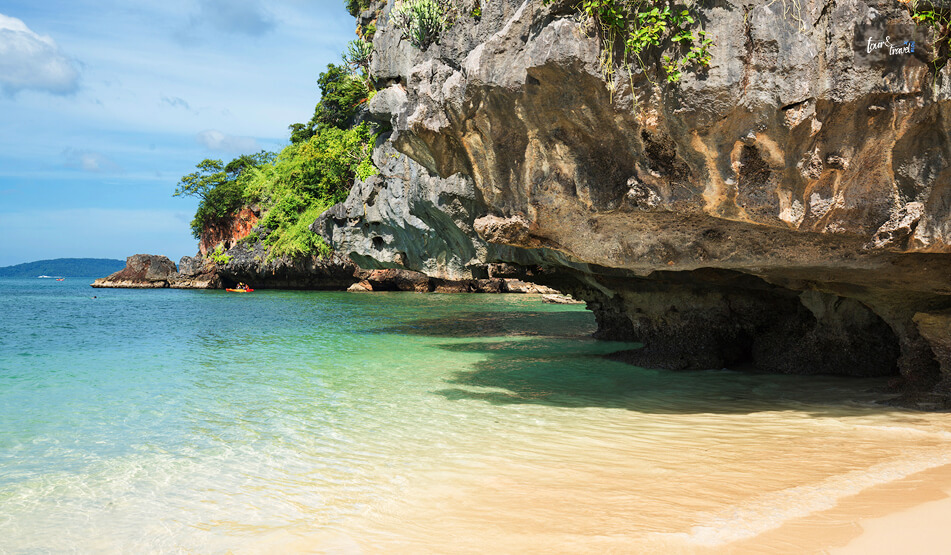
The Pai Plong beach is smaller than the neighboring public bays. However, the visual punch was unmatched.
It has surreal limestone cliffs and a striking karst island sitting just off the coast.
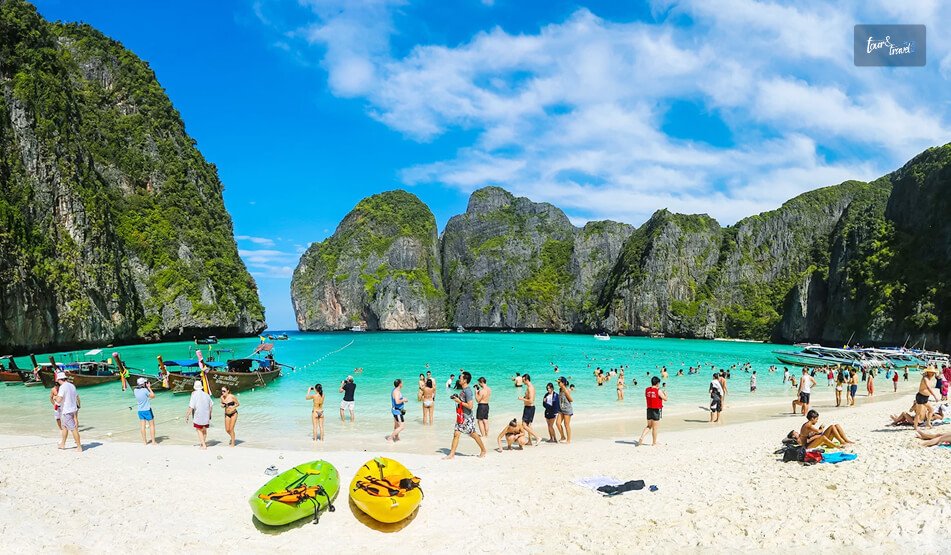
Furthermore, it was a welcome relief from the world-famous and overcrowded Railay Beach.
Also, as a mother, the best part was the texture of the beach. The sand was soft. So, I did not have to check frequently whether any of them had toppled over and gotten a cut or gotten hurt.
In addition, the water was crystal clear, and the sea floor was entirely free of painful sea urchins. So, the kids could splash around safely without heavy water footwear.
2. Phra Nang Cave Beach: A Crystal-Clear Paradise
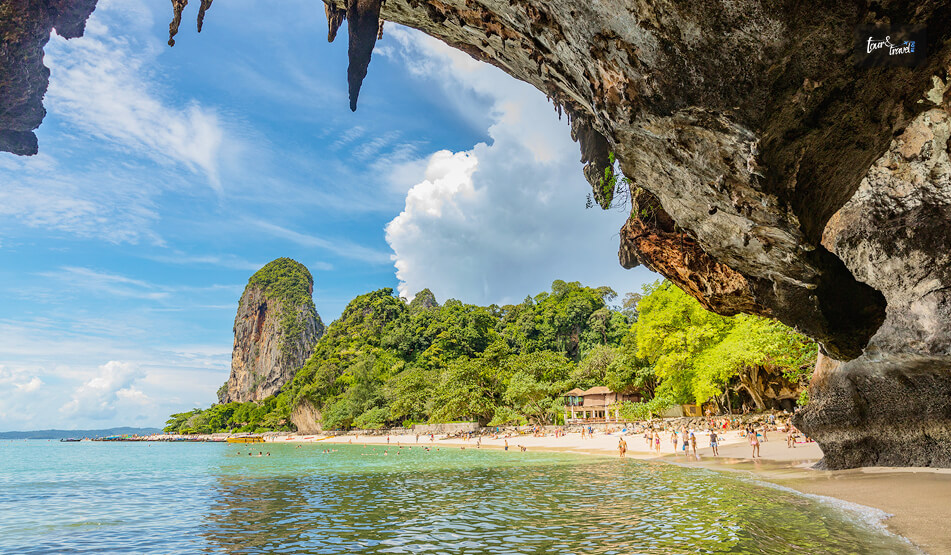
Phra Nang Cave is another world-class coastal destination when you are traveling through Krabi with your family.
Even if many people consider Railay Beach to be the ultimate spot in the area, Phra Nang is actually a clear winner by miles.
How To Reach The Phra Nang Cave Beach?
The journey to the Phra Nang Cave Beach is an exciting experience. We took a traditional Thai longtail boat from Ao Nang to the Railay peninsula.
As we stepped off the boat, we had to walk for around 20 minutes through a scenic route.
The path meandered through quiet and quaint villages, and the entire route runs alongside a vertical and majestic limestone mountain.
Moreover, the road is well-shaded, and it is full of biodiversity. We got to see playful monkeys on the route.
However, I got a little scared seeing the giant monitor lizards.
What Are The Best On-beach Activities For Children On The Phra Nang Cave Beach?
The ocean water is so clear that we could easily spot schools of tropical fish around our ankles. We did not even have to wear a snorkel mask.
Furthermore, kids love the rock climbing spectacles here as professional climbers scale the massive and overhanging limestone crags right on the edge of the sand.
Moreover, there is this secret sandbar walk.
During some tide windows, we could spot a pristine and shallow sandbar. We walked right across the ocean on the sandbar to explore a nearby rocky island.
3. Noppharat Thara Beach: The Golden Shell-Collecting Haven
Noppharat Thara Beach is an ideal place if your family prefers tranquility and wide-open spaces.
Away from crowds, this beach is more popular as the “Other Beach” in Ao Nang. It is also less commercialized.
We took a quick tuk-tuk ride to reach the beach from the town. You can even plan a walk for 20-30 minutes from the town.
Unending Golden Sand And Natural Cleanliness
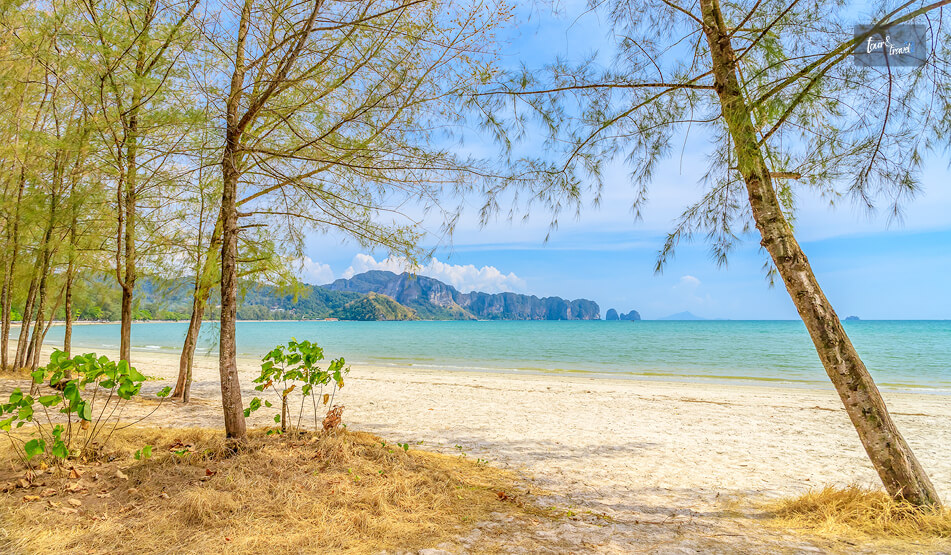
Guarded by giant karst limestones on both horizons, the Noppharat Thara Beach boasts a long stretch of golden-brown sand.
The beach was pristine in the truest sense, and it was a relief seeing no litter or discarded garbage on the shoreline.
This is so hard to find on the beaches of Southeast Asia.
Noppharat Thara Beach Has A Thriving Ecosystem For Little Explorers
Young kids and inquisitive toddlers will love the shoreline covered in thousands of intact, beautifully colored marine seashells.
Even I could spend hours collecting and sorting those seashells. Furthermore, as the ocean water stays calm and shallow at a distance from the shore, the beach is safe for toddlers and youngsters to swim.
In addition, you can spot thousands of miniature crabs and tiny sea snails in the damp sand here. So, overall, the beach offers an interactive learning session for the kids.
Planning A Day Trip To Hong Island (Ko Hong) From Ao Nang
After spending some time on the mainland, we decided to go for a day trip to Hong Island from the Ao Nang coast.
We chartered a private longtail boat from the boatman’s collective located at the northern edge of Ao Nang Beach.
Once the boat arrived at Hong Island, getting off it was a lot of fun. We had to disembark onto a floating pier and not directly on the sand.
It is a great move to protect the delicate shoreline. However, before you leave the dock, take a note of the specific boat number and ask the captain about the exact pick-up time in the afternoon.
We also went to the National Park. The entry fee for the national park was around 400 Thai Baht for adults, and for children, it was free admission.
Here are more attractions for travelers on Hong Island.
The Hidden Turquoise Lagoon
A key highlight of visiting Ko Hong is journeying into its hidden inner lagoon. Most organized day tours include this stop.
Your boat captain will slowly pilot the vessel through a breathtakingly narrow opening in the towering rock walls.
Once inside, the water becomes beautifully shallow and shifts into a brilliant, glowing shade of turquoise.
The lagoon is entirely encircled by vertical, jungle-covered cliffs, creating an enchanting environment for kids.
Powder-White Sand And Protected Swimming
Once you arrive on the main island, skip the exposed southern beach and head directly to the far northern tip.
Here, you will find a secondary lagoon that is completely shielded from the rough open ocean. This area offers perfectly calm, waveless water.
Hong Island easily rivals Railay Beach in raw beauty. While Railay features darker golden sand, Ko Hong boasts brilliant, blindingly white sand.
The sand texture is incredibly soft, feeling exactly like talcum powder underfoot. However, note that it sticks stubbornly to wet skin and clothes.
Park signs and automated loudspeakers frequently remind visitors to wear life jackets while wading.
Additionally, the shallows contain jagged chunks of bleached coral reef and sharp, broken shells.
It is highly recommended to pack durable water shoes for the family to avoid cuts.
The Educational Tsunami Nature Trail
As my kids were getting restless sitting on a beach towel, I took them on a 15-minute break to explore Hong Island’s interior nature trail.
The path features highly educational English interpretive signs.
These include profound historical accounts detailing exactly how the island was impacted by the devastating December 26, 2004, Indian Ocean tsunami.
While walking through the dense brush, keep a sharp eye out for the island’s native residents: massive water monitor lizards.
These docile reptiles grow so large that children frequently mistake them for real Komodo Dragons.
Overrated Icons: Why Railay And Ao Nang Main Beach Can Disappoint Families
Railay Beach and the primary Ao Nang town beach are the two suggestions you will usually get when you search for the best beaches in the Krabi region.
However, there are practical reasons why I have not included them in my list of the best beaches in Thailand.
Railay Beach: The Longtail Boat Traffic Jam
The Railay Beach is visually stunning, and it has dramatic limestone peaks that jut straight out of the clear ocean water.
Furthermore, the massive rock walls completely cut off the peninsula from the mainland. So, you can only reach it by boat.
This logistical setup creates the biggest problems for families.
Noise, Exhaust, And Crowds
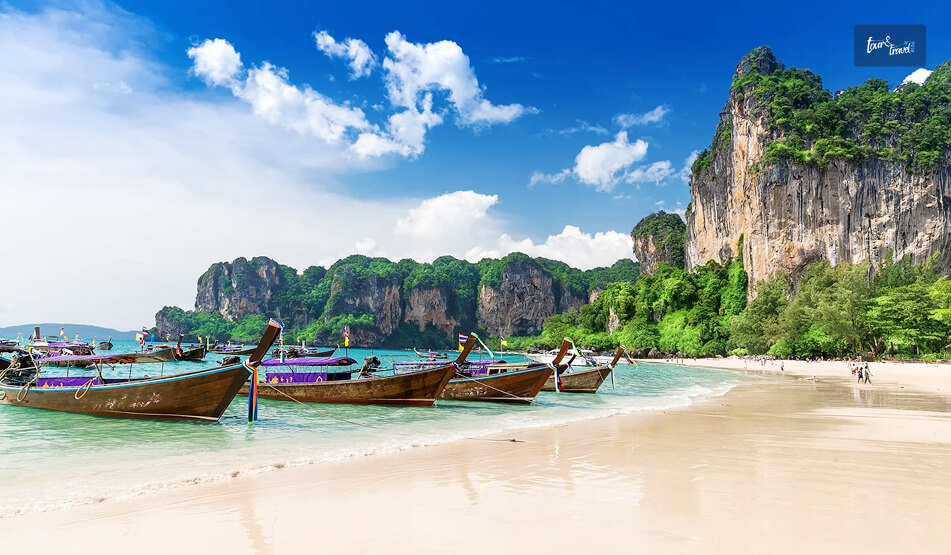
The constant presence of longtail boats is one of the major problems with Railay Beach.
Dozens of commercial transport boats gather right offshore and create a dense cluster in the center of the beach.
Furthermore, the boats have unmuffled and loud automotive engines. This process creates a near-constant roar, and it prompts strong fuel exhaust fumes across the sand.
This ruins the peaceful tropical ambiance.
Rocky Shallows And Missing Shells
Thousands of tourists walk these sands daily during the high season. As a result, you will hardly find interesting pieces of coral or seashells for kids to collect.
Furthermore, the ocean floor here stays shallow and clean for a long distance. However, there is the presence of jagged and hidden rocks.
Moreover, you have to wear sturdy water shoes if you want to visit the beach for snorkeling and kayaking.
Ao Nang Main Beach: A Busy Transit Hub
The main municipal beach running directly along the primary resort strip is noisy and has high traffic.
So, you can visit this as an important transportation hub, and it is not suitable for a swimming beach.
Furthermore, here are the following main problems with the Ao Nang Main Beach.
Endless Rows Of Water Taxis
The water of the Ao Nang Main Beach has a continuous line of a massive row of longtail boats.
These longboats wait to ferry tourists away to cleaner, offshore islands.
Pollution Concerns
Many sections of the beach have significant environmental issues.
One of the issues is the large municipal drainage pipes empty directly across the open sand into the surf line.
As a result, this can cause unpleasant odors near the runoff zones.
Litter In The Sand
There is constant foot traffic from the shops and bars nearby. Furthermore, you will find a noticeable amount of garbage embedded in the sand.
Furthermore, the garbage in the sand includes sharp metallic beer bottle caps. So, it is hazardous to walk barefoot in the sand here.
Comparing Alternatives: Phuket And Koh Lanta
If you want to go beyond Krabi and explore more beaches in Thailand, you can visit Phuket and Koh Lanta.
Both islands have many beaches for the kids. However, these beaches are vastly different in their environments.
Phuket Beaches For Families
The beaches in Phuket are charming despite the dense crowd. Also, my kids especially loved the Bang Tao Beach.
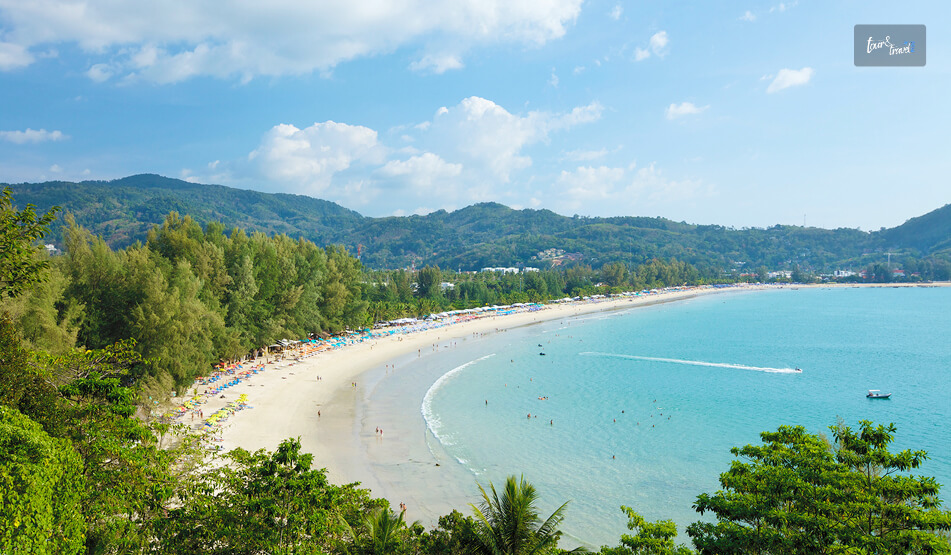
I also loved Kamala Beach because of its long stretch of sand without rocks and seashells.
Kamala Beach
Kamala Beach has soft golden sand, and it allows an obstruction-free movement with a clear ocean floor and very little presence of rocks and seashells.
However, it is also a popular hub for parasailing and jet skiing. So, the waves can be huge sometimes, and you need to be watchful.
Bang Tao Beach
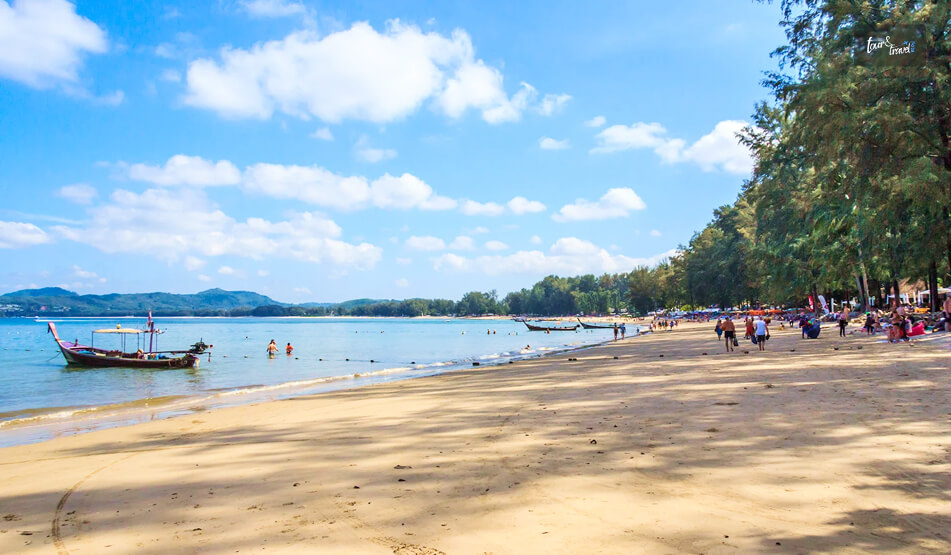
With its long stretch of 8 km and unbroken beach, Bang Tao Beach was a delightful place to visit.
The southern part of the beach was quite busy, and as we headed north, we found a manmade ditch.
My kids immediately slid down the ditch and played happily for quite a long time.
Furthermore, the beach had many cool Thai food stands. So, we had a fun snacking time.
Koh Lanta Beaches
Khlong Dao Beach in Koh Lanta has a diverse marine life, white sand and gentle waves.
Furthermore, it is ideal for kid-friendly body surfing, and the sunset here was magical.
Sibashree is a travel, culture, and leisure writer who has been writing since the age of 12 and professionally since 2014. With more than a decade of travel writing experience and journeys across India and several parts of the world, she brings a deeply personal and thoughtful perspective to her work. A student of English Literature and Mass Communication, Sibashree has always viewed travel as more than movement — for her, it has been a way of understanding people, cultures, and herself. Her passion for spiritual exploration has also led her to many unusual and meaningful destinations over the years. Outside of writing, Sibashree enjoys watching European cinema, reading about global politics, and reflecting on the stories hidden within everyday places.
By the time I heard Baker's Falls, my legs already knew we were on the return leg of the Horton Plains loop.
We had started before sunrise to beat the mist at World's End.
We also walked the open plateau in that strange, cold, grassland light, and then dropped back into cloud forest for the final stretch.
The falls announced themselves before they appeared as a low rush of water through the trees.
After the wide-open plains, that first glimpse of water tumbling over dark rock into the ferns felt almost intimate by comparison.
Baker’s Falls Quick Facts
DetailInformationHeightAround 20 MetersWidthAround 25 MetersRiverBelihul Oya, a Tributary of the Walawe RiverLocationHorton Plains National Park, Nuwara Eliya DistrictDistance from EntranceAround 3 Km from the Main Loop TrailFull Loop Distance9.5 Km Round Trip, including Bakers Falls and World’s EndPark ElevationAround 2100 to 2300 MetersEntry FeeEntry Fee to Horton Plains National Park, No Additional FeeNamed AfterSir Samuel Baker, a British explorer, who is said to have come upon it in 1845
Where Is Bakers Falls And How To Reach?
Baker's Falls is inside Horton Plains National Park in the Nuwara Eliya District.
You have to walk from the entrance along the main park trail to reach Baker's Falls.
Belihul Oya, a major tributary of the Walawe River, has formed this waterfall.
Reaching The Park Entrance
You can reach Horton Plains National Park from Nuwara Eliya, at a distance of around 32 km.
You can also travel from the towns of Pattipola and Ohiya, both of which sit on the upcountry railway line.
If you are traveling by train, you will have to hire a tuk-tuk or taxi for the final stretch to the gate.
The Hike To The Falls
You can reach Baker's Falls via the park's main loop trail.
The same trail also takes in Little World's End and the main World's End escarpment.
From the entrance, it is about 4 km to World's End, then roughly 2 km further around the loop to Baker's Falls, and another 3.5 km back to the entrance.
So, it is a 9.5 km round trip in total, usually taking about three hours at a comfortable pace.
To reach the water itself, you'll descend a set of steps from the main trail down to the viewing area.
World's End: The Rest Of The Loop
Almost nobody visits Baker's Falls on its own.
It is one stop on the wider Horton Plains circuit.
It is located alongside Little World's End (a roughly 300 m drop) and the main World's End escarpment.
In the World's End escarpment, the plateau falls away nearly 880 m
Horton Plains is unusual among Sri Lanka's national parks in that visitors can walk the main trail independently, without a mandatory guide.
However, hiring one at the entrance is a good way to learn more about the park's cloud-forest ecology and resident sambar deer.
What Makes Baker's Falls Worth The Walk
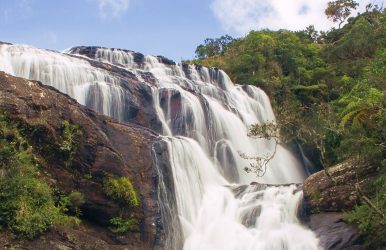
Baker's Falls is modest by Sri Lankan standards, with a height of around 20 meters.
It is dwarfed by giants like Bambarakanda further south.
But its setting is what makes it memorable.
The Belihul Oya spreads across a wide, dark rock face in two stages, hemmed in by rhododendron and tree-fern growth.
These trees feel completely different from the open grassland just a couple of kilometres back up the trail.
Originally known as Gonagala Ella, the falls were renamed after Baker.
Baker is credited with discovering them during his time exploring and hunting in the Nuwara Eliya highlands.
After the exposed walk to World's End, where wind and cold are the main things you are contending with.
The descent into the forest around Baker's Falls is a genuine change of pace. It is quieter, greener, and sheltered.
Most people treat it as the natural place to stop, catch your breath, and refill water before the final stretch back to the entrance.
What Is The Best Time To Visit Bakers Falls?
SeasonMonthsWhat to Expect Dry SeasonJanuary to AprilBest overall conditions.Clearer views at World's End and easier underfoot.Wet SeasonMay to SeptemberFrequent Mist, Especially After Mid-MorningSlippery Trail SectionsEarly MorningAny Season, Before 9-10 AMEssential for a Clear View at World's End Before the Cloud Rolls in.
A One-Day Itinerary: The Full Horton Plains Loop
TimeStopNotes5:30 AMDepart Nuwara EliyaStart Early to Beat the Mist at World’s End6:30 AMArrive at Park EntranceBuy Tickets and Start the Loop Trail. 7:15 AMLittle World's EndFirst Viewpoint, About 45 minutes in7:45 AMWorld's EndThe Main EscarpmentAim to Arrive Before 9 AM for Clear Views9 AMBaker's FallsRoughly 2 Km Further Along the Loop.Descend the Steps to the Base.10:30 AMReturn to EntranceFinal 3.5 Km Stretch Back Along the Trail.11:30 AMDepart for Nuwara EliyaYou Can Also Continue Toward Ella if Heading Further into the Hill Country.
Practical Tips To Keep In Mind For A Trip To Baker’s Falls
Start before sunrise because World's End is frequently shrouded in mist by mid-morning, especially from April to September.
Wear proper hiking shoes as parts of the trail are uneven. Also, the steps down to Baker's Falls can be slippery.
Pack warm layers. Horton Plains sits above 2,000 m and mornings are cold, even though the walk itself will warm you up.
There is no swimming at the pool below Baker's Falls. It is deeper than it looks and has a history of drownings.
We reached the park entrance again a little after ten, legs tired and jackets finally shed.
Of everything on the Horton Plains loop, World's End is the view people talk about.
However, Baker's Falls is the one I would send someone back for on its own.
Ancient Temples!
Colonial Architecture!
The Serene Kandy Lake!
Beautiful Gardens!
And, the Bustling Crowd!
All these and more things to do in Kandy make it the cultural and historical capital of Sri Lanka.
And this time, it’s about the Colombo to Kandy distance.
It is now more important to know about the modes of travel because Cyclone Ditwah has devastated the Sri Lankan railway infrastructure, including the Colombo to Kandy route.
So, explore the options.
What Is The Colombo To Kandy Distance?
The distance between Colombo and Kandy is around 121 km. The travel time by road through the Kandy Road is around 3 hours and 30 minutes.
However, the travel time will depend on the mode of transport you choose.
So, here is a quick summary.
Modes of Transfer from Colombo to KandyTravel Time By Car3 Hours and 30 MinutesBy Train2.5 to 3.5 HoursBy BusAbout 4 Hours
Furthermore, from Kandy, you can enjoy the most scenic train ride on the Colombo-Kandy-Ella-Badulla railway through the Nine-Arch Bridge.
Also, Kandy is well-connected to Habarana by train. And Habarana is the gateway to cultural attractions such as the Sigiriya Rock and Ritigala Forest Monastery.
You can even go on a wildlife safari from Kandy to the Kaudulla National Park.
How To Travel From Colombo To Kandy?
You can travel from Colombo to Kandy by bus, private transfer, or train. Here are the details.
1. How To Travel From Colombo To Candy By Train?
Unfortunately, the Colombo to Kandy train route is still under renovation. So, if you are traveling to Sri Lanka anytime soon, you will not be able to take the train service.
However, according to a report published on Adaderana.lk, a leading 24x7 news portal of Sri Lanka, the train service on this route will resume within 1 year.
In this report dated 11th January, 2026, Prasanna Gunasena, the Deputy Minister of Transport and Highways, has further confirmed that the authority is taking every possible measure to restore the services.
2. What Is The Colombo To Kandy Bus Service?
The Colombo to Kandy bus service operates from the Colombo Bastian Mawatha Bus Terminal to the Kandy Good Shed Bus Station.
Bus services are available every 30 minutes, and the travel time by these buses is around 4 hours.
Furthermore, the ticket for the public bus services from Colombo to Kandy costs about 157 LKR, and the tickets for the AC buses can cost close to 3000 LKR.
Also, the public bus service from Colombo to Kandy (Route No: 1) starts from 3:30 AM and the last bus departs at 11 PM.
3. Private Transfers From Colombo To Kandy
Starting from my days in Jaffna to now, this Colombo to Kandy journey, I have always opted for budget-friendly modes of transport in Sri Lanka.
However, if budget is not a constraint for you, you can choose a private transfer from the Sri Lankan capital to the cultural epicenter.
The private rental for this route will cost you around 9000-13000 LKR, and you will also find many online options.
Moreover, if you want the safest option to travel between Colombo and Kandy by road, you can opt for the Uber service.
Yes, it is expensive as the services start from around 48000 LKR, and it is the price for the Uber Go Intercity rentals.
The Uber Sedan Intercity and the UberXL Intercity services cost even more.
What Is The Best Time For A Colombo To Kandy Trip?
Kandy’s central location in Sri Lanka’s highlands gives it a cooler and wetter climate compared to the surrounding lowland coasts.
Plan your trip to Kandy during the right time of the year to get the most out of your visit.
The Best Time To Visit
The best time to visit Kandy is between the months of January and April due to the warm temperature and low humidity.
This time frame has the least amount of rain, which is essential for planning out sightseeing activities.
The Monsoons
The climate of this region is heavily influenced by the monsoon seasons.
The unpredictable weather can be a challenge during the months of May to July and October to December.
A visit in November has the advantage of having fewer tourists compared to other months; however, consistent rain can make visiting outdoor attractions difficult.
Important Travel Advice
Kandy is extremely busy during the Sinhalese New Year, which occurs twice a year in April.
Avoid traveling during this week as all public and road travel will be extremely congested due to the celebratory travel of the locals.
This will create a frustrating and overwhelming spike in logistical travel obstacles.
What Are The Places To Visit On The Route From Colombo To Kandy?
The drive from Colombo to Kandy takes you on an enjoyable journey through beautiful scenery as you travel uphill from a busy, urban environment to the lush tea plantations and mountain peaks shrouded with mist.
If you plan to take this trip, there are many places where you will want to stop so that you can appreciate what is known as the "Gateway to the Hill Country."
1. The Pinnawala Elephant Orphanage
The Pinnawala Elephant Orphanage is one of the best-known detention centers for orphaned elephants in the world and has been established for many years.
Now that you know the date, I recommend arriving at least 30 minutes before the start of your visit so that you can watch the elephants walk from the orphanage to the Maha Oya River to have their daily bath.
2. The Ambuluwawa Tower
The Ambuluwawa Tower is a great location for Wright Brothers-style views of the area.
It is located within a short distance of Gampola.
It is at a multi-religious complex, and this unique white spiral structure offers an exciting, narrow ascent with amazing 360-degree views of the entire central highlands.
3. The Kadugannawa Rock Tunnel
It is a tunnel chiseled from the rock on your way towards Kandy, and also has a legend that British soldiers cut this tunnel so that they could fulfill a prophecy.
The prophecy said that "Those who pierced the mountains will be the ones who take Kandy."
4. The Bible Rock
Bible Rock is a flat-topped mountain that is shaped like an open book.
You can spot it at the Kadugannewa Pass. Dawson Tower stands atop the pass; this is a white column built to commemorate the British Engineer who created the road.
Everyone knows that you cannot complete exploring Japan in a day. And I had no choice but to miss Oshino Hakkai on the first trip.
However, on the next trip, I made sure to plan a visit.
Of course, an image on Instagram was my major drive behind being so passionate about a trip to Oshino Hakkai.
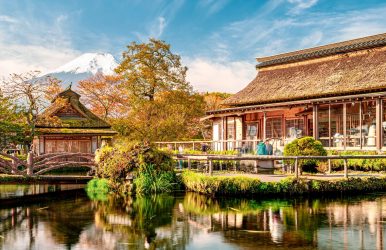
I saw a series of houses with thatched roofs along the shore of a pond. The magnificent and snow-covered Mount Fuji stood behind, strong and unshakable, as the eternal truth.
Born and raised in the land of spirituality and the Himalayas, I had to visit Oshino Hakkai.
However, as I have explained in my narrative from Tokyo to Mount Fuji day trip, you have to time your trip really well and have to be extremely lucky to see the snow-capped Mount Fuji.
Also, if you are planning a trip in summer, you will only get to see Mount Fuji partially or fully covered by clouds.
Nevertheless, as Mount Fuji continues to act elusive, here is why Oshino Hakkai will win your heart.
Oshino Hakkai: Why Is Visiting The Eight Springs Of Oshino So Special?
As I stood at the center of where both Lake Kawaguchiko and Lake Yamanakako meet in the small village of Oshino, I was able to look at the eight sacred ponds of Oshino Hakkai.
These sparkling, clear water springs are all that is left from a long-lost sixth lake that existed hundreds of years ago. It's as if time stood still when you visit these sacred areas.
When I looked into the water, I didn't see just water, and I saw history. The springs were used by pilgrims (Fuji-ko) during Japan's Edo period to cleanse their bodies and souls before climbing Mt. Fuji.
What a magical process the water goes through!
From snow accumulation on the summit of Mt. Rainier, through melting and filtration through approximately 80 years' worth of porous lava before it actually emerges at this location, its absolute perfection.
Moreover, it was crystal clear and pure.
Also, as I walked through the "Natural Monuments," I had an intense feeling of appreciation for the many years of waiting, so that each would have such serenity.
How To Reach Oshino Hakkai?
The journey to the stunning waters of Oshino Hakkai is as much a part of the experience as the location itself.
Here’s my recommendation for how to get to Oshino Hakkai, depending on whether you want a more convenient (train) or an adventurous (rental car) way of doing so.
1. Reaching Oshino Hakkai From Tokyo
When travelling from Tokyo, you have several options available.
Highway bus lines go to Oshino Hakkai directly.
If you plan to take the train, either Fujisan Station (the nearest station) or Kawaguchiko on the Fuji Kyuko Line is your best option.
Once at Fujisan or Kawaguchiko, catch a local bus to get to the village.
You may take the Fujikko-go (tourist buses), Mt. Fuji World Heritage Loop, or Uchino or Hirano routes via local bus from Fujisan Station.
Generally, there are 1-2 buses/hour on these routes.
At Kawaguchiko Station, there are 11 Fuji-Q buses each day that leave for Lake Yamanaka Oriental side, and the 11 Fuji-Q buses that leave for Gotemba and also the Oshino springs.
Just watch out for the Oshino Hakkai or Oshino Hakkai-Iriguchi as their stops.
2. Driving And Village Logistics
I rented a car, and it is the most convenient way to visit the nearby Five Lakes region.
Parking here is convenient, and there are many public and private parking spaces.
After parking the car, you can explore the nearby villages.
However, you will need 300 JPY to enter the Hannoki Bayashi Shiryokan Museum.
You can visit the museum from 9 AM to 5 PM every day for a deep understanding of the local history.
Moreover, you will find signage in Japanese and English for every pond.
My Trip To Oshino Hakkai
I felt a bit out of place when I got to Oshino Hakkai.
I thought it would be a nice, quiet area for reflection and meditation, free of other people.
However, I found a busy and fully built-out village of people, shops selling food, and many shoppers and visitors to the area, as well as people engaging with local merchants about the items that were being sold.
There were also a lot of people around Wakuike Pond, and they were excited to see how clear the water of the pond was and the fish that were swimming in the pond.
1. Finding Solitude And Peace Within The City
Although I typically search for the peace of solitude, I did not mind being in a populated environment.
I became curious after wandering among the crowds to find out where my curiosity would take me.
I found a quiet, undeveloped area just minutes from the main road, where I could hear the water from the pond, see ducks on the water, and watch an old man with two little boys quietly fishing right next to me.
2. Folklore And Galactic History
The folklore & Galactic history of the 8 springs were fascinating to explore.
Especially, that water from Wakuike Pond traveled on the Space Shuttle Challenger in 1983 for a snow-making experiment in space!
3. My Personal Highlight
The highlight for me was the open-air museum at the Hanoki Bayashi Shiryokan. It was a true escape from contemporary living, immersing yourself in the cultural heritage of the area.
4. Hannoki Bayashi Shiryokan: The Main Attraction Of The Trip
To tell the truth, I went to Oshino Hakkai because of Hannoki Bayashi Shiryokan.
One of the most amazing sights I've seen in the Five Lakes region was the thatched-roof farmhouses against a colorful garden and the imposing backdrop of Mount Fuji.
I became engrossed in the displays of antique household items and rustic farming implements inside the traditional farmhouse.
The tour was brief, but I stayed by the big pond long after I was done because of the subtle beauty of the architecture.
I couldn't resist making another lap because the landscaping was so welcoming.
Read Also:
What Are The Things To Do In Jimbocho Book Town? Visit The Best Book Stores And Cafes
Cherry Blossom Kyoto Japan: 2026 Season And The Top Viewing Spots
Osaka Food: Know What To Eat In The Streets Of Osaka





 Related