

What Are The Things To Do In Santorini? A Complete Guide For Travelers 

Santorini is a place that people from around the world dream of visiting. 

Irrespective of whether you are looking for a romantic holiday with your partner or a wholesome travel experience with your family, the Island has a lot to offer for your needs and requirements. 

To emphasize, the Greek Island sailing tour also provides you with the opportunity to connect with yourself. 

However, many remain completely confused about what to do when they visit the place.

Well, the Island is really small. Often, people think there isn’t much to do when they visit the Island.

Apart from visiting the beautiful villages of Fira and Oia, there are multiple things to do in Santorini. 

When I visited the place, I conducted very detailed research, which allowed me to experience and explore Santorini in the most optimal way.

Keeping this in mind, I have prepared a guide for you so that you can navigate around the beautiful Island and explore as much as possible. Well, here are the top things to do in Santorini. 

What Are The Major Things To Do In Oia, Santorini?

You can do several things at Oia Village in Santorini. Moreover, this includes taking photos of the famous blue domes, watching the sunset at the castle, and various other activities. 

Let’s learn in detail about the things to do in Santorini (Oia)

1. Watching Sunset From Castle

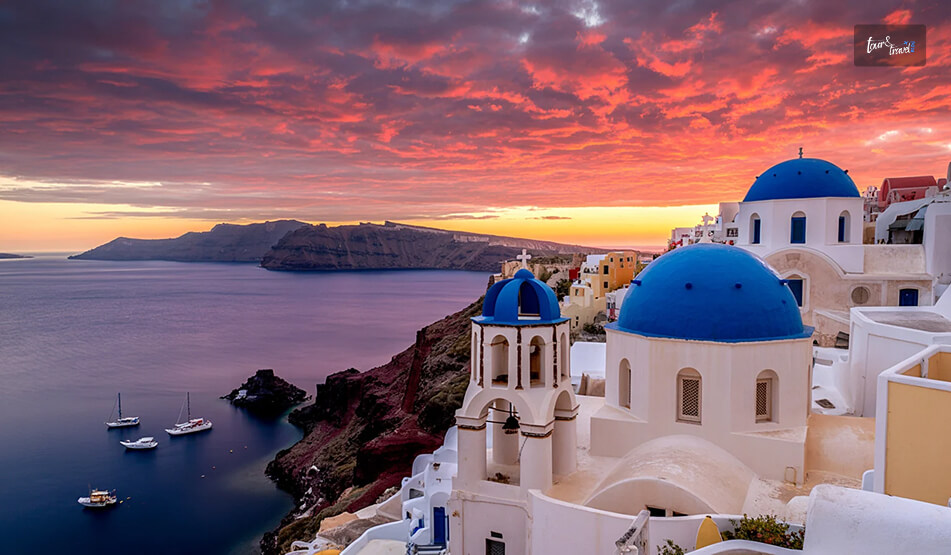
The Castle of Angio’s Nikolas offers the best spot for watching the sunset at Oia. The dilapidated castle rests on one of the highest points in the Islands.

The island offers the best location to watch the sun gradually set, sinking into the blue ocean, with a shimmering golden glow on the water’s surface. 

But the place gets very crowded fast. Speaking from personal experience, you should always arrive early to get the best spot for the best experience.

2. Clicking Photos Of The Blue Domes

Clicking Photos Of The Blue Domes

The blue-domed churches have given Santorini its identity. The moment you picture Santorini in your mind, you think of the blue-domed churches only. 

As a result, people often think that Santorini is full of blue domes. However, that is not really the case. On the contrary, I realized there are only a few blue domes.

But clicking pictures of the blue domes should definitely be at the top of your priority list. 

3. Why Are Luxury Stays So Special?

Santorini has become one of the most popular places in the world. As a result, tourists from all over the world come to the island. 

This often makes things a little crowded and suffocating for people. I generally choose to travel in a more cost-effective way. 

But lately, I have realized that you may have to pay a little extra to get a premium experience at any place. 

Hence, I decided to spend some quality time during my stay in a luxury cave hotel in Oia. Moreover, that felt like one of the best decisions that I had ever made.

The experience was really gorgeous and relaxing. Additionally, I got the opportunity to explore Oia early in the morning and later in the evening.

The crowd is generally not around early in the morning. As a result, you can explore the village in a whole new way.

4. Exploring Around The Streets Of Oia

Exploring Around The Streets Of Oia

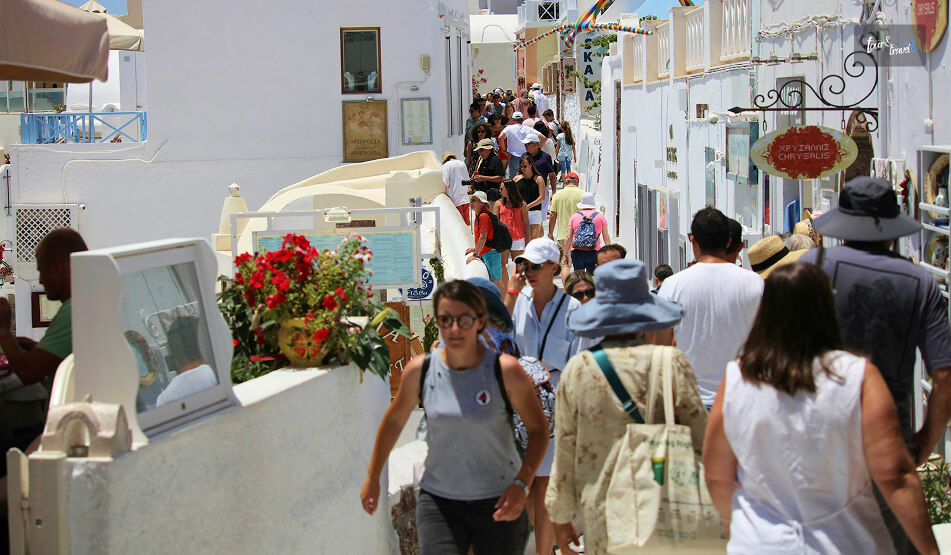
A simple walk through the streets of Oia can easily introduce you to a new world of magic. This will allow you to explore the best places for photos and panoramic shots. 

You should always try to explore the village during the evening. I personally found things getting really crowded once it was day.

Thus. I advise you to stay in the village for a night rather than just taking a day trip. Staying there at night should be convenient. It will allow you to explore things in your own way.

5. Visiting The Amoudi Bay

Visiting The Amoudi Bay

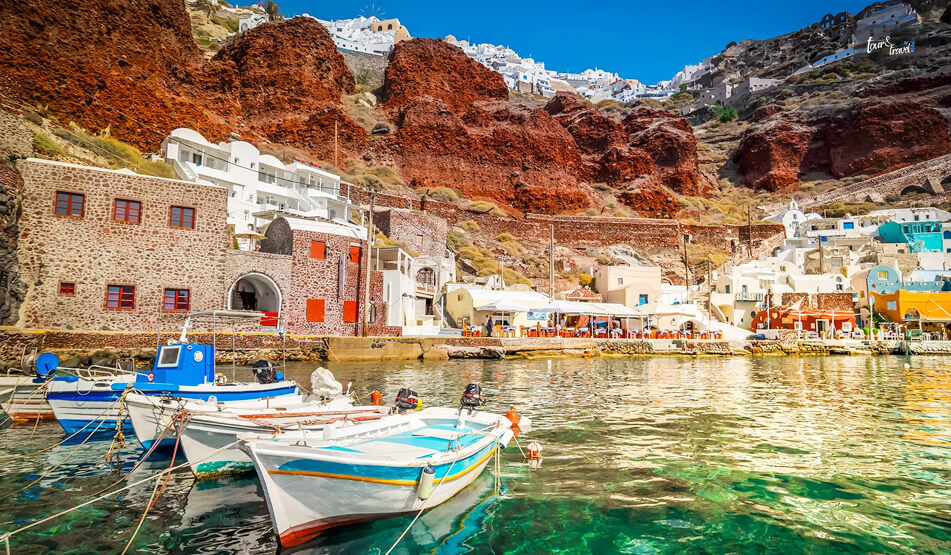
People who are afraid of stairs should not consider visiting Amoudi Bay. I am a traveller, and hence I try to keep myself fit. But even I had to put in some extra effort while climbing up. 

You will not really feel the pain while climbing down. But it is going to be a different story while climbing up and on the way back.

The place is worth exploring. There are multiple restaurants in the place that serve some of the best seafood. The spot remains the closest place for swimming in the ocean. 

6. Buying Some Local Souvenirs 

There are several shops in Oia. You should always explore the streets. Moreover, while exploring the streets, you will find some of the best local shops and artisans.

These artisans make the best merchandise to take home and gift to your friends and family.

These are the most important activities among all the things to do in Santorini, Oia. 

Things To Do In Santorini (Fira)

Things To Do In Santorini (Fira)

While you are done with exploring Oia, now you should consider the things to do in Santorini (Fira). Well, exploring the village should give you the perfect experience. 

Here are the things that you should explore.

1. Explore Around The Village

Fira, as a village, is absolutely different from Oia. Travellers can easily find American restaurant chains here.

You can easily find restaurants like McDonald’s. You will also find the local souvenir shop and Greek tavernas.

This place has its own beauty that is very different from what you get to see in Oia. However, the village is much larger than Oia.

You should always try to take early morning and evening walks. The early-morning and evening walks allow you to avoid the crowd.

2. Explore The Nightlife Of The Place

I have travelled to several coastal destinations around the globe with some of the most bustling nightlife, such as Pattaya and Goa.

In contrast, I have realized that Santorini is not really much of a party Island. Hence, there is not much of a bustling nightlife in Santorini. 

However, Fira has a couple of club-like spots as well. But, they are considerably small, and you do not really get to party here in the conventional way with loud music.

But these places are great for having fun with friends and family. You can have a couple of drinks while talking to your friends.

When I visited Santorini, I arrived with a group of friends. Thus, we had a lot of fun despite it not being a party city.

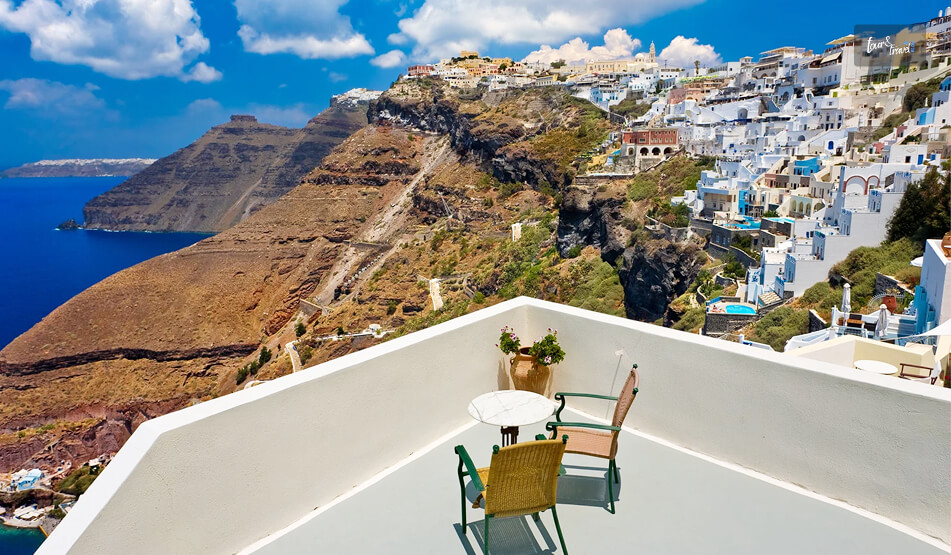
3. The Fun Of Staying In A Cliffside Hotel

Fira generally remains less crowded than Oia. But the affordable places can still be crowded. 

On the other hand, staying at a luxury hotel with facilities like a pool, a balcony, and a good view can help you avoid the crowd. 

4. Going To The Museums

Travelers with a keen interest in Greek History should definitely visit museums. Thira has multiple museums. 

I thoroughly enjoyed my visit to the Prehistoric Museum of Thira. Moreover, the place exhibits some of the most ancient jewelry and figures. 

Additionally, they also have a massive collection of fossils of various prehistoric creatures.

5. Going To The Old Port

You can go to the Old Port if you want to explore some adventure. But again, do not go there if you hate stare cases.

The path to the Old Port has almost 588 steps, which are very slippery. However, if you want, you can always hop on the back of a donkey.

A donkey is a very famous mode of transportation in Santorini. Thus, people who have problems climbing stairs should ride a donkey.

But it is very risky at the same time, as the road becomes very slippery with donkey excrement spilt all over.

As a result, you should always choose the cable car. You can even take the cable car on the way down. Thus, the cable car makes visiting the Old Port really convenient.

Visiting the old port is one of the most exciting and adventurous things to do in Santorini.

Which Are The Best Beaches To Visit In Santorini?

Santorini is all about the cliffs and the beaches. Hence, let’s have a look at the best beaches to visit in Santorini.

1. Kamari Beach

Kamari Beach

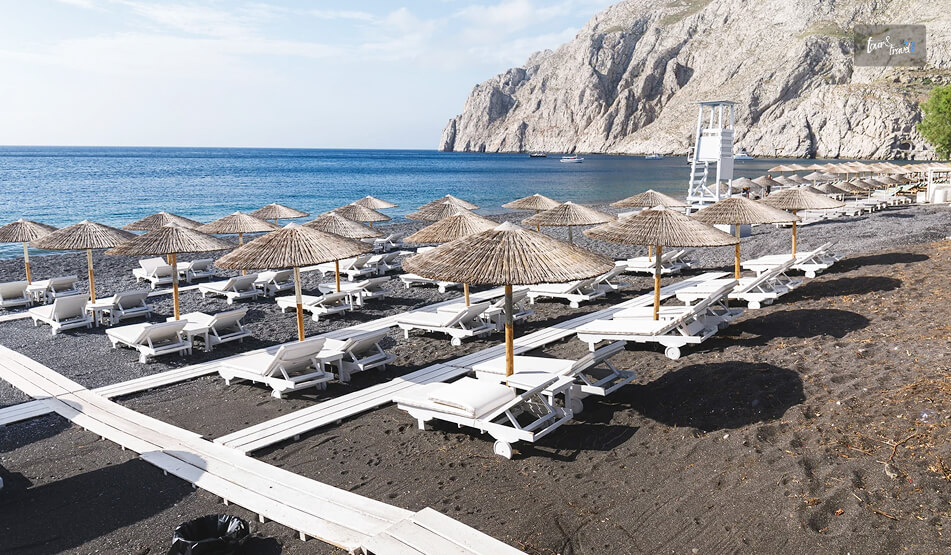
The Kamari beach is one of the black beaches in Santorini. It is one of the most mesmerizingly beautiful places to spend the day.

When we think of beaches, what comes to mind is silver sand. But that is not really the case over here.

In contrast, this beach is full of black rocks. The black rocks generally get really hot in the summer. 

You can also wear water shoes, which will protect your feet from the heat of the rock. The place has many shops and bars along the beach. 

2. Perissa Beach

Perissa Beach

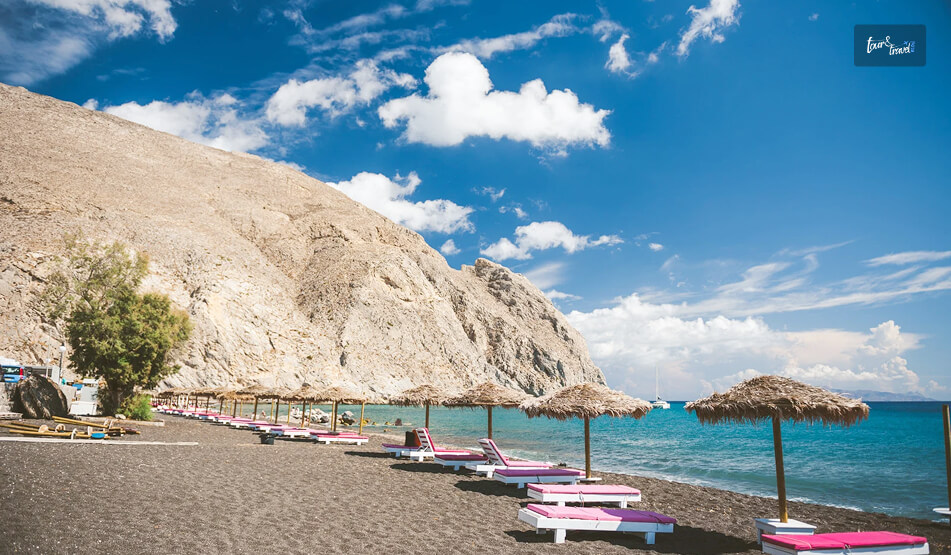
Perissa beach is another long beach in Santorini. This beach is great for those who want to spend some quality time with their friends and family in the water. 

The spots near the restaurants and the bars generally remain a little busier than the others. 

Thus, you can spend only the necessary time near the restaurants if you do not want to stay long in crowded areas. 

For the rest of the time, feel free to stay near the open, less crowded areas.

3. Red Beach

Red Beach

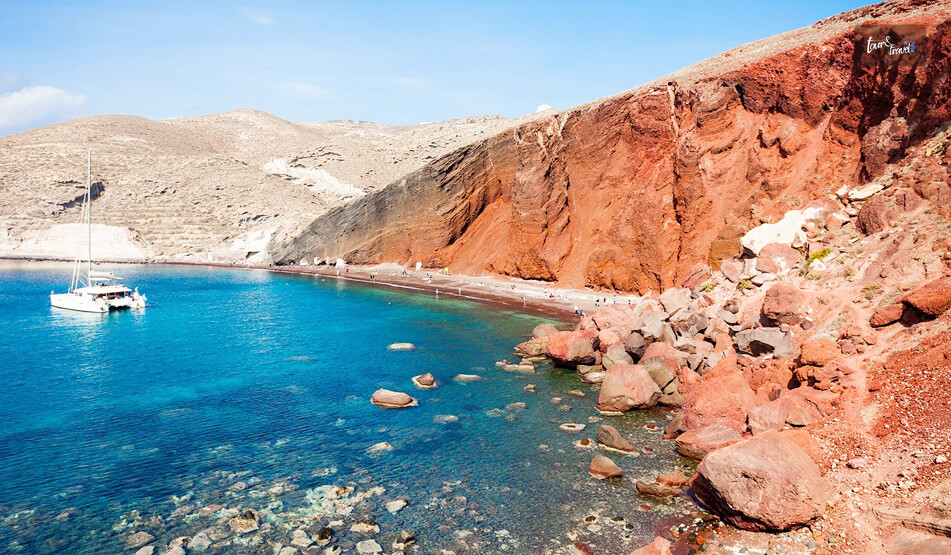
The red beach is also one of the most famous beaches in Santorini. As you can understand from the name itself, the sand on the beach is red.

The Red Beach is located near Akrotiri. The beach is a 15-minute walk from the bus stop. 

As a result, you may have to walk on some rocks. Keeping this in mind, you should wear decent shoes to protect your feet while walking.

The place is a little remote from the crowded suburbs, so you will not find any snacks or water if you want.

Keep These In Mind While Visiting Santorini

When I think about the things to do in Santorini, a plethora of them actually come to my mind. But, doing all the activities may not actually be possible during a short trip.

You can explore volcanoes, visit the ancient ruins of Akrotri, go kayaking, go scuba diving, and explore the marine life.

In addition to taking a wine tour, going for helicopter rides is also one of the most exciting things to do in Santorini.

But whatever you wish to do, you should always do proper budgeting before going on the trip. Moreover, this will make your trip more cost-effective and enjoyable.

Frequently Asked Questions 

Here are answers to some of the most commonly asked questions about things to do in Santorini.

1. What Should I Not Miss In Santorini?

A traveler can do several things when he or she visits Santurini. However, doing all of them cannot be possible.
You should not miss the iconic sunset from the Oia Castle. Apart from that, you should also not miss out on several other things, like a donkey ride to the New Port, exploring volcanoes.

2. Can I Flush My Toilet Paper In Santorini?

Flushing toilet paper down the toilet does not fall under the list of right things to do in Santorini. Hence, you can not flush it down.
You will have to dispose of used toilet paper in the special garbage disposal bin located near the toilet seat. This is a common practice in most places in Greece.

3. How Many Days In Santorini Is Enough?

A three- to five-day trip is great for visiting Santorini. Moreover, this will allow you to complete all the things to do in Santorini.

Read Also:

Share on Social Media

Barsha Bhattacharya builds stories for a living and seeks mountains for everything else. An English major and remote content strategist, she travels every month, structuring her life around movement rather than routine. Her journeys are rooted in mountaineering and rock climbing, with a deep preference for tents over hotels and cold mornings over comfort. Barsha believes the mountains demand clarity, patience, and presence - the same qualities that shape her work. For her, travel is not an escape but immersion: long routes, rough terrain, and nights under open skies where the line between work and wilderness disappears.

Leave a Reply

Your email address will not be published. Required fields are marked *

title-img Related

READ MORE is savannah georgia safe

Is Savannah Safe? What You Need to Know Before Visiting!

BY  Ankita Mar 12, 2024

Savannah, Georgia, is a beautiful and historic city that attracts millions of visitors every year. It is known for its charming architecture, culture, and cuisine. But is Savannah, Georgia, safe for tourists? How does it compare to other cities in terms of crime and violence? What are the best practices to stay safe and enjoy your trip to Savannah? In this article, I will answer these questions and more. I will show you the facts and figures about Savannah's crime rate, the safest and the most dangerous areas, the common scams and threats, and the tips and resources to protect yourself and your belongings. By the end of this article, you will better understand Savannah's safety situation and how to make the most of your visit. So, if you are interested in getting into this journey, keep reading this blog until the end… Is Savannah Georgia Safe? The first question that many travelers ask is: is Savannah Georgia safe? The answer is not so simple, as it depends on many factors, such as the location, the time, the activity, and the personal perception. Savannah is a large and diverse city, and like any other city, it has its share of crime and violence. However, it is not fair to label the whole city as unsafe or dangerous, as many areas are very safe and peaceful and many people are friendly and helpful. According to the latest data from the FBI, Savannah had a total of 3,559 violent crimes and 12,374 property crimes in 2019. Additionally, this means that the violent crime rate was 6.4 per 1,000 residents, and the property crime rate was 22.3 per 1,000 residents. These rates are higher than the national averages of 3.7 and 21.1, respectively. However, they are lower than some of the other major cities in Georgia, such as Atlanta, Augusta, and Columbus. The most common types of violent crimes in Savannah were aggravated assault, robbery, rape, and murder. Furthermore, the most common types of property crimes were larceny theft, burglary, and motor vehicle theft. Most of these crimes occurred in the downtown area, especially in the west and south parts, where there are more poverty, drugs, and gangs. The eastern and northern parts of the downtown area and the suburbs and islands are generally safer and quieter. How to Stay Safe in Savannah? Now that you have a general idea of the safety situation in Savannah, you might wonder: how can I stay safe in Savannah? What are the best practices to avoid trouble and enjoy my trip? Here are some tips and resources that can help you: Plan Your Trip in Advance Firstly, research the areas you want to visit, the activities, and places you want to stay. Check the reviews, ratings, and recommendations from other travelers and locals. Therefore, avoid the areas that are known to be unsafe, especially at night. Use a map or a GPS to navigate the city and avoid getting lost or wandering into unfamiliar places. Be Alert and Aware of Your Surroundings Pay attention to the people, the signs, and the situations around you. So, avoid distractions, such as your phone, your headphones, or your camera. If you see something suspicious, strange, or threatening, move away or report it to the authorities. Besides, trust your gut feelings, and do not ignore any red flags or warning signs. Protect Yourself and Your Belongings Do not carry or display any valuables, such as money, jewelry, passport, or electronics. Keep them in a safe place, such as a hotel safe, a locker, or a hidden pocket. Use a secure bag, such as a backpack, a crossbody, or a fanny pack, and keep it close to your body. Do not leave your belongings unattended, even for a moment. Lock your doors and windows, and do not open them to strangers. Furthermore, use a reliable transportation service, such as a taxi, a bus, or a ride-sharing app, and do not accept rides from strangers. Additionally, do not drink or use drugs, and do not accept any food or drinks from strangers. Do not get involved in any fights, arguments, or confrontations. And most importantly, do not break any laws, rules, or regulations. Seek Help and Support When Needed Lastly, if you are in trouble, need assistance, or have an emergency, do not hesitate to contact the authorities, such as the police, the fire department, or the ambulance. The emergency number in Savannah is 911. Additionally, you can also call the non-emergency number, which is 912-652-6500. You can also visit the nearest police station, hospital, or tourist information center. Moreover, you can also ask for help from the locals, such as the hotel staff, the shopkeepers, or the bystanders. Most of them are friendly and willing to help. Top 10 Safest Places to Visit in Savannah Savannah is a beautiful and historic city that has many attractions and experiences to offer. However, some travelers might be concerned about the safety situation in Savannah, as it has some areas that locals call unsafe or dangerous. Fortunately, there are also many places in Savannah that are very safe and peaceful, where you can enjoy your trip without any worries. I will show you the top 10 safest places to visit in Savannah. These are the places that have low crime rates, high security measures, and positive reviews from other travelers and locals. Let's get started! 1. Tybee Island Firstly, Tybee Island is a barrier island 18 miles east of Savannah. It is a popular destination for beach lovers, who can enjoy swimming, surfing, kayaking, fishing, and boating. The island also has a pier, a pavilion, a lighthouse, a museum, and a marine science center. Tybee Island is one of the safest places to visit in Savannah, as it has a low population density, a friendly community, and a dedicated police force. The island also has many hotels, restaurants, and shops that cater to visitors. 2. Forsyth Park Second, Forsyth Park is a 30-acre park in the heart of the historic district. It is famous for its iconic fountain, which was built in 1858 and resembles the one in Paris. The park also features a fragrant garden, a playground, a cafe, and a bandshell. Forsyth Park is one of the safest places to visit in Savannah, as it is well-maintained, well-lit, and well-patrolled. You can enjoy a picnic, a stroll, or a bike ride in the park, or catch a concert or a festival that takes place often. 3. Wormsloe Historic Site Wormsloe Historic Site is the former plantation of Noble Jones, one of the original settlers of Georgia. It features a majestic avenue of live oaks that leads to the ruins of the colonial estate. You can also see a museum, a theater, a nature trail, and a demonstration area that recreates the life of the 18th-century Georgia. Wormsloe Historic Site is one of the safest places to visit in Savannah, as it is in a secluded and scenic area, away from the city's hustle and bustle. You can appreciate Savannah's beauty and history in a serene and secure environment. 4. Telfair Museums Telfair Museums are the oldest public art museums in the South. They consist of three buildings: the Telfair Academy, the Jepson Center, and the Owens-Thomas House. The Telfair Academy houses a collection of 19th and 20th century American and European art, including works by Mary Cassatt, Childe Hassam, and Robert Henri. The Jepson Center showcases contemporary art and features a glass atrium, a sculpture terrace, and an interactive gallery for children. The Owens-Thomas House is a historic house museum that displays the lifestyle and furnishings of the early 19th century Savannah. Furthermore, Telfair Museums are one of the safest places to visit in Savannah, as they are in the east and north parts of downtown, which are generally safer and quieter. They also have high security standards and professional staff. 5. Savannah Botanical Gardens Savannah Botanical Gardens are a hidden gem that is located on the south side of the city. They are a 10-acre garden that features a variety of plants, flowers, trees, and ponds. You can also see a rose garden, a camellia garden, a fern garden, and a children's garden. Savannah Botanical Gardens are one of the safest places to visit in Savannah. This is because it is surrounded by a fence, a gate, and a security system. You can relax and enjoy the nature in a tranquil and protected setting. 6. Savannah College of Art and Design Savannah College of Art and Design (SCAD) is a private university that offers degrees in various fields of art and design. It has several campuses and buildings in Savannah, as well as in Atlanta, Hong Kong, and Lacoste. SCAD is one of the safest places to visit in Savannah, as it has a low crime rate, a strict code of conduct, and a comprehensive security program. You can visit some of the SCAD facilities, such as the SCAD Museum of Art, the SCAD FASH Museum of Fashion and Film, and the SCADshow Theater. You can also attend some of the SCAD events, such as the SCAD Savannah Film Festival, the SCAD Fashion Show, and the SCAD Sidewalk Arts Festival. 7. Skidaway Island State Park Skidaway Island State Park is a state park that is located on Skidaway Island, which is 15 miles southeast of Savannah. It is a 588-acre park that offers hiking, biking, camping, fishing, and birdwatching. You can also see a nature center, an observation tower, and a boardwalk. Skidaway Island State Park is one of the safest places to visit in Savannah, as it is managed by the Georgia Department of Natural Resources. This ensures the safety and the quality of the park. You can enjoy the outdoors in a clean and secure area. 8. Savannah Children's Museum Savannah Children's Museum is a museum that is designed for children and families. It is located in the historic Central of Georgia Railway Carpentry Shop building, which is part of the Georgia State Railroad Museum complex. It features over a dozen exhibits and activities that are interactive, educational, and fun. You can also see a maze, a slide, a sandbox, and a garden. Savannah Children's Museum is one of the safest places to visit in Savannah, as it is supervised by trained staff and volunteers, who ensure the safety and the enjoyment of the visitors. You can have a great time with your kids in a safe and stimulating environment. Read More: Is Cabo San Lucas Safe? – Let’s Find Out! 9. Cathedral of St. John The Baptist Cathedral of St. John the Baptist is a Roman Catholic cathedral that is located in the historic district. It is the oldest Roman Catholic church in Georgia, and the mother church of the Roman Catholic Diocese of Savannah. It is a stunning example of French Gothic architecture, with its twin spires, stained glass windows, and ornate interior. Cathedral of St. John the Baptist is one of the safest places to visit in Savannah, as it is a sacred and respected place, where people come to worship, pray, and admire. You can visit the cathedral during mass times or take a guided tour of the cathedral. 10. Savannah National Wildlife Refuge Last but not least, Savannah National Wildlife Refuge is a wildlife refuge located on the border of Georgia and South Carolina, along the Savannah River. It is a 31,551-acre refuge that protects and preserves various habitats and species, such as marshes, forests, wetlands, and islands. You can see animals such as alligators, deer, otters, bobcats, and over 300 species of birds. You can also enjoy hiking, biking, fishing, hunting, and photography. Savannah National Wildlife Refuge is one of the safest places to visit in Savannah, as it is regulated by the US Fish and Wildlife Service, which ensures the conservation and the security of the refuge. You can experience wildlife in a safe and responsible manner. Wrapping It Up! Therefore, the answer to the question of is Savannah Georgia safe is: it depends. Savannah is not a dangerous city, but it is not a crime-free city either. It has its safe and unsafe areas, its good and bad times, and its risks and rewards. The key is to be aware, informed, and prepared, and to use your common sense and intuition. Following the tips and resources I have provided in this article, you can stay safe and enjoy your trip to Savannah. Have a great time in Savannah! Read Also: Is San Francisco Safe? THIS Is What You Should Know! Is Barbados Safe? Why Do People Question The Safety In Barbados? Exploring Paraguay’s Culinary Delights With Travel Insurance In Mind

READ MORE Tucumán nature guide

Tucumán Nature Guide: Exploring The Yungas Rainforest And High Andes

BY  Sibashree Jan 14, 2026

You think of the nature resorts, the famous wine tours, hiking, and birdwatching when we talk about exploring Tucumán. However, Tucumán has recently also emerged as an astrotourism hotspot.  The Ampimpa Astronomical Observatory in the Calchaquí Valleys of Tucumán is at the epicenter of this happening astrotourism scenario.  Now, this is an added feather to the crown of Tucumán, the smallest province of Argentina. It offers a vertical journey from the jungle to the desert in 50 kms.  Also, the nickname of Tucumán is not just a fancy phrase. It means a biological reality and refers to the historical event of Argentina’s independence from Spain in 1816.  Furthermore, El Jardín de la República, or the Garden of the Republic moniker, goes well with its subtropical climate and the lush landscape.   You guessed it right, as today, this Tucumán nature guide will take you to the Yungas Rainforest and the highlands of the Andes. Also, if you are planning a road trip, you must go through our Tucuman Argentina, itinerary. The Yungas Rainforest (The Green Belt) The Yungas Rainforest is known as the Green Belt, as it is an ecodiverse region. Home to a diverse flora and fauna, the Yungas Rainforest hosts a variety of bromeliads, orchids, and ferns.  Furthermore, among the animals here, you will find tapirs, wild cats, and panthers. You will even spot species such as Yungas Guan while birdwatching in Yungas, Argentina.  Also, it is home to the Campo Los Alisos in Tucumán, which helps to preserve the threatened ecosystem of the Yungas Rainforest region.  Moreover, containing around 50% of the biodiversity of Argentina, parts of the Yungas Rainforest are also marked as UNESCO Biosphere Reserves.  1. Parque Sierra De San Javier View this post on Instagram A post shared by Parque Sierra de San Javier (@parquesierradesanjavierunt) Parque Sierra de San Javier, or the San Javier Mountain Range Park, was established in 1974, and now the National University of Tucumán (UNT) maintains it.  It is one of the top nature reserves in Tucumán, Argentina.  The home to various flora and fauna of Argentina, this park also functions as the green lung by cleaning the air, protecting the watersheds for the city, and regulating the climate.  This park, furthermore, has many beautiful trails. You can enjoy an easy 30-minute jungle walk through the Cascada del Río Noque trail. If you are seeking silence while hiking in San Javier, Tucumán, you can opt for the Sendero Anta Yacu trek.  It is around 25 km west of Tucumán. If you are a budget traveler like me, you can take the Bus No 340 to reach the park.  2. Reserva Experimental Horco Molle View this post on Instagram A post shared by Asociación de Prestadores de Turismo Activo de Tucumán (@aptattucuman) This small but compact nature park is ideal for families. It is home to the tapir and condor rescue projects. It covers 600 acres and is just 15 km from the capital.  Also, it has picnic areas, barbecue areas, and play areas for children.  3. Aconquija National Park: The Untouched Wilderness View this post on Instagram A post shared by Parque Nacional Aconquija (@parquenacionalaconquija) Aconquija National Park, with over 600 species of endemic animals and birds, is the jewel of North America.  Taruca deer, puma, and ocelot are some of the endemic animals living here. In addition, you will find several Incan ruins scattered through the park. The Incan Highway remains, and the “Ciudacita” ruins are part of the UNESCO World Sites.  The Campo de los Aliso near Alpachiri is the main Aconquija National Park entrance. Furthermore, Cochuna is the wilder southern entrance of the Aconquija National Park.  Furthermore, the Mythical Trek of La Ciudacita, the Inca Ruins at 4400 meters, is the main highlight of this national park.   The High Andes & Puna (Tafí del Valle & Beyond) The harsh, cold conditions and a rich wildlife with the presence of vicuñas, flamingos are the highlighting features of the High Andes and Puna, at an altitude of 3000 meters.  This region has critical water resources that support livelihoods such as alpaca and llama. Let’s find out about the major nature reserves of this region.  1. Quebrada De Los Sosa Nature Reserve Take a drive up through Route 307 to find the Quebrada De Los Sosa Nature Reserve, where the jungle meets the clouds.  It is a 30 km-long gorge carved by the Los Sosa River, and it is home to more than 100 bird species.  With a winding pathway, it is also home to the Tafí del Valle. 2. Los Núñorcos & Reserva La Angostura Los Núñorcos, or the Cerro Núñorco mountain and Parque provincial Los Ñuñorcos are the prominent locations for hiking in Tucuman, Argentina.  As you explore the challenging trails here, you will enjoy a beautiful view of the Dique la Angostura lake and the Tafí del Valle. Tafí del Valle also has the Bald Mountain, or the Cerro El Pelao. You can start the trek near the Tafí del Valle center. It is a 1.5-hour-long trek.    Wildlife Watching Calendar In Tucuman, Argentina  Tucuman in Argentina is ideal for wildlife sightings throughout the year. Tafí del Valle and areas around Route 307, especially the best areas for wildlife spotting in Tucumán.  Check out the wildlife watching calendar in Tucuman below. Year-Round Sightings• Mammals: Capybaras, Some Foxes, and South American Sea Lions• Birds: Doves, Hummingbirds, and Toucans Spring (September to November) • Birds: Doves and Hummingbirds • Flowers: Pink Trumpets and Jacaranda treesSummer (December to February) • Mammals: Elephant Seals and Sea Lions• Birds: Penguins in Patagonia and Burrowing ParrotsAutumn (March to May)• Mammals: The Red Deer Rut• Birds: PigeonsWinter (June to August) • Reptiles: Yellow Anacondas• Birds: Waterfowl  What Are The Expert Tips For Hiking In Tucumán?  An entry to the Aconquija National Park is free. However, do you know that you have to register at the ranger station at least 48 hours in advance? It is crucial for the safety of the hikers. For more such insider knowledge, these expert tips will be very handy. 1. Bus #118 Is Your Friend  You don’t have to hire a car to see the jungle and the nature reserves. You can take the 118 bus from San Miguel de Tucumán directly to the foot of the San Javier trails.  The ticket price is even less than $1.  2. Watch The Fog (Neblina) The Fin del Mundo" statue area on route 307 is often the zero-visibility zone. There is dense fog in this area even at around 4 PM. You have to drive the car carefully, and there must be low beams to defeat the fog.  3. Ticks Exist In The Yungas  The lush greenery of the Yungas is ideal for picnics and nature exploration. However, there are ticks. So, you must check your ankles after a hike or use a blanket.  4. Hire A Guide For "La Ciudadacita" Are you planning a 4-day trek to La Ciudacita or the Inca Ruins? You must have a guide because the high altitude path, at an elevation of over 4000 meters, is unmarked. You need technical assistance for the navigation. Moreover, you must contact the Asociación Argentina de Guías de Montaña to hire a guide.  5. The "El Indio" Stop You will find the best dried meat or Charqui at the vendor stalls at the El Indio monument on Route 307. These stalls also have the best local honey.  Stop by these stalls and have the dried meat and honey for a great start to your hike.  6. The Waterfalls In Tucuman Are Seasonal  No Instagram reel will tell you that the waterfalls in Tucuman are seasonal. March to May, or the end of the rainy season, is ideal for visiting these waterfalls.  7. Beware Of The "Mala Mala" Local folklore speaks of the "Mala Mala" spirit in the mountains. Whether you believe it or not, respecting silence in nature is a huge part of the local culture. 8. No Cell Signal Once you pass the "El Indio" monument or enter Aconquija Park, your cell signal dies. Download offline maps (Maps.me or Google Maps) before leaving the city. 9. Condors Fly At Noon If you want to spot Andean Condors, look up between 11 AM and 1 PM when the thermal currents are strongest. They rarely fly early in the morning. Tucumán Nature Guide: Listen To The Authority Voices  Asociación Argentina de Guías de Montaña (AAGM): The Aconquija range is "one of the most undervalued trekking destinations in Argentina," offering Himalayas-like isolation without the crowds. Birding Ecotours (Global Operator) Rio Los Sosa is a prime spot for seeing the "Torrent Duck" (Pato de Torrente), a bird that can swim upstream in raging rapids. La Ruta Natural (Argentine Tourism Ministry) "Ruta de las Yungas" is a key scenic drive, highlighting the importance of driving slowly to spot the crossing fauna like the Corzuela (small deer). Tucumán Nature Guide: Frequently Asked Questions (FAQs) Here are the frequently asked questions and answers about the Tucumán Nature Guide.  1. What Is The Best Time Of Year For Hiking In Tucumán? April to September, or the dry season, is ideal for hiking in Tucuman. The cool temperature is ideal for outdoor exploration. On the other hand, heavy summer rains make the trekking trails here dangerous and muddy.  2. Do I Need To Pay To Enter The Nature Reserves? The entry fee to the national parks depends on the specific administrative and management authority. For example, you don’t need to pay any entry fee for the Aconquija National Park. However, prior registration is crucial. Further, for Reserva Horco Molle, you will have to pay an entry fee of $2.  3. Is It Safe To Hike Alone? Yes, it is safe to hike alone on the well-marked trails of Tucuman, such as the Rio Noque or Funicular. However, if you are going to high-altitude summits or jungle treks, you will need a guide. It is more crucial because of the presence of the fog and the absence of signage.  4. Are There Snakes In The Yungas? Yes, the Yungas have pit vipers or Yarará. So, you wear long trousers and watch your steps. Furthermore, you must follow the trail marks properly to not disturb the habitats of the snakes or other wildlife.  5. How Do I Get To Aconquija National Park Without A car? It is difficult to reach the Aconquija National Park without a car. You have to first take a bus to Concepción and then a local bus to Alpachiri. From Alpachiri, it is another 10 km taxi ride to the park entrance.  6. Can I Camp In The Reserves Of Tucuman? Yes, Aconquija National Park has designated wild camping zones (like Puesto La Mesada). However, Sierra de San Javier does not allow camping. So, it is for day use only. 7. What Is The "Yungas"? The Yungas, or a cloud forest in Tucuman, Argentina, is a mountain rainforest. It functions as a connector between the Andes and the Amazon.It has ferns, moss, and high humidity.  8. Can I See Toucans In Tucuman? Yes, you can see toucans in Tucumán. In recent years, toucans have made a comeback in this region.You can spot them in the trees around San Javier and Horco Molle. 9. What Is Hiking Altitude In Tucuman?  Hiking in Tucumán covers a wide altitude range, from the lows of San Javier (around 600 to 1200 meters) to the moderate Tafí del Valle (2000m). Furthermore, the Aconquija high summits reach more than 5000 meters. 10. Is The Water In The Streams Safe To Drink In Tucuman? No, the water in the Tucuman streams is not drinkable even with a clear view. Cattle graze in the higher areas and thus make the water unsuitable for drinking. So, you have to use purification tablets or a filter for purified drinking water. 

READ MORE Luxury Travel In New Zealand

Luxuriate In Paradise: Unveiling The Pinnacle Of Luxury Travel In New Zealand

BY  Sibashree Dec 28, 2023

New Zealand, an enchanting realm of natural wonders and cultural richness, beckons discerning travelers to experience luxury like never before. For those seeking a truly personalized journey, Custom Luxury Travel of New Zealand by Into the Vineyard offers the opportunity to tailor every aspect of your experience to match your unique preferences. Nestled in the southwestern Pacific Ocean, New Zealand is renowned for its breathtaking landscapes, from snow-capped mountains to pristine beaches.  In this article, we embark on a journey through the epitome of opulence in New Zealand, exploring exclusive resorts, fine dining experiences, and bespoke adventures that elevate luxury travel to new heights. 1. Exquisite Accommodations and Resorts: 1.1 Huka Lodge – Taupo's Riverside Retreat Located along the banks of the Waikato River, Huka Lodge offers a retreat into nature, where the soothing sounds of the river complement the tranquility of the surroundings. Private cottages, each a haven of elegance, provide a seamless blend of comfort and luxury. With spacious interiors, outdoor hot tubs, and bespoke furnishings, guests find solace in opulent seclusion. The culinary experience at Huka Lodge is a testament to New Zealand's gastronomic prowess. Locally sourced ingredients take center stage, paired with an extensive selection of fine wines, creating an unforgettable dining journey. Duration: Flexible depending on stay Price Range: $1,500 — $3,000 per night 1.2 Eichardt's Private Hotel – Queenstown's Lakeside Gem Eichardt's Private Hotel, an embodiment of Queenstown's charm, seamlessly blends historic charm with contemporary luxury. Situated on the shores of Lake Wakatipu, it offers unparalleled views of the lake and surrounding mountains. Exclusive suites, meticulously designed for comfort and sophistication, feature lakefront balconies, plush furnishings, and personalized concierge services, ensuring a stay tailored to the individual needs of each guest. Indulge in a private chef's table experience at Eichardt's, where culinary artistry meets the freshest local produce. The menu is a celebration of New Zealand's diverse flavors, complemented by a curated selection of wines. Duration: Flexible depending on stay Price Range: $1,800 — $4,000 per night 1.3 The Lodge at Kauri Cliffs – A Golf Retreat in Northland Set amidst 6,000 acres of pristine landscapes, The Lodge at Kauri Cliffs is a sanctuary for those seeking both golfing excellence and luxurious accommodations. Moreover, lavish suites, each offering panoramic views of the Pacific Ocean and the Cavalli Islands, provide an idyllic setting for relaxation. While the interiors exude sophistication, with attention to detail in every element.  Therefore, helicopter excursions from the lodge allow guests to explore the nearby Bay of Islands and visit renowned wineries. However, creating bespoke adventures that complement the exclusive offerings of The Lodge at Kauri Cliffs.  Duration: Flexible depending on activities Price Range: $2,000 — $5,000 per night 2. Gastronomic Delights: 2.1 Amisfield Winery – Queenstown's Culinary Haven Amisfield Winery, perched on the shores of Lake Hayes with the Remarkables as a backdrop, consequently, offers an immersive culinary experience amidst breathtaking scenery.  While exclusive wine and dining experiences include private tastings guided by knowledgeable sommeliers. Moreover, the degustation menus showcase the best of New Zealand’s seasonal produce, ensuring a sensory journey through the region’s flavors.  However, the emphasis on farm-to-table dining at Amisfield underscores the commitment to sustainability. Therefore, providing guests with not only a luxurious experience but also a connection to the region’s culinary heritage.  Duration: 2–3 hours for a dining experience Price Range: $200 — $500 per person 2.2 The French Café – Auckland's Michelin-Worthy Cuisine The French Café in The French Café in Auckland stands as a culinary beacon. By offering an intimate and sophisticated atmosphere for those seeking exquisite French-inspired cuisine.  Moreover, the curated menu is a testament to the chef’s artistry, featuring locally sourced ingredients transformed into culinary masterpieces. While the extensive wine list complements the flavors, with a focus on New Zealand’s finest vintages.  Therefore, with impeccable service and an ambiance of understated elegance make The French Café a destination for discerning gourmands, where each dish is a symphony of taste and presentation.  Duration: 2–3 hours for a dining experience Price Range: $250 — $600 per person 2.3 Hippopotamus – Wellington's Fusion of Art and Cuisine Nestled within the Museum Art Hotel, Hippopotamus in Wellington is a culinary gem that seamlessly blends artistry with gastronomy. Moreover, the French-inspired cuisine at Hippopotamus takes on a Kiwi twist, featuring locally sourced ingredients. However, the result is a menu that reflects the diversity and richness of New Zealand’s culinary landscape.  Therefore, the panoramic views of Wellington’s harbor and city skyline provide a picturesque backdrop to the dining experience, while making Hippopotamus a unique destination where art, ambiance, and cuisine converge.  Duration: 2–3 hours for a dining experience Price Range: $220 — $550 per person 3. Bespoke Adventures: 3.1 Fiordland Helicopters – Milford Sound Aerial Escapade Fiordland Helicopters offers an unparalleled aerial escapade over the majestic landscapes of Fiordland National Park, a UNESCO World Heritage Site. However, soar over cascading waterfalls, rugged cliffs, and the iconic Milford Sound, immersing yourself in the grandeur of nature. Meanwhile, personalized itineraries include alpine landings and gourmet picnics in remote, picturesque locations.  Therefore, the helicopter experience transforms a journey into an adventure, providing an exclusive perspective of New Zealand’s natural wonders that few have the privilege to witness.  Duration: 2–3 hours for the helicopter tour Price Range: $1,200 — $2,500 per person 3.2 Wharekauhau Country Estate – Wairarapa's Countryside Retreat Wharekauhau Country Estate, set against the backdrop of the Wairarapa region They invite guests to immerse themselves in a luxurious countryside retreat.  However, the estate offers bespoke experiences, from horseback riding through the expansive grounds to private farm tours. Meanwhile, helicopter excursions unveil the rugged Wairarapa coastline and provide access to nearby wineries.  Therefore, activities such as fishing, archery, and bird watching are tailored to individual preferences. While ensuring that each guest can curate their own adventure in the picturesque landscapes surrounding Wharekauhau.  Duration: Flexible depending on activities Price Range: $1,500 — $4,000 per night 3.3 White Island Volcano Adventure – Rotorua's Geological Marvel Embark on a private helicopter journey to White Island, an active marine volcano off the coast of Rotorua. Moreover, a guided tours on the island explore the otherworldly landscapes of sulfur vents and volcanic craters, providing a unique blend of geological marvels and luxury travel.  Therefore, a gourmet picnic on the island’s shores adds an element of indulgence to this adventurous experience. Meanwhile, making the White Island Volcano Adventure a harmonious fusion of luxury and the raw beauty of nature.  Duration: 4–6 hours for the helicopter tour and island exploration Price Range: $1,800 — $3,500 per person FAQs  Here are a few questions and queries on the topic of luxury travel in New Zealand that others find help and so would you as well. 1. What makes New Zealand a top destination for luxury travel?  New Zealand offers a rare blend of untouched natural beauty, exclusivity, and world-class hospitality.However, from private island retreats and alpine lodges to helicopter-accessed vineyards and bespoke adventure tours, luxury travelers can enjoy privacy, personalization, and breathtaking landscapes all in one destination.  2. Which regions in New Zealand are best for luxury experiences?  Some of the most sought-after luxury destinations include: • Queenstown – Known for luxury lodges, lakefront villas, and adventure experiences with premium services. • Auckland – Offers upscale waterfront hotels, fine dining, and yacht charters. • Rotorua – Famous for geothermal spa resorts and cultural immersion experiences. • Marlborough – Ideal for luxury wine tours and private vineyard stays. Each region offers distinct landscapes and premium travel experiences.  3. What types of luxury accommodations are available in New Zealand?  Luxury accommodation options range from: • Firstly, private luxury lodges with panoramic mountain views • Secondly, boutique waterfront villas • Thirdly, five-star urban hotels • Finally, exclusive-use estates and private island retreats Meanwhile, many properties offer personalized butler services, private chefs, and curated local experiences.  4. How can travelers ensure a truly personalized luxury experience?  To maximize luxury travel in New Zealand: • Firstly, work with a high-end travel concierge or bespoke tour operator • Secondly, opt for private transfers and charter flights • Thirdly, choose exclusive-use accommodations • Finally, plan custom itineraries tailored to personal interests Therefore, advance booking is recommended, especially during peak seasons.  4. What exclusive experiences can luxury travelers enjoy in New Zealand?  Luxury travelers can indulge in: • Private helicopter tours over Milford Sound • Glacier landings near Franz Josef Glacier • Yacht charters around the Bay of Islands • Private wine tastings in premium vineyards • Custom Māori cultural experiences These curated experiences combine adventure with exclusivity. 5. Is luxury travel in New Zealand family-friendly?  Yes. Many luxury lodges and resorts offer tailored family experiences. It includes private guides, adventure activities, and educational nature tours designed for children.  6. How accessible are remote luxury destinations in New Zealand?  Many high-end properties are accessible via scenic helicopter transfers, private jets, or chauffeur-driven vehicles. Therefore, the journey itself often becomes part of the luxury experience.  Conclusion In conclusion, New Zealand, with its diverse landscapes and rich cultural heritage, has firmly established itself as a haven for luxury travelers seeking unparalleled experiences.   Meanwhile, from secluded riverside lodges to culinary masterpieces and bespoke adventures, the country provides a tapestry of opulence that harmonizes with its natural beauty.   Whether soaring over majestic fiords or indulging in fine dining overlooking pristine lakes, luxury in New Zealand transcends expectations. However, inviting travelers to immerse themselves in a world where every moment is a masterpiece of refinement and beauty.