
Puttalam grabbed everyone’s attention with the sudden visibility of a mysterious object with a length of several feet in the sky.
There were speculations about the object being a missile, rocket, or meteor shower.
A few months ago, on 15th December, 2025, the Geminid meteor shower was clearly visible in the sky.
However, these are not one-off instances. I could clearly see the Milky Way in Puttalam Sri Lanka, in the month of April.
Furthermore, the wilderness surroundings, remote areas such as Eluwankulama, and a relatively flat topography on the southwestern coast, make Puttalam one of the chosen places of stargazing in Sri Lanka.
But beyond the stargazing excitements, Puttalam, Sri Lanka, bears a rich history, exudes serene coastal beauty, and has a colonial heritage.
In this article, I will talk about my days in Puttalam so that you know that coastal beauty better.
Where Is Puttalam?
Known for massive coconut production, prawn farming, and salt production, Puttalam town is the capital of the Puttalam district.
It is on the shore of the Puttalam lagoon, the second largest lagoon in the country.
The International Union for Conservation of Nature (IUCN) is now encouraging the most sustainable use of the lagoon resources.
“With 88 fishing villages and approximately 165,000 people dependent on it, fisheries in Puttalam have been identified by its residents as their most important ecosystem service, particularly for women, who participate in bivalve gleaning and other post-harvest livelihoods.
The lagoon is an important area for endangered species, such as green sea turtles and dolphins, and contains ecosystems vital for its health, such as seagrass and mangroves.
Tourism is also important in the Lagoon, which hosts seasonal aquatic sports and has year-round visitors to its islands.
The islands additionally have cultural importance as they are connected to local religious values.”
Moreover, Puttalam has the Indian Ocean on the west, and it is the gateway to the Kalpitiya peninsula and Wilpattu National Park.
How To Reach Puttalam Sri Lanka?
Puttam is located around 130 km north of Colombo. It is also located at a distance of close to 95 km from Nogombo.
Furthermore, it is well-connected to Colombo and other major cities/hubs of the country through the Puttalam Railway Line and A3, A10, and A12 highways.
By Train
The train travel from Colombo Fort to Puttalam takes between 3 hours and 45 minutes and 5 hours.
Moreover, the ticket price will be between LKR 250 and LKR 1550 (Source: the Department of Railways. Sri Lanka.
By Bus
Also, you can take a bus from the Bastian Mawatha Bus Terminal in Colombo and travel to Puttalam with a stopover in Anuradhapura.
You can even take the direct 87/816 buses. They cover the distance within around 4 to 4.5 hours, and the regular, non-AC bus tickets cost between LKR 500 and LKR 800.
What Is The History Of Puttalam Sri Lanka?
Puttalam in Sri Lanka today stands out with its multicultural identity. Here, you will find a fusion of Sinhalese, Sri Lankan Moors, and Tamil cultures, which have lived for generations.
Furthermore, as a commercial and administrative center, it supports diverse activities such as prawn farming, shallow sea fishing, and salt production.
However, this town on the northwestern coast of Sri Lanka has a history spanning 10000 years.
Located on the large Puttalam Lagoon, it has been a maritime trade hub, a center for the colonial spice and coconut industries, and has an enduring and culturally diverse population.
Here, I have broken the history of this coastal town into three sections.
Ancient Roots And Indigenous Beginnings
The archaeological evidence of the locality shows that human settlements started here 75000-125000 years ago.
Prince Vijaya, 6th century B.C., chose it as the landing site, and thus the Sinhalese lineage started here.
Medieval Trade And Arab Influence
During the medieval period, Puttalam became a major location for maritime trade.
Arab merchants, who established deep roots in the region, laid the foundation for the prominent Moorish population in the area.
Furthermore, the name Puttalam comes from the Tamil word Puthu-kulam. Puthu-kulam means “new tank” or “new pond.”
Thus, it indicated the vital irrigation tanks that sustained early agricultural settlements.
The Colonial Era
Many European powers wanted to control the lucrative trade routes of Puttalam because of its natural resources and coastal position.
The Potuguese was the forest to build a built a strategic fort in Puttalam to secure the region and monitor trade in the 16th century.
Then, in the 17th and 18th centuries, the Dutch came. They captured and significantly expanded the Portuguese fortress.
Furthermore, during these times, Puttalam became a central transit point for the highly profitable cinnamon trade and salt production within the lagoon.
In addition, in the 19th and 20th centuries, the British came to power.
They used the fertile soil of the region for the expansion of the coconut industry. Thus, Puttalam became one of the most critical sources of copra and coconut products in the island.
A Quick Summary Of The History Of Puttalam
Era/Period
Key Historical Developments and Milestones
Over 10,000 years ago
Early human settlements established, supported by archaeological evidence.
Medieval Period
– Puttalam became a pivotal west-coast maritime trade hub. – Arab merchants settled, forming the roots of the Sri Lankan Moor community. – Named Puthu-kulam (“new tank/pond”) after vital local irrigation tanks.
Portuguese Rule(16th Century)
A strategic coastal fort was constructed to monitor trade and secure the region.
Dutch Rule (17th and 18th Centuries)
– Captured and expanded the Portuguese fortress. – Transformed the town into a transit hub for cinnamon and lagoon salt production.
British Rule (19th and 20th Centuries)
– Developed agricultural infrastructure. – Oversaw rapid expansion of the coconut industry, making it a top source for copra.
Why Is Puttalam Famous?
Puttalam is famous for its historical ruins, religious centers, and natural attractions. You cannot miss the following attractions.
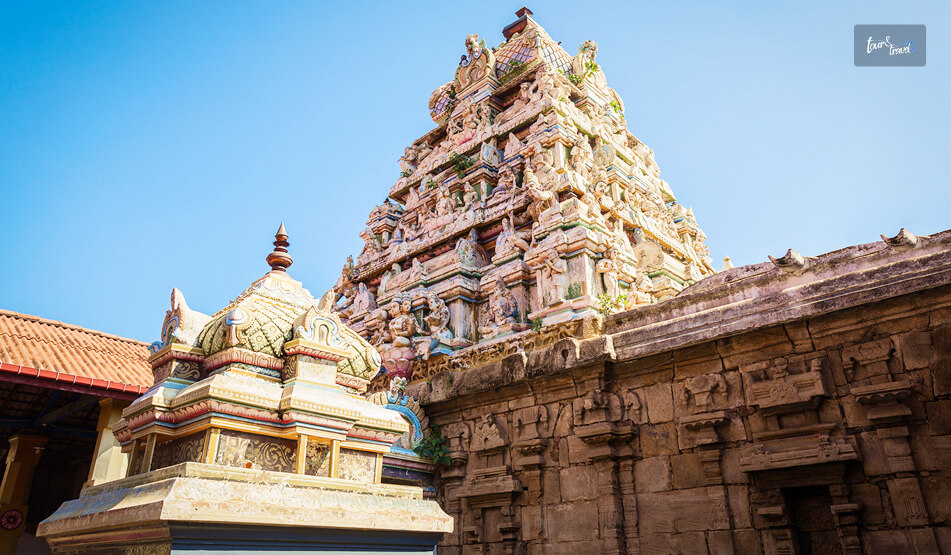
1. Munneswaram Hindu Temple
The Munneswaram Hindu Temple is one of the five historic coastal temples of Lord Shiva in Sri Lanka.
The history of the temple goes back to at least 1000 CE.
Moreover, it is associated with the stories of the Ramayana.
Also, it is a unique spiritual hub where Buddhists and Hindus unite.
2. St Anne’s Church
St. Anne’s Church is along the coastline of Thalawila. It has a peaceful ambiance.
Also, it dates back to the Portuguese era.
It serves as a monumental pilgrimage site. Furthermore, it draws hundreds of thousands of believers from across the island for its grand annual feast in July.
3. Alankuda Beach
The Alankuda Beach has a tranquil stretch of golden sand, and it is known for dolphin and whale watching excursions.
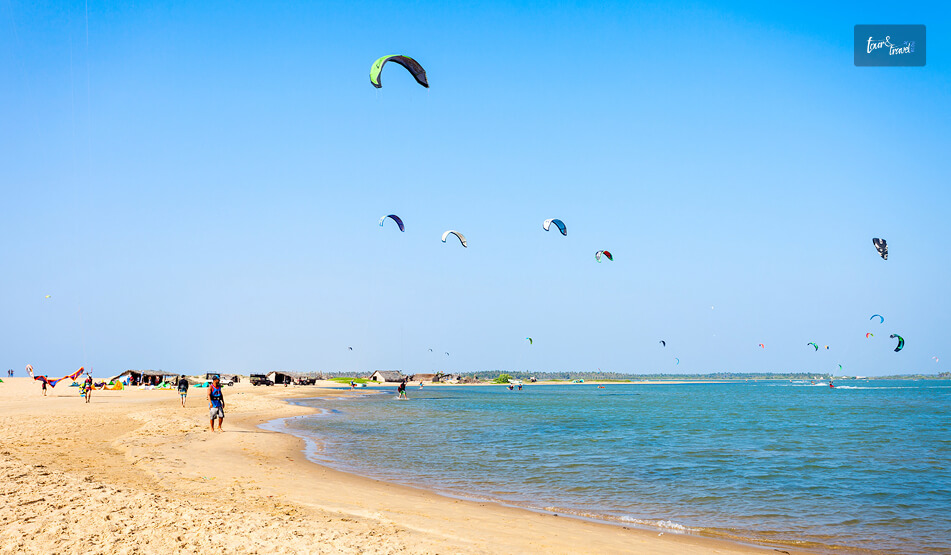
Located in Kalpitiya, it is a premier eco-tourism destination, highly favored by adventure travelers for thrilling water sports like kitesurfing and windsurfing.
4. Hatthikuchchi Viharaya
Tucked away in a peaceful forest landscape, this 3rd-century BCE Buddhist monastic complex is famous for a massive rock formation that resembles an elephant’s stomach.
It is highly revered as the legendary sanctuary where the pious, exiled King Sirisangabo self-sacrificially gave up his own head to assist a poor peasant.
5. Anawilundawa Wetland Sanctuary
This Ramsar-designated site is an important landmark for ecotourism in Sri Lanka.
It has a historic human-made system of interconnected freshwater tanks crashing right against a coastal lagoon.
Furthermore, it is an irreplaceable, thriving sanctuary for thousands of native and migratory birds.
6. Puttalam Lagoon
The Puttalam Lagoon, spanning an area of 32,700 hectares, is the second-largest backwater body in the country.
It has calm waters, and it is an ideal hub for small-scale prawn harvesting, wildlife viewing, and kite surfing.
7. Puttalam Station
The colonial rulers of Puttalam opened the railway station officially on 12th May 1926.
Today, it is a state-run railway station and attracts many visitors due to its colonial charm and surrounding scenic beauty.
8. Yapahuwa
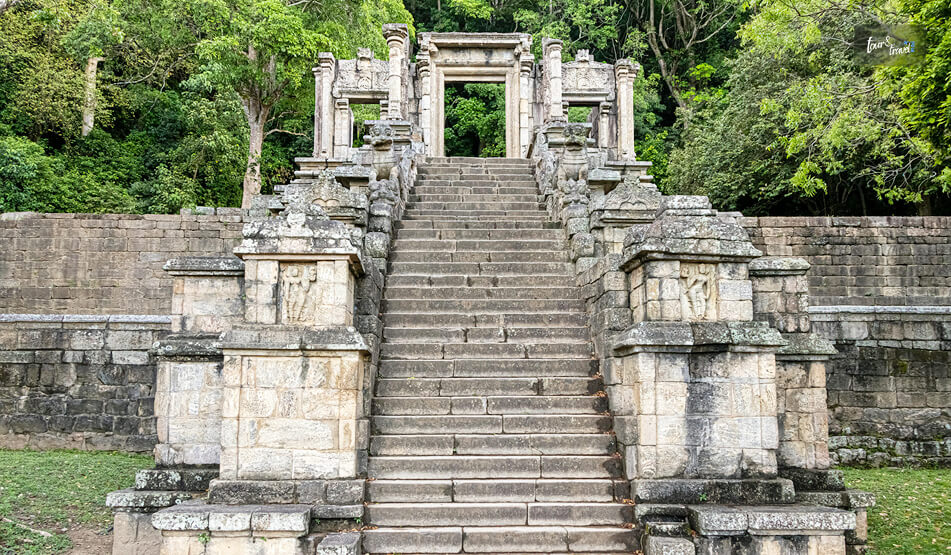
Built by King Buwanekabahu, Yapahuwa was the royal residence in the 13th century.
Today, you will get to see the remains of this royal palace. I was especially mesmerized to see the ornate staircase.
9. Chilaw
Chilaw, located a few kilometers south of Puttalam, is a small town that stands out because of its religious harmony.
People from various traditions, backgrounds, and religions live here.
Furthermore, the beach here offers a calm and relaxing ambiance and the fishing villages here give you insights into the local way of living life.
What Are The Things To Do In Puttalam?
While Puttalam has the most tranquil vibe, it is also the hub of most adventurous activities, such as kite surfing, bar reef snorkeling, and wildlife safaris.
1. Kite Surfing In Kalpitiya
Kalpitiya is a global kite surfing hub. It has consistent wind conditions for over nine months of the year.
Furthermore, the flat-water lagoons here offer a safe space for learning. On the other hand, the ocean waves here challenge the advanced riders.
Also, the Margarita Kite School is the best name in kite surfing training in Kalpitiya today. It trains tourists and locals with the latest equipment.
Moreover, the downwind trips here are epic. You can glide across pristine, uninhabited islands and sandbars dotting the massive lagoon.
2. Dolphin Watching
I could spot hundreds of playful dolphins gathering in spectacular groups just off the Kalpitiya coast.
November to April is the best season to spot these adorable animals as the water remains calm.
Also, local guides follow strict conservation guidelines to protect the natural habitat of mammals. So, you have to follow responsible tourism practices.
3. Diving
Puttalam has a diverse marine life. So, you can explore vibrant ecosystems teeming with sea turtles, reef sharks, and manta rays.
It also has historic shipwreck sites where fascinating sunken vessels are wrapped in colorful soft coral colonies.
Furthermore, warm waters offer crystal-clear viewing conditions during the calm winter diving months.
In addition, when you descend along deep underwater cliffs that host a spectacular variety of macro life.
4. Wildlife Safari At Wilpattu National Park
The Wilpattu National Park has villus or natural rainwater lakes. It is famous for its high density of leopard population.
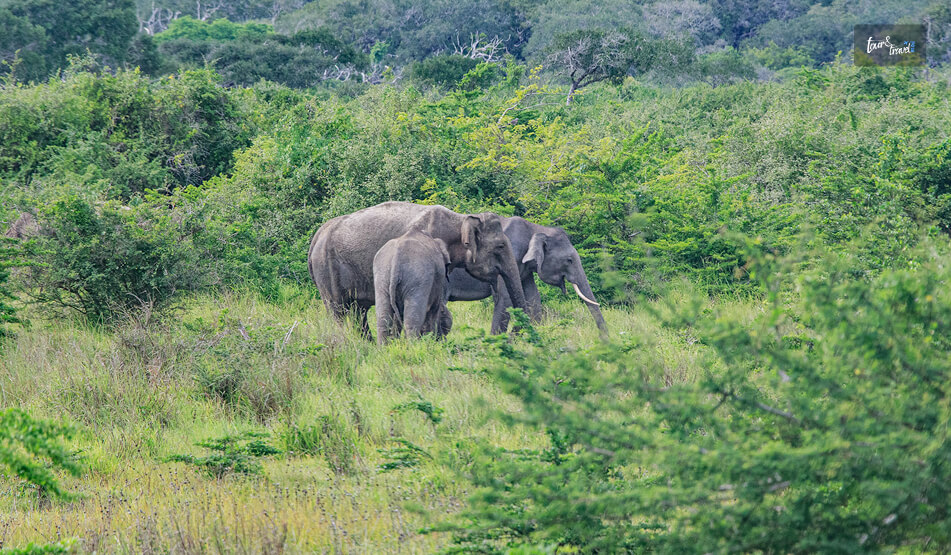
Furthermore, here, you can spot elusive sloth bears, wild elephants, crocodiles, and colorful endemic jungle birds.
So, the jeep tour on the rugged off-road tracks was immersive. It cost me around LKR 16000.
5. Bar Reef Snorkeling
Here, you will find the most beautiful coral sanctuary of Sri Lanka.
Also, here, you can swim alongside brightly colored butterflyfish, giant parrotfish, and harmless blacktip reef sharks.
Furthermore, you will marvel at delicate, healthy formations of brain and staghorn corals just below the surface.
In addition, you can take short boat rides from the mainland to reach these shallow swimming areas.
What Is The Best Time To Visit Puttalam Sri Lanka?
January to March and May to September are the best times to visit Puttalam.
The dry and sunny weather conditions in the month are ideal for coastal kitesurfing in Kalpitiya, whale watching, and leopard safaris in the nearby Wilpattu National Park.
Sibashree is a travel, culture, and leisure writer who has been writing since the age of 12 and professionally since 2014. With more than a decade of travel writing experience and journeys across India and several parts of the world, she brings a deeply personal and thoughtful perspective to her work. A student of English Literature and Mass Communication, Sibashree has always viewed travel as more than movement — for her, it has been a way of understanding people, cultures, and herself. Her passion for spiritual exploration has also led her to many unusual and meaningful destinations over the years. Outside of writing, Sibashree enjoys watching European cinema, reading about global politics, and reflecting on the stories hidden within everyday places.
Very close to the Hiriketiya Beach, Kudawella Beach is a pristine, small, and beginner-friendly beach for surfers.
However, even if you are not a surfer, you can visit this hidden gem to find the turtle nests and the surrounding mangroves.
Also, at Kudawella Beach, you can enjoy the beauty of the Indian Ocean or just laze around on the sand.
Here is more about this beautiful, sickle-shaped beach on the southern coast of Sri Lanka.
Where Is Kudawella Beach? How To Reach Kudawella Beach
As I have mentioned, Kudawella Beach is on the southern coast of Sri Lanka, and it stretches from west to east.
Furthermore, the beach is around 10 km away from Dickwella, the closest major town to the beach.
Moreover, if you are already visiting the Hiriketiya Beach, you can just take a 10-minute tuk-tuk ride to reach the Kudawella Beach.
The most popular way to reach the Kudawella Beach is to take a direct car or taxi from Colombo, which is at a distance of around 160 km.
The journey by road will take close to 5 hours, and the taxi fare will be over 30000 LKR.
However, I was already in Ella and had a day after visiting the iconic Nine Arch Bridge and exploring all the other top attractions in Ella.
So, I took a bus from Ella to Galle. The bus #31 was moderately crowded, and I was enjoying the local experience.
That bus from Ella to Kudawella Beach took around 6 hours, and the ticket price was LKR 350.
What Are The Things To Do In Kudawella Beach?
Kudawella Beach is a place that offers you the ultimate flexibility.
Yes, there are a few hotspots when you are on the beach. However, you can spend your entire day without doing anything.
Moreover, it is a delightful place for amateur surfers.
Still, here are a few things to do in Kudawella Beach, along with surfing and chilling.
1. A Walk To The Hummanaya Blow Hole
I loved walking to the Hummanaya Blow Hole on the eastern side of the Kudawella Beach. However, to see the water shooting up, you have to reach the viewing point at the top of a cliff.
The cliff also has a safety barrier.
It is the only blowhole in Sri Lanka and the second-largest in the world, shooting the water at a height of 25-30 meters when the water forcibly enters a narrow cavern.
I saw the blowing taking place at least 5-6 times during the short moment I halted there. The water shoots up as the sea movement builds pressure in the tunnels in the rock.
2. A Walk To The Nilwella Beach
If you want even a more idyllic retreat, you can visit the Nilwella Beach from the Kudawella Beach.
This beach has blonde sand, and the waves here are gentle.
Moreover, I loved walking across the beach to reach a rocky island. The rocky island had many palm trees and pandanus trees.
There was also a hiking trail, and as I advanced, I found many little coves and unique geographical shapes.
3. Kayaking Around Mawella Lagoon
Mawella Lagoon was pretty, and the water was covered by beautiful lily flowers.
Furthermore, there are many hotel rooms and massage rooms near the lake where you can chill or enjoy a relaxing massage session.
However, just behind the Kudawella Beach, this lagoon is also ideal for kayaking around.
It cost me around 8000 LKR, and I spotted many birds such as storks, beeaters, and kingfishers there.
I heard that sometimes you can also spot crocodiles here.
Kudawella Beach: The Best Spot For Surfing For Beginners
As I have mentioned, Kudawella Beach is a beginner-friendly surfing spot.
Unlike Hiriketiya, you will not find outer waves here. You can only surf here at the beach break, which is further on the inside of the bay.
So, it is safer than Hiriketiya Beach.
In fact, even in the dry season from November to March, the waves seldom reach a height of more than 4 feet.
However, you have to be watchful of the few rocks in the water. Having said that, during the dry season or the peak surfing season, the water of the Indian Ocean is crystal clear.
So, you will be able to see the rocks clearly.
Moreover, on the Kudawella Beach, there are two surf rentals. However, when I visited, there was a longer queue in front of the Saranga at Kudawella Surf School, and its surfboard-shaped signboard also looked pretty cool.
What Is The Best Time To Visit Kudawella Beach?
November to March, or the dry season, is the best time to visit the Kudawella Beach.
Long hours of sunshine make these months ideal for beach activities. However, there can be sudden rainfalls. So, you have to carry your rain gear.
However, the wet season from March to August, despite having fewer crowds, is not ideal as there can be harsh storms and heavy rainfall.
Where To Stay Near The Kudawella Beach?
When I visited Kudawella Beach, it was still very pristine, and thus it is a quintessential beach on the southwestern coast of Sri Lanka.
You will find only a few hotels here.
Also, if you want to find an accommodation here, you can stay on the beachfront or in hotels near the lagoon.
Here are some of the places where you can stay.
Sisi Place
The Sisi Place is on the hilltop at the west end of the beach. It is the most budget-friendly option here with clean and comfy rooms.
Simply Peace
Choose Simply Peace if you are looking for a luxury accommodation near the lagoon.
It is a beautiful pool where you can relax. Furthermore, it has a garden where you can enjoy birdwatching.
Calma
I loved the pastries and coffee at the on-site cafe of Calma. With a sand front, it exudes a quintessential Balinese bungalow aesthetic.
Moreover, you can take a short tuk-tuk ride from Kudawella Beach to Hiriketiya Beach. There, you will find more diverse accommodation options, including Airbnbs.
Ancient Temples!
Colonial Architecture!
The Serene Kandy Lake!
Beautiful Gardens!
And, the Bustling Crowd!
All these and more things to do in Kandy make it the cultural and historical capital of Sri Lanka.
And this time, it’s about the Colombo to Kandy distance.
It is now more important to know about the modes of travel because Cyclone Ditwah has devastated the Sri Lankan railway infrastructure, including the Colombo to Kandy route.
So, explore the options.
What Is The Colombo To Kandy Distance?
The distance between Colombo and Kandy is around 121 km. The travel time by road through the Kandy Road is around 3 hours and 30 minutes.
However, the travel time will depend on the mode of transport you choose.
So, here is a quick summary.
Modes of Transfer from Colombo to KandyTravel Time By Car3 Hours and 30 MinutesBy Train2.5 to 3.5 HoursBy BusAbout 4 Hours
Furthermore, from Kandy, you can enjoy the most scenic train ride on the Colombo-Kandy-Ella-Badulla railway through the Nine-Arch Bridge.
Also, Kandy is well-connected to Habarana by train. And Habarana is the gateway to cultural attractions such as the Sigiriya Rock and Ritigala Forest Monastery.
You can even go on a wildlife safari from Kandy to the Kaudulla National Park.
How To Travel From Colombo To Kandy?
You can travel from Colombo to Kandy by bus, private transfer, or train. Here are the details.
1. How To Travel From Colombo To Candy By Train?
Unfortunately, the Colombo to Kandy train route is still under renovation. So, if you are traveling to Sri Lanka anytime soon, you will not be able to take the train service.
However, according to a report published on Adaderana.lk, a leading 24x7 news portal of Sri Lanka, the train service on this route will resume within 1 year.
In this report dated 11th January, 2026, Prasanna Gunasena, the Deputy Minister of Transport and Highways, has further confirmed that the authority is taking every possible measure to restore the services.
2. What Is The Colombo To Kandy Bus Service?
The Colombo to Kandy bus service operates from the Colombo Bastian Mawatha Bus Terminal to the Kandy Good Shed Bus Station.
Bus services are available every 30 minutes, and the travel time by these buses is around 4 hours.
Furthermore, the ticket for the public bus services from Colombo to Kandy costs about 157 LKR, and the tickets for the AC buses can cost close to 3000 LKR.
Also, the public bus service from Colombo to Kandy (Route No: 1) starts from 3:30 AM and the last bus departs at 11 PM.
3. Private Transfers From Colombo To Kandy
Starting from my days in Jaffna to now, this Colombo to Kandy journey, I have always opted for budget-friendly modes of transport in Sri Lanka.
However, if budget is not a constraint for you, you can choose a private transfer from the Sri Lankan capital to the cultural epicenter.
The private rental for this route will cost you around 9000-13000 LKR, and you will also find many online options.
Moreover, if you want the safest option to travel between Colombo and Kandy by road, you can opt for the Uber service.
Yes, it is expensive as the services start from around 48000 LKR, and it is the price for the Uber Go Intercity rentals.
The Uber Sedan Intercity and the UberXL Intercity services cost even more.
What Is The Best Time For A Colombo To Kandy Trip?
Kandy’s central location in Sri Lanka’s highlands gives it a cooler and wetter climate compared to the surrounding lowland coasts.
Plan your trip to Kandy during the right time of the year to get the most out of your visit.
The Best Time To Visit
The best time to visit Kandy is between the months of January and April due to the warm temperature and low humidity.
This time frame has the least amount of rain, which is essential for planning out sightseeing activities.
The Monsoons
The climate of this region is heavily influenced by the monsoon seasons.
The unpredictable weather can be a challenge during the months of May to July and October to December.
A visit in November has the advantage of having fewer tourists compared to other months; however, consistent rain can make visiting outdoor attractions difficult.
Important Travel Advice
Kandy is extremely busy during the Sinhalese New Year, which occurs twice a year in April.
Avoid traveling during this week as all public and road travel will be extremely congested due to the celebratory travel of the locals.
This will create a frustrating and overwhelming spike in logistical travel obstacles.
What Are The Places To Visit On The Route From Colombo To Kandy?
The drive from Colombo to Kandy takes you on an enjoyable journey through beautiful scenery as you travel uphill from a busy, urban environment to the lush tea plantations and mountain peaks shrouded with mist.
If you plan to take this trip, there are many places where you will want to stop so that you can appreciate what is known as the "Gateway to the Hill Country."
1. The Pinnawala Elephant Orphanage
The Pinnawala Elephant Orphanage is one of the best-known detention centers for orphaned elephants in the world and has been established for many years.
Now that you know the date, I recommend arriving at least 30 minutes before the start of your visit so that you can watch the elephants walk from the orphanage to the Maha Oya River to have their daily bath.
2. The Ambuluwawa Tower
The Ambuluwawa Tower is a great location for Wright Brothers-style views of the area.
It is located within a short distance of Gampola.
It is at a multi-religious complex, and this unique white spiral structure offers an exciting, narrow ascent with amazing 360-degree views of the entire central highlands.
3. The Kadugannawa Rock Tunnel
It is a tunnel chiseled from the rock on your way towards Kandy, and also has a legend that British soldiers cut this tunnel so that they could fulfill a prophecy.
The prophecy said that "Those who pierced the mountains will be the ones who take Kandy."
4. The Bible Rock
Bible Rock is a flat-topped mountain that is shaped like an open book.
You can spot it at the Kadugannewa Pass. Dawson Tower stands atop the pass; this is a white column built to commemorate the British Engineer who created the road.
The thing is, everyone said "Do 'The Loop'" when I told them about Hakone.
You know the train, cable car, ropeway, and pirate ship circuit.
However, after a few days wandering those forested, winding trails through the volcanic hills, I saw what the crowd missed.
The real magic isn't in the itinerary.
It's in the quiet moments like washing cash in a waterfall, or soaking feet by a Shiba Inu.
It is hard to ignore how deeply those small things connect to the place.
If you've got more than a day or just want to break free from tourist traffic, step off the path. That's where Hakone lives.
And here are the things to do in Hakone.
What Are The Things To Do In Hakone?
Hakone is the place that defines TheLowDownUnder Travel philosophy. Rush the day, and you miss the magic.
So, without going for ticking a bucket list, here are the things to do in Hakone that offer an immersive experience.
1. Visiting The Open Air Art Museum: A Playground For The Soul
This was the one event I'd been hoping for, and it didn't fall short.
Picture 70,000 square meters of green space packed with over 100 huge sculptures.
Some of them are traditional Henry Moore bronzes, and others are wild, experimental setups like a giant head with "living hair" grown from plants.
I found a figure lying on its back in the grass at one point.
After weeks in Tokyo's busy streets, that moment felt like a personal hit.
The museum includes a Picasso Pavilion holding 300 pieces.
I don't really dig Picasso much and only skimmed it, but if you're into cubism, you'll be thrilled.
It is open every day of the year, and there is no schedule to worry about.
Try it if you want to walk around without carrying anything heavy.
2. Playing Football With A Furry Friend
Soaking feet in mineral water, quiet, simple, real.
The Hakonenomori Footbath isn't on the map like most spots.
It's tucked into a private garden behind a house, hidden from sight.
Google Maps calls it a footbath, but that's not what it really is.
You pay a small amount and get to dip your feet in spring water with a clean towel provided.
Dogs are welcome with no rules, no fuss.
I showed up just as Monaka, a shiba Inu, hesitated over the edge.
Her owners nudged her gently with their hands and voices.
She stayed still, paws raised, like she didn't know where to go.
That moment stopped me in my tracks. If you don't like being naked at an onsen, this feels safe and low-key.
3. The Art of "Ma": Finding The Perfect Onsen
But Ma, the pause, is central in Japan. Hakone is where you feel it most.
The Loop can be done in a day from Tokyo, but you miss the real soak.
I stayed at Mount View Hakone. It was cheap but had great facilities.
Public baths were indoors and out.
The highlight was booking a private onsen for solo use.
Tattoos still draw caution in Japan. If you've got ink, go private.
Tenzan Onsen in Hakone-Yumoto is known for being tattoo-friendly, though rules are tight, usually just one inked person per group.
4. Washing Away Your Financial Woes
Who doesn't crave wealth on a break?
I stepped off the train at Tonosawa Station and spotted the Fukazawa Zeniaria Benzaiten Shrine right there on the platform.
It's small, tiny even, so glance, and you'll miss it.
The thing is, locals follow a real tradition.
They bring a ladle, drop yen in, then rinse it in the mini waterfall.
The legend goes that whatever money you wash and spend later comes back to you, bigger.
I haven't seen my account blow up yet. Still, the ritual feels oddly peaceful. Hard to ignore how quiet everything is.
5. My Absolute Favorite: The Hundreds Of Faces At Choan-ji
I really don't know what the rest of the world is doing.
This place should be in every guide, as Choan-ji Shrine is just amazing.
The area comprises hundreds of small stone statues of monks, and each one of them has a unique facial expression, laughing, angry, or even a surprised one.
Wandering through the moss-covered statues, I got lost in the silence for a whole hour.
By 5 PM, there were only two more visitors around. It was like a really peaceful place.
Pro Tip: Use insect repellent! The mosquitoes here are as loyal to the shrine as the monks are.
6. Enjoy The Magic Of The Local Bus
This may sound strange, but amongst my top three experiences, one was just traveling by bus.
Though the Hakone Tozan train is famous, it is usually crowded beyond capacity.
I chose to take a bus from Hakone-Yumoto to the ropeway.
For half an hour, the bus ride gave me dozens of gorgeous, twisting mountain scenes which I wouldn't have been able to see from the train.
It was in this bus trip that something glittering blinked at me through the windows. A group of trees glistened like they were covered in thousands of small diamonds.
Then, I signaled to the driver and got out at the stop door without hesitation. Also, to my great surprise, I was standing in front of the Venetian Glass Museum.
7. Visit The Glass Trees And Blue Beer
The Venetian Glass Museum (or Hakone Glass-no-Mori) looks like something Disney would have created if they relocated to Italy.
There are bushes with glass flowers and "Crystal Trees" that sparkle brightly in the sunlight.
It is enchanting, glamorous, and exceedingly informative at the same time.
In case you have extra time, I also suggest the Pola Museum of Art.
You must also visit the Narukawa Art Museum.
Moreover, the cafe here features a wonderful "Mount Fuji" view, and their famous blue beer comes in a Fuji-shaped glass.
8. Live The Dreams Of Anime Fans And The Wine-Bathers
If you're into Evangelion, Hakone is your Mecca (after all, it's the location for Tokyo-3).
At the station, you can spot the themed vending machines as well as the EVA-Ya store.
Also, if you are with your friends, don't do what I did and miss out on Yunessun.
It's an Onsen theme park where you can wear a swimsuit and even take a bath in red wine or coffee.
This time, I was alone and felt a little shy about wine-bathing solo, but next time it is definitely at the top of my list.
Read Also:
What To Do In Shinjuku As A First Time Traveler? 10+ Attractions You Cannot Miss In 2026
Is The Japan Rail Pass Worth It In 2026? Should I Buy Or Avoid It As A Conscious Tourist?
Cherry Blossom Kyoto Japan: 2026 Season And The Top Viewing Spots