
What Are The Places To Visit In Matara? A Southern Sri Lankan Commercial Hub With Dutch Colonial Heritage

Matara, the second-largest city in southern Sri Lanka, is an important gateway to Dickwella Beach, Hiriketiya Beach, or Talalla Beach.  

However, beyond that, Matara is a place where the Dutch colonial heritage meets vibrant culture. 

Now, talking about this part of Sri Lanka, places such as Mirissa or Galle get more prominence. 

However, as I have also mentioned on my blog on Talalla Beach, Matara felt more intimate. 

First of all, it was not tourist-heavy, and it is yet to get out of its shell of a hidden gem. Secondly, from beaches to historical landmarks and spiritual retreats, you will find everything in and around Matara. 

So, in this blog, I will talk about the places to visit in Matara in detail. 

What Are The Best Places To Visit In Matara? 

Matara is now gearing up for the Sri Buddha Year 2570 State Vesak Festival on 27th May 2026.  

It will take place at the Midellawala Ancient Temple premises at Thihagoda in Matara. 

The program involves a week-long celebration and will continue till 2nd June, 2026. 

From moral teaching to spiritual learning and sessions on environmental conservation, this week will be significant for the people of Matara and the followers of Buddhism in the country. 

Nevertheless, if you are in Matara, do not forget to visit these places. 

1. Polhena Beach: Swim, Snorkel, And Relax

Polhena Beach impresses at first sight with its calm water. The water here is shallow, making it one of the most family-friendly beaches in Sri Lanka. 

Furthermore, the protected coral reef here makes it ideal for snorkeling, even for beginners. 

When you snorkel or swim here, you can find many species of reef fish. I could even spot a few sea turtles here as I walked a few meters from the shore. 

Above all, Polhena Beach is a great place to unwind. Also, watching the sunset here was a wonderful experience, with the sky changing colors and those colors reflecting in the water. 

2. Matara Fort: A Must-Visit For A History Buff 

Matara Fort A Must-Visit For A History Buff

If you are fascinated by the colonial history of Sri Lanka, Matara Fort is a must-visit. 

You know, the Galle Fort is iconic. However, the Matara Fort also has a history of Portuguese and Dutch colonialism in this part of the world. 

The Portuguese built this fort, and later in the 17th century, the Dutch reinforced it. 

Furthermore, the best part of the Matara Fort is how it still has an active presence in the daily life of the town. 

There are schools, government offices, and shops inside the wall. Moreover, when I reached, I heard the noise of local boys who were playing cricket inside the fort. 

I started talking to them, from Sangakkara to the rising P Nissanka, we covered a lot of players from the country in our discussion. 

It was a fun interaction. Now, talking about cricket has been one of the most important things to do in Sri Lanka for me. 

Again, as I walked through the fort, I visited the old Dutch church, which was built in 1706. Moreover, from the Matara Fort, I enjoyed amazing views of the Indian Ocean. 

Being a public district, the fort does not have an entry fee, and you can enjoy a walk anytime you want. 

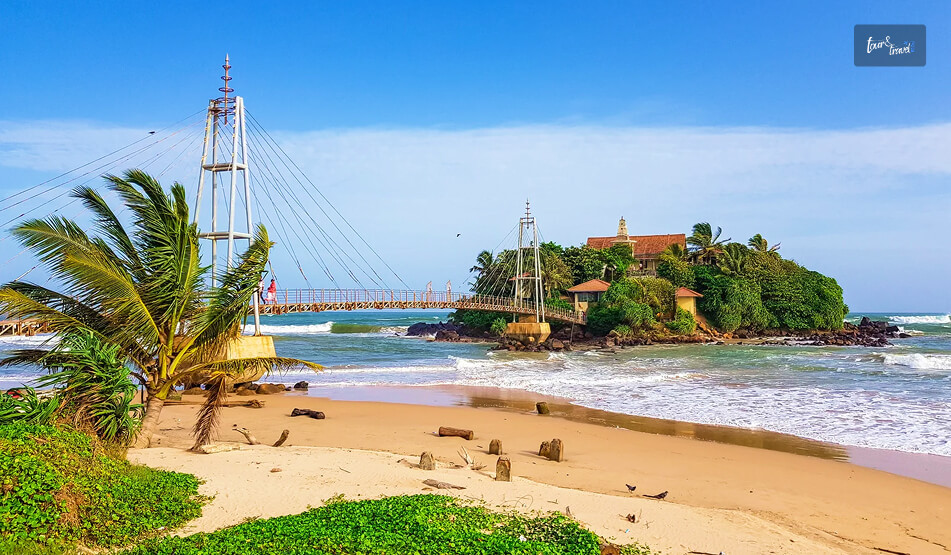
3. Paravi Duwa Temple: One Of The Best Spiritual Places To Visit In Matara 

Paravi Duwa Temple One Of The Best Spiritual Places To Visit In Matara

The floating temple, or the Paravi Duwa Temple, is on a small island called Pigeon Island or Paravi Duwa. 

You have to walk through the footbridge connecting the mainland and the island.

If Matara Fort offers you an insight into the region’s history, this floating temple is all about serenity. 

The temple has many stunning Buddha statues and a golden Stupa. However, the most fascinating thing is the replica of the footprint on Adam’s Peak. 

Furthermore, here, you will enjoy a stunning coastal backdrop.  

The temple remains open from 6 AM to 6 PM, and it is best if you walk through the bridge during the sunrise. 

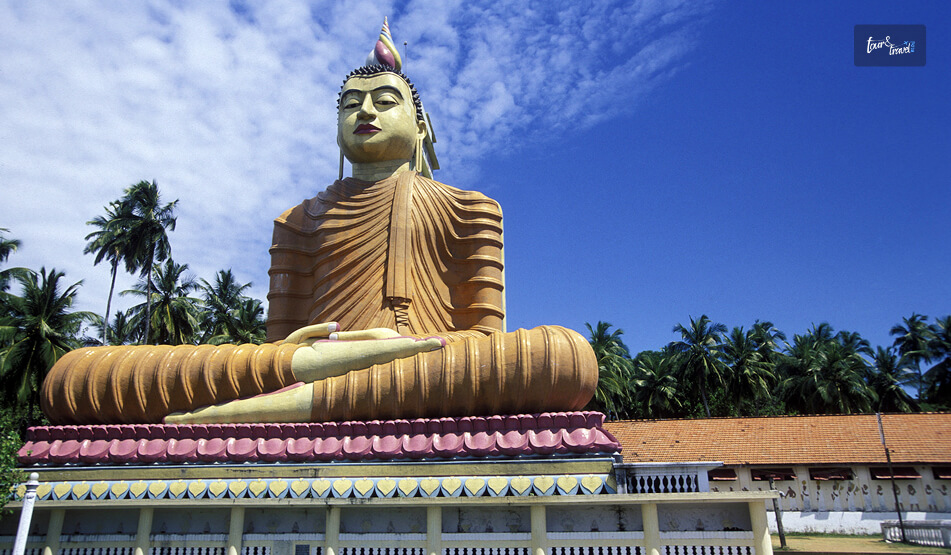
4. Weherahena Temple: A Proud Example Of Modern Buddhist Architecture 

Weherahena Temple A Proud Example Of Modern Buddhist Architecture

On the east side of Matara, the Weherahena Temple has the biggest seated Buddha Statue of Sri Lanka. 

The statue is 39 meters tall, and here you will find an underground tunnel. 

Now, walking through the tunnel was a fascinating experience. There, you will see more than 200 murals about the life of Lord Buddha. 

Moreover, the tunnel remains open from 6 AM to 8 PM. 

5. Star Fort: A Dutch Colonial Heritage 

The Star Fort, close to the Matara Fort, originally went by the name of Redoute Van Eck. 

It is a hidden gem in Matara, but the architecture here is equally fascinating. 

Furthermore, the fort gets its name from its unique six-pointed star shape. Built in 1765, the fort had a strategic position to prevent attacks from the land. 

The Matara Fort, however, was more instrumental in protecting against attacks from the sea. 

Also, you must not miss a visit to the Star Fort museum, which offers insights into the Dutch colonial history of Sri Lanka. 

The fort remains open from 9 AM to 4 PM, and I had to pay an entry fee of around ₹100. 

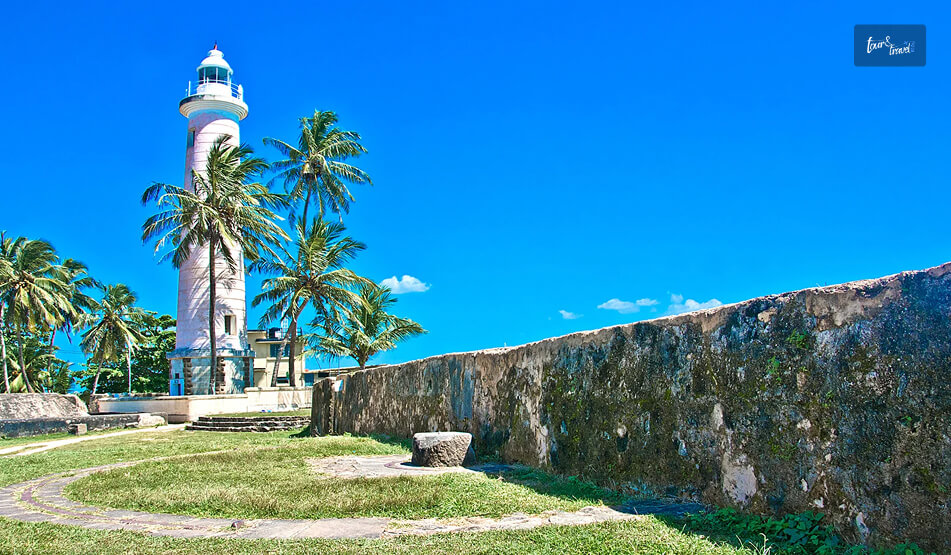
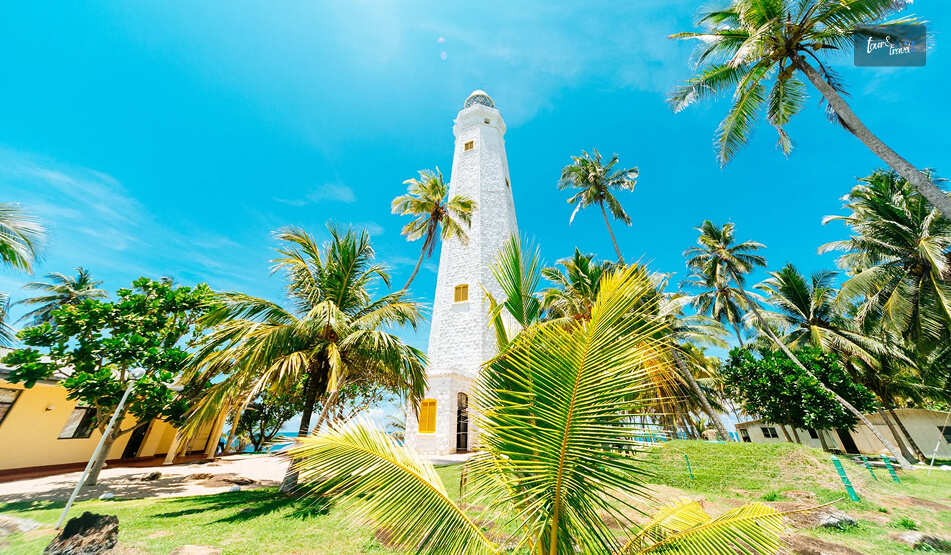
6. Dondra Head Lighthouse: Sri Lanka’s Southernmost Part 

Dondra Head Lighthouse Sri Lanka’s Southernmost Part

I took a short tuk-tuk ride from Matara to Dondra, the southernmost part of Sri Lanka. 

The Dondra Light House, with a height of 49 meters, is the tallest lighthouse in the country, and this 1889 fort offers an amazing view of the Indian Ocean. 

However, they did not allow the visitors to climb up the lighthouse. So, instead, you can enjoy a coastal walk and take the best snaps for your socials. 

7. Matara Local Markets: Offering Insights About Local Culture And Flavors 

I always believe that to know a place, you have to explore its local markets. The Matara local market smells of handicrafts, tropical fruits, and spices. 

Moreover, here, you will enjoy prawn fritters or isso wade and pol sambol, even kottu roti, the authentic delicacies of Sri Lanka. 

Furthermore, despite the language barrier, the crowd there was so friendly and knowing I am from India, some of them even shared how they feel the solidarity. 

So, the next time you are in Matara, don’t just treat it as a stopover for the popular southern Sri Lankan beaches. 

Try to soak in the history, culture, and spiritual vibe of this beautiful coastal town.

Share on Social Media

Meet Sibashree Bhattacharya, a travel enthusiast who has a decade-long experience in transcending virtual barriers with her words! Her deep love for travel is apparent from her travel escapades to the mountain, often taking her readers on a journey, her words acting as Portkey! Fun fact: Sibashree loves to dive deep into the history of the places she is about to visit, making her travels even more wholesome. If you were wondering how her articles are not short of time travel, this answers it!

Leave a Reply

Your email address will not be published. Required fields are marked *

title-img Related

READ MORE Dehiwala Zoo

Dehiwala Zoo In Sri Lanka: A Favorite Spot For Animal Lovers Since 1936 

BY  Sibashree Mar 16, 2026

The National Zoological Gardens of Sri Lanka, or Dehiwala Zoo, is one of the first zoos in Asia.  So, if you have enjoyed the Kaudulla National Park safari, you will also love a visit to the Dehiwala Zoo.  This zoo has an area of 26 acres, and it is home to more than 2000 animals. Furthermore, you will find fountains, orchids, and peaceful lakes here. Moreover, it offers a unique Night Safari experience. On this night safari, you can spot the mysterious nocturnal animals.  In addition, you can join the educational workshops here to learn about wildlife conservation.  So, come and have a thrilling wildlife experience at Dehiwala Zoo. However, before I talk about its location, how to travel, things to do, and the best time to travel, here is a quick look at the essential details.  Dehiwala Zoo In Colombo: Quick Info  Address120 Galvihara Road, Dehiwala-Mount Lavinia, Sri LankaTimings8:30 AM to 6 PMTicket- LKR 100 for Local Adults- LKR 2,500 for ForeignersFacilities- Souvenir Shops- Restaurants- Boat Rides- Icecream Stalls- Zoo Aquarium- Butterfly Garden Pony Rides- Elephant Rides- Flowers- Fountains How To Reach Dehiwala Zoo?  Dehiwala Zoo is well accessible by air, train, bus, taxi, and ride-hailing apps. While the easiest option is to take a taxi or private car, traveling by bus is the cheapest way.  1. By Air Dehiwala Zoo is just 40 km away from the Bandaranaike International Airport.  Furthermore, you will easily get a ride-hailing service or a taxi to reach the Dehiwala Zoo within 45 minutes.  2. By Train The Dehiwala Railway Station is the closest to the zoo. So, if you are traveling from the north, you have to take a train from Colombo Fort Station to Dehiwala Railway Station.  Also, if you are traveling from the south, you can stop at Mount Lavinia Railway Station. The beautiful Mount Lavinia Beach is just 1.4 km away from the railway station.  Tuk-tuks are available from both these railway stations, and the train ticket price will be between 40 and 100 LKR.  3. By Taxis Or Ride-Hailing Apps The easiest way to reach Dehiwala Zoo is to take a ride-hailing service or a taxi. Uber and PickMe are the main ride-hailing services here.  You can book vans, tuk-tuks, or cabs using these apps.  Furthermore, the travel cost in this way is between 1700 and 2400 LKR.  4. By Bus  You will get buses to Dehiwala Zoo throughout the day. You can take bus 176, 100, and 101.  Furthermore, the ticket prices are between 30 and 50 LKR.  What Are The Best Things To Do At Dehiwala Zoo?  From watching the elephant performance to taking a ride in the zoo train, the activities in the zoo are diverse and ideal for tourists of all age groups.  However, for me, the most delightful part was watching the elephants in action. Here is more about the things to do at Dehiwala Zoo.  1. Watching The Animal Shows  Located on the Anagarika Dharmapala Mawatha, Dehiwala Zoo has monkeys, animals, fish, birds, reptiles, and other animals.  The zoo further hosts animal shows.  So, you will love seeing an elephant dancing or a seal playing with a ball.  2. A Walk Through The Zoo The zoological garden has a reptile house, aviary, aquarium, and butterfly garden. So, you can take a walk through the garden.  The zoological garden area also has a dedicated botanical garden.  However, if you don’t want to walk much, you can take a ride on the zoo train.  3. Learn About The Flora And Fauna Present Here  If you want to know about the animals and plants here, you have to take a guided tour. Furthermore, you can learn about the flora and fauna and the rich history of the zoo from the Educational Center.  Moreover, the zoological garden has an animal hospital. You will find veterinary doctors and caregivers at work there.  4. Take A Part In The Night Safari  The zoo has a dedicated Leopard Trail for night safaris. You can watch the nocturnal animals in action during the safari.  Furthermore, you can arrange a picnic or explore the local Dehiwala Market. Furthermore, if you want a spiritual experience, visit the Bellanwila Rajamaha Viharaya.  If you want to explore more Buddhist places of importance in Sri Lanka, you can visit the Ritigala Forest Monastery and Sigiriya Rock.  What is the Best Time to Visit Dehiwala Zoo In Sri Lanka? December to April is the best time to visit Dehiwala Zoo. This is the dry season and hence is ideal for outdoor exploration and wildlife spotting.  However, it is also the peak season. So, plan a visit early in the day and avoid weekends.  Furthermore, May to November is the wet season in the garden, and the zoo looks lush and green. However, the animals can be less active in these months.  Things To Keep In Mind For Visiting The Dehiwala Zoo In Sri Lanka Irrespective of the season of your visit, you have to keep the following things in mind.  You have to wear comfortable footwear with a good grip as you have to walk a lot through the zoo.  Furthermore, you have to be respectful to the animals and follow the rules of the zoo. Is A Trip To Dehiwala Zoo Worth The Experience?  Yes, Dehiwala Zoo is a place worth visiting because you don’t just spot animals here, but learn about their livelihood and nature.  Furthermore, this is one of the oldest zoos in Asia and was built in 1936.  However, the zoo authority must be more focused on the preservation of the zoo, as the last time I visited, certain things drew my attention.  Seeing the animals here, the night safari, and the performances by animals have become more like a curriculum, and they show a lack of infrastructure.  So, you may feel sometimes disappointed if you are planning to visit the zoo to see a performance of the animals.  Still, many people visit this zoo because of its heritage. 

READ MORE Oshino Hakkai

What Is Oshino Hakkai Famous For? How To Visit It And More 

BY  Sibashree Mar 31, 2026

Everyone knows that you cannot complete exploring Japan in a day. And I had no choice but to miss Oshino Hakkai on the first trip.  However, on the next trip, I made sure to plan a visit.  Of course, an image on Instagram was my major drive behind being so passionate about a trip to Oshino Hakkai.  I saw a series of houses with thatched roofs along the shore of a pond. The magnificent and snow-covered Mount Fuji stood behind, strong and unshakable, as the eternal truth.  Born and raised in the land of spirituality and the Himalayas, I had to visit Oshino Hakkai.  However, as I have explained in my narrative from Tokyo to Mount Fuji day trip, you have to time your trip really well and have to be extremely lucky to see the snow-capped Mount Fuji.  Also, if you are planning a trip in summer, you will only get to see Mount Fuji partially or fully covered by clouds.  Nevertheless, as Mount Fuji continues to act elusive, here is why Oshino Hakkai will win your heart.  Oshino Hakkai: Why Is Visiting The Eight Springs Of Oshino So Special?  As I stood at the center of where both Lake Kawaguchiko and Lake Yamanakako meet in the small village of Oshino, I was able to look at the eight sacred ponds of Oshino Hakkai.  These sparkling, clear water springs are all that is left from a long-lost sixth lake that existed hundreds of years ago. It's as if time stood still when you visit these sacred areas. When I looked into the water, I didn't see just water, and I saw history. The springs were used by pilgrims (Fuji-ko) during Japan's Edo period to cleanse their bodies and souls before climbing Mt. Fuji. What a magical process the water goes through!  From snow accumulation on the summit of Mt. Rainier, through melting and filtration through approximately 80 years' worth of porous lava before it actually emerges at this location, its absolute perfection.  Moreover, it was crystal clear and pure.  Also, as I walked through the "Natural Monuments," I had an intense feeling of appreciation for the many years of waiting, so that each would have such serenity. How To Reach Oshino Hakkai? The journey to the stunning waters of Oshino Hakkai is as much a part of the experience as the location itself.  Here’s my recommendation for how to get to Oshino Hakkai, depending on whether you want a more convenient (train) or an adventurous (rental car) way of doing so. 1. Reaching Oshino Hakkai From Tokyo When travelling from Tokyo, you have several options available.  Highway bus lines go to Oshino Hakkai directly.  If you plan to take the train, either Fujisan Station (the nearest station) or Kawaguchiko on the Fuji Kyuko Line is your best option.  Once at Fujisan or Kawaguchiko, catch a local bus to get to the village. You may take the Fujikko-go (tourist buses), Mt. Fuji World Heritage Loop, or Uchino or Hirano routes via local bus from Fujisan Station.  Generally, there are 1-2 buses/hour on these routes. At Kawaguchiko Station, there are 11 Fuji-Q buses each day that leave for Lake Yamanaka Oriental side, and the 11 Fuji-Q buses that leave for Gotemba and also the Oshino springs. Just watch out for the Oshino Hakkai or Oshino Hakkai-Iriguchi as their stops. 2. Driving And Village Logistics I rented a car, and it is the most convenient way to visit the nearby Five Lakes region.  Parking here is convenient, and there are many public and private parking spaces.  After parking the car, you can explore the nearby villages.  However, you will need 300 JPY to enter the Hannoki Bayashi Shiryokan Museum.  You can visit the museum from 9 AM to 5 PM every day for a deep understanding of the local history.  Moreover, you will find signage in Japanese and English for every pond. My Trip To Oshino Hakkai I felt a bit out of place when I got to Oshino Hakkai.  I thought it would be a nice, quiet area for reflection and meditation, free of other people.  However, I found a busy and fully built-out village of people, shops selling food, and many shoppers and visitors to the area, as well as people engaging with local merchants about the items that were being sold.  There were also a lot of people around Wakuike Pond, and they were excited to see how clear the water of the pond was and the fish that were swimming in the pond. 1. Finding Solitude And Peace Within The City Although I typically search for the peace of solitude, I did not mind being in a populated environment.  I became curious after wandering among the crowds to find out where my curiosity would take me.  I found a quiet, undeveloped area just minutes from the main road, where I could hear the water from the pond, see ducks on the water, and watch an old man with two little boys quietly fishing right next to me. 2. Folklore And Galactic History The folklore & Galactic history of the 8 springs were fascinating to explore. Especially, that water from Wakuike Pond traveled on the Space Shuttle Challenger in 1983 for a snow-making experiment in space! 3. My Personal Highlight  The highlight for me was the open-air museum at the Hanoki Bayashi Shiryokan. It was a true escape from contemporary living, immersing yourself in the cultural heritage of the area. 4. Hannoki Bayashi Shiryokan: The Main Attraction Of The Trip  To tell the truth, I went to Oshino Hakkai because of Hannoki Bayashi Shiryokan.  One of the most amazing sights I've seen in the Five Lakes region was the thatched-roof farmhouses against a colorful garden and the imposing backdrop of Mount Fuji. I became engrossed in the displays of antique household items and rustic farming implements inside the traditional farmhouse.  The tour was brief, but I stayed by the big pond long after I was done because of the subtle beauty of the architecture.  I couldn't resist making another lap because the landscaping was so welcoming. Read Also: What Are The Things To Do In Jimbocho Book Town? Visit The Best Book Stores And Cafes Cherry Blossom Kyoto Japan: 2026 Season And The Top Viewing Spots Osaka Food: Know What To Eat In The Streets Of Osaka

READ MORE Habarana

Why Is Habarana Beyond Just A Gateway To The Cultural Triangle Of Sri Lanka?

BY  Sibashree Apr 27, 2026

Search for Habarana on Google, and in 9 out of 10 cases, it will show that Habarana in North-Central Sri Lanka is the base for visiting the cultural triangle of Sri Lanka.  However, Habarana in the district of Anuradhapura in itself is a perfect blend of adventure, culture, and nature.  So, if you want to set your cultural itinerary in Sri Lanka right, Habarana will be at the epicenter. In this article, I will talk about the things to do in Sri Lanka from Habarana. I will also discuss the top attractions in this beautiful tourist town with a population of 5000.  Where Is Habarana?  Habarana in Anuradhapura District is around 180 km away from Colombo, the capital of Sri Lanka.  Located in the north-east of Colombo, it is also just 30 minutes away by road from the Sigiriya Rock Fortress, a UNESCO World Heritage Site, and its neighbor, Pidurangala Rock.  How To Reach Habarana?  The most convenient way to reach Habarna is to take a bus or train from Trincomalee.  I, of course, as always, opted for a train ride after a visit to the Uppuveli Beach and exploring the other things to do in Trincomalee.  Getting To Habarana On A Train  The Habarana Railway Station is on the Colombo to Trincomalee Railway Line. I took a night train from Trincomalee (Night Mail, Trincomalee → Colombo Fort).  This train runs daily and departs the Trincomalee Station at 7 PM and reaches Habarana at 9:30 PM.  I bought a second-class ticket, and it cost me 800 LKR. The third-class tickets will cost around LKR 600.  Getting To Habarana On A Bus  From Trincomalee to Habarana, it is a bus ride of little over 2 hours. The ticket price was INR 300 when I last enquired.  You will get different buses run by the Sri Lanka Transport Board and many private buses.  However, considering the scorching Sun of Sri Lanka, a bus ride is difficult in the daytime, and the Trincomalee to Habarana route remains crowded. Why Is Habarana The Base For A Cultural Exploration In Sri Lanka?  Habarana has a beautiful lake by the name of Habarana Lake. It is a tranquil water body with lush greenery around.  It is a beautiful place for birdwatching. Furthermore, you can also spot monkeys and elephants here.  When you are in Habarana, you can start your day with a stroll along the lake. Then, you can plan a day trip to the following places.  1. The Sacred City Of Anuradhapura  Distance from Habarana: 59 Kms The Sacred City of Anuradhapura is a UNESCO World Heritage Site. It was the religious and cultural capital of Sri Lanka for 1300 years.  However, it was massively impacted due to the invasion in 993 AD.  The main stupas in this sacred complex are the Abhayagiri Vihara Stupa, Jethawanaramaya Stupa, the third-largest man-made structure, and the most sacred Ruwanwelisaya Stupa.  2. Kaudulla National Park  Distance from Habarana: 28 Kms If you want to spot elephants in Sri Lanka, you have to visit the Kaudulla National Park.  However, the Kaudulla National Park is not just about the safaris or spotting the wildlife. During my visit, I found it truly living up to its reputation for animal welfare.  It is one of the places I visited where elephants are not chained.  3. Hurulu Eco Park  Distance from Habarana: 3.4 Kms The Hurulu Eco Park is the closest destination to visit from Habarana if you want to experience the wildlife of Sri Lanka.  Elephants passing between the Minneriya National Park and the Kaudulla National Park use Hurulu Eco Park as an important corridor.  Moreover, the topography of the Hurulu Eco Park is a good mix of plains, rocks, and evergreen jungle.  4. Dambulla Royal Cave Temple Distance from Habarana: 25 Kms The Dambulla Royal Cave Temples are fascinating, and being a two-million-year-old place of Buddhist worship is something extraordinary.  The more amazing thing is that the temples are well-preserved, and people still worship Lord Buddha in these temples.  Spanning an area of 2100 square meters, these cave temples have 157 statues of Lord Buddha and other important figures of Buddhism.  However, among all these statues, the reclining statue of Lord Buddha in the 1st cave will remain etched in my memory forever.  5. Ritigala Forest Monastery Distance from Habarana: 21 Kms The Ritigala Forest Monastery has its historical roots in the 1st century BCE. During that time, Buddhist monks settled here.  Over time, this monastery became an important site for the powerful Pansukulika Sect, which enjoyed the highest form of glory during the 9th to 11th centuries.  However, it was destroyed by Chola invasions in the 10th-12th centuries.  The Ritigala Forest Monastery has a long history of discovery and restoration, too. Moreover, it has a connection with the great Hindu epic, the Ramayana.  In addition, the Ritigala Mountain is home to more than 417 species of medicinal plants and a rich biodiversity. 6. Sigiriya Rock Fortress  Distance from Habarana: 30 Kms The Sigiriya Rock, a UNESCO World Heritage Site, is primarily a site of a Buddhist monastery from the 3rd to 1st century BCE. However, there are also legends about this rock fortress being the Golden Palace of Ravana.  Nevertheless, the Buddhist monastery in the Sigiriya Rock rose to importance when Anuradhapura became the capital of Sri Lanka. 7. Pidurangala Rock Distance from Habarana: 30 Kms Many tourists make the mistake of considering Pidurangala Rock as a trekking point that offers a better view of the Sigiriya Rock.  However, along with being a neighbor of Sigiriya Rock, it also has a history of Buddhism associated with it, and the history is 2 millennia old.  After Kashyapa made the Sigiriya Rock the center of power, the monks shifted from there and started residing in the Pidurangala Rock.  It also received royal patronage for its development and for making adequate accommodations for the monks here.  8. The Ruins Of Polonnaruwa Distance from Habarana: 47.5 Kms The ruins of Polonnaruwa are a part of the cultural triangle of Sri Lanka. Polonnaruwa was a growing religious and commercial center of Sri Lanka for over 800 years.  During the Sinhalese and Chola kingdoms and for three centuries, it was the capital of the country.  Today, the Ancient City of Polonnaruwa has the ruins of the Royal Palace, the Sacred Quadrangle, the central dagoba, Shiva Devale, Pabalu Vehera, Rankot Vihara, the dagaba Kiri Vihara, and many other ruins and architecture.  Also, the Buddha sculptures in different dagobas or stupas of the complex were mesmerizing.  9. Minneriya National Park  Distance from Habarana: 5.8 Kms Minneriya National Park has a lush landscape, and along with elephants, it is also home to diverse wildlife such as sloth bears, leopards, and different bird species.  The annual gathering of elephants is the most fascinating incident of the Minneriya National Park. It indicates an event where hundreds of elephants have a meeting, or they gather around the Minneriya Tank.  Habarana: Beyond The Gateway To The Cultural Triangle Of Sri Lanka   Although most people think of Habarana as being nothing more than a bus stop for those heading to Sigiriya or Polonnaruwa, it actually turned out to be the best surprise during my trip to Sri Lanka.  The only reason to stay in Habarana is how convenient the location is.  However, staying there provided me with an experience that you couldn’t reproduce in the more touristy areas of the island, which is the natural beauty of the area. A Place For The Gentle Giants The highlight of my time spent in Habarana was the fact that I was so close to Minneriya and Kaudulla National Parks.  I didn’t just see elephants. I witnessed what is known as the "Gathering."  Also, I observed hundreds of wild elephants gathered around one of the ancient reservoirs while driving around in an open-top jeep.  This is due to it being located in the middle of these two migratory areas.  While we still had wildlife encounters in the more touristy areas, they didn’t have the same natural feel or take the same amount of effort as they did while driving around in Habarana. Authentic Village Immersion In addition to going on safari, I spent a morning enjoying the lifestyle of the people living on the shores of a local lake.  I took a traditional horse-drawn carriage to the lake and paddled across the lake in a canoe.  I shared a meal of rice and spicy sambol with a family in their mud hut that was about as authentic as you could get.  This was far more than just a stopping point, and it was an example of the hospitality of the Sri Lankan people and the slow lifestyle that became my takeaways. Where To Stay In Habarana?  If you're looking for accommodations in Habarana, you're sure to find something that meets your budget, with options ranging from "basic backpacker" to "boujie boutique" accommodations.  For a "calm little oasis," Dudley's Nature Resort is a great option, and it is located 15 minutes away from the main strip of Habarana. Furthermore, the resort is set in a lush jungle environment and includes a pool and breakfast served in the garden.  Moreover, if you are looking to be in a social environment, Roy's Villa Hostel is close by and has an incredible communal atmosphere. Where To Eat In Habarana?  For authentic local flavors, Dewata Villa is a must-visit for its legendary "Rice & Curry" spread.  If you're looking for a quick, budget-friendly bite, Cinnamon Lodge offers great snacks, while the main street is lined with "Short Eat" bakeries for spicy pastries.  For a more social evening, head to Roy’s Villa nearby for delicious communal dinners and great vibes.