
Where Is Midigama Beach? What Are Best Surfing Spots And Other Things To Do?

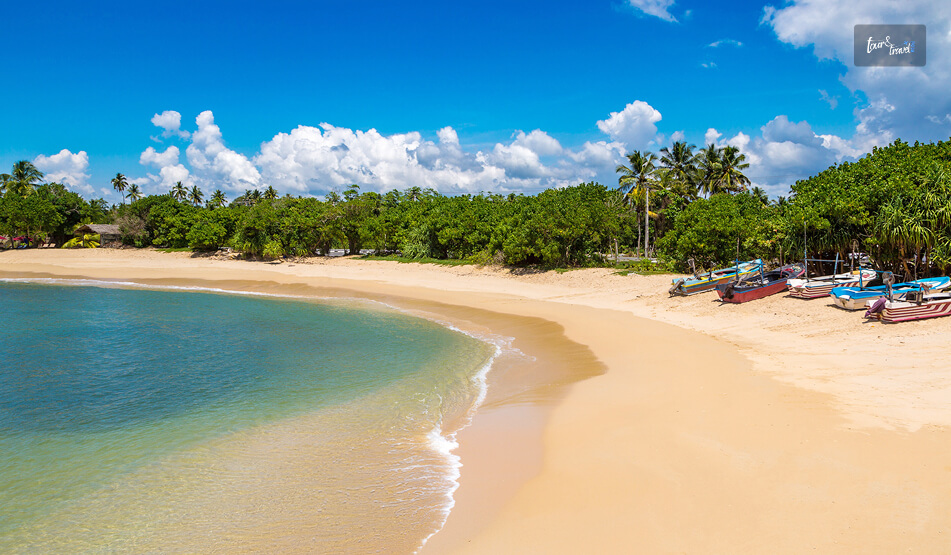
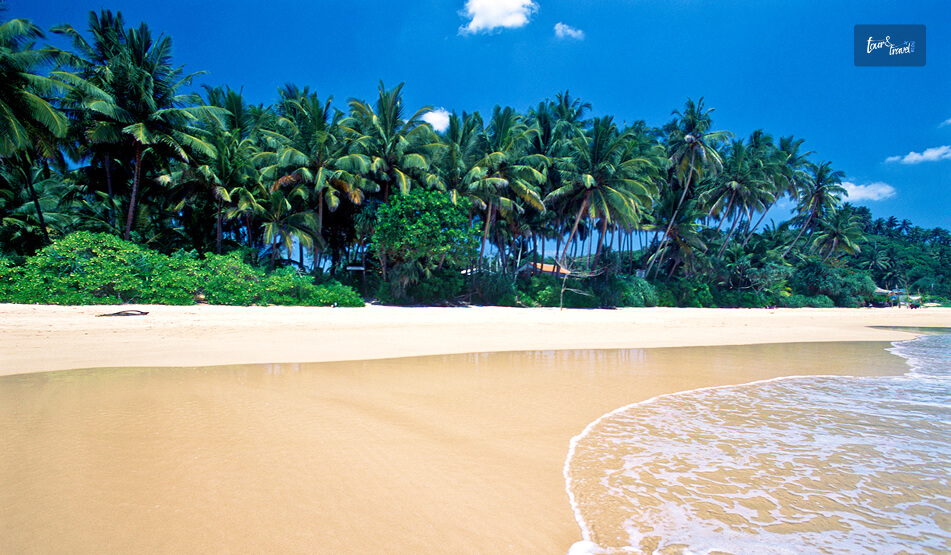
Once you cross the massive bay of Weligama, you will find many hidden beaches and coves on the south-western coast. 

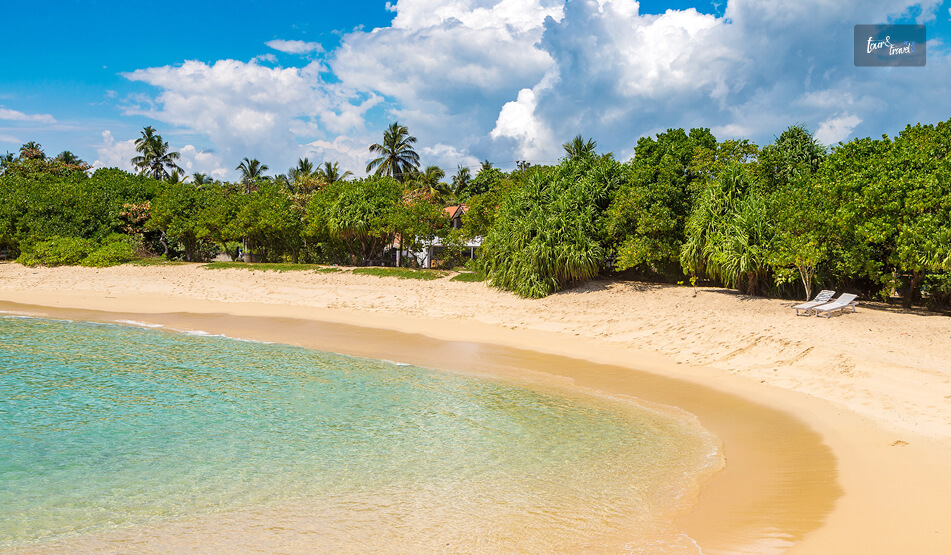
There is a stretch that goes through small inlets and has beautiful golden sands. These inlets with coconut palms are called Midigama collectively. 

While Midigama will win your heart with its quaint beauty at first glance, it is more popular as a surfing spot for intermediates. 

It is no less than a treasure hunt with unexplored reefs and secret waves. 

Moreover, the surf spots of the Midigama Beach, such as Lazy Left or Ahangama, are diverse and unique in the experience they offer. 

However, a local professional surfer confided that the Coconuts are the best surfing spot if you already have some skills. 

Hi, are you planning a trip to Midigama Beach anytime soon? Read this blog to know about the location, surfing sports, and more about this beautiful beach. 

Where Is Midigama Beach? 

Where Is Midigama Beach

The cluster of beaches, known as the Midigama Beach, is between Weligama and Ahangama, a popular beach town and surfing spot. 

Furthermore, the beach spans an area of 6 kilometers, including the clusters of inlets. 

The best and most budget-friendly way to reach Midigama. It is a train ride of around 3 hours and 15 minutes, and the ticket cost me around Rs. 240. 

I took the train from Colombo Fort at 6:15 PM and reached Midigama at 9:25 PM, and the ticket price was Rs 550 for the second class. 

Where To Surf On Midigama Beach?

Where To Surf On Midigama Beach

I have already shared that the surfing spots in Midigama are diverse. So, the size, the type of breaks, and the surfing style will be different from one surfing location to another.  

So, here are the surfing spots everyone loves. 

1. Ahangama

Ahangama, on the northwest of Midigama, has been a popular surfing hub for the last few years. 

It has many surf camps and bars, and its reef breaks are excellent for beginners and mid-level surfers. 

Kabalana Beach is the best place to start your surfing expedition here. 

2. Ram’s Right 

Ram’s Right is the toughest surf break in the region, and you really need to make a quick surfing start. 

Furthermore, the barrel sections make it fascinating. Also, you really need to look out for sea urchins here. 

3. The Combination Of Lazy Right And Lazy Left 

These two offer secure reef brakes, and Lazy Left is slightly harder to surf than Lazy Right. 

So, Lazy Right is more suitable for beginners. Here, a surfer can enjoy cruisy rides where the surf breaks over a deep reef. 

4. Plantations 

It is very close to Weligama, and it is an ideal surfing spot for intermediates. 

The entry point is an opening in the rock by the Plantation Surf Inn. 

Furthermore, the reef here is deep, and surfing usually continues in the right direction and a few lefts. 

5. Coconuts 

Coconuts is the place where you will enjoy the classic Sri Lankan reef surfing experience. 

Here, you can surf right and left, and the breaks are on both ends of the beach. 

However, the east end of the beach is choppier. 

6. Weligama

Once you are done surfing at Coconuts, you can take a short tuk-tuk ride to Weligama. 

Furthermore, with a sandy bottom, it is an ideal surfing destination for beginners. 

What Are The Places To Visit Near Midigama Beach? 

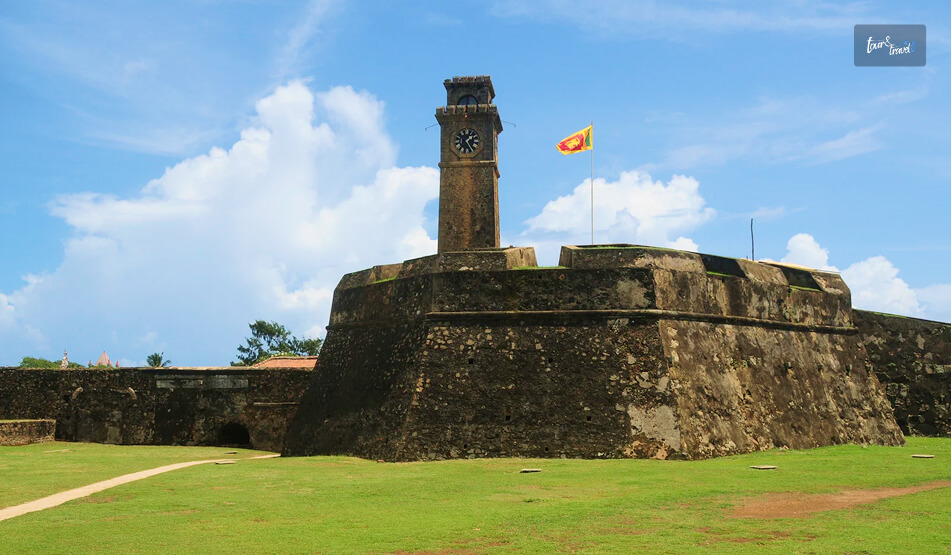
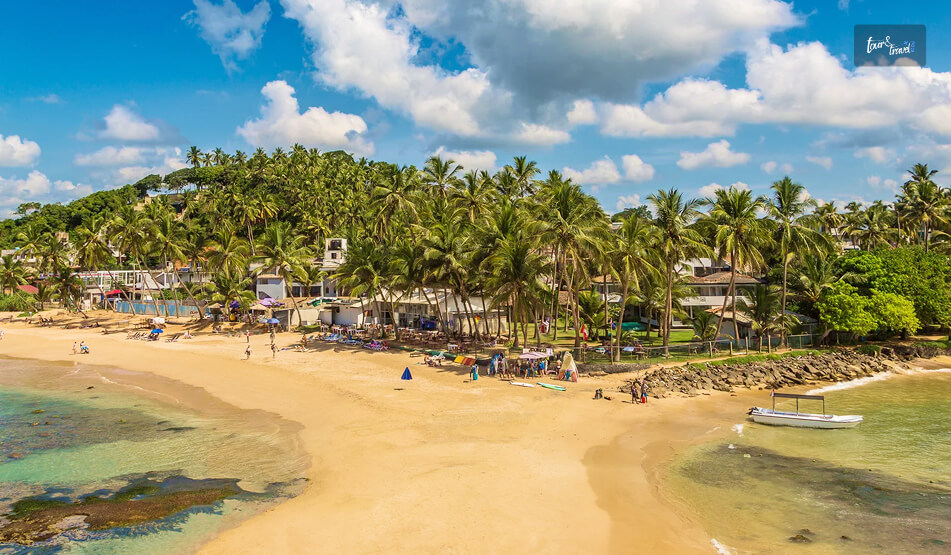
If you are done surfing, you can explore the historic Galle Fort and the hedonistic Mirissa Beach. 

1. Mirissa Beach

Mirissa Beach

Mirissa Beach turns into the most Hedonistic place in Sri Lanka in the evening. 

The bars here offer amazing happy hour offers. So, you will find the cheapest chilled beer in Sri Lanka here. 

2. Galle Fort

Galle Fort

Galle Fort, a UNESCO World Heritage Site, is just 25 km away from Midigama Beach. 

It is one of the best examples of a European fortified city in South and South-East Asia. 

Enjoy climbing up the rampart and having a walk from one corner to another, admire the architecture, and enjoy the 360-degree view of Galle. 

Watching the sunset from the top of the fort is also a magical experience. 

What Is The Best Time For Surfing In Midigama Beach? 

Like all other beaches on the southern coast of Sri Lanka, November to April is the best time to visit Midigama Beach. 

Regular storms and high rainfall are the main forces hitting the beach in this season. 

Furthermore, when you are planning to surf in Midigama beach, pick early morning or late evening as the time as the winds pick up speed later in the day. 

Where To Eat In Midigama Beach? 

Where To Eat In Midigama Beach

The main beach of Midigama and the place near the Coconuts have many cool eating places. 

Contrary to Ahangama, the Midigama Beach exudes a hipster energy. 

If you are looking for a local experience where you will also get some cultural insights, you can visit Sandaru Restaurant. 

It is a family-run restaurant, and here you can eat kottu, rice, curry, and other local delicacies. 

Another excellent place for trying local delicacies here is the Shirani Home Made Rice & Curry near the Coconut Beach. 

Here, you will find the best rice-vegetable combos. 

Where To Stay For Surfing At Midigama Beach? 

You can stay at the really cool hostels near the Lazy Left if you want to surf at Midigama Beach. 

However, if you are traveling with family and you are looking for comfort, Naomi Beach Hotel, the best surfing hotel in Sri Lanka, will be your ideal choice. 

It has a stunning infinity pool, and the on-site bar is perfect for chilling after a surfing session. 

Moreover, it is close to the Coconuts, for me, the best surfing spot in Midigama Beach. 

Also, Surfing Wombats is another place to stay in Midigama for surfing. I can stay here simply because of the pizza they serve. 

Furthermore, it is a short walk from the Lazy Left and Lazy Right surfing spots. 

Also, if you want to be a part of the surfing camps in Midigama Beach, you must take a tuk-tuk to Weligama, and you will find many reputable surfing camps there.

Share on Social Media

Meet Sibashree Bhattacharya, a travel enthusiast who has a decade-long experience in transcending virtual barriers with her words! Her deep love for travel is apparent from her travel escapades to the mountain, often taking her readers on a journey, her words acting as Portkey! Fun fact: Sibashree loves to dive deep into the history of the places she is about to visit, making her travels even more wholesome. If you were wondering how her articles are not short of time travel, this answers it!

Leave a Reply

Your email address will not be published. Required fields are marked *

title-img Related

READ MORE ella hotels

What Are The Best Ella Hotels? Where Can You Stay In Ella?Ā 

BY  Sibashree Mar 31, 2026

From enjoying a train ride on the Nine Arch Bridge to Ella Rock, Ella has endless adventures to offer.Ā  Exploring the things to do in Ella is also easier as the Ella Hotels offer the most comfortable and safe accommodations.Ā  As a backpacker, I chose to stay in a hostel on my first visit. However, you can find many budget, mid-range, and luxury hotels in this beautiful hill country town.  So, here is a list of the best hotels to stay in Ella.  What Are The Best Ella Hotels?  I have divided the best Ella hotels into three different categories. So, you will find a good mix of luxury hotels, mid-range hotels, and budget hotels. Furthermore, I have also included the hostels and the eco-stays here.  And here are the details.  1. Luxury Ella Hotels There's a quiet magic when birds sing in the morning, and mist hangs on the tea bushes.  Moreover, Ella has upgraded its luxury offerings, blending colonial roots with modern sustainable design. • Nine Skies: Colonial Elegance Just outside Ella in Demodara, Nine Skies is a five-bedroom tea bungalow restored from old stock.  Furthermore, it sits like a piece of the English Lake District transplanted into the tropics.  Also, you begin your day with a Sri Lankan breakfast and then swim in an infinity pool that stretches over endless tea fields.  Moreover, the lifestyle is classic tea country, wrapped in a dream-like hotel setting. • 98 Acres Resort And Spa: Eco-Luxury Overlooking Little Adam's Peak, 98 Acres stands out as the region's top hotel.  Furthermore, the chalets use upcycled railway sleepers and local granite, with genuine, hands-on design.  Moreover, their spa features treatments with herbs grown on-site. Just a 15-minute walk from the Nine Arch Bridge, it's ideal for morning shots.  So, what else is there to say about this place? • Hide Ella: Modern Panoramic Views Hide Ella sits right into a 60-degree slope.  Every room faces the Ella Gap with clear, sweeping views.  The pool dips into the trees like you are floating through the canopy. It's a clean, sharp design, with no frills. Furthermore, it offers just pure view-focused living.  Why would anyone want anything else in Ella? 2. Mid-Range Ella Hotels For a bed that works, a shower that flows, and a balcony with real views, without the honeymoon price!  Ella's mid-range picks offer the best trade-off. Most focus on the view, which is Ella's strongest selling point. • Chill Ville Viewpoint Hotel It is set into the mountainside, and it is the most welcoming.  Cabins are clean, modern, with wood and concrete finishes.  They even include Yoga mats for stretching in the morning light.  If you want to go early to the Nine Arch Bridge, this is your only real shot, and it's just 800 meters away.  It seems like a good fit for quiet travelers who value space and scenery. • Country Homes Ella  It looks more like apartments than hotels.  Warm pine decor gives each suite a cozy feel.  The wide valley view from your room makes it hard to leave. In particular, when you know breakfast is often brought right to your balcony by the owners.  You get coffee at the same time clouds drift through the gap, arguably one of the most consistent perks in town. • Boutique Vibes: Morning Dew, EKHO, And Tip Top It seems to be a recurring motif in Ella. These hotels offer really amazing views and somewhat old-fashioned rooms.  Morning Dew, EKHO Ella, and Tip Top Boutique Hotel are, to some extent, this kind of hotel.  The furnishings in these places might give the feeling of the 1990s, but the rooftop pools and jacuzzis with a stunning view of Ella Rock offer a 5-star experience.  One of the advantages of choosing Tip Top is that you get the opportunity to see the train passing the Nine Arch Bridge from your private balcony. 3. Budget-Friendly Ella Hotels  Guesthouses once pulsed with life in Sri Lankan tourism.Ā  Staying with a local family still gives the truest view of Ella.  You learn how daily routines move through the village. Nobody makes curry like a Sri Lankan grandmother. • Rowinrich Cottages: The Jungle Hideaway These loft-style cottages sit above a valley wrapped in jungle.  Backpackers find them ideal, glamping without dorm-sharing.  Forest sounds carry through at night.  Sunrises stretch across your terrace each morning. Just be warned: the road up is narrow and full of potholes. It's not easy to drive. • The Original Homestays: Idyll And Chamodya Idyll Homestay opened early in town.  Anil, who once worked on tea plantations, now manages one of Ella's most trusted homes.  Chamodya offers a clear view of Ravana Falls.Ā  Both serve breakfasts packed with string hoppers, dhal, and fresh fruit, more than enough for hiking up Ella Rock. 4. The Hostels In Ella: The Most Happening Social Hubs  Like my trip to Jaffna, I also chose a hostel to stay in Ella.Ā  The hostel scene in Sri Lanka has really taken off over the past few years.  Nowadays, staying in a hostel is not only about finding a cheap bed; it is also about experiencing a community, having superfast Wi-Fi, and going on shared adventures.  • Bunk Station A fairly new place in a peaceful and friendly atmosphere.  It's a quiet location away from the noise, but you can still walk to the town in ten minutes.  • Hangover Hostel Being part of a well-known chain of hostels in Sri Lanka, it is the best place to experience a social atmosphere. You will get AC rooms here, and the location is very central near the train station. • Backpacker's Paradise  If you are looking for the genuine "simple life" experience, you can camp in tents that are set up under thatched roofs.  Moreover, it is a very basic, cheap option, and they even have their own little dogs as residents.  So, what else do you need? 5. Eco-Friendly Stays In Ella  Ella is a place that feels like home.  Furthermore, Ella's environment is delicate, and these eco-friendly stays are actively preserving it. • Living Heritage Koslanda It lies halfway between Ella and Horton Plains.  Over the years, they've restored the forest and prioritized hiring local women, often left out of tourism jobs.  The place feels like a quiet, natural escape. • Arana Eco-Lodge And Yoga Center The lodge sits just ten minutes from town.  Rooms are treehouses built around living trunks.  Moreover, it operates like a forest monastery.  Also, electronics are minimal here. So, you can take part in sessions of Kundalini yoga and meditation here.  Moreover, vegan Sri Lankan meals take center stage here. You disconnect from Main Street noise and return to the wild.

READ MORE Anuradhapura

What Are The Best Places To See In The Sacred City Of Anuradhapura, Sri Lanka?Ā 

BY  Sibashree Apr 21, 2026

Anuradhapura is a part of the Golden Triangle of Sri Lanka along with the Dambulla Royal Cave Enclave, Polonnaruwa, and Sigiriya Rock Fortress.  Furthermore, the Sacred City of Anuradhapura, a UNESCO World Heritage Site, was built from the ā€œcutting of a Bodhi Treeā€ or the ā€œTree of Enlightenment.ā€  Before 993, when it was abandoned due to an invasion, it was the political and religious capital of Ceylon, the previous name for Sri Lanka.  Also, if Jaffna attracted me with its Tamil Culture and Hindu Temples, Anuradhapura was a great calling because it was the first place to adopt Buddhism outside India, the country I belong to.  Moreover, Jetavanaramaya, the early 4th-century BCE Stupa, was once the ā€œthird-largest man-made building in the world,ā€ with an original height of 122 meters.  However, while the Jetavanaramaya Stupa continues to evoke awe with its grandeur and mystery, the other ruins and remains of Anuradhapura also wait to tell you the history and cultural richness of the region.  So, here is a brief discussion on the places I visited in Anuradhapura.  What Are The Places To Visit In Anuradhapura?  I was staying in a guest house near the Sacred City of Anuradhapura. I rented a bicycle from my guest house for LKR 500, and I took the back route as the staff in the guesthouse guided me.  Off the main road, the cycling experience was beautiful, and I loved spotting the roaming peacocks and little children waving at me.  Beyond the charming views and ambiance, I noticed one more thing. In Anuradhapura, the past and the present walk side by side.  There have been no evictions of the locals in the name of preserving or promoting the ancient ruins and remains in a UNESCO World Heritage Site.  Nevertheless, after talking to the local children for a while, I reached the entrance of the Anuradhapura Sacred City. The entry fee was around 9500 LKR or INR 2800.  However, remember that the ticket includes archaeological sites such as Jetavanaramaya, Abhayagiriya, Ruwanwelisaya, and Thuparamaya. So, if you want to explore other sites such as the Isurumuniya Viharaya, you will need to pay separate fees.  Nevertheless, these are the places I visited in Anuradhapura.  ā€œThis sacred city was established around a cutting from the 'tree of enlightenment', the Buddha's fig tree, brought there in the 3rd century B.C. by Sanghamitta, the founder of an order of Buddhist nuns.  Anuradhapura, a Ceylonese political and religious capital that flourished for 1,300 years, was abandoned after an invasion in 993.  Hidden away in dense jungle for many years, the splendid site, with its palaces, monasteries, and monuments, is now accessible once again.ā€ - UNESCO World Heritage Convention.  1. Abhayagiri Vihara Stupa Complex The Abhayagiri Vihara Gargantuan Stupa is magnificent, and the brick stupa creates a contrast against the bright blue sky and the lush greenery of Anuradhapura.  King Vattagamani Abhaya or Valagamba founded this Stupa in the first century BCE. This prominent center of Mahayana Buddhism remains an active place of worship.  Also known as the Northern Monastery or Uttara Vihara, it changed the course of Buddhism in Sri Lanka by deviating from the monolithic tradition of Theravada Buddhism.  Moreover, the Abhayagiri Vihara Stupa is the first Stupa in Sri Lanka to house the tooth relic of Buddha.  Also, the Abhayagiri Dagoba or Stupa at the epicenter of the Abhayagiri Vihara Complex is one of the largest stupas in Sri Lanka.  The Structure And Architecture Of The Abhayagiri Vihara Apart from the Stupa or Dagoba, most parts of the Abhayagiri Vihara are in ruins. There were living houses for the monks and students, libraries, dinner halls, and meeting halls surrounding the Stupa.  Here is a detailed overview of the structures as I saw them. However, the heat will be scorching, and you will find langur monkeys roaming around.  So, try to be there by 6 AM, when the gates open, or after 4 PM. The Sacred City remains open till 8 PM. However, it will take you around an entire day if you want to explore the major ruins of the Anuradhapura Sacred City. The Dagoba Or The Stupa  The Stupa or Dagoba in the Abhayagiri Vihara is in a well-preserved condition. The massive bell-shaped structure of the stupa has a height of around 120 meters, and at its widest, the circumference is close to 350 meters.  The dome, made of brick and lime mortar, has four entrances, and you will find a Devatakotuva or a cylindrical spire and Hataraskotuva or a square-shaped structure as the crowns of the Stupa.  Image Houses, Refectories, And Sub Shrines  I saw the remains of various refectories, image houses, living complexes, and sub-shrines around the stupa.  Among the smaller stupas, the Indikatu Seya and Silasobbhakandaka Cetiya are the most common.  Meeting Halls The remains of the meeting halls or Uposathagharas have been found in the complex.  These Uposathagharas were multi-storied, and Ratnaprasadaya or the jewel mansion was most prominent among them.  Congregation Hall The Sannipatasala, or the congregation hall near the southern entrance of the stupa, is the largest hall in the complex.  The image of Nagaraja, or the king of snakes, or Virupaksha, the protector of the Western Direction, was found in this congregation hall, which is now in ruins.  You can see this image at the Abhayagiri Museum.  Abhisheka Mandapa Or Anointing Pavilion The Abhisheka Mandapa had a stepped entrance, and people believe it to be the place where the statues of Lord Buddha and other Bodhisattvas were consecrated.  Some even consider this the bathing house or Snanghara.  Stone Slabs  Many stone slabs with inscriptions in Nagari Script have been found in this site.  Again, there are two moon stones in Anuradhapura, and one was found at the Queen’s Pavilion and the other at Mahasena’s Palace.  These moon stones are significant features of Buddhist stupas or shrines, as these semi-circular stone structures depict the Buddhist Samasara.  The Dining Room The dining room or hall of the Abhayagiri Vihara has a stone-clad trough, and it is ideal for storing or serving rice that could feed 5000 monks.  Furthermore, there was a dining area, hearths, underground channels, grinding stones, and a sundial in the site Faxian or Fa-Hien described as the dining hall.  The dining hall also has two courtyards.  The Bodhi Tree Shrine The Bodhi Tree Shrine, or the Bodhighara is a subsidiary shrine of the Abhayagiri Stupa. As a token of Buddha’s enlightenment, Sanghamitta, a Buddhist nun from India, brought saplings of the Bodhi Tree.  She planted the saplings in Abhayagiri, and many patrons built small aediculae-like shrines around these trees.  These sub-shrines had images of Lord Buddha in a meditative or Samadhi posture and his footprints.  Moreover, excavation of Buddha statues took place in the Bodhighara sites, and one of them is from the 3rd century BCE, and these resemble the sculptures of the great Gupta dynasty in India.  You can visit the Anuradhapura Archaeological Museum if you want to see these Buddha statues. The Ponds  The tanks and reservoirs near the living quarters were the main sources of water for the complex.  However, water in these reservoirs or tanks came from the Kuttam Pokana or Twin Ponds to the far east of the Stupa.  Moreover, these rectangular ponds were built by Aggabodhi I in the 6th or 7th century CE, and they have shallow ridges, and the inner walls are made of polished stone.  However, for me, the most fascinating thing was the stone slab with the motif of a hooded cobra.  Also, this hooded cobra or Naga establishes a deep connection with India, as Nagas and water have deep connections in Indian mythology.  As I walked further, I came across the Elephant Pond or Eth Pokuna. It is the largest artificial tank in Sri Lanka, and it is the main water supply for all the tanks and reservoirs in the Vihara Complex.  Here also, I noticed a depiction of a hooded cobra on a stone slab.  At the end of exploring the Abhayagiri Vihara Stupa Complex, I must tell you that you must read a little about the place before a visit.  Otherwise, it will be difficult for you to catch up when the guide shares the details.  2. Jethawanaramaya Stupa You will also find the Jetavanaramaya Stupa in the Sacred City of Anuradhapura. It was one of the largest man-made structures in the world, and it ranked only after the Great Pyramids of Giza.  The original height of this structure was 122 meters, and after restoration, the height is now 71 meters.  The stupa, built by King Mahasena in the 3rd Century AD, is a part of a large Jetavana Vihara complex that used to house around 200 monks. Also, like the Abhayagiri Vihara, it has a brick architecture.  This once again indicates how ancient Anuradhapura was a hub of brick production. In fact, Ruwanwelisaya, the most sacred stupa of the country inside the Anuradhapura Sacred City Complex, also had a brick architecture.  However, for the recent restoration, they used cement in the outer layer of the stupa.  Moreover, massive excavation works have taken place in the Sacred City of Anuradhapura, and the gold panels showing the imagery of the Bodhisattva and the partial inscriptions of the PrajƱāpāramitā Sutra.  Now, PrajƱāpāramitā Sutra is the foundational text of Mahayana Buddhism. This shows how the Jethawanaramaya Stupa was the hub of different Buddhist thoughts and schools. However, you can see these gold panels now at the Colombo Museum.  Also, I came to know about another fascinating thing from a monk here, that the stupa used to have a diamond in the crown. It used to turn aside lightning during the monsoon season.  3. The Gleaming White Ruwanwelisaya Stupa  The Ruwanwelisaya Stupa is most famous among the locals and followers of Buddhism.  Now, unlike the Ritigala Forest Monastery, the Ruwanwelisaya Stupa or the other stupas in the complex are live hubs of Buddhist practices.  Also, the Ruwanwelisaya Stupa is especially famous for housing the remains of Lord Buddha.  Originally, the Ruwanwelisaya Stupa was much smaller than the Jethawanaramaya Stupa. However, thanks to continuous maintenance, it now stands at a height of 100 meters.  Now, this was my experience in the ancient ruins of Anuradhapura. If you want to explore more, you can visit the Kaudulla National Park, at a distance of less than 2 hours, and the Hurulu Eco Park, at a distance of 1 hour and 50 minutes.   Location And How To Reach Anuradhapura?  Anuradhapura City is located on the banks of the Malwathu Oya. It is the capital of the central-west region of Sri Lanka and the district of Anuradhapura.  Anuradhapura is a 4-hour journey from Colombo and Kandy.  Once I explored the top attractions in Kandy, I took a minivan, which cost me LKR 1600. Now, you will also get private and public buses.  However, I had luggage and wanted to keep the schedule flexible. So, I chose the minivan.  Things To Remember For A Trip To Anuradhapura The Sun is merciless in Anuradhapura, even if you visit the Sacred City in winter. It becomes unbearable past 11 AM.  So, you have to really start early.  Also, carry water and wear full-sleeve clothes to maintain the dignity of the place and protect your skin from the Sun.  Moreover, as I have mentioned, visiting a place like Anuradhapura demands preparation. So, study well and have basic ideas about these stupas beforehand. 

READ MORE Jaffna temple guide

Jaffna Temple Guide: What AreĀ TheĀ Top Hindu TemplesĀ ToĀ VisitĀ InĀ Sri Lanka’s North?

BY  Sibashree Jan 2, 2026

When Lonely Planet names Jaffna one of the 25 best cities to visit in 2026, it becomes a celebration of Jaffna’s culture and heritage. It is the spiritual heartbeat of the Tamil culture, and temples such as the Nallur Kandaswamy Kovil serve as the epicenter of the local community. Also, during my visit to Jaffna, I found the Hindu temples there similar yet different from South Indian temples. From the look of them, I could tell that there was something inherently Dravidian about them. However, the Jaffna temples have a wide use of palmyra wood instead of granite or bricks of the South Indian temples. Also, the temples in Jaffna, the spiritual and social anchors of the community, are more eclectic in nature compared to the South Indian temples. It is the intense spirituality that makes them so special. I shared a beautiful experience at Nallur Kandaswamy Kovil inĀ myĀ Jaffna Sri Lanka Travel Guide. It is about how a priest offered me sweets out of 1000s of devotees present there. Overall, these Hindu temples in Northern Srilanka are places to worship, appreciate architectural beauty, and celebrate the Tamil culture. In this Jaffna temple guide, I will talk about the major temples of Jaffna, their history, significance, hours, festivals, and more.  What Are The Top Hindu Temples To Visit In Jaffna, Sri Lanka?  The men entering the Nallur Kandaswamy Kovil were bare-chested. Now, I am familiar with such customs, being from India. But I saw some travelers being uncomfortable around it. Probably, they only go bare-bodied in public when hitting the best beaches in Jaffna. So, taking their shirts off for a temple visit was weird for them.Ā  All the temples in Jaffna are associated with such customs, stories, history, and spiritual significance. Let’s talk about them in detail and know why you must include them in your Jaffna travel itinerary.Ā  1. Nallur Kandaswamy Kovil (The Icon)  Nallur Kandaswamy Kovil, with Lord Murugan as the presiding deity, is the most prominent religious landmark in Jaffna, Sri Lanka. It is also an important place to learn about the Tamil culture in Jaffna.Ā  Lord Murugan is the God of valor, eternal youth, and the destruction of ignorance. The Vel or spear in his hand stands for divine wisdom. He has six faces, which represent the five senses and the mind. These symbolize his mastery over all these faculties. The first thing I noticed was the magnificent golden Gopuram with detailed carvings. As I entered the temple, I felt calm instantly with the smell of the incense sticks. History And Significance Of Nallur Kandaswamy Kovil (Lord Murugan)  The current architecture of the Nallur Kandaswamy Kovil temple is of the 18th century, specifically in 1734. However, the origin of the temple goes back to 948 AD. The temple was further built in the 13th century by Puvenaya Vaku. He was a minister to King Kalinga Magha of the Jaffna Dynasty. Nallur was the capital of this dynasty. Currently, the descendants of Ragunatha Maapaana Mudaliyar and a private trust are in charge of the temple. The Golden Arch And Architecture  With the Dravidian style as the base, the Nallur Kandaswamy Kovil beautifully integrates water, wind, space, fire, and earth, the five elements that constitute the universe. Furthermore, the temple has four gates, and its multi-tiered gopurams feature sculptures of important mythological figures and Hindu deities. Again, the large halls (Mandapas) and compounds are ideal for gatherings and celebrations. These features show how these temples are important for the community activities in Jaffna. Visitor Rules: The "Shirtless" Law Explained  The Nallur Kandaswamy dress code requires men to wear dhotis with their chests bare. Women need to wear modest clothes with their shoulders and knees covered. Sarees, long skirts, and blouses are the ideal outfit for women. Like any other temple, here also, you need to take off your shoes before entering.  Nallur Kandaswamy Kovil Temple Timing  Check out the table below for details on the temple timing and rituals. Temple Timing HoursDoors Open 4 AM Morning Palliyarai Pooja 4:30 AM Ushathkala Pooja 5 AM Temple Doors Reopen, Morning 7:30 AM Kalasandhi Puja 10 AM Uchikala Puja 12 PM Temple Doors Reopen, Evening 3 PM Sayarakshai Pooja 4 PM Second Kala Pooja 5 PM Evening Palliyarai Pooja and Arthasama Pooja 6 PM  Major Festival At Nallur Kandaswamy Kovil  The annual Nallur Festival, observed for 25 days in August, is a major event at the temple. The celebration starts with a flag hoisting ceremony, and there are daily processions with Nadaswaram or music, dancers, and idols. Furthermore, on the 24th day, the devotees pull colossal chariots. This festival has a deeper cultural significance as it celebrates the Tamil identity of the Sri Lankan people. The Karthigai Festival, celebrated in the Tamil Month of Karthigai (November-December), is another major festival here. It is a festival of lights. How To Reach Nallur Kandaswamy Kovil?  I took a cab from Jaffna to reach Nallur Kandaswamy Kovil. I reached the temple within 5 minutes, and the price was INR 90. 2. Naguleswaram Temple (Keerimalai)  Naguleswaram Temple is the most revered among the Pancha Ishwarams of Sri Lanka, or the five prominent Shiva Temples in Sri Lanka. Furthermore, this Hindu shrine has all the features, such as the deity (Moorthy), the holy water (Teertham), and the temple with its precinct (Thalam).  The temple remains open from 6 AM to 11 AM and 4 PM to 7 PM. Naguleswaram Temple History  The Naguleswaram Temple or Keerimalai gets its name from Nagulam or Keeri, which means mongoose. It is associated with the myths of Nagula Muni or Nakula Swami, who was said to have a mongoose-like face due to a curse by another sage, Yamathagini. Nagula Muni was originally called Sudhama, and he got this name for a sacrifice he made during his penance. He regained his human form after a holy bath in the Keerimalai spring. A devout follower of Lord Shiva, Nagula Muni, built the shrine. That is why it is called the Naguleswaram Temple.  This temple has a mention in the Dhakshina Kailaya Puranam and Suta Samhita, a part of the Skanda Purana, which is also a prominent work on Shaivism. Thus, the temple is a prominent landmark in the spread of Shaivism in ancient Jaffna. Also, the Keerimalai spring here has a mention in the ancient texts. It has the water from the Ganga Samudra Sangamam or the sea and the coastal springs. Thus, the spring is seen as a symbol of the holy union of Lord Shiva and Shakti, the divine masculine and feminine. The spring water is believed to have curative properties, and it has an association with the Ramayana, as Lord Rama took a bath here. Naguleswaram Temple Destruction, Restoration, And Architecture  The Naguleswaram Temple you see today is a reconstructed form during the Mahakumbhabhishekam in 2012 under the leadership of the chief priest. The temple was severely damaged after the bombing by the Sri Lankan Army in 1983. Nevertheless, the first restoration of the temple took place by Prince Vijaya in 543-505 BCE. Then, in 1621, the Portuguese destroyed it. Again, nearly 400 years later, Arumuka Navalar revived it in 1894. Then, in 1918, it was destroyed by fire and later reconstructed. Moreover, the final blow was the bombing by the Sri Lankan Army, and it was restored in 2012.  The Current Architecture Of Naguleswaram Temple  True to the Dravidian style, the temple has big pillars, towering Gopurams, and intricate sculptures. However, with restoration in different ages, the temple now shows eclectic influences. So, along with granite stones, concrete and cement are widely used in the construction of these temples. Naguleswaram Temple Festivals Aadi Amavaasai is the main festival at the Naguleswaram Temple. It is the New Moon night in the Tamil month of Aadi. The Moon ascending in the Kataka rasi is occupied by the Sun. So, it is seen as the confluence of the Shiva and Shakti. On this day, the Sri Lankan Hindus pay respect to their ancestors. How To Reach Naguleswaram Temple (Keerimalai)?  The Naguleswaram Temple is located at a distance of 25 km from Jaffna. You will get Tuk Tuks and public buses (768 and 769) from Jaffna to this temple. Of course, you can book a private car to travel the short distance.  3. Nainativu Nagapooshani Amman Temple  Located at Nainativu Island, the Nagapooshani Amman Temple is located at a distance of around 35 km from Jaffna City. It is one of the 64 Shaktipeethas in the region, and Goddess Nagapooshani, an avatar of Devi Durga, is the presiding deity here. The goddess gets her name as Nagapooshani because the idol depicts a 5-headed cobra around her head. This also relates to her other name, Bhuvaneshwari, or the Queen of the Universe. She is also called Indrakshi, as she eliminated the curse of Lord Indra by transforming his wounds into eyes. Lord Indra was cursed by Gautama Maharishi, and he received the blessings of the goddess after penance. The History And Architecture Of The Nagapooshani Amman Temple  The current form of the temple is the restored version, which took place after the Portuguese attack in 1620. However, the restoration took place much later, between 1720 and 1790. Nainativu has been an important strategic location for the people of South India and the Hindus of Sri Lanka, as it was on an important trade route in the medieval era. The temple today has four large Gopurams, and the main Gopuram, or the Raja Raja Gopuram, rises to the height of 108 feet. The idol of Goddess Nagapoosani is also very unique here. The idol has a ten-headed statue of Ravana at the base. How To Reach The Nagapooshani Amman Temple  I took the bus 776 to reach the Kurikkaduwan Jetty from Jaffna city center. The journey took an hour, and from there, I boarded a ferry to Nainativu Island, and it cost LKR 160 for a round trip. The ferry ride took us around 20 minutes. Major Festival At Nagapooshani Amman Temple  The Mahostavam or Thiruvilla is the biggest festival at the Nagapooshani Amman Temple. It is a 16-day observation during the months of June and July. More than 100000 devotees attend this ceremony. The Nearby Nagadeepa Buddhist Temple  The Nagadeepa Buddhist Temple is within 700 meters of the Nagapooshani Amman Temple. The Mahavamsa Buddha, an ancient Pali text, records that Lord Buddha visited this island for the second time in the 6th century BCE. He made this visit for the pacification of two Naga kings who were at loggerheads. Today, it has a main Stupa and a Bodhi Tree. Of course, the ambience is very peaceful. Hidden Gems: Lesser-Known Temples For Culture Lovers  Along with these major Hindu temples, Jaffna also has many lesser-known temples. Here, I will share details about the ones I loved.  1. Vallipuram Alvar Vishnu Kovil (Point Pedro)  Built by the Vijayanagar kings, the Vallipuram Alvar Vishnu Kovil is one of the ancient temples in Jaffna. The Maha Vishnu Utsavam festival here in September and October is the biggest celebration here. The pillars of this temple are intricately carved. 2. Selva Sannithi Murugan Temple  The Selva Sannithi Murugan Temple near the Thondaimanaru Aru stream has Lord Murugan as the presiding deity. Chola King Kulottunga first built the temple from 1070 to 1122 A.D.  3. Maviddapuram Kandaswamy Temple (The Historic Royal Temple)  King Thissai Ukkirasinga Cholan built this temple dedicated to Lord Murugan around 789 AD. He built the temple after his daughter, Maruthapuraveegavalli, got rid of her congenital deformity, a horse-like face, by the grace of Lord Murugan. Maviddapuram also literally means the holy city (Puram) where the horse (Ma) was removed (Vidda).  Cultural Immersion: The Annual Festival Of Nallur Kandaswamy Kovil  The Annual Nallur Festival, centered on the Nallur Kandaswamy Kovil, is a deep spiritual and cultural experience. A local friend of mine shared that more than 60 priests were present at this festival. The best thing is the inclusive spirit and vibe of the temples. There are no VIP gates or lines. Everyone is treated equally. The Festival Experience  From the grand chariot festival to devotees performing penance, the 25-day celebration is quite eventful. It begins with Kodiyetram, or the flag hoisting ceremony. The Chariot Festival or Ther and the Water Cutting Ceremony or Theertham are the other highlights of the festival. It culminates with Tirukalyanam or the divine marriage ceremony. Cultural And Spiritual Highlights The festival is dedicated to Lord Murugan (also known as Kandaswamy or Skanda), who is worshipped here in the form of the Vel (sacred spear).  1. Discipline And Purity  The people of Nallur are very particular about punctuality, and they adhere to their traditions. You have to maintain silence inside the inner sanctum, and the atmosphere there is meditative. 2. The Chariot Procession (Ther Thiruvizha)  The 24th day of this 25-day-long festival is reserved for the grand chariot procession. In 2025, the Annual Nallur festival started on 29th July, and the chariot procession took place on August 22nd. Devotees pull the wooden chariot of Lord Murugan by thick hemp ropes. ā€œWhen we pull the ropes, we feel that he is among us! The divine.ā€ A temple volunteer shared with me. 3. Acts of Devotion (Penance)  Kavadi Attam: Kavadi Attam is a rhythmic dance where devotees carry decorated semicircular structures or Kavadi in their hands.  Angapirathshanam: Some people perform an extreme level of penance by rolling their bodies along the hot sands surrounding the temple. This is a form of prayer and humility. Self-Mortification: Again, this is not for the faint-hearted. The devotees pierce their skin with small silver spears to fulfill vows.  4. The Atmosphere In Jaffna  The air reverberates with the resonance of the Nadaswaram, a long pipe instrument, and the drum or Thavil during these 25 days. The environment is trance-like. Also, the streets are decked out in a sea of white, gold, and red, the temple's signature colors. You can try the famous Nallur ice cream, Vadai, and Murukku, and the traditional food of Jaffna at the temporary street stalls.Ā  However, as I mentioned earlier, the festival's greatest asset is unity. People from all walks of life and irrespective of their social status stand shoulder-to-shoulder to pull the chariot. Practical Tips For Visitors  You have to be an early bird to see the Chariot Festival, as the temple grounds get filled by 5 AM. You cannot take photos inside the inner sanctum, and it is disrespectful to turn your back to the deity and take selfies. The Sun is scorching in Jaffna during this festival. So, carry water. If you want to donate, do so only in the designated boxes or areas of the temple. A Jaffna Temple Guide Tips From Experts People of Jaffna are warm and inclusive. However, they are very sincere about their traditional practices. So, follow these tips. ā€œThe temple is not a tourist attraction; it is a living organism of devotion. Every renovation and every ritual is done to enhance the 'Vibration' (Shakti) of the space, not just its beauty.ā€  - A Temple Trustee Member Shared.  1. Evening Puja Feels Different  I visited the Nallur Temple at around 4:30 PM. The atmosphere was electric with the trumpet and drumming music. Also, it was less crowded. 2. You Will Get The Archana Or Fruit Basket Outside The Temple  Buy the fruit basket for $2-3 and hand it to the priest after entering the temple. Be a part of the ritual. 3. Be Respectful To The Vibuthi Or Holy Ash When the priest offers you the Vibuthi or the Kungumam (Red Powder), you must put it on your forehead. 4. Carry Extra Clothes For Keerimalai Dip  At Naguleswaram, pack a change of clothes. You can bathe in the historic Keerimalai ponds next to the ocean. It’s said to cure skin ailments.  5. Carry Cash For Shoes  You will always find a shoe keeper at the gate. Keep a small change of 50-100 handy. 6. The Island Commute  If you are traveling to Nainativu, arrive at the Jetty by 8:00 AM. It will help you avoid long queues and the Sun in the open sea. Temple-Specific Architecture And Jaffna Architecture Photography  You will notice a fusion of the Dravidian style of architecture and Portuguese, Dutch, and British styles in the Jaffna temples. They have the large Gopurams, a signature of the Dravidian architecture of Sri Lanka. Furthermore, these colorful temples of Sri Lanka have wide circumambulatory paths and sturdy outer walls. Unfortunately, you cannot take photographs inside these temples. For Gopuram photography in Jaffna, you have to capture the golden-ochre Gopurams from the surrounding roads, like Point Pedro Road, during "Golden Hour."  In July and August, especially during the Nallur Annual Festival, you will love capturing the street photos and the devotees in action. Jaffna Temple Visit Itinerary: Nallur And Nainativu  Here is a combined itinerary of Nallur Kandaswamy Kovil and Nainativu Nagapooshani Amman Kovil. Morning in Nallur ā€¢ 5 AM to 6:30 AM - Attending the first puja at the Nallur Kandaswamy Kovi• 07:00 AM: Having hot Jaffna Dosa for breakfast.Mid-Day: The Island Pilgrimage (Nainativu) ā€¢ 08:30 AM: Depart Jaffna for the Kurikadduwan (KKD) Jetty.• The drive takes about 1 hour across the scenic Kayts and Pungudutivu causeways.• 09:45 AM: Board the ferry to Nainativu Island.• The Ferry: It is a public service (approx. 80–100 LKR). The ride takes 15–20 minutes. ā€¢ 10:15 AM – 12:30 PM: Explore the two major sites on the island: Nagapooshani Amman Kovil and Nagadeepa Purana Vihara (A 5-minute walk or short tuk-tuk ride away). Afternoon: The Return & Coastal Views ā€¢ 01:00 PM: Catch the ferry back to the mainland.The last public ferry usually departs around 4:00 PM, but schedules can shift.• 02:30 PM: Stop at the Baobab Tree on Pungudutivu Island on your way back. It is a massive tree planted by Arab traders centuries ago.• 04:00 PM: Arrive back in Jaffna. Visit the Jaffna Fort for sunset to capture the coral-stone walls against the sea.  Jaffna Temple Guide: Frequently Asked Questions (FAQs) Here are the frequently asked questions and answers about the Jaffna temple guide. 1. Can Non-Hindus Enter Jaffna Temples?Ā  Yes, non-Hindus can enter Jaffna temples. However, you need to be respectful of the temple's customs.Ā Be careful about the dress code, as women need to wear modest clothes and men need to wear dhotis with a bare chest. 2. Is It SafeĀ ToĀ TravelĀ ToĀ Jaffna Now?Ā  Jaffna is currently recovering from the aftermath of CycloneĀ Ditwah. Also, the recent Chikungunya outbreaks have been a concern.Ā Still, Jaffna is one of the most popular bucket-list destinations inĀ 2026. Also, politically, it is stable, and there is increased landmine safety with military installations in multiple places.Ā However, you must always carry your original ID and passport. 3. How Long DoesĀ AĀ Temple Visit Take?Ā  It will take around 45 to 60 minutes to explore each temple in Jaffna. However, if you want to attend the Pujas or talk to theĀ trusteeĀ members about the history and significance of the temple, you may need anĀ additionalĀ 45 minutes to one hour. 4. Are There Guides AvailableĀ AtĀ TheĀ Temples?Ā  No, there are no official guides available at the temples in Jaffna. However, you can hire a local guide orĀ get in touch withĀ the temple volunteers and trustee members for more guidance on the temples and the protocols of visiting them. 5. What IsĀ TheĀ Red Dot PlacedĀ OnĀ TheĀ Forehead?Ā  The red dot placed on the forehead is calledĀ PottuĀ or Tilak. It is a blessing fromĀ the deity, and it symbolizes divine wisdom.Ā You must be respectful when the priest applies the red dot on your forehead. Read Also: What Are The Raja Ampat Liveaboard Tips? What Are The Best Liveaboard Diving Trips In Raja Ampat? What Are The Kotor Montenegro Free Activities For Budget Travelers? (Cheap And Free Are Not The Same) Top 13+ Famous Wonders Of India That You Must Visit [Updated 2024]