

Where To Stay In Mirrissa, Sri Lanka In 2026? Know The Best Accommodation Options

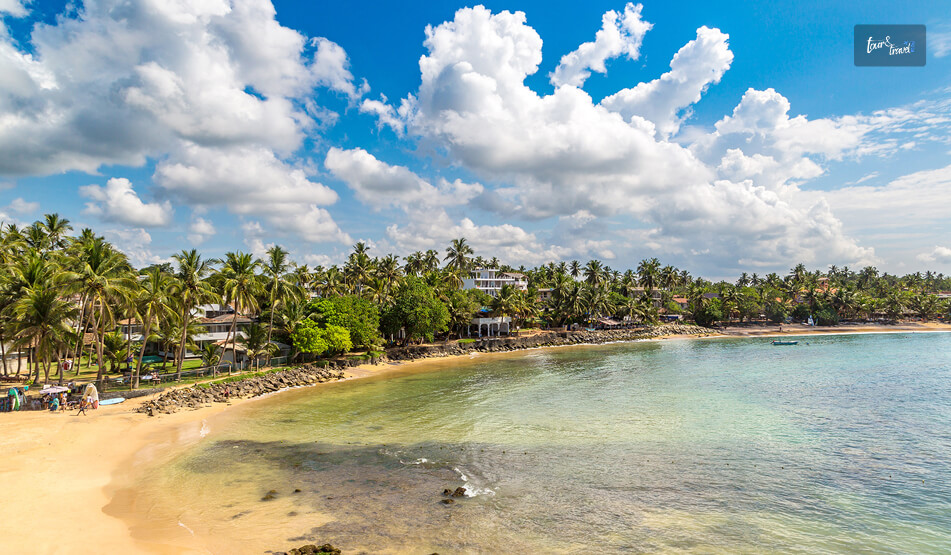
Mirissa Beach has been one of the most sought-after destinations if you want to explore the south coastal lifestyle of Sri Lanka. 

You can enjoy Mirissa with salt on your skin and a cold Lion beer in your hand. Furthermore, it is one of the most magical places to watch the sunset in Sri Lanka. 

It initially started as a sleepy surf stopover, and then it had a handful of guesthouses and beach shacks. 

Today, it is a small tourist town that buzzes with smoothie bowls, boutique stays, and a skyline that now brushes the palms.

During my first visit to Sri Lanka, Mirissa, still pristine, was the place to track tides and enjoy rice and curry for lunch. The beer and BBQ culture after dark was still an occasion. 

Also, as a backpacker, a family guesthouse near the Matara Highway was the accommodation I could manage at that time. 

However, today, Mirissa has changed. Despite the same south-coastal rhythm, the pace of life here has become faster and the accommodations smarter. 

So, here is a practical guide on where to stay in Mirissa. 

Where To Stay In Mirissa? My Quick Picks 

Before I get into the details about where to stay in Mirissa, here is my quick sneak peek into the top picks. 

Top PickMirissa Beach Villa
Best ValueD Canal House
Top VillaVilla Vista, Mirissa 
Best for FamiliesCasa Maria
Budget OptionBanana Bunks

Where To Stay In Mirissa? A Detailed Overview 

Based on the kind of experience you want, these are the best places to stay in Mirissa. I have picked them based on the pricing, amenities, and overall hospitality. 

1. Mirissa Beach Villa ( My Top Pick)

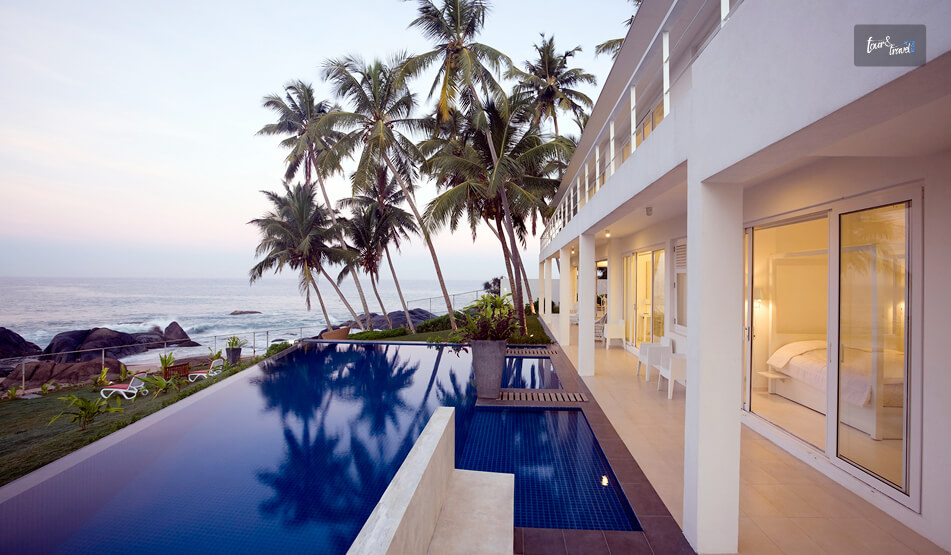
Mirissa Beach Villa ( My Top Pick)

The Mirissa Beach Villa is a testament to the quintessential slow living style of the southern coast of Sri Lanka. 

It has a white-washed facade and arched verandas. Furthermore, its classy interiors have hand-crafted teak furniture, soft linens, and splashes of tropical color.

So, the moment you step in, you experience the warmth. Furthermore, the Mirissa Beach Villa never feels pretentious despite its elegance. 

Furthermore, it has six bedrooms that are open terraces. Some of them face the Indian Ocean, and some the garden. 

You can also enjoy your time in the dreamy infinity pool here. 

2. D Canal House: The Best Value Option 

D Canal House is stylish and peaceful. Furthermore, it is more personalized than other stays in Mirissa. 

Also, it feels like a tropical hideaway in comparison to a hotel. Furthermore, it is surrounded by waterways and coconut palms. 

Another great thing is that you can take just a short walk from D Canal House, and you will reach Mirissa Beach. 

Along with its closeness to nature, D Canal House also boasts typical Sri Lankan artistry. 

The whitewashed walls, terracotta floors, and bursts of local color in the form of handwoven textiles and painted tiles! Everything here is very local! 

Moreover, D Canal House has rooms and bungalows, and each has its own verandah overlooking the canal and the garden. 

In addition, the saltwater pool is the perfect spot to spend an afternoon.

3. Villa Vista Mirissa: The Best Villa Experience You Want

Villa Vista Mirissa The Best Villa Experience You Want

Villa Vista is perched high above Weligama Bay. It is a multi-level sanctuary with a polished concrete, timber, and glass structure. 

It opens to the sea and the jungle. 

Furthermore, Villa Vista is a part of The Serendipity Collection, offering the promised privacy. 

Also, the suits in Villa Vista are minimalist, and the open-plan living spaces are airy. Moreover, it has an infinity pool that is elevated above the palms. 

Moreover, Villa Vista stands out because of the details it takes care of. The furnishings here are locally crafted, and the walls slide away to allow the salty air in. 

In addition, it has a private chef and a concierge team taking care of all your requirements. You can even opt for optional in-villa spa treatments.  

4. Casa Maria: The Best Place To Stay For Families  

Casa Maria is bright, airy, and charming. The whitewashed facade of the hotel looks like a slice of coastal Europe translated into the southern coast of Sri Lanka. 

The rooms here are simple, and that is what offers the maximum comfort. It has white linens, concrete floors, and wide verandas overlooking the jungle and the pool. 

Moreover, it offers an aesthetic sense of space with three pools dotted around the property and plenty of quiet corners to unwind.

Here, the family room is the best option. It is spacious, comfortable, and carefully designed for kids and parents who want a more relaxing experience without compromising the charm of a boutique hotel. 

5. Banana Bunks, The Best Budget Option In Mirissa 

Banana Bunks, The Best Budget Option In Mirissa

Banana Bunks is a short walk away from the happening cafe scene of Mirissa. It is also very close to Coconut Hill. 

Also, if you want to know where to stay in Mirissa on a budget, Banana Bunks is the place you must choose. 

Here, the rooms have bright, earthy tones, and they are well-maintained. Furthermore, the beds here are comfortable, and the bathrooms are generous. 

Furthermore, some of the rooms here have amenities such as outdoor bathtubs and open-air showers. 

In addition, you will find leafy communal spaces, a small pool, and an easy connection to Petti Petti Club. 

The Petti Petti Club is the beachfront sister spot of Banana Bunks, and it is one of the coolest places to hang out in Mirissa. 

How Long Should You Stay In Mirissa?

The duration of your stay in Mirissa will depend on your itinerary. 

If you are planning a short trip, two nights are enough to explore the beach and enjoy the local cuisine and sunset scenes before heading to the Hiriketiya Beach, the fascinating Ella, and Udawalawe. 

However, if you want to enjoy a slow traveling experience, you can plan a stay of 3 to 5 nights here and sink into the rhythm. 

You can spend your time here enjoying surfing and whale watching. You will also love the long, lazy afternoons.

Share on Social Media

Sibashree is a travel, culture, and leisure writer who has been writing since the age of 12 and professionally since 2014. With more than a decade of travel writing experience and journeys across India and several parts of the world, she brings a deeply personal and thoughtful perspective to her work. A student of English Literature and Mass Communication, Sibashree has always viewed travel as more than movement — for her, it has been a way of understanding people, cultures, and herself. Her passion for spiritual exploration has also led her to many unusual and meaningful destinations over the years. Outside of writing, Sibashree enjoys watching European cinema, reading about global politics, and reflecting on the stories hidden within everyday places.

Leave a Reply

Your email address will not be published. Required fields are marked *

title-img Related

READ MORE Oshino Hakkai

What Is Oshino Hakkai Famous For? How To Visit It And More 

BY  Sibashree Mar 31, 2026

Everyone knows that you cannot complete exploring Japan in a day. And I had no choice but to miss Oshino Hakkai on the first trip.  However, on the next trip, I made sure to plan a visit.  Of course, an image on Instagram was my major drive behind being so passionate about a trip to Oshino Hakkai.  I saw a series of houses with thatched roofs along the shore of a pond. The magnificent and snow-covered Mount Fuji stood behind, strong and unshakable, as the eternal truth.  Born and raised in the land of spirituality and the Himalayas, I had to visit Oshino Hakkai.  However, as I have explained in my narrative from Tokyo to Mount Fuji day trip, you have to time your trip really well and have to be extremely lucky to see the snow-capped Mount Fuji.  Also, if you are planning a trip in summer, you will only get to see Mount Fuji partially or fully covered by clouds.  Nevertheless, as Mount Fuji continues to act elusive, here is why Oshino Hakkai will win your heart.  Oshino Hakkai: Why Is Visiting The Eight Springs Of Oshino So Special?  As I stood at the center of where both Lake Kawaguchiko and Lake Yamanakako meet in the small village of Oshino, I was able to look at the eight sacred ponds of Oshino Hakkai.  These sparkling, clear water springs are all that is left from a long-lost sixth lake that existed hundreds of years ago. It's as if time stood still when you visit these sacred areas. When I looked into the water, I didn't see just water, and I saw history. The springs were used by pilgrims (Fuji-ko) during Japan's Edo period to cleanse their bodies and souls before climbing Mt. Fuji. What a magical process the water goes through!  From snow accumulation on the summit of Mt. Rainier, through melting and filtration through approximately 80 years' worth of porous lava before it actually emerges at this location, its absolute perfection.  Moreover, it was crystal clear and pure.  Also, as I walked through the "Natural Monuments," I had an intense feeling of appreciation for the many years of waiting, so that each would have such serenity. How To Reach Oshino Hakkai? The journey to the stunning waters of Oshino Hakkai is as much a part of the experience as the location itself.  Here’s my recommendation for how to get to Oshino Hakkai, depending on whether you want a more convenient (train) or an adventurous (rental car) way of doing so. 1. Reaching Oshino Hakkai From Tokyo When travelling from Tokyo, you have several options available.  Highway bus lines go to Oshino Hakkai directly.  If you plan to take the train, either Fujisan Station (the nearest station) or Kawaguchiko on the Fuji Kyuko Line is your best option.  Once at Fujisan or Kawaguchiko, catch a local bus to get to the village. You may take the Fujikko-go (tourist buses), Mt. Fuji World Heritage Loop, or Uchino or Hirano routes via local bus from Fujisan Station.  Generally, there are 1-2 buses/hour on these routes. At Kawaguchiko Station, there are 11 Fuji-Q buses each day that leave for Lake Yamanaka Oriental side, and the 11 Fuji-Q buses that leave for Gotemba and also the Oshino springs. Just watch out for the Oshino Hakkai or Oshino Hakkai-Iriguchi as their stops. 2. Driving And Village Logistics I rented a car, and it is the most convenient way to visit the nearby Five Lakes region.  Parking here is convenient, and there are many public and private parking spaces.  After parking the car, you can explore the nearby villages.  However, you will need 300 JPY to enter the Hannoki Bayashi Shiryokan Museum.  You can visit the museum from 9 AM to 5 PM every day for a deep understanding of the local history.  Moreover, you will find signage in Japanese and English for every pond. My Trip To Oshino Hakkai I felt a bit out of place when I got to Oshino Hakkai.  I thought it would be a nice, quiet area for reflection and meditation, free of other people.  However, I found a busy and fully built-out village of people, shops selling food, and many shoppers and visitors to the area, as well as people engaging with local merchants about the items that were being sold.  There were also a lot of people around Wakuike Pond, and they were excited to see how clear the water of the pond was and the fish that were swimming in the pond. 1. Finding Solitude And Peace Within The City Although I typically search for the peace of solitude, I did not mind being in a populated environment.  I became curious after wandering among the crowds to find out where my curiosity would take me.  I found a quiet, undeveloped area just minutes from the main road, where I could hear the water from the pond, see ducks on the water, and watch an old man with two little boys quietly fishing right next to me. 2. Folklore And Galactic History The folklore & Galactic history of the 8 springs were fascinating to explore. Especially, that water from Wakuike Pond traveled on the Space Shuttle Challenger in 1983 for a snow-making experiment in space! 3. My Personal Highlight  The highlight for me was the open-air museum at the Hanoki Bayashi Shiryokan. It was a true escape from contemporary living, immersing yourself in the cultural heritage of the area. 4. Hannoki Bayashi Shiryokan: The Main Attraction Of The Trip  To tell the truth, I went to Oshino Hakkai because of Hannoki Bayashi Shiryokan.  One of the most amazing sights I've seen in the Five Lakes region was the thatched-roof farmhouses against a colorful garden and the imposing backdrop of Mount Fuji. I became engrossed in the displays of antique household items and rustic farming implements inside the traditional farmhouse.  The tour was brief, but I stayed by the big pond long after I was done because of the subtle beauty of the architecture.  I couldn't resist making another lap because the landscaping was so welcoming. Read Also: What Are The Things To Do In Jimbocho Book Town? Visit The Best Book Stores And Cafes Cherry Blossom Kyoto Japan: 2026 Season And The Top Viewing Spots Osaka Food: Know What To Eat In The Streets Of Osaka

READ MORE Osaka food

Osaka Food: Know What To Eat In The Streets Of Osaka 

BY  Sibashree Mar 27, 2026

Osaka food is slowly and steadily surpassing Tokyo as the poster for Japanese cuisine.  Furthermore, it has been just a few days since La Cime in Osaka became the best restaurant in Japan in the Asia's 50 Best Restaurants list in 2026.   However, the soul of the Osaka food lies in the streets. The Dotonbori neighborhood was especially the best when I visited.  In fact, I was so much in love with the street food here that I chose to cancel the previous booking and chose a hotel in Dotonbori instead.  Also, the Dotonbori Market was the epicenter of my food exploration in Osaka.  Moreover, how can you ever forget what Anthony Bourdain had to say about food in Osaka? He said,  “I’m a big believer in winging it. I’m a big believer that you’re never going to find the perfect city travel experience or the perfect meal without a constant willingness to experience a bad one.  Letting the happy accident happen is what a lot of vacation itineraries miss, I think, and I’m always trying to push people to allow those things to happen rather than stick to some rigid itinerary.” So, let’s explore Osaka food at its best in Dotonbori. What Are The Best Osaka Food You Can Try On The Streets?  Osaka, despite its funky and vibrant appearance, has a history that goes back to the Edo Period in the 17th century.  Furthermore, it was a major trading hub during that period. Also, it was the same time when Osaka earned the nickname “Japan’s Kitchen.”  Moreover, Dotonbori extends across a canal that reaches out to the sea. So, you will always find fresh seafood in the local delicacies.  Ramen Udon Torikara Takoyaki These are some of the delicacies served by the local vendors in Osaka.  However, just mentioning these names does not justify the tangible experience of Osaka food.  I saw a big red octopus getting dressed and served, and the lobsters were irresistible.  Nonetheless, these are the best street foods you can try in Osaka.  1. Mitarashi-Dango Pocket-Pinch: 150 JPY  Mitarashi-Dango is the most comforting street food you will try in Osaka. Furthermore, these are great for budget-friendly travelers and backpackers like me.  These rice balls are sweet and chewy, and have a hint of burnt taste due to the unique browning process that takes place once the rice balls are boiled and cooled.  Furthermore, the glaze of the sweet soy sauce makes it perfect!  2. Okonomiyaki Pocket-Pinch: 400-450 JPY  Do you like frittata? Then, you will love these Japanese savory pancakes even more.  Okonomiyaki has all the flavors. However, you never feel heavy after having them. Furthermore, these pancakes are simple, as cabbage, flour, and eggs are the main ingredients.  However, the local street vendors add seafood and scallions to the dish for more flavor and color.  Also, they serve it with barbecue sauce.  3. Daifuku Mochi Pocket Pinch: 350-400 JPY Mochi, the round rice cake, is a staple Japanese delicacy.  It has the chewiness of Mitarashi-Dango. However, it has filling as the daifuku part of the name suggests.  I loved the ones with strawberry filling, and you can also try them with other fruits.  4. Torikara Pocket-Pinch: 300-400 JPY If the USA has its deep-fried chicken, Japan also has Torikara.  I loved them, and the fried potatoes and the variety of sauces will be the most amazing additions.  5. Takoyaki Pocket Pinch: 700-800 JPY  Takoyaki is probably the most famous street food of Osaka and Japan.  Japanese people love these octopus balls, and that’s why the Takoyaki stalls in Dotonbori are countless.  Furthermore, the scallions and flakes of dried fish sprinkled on top make the dish really amazing.  Moreover, the batter is gooey, and it will melt in your mouth.  6. Taiyaki Pocket Pinch: 300 JPY This is a fish-shaped pastry and my silent favorite among everything I tried in Osaka.  The smell is irresistible, and the main attraction is to see it getting ready in front of your eyes.  You can have this vanilla-flavored pastry with cheese, custard, and hamburger meat. However, the red bean paste is the ideal choice if you want to follow the grammar of East Asian cuisine. 7. Udon Pocket Pinch: 650 JPY The hot broth and noodles! I know that I have kept you waiting for the longest time to find this lethal combination on my list.  The noodles in Udon are thick, and with the right seasoning, their taste grows on you. That’s why you can eat udon every day and not get bored.  Furthermore, there are many variations of udon, such as the curry udon, yaki-udon, nabeyaki udon, and tempura udon.  8. Soba Pocket Pinch: 400 JPY Soba has buckwheat noodles in hot broth. Furthermore, these noodles are darker and thinner.  Furthermore, the simplicity of the dish and flavors make it a perfect palate cleanser.  I loved a bowl of soba with scallions.  9. Ramen Pocket Pinch: 700-800 JPY Ramen, of course, is the quintessential wheat noodles the whole world has been eating for quite some time now.  I tried different variations of ramen in Osaka. However, I loved the one with pork the best.  10. Yakitori Pocket Pinch: 1000-1100 JPY Yakitori is the Japanese take on grilled meat.  Furthermore, you will get many variations in the meat used here. You will get bone meat, chicken skin, seafood, and many other varieties here.  11. Sushi  Pocket Pinch: 1200 JPY If Sushi is an emotion, then it runs in the veins of Osaka.  From sea urchin to tuna, eel, and salmon, Osaka spoils you with choices in sushi.  Furthermore, the art of eating sushi is something that you need to understand. It is just not about gulping down some food.  It’s also about being a part of the Japanese culture.  12. Taiko Manju Pocket Pinch: 100-150 JPY You may think that Taiko Manju and Taiyaki are the same, but the origin and texture are very different.  Despite the use of the same ingredients, Taiko Manju is fluffier. Furthermore, their drum shape is inspired by the taiko drums, which are integral parts of Japanese festivals.  Read Also: What Are The Best Day Trips From Tokyo? Most Popular Ones You Will Love Cherry Blossom Kyoto Japan: 2026 Season And The Top Viewing Spots Is an Mt Fuji Day Trip From Tokyo Worth It? How To Plan It?

READ MORE Japanese shrines to visit

What Are The Best Japanese Shrines To Visit? Celebrating Nature Spirits And Inherent Spirituality

BY  Sibashree Mar 31, 2026

I am eager to engage with the traditional cultures of Japan through my visit to Japanese shrines. When you walk right through the enormous torii gate, something almost magical happens to your inner being. Leaving the hectic modern life behind, you enter a space where time appears to move at a different pace, and that is when you experience a certain tranquility. Situated in a Japanese Shinto shrine are rich traditions and a belief system that make the shrine a very sacred place. Moreover, the shrine is the perfect place to practice and get some understanding of the age-old Shinto rituals. Along with that, every visit to a Shinto shrine, I take a whiff of the smell of burning incense or cedar, or just have a glance at the bright red cedar floor in the forest, and each time I get a different insight into how primitive communities have transformed the land. Although it is really tough to designate the best Japanese shrines to visit, I would like to show you the ones that left a deep impression on me. You can visit most of these shrines on a day trip from Tokyo. But before that, let's talk about the Shinto religion in Japan and what makes Shinto shrines so priceless. The Shinto Religion In Japan: A History Rooted In Nature Shinto is an indigenous religion of Japan and is the oldest form of worship in Japan.  It differs from most Western religions in that there is no central text for Shinto, nor is there a single historical founder of the faith.  Rather, Shinto grew out of the relationship that early Japanese people had with the land and their environment.  While Shinto is less about trust through a prescribed belief (or doctrine), it is more about lifestyle, and in particular, how to live life in harmony with nature. 1. The Core Belief Of Kami At the heart of Shinto lies a philosophy of the universe where various forms of nature (of the divine) are inhabited by divine spirits known as kami (in Shinto).  The kami can take on many different forms, from mountains, trees, rocks, and waterfalls to winds, rains, fertility, and much more.  Furthermore, in Shinto, people believe that after humans die, they become kami themselves.  As a result, it is a profoundly beautiful and cyclical view of existence where our forebears continue to be present with us to influence and guide our lives in the landscape we live in today. 2. Rituals, Offerings, And Evolution At The Best Japanese Shrines To Visit  Shrines are where kami (gods) receive worship from believers in Shintoism.  Because kami can be both good and bad for human beings. So, people can make offerings in hopes of receiving blessings from them.  Shinto uses purification and prayers as a method of avoiding bad kami through Shinto rituals.  There are no founders, no scriptures, or no absolutes in Shintoism, and it has no preaching or strictures.  Instead, Shinto relies on time-honoured traditions to help ensure the spiritual well-being of its followers, or for them to receive good fortune. As a matter of fact, Shintoism was Japan’s official religion from the 1870s until the 1940s.  It was officially separated from Buddhism at that time. Shintoism continues today to be an important part of Japanese culture and exists amicably with Buddhism. What Are The Features Of The Shinto Shrines To Visit In Japan?  Shrines are places where worshippers come to honor the kami.  If you are staring at a map or walking on a street, you can recognize these locations by their shrine-related words. Shinto shrines in Japan end in –jinja, –jingu (this one is reserved for Imperial shrines), or –taisha.  As I travel to a new town, one of my favourite things to do is try to find these suffixed words, as I know there are shrines nearby, and I have a quiet place to relax. 1. The Types Of Shinto Shrines  Each type of Shinto shrine has a different spiritual purpose to accomplish. In the table below, I have tried to divide the shrines into different categories.  Types of Shinto ShrinesWhat They MeanImperial ShrinesHistorically funded and overseen by the government.Sengen ShrinesDedicated specifically to the deity of Mt. FujiInari ShrinesThese are for the kami of rice and prosperity (easily spotted by fox statues).Tenjin ShrinesThese shrines worship the kami of Sugawara Michizane, a famous scholar and politician.Hachiman ShrinesDedicated to the kami of war and protection. 2. Distinct Architecture Of The Shinto Shrines  Torii gates are the easiest and most recognizable way to mark Shinto shrines.  These gates are entrance accessories to the shrines, and are usually made of wood painted in the color combination of bright orange and black. Although some can be made of stone.  After the gate, you will find the worship hall (haiden), where you can offer prayers. Furthermore, the main sanctuary (honden) is the most sacred.  Also, you will see shimenawa or sacred straw ropes and komainu or guardian lion-dogs in the architectural features of the shrines.  Moreover, ema are small wooden plaques where visitors express their innermost desires to the gods and hang them to be read. What Are The Best Japanese Shrines To Visit?  There are about 80,000 Shinto shrines in Japan. However, based on the shrines I have visited, I have made choices of which I consider to be the most attractive places to visit for any traveler. 1. Fushimi Inari Shrine, Kyoto  Probably the most widely recognized image of Japan is Fushimi Inari Shrine.  It is well-known for its thousands of vermillion torii gates "tunnel" that lines the 4 km track going up Mount Inari.  Being the main shrine of all shrines, Inari, the god of rice and sake, is deeply significant.  I advise you to hike a bit more on the mountain. The lower section is very crowded, but the upper trails have a serene atmosphere where you can enjoy the fox statues of the deities in an unhurried manner. 2. Meiji Shrine, Tokyo Meiji Jingu is the most magnificent Imperial shrine in Tokyo.  It is also quite different from the flashing neon lights of the nearby Harajuku.  It is a shrine devoted to Emperor Meiji and Empress Shoken.  Moreover, a forest of more than 100,000 trees surrounds it. To me, this shrine stands for the "hopefulness" of Shinto.  Moreover, it's a place where you can stroll along wide gravel paths, look up huge sake barrels that brewers have given. Also, if you're lucky, see a Shinto wedding ceremony carried by a slow, graceful bridal party crossing the courtyard.  3. Toshogu Shrine, Nikko The Toshogu Shrine in Nikko is a very bright and gaudy place with the use of various colors and gold.  This shrine is the final resting place of Tokugawa Ieyasu, the founder of the Tokugawa Shogunate.  Detailing here is mindblowing, and you will notice the elements such as "See No Evil" monkeys and the "Sleeping Cat" carving.  It is a one-of-a-kind place as it has preserved numerous Buddhist features even after the Meiji-era separation of the two religions. Thus, it is a combination of a regal and an eccentric style, which is a wonder in itself. 4. Itsukushima Shrine, Miyajima Located on Miyajima Island near Hiroshima, Itsukushima is world-famous for its "floating" torii gate.  The shrine stands on stilts over the water, so it looks like it's drifting in with the tide.  It's a classic example of Shinden-Zukuri design.  The thing is that I always go at sunset when the gate fades into shadow against the Seto Inland Sea.  That moment feels deeply quiet, almost sacred.  It seems hard to ignore how powerful that stillness can be. And the colors shift with the light. Making it one of Japan's most striking photo spots. 5. Nezu Shrine, Tokyo Nezu Shrine is perfect if you want some respite from the crowded temples of Kyoto.  There's a small tunnel of torii gates like Fushimi Inari, and a koi pond that glows under the Sun.  The buildings flash red and gold, kind of like Nikko's Toshogu, but it is smaller and simpler.  Moreover, late April brings wild azaleas up the hillside and pink waves rolling through purple hillsides. You don't see that everywhere. 6. The Sengen Shrines Of Mt. Fuji Located in the area of Fuji Five Lakes, I was quite impressed by two shrines that are a must-see for me.  Fujiyoshida Sengen Shrine is right at the foot of the mountain and was the old point for pilgrims who started climbing the volcano.  It has a very ancient feel thanks to huge cedar trees that surround and stone lanterns.  Close to it is the Arakura Sengen Shrine that gives the "typical" Japanese photograph. It has a red five-tiered pagoda with Mt. Fuji towering in the background.  If you decide to go to the top, you will have almost 400-step stair climbing, but the panorama is breathtaking. 7. Kumano Nachi Taisha, Nachisan This shrine is the main shrine of about four thousand Kumano shrines and is located on the Kii Peninsula.  It is extremely beautiful because it is very close to Nachi Falls, which is the highest waterfall in Japan.  Also, it is quite a spiritual experience to witness the vivid red pagoda of the shrine contrasting with the white thundering falls and the misty mountains.  Moreover, it is one such place of worship along the old Kumano Kodo pilgrimage route. Read Also: Haneda Vs Narita: Which Tokyo Airport Should You Choose For Your Next Trip? Are You Planning A Trip To Osaka? This Is Your Quintessential Guide Is an Mt Fuji Day Trip From Tokyo Worth It? How To Plan It?