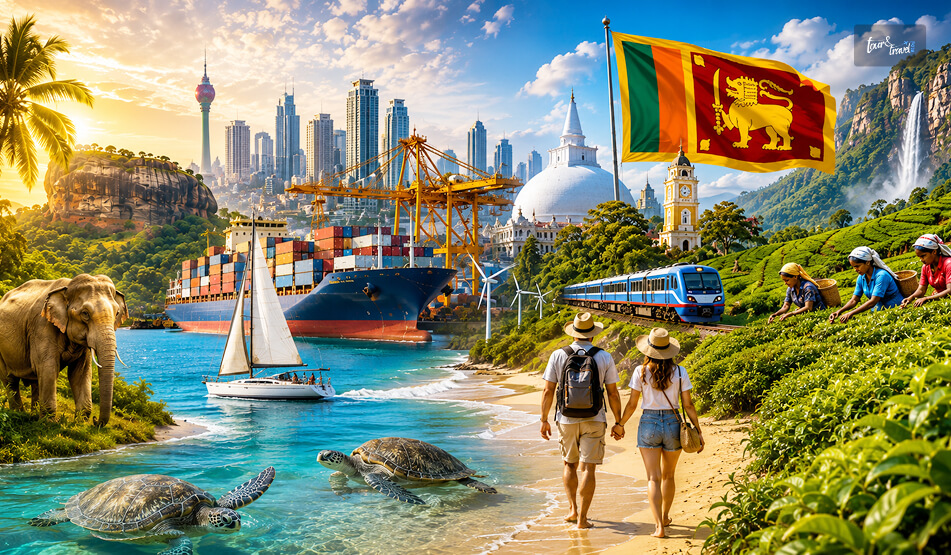
After the July 2026 reclassification of the World Bank, Sri Lanka has become an upper-middle-income economy. The reclassification has happened as a result of a 5% GDP rebound driven by tourism, industry, and finance, three years after its 2022 debt default.
Especially tourism has hit record arrivals in 2025 (2.36 million), though revenue and per-visitor spending still trail 2018 levels.
Also, authorities are targeting $4 billion in 2026 tourism revenue through a “value over volume” strategy.
However, the recovery narrative remains complicated with IMF debt-risk warnings, inflation, and a Middle East crisis.
A Story of Recovery!
This is what the World Bank has called the upgrade of the Sri Lankan economy in 2026. Overcoming the deep economic crisis in 2022, it is now an upper-middle-income economy.
But what does it mean for the tourism landscape of the island country? After traveling to Sri Lanka many times, I am curious to know whether it indicates rebranding and a paradigm shift.
The answer is a thumping YES, and tourism has been a major force behind the economic expansion of 5% (GDP Growth) in Sri Lanka in 2025.
So, here is a deep dive into how Sri Lanka economy 2026 is going to impact the country’s tourism.
What The World Bank Classification Of Sri Lanka Economy 2026 Actually Measures
World Bank moved Sri Lanka from lower-middle to upper-middle income on July 1, 2026, based on 2025 GNI per capita data, alongside Jordan, the Philippines, Vietnam, and Micronesia.
The upper-middle band runs roughly $4,516–$14,005 GNI per capita, and Sri Lanka crossed the threshold narrowly with a GNI of $4,670 in 2025.
So, there are two takeaways from the reclassification.
First of all, “upper-middle income” is a technical designation. It does not describe the household living standards.
Secondly, there has been a lot of overstatement about the reclassification. However, as mentioned, Sri Lanka has just crossed the threshold.
It is not a transformation, and the country could plausibly sit near the boundary for several classification cycles depending on GNI growth, exchange-rate movements, and population changes.
Again, the World Bank has used the Atlas method, which smooths out exchange-rate volatility.
In this method, the World Bank has divided economics into four bands.
Low-Income
Lower-Middle Income
Upper-Middle Income
High Income
This recent update has covered 218 economies and will remain the reference classification until June 30, 2027.
So, while it is a significant marker for a country that was rationing fuel, running double-digit inflation, and defaulting on its external debt just four years earlier, the economic story has more layers to it.
Sri Lanka Is Not A First-Time Entrant To This Category
There is a third aspect to talk about when we discuss the reclassification of the Sri Lankan economy.
Sri Lanka has not moved to this level for the first time. It used to enjoy the same status before 2022, after which the crisis knocked the economy back down to lower-middle income.
So, this is like regaining a previously lost ground instead of achieving a brand new milestone.
Also, there are the practical consequences of this upgrade.
It plays a role in determining a country’s eligibility for concessional financing and development assistance, meaning Sri Lanka’s terms of access to certain low-cost loans may shift as a result of the upgrade.
The Recovery Story Behind The Upgrade
The story behind the reclassification of Sri Lanka economy 2026 is different from that of Vietnam or the Philippines.
The World Bank itself clarifies that Vietnam’s upgrade reflects a decade of export-led expansion.
On the other hand, the Philippines reflects broad-based growth across nearly every sector.
However, the reclassification of the Sri Lankan economy is a resilient narrative following a severe crisis.
The numbers vouch for this claim.
Just three years back, in 2022, the country faced a crisis that almost brought it to the brink of collapse.
However, in 2025, the real GDP expands by 5%. Industrial activities alongside growth in the financial and tourism sectors have propelled this growth.
Also, the crisis in 2022 is worth remembering as it was the first sovereign default of the country in its post-independence history.
It happened due to a foreign exchange collapse that led to fuel and medicine shortages nationwide.
The IMF Stepped In
The International Monetary Fund (IMF) offered an Extended Fund Facility program in March 2023.
At that time, the country’s foreign reserves were $1.9 billion, and the LKR had lost half of its value.
“…completed the combined Fifth and Sixth Reviews of the Extended Fund Facility for Sri Lanka, providing the country with immediate access to SDR508 million (about US$695 million) to support economic policies and reforms”
In the same press release, the IMF has again mentioned that the total program payout now stands at around $2.4 billion.
In addition, in the IMF Country Report No. 26/111, we can see that the fiscal performance of Sri Lanka has improved.
The tax revenue in 2025 reached 15.4, which was a sharp rise from the tax revenue figure of 9.9 in 2023.
In addition, the primary budget surplus exceeded 5% of GDP in 2025, ahead of program targets.
So, overall, it is a faithful macroeconomic progress. However, it does not mean absolute stability or the Sri Lankan economy being completely risk-free.
A Snapshot Of Sri Lanka’s Economy Since 2022
Here is a summary of the key changes in the economy of Sri Lanka from 2022 to 2026.
(Sources: World Bank, IMF, Sri Lanka Tourism Development Authority (SLTDA), World Bank, and Sunday Times).
Indicator
2022 (Crisis Low)
2023
2024
2025
2026
World Bank income classification
Lower-middle income
Lower-middle income
Lower-middle income
Lower-middle income
Upper-middle income (from July 1)
Real GDP Growth
Deep contraction
-2.3% Contraction (Stabilized by mid-year after the 2022 crash)
5% Growth
5% Growth
Moderating with inflation shock mid-year
Foreign reserves
$1.9 billion
$4.4 Billion
$6.12 Billion
$7 Billion (Estimated, March)
$6.8 Billion (End of April)
Tourist Arrivals
Recovering
1.48 Million
2.05 Million
A Record of 2.36 Million
A Target of 3 Million
Tourism Revenue
Depressed
$2.0 Billion
$3.17 Billion
$3.2 Billion
A Government Target of $4 Billion
Headline Inflation
Very High (Crisis)
Returned to Single Digits. Averaged 16.5% annually, but dropped from a 60-70% peak down to 4% by Dec.
Deflationary Period
5% (Year-End)
Spiked to 5.5% by May amid Energy Shock
After sharing the financial summary, let’s talk about the tourism performance in 2025-26 and what the future looks like.
The Actual Tourism Scene Of Sri Lanka In 2025-26
The tourism sector of Sri Lanka had a record year in 2025.
However, when analyzing data from various sources, I found out that some structural challenges still remain, and an income reclassification cannot fix them directly.
The Gap Between Tourist Arrival And Revenue
The Sri Lanka Tourism Development Authority has confirmed an arrival of 2,364,978 tourists in 2025.
It even broke the record of 2.33 million tourist arrivals in 2018.
However, a Daily FT report published on 12th January 2026 clearly mentions that, revenue-wise, the year-on-year revenue growth in 2025 was just 1.6% despite a boost of 15% in tourist arrivals.
In addition, the tourism revenue in December 2025 went down by 14.8% YoY ($ 308.6) despite a record set in tourist arrivals.
The Tourist Spending Gap
The tourist spending gap depicts the real story.
The same Daily FT report I have earlier referred to has mentioned that the average daily tourist spend fell to about $148 in 2025.
Industry analysis attributes much of this to the rapid growth of budget guesthouses and Airbnb-style listings.
Amarasiri, a guesthouse owner and a friend I met during my trip to Sri Lanka, shared his opinion on this.
“Most of these offer a pricing of under $50 a night, pulling the market average down against higher-end hotels charging $125–150.”
In addition, the overall contribution of tourism to the GDP has also shrunk. It was 5% in 2018, and as of 2025, it stands at 3%.
Does The Momentum Continue In 2026?
The tourism industry of Sri Lanka had a great start in 2026. By the first quarter, the country already had over 740,000 visitors.
February was the month when the numbers peaked. As a result, the tourism authorities had set a target of 3 million arrivals and $4 billion in tourism revenue for 2026.
Furthermore, there was an explicit strategic shift toward high-value visitors rather than sheer volume.
To support that shift, the Tourism Ministry again launched an eight-month global marketing campaign in April 2026, backed by roughly $6.4 million and targeting 12 to 15 source markets.
These markets included India, the UK, Germany, China, and the Middle East.
However, nobody anticipated the geopolitical shock in the Middle East. It caused a fall in tourist arrivals of around 20% in March on a YoY basis.
Also, with current day-to-day proceedings, the numbers do not seem to go up before September 2026.
The same conflict pushed up fuel costs sharply, and rupee-denominated Brent crude prices rose by more than half in about ten weeks in early 2026.
Again, it disrupted flight routing, given that the Middle East accounts for roughly a third of flights into Sri Lanka.
Does The Income Reclassification Actually Move The Needle For Tourism?
Here is an honest assessment.
The reclassification of Sri Lanka economy 2026 by the World Bank is not a policy lever for a direct transformation in the tourism sector.
However, it is an intersection of the tourism and financial sectors in many concrete ways.
1. Investor And Lender Perception
The reclassification as an upper-middle-income country can give positive signals in how international investors, hotel groups, and lenders assess country risk.
Thus, it will improve the path for hospitality infrastructure investment.
However, the reclassification does not override the more immediate signals investors watch. These signals are:
Currency Stability
Debt Sustainability Ratings
The Trajectory of IMF Programs
2. Currency And Pricing Dynamics
A stronger and more stable rupee indicates how affordable Sri Lanka feels to foreign visitors.
Furthermore, currency stability was one of the explicit achievements cited in IMF program reviews.
Though 2026’s energy-driven inflation spike and the accompanying rate hike show that stability is not guaranteed and can reverse quickly under external shocks.
3. Financing Terms, Not Tourist Experience
The most practical effect of the classification is on Sri Lanka’s access to concessional financing.
The reality is that upper-middle-income countries generally face different (often less favorable) borrowing terms than lower-middle-income ones.
Now, this is a huge factor in determining the ability of the government to fund tourism infrastructure, including airports, roads, and utilities in emerging destinations.
However, it is an indirect, medium-term channel rather than something a visitor booking a trip this year would notice.
4. Brand Narrative, Not Policy Change
The most immediate effect of this reclassification is reputation.
Economic recovery and upper-middle-income! Terms like this make for a more compelling destination narrative than “post-crisis” or “developing economy in distress.”
The tourism authority of Sri Lanka is already leaning into a comeback narrative in its 2026 marketing push.
Now, the World Bank news gives that campaign an additional, credible data point to cite.
What the classification does not do is directly address the structural issue tourism officials themselves have flagged. It is getting visitors to spend more per day.
That’s a product mix and marketing problem.
It encourages MICE travel, weddings, wellness tourism, and higher-end stays that Sri Lanka is already tackling on its own terms, income classification or not.
5. Unlocking High-Value Tourism Niches
The Wellness Boom: Wealthier economies pull health-conscious travelers looking for upscale, authentic Ayurvedic and holistic medical retreats.
MICE Travel Magnet: Corporate infrastructure upgrades position Colombo as a highly competitive regional hub for Meetings, Incentives, Conferences, and Exhibitions (MICE).
Niche Eco-Adventures: Enhanced funding speeds up the preservation of wildlife sanctuaries and marine parks, drawing premium sustainable-travel consumers.
6. Strategic Advantages Over Competitors
The economic reclassification gives Sri Lanka a strategic advantage over its competitors.
The table below explains the key areas.
Metric / Aspect
Sri Lanka
India
Bali/Indonesia
World Bank Status
Upper-Middle Income
Lower-Middle Income
Upper-Middle Income
Tourism Focus
High-end wellness and boutique
Diverse mass and cultural
High-volume mixed leisure
FDI Appeal
High (Fresh post-crisis rebound)
High (Scale-driven infrastructure)
Mature / Nearing saturation
Per Capita Footprint
Low volume, high expenditure
High-volume variance
Severe over-tourism pressures
7. Supply-Side Infrastructure And Service Upgrades
Institutional stability triggers major foreign direct investments.
Mega ventures such as the $850 million City of Dreams integrated resort in Colombo are one of the most prominent examples of it.
Furthermore, with a rising per capita income, there is an empowerment of businesses to invest heavily in formal hospitality training.
As a result, the workforce skill gaps are eliminated.
Moreover, a greater fiscal boom allows the country to fund critical tourist amenities.
These include smoother highway connectivity to expanding green and renewable energy grids for eco-tourism.
They are working to protect the biodiversity and improve the livelihood of the people in this area.
GEF is supporting this initiative with funding of 3.5 million USD.
However, with these initiatives already ongoing, you may question what the reclassification can actually bring to the table.
Why Does The Recovery Remain Fragile?
The story of revival for the economy of Sri Lanka focuses on human resilience.
Now, if you think I am not giving the reclassification its due credit, I have my concern areas to justify it.
High Debt And Sustainability Risks
The IMF’s own debt sustainability framework rates Sri Lanka’s overall risk as high.
Furthermore, Fund staff have acknowledged that even after a successful program and a near-complete debt restructuring, sustainability risks are expected to persist for years.
Also, external debt can become more demanding as early as restructured bilateral and commercial debt matures alongside IMF repayments.
In addition, the current IMF Program will expire in March 2027.
Thus, despite the reclassification, there is a narrow window to build reserves and sustain the reforms already made.
Dependency On Official Sector Support
The return of Sri Lanka to the international capital markets is yet to happen. Furthermore, the country has not built reserves to the program’s target threshold.
These show how the country is dependent on official-sector support rather than standing fully on its own.
Furthermore, late 2025 and the year 2026 so far have brought two external shocks.
1. Cyclone Ditwah Struck in Late 2025
It has called for an emergency IMF financing and a supplementary government budget for relief and reconstruction.
2. Middle East conflict
The Middle East conflict has caused a hike in fuel prices, problematic remittances, and disrupted flight connectivity through the first half of 2026.
Trade Policy Adding Another Layer Of Uncertainty
Sri Lankan economy also faces uncertainty due to its trade policy,
Sri Lanka is currently facing an effective US tariff rate of around 20% under Section 122 measures.
Furthermore, its preferential GSP+ access to the EU market is set to expire in 2026, with authorities planning to reapply under a revised framework.
None of this directly targets tourism, but it affects the broader currency and investment environment that shapes how affordable and accessible the country feels to international travelers.
So, What Does The Reclassification Actually Mean For Travelers? The Practical Takeaways
For us, the global travelers and global travel writers, the practical takeaways are more modest and specific than the headlines suggest.
Trend / Strategy Component
Key Insights and Details
Strategic Focus / Impact
Pricing and Market Position
Prices will drift upward gradually, narrowing the gap for mid-range and upmarket properties.
“Value over volume” strategy, as budget travelers will see higher costs due to post-2026 inflation.
Target Source Markets
Courtship of new markets (Poland, Eastern Europe) alongside traditional ones (India, UK, Germany).
Diversifying and expanding future arrivals growth.
Growth Segments
High focus on MICE (Meetings, Incentives, Conferences, Exhibitions), weddings, and wellness travel.
Driving higher per-visitor spend across the sector.
Risk Factors
Vulnerability to external events like Cyclone Ditwah and Middle East conflicts.
Tourism numbers swing sharply based on geopolitical and weather risks, not just domestic policy.
The actual challenge of the tourism sector remains in converting the record visitor numbers into a kind of high-value, high-spend visits that generate the expected revenue growth.
The income upgrade may support that ambition indirectly, through investor confidence and destination narrative.
However, the short-term fortunes of the sector will likely be shaped far more by currency stability, fuel prices, and regional geopolitics.
Also, the outcome of Sri Lanka’s IMF program through its March 2027 conclusion will be a more important factor than the income bracket in which the World Bank places the country.
Sibashree is a travel, culture, and leisure writer who has been writing since the age of 12 and professionally since 2014. With more than a decade of travel writing experience and journeys across India and several parts of the world, she brings a deeply personal and thoughtful perspective to her work. A student of English Literature and Mass Communication, Sibashree has always viewed travel as more than movement — for her, it has been a way of understanding people, cultures, and herself. Her passion for spiritual exploration has also led her to many unusual and meaningful destinations over the years. Outside of writing, Sibashree enjoys watching European cinema, reading about global politics, and reflecting on the stories hidden within everyday places.
The Yala National Park is the ideal place for a dawn safari. As the first rays of golden light pierce through the canopy and the untamed bush comes to life, you will enjoy an acoustic and raw symphony.
You will listen to the rumble of wild elephants and the exotic birdcalls. Furthermore, you will spot crocodiles gliding into still lagoons.
You will also find monkeys scampering through the treetops, and if you are extremely lucky, you can even see a Sri Lankan leopard.
So, no wonder that Yala National Park is a bucket-list destination when you are on a trip to Sri Lanka.
However, finding the right accommodation, the ultimate sweet spot to explore the Yala National Park, can be a daunting task.
You can find a wide range of accommodations here, including the avant-garde ones and the bush camps.
Furthermore, there are some family-run guesthouses and luxurious canvas cocoons. So, in this guide, I will discuss where to stay in Yala National Park.
Where To Stay In Yala National Park? Pick The Zone Based On The Experience You Want
Before you choose an accommodation for yourself, you must decide on the area you want to stay in.
You need to especially understand the entry points of Yala National Park and the surrounding regions.
It is more so because the logistics of your safari will depend on the base and the entry point to the national park you are choosing.
1. Tissamaharama Or Tissa
Tissa is just a distance of 20 minutes from the Palatupana Gate, or the main gate of the Yala National Park.
So, this historic lakeside town serves as the primary gateway to the park. Also, here, you will get to indulge in a sense of wilderness paired with civilization.
Moreover, the town has strong infrastructure, such as
Pharmacies
Small Restaurants
ATMs
Cafes
Moreover, you may not find massive architectural buildings, but you will get boutique lakeside hotels offering easy evenings, proper amenities, and strolling along the water.
2. Kirinda And The Palatupana Coast
The Palatupana coast is located to the south of Tissa. Also, it is the place where the jungle collides with the crashing waves of the Indian Ocean.
The Palatupana Coast further stretches into Kirinda. Kirinda has the most opulent coastline, with elephants wandering down onto the sand.
Furthermore, here, you will find the ultra-luxurious and specially designed eco resorts.
Also, staying here means that you are very close to the national park.
3. Inside The Buffer Zone
If you want the most immersive experience in the Yala National Park, you can choose one of the high-end camps within the protected buffer zones of Yala.
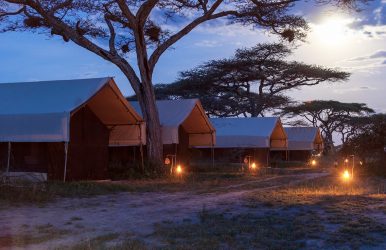
You will stay in canvas tents here, and you will love the experiences such as open-air dining, lantern-lit pathways, and dawn wake-up calls from wild peacocks.
Moreover, you can find many other wildlife roaming around your tents.
The cost of staying in these high-end tents can be on the higher side. However, the experience of sitting around a campfire while the unseen jungle hums around you is unforgettable.
4. Katagamuwa And Kataragama
Katagamuwa is on the quieter northern perimeter of Yala. It is a culturally rich and slower alternative to other accommodation zones in Yala.
Furthermore, Katagamuwa backs onto a multi-religious pilgrimage site, rarely visited by Western tourists.
If you choose to stay here as a backpacker, you will enjoy the morning wildlife safaris with a visit to historic sites in the evening.
The camps in these sectors are smaller. However, it is run by locals who have endless tales to share. Also, the camps here offer a highly personalized experience.
So, the warmth and the thrill of knowing the unknown stories about the historic places, more than make up for the lack of luxury.
Where To Stay In Yala National Park?
I have divided the best places to stay in and around the Yala National Park into three categories.
Luxury Accommodations
Mid-Range Accommodations
Budget-Friendly Stays
The Best Luxury Accommodations In Yala
If you want a perfect safari country reimagined, you can plan a stay at any of the luxury accommodations in Yala.
Here, you will find copper bathtubs and canvas tents beneath wild palms.
These luxury accommodations will offer you unmatched luxury without breaking your connection to the world.
Wild Coast Tented Lodge
The Wild Coast Tented Lodge is a definitive and flagship safari lodge in Sri Lanka. It is located at a place where the jungle kisses the ocean.
Furthermore, this tented lodge has an otherworldly feel. The copper-toned canvas "cocoons" are scattered amidst the scrubs.
So, when the Sun is up, these tents look like giant desert beetles.
Moreover, inside the tent, you will find a fusion of colonial and contemporary aesthetics. There are leather campaign chairs, teak floors, canvas walls, and freestanding copper bathtubs.
Best Mid-Range Accommodations In Yala
It is okay if you do not want to bear the premium price tags of the accommodations in Yala.
The mind-range accommodations in Yala offer you immersive nature experiences, beautiful swimming pools, and superb tracking options.
Cinnamon Wild, Yala
Cinnamon Wild is an amazing mid-range accommodation in Yala. It is right inside the active buffer zone of Yala.
Furthermore, its location between a crocodile-frequented freshwater lagoon and the ocean makes it more fascinating.
Also, elephants here stroll through the grounds regularly, and the 68 rustic chalets raised on stilts offer simple timber interiors and comfortable bedding.
Moreover, the property has a rooftop bar that looks across the forest canopy. So, this is ideal for sundowners.
In addition, the restaurant here serves authentic lagoon crab curry.
The Best Budget-Friendly Accommodations In Yala
You don’t need to spend a fortune if you want to experience the magic of Yala Safari. You will get amazing hospitality, clean rooms, and authentic experiences at these budget-friendly accommodations in Yala.
Mahoora Yala
You can experience the genuine thrill of a buffer zone in Mahoora Yala.
The glamping camps here come without the price markup.
Furthermore, the safari tents are practical and well-equipped, featuring king beds, fans, and private ensuite bathrooms.
Moreover, the camp is directly on the boundary of the park. As a result, the safari trucks will get you deep into leopard territory early in the morning.
Thus, you will be able to avoid the heavy line of the day tourists in the town.
Read Also:
What Are The Places To Visit In Matara? A Southern Sri Lankan Commercial Hub With Dutch Colonial Heritage
Where To Stay In Mirrissa, Sri Lanka In 2026? Know The Best Accommodation Options
What Are The Best Sri Lanka Travel Tips? Things You Need To Know
The only coastal reserve in Sri Lanka and a Ramsar Site, the Bundala National Park welcomes you to a different world.
So, when I entered the national park, the first thing I noticed was neither an elephant nor a crocodile. In fact, it was not a flamingo.
It was absolute silence! The calls of a lagoon full of birds broke the silence, and it was a stark contrast to Yala National Park and its busy life.
The main entrance of Yala National Park is barely one hour away from Bundala. Also, both share much of the same dry-zone wildlife.
Still, Bundala is one of the least visited national parks in the South.
As a Ramsar-listed wetland of international importance, Bundala is built around a chain of shallow brackish lagoons.
That explains why it draws one of the largest concentrations of migratory birds anywhere in Sri Lanka.
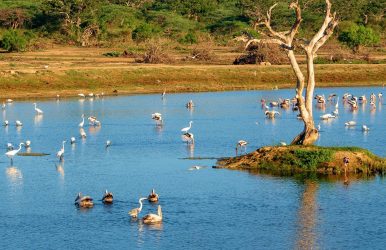
Also, I was fortunate enough to visit Bundala during the northern winter. I met the elegant greater flamingos wading through pink-tinged water at sunrise.
Nevertheless, irrespective of the time of your visit, you can spot elephants, and crocodiles.
You will also find a coastline of dunes and scrub forest.
National Park Of Bundala At A Glance
Detail Information Location Southern Province, Sri Lanka, between Hambantota and Tissamaharama Nearest town Hambantota (About 15-20 km) Area Approximately 6,216 Hectares Designation National Park (1993). Ramsar Wetland of International Importance (1990) UNESCO Biosphere Reserve (2005) Landscape Five Shallow Brackish/Saline Lagoons Sand Dunes Scrub Jungle Coastal Habitat Known for Migratory and Resident Birds (200+ Species), including Greater Flamingos Elephants Crocodiles Best time to visit November to March for Peak Migratory Birdlife Year-Round for Elephants and Resident Species Distance from Colombo Around 245 KM Roughly 4-4.5 Hours by Road
Bundala National Park: A Wetland With A Bigger Reputation Than Its Size Suggests
Bundala became a designated national park in 1993. However, the story of its conservation goes earlier.
It was already a Ramsar Site in 1990, and it was the first in the country to get this recognition. Again, in 2005, it became a part of a UNESCO Man and the Biosphere Reserve.
The lagoons here are a critical stopover on the Central Asian Flyway. The migration route that brings birds from as far as Siberia and the Rann of Kutch down to the Indian Ocean coast every winter.
I loved the park more because it has a very humble demeanor and there is no single headline animal.
It rewards patience.
I spotted a crocodile motionless at a lagoon's edge, a family of elephants moving through the scrub in the middle distance, and always, everywhere, birds.
Wildlife And Birdlife In Bundala National Park
Bundala National Park transforms into a wonderland for birdwatchers between November and March.
Greater flamingos are the main attraction out of the 200 species of birds recorded here.
Most of them are migratory birds, and they arrive between November and March.
During my visit to the park, the flocks of flamingos were so huge that they turned almost the entire lagoon area pink.
Our guide also drew our attention to painted storks, pelicans, spoonbills, various species of stork and egret, and a healthy population of raptors.
Furthermore, the park holds a resident elephant population, estimated at several dozen individuals.
Moreover, it has saltwater and mugger crocodiles in the lagoons, and smaller numbers of leopards, spotted deer, wild boar, and jackals.
How To Reach Bundala National Park?
You can reach the Bundala National Park from Colombo via the Southern Expressway to Hambantota or the Sooriyawewa exit.
Then local roads will lead you to the park entrance. The overall journey from Colombo by road is around 4 to 4.5 hours, depending on the gate you are visiting and the exact timing.
Again, Bundala National Park is an easy add-on to a visit to Yala National Park. The main entrance of Bundala is 20-25 km from Tissamaharama, making it a natural pairing for anyone already doing a Yala safari circuit.
Moreover, Hambantota, around 15-20 km away from Bundala National Park, is the closest town.
So, Hambantota, with its beaches and port area, will be your base if you want a combination of coastal experience and wildlife.
Bundala Entrance Fees (2026)
Category Approximate Cost (2026) Foreign Adult (12+) USD 12 Foreign Child (6–12 Years) USD 6 Foreign Children under 6 Years Free SAARC Nationals USD 10 for Adults USD 5 for Children between 6 and 12 Years Free for Children below 6 Years Locals Adults: LKR 60 Children from 6 to 12 Years: LKR 30 Children below 6 Years: Free Students: LKR 20 Vehicle Entry Ticket LKR 300 Foreign Group Fee Per Vehicle USD 10
A One-Day Bundala Itinerary
Bundala works well as a half-day or full-day safari, and it also slots neatly into a longer south-coast loop that includes Yala, Tissamaharama, and the beaches around Hambantota.
Here is how you can structure a single day focused on the park itself.
Time Activity 5:30 - 6:00 AM Departure from Tissamaharama or Hambantota. 6:00 - 9:30 AM Morning safari through the lagoon circuits. 9:30 - 10:30 AM Break near the lagoons or at a nearby guesthouse for breakfast. 10:30 AM - 12:30 PM Continue the drive toward the coastal dune and scrub sections for elephants and crocodiles. 12:30 - 2:00 PM Exit the park, lunch in Hambantota or Tissamaharama. Afternoon (optional) Combine with a Hambantota lighthouse or salt pan visit, or head onward to Yala/Kataragama.
What Is The Best Time To Visit Bundala National Park?
November to March is the best season to visit Bundala National Park if you want to spot Greater Flamingos and other birds.
Flamingos gather in the highest numbers from December to February.
However, Bundala is home to elephants, crocodiles, and resident birdlife across all seasons.
Practical Tips For A Visit
Go early. Gates typically open around 6 AM, and the first two hours offer the best light and the least heat-shy wildlife activity.
Bring binoculars if birdwatching is a priority. Much of the action happens across open water at a distance.
Sun protection matters here more than in forested parks as Bundala's lagoons and dunes offer little shade.
Pair it with Yala or Tissamaharama to make the most of the drive down.
Nearby Attractions
Bundala sits within easy reach of several other south-coast highlights, making it easy to build into a wider itinerary rather than a standalone day trip.
Yala National Park and the temple town of Kataragama are both close by, and the beaches and salt pans around Hambantota make for a relaxed way to close out the day.
Golden sands, world-class surf breaks, and a distinct bohemian charm!
All these make Arugam Bay, another southeastern coastal gem of Sri Lanka, stand out.
This sleepy fishing village wakes up with the swelling of the ocean.
Also, the destination creates an expert balance between a high-energy aquatic sports culture and a deeply relaxing and off-the-beaten-path atmosphere.
You can even be an experienced longboarder ready to ride an iconic right-hand point break.
You are also an enthusiast of slow travel, looking to explore ancient temples in the jungle or pristine national parks.
Arugam Bay offers an unforgettable tropical escape for all types of travelers.
Moreover, since Arugam Bay is not as busy as the traditional central southwestern travel loop of Sri Lanka, it still has a raw and authentic identity.
So, in this article, I will discuss the things to do in Arugam Bay and my experience there.
What Are The Things To Do In Arugam Bay?
Arugam Bay is not the usual idyllic coastal getaway you are looking for.
It is an adventure hub for surfers of all skill levels.
Also, you can climb Elephant Rock and hike to the Ancient Kudumbigala Monastery.
So, it is a versatile destination for backpackers, solo travelers, and families.
1. Learn To Surf The Legendary East Coast Waves
The local coastline is home to a happening surf community, and the dotting crescent bays offer optimal wave conditions for every tier of experience.
Moreover, as I walked through the main street, I found an abundance of surf shops offering professional instruction and gear rental.
Surfing For Beginners At Arugam Bay
If you are a beginner, you have to stick to the main crescent of Arugam Bay Beach.
Furthermore, the sandy bottom here is incredibly forgiving.
So, if you are a beginner, you can pay 2,000 to 3,500 LKR to a local instructor for a 1.5-hour lesson.
Moreover, the board rentals are highly economical, and you have to pay around 400 to 800 LKR for a board rental for a day.
If You Are An Intermediate Or Advanced Surfer
You can take a short tuk-tuk ride north to Pottuvil Point or Whiskey Point.
Furthermore, if you are seeking maximum power, you must visit the Main Point or venture south to the secluded A-frame waves at Peanut Frame.
2. Relaxing At Arugam Bay Beach
The central beachfront of Arugam Bay is one of the most beautiful shorelines in Sri Lanka.
The golden sand and leaning coconut palms welcome you to relax at the end of a multi-day itinerary.
Enjoy a fresh king coconut, lay out a towel, or rent a dedicated sunbed from popular beachside establishments like Friends Indeed or the Upali Beach Resort.
Moreover, you can enjoy a refreshing swim.
Also, if you don’t want to navigate around surfboard traffic, you can walk to the right-hand side of the bay.
3. Watching The Sunset From Elephant Rock
Elephant Rock is the best location to watch the sunset in Arugam Bay.
I just took a short drive for 20 minutes from the town to reach this massive natural rock formation.
This rock formation stands at the end of the unpaved track where the jungle meets the sea.
The Climb
After reaching the trail, I had to take a steep 10-minute walk to reach the top of the Elephant Rock.
From the top of the rock, you will enjoy a 360-degree view of the wild coastline and watch surfers in action.
Wildlife Precautions
At the base of the rock, there is a tidal lagoon, and it is a known habitat of wild crocodiles.
So, you must not wade into this water.
Moreover, elephants roam through this corridor during twilight frequently.
So, you must come down from the rock and leave the place before darkness.
Cost
A tuk-tuk ride from Elephant Rock to Arugam Bay costs between LKR 800 and 1000.
4. Hiking To The Ancient Kudumbigala Monastery
The Kudumbigala Monastery is located at a distance of around 30 kilometers from Arugam Bay.
This monastery was built in 246 BC during the reign of King Devanampiyatissa.
This was a sweeping rock monastery, which was a sanctuary for the Buddhist monks who wanted to retreat from urban centers.
The site is expansive, and here, you will see around 200 ancient caves beneath monolithic boulders.
I trekked up a series of carved stone stairs through dense jungle canopy to reach the summit.
There stands the Belumgala Stupa, the only surviving cylindrical stupa of Sri Lanka.
Moreover, from here, you can enjoy an uninterrupted view of the Kumana National Park's emerald forests extending all the way to the Indian Ocean.
However, this area is a wild animal migration path.
So, you have to exercise caution or hire an experienced local driver while exploring the area.
5. Wilderness Safari In Kumana National Park
If you are done exploring the southwestern reserves, you can head to Yala East or the Kumana National Park.
Very close to the south of Arugam Bay, it offers an intimate environment for a wilderness safari as it receives a low volume of tourist jeeps.
Furthermore, this national park stands out as the sanctuary of many migratory birds, which mostly visit between April and July.
Also, take a usual 3-hour drive in the morning or afternoon.
You will spot wild Sri Lankan elephants roaming the marshes, mugger crocodiles, wild boars, and golden jackals.
Also, if fortune favors you, an elusive leopard.
Moreover, the national park remains open from 6 AM to 6 PM.
So, you can easily arrange private 4x4 game drives.
Choose experienced local services like Arugambay Agenda or Budget Arugam Bay Tours & Safari on the main strip.
6. Marveling At The Seaside Muhudu Maha Viharaya Stupa
The Muhudu Maha Viharaya is amidst the sand dunes of Pottuvil Beach.
It is a fascinating historic site, and it is known as the “Temple of the Ocean.”
Moreover, the history of the stupa goes back 2000 years, and this peaceful white stupa has many statues.
7. A Peaceful Pottuvil Lagoon Safari
If you want a non-motorized, tranquil experience, you must take a boat ride through the Pottuvil Lagoon's mangroves, operated by local fishermen.
Moreover, this is an amazing activity to spot wildlife such as elephants, water buffalo, and monitor lizards up close.
You must join a local community-based tour of 2 hours here.
The tour will cost 2,000 LKR ($6 USD) per person.
Read Also:
What Are The Places To Visit In Matara? A Southern Sri Lankan Commercial Hub With Dutch Colonial Heritage
What Are The Best Places To See In The Sacred City Of Anuradhapura, Sri Lanka?
Why Is Habarana Beyond Just A Gateway To The Cultural Triangle Of Sri Lanka?





 Related