
What Is The Best Japanese Temple To Visit? A Temple Tour In Japan 

The scent of that first Japanese temple I visited, full of damp cedar, ancient dust, and high-quality incense, immediately slowed my pulse. 

The architecture felt magnetic, heavy with history that seemed to settle into your bones. 

Furthermore, these temples aren’t just buildings.

They’ve stood for centuries,  and are a part of Japan’s cultural fabric. 

Moreover, the connection between nature and devotion isn’t just symbolic here, and it’s real. 

Also, every temple holds stories passed down through generations. 

A single stone path or carved gate can carry centuries of meaning. You don’t just walk past them. You feel their presence.

How Buddhism Shaped The Island And Each Japanese Temple 

Buddhism started in India, the land I come from.

Then it moved through China and Korea before reaching Japan in the 6th century. 

Now, the first official step came when King Seong of Baekje sent Sutras and a Buddha image to Emperor Kinmei. 

1. The Rise Of Sects 

Over time, new sects poured in from China, changing how Buddhism looked here. 

Saicho brought the Tendai sect in 805. 

Kukai, later called Kobo Daishi, founded the Shingon sect in 806. 

Then, Zen arrived in 1191, and it shifted Japanese art, tea traditions, and samurai life. 

Now, Buddhism shares space with Shinto, the local religion. 

So, the two coexist side by side without conflict. 

Though it’s not perfect, that’s how things work now.

The Architectural Layout Of A Japanese Temple 

Once you enter a Japanese temple, you will find the main hall or Hondo. Furthermore, the table below explains the other key features of a Japanese temple.

Features of a Japanese TempleDetails 
PagodasThese have three to five stories. Furthermore, these are the repositories of the sacred relics. 
Lecture HallsMonks study and teach here. 
BelfriesThese house massive bronze bells that are rung during the New Year.
CemeteriesOften located on the grounds, these emphasize the Buddhist focus on the afterlife and ancestors.

What Is The Best Japanese Temple? 

I cannot pick a favorite when it comes to choosing the best Japanese temple. However, these are the ones I loved visiting. 

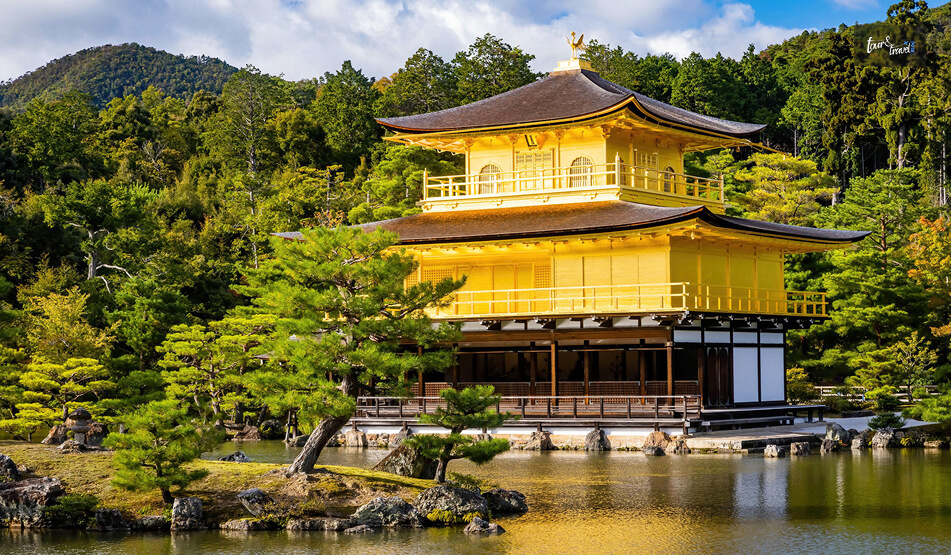
1. Kinkaku-ji (The Golden Pavilion), Kyoto

Kinkaku-ji (The Golden Pavilion), Kyoto

Kyoto is not just famous for its cherry blossom season. It also has the Golden Pavilion. 

This is the “poster child” of Kyoto, and for good reason. 

Two levels of this Zen temple have a covering of gold leaf. 

Seeing its glittering reflection in the “Mirror Pond” is one of those travel moments that actually lives up to the hype. 

It was originally built as a retirement villa for a Shogun, which is why it has a slightly “king-of-the-hill” air.

2. Todai-ji Temple, Nara

Todai-ji Temple, Nara

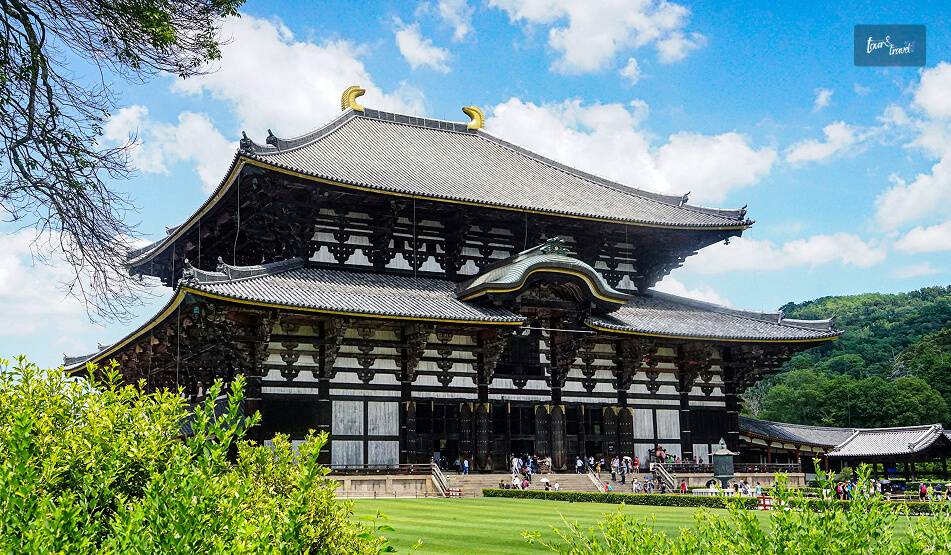
A visit to the Todai-Ji Temple is one of the best things to do in Nara

Standing in front of the great Buddha Hall (Daibutsuden) makes you feel incredibly small. 

The structure was once the largest wooden building ever built, and even now, at two-thirds its original size, it still stands with quiet power. 

Inside, a 16-meter-tall bronze Buddha dominates the space, and it was cast in 752.

3. Senso-Ji Temple, Tokyo 

Senso-Ji Temple, Tokyo 

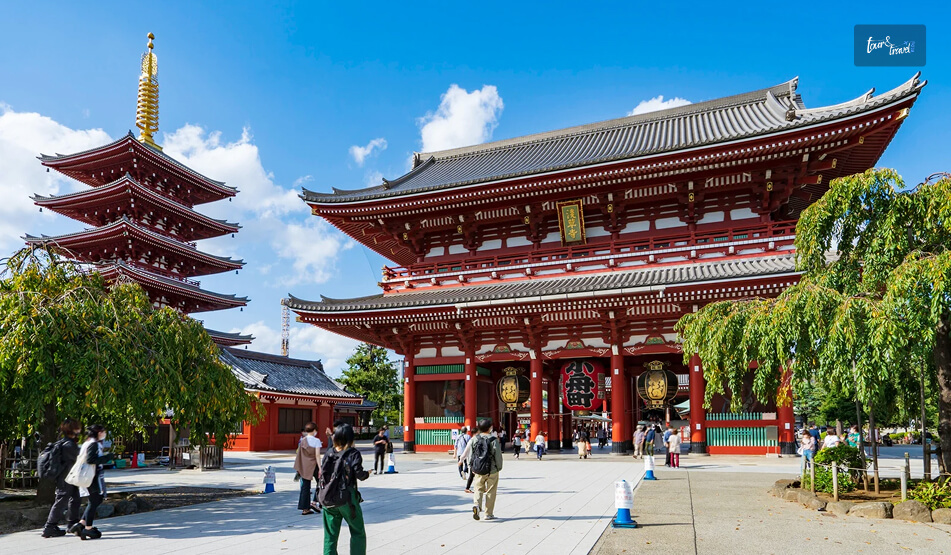
As Tokyo’s oldest temple, Senso-ji pulses with color and movement. 

Daytime visits pull you into a sea of people. 

After dark, though, the scene shifts entirely. 

Vermilion walls glow warmly under lanterns, the air settles, and the five-story pagoda rises softly against the sky. That night view became my favorite moment in four days in Japan.

4. Sanbutsu-Ji Temple, Misasa

Here is a temple for the daring ones. 

To get a glimpse of the inner hall, Nageiredo, I had to do a really challenging hike up Mount Mitoku. 

The hall can be seen right on the cliff’s face, supported on stilts over a dangerous drop. 

Whenever I looked at it, I kept asking myself how 8th-century monks could have built it without falling off the mountain.

Besides, this “National Treasure” might even have to stand the comparison to a scene in an Indiana Jones movie. 

5. Tenry-Ji Temple, Kyoto 

This temple is right in the heart of the Arashiyama district and is also famous for its garden. 

The landscaped grounds of the 14th century surround the central pond walkways. 

It was cherry blossom season when I dropped by, and the view of the weeping cherry trees against the forested mountain is a picture I still take out whenever I am stressed.

6. Kongobu-Ji Temple, Koyasan

For a deeply immersive experience, head to Mount Koya. 

Kongobu-ji, the main temple of Shingon Buddhism, houses the largest rock garden in Japan. 

The granite rocks have been carefully arranged to depict dragons arising from a sea of clouds. It’s an excellent venue for peaceful meditation.

7. To-Ji Temple, Kyoto

While there are other things to see in To-ji, its five-story pagoda is the main draw. 

At 57 meters high, it is not only the tallest in Japan but also a city landmark. 

Plus, when it is lit up at night in spring, it appears like a golden light rising from amidst the cherry trees.

What Are The Best Offbeat Japanese Temples? 

Aside from the well-known “Golden” and “Great Buddha” temples, there are also sites that allow you to connect more closely with nature and pilgrimage traditions. 

It is at these places that I experienced the most “human” contacts, observing pilgrims dressed in white robes or witnessing monks conducting their daily rituals.

1. Daisho-In Temple, Miyajima

Daisho-In Temple, Miyajima

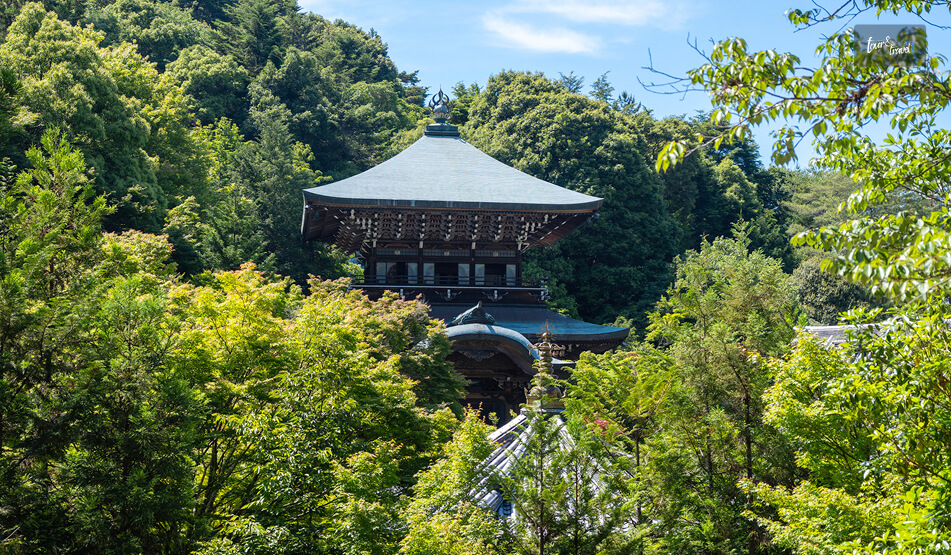
While most tourists to Miyajima are attracted by the floating torii gate, Daisho-in, situated at the base of Mount Misen, is the island’s true spirit. 

The most memorable feature? The 500 Rakan figures. Each one has an entirely different face. So, some are laughing, some are grumpy, and some look like they’re whispering a secret.

2. Seiganto-Ji Temple, Nachisan

Seiganto-Ji Temple, Nachisan

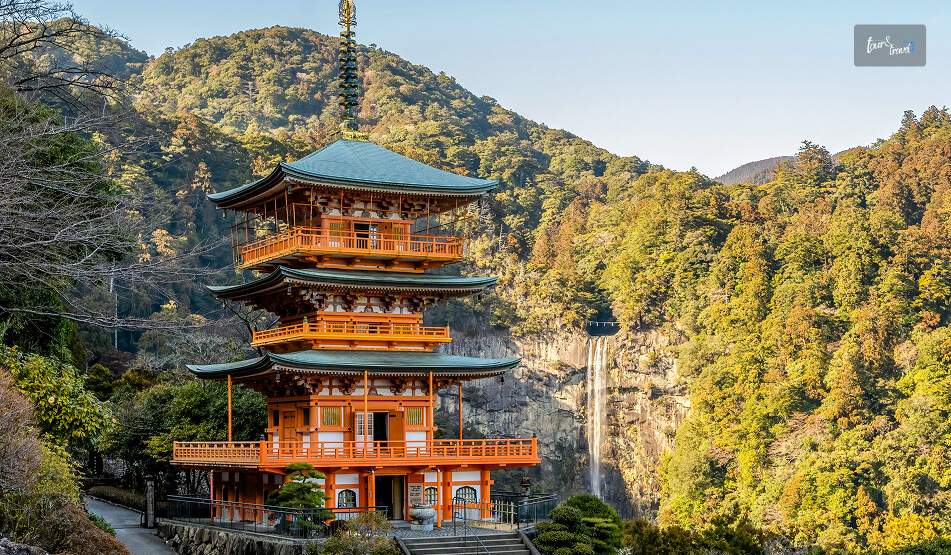
There is probably no other place on the Kumano Kodo pilgrimage that has been as pictured as this one. 

You have a vivid red pagoda in the front, and Nachi Falls is the highest waterfall in Japan, thundering down in the background. 

It is a wonderful site where the noise of the water and the quietness of the temple together form an ideal spiritual harmony.

3. Zenko-Ji Temple, Nagano

The temple sits in Nagano, a town that grew around it. 

This is where Japan first received a Buddhist statue. 

Though the statue itself isn’t visible, you can walk into a pitch-black tunnel under the altar. 

The goal? Try to touch the “Key to paradise. ” It’s creepy, but there’s something real about it. A genuine cultural moment.

4. Horyu-Ji Temple, Nara

Located just outside Nara, this site holds the oldest wooden buildings still standing. 

These structures date back to 607. Standing in them feels like stepping into Japan’s earliest days. History lives in the wood and silence of the halls.

How To Visit A Japanese Temple Like A Local? 

Visiting A Japanese temple is not just about seeing but also experiencing it. 

One way to do this is through politeness, talking softly, and following a few simple etiquettes. 

You will find a large incense burner (Jokoro) at the temple entrance. 

A common practice is to fan yourself with the smoke, as it is said to have medicinal effects.

1. Getting In And Praying

You’ll most likely have to take off your shoes before going into a building (make sure you have stylish socks! ). 

Once inside, you can go up to the altar, put a small coin in the donation box, and silently make a respectful gesture. 

In contrast to a Shinto shrine, at a Buddhist temple, you shouldn’t clap. 

Only a silent bow with hands in the prayer position is the right way to show reverence. 

2. Taking Photos In A Japanese Temple 

Generally, temples are okay with you taking photos in the outdoor areas. 

However, you cannot take photos inside the main worship halls where the statues are. 

Also, personally, I feel that when I put my camera away and spend five minutes just sitting on the tatami mats in silence, what I get is a more vivid “picture” than any photo could ever represent.

Read Also:

Share on Social Media

Meet Sibashree Bhattacharya, a travel enthusiast who has a decade-long experience in transcending virtual barriers with her words! Her deep love for travel is apparent from her travel escapades to the mountain, often taking her readers on a journey, her words acting as Portkey! Fun fact: Sibashree loves to dive deep into the history of the places she is about to visit, making her travels even more wholesome. If you were wondering how her articles are not short of time travel, this answers it!

Leave a Reply

Your email address will not be published. Required fields are marked *

title-img Related

READ MORE Ella, Sri Lanka

What Are The Things To Do In Ella, Sri Lanka? A Narrative Of My Days In Ella

BY  Sibashree Mar 24, 2026

Ella is one of Sri Lanka's most beautiful towns.  Also, Ella is a place where many of my favorite Sri Lankan adventures are.  My first sighting of the famous Nine Arch Bridge, one of my first hikes at Ella Rock, standing at the edge of the roaring Diyaluma Falls, and many more.  Perhaps the most famous train ride in the world, from Kandy, passes through Ella as well. Ella is a quaint and beautiful town and is a great place to escape the heat of the southern coasts. However, over the last decade, this quaint little hamlet has become a large tourist destination.  Unfortunately, the growth has also brought some concrete eyesores to the village.  There is still plenty of magic to be discovered here, if you are willing to move beyond the Instagram hotspots. Having undertaken two comprehensive visits to this beautiful hill-country retreat, I have compiled the ultimate portfolio of things to do in Ella, Sri Lanka. What Are The Things To Do In Ella, Sri Lanka?  Despite the changes in Ella, Sri Lanka, the mountain ranges are just as majestic as they were years ago. Furthermore, the tea served is still some of the finest in the world. Moreover, people here are still warm.  And the most fascinating part?  Ella always brings out the explorer in you. How can you avoid the lure of riding in an open-air train or leaning over the edge of a waterfall?  Here is more about the exciting things to do in Ella, Sri Lanka.  1. Riding The Iconic Kandy To Ella Train The Kandy to Ella train ride is the best thing you will do in Sri Lanka.  The train passes through tea plantations and crosses gushing streams.  And you cannot expect less from a route that has been labelled by many as the most picturesque train ride in the world.  However, the train ride also allows you to indulge in the local vibe with local vendors hawking through the rush and the local boys singing and playing drums during the journey.  Also, the Nanu Oya to Ella scratch is the most beautiful in the entire route. Also, don’t go for a 1st class ticket and reserve a 3rd class class to enjoy the views through open windows.  2. Admiring  The Famous Nine Arch Bridge It’s astonishing to think that a single bridge could drive tourists in droves to a small town, but the Nine Arch Bridge is an engineering marvel that demands to be seen.  Standing 24 meters high and spanning 91 meters, it was completed in 1921 using only brick, rock, and cement, and there is no metal at all. When the mist hangs low in the valley, the bridge takes on a moody, mystical feel.  You can walk along the tracks or look down from the tea plantations below, but my favorite view is from the cafe platforms in the surrounding hills.  Watching the blue train slowly crawl across the arches is a sight I’ll never forget. 3. Hiking The Mighty Ella Rock  The hike to the mighty Ella Rock starts from the Ella railway station. It was a walk with waterfalls and small homes on the way.  Then, the steep ascent began.  After reaching the top, you will get a beautiful view of Adam’s Peak and Ella Gap. 4. Watching Sunset At Little Adam’s Peak The hike to Little Adam’s Peak is a gentler alternative to the hike to Ella Rock.  I walked through the lush tree plantations, and once I reached the top, the panoramic view before my eyes was nothing short of a movie frame.  Plan your hike in the late afternoon to enjoy the most amazing sunset views from Little Adam’s Peak. 5. Chasing The Diyaluma Falls I started from Ella to Poonagala, the starting point for the Diyaluma Falls hike, by taking a tuk-tuk.  The tuk-tuk took 1.5 hours.  Furthermore, from Poonagala, it was a downhill hike to the Upper Diyaluma Falls, which had a 220-meter drop.  There are natural infinity pools right at the edge where you can swim during the dry season.  From the upper Diyaluma Falls, it is another 30-minute hike to the Lower Diyaluma Falls.  6. Feeling The Mythological Connection At Ravana Falls  Ravana Falls is right by the road south of Ella.  Locals say that King Ravana took Princess Sita and hid her in the caves behind Ravana Falls.  Furthermore, you can see the Ravana Falls from the road. However, it is best if you hike to the second and third tiers.  7. Taking A Seat With Sir Thomas Lipton Tea is the lifeblood of this region, and a visit to Lipton’s Seat is a journey to the source.  This is the exact spot where tea mogul Sir Thomas Lipton used to sit and survey his empire.  On a clear day, you can see all the way to the south coast. Even on the foggy day I visited, sipping a fresh cup of Ceylon tea (the best I’ve ever had) while the clouds swirled around the summit was incredibly atmospheric. 8. Taking A Tour Of The Dambethenne Tea Factory When you go to the high country, you must learn the actual science of the making of your brew. I visited the tea company founded by Lipton himself in 1890 and saw how it was picked, wilted, fermented, and graded. All of these were new to me as an individual who drinks a lot of tea.  About 80% of this tea is sold in Colombo and then exported around the world. I especially found the fermenting room to be extremely interesting. 9. Feel The Adrenaline Rush At Flying Ravana If you need a break from the hiking, Ella recently opened Sri Lanka’s first-ever zip-line.  It stretches half a kilometer across the hills and hits speeds of 80kmph.  For around $20 USD, it’s one of the best value adrenaline fixes I’ve ever found. It’s located near the 98 Acres resort, making it a perfect way to end a trip to Little Adam’s Peak. 10. Mastering The Art Of The Curry At Ella, Sri Lanka  In my opinion, Sri Lanka has the best food (after my country, of course)! If you want to bring back a little bit of Sri Lanka to your home country, then you should try taking a cooking class.  Also, if you don’t have enough time, just try the food streets.  For me, it was a brilliant consolidation of my food tour in Jaffna. Though the food in Ella is creamier and less spicy than in Jaffna.  11. Witnessing The Grandeur Of Bambarakanda Falls The Bambarakanda Falls is the tallest waterfall in the country, and it falls from a height of 241 meters.  You can take a short hike or a tuk-tuk to reach the Bambarakanda Falls from Ella.  Then, stand at the base and feel the sheer power of that vertical drop.  Moreover, to enjoy the best flow of this waterfall, plan a visit between April and September.  12. Spotting The Elephants At Udawalawe Like the Kaudulla National Park, the Udawalawe National Park is also a great place for spotting elephants in the wild.  Ella is the base for a safari in the Udawalawe National Park.  I opted for an early morning safari, and I spotted adorable baby elephants with their mothers.  Don’t Forget To Party And Chill In Ella, Sri Lanka  Like Jaffna, a backpacker’s dream, Ella has also emerged as a hub for backpackers and budget travelers.  Ella Town is still a great place to unwind, and places such as Cafe Chill are at the epicenter of these scenes.  You can have some really good burgers and Lion Beer at some of these recognized cafes.  Moreover, when you spend time at these cafes, you don’t rush from one place to another, but study the local culture and understand how a country, ridden by cyclones, endless civil wars, and financial crisis, can still be the land of sunshine. 

READ MORE Oshino Hakkai

What Is Oshino Hakkai Famous For? How To Visit It And More 

BY  Sibashree Mar 31, 2026

Everyone knows that you cannot complete exploring Japan in a day. And I had no choice but to miss Oshino Hakkai on the first trip.  However, on the next trip, I made sure to plan a visit.  Of course, an image on Instagram was my major drive behind being so passionate about a trip to Oshino Hakkai.  I saw a series of houses with thatched roofs along the shore of a pond. The magnificent and snow-covered Mount Fuji stood behind, strong and unshakable, as the eternal truth.  Born and raised in the land of spirituality and the Himalayas, I had to visit Oshino Hakkai.  However, as I have explained in my narrative from Tokyo to Mount Fuji day trip, you have to time your trip really well and have to be extremely lucky to see the snow-capped Mount Fuji.  Also, if you are planning a trip in summer, you will only get to see Mount Fuji partially or fully covered by clouds.  Nevertheless, as Mount Fuji continues to act elusive, here is why Oshino Hakkai will win your heart.  Oshino Hakkai: Why Is Visiting The Eight Springs Of Oshino So Special?  As I stood at the center of where both Lake Kawaguchiko and Lake Yamanakako meet in the small village of Oshino, I was able to look at the eight sacred ponds of Oshino Hakkai.  These sparkling, clear water springs are all that is left from a long-lost sixth lake that existed hundreds of years ago. It's as if time stood still when you visit these sacred areas. When I looked into the water, I didn't see just water, and I saw history. The springs were used by pilgrims (Fuji-ko) during Japan's Edo period to cleanse their bodies and souls before climbing Mt. Fuji. What a magical process the water goes through!  From snow accumulation on the summit of Mt. Rainier, through melting and filtration through approximately 80 years' worth of porous lava before it actually emerges at this location, its absolute perfection.  Moreover, it was crystal clear and pure.  Also, as I walked through the "Natural Monuments," I had an intense feeling of appreciation for the many years of waiting, so that each would have such serenity. How To Reach Oshino Hakkai? The journey to the stunning waters of Oshino Hakkai is as much a part of the experience as the location itself.  Here’s my recommendation for how to get to Oshino Hakkai, depending on whether you want a more convenient (train) or an adventurous (rental car) way of doing so. 1. Reaching Oshino Hakkai From Tokyo When travelling from Tokyo, you have several options available.  Highway bus lines go to Oshino Hakkai directly.  If you plan to take the train, either Fujisan Station (the nearest station) or Kawaguchiko on the Fuji Kyuko Line is your best option.  Once at Fujisan or Kawaguchiko, catch a local bus to get to the village. You may take the Fujikko-go (tourist buses), Mt. Fuji World Heritage Loop, or Uchino or Hirano routes via local bus from Fujisan Station.  Generally, there are 1-2 buses/hour on these routes. At Kawaguchiko Station, there are 11 Fuji-Q buses each day that leave for Lake Yamanaka Oriental side, and the 11 Fuji-Q buses that leave for Gotemba and also the Oshino springs. Just watch out for the Oshino Hakkai or Oshino Hakkai-Iriguchi as their stops. 2. Driving And Village Logistics I rented a car, and it is the most convenient way to visit the nearby Five Lakes region.  Parking here is convenient, and there are many public and private parking spaces.  After parking the car, you can explore the nearby villages.  However, you will need 300 JPY to enter the Hannoki Bayashi Shiryokan Museum.  You can visit the museum from 9 AM to 5 PM every day for a deep understanding of the local history.  Moreover, you will find signage in Japanese and English for every pond. My Trip To Oshino Hakkai I felt a bit out of place when I got to Oshino Hakkai.  I thought it would be a nice, quiet area for reflection and meditation, free of other people.  However, I found a busy and fully built-out village of people, shops selling food, and many shoppers and visitors to the area, as well as people engaging with local merchants about the items that were being sold.  There were also a lot of people around Wakuike Pond, and they were excited to see how clear the water of the pond was and the fish that were swimming in the pond. 1. Finding Solitude And Peace Within The City Although I typically search for the peace of solitude, I did not mind being in a populated environment.  I became curious after wandering among the crowds to find out where my curiosity would take me.  I found a quiet, undeveloped area just minutes from the main road, where I could hear the water from the pond, see ducks on the water, and watch an old man with two little boys quietly fishing right next to me. 2. Folklore And Galactic History The folklore & Galactic history of the 8 springs were fascinating to explore. Especially, that water from Wakuike Pond traveled on the Space Shuttle Challenger in 1983 for a snow-making experiment in space! 3. My Personal Highlight  The highlight for me was the open-air museum at the Hanoki Bayashi Shiryokan. It was a true escape from contemporary living, immersing yourself in the cultural heritage of the area. 4. Hannoki Bayashi Shiryokan: The Main Attraction Of The Trip  To tell the truth, I went to Oshino Hakkai because of Hannoki Bayashi Shiryokan.  One of the most amazing sights I've seen in the Five Lakes region was the thatched-roof farmhouses against a colorful garden and the imposing backdrop of Mount Fuji. I became engrossed in the displays of antique household items and rustic farming implements inside the traditional farmhouse.  The tour was brief, but I stayed by the big pond long after I was done because of the subtle beauty of the architecture.  I couldn't resist making another lap because the landscaping was so welcoming. Read Also: What Are The Things To Do In Jimbocho Book Town? Visit The Best Book Stores And Cafes Cherry Blossom Kyoto Japan: 2026 Season And The Top Viewing Spots Osaka Food: Know What To Eat In The Streets Of Osaka

READ MORE Hiriketiya Beach

Hiriketiya Beach, Sri Lanka: Location, How To Reach, Things To Do And More 

BY  Sibashree Mar 23, 2026

Hiriketiya Beach is a place that can disrupt your travel plans completely.  You may arrive with plans for a two-night stay and end up spending 3 weeks developing a routine of mornings spent surfing, drinking coconut coffee, and watching the sun set down on the jungle.  This tucked-away cove in Sri Lanka’s southern coast, nicknamed by its community of surfers and digital nomads as "Hiri", is a textbook example of tropical aesthetics.  The cove is well-formed, with water that is surrounded by palm trees, and has a jungle so dense behind it that you will hear monkeys scurrying through the tree tops of your surfboard as they find their way there.  Hiri feels like a secret to be shared, but is just being revealed to people in the surrounding towns of Weligama and Mirissa.  Hiriketiya has developed to become a more sophisticated version of Weligama and Mirissa. The "vibe" of Hiriketiya is not just another phrase used by hipsters. It is the currency used by locals. Here is more about this beautiful coastal gem in Sri Lanka.  The Evolution Of Hiriketiya Beach: Why You Need To Go Now Hiriketiya has experienced an incredible transformation over the last few years.  Only a few years ago, this sleepy little fishing village had only a few guesthouses and one small roti shop. It is quite similar to the beaches in Jaffna in that way.  Now, it's become a vibrant hub, and even though it has lost some of its "untouched" charm. Moreover, this infusion of new energy has produced world-class specialty coffee shops, beautiful state-of-the-art Yoga studios, and a co-working scene. But despite these rapid changes, the spirit of this village remains.  The Surf At Hirikeya Beach: A Wave For Every Soul The horseshoe shape and the unique geography of the Hirikeya Beach make it ideal for every type of surfer.  Here is a quick breakdown. Surf LocationDetails The Beach Break (Right Side)- Beginner-Friendly- Sandy Bottom- Gentle WavesThe Middle- Ideal for Longboarders- Offers a Mellow RideThe Point Break (Left Side)- Ideal for Professionals- Shallow Reef Board rentals are standardized at 1000 LKR per hour.  If the Hirikeya Beach is very busy, you can go 3.5 km east and find Kudawella Beach.  Where Is Hirikeya Beach? How To Reach It?  Hiriketiya is located off the main highway along the coast, about one mile away from the town of Dickwella.  Since Hiriketiya is not on a major transit route, you will have to use Dickwella as your transit point. 1. Traveling To Hiriketiya Beach From Colombo The best way to get there is by taking the train from Colombo Fort to Matara, which takes approximately four hours.  From Matara, you can take a local bus to Dickwella or take a tuk-tuk taxi. You can also take a highway express bus from Colombo to Matara and arrive in about three hours. 2. Traveling To Hiriketiya Beach From Ella You can catch the #31 bus at the intersection of the Ella-Passara Road as you travel through tea country.  It is approximately four hours to the coast on a winding road. Just tell the conductor you want to go to Dickwella. 3. Traveling To Hiriketiya Beach From Arugam Bay If you are traveling from the East Coast surf to the surf in the South, there is a direct bus leaving from Pottuvil every day around 6:30 AM, arriving at Dickwella approximately six hours later. What Are The Things To Do At Hirikeya Beach? (Beyond Surfing) Hiri has just as much gravitational force to attract chill seekers. So, here are the things to do beyond surfing.  1. Walk To Blue Beach Island If you're looking for a little adventure, try the 2.5km (1.5-mile) walk to Nilwella.  You'll be walking through peaceful local neighborhoods when you find a beautiful natural sandbar that links the mainland with a small island.  Moreover, walking over a sandbar with breaking waves on both sides of you is something you will remember long after leaving Hiri.  Also, it is the best place to watch the sunset. 2. Sip In Style At Smoke And Bitters Believe it or not, one of the 50 Best Bars in Asia is hidden deep in a coconut grove.  Furthermore, the menu at Smoke and Bitters is based on the smokehouse method of cooking, using local Sri Lankan ingredients with cooking methods from around the globe.  Moreover, you must try the smoked harissa pumpkin and the pork ribs as they are WOW!!  Every cocktail created at Smoke and Bitters is a work of art. The price of a drink here, compared to what you would expect to pay in Sri Lanka, may seem high. However, when you want to treat yourself, there is no better place to go. 3. Become A Culinary Master With Rosie Rosie's cooking class experience is the ultimate rite of passage in Hiri.  While she prepares the dishes during your cooking class, you will also hear many personal stories of her life and how she made some special Sri Lankan spice combinations. Moreover, it costs 6000 LKR, and the 4-hour feast is the ultimate attraction.  The Digital Nomad And Yoga Scene At Hirikeya Beach  Hiriketiya has become a cornerstone of the "work-from-anywhere" lifestyle.  Places like Dots Bay House and Salty Pelican provide the infrastructure (and the caffeine) needed to hit deadlines. Moreover, when it comes to physical and mental well-being, Arise is unparalleled.  So, they provide a variety of classes to choose from, including Muay Thai, ecstatic dance, and Reiki, as well as many types of Vinyasa yoga.  Additionally, their Salt House location offers stunning rooftop yoga classes where you can do yoga while listening to the waves below. Where to Stay In Hiriketiya? Hiriketiya offers a versatile range of accommodation. Here are some places you can try.  1. Salt House  This upscale beach hotel has a boutique feel.  Located 5 minutes away from the beach, the hotel has spacious, minimalistic rooms opening directly to its central pool and open-air cafe.  Moreover, on-site yoga classes every day attract those interested in wellness. Room rates begin at about 21000 LKD per night. 2. Dots Bay House  Located next to the surfing area, 'Dots', the centre of Hiri's social scene, offers accommodation options ranging from dormitories to high-end private rooms.  Moreover, facilities include an on-site co-working space, swimming pool, and popular bar which features the best live music acts in town. Prices start at approximately 7000 LKD per night. 3. Hiriketiya White House  A charming, family-owned guesthouse hidden away in the jungle, offering an excellent option for visitors who want authentic experiences at affordable prices.  Also, the double rooms come with beautiful contemporary bathrooms and balconies where guests can enjoy watching monkeys play overhead. Moreover, the prices start from about 5500 LKD per night.  When To Visit Hiriketiya Beach? Due to offshore winds and consistent swell during the "High Season", November to April is the best time for surfers to be out on the ocean.  Moreover, December to February is the busiest time of year, with hot and dry weather as well as a lot of activity happening around town.  However, there are two downsides. The first is that accommodation prices rise significantly, and the second is that line-ups at the ocean can be extremely crowded. Where To Eat In Hiriketiya? As an enthusiast of TheLowDownUnder Travel and genuine experiences, I felt compelled to sample the local cuisine at Hirikeya. So, here are a few recommendations for places to check out. 1. Lemon Grass Café Considered the benchmark for rice and curry in Sri Lanka, this family-run establishment is modest yet impactful.  Moreover, for 1000 LKR, you’ll enjoy a generous array of at least four different vegetable curries, rice, and dessert, with unlimited refills. 2. Kingsley’s Kitchen Another gem in the area, Kingsley is a well-known figure in the village who serves outstanding home-cooked meals.  Dinner operates on a pre-order basis, so be sure to stop by during the day to reserve your meal.  Moreover, it’s one of the most budget-friendly spots in the bay, with a vegetarian curry priced at 750 LKR. 3. Dahami Situated at the Dickwella intersection, this is where the locals dine. Furthermore, it’s a straightforward buffet offering a mountain of rice and curry for just 450 LKR. Moreover, for those seeking specialty cafés and a beach atmosphere, options like Duni’s Hoppers Café, MOND Café, and La Playa are worth considering.