
What Are The Things To Do In Pasikudah? Know The Place Where The Indian Ocean Forgets How to Be Rough

With Pasikudah getting its first floating dining platform thanks to Sun Siyam, this coastal town around 35 km away from Batticaloa is going to offer a more luxurious experience. 

While this is a delightful upgrade, the first thing I noticed in Pasikudah was the silence. 

With the sands and turquoise waters that almost looked surreal, it was away from the crowds. 

Also, the absence of crashing surf and urgent pull made exploring the shoreline easier for me. There was no need for reminders to stay close to the shore. 

Furthermore, in the south, at Unawatuna Beach and Mirissa Beach, the Indian Ocean threw itself at land with real intent. 

At Pasikudah on the eastern coast, it was just a gentle lapping, the kind of sound that makes you lower your voice without realizing it.

The shore here waits for the Ocean to arrive!

How To Reach Pasikudah?

Pasikudah is at a distance of around 300 kilometers from Colombo. 

So, if you are traveling from Colombo or straight from the Bandaranaike International Airport, it will be a road journey of five to six hours. 

A little taxing it may sound, but it can be a wonderful opportunity for cultural exploration. The road takes you through the Cultural Triangle of Anuradhapura, Polonnaruwa, and Kandy.

The key destinations on this circuit also include the Sigiriya Rock Fortress and the Dambulla Royal Cave

However, during my trip to Sri Lanka, I took the 6075 Batticaloa Special train from Colombo Fort to the Valaichchenai Railway Station. 

This is the closest to Pasikudah, and you can reach the coastal town in 15-20 minutes in a tuk-tuk. 

The train started at 3:15 PM and reached Valaichchenai Railway Station at 10:50 PM. I was traveling in a third-class compartment, and the ticket price was LKR 1400. 

There are two other train options from Colombo Fort to Pasikudah. The first one leaves at 6 AM and reaches Valachchenei at 2:40 PM.

Also, the last train for the day departs the Colombo Fort Station at 7 PM and reaches Valachchenei at 3:23 AM.

Pasikudah: A Place With A Multilayered History

Pasikudah shows Tamil influence in its naming, and it is roughly translated to “Green Algae Bay.”

The name is, of course, not flattering for a place that looks this beautiful. However, it ties the link perfectly to the past when Pasikudah was a working fishing settlement.

It became a resort town much later. 

Furthermore, Pasikudah is the place where the Dutch first landed in Sri Lanka in 1602. I could see the traces of that Colonial period scattered everywhere. 

There were old buildings, a slender lighthouse, and a fort dating to 1628 with sweeping views over the coastline, about 20 minutes away near Kalkudah.

2004 And 2009: Two Landmark Years For The History Of Pasikudah And Sri Lanka 

The history of Pasikudah got erased twice in recent years. 

The Tsunami in 2004 hit this stretch of coast hard. 

Also, decades of Civil War kept Pasikudah off the tourist map entirely until the war ended in 2009, like Kilinochchi and Mullaitivu

Standing on the beach, I watched families wade out into water that barely reached their knees even 400 meters from shore.

It was hard to picture how quiet and forgotten this coastline was less than two decades ago. 

The recovery of this resort town has been consistent and in places quite luxurious. 

However, the bones of an old fishing village are still there.

What Are The Things To Do In Pasikudah? 

Pasikudah is not a beach that you visit for drama or some out-of-the-box adventure. 

You can chase that in the moody coastline I found in Mannar or the raw remoteness of Vavuniya

Here the water is the whole point, and the things to do in Pasikudah revolve around that. 

1. Exploring The Shallow Reef Coastline 

Exploring The Shallow Reef Coastline 

Pasikudah has one of the longest stretches of shallow reef coastline in the world. 

I walked out nearly 500 meters from the shore one morning, and the water still sat at my waist.

It was dreamy, and it felt like the ocean had turned into a very warm and large swimming pool. 

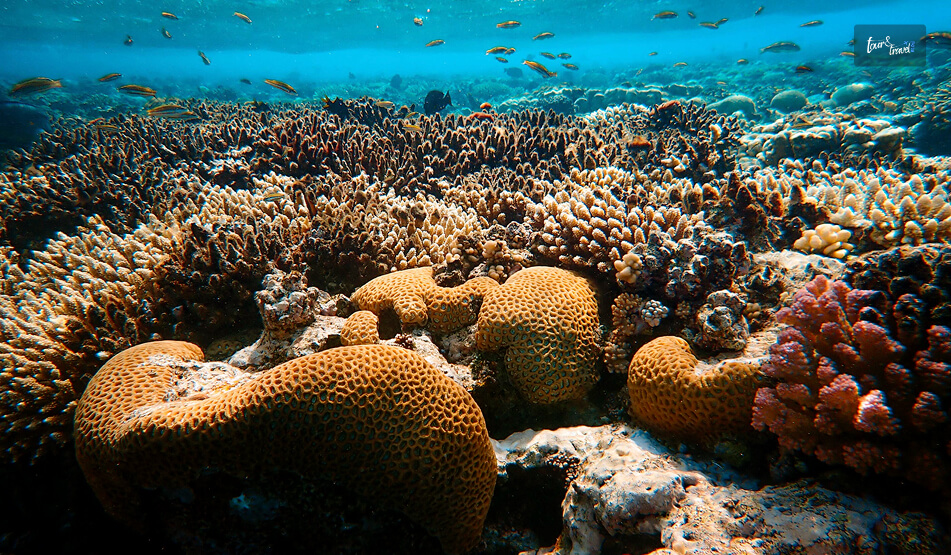
Also, the shallow gradient makes it an ideal snorkeling spot. 

I spent an afternoon drifting over coral patches just offshore. I watched for the reef fish that dart in and out of the structures close to the resort strip. 

Diving operators here also run trips further out for anyone wanting more depth than the bay itself provides.

Moreover, if you are traveling with kids, it is one of the safest beaches in Sri Lanka. So, you will usually notice families visiting this beach and not the usual surf crowd. 

2. Experiencing The Rawness Of Kalkudah

The tuk-tuk ride to Kalkudah in the north was a brilliant decision as it impressed me with its quieter and rawer feel. 

Kalkudah had fewer sun loungers and resorts and more fishermen. 

I spent half a day in a coastline that was not fully smoothed out yet.

3. Exploring Beyond The Beach

I wanted to get inland for at least one day. 

So, I took a drive south and reached Batticaloa town. Batticaloa had its own Dutch fort and a slower, more local rhythm than the resort strip.

I loved wandering its lagoon-side streets in the afternoon and talked to fishermen whose families had been working in the same waters for generations.  

Then I explored the lagoon system of Batticaloa by bicycle and saw rice paddies, water buffalo, and small fishing communities up close. 

I rented the bicycle from a local operator, and they charged me 300 LKR per hour. 

4. A Visit To The Somawathiya National Park

A Visit To The Somawathiya National Park

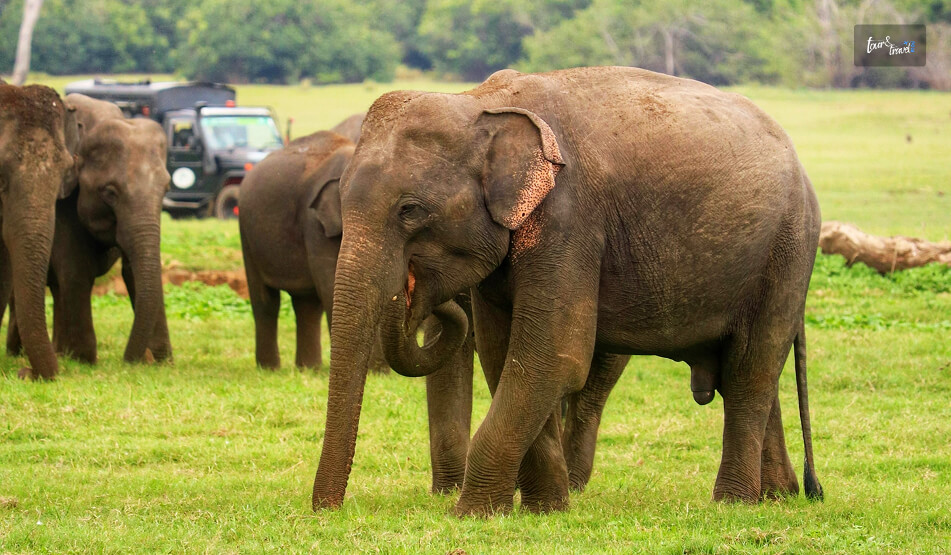
The Somawathiya National Park is at a distance of around 68 km from Pasikudah. It is a protected site known for its biodiversity. 

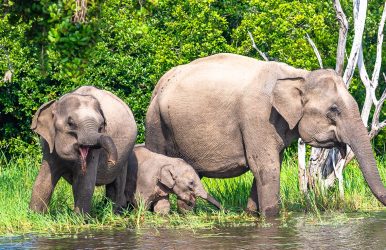
It has leopards, elephants, water buffalo and various species of birds, 

Also, it is a prominent pilgrimage site with the stupa housing the relic (the right canine tooth) of Lord Buddha. 

The experience at Somawathiya National Park was very different from the time at the beach, and the Somawathiya Chaitya reminded me of the Great Stupa at Sanchi in Madhya Pradesh, India. 

Overall, Pasikudah rewarded me as a place to slow down. However, with enough history and the spiritual vibe of the Stupa, my time here was more rewarding.

Share on Social Media

Sibashree is a travel, culture, and leisure writer who has been writing since the age of 12 and professionally since 2014. With more than a decade of travel writing experience and journeys across India and several parts of the world, she brings a deeply personal and thoughtful perspective to her work. A student of English Literature and Mass Communication, Sibashree has always viewed travel as more than movement — for her, it has been a way of understanding people, cultures, and herself. Her passion for spiritual exploration has also led her to many unusual and meaningful destinations over the years. Outside of writing, Sibashree enjoys watching European cinema, reading about global politics, and reflecting on the stories hidden within everyday places.

Leave a Reply

Your email address will not be published. Required fields are marked *

title-img Related

READ MORE puttalam sri lanka

Why Is Puttalam Sri Lanka Famous? What Are The Things To Do In Puttalam?

BY  Sibashree Jun 24, 2026

Puttalam grabbed everyone’s attention with the sudden visibility of a mysterious object with a length of several feet in the sky.  There were speculations about the object being a missile, rocket, or meteor shower.  A few months ago, on 15th December, 2025, the Geminid meteor shower was clearly visible in the sky.  However, these are not one-off instances. I could clearly see the Milky Way in Puttalam Sri Lanka, in the month of April.  Furthermore, the wilderness surroundings, remote areas such as Eluwankulama, and a relatively flat topography on the southwestern coast, make Puttalam one of the chosen places of stargazing in Sri Lanka.  But beyond the stargazing excitements, Puttalam, Sri Lanka, bears a rich history, exudes serene coastal beauty, and has a colonial heritage.  In this article, I will talk about my days in Puttalam so that you know that coastal beauty better.  Where Is Puttalam? Known for massive coconut production, prawn farming, and salt production, Puttalam town is the capital of the Puttalam district.  It is on the shore of the Puttalam lagoon, the second largest lagoon in the country.  The International Union for Conservation of Nature (IUCN) is now encouraging the most sustainable use of the lagoon resources.  Thus, they are supporting the exploration of new ecosystems here for better fisheries management. Here is an excerpt from a report published by IUCN on 4th April, 2025.  “With 88 fishing villages and approximately 165,000 people dependent on it, fisheries in Puttalam have been identified by its residents as their most important ecosystem service, particularly for women, who participate in bivalve gleaning and other post-harvest livelihoods. The lagoon is an important area for endangered species, such as green sea turtles and dolphins, and contains ecosystems vital for its health, such as seagrass and mangroves.  Tourism is also important in the Lagoon, which hosts seasonal aquatic sports and has year-round visitors to its islands.  The islands additionally have cultural importance as they are connected to local religious values.” Moreover, Puttalam has the Indian Ocean on the west, and it is the gateway to the Kalpitiya peninsula and Wilpattu National Park. How To Reach Puttalam Sri Lanka? Puttam is located around 130 km north of Colombo. It is also located at a distance of close to 95 km from Nogombo.  Furthermore, it is well-connected to Colombo and other major cities/hubs of the country through the Puttalam Railway Line and A3, A10, and A12 highways.  By Train  The train travel from Colombo Fort to Puttalam takes between 3 hours and 45 minutes and 5 hours.  Moreover, the ticket price will be between LKR 250 and LKR 1550 (Source: the Department of Railways. Sri Lanka. By Bus  Also, you can take a bus from the Bastian Mawatha Bus Terminal in Colombo and travel to Puttalam with a stopover in Anuradhapura.  You can even take the direct 87/816 buses. They cover the distance within around 4 to 4.5 hours, and the regular, non-AC bus tickets cost between LKR 500 and LKR 800.  What Is The History Of Puttalam Sri Lanka? Puttalam in Sri Lanka today stands out with its multicultural identity. Here, you will find a fusion of Sinhalese, Sri Lankan Moors, and Tamil cultures, which have lived for generations.  Furthermore, as a commercial and administrative center, it supports diverse activities such as prawn farming, shallow sea fishing, and salt production.  However, this town on the northwestern coast of Sri Lanka has a history spanning 10000 years.  Located on the large Puttalam Lagoon, it has been a maritime trade hub, a center for the colonial spice and coconut industries, and has an enduring and culturally diverse population. Here, I have broken the history of this coastal town into three sections.  Ancient Roots And Indigenous Beginnings The archaeological evidence of the locality shows that human settlements started here 75000-125000 years ago.  Prince Vijaya, 6th century B.C., chose it as the landing site, and thus the Sinhalese lineage started here.  Medieval Trade And Arab Influence  During the medieval period, Puttalam became a major location for maritime trade.  Arab merchants, who established deep roots in the region, laid the foundation for the prominent Moorish population in the area.  Furthermore, the name Puttalam comes from the Tamil word Puthu-kulam. Puthu-kulam means "new tank" or "new pond.” Thus, it indicated the vital irrigation tanks that sustained early agricultural settlements.   The Colonial Era  Many European powers wanted to control the lucrative trade routes of Puttalam because of its natural resources and coastal position.  The Potuguese was the forest to build a built a strategic fort in Puttalam to secure the region and monitor trade in the 16th century.  Then, in the 17th and 18th centuries, the Dutch came. They captured and significantly expanded the Portuguese fortress. Furthermore, during these times, Puttalam became a central transit point for the highly profitable cinnamon trade and salt production within the lagoon. In addition, in the 19th and 20th centuries, the British came to power.  They used the fertile soil of the region for the expansion of the coconut industry. Thus, Puttalam became one of the most critical sources of copra and coconut products in the island.  A Quick Summary Of The History Of Puttalam  Era/PeriodKey Historical Developments and MilestonesOver 10,000 years agoEarly human settlements established, supported by archaeological evidence.Medieval Period- Puttalam became a pivotal west-coast maritime trade hub.- Arab merchants settled, forming the roots of the Sri Lankan Moor community.- Named Puthu-kulam ("new tank/pond") after vital local irrigation tanks.Portuguese Rule(16th Century)A strategic coastal fort was constructed to monitor trade and secure the region.Dutch Rule (17th and 18th Centuries)- Captured and expanded the Portuguese fortress.- Transformed the town into a transit hub for cinnamon and lagoon salt production.British Rule (19th and 20th Centuries)- Developed agricultural infrastructure.- Oversaw rapid expansion of the coconut industry, making it a top source for copra. Why Is Puttalam Famous? Puttalam is famous for its historical ruins, religious centers, and natural attractions. You cannot miss the following attractions. 1. Munneswaram Hindu Temple The Munneswaram Hindu Temple is one of the five historic coastal temples of Lord Shiva in Sri Lanka.  The history of the temple goes back to at least 1000 CE.  Moreover, it is associated with the stories of the Ramayana.  Also, it is a unique spiritual hub where Buddhists and Hindus unite.  2. St Anne’s Church St. Anne’s Church is along the coastline of Thalawila. It has a peaceful ambiance.  Also, it dates back to the Portuguese era.  It serves as a monumental pilgrimage site. Furthermore, it draws hundreds of thousands of believers from across the island for its grand annual feast in July. 3. Alankuda Beach The Alankuda Beach has a tranquil stretch of golden sand, and it is known for dolphin and whale watching excursions.  Located in Kalpitiya, it is a premier eco-tourism destination, highly favored by adventure travelers for thrilling water sports like kitesurfing and windsurfing. 4. Hatthikuchchi Viharaya Tucked away in a peaceful forest landscape, this 3rd-century BCE Buddhist monastic complex is famous for a massive rock formation that resembles an elephant's stomach.  It is highly revered as the legendary sanctuary where the pious, exiled King Sirisangabo self-sacrificially gave up his own head to assist a poor peasant. 5. Anawilundawa Wetland Sanctuary This Ramsar-designated site is an important landmark for ecotourism in Sri Lanka.  It has a historic human-made system of interconnected freshwater tanks crashing right against a coastal lagoon. Furthermore, it is an irreplaceable, thriving sanctuary for thousands of native and migratory birds. 6. Puttalam Lagoon The Puttalam Lagoon, spanning an area of 32,700 hectares, is the second-largest backwater body in the country.  It has calm waters, and it is an ideal hub for small-scale prawn harvesting, wildlife viewing, and kite surfing.  7. Puttalam Station The colonial rulers of Puttalam opened the railway station officially on 12th May 1926.  Today, it is a state-run railway station and attracts many visitors due to its colonial charm and surrounding scenic beauty.  8. Yapahuwa Built by King Buwanekabahu, Yapahuwa was the royal residence in the 13th century.  Today, you will get to see the remains of this royal palace. I was especially mesmerized to see the ornate staircase.  9. Chilaw  Chilaw, located a few kilometers south of Puttalam, is a small town that stands out because of its religious harmony.  People from various traditions, backgrounds, and religions live here.  Furthermore, the beach here offers a calm and relaxing ambiance and the fishing villages here give you insights into the local way of living life.  What Are The Things To Do In Puttalam?  While Puttalam has the most tranquil vibe, it is also the hub of most adventurous activities, such as kite surfing, bar reef snorkeling, and wildlife safaris.  1. Kite Surfing In Kalpitiya  Kalpitiya is a global kite surfing hub. It has consistent wind conditions for over nine months of the year.  Furthermore, the flat-water lagoons here offer a safe space for learning. On the other hand, the ocean waves here challenge the advanced riders.  Also, the Margarita Kite School is the best name in kite surfing training in Kalpitiya today. It trains tourists and locals with the latest equipment.  Moreover, the downwind trips here are epic. You can glide across pristine, uninhabited islands and sandbars dotting the massive lagoon. 2. Dolphin Watching  I could spot hundreds of playful dolphins gathering in spectacular groups just off the Kalpitiya coast.  November to April is the best season to spot these adorable animals as the water remains calm.  Also, local guides follow strict conservation guidelines to protect the natural habitat of mammals. So, you have to follow responsible tourism practices.  3. Diving Puttalam has a diverse marine life. So, you can explore vibrant ecosystems teeming with sea turtles, reef sharks, and manta rays.  It also has historic shipwreck sites where fascinating sunken vessels are wrapped in colorful soft coral colonies. Furthermore, warm waters offer crystal-clear viewing conditions during the calm winter diving months. In addition, when you descend along deep underwater cliffs that host a spectacular variety of macro life. 4. Wildlife Safari At Wilpattu National Park The Wilpattu National Park has villus or natural rainwater lakes. It is famous for its high density of leopard population.  Furthermore, here, you can spot elusive sloth bears, wild elephants, crocodiles, and colorful endemic jungle birds. So, the jeep tour on the rugged off-road tracks was immersive. It cost me around LKR 16000.  5. Bar Reef Snorkeling  Here, you will find the most beautiful coral sanctuary of Sri Lanka.  Also, here, you can swim alongside brightly colored butterflyfish, giant parrotfish, and harmless blacktip reef sharks. Furthermore, you will marvel at delicate, healthy formations of brain and staghorn corals just below the surface. In addition, you can take short boat rides from the mainland to reach these shallow swimming areas.  What Is The Best Time To Visit Puttalam Sri Lanka? January to March and May to September are the best times to visit Puttalam. The dry and sunny weather conditions in the month are ideal for coastal kitesurfing in Kalpitiya, whale watching, and leopard safaris in the nearby Wilpattu National Park.

READ MORE Vavuniya

Vavuniya, Sri Lanka: The Crossroads Of Tamil And Sinhalese Cultures Everyone Just Passes Through

BY  Sibashree Jul 17, 2026

Every guidebook I read before my third trip to Sri Lanka showed Vavuniya in the same way.  The map was also similar in its approach, and Vavuniya looked like a dot between Anuradhapura and Jaffna. It looked like a place that everyone passed through, but not a place to stop.  The feeling or vibe was similar to Mannar, as most forums wrote it off as “not much else.” However, when I actually went there, I realized what I would have missed.  So, when my driver, Ravi, suggested the Anuradhapura-to-Jaffna drive with a day in Vavuniya instead of pushing straight through, I said yes mostly out of stubbornness. I wanted to see what a “Nothing” town on Sri Lanka’s most historically loaded highway looked like up close.  Honestly, I was not prepared for how much those hours in Vavuniya would sit with me.  The Omanthai Moment  Around twenty minutes before reaching Vavuniya Town, Ravi stopped the car.  The road there narrowed and slowed at a junction called Omanthai. There was nothing very dramatic, and it only had a few roadside stalls, buses idling, and the ordinary chaos of the A9 highway. However, the stopover became unforgettable as Ravi tapped the wheel and said, almost as an aside,  “This was the checkpoint.  During the war, you couldn't cross here without permission. Now you don't even notice it unless someone tells you." That gap between what a place was and what it looks like now is, I've realised, exactly why Vavuniya stayed with me. Also, if Hikkaduwa was the spot to witness the rampage of the 2004 tsunami and the story of human resilience after it, Vavuniya was a story of how Sri Lanka continues to evolve despite a violent history of Civil War.  And that evolution probably shows in the recent reclassification of Sri Lanka's economy in 2026 as an upper-middle-income economy by the World Bank.  What The War Left Behind And What Has Been Rebuilt In Vavuniya?  Being from India, I felt connected to the civil war struggles in Vavuniya.  However, the information available to me was mostly in fragments. Standing in Vavuniya made the fragments feel connected.  During the 26-year conflict, Vavuniya functioned as a critical frontline and government-held enclave bordering LTTE territory to the north. In the final and brutal phase of the civil war, hundreds of thousands of people fleeing the fighting in the Vanni passed through Vavuniya.  Many people were even housed in transit camps, and the largest was known as Menik Farm as the conflict wound down in 2009.  However, you cannot spot any visible sign of these conflicts today.  I saw a town that was rebuilt as a meeting point and not a dividing line.  Tamil, Sinhalese, and Muslim communities live alongside each other here, and you can feel it in the built environment alone. A Hindu kovil, a mosque, and a church can sit within a few streets of each other, something I didn't see with the same density anywhere else on this trip. I want to be honest that this isn't a place with a museum or memorial that neatly packages this history for visitors. So, you have to arrive already curious and often ask. How I Spent A Slow Day In Vavuniya Town (The Places I Visited)  Vavuniya Town is walkable, and instead of being a bucket-list destination, it allows you to engage and get immersed in its spiritual, historical, and cultural vibe.  Nevertheless, these are the places I visited during my day trip to Vavuniya Town.  1. Kandasamy Kovil Kandasamy Kovil, a Hindu temple dedicated to Lord Murugan, is at the heart of the town. It is similar to the temples in Jaffna in vibe. However, you cannot expect the quintessential grandeur of the South Indian temples here.  I loved that there was no queue in the temple when I visited. Just a handful of locals were moving through their morning rituals as I stood at the edge and watched them.  2. The Vavuniya Archaeological Museum The Vavuniya Archaeological Museum was a short walk away from the Kandasamy Kovil.  It is a small museum that remains open from 8:30 AM to 5 PM and offers free entry.  Furthermore, it remains closed on Tuesdays.  You can explore this small museum in half an hour. However, that does not reduce the historical value of the pottery, statues, and inscribed stones on display. These made me familiar with the district's history back well before the war, back to the Rajarata and Vanniar periods I'd just been reading about on the drive in. 3. Vavuniya Kulam And Iratperiyakulam Lake In the late afternoon, Ravi drove me out to the tanks.  Vavuniya Kulam, the town's main reservoir, had a peaceful vibe. The locals were fishing or just sitting by the water as the light softened. Iratperiyakulam Lake, a little further out, had the same unhurried energy with no ticket booth and no crowd. 4. The Market This was definitely one of my favorite parts of a trip to Vavuniya.  I wandered the Vavuniya town market at dusk. Tamil, Muslim, and Sinhalese traders shared the same narrow lanes, selling produce, dried fish, spices, and fabric side by side. It was great to see and was tangible evidence that this town has genuinely moved past being a dividing line. One Day In Vavuniya: The Itinerary TimeActivity MorningArrive via A9, stop at OmanthaiLate Morning Visit to the Kandasamy Kovil and Archaeological MuseumAfternoon and Late AfternoonVavuniya Kulam and Iratperiyakulam LakeEveningExploring Town Market and DinnerNext MorningOnward to Jaffna What I Ate In Vavuniya  Like the food in Jaffna, Vavuniya also treated me with Tamil delicacies. So, rice and curries dominate the options.  I had a lunch plate with five or six vegetables and fish curries that easily rivalled anything I have had further south. In the evening, I found a roadside stall doing kottu roti, chopped and fried on a hot griddle with theatrical noise, which felt like the right way to end a day built around quiet places. Reaching Vavuniya And Getting Around Vavuniya is on the A9 highway, which is the main north-south highway of Sri Lanka.  Also, it is on the Northern Line railway connecting to Colombo in the south and Jaffna further north.  However, you can visit Vavuniya from Anuradhapura like me, and it is a fairly short onward drive.  If you are traveling from Colombo by road. It will be a long four-hour drive, though!  Within the town itself, everything I wanted to see was walkable or a short tuk-tuk ride away.  I didn't rent anything as Ravi's car covered the tanks and the outskirts, and my own feet covered the town centre and market. Why You Must Not Skip Vavuniya  Vauniya does not have the spiritual intensity of the Dambulla Royal Cave or the cultural grandeur of Kandy.  It also does not want to be a headline destination.  I understand why it gets treated as a highway stop rather than a place to stay. However, for me, that was exactly the point. I stood at a former front line that's now just a bus stop, eating a curry plate shared by three communities that were once defined by the war between them. Overall, it offered a northern Sri Lankan experience that is not curated for visitors or trying to grab attention.

READ MORE things to do in nara

What Are The Things To Do In Nara? How To Plan A Two-Day Trip?

BY  Sibashree Mar 31, 2026

A trip to Nara was long overdue, and as the first permanent capital of the country, it is a must-visit.  Furthermore, this Japanese capital, before 794 AD (then Kyoto became the capital), has many UNESCO World Heritage Sites.  The Todai-ji Temple is the most famous among these 8 UNESCO World Heritage Sites. You will find one of the largest Buddha statues in the country here, and the statue is made of bronze.  Of course, the deer roaming in the city are beautiful, and you feel like getting transported to a bygone era.  It reminded me of one of the most famous literary works in our country, Shakuntalam Abhigyan, an immortal love story between King Dushyanta and Shakuntala, written by Kalidasa in Sanskrit.  Also, this is a place that will ask you to come back, and most people plan a day trip to experience its historical charm and natural beauty.  But, smitten by its beauty, I chose a 2-day trip, and here is the list of things to do in Nara. Also, I will discuss how I can get to Nara.  How To Reach Nara?  Nara is easily accessible from Kyoto, which is also famous for its history and cherry blossom season.  You can also visit Nara from the Osaka prefecture. So, overall, a visit to Nara can fit well into your itinerary of visiting the Kansai region of Japan.   Also, the robust railway system of Japan makes it easy and budget-friendly to visit Nara. A Japan Railway Regional Pass will be the best for traveling across Nara, Kyoto, Osaka, and Kobe, and the entire Kansai Region.  Also, when in Osaka, don’t forget to explore the street food stalls and have the best Osaka food, including Mochis and seafood delicacies.  Here is how you can travel from Kyoto to Nara. 1. Traveling From Kyoto To Nara Through The JR Nara Line You will get an express train or a local train from Kyoto to Nara every hour.  Furthermore, if you opt for the Miyakoji Rapid Service on this line, you will reach Nara within 45 minutes, and the ticket price will be 720 JPY.  Also, the local train services, with the same ticket price, will take about 70 minutes.  Once you reach the JR Nara station, you will get buses to the Nara Park and other top attractions in Nara.  2. Take The Kintetsu Railway To Reach Nara From Kyoto This is the most convenient way to reach Nara from Kintetsu Railway Station.  The train journey is the fastest, and the journey takes about 35 minutes by the express trains, and the ticket price is 1280 JPY.  Also, the regular trains take about 45 minutes to complete the journey. The ticket price is 760 JPY.  What Are The Things To Do In Nara?  From a visit to the Nara Park to exploring Heijo Palace and the temples, there are many things to do in Nara.  Here are the things I did during my 2-day stay.  1. Day 1 In Nara: Exploring The Nara Park  With deer passing by, Nara Park, the home to the main attractions in Nara, is a place you cannot simply miss.  The park is free to enter, and it remains open for 24 hours.  However, many attractions in the park close after 5 PM. So, you have to be early when visiting it.  Also, here are the attractions you will come across in the Nara Park, along with the deer passing by.  • Kasuga Taisha One of the UNESCO World Heritage Sites in Nara, Kasuga Taisha, takes us back to the Nara Period from 710 to 794 AD.  It is the most revered shrine among the Fujiwara clan as the tutelary shrine.  Furthermore, the main attraction of the shrine is the “Hall of Lanterns.” There, I saw many bronze lanterns illuminating the darkness.  During the special festivals, Setsubun Mantoro in February and Chugen Mantoro in August, all these lanterns are lit.  Moreover, you will find a cider tree in the inner shrine, and it is 1000 years old.  • Mt. Wakakusa I took the back road from Kasuga Taisha on the way to the Todai-Ji temple.  I came across many small shrines there. However, the highlight was Mt. Wakakusa.  This hill between the two shrines has a height of 350 meters. Also, on the 4th Saturday of January, it becomes the venue for the Wakakusa Yamayaki celebration.  People burn dead grass on the slopes, and this is a ritual that has been celebrated since the 18th century.  • Todai-Ji Todai-Ji is another UNESCO World Heritage Site, and one of the “Historic Monuments of Ancient Nara.” It was built in 752 AD, and it was the head of all the temples in the province. It even had a strong influence on the royal family.  In fact, with Todai-Ji being the seat of control even in the royal decisions, the emperor decided to move the capital to Nagaoka in 784 AD.  However, the main attraction of the Todai-Ji Temple is the massive Buddha statue, or Daibutsu.   A depiction of Dainichi Nyorai,  it represents the primordial Buddha in the orthodox East Asian Buddhist philosophy.  You will also find two similarly sized Bodhisattva statues here.  However, the temple and statues you see today were burned down, and they were rebuilt during the Edo period (1603–1868).  2. Things To Do In Nara: Day 2 I visited the Heijo Palace and many other temples of Nara on day 2.  • Visiting The Heijo Palace  When Nara was the capital, the Heijo Palace was the seat of power for the chrysanthemum throne.  It had a dimension of 1 kilometer, considering the other palaces and architecture of that time.  However, the remains of this UNESCO World Heritage Site in Nara are now at the Toshodai-ji Temple, nearby.  However, since the 1950s, archaeologists have been studying the remains of the Heijo Palace, and this has evoked further public interest.  That is why you can now see many placards there and read about the history and legacy of the site.  Moreover, the audience hall and two other parts of the palace were rebuilt. The restoration of the largest part, the audience hall, happened in 2010.  It was an ode to the 1300th anniversary of Nara as the capital of Japan.  • Toshodai-Ji As I have mentioned, the Toshodai-ji Temple has the remains of the Heijo Palace.  This temple dates back at least a millennium. Ganji, a Chinese monk, built this temple in 759 AD.  Monk Ganji brought Buddhism to Japan, and the Toshodai-Ji today is a UNESCO World Heritage Site.  • Yakushi-Ji It is a UNESCO World Heritage Site, and people here worship Lord Buddha as Yakushi Nyorai or the Medicine Buddha.  The dual main halls here have unique architecture, and each has a dedicated 3-story pagoda.  • Horyu-ji  Horyu-Ji is older than most temples in the Nara region, and Prince Shotoku founded it in 607.  Furthermore, this UNESCO World Heritage Site stands out with its wooden edifices, which are some of the oldest in Japan. This time, I missed many attractions such as Asuka, Omiwa Shrine, and Mount Yoshino. Some day for sure!  And till then, Sayōnara, guys!