
Lankathilaka Viharaya, Polonnaruwa: Inside Sri Lanka’s Largest Image House

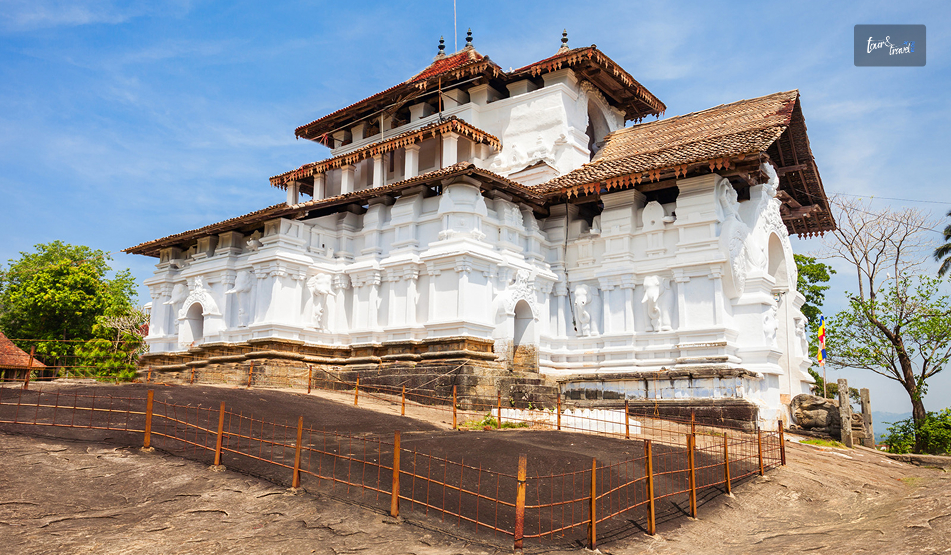
Lankathilaka Viharaya welcomed me with two towering walls on both sides of the path leading to the iconic Buddha statue.  

This clay-brick statue of Buddha has been lying headless for centuries now. It could be wear and tear or vandalism, leaving such a magnificent work of art destroyed.  

Luckily. I reached Lankathilaka Viharaya on a weekday morning, and it was before the tourist buses arrived. 

So, I enjoyed the calm ambiance of the image house and the other surrounding ruins in the complex.  

On the way to the image house, I noticed many ruins, including stupas and small pillars, which looked like they had been cut off at the top.  

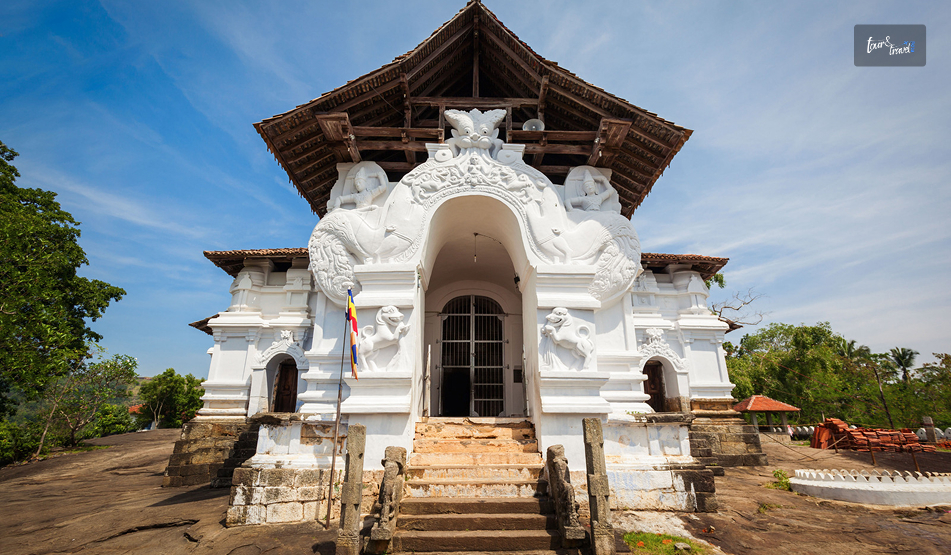
Nevertheless, as I reached the image house, the main attraction of the site, this is what I saw.  

Lankathilaka Viharaya At A Glance 

Detail Fact 
Location Alahana Pirivena, Polonnaruwa ancient city, south of Kiri Vehera 
Builder King Parakramabahu I (1153–1186) 
Restored Under King Vijayabahu IV (inscription, 1270–1272) 
Type Gedige (vaulted) brick image house. It used to have five storeys. 
Height About 17 Meters The tallest entrance pillar is 17.7 Meters.  
Wall thickness About 4 Meters 
Headless Buddha statue Made of clay bricks The original height of the statue was around 12.5 meters.   
Time needed 30 to 45 minutes. 

My Walk Into The Nave

Lankathilaka Viharaya, Polonnaruwa: Inside Sri Lanka’s Largest Image House

Lankathilaka is in the northern monastic zone of Polonnaruwa. 

So, this time I reached it by bicycle from the main ticket office and museum. The rental charge was LKR 400 for a day.  

The Approach And The Twin Pillars 

The brick pillars framing the entrance were enormous. The tallest pillar still has a height of around 17.7 meters.  

The carvings on the pillars were intricate. However, I could not decipher what those figures were.  

Inside The Headless Buddha’s Chamber 

Barefoot on warm stone, I walked a narrow aisle between walls about 4 meters thick, and the standing Buddha appeared at the far end, cut off above the shoulders.  

The chamber does not have a roof. So, daylight completely bathes the statue and the chamber.  

Also, the image house has two stairways that lead to the entrance.  

Each step is around 4 inches in width and 1 foot in height. Furthermore, the steps run in an ascending order.  

So, you have to walk sideways on the steps, avoiding turning your back on the standing Buddha statue. Here, your back will stay against the wall.  

The Unique Architectural Style And Elements 

The image house has a Geḍi-ge architectural style, in which a semi-spherical or arched-shaped vaulted roof is the signature.  

Today, you cannot see the roof. However, the remains speak for the sophistication of the architecture.  

Furthermore, I saw the depiction of a Nagini on the balustrade here.  

Usually, we see a Naag, or male serpent, with guard stones and a moonstone at any temple entrance.  

So, the Nagini structure here is rare.  

Here, it is carved on the inner face of the balustrade near the entrance. It has equal hoods as the male counterpart carved on the opposite side.  

I am not sure about the interpretations. However, apparently, it looked like the equal role and power of the male and female serpents as guardians of the place.  

Light, Sound And Stillness 

I was standing halfway down the aisle.  

Standing there, I could only listen to my footsteps and distant birdsong. The walls were so thick that they muffled the noise of the outside world.  

This silence is what makes the place feel so devotional, even when the scorching rays of the sun reach the chamber and statue without any shelter.  

I stayed there for 1 hour, and along with the headless Buddha statue, the Nagini carvings stayed with me.  

I come from a land where the divine feminine and the divine masculine are one, and they are incomplete without each other.  

Did the Nagini carving opposite the Naag carving here also indicate the same? I am not sure, but I had this thought even after leaving Lankathilaka Viharaya.  

History: Why This Image House Exists

Lankathilaka Viharaya, Polonnaruwa: Inside Sri Lanka’s Largest Image House

Polonnaruwa was a royal capital from the 11th to 13th centuries. 

Also, King Parakramabahu I turned it into a city of monasteries, reservoirs, and shrines. 

Parakramabahu I And The Alahana Pirivena 

Lankathilaka was under the Alahana Pirivena monastery. 

Also, it is the largest image house of ancient Sri Lanka.  

Furthermore, it is one of three gedige shrines at Polonnaruwa, alongside Thuparama and Tivanka. 

The Vijayabahu IV Restoration 

An inscription records that Vijayabahu IV renovated it about a century later.  

These repairs changed a lot of the original architecture of the image house.  

Also, if you visit the National Museum in Colombo today, you will find dwarf-like stucco heads from Tivanka and Lankatilaka. 

From Abandoned Capital To World Heritage 

By the early 14th century, Polonnaruwa had been abandoned, and the jungle slowly covered its monuments until 19th-century excavations began.  

UNESCO listed the city in 1982.  

Walking the nave today, I found it hard to believe this shell sat under vegetation for centuries. 

How Lankathilaka Compares With Polonnaruwa’s Other Gedige Shrines

Lankathilaka Viharaya, Polonnaruwa: Inside Sri Lanka’s Largest Image House

Polonnaruwa has three vaulted image houses, and I visited all three in one day.  

Seeing them back to back showed me what makes Lankathilaka special with its sheer scale. 

Shrine What stands out 
Lankathilaka Walls about 17 meters high Colossal headless standing Buddha 
Thuparama Gedige Best-preserved early brick-and-stone temple, with a barrel-vaulted roof. 
Tivanka Image House Largest thrice-bent Buddha image, with surviving Jataka murals. 

If you only have time for one, I would choose Lankathilaka for drama and Tivanka for painted detail. 

Planning Your Visit 

Lankathilaka needs no separate ticket as the Polonnaruwa ancient city ticket covers all sites. 

Tickets And Timings 

Item Detail 
Foreign adult ticket US$25 
Site hours 7 am–6 pm daily 
CCF ticket counters 7 AM to 5 PM 
Online tickets Valid for 90 days 
Guide Charges LKR 2500-3000 for three to four hours.  

Pair It With Kiri Vehera And Gal Vihara 

Time Stop Notes 
7:30 AM Lankathilaka About 40 minutes 
8:20 AM Kiri Vehera About 30 minutes 
9:00 AM Gal Vihara About 45 minutes 

Is Lankathilaka Worth Visiting? 

Yes, Lankathilaka Viharaya is worth visiting. 

It is compact, and a ticket to this Vihara is included in the ancient city ticket.  

Furthermore, for photographers, it is a favorite spot because of the scale it offers. Bring a wide-angle lens or use the ultra-wide mode of your phone to capture the stupa perfectly.  

Also, if you are facing a shortage of time, visit Lankathilaka Viharaya on a combined trip to Gal Vihara. 

Share on Social Media

Sibashree is a travel, culture, and leisure writer who has been writing since the age of 12 and professionally since 2014. With more than a decade of travel writing experience and journeys across India and several parts of the world, she brings a deeply personal and thoughtful perspective to her work. A student of English Literature and Mass Communication, Sibashree has always viewed travel as more than movement — for her, it has been a way of understanding people, cultures, and herself. Her passion for spiritual exploration has also led her to many unusual and meaningful destinations over the years. Outside of writing, Sibashree enjoys watching European cinema, reading about global politics, and reflecting on the stories hidden within everyday places.

Leave a Reply

Your email address will not be published. Required fields are marked *

title-img Related

READ MORE things to do in srilanka

What Are The Things To Do In Sri Lanka? Beaches, Cities, Rocks, Wildlife And Colonial Architecture 

BY  Sibashree Mar 25, 2026

“Love Sri Lanka, Always.” This has been the new campaign of Sri Lanka. Also, this campaign, coming at the time of the ongoing Gulf War, looks quite bold.  It projects the island country as a place that needs constant discovery.  And Sri Lanka has reaped the benefits of launching a bold campaign. It has crossed the mark of 100,000 tourists within the “first 18 days of the March in 2026.” Furthermore, while the marketing campaign has brought Sri Lankan tourism global visibility, the diversity of attractions makes it a powerhouse.  For example, I have been so much in love with Sri Lanka that I have made multiple visits and sometimes to the same place, years apart.  With the changes and developments, the country has still maintained its warmth, lush greenery, and human resilience. The sheer grit of the country has helped it win over the natural disasters such as the Tsunami, Cyclone Ditwah, and endless civil wars.  However, with diverse offerings, it may be difficult to choose the things to do in Sri Lanka. So, here are the places I loved the most.  What Are The Things To Do In Sri Lanka?  Keeping the spirit of the Indian Subcontinent alive, Sri Lanka beautifully portrays an inclusive picture.  For example, its southern and northern zones show a difference in language and culture. However, both are connected through the way of life, sunshine, and more.  Also, Sri Lanka has places such as the Ambuluwawa Tower, which is within a multireligious complex, showing how respectful the country is toward every religion.  1. Exploring The Tamil Culture And Temples In Jaffna Jaffna was the first place I visited in Sri Lanka as a backpacker. It is a hub of strong Tamil culture in Sri Lanka.  Furthermore, Jaffna has beautiful Hindu temples such as the Nallur Kandaswamy Kovil, the Naguleswaram Temple, the Nainativu Nagapooshani Amman Temple, etc.  Also, the beaches in Jaffna showcase the beauty of Northern Sri Lanka.  Moreover, the food in Jaffna is spicier than in any other part of Sri Lanka.  Overall, Jaffna is a world in itself where slow living and staying true to the roots are the best ways.  2. Hiking The Ritigala Forest Monastery Out of all my experiences in Sri Lanka, hiking the Ritigala Forest Monastery has been my silent favorite.  The history of the Ritigala Forest Monastery takes us to the 1st century BC. It has more than 70 caves and was once the abode of the monks of the “Pansukulika” sect.  Furthermore, located inside the Ritigala Forest Reserve, the remains of the ancient monastery are now surrounded by around 96 species of medicinal plants.  The presence of the medicinal plants further makes its association with the Ramayana stronger. 3. Visiting Uppuveli Beach, And Other Attractions In Trincomalee Trincomalee has the famous Uppuveli Beach. However, it would be wrong to assume that the things to do in Trincomalee are limited to beach activities.   You can visit the Thirukoneswaram Kovil Temple, Fort Frederick, Trincomalee Maritime and Naval History Museum, and the Trincomalee Market. 4. Visiting Mount Lavinia Beach The Mount Lavinia Beach is very close to Colombo, the capital of Sri Lanka. This beach has a leisurely vibe with the local folks playing cricket and people taking a sun bath.  However, the main attraction here was the Sea Turtle Conservation Centre. It is located by the beach, and it buys eggs from the locals to hatch them.  5. Climbing Up The Ambuluwawa Tower At the top of the Ambuluwawa Mountain, the Ambuluwawa Tower is an important cultural landmark in Sri Lanka.  Its location is in the Ambuluwawa Biodiversity Complex, in Gampola. Also, it is just 20 km away from Kandy.  You can climb up its spiral stairs to reach the top of the tower and enjoy a panoramic view of the surroundings.  6. Exploring The Cultural Capital, Kandy Kandy, the cultural capital of Sri Lanka, has the beautiful Kandy Lake at the epicenter.  Furthermore, it is fighting with the aftermath of the Cyclone and Ditwah and remains crucial in the political and economic landscape of the country.  The most fascinating things to do in Kandy are visiting the Udawattakele Forest Reserve, bowing before the Bahirawakanda Vihara Buddha Statue, and visiting the Temple Of The Tooth.  7. Climbing Up The Sigiriya Rock The Sigiriya Rock is famous for its mythological significance and history, and its association with Buddhism.  King Kashyapa made the Sigiriya Rock his seat of power in 477-499 AD.  However, before that, it was a Buddhist monastery which later shifted to the Pidurangala Rock.  Also, it has a long history of archaeological discovery, and in 1982, it was designated as a UNESCO World Heritage Site.  8. Climbing Up The Pidurangala Rock The Pidurangala Rock has a history that goes back two millennia. After King King Kashyapa made the Sigiriya Rock his seat of power, the Pidurangala Rock became their refuge on the king’s order.  Furthermore, it has a 1500-year-old Buddha Statue, and it is a protected ancient cave.  Moreover, from the Pidurangala Rock, you will get the best views of the Sigiriya Rock.  9. A Train Ride On The Nine Arch Bridge A train ride on the Nine Arch Bridge is the most iconic experience you can have in Sri Lanka. Also known as the Ella Odyssey, it has been praised by the BBC and Lonely Planet.  Built in 1921, this bridge is a prominent example of the Colonia-era architecture, and it does not have any metal in its construction.  10. Hiking To The Diyaluma Waterfall Hiking to the Diyaluma Waterfall from Poongala is one of the most popular hiking expeditions in Sri Lanka.  Once you reach the Upper Diyaluma Waterfall, you can relax and enjoy a swim in the infinity pools.  From the upper fall, you have to take a further trek of 30 minutes down to reach the Lower Diyaluma Waterfall.  Furthermore, the Diyaluma Waterfall is associated with the tragic love story of a King who fell in love with a lady from a lower caste.  Knowing about their love, the villagers chased them, and the lady fell into the waterfall and died.  11. Visiting The Dehiwala Zoo Since 1936, the Dehiwala Zoo in Sri Lanka has been a favorite spot for a thrilling wildlife experience.  Along with housing monkeys, elephants, fish, and birds, the zoo also has a dedicated section for reptiles.  Moreover, it has always been famous for the animal shows, and it has a Leopard Trail for guided night safari.  12. Spending A Day In Hurulu Eco Park The Hurulu Eco Park near Habarana is one of the best places in Sri Lanka to learn the art of slow traveling.  In the North Central Province of Sri Lanka, it is a great place for spotting elephants.  This dry evergreen is ideal for seeing elephants because it is the corridor between the Kaudulla National Park and the Minneriya National Park.  Take an afternoon safari to enjoy wildlife spotting and your time in nature.  13. Visiting Nuwara Eliya, The Coldest Place In Sri Lanka  Nuwara Eliya, the coldest place in Sri Lanka, is located at an altitude of 1,889 meters. Furthermore, it carries a nickname, “New England,” from the British Era.  Nuwara Eliya is a place of juxtapositions. There are Tudor-style homes, Victorian-style post offices, waterfalls, and jungles, showing the contrast in the landscape and cityscape.  Furthermore, it has natural attractions such as Gregory Lake, Victoria Park, and the Lovers Leap Waterfall.  Also, don’t forget to spend a day in Horton Plains National Park, a UNESCO World Heritage Site.  14. Experiencing A Scenic Train Ride And More In Ella Though Ella has changed in the last 10 years due to rapid development, it has maintained the serene charm with its mountains, rail line, and lush greenery.  Furthermore, it is the place to share a seat with Sir Thomas Lipton and understand how tea runs as the lifeline of the nation.  Also, the Ravana Falls is the place where Ravana hid Sita after abducting her.  Other iconic things to do in Ella are visiting the Nine-Arch Bridge, enjoying a Kandy to Ella train ride, climbing the Ella Rock, watching sunset from the top of the Little Adam’s Peak, etc.  15. Exploring The Galle Fort  Galle is dreamy, and it looks like a movie frame in sepia tone.  However, the Galle Fort, a UNESCO World Heritage Site, is at the epicenter of this once impenetrable trading post.  Walk to the Galle Fort and explore this living museum of art, architecture, and history.  Also, watching the sunset from the Galle Fort is a magical experience.  More things to do in Galle include exploring the beaches beyond the fortress wall.  Also, don’t forget to enjoy a drink in a bar in the cobblestone streets of Galle.  Overall, Galle is a place that unfolds with time. The fortress, the streets, and the colonial buildings make history palpable in every nook of Galle.  In a way, it summarizes the true spirit of Sri Lanka. Visiting the country is not about ticking the bucket-list destinations.  It’s about understanding the culture and soaking in the local vibe.  16. Visiting The Hiriketiya Beach  Hiriketiya Beach is the latest addition to the tourism attractions in Sri Lanka. It is a favorite destination for backpackers and digital nomads.  Furthermore, it is a popular surfing beach with zones dedicated to surfers of different expertise levels.  Here, you can walk to the Blue Island, enjoy great food and beer at Smoke and Bitters, and learn how to cook with Rosie.   How To Group These Attractions By Region For An Easier Trip  With 16 different experiences spread across the island, plotting an actual route through Sri Lanka can be more overwhelming than picking which attractions to visit.   Here is how I would group them if I were sequencing a first-time trip.  Northern And Eastern Sri Lanka: Jaffna And Trincomalee  Jaffna and Trincomalee sit on opposite coasts of the north.  Pairing them makes sense only if you have at least five or six days set aside, since the drive between them runs several hours along the A9 and A6.   If your trip is shorter, pick one.  Jaffna is for the Tamil temples, beaches, and spicier food, or Trincomalee for Uppuveli Beach and the naval history sites.   Both are a considerable detour from the rest of this list. So, I would treat this leg as a separate mini-trip rather than trying to loop it into a Kandy-to-Ella itinerary in the same week.  The Cultural Triangle And Central Highlands  This is where most of the list actually clusters.  Sigiriya Rock, Pidurangala Rock, and the Ambuluwawa Tower sit within a couple of hours of each other, and Kandy makes a natural hub between them and Nuwara Eliya.   From Kandy, the train to Nuwara Eliya (getting off at Nanu Oya) or onward to Ella is one of the most scenic rides in the country.  It conveniently strings together the Ambuluwawa Tower, Kandy's Temple of the Tooth, Nuwara Eliya's tea country, and the Nine Arch Bridge and Diyaluma Waterfall near Ella into a single, mostly rail-connected week.   The Ritigala Forest Monastery and Hurulu Eco Park sit slightly further north, closer to Habarana and Anuradhapura.  So, they fit best as a stop on the way into or out of this loop rather than a separate detour.  The South Coast: Galle And Hiriketiya  Galle Fort, Hiriketiya Beach, Mount Lavinia, and the Dehiwala Zoo all sit along or near the southwestern coastal belt.  The coastal belt is a couple of hours from Colombo by car or the coastal train line.   This makes the south coast the easiest leg to slot in at either end of a Sri Lanka trip.  Mount Lavinia and the zoo as a half-day near the airport, then Galle and Hiriketiya as a longer coastal finish before flying out.   Because this stretch runs along a single road and rail line, it's also the most forgiving section to travel without a fixed itinerary, since onward transport is frequent and buses and trains run late into the evening.  Falling In Love With Sri Lanka, One Region At A Time  Visiting Sri Lanka is not about ticking bucket-list destinations.  It is about understanding the culture and soaking in the local vibe, whether that's the Tamil hospitality of Jaffna, the misty highlands of Nuwara Eliya, or the sepia-toned streets of Galle Fort.

READ MORE Is Japan expensive

Is Japan Expensive For Tourists? Why Is It Still Seeing A Boost In The Travel Booking? 

BY  Sibashree Sep 24, 2021

I have been to Japan many times, and the cultural richness and the sensory delights the country offers make the experience worth it!  However, these days, I see a lot of people asking, “Is Japan expensive to visit?”  Another question in this regard is why Japan is witnessing a major boost in travel booking.  Now, first, let me answer that Japan is not as expensive as people are projecting it. Be it the day trips from Tokyo or exploring the cherry blossom season in Kyoto, if you plan an itinerary and the modes of transport well, you can complete the trip within a decent budget.  Furthermore, thanks to smart tools such as the Japan Rail Pass, you can now make transport more convenient and flexible.  Also, whether Japan is expensive or not will depend on the country you are traveling from and how the currency of your country fares against the Japanese Yen.  On the other hand, Japan is enjoying a massive surge in popularity among Gen Z tourists due to many reasons. However, sushi, manga, and anime are the three major factors driving this rise.  While Japan can be managed on a moderate budget, and I have shared the three main reasons behind the rising popularity of Japan, let’s delve deeper into how much a trip to Japan costs and the other factors causing a rise in Japanese tourism.  Why Is Japan Expensive To Visit? Is It The Growing Craze?  Do you know that American Express Travel data shows a 1300% hike in the number of Americans visiting Japan since 2019?  Furthermore, Netflix has confirmed that Anime viewership has gone 3 times up in 2025.  Now, these pieces of information show how young Americans, especially the Gen Z travelers, are passionate about Japan.  The country is now a cultural superpower with its “Soft Power” that it has used to build the global landscape of entertainment, aesthetics, and ideas.  Joseph Nye, a political scientist at Harvard University, has highlighted the strength of Japan’s soft power.  Overall, Japan is not just a new country to visit for these young travelers. It is an escape to the land of rich culture, great food, and soaking in the spirit of slow tourism.  However, the rising craze among young travelers is not the reason behind Japan being labelled as an expensive destination.  In fact, it is amazing to see tourism in Japan growing despite the high travel expenses being  high.  Key Reasons For Japan Being An Expensive Destination To Visit  Japan is expensive as a destination primarily for three reasons. First of all, the Shinkansen bullet trains, extensively used for transportation, are very expensive.  Also, while I found Osaka food from the street stalls quite affordable, trying Sushi, Ramen, or other Japanese staples in a fine dining restaurant can be very expensive.  Furthermore, Japan almost entirely depends on imported energy.  Despite an improvement of 22.4% in the net energy import during the period of 2020 to 2024, the net energy import of Japan in 2024 was 87.4% of the total energy supply, according to the International Energy Agency (IEA).  Thus, the fuel cost is always high in Japan, impacting the transportation expenses, the cost of essential commodities, and every other sector in a direct or indirect manner. Is Japan Expensive To Visit? A Breakdown Of Tourist Costs  So, Japan is expensive to visit. However, what can be the overall expense tentatively?  What will be the expenses on food, transportation, and accommodation? Here is a detailed breakdown.  1. Tourist Accommodation Cost In Japan Japan is very sincere about the hospitality it offers. So, even if you are staying at a budget hotel or hostel, you will find good hygiene and the basic amenities.  Furthermore, along with hostels, Japan has unique accommodation provisions such as the capsule hotels.  These are basically sleeping pods, and the cost is similar to staying in hostels.  On the other hand, you will find a minshuku, which is like a Japanese version of homestays. You will get bed and breakfast facilities at these accommodations run by local families.  Nevertheless, have a look at the table below to understand the different types of accommodation for tourists in Japan and their average costs.  Types of Tourist Accommodation in JapanTentative Cost Hostels and Capsule Hotels2000-4500 JPYBudget Hotels5000-10000 JPYBread and Breakfast 5000-8500 JPYStandard Hotels10000 JPY Onward Moreover, if you’re looking to move to Japan after your trip there, check out reliable websites to know the best places for foreigners where you can call home. 2. The Cost Of General Public Transport In Japan  The Japanese Bullet Train or Shinkansen is the most preferred mode of transport in the country.  The Cost Of Traveling In A Bullet Train And The JR Pass However, the travel cost is very high if you are traveling by these bullet trains.  On average, and based on the departing station or the destination, the cost will be around 16000-20000 JPY per ride (the ticket price can go much higher).  For example, if you take a bullet train from Tokyo to Shin Amori, the price for a reserved seat will be 21340 JPY.  On the other hand, for the Green Seat and the GranClass Seats, the ticket prices will be 27410 JPY and 34410 JPY, respectively.  On the other hand, a Tokyo to Kyoto bullet train ticket starts from 16550 JPY.  Now, this is where a Japan Rail Pass becomes handy. As a tourist, you can buy a Japan Rail Pass for 7 days, and the cost starts from 50,000 JPY for an adult. For a child, it is 25000 JPY.  You can even buy passes for 14 days or 21 days. With this pass, you can enjoy unlimited rides during the validity period.  Moreover, if you want to focus on Tokyo and its nearby areas, the Regional Pass will be a more budget-friendly option.   Also, cabs are pretty expensive in Japan. For a ride of 1 to 2 kilometers, you will have to pay around 500 to 700 JPY.  After that, a fee of 80-100 JPY will be added for traveling every 250 to 300 meters.  3. The Cost Of Hiring A Tour Guide In Japan  The cost of hiring a tour guide in Japan is between 25000 and 60000 JPY per month. However, the cost of the travel guide will depend on the services you opt for.  You can choose a guide for a full day, and the cost can be up to 80000 JPY, and for a half day guide, it will be around 25000-47000 JPY.  Furthermore, if you are traveling in small groups or vans, the cost of hiring a guide will be around 24000 JPY.  So, hiring a personal travel guide is expensive in Japan. However, you can save the cost of hiring a guide by seeking help from the local tourist centers or the national tourist departments.  4. Food And Drink Cost In Japan Food is one of the most important factors for Gen Z travelers visiting Japan. A survey said that around 50% of the visitors planned a trip just because they wanted to visit a restaurant or try some specific food.  Also, food and drinks are available in various cost ranges. So if you are planning to take the authentic taste of sushi, you will get plenty of options available there.  From the expensive designer boutiques to Kaiten-zushi style shops everywhere, the multiple authentic sushi dishes are valuable.  You can select the place according to your requirements.  In the boutique’s style restaurant, you have to spend nearly 51000 JPY for sushi, but if you prefer the sushi in a low-cost range, you have to spend only 1593 JPY for sushi.  If you want to explore Japan on a budget. You can quickly shift your choices to Japanese cuisine and cut your travel budget by cutting the foreign food items. How To Plan Budget-Friendly Travel In Japan? Do you want to travel in Japan on a budget? Here are the tips you can follow.  1. Make A Tour Plan In The Off Season  Off-season tour plans are always budget-friendly. The Autumn season is an off-season to travel in Japan, and this time the tourist rush is not very high. 2. Take The Railroad  Take the railroad to explore the city and buy the railway card to see the tourist places in the country. 3. Focus On Local Cuisine  Focus on the local, authentic, fresh Japanese dishes. If you’re looking for cheap food in Japan, you can buy it in small restaurants, street food stalls, and even vending machine cafes.  However, if you stay in the country for an extended period, you can save money on your travel by preparing and cooking most of your meals from scratch. 4. Find An Accomodation Far From The Main Crowded Cities  Try to find accommodation that is a little bit far from the main crowded cities. Make sure to book your accommodation ahead of time to save a lot of money. Hostels and the local guest houses are also charming, clean places to stay. However, when planning a Japan tour, it is better to keep away from the expensive luxury boutique-type accommodations. 5. Look For Free Attractions  Look for free attractions and events to save money.  Whether you want to spend a fun day in a national park or visit a museum, there are incredible activities that allow you to enjoy Japan without paying anything.

READ MORE things to do in nuwara eliya

What Are The Things To Do In Nuwara Eliya? Know Why It Is Worth Visiting

BY  Sibashree Mar 24, 2026

The train departed the moist jungle and slowly had a rhythmic ascent to the central highlands. The visual completely changed, and there was a complete change in the air.  It went from high humidity tropical to cold, fresh pine scent breezes.  The jungle changed as well, from lush jungle trees to neat rows of green tea bushes. And, finally, I arrived at  Nuwara Eliya, a small city at an altitude of 1,889 meters. It is also called "Little England,” a term left over from the time of the British. It is a surreal combination of red-brick Victorian post offices and Tudor-style homes. Furthermore, it has a setting for the extremes of dramatic waterfalls and successive mountain peaks.  This misty highland getaway should not be left out of your Sri Lanka travels, whether you are into the history of buildings, enjoy areas with natural beauty, or have an appreciation for tea. Overall, there are diverse things to do in Nuwara Eliya. Also, if you are visiting from India, you can opt for the IRCTC package in association with the Sri Lankan Airlines, to visit Nuwara Eliya with Negombo, Kandy, and Colombo.  You can even explore the things to do in Trincomalee on this trip.  Moreover, you can combine your Nuwara Eliya trip with a visit to the Ambuluwawa Tower.  What Are The Things To Do In Nuwara Eliya? A Town Of Two Worlds Nuwara Eliya reminds you of the rich history and diversity of Sri Lanka.  You can relax with a round of golf on one of the golf courses in Asia.  Furthermore, as the Sun sets, you can stand on the top of a cliff and enjoy the views of the mountains.  The lifestyle and culture here are so different from the lower elevation regions.  1. Exploring The Architectural Heritage: Looking Back At Time  Nuwara Eliya's connection to Britain is more than mere embellishment, but rather its essence.  The downtown area of Nuwara Eliya resembles a small village in the Cotswolds, but with tropical vegetation growing nearby. The Nuwara Eliya Post Office The Nuwara Eliya post office is one of the most photographed buildings in Sri Lanka.  Built in 1894, this pink-brick Victorian structure is still in use today and is located at the centre of Nuwara Eliya city.  The post office is traditionally a popular choice for tourists to purchase a postcard (with a scenic image of the misty hills) and send it back home with the Nuwara Eliya postmark on it. The Grand Hotel And Hill Club To get a real feel for how the elite lived during the time when colonialism was at its height, you will want to check out The Grand Hotel.  The Grand Hotel was formerly owned by Sir Edward Barnes, who was the Governor of Ceylon.  The Grand Hotel is noted for its High Tea service.  High Tea is served on the beautifully manicured lawn or in the lavish tea lounge and consists of 2-tiered stands of cucumber sandwiches, scones with clotted cream, and, of course, the best Ceylon tea.  Located next door to The Grand Hotel is The Hill Club, which has a strict jacket-and-tie dress code and is an example of traditional old-world decorum. 2. Enjoying The Tea Experience: From Buds To Cup Aspects like climate and altitude make Nuwara Eliya an ideal place to grow tea and give its tea a unique and delicate floral flavor.  This high-grown tea is referred to as the "Champagne of Ceylon Tea" due to its light golden appearance. Pedro Tea Estate Located a little bit from the city center, this estate has one of the most manual factory tour processes. It is so delicate that the processing has to happen at night, and that is when the air is cooler.  During the tour, you get to see 19th-century machinery that is still used to wither, roll, and dry the leaves.  When you are done with your tour, you get to sit at the outdoor deck of the Lovers Leap Ethical Tea Boutique, sip a fresh brew, and watch the fields from which the leaves were plucked. Damro Labookellie Tea Centre  It is the largest tea Centre in the country and is also one of the oldest.  The journey to the estate is an experience in itself. It features a multitude of hills and tea.  3. Natural Wonders: Parks And Waterfalls  Nuwara Eliya has abundant water and lush greenery.  The combination of high elevation and significant rainfall results in an environment that stands out distinctly from the rest of the island.   Victoria Park   This park, named to commemorate Queen Victoria’s Diamond Jubilee, is arguably the most well-preserved park in South Asia.  It serves as a haven for bird enthusiasts seeking to spot rare species such as the Indian Blue Robin and the Pied Thrush.  During the spring months (March to May), the park bursts forth with vibrant colors as roses and dahlias reach their peak bloom.   Gregory Lake   Initially constructed to produce electricity for the town, Gregory Lake has transformed into the city's main recreational area.  Visitors can rent swan-shaped pedal boats, go jet skiing, or enjoy a pony ride along the shoreline.  The pathway along the lake has small chalets offering street food, making it an ideal location for a late-afternoon walk as the mist gently settles over the water. Lovers Leap Waterfall Accessible via a short hike through the tea estates, Lovers Leap is a 30-meter waterfall with a tragic legend.  Folklore tells of a royal prince and his lover who leapt from the top to remain together forever.  Today, it provides a serene escape and a panoramic view of the town below. 4. Enjoy The High-Altitude Adventure: Horton Plains   No visit to Nuwara Eliya is truly complete without spending a day at Horton Plains National Park.  This UNESCO World Heritage site is a tranquil, windswept plateau situated roughly an hour's drive from the city.   World’s End  The highlight of the 9-kilometer circuit hike within the park is World’s End, where the plateau suddenly drops off, plunging nearly 880 meters straight down.  On a clear day, the breathtaking view stretches all the way to the southern coastline.  Pro Tip: It's essential to reach the park entrance by 6:00 AM. By 9:30 AM, a thick "curtain of mist" typically descends and obscures the scenery.   Baker’s Falls   During the same hiking loop, you'll come across Baker’s Falls, named after the renowned explorer Sir Samuel Baker.  This waterfall has unique ferns and rhododendrons around, providing a refreshing, misty break amid your trek. 5. Local Flavors And Markets   Although the hotels serve sophisticated British cuisine, the heart of Nuwara Eliya’s food culture lies within its markets.   The Bale Bazaar   Locally referred to as the "Winter Market," this spot is ideal for finding quality cold-weather clothing, such as jackets, sweaters, and scarves, at affordable prices.  Given the significantly cooler climate compared to the rest of Sri Lanka, the market is essential for both locals and tourists who may not be prepared for the chill. Adma Agro Strawberry Farm   Nuwara Eliya stands out as the only region in Sri Lanka that successfully cultivates strawberries.  At Adma Agro, visitors can indulge in fresh strawberries with cream, strawberry pancakes, or thick milkshakes while enjoying a view of the greenhouse rows.  This experience is a defining treat of Nuwara Eliya. Is Ella Worth Visiting As A Side Trip From Nuwara Eliya? Given that this guide is titled around the question, it is worth actually answering it. Yes, but only if you have the extra day or two to spare, and only if you go in with the right expectations for what Ella adds versus what it repeats. How Far Is Ella, And How Do You Get There? Ella sits roughly 50 kilometres southeast of Nuwara Eliya as the crow flies, but the road and rail routes wind through hill country. So plan on 2.5 to 3 hours by car or tuk-tuk, or closer to 3 hours by train via Nanu Oya and Haputale.  The train is the better choice if you have the time, since the descent from Nuwara Eliya's cooler elevation into Ella's lower valley passes through some of the most photographed stretches of track in the country.  Seats on the observation carriages sell out days in advance in peak season. So book as early as you can if the scenery is the point of the trip. What Ella Offers That Nuwara Eliya Doesn't Nuwara Eliya is colonial architecture, formal gardens, and high tea. Ella is hiking trails, backpacker cafes, and views over the tea-covered valleys rather than through them.  The Nine Arch Bridge and a sunrise climb up Little Adam's Peak are both genuinely different experiences from anything on offer in Nuwara Eliya. Ella Rock adds a proper half-day hike if you want more of a workout than Horton Plains' relatively flat circuit.  Ella's climate is also noticeably warmer and less misty than Nuwara Eliya, which makes it a nice contrast if you have spent a few days bundled up in a fleece.  That said, if you have already done Horton Plains and World's End, Ella's landscape will feel like a variation on a theme rather than something entirely new. My Verdict I would add Ella if your Sri Lanka itinerary already has room for it, particularly if you are continuing on toward the south coast afterward. Ella sits on the way to Yala National Park and the southern beaches. So, I would not recommend detouring back toward Colombo just to fit it in.  Two nights is enough to cover the Nine Arch Bridge, one sunrise hike, and a slow morning at a cafe overlooking the valley before moving on. Remember These Practical Tips Before Trying The Things To Do In Nuwara Eliya  The ideal time to go is between February and April.  The city is especially vibrant in April as it celebrates the Sinhalese and Tamil New Year.  During this month, the city features horse races, flower exhibitions, and car races. Just be ready for larger crowds and increased prices during this peak season. Furthermore, Nuwara Eliya is the coldest place in Sri Lanka, and the nighttime temperatures can drop to 10°C. So, bring a jacket.  Also, most budget accommodations lack central heating, so having a warm fleece and sturdy walking shoes is crucial for navigating the hills. Moreover, the train trip from Kandy to Nanu Oya (the station for Nuwara Eliya) is one of the most beautiful in the world.  From Nanu Oya, it’s just a quick 15-minute tuk-tuk or bus ride to reach the city center.