
Kilinochchi, Sri Lanka: The De Facto Capital Of Tamil Tigers Teaching The Story Of Recovery

Killinocchi is a place where the sparks of protests are not extinguished completely. 

As I am penning this article in July 2026, the arrest of the Tamil rapper Sangeethsan and the protests of the locals condemning the PTA, or Prevention of Terrorism Act, a month back, make me concerned. 

The Kilinochchi District Civil Organisations were behind the demonstrations, and the theme was “Let us unite to break the chains around our voices.”

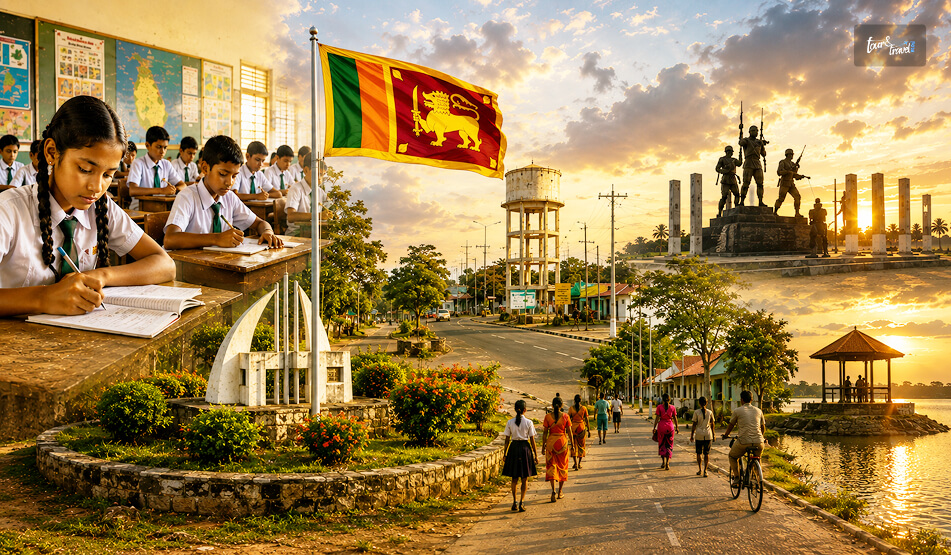
In plain sight, Killinochi is a town where paddy fields, temple bells, and war memorials share the same stretch of road.

However, if you want to know about the history of this town and understand how it is getting rebuilt after the Civil War, you need to spend some time in Killinochi. 

Moreover, of all the places I have covered on my Sri Lanka trips, Vavuniya and Mannar had already told me that the Northern Province holds a different Sri Lanka altogether.

Also, Northern Sri Lanka does not sit on any typical bucket list.

Kilinochchi is the next chapter of that same story.

Kilinochchi: Quick Facts

ProvinceNorthern Province, Sri Lanka
DistrictKilinochchi District
Distance from JaffnaAround 330 km
Main HighwayA9 (Kandy-Jaffna Highway)
Founded1936, as a colonization settlement for Jaffna’s farmers
Former StatusDe facto administrative capital of the LTTE until 2009
Main LivelihoodPaddy farming and agriculture
Best Time to VisitThe dry season from May to September

Where Is Kilinochchi And How Do I Reach It?

Kilinochchi is on the A9 Highway that connects Jaffna to Kandy. 

I was traveling from Anuradhapura, and I reached Kilinochchi after three hours in a car. After Vavuniya, it was Kilinochchi that Ravi introduced me to. 

However, you can travel to Kilinochchi by train and bus. 

Traveling By Train 

However, if you are traveling from Colombo, you can take the train on the Yal Devi Line continuing to Jaffna. 

Overall, it is a train journey of 5-6 hours. This is one of the most beautiful train journeys of Sri Lanka, with the landscape flattening out into dry-zone scrubland somewhere past Vavuniya.

44089 Kankasanthure Night Mail – Moratuwa – Kankesanthurai, 444421 Intercity Express –

Mount Lavinia – Kankesanthurai, and 44477 Yal Devi – Colombo Fort – Kanakasanthurai are the trains plying on this route.

A ticket for the second-class reserved category will cost LKR 1700, and the ticket price for the AC saloon car will be between LKR 2400 and LKR 3000. 

Traveling By Bus 

If you are a backpacker, you can also board a Colombo-Jaffna or an Anuradhapura-Jaffna bus. 

You will get semi-luxury and premium-luxury bus options on this route, and the travel time will be around 7 hours. 

Also, the ticket price will be between LKR 1800 and 3000.

What Is The History Of Kilinochchi?

What Is The History Of Kilinochchi

The history of Kilinochchi goes back to 1936. 

In the same year, Kilinochchi was constructed as part of a colonization scheme meant to ease overcrowding and unemployment in Jaffna. 

The farmers came here to take part in paddy cultivation supported by government land grants.

However, the recent history of the Sri Lankan Civil War has primarily shaped it today. 

Kilinochchi was the de facto administrative capital of the LTTE (Liberation Tigers of Tamil Eelam) during the final phase of the civil war. 

At the same time, Jaffna, with its strong Tamil base, remained under government control. 

Then, with the Sri Lankan forces closing in on Kilinochchi in December 2008, the LTTE forced many civilians to flee with them toward Mullaitivu.

Thus, the LTTEs used the civilians here as human shields. 

However, before fleeing the town, the LTTEs blew up the town’s main water tower in an act of scorched-earth destruction, cutting off the town’s water supply in an already dry region.

Nevertheless, the Sri Lankan army took charge of Kilinochchi on 2nd January 2009. 

It was one of the major landmarks toward the end of the Civil War, and it finally ended in May 2009. 

After that, Kilinochchi has worked on rebuilding itself. 

It now has new water infrastructure, roads, and returning farming communities.

Today, it stands as a quiet marker of how a place absorbs a violent past and keeps going.

My Day In Kilinochchi

My Day In Kilinochchi

Kilinochchi offers a sobering experience, and once you get involved in the history of the Civil War, most of your time will go into pondering and understanding what actually happened. 

Nevertheless, here are the highlights of my day in Kilinochchi.

1. The Story Of The Water Tower

Ravi first took me to the fallen water tower. 

For years, the collapsed remains of the tower bombed by the LTTE in 2008 lay exactly where they fell, fenced off as an informal memorial along the highway.

However, in 2020, the structure was finally removed to make space for a new building.

While I could not see the fallen tower, it was not difficult for me to visualize the anarchy and destruction. 

This was a monument not to victory or grandeur, but to how war strips away the most basic necessities, in this case, clean drinking water in a region where water is already scarce.

2. The Kilinochchi War Memorial

The Kilinochchi War Memorial was very close to Kilinochchi Town. It commemorates how the Sri Lankan military recaptured the town in 2009. 

I had mixed feelings as I approached the site. 

The memorial itself is a straightforward structure offering you the moment of truth. 

However, of course, you will interpret the truth depending on which side of the conflict’s history you come from.

I found a few tourists taking photos of the memorial. However, I spent the time talking to the locals, and I tried to understand what the final months felt like. 

3. Elephant Pass

The Elephant Pass was just a short distance away from the town of Kilinochchi. 

It is a narrow strip of land that connects the mainland to the Jaffna peninsula. 

This was one of the most fiercely contested locations throughout the entire civil war, changing hands multiple times between government forces and the LTTE.

However, when you visit it today, you will only see a quiet causeway with the Elephant Pass lagoon stretching out on either side.

Still, the personnel there will share the details of the war if you approach them. 

4. Iranamadu Tank

Visiting the Iranamadu Tank was a welcome break after exploring the grim history of civil war in Kilinochchi. 

It is one of the largest man-made reservoirs in the region. It was originally built for the water supply to the surrounding paddy fields. 

I visited the tank in the late afternoon and spotted local fishermen rowing out onto the water. A few egrets were also picking through the shallows. 

5. Chundikulam National Park

Chundikulam National Park is a delightful detour if you are visiting Kilinochchi in the winter migratory season. 

This wetland hosts large flocks of Greater Flamingos. Furthermore, many other migratory birds pass through the brackish lagoon system in this season. 

I did not manage to see the flamingos myself, as I visited outside the migratory window.

However, locals I spoke to described early mornings here as one of the best birdwatching experiences in the entire Northern Province.

6. The Local Temples And Kanagapuram Kovil

Like the temples in Jaffna, Kilinochchi’s Tamil Hindu identity shows up in its temples or kovils.

I stopped briefly at Kanagapuram Kovil, a modest temple with local visitors.

Also, don’t forget to visit the Kaala Vairavar Temple when you are in Kilinochchi. 

7. The Kilinochchi Market

Before heading out of town, I walked through the local market, where vendors sold fresh produce, dried fish, and simple Tamil snacks.

It was a good reminder that beneath the weight of Kilinochchi’s recent history, everyday life here continues much like anywhere else in rural Sri Lanka.

What To Eat In Kilinochchi

What To Eat In Kilinochchi

The food in Kilinochchi has the same Tamil roots as the food in Jaffna

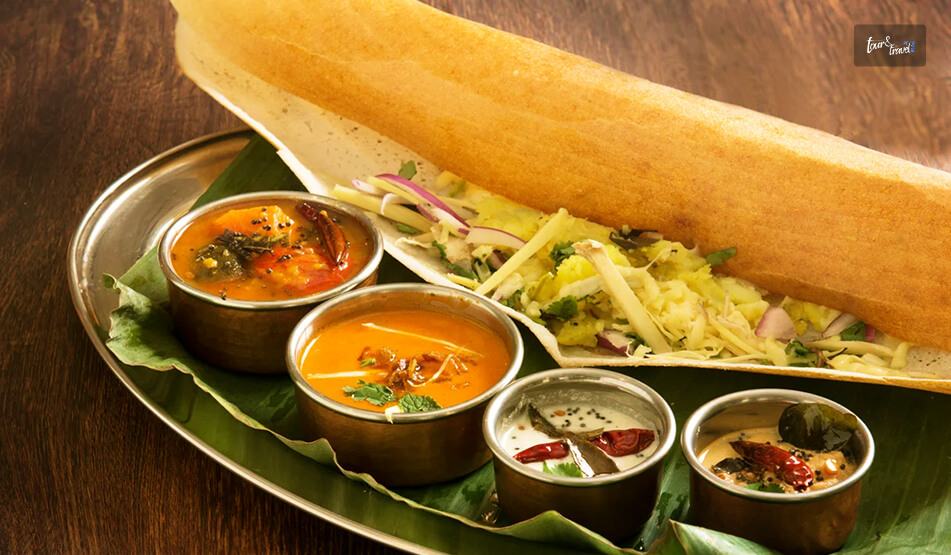
It was a great experience trying Thosai and Idiyappam for breakfast and dinner in a rural setup. 

Also, the coconut sambal and sambar were great and spicier than what we are used to having in South India. 

Kothu Roti, a chopped roti stir-fried with vegetables, egg, and spices, is another filling option for lunch.

Also, you cannot miss the Jaffna-Style Crab Curry. It is a spicy and tangy curry.

Pittu, steamed rice flour with grated coconut, is another Tamil staple worth trying here.

I ate at a small, no-frills eatery near the town center, and it remains one of the more memorable simple meals of my entire Sri Lanka trip.

Where To Stay In Kilinochchi

Accommodation options are limited in Kilinochchi, and you will only find budget and mid-range guesthouses and small hotels in the town center.

So, if you are planning to spend a night in Kilinochchi, expect modest, rural hospitality. 

What Is The Best Time To Visit Kilinochchi?

May to September, or the dry season, is the most ideal time for a visit to Kilinochchi. 

However, remember that the Northern Province of Sri Lanka is punishingly hot at midday, irrespective of the season of the visit. 

Furthermore, if birdwatching at Chundikulam National Park is on your list, plan your visit around the winter migratory season instead.

Share on Social Media

Sibashree is a travel, culture, and leisure writer who has been writing since the age of 12 and professionally since 2014. With more than a decade of travel writing experience and journeys across India and several parts of the world, she brings a deeply personal and thoughtful perspective to her work. A student of English Literature and Mass Communication, Sibashree has always viewed travel as more than movement — for her, it has been a way of understanding people, cultures, and herself. Her passion for spiritual exploration has also led her to many unusual and meaningful destinations over the years. Outside of writing, Sibashree enjoys watching European cinema, reading about global politics, and reflecting on the stories hidden within everyday places.

Leave a Reply

Your email address will not be published. Required fields are marked *

title-img Related

READ MORE Jaffna Sri Lanka travel guide

Jaffna Sri Lanka Travel Guide: Is Visiting Jaffna In Sri Lanka Worth It? 

BY  Sibashree Oct 24, 2025

You know what’s so special about visiting quaint and offbeat places? These are the places to make quirky and personal connections.  Jaffna has not been an exception. Let me share a story! It was exploring the Jaffna Public Market. An old lady jokingly refused to sell a tourist a kilo of dried fish. She said, “You don’t look like someone who appreciates the smell of sun-dried fish!” By the end, she laughed and gave him a small bundle for free. The whole thing was so warm. An old lady, who is probably talking to a person for the first time, is very cordial in her behavior. You will not get this shopping experience in any shopping mall or supermarket. Another highlight was when a priest offered me some sweets at the Nallur Kandaswamy Kovil. There were hundreds of visitors, and I don’t know why he came up to me and offered the sweets. He said, “For you, even if you are a stranger, my blessings are for you!” I had tears in my eyes. With moments like this, Jaffna will always remain one of the most beautiful places in the world. It’s not just about the scenic beauty, but the warmth and inclusivity.  In addition, the recent inauguration of the International Cricket Stadium at Mandaitivu Island will be a new landmark of the city. With a capacity of 40000 spectators, it will promote national integrity and more tourism through sports.  Here, I will talk about how to reach Jaffna, the places to visit, the safety quotient, cultural exploration, and more! Keep reading this Jaffna, Sri Lanka travel guide.  You can also follow our Jaffna travel itinerary to plan your trip better.  Cultural Exploration In Jaffna, Sri Lanka: Why Is It So Special? The origin of Jaffna’s name takes us back to its Tamilian roots. There was a blind musician called Yalpanan who used to play an instrument called Yal. Thus, the place got its name as Yalpanam or Yalpanapattinam, meaning the Port of the Iyre.  Furthermore, the historical evidence suggests that Tamil Presence here dates back to at least 300 B.C. Archaeological sites such as Pomparippu are a telltale of the Tamilian presence.  Jaffna was the capital of the Jaffna Kingdom in the medieval days before European colonization happened here.  Moreover, thanks to the Tamilian culture in Jaffna, in recent times, it has become a favorite destination of Indian travelers. A Tour and Travel World report suggests a 325% increase in the searches among Indian travelers.  Direct accessibility to Jaffna from various parts of South India via flights is another reason why Jaffna is so popular among Indian tourists.  You will get flights to Jaffna from cities such as Hyderabad, Thiruvananthapuram, Madurai, and Chennai.  Top 10 Unknown Cultural Things About Jaffna, Sri Lanka 1. Traditional Tamil musical performances during temple festivals.2. Unique Jaffna-style architecture in homes and temples.3. Palmyrah palm-based crafts and products.4. Indigenous Tamil martial arts demonstrations.5. Local storytelling traditions passed down orally.6. Community-led cultural tours and workshops.7. Traditional Tamil wedding customs.8. Seasonal harvest festivals like Thai Pongal.9. Local folklore and legends tied to historical sites.10. Ancient Tamil inscriptions found in temple ruins. Food Culture And Culinary Tours In Jaffna, Sri Lanka  View this post on Instagram A post shared by Kandy Bites by Chef Ceylon (@kandy_bites_) Jaffna cuisine is known for its spicy flavors and unique Tamil dishes. Popular items include Jaffna crab curry, Kool (seafood soup), Odiyal Kool, and Palmyrah jaggery sweets.  Food tours in Jaffna offer cooking classes, market visits, and traditional meal experiences with local families. However, the traditional delicacies of Jaffna tell the stories of the tradition, history, and resilience of Northern Sri Lanka. In addition, Jaffna City, in recent times, has played an important part in changing the food trends of the country and ensuring a lesser reliance on expensive imports.  The increased use of Palmyrah jaggery, palmyrah flour, or even palmyrah vinegar, typical Jaffna ingredients, in Colombian food is an example of how Jaffna is emerging as a crucial destination in the country's food landscape.  Colombo, in fact, now has a Kaachai Varai or Jaffna Market from where seafood, spices, and other ingredients are sourced. This endeavor supports the local fishermen, farmers, and producers.  Moreover, Jaffna is an important location for hands-on culinary tours in northeastern Sri Lanka. For example, celebrated Australian chef Peter Kuruvita conducts a culinary tour in the northeast part of Sri Lanka, and Jaffna is one of the destinations.  On this tour, you will get to know about the art of cooking in clay pots over an open fire. Overall, getting familiar with the local food is one of the top cultural things to do in Jaffna Sri Lanka.  A 3-Day Culinary Tourism Itinerary In Jaffna View this post on Instagram A post shared by ALIYAA (@aliyaa_kl) It’s time to experience the eclectic nature of Jaffna food, where Tamilian, Muslim, and European influences have merged. Here is a 3-day culinary tourism itinerary in Jaffna.  DaysActivitiesDay 1• Arrival in Jaffna and checking in• Having Jaffna-style idiyappam with coconut sambol and mutton gravy• Exploring the Jaffna Market, a gold mine of dried fish and palmyrah jaggery, tamarind, and spices unique to the region.• Trying palm treacle sweets, vadai, and murukkuDay 2• Having Jaffna crab curry or nandu kool (crab soup) with red rice• Pairing the food with poriyal and rasamDay 3• Visit Nallur Kandaswamy Kovil and try nelli juice or Indian gooseberry drink• Booking an Airbnb or a local guide experience and learning to cook pittu, prawn curry, and other local delicacies If you want to extend your culinary tour in Jaffna, you can plan a day trip to Delft Island, where you will find the best coconut toddy and island-style seafood delicacies. Also, you can attend a palmyrah tapping demonstration or explore the northernmost markets in Point Pedro.  A 5-Day History-Focused Itinerary In Jaffna View this post on Instagram A post shared by VIEW LANKA TOURS (@viewlankatour) Mentioned in the ancient Tamil scripture as Naga Nadu, or the land of the Nagas, Jaffna has been ruled by the Pandya, Chola, and Rajarata kingdoms. Later, it also became a colony of the Portuguese and British.  Here are the historical places in Jaffna to see within a 5-day travel itinerary.  DaysActivitiesDay 1• Arrive in Jaffna from Colombo by car or train• Checking into the hotel• Breakfast with traditional Tamil food• Visiting the Jaffna Fort (1618)• Lunch• Visiting the Jaffna Public Library• Walking along the Jaffna Lagoon waterfront near the Dutch Fort AreaDay 2• Breakfast and a visit to Nallur Kandaswamy Kovil• Visiting the Minister’s House or Manthiri Manai• Lunch• A drive to Keerimalai Springs and Naguleswaram Temple• Return to Jaffna TownDay 3• Travel north to Dambakolapatuna Temple, at a distance of 35 km• Lunch and exploring Kankesanthurai• Visiting the 2000-year-old site of Kandarodai (Kadurugoda) Buddhist Monastery• Visiting the St. Mary’s CathedralDay 4• Taking an early ferry to Delft Island (Neduntheevu) from Kurikadduwan Jetty.• Visiting the Delft Fort (Portuguese-Dutch) ruins, Queen’s Tower lighthouse, and Baobab Tree• Spotting the wild ponies• Having local seafood for lunch• A ferry ride to Nainativu Island and spotting places like the Nagapooshani Amman Kovil and Nagadeepa Viharaya• Return to JaffnaDay 5• Breakfast and visiting the Chunnakam Market• Visiting the Jaffna Archaeological Museum• Visiting Point Pedro and attractions such as the Old lighthouse• Farewell dinner A 5-Day Cultural Itinerary In Jaffna Attending the Palmyrah workshop was a memorable event in my Jaffna tour. Also, Point Pedro, the northernmost part, offered the most culturally vivid experience. DaysActivitiesDay 1• Arrival in Jaffna• Exploring the Jaffna Public Library after breakfast• Walking through the Old Park• Exploring Jaffna Fort• Visiting Nallur Kandaswamy Kovil in the eveningDay 2• Visiting Point Pedro Market• Driving to the Palmyrah Handicraft Centre• Having a home-style Tamil Meal• Visiting Manthiri Manai (Minister’s Palace) and Sangilean Thoppu, believed to be the remains of the ancient Jaffna Kingdom’s royal complex.• Attending a Bharatanatyam or Naddu Koothu performanceDay 3• A ferry ride from Kurikadduwan Jetty to Nainativu Island (Nagadeepa)• Visiting Nagapooshani Amman Kovil (Hindu temple) and Nagadeepa Viharaya (Buddhist temple)• Trip to Delft Island (Neduntheevu)• Exploring colonial ruins: the Delft Fort, Queen’s Tower, and Baobab Tree• Ferry ride to JaffnaDay 4• Having kothu roti and Sombol for breakfast• Visiting St. Mary’s Cathedral and Ariyalai Hindu Temple• A visit to the Jaffna Archaeological Museum• Exploring the Chavakachcheri Heritage Houses• Taking part in a home-cooking demonstration with a local familyDay 5• Attending a Palmyrah workshop• Visiting the Kandarodai (Kadurugoda) Buddhist Monastery• Exploring Keerimalai Springs and Naguleswaram Temple• Seafood meal• Shopping in the afternoon Cultural Etiquettes For Foreign Tourists Tourists should dress modestly, especially when visiting the temples in Jaffna.  Shoes must be removed before entering religious sites.  Photography should be respectful, and permission should be sought when capturing images of locals or ceremonies. Must Visit Destinations In Jaffna, Sri Lanka If you want the best cultural and historical experience in Jaffna, don’t miss a visit to the following places.  1. Nallur Kandaswamy Temple Nallur Kandaswamy Temple is the cultural and spiritual epicenter of Jaffna. Dedicated to Lord Murugan, it shows a unique Dravidian-style architecture. Also, the Nallur Kandaswamy Temple festival in July-August attracts a lot of visitors.  2. Jaffna Fort Built by the Portuguese in 1618, the fort is an example of quintessential European military architecture, and it was later occupied by the Dutch.  It overlooks the Jaffna Lagoon, and it is a favorite of photo enthusiasts.  3. Delft Island View this post on Instagram A post shared by Audrey Potvin (@audreypotvin) A popular day-trip destination, Delft Island in the Jaffna Peninsula is known for its Dutch remnants, and it is a great place for spotting ponies.  4. Casuarina Beach As the person in charge of our hostel said, I visited the Casuarina Beach after 5 PM. He said, “The quiet at the beach just before sunset is something unbelievable.” I experienced the magic.  The birds were coming home, and the soft white sand, like a blank canvas, was changing colors every second.  5. Keerimalai Springs Located by the sea, the Keerimalai Springs and Keerimalai Naguleswaram Temple are a unique combination of spirituality and scenic beauty.  The water of these springs has healing properties.  6. Point Pedro View this post on Instagram A post shared by Meerza Iqbal (@meerzaiqbal) Point Pedro has a historic lighthouse, and it is the northernmost tip of Sri Lanka. Furthermore, it has the most vibrant markets for buying fresh seafood produce.  Here, you can also meet the fishermen and have an understanding of their unique ways of living in Point Pedro, as it has the most beautiful beaches in Jaffna.  7. Jaffna Library Tragically destroyed in 1981, the newly built Jaffna Library stands as the symbol of resilience. It is one of the most revered libraries in Asia, and it was first built by the Jaffna Town Development Board on 1st January 1935.  It has a collection of 844 books, 30 magazines, and newspapers.  8. Nagadeepa Vihara View this post on Instagram A post shared by Thambu Illam~Hotel in Jaffna🌴 (@thambu_illam) Nagadeepa Vihara is the place where Lord Buddha visited for the second time. He also ended the dispute between two Naga Kings fighting over the ownership of an ornate throne.  Mahodara and Chulodara, these two Naga kings, became devoted followers of Lord Buddha.  9. Manthiri Manai View this post on Instagram A post shared by FOX Resorts (@foxresorts) Manthiri Manai, or the Minister’s Mansion, stands out thanks to its unique Indo-Islamic and European architecture. Located at a distance of just 1 km from Point Pedro, Manthiri Manai is an archaeologically protected site, and it is said to be the residence of the minister of the medieval Jaffna Kingdom.  How To Reach Jaffna, Sri Lanka? Bandaranaike International Airport in Colombo is the gateway for Jaffna to the rest of the world. From there, you can take a flight to the Jaffna International Airport. Buses and trains are also available from Colombo to Jaffna.  I took the Jaffna train from Colombo Fort. The journey is scenic. However, I remember the 7-8-hour journey for the social experience. People are talking about cricket, sharing coconuts, or humming local tunes.  However, buses departing every 3-4 hours from Colombo to Jaffna are the cheapest option. The ticket price starts at around 1,348.26 Sri Lankan Rupee.  Top Hotels, Resorts, And Stays In Jaffna, Sri Lanka  1. Jetwing Jaffna – Centrally located with modern amenities and rooftop dining.2. North Gate by Jetwing – Offers luxury accommodations near the railway station.3. Subhas Hotel – Historic hotel with spacious rooms and traditional cuisine.4. Thambu Illam – Boutique guesthouse with cultural ambiance.5. Green Grass Hotel & Restaurant – Budget-friendly with local food options. 10 Sustainable And Ethical Travel Tips For Jaffna Sri Lanka 1. Support local businesses and artisans.2. Use refillable water bottles.3. Avoid single-use plastics.4. Respect cultural norms and dress modestly.5. Participate in community-led tours.6. Stay in eco-friendly accommodations.7. Minimize energy and water usage.8. Avoid disturbing wildlife.9. Learn basic Tamil phrases.10. Share positive travel experiences to promote responsible tourism. Jaffna Nightlife And Evening Activities The nightlife in Jaffna is about rejuvenation and introspection. This is the best time of the day to attend temple rituals, enjoy local dining experiences, and attend cultural performances.  Furthermore, Evening walks along the beach and exploring the markets are some delightful experiences in the evening. Best Seasons To Visit Jaffna, Sri Lanka The best time to visit Jaffna is from December to March. You must avoid the monsoon season from October to November due to heavy rains.  Festivals like Thai Pongal in January offer cultural immersion opportunities. Also, July-August is the month of the Nallur Kandaswamy Temple festival.  Budget And Affordability For A 7 Day Travel Vacation in Jaffna, Sri Lanka Jaffna is a budget-friendly destination. You will get diverse food, transportation, and accommodation options. The entry fees to the museums and cultural places are also quite reasonable.  Furthermore, the travel expenses will depend on the type of traveler. Here is a quick breakdown. Types of TravelerExpenses (Approximately)Solo Traveler$300–$400Couple$600–$800Family of 4$1000–$1200 Crime Rates And Safety Tips For Tourists Jaffna is a safe place to travel. The crime rate in different aspects is low to moderate, and here are some essential data (Source: Numbeo) related to crime in Jaffna.  Crime Index46.64Safety Index53.36Level of Crime50:00Armed Robbery35.71Things from Car Stolen46.43 Is Visiting An Off-Beat Location Like Jaffna Worth It? Yes, Jaffna is a must-visit destination to experience the rawness and cultural richness of Northern Sri Lanka. It is a budget-friendly destination with a Tamil origin and a colonial past.  Furthermore, food here is an extension of who the people are. Simple and soulful! Also, the Jaffna tells the story of human resilience and how it has survived a war-torn past! Jaffna Travel Guide: Frequently Asked Questions (FAQs) Here are the frequently asked questions and answers about the Jaffna travel guide. 1. How Many Days Are Enough In Jaffna? Three to four days are enough if you want to explore the major cultural and historical sites. However, if you want to explore the local markets and have a deep cultural connection with the local people, you will need at least 5 to 7 days.  2. Which Part Of Sri Lanka Is Most Beautiful? I cannot pick any particular part of Sri Lanka as the most beautiful, as it has the ancient rock fortress of Sigiriya, a UNESCO World Heritage Site. On the other hand, Kandy, a significant religious hub, is a popular tourist destination.However, Jaffna in northern Sri Lanka stands out with its spiritual vibe, history, and cultural richness. It is a coastal destination with a diverse tourism profile. 3. What Language Is Spoken In Jaffna?  Tamil is spoken in Jaffna. However, it is a little different from the Tamil language spoken in India. The Tamil language here is heavily impacted by the Jaffna dialect.  Read Also: Luang Prabang Travel Guide: Why I Loved It? (Activities, Attractions, History, Itinerary, And More) Cheapest Places To Travel Around The World In 2025: Traveling On A Shoestring Learn All About the Best Solo Trip in India Right Here!

READ MORE Kudawella Beach

Where Is Kudawella Beach? What To Do In Kudawella Beach For Beginners?

BY  Sibashree May 5, 2026

Very close to the Hiriketiya Beach, Kudawella Beach is a pristine, small, and beginner-friendly beach for surfers.  However, even if you are not a surfer, you can visit this hidden gem to find the turtle nests and the surrounding mangroves.  Also, at Kudawella Beach, you can enjoy the beauty of the Indian Ocean or just laze around on the sand.  Here is more about this beautiful, sickle-shaped beach on the southern coast of Sri Lanka.  Where Is Kudawella Beach? How To Reach Kudawella Beach As I have mentioned, Kudawella Beach is on the southern coast of Sri Lanka, and it stretches from west to east.  Furthermore, the beach is around 10 km away from Dickwella, the closest major town to the beach.  Moreover, if you are already visiting the Hiriketiya Beach, you can just take a 10-minute tuk-tuk ride to reach the Kudawella Beach.  The most popular way to reach the Kudawella Beach is to take a direct car or taxi from Colombo, which is at a distance of around 160 km.  The journey by road will take close to 5 hours, and the taxi fare will be over 30000 LKR.  However, I was already in Ella and had a day after visiting the iconic Nine Arch Bridge and exploring all the other top attractions in Ella.  So, I took a bus from Ella to Galle. The bus #31 was moderately crowded, and I was enjoying the local experience.  That bus from Ella to Kudawella Beach took around 6 hours, and the ticket price was LKR 350.  What Are The Things To Do In Kudawella Beach?  Kudawella Beach is a place that offers you the ultimate flexibility.  Yes, there are a few hotspots when you are on the beach. However, you can spend your entire day without doing anything.  Moreover, it is a delightful place for amateur surfers.  Still, here are a few things to do in Kudawella Beach, along with surfing and chilling.  1. A Walk To The Hummanaya Blow Hole I loved walking to the Hummanaya Blow Hole on the eastern side of the Kudawella Beach. However, to see the water shooting up, you have to reach the viewing point at the top of a cliff.  The cliff also has a safety barrier.  It is the only blowhole in Sri Lanka and the second-largest in the world, shooting the water at a height of 25-30 meters when the water forcibly enters a narrow cavern.  I saw the blowing taking place at least 5-6 times during the short moment I halted there. The water shoots up as the sea movement builds pressure in the tunnels in the rock.  2. A Walk To The Nilwella Beach If you want even a more idyllic retreat, you can visit the Nilwella Beach from the Kudawella Beach.  This beach has blonde sand, and the waves here are gentle.  Moreover, I loved walking across the beach to reach a rocky island. The rocky island had many palm trees and pandanus trees.  There was also a hiking trail, and as I advanced, I found many little coves and unique geographical shapes.  3. Kayaking Around Mawella Lagoon Mawella Lagoon was pretty, and the water was covered by beautiful lily flowers.  Furthermore, there are many hotel rooms and massage rooms near the lake where you can chill or enjoy a relaxing massage session.  However, just behind the Kudawella Beach, this lagoon is also ideal for kayaking around.  It cost me around 8000 LKR, and I spotted many birds such as storks, beeaters, and kingfishers there.  I heard that sometimes you can also spot crocodiles here.  Kudawella Beach: The Best Spot For Surfing For Beginners  As I have mentioned, Kudawella Beach is a beginner-friendly surfing spot.  Unlike Hiriketiya, you will not find outer waves here. You can only surf here at the beach break, which is further on the inside of the bay.  So, it is safer than Hiriketiya Beach.  In fact, even in the dry season from November to March, the waves seldom reach a height of more than 4 feet.  However, you have to be watchful of the few rocks in the water. Having said that, during the dry season or the peak surfing season, the water of the Indian Ocean is crystal clear.  So, you will be able to see the rocks clearly.  Moreover, on the Kudawella Beach, there are two surf rentals. However, when I visited, there was a longer queue in front of the Saranga at Kudawella Surf School, and its surfboard-shaped signboard also looked pretty cool.  What Is The Best Time To Visit Kudawella Beach?  November to March, or the dry season, is the best time to visit the Kudawella Beach.  Long hours of sunshine make these months ideal for beach activities. However, there can be sudden rainfalls. So, you have to carry your rain gear.  However, the wet season from March to August, despite having fewer crowds, is not ideal as there can be harsh storms and heavy rainfall.  Where To Stay Near The Kudawella Beach?  When I visited Kudawella Beach, it was still very pristine, and thus it is a quintessential beach on the southwestern coast of Sri Lanka.  You will find only a few hotels here.  Also, if you want to find an accommodation here, you can stay on the beachfront or in hotels near the lagoon.  Here are some of the places where you can stay.  Sisi Place The Sisi Place is on the hilltop at the west end of the beach. It is the most budget-friendly option here with clean and comfy rooms.  Simply Peace  Choose Simply Peace if you are looking for a luxury accommodation near the lagoon.  It is a beautiful pool where you can relax. Furthermore, it has a garden where you can enjoy birdwatching.  Calma I loved the pastries and coffee at the on-site cafe of Calma. With a sand front, it exudes a quintessential Balinese bungalow aesthetic.  Moreover, you can take a short tuk-tuk ride from Kudawella Beach to Hiriketiya Beach. There, you will find more diverse accommodation options, including Airbnbs.

READ MORE things to do in nuwara eliya

What Are The Things To Do In Nuwara Eliya? Know Why It Is Worth Visiting

BY  Sibashree Mar 24, 2026

The train departed the moist jungle and slowly had a rhythmic ascent to the central highlands. The visual completely changed, and there was a complete change in the air.  It went from high humidity tropical to cold, fresh pine scent breezes.  The jungle changed as well, from lush jungle trees to neat rows of green tea bushes. And, finally, I arrived at  Nuwara Eliya, a small city at an altitude of 1,889 meters. It is also called "Little England,” a term left over from the time of the British. It is a surreal combination of red-brick Victorian post offices and Tudor-style homes. Furthermore, it has a setting for the extremes of dramatic waterfalls and successive mountain peaks.  This misty highland getaway should not be left out of your Sri Lanka travels, whether you are into the history of buildings, enjoy areas with natural beauty, or have an appreciation for tea. Overall, there are diverse things to do in Nuwara Eliya. Also, if you are visiting from India, you can opt for the IRCTC package in association with the Sri Lankan Airlines, to visit Nuwara Eliya with Negombo, Kandy, and Colombo.  You can even explore the things to do in Trincomalee on this trip.  Moreover, you can combine your Nuwara Eliya trip with a visit to the Ambuluwawa Tower.  What Are The Things To Do In Nuwara Eliya? A Town Of Two Worlds Nuwara Eliya reminds you of the rich history and diversity of Sri Lanka.  You can relax with a round of golf on one of the golf courses in Asia.  Furthermore, as the Sun sets, you can stand on the top of a cliff and enjoy the views of the mountains.  The lifestyle and culture here are so different from the lower elevation regions.  1. Exploring The Architectural Heritage: Looking Back At Time  Nuwara Eliya's connection to Britain is more than mere embellishment, but rather its essence.  The downtown area of Nuwara Eliya resembles a small village in the Cotswolds, but with tropical vegetation growing nearby. The Nuwara Eliya Post Office The Nuwara Eliya post office is one of the most photographed buildings in Sri Lanka.  Built in 1894, this pink-brick Victorian structure is still in use today and is located at the centre of Nuwara Eliya city.  The post office is traditionally a popular choice for tourists to purchase a postcard (with a scenic image of the misty hills) and send it back home with the Nuwara Eliya postmark on it. The Grand Hotel And Hill Club To get a real feel for how the elite lived during the time when colonialism was at its height, you will want to check out The Grand Hotel.  The Grand Hotel was formerly owned by Sir Edward Barnes, who was the Governor of Ceylon.  The Grand Hotel is noted for its High Tea service.  High Tea is served on the beautifully manicured lawn or in the lavish tea lounge and consists of 2-tiered stands of cucumber sandwiches, scones with clotted cream, and, of course, the best Ceylon tea.  Located next door to The Grand Hotel is The Hill Club, which has a strict jacket-and-tie dress code and is an example of traditional old-world decorum. 2. Enjoying The Tea Experience: From Buds To Cup Aspects like climate and altitude make Nuwara Eliya an ideal place to grow tea and give its tea a unique and delicate floral flavor.  This high-grown tea is referred to as the "Champagne of Ceylon Tea" due to its light golden appearance. Pedro Tea Estate Located a little bit from the city center, this estate has one of the most manual factory tour processes. It is so delicate that the processing has to happen at night, and that is when the air is cooler.  During the tour, you get to see 19th-century machinery that is still used to wither, roll, and dry the leaves.  When you are done with your tour, you get to sit at the outdoor deck of the Lovers Leap Ethical Tea Boutique, sip a fresh brew, and watch the fields from which the leaves were plucked. Damro Labookellie Tea Centre  It is the largest tea Centre in the country and is also one of the oldest.  The journey to the estate is an experience in itself. It features a multitude of hills and tea.  3. Natural Wonders: Parks And Waterfalls  Nuwara Eliya has abundant water and lush greenery.  The combination of high elevation and significant rainfall results in an environment that stands out distinctly from the rest of the island.   Victoria Park   This park, named to commemorate Queen Victoria’s Diamond Jubilee, is arguably the most well-preserved park in South Asia.  It serves as a haven for bird enthusiasts seeking to spot rare species such as the Indian Blue Robin and the Pied Thrush.  During the spring months (March to May), the park bursts forth with vibrant colors as roses and dahlias reach their peak bloom.   Gregory Lake   Initially constructed to produce electricity for the town, Gregory Lake has transformed into the city's main recreational area.  Visitors can rent swan-shaped pedal boats, go jet skiing, or enjoy a pony ride along the shoreline.  The pathway along the lake has small chalets offering street food, making it an ideal location for a late-afternoon walk as the mist gently settles over the water. Lovers Leap Waterfall Accessible via a short hike through the tea estates, Lovers Leap is a 30-meter waterfall with a tragic legend.  Folklore tells of a royal prince and his lover who leapt from the top to remain together forever.  Today, it provides a serene escape and a panoramic view of the town below. 4. Enjoy The High-Altitude Adventure: Horton Plains   No visit to Nuwara Eliya is truly complete without spending a day at Horton Plains National Park.  This UNESCO World Heritage site is a tranquil, windswept plateau situated roughly an hour's drive from the city.   World’s End  The highlight of the 9-kilometer circuit hike within the park is World’s End, where the plateau suddenly drops off, plunging nearly 880 meters straight down.  On a clear day, the breathtaking view stretches all the way to the southern coastline.  Pro Tip: It's essential to reach the park entrance by 6:00 AM. By 9:30 AM, a thick "curtain of mist" typically descends and obscures the scenery.   Baker’s Falls   During the same hiking loop, you'll come across Baker’s Falls, named after the renowned explorer Sir Samuel Baker.  This waterfall has unique ferns and rhododendrons around, providing a refreshing, misty break amid your trek. 5. Local Flavors And Markets   Although the hotels serve sophisticated British cuisine, the heart of Nuwara Eliya’s food culture lies within its markets.   The Bale Bazaar   Locally referred to as the "Winter Market," this spot is ideal for finding quality cold-weather clothing, such as jackets, sweaters, and scarves, at affordable prices.  Given the significantly cooler climate compared to the rest of Sri Lanka, the market is essential for both locals and tourists who may not be prepared for the chill. Adma Agro Strawberry Farm   Nuwara Eliya stands out as the only region in Sri Lanka that successfully cultivates strawberries.  At Adma Agro, visitors can indulge in fresh strawberries with cream, strawberry pancakes, or thick milkshakes while enjoying a view of the greenhouse rows.  This experience is a defining treat of Nuwara Eliya. Remember These Practical Tips Before Trying The Things To Do In Nuwara Eliya  The ideal time to go is between February and April.  The city is especially vibrant in April as it celebrates the Sinhalese and Tamil New Year.  During this month, the city features horse races, flower exhibitions, and car races. Just be ready for larger crowds and increased prices during this peak season. Furthermore, Nuwara Eliya is the coldest place in Sri Lanka, and the nighttime temperatures can drop to 10°C. So, bring a jacket.  Also, most budget accommodations lack central heating, so having a warm fleece and sturdy walking shoes is crucial for navigating the hills. Moreover, the train trip from Kandy to Nanu Oya (the station for Nuwara Eliya) is one of the most beautiful in the world.  From Nanu Oya, it’s just a quick 15-minute tuk-tuk or bus ride to reach the city center.