
Vavuniya, Sri Lanka: The Crossroads Of Tamil And Sinhalese Cultures Everyone Just Passes Through

Every guidebook I read before my third trip to Sri Lanka showed Vavuniya in the same way. 

The map was also similar in its approach, and Vavuniya looked like a dot between Anuradhapura and Jaffna.

It looked like a place that everyone passed through, but not a place to stop. 

The feeling or vibe was similar to Mannar, as most forums wrote it off as “not much else.” However, when I actually went there, I realized what I would have missed. 

So, when my driver, Ravi, suggested the Anuradhapura-to-Jaffna drive with a day in Vavuniya instead of pushing straight through, I said yes mostly out of stubbornness.

I wanted to see what a “Nothing” town on Sri Lanka’s most historically loaded highway looked like up close. 

Honestly, I was not prepared for how much those hours in Vavuniya would sit with me. 

The Omanthai Moment 

Around twenty minutes before reaching Vavuniya Town, Ravi stopped the car. 

The road there narrowed and slowed at a junction called Omanthai.

There was nothing very dramatic, and it only had a few roadside stalls, buses idling, and the ordinary chaos of the A9 highway.

However, the stopover became unforgettable as Ravi tapped the wheel and said, almost as an aside, 

This was the checkpoint. 

During the war, you couldn’t cross here without permission. Now you don’t even notice it unless someone tells you.

That gap between what a place was and what it looks like now is, I’ve realised, exactly why Vavuniya stayed with me.

Also, if Hikkaduwa was the spot to witness the rampage of the 2004 tsunami and the story of human resilience after it, Vavuniya was a story of how Sri Lanka continues to evolve despite a violent history of Civil War. 

And that evolution probably shows in the recent reclassification of Sri Lanka’s economy in 2026 as an upper-middle-income economy by the World Bank. 

What The War Left Behind And What Has Been Rebuilt In Vavuniya? 

Being from India, I felt connected to the civil war struggles in Vavuniya. 

However, the information available to me was mostly in fragments. Standing in Vavuniya made the fragments feel connected. 

During the 26-year conflict, Vavuniya functioned as a critical frontline and government-held enclave bordering LTTE territory to the north.

In the final and brutal phase of the civil war, hundreds of thousands of people fleeing the fighting in the Vanni passed through Vavuniya. 

Many people were even housed in transit camps, and the largest was known as Menik Farm as the conflict wound down in 2009. 

However, you cannot spot any visible sign of these conflicts today. 

I saw a town that was rebuilt as a meeting point and not a dividing line. 

Tamil, Sinhalese, and Muslim communities live alongside each other here, and you can feel it in the built environment alone.

A Hindu kovil, a mosque, and a church can sit within a few streets of each other, something I didn’t see with the same density anywhere else on this trip.

I want to be honest that this isn’t a place with a museum or memorial that neatly packages this history for visitors.

So, you have to arrive already curious and often ask.

How I Spent A Slow Day In Vavuniya Town (The Places I Visited) 

Vavuniya Town is walkable, and instead of being a bucket-list destination, it allows you to engage and get immersed in its spiritual, historical, and cultural vibe. 

Nevertheless, these are the places I visited during my day trip to Vavuniya Town. 

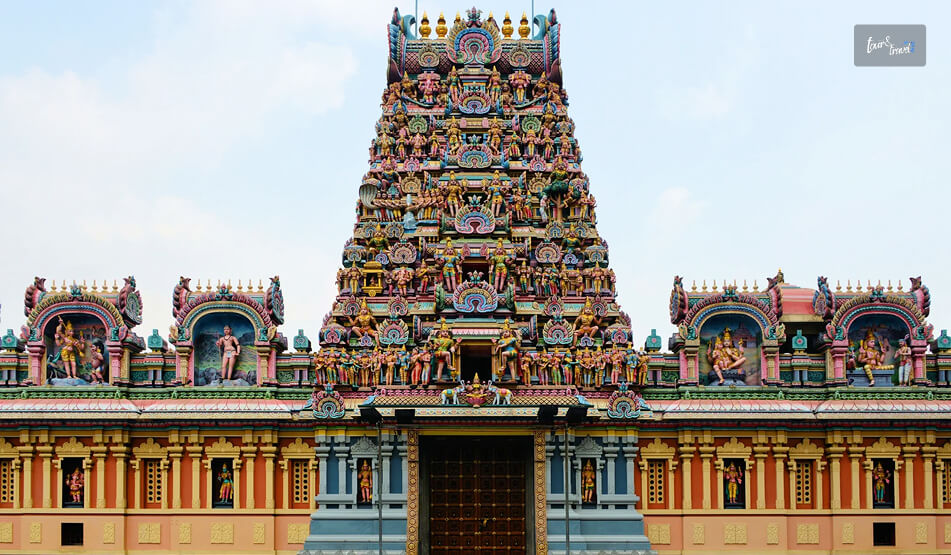
1. Kandasamy Kovil

Kandasamy Kovil

Kandasamy Kovil, a Hindu temple dedicated to Lord Murugan, is at the heart of the town.

It is similar to the temples in Jaffna in vibe. However, you cannot expect the quintessential grandeur of the South Indian temples here. 

I loved that there was no queue in the temple when I visited. Just a handful of locals were moving through their morning rituals as I stood at the edge and watched them. 

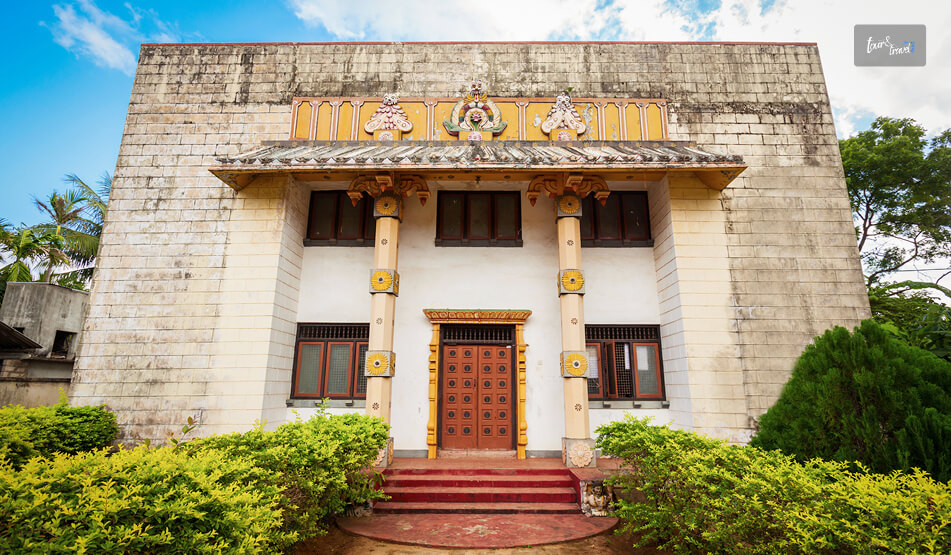
2. The Vavuniya Archaeological Museum

The Vavuniya Archaeological Museum

The Vavuniya Archaeological Museum was a short walk away from the Kandasamy Kovil. 

It is a small museum that remains open from 8:30 AM to 5 PM and offers free entry. 

Furthermore, it remains closed on Tuesdays. 

You can explore this small museum in half an hour. However, that does not reduce the historical value of the pottery, statues, and inscribed stones on display.

These made me familiar with the district’s history back well before the war, back to the Rajarata and Vanniar periods I’d just been reading about on the drive in.

3. Vavuniya Kulam And Iratperiyakulam Lake

In the late afternoon, Ravi drove me out to the tanks. 

Vavuniya Kulam, the town’s main reservoir, had a peaceful vibe.

The locals were fishing or just sitting by the water as the light softened.

Iratperiyakulam Lake, a little further out, had the same unhurried energy with no ticket booth and no crowd.

4. The Market

This was definitely one of my favorite parts of a trip to Vavuniya. 

I wandered the Vavuniya town market at dusk.

Tamil, Muslim, and Sinhalese traders shared the same narrow lanes, selling produce, dried fish, spices, and fabric side by side.

It was great to see and was tangible evidence that this town has genuinely moved past being a dividing line.

One Day In Vavuniya: The Itinerary

TimeActivity 
MorningArrive via A9, stop at Omanthai
Late Morning Visit to the Kandasamy Kovil and Archaeological Museum
Afternoon and Late AfternoonVavuniya Kulam and Iratperiyakulam Lake
EveningExploring Town Market and Dinner
Next MorningOnward to Jaffna

What I Ate In Vavuniya 

Like the food in Jaffna, Vavuniya also treated me with Tamil delicacies. So, rice and curries dominate the options. 

I had a lunch plate with five or six vegetables and fish curries that easily rivalled anything I have had further south.

In the evening, I found a roadside stall doing kottu roti, chopped and fried on a hot griddle with theatrical noise, which felt like the right way to end a day built around quiet places.

Reaching Vavuniya And Getting Around

Vavuniya is on the A9 highway, which is the main north-south highway of Sri Lanka. 

Also, it is on the Northern Line railway connecting to Colombo in the south and Jaffna further north

However, you can visit Vavuniya from Anuradhapura like me, and it is a fairly short onward drive. 

If you are traveling from Colombo by road. It will be a long four-hour drive, though! 

Within the town itself, everything I wanted to see was walkable or a short tuk-tuk ride away. 

I didn’t rent anything as Ravi’s car covered the tanks and the outskirts, and my own feet covered the town centre and market.

Why You Must Not Skip Vavuniya 

Vauniya does not have the spiritual intensity of the Dambulla Royal Cave or the cultural grandeur of Kandy

It also does not want to be a headline destination. 

I understand why it gets treated as a highway stop rather than a place to stay.

However, for me, that was exactly the point.

I stood at a former front line that’s now just a bus stop, eating a curry plate shared by three communities that were once defined by the war between them.

Overall, it offered a northern Sri Lankan experience that is not curated for visitors or trying to grab attention.

Share on Social Media

Sibashree is a travel, culture, and leisure writer who has been writing since the age of 12 and professionally since 2014. With more than a decade of travel writing experience and journeys across India and several parts of the world, she brings a deeply personal and thoughtful perspective to her work. A student of English Literature and Mass Communication, Sibashree has always viewed travel as more than movement — for her, it has been a way of understanding people, cultures, and herself. Her passion for spiritual exploration has also led her to many unusual and meaningful destinations over the years. Outside of writing, Sibashree enjoys watching European cinema, reading about global politics, and reflecting on the stories hidden within everyday places.

Leave a Reply

Your email address will not be published. Required fields are marked *

title-img Related

READ MORE things to do in sapporo

What Are The Unique Things To Do In Sapporo? Exploring The Capital Of Hokkaido  

BY  Sibashree Mar 31, 2026

If you want to explore offbeat Japan, you can surely visit Sapporo, the capital of Hokkaido Island.   Hokkaido Island,anyway, teaches the art of slow living and slow traveling.   The scenic beauty here is amazing, the winters are snowy, and the food and beer here are amazing.   Also, it is an amazing year-round destination, and the things to do in Sapporo are as diverse as they can be.   And here are the details. However, before that, let us talk about the best time to visit Sapporo.  What Is The Best Time To Visit Sapporo?   As I have mentioned, you can visit Sapporo throughout the year. However, December to February is the best time to plan a visit.   Especially, February is the month of the winter festival in Sapporo.   Moreover, April to May is the ideal time if you want to experience the Cherry Bloosm Season from the Hokkaido Shrine and Maruyama Park.   Also, the warm and humid summer months are ideal for enjoying the “beer garden events.”   In addition, from September to November, or the autumn months, are great for seeing the fall foliage, hiking, and attending the food festivals.   What Are The Most Unique Things To Do In Sapporo?   More than ticking the bucket list, in Sapporo, you need to soak in the laid-back vibe.   It is way less crowded than Osaka and Tokyo, and despite that, it has an important role to play in the tourism industry of the country.   That is why many people travel from Tokyo to Hokkaido.   1. Visiting The Parks And Gardens  As a nature lover since forever and daily walking the streets and parks of Sapporo, I have learned that Sapporo has lots of green spaces where you can enjoy nature.  The parks of Sapporo are the city's heart.   Odori Park is my usual starting point in the morning when I first walk.   This park is located in the center of downtown and is an ideal and convenient place to take a refreshing morning walk before starting your day.   On days when I want to be more active, I cycle, jog, or photograph all the amazing trees and flowers at Moerenuma Park. It is absolutely stunning how vast the area is!  You will probably find me at Maruyama Park, located next to Hokkaido Shrine, during the spring and fall months.   It’s an incredible place to see the cherry blossoms in full bloom, and it’s usually very pretty to see the fall leaves change color from green to red.   During the wintertime, it becomes a wonderful family-oriented ski resort that I simply love!  For a bit of a deeper dive, I love visiting the Hokkaido University Botanical Gardens. It’s a peaceful retreat where I can admire rare plants and learn about the indigenous Ainu culture.  2. Exploring The Galleries And Museums  Upon arriving in Sapporo, I did not take long to figure out that this is a city that has beautifully integrated its history with modernity, which is a masterclass.   I spent the first day of my trip exploring the history of the island of Hokkaido by visiting the Hokkaido Museum.  Then, I went to the Historical Village, which showed how the early infrastructure and primitive architecture were examples of the area's strength.   The Hokkaido University Museum is also a majestic place, with its enormous collection of extensive academic research and archaeological artifacts through the ages.  Of course, I couldn't resist a detour to the Sapporo Beer Museum. Learning the history of Japan’s iconic brew made that final tasting session feel well-earned.  As a fan of art, I was spoiled for choice with several locations from which I could pick my favorites.   The JR Tower Art Gallery has an impressive array of artwork, and at the Sapporo Art Park, there are some unbelievably large sculptures sitting throughout the grounds.   I was amazed at how much creativity and energy could be found in the city of Sapporo.   While looking at all the galleries, you can also plan a trip to Uji, located approximately 500 km south.   A visit to Japan would not be complete without enjoying a cup of matcha at this city's matcha capital.  3. Visiting The Shrines And Temples  Kyoto may have the most amazing shrines, but Sapporo also has some beautiful ones.   The Hookaido Shrine is the most popular among them, and you will find it just next to the Maruyama Park.   Furthermore, the Sapporo Suitengu Shrine is another place where families and pregnant women visit for a healthy baby.  Moreover, if you are a seeker and want some spiritual guidance, Joganji Temple is your place. It has the most meditative environment.  4.  Exploring The Historical Landmarks Of Sapporo  Sapporo has many historical places to visit, and you can start with the “Former Hokkaido Government Office.”   It has beautiful gardens, and with its insightful exhibitions, it offers a deep understanding of the local history.   The next place you can visit is the Sapporo TV Tower. It is an important landmark for broadcasting and tourism.   Furthermore, from the TV Tower, you can enjoy an amazing view of Odori Park and its surroundings.   The Clock Tower is another important landmark in Sapporo. It has been standing there since 1878.   However, for me, the most iconic historical landmark in the city was the Hoheikan Guest House.   This 1880 guest house in Nakajima Park had many important guests, including the royal family and important foreign guests.   In addition, for a culturally immersive experience, you can explore the Hokkaido historical village. It is like an open-air museum with distinct architecture, buildings, and Japanese townscapes.  5.  Souvenir Shopping   It’s a sin to visit Sapporo and not do some serious shopping.   Furthermore, souvenir shopping is one of the best things to do in Sapporo because of the diversity of stuff you can procure.   Firstly, the sweets here are amazing. You must try Marusei butter sandwiches and Royce chocolates.   Also, you will find skincare products made of horse oil.   In addition, you will love local crafts such as Ainu crafts and Otaru glassware.   Moreover, the best places for shopping in Sapporo are “Ario Sapporo Mall,” “Apia Mall,” “Sapporo Stellar Place Mall,” and “Tanukikoji Shopping Street.” 

READ MORE restaurants in Macau

These Are The 10 Top Restaurants In Macau Out Of The 25 Restaurants I Visited

BY  Sibashree Jun 22, 2026

Macau is a small East Asian City. It is on the west of Hong Kong and on the south coast of China.  Macau is 64 kms away from Hong Kong, and it has the City of Zhuhai in Mainland China to the north. Then, the Pearl River Delta is to the south and east.  It was a Portuguese colony once, but now it is an autonomous territory. Also, even today, Macau shows an influence of ancient Chinese culture.  However, this ancient Chinese culture has created a fusion with new-age European influence. The cuisine of Macau explains it the best, and that’s why you need to visit the best restaurants in Macau.  You will especially experience a blend of Cantonese and Portuguese flavors.  What Are The Top 10 Restaurants In Macau?  Macau has many top restaurants to eat at. Along with the starred restaurants, there are also bakeries, taverns, street food corners, and age-old tea houses.  Furthermore, freshly baked almond cookies, egg tarts, and slices of beef and pork jerky are some of the best delicacies to try in these restaurants.  Also, thanks to the culinary legacy of over 400 years, there is a global interest in the Macanese cuisine.  Moreover, Irina Bokova, the Director-General of UNESCO, has designated Macau as the UNESCO Creative City of Gastronomy.  Nevertheless, visiting all the restaurants in the city is not possible logistically. So, I have 25 places and picked 10 among them.  I have further divided the top 10 Macau restaurants into two categories: luxury restaurants and budget-friendly restaurants.   It’s time to celebrate Macanese history and the eclectic culture of the city.  Top Luxury Restaurants In Macau  As I have mentioned, Macau is a global gastronomic destination, and it is home to names such as The Ritz–Carlton Cafe, which is a Michelin Guide restaurant.  So, let’s find out the top names on our list of the luxury restaurants in Macau, along with The Ritz–Carlton Cafe.  However, before I give brief details about the restaurants with you, I want to share a table or a quick summary comparing the names I have chosen.  A Quick Summary  Best Luxury Restaurants in MacauCuisine Type and SpecialtyAverage Price Range Per Person (₹)Ideal Dining OccasionLocationThe Ritz-Carlton CafĂ©French Brasserie and Classic Desserts2,500 – 15,000- Romantic Dates- Group Dinners- Family DiningGround Floor, The Ritz-Carlton Macau, Estrada da BaĂ­a de Nossa Senhora da Esperança, CotaiThe Manor (St. Regis)Seafood, Oysters, and Robata Grilled Meats2,500 – 15,000- Romantic Dinner - Dates- Trying Local Cuisine - Family Dinners1st Floor, The St. Regis Macao, The Londoner Macao, Estrada do Istmo, CotaiLai HeenMichelin-Starred Haute Cantonese and Vegan Options2,500 – 13,000- Private Dining- Intimate Family Gatherings51st Floor, The Ritz-Carlton Macau, Estrada da BaĂ­a de Nossa Senhora da Esperança, CotaiVida Rica (Mandarin Oriental)Classic Cuisine with Modern Twist and Cheese Wheel Risotto2000+- Panoramic Waterfront Views- Bar Scene- Romantic DiningMandarin Oriental Macau, 945 Avenida Dr. Sun Yat-Sen, NAPE, Macau PeninsulaBelon Restaurant (Banyan Tree)Marine-Themed International Seafood and Dry-Aged Ribeye6000+- Sunday Champagne Brunches- Kids Lunch- Romantic Events31st Floor, Banyan Tree Macau, Galaxy Macau Resort, Estrada da BaĂ­a de Nossa Senhora da Esperança, Cotai 1. The Ritz-Carlton CafĂ© One of the best restaurants in Macau, China, the Ritz Carlton Cafe is the ultimate spot if you are looking for a French brasserie.  It exudes the charm of a quintessential French Cafe. Also, it is a fusion of sophisticated decor and flavorful food that stands out because of its simplicity.  Furthermore, based on the group size, you can choose between its two and four-seater intimate seating arrangements.  Also, it offers a wonderful view of the shopping area.  2. The St. Regis Macao I had the finest oysters in Macau at The Manor. This signature grill restaurant and oyster bar of St. Regis Macao also serves prime cut meats.  Furthermore, its wine list is exquisite, and it is one of the topmost restaurants in Macau to follow the unique Robata technique for grilling.  In the Robata technique, Northern Japan’s “white oak Bincho-tan” is used for the perfect grilling of the meat.  As a result, the meat gets a charred texture on the outside, and it remains moist in the center. The subtle smoky aroma makes it all the more appetizing.  You can also try Portuguese chouriço and squid ink here, and Instagram celebrates its cross-cultural plates, such as the Glacier 51 Toothfish.  3. Lai Heen Lai Heen is a Michelin-starred restaurant in Macau and one of the best in the city for vegetarian food.  The atmosphere of the restaurant is sophisticated, and a lot of experimentation with haute Chinese cooking happens here.  Furthermore, the Chef's Creations served here are innovative, and they celebrate the modern spirit of the city.  Along with vegetarian cuisines, it also has custom-made vegan options such as “Asparagus Barley Risotto with Morel Mushrooms.” So, if you are a vegetarian and looking for an Indian restaurant in Macau, you can choose Lai Heen.  However, please mention your vegan preferences to them well in advance before visiting the restaurant.  4. Vida Rica, Mandarin Oriental I visited Vida Rica to try delicious cakes and an assortment of cocktails. However, as soon as I stepped inside, I was bowled over by the amazing glass wall.  It offered a brilliant view of the Nam Van Lake and the South China Sea.  Furthermore, the seating arrangement of the restaurant was unique. Every guest could see how the executive chefs interpret the classic cuisine.  I loved the red curry prawn bisque there, and they make brilliant risotto.  5. Belon Restaurant: Banyan Tree Belon Restaurant has a marine theme, and it felt like dining under the ocean. You will notice the inspiration of the marine life even in the dishes such as smoked scallop.  Along with being one of the top dining restaurants in Macau, it is also a popular spot for a Sunday Brunch.  It got its name from the famous flat oysters from France, Belon. Furthermore, Hong Kong Tatler designated it as one of the best restaurants in Macau in 2017.  What Are The Most Affordable Restaurants In Macau?  Budget-friendly dining in Macau is not limited to the local eateries or Cha Chaan Tengs. You will also find many affordable restaurants here.  A Quick Summary Of Budget-Friendly Restaurants In Macau  Affordable Restaurants in MacauAddressAverage Price Per Person (₹)Must-Try DishesIdeal ForTerrazza In Galaxy MacauShop 2001, 2nd Floor, Galaxy Macau Integrated Resort, Estrada da Baia de Nossa Senhora da Esperança, Cotai, Macau4300- Country Style Suckling Pig- Tuscan delight with the Paccheri Pasta and Carabinero Prawns- Eggplant Parmigiana- Classy Wine and Portuguese Dining- Dining with Kids- Romantic Dining- Group DiningDragon Portuguese Cuisine In BroadwayBroadway Food Street, Shop A-G005–G009, Broadway Macau, Avenida Marginal Flor de Lotus, Cotai, Macau1500- Baked Duck Rice- Baked Suckling Pig, - Homemade Curry Crab- Family Dinners- Casual DiningCafe Deco Restaurant – The VenetianShop 1036, Level 1, The Venetian Macao-Resort-Hotel, Estrada de Baia de Nossa Senhora da Esperança, Taipa, Cotai, Macau1277- Crab Legs- Wood-Fired Pizza- Pastries- Family Gathering- Dining with KidsMIAN In Studio CityShop 1181, 1st Floor, Studio City Macau, Estrada do Istmo, Cotai, Macau1550- Barbecued Iberico Pork and Ramen- Prawn and Seafood Hokkaido Miso Soup Ramen- Grilled Eel Kamameshi- Date Nights- Family DinnerLe BuffetShop 3100, Level 1 (Ground Floor Lobby Area), The Parisian Macao, Estrada do Istmo, Cotai Strip, Macau1700- Fresh Seafood from the Buffet's Seafood Table- Ham- Cured Meats (like Prosciutto)- Romantic Dinner- Family Dining 6. Terrazza In Galaxy Macau Terrazza in Galaxy Macau celebrates the love for Italian cuisine in Macau. It has prestigious listings in Ospitalita Italiana and the Michelin Guide.  Furthermore, beyond the food, it is the wine cellar of the restaurant that stands out.  Also, from the restaurant, you can enjoy amazing views of Cotai.  7. Dragon Portuguese Cuisine In Broadway One of the top Portuguese restaurants in Macau, Broadway's Dragon Portuguese Cuisine has dishes that present the perfect fusion of Macanese and Portuguese dishes.  Despite the sophisticated setting and the excellent quality and innovation in the dishes served here, the prices are moderate.  Moreover, the food served here has the comfort of a home-cooked meal. Also, it has a “Galatian-inspired” setting that makes the ambiance vibrant and cozy.  8. Cafe Deco Restaurant: The Venetian Cafe Deco Restaurant is one of the most affordable Chinese restaurants in Macau.  However, along with traditional Chinese food, it also serves local Macanese cuisine and International delicacies made with fresh seafood.  Also, boasting a soothing and classy setting, the restaurant serves a full-course buffet including soups, appetizers, fresh seafood, salads, and desserts.  9. MIAN In Studio City MIAN in Studio City serves the best Japanese cuisine in Macau. In the classic Japanese dishes it serves, the restaurant uses homemade soup bases and noodles.  Furthermore, it has an open kitchen. So, watching the delicacies being made is quite an experience.  Also, it has a dim lighting setup. So, you can enjoy a romantic ambiance.  10. Le Buffet At Le Buffet, I saw the chefs making the European delicacies at live counters.  While it is very European in the cuisine served, the decor is Persian with muted colors and grilled walls.  Furthermore, the desserts at Le Buffet deserve special mention, and the mini Eiffel Tower dessert tower is the most creative among them.  Some More Information You Need To Know About The Top Restaurants In Macau  If you are looking for Indian restaurants in Macau, you can explore options such as Macau City, Indian Spice, and The Golden Peacock.  Furthermore, if you are searching for authentic Italian restaurants, you must try options such as La Cucina Italiana, Portofino, Bene, and Don Alfonso 1890.  Also, if you want to have vegetarian food, consider places such as Vida Rica Restaurant, Blissful Carrot, and Lai Heen.  Celebrating The Fusion Of Local And Global Cuisines  The top restaurants in Macau celebrate the words of George Bernard Shaw, “There is no love sincerer than the love for food.” Also, what makes the gastronomic experience in Macau special is the eclectic influence and the rich history of over 400 years.  So, let’s indulge in great food in Macau. Bon AppĂ©tit! Read Also: What Are The Best Restaurants In Cape Town? Eat Like A Local In South Africa What Are The Restaurants In Australia Worthy To Have An Experience? Top 10 Most Romantic Restaurants in Rome for the Perfect Date Ever!

READ MORE Mannar

Mannar, Sri Lanka: The Island I Almost Skipped

BY  Sibashree Jul 10, 2026

Many unexpected things happened during my trip to Sri Lanka. For example, I did not expect what I felt at the Dambulla Royal Cave Temple.  Similarly, there are places like Puttalam. Puttalam stands out with its ancient history, wildlife, coconut plantation, and ideal ambiance for stargazing.  However, of course, Puttalam is not as celebrated as the cultural richness of Kandy or the thrill of a Kandy to Ella train ride. It is more like a hidden gem.  Now, talking about hidden gems, Mannar is another destination I almost missed.  I am glad that I did not ultimately, as in recent times, it has become the land where women are fighting for the protection of the bodies and land impacted by industrialization, bypassing their consent.  In this article, I will share my experience in Mannar, and of course, why women in this coastal village are putting up such a strong fight.  However, I will begin with why I almost missed it. This Is Why I Almost Missed Mannar Mannar is not a usual or bucket-list destination when planning a trip to Sri Lanka. So, it was not originally on my list even after multiple visits to the country.  For the first time, Jaffna and its Tamil culture were my priority.  Also, for the next time, it was quite a predictable loop with Ella for the hills, Kandy for the temples, and Mirissa for the beaches.  Again, while Mannar kept popping up as a suggestion, most forums described it as "connected by a causeway, has some baobab trees, not much else."  So, I never had Mannar on my mind.  However, when I visited Sri Lanka for the third time, my focus was more on historical exploration in the country that is so connected to the country I come from, India.  So, I was staying in Anuradhapura, and Adeesha, the guesthouse owner, told me about Mannar.  He said, “Mannar is where Sri Lanka forgets it's an island for a while. The wind never stops, and neither do the birds." This description stayed with me. And in three days, I took to the Medawachchiya-Talaimannar Highway for a road trip to Mannar.  The distance was around 119 km, and it took around 2 hours and 17 minutes.  Initially, I thought that it was a mistake as I saw the landscape flattening out into salt pans and scrub.  However, I had not!  Mannar Reminded Me Of Art Of Slow Travel: We All Know It But Often Forget  I planned a half-day detour and ended up staying two nights, and even that felt like less.  What I appreciated most was how little the island tried to perform for visitors. You don’t have a polished tour script to follow. Also, from the causeway moment to standing on the spot where two countries meet, you will not notice the crowd for photo ops.  And do you know what you have as your companions here?  Just baobabs older than most nations, donkeys that own the road, flamingos that don't care if you're watching, and a stretch of water that people once believed connected two entire countries! So, Mannar is more than worth being beyond an afterthought when you are planning a trip to Sri Lanka.  I certainly did not expect a forgotten causeway town to end up as one of my favorite stops in the entire country, but that's exactly what happened. Here are more details about my days in Mannar, from the causeway moment to visiting the historical fort.  1. The Causeway Moment There's a specific moment on the drive-in that I still think about.  I left the palm-fringed road of the mainland behind, and the land narrowed into a causeway with water pressing in on both sides.  I rolled the window down, and I instantly felt the gush of wind on my face.  My driver, Aslam, laughed and said I should get used to it.  Talaimannar, further west, is considered one of the windiest points in the country, which is exactly why it's become a magnet for kite-surfers. Crossing that causeway felt like flipping a switch. The dense, wet green of the rest of the island gave way to something drier, flatter, and quieter.  I hadn't expected Sri Lanka to have a landscape like this, and it was closer in spirit to the Deccan scrublands than to a tropical postcard. 2. First Impressions Of Mannar Town Mannar town itself is unhurried in a way that took me a day to appreciate.  My first afternoon, I wandered past fishing boats pulled up on the shore, nets drying in loose piles. I also spotted a handful of tea shops where conversations paused just long enough for someone to glance at the obvious outsider before returning to their card game.  Nobody tried to sell me anything. It was the first place in Sri Lanka where I felt like a guest rather than a customer. 3. Meeting The Giant Of Pallimunai I was not prepared for the first baobab tree I spotted in Mannar. Seeing it for real is a different experience than seeing the photos.  The barrel-shaped trunk was wider than a small room, and the branches moved upward.  Furthermore, it had a thick and wrinkled grey bark, which gave it the name of the “Elephant Tree” from the locals.  However, the most famous one among the baobab trees in Mannar is the one in the village of Pallimunai.  It has a history of 600 to 800 years.  Furthermore, it was fascinating to think that baobabs are native to Africa and Madagascar, not South Asia. Common sayings are that the Arab traders carried the seeds here centuries ago, possibly using the leaves as camel fodder during the long sea crossings. The seeds eventually took root in Mannar's dry soil. I sat under that tree for a good twenty minutes, and a local teenager on a bicycle stopped to chat, half in English and half in gestures.  He told me his grandfather used to tell him the tree was older than any building on the island. Looking up at it, I believed him completely. Things To Know About The Baobab Trees In Mannar Mannar has around thirty baobab trees scattered across the district.  All of them are not as gigantic as you expect them to be. However, even the smaller ones along back roads and behind houses will grab your attention with their unique silhouette.  4. The Donkeys Of Mannar The feral donkeys are a part of Mannar’s wildlife identity.  They come from the animals the Arab merchant brought generations ago.  When I reached Mannar, I spotted them wandering freely across the island. They were unbothered by traffic or tourists. Even I watched one calmly block an entire lane of road near the causeway, chewing grass with the unhurried confidence of something that knows it has the right of way. Aslam just waited it out, grinning. "This is Mannar traffic," he said. 5. Flamingos At Vankalai My visit to the Vankalai Sanctuary and the nearby wetland was one of the highlights of my trip to Mannar.  I spotted flamingos, and they looked unreal for the first few minutes. I have never been so up close to these majestic birds.  Furthermore, I spotted a flock lift off a shallow lagoon at dusk, and it was dusk. So, they were catching the last orange light for the day.  Everything around me paused for a while.  6. Adam's Bridge And Talaimannar: Standing Where Two Countries Almost Touch The furthest point of my trip was Talaimannar.  It was right at the western tip of the island, where a chain of limestone shoals, the Adam's Bridge, stretches out toward Rameswaram in India.  In Hindu tradition, this is the causeway said to have been built by Rama's army in the Ramayana. Furthermore, geologically, it is a natural formation due to sedimentation and shifting sea levels over thousands of years. The Moment… I was standing on the shoreline, and the wind hammered at my jacket.  I squinted toward the horizon and tried to make out India. Certainly, I could not.  Now, being from the land of spirituality, the myth was quite fascinating. However, the practical history seemed more tantalizing.  It was one of the busiest pearl-trading points in ancient times, and it was famous even in Rome.  7. The Fort That Changed Hands Three Times On the way back, I stopped at Mannar Fort, a low, weathered structure sitting near the causeway.  The Portuguese built it in 1560, and then the Dutch took over until they surrendered to the British. Compared to the grandeur of the Galle Fort or the Sigiriya Rock Fortress, it is a small, crumbling monument to how many empires passed through this one unassuming stretch of coastline.  There wasn't a ticket booth or a gift shop. The caretaker nodded me through, and I wandered the ramparts alone, looking out over the water as the light started to fade. My Two Days In Mannar: The Itinerary  Here is my two-day slow travel itinerary in Mannar. Day 1: Causeway, Town, And Giants Time ActivityMorningThe Road Trip to MannarLate MorningThe Causeway MomentEarly AfternoonCheck-in and Town ExplorationLate AfternoonThe Giant of PallimunaiEveningMannar "Traffic" and Dinner Day 2: Ancient Connections, Wildlife, And Heritage TimeActivityMorningJourney to TalaimannarMid-DayAdam's Bridge ExperienceAfternoonVisiting the Fort of Three EmpiresDuskSpotting Flamingos at Vankalai Sanctuary That’s it from my days in Mannar. However, I want to conclude with a brief discussion on how women in Mannar are fighting for their bodies and soil.  Konniyan Kudiyirippu: A Mannar Village Where Women Fight For Their Bodies And Soil  Konniyan Kudiyirippu is a small coastal village on the southern edge of Mannar. Here, the lives of the women revolve around the soil and palmyrah. However, the setting up of a windmill here without consent has ruined their lives by poisoning the water and flooding the land.  That is not all! A mining company is eyeing this village.  I was reading about this news on eathjournalism.net, and there, a 32-year-old woman and a kindergarten teacher from the village, Vashingtina, mentioned,  “We use everything from nature to earn an income.” So, due to the industrialization without consent, the village economy based on nature is about to get ruined.  The women of this village are putting up a fight against this and the violation of “the right to free, prior and informed consent.” So, come and visit Mannar to see how the women here are fighting one of the biggest battles of mankind, saving the environment vs. industrialization.