
What Is The Colombo To Kandy Distance? Know How To Travel By Car, Bus, Tuk-Tuk And Train 

Ancient Temples!

Colonial Architecture!

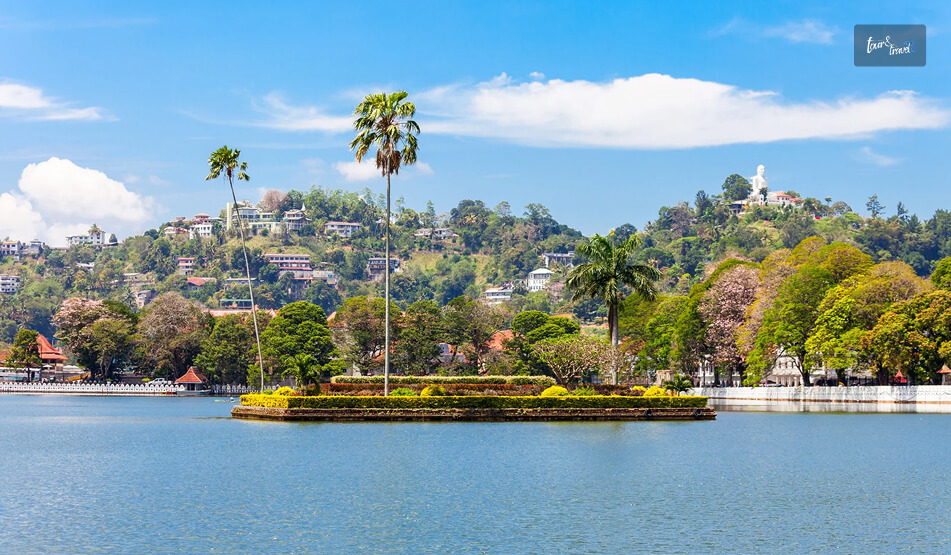
The Serene Kandy Lake!

Beautiful Gardens!

And, the Bustling Crowd!

All these and more things to do in Kandy make it the cultural and historical capital of Sri Lanka. 

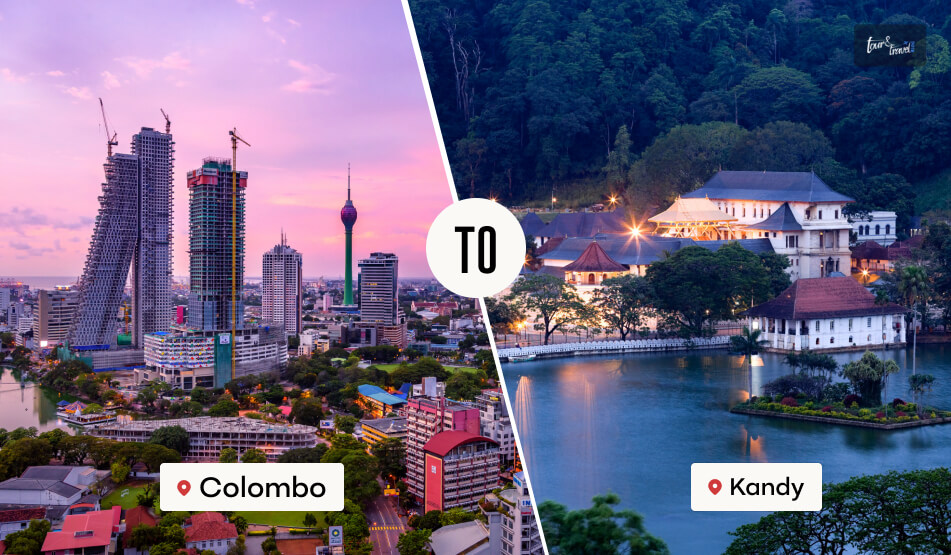
And this time, it’s about the Colombo to Kandy distance. 

It is now more important to know about the modes of travel because Cyclone Ditwah has devastated the Sri Lankan railway infrastructure, including the Colombo to Kandy route. 

So, explore the options. 

What Is The Colombo To Kandy Distance?

What Is The Colombo To Kandy Distance

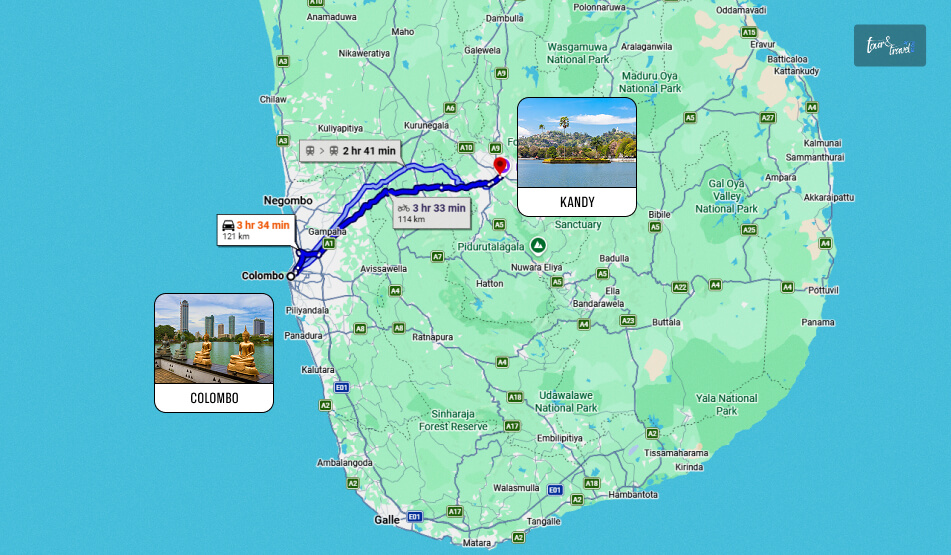
The distance between Colombo and Kandy is around 121 km. The travel time by road through the Kandy Road is around 3 hours and 30 minutes. 

However, the travel time will depend on the mode of transport you choose. 

So, here is a quick summary.

Modes of Transfer from Colombo to KandyTravel Time 
By Car3 Hours and 30 Minutes
By Train2.5 to 3.5 Hours
By BusAbout 4 Hours

Furthermore, from Kandy, you can enjoy the most scenic train ride on the Colombo-Kandy-Ella-Badulla railway through the Nine-Arch Bridge

Also, Kandy is well-connected to Habarana by train. And Habarana is the gateway to cultural attractions such as the Sigiriya Rock and Ritigala Forest Monastery. 

You can even go on a wildlife safari from Kandy to the Kaudulla National Park.

How To Travel From Colombo To Kandy? 

How To Travel From Colombo To Kandy

You can travel from Colombo to Kandy by bus, private transfer, or train. Here are the details. 

1. How To Travel From Colombo To Candy By Train?

Unfortunately, the Colombo to Kandy train route is still under renovation. So, if you are traveling to Sri Lanka anytime soon, you will not be able to take the train service. 

However, according to a report published on Adaderana.lk, a leading 24×7 news portal of Sri Lanka, the train service on this route will resume within 1 year. 

In this report dated 11th January, 2026, Prasanna Gunasena, the Deputy Minister of Transport and Highways, has further confirmed that the authority is taking every possible measure to restore the services. 

2. What Is The Colombo To Kandy Bus Service?

The Colombo to Kandy bus service operates from the Colombo Bastian Mawatha Bus Terminal to the Kandy Good Shed Bus Station. 

Bus services are available every 30 minutes, and the travel time by these buses is around 4 hours. 

Furthermore, the ticket for the public bus services from Colombo to Kandy costs about 157 LKR, and the tickets for the AC buses can cost close to 3000 LKR. 

Also, the public bus service from Colombo to Kandy (Route No: 1) starts from 3:30 AM and the last bus departs at 11 PM. 

3. Private Transfers From Colombo To Kandy 

Starting from my days in Jaffna to now, this Colombo to Kandy journey, I have always opted for budget-friendly modes of transport in Sri Lanka. 

However, if budget is not a constraint for you, you can choose a private transfer from the Sri Lankan capital to the cultural epicenter. 

The private rental for this route will cost you around 9000-13000 LKR, and you will also find many online options. 

Moreover, if you want the safest option to travel between Colombo and Kandy by road, you can opt for the Uber service. 

Yes, it is expensive as the services start from around 48000 LKR, and it is the price for the Uber Go Intercity rentals. 

The Uber Sedan Intercity and the UberXL Intercity services cost even more. 

What Is The Best Time For A Colombo To Kandy Trip? 

What Is The Best Time For A Colombo To Kandy Trip

Kandy’s central location in Sri Lanka’s highlands gives it a cooler and wetter climate compared to the surrounding lowland coasts. 

Plan your trip to Kandy during the right time of the year to get the most out of your visit.

The Best Time To Visit 

The best time to visit Kandy is between the months of January and April due to the warm temperature and low humidity. 

This time frame has the least amount of rain, which is essential for planning out sightseeing activities.

The Monsoons

The climate of this region is heavily influenced by the monsoon seasons. 

The unpredictable weather can be a challenge during the months of May to July and October to December. 

A visit in November has the advantage of having fewer tourists compared to other months; however, consistent rain can make visiting outdoor attractions difficult.

Important Travel Advice

Kandy is extremely busy during the Sinhalese New Year, which occurs twice a year in April. 

Avoid traveling during this week as all public and road travel will be extremely congested due to the celebratory travel of the locals. 

This will create a frustrating and overwhelming spike in logistical travel obstacles.

What Are The Places To Visit On The Route From Colombo To Kandy? 

The drive from Colombo to Kandy takes you on an enjoyable journey through beautiful scenery as you travel uphill from a busy, urban environment to the lush tea plantations and mountain peaks shrouded with mist. 

If you plan to take this trip, there are many places where you will want to stop so that you can appreciate what is known as the “Gateway to the Hill Country.”

1. The Pinnawala Elephant Orphanage

The Pinnawala Elephant Orphanage is one of the best-known detention centers for orphaned elephants in the world and has been established for many years. 

Now that you know the date, I recommend arriving at least 30 minutes before the start of your visit so that you can watch the elephants walk from the orphanage to the Maha Oya River to have their daily bath.

2. The Ambuluwawa Tower

The Ambuluwawa Tower is a great location for Wright Brothers-style views of the area. 

It is located within a short distance of Gampola.

It is at a multi-religious complex, and this unique white spiral structure offers an exciting, narrow ascent with amazing 360-degree views of the entire central highlands.

3. The Kadugannawa Rock Tunnel 

It is a tunnel chiseled from the rock on your way towards Kandy, and also has a legend that British soldiers cut this tunnel so that they could fulfill a prophecy. 

The prophecy said that “Those who pierced the mountains will be the ones who take Kandy.”

4. The Bible Rock

Bible Rock is a flat-topped mountain that is shaped like an open book. 

You can spot it at the Kadugannewa Pass. Dawson Tower stands atop the pass; this is a white column built to commemorate the British Engineer who created the road.

Share on Social Media

Meet Sibashree Bhattacharya, a travel enthusiast who has a decade-long experience in transcending virtual barriers with her words! Her deep love for travel is apparent from her travel escapades to the mountain, often taking her readers on a journey, her words acting as Portkey! Fun fact: Sibashree loves to dive deep into the history of the places she is about to visit, making her travels even more wholesome. If you were wondering how her articles are not short of time travel, this answers it!

Leave a Reply

Your email address will not be published. Required fields are marked *

title-img Related

READ MORE Diyaluma Waterfall

Diyaluma Waterfall, Sri Lanka: The Eternal Memoir Of Love (Location, Hiking, And More)

BY  Sibashree Mar 16, 2026

After visiting the Nine Arch Bridge and the iconic blue trains, my next stop was the Diyaluma Waterfall, at a distance of around 45 km.  Now, Sri Lanka is full of hidden gems. Along with the Ritigala Forest Monastery, this waterfall has also offered me a slice of offbeat Sri Lanka.  Furthermore, the Diyaluma Waterfall, with a height of 220 meters, is the second-tallest waterfall in Sri Lanka, and it has many natural infinity pools.  If those were not reasons enough, Diyaluma Waterfall is irresistible for the local tragic love story associated with it. Also, it is a place of great ecological importance.  Moreover, the journey from Ella to Poonagala and the trek further offer an equally unforgettable experience.  Here are more details about visiting the Diyaluma Waterfall, its location, transport options, history, hiking experience, and more.  Where Is Diyaluma Waterfall?  The Diyaluma Waterfall is on the Colombo-Badulla highway in the Badulla district of Sri Lanka.  Koslanda, around 6 km west, is the closest town to the Diyaluma Waterfall.  Furthermore, it is located at a distance of around 30 km from Ella. Also, the waterfall is located about 196 km away from Kandy, the cultural hub of central Sri Lanka.  Moreover, the Kirindi Oya River has formed this waterfall. This river starts flowing near Bandarawela and flows across the central part of Sri Lanka.  How To Reach The Diyaluma Falls, Sri Lanka?  Tuk-tuks are easily available from Ella to Poonagala. Further, from the Poonagala village at the top, you have to do a short hike to reach the Diyaluma Falls.  However, you can also hike from Koslanda. This is a bottom-to-top hike and way more difficult than the top-to-bottom hike from Poonagala.  Also, the tuk-tuk to the Poonagala village cost me LKR 4000.  Moreover, remember that you have to inform your tuk-tuk driver that you need to go to the upper Diyaluma Falls and trek down from there. 1. Hiking From Poongala To Diyaluma Falls  Carry an offline map when hiking from Poongala to the Diyaluma Falls as the network is inconsistent here.  Furthermore, you must take your tuk-tuk driver as a guide or a different local guide for the hike.  My trek to the falls started from the Makaldenya Junction, and I walked for around 30 minutes to reach the Upper Diyaluma Waterfall.  The path is even, and that is why you need to wear proper hiking shoes with a good grip. Also, long and dry grasses cover the entire route.  You will find all the infinity pools here, and taking a bath is a must, considering the heat and strain of walking downhill.  Then, I took a walk of around 10 minutes to reach the Lower Diyaluma Fall. From there, you can see water falling into the valley from a height of 220 meters.  Also, this is the moment you realize the meaning of the Diyaluma Waterfalls. The name is a combination of Diya and Haluma.  Moreover, the name means the “liquid light” or a “rapid flow of water.”  2. Hiking From Koslanda To Diyaluma Falls  The hike from Koslanda is difficult. However, it offers an amazing view of the waterfall from the Diyaluma Falls Bridge below.  Furthermore, the hike takes around 20 to 30 minutes, and on this hiking route, you will find many snacks and coconut shops.  What Are The Things To Do At Diyaluma Falls?  To enjoy hiking and other activities at the Diyaluma Falls, you have to arrive a little early. The waterfalls are open from 6 AM to 5 PM.  Then, you can enjoy a bath in the infinity pools, relax on the rocks, or talk to the locals. In fact, I got to know about the history of this waterfall when talking to a local hiker.  1. Swimming In The Natural Infinity Pools Of The Diyaluma Waterfall On the edge of the main Diyaluma Waterfall, you will find the main natural infinity pool. Also, you will find many other natural infinity pools formed by the Upper Diyaluma Waterfall.  However, you must check with the locals and take enough precautions before getting into the water.  2. Relaxing On The Surrounding Rocks It may not sound very appealing to you. However, for me, who always cherishes TheLowDownUnder Travel experiences, it is a great thing to experience.  Sitting on a rock and seeing streaks of water gushing from a height of 220 meters. You don’t get to see these scenes often, right? Also, don’t forget to bring a towel if you want to sit on the rocks and relax.  3. Talking To The Locals  I come from a country where cricket is the religion. Sri Lanka also has a celebrated cricket team and has produced legends such as Sanath Jayasuriya, Kumar Sangakkara, Muttiah Muralitharan, and Arjuna Ranatunga.  So, it was great fun talking about cricket.  Then, a local guy shared the history of the Diyaluma Waterfall and the tragic love story associated with it. The History Of The Diyaluma Waterfall  A king once fell in love with a lady. However, she was from a lower caste, and the societal norms did not allow them to get married. So, they fled. Unfortunately, people against it chased them down, and the lady fell into the waterfall and died.  Safety Norms To Follow While Visiting The Diyaluma Falls  No set rule exists for the visitors to the Diyaluma Falls, and that is probably the most concerning matter.  The tourist inflow here is high, and most of them are adrenaline junkie.  So, stand on the edge and swim in the infinity pools, but with caution. Moreover, avoid visiting the waterfall in the monsoon season, from September to early December.  Even if you hike in these months, do not swim in the waterfall.  Overall, the Diyaluma Waterfall remains the symbol of the grandeur of nature, and the myths associated with it make it more intriguing.  So, if you are in Sri Lanka, don’t miss a hike to this waterfall, which is also at the epicenter of a unique ecosystem.  Moreover, enjoy the serenity and spirituality in the air.

READ MORE Hurulu Eco Park

Hurulu Eco Park Safari: Exploring The Wilder Side Of Sri Lanka

BY  Sibashree Mar 16, 2026

After Kaudulla National Park and Dehiwala Zoo, the Hurulu Eco Park was another destination for me to explore Sri Lanka’s wildlife.  If places such as Jaffna in northern Sri Lanka and Kandy in Central Sri Lanka have been the cultural hubs of the country, these parks have shown how people have lived here since eternity in collaboration with nature and wildlife.  The Hurulu Eco Park is especially very close to Habarana, the epicenter of cultural and historical landmarks such as the Sigiriya Rock Fortress, Pidurangala Rock, Ritigala Forest Monastery, and Ritigala Forest Reserve.  The distance between Habarana and the Hurulu Eco Park, at the edge of the Hurulu Forest Reserve, is just around 3 to 4 kilometers. However, despite the short distance, this eco park is quiet and understated.  Also, you know what makes Hurulu Eco Park different? Here, you relish the art of slow traveling and the scent of wet soil after a fresh spell of rain.  Furthermore, elephants are the heart of this eco park, and watching them grazing through the golden light is a delight.  Here is more about this beautiful eco park in Sri Lanka.  Hurulu Eco Park, Sri Lanka: Quick Details  Hours Open7 AM to 6 PMLast Time to Enter5 PMPark Entrance Fee- $15-25 for an Adult- $5 for Children above 6 Years- Free for Children below 6 YearsSafari Cost$65 OnwardSafari DurationAround 3 HoursBest Time to VisitDecember to June Where Is Hurulu Eco Park And How To Reach?  In Sri Lanka’s North Central Province, Hurulu Eco Park is between the landmarks such as Polonnaruwa (1 hour and 15 minutes), Anuradhapura (1 hour and 50 minutes), Dambulla (45 minutes), and Sigiriya (45 minutes).  So, often there is a safari add-on to explore these ancient cities and the cultural landmarks.  Furthermore, as mentioned, it is closest to Habarana. So, ideally, it should be your base.  Habarana also has many budget, mid-budget, and luxury accommodations. Moreover, most hotels in Habarana, Dambulla, and Sigiriya offer door-to-door safari facilities.  You can expect a pick up around one hour before the safari time.  Moreover, you can take a train from Trincomalee, Kandy, or Colombo to reach Habarana Junction. From there, you can take a 10-minute tuk-tuk ride to reach the eco park.  However, online booking for these train tickets may not work most of the time.  The Landscape Of Hurulu Eco Park  Hurulu Eco Park is a mix of open plains, rock, and jungle.  Furthermore, as a part of the dry evergreen forest area of Sri Lanka, it functions as an important corridor for elephants roaming between Minneriya and Kaudulla National Parks.  So, you can easily spot Sri Lankan elephants here, especially the mothers and babies making small groups and moving.  Along with elephants, you can also spot peacocks, spotted deer, macaques, langurs, and many birds here.  What I Saw At Hurulu Eco Park  I was initially disappointed the day I had to visit the Hurulu Eco Park. I thought that the tropical rain would mess up my safari experience.  However, I opted for an afternoon safari, and by the time I reached Hurulu, except for the heavy dampness in the air, everything was fine.  Also, the mud on the track was not a problem to start the safari in full swing.  After a few turns in the park, I could spot a herd of elephants, and they were winding up leaves and fruits with their trunks. Moreover, they were flapping their ears.  Then, after waiting for 15 minutes, the herd passed by and we continued our safari.  We passed through rocks, canopies, and bushes. I spotted a peacock and monkeys before reaching an open land. And that was the moment of the entire safari.  At least 25 elephants were grazing, and the younger ones were rolling in the mud.   Finally, the air became cooler, and the sky started getting red. So, our jeep driver planned a return.  How To Plan A Safari In The Hurulu Eco Park?  Safaris in Hurulu Eco Park include a guide, a jeep, park entry, and a pickup and drop off from Hurulu Eco Park.  Morning safaris are the best, ideally starting from 7 AM. Furthermore, like me, you can also opt for an afternoon safari at 1 PM.  Furthermore, each jeep carries about 6 tourists. Also, you must carry some water, wear sunscreen, and a hat. What Is The Best Time To Visit Hurulu Eco Park? The best time to visit Hurulu Rco Park is between December and June. Especially, February to April is the ideal time to see the lush landscapes and the biggest elephant herds.  Furthermore, the number of jeeps is quite low in these months.  Again, from May onward, the conditions become drier, and the elephants start moving from the Kaudulla National Park to the Minneriya National Park. So, in Hurulu Eco Park, you will notice smaller herds of elephants.  Moreover, from October to January is the wet season, and the jungle becomes the most vivid. So, these months are the best for photographers.  Photography Tips For Hurulu Eco Park  You will find a mix of open plains, forest shades, and red earth in Hurulu Eco Park. So, the landscape is challenging yet interesting for photographers.  Furthermore, for photography, you must bring a 70-200 mm lens. It is ideal to capture wildlife, and the wider lens is the best to frame the color and scale of Hurulu Eco Park during the golden hour.  Moreover, after the rain, the conditions become more ideal for photography. Grey elephants, red dust, and the green foliage create wonderful frames.  Again, the light filters through the tree branches becomes low in the late afternoon. So, you can capture the texture and warmth of the Hurulu Eco Park. Things To Keep In Mind For A Visit To Hurulu Eco Park  Do not use single-use plastic bottles during the safari to minimize the impact on the environment, wildlife, and marine life.  Furthermore, keep the water use to a minimum level to reduce the pressure on water resources.  Moreover, collect your souvenirs from the local shops and eat at the local eateries to help the economy of the community.

READ MORE Jaffna travel itinerary

Jaffna Travel Itinerary For 5 Days: What Are The Places To Visit And Local Transport

BY  Sibashree Jan 13, 2026

The city of temples. The Tamil heart of Sri Lanka. The cultural hub of Sri Lanka.  All these things are true about Jaffna, the northern city. It’s not just about the Nallur Kandaswamy Kovil or the Naguleswaram Temple. There are two temples on average in the streets of Jaffna. Along with the temples in Jaffna, the food, the festivals, and the warm hospitality make it a city to be explored, felt, and soaked in. Had I not been to Jaffna, I would have probably loved the average “3-day Jaffna travel itinerary” every blog is offering. However, a city that wakes up to the sound of the temple bells and the smell of jasmine and follows the custom of Jaffna Siesta, cannot be explored in three 3 days. You will at least need 5 days to know the spirit of Jaffna. Also, it’s cruel to say that you can walk to the Jaffna Fort at noon. So, the average Jaffna travel itinerary you are going through now is unrealistic, and I am not sure how authentic they are. So, here are the things to do in Jaffna for 5 days and how to explore the city. Jaffna Travel Itinerary: It All Starts With The Colombo To Jaffna Train Journey If you want an iconic train journey from Combo to Jaffna, take the Yal Devi Express from Mount Lavinia. The train starts from Mount Lavinia, and the Combo Fort is the 5th station on this route. You can board the train from Colombo Fort at 6:40 AM. The train will reach Jaffna at 2:33 PM, and it is the 31st station on the route. The last or the 34th station on the route is Kankesanthurai. The ride in this AC Saloon car costs LKR 2800 per person. You can also take the 444421 InterCity Express from Mount Lavinia to Kankesanthurai. This train departs from the Combo Fort Station at 5:45 AM and reaches Jaffna at 11:49 AM. The ticket price is LKR 3200 per person. This train ride is not just about traveling to Jaffna from Colombo. Here, you will pass through the Elephant Pass, which has expansive lagoons. Also, as a war memorial and as the military base of the First Battle of Elephant Pass (Operation Aakaya Kadal Veli or Air-Sea-Land by the LTTE), it is an important landmark for cultural tourism in Jaffna. Getting Around Jaffna: Why Do I Need A Scooter For Rent?  You can take a scooter for rent for a budget-friendly and flexible experience in Jaffna. Be it the Casuarina Beach or other beaches of Jaffna or the historical Jaffna Fort, a scooter or moped will give you the ultimate freedom to make the itinerary for Jaffna travel. The charges for a bike rental will be around LKR 2500 per day. If you don’t ride and need a more relaxed experience, you can take a tuk-tuk on hire, and the cost will be around LKR 4000-5000 per day. 5-day Jaffna Travel Itinerary: Soaking In The True Spirit Of Jaffna From exploring Jaffna City to exploring the islands and temples, there is a lot to do in the Northern City of Jaffna. Also, culinary tourism in Jaffna is a real thing! So, let’s make the most of these 5 days in Jaffna. Day 1: Arrival At Jaffna And Exploring The City  How about starting your day in Jaffna with the famous Jaffna coconut water or the signature ice cream at Rio Ice Cream? Here are the things you can do once you reach Jaffna after a long train journey from Colombo. 1. Morning: Check-In And Visit Rio Ice Cream For The Legendary Welcome  View this post on Instagram A post shared by Rio Ice Cream (@official.rioicecream) Rathinam Industrial Organisation(RIO) is a legendary landmark in Jaffna. It is like a community center where the locals love to have some refreshment in the middle of the day or at the end of the day to fight the soaring temperature. Special Rio Sundae with the ultra-sweet syrup and nuts is the main attraction of Rio Ice Cream. Also, the ice cream here is completely natural and chemical-free. 2. Afternoon: Visit The Jaffna Public Library  The Jaffna Public Library is a must-visit if you want to know about the local Tamil culture and heritage. It became a part of the Jaffna Town Development Board on 1st January 1935. As of today, the library has a collection of more than 117199 books, 37968+ in the lending section, and more. The library remains open from 8:30 AM to 6 PM from Tuesday to Sunday. On public holidays and Mondays, only the study hall and the magazine and newspaper sections remain open from 8:30 AM to 5:15 PM. However, the public viewing hours are from 4 PM to 6 PM. 3. Evening: Visit The Jaffna Fort For Sunset Walk On The Ramparts  Visiting the Jaffna Fort and walking on its ramparts after sundown are the best ways to familiarize yourself with the city's history. You can explore the walls and the barracks where thousands of civilians and military personnel used to live. Furthermore, you can enjoy the beautiful view from the city and the Jaffna lagoon from the ramparts. A Brief History Of The Jaffna Fort Built in 1619 by the Portuguese colonialists. Serving as the base for combating three Sri Lankan rebellions against the rule  Got captured by the Dutch in 1658  Got the famous defensive triangle in 1792  The British took control of the fort in 1795  Sri Lanka became independent in 1948  However, even after the independence, the Fort has been at the center of friction between the Sri Lankan government and the Liberation Tigers of Tamil Eelam (LTTE or Tamil Tigers). So, 1990-2009 was a volatile year for Jaffna, and the Jaffna Fort witnessed many occurrences. However, post 2009, the restoration work for the Jaffna Fort was started with the financial aid of the Dutch Government, and the Jaffna Fort still stands today because of that. 4. Having Dinner At Malayan Café (Dosas And More)  View this post on Instagram A post shared by りかරිකා (@rk_itooo) Having dinner at the Malayan Café is the quintessential Tamil experience you want in Jaffna. The decor is quaint with marble top tables, and steaming hot dosas and Idlis here are served on banana leaves. You will also get parathas and chutneys here. Don’t forget to bring cash because it does not have a digital payment facility. Day 2: Hopping The Delft And Nainativu Islands  Let me share one update when you are making a trip to the Delft and Nainativu Islands. Only one boat is available from the Kurikadduwan Jetty at 8 AM. So, if you miss the boat, unfortunately, your entire day is ruined. Nevertheless, here is how you will spend day 2 in Jaffna. Morning In Delft Island  The Portuguese Fort and the ruins of the Old Stupas are the primary attractions on Delft Island. You must also see the iconic Baobab Tree and the wild horses roaming on Delft Island. Take a ferry from Delft Island to reach Nainativu. Afternoon At Nainativu Nagapooshani Amman Kovil  The Nagapooshani Amman Temple has Nagapooshani Amman, a form of Goddess Durga, as the presiding deity. The statue of Goddess Nagapoosani here is accompanied by a Shiva Lingam and the ten-headed statue of Ravana at the base. It features a Dravidian architecture with some modern features, as the current structure was rebuilt between 1720 and 1790 after the Portuguese destruction in 1620. Returning To Jaffna By Boat And Having Seafood Dinner At Mangos Take the return boat from Nainativu, and the last ferry is available at 4:30 PM. Then, end your day on a relaxing note with a hearty seafood dinner at Mangos. Day 3: Soaking In The Spiritual Vibe Of Northern Sri Lanka  Start your day three in Jaffna with a visit to the Nallur Kandaswamy Kovil early in the morning. Be a part of the 10 AM Puja.  Then have traditional crab curry and rice for lunch before starting a drive to Point Pedro. If ordering Crab Curry, know that one portion is usually enough for two people. It is rich, spicy, and heavy.  The distance between Jaffna and Point Pedro is around 32 km. Known as Paruthithurai in the local Tamil language, Point Pedro is the literal top of Sri Lanka. Despite being a crucial maritime getaway, Point Pedro has a pristine landscape, and it has maintained its authentic Tamil vibe. Vallipuram Alvar Kovil and Sakkotai Cape sign are important stopovers between the Jaffna to Point Pedro journey. The Vallipuram Alvar Kovil is one of the oldest Hindu temples in Jaffna. Archaeologists found a 2nd-century gold plate here, and the temple is dedicated to Lord Vishnu. The Sakkotai Cape is the northernmost point of Sri Lanka. It has a concrete sign and an inscription, “Unity in Diversity is the Strength of Sri Lanka.”  The famous concrete sign saying "Point Pedro" is actually at Sakkotai Cape, a few kilometers away from the Point Pedro town center. Don't get confused by Google Maps. Day 4: Exploring The Ruins, Springs, And Myth Of Jaffna  You can start your day four in Jaffna with a sacred bath at the Keerimalai Freshwater Springs next to the ocean. The water here is believed to have healing power. In the midday, you can travel to Dambakola Patuna from Jaffna. It will take around 34 minutes. It is the place where Sanghamitta, the Buddhist daughter, and Great King Ashoka brought a sapling of the Bodhi Tree in the 3rd Century BCE. Finally, in the afternoon, you can explore the mysterious mini-stupas or the Kantarodai Ruins, around 12 km away from Dambakola Patuna. It is an archaeological site, and you must also visit the ancient Kadurugoda Vihara here.  Day 5: Getting Familiar With The Local Life Of Jaffna And Departing For Colombo  On day 5, explore the local Jaffna market for buying some Jaffna specials, including palmyra jaggery and curry powder. Enjoy your last feast in Jaffna with Dosa and Vadai. Then, you can plan your return to Colombo. What Are The Expert Tips For Jaffna Travel Itinerary?  Did you know that the Sri Lankan Navy runs the boat to Delft? It always remains overcrowded, and the passengers wait at the Kurikadduwan Jetty. So, if you want to catch the boat at 8 AM, you have to get there by 7:30 AM. Do you want to know more such expert tips for your next trip to Jaffna? Check out the following points.  1. Bring Your Passport  When you are traveling from Jaffna to the nearby islands, you will have to cross military or navy checkpoints. So, when you are from any other country, you will have to show your passport. 2. Sunday Is Dead  Jaffna celebrates Sundays as a real holiday, and most local shops and markets remain closed on Sundays. So, choose a weekday if you want to explore the City Markets. 3. Cash Is King When You Are In Jaffna You will get ATMs in Jaffna town. However, when you are driving to Point Pedro or taking a ferry to Delft Island, you will need cash.  Even small shops and the markets in Jaffna may not always accept cards. So, you have to carry small coins such as 100 and 500 LKRs.  4. You Must Cover Up At Nallur Your clothing has to be respectful when you are in Nallur Kovil. If you are a woman, you have to cover your knees and shoulders. Also, men must be shirtless when entering the temple. If you do not follow the clothing norm, you will be turned away at the gate. 5. Book Return Trains Early  If you are traveling from Colombo to Jaffna by train, you will have to book the tickets for Yal Devi and other passenger trains well in advance. The first and second class tickets get booked fast. Ideally, you must book the train tickets 30 days before starting your journey. 6. Drink "Nelli" Cordial  Instead of Coke, try the local Nelli (Gooseberry) crush. It’s a Jaffna specialty and incredibly refreshing in the heat.  You can even drink the big coconut water. 7. Respect The "No Photo" Signs  Photography is not allowed in the inner sanctum of the Jaffna Kovils or temples. The priests are vigilant. So, do not even try breaking the norms. Also, if you're taking photos of the locals, always seek permission. Authority Voices: What Experts Say About Traveling To Jaffna? The Common Wanderer (Travel Bloggers): “Jaffna feels like the Sri Lanka of 20 years ago. No smoothie bowls, no yoga retreats—just raw culture, heat, and the most incredible hospitality.”  Rough Guides: “The journey to Delft Island is a rite of passage. The choppy ferry ride and the desolate coral landscapes make you feel like you’ve reached the edge of the world.”  Chef Peter Kuruvita: “To understand Sri Lankan food, you must go North. The cuisine here is uncompromised by tourism.”  Jaffna Travel Itinerary: Frequently Asked Questions (FAQs)  Here are the frequently asked questions and answers about the Jaffna travel itinerary. 1. Is Jaffna Safe For Tourists?  Yes, Jaffna is a safe city for tourists. The strong presence of Tamil culture and a conservative society make it an ideal location for family trips. Also, according to Numbeo, the crime rate in Jaffna is 50, which is moderate. However, Jaffna has been hit by civil wars time and again, and the rampage of Cyclone Ditwah in November 2025 has been devastating. Jaffna is still recovering from the aftermath. 2. What Is The Best Way To Get Around Jaffna?  Hiring a Tuk-Tuk is the most comfortable way to get around Jaffna. You can even book a scooty or moped to explore Jaffna at your own pace. However, for the island visits, you will have to rely on the ferry services.  3. Can I Do Delft And Nainativu In One Day?  Yes, you can visit Delft and Nainativu in one day. However, to make your plan a success, you will have to start early from the Kurikadduvan beach. Once you reach Delft, you can book a Tuk-Tuk or a moped to explore its important landmarks. Then, take the ferry to reach Nainativu Island. 4. Is There A Dress Code For The City?  There is no official dress code for the city of Jaffna. However, it is a culturally rich city with a Tamil conservative society. So, you must opt for modest clothing such as sarees, full pants, long skirts, and tops and shirts with sleeves. 5. Can I Find Beer Or Alcohol In Jaffna?  Yes, you can have beer or alcohol in Jaffna. The Thalsevana Resort on the Kankesanthurai (KKS) Beach is the best place to have a chilled beer. You will also find beer in the hotels. However, alcohol in Jaffna is expensive. You can do some duty-free shopping at the airport. Furthermore, for the most authentic experience, you can try local brands such as Lion Lager or local spirits like Arrack. 6. Do They Speak English In Jaffna?  Yes, people speak English in Jaffna, especially when you are interacting with someone associated with the hospitality industry, the medical profession, or the legal field. Also, you will find many people in Jaffna City speaking English. However, when you explore the villages or remote areas, people may not be fluent in English. 7. What If I Am Vegetarian?  Even if you are a vegetarian, the Jaffna cuisine has many delicacies for you. You can have Idli and dosa, which are vegetarian and vegan.  Also, Rasam, Sambar, and the curries made using pumpkin, drumsticks, and other vegetables are quite delicious. Vegetarian food is available in Jaffna in abundance and with a variety because of the strong Tamil presence in the city. Most people here worship Lord Shiva and Vishnu.  8. How Long Is The Ride From Colombo To Jaffna?  A journey from Colombo to Jaffna takes around 7 hours if you are traveling by the Yal Devi AC saloon car or bus. However, you can also take a flight from Colombo to Jaffna, and the travel time is around 1 hour and 30 minutes.  9. Is The Water In Jaffna Safe To Drink?  No, the water in Jaffna is not safe to drink because saltwater intrusion and groundwater contamination are quite high. The groundwater of Jaffna is contaminated by agrochemicals, sewage, and harmful bacteria. So, it is safe to drink bottled water and water from filter dispensers.