
8 Beaches of Melbourne, Australia Where You Can Cool Off!

May 8, 2024

Last Updated on: Sep 17, 2024

Travel Blog

Are you a beach person? Do you want to visit beaches in Melbourne? Some of the beaches not only offer beautiful views but also help you have an amazing holiday. You can perform different activities such as swimming and surfing, organize picnics, enjoy a beach bonfire, and build a sandcastle!

There are other activities, some of which are my favourites, such as kayaking, snorkeling, parasailing, and scuba diving! With unending fun times, you can also enjoy delicious food, especially if you are a foodie. Remember that when planning a beach trip, we must carry essentials such as sunscreen, sunglasses, hats, towels, water bottles, and others.

Let me share with you eight of the coolest beaches in Australia, more specifically in Melbourne! You will not only enjoy it but make memories for a lifetime.

8 Beaches Of Melbourne, Australia, Where You Can Cool Off!

Several Melbourne beaches are renowned for their beautiful visuals and numerous opportunities. I will list eight beaches where you can cool off and relax on your holiday. You will love the article if you love surfing, swimming, fishing, and other activities.

There are several things to do in Australia, and I will help you decide on them! It would be best if you explored everything from sandy beaches to the delicious food joints across the foreshore of these beaches. In Australia, there are several opportunities that you can explore when planning your holiday.

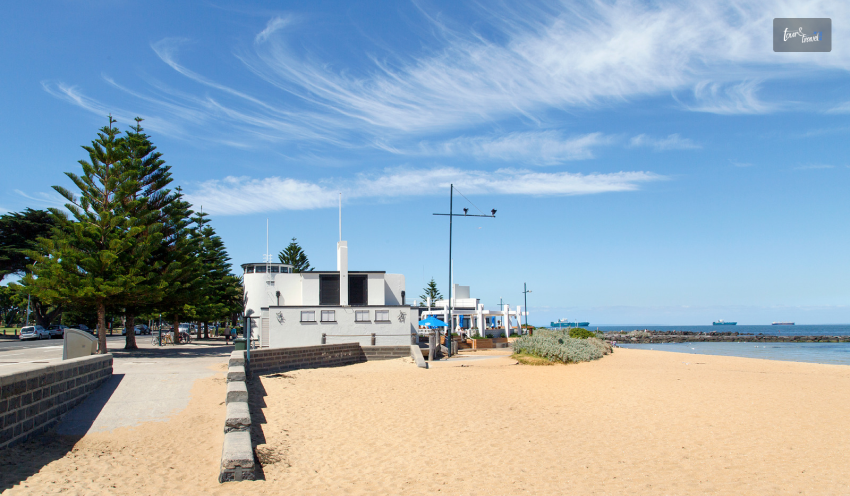
South Melbourne Beach

South Melbourne Beach

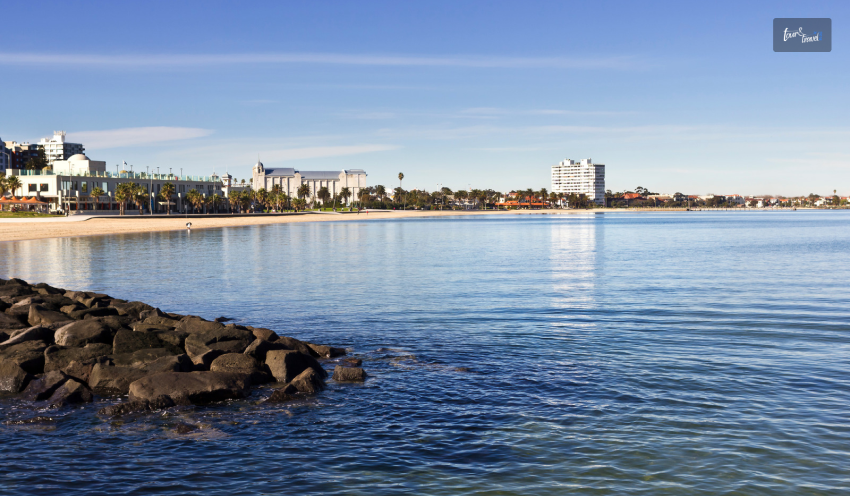
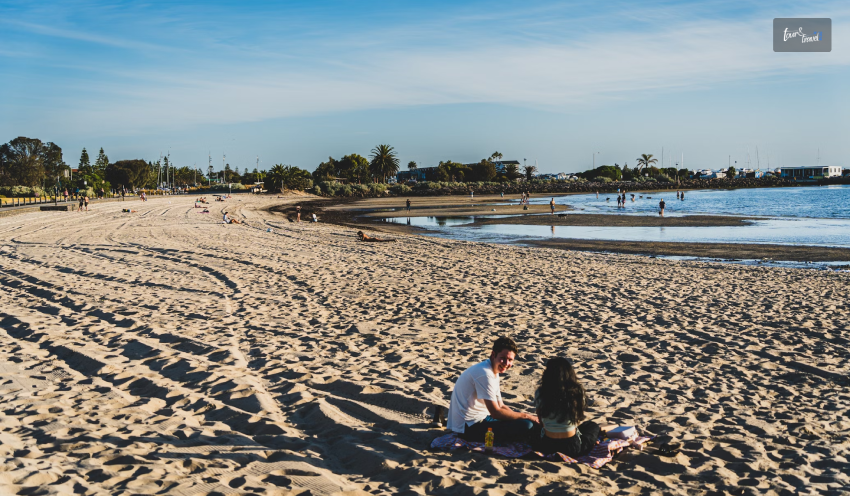
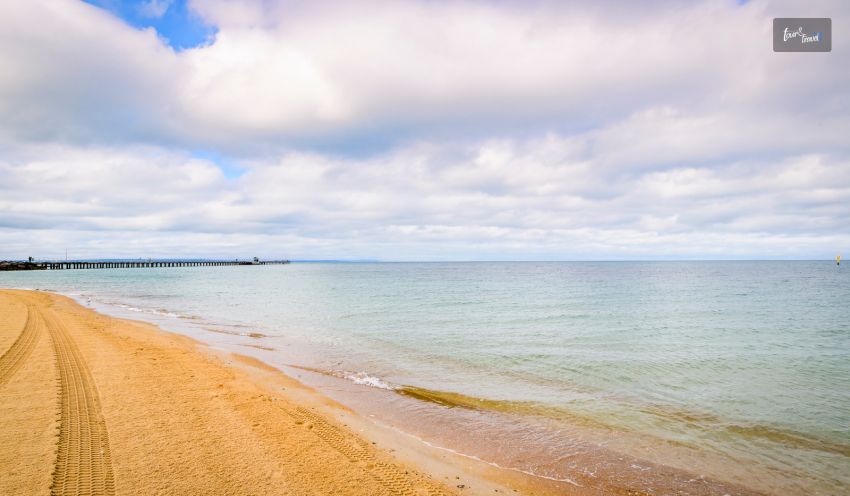
Port Melbourne Beach, also known as South Melbourne Beach, is charming and offers a beautiful view. There is the tiny Prince’s Pier, which is the perfect place for photography during sunset! You will get complete privacy if you visit this beach with your partner.

People can go out on casual strolls along the stretch of sand! If you are a pet parent, this is a perfect place to take your pet out on a walk; even the locals do that. You can see people playing beach tennis or taking a cruise ship to visit other places! Visiting this beach is easier if you have less time.

If you are a foodie, you can visit South Melbourne Beach to sample the delicious food there. Oceanside Pizza, Ocean 302 Bar and Grill, Sunnyside Cafe, and Billie’s on the Beach are some of the restaurants in Australia you must visit.

St. Kilda Beach

St. Kilda Beach

Even the locals cannot avoid this beach, so if you are a tourist, how can you prevent it? You must visit St. Kilda Beach, which has the vibe of Bondi Beach. However, the camera and the crowds still need to be included. If you are a surfer, you must visit this beach because it is wave-free.

One of the coolest places for water sports, paddle-boarders wobble across the ocean while the kite surfers enjoy to the best of their ability. You will see several palm trees surrounding the boardwalk where you can cycle with your partner, spending a romantic evening!

On Acland Street, there are several trendy restaurants and cafes, which you must check out if visiting St. Kilda Beach. Also, please do not forget Luna Park, another significant attraction.

Elwood Beach

Elwood Beach

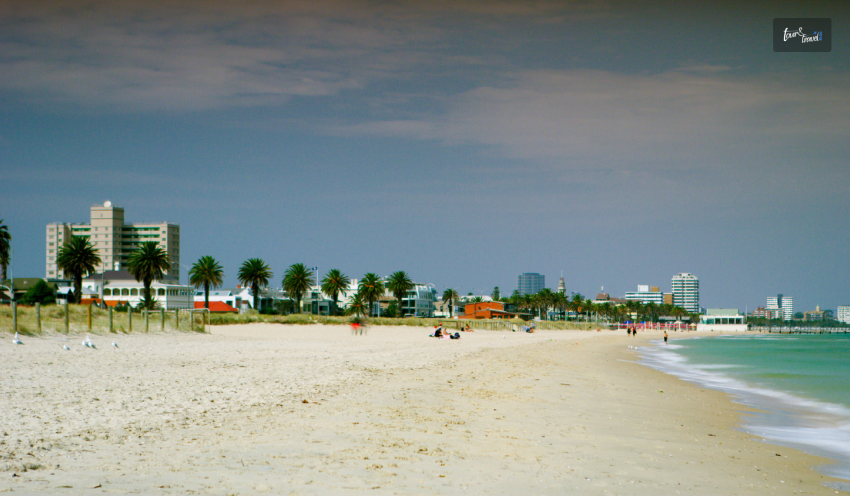
If you love a relaxed vibe when traveling to the beach, you can go to Elwood Beach! It is just around the corner from St. Kilda Beach, so if you want to avoid all the hustle and bustle, you can escape to this beautiful, classic sandy beach!

The beach is not very far from the city; however, what is more beautiful? The CBD skyline looks mesmerizing, especially with that stunning view from the beach. Whether you are a vegetarian, vegan, or non-vegetarian, you will have all kinds of options, from cheesy empanadas to seafood such as oysters and kingfish!

 You cannot miss the porterhouse steak; the service and deliciousness of the restaurant will transport you to heaven!

Brighton Beach

Brighton Beach

If you plan to visit Brighton Beach, let me tell you it is an ideal spot for surfers, sunbathers, and swimmers. One of the best beaches in Melbourne, Brighton Beach is a long stretch of beaches, and the boardwalk scenario is quite popular.

 This area is also one of best places to live in Australia because it is a vibrant neighborhood. You can stay with your family or partner in residential areas on their sun-splashed streets and sandy beaches.

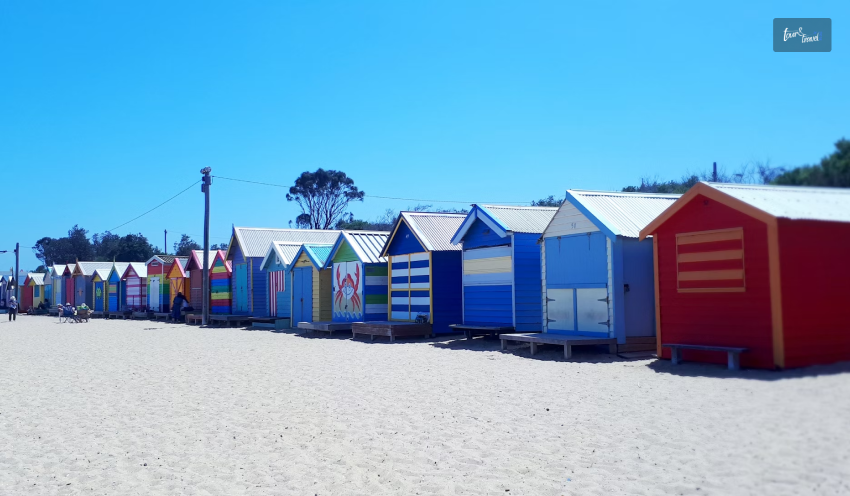
On the foreshore of the beach, there is a line of eighty-two little brightly colored charming bathing boxes! You will fall in love with these multicolored boxes, which also ensure the beauty of the beach. The wave on this beach is quite decent, and there are several places for fishing.

You can also not miss the restaurants, cafes, and galleries that are just a walk away from the beach. Even the market near the beach is quite popular!

Gunnamatta

Gunnamatta

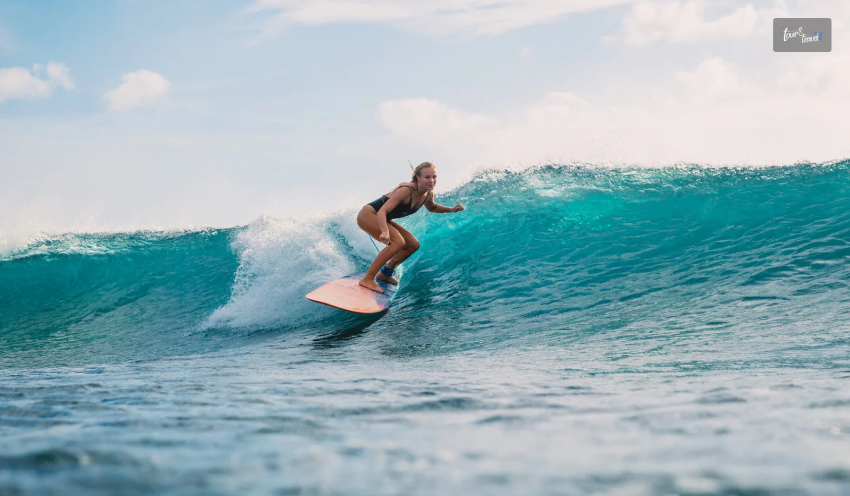
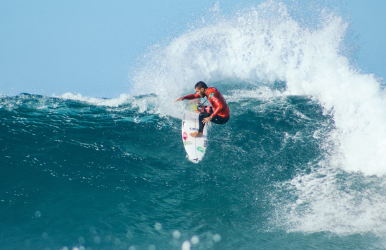
On this beach, Gunnamatta, you can experience the full force of the Southern Ocean; hence, the ocean is harsh. However, with experienced surfers, this place can be a slice of heaven! You can also visit the Mornington Peninsula National Park near the beach.

The beach is clearly dramatic, but thrill seekers will love the gigantic waves! Some food joints allow you to take consistent breaks based on your preferences.

Dromana Beach

Dromana Beach

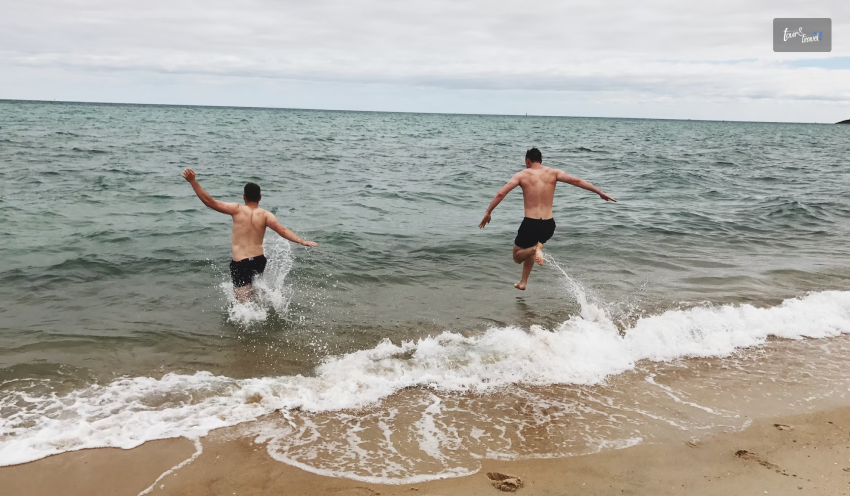
With its clear turquoise waters, Dromana Beach is a perfect fit for places in Australia that will take your breath away. The best time to visit Australia is mostly during the summer months, and the swimming conditions at the beach are perfect here!

You can go to different barbeque spots across the foreshore to hang out with your friends or partner. There is also a small fishing pier where you can perform a lot of fun activities! Several hiking trails surround this beach, which makes your visit more exciting and adventurous.

Apparently, there is a stamina test which you can take especially with the nearby Arthurs Seat State Park! You can also take the Arthurs Seat Eagle gondola, which offers beautiful and incredible views of Melbourne’s skyline across Port Phillip Bay.

Williamstown Beach

Williamstown Beach

For the locals there, you must ask where” Willy Beach” is. This beach is just a few steps from the city. A popular beach, it provides some of the most spectacular views of the water and the horizon. From sailors and sunbakers to swimmers, this beach is a spot for many.

If you are traveling from the train station, the closest beach to this is Gem Pier. This station offers some of the coolest unobscured views of the skyline. It is spectacular during the night, with teeming lights across Williamstown city!

If you plan to visit during New Year’s Eve, you can check out the beautiful fireworks across the town! Traveling from Sydney to this beach will take about 17 km (about 10.56 mi) by car.

Mordialloc Beach

Mordialloc Beach

The beach is not just a combination of water and sand but also a beautiful southeast suburb that offers resources and beauty. It is a charming seaside pocket with access to delicious food such as Tommy Ruff Fish Bar, Manow Thai, Doyle’s Deck & Bistro, Braeside Brewing Co., and others.

Sunny Boy Beach Club, a restaurant, is a combination picnic area, BBQ, and playground! A bike path runs directly to the restaurant from the beach. There is also a sturdy pier about 300 meters (about 984.25 ft) across the beach.

A family beach, it is quite popular for huge families and groups of friends to hang out and enjoy themselves. So, if you are someone who does not like crowds, you should avoid this beach because, during the week, there is always a huge crowd here.

Finishing Off…

In short, these beaches are cool to hang out with and offer beautiful locales and visuals! These beaches in Melbourne fit the bill when it comes to hanging around the water on a sunny and warm day. After reading the blog, I am sure you are dying to visit these places when creating an itinerary.

Check out our picks of the beaches in Melbourne, one of Australia’s coolest places. An amazing experience is dedicated to you, especially when traveling to these places.

Comment on which of the best beaches in Melbourne are already on your bucket list!

Learn More Also:

Share on Social Media

Sagnika Sinha is a content writer who is passionate about writing travel vlogs, entertainment and celebrity articles and literature-based pieces. With a 4 years experience in teaching, she loves reading books. A procrastinator by nature, she loves travelling, listening to music, planting and gardening.

Leave a Reply

Your email address will not be published. Required fields are marked *

title-img Related

READ MORE free museums in dc

Explore The Top 15 Free Museums In DC! Must Visit Museums In 2024!

BY  Ankita Jun 7, 2023

What are the best free museums in DC that you and your family can visit while you are in the state? Well, if this is something that you have been searching for, then I have the best thing for you! Washington, D.C., is home to so many amazing museums. The best thing, though? A lot of them provide free admission. You can research history, science, culture, and the arts for free. And if you want a list of them, then you will find this article to be of help! Keep reading this blog till the end to learn more… Which City Has The Highest Number Of Museums? With 85.4 museums per 100,000 people, Washington, D.C. is the US city with the highest number of museums per capita, according to a 2019 report by the American Alliance of Museums. There are numerous explanations for Washington, D.C.'s abundance of museums. First of all, being the nation's capital and the seat of government, it is home to numerous national institutions and museums, including the Library of Congress, the National Archives, and the Smithsonian Institution, which is composed of 19 museums and galleries. Moreover, museums are a big draw for tourists to Washington, D.C., another well-liked vacation spot. The city's museums are accessible to all, offering a broad range of topics from science and technology to art and history, and many of them are free to the general public. Ultimately, a great deal of Washington, D.C.'s museums are dedicated to preserving and presenting the city's rich cultural legacy. For instance, the National Museum of the American Indian focuses on the history and culture of Native Americans, while the National Museum of African American History and Culture, which opened in 2016, is devoted to telling the story of the African American experience in the United States. 15 Best Free Museums In DC That You Need To Check Out! Every day, scholars, researchers, visitors, and locals are drawn to our nation's capital. The diversity and caliber of free museums here attract the crowd. However, with so many choices, selecting an itinerary might be difficult. That is the reason why I have come to your rescue. In this article, I have planned and listed the top 15 free museums in DC that you can visit! So, without further ado, let us get started! Here are the best free museums in Washington DC that you need to visit: 1. National Gallery Of Art This renowned art gallery spans two significant buildings joined by an illuminated tunnel. It also has an indoor waterfall and a six-acre (2.4 ha) sculpture garden. It features both traveling exhibitions and a changing exhibition of works from the permanent collection. The permanent collection offers a marvelously thorough selection of the best artwork. It spans from ancient to modern times, including masterpieces like da Vinci, Degas, and Calder. The National Gallery of Art is a fantastic family outing. It offers free public programming like art history films, classical performances, and kid-friendly hands-on activities. Check out the ice skating rink in the sculpture garden if you're here in the winter. Every day from 10 am to 5 pm, the National Gallery of Art is open at 6th Constitution Avenue North West, Washington, DC, 20565. 2. United States Holocaust Memorial Museum One of the biggest disasters in human history, the Holocaust of World War II, teaches us some of history's most difficult lessons. Except for the children's-oriented Daniel's Story exhibit, it is intended for visitors 11 and older due to the nature of the issues covered in this museum's exhibitions. The Holocaust is a permanent exhibition that offers an insightful look at this historical tragedy through a wealth of artifacts, videos, and human accounts. James Ingo purposefully evoked architectural characteristics of various historical Holocaust places in the Freed building. He does so in an abstract, open-ended manner without making direct parallels to any of these locations. Four commissioned works of art are also on display within the museum: Consequence, a wall drawing by Sol LeWitt; Gravity, a monolithic sculpture by Richard Serra; Loss and Regeneration, a sculpture by Joel Shapiro; and Memorial, a grouping of four white wall sculptures by Ellsworth Kelly. Due to COVID, timed-entry tickets are required, and they can only be purchased in groups of six or fewer. Additionally, there is a $1 processing fee for online ticket purchases. This museum deserves a place on the list of the best free museums in DC. Everyday from 10 a.m. to 5:30 p.m., the museum is open. In Washington, DC, 20024, at 100 Raoul Wallenberg Place South West, is the location of the United States Holocaust Memorial Museum. 3. National Museum Of Natural History There are 147 million specimens and artifacts on display at the Natural History Museum with the highest visitors in the world. Some of them are The Hope Diamond, meteorites, ancient Egyptian mummies, and live insects, including butterflies. The focus of traveling exhibits on natural history issues is on plant and animal biodiversity as well as human history. To further improve your experience, they also offer do-it-yourself, free, printable exhibitions. Because the museum is so big, it's a good idea to take a break and unwind in one of their two cafes or the Garden Lounge, which has live plants. Open every day from 10 a.m. to 5 p.m. In Washington, DC 20560, at 1000 Madison Drive North West, is where you may find the National Museum of Natural History. 4. National Museum Of American History Explore the over 1.7 million objects that span over 300,000 square feet (27,870 square meters) and tell the narrative of America with the four million visitors who flock here each year. The "Star-Spangled Banner"'s inspiration, the Greensboro lunch counter from the Civil Rights demonstrations, Julia Child's kitchen, the ruby slippers from The Wizard of Oz, and Lincoln's stovepipe hat are just a few of the most well-known and well-liked exhibitions. In addition to exceptional events like guest lecturers and performances, the museum offers regular programming as part of some exhibits like Spark! Lab and Wonderplace. The National Museum of American History is located at 1300 Constitution Avenue North West, Washington, DC, 20560, and is open daily from 10 am to 5.30 pm. 5. Hirshhorn Museum And Sculpture Garden Next on the list of the must-visit free museums in DC, we have Hirshhorn Museum and Sculpture Garden. This museum is a must-visit for art enthusiasts because of its enormous collection of contemporary and modern art from throughout the world. Featured and well-known artists include Yayoi Kusama, Henry Moore, and Pablo Picasso. Over 30 sculptures are on display at the sculpture park, including Yoko Ono's well-known Wish Tree. One of the most well-known American modern art museums, the Hirshorn has been open for 50 years and provides a platform for contemporary art and culture on a national scale. For special exhibits, timed passes can be necessary. The museum offers exciting educational opportunities like storytimes, guest speakers, their mobile Art Cart, and film festivals in addition to its permanent and special exhibits. The on-site cafe, Dolcezza, offers pastries, gelato, specialty coffee and tea in a beautifully decorated space. The Hirshhorn Museum and Sculpture Garden is located at Independence Avenue South West & 7th Street South West, Washington, DC, 20560, and is open daily from 10 am to 5.30 pm. 6. National Museum Of The American Indian In this relatively recent addition to the National Mall, explore the richness of culture, language, history, tradition, and futures of indigenous peoples of the Americas. Visit the engaging, fun-filled imaginative Activity Centre (Tuesday–Sunday) for children ages 10 and under to learn the traditional cultural and scientific knowledge of many indigenous peoples. The National Native American Veterans Memorial, a stainless steel circle balanced on a carved stone drum with intricate symbolic carving, was inaugurated at the museum in November 2020 to honor and remember the Native American military veterans. Take a mouthful of some traditional food at the Mitsitam Native Foods Cafe, which offers Native American foods at five themed food stations. The museum offers a number of special events and programs, including performances, special guest lecturers, film festivals, and concerts, to share indigenous traditions with people of all ages in addition to permanent and temporary exhibitions. The National Museum of the American Indian is located at 4th Street South West, Washington, DC, 20560, and is open daily from 10 am to 5.30 pm. 7. National Museum Of African American History And Culture Visit the one and only national museum that was established in the autumn of 2016 and is dedicated to preserving and promoting African American life, art, history, and culture. With an exhibition area of 85,000 square feet (7,897 square km), it will take at least two hours to see everything. Discover African American cuisine at the Sweet Home Cafe with its four themed stations and occasionally offered "Chef's Tables" special meals, such as those for Black History Month. You need a free-timed admission pass. The National Museum of African American History and Culture is located at 1400 Constitution Avenue North West, Washington, DC, 20560, and is open daily from 10 a.m. to 5:30 p.m. 8. National Museum Of Asian Art Visit the Freer Gallery to learn more about Asian art. The Sackler Gallery is home to ornamental and religious items. The Freer Gallery was the first Smithsonian institution designed purely to keep art. They collectively house about 45,000 items with a 6,000-year history. It includes some American artworks in the Freer Gallery. For example, the greatest collection of James McNeill Whistler's paintings in the world. Recent substantial improvements to the galleries have given the museum new energy and technology. Additionally, the museum presents a number of special events and programs, including workshops, performances, films, and guest lecturers. In Washington, DC, 20560, at 1050 Independence Avenue South West, lies the National Museum of Asian Art. 9. National Museum Of African Art Next on the list of free museums in DC is the National Museum of African Art. It was initially founded in 1964 and was bought by the Smithsonian in 1979. It collects and exhibits traditional as well as modern and contemporary art from Africa. A variety of media and issues are covered in the exhibitions, such as photography, portraiture, sculptures, film, and more on tradition, history, slavery in America, politics, and African cinema. They offer a variety of performances as well as notable speakers as part of their special programming. In Washington, DC, 20560, at 950 Independence Avenue South West, lies the National Museum of African Art. 10. National Archives Museum The three most significant historical documents in American history are kept there. There is also the museum and the National Archives and Records Administration. Discover more important documents that affected American history at the Rotunda's interactive Public Vaults permanent exhibit. It features the Declaration of Independence, the Constitution, and the Bill of Rights. The David M. Rubenstein Gallery houses one of the four remaining original copies of the 1297 Magna Carta. It is the ongoing exhibition of the Record of Rights. There is also a 17-foot (nearly 5-m) touch screen on the national discussions surrounding subjects like citizenship and free speech. Additionally, the museum hosts a variety of passing exhibits. It includes a featured document display and the Boeing Learning Centre. Here visitors can check out white gloves and a magnifying glass to examine replica documents like an actual archivist. The National Archives Museum is located at 701 Constitution Avenue North West, Washington, DC, 20408. It is open daily from 10 am to 5.30 pm. 11. National Air And Space Museum Visit the National Air and Space Museum in Washington, DC, for a fun-filled free museum. Visit the renowned National Air and Space Museum to learn more about the power of flying and how it propelled humans off the planet. The Air and Space Museum, like many other museums, is undergoing renovations that will last until 2025, although eight new exhibits are already open. The Wright Brothers & the Invention of the Aerial Age explores the history and force of flight with a special emphasis on its creators. Discover how we reached the moon in 1969 and why and how we are returning in the new blockbuster-level exhibit Destination Moon. You must have a free timed admission pass, otherwise you can skip the queue. The Steven F. Udvar-Hazy Centre, their secondary location, is located in Chantilly, Virginia, about 40 minutes from Washington, D.C. Here, you may learn about human spaceflight and World War II aviation while also seeing planes and a space shuttle. The National Air and Space Museum is located at 600 Independence Avenue, Washington, DC, 20560, and is open daily from 10 am to 5.30 pm. 12. National Zoo Bears, lions, and tigers, and so much more! Discover a variety of animal species from all over the world, as well as daily animal demonstrations and habitat displays. There are entrance passes that must be purchased in addition to paid parking passes in advance (if you decide to drive and park there). A few same-day passes will be available on-site, although it is advised to make a reservation in advance. Visit the Kids' Farm, the unusual Me and the Bee playground, and the seasonally open Squirt Zone if you're traveling with children. Kids will enjoy the Speedwell Conservation Carousel, but keep in mind that each ride costs $4. Two to three hours are suggested or anticipated for a trip to the zoo; be sure to wear shoes that are suitable for walking around in. You can bring your own food and non-alcoholic drinks (no glass bottles), though they do have some food options on-site. The National Zoo is located at 3001 Connecticut Avenue North West, Washington, DC 20008, and is open daily from 8 am to 4 pm. 13. National Portrait Gallery Discover portraits of some of America's most prominent people in the visual, performing, and new media arts, including artists, politicians, scientists, innovators, activists, as well as entertainers. The museum is home to the only comprehensive collection of presidential portraits outside of the White House, which includes works by renowned artist Gilbert Stuart. For a customized visit with your group, schedule a tour five weeks in advance for ten or more people, or try your luck with the walk-up tours on Saturdays as well as Sundays at 12 and 2.30. The National Portrait Gallery is located at 8th Street North West & G Street North West, Washington, DC, 20001, and is open daily from 11.30 am to 7 pm. 14. American Art Museum Discover the country's first collection of American art. It is one of the most significant and comprehensive collections of American art in the world. It is also a unique world-class chronicle of the American experience. The museum has taken the lead in seeking out, gathering, and displaying exceptional as well as outstanding representations of American visual art culture. In addition to the conventional, expected kinds of art in a museum, there is photography, current folk and self-taught work. There are also frequently unsung cultural arts, such as African American and Latino, and even computer games. The museum has two locations. However, they are only a 25-minute walk apart. The Smithsonian American Art Museum (SAAM) is in the downtown cultural center. The Renwick Gallery, which specializes in craft and decorative art, is close to the White House. Check out the Experience America exhibition, which captures American culture in a variety of artistic mediums. There is also Janet Echelman's 1.8 Renwick, a commissioned colorful fiber and lighting piece dangling from the ceiling. Moreover, it highlights the relationships between people and the natural world across time. The SAAM site is open from 11:30 am to 7 pm, as well as the Renwick Gallery is open from 10 am to 5.30 pm. Both locations are open every day. While the Renwick Gallery is located at 1661 Pennsylvania Avenue North West #1 in Washington, DC, the SAAM is housed in the same building as the National Portrait Gallery at G Street North West & 8th Street North West. Read More: Understand More About The Vatican’s Museums 15. National Postal Museum Last but not least, on this list of the free museums in DC that you must visit is the National Postal Museum. Who knew using the mail could be so much fun? Learn about the practicalities of how your letter gets from your mailbox to its destination as well as what it's like to work for the postal service. You can also learn about the transportation used by the postal system. In this amazing stamp collection, you may engage with stamps in ways you never thought possible. Along with regular special programming including story times, art programmes, reading groups, talks, and even multilingual options like Hello, Museo for kids, daily tours are also offered. The National Postal Museum is located at 2 Massachusetts Avenue North East, Washington, DC 20002, and is open daily from 10 am to 5.30 pm. Bonus: Phillip's Musuem Nestled amidst the exquisite row houses of Dupont Circle, this modern art museum was founded in 1921 within a Georgian Revival mansion that had previously served as Duncan Phillips' family home. The location is a favorite among Washingtonians because it is both sophisticated and intimate. Impressionist and modern art are the main foci of the modern art museum, and it excels in both areas. Renoir's well-known "Luncheon of the Boating Party" and pieces by Georgia O'Keefe, Pablo Picasso, Vincent van Gogh, and Richard Diebenkorn are among the highlights of the permanent collection. A single bench is surrounded by four of the abstract expressionist artist's paintings in a small but cozy Rothko Room. In celebration of the centennial of The Phillips Collection, visual artist Daniel Canogar created a digital piece that melds 550 pieces from the museum's collection into a captivating, swirling projection using an algorithm. Wrapping It Up! I hope that this guide has been of help to you in finding the best free museums in DC. Is there more that you want to know? Feel free to scroll down and leave your queries at the bottom of the page. And I will be there to answer them all for you! Read Also: Top 10 National Parks In Oregon That You Need To Explore Tips To Make Your Vacation In Gatlinburg More Enjoyable 6 Things To Know Before You Visit St. George

READ MORE Work Abroad Programs

Your Shortcut to Top-Rated Work Abroad Programs 

BY  Sibashree Nov 11, 2025

Searching for "work abroad programs" online is a complete mess. You'll find outdated government forms and spammy ads for "easy European jobs." It's enough to make anyone want to give up.  But here's the good news for Canadians: you can completely skip that nightmare. This guide cuts through all the nonsense. We'll show you what a trustworthy program looks like, where you can actually go, and the exact plan to get you from your couch to a job overseas. No scams. No stress. Just a clear path forward.  What Does "Top-Rated" Work Abroad Programs Mean?  A top-rated program isn't just any job you find overseas. It's an official, recognized cultural exchange with the proper visa to back it up. The real difference comes down to the support system.  That official backing is your safety net. It’s what lets you work legally and actually enjoy the experience instead of constantly worrying about the details.  Where Can Canadians Work?  Thanks to international agreements, Canadians have some fantastic options. Your destination will shape your entire adventure, so think about what you want. Are you chasing city life, mountain trails, or a completely new culture?  These five spots are consistently popular and reliable for Canadians:  Australia: The classic down-under adventure, packed with hospitality and farm work.  New Zealand: A paradise for hikers and ski bums, with vineyard jobs to match.  The United Kingdom: Dive into history and hop over to Europe, with a huge service industry for jobs.  Ireland: Famous for its welcome mat and tech companies that need English speakers.  Japan: For a total change of pace, with roles in English teaching and tourism.  The Make-or-Break Eligibility Rules  Before you go any further, make sure you can honestly check off every one of these boxes:  Citizenship: You've got a valid Canadian passport.  Age: You're between 18 and 35.  Bank Account: You can prove you have around $2,500 in savings.  Clean Record: You can get a police background check if they ask for it.  Health Insurance: You'll buy full medical coverage for your whole trip. No skipping this. The Application Plan  Trying to figure this out as you go is a recipe for delays and frustration. A successful application is a project that needs a clear plan. Follow these steps in order to move efficiently from dreamer to departure. Step 1: Do Your Homework  Don't just pick a country because it looks good on Instagram. You need to get real about the day-to-day life there. Your research should give you straight answers to a couple of key questions.  Ask yourself:  How hard is it actually to find a job there?  Can I afford the rent and other costs without panicking?  What are other Canadians saying about their experience there now?  What are the specific visa conditions on the official government immigration site?  To cut through the noise, the most efficient way to apply for top-rated work abroad programs Canada is to use a proven service like SWAP. Step 2: The Paperwork Marathon  Getting your paperwork together takes longer than you think. Waiting on a bank statement or police check can stall your entire plan for weeks.  Start gathering this stuff now:  Your Canadian passport  A couple of passport photos  Official bank statements proving you have enough money  A police clearance certificate  Proof of your international health insurance  Step 3: Navigate the Visa Application  This is where you submit everything to the host country's immigration authority. Each one has a different online system. Pay attention to every detail. A simple typo can mean a long delay or a denial.  The process will involve:  Completing a lengthy digital application form.  Uploading scans of every single supporting document.  Paying the non-refundable application fee.  Submitting and then patiently waiting for a decision.  Step 4: Pre-Departure Prep  Don't wait until the last minute. A little prep now makes your first week abroad so much smoother.  Your shortlist should look like this:  Book your flight and first week or two at a hostel.  Figure out how to get a local SIM card and bank account.  Go to any pre-departure meetings offered.  Find other travelers in online groups.  Pack for the weather and the work you'll actually be doing.  The Two Biggest Hurdles (And How to Clear Them)  Let's be honest: your two most immediate concerns are making money and finding a home. The good news is that these are completely manageable challenges if you know how to approach them.  How to Land a Job Overseas  Don't just rely on online applications. The best opportunities often aren't advertised. Get out there and be proactive.  Try these tactics:  Hit the pavement with printed resumes for cafes and hotels.  Sign up with a local temp agency.  Check the most popular job site for that country.  Ask other travelers where they're working.  See if any hostels need help in exchange for a bed.  How to Find a Place to Live  Never, ever sign a long-term lease for a place you haven't seen in person. Your smartest move is to book a temporary base for your first one to two weeks. Use that time to visit apartments and meet potential roommates face-to-face.  Your main housing options will be:  Hostels (budget-friendly and social for the short term).  Flat-shares (more space but usually requires a contract).  Sublets from other travelers (often flexible and furnished).  Serviced apartments (pricey, but with no hidden surprises).  Why DIY When You Can Have a Guide?  Since 1975, SWAP has been in the business of turning Canadian travel dreams into reality. Their entire value is in knowing the bureaucratic ins and outs that most people only discover through frustrating mistakes. They handle the complexities that can make the process so daunting.  So, what do you actually get? SWAP provides verified application checklists, runs essential pre-departure briefings, and has in-country partners you can actually call for help. This means if you're confused about getting a tax number or understanding your work rights, you have a direct line to someone who knows.  For any Canadian looking to apply for top-rated work abroad programs Canada, using SWAP is the strategic choice. Your Next Move is Simple  Your adventure starts with a single, informed decision. For those ready to take that step, the tools to apply for top-rated work abroad programs in Canada are ready and waiting. Don't just wonder about it; make a plan and make it happen! 

READ MORE natural drug detox

Nature’s Healing: How Camping Can Aid Drug Detoxification

BY  Sibashree Oct 22, 2025

I’ve got to say that recovering from any kind of addiction is a messy business. It’s never just about flushing things out of your system. It’s about fighting your thoughts, your habits, and all those little triggers.  Lately, I’ve noticed more people stepping outside to heal. Camping, of all things, has become one of those hidden gems in detox. Being out there, far from traffic noise and glowing screens, surrounded by trees and honest silence? It hits differently. Some even find it just as helpful as staying in a structured facility like the detox clinic. The Therapeutic Power Of Nature Have you ever stepped outside and just felt your shoulders drop? Nature does that.  Science loves to back this up, and Harvard even found that twenty minutes in fresh air can lower cortisol, the nasty stress hormone that spikes during detox. And honestly, that relief matters. Stress is like gasoline poured straight on withdrawal. When you’re camping, you can’t help but notice how calm things get. No alarms, no rush. Just breathing, listening, thinking.  It’s almost strange how fast you start noticing yourself again. For folks coming out of a storm of substance use, that reconnection to your emotions, your body, your thoughts isn’t just nice, it’s necessary. Camping Facilitates Natural Drug Detox By Improving Sleep Cycles  Camping improves your internal body clock as you are continuously exposed to the natural light cycle. So, by regulating your internal clock, you will get more sleep.  Furthermore, during camping, you remain busy with physical activities. You are hiking through trails, setting up the tent, cooking, and doing other recreational activities or survival chores. This is also crucial for improving your sleep cycle and quality.  Moreover, when camping in remote areas, you cannot use your phone, and you are also away from the daily stressors. With no pressure of deadlines and ETAs and all the chaos in your head vanishing in the thin air, you actually get a better sleep.  Community And Support There’s something wild about how people open up under the stars. I’ve seen it, how those late-night talks by a campfire, voices crackling right alongside the flames, do the magic. That’s a real connection, and it’s gold during detox. A big part of healing is not doing it alone. Most programs preach about support networks, but in the woods, that happens naturally.  You gather wood together, laugh over burnt marshmallows, and share your stories without judgment.  The National Institute on Drug Abuse even says social support can make or break recovery. Makes sense as feeling seen keeps you anchored when cravings hit or the loneliness creeps in. No clinic room can fully replace that kind of bond. Physical Activity And Mindfulness Camping gets your body moving, whether you plan it or not. You set up a tent, haul water, and climb a hill.  Little things that make you tired in a good way. That movement pumps out endorphins, which do wonders for mood, especially when detox brings anxiety or sadness along for the ride. Then there’s the quiet stuff, too. You find yourself being mindful without calling it that! Staring at a lake, flipping fish over a grill, sitting in silence until time just fades! It grounds you.  That kind of focus pulls you away from cravings and teaches you how to ride emotions instead of running from them. Funny how stillness can feel like a workout for your mind. Disconnecting From Technology Let’s be honest. We live glued to screens now. Scrolling when we’re bored, anxious, lonely, or anytime you name it. But camping forces a break.  The first few hours feel weird, almost twitchy without your phone, then a calm sets in. You start talking more, thinking more. Maybe even remembering what silence sounds like. People in recovery deal with enough mental noise already, and research shows that too much screen time can make anxiety and depression worse.  So, cutting that off, even for a weekend, resets something inside you. Suddenly, you’re aware of how addicted we all are to distraction more than anything else. Structured Activities And Goal Setting Some camping programs add a bit of structure, such as goal setting, small group reflections, maybe even creative tasks.  It’s not rigid like rehab, just guided enough to keep you focused. When done right, it helps you rebuild a sense of direction. There’s actually data from the American Psychological Association saying people who set specific, meaningful goals reach them more often.  And out there, surrounded by nature, those goals feel a bit more real. People talk about dreams they’d forgotten or things they want back in life. It’s refreshing—and it sticks. Camping: Setting The Rick Backdrop For Healing After Addiction Recovery Camping won’t magically erase struggle, but it changes the backdrop in a way that makes healing possible. It mixes nature’s quiet strength with genuine community and gentle self-discipline. It is kind of the opposite of everything that fed addiction in the first place. For many who’ve tried both, it’s a beautiful complement to formal detox options like those at the Detox Clinic.  Out there, in the dirt and sunlight, recovery starts to feel less clinical and more human again. Maybe that’s why so many find clarity under a canopy of stars instead of beneath a roof. Furthermore, camping boosts your self-sufficiency. If you are a solo backpacker, you have to dig the soil and set up the tent, light the fire, and do everything else. So, camping is a great confidence booster. You understand that you survive on your own and how strong you are.  All these help us create a positive image of ourselves in our minds. So, you don’t need to rely on any external stimulator or drugs anymore.  In addition, an inclination toward drugs arises from negative thoughts about our capabilities. Camping helps us overcome logistical and physical challenges. So, we become more confident about our abilities.