
THIS Is When You Should Visit Maldives!

Oct 27, 2023

Last Updated on: Nov 12, 2025

Travel Guides

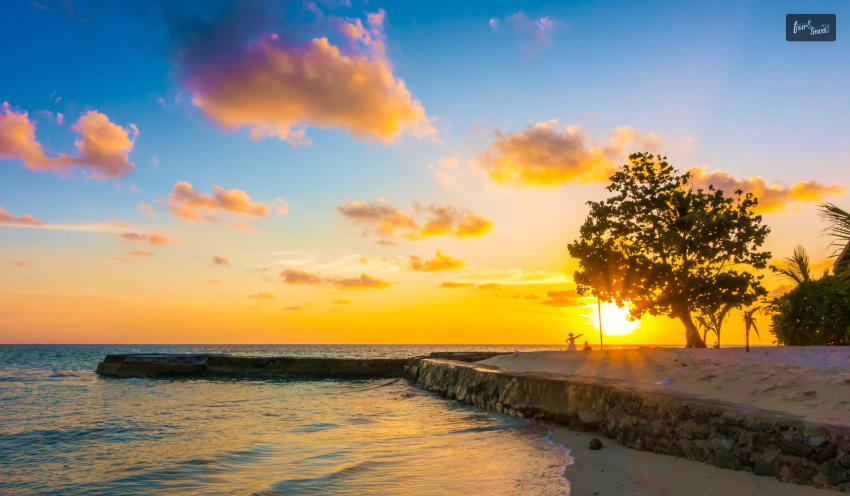
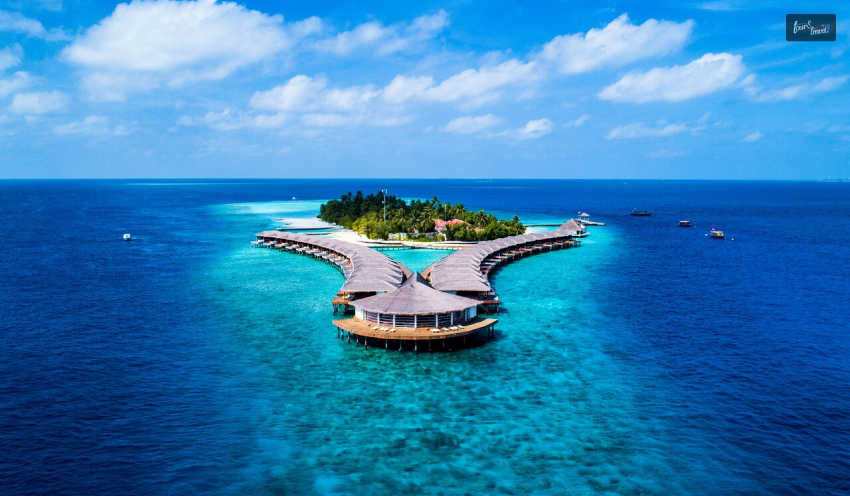
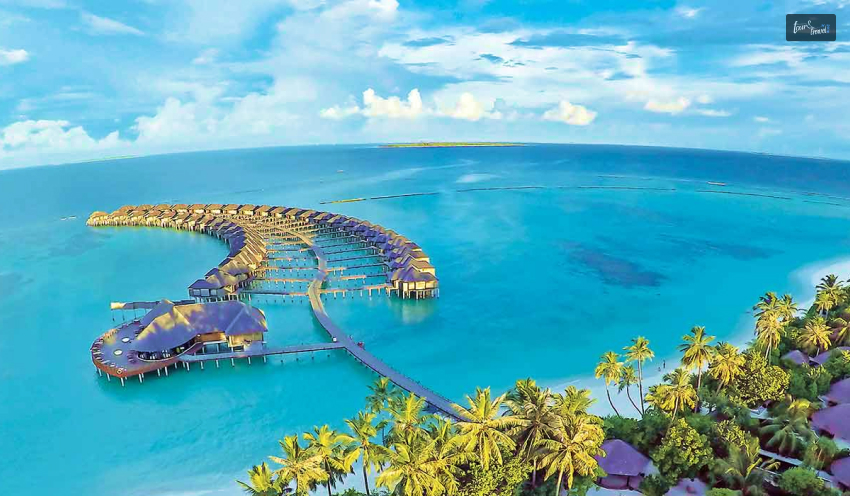
The best time to visit the Maldives is between December and March. This small group of islands in the Arabian Sea is probably one of the most beautiful holiday destinations for both honeymooners as well as families. These tropical islands are hot and full of sunny weather. The heat stays between 23 degrees to 31 degrees, however, given the year-round sunny weather and the absence of winters in the Maldives, the best time to visit Maldives is anytime.

Maldives In Dry Season

Maldives In Dry Season

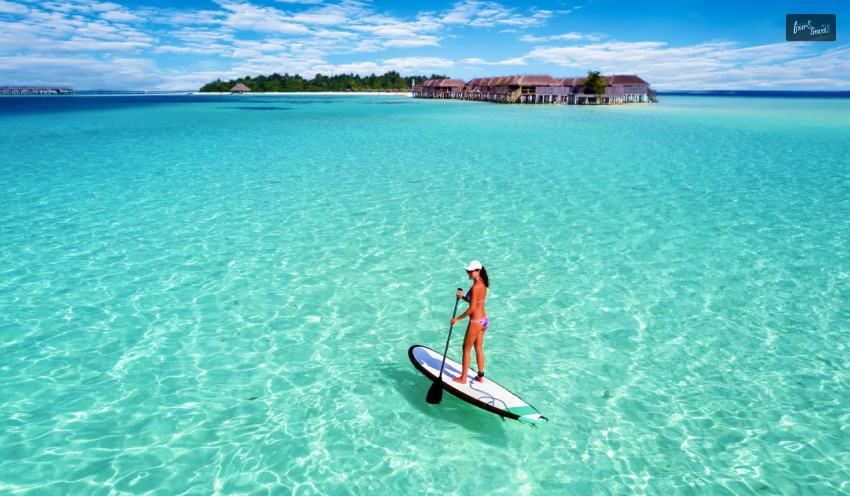
The dry seasons in Maldives have a temperature of 31 degrees Celsius in the day and 24 degrees Celsius in the night. It is probably the best time suited to visit the islands of Maldives. You can enjoy cultural activities, sightseeing, try the local cuisine, and water sports. You can swim in the blue expanse where the average temperature of the water is 30 degrees.

During these months, you can witness the Maldives at its best. The overall vibe of the islands is festive, and the crowd is thicker than usual. The weather and the beauty all around make the dry seasons ideal for visiting. Little to no rain and warm temperatures allow the seaside experience to become even more top-notch.

With no precipitation, the visibility is crystal clear, making the picturesque island become even more vibrant. There are beautiful beaches, gorgeous lagoons, and colorful coral reefs to enjoy while you are here, which you won’t get bored of.

The country does get crowded during the peak season, but an individual resort inhabits each island, so it does not get too crowded. It will be reasonable for you to check before you plan a trip about the crowd and availability of a more personal experience.

Some of the most popular locations in the Maldives are Nalaguraidhoo Island, Banana Reef, South Ari Atoll, and North Mal-Atoll. Another well-rated tourist spot is the HP Reef. This is a protected marine ecosystem that harbors rich marine life.

Maldives: A Cultural Hub

The major festival celebrated in November is the birth of Prophet Muhammad or Mawlid. It is the most well-known festival celebrated in a grand carnival style for two days. Street processions and elaborate mosque decorations dot the island.

During peak season, the cost of staying at a hotel rises manifold, so if you are looking for more budget-friendly options, you can choose to visit in April. This marks the end of the peak times, and the tourism industry here enters the lean months.

Maldives has become one of the top hotspots for Indian tourists not only because of its beauty but also its food options all around the world. The traditional cuisine of the Maldives is a plethora of fish, coconuts, and starches. Some of the common foods that come under seafood are local cuisine which includes yellowfin tuna, wahoo, skipjack tuna, and frigate tuna.

With its geographical proximity to India, there is a lot of culinary influence that is evident in its spices, flavors, and curries.

The laws here are very strict, so you must beware of carrying alcohol, pork, religious books, and tobacco products. And don’t forget to check the seasonal price hikes when booking water activities.

Why Visit The Maldives?

Why Visit The Maldives

Now that you know when is the best time to visit the Maldives and you are still not sure what you could do there, we have all the answers for you. Keep reading to know what you can expect from a visit to the Maldives.

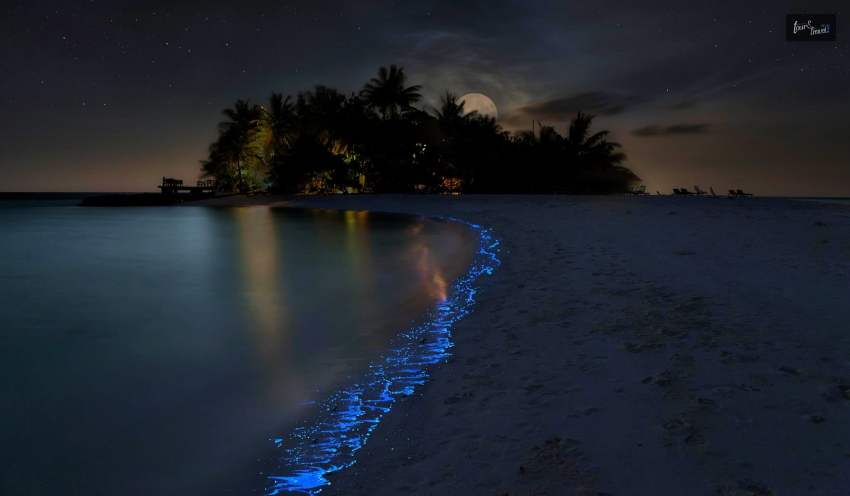
Bioluminescent Water Under The Stars

Bioluminescent Water Under The Stars

Visit the Vaadhoo Island in Raa Atoll, where the stars float in the water– the phytoplankton dinoflagellates that emit luminescent toxins. The small starry lights are emitted as a defense mechanism to keep other predatory fish and creatures away. You can walk through the planktons and create more stars that will be etched in your memory for the rest of your life.

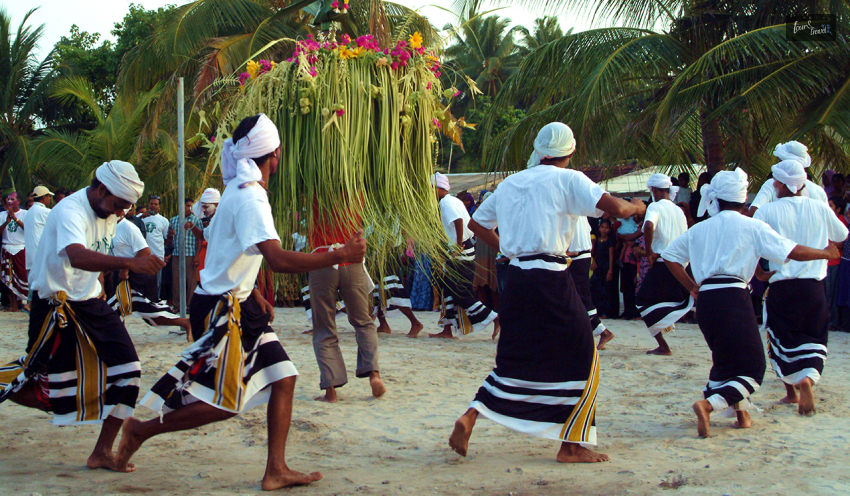
Maldivian Culture

Maldivian Culture

Along with all the natural beauty, Maldives also boasts a vibrant culture. If you want to become more aware of the culture, you must witness the Bodu Beru dance that takes place on the beach in the evenings. You can tape the moments on your camera or try dancing to the tune along with the dancers. The Maldivian boat Dhoni can also be another way you can get to know the local people and their stories.

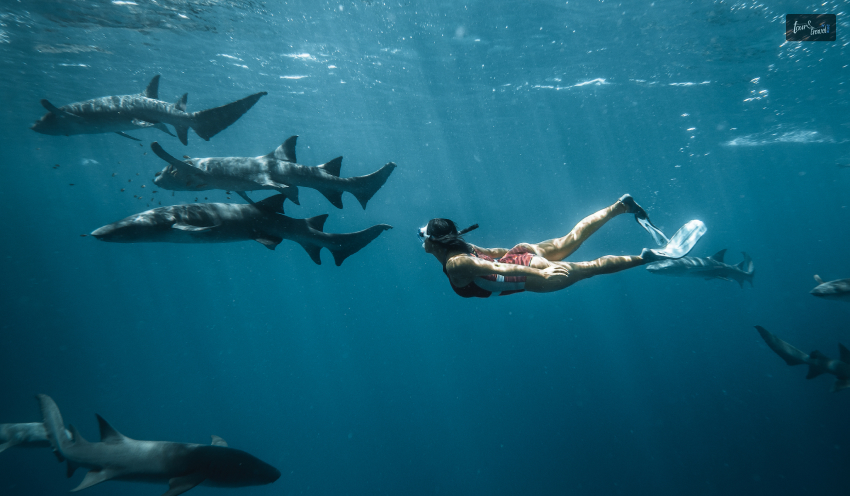
Swim With The Sharks

Swim With The Sharks

The enormous whale sharks glide along the coral atolls, followed by smaller-sized reef sharks. They also swim around in the nearby lagoons around the resorts. This is not a matter of high alarm, as people can easily swim with these sharks, albeit with supervision. Maaya Thila, Baa, and Ari Tolls are known for shark spotting. You can encounter them at an up-close level or enjoy watching them come by daily at their feeding time near some resorts where they are given food.

Best Places To Visit

Best Places To Visit

Here are a couple of the best places you can consider when planning to visit the Maldives. There are too many to enlist, we have brought two of the best you cannot remove from your to-do list.

Alimatha Island

Alimatha Island

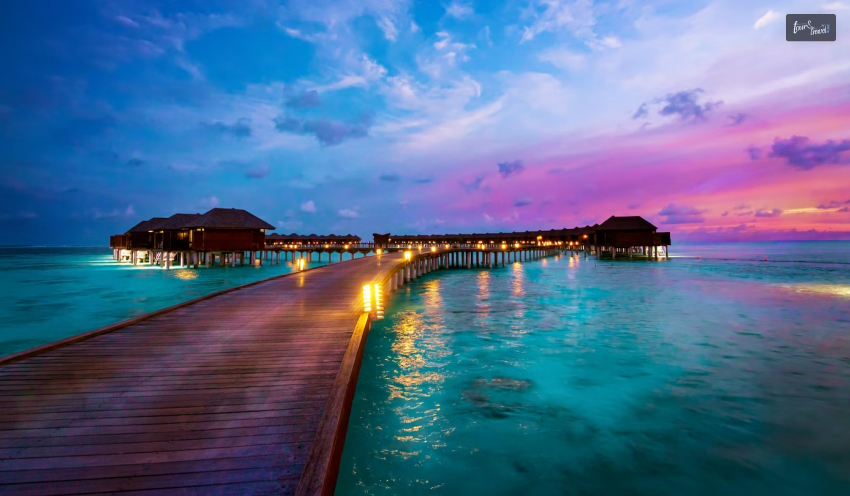
If you are attracted by those pictures, you saw of small, single-residence villas standing in the sea and want to visit the Maldives, this is the name of the place. Instagram-worthy and absolutely breathtaking, this island is a must-visit.

Tripadvisor Review

“The island is wonderful. If you love peace, beauty, nature, snorkeling, diving, fishing, it’s simply the place to go. Villaggio Bravo is perfect for families with kids, the miniclub organizes plenty of activities for them. The food is delicious: the buffet ha many choices. I was surprised to find mainly italians (it’s an italian village) and so few foreigners. Maybe it should be better advertised abroad.”

– Lushangyin

Banana Reef

Banana Reef

Considered to be the home of the best reef in the Maldives, this beach makes your sunny dreams come alive.

Tripadvisor Review

“This is by far the best snorkeling I have ever experienced. The amount of marine life, the colors, the coral, the temperature of the water was amazing. I saw Moray Eels, Blowfish, Giant Clams and so much more. On the way out I dozens of dolphins escorted us and jumped out of the water…amazing. There is a very strong current and it is in the middles of the ocean. An absolute must tough if you can get there.”

– Avery D

Wrapping Up

Are you planning a trip to the Maldives and want to know when is the best time to visit Maldives we hope you now know that it really is always a good idea to visit this heaven on earth. The peak season, though, is the dry months.

If you have thoughts to share or questions to ask, please leave a comment below. We would love to hear from you!

Read Also:

Share on Social Media

Abdul Aziz Mondol is a professional blogger who is having a colossal interest in writing blogs and other jones of calligraphies. In terms of his professional commitments, he loves to share content related to business, finance, technology, and the gaming niche.

Leave a Reply

Your email address will not be published. Required fields are marked *

title-img Related

READ MORE

The Best Tips to Travel Around the World | Wanderlust and Adventure 

BY  Abdul Aziz Oct 20, 2018

Traveling is like a continuous learning session. It does not matter whether you are traveling for the first time or a seasoned voyager. Every destination awaits a new surprise where you need to use your judgment and experience to deal with adversities. However, following the basic tips to travel always gives you an edge.   Further, when you plan a trip to a dream place and follow the tips right, your travel becomes more economical, safe, and convenient.   Best Tips to Travel Around the World:  From the moment you plan to travel around the world, there are a lot of tasks upon you. Once you have made up your mind regarding the place, you check on the available transformation, expenses, weather, safety, and amenities.  Another crucial aspect of traveling right is traveling light. You must be on-point and minimalistic about what you carry. We always tend to overpack, resulting in additional baggage charges and inconvenience.   Here, I have curated the things you need to keep in mind if you love to travel.   1. Credit cards:  These are known as handy tools for travelers and are used for various purposes. Some of the cards work out to cut airline miles to lessen the cost of air travel. And many cards include no transaction fees. This allows savings of up to a 3% fee on any purchases.  It is essential to inform the bank when any international tour is planned and when a credit card needs to be used. If there is a sudden purchase from the international market and the bank is unaware of the owner’s location, then the account may freeze, suspecting something fishy.  2. A single big plane ticket:  It costs more when it comes to buying a ticket in pieces for different places. But, if a single ticket is bought for places all around, the cost is much less.  One needs to arrange travel in one direction only. They have a time limit to complete their traveling. But, still, it is a great idea to move around the world. Try to plan to move around to places cheaper to stay in. This is one of the smartest tips to travel around the world, enabling one to visit many destinations.  3. Light luggage:  The luggage should carry only the most essential stuff required during the travel. Look for the travel backpack. It is designed especially to work as an airline carry-on bag and secure one from the possibility of missing the luggage in between the flights. It also saves us from paying for checking the bags and overweight items.  The cost of an overweight checked item is at least $100. So, limiting the weight of your luggage is one of the basic tips to travel around the world.  4. Clothes:  It is advisable to pack a few clothes that can be washed and dried easily. Also, keep clothes for different seasons. The weather changes from place to place. Buying clothes from the international market will cost a lot.  In addition, keep some layering options handy with jackets and shrugs. Accessories like scarves and bandanas also help to sport a stylish look without much effort.   5. Look for a room or hostel:  Every traveler would like to stretch it in an air-conditioned room on the soft beds. However, the cost will be high. To limit the expenses, it is preferable to look for a room or a hostel which can be enough to rest, and the washroom facilities are good.  It is assumed that hostels are usually for students. But there are international organizations that serve the purpose of hosteling for travelers.  There are many amenities that hotels offer free of cost. But it covers the cost of it in other charges. Here, one can have “its” and limited use of such amenities to save the cost.  The best option is to look for a room that can provide privacy and a cooking facility. Make me feel at home.  The best travel agencies with years of experience in arranging international trip packages keep fair ideas for such accommodation for their clients.  6. Eat locally:  Dining in the hotels and restaurants will cost too much. In such places, they charge for food plus the ambiance and added tax.  Eating street foods is affordable. However, it requires checking the surroundings and maintaining a good hygiene level. Many times, this locally served food is equal to or much better in taste compared to big hotels and restaurants.  If the accommodation place has a kitchen, then it can be used to self-serve by cooking food.  7. Travellers insurance:  This is a must. One does not need to save money over here. Many travelers find it less important. It is helpful in times when any of the expensive things get stolen and turn out to be most useful in case any medication is required.   Struggling is for every traveler to adapt to the different water easily and get comfortable with the weather easily.  8. Enjoy exploring the place on your own:  This sounds great when a group of people is traveling together. It exhilarates the group to be together and share every tune of the time together. But it sounds a little different for a solo traveler.  They solo traveler can buy the local map to help him/her. He/she can skip the transport or ask the tour guide to pay a large amount. He/she can rent the transport for short distances, and the rest can walk around to see the surroundings.  9. Work part-time:  Even after following all the above points. If a traveler runs out or feels like getting short on a few bucks, he/ she can look for part-time work in place.   There are many opportunities for such work. This can be a helping hand and even a good time pass plus he/she gets to know people from different places.  Final Words: Take Care of Yourself   As we travel around the world, we often forget to take care of ourselves. Sometimes, our travel itinerary becomes very exhaustive in the pursuit of covering everything we need to see and do. Along with the tips to travel around the world discussed here, you must ensure you are taking care of yourself.  You must get enough sleep, eat healthy food, and remain hydrated to keep going. Also, you must take care of your personal hygiene. So, have a happy journey, and be safe!   Read Also: Dubai Travel Package Deals – Important Things to Know Travel Tips to Help You Out In Asia

READ MORE Great Barrier Island wildlife tours

Aotea Great Barrier Island Wildlife: The Ultimate Tours & Spotting Guide (New Zealand)

BY  Sibashree Nov 12, 2025

There are three instances I clearly remember from our trip to the Great Barrier Island, New Zealand. The best thing about the Great Barrier Island wildlife tours is that they begin even before you board the ferry.  Here, I will start with some fun moments we had while exploring the wildlife of Great Barrier Island, then gradually discuss the details. So, let’s examine the rugged, predator-free paradise in New Zealand's Hauraki Gulf.  My Great Barrier Island Wildlife Tours: Some Stories That Have Stayed With Me With around 60% of the Great Barrier Island being a conservation area, the Aotea Great Barrier Island in New Zealand shines with sustainability certificates and its commitment to preserving the indigenous flora and the rare and endemic fauna of the island.  1. The Biosecurity Check  We were about to board the ferry to the Great Barrier Island. The Auckland Regional Council and the Ministry for Primary Industries (MPI) people did thorough biosecurity checks of our bags, and we had to clean our boots. Thus, they make a visitor part of the island's conservation effort.  This check is mandatory, and this is the reason the pāteke and kākā are thriving on the island. 2. The Dark Sky Sanctuary And The Great Barrier Island Wildlife Tours  Great Barrier Island’s designation as a Dark Sky Sanctuary has enhanced the wildlife tour experiences. We went out to see the Milky Way at night, and we stood quietly and listened to the sound of silence.  Suddenly, we were startled by the more-pork cry of the Ruru birds. Also, we saw the black petrels or Tākoketai coming back to their burrows.  3. Did I See A Chevron Skink? Did I Not? See, Chevron Skink also feels like a mythical species. These nocturnal species are the masters of camouflage. So, honestly, we did not see them with our naked eyes.  However, we could listen to the squeaks and grunts of the Chevron Skinks. It was thrilling knowing that we were walking through their only habitat in the world, which is protected by sanctuaries like Glenfern.  Why Is Aotea Great Barrier Island A Paradise For Wildlife Tours?  Afar, a US-based travel media brand, has named Aotea Great Barrier Island one of the top 25 off-the-beaten-track destinations in the world.  Aotea, Great Barrier Island in the Hauraki Gulf, is a designated dark sky sanctuary. So, it is ideal for spotting and listening to the nocturnal birds and animals.  Furthermore, the Department of Conservation (DOC) maintains 60% conservation land on the Aotea Great Barrier Island. As a result, it is the island of Firsts" and "Lasts.” It means that the island has birds such as North Island kākā and pāteke (brown teal), which are found nowhere else in the world.  In addition, the "Predator-Free" Secret of the Island is truly special. In the absence of stoats, possums, weasels, or deer, the rare and endemic species here have been able to thrive.  Along with all these endeavors, the Great Barrier Island has been successful in community-led conservation efforts, maintaining biodiversity and species protection. Here are the details.  1. Aotea Great Barrier Island Environmental Trust “The principle activities of the Trust are in protecting, enhancing, developing and maintaining habitats for New Zealand native and endemic species on Aotea Great Barrier Island, with a particular focus on pest management…” Founded in 2002, this trust has been an advocate for conservation policies, has coordinated many conservation efforts, and earned funding for local conservation projects.  2. Aotea Conservation Park  The 2,000-hectare Aotea Conservation Park with walking tracks, DOC huts, and campsites makes the island an ideal destination for exploring the wildlife.  3. Marine Conservation  The Aotea Great Barrier Environmental Trust’s Tai Timu Tai Pari” or “Sea Change” initiative aims to protect the marine ecosystem of the Hauraki Gulf. Furthermore, the Department of Conservation (DOC) has proposed to build a large marine conservation area in the northeast corner of the island.  In addition, beach clean-ups and educational programs have been effective local endeavors to preserve the marine life of the island.  4. Biodiversity And Species Protection  The island is a critical nesting ground for the black petrels. The Department of Conservation takes care of the nesting ground.  Furthermore, around 60% of the pāteke population in New Zealand is present on the Great Barrier Island. These birds are frequently spotted in places such as Kaitoke Wetlands.  You can visit the Kaitoke Wetlands just before dusk. Park at the end of the road, walk the flat boardwalk, and wait quietly by the main pond. You will almost certainly see and hear the rare pāteke (brown teal) as they come out to feed. Chevron skink, 13 different types of lizards, banded rail, and North Island Kaka are some other native species that exist on the Great Barrier Island.  What Are The Must-See Wildlife Attractions On The Aotea Great Barrier Island In New Zealand?  The Glenfern Sanctuary, Aotea Track, Kaitoke Hot Springs, and the coastal areas are ideal for spotting the unique and rich wildlife of the Great Barrier Island, New Zealand.  1. The Pāteke (Brown Teal) Pāteke is one of the rarest ducks in the world. The Great Barrier Island is a stronghold for these ducks, and you will find them in the Kaitoke Wetlands.  The Department of Conservation and Predator Free NZ Trust are two important bodies taking care of the conservation efforts to protect these birds. Habitat management and predator control are two main elements of protecting the Pāteke birds.  Now, you understand why biosecurity is so crucial for these adorable ducks on the Great Barrier Island.  2. The Black Petrel (Takoketai) This seabird breeds only on the Great Barrier and Little Barrier islands. They nest in burrows high in the mountains. The Glenfern Sanctuary protects a key colony of these birds.  However, the main breeding colony on Aotea is at Mount Hobson/Hirakimata. According to the Department of Conservation, around 900-1000 pairs of birds stay there.  These birds are featured on the IUCN Red List as a vulnerable species. Furthermore, they are identified as “Nationally Vulnerable” in New Zealand.  Moreover, there has been a conservation monitoring going on since 1995 to assess the population of these birds and how they are declining.  3. The Chevron Skink (Niho Taniwha) This large, rare lizard is found only on the Great Barrier and Little Barrier. It is almost like a mythical animal, and spotting it is very unlikely.  However, they mostly stay in the Stream-side forests. It is listed as nationally vulnerable by the Threat Classification System of the Department of Conservation.  The sightings of these lizards are so important that DOC asks you to report to the local office or call at +64 9 429 0044 whenever you spot one.  4. The North Island Kākā It is a large, intelligent, and noisy native parrot. It is famous for the loud "screech" and "chatter. I saw a few of them high in the forest canopy along the Mt Hobson track.  The Glenfern Sanctuary is another spot where you will find these parrots. The Great Barrier Island is an important habitat for these birds as it offers a predator-free environment.  5. Dolphins And Marine Life Aotea’s location on the edge of the Hauraki Gulf Marine Park, the national park of the sea, makes it rich in marine life. The Hauraki Gulf and the Great Barrier Island were both formed due to massive volcanic activity at the end of the Ice Age.  In 1769, James Cook named the island because of how it protected the Hauraki Gulf.  The water of the Hauraki Gulf Marine Park has 22 species of marine mammals. Bottlenose and common dolphins are often seen from the ferry or playing in bays like Okupu (Blind Bay) and Whangaparapara Harbour. You may even spot Bryde's whales there.  Furthermore, seabirds are important members of the Marine Park. Black petrels are, of course, the most common among them.  Coastal camping is the best outdoor experience if you want to explore the marine life of the Great Barrier Island, New Zealand. Here are some popular coastal campsites.  Akapoua Bay Campsite Near Port Fitzroy, Ideal for Spotting Pohutukawa Trees and Fishing Awana Beach Campsite, Ideal for Surfers Harataonga Campsite, Great for Swimming and Snorkeling Medlands Beach Campsite, Surfing and Picnic Spot  The Green Campsite at Whangaparapara Harbour, Ideal for a Serene Walk and as a Secluded Retreat Whangapoua Campsite, a Popular Surf-Break.  A Guide To Aotea Great Barrier Island Wildlife Tours: Species, Sanctuaries, And Different Types Of Wildlife Tours  During the wildlife tours, our primary concern was how to spot native birds on Great Barrier Island. Little did we know that we would hear them before actually seeing them flapping their wings.  We heard the screeching call of kākā as we were hiking through the Mount Hobson Track. Then, we saw a cloud of birds passing over our heads.  Nevertheless, it’s not just about the birds. Aotea, Great Barrier Island in New Zealand, is home to endless endemic species.  1. Specialist Day Tours & Sanctuary Visits The Glenfern Sanctuary of the Great Barrier Island is a haven for the endangered and rare species. It is an 83-acre regional park, and it functions as the “gateway to the 240-hectare Kotuku Peninsula of the north-west coastline of the Great Barrier Island.” Furthermore, the Glenfern Sanctuary Trust is committed to the preservation of the endangered flora and fauna and their habitats as you walk through the 2km loop track through a native bush to spot the birds and native species.  The black petrels and the ancient Kauri trees are the biggest highlights of this tour. The sanctuary remains open 7 days a week and from sunrise to sunset.  Moreover, you must hike through the Sanctuary and Loop Track to explore nature, wildlife, and the unique culture of the Great Barrier Island.  Sanctuary And Loop Track The Glefern Loop Track is one of the easiest Great Barrier Island hiking tracks. Here, you will have to walk along the Aotea stream and through the remnants of an ancient native bush.  The bush is protected by the Queen Elizabeth II National Trust of New Zealand, and it is rich in bird life. So, here, you will spot black petrels, Kaka, and Pāteke.  You can contact the regional office at 09 4290 091 to know about the further details.  2. The All-Inclusive Multi-Day Guided Walk If you want a more immersive wildlife experience, you must choose the all-inclusive multi-day guided walks. MoaTours and Go Great Barrier Island Tourism are two such services taking care of your accommodation, food, expert guides, and transport.  They focus on the best tracks, like the Aotea Track, Mt Hobson, and Kaitoke Wetlands. Furthermore, the guides are flora and fauna experts. For example, you can try the “Let’s Go Wild,” “The Aotea Track” package of the Great Barrier Island. Two of the main highlights of this tour are the wetlands and the unique wildlife.  It is a 3-day hiking experience, and the charge per person (adults) will be $541 (Standard Route) or $596 (The Windy Canyon Route).  MoaTours, on the other hand, organizes a 5-day Great Barrier Island small group tour, covering areas such as the Medlands Beach and Tryphena Harbour. The charges will be   $4,390 NZD for solo travelers and $3,890 NZD for twin travelers.  3. Self-Guided Great Barrier Island Wildlife Tours  The self-guided tours to explore the wildlife of the Great Barrier Island are ideal for an independent traveler. For example, you can go for the Glefern Sanctuary self-guided walks and learn about the biodiversity of the sanctuary, its conservation efforts, and more.  You can contact Steve, the manager of the sanctuary, at 0210826670 to be a part of these tours.  Furthermore, you can create your own Great Barrier Island wildlife tours by planning a visit to the Kaitoke Wetlands, Mt Hobson (Hirakimata) Track, Medlands Beach & Onetangi, and Windy Canyon.  How To Spot Native Birds On Great Barrier Island? A DIY Guide For Wildlife Tours  I have already mentioned the Glefern Sanctuary self-guided walks. Along with that, you can visit any of these areas for a perfect wildlife exploration on the Great Barrier Island.  1. Kaitoke Wetlands The Glefern Sanctuary offers a guided tour to the Kaitoke Hot Springs, located on the Mount Hobson Track. You can access the track from the Whangaparapara Road.  Furthermore, you will find a series of geothermal pools on the Kaitoke Hot Springs track. This area, maintained by the Department of Conservation (DoC), is a treasure hub for native birds.  Here, we had to walk through an easy boardwalk and gravel road to encounter pāteke and spotless crakes. And thanks to the new Kai swing bridge here, the route has now become wheelchair and buggy accessible.  Even when we were swimming in the geothermal pools, we could listen to the calls of the pātekes.  2. Mt Hobson (Hirakimata) Track The Peach Tree Track to Mount Hobson is the best route for spotting native birds and the wildlife of the Great Barrier Island. The route passes through regenerating forests, and these forests are home to a lot of native bird species, such as: Kākā Tūī: Tomtit (Miromiro) North Island Robin (Pītoitoi) Black Petrel (Takoketai) You can spot these birds in the dense native bush. Also, you can see them in large numbers near the high slopes and close to the summit. In addition, the 360-degree view of the island is a bonus you will love to count on.  3. Medlands Beach & Onetangi Medlands Beach and Onetangi are famous for coastal and nearshore wildlife like the paradise shelducks and little blue penguins.  Furthermore, wekas are common in these locations, and these are chosen as the reintroduction programs of the North Island brown kiwi.  4. Windy Canyon On the Windy Canyon hiking route, you will find conservation centers such as the Kiwi Park Queenstown. Here, you will find native species such as tuatara and Kiwi.  Furthermore, throughout the route, you will listen to the buzzing cicadas.  The Best Tips For Spotting The Birds On The Great Barrier Island  Dawn and dusk are the best hours of the day for spotting birds on the Great Barrier Island. “Dawn Chorus” is a real experience on the Great Barrier Island.  Once you reach the spot, be patient and wait quietly, as patience is a virtue for bird watching.  Keep your ears open. You'll hear the tūī's "click-whirr-gurgle" and the kākā's "screech" before you see them. Going nocturnal is a great trick for watching the native birds of the Great Barrier Island. That is why being a Dark Sky Sanctuary is crucial for the Aotea Great Barrier Island.  Carry a red-light torch and be alert about the "more-pork" call of the Ruru to spot the birds in the dark.  Talk to the staff of the hotel or the owner of the homestay you are staying in. They will have the best local tips about birdwatching on the Great Barrier Island.  How To Plan The Great Barrier Island Wildlife Tours?  There are three main aspects of planning Great Barrier Island wildlife tours. 1. How To Reach The Great Barrier Island? You can take a Barrier Air flight from Auckland to reach the Great Barrier Island in 45 minutes. You can even take the SeaLink ferry and complete a journey of 4.5 hours to reach the Great Barrier Island.  2. How To Move Around The Great Barrier Island? Renting a car or a bike is the most convenient option to move around the island. Furthermore, kayaking is an excellent way to explore the bays, caves, and diverse marine life of the island.  3. What Is The Best Time To Visit The Great Barrier Island Wildlife? From September to November, or the spring season, is the ideal time to visit the wildlife of Great Barrier Island. This is the nesting season for most birds on the island.  So, these months are the best for listening to the chorus of the dawn and the dusk.  Being A Responsible Tourist To Protect The Wildlife Of The Great Barrier Island Biosecurity is the most important aspect of the Great Barrier Island wildlife tours. The wildlife of the island is thriving as it is maintained as a sanctuary. So, by cooperating with the biosecurity checks at the DoC-approved facilities and cleaning stations, we have to be a part of the conservation effort.  The 3C policy of the biosecurity checks on the Great Barrier Island is: Check Clean Check We have to check our bags, gear, and shoes for pests (rats, mice, insects) and seeds before they leave the mainland.  Your Great Barrier Adventure Awaits The Aotea Great Barrier Island is a nature lover’s dream, with every nook awaiting a surprise with the native birds and their playful chirps. Furthermore, the Glenfern Sanctuary, Mount Hobson Track, and the wetlands on the Great Barrier Island, New Zealand, are a stronghold for rare and endemic birds and animals.  So, the birds are calling. Are you ready to answer? 

READ MORE private boat charters

Guide To Traveling By Private Boat: Experience A Luxury Journey On The High Seas

BY  Ankita May 14, 2024

When you open your social media, you will often find people traveling on boats with the best views in the world. Do you want to experience these views and moments at sea? The private boat charters will help you enjoy this unique experience. You can get to travel on a private boat while enjoying exclusive services onboard. Private boat charters combine the freedom to visit exclusive destinations and access to difficult coastal areas that are not traveled by public boats.  You get the complete freedom of having your own floating refuge. Wine and dine on the open ocean as you cruise across the open sea. It's a feeling of acceleration like no other, so you need to experience it once in your lifetime.  You can create your own itinerary when you opt for private boat charters. Enjoy the intimacy of spending time with your loved ones while at sea, making it a lifetime memorable experience. So, if you wish to know why you need to hire a private boat for your next trip at sea, then this article is for you. We'll discover everything you need to know to plan and make the most of your journey by private boat. Trip Planning Before embarking on your great sea adventure, it's very important to carry out detailed planning and organization, like any other trip, in order to avoid last-minute setbacks. Preferred Destination Firstly, you must choose the desired destination. For this, you can contact an expert operator in high-seas itineraries, one that offers all kinds of services and allows you to choose your own itinerary.  From the crystal-clear waters of the Caribbean to the exotic islands of the Mediterranean, choose a destination that suits your travel preferences and desired activities. On the other hand, consider the duration of the trip, which is always based on your availability. Type Of Boat It's also convenient to choose the type of boat in advance since there is a wide variety available, from luxury yachts to catamarans. For this, take into account the number of travelers, comfort, and available budget. Finally, it's advisable to book this type of trip in advance, especially if you want to travel during peak season. Trip Preparations Once you have organized all the details of your trip, it's time to start preparing to ensure a trouble-free and worry-free experience. Documentation Start with your documentation, where you check the documents required for travel, like passports, visas, and navigation permits. Navigation permits are necessary when you do not have the service of a captain to cruise your private boat. When your documentation is updated and secured, you will avoid any hardships when traveling onboard a boat or plane.  Travel Insurance One of the major things that people often forget about is travel insurance. Life can happen to anyone anywhere, even while you are traveling. In these situations, it's advisable for you to take out travel insurance that covers any unforeseen events.  Trip cancellation, medical emergencies, and problems related to the boat are some of the unforeseen events you might face.  Clear Communication About Plans With Captain When going on a private boat trip, you need to have a captain who takes care of the journey. This way, you can enjoy the adventure to the fullest extent without worrying about reaching your destination.  When you opt for a private boat charter with the captain, then make sure to communicate your preferences to your captain. This ensures your captain, and you agree on the itinerary you want to plan for your on-sea adventure. Specify the activities you want to do and your catering requirements so that the experience meets your expectations. Weather Check Oceans and seas are unpredictable, so keep a check on the climate before you start your journey on the sea. This is especially noteworthy if you are cruising the private boat yourself across the waterbody. When you opt for a captain, your boat captain will do these important weather checks before starting the journey.  Essentials To Pack Pack comfortable and lightweight clothing suitable for the specific destination you are traveling. Seas can get colder after sunset, so keep a warm jacket in case it gets cold on a private boat.  On board the private boat or cruise, you will need to ensure you have all your medication that you need as you can't find shops on the sea to provide you first aid or medication. Don't forget your personal hygiene items, like good sunscreen, insect repellent, etc.  Emergency Protocols Lastly, know where all the rescue equipment is kept along with emergency protocols to avoid chaos during an emergency. At Sea Once on board, it's time to relax and make the most of your experience on a private boat with the best company. You can take advantage of the freedom and flexibility that this means of transportation to visit remote places. These remote locations have very few tourists, so you have the opportunity to explore more without facing too many crowds. If you opt for private boat charters, you get to enjoy personalized time with your loved ones or partner.  As you avoid disturbance and noise, which you often might find in shared boat rides. You can use private boat charters to do fun water activities like snorkeling, diving, etc. With private boats, you get to go to sea routes that are much traveled by public boats. This helps you see different marine species and coral reefs of that particular region. One of the biggest advantages of opting for private boat charters is that you get several other services included in your packages. One of these services is enjoying meals on board your boat while on sea. You get to enjoy local cuisine prepared by an onboard chef.  From savoring different flavors of each region to having meals while seeing sunsets on the sea. Now, these experiences are only possible when you're at sea, making these moments more special for you. As you hear the rhythm of the waves while enjoying your meals, these experiences cannot be found anywhere else. It's a very enriching experience that is hard to forget! Conclusion These are the main aspects to consider when you decide to live a maritime experience on a private boat. Experience the ultimate luxury with Giosymar Ischia Charter's personalized and exclusive tours along the coast of Italy, for example, and take advantage of the wonderful amenities to relax and recharge your batteries. Undoubtedly, you will live an unparalleled experience full of wonderful memories. Don't wait any longer and reserve a few days in your schedule for your dream vacation at the rhythm of the sea. Learn More Also: Road Trip USA: Adventures Across The States Bali Beyond The Beaches: Exploring The Hidden Gems Of The Island 8 Things You Need To Know About Using E-Bikes For Your Hunting Adventures