

Vavuniya, Sri Lanka: The Crossroads Of Tamil And Sinhalese Cultures Everyone Just Passes Through

Every guidebook I read before my third trip to Sri Lanka showed Vavuniya in the same way. 

The map was also similar in its approach, and Vavuniya looked like a dot between Anuradhapura and Jaffna.

It looked like a place that everyone passed through, but not a place to stop. 

The feeling or vibe was similar to Mannar, as most forums wrote it off as “not much else.” However, when I actually went there, I realized what I would have missed. 

So, when my driver, Ravi, suggested the Anuradhapura-to-Jaffna drive with a day in Vavuniya instead of pushing straight through, I said yes mostly out of stubbornness.

I wanted to see what a “Nothing” town on Sri Lanka’s most historically loaded highway looked like up close. 

Honestly, I was not prepared for how much those hours in Vavuniya would sit with me. 

The Omanthai Moment 

Around twenty minutes before reaching Vavuniya Town, Ravi stopped the car. 

The road there narrowed and slowed at a junction called Omanthai.

There was nothing very dramatic, and it only had a few roadside stalls, buses idling, and the ordinary chaos of the A9 highway.

However, the stopover became unforgettable as Ravi tapped the wheel and said, almost as an aside, 

This was the checkpoint. 

During the war, you couldn’t cross here without permission. Now you don’t even notice it unless someone tells you.

That gap between what a place was and what it looks like now is, I’ve realised, exactly why Vavuniya stayed with me.

Also, if Hikkaduwa was the spot to witness the rampage of the 2004 tsunami and the story of human resilience after it, Vavuniya was a story of how Sri Lanka continues to evolve despite a violent history of Civil War. 

And that evolution probably shows in the recent reclassification of Sri Lanka’s economy in 2026 as an upper-middle-income economy by the World Bank. 

What The War Left Behind And What Has Been Rebuilt In Vavuniya? 

Being from India, I felt connected to the civil war struggles in Vavuniya. 

However, the information available to me was mostly in fragments. Standing in Vavuniya made the fragments feel connected. 

During the 26-year conflict, Vavuniya functioned as a critical frontline and government-held enclave bordering LTTE territory to the north.

In the final and brutal phase of the civil war, hundreds of thousands of people fleeing the fighting in the Vanni passed through Vavuniya. 

Many people were even housed in transit camps, and the largest was known as Menik Farm as the conflict wound down in 2009. 

However, you cannot spot any visible sign of these conflicts today. 

I saw a town that was rebuilt as a meeting point and not a dividing line. 

Tamil, Sinhalese, and Muslim communities live alongside each other here, and you can feel it in the built environment alone.

A Hindu kovil, a mosque, and a church can sit within a few streets of each other, something I didn’t see with the same density anywhere else on this trip.

I want to be honest that this isn’t a place with a museum or memorial that neatly packages this history for visitors.

So, you have to arrive already curious and often ask.

How I Spent A Slow Day In Vavuniya Town (The Places I Visited) 

Vavuniya Town is walkable, and instead of being a bucket-list destination, it allows you to engage and get immersed in its spiritual, historical, and cultural vibe. 

Nevertheless, these are the places I visited during my day trip to Vavuniya Town. 

1. Kandasamy Kovil

Kandasamy Kovil

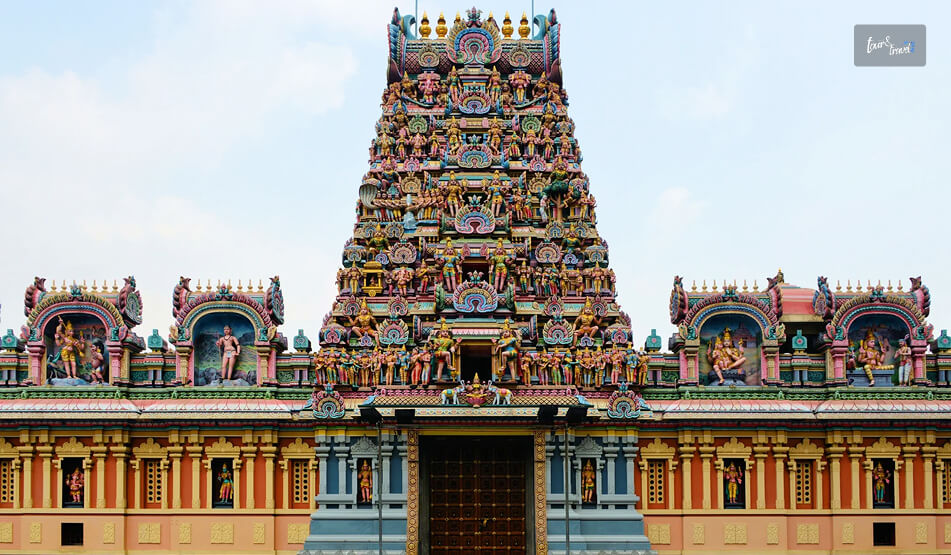
Kandasamy Kovil, a Hindu temple dedicated to Lord Murugan, is at the heart of the town.

It is similar to the temples in Jaffna in vibe. However, you cannot expect the quintessential grandeur of the South Indian temples here. 

I loved that there was no queue in the temple when I visited. Just a handful of locals were moving through their morning rituals as I stood at the edge and watched them. 

2. The Vavuniya Archaeological Museum

The Vavuniya Archaeological Museum

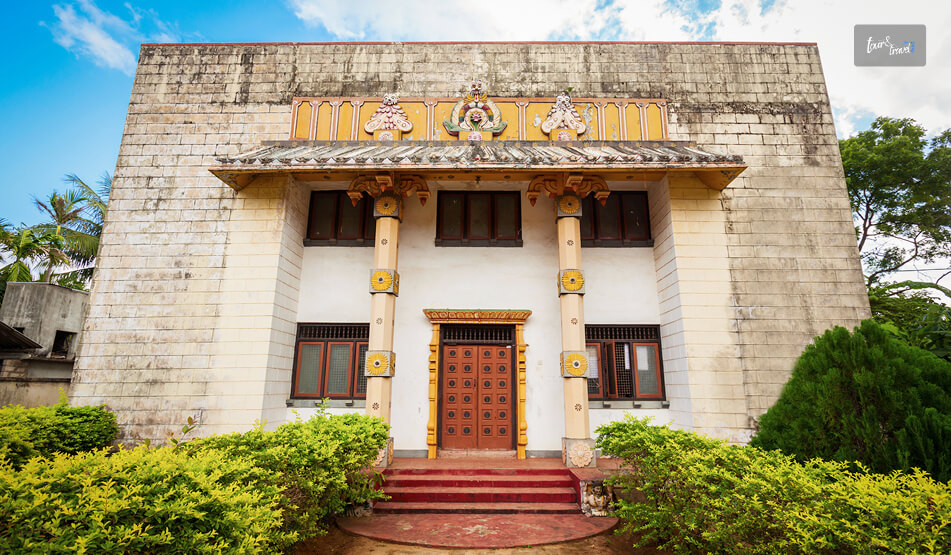
The Vavuniya Archaeological Museum was a short walk away from the Kandasamy Kovil. 

It is a small museum that remains open from 8:30 AM to 5 PM and offers free entry. 

Furthermore, it remains closed on Tuesdays. 

You can explore this small museum in half an hour. However, that does not reduce the historical value of the pottery, statues, and inscribed stones on display.

These made me familiar with the district’s history back well before the war, back to the Rajarata and Vanniar periods I’d just been reading about on the drive in.

3. Vavuniya Kulam And Iratperiyakulam Lake

In the late afternoon, Ravi drove me out to the tanks. 

Vavuniya Kulam, the town’s main reservoir, had a peaceful vibe.

The locals were fishing or just sitting by the water as the light softened.

Iratperiyakulam Lake, a little further out, had the same unhurried energy with no ticket booth and no crowd.

4. The Market

This was definitely one of my favorite parts of a trip to Vavuniya. 

I wandered the Vavuniya town market at dusk.

Tamil, Muslim, and Sinhalese traders shared the same narrow lanes, selling produce, dried fish, spices, and fabric side by side.

It was great to see and was tangible evidence that this town has genuinely moved past being a dividing line.

One Day In Vavuniya: The Itinerary

TimeActivity 
MorningArrive via A9, stop at Omanthai
Late Morning Visit to the Kandasamy Kovil and Archaeological Museum
Afternoon and Late AfternoonVavuniya Kulam and Iratperiyakulam Lake
EveningExploring Town Market and Dinner
Next MorningOnward to Jaffna

What I Ate In Vavuniya 

Like the food in Jaffna, Vavuniya also treated me with Tamil delicacies. So, rice and curries dominate the options. 

I had a lunch plate with five or six vegetables and fish curries that easily rivalled anything I have had further south.

In the evening, I found a roadside stall doing kottu roti, chopped and fried on a hot griddle with theatrical noise, which felt like the right way to end a day built around quiet places.

Reaching Vavuniya And Getting Around

Vavuniya is on the A9 highway, which is the main north-south highway of Sri Lanka. 

Also, it is on the Northern Line railway connecting to Colombo in the south and Jaffna further north

However, you can visit Vavuniya from Anuradhapura like me, and it is a fairly short onward drive. 

If you are traveling from Colombo by road. It will be a long four-hour drive, though! 

Within the town itself, everything I wanted to see was walkable or a short tuk-tuk ride away. 

I didn’t rent anything as Ravi’s car covered the tanks and the outskirts, and my own feet covered the town centre and market.

Why You Must Not Skip Vavuniya 

Vauniya does not have the spiritual intensity of the Dambulla Royal Cave or the cultural grandeur of Kandy

It also does not want to be a headline destination. 

I understand why it gets treated as a highway stop rather than a place to stay.

However, for me, that was exactly the point.

I stood at a former front line that’s now just a bus stop, eating a curry plate shared by three communities that were once defined by the war between them.

Overall, it offered a northern Sri Lankan experience that is not curated for visitors or trying to grab attention.

Share on Social Media

Sibashree is a travel, culture, and leisure writer who has been writing since the age of 12 and professionally since 2014. With more than a decade of travel writing experience and journeys across India and several parts of the world, she brings a deeply personal and thoughtful perspective to her work. A student of English Literature and Mass Communication, Sibashree has always viewed travel as more than movement — for her, it has been a way of understanding people, cultures, and herself. Her passion for spiritual exploration has also led her to many unusual and meaningful destinations over the years. Outside of writing, Sibashree enjoys watching European cinema, reading about global politics, and reflecting on the stories hidden within everyday places.

Leave a Reply

Your email address will not be published. Required fields are marked *

title-img Related

READ MORE haggala flower garden

My Morning Among The Roses: My Experience At Haggala Botanical Garden

BY  Sibashree Sep 9, 2026

When I reached the Haggala Flower Garden, the mist was sitting close to the rose beds.  It is the cool air of Nuwara Eliya that makes the roses bloom and creates a different ambiance than the Central Lowlands.  I had already spent two days wandering tea estates and colonial-era streets in the town. However, this garden ended up being the one stop I keep bringing up when people ask what surprised me most about the hill country. In this article, I will share what I saw and did at Haggala or Hakgala. I have also mentioned the practical details, including fees, timings, routes, and the best season to catch it in bloom.  A Quick Snapshot About Haggala Botanical Garden DetailInformationOfficial NameHakgala Botanical GardenLocationHakgala, near Nuwara Eliya, Central Province, Sri LankaEstablished1861, Under British Colonial RuleSizeRoughly 28 Hectares (About 70 Acres), Sri Lanka's Second-Largest Botanical GardenElevationAround 1,700 MetresManaged byDepartment of National Botanic Gardens, Sri LankaKnown forRoses, orchids, ferns, and its cool highland climateOpening Hours7.30 AM - 6.00 PMTicketing Hours 7.30 AM - 5.00 PM The Legend And History Behind Haggala Botanical Garden I knew of Haggala as “the rose garden near Nuwara Eliya.” Once I walked through it, though, I came across many signboards.  Also, the local guide shared snippets that pointed to a much longer, stranger story than that. From Cinchona Plantation To Rose Garden The garden was established in 1861 by the British. It was originally an experimental station for cinchona, the tree whose bark produces quinine, the anti-malarial drug that was essential to colonial plantation life at the time.  The focus later shifted to tea before the site was eventually converted into the ornamental botanical garden that draws visitors today.  Standing among the rose terraces, it is genuinely hard to picture rows of cinchona trees where the flowerbeds now are. The Ramayana Connection The other layer to Hakgala's history is mythological rather than colonial.  The garden has a special connection to the Ramayana, describing it as part of the pleasure gardens associated with the demon king Ravana. There is another popular version of the legend. It is the spot where Hanuman is said to have brought the Sanjeevani herb to revive Lakshmana.  I have not verified the folklore, but every local guide shares it with conviction.  What I Found Walking Through The Gardens It was the most unhurried two hours in Sri Lanka at the Haggala Botanical Garden.  These are the highlights of exploring the botanical garden.  The Rose Garden This is the section most people come for, and it is the one that stayed with me.  Terraced rose beds climb a gentle slope, and even on a visit outside peak bloom I found enough color to justify the walk up.  Locals I spoke to said mid-March through April is when the roses are genuinely at their best. The Fernery And Orchid House Past the roses, the path drops into shadier, damper terrain. It is the fernery, thick with hanging vines and the kind of quiet you only get under a heavy tree canopy.  The orchid displays nearby were smaller than what I later saw at Peradeniya, but the cooler climate here seems to suit certain varieties that don't do as well lower down. Hakgala Rock And The Nature Reserve The garden sits right at the base of Hakgala Rock, part of the wider Hakgala Nature Reserve.  I did not have time to explore the reserve itself on this trip. However, the rock face looming over the garden is a constant, dramatic backdrop while you're walking around. It is worth pausing for a photo even if you are not planning to hike further. Planning Your Visit: Fees, Timings And Getting There Visitor CategoryAdults (12+)Children (5–12)Foreign Visitors LKR 3,540LKR 1,770Local VisitorsLKR 200 LKR 30 How To Reach Hakgala The garden is about 10 kilometres from Nuwara Eliya town on the road toward Welimada and Badulla. So, I took a tuk-tuk trip from where I was staying. The tuk-tuk cost around LKR 1500. If you are combining it with Horton Plains National Park or the Pedro Tea Factory, both popular pairings, it is easy to build a single half-day loop out of Nuwara Eliya covering all three. Best Time To Visit Haggala Botanical Garden Elevation makes Haggala noticeably cooler than most of the island. That cool climate is exactly what makes the roses possible.  Here is how I would break the year down. SeasonWhat's bloomingMy takeMid-March to AprilPeak rose and orchid bloom.The single best window I would point a first-time visitor toward.May to AugustSouthwest monsoon showers likelyGreener, quieter, and the mist adds its own charm.September to NovemberDrier spells, good visibilityA dependable shoulder-season pick.December to FebruaryCool, crisp morningsChilly at this elevation, and you need to pack a light jacket. Tips From My Visit To Hakgala Flower Garden Go early. I had the rose terraces nearly to myself before 9 AM. By late morning, tour groups had filled in the main paths. Bring a light jacket even in the middle of the day. Nuwara Eliya's hill-country chill is real, and Hakgala sits even higher than the town itself. Rain can roll in quickly at this elevation. A few visitor accounts mention exploring in light rain and still finding it worthwhile, which matched my own experience with a brief afternoon shower. Set aside two to three hours if you want to walk the full garden rather than just the rose terraces. Nearby Places To Combine With Hakgala Hakgala rarely needs to be a standalone trip.  On the same day, I paired it with a walk through central Nuwara Eliya, and it would slot just as easily into a longer hill-country itinerary. Nuwara Eliya town and its colonial-era buildings Pedro Tea Factory Horton Plains National Park and World's End. You can also explore the wider Knuckles or hill-country circuit if you have more days to spare. Haggala Flower Garden Offers A Slow And Delightful Experience Haggala is not a dramatic, headline attraction the way Sigiriya or Adam's Peak is. It is a slow, cool, quietly beautiful stop and the kind of place that rewards an unhurried morning rather than a checklist visit.  If you are already spending time in Nuwara Eliya for the tea country scenery, I would treat Hakgala as close to essential.
READ MORE Hambantota

Why Is Hambantota Famous For? Beaches And The Best Places To Visit In Hambantota

BY  Sibashree Jun 30, 2026

Hambantota is in the news these days for the launch of Phase II of the flagship human-elephant conflict initiative, Save Ali Pancha.  This is a partnership between the Hambantota International Port (HIP), the Wildlife and Nature Protection Society of Sri Lanka (WNPS), and the Department of Wildlife Conservation (DWC).  The China Merchants Foundation (CMF) has funded the new phase of the project. Also, it will support the rehabilitation of the orphaned elephants in the Elephant Transit Home (ETH) of the Udawalawe National Park.  However, on the southern coast of Sri Lanka, Hambantota, in the truest sense, is the place where nature, age-old heritage, and modern amenities meet.  In this article, I will share my experience in Hambantota with a special focus on its top attractions and things to do.  Where Is Hambantota? Hambantota is on the southeastern coast of Sri Lanka. It has a semi-arid coastal climate and scorching summers.   Furthermore, it is at a distance of around 240 km from Colombo.  Also, the deep maritime port of Hambantota, along the major shipping route, is between the Suez Canal and the Malacca Straits.  How To Reach Hambantota? Hambantota is well-connected to the rest of Sri Lanka through the Beliatta Railway Station and Weerawila International Airport. The Beliatta Railway Station is at a distance of 35 km, and the airport is just 20 km away.  You can even fly to Dickwella or Koggala airstrips from different parts of Sri Lanka and then travel the distance by road.  Nevertheless, here is how you can travel to Hambantota from Colombo.  1. Colombo To Hambantota By Air You can take a flight to Weerawila International Airport from the Colombo Bandaranaike International Airport (CMB).  Cinnamon Air is the main operator on this route, and the travel time is around 1 hour and 30 minutes. Moreover, the ticket price is between LKR 15000 and 130000 based on the season and time of the flight booking.  From the Weerawila International Airport, you have to take a private car or taxi to Hambantota. The travel time is around 30 minutes, and the cost is around LKR 2500.  2. Colombo To Hambantota By Train The 8056 Express Train runs directly from Colombo to Hambantota.  The train leaves the Colombo Fort Railway Station at 2:40 PM and reaches the Beliatta Railway Station at 6:47 PM.  Also, the ticket price for this train ride is LKR 1600.  3. By Bus And Taxi The National Transport Commission (NTC) of Sri Lanka runs buses from Colombo Bastian Mawatha Bus Terminal to Embilipitiya.  The normal bus fare on this route is LKR 333, and the semi-luxury bus ticket costs LKR 416.  Buses are available every 20 minutes, and the travel time is around 5 hours and 5 minutes.  Furthermore, from Embilipitiya, you can take a taxi or a pre-booked cab to Hambantota. The travel time will be around 45 minutes, and the travel cost will be around LKR 1600 to 2000.  4. Colombo To Hambantota Via Matara This mode of transportation involves two stretches of bus journeys and 1 stretch of taxi/cab ride.  The first stretch is the Colombo Fort to Hambantota bus ride.  The NTC bus ride takes around 2 hours and 35 minutes, and the ticket price is LKR 315 for normal services, LKR 393 for semi-luxury buses, and LKR 525 for luxury buses. Then, from Matara, you can take a Sri Lanka Transport Board (SLTB ICT) bus to reach Tangalle in around 40 minutes.  Finally, from Tangalle, you can take a taxi to reach Hambantota within 1 hour. The cost will be around LKR 4500.   Why Is Hambantota Famous? Hambantota, with an ancient maritime history, has always been hailed for its strategic location.  Even today, it is an important geopolitical flashpoint due to its location near the busiest East-west shipping lanes.  However, with its routes going back to the ancient Kingdom of Ruhuna, Hambantota is more than a maritime hotspot.  It is also known for its rich biodiversity with the Bundala National Park, Ridiyagama Safari Park, Birds Research Centre and Resort, etc.  On the other hand, it is home to the Mahinda Rajapaksha International Cricket Stadium, one of the most celebrated international cricket venues in the world.  So, here are the details you need to know.  1. Bundala National Park This UNESCO biosphere reserve protects over 200 bird species alongside elephants and crocodiles. It features vast wetlands and coastal lagoons. Hours: 6:00 AM – 6:00 PM. Fees: 3,000 LKR per person, plus 5,000 LKR per jeep. 2. Ridiyagama Safari Park Spanning 500 acres, this open-concept park allows visitors to see global wildlife like lions and giraffes via bus tours. Hours: 8:30 AM – 5:00 PM. Fees: 1,000 LKR per person, plus 300 LKR per bus or 200 LKR per bike. 3. Birds Research Centre And Resort An eco-friendly conservation site offering guided walks and boat rides to observe regional avian species like eagles and peacocks. Hours: 7:00 AM – 7:00 PM. Fees: 1,000 LKR per person, plus 2,000 LKR per boat ride. 4. Mirijjawila Botanic Garden This expansive 300-acre garden showcases the rich plant diversity of Sri Lanka, including specialized herbal and spice sectors. Hours: 7:30 AM – 5:00 PM. Fees: 500 LKR per person, plus 100 LKR per bike. 5. Agro Technology Park A unique venue displaying modern agricultural innovations like hydroponics and solar energy, complete with product tastings and workshops. Hours: 8:00 AM – 4:00 PM. Fees: 500 LKR per person, plus 1,000 LKR per workshop. 6. Walawe River Safari A scenic two-hour boat ride providing close encounters with river crocodiles, water birds, and traditional local fishing villages. Hours: 6:00 AM – 6:00 PM. Fees: around 5,000 LKR per boat. 7. Mulkirigala Rock Temple Perched on a high rock, this ancient complex features seven cave temples, historic murals, and a giant reclining Buddha. Hours: 6:00 AM – 6:00 PM. Fees: 500 LKR per person. 8. Ramba Viharaya Dating to the 2nd century BC, this historic temple complex holds an ancient stupa, secluded caves, and an artifact museum. Hours: 6:00 AM – 6:00 PM. Fees: 500 LKR per person. 9. Ussangoda National Park Known for its distinctive red soil and coastal cliffs, this park provides archaeological ruins and stunning panoramic sunset ocean views. Hours: 6:00 AM – 6:00 PM. Fees: 500 LKR per person, plus 100 LKR per bike. 10. Dry Zone Botanic Gardens A 300-acre sanctuary showcasing dry-zone flora, including cacti, succulents, and medicinal plants, alongside a dedicated orchid house. Hours: 7:30 AM – 5:00 PM. Fees: 500 LKR per person, plus 100 LKR per bike. 11. Mahapelessa Hot Springs Natural thermal springs renowned for their traditional healing properties, nestled within a relaxing landscape surrounded by local vendor stalls. Hours: 6:00 AM – 6:00 PM. Fees: 100 LKR per person. 12. Mahinda Rajapaksha International Cricket Stadium With a capacity to accommodate 35000 spectators, the Mahinda Rajapaksha International Cricket Stadium is the second-largest cricket venue in the country.  It was built during the Cricket World Cup of 2011. Also, on non-match days, the ground remains open from 9 AM to 5 PM.  Moreover, on match days, the ticket price is around LKR 350 to 1500+.  What Are The Things To Do In Hambantota? Along with exploring the top attractions that I have mentioned previously, Hambantota is also famous for bathing and unwinding in its Mahapelessa or Madunagala Hot Springs.  You can even have the basic wildlife experience with the Walawe River Safari. You will spot various schools of fish, crocodiles, and birdlife surrounded by dense mangroves here.  So, planning the itinerary for Hambantota can be very overwhelming. Here is an itinerary of the things to do in Hambantota if you are planning a visit for 4 days.  Day 1: Exploring Birds And Coastal Landscapes (East Hambantota) TimeActivityLocationLogistics and Cost Details06:00 AM - 09:30 AMMorning Bird SafariBundala National ParkBest for spotting elephants and flamingos. Cost: 3,000 LKR per person + 5,000 LKR per jeep.10:00 AM - 12:30 PMEco Walks and ConservationBirds Research Centre & ResortStroll the grounds or opt for a lake tour. Cost: 1,000 LKR per person (+ 2,000 LKR for optional boat ride).12:30 PM - 02:00 PMLunch BreakHambantota Town / CoastStop at a local eatery for fresh seafood or rice and curry.02:30 PM - 04:30 PMBotanical WalkMirijjawila Botanic GardenExplore the 300-acre herbal and spice sectors. Cost: 500 LKR per person.05:00 PM - 06:15 PMRed Cliffs SunsetUssangoda National ParkCatch panoramic ocean views over the unique red soil. Cost: 500 LKR per person. Day 2: Safaris And Botanical Exploration (North-West Hambantota) TimeActivityLocationLogistics and Cost Details 8:30 AM to 11:30 AMOpen-Air Wildlife SafariRidiyagama Safari ParkArrive early when lions and giraffes are active. Cost: 1,000 LKR per person + 300 LKR for the safari bus.12 PM to 1:30 PMLunch and Modern FarmingAgro Technology ParkTour hydroponics setups and sample local farm products. Cost: 500 LKR per person2 PM to 4 PMCacti and Orchids TourDry Zone Botanic GardensView the dry-zone plant collections. Note: Shares the same footprint as Mirijjawila. Cost: 500 LKR per person.4:30 PM to 5:30 PMSports Venue TourMahinda Rajapaksha StadiumWalk through the historic 2011 World Cup cricket stadium. Cost: Free entry on non-match days. Day 3: River Safaris And Thermal Springs (Walawe River Area) TimeActivityLocationLogistics and Cost Details8 AM to 10 AMExploring the Mangrove and River Boat RideWalawe River SafariCruise through mangroves to spot crocodiles and water birds. Cost: ~5,000 LKR flat rate per boat.10:30 AM to 12:30 PMThermal Bathing and RelaxationMahapelessa Hot SpringsSoak in the therapeutic, natural hot water springs. Cost: 100 LKR per person.12:30 PM to 2:00 PMLocal LunchAmbalantota AreaTry traditional snacks from the vendor stalls near the springs.02:30 PM to 5 PMExploring Ancient Monastic RuinsRamba ViharayaExplore the 2nd-century BC stupa, caves, and on-site museum. Cost: 500 LKR per person. Day 4: Heritage And Rock Temples (Inland Cultural Day) Time ActivityLocationLogistics and Cost Details08:00 AM - 11:00 AMCave Temples ExplorationMulkirigala Rock TempleClimb the rock to view 7 ancient caves and historic murals. Cost: 500 LKR per person.12:00 PM - 01:30 PMFinal LunchHambantota TownRelax over a long lunch to wrap up your trip.02:00 PM OnwardsSouvenir Shopping and DepartureHambantota TownPick up local curd (Meekiri) and treacle before heading out. Where To Stay In Hambantota? Hambantota has many luxury resorts and spas. However, if you want the most authentic experience, you can stay in Hotel Bundala Park and the Birds Research Centre and Resort.  Hotel Bundala Park is located near the Bundala National Park, and the tariff is LKR 5000pery day.  Birds Research Centre and Resort is another eco-friendly accommodation with a tariff of LKR 3000 per night. Read Also: What Are The Places To Visit In Matara? A Southern Sri Lankan Commercial Hub With Dutch Colonial Heritage Where To Stay In Mirrissa, Sri Lanka In 2026? Know The Best Accommodation Options Why Is Puttalam Sri Lanka Famous? What Are The Things To Do In Puttalam?

READ MORE Batticaloa

What Is Batticaloa Famous For? Know The Best Things To Do In This Eastern Town Of Sri Lanka 

BY  Sibashree Jun 24, 2026

The first time I reached Batticaloa, a quaint town in eastern Sri Lanka, I did not expect to experience the slow but steady flame of human protest.  It was 9 AM in the morning, and I noticed a small group of people gathering near the Kallady Bridge. They held up placards written on old sarees, torn clothes, and newspapers.  In a single line, they walked for around 2 kilometers peacefully and ended their walk at the Gandhi Park.  Known as the Batticaloa Justice Walk, this has been continuing since 12th May 2022, the next day after the GotaGoGama (GGG) protest site faced the attack of mobs, followed by the resignation of the Prime Minister Mahinda Rajapaksa.  This protest walk has been a movement demanding a fundamental change, and the participants demand accountability for the people who disappeared during the period of conflict.  While this protest walk won me over, as I come from the land of Satyagraha and a long history of protests for political, social, and humanitarian reasons, I felt more eager to know the town and explore the top attractions.  What Is The Location Of Batticaloa Town? The Batticaloa Town, the administrative capital of the Batticaloa district, is in the eastern province of Sri Lanka.  This coastal town on a flat island is surrounded by a large lagoon and the Indian Ocean.  Pasikudah, a popular beach destination of Sri Lanka, is just 35 km northwest of Batticaloa Town. Also, Trincomalee is the nearest major city to Batticaloa, and it is located 111 km south of Trincomalee.  How To Reach Batticaloa?  The Batticaloa Town is easy to reach as it is well-connected to Colombo by road, train, and air.  By Train  It has the Batticaloa Railway Station, which receives direct express trains such as Meenagaya from the Colombo Fort Railway Station.  The 6075 Batticaloa Special is the fastest train between these two stations. It left Colombo Fort at 3:15 PM and reached Batticaloa at 9:52 PM. Also, the third-class ticket price was LKR 1400.  By Bus Regular bus services are available from the Bastian Mawatha Bus Terminal in Colombo to Batticaloa. Based on the traffic, the journey will take 6 to 7 hours. The ticket price is around LKR 1500. From this bus stop, you will also get buses to the cultural capital, Kandy, and the Tamil hub in Sri Lanka, Jaffna.  Furthermore, the Batticaloa International Airport (BTC) in SLAF Batticaloa is the main hub for regional air and chartered flights connectivity.  The travel time by air is around 1 hour and 15 minutes, and the ticket price will be around LKR 20000.  Transport Within Batticaloa You will get tuk-tuks for local transportation in this coastal town, and based on the distance covered, the charges will be between LKR 150 and LKR 400.  Also, if you want, you can rent a tuk-tuk for the entire day at a negotiated price.  What Is Batticaloa Famous For?  History, colonial heritage, and spirituality merge in the small town of Batticaloa.  So, next time you are in Sri Lanka, you must plan a visit to Batticaloa. Also, these are the top attractions in Batticaloa.  Top Historical And Cultural Attractions In Batticaloa  Batticaloa is a coastal town rich in colonial history and unique cultural landscapes.  These landmark attractions showcase the area's diverse heritage, ranging from ancient fortifications to cultural museums. 1. Batticaloa Gate This historic monument marks the official landing site where early British colonial officials first arrived in the region.  It features a grand statue of Mahatma Gandhi and serves as a peaceful, picturesque viewpoint overlooking the tranquil lagoon. 2. Batticaloa Fort Originally built by the Portuguese in 1628, this structure was later captured and expanded by the Dutch and British forces.  The well-preserved fort is surrounded by a scenic moat and currently houses local government administrative offices. 3. Batticaloa Lighthouse Standing 28 meters tall, this iconic red-and-white beacon was constructed by the British in 1913 to guide ships safely into the harbor.  Visitors flock to this coastal spot to enjoy panoramic views where the lagoon meets the Indian Ocean. 4. Kattankudy Heritage Museum This specialized cultural museum documents the rich, centuries-old history and unique traditions of the Muslim community in Sri Lanka.  It displays fascinating life-sized exhibits, traditional crafts, ancient weapons, and historical trade artifacts. The museum remains open from 9 AM to 4 PM Monday to Thursday, and it remains open till 7 PM on weekends. The ticket price is LKR 100 for local adult visitors, LKR 50 for local children, and LKR 500 for foreign visitors.  Top Religious And Spiritual Places In Batticaloa Batticaloa, despite being a small coastal town, has the inclusive religious nature of Sri Lanka.  1. St Mary's Cathedral St Mary's Cathedral is a 200 year old catholic church in Batticaloa, and despite being located in the middle of the town, it is a very quiet place.  It has a vibrant blue color, and its architecture exudes a quintessential colonial style you will find in Sri Lanka.  2. Hindu Temples  Like Jaffna Hindu temples, the temples in Batticaloa are also an extension of the local Tamil culture and religious beliefs.  Here are the temples that you cannot miss in Batticaloa. Temple NameMain DeityLocationSignificanceMajor Festival TimeSri Mamangeswarar Temple (Mamangapillayar)Lord Shiva and Lord Ganesha3 Km from the Town CenterAssociated with the Ramayana (Prince Rama worshiped here)10 Days of Festivity in July/AugustKokkadicholai Thaanthonreeswarar TempleLord Shiva15 km southwest of Batticaloa TownIt has a Swayambhu or self-manifested Shiva lingam. SeptemberSri Pathirakali Amman TempleGoddess KaliPeriya UraniKnown for its vibrant ceremonies and festivalsMahotsavam, a 15-Day Festival in March, and NavratriAnaipanthy Sri Sithy Vigneswarar ThevalayamLord GaneshaHeart of Batticaloa town (Pulliyanthivu)Popular community templeDailySri Sithira Velayutha Swamy KoyilLord MuruganPulliyantivuPopular community templeDaily Natural Attractions In Batticaloa A serene coastal town, Batticaloa, has beautiful beaches and a beautiful lagoon.  1. Kallady Beach Kallady Beach is less trodden, and it still bears the signs of the devastation by the 2004 tsunami.  Due to fewer crowds, the beach with golden sands is an ideal place to relax. Also, it looks surreal during dusk.  2. Kalkudah And Passikudah Around 35 km north of Batticaloa, you will find the Kalkudah cliff. The twin bay shorelines of Kalkudah and Passikudah are located on either side of the cliff.  An ocean reef protects the twin bay from harsh monsoon winds. So, these are ideal spots for bathing, windsurfing, sailing, and water skiing.  3. Batticaloa Lagoon A boat ride in Batticaloa Lagoon is a must, and during the boat ride, you can explore the Buffalo Island, Bone Island, and Puliayantheevu Island. Also, I loved my time in the fishermen's boats.  Architectural Wonders In Batticaloa  The architectural attractions in Batticaloa show deep colonial and indigenous influence.  1. Kallady Bridge  The Kallady Bridge, crossing the Batticaloa Lagoon, connects Kallady with Batticaloa town.  Also known as the Lady Manning Bridge, it is more famous for a local myth.  Deep under the Batticaloa Lagoon, aquatic life produces rhythmic, humming, or musical vibrations that can sometimes be heard echoing into the night.  The best time to listen to the vibration is between April and September, especially on full moon nights.  Also, the trick is to take a boat ride and reach under the Kallady Bridge. Then, you need to plunge the oar vertically into the lagoon water and keep the dry end of the oar close to your ears to listen to the vibrations.  2. Unnichchai Tank I rented a bicycle for LKR 800 in Batticaloa. I came across the Unnichchai Tank as I proceeded toward the lagoon from Batticaloa.  The entire route is scenic with low forest extending over the serene lagoon.  Furthermore, the Unnichchai Tank is an important landmark as it supplies the water for the entire area.  Also, its modern concrete architecture emulates the ancient stone structure of the tank. The modern version of the tank was built in 1919, and it supplies irrigation water for 6,200 hectares of farmland.  What Are The Things To Do In Batticaloa? Batticaloa is a small town. However, the things to do in Batticaloa are diverse, from temple and museum visits to boat and bicycle rides.  So, here I am presenting a 4-day itinerary in Barricaloa for you. Day 1: Colonial History And Sunset Views Time of the DayAttractionKey HighlightsActivityMorningBatticaloa Fort1628 Portuguese fortifications and scenic moat wallsExplore colonial buildings and walk the historic ramparts.Mid-DayBatticaloa Gate and Town CenterIconic British landing monument and Mahatma Gandhi statueVisit the monument and stop for a traditional Sri Lankan rice and curry lunch.Late AfternoonBatticaloa Lighthouse1913 British beacon where the lagoon meets the seaEnjoy panoramic coastal views and take photographs of the landmark.Evening Kallady BeachGolden sands and the historic Kallady BridgeRelax by the ocean and learn about the legendary "singing fish" folklore. Day 2: Cultural Heritage And Sacred Temples Time of the DayAttractionKey HighlightsActivityMorningSri Mamangeswarar TempleAncient site linked to the RamayanaPerform morning prayers and soak in the spiritual vibeLate MorningKattankudy Heritage MuseumTravel south from the town centerExplore exhibits, traditional crafts, and Muslim community history.AfternoonTown ExplorationPulliyantivu district templesVisit Anaipanthy Sri Sithy Vigneswarar and Sri Sithira Velayutha Swamy Koyil.EveningLagoon Boat RideLagoon Park AreaHire a local boat for a relaxing sunset cruise on calm waters. Day 3: Spiritual Journey And Southern Coast  Take a scenic drive across the lagoon and move southwest to visit the Kokkadicholai Thaanthonreeswarar Temple.  It is one of the oldest and most revered Shaivaite temples in Sri Lanka, and it has a Swayambhu Shiva Lingam.  In the afternoon, visit the Sri Pathirakali Amman Temple in Periya Urani.  Then, head to the Pasikudah Beach in the late afternoon. It has crystal clear turquoise waters and calm waves.  Day 4: Nature And Hidden Gems Visit the Unnichchai Tank in the morning. The ambiance surrounding this massive irrigation reservoir is peaceful, and it is an ideal destination for birdwatching.  Do some souvenir shopping in the afternoon. Explore the local markets to buy traditional handloom textiles, palmyra palm handicrafts, and local snacks like Aluwa. Where To Stay In Batticaloa? The Batticaloa Municipal Council has many listed accommodations if you want to stay in this coastal town.  The most affordable option among them is the Vishna Guest in Batticaloa Town. The tariff per night will be around 3500 LKR, and you can contact them at +94 71 658 8779.  Also, Sunrise Villa Batticaloa in Kattankudy is another delightful option, despite being a little expensive. The tariff will be around LKR 11000 per night, and the contact number is  +94 76 890 1234.  Important Phone Numbers You Must Keep Handy  When you are in Batticaloa, you must keep the following phone numbers handy. Contact the Batticaloa Police Station at +94 65 2224422. Also, you can reach out to the Batticaloa Teaching Hospital at +94 65 222 2261.  Falling In Love With The Resilient Spirit Of Batticaloa Batticaloa is beyond a coastal town with sun-drenched beaches, colonial remnants, and architectural landmarks. It is a town where history is actively lived. Furthermore, the quiet dignity of people here complements the serene beauty of the landscape.  Also, on one hand, you can listen to the haunting, melodic mysteries echoing beneath the Kallady Bridge here.  On the other hand, the unyielding footsteps of the Batticaloa Justice Walk at Gandhi Park, this coastal enclave, leave an indelible mark on anyone who visits. Overall, it reminded me that travel is not just about visiting places. It is about connecting with the enduring human spirit that defines them.