


Hiking The Pidurangala Rock And Seeing The Sigiriya Rock: A Day Soaked In History, Adventure And The Magic Of Sunrise 

Mar 5, 2026

Last Updated on: Sep 26, 2026

Adventure

I have just shared my story of climbing the Sigiriya Rock.

It’s huge, a UNESCO World Heritage Site, with the 660-foot stone remnants, and is the perfect postcard of the cultural richness of Sri Lanka. 

I visited the Hindu temples of Jaffna and experienced their grandeur.

I have also experienced the somber vibe and wondered at the architectural marvel of the Ritigala Forest Monastery. 

Now, if you think of the Pidurangala Rock, it is not bucket-list material like the three places I have mentioned.

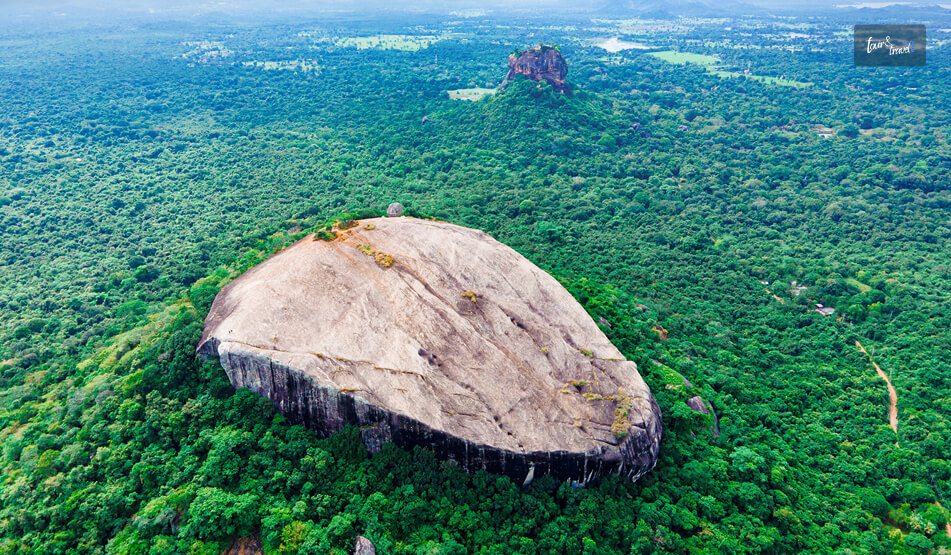
I initially planned a hike to the Pidurangala Rock to have a different perspective of the Sigiriya Rock. 

The view from the top is mesmerizing. 

However, the Pidurangala Rock is not just the lesser-known neighbor of the Sigiriya Rock.

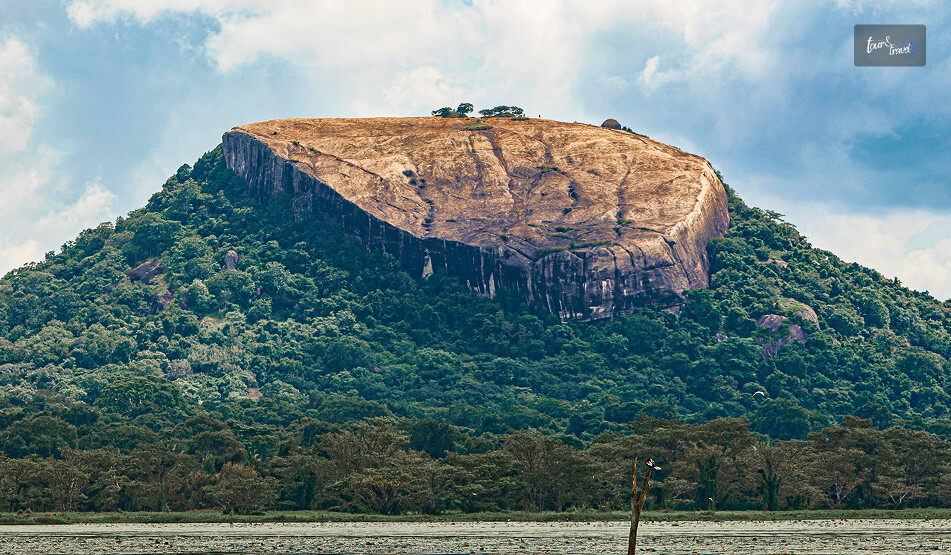
It was an ancient Buddhist Monastery and is famous as the home to a 1500-year-old massive statue of Lord Buddha. 

Also, watching the sunrise from the top of the Pidurangala Rock is an ethereal experience. 

I hope you have guessed by now.

In this blog, I will share my experience of climbing the Pidurangala Rock, watching the sunrise from there, its history, and other details. 

The History Of The Pidurangala Rock

The History Of The Pidurangala Rock

The history of the Pidurangala Rock is over two millennia old.

King Kashyapa made the Sigiriya Fort his seat of power and asked the monks to shift here.

He made suitable arrangements to build amenities for the resident monks here. 

In fact, the rock gets its name from “Pidu + Ran + Goda.” It means the offered piles of gold.

Thus, the name itself explains how King Kashyapa made donations for the development. 

Furthermore, the Sigiri Pidurangala Raja Maha Viharaya temple is still inside the caves. 

Also, the site has a 1500-year-old massive Buddha Statue in a reclining position.

The treasure hunters ruined it partially in the 1960s. However, it has been restored. 

Today, the Pidurangala Rock is a protected archaeological site containing ancient caves, a 5th-century stupa, and remains of a second stupa on the summit.

How To Reach The Pidurangala Rock From Kandy?

How To Reach The Pidurangala Rock From Kandy

Hiking the Sigiriya Rock and Pidurangala Rock can be an extension of the mixed bag of things to do in Kandy. 

The journey from Kandy to the Pidurangala Rock

1. The Long Haul From Kandy 

You can catch a bus from the station behind the Kandy train station to Dambulla.

This is a journey of 2 hours and 15 minutes. 

Furthermore, the ticket will cost you around 1.14 USD or 200 LKR. 

2. The Short Haul From Kandy 

Once you reach Dambulla, you will get local buses to Sigiriya.

The ticket price is around 40 LKR, and the travel time is just 30 minutes. 

What Is The Entry Fee For Pidurangala Rock?

While researching Sigiriya Rock, I was shocked to find that the entrance fee is $36 USD per person.

A steep price tag considering how affordable the rest of Sri Lanka is. 

Aside from our $35 USD Yala National Park safari, it was the only major expense I encountered during my entire month-long trip.

In fact, my 5 days in Jaffna were quite a budget-friendly affair. 

However, the Pidurangala Rock was a stark contrast.

I paid only 300 LKR, which was less than 3 USD at that time. 

Want to know more about my holiday in Sri Lanka?

Read my guide on the Ambuluwawa Tower and things to do in Trincomalee. 

I also visited Mount Lavinia Beach. 

Hiking The Pidurangala Rock

Hiking The Pidurangala Rock

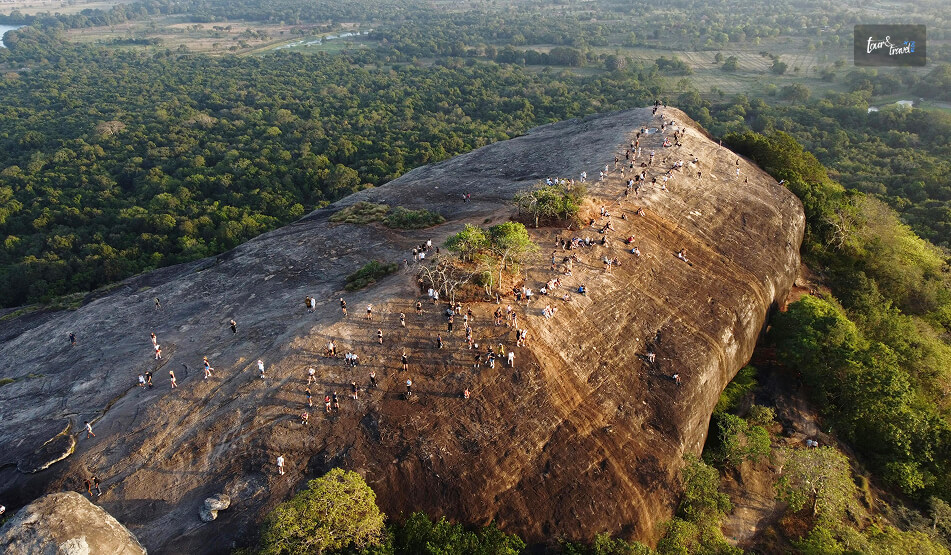
The hike to the Pidurangala Rock took me around 20 minutes.

However, my heart was really pumping. 

I climbed up a steep set of stairs, and that was an excellent morning workout for me. 

Then, the trail ran into a scramble, and here, I found some large boulders. 

You don’t need to use your rock climbing skills here.

However, you will definitely need your friend’s hand to hoist yourself up. 

Now, as I reached the top, I saw the long-awaited silhouette of the Sigiriya Rock.

It looked magical against the backdrop of a golden morning sky. 

The only complaint I had was the crowded main viewpoint.

A local guide showed me a place that was around 20 feet down. 

There was hardly a soul, and the view was unobstructed. 

The Sunrise Mission On The Pidurangala Rock

Hike the Pidurangala Rock before or during the sunrise to be a part of nature’s magic.

See how colors form before your eyes. 

Do not walk or hike at the site once the Sun is down, as the elephants are out then.

I took a tuk-tuk before sunset to reach the base. 

It cost me around 500 LKR. 

The trail begins at the ancient Buddhist temple.

So, you have to be respectful in your attire and demeanor. 

How To Have The “Perfect” Sigiriya Day?

If you are an adventurous soul, you can actually climb both rocks in one day.

You can see the sunrise at Pidurangala and be back at Hotel Sigiriya to catch some quick refreshment and relax. 

Then, in the late afternoon, you hike the Sigiriya Rock for the best sunset experience. 

Where To Eat And Sleep In Sigiriya?

Sigiriya is small and spread out, so stay near the “center” (look for Pradeep Restaurant on the map).

I loved Kalana Homestay. A cheap, friendly, and right in the mix.

If you want luxury, Heritance Kandalama is an architectural masterpiece built into the cliffs further out.

Moreover, Pradeep Restaurant and Shenadi are the two places where you will find the best meals. 

What To Bring For A Hike To The Pidurrangala Rock?

Since the hike begins near a Buddhist temple, women are asked to cover their shoulders and legs out of respect. 

Because of the heat, a sarong is the perfect solution.

You can stay cool and easily tuck it away once you’ve passed the temple grounds.

Forgot to pack something modest?

Don’t worry, as the ticket office usually has scarves available to borrow. 

Just make sure you’ve also packed sturdy shoes, insect repellent, and plenty of water to stay comfortable on the trail!

Share on Social Media

Sibashree is a travel, culture, and leisure writer who has been writing since the age of 12 and professionally since 2014. With more than a decade of travel writing experience and journeys across India and several parts of the world, she brings a deeply personal and thoughtful perspective to her work. A student of English Literature and Mass Communication, Sibashree has always viewed travel as more than movement — for her, it has been a way of understanding people, cultures, and herself. Her passion for spiritual exploration has also led her to many unusual and meaningful destinations over the years. Outside of writing, Sibashree enjoys watching European cinema, reading about global politics, and reflecting on the stories hidden within everyday places.

Leave a Reply

Your email address will not be published. Required fields are marked *

title-img Related

READ MORE Pigeon Forge

Eight Outdoor Attractions In Pigeon Forge For Thrill-Seekers

BY  Sibashree Feb 1, 2023

Are you planning a vacation to try thrilling, adventurous activities? You are signing up for a great time, but how do you choose the best activities when there are so many options? Then Pigeon Forge, Tennessee, is worth visiting. This mountain resort city draws over 10 million visitors each year to see scenic beauty, enjoy many activities, and explore historical landmarks. If you have a wild spirit, you will need more than basic activities to get the excitement you are seeking. Famous sightseeing spots like the Titanic Museum are great for photos but don’t give you the rush of adventure. You can find the thrill you are craving with the activities discussed below. They will make your journey heart-pounding, joyful, and memorable! But before that, let's look at the accommodation options you can consider. Where To Stay In Pigeon Forge? Before you dive into the activities, you first need to decide where to stay. Since many tourists visit Pigeon Forge, finding a place to stay is easy. You can book many hotels, lodges, and cabins before you arrive. However, adventure seekers can stay in one of the Pigeon Forge cabins to watch sunsets and stars at night from the mountains. It is easier to hike the mountains when you stay in a cabin and return before sunset. Later at night, you can enjoy stargazing. You can plan and choose which cabin suits you best. Make sure you don't compromise on your safety, space, and comfort. You'll also appreciate a cozy place to rest after every fun activity. Eight Outdoor Activities For Adventure Seekers In Pigeon Forge Here are some thrilling activities you can try in Pigeon Forge. Go Rafting In The Pigeon River   If you are looking for a dramatic whitewater thrill and adventure, then you can go rafting in the Pigeon River. Lower Pigeon River is the perfect spot for gentle rafting. For the ultimate thrill and excitement, try Class 3 and 4 rapids on the Upper Pigeon River. You can contact tour operators that offer rafting tours. Make sure they provide all the safety gear and equipment. Also, follow all rafting safety protocols. Some companies even offer pick-up and drop-off to and from downtown. Enjoy The City Views On A Helicopter By touring the city by helicopter, you get a unique, first-hand aerial view of breathtaking rivers, lakes, and mountains. You can enjoy spectacular views of the Great Smoky Mountains, Douglas Lake, and Dam. If you are traveling on a budget or short on time, you can take a small tour over the French Broad River. A helicopter tour usually takes about six to eight minutes. Besides, if you fear heights, this is your cue to get rid of them if you want to take advantage of the adventure. Go Tubing Down In Rowdy Bear’s Smoky Mountain Snowpark For thrilling rides, head to Rowdy Bear Amusement Park. The park features a 500-foot Tubing Hill, Ski Lift Shootout Coaster, and Outdoor Axe Throwing. Tubing remains open in winter and summer. Enjoy Adrenaline Rush At Xtreme Racing Center Of Pigeon Forge If you are a racing enthusiast, head to the Xtreme Racing Center of Pigeon Forge. You can experience high-speed go-karts on three types of race courses. The 3,500-foot Xtreme track features narrow straightaways and winding turns. The 1,500-foot Elevated track offers the ultimate thrill for adventure seekers. On the other hand, the Reverse track offers the same experience as the Xtreme track, but in reverse.  Go Zorbing At Outdoor Gravity Park Zorbing is a unique, exciting activity you can try at Outdoor Gravity Park. It is an excellent spot for thrill-seekers to tumble down, bounce, and spin a 1000-foot-tall hill. The park features three different zorbing tracks. These include a fast downhill track, a combined funnel-and-zigzag course, and a fully zigzag track. Zorbing offers an ultimate heart-pumping experience compared to any other activity in the region. Indulge In Adventurous Activities At Foxfire Mountain Adventure Park About a 20-minute drive from Pigeon Forge, you can enjoy an array of adventurous activities at Foxfire Mountain Adventure Park. It is located in Sevierville. The park features a swinging bridge, Gorilla Climbing Wall, and hiking trails amidst lush greenery. Also, it offers the Waterfall Canopy Zipline and Goliath Zipline Tour. Once you arrive, you can make the most of your time with adventurous activities all in one place. Try Indoor Skydiving At Flyaway If you ever want to try skydiving, this is your chance to do indoor skydiving at Flyaway. The first vertical wind tunnel in the United States offers an exciting experience. No prior knowledge or skills are required. You get 15 minutes of training before the experience, and safety gear is provided. After that, you get three minutes to skydive. Climb A Three-Story Sky Trail At The Island, Pigeon Forge The Island Ropes Course in Pigeon Forge is a must-do activity for adventure seekers. As you complete the course, you experience the thrill and excitement like never before. The 3-story Sky Trail Explorer Course offers two ziplines and one simulated free fall. You can also take in breathtaking city views from the 20-foot-tall wheel. The wheel features 42 fully enclosed gondolas. Have A Packing Checklist Before You Plan A Trip Are you excited to embark on the most thrilling vacation ever? Now that you know your options, pack accordingly! Make a checklist of every exciting activity you want to try, and plan your days accordingly to make the most of your time. Your moment of relaxation can also be your time to go wild. Take this as your opportunity to try new things, challenge yourself, and let go of years-old fears. Make this trip your craziest one yet and cross items off your bucket list. Additional: 10 Best Places To Travel In March – Travel Guide 2022 15 Best Places For Adventure Dates With Your Loved One Best Kentucky National Parks In USA You Should Know About Make Your Honeymoon A Truly Memorable Affair: Here’s How

READ MORE how is it possible for ski jumpers to stay in the air so long and how do they train for that

How Is It Possible For Ski Jumpers To Stay In The Air Long And How To They Train For That?

BY  Sibashree May 18, 2026

Suppose we jump high in the air. We can stay in the air for around half a second. Michael Jordan could even stay off the ground for only one second.  Now, at many events at the Winter Olympics, we see athletes showing strength and athleticism in the air.  However, ski jumping beats them all in terms of jumping high in the air and staying afloat for so long.  Here, you need to understand the physics of sports. Also, for many of us, the ski jump is a mesmerizing event in the Winter Games, showcasing sports physics in action.  The athlete who travels the farthest and shows the best style while flying and landing becomes the winner of the event.  Ski jumpers can fight gravity, and they can turn their bodies and skis into a wing to stay in the air for 5 to 7 seconds.  Within that span, they can travel almost the length of a football field while staying in the air.  But how is it possible for ski jumpers to stay in the air so long, and how do they train for that?  Let’s delve into the details.  How To Fly?  The answer lies in three important concepts of sports physics.  These are drag, lift, and gravity.  Gravity is the force that pulls any object in flight down. Gravity is a force that works on everybody, and ski jumpers cannot avoid it.  However, ski jumpers, as they move, interact with the air. Now, this interaction further produces lift.  Lift refers to an upward force projected by the air for an upward movement of an object.  In this scenario, if the force of gravity and the force of lift balance each other, an object can fly or glide.  However, producing lift is only possible when the object is moving. Moving objects collide with air particles and push them aside.  Pushing air downward creates an equal, upward reaction known as lift. Here it follows Newton’s third law “For every action, there is an equal and opposite reaction.” You can increase lift by boosting your speed, expanding your surface area, or optimizing your angle of attack (the object's tilt against the airflow).  If this angle is too flat, you generate no lift. If it is too steep, the object stalls.              The Car Window Example  If the concept feels complicated, you can experience the same by just sticking your hand out of a moving car window.  If you keep your hand perfectly flat, it will yield no movement.  However, if you tilt your palm slightly upward, it will force the incoming wind downward. Thus, your hand will be pushed up immediately.  It is a clear example of lift.  The same particle collisions that generate lift also create drag. Drag is a resistive force that slows objects down.  As an object loses speed, its lift drops, cutting the flight short. Because of this, ski jumpers use highly precise body positions to maximize their lift while minimizing speed-killing drag. A Brief History Of The V-Style  The history of ski jumping goes back to the 1800s. Norwegian skiers first started competing for distance on snowy slopes. However, for most of the sport's history, jumpers kept their skis pressed tightly together, parallel to each other, all the way through the flight. The 1980s brought a major change to these practices.  A Swedish jumper named Jan Boklöv began spreading his skis apart mid-air, forming the V-shape you now see in every competition. He drew criticism from experts and judges who considered it a “bad style” because it looked unconventional.  However, Boklöv's V-style increased his jump distances by as much as 10%, simply by giving his body and skis more surface area to catch the air. Then, ignoring the style was impossible.  Within a few years, every serious competitor had switched to the V-style, and judges stopped penalizing it. Even today, it remains a standard technique, and it is the same aerodynamic principle that more surface area means more lift. How To Fly On Skis?  We need to observe the skiers to understand how it is possible for ski jumpers to stay in the air so long and how they train for that. You will see a skier starting on a high slope, and then they move downhill. They generate speed by skiing in this way.  They also reduce drag by squatting and steer very carefully to minimize the friction between the ramp and skis.  So, when they reach the end, the speed will be close to 60 miles or 96 kms per hour.  Once airborne, ski jumpers use aerodynamics to fight gravity and extend their flight.  While they cannot generate enough lift to stay in the air indefinitely, maximizing this upward force slows their descent and carries them further down the hill. To achieve the longest flight possible, athletes lean forward until their bodies and skis are nearly parallel to the snow.  By spreading their skis into a V-shape just outside their body's silhouette, they gain two major aerodynamic advantages. The spread position creates a larger surface area to catch the wind and generate lift. So they get an expanded surface area.  They also get an optimal angle of attack. The forward tilt places them at the perfect angle relative to the airflow to maximize upward pressure. As the jumper glides forward, drag continuously pushes back against them, draining their forward momentum.  Because lift relies entirely on speed, this deceleration causes the upward force to fade away. As drag robs the athlete of their speed, gravity takes complete control, pulling them faster and faster toward the landing zone. The Takeoff: The Hardest Half-Second Out of everything a ski jumper does, takeoff is the most difficult skill to master. It happens in under half a second.  Furthermore, when the jumper reaches the end of the ramp, known as the "table," they must explosively extend their legs and spring forward and slightly upward. They will do it all while still moving at nearly 60 miles per hour. However, if they jump too early, they will lose speed and distance. Once again, jumping too late can cause a loss of control of their body position in the air, which can be dangerous. In addition, the takeoff also sets the jumper's angle of attack for the entire flight.  Because there's no way to make major corrections once airborne, a fraction-of-a-second error in the takeoff can throw off the aerodynamic position for the whole jump.  This is why ski jumpers spend years drilling this single movement until it becomes automatic. How Ski Jumpers Actually Train? Physics explains the reason why ski jumpers fly so far. However, the training behind it is equally crucial.  Training AreaWhat It InvolvesWhy It MattersStrength and Explosive PowerSquats, box jumps, and plyometric drillsBuilds the fast-twitch power needed for the powerful, split-second leg extension at takeoffSummer Training on Artificial TracksYear-round practice on in-run tracks covered with porcelain or plastic bristles instead of snowLet athletes drill their approach, takeoff, and body position even outside the winter monthsWind Tunnel SessionsFine-tuning arm position, back angle, and ski spread with coachesFlight position is highly sensitive to drag and lift, so small posture adjustments can shave off dragVideo and Biomechanical AnalysisFrame-by-frame review of the in-run, takeoff, flight, and landing from multiple camera anglesHelps compare an athlete's actual form against ideal aerodynamic positionsMental PreparationVisualization techniques and gradual exposure, starting on smaller hills and building up to normal and large hillsBuilds the psychological conditioning needed to launch off a mountainside ramp at speed How Do Judges Score A Jump? The judges will not just assess the ski jump based on the distance covered. So, the question of who becomes the winner depends on the distance and the style.  Scoring ComponentHow It WorksPurposeDistance Points• Measured against the K-point (a reference point on the hill). • Landing exactly on it earns a fixed score, with points added or subtracted for every meter beyond or short of it.Rewards how far the athlete actually travelsStyle Points•Five judges score the flight and landing, including body position in the air and control of the landing in the "telemark" position (one foot in front of the other, knees bent). •Each judge scores up to 20 points; the highest and lowest scores are dropped, and the middle three are added to the distance score.Rewards technique and control, not just distance.Gate and Wind CompensationOfficials apply point adjustments in real time based on wind conditions, since headwinds increase lift and tailwinds reduce it.Prevents a gust of wind from unfairly helping or hurting a competitor's final score. Normal Hill Vs. Large Hill Vs. Ski Flying Not all ski jumps are the same size, and the hill itself determines how far a "long" jump actually is. Hill TypeK-Point (Target Landing Distance)NotesNormal HillUp to 109 metersSmaller competition hillLarge Hill110–184 metersUsed for most Olympic ski jumping eventsSki Flying Hill185 meters or moreIt is a separate discipline where athletes can stay airborne longer, sometimes covering well over 200 meters. The larger the hill, the faster the in-run speed and the longer the flight. That is why ski flying produces the most extreme examples of the physics described earlier. It is maximum lift, sustained over the longest possible time. Record-Breaking Flights The current men's ski flying world record stands at 254.5 meters. Domen Prevc completed it in Planica, Slovenia, on 30 March 2025. (Source: Guinness World Records).  Among women’s ski flying, Nika Prevc holds the record. She completed the jump of 236 meters in Vikersund, Norway, on 14 March 2025. These extreme distances are a direct demonstration of the lift-versus-drag balance. The longer an athlete can hold an efficient aerodynamic position without losing speed to drag, the farther gravity has to work to finally pull them down. How Is It Possible For Ski Jumpers To Stay In The Air Long? The Rules Follow The Physics So, you can see there is pure physics at play behind how it is possible for ski jumpers to stay in the air so long and how they train for that.  However, the body of an athlete, equipment choices, and the wind can impact the quality of the jump in many ways.  Also, there are a lot of rules and regulations to keep a ski jump fair.  You will see many officials changing the starting and ending points up and down the slope during the events.  This adjustment happens to ensure a safe landing, depending on the speed of the wind.  When the headwinds are faster, there will be more lift and longer jumps. As a result, an athlete can go past the safe zone for landing.  Moreover, the regulations of a ski jump will also depend on the height and weight of a skier.  Usually, skis have to be “145% of the skier's height.” Also, if the skier has a body mass index of less than 21, they will get shorter skis.  Again, long skis are not the best in every case. When the ski is heavy, you will need more lift to fly and stay in the air.  Also, you have to wear a tight-fitting suit. You cannot wear anything that will need additional lift.  So, when you see a skiing event, think of how the skiers have also mastered the concept of physics. Why Is Ski Jumping Riskier Than It Looks? Ski jumping looks graceful. However, we cannot undermine how physically demanding and risky the sport is.  Athletes fly through the air at highway speeds with only their skis and body position keeping them stable.  A poor landing, a sudden gust of crosswind, or a small error in the takeoff can cause a loss of balance that's difficult to correct mid-flight.  This is part of why regulations are so strict. The rules on suit tightness, ski length relative to height and BMI, and the ability of officials to adjust the start gate are all safety and fairness measures. Wind is the biggest variable officials can't fully control. Which is why competitions are sometimes paused or delayed when crosswinds pick up. It is also why the point-compensation system exists to account for conditions that shift mid-competition. How Is It Possible For Ski Jumpers To Stay In The Air Long? Some Quick Questions And Answers Here are some quick questions and answers related to how ski jumpers stay in the air for long. 1. Why Do Ski Jumpers Spread Their Skis Into A V-Shape? It increases their surface area and creates a better angle of attack, both of which generate more lift and let them fly farther. 2. How Fast Do Ski Jumpers Go Before Takeoff? Around 60 miles per hour (96 km/h) by the time they reach the end of the ramp. 3. How Long Do Ski Jumpers Actually Stay In The Air?  Roughly 5 to 7 seconds in standard competition, and even longer during ski flying events on the largest hills. 4. Is Ski Jumping Scored Only On Distance?  No. Final scores combine distance points with style points awarded by judges for body position and landing control. 5. What Is The Difference Between Ski Jumping And Ski Flying?  Ski flying happens on larger hills built for greater distances. It allows longer flights and higher speeds than standard normal or large hill ski jumping. Read Also: Car Travel On PaxTravelTweaks: How Does It Help In Smartly Planning Budget-Friendly Road Trips? IWantThatFlight Offering Cheap Flights: The Best Hack For Traveling On A Budget

READ MORE things to do in bangkok

What Are The Top Things To Do In Bangkok As Adults? The Travel Diary Of A Grown Up

BY  Sibashree Jan 27, 2026

A series of misunderstandings? A place that fails to connect? I don’t know why I never felt that connection during the couple of times I visited Bangkok. I think as we “grow up” or evolve as human beings, we look for something more meaningful beyond the neon and crowds. It’s all about the “life stages.” Even as a backpacker, the streets of Khao San Road and the cheap lager smells never attracted me. I found most of the experience surface-level, and the tourist traps were many.  Overall, as a woman in her mid-thirties, I felt that I had joined the wrong party. However, I started to feel at ease as I reached the southern beaches, especially the limestone cliffs of Krabi or the turquoise waters of the islands. However, the last trip to Bangkok changed many things. My experience was curated, and based on that, I am here to share the things to do in Bangkok for adults. What Are The Things To Do In Bangkok For Adults? Beyond the street-buckets of gin and the smog, this time, I found Bangkok to be a community-oriented city. I could feel its cultural richness and sophistication this time. If you’ve also previously written off Bangkok as too chaotic or "young," here is a guide to the elevated, authentic, and age-appropriate experiences that turned me into a lifelong fan.  1. Elevated Gastronomy At R-Haan View this post on Instagram A post shared by R.HAAN (@r.haan_restaurant) Yes, street foods are very much a part of the authentic Thai culture. However, this time, R-Haan was my destination.  This two-Michelin-starred restaurant serves high art without adulterating the soul of Thai cooking. We experienced the Samrub, a traditional Thai way of dining that feels like a family-style degustation. Also, trying the food here was like getting familiar with the seasons and regions of the kingdom.  From amuse-bouches to the curries in the main courses, the wholesome experience is achieved by balancing the five pillars of Thai taste: sour, sweet, salty, bitter, and spicy. 2. Sightseeing With Siam Hop The humidity of Bangkok is always a challenge to keep the mood even. However, Slam Hop, with its four distinct routes, changed my experience this time.  It covers Heritage, CBD, Shopping, and Entertainment through its routes. So, you can tailor your experience.  Furthermore, these buses are air-conditioned, and the integrated app with real-time GPS tracking offers traffic updates.  We took the bus and visited the Grand Palace and the sleek skyscrapers of Sukhumvit. And guess what? The exhaustion was 0.  3. The Bang Lamphu Backstreets We probably had the best experience in the backstreets of the Bang Lamphu district. Here, the local people, especially the young ones, have taken great initiative to maintain the heritage.  We met a lady who has been hand-sewing the costumes for the traditional mask dance, or Khon. She started when she was 15, and now she is 50.  Furthermore, it was a Friday, and the community leaders at the local mosque spoke about the area's history and how it has always maintained religious harmony.  These are the moments when you feel the real connection and even forget to click photos. 4. Curated Street Food At SookSiam View this post on Instagram A post shared by WBC Muaythai Korea (Official) (@wbc_muaythai_korea) We had to give the street food a try. However, we did not want the outdoor heat to be a challenge. So, we visited SookSiam inside the ICONSIAM mall.  Here, you will find street food from all 77 provinces of Thailand.  They have also recreated canal boats and traditional shopfronts, and you will find artisans from across the country. We tasted northern khao soi, southern spicy curries, and delicate Isan sausages all in one loop.  5. Holistic Healing At Dii Wellness View this post on Instagram A post shared by Diiwellnessmedspa (@diiwellnessmedspa) The Dii Wellness Med Spa in the Central Embassy mall offered us the rejuvenation we wanted. They used essential oils and focused pressure techniques that took away the exhaustion of a long flight.  It is a wellness experience that I can travel for.  6. Industrial Chic At The Never-Ending Summer View this post on Instagram A post shared by The Never Ending Summer (@theneverendingsummer) The Never-Ending Summer was previously a warehouse on the Chao Phraya River banks. This converted space has now become a place to enjoy Thai food with a beautiful view.  The natural lighting adds to the ambience, and we loved having lunch while watching the river traffic go by.  We had an amazing salad there, made with battered flowers, and the curries were well-balanced. After finishing our lunch, we took a stroll to the Jam Factory complex, which had an art gallery and a bookstore.  7. The Golden Hour On A Sunset River Cruise A sunset cruise on the Chao Phraya River is magical, cliché it may sound. The sky turns into a burnt orange canvas at first, and then there are the touches of violet.  With this change, the city's silhouette changes completely. The ancient spires of Wat Arun glow against the modern glass of the riverside hotels.  8. Spirit Jim Thompson: A Jungle Oasis You cannot miss lunch at Spirit Jim Thompson even if you are having just one meal in Bangkok. It felt like a tropical sanctuary in the heart of a lush garden.  This is such a welcome break from the streets of the city.  In true honor of the legacy of Jim Thompson, the place maintains elegance and its impeccable style.  You can choose anything from the menu. You will experience bold flavors, arty presentation, and overall, the quintessential Thai hospitality.  9. Cocktails At ThreeSixty Rooftop Bar ThreeSixty atop the Millennium Hilton was the place we chose for a cocktail with a view experience.  We took the outdoor seats. The evening was warm, and we saw the river winding its way through the glowing city.  A perfect moment for romance, reflection, and more!  10. Afternoon Tea At The Gingerbread House View this post on Instagram A post shared by บ้านขนมปังขิง เสาชิงช้า (@baankanompangkhing) The Gingerbread House, a Victorian-style wooden home, has a 100-year-old history. It is the place where you will cherish the tradition.  We sat under the shade of a huge 80-year-old mango tree, and we ordered iced coffee. Furthermore, the colorful Thai desserts here were served in crystal dishes.  How should I describe the experience? Graceful? Yes, if we can say that about the food experience.  11. The Labyrinths Of Chinatown You really have to be an early bird if you want to explore Yaowarat or the Chinatown of Bangkok.  Furthermore, as we walked through the small alleys, we could smell the incense, and we came across the ancient shopfronts and lanterns.  Many of the historic buildings of the city have become boutique teahouses or mini museums. It is a sensory explosion of history and tradition that offers a fascinating counterpoint to the city’s modern malls. 12. Legacy Flavors At Nuttaporn Ice Cream Nuttaporn Ice Cream in the Banglamphu district is a family-run place that serves ice cream made using the same coconut milk-based recipes for over 60 years.  Furthermore, it is a “no-frills” place, and we loved the bowls of mango ice cream with the toppings of peanuts and lotus seeds.  This time, I chose experiences that valued quality, community, and comfort. So, I finally saw the Bangkok that had been hiding behind the backpacker facade all along. Moreover, it’s a city that grows with you, and you just have to give it the right itinerary. Read Also: A Guide To What To Do Around Siam Square Bangkok Bangkok in the Rainy Season -What You Should Know 5 Top Bangkok Attractions to Add to Your Itinerary