Only got two weeks in Nepal? Then why does choosing a trek suddenly feel harder than choosing what to eat after a long day on the trail?
The Manaslu Circuit Trek and Langtang Valley Trek can both put you among some seriously spectacular Himalayan scenery, but they offer very different kinds of adventures.
Nepal gives you exactly 14 days. How you spend them depends entirely on your lungs, your legs, and how fast you want to burn through your battery.
Do you crave a grueling high-altitude grind?
Or maybe a balanced pace, something that leaves breathing room for Kathmandu’s chaotic alleys, Pokhara’s lakeside views, and slow morning coffees. This suits you better.
Manaslu vs Langtang: Two paths stand out. However, Manaslu is a beast.
It is a sprawling, fiercely remote backcountry commitment that drags you right up to the ragged edge of the Larkya La Pass at 5,106 meters.
You will sweat for every single mile.
Langtang takes the opposite approach. Think of it as a concentrated shot of pure Himalaya, alpine forests, ancient stone villages, and razor-sharp peaks all colliding into a tight, fast-moving itinerary.
You get the iconic Kyanjin Gompa without the endless weeks of approach march. The routes break down like this.
Manaslu vs Langtang: The Difference At A Glance
Here’s a quick comparison of the two treks.
Feature
Manaslu Circuit Trek
Langtang Valley Trek
Duration
Around 14–18 days
Around 7–10 days
Difficulty
Moderate to challenging
Moderate
Highest point
Larkya La, 5,106 m
Kyanjin area and viewpoints
Main highlight
Remote circuit and high pass
Langtang Valley and Himalayan scenery
Access
Longer journey to trailhead
Easier access
Atmosphere
More remote
More established
Best for
Longer Himalayan adventure
Shorter trekking holiday
One important thing jumps out immediately: Manaslu takes more of your holiday.
The route involves a lengthy approach to the trailhead, with many days following:
The Budhi Gandaki Valley, acclimatization at higher elevations,
crossing Larkya La before continuing toward Dharapani.
Langtang trims the fat. When you only have two weeks in Nepal, a tighter geographic footprint changes the entire game.
You can blitz through the Langtang loop in roughly seven days; that leaves a massive pocket of spare time burning a hole in your pocket. Why rush?
We routinely ignore the absolute luxury of empty space on a calendar. Landslides bury mountain roads. Flights stall; muscles fail.
Sometimes you just want to get lost in Kathmandu’s chaotic, incense-heavy bazaars for another afternoon.
A rigid itinerary fractures under the slightest pressure.
What Is The Difference Between Manaslu vs Langtang?
Forget simple mileage or altitude metrics; the true divide lies in the soul of the march. Manaslu is an expansive, slow-burning odyssey that morphs across shifting ecological zones.
Langtang delivers an immediate punch. It funnels you straight into a spectacular glacial amphitheater without demanding weeks of punishing approach marches.
Manaslu Circuit Trek
Manaslu demands respect. The circuit rings Mount Manaslu via ghost-quiet hamlets, plunging gorges, and raw, fractured alpine topography.
The lower trails suffocate in lush subtropical greenery. Then—almost overnight—the forest dies, leaving you exposed on a stark, wind-scoured moonscape.
Down in the lower part of the route, you’ll see plenty of greenery, but things change as you gain height.
The villages show more Tibetan influence, trees become less common, and the mountains seem to take over the whole view. Along the way, you’ll come across:
Remote Himalayan villages
Tibetan-influenced culture
The Budhi Gandaki Valley
Manaslu mountain views
High-altitude landscapes
Larkya La Pass
Fewer trekkers in some sections of the route
And then comes the big moment: Larkya La at 5,106 meters. Once you reach that pass, it feels different from simply arriving at a viewpoint.
You have spent days climbing toward it. And the landscape has changed dramatically along the way.
That’s part of Manaslu’s appeal. The destination matters, sure, but the journey is a major part of the experience, and each day feels like another page in the same mountain story.
Langtang Valley Trek
Langtang feels different from the start. Most trekkers begin near Syabrubesi and follow the valley toward Kyanjin Gompa.
Moreover, the trail winds through forests and small villages at first, then the views open up as you climb higher, with bigger peaks appearing around you. Along the way, you can expect:
Rhododendron and other forested trails
Traditional mountain villages
Langtang mountain views
Kyanjin Gompa
Glacial scenery
Snow-covered peaks
High viewpoints around Kyanjin
Kyanjin begs you to drop your pack. Drop an extra night into the itinerary.
You need to explore the immediate crags or go for a steep side-summit if the skies clear and your knees feel good.
Moreover, you face no brutal, high-altitude col here; Langtang drops the handcuffs and lets you dictate the mountain rhythm.
Why stress? This fluid schedule pays massive dividends when you still need a healthy chunk of time to go feral exploring the rest of Nepal.
Which Trek Is More Difficult: Manaslu vs Langtang?
Between Manaslu vs Langtang, Manaslu breaks bodies. Strip away the romanticism, and you face a brutal reality.
This takes longer days, unyielding vertical gains, and the looming specter of the Larkya La pass.
Expect bone-deep exhaustion.
Larkya La punches straight up to 5,106 meters; underestimate that thin air at your own peril.
Mountain weather plays dirty—whiteouts and flash blizzards instantly turn a standard pass crossing into a high-stakes survival exercise.
Do not miscalculate Langtang, though.
Furthermore, it is no afternoon promenade; you will spend consecutive, soul-crushing days marching entirely uphill, hammering your quads and forcing your lungs to adapt to the altitude.
The shorter distance simply makes the overall trip easier to manage. Here are the main differences:
Altitude: Higher on Manaslu
Pass crossing: Manaslu includes Larkya La
Walking days: Usually longer on Manaslu
Terrain: Both have varied mountain trails
Acclimatization: Important on both routes
Overall commitment: Greater on Manaslu
Manaslu vs Langtang Difficulty
Langtang offers a remarkably gentle introduction for greenhorns tackling their maiden Himalayan voyage.
The logistics feel entirely manageable; the trail spans fewer days. Yet, do not misjudge the thin air.
Moreover, short trails do not justify reckless vertical sprinting. Manaslu demands rigorous logistical planning and major time commitments.
This is largely because of grueling, high-altitude pass crossings, relentless day-long slogs, and unforgiving weather on the upper ridges.
Craving a rugged, multi-day test? If your boots have already survived grueling multi-day backpacking stints, Manaslu brings the exact brand of raw suffering you probably crave.
But raw muscular fitness tells only half the story.
The ultimate difficulty depends on an intricate web of variables:
Your past performance on grueling ten-hour marches,
The wisdom in your acclimatization schedule,
The unpredictable whims of high-mountain blizzards.
Manaslu vs Langtang: Which One Is BestFor Mountain Views
This is where comparing the two gets interesting. Both routes have incredible mountain views, but the scenery changes in different ways.
On Manaslu, you gradually move from green valleys into rough alpine terrain as you climb higher.
Langtang covers forests, villages, wide valley views, glaciers, and snowy peaks along a much shorter trail.
Manaslu Circuit Trek
One memorable thing about the Manaslu route is how noticeably the environment changes as you gain elevation.
You begin among greener lower valleys and gradually move into a harsher alpine world.
The Budhi Gandaki Valley narrows and grows more dramatic, while enormous peaks begin filling the surrounding skyline. The journey can include:
The Manaslu range
Deep river valleys
Snow-covered Himalayan peaks
Alpine terrain
Larkya La
Remote settlements surrounded by mountains
There isn’t just one dramatic landscape. The scenery keeps evolving, and that matters because a long trek can sometimes feel repetitive.
Moreover, Manaslu counters that by constantly changing the journey’s visual character.
One morning may feel green and sheltered, while several days later you’re walking through an austere high-altitude landscape.
Here, rock, snow, and enormous mountain walls dominate everything around you.
Langtang Valley Trek
Langtang has its own visual personality. Lower sections are wrapped in forests, while the valley gradually opens as you climb.
Near Kyanjin, the scenery becomes much more alpine, with snowy peaks and glacial landscapes taking center stage. Highlights include:
Langtang Lirung
Forested valleys
Open alpine landscapes
Glacial terrain
Kyanjin Gompa
Surrounding mountain viewpoints
Since Langtang is a shorter trek, you won’t pass through as many landscape types as you would on the Manaslu Circuit. Still, that’s not really a drawback.
Sometimes a shorter route is all you need. You wake up, step outside, see the mountains in front of you, and suddenly the long journey to Nepal feels completely worth it.
And the best part? You can enjoy that Himalayan experience without spending your entire two-week holiday on the trail.
How Many Days Do You Need For Each Trek?
If you have only two weeks, this could be the part that settles the decision.
Manaslu uses up a bigger chunk of your holiday, whereas Langtang leaves you with more time for other places and activities.
It’s also worth counting the travel to and from the trail, acclimatization days, and any unexpected delays instead of focusing only on the days you’ll actually spend walking.
Manaslu Circuit Trek Itinerary
A typical Manaslu Circuit Trek takes around 14–18 days, although the exact length depends on your route, transport, acclimatization days, and walking pace.
The trek usually starts around Machha Khola, then follows the Budhi Gandaki Valley through higher settlements before reaching and crossing Larkya La.
From there, the trail continues toward Dharapani. Trying to pack the whole journey into too few days can leave you rushing when you should be enjoying the trail.
Furthermore, there’s one thing you can’t negotiate with in the mountains: altitude.
Your body needs time to adjust, especially when you’re heading above 5,000 meters.
Moreover, a well-paced itinerary gives you room to acclimatize and enjoy the villages and scenery instead of spending every evening worrying about how quickly you need to walk the following day.
Langtang Valley Trek Itinerary
Steering your boots toward the Langtang Valley Trek usually takes about 7 to 10 days, depending on your transport, trail pacing, and whether you detour up nearby ridges.
The standard march kicks off around Syabrubesi, snakes up through the belly of the valley to Kyanjin Gompa, then retraces those same steps back down.
Furthermore, because this trek wraps up so quickly, Langtang fits like a glove if you only have a tight two-week window for your entire Nepalese escape.
That leftover time? It is pure gold.
You can easily wander through Kathmandu’s chaotic alleys before tying your boots, catch a bus to another destination afterward, or just pocket a buffer day for peace of mind.
Moreover, anyone who has ever bounced along Nepal’s cliffside roads or watched mountain weather turn on a dime knows things rarely go off without a hitch.
Having that extra day up your sleeve keeps you from panicking when the inevitable travel hiccup strikes.
Manaslu Circuit Trek vs Langtang Valley Trek: Cost and Accessibility
Every single backpacker eventually stares down the barrel of the financial bottom line, wondering just how hard a trek will hit their wallet.
Your grand total swings wildly based on trail longevity, bureaucratic permit fees, rugged transit, teahouse lodging, and whether you shell out cash for a seasoned guide or a porter to shoulder your heavy pack.
Langtang keeps things refreshingly painless on the bank account.
Why? Getting from Kathmandu to the trailhead is relatively straightforward.
The journey wraps up quickly. You face far fewer nights of paying for high-altitude beds and hot plates of dal bhat.
Manaslu demands a completely different level of pre-trip hustle. Because the government classifies it as a restricted trekking zone, you cannot just wander in.
Moreover, you absolutely must secure specialized permits and lock down certified group arrangements beforehand.
Even the grueling overland transit to the remote starting point eats up precious calendar days, a logistical hurdle that naturally inflates your upfront expenses.
Transportation to and from the trailhead
Trekking permits
Guide requirements
Teahouse accommodation
Food and drinks
Number of trekking days
Porter services, if required
Tallying the nightly bill for a solitary Himalayan trail-lodge completely misses the grander financial picture.
Both routes rely on local teahouses, yet prices wildly fluctuate based on altitude, season, and amenities.
Do not just skim the daily ledger. A cheaper path often bleeds your wallet dry if the itinerary drags on, or if permits and bush-plane transit spike the total.
Look at the macro scale instead. To map an honest budget, calculate the expedition as a whole. Stack food, transport, paperwork, and guide services against your total days afield.
Which Trek Fits Your Travel Style?
This is probably where the choice about Manaslu vs Langtang starts to make a lot more sense.
Put the glossy brochures aside for a minute and think about the kind of trip you actually want.
Do you like the idea of spending day after day walking farther into the mountains, with the trail becoming a bigger part of your holiday?
Or would you prefer a shorter Himalayan trek that still gives you great views, while leaving a few days to explore Kathmandu, head to Pokhara, or see somewhere else in Nepal?
There’s little point in choosing a route just because it looks impressive on paper.
Think about your available time, your hiking experience, and how much of your holiday you want to spend on the trail.
Moreover, sometimes the best trek isn’t the longest one; it’s the one that fits comfortably into the trip you already have in mind.
Choose The Manaslu Circuit Trek If You Want:
A remote Himalayan adventure
A high mountain pass
Longer days on the trail
A less crowded trekking experience
Tibetan-influenced mountain culture
A complete circuit-style journey
More varied landscapes
Manaslu makes particular sense if trekking is the main event of your Nepal holiday. You’re not simply popping into the mountains for a few days.
You’re gradually traveling deeper into the Himalayan landscape and experiencing a route that unfolds over many stages.
There is something satisfying about that kind of progression: start lower down, keep walking, gain altitude, cross a major pass, and eventually emerge on the other side of the circuit.
Choose The Langtang Valley Trek If You Want:
A shorter trek
Easier access
A first Himalayan trekking experience
More flexibility in your itinerary
Time for other Nepal destinations
A beautiful mountain valley without crossing a high pass
Langtang is especially convenient if your two weeks aren’t exclusively about trekking.
Perhaps you want to spend time exploring Kathmandu’s temples and courtyards, maybe Pokhara is on your list, or perhaps you’d like a wildlife trip to Chitwan.
With a seven-to-ten-day Langtang itinerary, those options are easier to fit in, and you don’t have to turn every day of the holiday into a race against the calendar.
Best Time For The Manaslu Circuit Trek And Langtang Valley Trek
For both routes, spring and autumn are traditionally popular trekking seasons because conditions are generally more favorable for mountain travel and visibility.
Moreover, Spring runs from March to May and can bring milder conditions at lower elevations, along with blooming rhododendrons. [Source: Hiking Nepal]
Autumn, particularly September through November, is widely associated with clearer mountain views and generally favorable trekking conditions.
Spring: March to May, with warmer conditions and blooming rhododendrons
Autumn: September to November, known for clearer mountain views
Winter: Colder and snowier at higher elevations
Monsoon: Wetter trails, clouds, rain, and possible road disruptions
For Manaslu, pay close attention to the weather around Larkya La Pass. Snow and poor visibility can make the crossing much tougher.
Thus, it’s smart to leave some flexibility in your schedule in case mountain conditions change.
Langtang isn’t completely free from winter snow either, especially at higher elevations.
Moreover, during the monsoon, you may also hit wetter trails, cloudy views, and road delays on the way to or from the trailhead.
That’s why the season you choose really matters. It shouldn’t be something you check a few days before leaving.
Checking typical weather conditions, trail conditions, and potential travel delays before booking can make the whole trek much easier to manage.
Manaslu Circuit Trek Or Langtang Valley Trek for Two Weeks?
Here’s how I’d look at it in practical terms. If your two weeks are mainly about trekking,
Manaslu can fit the plan, as long as you leave enough time for acclimatization, transport, and the occasional delay.
Most of your holiday will be spent in the mountains, though, so you won’t have much room for random detours or last-minute changes.
If you want your two weeks to include trekking plus other Nepal experiences, Langtang gives you much more breathing room.
Say you have eight or nine days to spend in the mountains.
Moreover, that works quite comfortably for Langtang, while fitting Manaslu into the same window would mean keeping a much closer eye on the schedule once transport and acclimatization are factored in.
One slow day on the trail, a delayed road journey, or rough weather near a high pass can throw a tightly packed itinerary off balance pretty quickly.
Manaslu vs Langtang: Which One Should You Choose?
The Manaslu Circuit Trek vs Langtang Valley Trek choice really comes down to what you want from your time in Nepal.
Manaslu offers a longer, more remote journey with ever-changing landscapes, villages with strong Tibetan influences, tougher mountain terrain, and the big achievement of crossing Larkya La at 5,106 meters.
Langtang, on the other hand, packs a lot into a shorter, easier-to-reach trek, with forest trails, mountain villages, snowy peaks, Kyanjin Gompa, and impressive Himalayan views without tackling a major high pass.
Before you book, I’d look beyond those beautiful trekking photos for a moment.
Moreover, you need to check how many days you’ll actually spend walking and review the altitude profile.
You can also consider the transport involved, and be honest with yourself about how comfortable you are with long days in the mountains.
Then ask yourself a simple question:
Do I want most of my two weeks in Nepal to revolve around the trek, or would I rather make the mountains just one part of a bigger Nepal adventure?
answer should make the choice a lot clearer.
After that, well, the serious business begins: sorting out your packing list, choosing your teahouses, and pretending you’ll stop taking photos after the next spectacular mountain view.
Sibashree is a travel, culture, and leisure writer who has been writing since the age of 12 and professionally since 2014. With more than a decade of travel writing experience and journeys across India and several parts of the world, she brings a deeply personal and thoughtful perspective to her work. A student of English Literature and Mass Communication, Sibashree has always viewed travel as more than movement — for her, it has been a way of understanding people, cultures, and herself. Her passion for spiritual exploration has also led her to many unusual and meaningful destinations over the years. Outside of writing, Sibashree enjoys watching European cinema, reading about global politics, and reflecting on the stories hidden within everyday places.
Many of the countries in South America are popular for their exquisite and varied cuisine. However, the practices of Paraguay food are not known to many. The Paraguayan Cuisine has been influenced by the local indigenous tribe’s culinary traditions and practices brought by immigrants from Spain, Italy, and Portugal.
Being a foodie myself, I love traveling around the world to have a taste of every new variety of food that the world has to offer. Visiting remote areas, meeting with new people, and trying out their traditional dishes is what I have always loved!
I was also in your shoes when I first landed in Paraguay, a bit startled and confused. Although, as I began to explore, my first meal at a fancy restaurant in Asuncion changed my entire perception of the state.
Tid-Bits About Paraguay Food
Classic Paraguay food includes some of the most exclusive dishes that are bound to beat any of the Peruvian or Argentine preparations. Traditional culinary elements in Paraguay food recipes consist of meat, maize, vegetables, manioc, cheese, fish, milk, and even fruits.
‘Asado’ is a local term used for barbecue, which is referred to as both a cooking practice and a social event. In Paraguay, barbecuing is the most important mode of cooking their traditional Paraguayan food dishes.
Here in this article, I will elucidate the best dishes and popular foods in Paraguay that you must try in Paraguay this year. The Paraguay famous foods excite your taste buds and have an experience like never before.
1. Kivevé
You will be stuck in a dilemma whether to count this as a main course or a dessert. Kieve is the most popular and loved Paraguay food. It is a vegetarian dish that is cooked out of andai (a type of juicy pumpkin), cornmeal, Paraguayan cheese, milk, and sugar. Kieve is a typical food in Paraguay.
It has a very creamy and light texture and is orangish in color. This rich-flavored delicacy is served lukewarm and is often consumed as a side dish or even main meal, at breakfasts, and as an evening snack.
2. Chipa
Considered a staple Paraguay food, Chipa is a simple bread roll that was invented by the local indigenous people in the 18th century. It is a bun that is made out of manioc or cassava flour, lard, and anise, and beaten eggs and cheese.
There are different versions of Chipa available, varying over the regional influences. The bread has a very crunchy crust due to the addition of lard. The crumb is soft and has a unique flavor. It is prepared and consumed by every household in the state.
3. Bori Bori
Bori-Bori (Vori-Vori) is a nutritious and flavorful thick soup that is prepared out of vegetables such as carrots, celery, onions. It is filled with meat (chicken or beef) and dumplings of cornmeal plus cheese. The prime flavoring ingredients in this soup are bay leaves, cloves, and parsley.
The addition of saffron to this hearty broth makes it even more flavorful and rich golden in color. It must be served piping hot, garnished with some parsley and Paraguayan cheese on the side. It is especially popular during the winters.
4. Sopa Paraguaya
This specialty is not what it sounds like. Even though SOPA translates to soup in the local language, it is not at all in the vicinity of any soupy preparations. It is the national dish of Paraguay, which resembles a cakey thick bread.
It is crafted out of cornflour, cheese, milk, and eggs. The flavor is inculcated through the use of onions and pork fat. It is usually baked and is often termed solid soup. It has a soft and crumbly texture and is served on special occasions as a side dish.
5. Mbeju
Mbeju, when translated to the local Guarani language, means cake. It is a very simple and staple Paraguay food. It is a kind of starchy pancake that is prepared with cassava flour, salt, oil, milk, eggs, crumbled cheese, and even pork fat.
The dough is kneaded well and rolled out thickly like a pancake. It is then fried in hot oil. It is usually consumed during breakfast, sometimes dinner, alongside a bitter herbal tea or coffee.
6. Soyo
This is another popular Paraguay food, which is a thick unpassed soup. It is made with beef grounded in a mortar, rice, and vegetables, including green peppers, onions, and tomatoes. Soyo is another good example of Paraguay’s famous food.
The dish is flavored with garlic, parsley, oregano, salt, and pepper. The name is derived from the native Guarani phrase so’o josopy, meaning crushed meat. A whole bowl of soyo can be considered as a complete meal and has a high calorific value.
7. Tereré
Since the climate in Paraguay tends to grow hotter every summer, Terere acts as a relief to many. It is a cold-brewed herbal tea that is bitter in taste and is commonly known as yerba mate.
Terere is one of the essential elements of export, and the natives can be seen carrying around a thermos flask, guampa (a spherical mug), and bombilla (a silver straw) everywhere they go. It is a very healthy and refreshing drink and has high caffeine content.
8. Dulce de Mamon
Here comes our most awaited syrupy sweet dessert in the list of top Paraguay food you must try! Dulce de Mamon is one of the oldest and most traditional preparations of Paraguay, which has only two major ingredients.
It is cooked by boiling small cut wedges of papaya in sugar syrup. The mixture is simmered for almost 2 hours in order for the papaya to achieve a soft texture. You can even add some cloves, lemon zest, and a little orange juice to enhance the flavors.
9. Pira Caldo
Another most favored Paraguay food includes Pira Caldo. It is basically a light fish stew made with freshwater catches such as surubi, mandi’y, and tare’y. I have never in my life tasted such meaty textured fishes with a tinge of saltiness in them.
Initially, vegetables such as onions, tomatoes, leeks, celery, bell peppers, and carrots are fried in pork or beef fat and are cooked with other spices. It is then combined with milk and soft white cheese to improve the thickness and flavor.
10. Bife Koygua
Bife Koygua, or hidden steak as it is known, is another popular Paraguay food that is a must-try. It is a heavy preparation in which the beef steaks are covered with onions and tomatoes. Hence the name.
According to the local language, bife means beef, and koygua means shy or hidden. The recipe calls for the steak to be pounded first with spices, then fried with onions and topped with tomatoes. Towards the end, an egg or two is added at the top, and the dish is garnished with parsley.
Puchero Paraguayo Recipe
The Paraguayan version of a traditional meat stew is called Puchero paraguayo. This stew has its origins in Spain and is now prepared in several countries throughout South America and the Philippines. The name of the stew, Puchero, comes from the Spanish word meaning "stewpot".
Course: Main Course
Cuisine: Latin American, Paraguayan
Servings: 4 people
Author: Nita Ragoonanan
Ingredients
1½ lb beef (skirt or flank steak, cut into pieces)
3 cloves garlic, cut in half
1 onion, chopped
1 green bell pepper, diced
2 carrots
10 oz. pumpkin, cubed
2 potatoes, cubed
½ cup rice
6 tablespoons olive oil
Salt
Pepper
Equipment
Pressure cooker
Instructions
To start, get a large pot and fill it with 10 cups (2.5L) of water. Add in some onions, carrots, and bell peppers, and bring it to a boil. Let it simmer for 15 minutes and season it with salt and pepper to your liking. Set it aside.
Next, heat some olive oil in a pressure cooker and add in some garlic and meat. Saute over high heat while stirring constantly until the meat is browned. Pour in the reserved broth and vegetables and close the pressure cooker. Cook for 45 minutes on medium-low heat.
While waiting, rinse the rice. After 45 minutes, open the pressure cooker and add in the rice, potatoes, and pumpkin. Close the pressure cooker again and continue cooking for 15 minutes.
Frequently Asked Questions!!! (FAQs):
Q1. What Is The Traditional Dessert In Paraguay? Ans: Mazamorra also known as Kaguyjy is one of the most popular traditional deserts in Paraguay. it is made of corn and sugar, mixed with honey or milk. Ka'i Ladrillo is a candy made of peanuts and molasses. Q2. What Is Paraguay's National Dish? Ans: Sopa Paraguaya is the national dish of Paraguay. it is similar to cornbread and made up of corn flour, pig fat, or butter, with cheese and milk. it is very spongy and is rich in calories and protein. Q3. What Is The National Drink Of Paraguay? Ans: Yerba mate tea is prepared with cold water. different variations of terre can be found in Brazil and Argentina. Its birthplace is Paraguay.
Final Thoughts
These are some of the most exotic preparations from Paraguay that made their way into my Top 10 list. Thanks to those Guarani friends that I had over there who guided me through to the best of their culinary traditions.
And if you are hesitating about visiting this place, trust me, the experience is worthwhile. It is not only about their food but also their culture, traditions, and heritage. This beautiful country deserves all the appreciation in the world.
The city of Osaka is just a very fast Shinkansen away from the capital of the country. Therefore, a trip to Osaka falls well within the sphere of convenience for the tourists. Osaka is different from the capital city of Japan in various ways. As a result, the tourists should always try to explore.
The city provides you with friendly locals, the best nightlife, and most importantly, some of the most delicious food in Japan.
If Tokyo’s your flashy, fast-talking friend, then Osaka is the one who drags you out for late-night snacks and somehow knows every back alley in town. You’ve probably seen its neon glow on Instagram, maybe even heard whispers about the food scene — and yeah, it’s all true. Osaka just… does things differently.
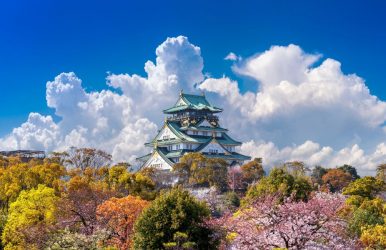
Osaka has a historical side. Therefore, tourists visiting Japan should enjoy visiting the historical side of Osaka. Places like the Osaka place overall provide the tourists with an enriching experience while they are on their trip to Osaka.
The castle serves as a great place to explore Japanese History and understand the elegance of Japanese architecture. Moreover, the tourists should visit the place at any time of the year. However, the cherry blossom season in April serves as the best time to visit the place, as it reflects a different aura. The Sakura blooms in the month of April. Therefore, the beauty of the place is enhanced. This time of the year is also a pleasant time to visit the place.
Therefore, the tourists should visit Osaka during this time of the year. But here’s the deal: as easygoing as the city feels, a smooth trip still needs a bit of planning. From navigating the city to finding the luxury hotels in Osaka Japan, it’s a lot of work!
I’ve learned the hard way (missed trains, wrong hotel location — you name it), so here’s the stuff I wish I’d known first.
The Best Time To Visit Osaka
People can take a trip to Osaka during the month of April when the Sakura blooms. However, tourists can visit the place throughout the year as there is no specific right time to visit the place.
Honestly? There’s no “bad” time to go. It’s more about what kind of trip you’re after.
Spring (March–May) is just ridiculous — cherry blossoms are everywhere, like someone dumped pink confetti all over the city. The weather’s dreamy. But fair warning, everyone knows it, so expect packed parks and pricier everything.
Autumn, from September to November, is kind of my favorite. Milder temps, fewer people, and it’s easier to get a last-minute table somewhere. Only hitch? Rain likes to crash the party now and then.
Summer — from June to August — is sticky. Like, humid humid. But oh man, the festivals. Fireworks lighting up the river, food stalls lined up for blocks… It’s electric. You just have to embrace the sweat.
Winter (December–February) is quieter. Not freezing like Hokkaido, but cool enough to make hot bowls of ramen taste even better. And hey, no elbow fights in the subway.
Planning Your Trip to Osaka
If you’re thinking, “I’ll just wing it,” um… You could, but Osaka’s popular enough now that winging it often means missing out. The tourists should always plan their trips in advance. Planning trips early allows people to visit every place with time on their hands. Planning trips early also allows people to ensure that they are not spending more than what is required. Here are a few things that you can incorporate to ensure that you have a concrete plan.
1. Find The Cheapest Flights.
Book early. Like… months early. Especially if you’ve got your heart set on spring, check different dates, be okay with weird flight hours — that 2 a.m. arrival might save you enough cash to splurge on sushi later.
2. Treat Yourself To A Good Hotel.
Cut corners on flights? Great. Put that extra into a hotel you’ll actually enjoy being in. Swissotel Nankai Osaka is right above Namba Station, which means you can roll out of bed and basically be anywhere in the city within minutes. Bonus: Some rooms have that traditional Ryokan vibe, if you want a bit of “old Japan” without ditching modern comforts.
3. Book Restaurants Ahead Of Time.
If you’ve stalked a restaurant on Instagram, book it. Now. Osaka’s food scene doesn’t mess around. But leave room for surprises — some of my best meals came from random alley spots selling takoyaki or okonomiyaki for a few hundred yen.
4. Create An Itinerary To Optimise Your Time And Experience In The City.
Universal Studios Japan? Give it a day, minimum. Then work in Osaka Castle, Kuromon Market (snack heaven), and Dotonbori at night for the lights and chaos. Got extra days? Hop over to Nara for deer selfies or Kyoto for temples. Trains make it easy
5. Learn How To Navigate The City’s Transportation System.
Osaka’s trains and subways are fast, clean, and — once you figure out the map — kinda addictive to use. The Osaka Amazing Pass is worth it for unlimited rides. Thinking of city-hopping? Get the JR Pass and thank yourself later.
Oh, and pack smart. Summer’s basically a sauna. Other seasons? Layers are your friend — evenings can get chilly even if the day’s warm.
Things To Consider Before Taking A Trip To Osaka
The thing about Osaka is that it sticks with you. It could be the food, the late-night streets, or the fact that locals have this warm, “come on in” energy. Plan it well, and you’ll already be plotting your return before your flight home even boards.
And yeah, if you like the sound of rolling straight from the train into your hotel, Swissotel Nankai Osaka makes that ridiculously easy.
The tourists find Osaka to be one of the most important cities in Japan. However, tourists should ensure proper planning before they visit Osaka. Planning early helps tourists to spend less during their trip to Osaka. Osaka is one of the most important and culturally rich places in Japan. Osaka is also close to the Japanese capital. Therefore, it is convenient to visit the place throughout the year.
Are you attracted to Agoda for its alluring airfare and hotel offers?
However, you are a wise traveler and are aware that appealing offers frequently have exorbitant fees.
This could put your hard-earned money at risk of being lost.
So the question remains: is Agoda legit?
Let's investigate!
Is Agoda Legit?
Since Booking Holdings is the largest online travel company in the world, Agoda is unquestionably legitimate.
If something goes wrong or you need to make changes, cancel, or receive a refund, Agoda can make things more difficult.
In essence, Agoda serves as a go-between for you and airlines and lodging.
As an intermediary, Agoda manages your reservation and takes payment on your behalf.
The payment does not go to the hotel or airline you booked with.
Because your contract is with Agoda and not the hotels or airlines directly, they will not be responsible for providing you with assistance.
You will have to contact Agoda in the event that something goes wrong and you need help.
They will then get in touch with the airline or hotel in question on your behalf and give you the information you need.
In a similar vein, Agoda is the entity you will need to contact for any modifications, cancellations, or refunds.
And because of this, the involvement of a third party, Agoda, things could be challenging.
Especially in the event that something goes wrong or you need to cancel, make changes, or get a refund, especially when it comes to flights.
Reservation Tips
Bear the following in mind before making a reservation on Agoda:
It is true that booking through Agoda can save you money compared to making direct reservations.
There is a significant risk involved: it can make any mishap more difficult to handle.
Additionally, you should be aware of the following three significant risks and disadvantages of using Agoda for reservations:
Reservation Issues
Your hotel reservation through Agoda or any other online travel agency can be at risk of cancellation.
Occasionally, Agoda forgets to let the hotel know about a guest's reservation, which leads to either no reservation at all or an overbooking of the same room.
However, occasionally, the hotels will also "bump" the least expensive visitors who booked through an internet travel company like Agoda.
They will proceed to resell their room to a more direct buyer.
Additionally, they lie to the guest by pretending that their reservation never happened when they got to the hotel.
There's no guarantee that this problem will cease to exist.
Even though Agoda might try to talk to your hotel about it, especially if it's an urgent one.
No Control Over The Standard Of Hotels
Since Agoda and other online travel agencies are merely middlemen, they have little control over the quality of the hotels.
This is another risk or disadvantage of using them to book a room.
Even though Agoda offers hotel listings, it's crucial to remember that the listing and the actual hotel might not always match.
Therefore, there is nothing you can do if the hotel you reserved does not match the listing.
Having made the booking through Agoda, you have limited power to question the quality.
It's crucial to set reasonable expectations when contacting Agoda about these kinds of problems.
There's no assurance that they'll issue a refund, make another reservation at a nearby hotel, or provide any other kind of resolution.
Likewise, since the hotel is not directly in charge of your reservation, do not anticipate receiving a refund or any other kind of resolution from them.
This kind of scenario raises the possibility that Agoda will push things onto the hotel and that the hotel staff will then push things back onto Agoda, trapping you in the middle.
Consequently, you will be forced to accept the hotel as it is.
No Refunds For Non-Refundable Bookings
It's crucial to know that Agoda normally does not issue refunds for non-refundable reservations.
This is regardless of any unforeseen events that might affect your trip arrangements.
However, it is definitely a legitimate online travel agency in terms of legitimacy.
How?
Personally, I've used Agoda to book hotels, and I haven't had any problems. In fact, when I want to book a hotel, I always use it.
It is important to note that Agoda is owned by Booking Holdings, the global leader in online travel.
Not only does Booking Holdings own Agoda, but it also possesses a wide range of well-known online travel companies, such as Booking.com, Priceline, Kayak, OpenTable, and others.
You should always book directly if there is little to no price difference between booking through Agoda and booking directly.
Agoda may be providing you with a far better deal than making a direct reservation with a hotel or airline.
It all depends on your level and willingness to accept specific risks. Some of them are:
Book Directly Or Through Agoda?
You will have to consider the price difference between the two options.
If Agoda does offer a cheaper rate, there are certain risks to consider, like:
Difficulties and delays in resolving issues and making changes, cancellations, and getting refunds, particularly in the case of flights.
No reservation with the hotel.
Accepting the hotel as it is.
No refunds (in most cases) for non-refundable reservations, regardless of any circumstances that may arise.
I personally strongly advise against using Agoda to book flights.
The reason is that using Agoda to book flights makes it very difficult to make any changes.
If you're willing to accept the aforementioned risks and drawbacks and the price difference is substantial, I would only suggest using Agoda to book hotels.
Wrapping Up
While using Agoda to make a reservation can be complicated, the website is a reputable source for travel arrangements.
Agoda is a reliable source for bookings and typically offers lower prices than direct bookings.
Does this imply that Agoda is the best place to book?
Well, as previously stated, it mostly boils down to personal preferences.
But to close out this piece, here are some passing recommendations I have:
Avoid using Agoda to book anything, especially flights.
The exception would be hotels, and that too only if:
You can get a far better deal on Agoda than if you book directly with the hotel.
You accept the dangers and disadvantages outlined above.
If you adhere to the previously mentioned advice, you can reduce those risks and disadvantages.
If you have thoughts to share or questions to ask, please leave a comment below.
We would love to hear from you!
Read Also:
This Is My Experience With Play Airlines!
Here’s What I Found Out About Aha Airlines!
Condor Airlines: Is Booking Tickets On Condor Worth It?





 Related