

8 Beaches of Melbourne, Australia Where You Can Cool Off!

May 8, 2024

Last Updated on: Sep 17, 2024

Travel Blog

Are you a beach person? Do you want to visit beaches in Melbourne? Some of the beaches not only offer beautiful views but also help you have an amazing holiday. You can perform different activities such as swimming and surfing, organize picnics, enjoy a beach bonfire, and build a sandcastle!

There are other activities, some of which are my favourites, such as kayaking, snorkeling, parasailing, and scuba diving! With unending fun times, you can also enjoy delicious food, especially if you are a foodie. Remember that when planning a beach trip, we must carry essentials such as sunscreen, sunglasses, hats, towels, water bottles, and others.

Let me share with you eight of the coolest beaches in Australia, more specifically in Melbourne! You will not only enjoy it but make memories for a lifetime.

8 Beaches Of Melbourne, Australia, Where You Can Cool Off!

Several Melbourne beaches are renowned for their beautiful visuals and numerous opportunities. I will list eight beaches where you can cool off and relax on your holiday. You will love the article if you love surfing, swimming, fishing, and other activities.

There are several things to do in Australia, and I will help you decide on them! It would be best if you explored everything from sandy beaches to the delicious food joints across the foreshore of these beaches. In Australia, there are several opportunities that you can explore when planning your holiday.

South Melbourne Beach

South Melbourne Beach

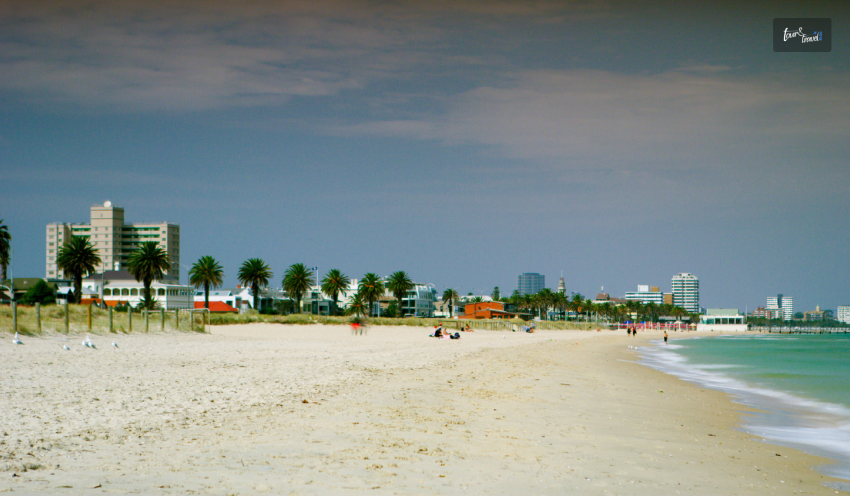
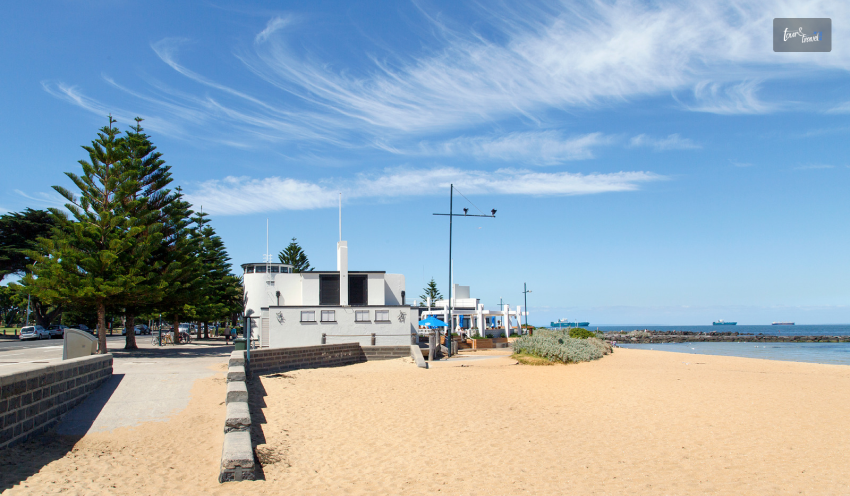
Port Melbourne Beach, also known as South Melbourne Beach, is charming and offers a beautiful view. There is the tiny Prince’s Pier, which is the perfect place for photography during sunset! You will get complete privacy if you visit this beach with your partner.

People can go out on casual strolls along the stretch of sand! If you are a pet parent, this is a perfect place to take your pet out on a walk; even the locals do that. You can see people playing beach tennis or taking a cruise ship to visit other places! Visiting this beach is easier if you have less time.

If you are a foodie, you can visit South Melbourne Beach to sample the delicious food there. Oceanside Pizza, Ocean 302 Bar and Grill, Sunnyside Cafe, and Billie’s on the Beach are some of the restaurants in Australia you must visit.

St. Kilda Beach

St. Kilda Beach

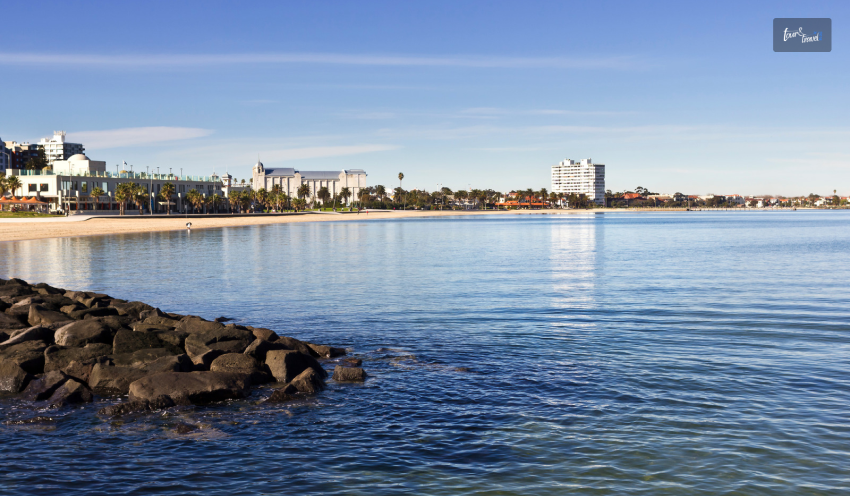
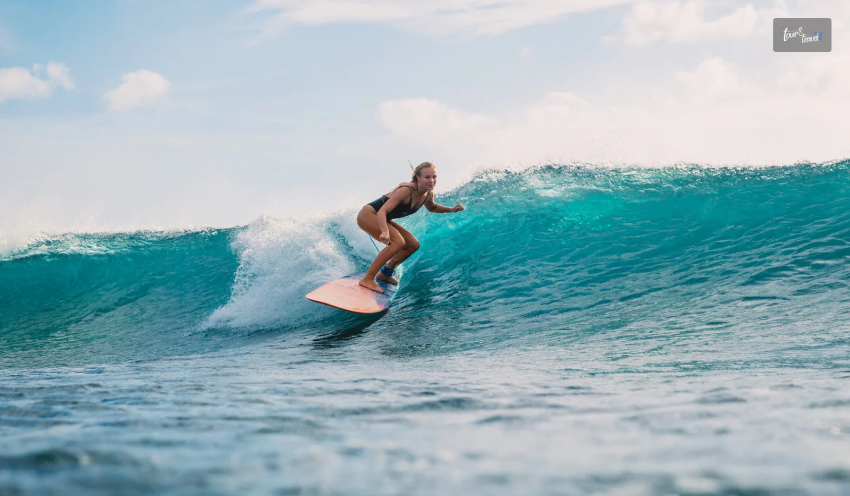
Even the locals cannot avoid this beach, so if you are a tourist, how can you prevent it? You must visit St. Kilda Beach, which has the vibe of Bondi Beach. However, the camera and the crowds still need to be included. If you are a surfer, you must visit this beach because it is wave-free.

One of the coolest places for water sports, paddle-boarders wobble across the ocean while the kite surfers enjoy to the best of their ability. You will see several palm trees surrounding the boardwalk where you can cycle with your partner, spending a romantic evening!

On Acland Street, there are several trendy restaurants and cafes, which you must check out if visiting St. Kilda Beach. Also, please do not forget Luna Park, another significant attraction.

Elwood Beach

Elwood Beach

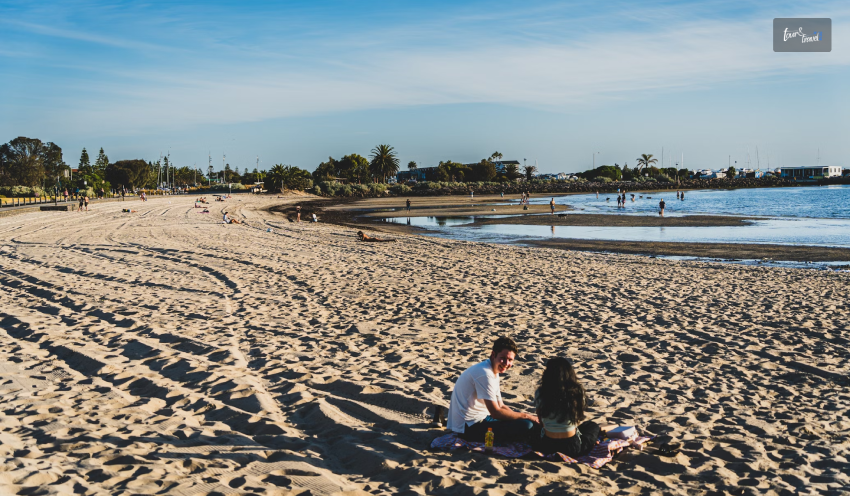
If you love a relaxed vibe when traveling to the beach, you can go to Elwood Beach! It is just around the corner from St. Kilda Beach, so if you want to avoid all the hustle and bustle, you can escape to this beautiful, classic sandy beach!

The beach is not very far from the city; however, what is more beautiful? The CBD skyline looks mesmerizing, especially with that stunning view from the beach. Whether you are a vegetarian, vegan, or non-vegetarian, you will have all kinds of options, from cheesy empanadas to seafood such as oysters and kingfish!

 You cannot miss the porterhouse steak; the service and deliciousness of the restaurant will transport you to heaven!

Brighton Beach

Brighton Beach

If you plan to visit Brighton Beach, let me tell you it is an ideal spot for surfers, sunbathers, and swimmers. One of the best beaches in Melbourne, Brighton Beach is a long stretch of beaches, and the boardwalk scenario is quite popular.

 This area is also one of best places to live in Australia because it is a vibrant neighborhood. You can stay with your family or partner in residential areas on their sun-splashed streets and sandy beaches.

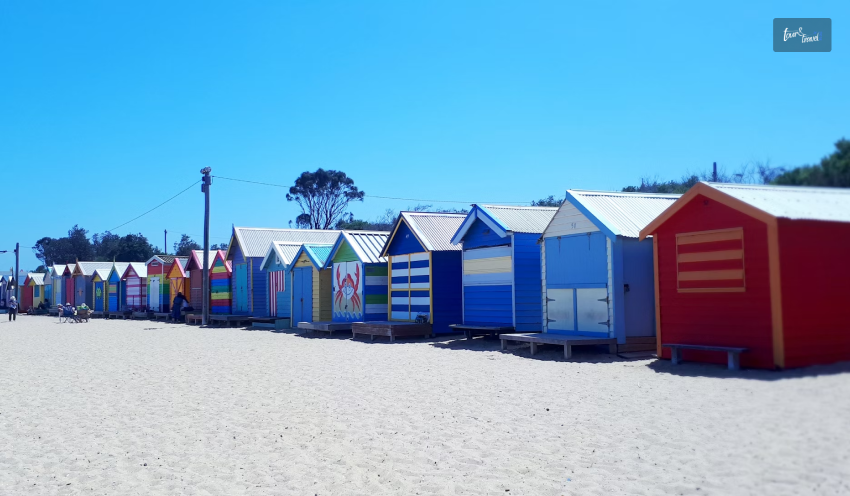
On the foreshore of the beach, there is a line of eighty-two little brightly colored charming bathing boxes! You will fall in love with these multicolored boxes, which also ensure the beauty of the beach. The wave on this beach is quite decent, and there are several places for fishing.

You can also not miss the restaurants, cafes, and galleries that are just a walk away from the beach. Even the market near the beach is quite popular!

Gunnamatta

Gunnamatta

On this beach, Gunnamatta, you can experience the full force of the Southern Ocean; hence, the ocean is harsh. However, with experienced surfers, this place can be a slice of heaven! You can also visit the Mornington Peninsula National Park near the beach.

The beach is clearly dramatic, but thrill seekers will love the gigantic waves! Some food joints allow you to take consistent breaks based on your preferences.

Dromana Beach

Dromana Beach

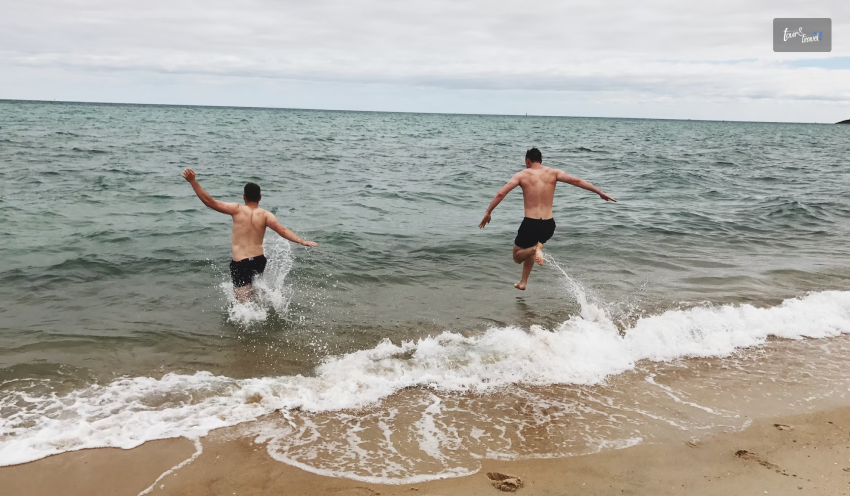
With its clear turquoise waters, Dromana Beach is a perfect fit for places in Australia that will take your breath away. The best time to visit Australia is mostly during the summer months, and the swimming conditions at the beach are perfect here!

You can go to different barbeque spots across the foreshore to hang out with your friends or partner. There is also a small fishing pier where you can perform a lot of fun activities! Several hiking trails surround this beach, which makes your visit more exciting and adventurous.

Apparently, there is a stamina test which you can take especially with the nearby Arthurs Seat State Park! You can also take the Arthurs Seat Eagle gondola, which offers beautiful and incredible views of Melbourne’s skyline across Port Phillip Bay.

Williamstown Beach

Williamstown Beach

For the locals there, you must ask where” Willy Beach” is. This beach is just a few steps from the city. A popular beach, it provides some of the most spectacular views of the water and the horizon. From sailors and sunbakers to swimmers, this beach is a spot for many.

If you are traveling from the train station, the closest beach to this is Gem Pier. This station offers some of the coolest unobscured views of the skyline. It is spectacular during the night, with teeming lights across Williamstown city!

If you plan to visit during New Year’s Eve, you can check out the beautiful fireworks across the town! Traveling from Sydney to this beach will take about 17 km (about 10.56 mi) by car.

Mordialloc Beach

Mordialloc Beach

The beach is not just a combination of water and sand but also a beautiful southeast suburb that offers resources and beauty. It is a charming seaside pocket with access to delicious food such as Tommy Ruff Fish Bar, Manow Thai, Doyle’s Deck & Bistro, Braeside Brewing Co., and others.

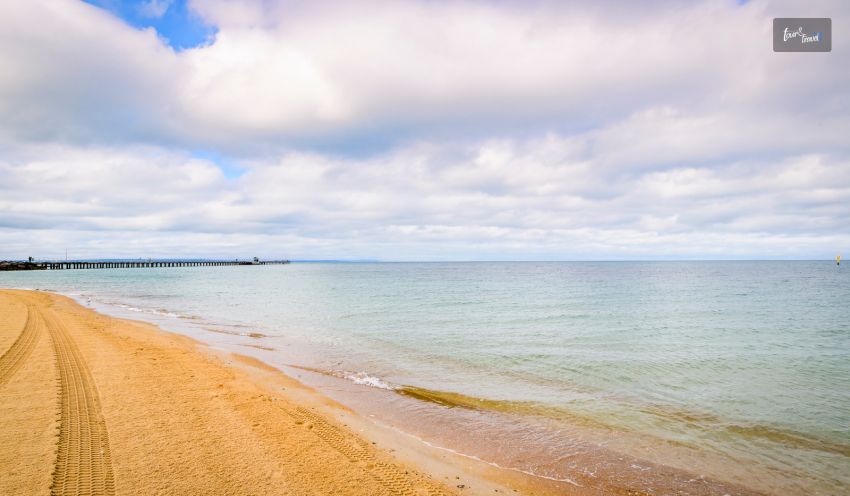
Sunny Boy Beach Club, a restaurant, is a combination picnic area, BBQ, and playground! A bike path runs directly to the restaurant from the beach. There is also a sturdy pier about 300 meters (about 984.25 ft) across the beach.

A family beach, it is quite popular for huge families and groups of friends to hang out and enjoy themselves. So, if you are someone who does not like crowds, you should avoid this beach because, during the week, there is always a huge crowd here.

Finishing Off…

In short, these beaches are cool to hang out with and offer beautiful locales and visuals! These beaches in Melbourne fit the bill when it comes to hanging around the water on a sunny and warm day. After reading the blog, I am sure you are dying to visit these places when creating an itinerary.

Check out our picks of the beaches in Melbourne, one of Australia’s coolest places. An amazing experience is dedicated to you, especially when traveling to these places.

Comment on which of the best beaches in Melbourne are already on your bucket list!

Learn More Also:

Share on Social Media

Sagnika Sinha is a content writer who is passionate about writing travel vlogs, entertainment and celebrity articles and literature-based pieces. With a 4 years experience in teaching, she loves reading books. A procrastinator by nature, she loves travelling, listening to music, planting and gardening.

Leave a Reply

Your email address will not be published. Required fields are marked *

title-img Related

READ MORE national parks in oregon

Top 10 National Parks In Oregon That You Need To Explore In 2024!

BY  Ankita May 31, 2023

Are you searching for the best national parks in Oregon? If the answer to this question is a YES, then you have reached the right place! The state of Oregon, which is blessed with magnificent scenery, nature, and landscapes, is situated in the US's Pacific Northwest. It has a wide range of attractions to offer. There are stunning mountains and picturesque shoreline to lush woods, vast deserts, and intriguing canyons. Oregon is a destination for outdoor enthusiasts due to its remarkable variety of landscapes. It has plenty of amazing hiking, camping, and animal viewing to be experienced anywhere you go. In this article, I will be talking about one such natural wonder— the national parks in Oregon! S, if that is something that you are searching for, there is one thing you need to do. And that is to keep reading this blog till the end… Top 10 National Parks In Oregon That You Must Visit! Despite having just one national park, Oregon is not short on beautiful landscapes. The state is full of natural beauties, including a fossil-rich desert, gorges, untamed rivers, and 360 miles of public coastline. In this article, I will be focusing on the top ten national parks of Oregon that you must visit. So, if that is something that you have been searching for, then you will find this blog to be of great help! Keep reading this article till the end to learn more… 1. Crater Lake National Park As one of the deepest and clearest lakes in the world, Crater Lake National Park in western Oregon is well-known today. But 7,700 years ago, the eruption of Mount Mazama, which formed Crater Lake, is probably one of the largest geologic catastrophes ever. After Mount Mazama erupted, it fell, leaving a crater more than 1,200 meters deep. It measured 8 kilometers north to south and 10 kilometers east to west. The crater subsequently filled with rain and snowmelt. The Crater Lake is awe-inspiring, and that is why it is the first one on the list of the best and most visited national parks in Oregon. Native Americans saw it form nearly 7,700 years ago when a powerful eruption caused a lofty mountain to collapse. Its purity and popularity as the deepest lake in the United States. It is also one of the most pristine lakes on the planet, nourished by snow and rain, astounds scientists. Photographers, artists, and tourists love the breathtaking location and crystal-clear water above the Cascade Mountain Range. 2. California National Historic Trail The California National Historic Trail, is situated geographically near a number of towns and states. With state map illustrations and driving instructions, modern auto tour routes closely resemble the historic road(s). It offers opportunities to find the trail's remains and important resources. Insight into life on the trail is provided by fascinating tales. It recorded incidents of immigrants, businesspeople, missionaries, and fortune seekers. During the 1840s and 1850s, more than 250,000 people made the largest mass migration in American history. They moved to the gold fields and fertile farmlands of California. The more than 5,000-mile-long California National Historic Trail passes through parts of ten states. Over 1,000 miles of ruts and tracks left by travelers and their overland wagons allow you to walk through history. 3. Ice Age Floods National Geologic Trail Glacial Lake Missoula, a 3,000 square-mile body of water encircling Missoula, Montana, is the result of an ice dam in northern Idaho at the conclusion of the last Ice Age, between 18,000 and 15,000 years ago. Floodwaters burst open when the dam broke, traveling across Washington, Oregon, and the Columbia River before reaching the Pacific Ocean. The Ice Age Floods affected the people, and the terrain of the Pacific Northwest, profoundly. The majority of geologists thought that glaciers and streams slowly eroded rock formations to create Washington's Channelled Scabland. Geologist J Harlen Bretz postulated that cataclysmic floods were responsible for the formation of the Channelled Scabland after finding geologic data that contradicted this theory. Bretz's theory was initially mocked, but it was later proven correct thanks to new technology like satellite photography. By the 1970s, everyone agreed that the Ice Age Floods were to blame for the ravaged terrain of the northwest United States. Today, the terrain is littered with remnants of these Ice Age Floods, including massive basalt coulees ND massive dry falls. It also has big boulders that have traveled hundreds of miles, high water lines, and tremendous current ripples. The Ice Age Floods National Geologic Trail includes spectacular examples of cataclysmic flood geology, breathtaking landscapes, and locations for scientific study. 4. Lewis And Clark National Historical Park The Lewis and Clark National Historical Park is tucked away in northwest Oregon, close to the Washington state line, just south of Astoria. It honors the remarkable accomplishments of the well-known couple who traveled the United States by bearing their names. It was at this picturesque location that Lewis and Clark finally brought their expedition to a close. They set up camp for the winter of 1805, with everything from thick rainforest and magnificent coastline panoramas to portions of the Columbia River and Pacific Coast. A copy of Fort Clatsop and a visitors center are located in the historical park. You can learn all about their journey here. They both contain intriguing artifacts and displays. Its woodlands also offer some fantastic hiking opportunities, and kayaking, fishing, and wildlife viewing are all very popular. 5. Valley Of The Rogue River State Park The Rogue River in Oregon is appropriately called and is the next one on the list of national parks in Oregon. It flows through the state's southwest and is famous for its untamed rapids, untamed beauty, and legendary salmon runs. The thirty-five-mile stretch that goes downstream from the Grants Pass is one of the best whitewater runs in the nation. Visitors can also explore the Rogue on foot along the Rogue River National recreation path. It follows the river for more than 80 miles. With a rafting-supported backpacking trip, you may explore the entirety of Rogue in one fell swoop. It is available from many local outfitters. Rafts carry camping gear downstream and give weary hikers the chance to float down the river. The Rogue River is famous for its salmon, steelhead, and rainbow trout fishing, and a number of dams have been demolished recently to reopen fish migratory routes. 6. Oregon National Historic Trail If you were an immigrant heading to Oregon, would the promises of luscious farmlands and a fresh start tempt you to leave your home and trek for days? The Oregon National Historic Trail, which spans more than 2,000 miles across six states, still bears witness to the sacrifices, tribulations, and victories of early American settlers. A number of African Americans traveled to Oregon as pioneers. Some did so voluntarily as free people, while others faced coercion as slaves. Between the 1840s and 1860s, hundreds of people certainly made it to Oregon. With state map illustrations and driving instructions, modern auto tour routes closely resemble or follow the historical road(s), offering opportunities to find the trail's remains and important resources. Thousands of wagon wheels and hooves moving west ran over the land, pounding the surface. Known as waggon ruts, their remnants can take a variety of forms depending on the kind of soil and the long-term impacts of water erosion. Visiting a trail rut and traveling back in time is one of the best ways to experience the Oregon Trail. Fortunately, you may still find places today where you can have that experience. 7. Oregon Caves National Monument And Preserve The magnificent "Marble Halls of Oregon" are tucked away in the Siskiyou Mountains. The Oregon Caves National Monument and Preserve is a well-liked and remarkable tourist destination that is located in the southwest of the state, close to the California border. The lovely cave complex, which was formed millions of years ago, glitters and shines before your eyes, with spectacular formations and exquisite stalactites and stalagmites everywhere you turn. Exploring the caverns' vast halls, fantastic passages, and dark depths while on tour is an excellent way to learn more about their history and geology. Even while the unusual underground tunnels are the main draw, the surface is just as fascinating, with sparkling rivers and streams meandering through the forest. The gorgeous preserve is the perfect location for nature enthusiasts, offering hiking, hunting, and animal viewing. 8. Nez Perce National Historic Trail The Nimiipuu (Nez Perce) people have lived in the prairies, valleys, plateaus, and mountains of the inland northwest since the beginning of time. They were incredibly tenacious, surviving the American colonization and adapting to a new world. A non-traditional national park, Nez Perce National Historical Park is made up of 38 sites that collectively depict the tale of the Nimiipuu (Nez Perce). These sites are dispersed throughout a large portion of the Nimiipuu people's modern-day homelands in Idaho, Montana, Oregon, and Washington. The visitor centers in Lapwai, Idaho, the Big Hole National Battlefield near Wisdom, Montana, and the Bear Paw Battlefield near Chinook, Montana, all have staff on hand. It might require a significant amount of time and travel over many hundreds of miles to see all the park's attractions. There are 38 locations in the Nez Perce National Historical Park that are significant to the history and culture of the Nimiipuu. Examine these locations. Find out their tales. There is just so much to do here! 9. Fort Vancouver National Historic Site This park has a rich cultural history and is on the north bank of the Columbia River, in view of snow-capped mountain peaks and a bustling urban environment. Four distinct locations share history, ranging from a frontier fur trade post to a significant military legacy, the wonder of flying, and the beginnings of the American Pacific Northwest. Learn about tales of change, settling, conflict, and community. The enormous collection of archaeological artifacts, historical artifacts, and archival records kept at Fort Vancouver National Historic Site helps to tell the site's tales. Native Americans from before and after European contact, the Hudson's Bay Company fur trade, the United States Army, early military and civilian aviation at Pearson Field, and the Kaiser Shipyards are all represented in the museum collection. In the midst of the bustling City of Vancouver, the Fort Vancouver National Historic Site is a haven of natural beauty and history. This National Historic Site includes a number of dog-friendly routes as well as a summer Bark Ranger programme for tourists and their canines. On the grounds of Fort Vancouver National Historic Site, have a picnic. The park has a number of picnic sites that are accessible from sunrise to dusk. 10. Oregon Dunes National Recreation Area The last one on the list of the best national parks in Oregon is the Oregon Dunes National Recreation Area. The vast majority of Oregon's coastline is stunningly rocky and rugged, but this 40-mile stretch of beach between the Coos and Siuslaw rivers is home to the continent's greatest stretch of coastal sand dunes. Windswept dunes that rise 150 meters above sea level here are perfect for hiking, whale viewing, riding horses, and off-roading. Both developed campsites and undeveloped locations along the Siltcoos river offer camping options. Both developed campsites and undeveloped locations along the Siltcoos river offer camping options. Reservations are advised for the state parks of Umpqua Lighthouse to the south and Jessie M. Honeyman to the north, which both provide additional sites. The quieter regions with just foot traffic are kept apart from the areas for motorized off-highway vehicles by Oregon Dunes admirably. The largest off-road area, if you're into it, extends between Spinreel Campground and Horsfall Road. While exploring the dunes on foot, by horseback, or in a dune buggy is a lot of fun, the recreation area also offers a number of campsites for visitors to use. Fishing and canoeing are also very popular here. With so much to see and do, it's a wonderful spot to travel to. Wrapping It Up! In case you were searching for the best national parks in Oregon, I hope that this article has been of help to you. If there are any other queries related to the same, feel free to let me know. All that you need to do is scroll down till you reach the bottom of the page. Then leave your comments and queries in the box below.

READ MORE Lake Clark National Park

Lake Clark National Park And Preserve: Very Few Know How It Preserves The Alaskan Spirit And Culture

BY  Sibashree Sep 10, 2024

Lake Clark National Park is committed to subsistence. It’s a sincere effort not to impact the “physical and spiritual culture of Modern Alaska.” Further, the park authority wants to pass on the park’s history to the future generation and the public. So, it was not surprising when the park sought public opinion on the exploration of its mineral tracts (Johnson Tract).  Located in the Johnson River headwater, Johnson Tract is a polymetallic project, and mining of gold, silver, copper, zinc, and lead is possible here. Public comments on “transportation and port site easements” are invited so that there is better accessibility to Johnson Tract. However, the more important aspect of it is analyzing the environmental impact of the project on the park.  There will be the following activities, and the analysis report will likely be published in the fall of 2024.  Hydrological assessment Geotechnical assessment Surveys of cultural and natural resources  But that’s not all! There have been many published stories, such as “Dena'ina Ełnena,” “Canneries, Cabins, Caches,” and more on this national park. Moreover, storytelling by the Native community or the tradition of oral storytelling is still alive here as a part of the “University of Alaska Fairbanks program.”  The things I have discussed so far show how the park is focused on preserving its personal and shared identities. Now, I will delve into some related details and also talk about what makes Lake Clark National Park special in terms of places to visit and things to do.  Preserving History And Culture At Lake Clark National Park  Do you know the original name of Lake Clark? Dena’ina people call it “Qizhjeh Vena,” meaning “a place where people gathered lake.”  Further, the people of Dena’ina, or Athabascan culture, have made this region their home for thousands of years now. How they see the lake and the surrounding land as the main resource of their lives will change the common perspectives about this national park. It is not just a preserved space with wilderness, interesting landscapes, and scenic beauty! It is an account of human history.  Women were always taught to be independent in this culture. They knew how to set snares and ground squirrels. This was an important exercise so that they had to never be dependent on others for food.  Athabascan people, originally from Alaska, started residing here. Further, with time, they encountered people from Russia, the USA, Canada, and Western Europe. Thus, their way of living evolved. However, they have made an effort to preserve their old way of living, and subsistence is still the key to their lives.  I have already mentioned how the oral and written stories preserve the cultural spirit of the park for posterity. Further, the Natural and Cultural Museum of the park preserves many artifacts, geological samples, and ethnographic items so that you can learn about the physical, spiritual, and cultural transformations.  Here is a breakdown of the total 248,402 items preserved at the museum. Type of ItemNumbers Archeological Artifacts34,363Park Archive Documents202,397Historical Artifacts, Documents, And Photos4,663 Biological Specimens6,838Paleontological Specimens47Ethnographic Items16Geological Samples69Objects of Art 9 The museum specialists take special conservation measures to make these objects available for posterity.  These Are The Historically Significant Places In Lake Clark National Park And Preserve https://www.instagram.com/p/B_VbC2clywQ/ Many areas of the park have names in English and Dena’ina. The names in Dena’ina are crucial if you want to understand their significance and the story behind them. Here’s a brief list of the historical places to visit in this park.  Dena’ina Tinitun or Trails  Ancestral Telaquana Trail Tanalian Point Hnitsanghi’iy 'The Rock That Stands Alone' (Priest Rock) Qizhjeh Vena or Lake Clark Kijik (Qizhjeh) National Historic Landmark and Archeological District While the sites have historical significance, they also speak volumes about Dena’ina values and way of life. For example, the trails here show the importance of social, cultural, and ceremonial participation among Dena’ina people. Many also believe that these trails are like “geological and educational maps” for future generations.  Subsistence Is The Key At Lake Clark National Park And Preserve Dena’ina people believe that the wilderness and animals will be good. It is we, humans, who have to be respectful toward them. To adhere to this, people in Dena’ina culture develop a communal understanding, and learn how to make the most of the limited ecological resources available. To maintain the art of subsistence, the people of Dena’ina culture focus on the following aspects.  The Ethics of Taking Hunters need to donate some part of the meat to the ill, old people, and families. This exercise shows how the tribe prioritizes communal bonding. Further, along with food distribution, the exchange of knowledge and resources is equally important in this culture.  Hunting and Trapping https://www.instagram.com/p/B8M_BvyHeUx/ Hunting animals, especially caribou and moose, is important for survival. Further, the distribution of meat according to the “Ethics of Taking” also builds community cohesion.  Trapping is a year-long activity here. Small animals such as mink, river otter, and Alaska hare are trapped to support living. However, Dena’ina people learn the skills of not hurting others or non-targets while trapping small animals.  Plant Harvesting Dena’ina families use various parts of the plants for different purposes. They collect food from the plants, and some of the plants also have medicinal properties. Further, trees and plants are often sources of tools, fuel, wearable accessories, and ceremonial essentials for them.  Berries grow in abundance here. Northern black currant, crowberries, and blackberries are some common varieties. Crowberry and blackberry leaves are used to cure diarrhea. Further, the stems of crowberry have medicinal properties that cure kidney problems.  Fishing and Fish Camps Summer and fall are the seasons of salmon in the Lake Clark National Park and Reserve. During these seasons, this national park has the largest salmon migration in the world. Further, families reunite and celebrate, and tourists flock in great numbers to the park to see and catch salmon.  Pike, trout, grayling, and whitefish are other varieties of fish found here. In addition, there are Nundaltin Q’estsiq’ and other fish camps where fish is processed and a temporary community is built.  Ethnographic studies further support all these subsistence activities. These studies related to fishing and other outdoor activities and the art of Dena’ina people living around Lake Clark are crucial. These studies help the local people to respond better to the economic, environmental, and sociocultural changes.  Things To Do At Lake Clark National Park And Preserve The vast wilderness and unique geological features make Lake Clark National Park suitable for hiking, camping, boating, fishing, rafting, and many other outdoor pursuits. Make the most of your time at the park! 1. Rafting In The Wild River https://www.instagram.com/p/CeSJ6Hbo0gw/ Tlikakila, Mulchatna, and Chilikadrotna are three wild rivers in the park. All these rivers are great for rafting. However, you must adhere to the Alaska Office of Boating Safety guidelines to avoid mishaps.  2. Fishing https://www.instagram.com/p/Cvz9q0ns6ms/ May to October is the best season for fishing in the Lake Clark National Park. Lake Clark is the main fishing hub here, and you can also explore Crescent Lake and Silver Salmon Creek.  3. Hiking  https://www.instagram.com/p/CrgO6IoOATU/ Tanalian Trails are the most popular for your hiking expeditions in this park. You can walk to Tanalian Mountain, Kontrashibuna Lake, Beaver Pond, and Tanalian Falls.  Many hikers also try hiking the Lake Clark and Upper Twin Lake trails.  4. Bear Viewing  https://www.instagram.com/p/C9kRPM2OYmi/ Silver Salmon Creek, Chinitna Bay, and Crescent Lake are the best sites for bear viewing in Lake Clark National Park.  5. Camping  https://www.instagram.com/p/BCO9H6jgnnr/ The area near Hope Creek is suitable for camping. Cook Inlet Coast is another place where you can put up your camps.  Knowing The Wildlife At Lake Clark National Park And Preserve Lake Clark National Park And Preserve is the place where you will get to see a bear in the stream and coming out with a salmon between its teeth. Very few people know that this national park is home to as many as 37 terrestrial animals and 187 bird species.  Nonetheless, have a look at the table below to learn about the animals you will meet at this national park.  MammalsBrown bearsBlack bearsDall sheepCaribouWolvesMooseBirdsGolden-crowned sparrowBald eaglesGolden eaglesTrumpeter swansSea ducksOlive-sided flycatcherFishSockeye SalmonArctic GraylingRainbow troutPike Did You Know? People in the Lime Village believe that olive-sided flycatchers and golden-crowned sparrows announce the arrival of the salmon season (around 3.1 million every year).  Birds are seen around the inland lakes, mountains, and coastal areas.  Before You Set In… Lake Clark National Park is a place less trodden by. Here is a quick glance at the things you need to know.  Established: 2nd December, 1980 Area: 4,030,006 Acres Number of Visitors: 16,728 (2023) Best Time to Visit: Late Spring to Early Fall Highest Point: Redoubt Volcano (10,197ft) Visitors Center:  Port Alsworth Visitor Center  Entry Fee: Free Best Mode of Transport: Small Planes Run by Authorized Air Taxi Companies Yelp Rating: 4 Star Also read Why Include Whale Watching In Your LA Itinerary. Traveling On A Budget: Tips For Affordable Adventures. From Cocktails To Kickflips: Must-Try Activities In San Diego.

READ MORE national parks in florida

Top 12 National Parks In Florida That You Must Visit In 2024

BY  Ankita Jul 20, 2023

Are you thinking about visiting some of the national parks in Florida? Well, if your answer is a YES, then you have reached the right place! Some people picture castles, roller coasters, and Mickey Mouse-shaped pretzels when they think of parks in the Sunshine State, but Florida's national parks are just as well-known as its amusement parks. Amazing ecological and biological diversity can be found on protected lands from the panhandle to the tip of the Keys. Florida is the only area on Earth where alligators and crocodiles cohabit; the mangroves here serve as kayak mazes, rockets blast off over lagoons, and alligators and crocodiles share the same territory. Keep reading this article till the end to learn about the national parks in Florida that you must visit this year… Top 12 National Parks In Florida That You Must Visit! There are a number of things that Florida, the Sunshine State, is famous for, and one of them is the National parks. These are a blend of nature and the history that humankind has made. So, if that is something that you want to know, then you have reached the right place! Here are the top 12 best national parks in Florida that you need to visit in 2023: 1. Big Cypress National Preserve The majority of people only experience Big Cypress National Park as a parallax of sawgrass and cypress trees against the billowy clouds of the Florida sky as they speed along I-75 or U.S. 41 via the windows of their vehicle. Most people only attend the visitor center because of need. However, some do so out of curiosity. Big Cypress is only one of two places on Earth where the ghost orchid may be found. It also serves as a refuge for the endangered American alligator, and Florida's elusive but threatened panther population. Big Cypress was the first National Park Service unit east of Colorado to get this recognition as a Dark Sky Place, and it continues to be the southernmost Dark Sky Place in Florida. This national preserve's swamp waters flow softly, producing the ideal environment for the name-bearing cypress trees to grow tall and strong and create a maze beneath their canopy for tourists who are more interested in aquatic activities. Big Cypress is one of the last remaining undeveloped areas in South Florida, where backcountry camps, swamp buggies, and airboats retain a traditional way of life that was developed by indigenous peoples and the pioneering spirit of early settlers. Big Cypress truly has something for everyone, so we are now challenging everyone to give something back to Big Cypress in exchange. 2. Biscayne National Park The most amazing features of Florida's seas are actually located below the surface. When people think of Florida's shores, they typically picture gentle waves lapping at the soft sand under a bright sun. Four separate ecosystems, covering about 173,000 acres, merge to form rich edge communities, or "ecotones." These edges are home to an astounding variety of animals, including pelicans, manatees, sea turtles, hundreds of different types of colorful fish, and flora that are unique to the United States. Over 600 native fish, neotropical water birds, migratory habitat, 20 threatened and endangered species, such as the Schaus' swallowtail butterfly and Florida semaphore cactus, as well as the previously mentioned sea turtles and manatees, can all be found in the park. It also includes the Florida Reef, the only live coral barrier reef in the continental United States, and the northernmost part of the third-largest coral reef system in the world. A number of shipwrecks along Biscayne National Park's Maritime Heritage Trail have found their final resting places because of this reef, a project that was made possible with The Alliance's assistance. 3. Castillo de San Marcos National Monument Castillo de San Marcos National Monument preserves the oldest masonry fortification in the continental United States and interprets more than 450 years of cultural crossings. It was constructed by the Spanish in St. Augustine to protect Florida and the Atlantic trade route. In case you are wondering about all the things that you can do here, I have you covered. You can engage with the park rangers that are eager to answer your questions. They also provide the tourists with several interpretive opportunities that are active and available throughout the day. You can attend formal presentations where a thematic program that lasts 15 to 20 minutes will be played. You can interact directly with cultural artifacts, get answers to your burning questions, and spend as much or as little time as you like at ongoing informal stations. The historic Cannon demonstration or Musket takes place on the weekends mostly. These are held at 10:30 a.m., 11:30 a.m., 01:30 p.m., 02:30 p.m., and 03:30 p.m. on Saturdays and Sundays. The volunteers and rangers also dress up in period costumes to give the tourists the best experience of traveling back in time. You can take pictures of them and with them to experience the lives of the colonists that lived here. 4. Canaveral National Seashore Canaveral National Seashore is a unique location since it's conceivably the only spot in the world where rocket ships, alligators, and nudist beaches coexist. On the east coast of central Florida, Canaveral preserves one of the state's longest stretches of undeveloped coastline. Mile after mile of pristine shoreline offers a tranquil haven for sunbathers, sea turtles, and the occasional nudist; Apollo Beach, at the northern end of Beach Road, is the alternative to the crowded Playalinda Beach right across the street. If viewing rocket launches from the adjacent Kennedy Space Centre on the park's beaches isn't your thing, you can also go kayaking through Mosquito Lagoon, a sizable estuary that occupies two-thirds of the park (but remember the insect spray). 5. De Soto National Monument Conquistador Hernando de Soto's army of soldiers, paid mercenaries, artisans, and clergy arrived in Tampa Bay in May 1539. They encountered ferocious resistance from natives defending their homes. De Soto's search for glory and treasure would be a four-year, 4,000-mile journey filled with mystery, conflict, disease, and discovery that would shape American history. Today, there are a number of things that you can experience at the De Soto National Monument. You can try on the European armor that consists of helmets as well as breastplates. This is one of the most popular activities of the people or tourists visiting this national park in Florida. Aside from that, taking a fishing class and bird viewing are additional popular activities in this national park. Numerous bird species, including gulls, great egrets, herons, as well as American white pelicans, can be found at DeSoto National Memorial.  If you're lucky, you might also catch a glimpse of bald eagles on the Manatee River scavenging for food! The De Soto Rancho Fishing Clinic is available in the park for adults and children aged 7 and older. Participants gain knowledge of fishing gear, casting, fish identification, and knot-making! 6. Everglades National Park Everglades National Park, the most recognizable national park in Florida, is the Yellowstone of swamps, a 1.5 million acre subtropical wilderness teeming with terrifying species that makes Jurassic Park seem like a petting zoo and jet-black waterways and mangrove-lined coastlines. This enormous park, the third largest in the contiguous United States, is too big to handle all at once. Alligator sightings are practically guaranteed along the Anhinga Trail, a leisurely 0.8-mile loop that leaves at the Royal Palm Visitor Centre. You can rent kayaks and paddle up the Flamingo Canal on unnervingly quiet water while passing through deep forests and mangrove tunnels to Coot Bay by continuing to travel along the Main Park Road until it ends at the Flamingo Campground. Keep a watch out for American crocodiles and also manatees along the trip. They enjoy the brackish waters close to the shore. 7. Fort Matanzas National Monument The next on the list of the best national parks in Florida is Fort Matanzas. From Fort Jefferson to Fort Barrancas, forts are as central to Florida’s national parks as gators as well as mangroves. Chief among them is Fort Matanzas National Monument. It's one of the oldest fortresses in the state and is also one of the first forts-as-national monuments in the nation, designated back in 1924. Originally built by Spanish settlers in 1742 to fortify the Matanzas Inlet in St. Augustine, it remains a resolute structure that stretches 50 feet on each side and is 30 feet high. Today, the fort is accessible via ferry, with ranger programs that shed light on its storied history. Other park activities include relaxing at a beach or following the boardwalk trail off the visitor center parking lot, which zigzags through a shaded hammock forest. 8. Dry Tortugas National Park Seventy miles off the coast of Key West is Dry Tortugas National Park, an aquatic wonderland of 99 percent water. The only land out here, seemingly in the middle of the gulf, is a handful of tiny keys, including the main attraction: Garden Key. After the two-to-four boat ride from Key West’s Yankee Freedom ferry terminal, dock at Garden Key to explore Fort Jefferson, an ironclad fortress built in the 1800s that looks like a brick Pentagon. Originally built to defend the Southern coast of the U.S. after the War of 1812, the fort also served as a temporary prison before earning national park status. Today, the structure—and the surrounding keys and waters—tells the stories of maritime combat and marine wildlife, best observed from the Garden Key beaches or along the underwater snorkel trails that surround the fort. 9. Silver Springs State Park For years, tourists have flocked to this location just to take glass-bottomed boat trips through the state's breathtaking springs. In reality, Silver Springs State Park's glass-bottom boat trips were introduced over a century ago, and they continue to be popular in this area of north-central Florida between Orlando and Gainesville. It's understandable, given that the park is home to surreal, crystal-clear water and a variety of animals, including otters, manatees, alligators, rabid rhesus macaques, and monkeys. Despite the fact that swimming is prohibited (due to the aforementioned alligators), Silver Spring is a kayaker's and paddle boarder's heaven, and there are 15 miles of shady hiking trails circling the 4.5-mile Silver River. 10. Point Washington State Forest Point Washington State Forest on Florida's panhandle is a refuge of tall trees and hiking trails. Located seemingly miles away from the state's more well-known parks, you will find the longleaf pine as the main attraction. It is a tree that is so tall that it resembles a hybrid of a redwood and a palm. The Eastern Lake Trail System, which supports the park's recreational options, is surrounded by these pines for miles. The trail system here contains several unpaved trails for cyclists and hikers despite being as flat as a pancake. The nearby Grayton Beach State Park, which follows the coast as well as offers coastal forest trails, swimming chances, and kayaking on dune lakes, is definitely worth exploring. 11. Bahia Honda State & National Park Bahia Honda State Park is a pastoral pit stop on the road to Key West out in the Keys. Calusa Beach, off Big Pine Key, serves as the park's focal point. Its turquoise waters entice swimmers, snorkelers, as well as kayakers alike (equipment for both activities is available for rent). At the summit of the iconic Bahia Honda Bridge lies a truly picturesque setting. It is a historical structure dating back to the early 1900s. This was originally a crucial component of Henry Flagler's ambitious Overseas Railroad to Key West. A little route along a portion of the bridge will lead you to one of the Keys' highest spots. Here you may enjoy panoramic views of the bay below. Stay for a photo-worthy sunset and afterward stargazing if you want to remember it forever. 12. Apalachicola National Park A stone’s throw from the state capital of Tallahassee, Apalachicola National Forest is a natural haven. Florida's largest national forest clocks in at a whopping 633,000 acres. This park has two main sections. They are Bradwell Bay Wilderness and Mud Swamp/New River Wilderness. Between the two, visitors can paddle, swim, hike, fish, and go off-roading or horseback riding. The park also exhibits striking biological and ecological diversity. It goes from longleaf pine sandhills and pine flatwoods to coastal plain hammocks, basin swamps, and floodplain forests. The area teems with wildlife, like woodpeckers, bobcats, gray foxes, as well as alligators. Drink in the diversity on a one-mile loop at the Camel Lake Trail. You can also enjoy by kayaking to Owl Creek from Hickory Landing. You can also take a two-mile route along the Apalachicola River. This gets paddlers up close and personal with that classic Florida river swamp terrain. Wrapping It Up! In case you were searching for the best national parks in Florida, I hope that this blog has been of help to you. If there are any other queries related to the same, feel free to let me know. All that you need to do is scroll down till you reach the bottom of the page. Then leave your comments and queries in the box below. And I will be there to answer them all for you! Read Also: Is It Worth It To Stay In An All-Inclusive Resort In Florida? Indian Buffet Near Me In Florida – Best Buffets For You 10 Best Fishing Charters In Florida To Visit Top 8+ Splash Pad Near Me In Florida