
Wadduwa, Sri Lanka: A Quiet Stretch Of Coast Worth Slowing Down For

Wadduwa is very close to Colombo, just 35 kilometers south. You reach it in less than an hour’s drive down the Galle Road or the Southern Expressway. 

However, it is easy to miss Wadduwa on the way to Bentota or Hikkaduwa

It is true that Wadduwa does not have a single big attraction. Still, the fishing boats going out at dawn, coconut palms leaning over empty sand, and an unhurried rhythm make it different from built-up beach towns further south. 

Wadduwa At A Glance 

LocationWestern Province, Kalutara District, southwest coast of Sri Lanka
Distance from Colombo35 Km
Distance from the airport50 km from Bandaranaike International Airport
Known ForQuiet BeachesAyurvedic Wellness ResortsFishing Village Culture
Best Time to VisitNovember to April (Dry Season, Calmer Seas)
Getting AroundTuk-tukTaxiCoastal Train LineBus
Ideal ForCouplesWellness TravelersTravelers Looking for a Low-Key Base Near Colombo
Nearby TownsKalutara (10–15 Minutes)Bentota (45 Minutes)Panadura (20 Minutes)

How To Reach Wadduwa?

Wadduwa, Sri Lanka: A Quiet Stretch Of Coast Worth Slowing Down For

Wadduwa is well-connected by bus, train, and private transport options. However, since the distance from Colombo is just around 35 km, traveling by a private taxi is the best option.

By Taxi

Traveling from Colombo City Center to Wadduwa via the Galle Road is a journey of around 40-50 minutes. 

The private taxi charged me around LKR 7500. 

However, if you are traveling directly from the airport, the travel time will be around 1.5 hours, and the cost will be close to LKR 12000.

Here, you need to keep one thing in mind regarding the charges. During negotiations, cross-check whether the toll charges for the Southern Expressway (E01) are included in the fare or not. 

By Train

If you are a budget traveler and want to enjoy the view of the southern coast, a train ride is a more suitable option. 

The distance between the Colombo Fort Railway Station and Wadduwa Railway Station by train is just 32.47 km. 

Trains on this route are available from 4:20 AM to 9:36 PM at regular intervals on a daily basis. Also, the travel time is around 50 minutes. 

The ticket prices for this train ride are LKR 80, LKR 200, and LKR 350 for 3rd class, 2nd class, and 1st class tickets, respectively (Source: https://www.railway.gov.lk/). 

This is the best option if you are traveling solo or do not have much luggage with you. 

By Bus

You can travel from Colombo to Wadduwa by bus also. You can catch the route number 100/2 bus or any bus going to Galle or Matara from the Central Bus Stop in Colombo Fort. 

The travel time is around 50-60 minutes, and the ticket price is just around LKR 150. However, if you want to travel in an AC bus, the ticket price will be approximately LKR 250.

What Are The Top Attractions In Wadduwa? 

Wadduwa does not have bucket-list destinations. However, all it takes is hiring a tuk-tuk, which will cost around LKR 150 to 400 for short rides. 

It will take you to the serene beach, Richmond Castle, and Kalutara Bodhiya. You can even visit the Kaluwamodara Bridge and the beautiful Kalu River.

Also, Wadduwa is known for its wellness tourism. You can indulge in the magic of Ayurvedic treatment here. 

1. The Beach

Wadduwa, Sri Lanka: A Quiet Stretch Of Coast Worth Slowing Down For

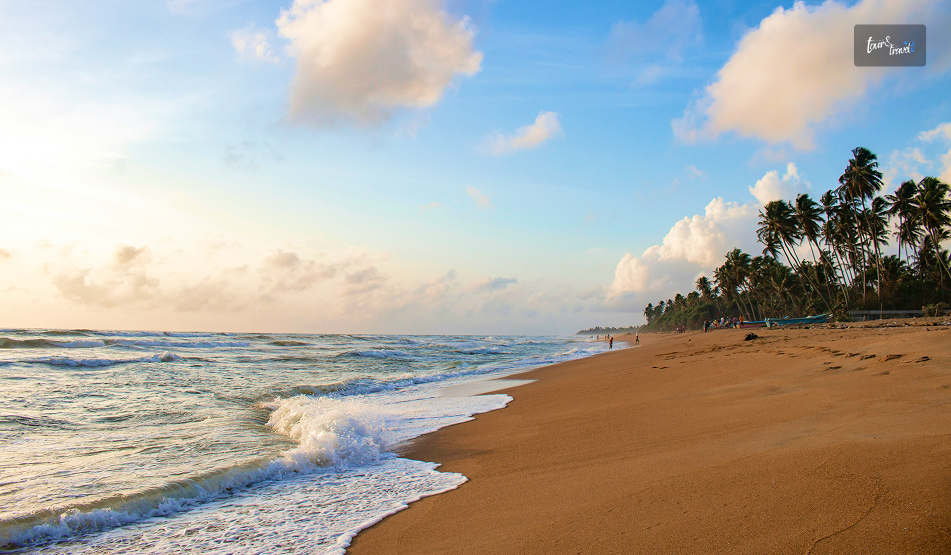
I started exploring Wadduwa with the beach as the starting point. It is a sheer contrast to Mirissa or Unawatuna if you are expecting high drama. 

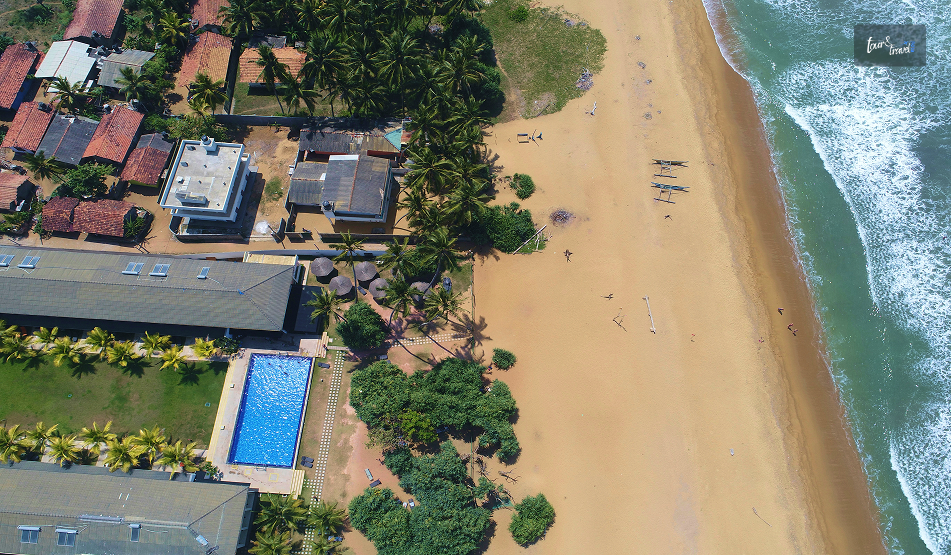
The sand here is soft and golden, and the water is calm. 

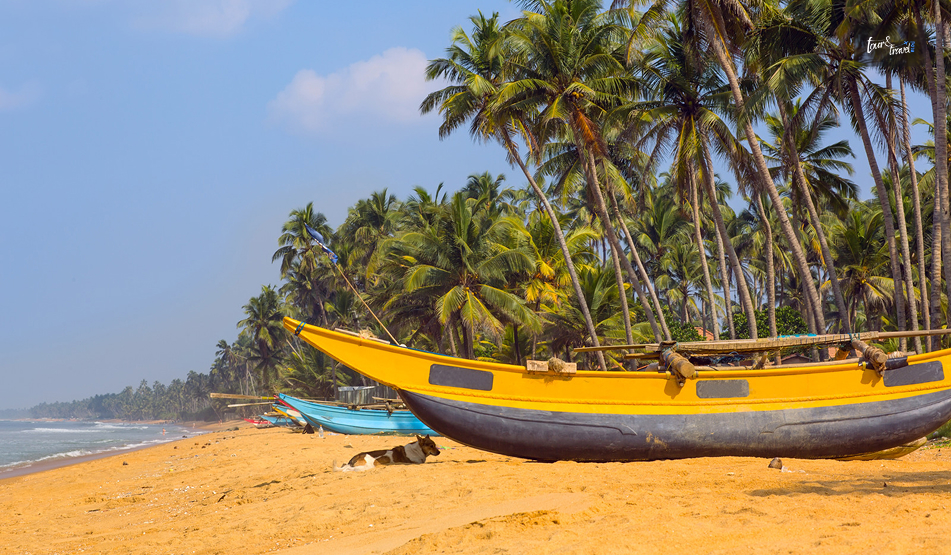
Also, the coconut trees line the shore in a way that feels more like a working coastal town than a resort strip.

Watching The Fishermen At Dawn At The Beach

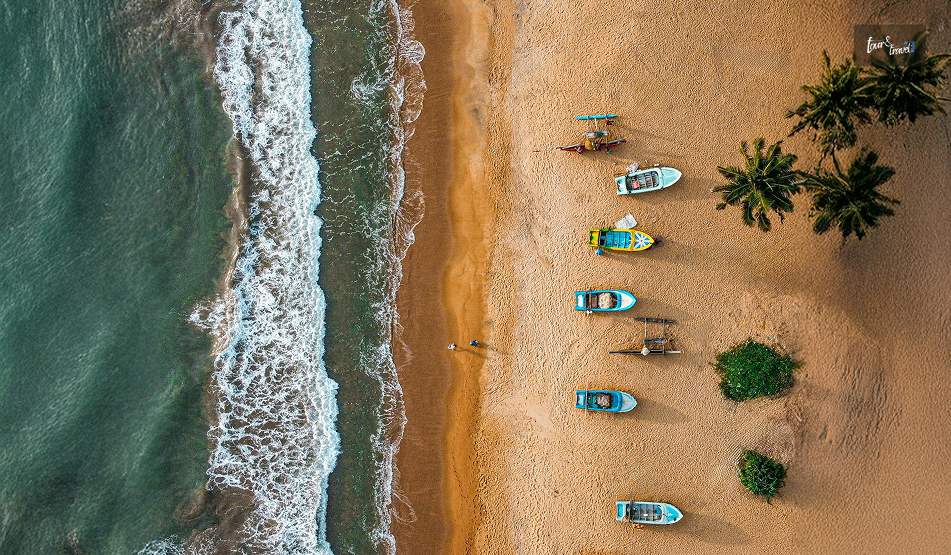
During my stay in Wadduwa, I used to wake up very early. It was just to observe the fishermen at work at dawn. 

They used to push the brightly painted boats into the surf. They also checked and mended their nets. 

There were no tourists in sight, proving once again that Wadduwa is a fishing community first and a holiday destination second.

Swimming And Conditions

The calm waters of Wadduwa make it a safe destination for swimming. However, like the other southern coastal destinations, the waters here also face occasional rip currents. 

Wadduwa is also famous for coconut plantations. 

These plantations back up right against the shoreline in places. That greenery is part of what makes the beach feel less commercialized than some of its neighbors.

2. Ayurveda And Slowing Down

Wadduwa, Sri Lanka: A Quiet Stretch Of Coast Worth Slowing Down For

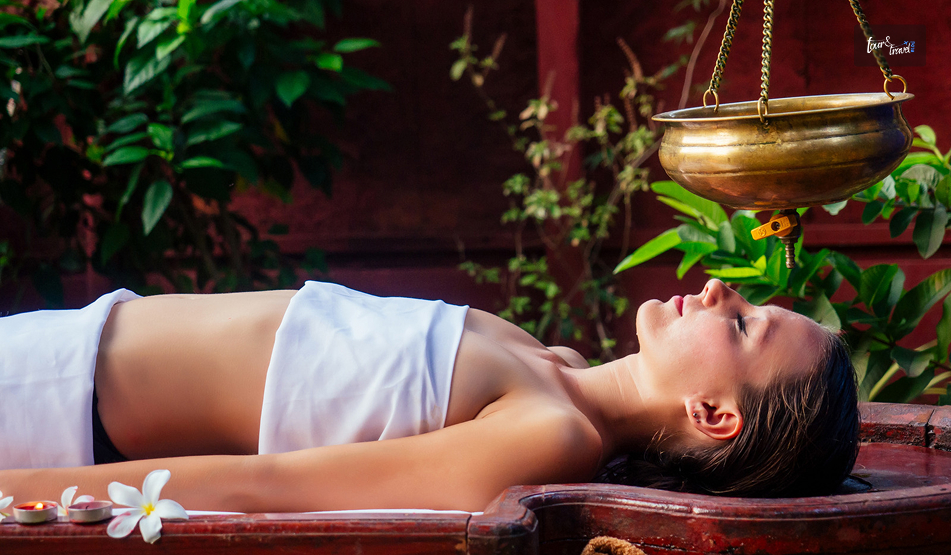
Ayurvedic wellness tourism is the biggest attraction in Wadduwa. It has a number of resorts that have reputations specifically around traditional Sri Lankan healing practices.

You can opt for the following wellness practices in Wadduwa. 

  • Herbal Oil Massage
  • Steam Treatments
  • Detox Programs

I am not usually one for spa itineraries.

However, I gave in for an afternoon and came away understanding the appeal. The cost of steam treatments and herbal oil massage came to around LKR 6000. 

It is a genuinely different kind of beach holiday, oriented around rest rather than activity, and Wadduwa has quietly become one of the country’s go-to spots for it.

3. Richmond Castle And Kalutara Bodhiya

After an Ayurvedic massage and complete rejuvenation, I took a short trip to neighboring Kalutara. 

It was just a 20-minute drive along the coast. I visited Richmond Castle and Kalutara Bodhiya there. 

Richmond Castle

Wadduwa, Sri Lanka: A Quiet Stretch Of Coast Worth Slowing Down For

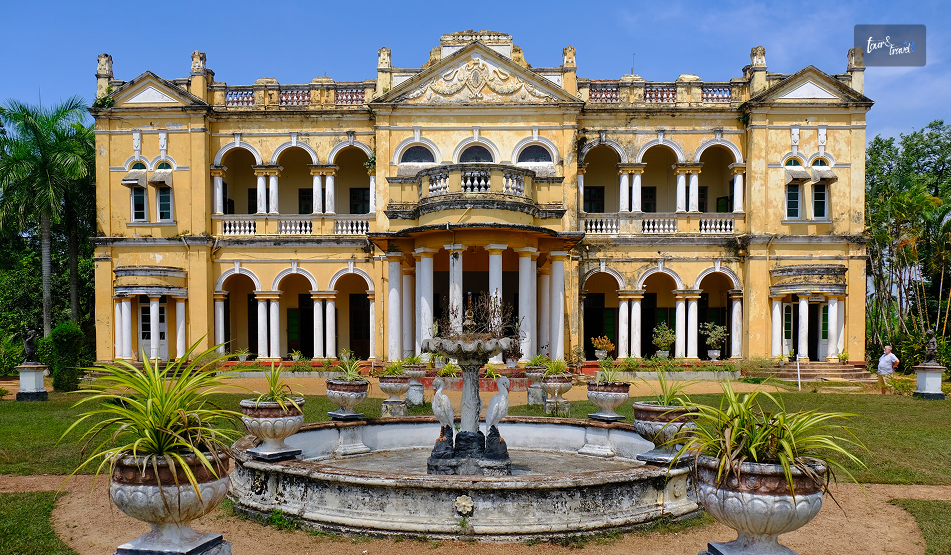
Richmond Castle is an early-1900s mansion built for a local Mudaliyar (a headman title from the colonial era).

It is an impressive 42-acre property blending colonial architecture with signature Sri Lankan styles. 

The entry fee to the castle is LKR 100 for local adults, and as a foreigner, I had to pay LKR 500. 

The entry fee may seem higher, considering it does not match the grandeur of a European castle. 

However, given that all the proceeds go toward funding local schoolboys’ education, you will not mind paying the same. 

The entry fee for the local schoolchildren to the castle is also very low, and it is just LKR 10. 

Guides are available on-site and can walk you through the history in about forty minutes to an hour, and the grounds are open daily from 8 AM to 4 PM.

Kalutara Bodhiya

Wadduwa, Sri Lanka: A Quiet Stretch Of Coast Worth Slowing Down For

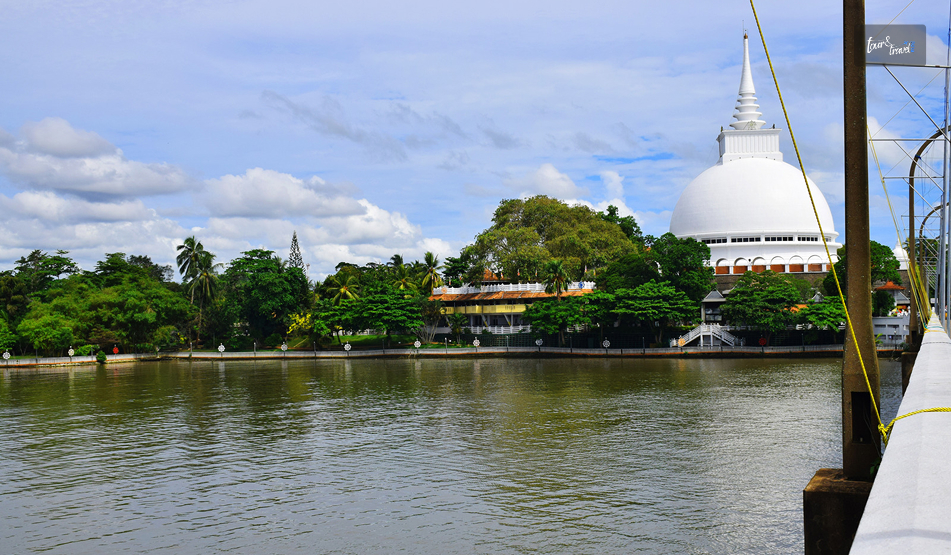
Kalutara Bodhiya, a major Buddhist temple and stupa, sits on the top of the river mouth. 

Along with its religious significance, Kalutara Bodhiya stands out with its striking structure. 

The hollow dagoba lets you walk inside and look up at painted panels depicting scenes from Buddhist scripture. This is something you see at every temple in Sri Lanka.

I have shared the details of visiting the Kalutara Bodhiya in my guide on the historic coastal town of Kalutara

4. Bridges, Rivers, And A Slower Kind Of Sightseeing

The Kalu River is the lifeline of Wadduwa and Kalutara. Furthermore, the Kaluwamodara Bridge connects the northern and southern parts of Kalutara across the Kalu River.

The bridge has an impressive arch design, and you can notice it while taking a tuk-tuk ride. 

However, I opted for a scenic boat ride of 90 minutes for LKR 3500. 

The short boat ride along the Kalutara River one afternoon wove through mangrove patches. 

I also got a look at local fishing life from the water rather than the shore. 

It is a quieter, more low-key version of the river safaris you will find further south in Bentota, and I actually preferred it for that reason. Fewer boats, more birdlife, no rush!

Day Trips From Wadduwa

Wadduwa, Sri Lanka: A Quiet Stretch Of Coast Worth Slowing Down For

Thanks to its central location on the western coast, Wadduwa is the ideal base for exploring the nearby coastal towns. 

You can plan the following day trips from Wadduwa. 

Bentota

About 45 minutes south, Bentota offers river safaris, water sports, and garden estates.

Brief Garden

The landscaped estate created by Sri Lankan artist Bevis Bawa is a worthwhile detour if you have any interest in tropical garden design or local art history.

Dehiwala Zoo

One of the older zoos in Asia, around 26 kilometers north, Dehiwala Zoo is an easy option if you are traveling with kids.

Pahiyangala

For something further afield, this prehistoric archaeological site near Yatagampitiya is about 40 kilometers from Kalutara.

It appeals if you are curious about Sri Lanka’s deeper human history rather than its colonial-era one.

Pahiyangala, or the Fa-Hiden Caves, has been home to prehistoric human beings around 37000 years ago, as backed by archaeological evidence

Such a fascinating site, the caves offer free entry, and they remain open for visitors from 6 AM to 6 PM. 

However, you need to climb a staircase for around 20 minutes to reach the caves. 

Food And Water Sports

Wadduwa, Sri Lanka: A Quiet Stretch Of Coast Worth Slowing Down For

Beyond the beach and the temples, Wadduwa gave me some of my simplest, best meals of the trip, and enough on-water options to fill an afternoon if lounging isn’t quite your speed.

Eating in Wadduwa

Eating in Wadduwa leans heavily, unsurprisingly, toward seafood.

The fresh catch sold right off the boats in the morning turns into curries and grilled fish by evening at the small local restaurants scattered along the coast road. 

On The Water

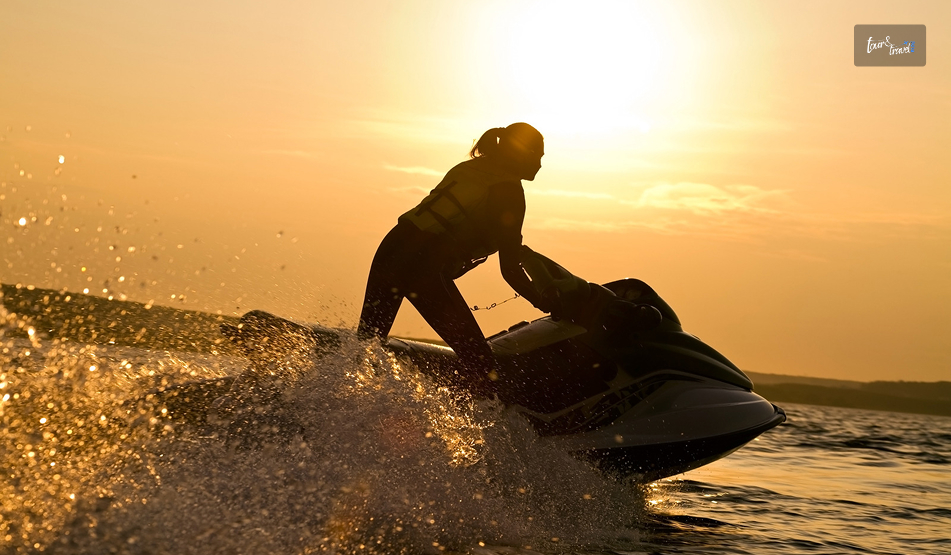
For anyone wanting more than sunbathing, the calm-but-active waters here support jet skiing, windsurfing, and light surfing.

All of these felt more accessible and less crowded than the equivalent setups in Bentota or Hikkaduwa. 

Here is a breakdown of the estimated costs for taking part in different watersports in Wadduwa.

WatersportsEstimated Cost (LKR)
Jet Skiing8000-12000
Banana Boat Ride5000-7000
Tube Ride6000-8000
Windsurfing / Wakeboarding10000-15000

I am mentioning all the charges here based on what the local organizers quoted me. The prices can change for your next trip. 

Wadduwa is not a surf town in the way those places are, but if you just want to get out on the water without booking weeks in advance, Wadduwa makes it easy.

What Is The Best Time To Visit Wadduwa?

Wadduwa, Sri Lanka: A Quiet Stretch Of Coast Worth Slowing Down For

Like most of the western coast, Wadduwa is best visited between November and April, when the weather is dry and the seas are calmer.

This is also when the Ayurvedic resorts tend to be fullest.

So, it is worth booking ahead if that’s part of your plan. 

The town holds a warm, tropical climate year-round, but the shoulder and monsoon months bring rougher water and less predictable weather.

A Simple 2-Day Wadduwa Itinerary

DaysActivities
Day 1, Beach and WellnessMorning
ArriveSettle inEarly walk on Wadduwa Beach to catch the fishermen heading out. 

Midday
Relax by the beach or pool.Light seafood lunch at a local restaurant
Afternoon
Ayurvedic spa treatment at your resort
Evening
Sunset on the beach, dinner of fresh grilled fish.
Day 2, Kalutara and the RiverMorning
Drive to Kalutara (~20 min) to visit Richmond Castle.
Midday:
Kalutara Bodhiya TempleLunch nearby
Afternoon: 
Kalutara River boat tour through the mangroves
Evening
Return to Wadduwa, water sports session (jet ski or windsurfing) if conditions allow.

If you have a third day, use it for a half-day trip to Bentota for river safaris and garden estates, or Brief Garden if you would rather stay closer.

Slowing Down At Wadduwa 

Wadduwa is one of the best-kept secrets of Sri Lanka in the truest sense. Just 35 km away from Colombo, it is a place to slow down and be a part of a livelihood based on fishing. 

Also, it is an important base for Kalutara and Bentota day trips due to its accessible location. 

Still, Wadduwa is quieter and on its own. So, the mornings on the beach never felt like they belonged to anyone but the fishermen and me.

Share on Social Media

Sibashree is a travel, culture, and leisure writer who has been writing since the age of 12 and professionally since 2014. With more than a decade of travel writing experience and journeys across India and several parts of the world, she brings a deeply personal and thoughtful perspective to her work. A student of English Literature and Mass Communication, Sibashree has always viewed travel as more than movement — for her, it has been a way of understanding people, cultures, and herself. Her passion for spiritual exploration has also led her to many unusual and meaningful destinations over the years. Outside of writing, Sibashree enjoys watching European cinema, reading about global politics, and reflecting on the stories hidden within everyday places.

Leave a Reply

Your email address will not be published. Required fields are marked *

title-img Related

READ MORE Is Japan expensive

Is Japan Expensive For Tourists? Why Is It Still Seeing A Boost In The Travel Booking? 

BY  Sibashree Sep 24, 2021

I have been to Japan many times, and the cultural richness and the sensory delights the country offers make the experience worth it!  However, these days, I see a lot of people asking, “Is Japan expensive to visit?”  Another question in this regard is why Japan is witnessing a major boost in travel booking.  Now, first, let me answer that Japan is not as expensive as people are projecting it. Be it the day trips from Tokyo or exploring the cherry blossom season in Kyoto, if you plan an itinerary and the modes of transport well, you can complete the trip within a decent budget.  Furthermore, thanks to smart tools such as the Japan Rail Pass, you can now make transport more convenient and flexible.  Also, whether Japan is expensive or not will depend on the country you are traveling from and how the currency of your country fares against the Japanese Yen.  On the other hand, Japan is enjoying a massive surge in popularity among Gen Z tourists due to many reasons. However, sushi, manga, and anime are the three major factors driving this rise.  While Japan can be managed on a moderate budget, and I have shared the three main reasons behind the rising popularity of Japan, let’s delve deeper into how much a trip to Japan costs and the other factors causing a rise in Japanese tourism.  Why Is Japan Expensive To Visit? Is It The Growing Craze?  Do you know that American Express Travel data shows a 1300% hike in the number of Americans visiting Japan since 2019?  Furthermore, Netflix has confirmed that Anime viewership has gone 3 times up in 2025.  Now, these pieces of information show how young Americans, especially the Gen Z travelers, are passionate about Japan.  The country is now a cultural superpower with its “Soft Power” that it has used to build the global landscape of entertainment, aesthetics, and ideas.  Joseph Nye, a political scientist at Harvard University, has highlighted the strength of Japan’s soft power.  Overall, Japan is not just a new country to visit for these young travelers. It is an escape to the land of rich culture, great food, and soaking in the spirit of slow tourism.  However, the rising craze among young travelers is not the reason behind Japan being labelled as an expensive destination.  In fact, it is amazing to see tourism in Japan growing despite the high travel expenses being  high.  Key Reasons For Japan Being An Expensive Destination To Visit  Japan is expensive as a destination primarily for three reasons. First of all, the Shinkansen bullet trains, extensively used for transportation, are very expensive.  Also, while I found Osaka food from the street stalls quite affordable, trying Sushi, Ramen, or other Japanese staples in a fine dining restaurant can be very expensive.  Furthermore, Japan almost entirely depends on imported energy.  Despite an improvement of 22.4% in the net energy import during the period of 2020 to 2024, the net energy import of Japan in 2024 was 87.4% of the total energy supply, according to the International Energy Agency (IEA).  Thus, the fuel cost is always high in Japan, impacting the transportation expenses, the cost of essential commodities, and every other sector in a direct or indirect manner. Is Japan Expensive To Visit? A Breakdown Of Tourist Costs  So, Japan is expensive to visit. However, what can be the overall expense tentatively?  What will be the expenses on food, transportation, and accommodation? Here is a detailed breakdown.  1. Tourist Accommodation Cost In Japan Japan is very sincere about the hospitality it offers. So, even if you are staying at a budget hotel or hostel, you will find good hygiene and the basic amenities.  Furthermore, along with hostels, Japan has unique accommodation provisions such as the capsule hotels.  These are basically sleeping pods, and the cost is similar to staying in hostels.  On the other hand, you will find a minshuku, which is like a Japanese version of homestays. You will get bed and breakfast facilities at these accommodations run by local families.  Nevertheless, have a look at the table below to understand the different types of accommodation for tourists in Japan and their average costs.  Types of Tourist Accommodation in JapanTentative Cost Hostels and Capsule Hotels2000-4500 JPYBudget Hotels5000-10000 JPYBread and Breakfast 5000-8500 JPYStandard Hotels10000 JPY Onward Moreover, if you’re looking to move to Japan after your trip there, check out reliable websites to know the best places for foreigners where you can call home. 2. The Cost Of General Public Transport In Japan  The Japanese Bullet Train or Shinkansen is the most preferred mode of transport in the country.  The Cost Of Traveling In A Bullet Train And The JR Pass However, the travel cost is very high if you are traveling by these bullet trains.  On average, and based on the departing station or the destination, the cost will be around 16000-20000 JPY per ride (the ticket price can go much higher).  For example, if you take a bullet train from Tokyo to Shin Amori, the price for a reserved seat will be 21340 JPY.  On the other hand, for the Green Seat and the GranClass Seats, the ticket prices will be 27410 JPY and 34410 JPY, respectively.  On the other hand, a Tokyo to Kyoto bullet train ticket starts from 16550 JPY.  Now, this is where a Japan Rail Pass becomes handy. As a tourist, you can buy a Japan Rail Pass for 7 days, and the cost starts from 50,000 JPY for an adult. For a child, it is 25000 JPY.  You can even buy passes for 14 days or 21 days. With this pass, you can enjoy unlimited rides during the validity period.  Moreover, if you want to focus on Tokyo and its nearby areas, the Regional Pass will be a more budget-friendly option.   Also, cabs are pretty expensive in Japan. For a ride of 1 to 2 kilometers, you will have to pay around 500 to 700 JPY.  After that, a fee of 80-100 JPY will be added for traveling every 250 to 300 meters.  3. The Cost Of Hiring A Tour Guide In Japan  The cost of hiring a tour guide in Japan is between 25000 and 60000 JPY per month. However, the cost of the travel guide will depend on the services you opt for.  You can choose a guide for a full day, and the cost can be up to 80000 JPY, and for a half day guide, it will be around 25000-47000 JPY.  Furthermore, if you are traveling in small groups or vans, the cost of hiring a guide will be around 24000 JPY.  So, hiring a personal travel guide is expensive in Japan. However, you can save the cost of hiring a guide by seeking help from the local tourist centers or the national tourist departments.  4. Food And Drink Cost In Japan Food is one of the most important factors for Gen Z travelers visiting Japan. A survey said that around 50% of the visitors planned a trip just because they wanted to visit a restaurant or try some specific food.  Also, food and drinks are available in various cost ranges. So if you are planning to take the authentic taste of sushi, you will get plenty of options available there.  From the expensive designer boutiques to Kaiten-zushi style shops everywhere, the multiple authentic sushi dishes are valuable.  You can select the place according to your requirements.  In the boutique’s style restaurant, you have to spend nearly 51000 JPY for sushi, but if you prefer the sushi in a low-cost range, you have to spend only 1593 JPY for sushi.  If you want to explore Japan on a budget. You can quickly shift your choices to Japanese cuisine and cut your travel budget by cutting the foreign food items. How To Plan Budget-Friendly Travel In Japan? Do you want to travel in Japan on a budget? Here are the tips you can follow.  1. Make A Tour Plan In The Off Season  Off-season tour plans are always budget-friendly. The Autumn season is an off-season to travel in Japan, and this time the tourist rush is not very high. 2. Take The Railroad  Take the railroad to explore the city and buy the railway card to see the tourist places in the country. 3. Focus On Local Cuisine  Focus on the local, authentic, fresh Japanese dishes. If you’re looking for cheap food in Japan, you can buy it in small restaurants, street food stalls, and even vending machine cafes.  However, if you stay in the country for an extended period, you can save money on your travel by preparing and cooking most of your meals from scratch. 4. Find An Accomodation Far From The Main Crowded Cities  Try to find accommodation that is a little bit far from the main crowded cities. Make sure to book your accommodation ahead of time to save a lot of money. Hostels and the local guest houses are also charming, clean places to stay. However, when planning a Japan tour, it is better to keep away from the expensive luxury boutique-type accommodations. 5. Look For Free Attractions  Look for free attractions and events to save money.  Whether you want to spend a fun day in a national park or visit a museum, there are incredible activities that allow you to enjoy Japan without paying anything.

READ MORE Kalutara

Why Is Kalutara So Famous? Know The Best Things To Do In This Historic Coastal Town 

BY  Sibashree Jul 8, 2026

Visit Kalutara if you are not already smitten by the whiff of fresh tea and cinnamon together; you must visit Kalutara.  The Kalu Ganga river, the fertile tropical soil, and the proximity to the Indian Ocean have made the region ideal for the cultivation of tea, rubber, and cinnamon since British rule.  So, when I reached Kalutara, I saw women wearing colorful sarees plucking fresh tea leaves and storing them in the hessian sacks hanging on their backs.  Furthermore, the iconic Richmond Castle, at a short distance from the Kautara City, and many architectural features here are remnants of colonial heritage in this historical town.  In this article, I will talk about the location of Kalutara, how to travel to it, why it is so famous, the things to do, and more. I will also share my experience filled with the visuals of cinnamon peelers and rubber tappers and the salty fragrance of the Indian Ocean.  Where Is Kalutara?  At a distance of around 42 kilometers from Colombo, the capital of Sri Lanka, Kalutara is on the western coast of Sri Lanka.  You reach this coastal town after a drive of 1 to 1.5 hours from Colombo.  Furthermore, Kalutara is the gateway to popular beach towns like Galle and Bentota.  Kalutara is most revered for the Kalutara Bodhiya Stupa, and the sweet purple mangosteen fruits here are another signature of the coastal town.  How To Reach Kalutara?  The journey to Kalutara from Colombo on the southern railway line is one of the most beautiful train journeys in Sri Lanka.  Furthermore, you will get public and private buses for the journey, and you can even book a private vehicle for the transit.  Here are more details about the transport options.  1. Colombo To Kalutara By Train You will get many trains from Colombo Fort to Galle, Kalutara South, and Matara. Trains are available throughout the day and from as early as 5:39 AM.  Furthermore, the last train for the day to Kalutara departs Colombo Fort at 9:36 PM. Also, the travel time is between 48 minutes and 1 hour and 20 minutes.  In addition, the ticket price for travel in a third-class coach is LKR 480.  2. By Bus  Public, private, and air-conditioned buses are available from Colombo to Kalutara. These buses run on the Galle Road.  These buses take around 3 hours and 30 minutes, and the ticket price is approximately LKR 600. 3. By Private Transport  The short distance between Colombo Fort and Kalutara is ideal for travel by car. The travel time will be around an hour, and the cost will be between LKR 3500 and LKR 4500.  You can either take the Galle Road for the commute or the Southern Expressway ( E01) as a faster alternative.  4. Moving Around In Kalutara  Kalutara is very much walkable, or you can take a tuk-tuk to move around. Furthermore, you can rent a bike or bicycle for a day to explore the coastal town at your own pace.  The rental charge will be around LKR 2500 to 3500 per day, and the rental agency will help you with the local driving license or other permit you need.  Why Is Kalutara So Famous?  The city of mangosteen and home to the Gangatilaka Vihara, the only hollow Buddhist Stupa in the world, Kalutara awaits with an air that is heavy with history, spirituality, and the stories of the bonding between humans and nature.  I have been to the Dambulla Royal Cave Temple and the Gal Vihara in Polonnaruwa. Kalutara felt like an extension of my visits to those places.  1. The Gangatilaka Vihara My jaw dropped as I stepped out of the humid coastal air and into the echoing, cool interior of the Gangatilaka Vihara.  The massive dome soared above me, and I found the inner walls covered in 74 intricate, vibrant murals depicting the life of the Buddha. Also, as I was inside the Gangatilaka Vihara, the traffic on the busy Galle Road got transformed into a soft hum, and the air was filled with the gentle chanting of pilgrims clad in white. 2. The Secrets Of The Sacred Tree I left the giant stupa and found the Kalutara Bodhiya just across the road. I felt the high energy instantly and was staring at the massive, ancient Bodhi tree.  A friendly local devotee named Anura noticed me, and she confirmed the facts I had read. This tree grew from one of the original 32 saplings of the Jaya Sri Maha Bodhi in Anuradhapura, linking it back over two millennia. Also, as I sat close to the tree, I found drivers stopping their vehicles in the middle of the bustling highway, stepping out just long enough to drop a few coins into a donation box for a blessing before driving on. Then, I performed the common ritual by pouring a small clay pot of water over the sacred roots.  The sheer energy of hundreds of people whispering prayers in unison under the rustling leaves gave me goosebumps. 3. The Magnificence Of A Coastal Castle  Kalutara is also about colonial opulence. This castle is on a 42-acre estate, and it was built in 1896.  This feels like a grand British manor house dropped straight into a Sri Lankan spice forest. As I walked through the grand banquet hall, I was amazed by the blend of Indian and British architecture.  The caretaker pointed out the intricate timber work, bragging that the wood had been imported all the way from Burma.  Standing on the sweeping balconies, looking over the sprawling grounds, it was easy to picture the extravagant, high-society parties that once took place here during the height of the rubber boom. Sunsets, Straw Hats, And Purple Fruit The natural geography of Kalutara also makes it stand out. The Calido Beach, especially, is magical in the late afternoon.  This is a narrow spit of land where the freshwater Kalu Ganga (Black River) runs parallel to the crashing saltwater waves of the Indian Ocean. Then, I sat on the sand and watched the local fishermen battling the currents where the river meets the sea, the sky turning a brilliant shade of bruised purple. On my way back, I stopped at a roadside stall where an elderly artisan was weaving palm leaves into a vibrant sun hat. Remember that Kalutara is Sri Lanka's "basket capital," and watching her fingers fly was hypnotizing. Also, before I left the stall, she handed me a magosteen and a dark purple fruit.  I cracked open the thick, leathery rind to reveal snowy, delicate segments.  The taste was an explosive mix of sweet and tangy, a perfect edible summary of Kalutara itself: bright, surprising, and utterly unforgettable. What Are The Other Things To Do In Kalutara? Along with the iconic landmarks that make Kalutara famous, some other attractions and activities await you in Kalutara.  1. Finding An Escape In The Brief Garden The Brief Garden was the former residence of Brevis Bawa, one of the most iconic architects of Sri Lanka.  It stands out with its artistic beauty, and that artistry blends well with the rich flora and fauna and fascinating sculptures.  I enjoyed a stroll in this delightful garden.  While walking through the hidden alleys and nooks, I enjoyed every bit of the artistic ambiance.  2. Going For A Guided Hike In The Sinharaja Forest Reserve The Sinharaja Forest Reserve is a UNESCO World Heritage Site. UNESCO designated this as a heritage site in 1998.  About the forest reserve, the UNESCO World Heritage Convention further mentioned,  “More than 60% of the trees are endemic and many of them are considered rare.  There is much endemic wildlife, especially birds, but the reserve is also home to over 50% of Sri Lanka's endemic species of mammals and butterflies, as well as many kinds of insects, reptiles and rare amphibians.” Moreover, the forest reserve has more than 450 species of trees. It even has hidden waterfalls forming clear streams. I could even spot the most vibrant tree orchids.  The nature trails here are well-maintained, and the hiking experience becomes all the more delightful with the chirping of the birds.  So, if you are planning a trip to Sri Lanka and want the best wildlife experience, you must add the Sinharaja Forest Reserve to your itinerary, along with the Yala National Park, Delhiwala Zoo, etc.  3. Spotting The Nesting Turtles At Kosgoda Turtle Hatchery The Kosgoda Sea Turtle Conservation Project, founded by Dudley Perera, is located approximately 27.7 kilometers south of Kalutara along the Galle Road (A2). It took around 40 minutes for me to reach the spot on a bike.  This project has been dedicated to monitoring the sea turtles here for three decades. They work to preserve these endangered animals and want to spread awareness about them.  The remarkable hatchery here focuses on collecting and rescuing eggs and storing them in a haven.  Furthermore, after the eggs are hatched, the turtles are only released into the ocean when they can fight the predators.  4. Trying The Spicy Local Cuisine  Kalutara has a rich history of spice trading. So, as expected, Kalutara has a culinary culture worth exploring.  Furthermore, every dish stands out with a perfect balance of zest, sweetness, and spice. Rice and curry, freshwater fish baked in banana leaves with coconut, tamarind, and mustard paste are some of the best dishes to try.  5. Exploring The Handunugoda Tea Plantation Do you want to extend your travel plans in the Handunugoda Tea Plantation a little? Then, you can travel for around 1 hour and 30 minutes and reach the Handunugoda village.  This tea plantation is famous for producing the “Virgin White Tea.”  Moreover, you can take a guided tour of the tea plantation and see the tea pluckers in action.  A Trip To Kalutara: Know The Perfect Itinerary  Two to three days are enough if you want to have an immersive experience in Kalutara. So, here is a 3-day itinerary for you.  DaysTimeActivityKey Highlights and Cultural InsightsDay 1MorningVisiting the Gangatilaka ViharaThe only hollow Buddha Stupa in the world. Late MorningKalutara Bodhiya and Sacred TreeThis tree grew from one of the original 32 saplings of the Jaya Sri Maha Bodhi in Anuradhapura. LunchTrying Spicy Local CuisineEnjoy a traditional rice and curry lunch. Taste local freshwater fish baked in banana leaves with coconut, tamarind, and mustard paste.AfternoonVisiting Richmond CastleExplore this grand 1896 Edwardian mansion built on a 42-acre estate. Marvel at the blend of Indian and British architecture and the Burmese timber work.Late AfternoonVisiting Calido Beach and Watching Palm WeavingWalk the narrow coastal spit where the Kalu Ganga meets the sea. Watch artisans weave vibrant straw hats from palm leaves and sample fresh, sweet mangosteens.Day 2MorningVisiting the Brief Garden by Bevis BawaTake a stroll through the former residence of iconic architect Bevis Bawa. Explore hidden alleys, rich flora, and fascinating sculptures blended into nature.AfternoonLearning Experience at Kosgoda Sea Turtle HatcheryTake a 40-minute ride south along Galle Road to Dudley Perera's conservation project. See how endangered sea turtle eggs are rescued, incubated, and safely released.EveningSunset and Coastal RelaxingHead back up the coast to Kalutara for a quiet seaside evening, taking in the purple-hued sunset away from the busier commercial beach crowds.Day 3Full Day (Option A)Hiking in the Sinharaja Forest ReserveEmbark on a guided nature trek through this UNESCO World Heritage Site. Spot endemic birds, rare butterflies, wild orchids, and hidden forest waterfalls.Full Day (Option B)A Visit to the Handunugoda Tea PlantationTravel 1.5 hours south to visit the famous home of "Virgin White Tea." Take a guided estate tour, see tea pluckers in action, and learn about the delicate processing. From modest homestays to luxury hotels and resorts such as Avani Kalutara, Kalutara has diverse modes of accommodation.  These will cost around LKR 5000 to 50000 per person per night.

READ MORE dikwella

Dikwella, Sri Lanka: The South Coast Town That Asks You To Slow Down 

BY  Sibashree Jul 28, 2026

On the bus route hugging Sri Lanka's south coast, Dikwella sat as a shadow to two more prominent names in Sri Lankan Tourism, Tangalle and Mirissa.  Mirissa stood out with its whale-watching boats and rooftop bars. Tangalle, on the other hand, showed its glossy resort strips.  However, Dikwella waited quietly with just a busy street, a fish market, and a few guesthouses.  Furthermore, the stretch of coastline of Dikwella unfolded quietly on either side of town.  I was looking for that quietness exactly, and that is why I ended up spending three nights there.  In this article, I will share my experience in Dikwella Beach, how to reach there, the things to do, and more! Where Is Dikwella? How To Reach It?  Dikwella or Dickwella is in the southern province of Sri Lanka.  Between Tangalle and Matara, this coastal town is also closer to the Galle–Mirissa corridor. So, Dikwella is accessible.  However, the thing is that it is usually far enough off the main tourist script. So, to me, Dikwella felt like a place where locals lived and not a backdrop built for visitors. If you are already exploring the south coast, Dikwella is a short hop from nearby towns. It is just about twenty minutes from Matara, fifteen from Mirissa, and only ten minutes or so from Tangalle.  Local buses run this route constantly, and the ticket prices are very low, though a tuk-tuk is more comfortable if you're carrying luggage. If you are traveling from Colombo, you will have to drive for around three and a half to four hours down the Southern Expressway to reach Dikwella.  The road exits near Matara and continues along the coastal road.  However, I took the Colombo Fort to Matara train and then a short tuk-tuk ride to Dikwella.  The train takes longer. However, the time you spend on the train journey here is more than worth it as it is one of the most beautiful railway routes in Sri Lanka.  It hugs the coastline for long stretches south of Galle.  Colombo Fort To Matara Train  There are many daily and weekly trains running between the Colombo Fort and Matara railway stations.  I took the 8050 Express train. It runs daily.  It departed the Colombo Fort Station at 6:50 AM, and I reached Matara at 10:15 AM. I was traveling in a 3rd class compartment, and the ticket price was LKR 300.  The second class tickets cost LKR 600.  From Matara, I took a tuk-tuk that charged me LKR 2500.  Getting Around Dikwella  You can hire a tuk-tuk to explore Dikwella and visit the nearby attractions such as the temple and the blowhole.  The rental cost is around LKR 3000 to LKR 4000.  However, I rented a scooter. It was more affordable, costing me LKR 1000 a day, and it gave me more flexibility to explore the smaller lanes and beaches nearby. What Are The Things To Do In Dikwella (The Best Is That You Do Nothing) Dikwella is the place that allows you to enjoy the joy of just existing.  So, even if you are an introvert like me, you will find the place comfortable for getting knocked over by a wave or simply waiting for the water to wash your feet.  Nevertheless, exploring the Blue Beach, a visit to Hiriketiya, a ride to the Hoo-maniya Blowhole, and a visit to the Wewurukannala Vihara are the to-do things in Dikwella. Being At The Blue Beach And The Double Bay  Dikwella Beach or Dickwella Beach has become the Blue Beach thanks to the locals and the nearby hotel owners.  It is a double bay formation just west of town, where two curved stretches of sand meet at a narrow rocky point. Due to the shape of the bay, the open-ocean swell gets broken up. So, the water inside remains calmer than most beaches along this stretch of coast. So, if you are visiting alone or with family, this is a more comfortable space for swimming.  I saw palm trees leaning out over the sand at angles that look almost too deliberate, like a photograph. Furthermore, in the late afternoon, the light turned the water somewhere between turquoise and navy.  I spent one whole evening doing nothing but sitting on the sand with a king coconut, watching fishermen haul in nets a little further down the beach. It was not a dramatic sunset by postcard standards. It was better, honestly, because there were maybe a dozen other people on the entire beach to share it with. 2. A Visit To Hiriketiya After soaking in the silence of Dikwella, Hiriketiya was my next stop to feel the pulse of the area.  Technically part of the greater Dikwella area, Hiriketiya has become one of the fastest-growing spots on Sri Lanka's south coast in recent years. It is a near-perfect horseshoe-shaped bay that has turned into a magnet for surfers, yoga retreats, and a rotating cast of digital nomads working from beachfront cafĂ©s. The bay itself is small. While the small bay offers intimacy, a lack of space can also make it feel very crowded with a surge in the number of visitors.  I rented a board for a couple of hours one morning, and it cost me LKR 500. Even as an amateur, the gentle, consistent waves here made it one of the friendlier places I have tried to learn surfing.  The scenario, however, entirely changed by the evening. The beanbags outside the restaurants were occupied, and people were busy gorging on the best seafood and wood-fired pizza.  It felt like a stark contrast to how quiet Dikwella felt.  3. A Visit To The Hoo-Maniya Blowhole I took a scooter ride toward Kudawella and reached Hummanaya, or Hoo-maniya blowhole.  It was like a narrow rock chimney with incoming waves getting forced up through a submerged cavern and bursting out at the top in a sudden plume of spray.  The water here makes a low rumbling sound that gives the blowhole its onomatopoeic name. Despite being the only natural blowhole in Sri Lanka and one of the largest in the world, the Hoo-Maniya Blowhole is unpredictable.  Some eruptions are a modest fizzle, others send spray shooting dramatically into the air, and the difference comes down entirely to the sea conditions that day. The locals told me that the blowhole is the most powerful during the southwest monsoon.  During the monsoon months, rougher seas force water through the cavern with more pressure. As a foreign visitor, I had to pay 500 LKR as the entry fee. For locals, however, the entry fee was 50 LKR for adults and LKR 20 for children.  The parking charges were LKR 50 to LKR 100.  There is a proper viewing platform from which you can cherish the unique geology of the place.  4. Visiting The Wewurukannala Vihara And Its Giant Buddha I took a scooty ride for about twenty minutes inland from Dikwella, and on the road toward Beliatta, I found a Buddhist temple appearing over the treeline.  It was Wewurukannala Vihara, home to the largest seated Buddha statue in Sri Lanka.  The statue rose around 50 meters, dominating the skyline of an otherwise low, palm-covered landscape. The temple complex itself is older and more layered than the giant statue suggests at first glance.  Parts of it date back to the 18th century, built during the reign of King Rajadhi Rajasinha, with a smaller, more traditional Buddha image worked into the original structure. Walking through the complex, I passed from that older, quieter section into the base of the giant statue.  Along the way, most visitors passed through a strange, slightly unsettling tunnel of painted dioramas depicting Buddhist concepts of karma and consequence.  Where To Stay In Dikwella?  You can decide where to stay in Dikwella based on the experience you want.  Close to the town center and the Budget, there is a good mix of budget guesthouses and a couple of larger beachfront resorts. While the budget guesthouses were more suitable for me, the larger beachfront resorts were for travelers who wanted easy beach access without the buzz. However, if you want a little buzz and the pulse of the area, Hiriketiya will be a more suitable choice.  The prices of guest houses here are higher. Also, the energy shifts toward boutique guesthouses, surf hostels, and design-forward small hotels aimed at the surf-and-yoga crowd. I split my stay between the two, a couple of nights in a simple guesthouse near Blue Beach for the quiet mornings, then a night in Hiriketiya just to experience the contrast. The stays near Blue Beach cost me LKR 1800 per night, and in Hiriketiya, it was around LKR 6000 per night. What To Eat In Dikwella?  Dikwella does not promise a huge restaurant scene. It has not come out of its shell of a working fishing town yet.  The daily catch showed up on almost every dish I had.  Some of my best meals were the simplest, including grilled fish, coconut sambal, and rice and curry from small local spots along the main road. Furthermore, the cost of food in Dikwella was a fraction of similar meals' cost in Mirissa or Unawatuna. For a livelier and more elaborate food scene, you can visit Hiriketiya. It has cafĂ©s and restaurants aimed squarely at the international crowd. So, there you will find smoothie bowls, wood-fired pizza, and fresh pasta alongside Sri Lankan staples. Overall, I cherished the contrast of eating a rustic curry in Dikwella town one night and a plate of pasta overlooking the surf in Hiriketiya the next. Things To Remember If You Are Visiting Dikwella  December to April, or the dry season, is the best time to visit Dikwella.  You will enjoy the calmest ambiance and nature for swimming in these months.  However, if you specifically want to see the Hoo-maniya blowhole at its most dramatic, aim for the southwest monsoon months instead, around May to September. Also, two to three days are enough if you want to experience the best of Dikwella. You can visit the Blue Beach and the Vihara in one day.  On the next day, you can visit Hiriketiya and the blowhole and try surfing. Then, leave a spare day if you just want to do nothing. So, Is Dikwella Worth Visiting? During my trip to Sri Lanka, especially when exploring the southern coast, Dikwella was my favorite spot as it allowed me to slow down and be myself.  Dikwella does not have an ancient fortress or a famous surf competition. It does not have a five-star strip or a world-class resort.  In fact, it is still very much a working fishing town that has not been built around tourism.  Dickwella Beach is beautiful because it is not overrun. Also, the nearby attractions such as the booming blowhole and a giant Buddha allow you to spend a couple of unhurried days. So, if your south coast itinerary has room for one detour off the Mirissa–Tangalle highlight reel, make it this one.