
A Slow Walk Through Royal History: My First-Person Guide To Peradeniya Botanical Garden

While setting my Kandy itinerary, I thought Peradeniya Botanical Garden would take around two hours.

However, I ended up staying four hours in the botanical garden. Still, I felt that I rushed through exploring the spice garden.

The time it demands is not just because of its expansion. Every section of the park is worth stopping for. 

In this article, I will give you a walkthrough of Peradeniya, along with the fees, timings, and route details I gathered along the way.

A Quick Snapshot Before You Visit The Peradeniya Botanical Garden


Detail

Information

Official Name

Royal Botanic Gardens, Peradeniya

Location

Peradeniya, about 5.5 km west of Kandy, Central Province

Established

In 1821 as a formal botanic garden
The site was a royal pleasure garden earlier, under the Kandyan kings.

Size

Roughly 147 acres (about 60 hectares), Sri Lanka’s largest botanical garden.

Setting

Held within a wide loop of the Mahaweli River, the island’s longest river.

Managed by

Department of National Botanic Gardens, Sri Lanka

Plant Collection

More than 4,000 species, including a well-known orchid collection.

Opening Hours

7.30 AM – 6.00 PM

Ticketing Hours

7.30 AM – 5.00 PM

Annual Visitors

Around 1.2 million local and 400,000 foreign visitors in a typical year.

Sources: Department of National Botanic Gardens

The Royal History Behind The Gardens

The Royal History Behind The Gardens

A walk around Peradeniya helped me realize how much of Kandyan royal history is tied up in this particular loop of the Mahaweli River.

From Royal Pleasure Garden To Botanic Institution

Before the British formalized it in 1821, the Peradeniya Botanical Garden was a royal pleasure garden.

The Kandyan kings were the patrons of the site, and it was especially dear to the last queen of Kandy. 

Six years after the fall of the Kandyan Kingdom to the British in 1815, the land was converted into a proper botanic garden.

It was initially managed by Alexander Moon and centred on coffee and cinnamon cultivation before it grew into the far broader collection it is today.

A Living Library Of Over 4,000 Species

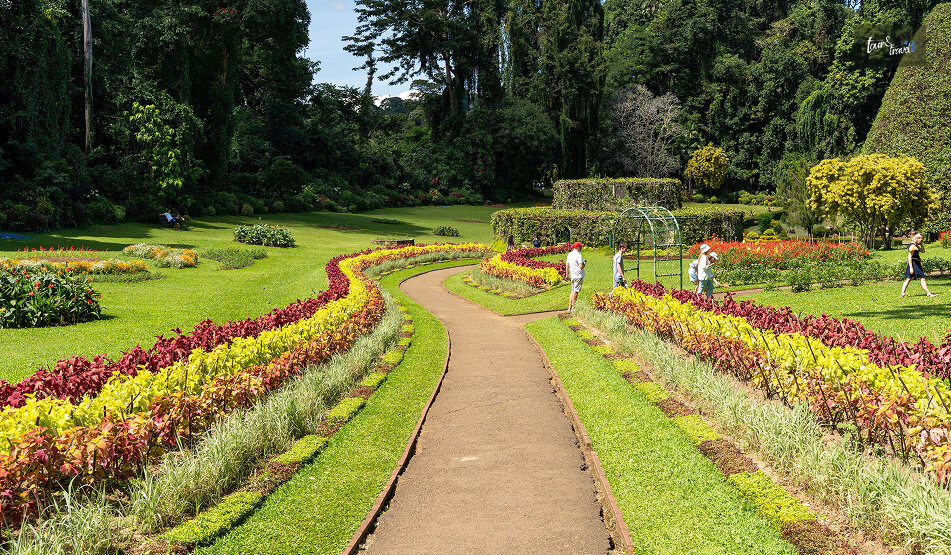
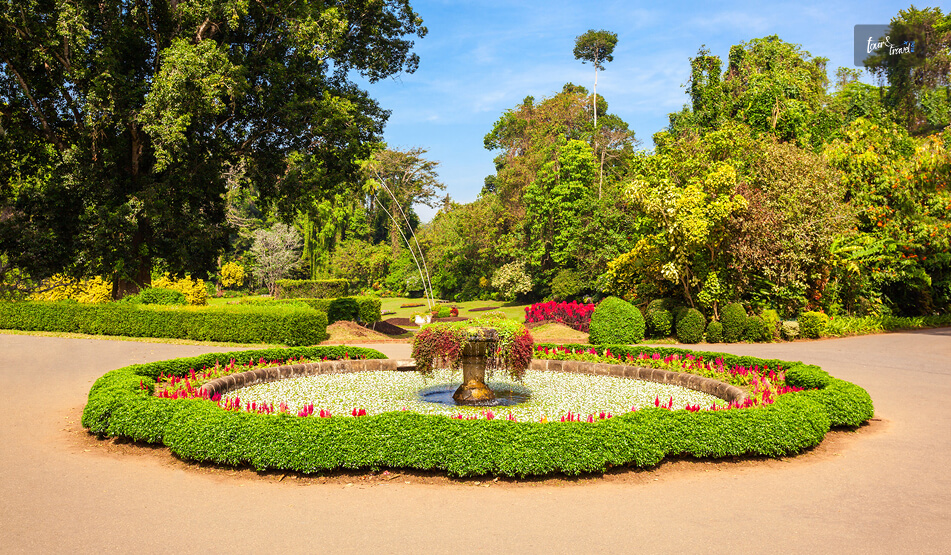
Today, the park has more than 4000 plant species. You will see palms, ferns, orchids, and shrubs from across the world.

So, within the same park, you will walk from the spice garden to the giant bamboo grove. It is like a mix of different ecosystems along the riverbank. 

What I Found Walking Through The Gardens

What I Found Walking Through The Gardens

Peradeniya spans across 147 acres. So, it is not possible to cover the entire area on a single visit. 

So, pace yourself rather than making an attempt to see everything at once. 

The Royal Palm Avenue

This is the postcard shot everyone takes, and for good reason. 

Rows of towering royal palms line a long, straight avenue, and the scale of it is more impressive in person than in any photo I had seen beforehand.

The Spice Garden

I lingered longest here. 

Cinnamon, nutmeg, vanilla, and other spices grow as actual plants rather than the packaged versions most visitors are used to.

Also, having someone point out which bark strip becomes the cinnamon on a supermarket shelf made the whole spice trade history of the island feel a lot more concrete.

The Orchid House

The Orchid House displays Cattleya, Dendrobium, Arachnis, Oncidium, Phalaenopsis, and Vanda varieties and their hybrids, including specimens of Tiger Orchid, the largest orchid species in the world. 

I would budget more time here than you think you need. It is easy to walk through in ten minutes, but worth thirty.

The Giant Javan Fig Tree And Giant Bamboo

These are two of the garden’s most photographed non-flowering specimens.

There is a sprawling Javan fig with a canopy wide enough to shade a small crowd. Also, the bamboo grove with stalks reaching over 30 metres. ]

Both feel less like garden features and more like landmarks in their own right.

The River Loop And Great Lawn

The Mahaweli River wraps around most of the property.

The paths along that loop are noticeably quieter than the main avenues. If you want a break from the crowds near the entrance, this is where to find it.

A Realistic One-Day Itinerary


Time

What I did

7:30 – 8:30 AM

Arrive at openingStart at the Royal Palm Avenue while the light is still soft and the paths are quiet.

8:30 – 9:15 AM

Exploring the Spice Garden with cinnamon, nutmeg, and vanilla plants. 

9:15 – 10:15 AM

Visiting the Orchid House, then the surrounding orchid garden.

10:15 AM – 11:00 AM

Visiting the Giant Javan fig tree and the great lawn near the river loop. 

11:00 – 11:45 AM

Exploring the Fernery and the quieter riverside paths.

11:45 AM – 12:30 PM

Visiting the Giant bamboo grove, then a slow walk back toward the entrance.

Planning Your Visit: Fees, Timings And Getting There

Visitor CategoryAdults (12+)Children (5–12)Under 5

Foreign Visitors

LKR 3,540

 LKR 1,770

Free

Local Visitors

LKR 200

LKR 30

Free

The charges for foreign schools and students are LKR 2,360. However, they need to produce the right proof. 

Also, for local senior citizens with NIC proof, the entry fee is LKR 50. 

How To Reach Peradeniya?

Peradeniya sits less than 5.5 kilometres from central Kandy on the Colombo road, which makes it one of the easiest half-day trips out of the city.

Take a short tuk-tuk or taxi ride, or a public bus running the Kandy–Peradeniya route. 

Several local operators also combine it with a Kandy city tour, pairing the garden with the Temple of the Tooth and viewpoints around town in a single outing.

Best Time To Visit

Best Time To Visit

Unlike Hakgala Flower Garden, Peradeniya’s lower elevation and river-loop setting mean it is a comfortable visit almost year-round.

However, a few things are worth timing around.

  • Early morning (7:30–10:00 am) for cooler temperatures and quieter paths.
  • The dry inter-monsoon months for the most reliable weather, since Kandy still sees regular rainfall through much of the year.
  • Weekdays over weekends, since school groups and local families tend to fill the garden on weekends and public holidays.

Tips From My Visit To The Peradeniya Botanical Garden

  • Wear comfortable shoes. The paths are flat and wheelchair-friendly, but the total distance covered adds up quickly across 147 acres.
  • Electric buggies and golf carts are available for rent. The 4-seater electric cars cost LKR 1000 per hour, and the 8-seater vehicles cost LKR 2000 per hour. 
  • Carry water and sun protection. Despite the tree cover in places, long stretches of the main avenues are fully exposed.
  • For photography, the light along the Royal Palm Avenue is best in the first hour after opening.

Nearby Places To Combine With Peradeniya Botanical Garden

Because it sits so close to Kandy, Peradeniya rarely needs to be its own dedicated day trip.

The Temple of the Tooth Relic and central Kandy are easy extensions to a trip to this botanical garden. 

Also, don’t forget the University of Peradeniya campus, which borders the gardens.

Moreover, if you want a journey onward to the hill country, you can include Nuwara Eliya in your itinerary.

Share on Social Media

Sibashree is a travel, culture, and leisure writer who has been writing since the age of 12 and professionally since 2014. With more than a decade of travel writing experience and journeys across India and several parts of the world, she brings a deeply personal and thoughtful perspective to her work. A student of English Literature and Mass Communication, Sibashree has always viewed travel as more than movement — for her, it has been a way of understanding people, cultures, and herself. Her passion for spiritual exploration has also led her to many unusual and meaningful destinations over the years. Outside of writing, Sibashree enjoys watching European cinema, reading about global politics, and reflecting on the stories hidden within everyday places.

Leave a Reply

Your email address will not be published. Required fields are marked *

title-img Related

READ MORE cherry blossom kyoto japan

Cherry Blossom Kyoto Japan: 2026 Season And The Top Viewing SpotsĀ 

BY  Sibashree Mar 27, 2026

The cherry blossom season has arrived in Japan. The Japan Meteorological Agency has announced the arrival of the most coveted season in the country on 19th March, 2026.  The somei-yoshino tree of the Yasukuni Shrine had more than 60 blossoms open then, and that prompted the announcement.  So, the recent warm weather has caused the arrival of the cherry blossom season earlier than last year.  However, the season of cherry blossom in Kyoto arrived a few days later on 23rd March, 2026. So, currently, the fervor around the cherry blossom Kyoto Japan is at its peak.  With the country now becoming irresistible with the blooms taking over the parks and roads, here is more about the cherry blossom season in Kyoto and the best viewing points.  When Is The Cherry Blossom Kyoto Season? Timing a trip to the cherry blossom Kyoto season or to see Sakura is a crucial exercise. The beauty and charm of these flowers are fleeting.  So, the when part of it is equally important as the where part.  Check out the table below for an idea about when the cherry blossom season arrives in Kyoto and how it progresses.  Cherry Blossom Season MonthsĀ Budding and Blooming of Cherry BlossomsĀ Kaika or the First Blossoms Late March Early April Mankai or Full Blooms by 7th AprilMid-AprilPetals Start to Fall and Create Petal Carpets Everywhere However, like 2026, the season can arrive early or even a little late.  The variation happens because the present temperature impacts the budding and blossoming of flowers.  If the weather is warmer, the flowers will blossom earlier than the average season. On the other hand, if there is a cold snap, the flowers will arrive late.  However, Kyoto has an advantage in this regard thanks to its diverse microclimates. Also, it boasts different cherry blossom tree varieties spread across different elevations.  So, even if you miss the cherry blossom scene at any of the shrines in Kyoto, you may find the flowers at any other place.  What Are The Places To See Cherry Blossom In Kyoto? Kyoto and all of Japan celebrate the cherry blossom season. It is enriching to witness such a deep bond between the people there and nature.  They love clicking pictures of flowers, picnicking under the trees, and just soaking in the happiness and beauty the flowers bring.  However, if you want to experience the best of the cherry blossom scene, you need to know about the places with the best views.  1. The Philosopher’s Walk (Tetsugaku-No-Michi) The Philosopher’s Walk is a canal-side stone walkway winding its way along the base of Hikoshiyama (Eastern Mountain Range). I began my day here.  The name has significance, and legend has it that Professor Kitaro Nishida of Kyoto University (an early 20th-century philosopher) walked this route daily for meditative purposes. Thus, it’s now known as the ā€œPhilosopher’s Walk.ā€  When I first set foot on the Philosopher’s Walk, I could see why he was always walking there each day.  The entire length of the pathway is lined with hundreds of cherry trees leaning above the water, creating a ceiling of pale pink blooms.  I found myself continually distracted while walking to the shop, eat, or visit the small shrines draped throughout the landscape.  Even with hundreds of people visiting this site daily, I felt as if I were walking alone, contemplating life.  There is nothing that compares to the silence created by having cherry blossoms fall off branches and drift gently down into the slow-moving canal below.  I felt as if I had achieved a moment of peace, not as a tourist but rather as an individual taking time out of their busy lives to think quietly, like all the others on the path. 2. Maruyama Park (Maruyama-Kōen) The Philosopher's Walk is for reflection, and Maruyama Park is the place to be to party!  The number of people in the park and how electric the atmosphere felt, I have to believe it is the most popular place to view blossoms in all of Kyoto.  It serves as a hub of hanami (flower-viewing) culture within the city. A huge, famous weeping cherry tree serves as the main attraction of the park.  Seeing the tree in person was an overwhelming experience for me because its branches seemed to flow downwards like water from a fountain.  The portion of the park that surrounded the tree became a festival site.  I saw blue tarps lying all over the park, and the universal sign of hanami gatherings with friends and family, eating, drinking, and just being together under the flowers.  The edge of the park had many food stalls offering various foods like yakitori and sweet dango. 3. Shimbashi Street (Shirakawa-Dori) Later, as I headed to find Shimbashi Street in the Gion neighborhood, my guidebook boldly said that Shimbashi was the ā€œmost beautiful street in Asia.ā€ When you first step into Shimbashi, you feel the essence of Kyoto’s refined beauty throughout the street.  Cherry trees line the street and form a thick canopy above the walkways, and beside the traditional wooden buildings, streams flow gently through the area.  Many of the wooden buildings along the way hold exclusive ryotei (expensive) restaurants, and the whole atmosphere feels as if it were pulled from a time before us.  The most exciting thing for me was the ā€˜parade’ of kimonos that I observed as I strolled.  Locals and couples routinely have their picture taken in a kimono (professional photo), and the vibrant colours of the silk kimono against the soft pastel cherry blossom trees made a beautiful visual transition from the past to the present.  I ended up discovering a small bistro at the end of Shimbashi Street that had cherry blossoms providing a tunnel effect above.  Eating lunch (al fresco) under the blooming tunnel while watching the many young couples walk past in traditional clothing was certainly the highlight of my time in the city.  It was both romantic and timeless and contained an ideal balance between the two. 4. To-ji Temple With the sunlight fading, I headed to the To-ji Temple.  The To-ji Temple is known for its five-story pagoda, which has the tallest wooden tower in Japan. However, what I was more excited to see was the massive, beautiful, weeping cherry tree. A trip to To-ji Temple in the evening is highly recommended.  They flood the entire grounds with bright white flood lights when it gets dark outside.  The weeping cherry tree illuminated with pink lighting is stunning against the night sky and the outline of the ancient pagoda.  Also, the weeping cherry took up most of the memory on my camera.  I spent a fair amount of time walking around the grounds. There are many other cherry blossom trees around the grounds that also have the same beautiful effect from the lights at night as well. They take on an almost ghostly, pearl-like quality that you can only get from external lighting at night. 5. Kiyomizu-Dera Temple No visit to Kyoto would be complete without going to see the Roji temple, aka the "Pure Water Temple."  However, viewing it in cherry blossom season looks like such a different experience from what I saw.  The main hall has a huge terrace about 97 feet long, which is one of the best places I found to view it. As I looked down from this height, I could see all across the surface of the mountain, where there were many different types of cherry trees blooming or not blooming along the slopes.  The pink blossoms (the cherry trees' flowers) create a nice light-coloured contrast with the dark, weathered wood of the temple architecture.  When I walked down the ramp toward the exit, I noticed there were more clusters of trees planted near the pond at the end of the flower field.  I saw the reflection of trees on the surface of the pond.  The temple complex is enormous, and the scale of the cherry tree blossoms in this area is impressive.  6. Arashiyama Last, I traveled to the far west side of the city to Arashiyama. It is about 8 km from downtown and is a really refreshing and beautiful area filled with nature. While standing just north of the Togetsu and looking up at the mountain beside me, I could see a dense tapestry of hundreds of cherry trees interlaced with evergreen trees. They made a perfect background for the Hozu River below me, with its many small boats full of people renting out their time to experience the beauty of the flowers from the water's side.  I was envious that I had not scheduled more time to experience this part of Japan.  I also thought that this (the hills full of flowers) was very similar to the Yoshino slopes.  On my way out of the area, I stopped at the TenryÅ«- ji Temple. I saw some incredibly large, mature cherry trees. These, along with the well-kept Zen gardens, appeared to be glowing against each other. Walking through Kyoto in the spring taught me that the cherry blossom isn't just a flower. It’s a vibe that settles over the entire city.  Is Osaka Or Kyoto Better For Seeing Cherry Blossom?Ā  It’s difficult to pick a favorite between Osaka and Kyoto for the cherry blossom season. The vibes are very different.Ā  While Kyoto has these iconic spots for seeing cherry blossoms, Osaka also has the Osaka Castle Park.  Furthermore, the scene in Kyoto is more traditional with temples, historical atmosphere, and the weeping cherry trees.  On the other hand, Osaka is more about picnics and exploring amazing food stalls.  However, Osaka is less crowded than Kyoto in the cherry blossom season. That is one advantage.  Also, Osaka is less expensive than Kyoto.  So, if you want less crowd and you are on a budget travel, Osaka will be your go-to place. Read Also: Is The Japan Rail Pass Worth It In 2026? Should I Buy Or Avoid It As A Conscious Tourist? What Are The Best Day Trips From Tokyo? Most Popular Ones You Will Love Is an Mt Fuji Day Trip From Tokyo Worth It? How To Plan It?

READ MORE Hiriketiya Beach

Hiriketiya Beach, Sri Lanka: Location, How To Reach, Things To Do And MoreĀ 

BY  Sibashree Mar 23, 2026

Hiriketiya Beach is a place that can disrupt your travel plans completely.  You may arrive with plans for a two-night stay and end up spending 3 weeks developing a routine of mornings spent surfing, drinking coconut coffee, and watching the sun set down on the jungle.  This tucked-away cove in Sri Lanka’s southern coast, nicknamed by its community of surfers and digital nomads as "Hiri", is a textbook example of tropical aesthetics.  The cove is well-formed, with water that is surrounded by palm trees, and has a jungle so dense behind it that you will hear monkeys scurrying through the tree tops of your surfboard as they find their way there.  Hiri feels like a secret to be shared, but is just being revealed to people in the surrounding towns of Weligama and Mirissa.  Hiriketiya has developed to become a more sophisticated version of Weligama and Mirissa. The "vibe" of Hiriketiya is not just another phrase used by hipsters. It is the currency used by locals. Here is more about this beautiful coastal gem in Sri Lanka.  The Evolution Of Hiriketiya Beach: Why You Need To Go Now Hiriketiya has experienced an incredible transformation over the last few years.  Only a few years ago, this sleepy little fishing village had only a few guesthouses and one small roti shop. It is quite similar to the beaches in Jaffna in that way.  Now, it's become a vibrant hub, and even though it has lost some of its "untouched" charm. Moreover, this infusion of new energy has produced world-class specialty coffee shops, beautiful state-of-the-art Yoga studios, and a co-working scene. But despite these rapid changes, the spirit of this village remains.  The Surf At Hirikeya Beach: A Wave For Every Soul The horseshoe shape and the unique geography of the Hirikeya Beach make it ideal for every type of surfer.  Here is a quick breakdown. Surf LocationDetails The Beach Break (Right Side)- Beginner-Friendly- Sandy Bottom- Gentle WavesThe Middle- Ideal for Longboarders- Offers a Mellow RideThe Point Break (Left Side)- Ideal for Professionals- Shallow Reef Board rentals are standardized at 1000 LKR per hour.  If the Hirikeya Beach is very busy, you can go 3.5 km east and find Kudawella Beach.  Where Is Hirikeya Beach? How To Reach It?  Hiriketiya is located off the main highway along the coast, about one mile away from the town of Dickwella.  Since Hiriketiya is not on a major transit route, you will have to use Dickwella as your transit point. 1. Traveling To Hiriketiya Beach From Colombo The best way to get there is by taking the train from Colombo Fort to Matara, which takes approximately four hours.  From Matara, you can take a local bus to Dickwella or take a tuk-tuk taxi. You can also take a highway express bus from Colombo to Matara and arrive in about three hours. 2. Traveling To Hiriketiya Beach From Ella You can catch the #31 bus at the intersection of the Ella-Passara Road as you travel through tea country.  It is approximately four hours to the coast on a winding road. Just tell the conductor you want to go to Dickwella. 3. Traveling To Hiriketiya Beach From Arugam Bay If you are traveling from the East Coast surf to the surf in the South, there is a direct bus leaving from Pottuvil every day around 6:30 AM, arriving at Dickwella approximately six hours later. What Are The Things To Do At Hirikeya Beach? (Beyond Surfing) Hiri has just as much gravitational force to attract chill seekers. So, here are the things to do beyond surfing.  1. Walk To Blue Beach Island If you're looking for a little adventure, try the 2.5km (1.5-mile) walk to Nilwella.  You'll be walking through peaceful local neighborhoods when you find a beautiful natural sandbar that links the mainland with a small island.  Moreover, walking over a sandbar with breaking waves on both sides of you is something you will remember long after leaving Hiri.  Also, it is the best place to watch the sunset. 2. Sip In Style At Smoke And Bitters Believe it or not, one of the 50 Best Bars in Asia is hidden deep in a coconut grove.  Furthermore, the menu at Smoke and Bitters is based on the smokehouse method of cooking, using local Sri Lankan ingredients with cooking methods from around the globe.  Moreover, you must try the smoked harissa pumpkin and the pork ribs as they are WOW!!  Every cocktail created at Smoke and Bitters is a work of art. The price of a drink here, compared to what you would expect to pay in Sri Lanka, may seem high. However, when you want to treat yourself, there is no better place to go. 3. Become A Culinary Master With Rosie Rosie's cooking class experience is the ultimate rite of passage in Hiri.  While she prepares the dishes during your cooking class, you will also hear many personal stories of her life and how she made some special Sri Lankan spice combinations. Moreover, it costs 6000 LKR, and the 4-hour feast is the ultimate attraction.  The Digital Nomad And Yoga Scene At Hirikeya Beach  Hiriketiya has become a cornerstone of the "work-from-anywhere" lifestyle.  Places like Dots Bay House and Salty Pelican provide the infrastructure (and the caffeine) needed to hit deadlines. Moreover, when it comes to physical and mental well-being, Arise is unparalleled.  So, they provide a variety of classes to choose from, including Muay Thai, ecstatic dance, and Reiki, as well as many types of Vinyasa yoga.  Additionally, their Salt House location offers stunning rooftop yoga classes where you can do yoga while listening to the waves below. Where to Stay In Hiriketiya? Hiriketiya offers a versatile range of accommodation. Here are some places you can try.  1. Salt House  This upscale beach hotel has a boutique feel.  Located 5 minutes away from the beach, the hotel has spacious, minimalistic rooms opening directly to its central pool and open-air cafe.  Moreover, on-site yoga classes every day attract those interested in wellness. Room rates begin at about 21000 LKD per night. 2. Dots Bay House  Located next to the surfing area, 'Dots', the centre of Hiri's social scene, offers accommodation options ranging from dormitories to high-end private rooms.  Moreover, facilities include an on-site co-working space, swimming pool, and popular bar which features the best live music acts in town. Prices start at approximately 7000 LKD per night. 3. Hiriketiya White House  A charming, family-owned guesthouse hidden away in the jungle, offering an excellent option for visitors who want authentic experiences at affordable prices.  Also, the double rooms come with beautiful contemporary bathrooms and balconies where guests can enjoy watching monkeys play overhead. Moreover, the prices start from about 5500 LKD per night.  When To Visit Hiriketiya Beach? Due to offshore winds and consistent swell during the "High Season", November to April is the best time for surfers to be out on the ocean.  Moreover, December to February is the busiest time of year, with hot and dry weather as well as a lot of activity happening around town.  However, there are two downsides. The first is that accommodation prices rise significantly, and the second is that line-ups at the ocean can be extremely crowded. Where To Eat In Hiriketiya? As an enthusiast of TheLowDownUnder Travel and genuine experiences, I felt compelled to sample the local cuisine at Hirikeya. So, here are a few recommendations for places to check out. 1. Lemon Grass CafĆ© Considered the benchmark for rice and curry in Sri Lanka, this family-run establishment is modest yet impactful.  Moreover, for 1000 LKR, you’ll enjoy a generous array of at least four different vegetable curries, rice, and dessert, with unlimited refills. 2. Kingsley’s Kitchen Another gem in the area, Kingsley is a well-known figure in the village who serves outstanding home-cooked meals.  Dinner operates on a pre-order basis, so be sure to stop by during the day to reserve your meal.  Moreover, it’s one of the most budget-friendly spots in the bay, with a vegetarian curry priced at 750 LKR. 3. Dahami Situated at the Dickwella intersection, this is where the locals dine. Furthermore, it’s a straightforward buffet offering a mountain of rice and curry for just 450 LKR. Moreover, for those seeking specialty cafĆ©s and a beach atmosphere, options like Duni’s Hoppers CafĆ©, MOND CafĆ©, and La Playa are worth considering.

READ MORE Jaffna temple guide

Jaffna Temple Guide: What AreĀ TheĀ Top Hindu TemplesĀ ToĀ VisitĀ InĀ Sri Lanka’s North?

BY  Sibashree Jan 2, 2026

When Lonely Planet names Jaffna one of the 25 best cities to visit in 2026, it becomes a celebration of Jaffna’s culture and heritage. It is the spiritual heartbeat of the Tamil culture, and temples such as the Nallur Kandaswamy Kovil serve as the epicenter of the local community. Also, during my visit to Jaffna, I found the Hindu temples there similar yet different from South Indian temples. From the look of them, I could tell that there was something inherently Dravidian about them. However, the Jaffna temples have a wide use of palmyra wood instead of granite or bricks of the South Indian temples. Also, the temples in Jaffna, the spiritual and social anchors of the community, are more eclectic in nature compared to the South Indian temples. It is the intense spirituality that makes them so special. I shared a beautiful experience at Nallur Kandaswamy Kovil inĀ myĀ Jaffna Sri Lanka Travel Guide. It is about how a priest offered me sweets out of 1000s of devotees present there. Overall, these Hindu temples in Northern Srilanka are places to worship, appreciate architectural beauty, and celebrate the Tamil culture. In this Jaffna temple guide, I will talk about the major temples of Jaffna, their history, significance, hours, festivals, and more.  What Are The Top Hindu Temples To Visit In Jaffna, Sri Lanka?  The men entering the Nallur Kandaswamy Kovil were bare-chested. Now, I am familiar with such customs, being from India. But I saw some travelers being uncomfortable around it. Probably, they only go bare-bodied in public when hitting the best beaches in Jaffna. So, taking their shirts off for a temple visit was weird for them.Ā  All the temples in Jaffna are associated with such customs, stories, history, and spiritual significance. Let’s talk about them in detail and know why you must include them in your Jaffna travel itinerary.Ā  1. Nallur Kandaswamy Kovil (The Icon)  Nallur Kandaswamy Kovil, with Lord Murugan as the presiding deity, is the most prominent religious landmark in Jaffna, Sri Lanka. It is also an important place to learn about the Tamil culture in Jaffna.Ā  Lord Murugan is the God of valor, eternal youth, and the destruction of ignorance. The Vel or spear in his hand stands for divine wisdom. He has six faces, which represent the five senses and the mind. These symbolize his mastery over all these faculties. The first thing I noticed was the magnificent golden Gopuram with detailed carvings. As I entered the temple, I felt calm instantly with the smell of the incense sticks. History And Significance Of Nallur Kandaswamy Kovil (Lord Murugan)  The current architecture of the Nallur Kandaswamy Kovil temple is of the 18th century, specifically in 1734. However, the origin of the temple goes back to 948 AD. The temple was further built in the 13th century by Puvenaya Vaku. He was a minister to King Kalinga Magha of the Jaffna Dynasty. Nallur was the capital of this dynasty. Currently, the descendants of Ragunatha Maapaana Mudaliyar and a private trust are in charge of the temple. The Golden Arch And Architecture  With the Dravidian style as the base, the Nallur Kandaswamy Kovil beautifully integrates water, wind, space, fire, and earth, the five elements that constitute the universe. Furthermore, the temple has four gates, and its multi-tiered gopurams feature sculptures of important mythological figures and Hindu deities. Again, the large halls (Mandapas) and compounds are ideal for gatherings and celebrations. These features show how these temples are important for the community activities in Jaffna. Visitor Rules: The "Shirtless" Law Explained  The Nallur Kandaswamy dress code requires men to wear dhotis with their chests bare. Women need to wear modest clothes with their shoulders and knees covered. Sarees, long skirts, and blouses are the ideal outfit for women. Like any other temple, here also, you need to take off your shoes before entering.  Nallur Kandaswamy Kovil Temple Timing  Check out the table below for details on the temple timing and rituals. Temple Timing HoursDoors Open 4 AM Morning Palliyarai Pooja 4:30 AM Ushathkala Pooja 5 AM Temple Doors Reopen, Morning 7:30 AM Kalasandhi Puja 10 AM Uchikala Puja 12 PM Temple Doors Reopen, Evening 3 PM Sayarakshai Pooja 4 PM Second Kala Pooja 5 PM Evening Palliyarai Pooja and Arthasama Pooja 6 PM  Major Festival At Nallur Kandaswamy Kovil  The annual Nallur Festival, observed for 25 days in August, is a major event at the temple. The celebration starts with a flag hoisting ceremony, and there are daily processions with Nadaswaram or music, dancers, and idols. Furthermore, on the 24th day, the devotees pull colossal chariots. This festival has a deeper cultural significance as it celebrates the Tamil identity of the Sri Lankan people. The Karthigai Festival, celebrated in the Tamil Month of Karthigai (November-December), is another major festival here. It is a festival of lights. How To Reach Nallur Kandaswamy Kovil?  I took a cab from Jaffna to reach Nallur Kandaswamy Kovil. I reached the temple within 5 minutes, and the price was INR 90. 2. Naguleswaram Temple (Keerimalai)  Naguleswaram Temple is the most revered among the Pancha Ishwarams of Sri Lanka, or the five prominent Shiva Temples in Sri Lanka. Furthermore, this Hindu shrine has all the features, such as the deity (Moorthy), the holy water (Teertham), and the temple with its precinct (Thalam).  The temple remains open from 6 AM to 11 AM and 4 PM to 7 PM. Naguleswaram Temple History  The Naguleswaram Temple or Keerimalai gets its name from Nagulam or Keeri, which means mongoose. It is associated with the myths of Nagula Muni or Nakula Swami, who was said to have a mongoose-like face due to a curse by another sage, Yamathagini. Nagula Muni was originally called Sudhama, and he got this name for a sacrifice he made during his penance. He regained his human form after a holy bath in the Keerimalai spring. A devout follower of Lord Shiva, Nagula Muni, built the shrine. That is why it is called the Naguleswaram Temple.  This temple has a mention in the Dhakshina Kailaya Puranam and Suta Samhita, a part of the Skanda Purana, which is also a prominent work on Shaivism. Thus, the temple is a prominent landmark in the spread of Shaivism in ancient Jaffna. Also, the Keerimalai spring here has a mention in the ancient texts. It has the water from the Ganga Samudra Sangamam or the sea and the coastal springs. Thus, the spring is seen as a symbol of the holy union of Lord Shiva and Shakti, the divine masculine and feminine. The spring water is believed to have curative properties, and it has an association with the Ramayana, as Lord Rama took a bath here. Naguleswaram Temple Destruction, Restoration, And Architecture  The Naguleswaram Temple you see today is a reconstructed form during the Mahakumbhabhishekam in 2012 under the leadership of the chief priest. The temple was severely damaged after the bombing by the Sri Lankan Army in 1983. Nevertheless, the first restoration of the temple took place by Prince Vijaya in 543-505 BCE. Then, in 1621, the Portuguese destroyed it. Again, nearly 400 years later, Arumuka Navalar revived it in 1894. Then, in 1918, it was destroyed by fire and later reconstructed. Moreover, the final blow was the bombing by the Sri Lankan Army, and it was restored in 2012.  The Current Architecture Of Naguleswaram Temple  True to the Dravidian style, the temple has big pillars, towering Gopurams, and intricate sculptures. However, with restoration in different ages, the temple now shows eclectic influences. So, along with granite stones, concrete and cement are widely used in the construction of these temples. Naguleswaram Temple Festivals Aadi Amavaasai is the main festival at the Naguleswaram Temple. It is the New Moon night in the Tamil month of Aadi. The Moon ascending in the Kataka rasi is occupied by the Sun. So, it is seen as the confluence of the Shiva and Shakti. On this day, the Sri Lankan Hindus pay respect to their ancestors. How To Reach Naguleswaram Temple (Keerimalai)?  The Naguleswaram Temple is located at a distance of 25 km from Jaffna. You will get Tuk Tuks and public buses (768 and 769) from Jaffna to this temple. Of course, you can book a private car to travel the short distance.  3. Nainativu Nagapooshani Amman Temple  Located at Nainativu Island, the Nagapooshani Amman Temple is located at a distance of around 35 km from Jaffna City. It is one of the 64 Shaktipeethas in the region, and Goddess Nagapooshani, an avatar of Devi Durga, is the presiding deity here. The goddess gets her name as Nagapooshani because the idol depicts a 5-headed cobra around her head. This also relates to her other name, Bhuvaneshwari, or the Queen of the Universe. She is also called Indrakshi, as she eliminated the curse of Lord Indra by transforming his wounds into eyes. Lord Indra was cursed by Gautama Maharishi, and he received the blessings of the goddess after penance. The History And Architecture Of The Nagapooshani Amman Temple  The current form of the temple is the restored version, which took place after the Portuguese attack in 1620. However, the restoration took place much later, between 1720 and 1790. Nainativu has been an important strategic location for the people of South India and the Hindus of Sri Lanka, as it was on an important trade route in the medieval era. The temple today has four large Gopurams, and the main Gopuram, or the Raja Raja Gopuram, rises to the height of 108 feet. The idol of Goddess Nagapoosani is also very unique here. The idol has a ten-headed statue of Ravana at the base. How To Reach The Nagapooshani Amman Temple  I took the bus 776 to reach the Kurikkaduwan Jetty from Jaffna city center. The journey took an hour, and from there, I boarded a ferry to Nainativu Island, and it cost LKR 160 for a round trip. The ferry ride took us around 20 minutes. Major Festival At Nagapooshani Amman Temple  The Mahostavam or Thiruvilla is the biggest festival at the Nagapooshani Amman Temple. It is a 16-day observation during the months of June and July. More than 100000 devotees attend this ceremony. The Nearby Nagadeepa Buddhist Temple  The Nagadeepa Buddhist Temple is within 700 meters of the Nagapooshani Amman Temple. The Mahavamsa Buddha, an ancient Pali text, records that Lord Buddha visited this island for the second time in the 6th century BCE. He made this visit for the pacification of two Naga kings who were at loggerheads. Today, it has a main Stupa and a Bodhi Tree. Of course, the ambience is very peaceful. Hidden Gems: Lesser-Known Temples For Culture Lovers  Along with these major Hindu temples, Jaffna also has many lesser-known temples. Here, I will share details about the ones I loved.  1. Vallipuram Alvar Vishnu Kovil (Point Pedro)  Built by the Vijayanagar kings, the Vallipuram Alvar Vishnu Kovil is one of the ancient temples in Jaffna. The Maha Vishnu Utsavam festival here in September and October is the biggest celebration here. The pillars of this temple are intricately carved. 2. Selva Sannithi Murugan Temple  The Selva Sannithi Murugan Temple near the Thondaimanaru Aru stream has Lord Murugan as the presiding deity. Chola King Kulottunga first built the temple from 1070 to 1122 A.D.  3. Maviddapuram Kandaswamy Temple (The Historic Royal Temple)  King Thissai Ukkirasinga Cholan built this temple dedicated to Lord Murugan around 789 AD. He built the temple after his daughter, Maruthapuraveegavalli, got rid of her congenital deformity, a horse-like face, by the grace of Lord Murugan. Maviddapuram also literally means the holy city (Puram) where the horse (Ma) was removed (Vidda).  Cultural Immersion: The Annual Festival Of Nallur Kandaswamy Kovil  The Annual Nallur Festival, centered on the Nallur Kandaswamy Kovil, is a deep spiritual and cultural experience. A local friend of mine shared that more than 60 priests were present at this festival. The best thing is the inclusive spirit and vibe of the temples. There are no VIP gates or lines. Everyone is treated equally. The Festival Experience  From the grand chariot festival to devotees performing penance, the 25-day celebration is quite eventful. It begins with Kodiyetram, or the flag hoisting ceremony. The Chariot Festival or Ther and the Water Cutting Ceremony or Theertham are the other highlights of the festival. It culminates with Tirukalyanam or the divine marriage ceremony. Cultural And Spiritual Highlights The festival is dedicated to Lord Murugan (also known as Kandaswamy or Skanda), who is worshipped here in the form of the Vel (sacred spear).  1. Discipline And Purity  The people of Nallur are very particular about punctuality, and they adhere to their traditions. You have to maintain silence inside the inner sanctum, and the atmosphere there is meditative. 2. The Chariot Procession (Ther Thiruvizha)  The 24th day of this 25-day-long festival is reserved for the grand chariot procession. In 2025, the Annual Nallur festival started on 29th July, and the chariot procession took place on August 22nd. Devotees pull the wooden chariot of Lord Murugan by thick hemp ropes. ā€œWhen we pull the ropes, we feel that he is among us! The divine.ā€ A temple volunteer shared with me. 3. Acts of Devotion (Penance)  Kavadi Attam: Kavadi Attam is a rhythmic dance where devotees carry decorated semicircular structures or Kavadi in their hands.  Angapirathshanam: Some people perform an extreme level of penance by rolling their bodies along the hot sands surrounding the temple. This is a form of prayer and humility. Self-Mortification: Again, this is not for the faint-hearted. The devotees pierce their skin with small silver spears to fulfill vows.  4. The Atmosphere In Jaffna  The air reverberates with the resonance of the Nadaswaram, a long pipe instrument, and the drum or Thavil during these 25 days. The environment is trance-like. Also, the streets are decked out in a sea of white, gold, and red, the temple's signature colors. You can try the famous Nallur ice cream, Vadai, and Murukku, and the traditional food of Jaffna at the temporary street stalls.Ā  However, as I mentioned earlier, the festival's greatest asset is unity. People from all walks of life and irrespective of their social status stand shoulder-to-shoulder to pull the chariot. Practical Tips For Visitors  You have to be an early bird to see the Chariot Festival, as the temple grounds get filled by 5 AM. You cannot take photos inside the inner sanctum, and it is disrespectful to turn your back to the deity and take selfies. The Sun is scorching in Jaffna during this festival. So, carry water. If you want to donate, do so only in the designated boxes or areas of the temple. A Jaffna Temple Guide Tips From Experts People of Jaffna are warm and inclusive. However, they are very sincere about their traditional practices. So, follow these tips. ā€œThe temple is not a tourist attraction; it is a living organism of devotion. Every renovation and every ritual is done to enhance the 'Vibration' (Shakti) of the space, not just its beauty.ā€  - A Temple Trustee Member Shared.  1. Evening Puja Feels Different  I visited the Nallur Temple at around 4:30 PM. The atmosphere was electric with the trumpet and drumming music. Also, it was less crowded. 2. You Will Get The Archana Or Fruit Basket Outside The Temple  Buy the fruit basket for $2-3 and hand it to the priest after entering the temple. Be a part of the ritual. 3. Be Respectful To The Vibuthi Or Holy Ash When the priest offers you the Vibuthi or the Kungumam (Red Powder), you must put it on your forehead. 4. Carry Extra Clothes For Keerimalai Dip  At Naguleswaram, pack a change of clothes. You can bathe in the historic Keerimalai ponds next to the ocean. It’s said to cure skin ailments.  5. Carry Cash For Shoes  You will always find a shoe keeper at the gate. Keep a small change of 50-100 handy. 6. The Island Commute  If you are traveling to Nainativu, arrive at the Jetty by 8:00 AM. It will help you avoid long queues and the Sun in the open sea. Temple-Specific Architecture And Jaffna Architecture Photography  You will notice a fusion of the Dravidian style of architecture and Portuguese, Dutch, and British styles in the Jaffna temples. They have the large Gopurams, a signature of the Dravidian architecture of Sri Lanka. Furthermore, these colorful temples of Sri Lanka have wide circumambulatory paths and sturdy outer walls. Unfortunately, you cannot take photographs inside these temples. For Gopuram photography in Jaffna, you have to capture the golden-ochre Gopurams from the surrounding roads, like Point Pedro Road, during "Golden Hour."  In July and August, especially during the Nallur Annual Festival, you will love capturing the street photos and the devotees in action. Jaffna Temple Visit Itinerary: Nallur And Nainativu  Here is a combined itinerary of Nallur Kandaswamy Kovil and Nainativu Nagapooshani Amman Kovil. Morning in Nallur ā€¢ 5 AM to 6:30 AM - Attending the first puja at the Nallur Kandaswamy Kovi• 07:00 AM: Having hot Jaffna Dosa for breakfast.Mid-Day: The Island Pilgrimage (Nainativu) ā€¢ 08:30 AM: Depart Jaffna for the Kurikadduwan (KKD) Jetty.• The drive takes about 1 hour across the scenic Kayts and Pungudutivu causeways.• 09:45 AM: Board the ferry to Nainativu Island.• The Ferry: It is a public service (approx. 80–100 LKR). The ride takes 15–20 minutes. ā€¢ 10:15 AM – 12:30 PM: Explore the two major sites on the island: Nagapooshani Amman Kovil and Nagadeepa Purana Vihara (A 5-minute walk or short tuk-tuk ride away). Afternoon: The Return & Coastal Views ā€¢ 01:00 PM: Catch the ferry back to the mainland.The last public ferry usually departs around 4:00 PM, but schedules can shift.• 02:30 PM: Stop at the Baobab Tree on Pungudutivu Island on your way back. It is a massive tree planted by Arab traders centuries ago.• 04:00 PM: Arrive back in Jaffna. Visit the Jaffna Fort for sunset to capture the coral-stone walls against the sea.  Jaffna Temple Guide: Frequently Asked Questions (FAQs) Here are the frequently asked questions and answers about the Jaffna temple guide. 1. Can Non-Hindus Enter Jaffna Temples?Ā  Yes, non-Hindus can enter Jaffna temples. However, you need to be respectful of the temple's customs.Ā Be careful about the dress code, as women need to wear modest clothes and men need to wear dhotis with a bare chest. 2. Is It SafeĀ ToĀ TravelĀ ToĀ Jaffna Now?Ā  Jaffna is currently recovering from the aftermath of CycloneĀ Ditwah. Also, the recent Chikungunya outbreaks have been a concern.Ā Still, Jaffna is one of the most popular bucket-list destinations inĀ 2026. Also, politically, it is stable, and there is increased landmine safety with military installations in multiple places.Ā However, you must always carry your original ID and passport. 3. How Long DoesĀ AĀ Temple Visit Take?Ā  It will take around 45 to 60 minutes to explore each temple in Jaffna. However, if you want to attend the Pujas or talk to theĀ trusteeĀ members about the history and significance of the temple, you may need anĀ additionalĀ 45 minutes to one hour. 4. Are There Guides AvailableĀ AtĀ TheĀ Temples?Ā  No, there are no official guides available at the temples in Jaffna. However, you can hire a local guide orĀ get in touch withĀ the temple volunteers and trustee members for more guidance on the temples and the protocols of visiting them. 5. What IsĀ TheĀ Red Dot PlacedĀ OnĀ TheĀ Forehead?Ā  The red dot placed on the forehead is calledĀ PottuĀ or Tilak. It is a blessing fromĀ the deity, and it symbolizes divine wisdom.Ā You must be respectful when the priest applies the red dot on your forehead. Read Also: What Are The Raja Ampat Liveaboard Tips? What Are The Best Liveaboard Diving Trips In Raja Ampat? What Are The Kotor Montenegro Free Activities For Budget Travelers? (Cheap And Free Are Not The Same) Top 13+ Famous Wonders Of India That You Must Visit [Updated 2024]