
My Morning Among The Roses: My Experience At Haggala Botanical Garden

When I reached the Haggala Flower Garden, the mist was sitting close to the rose beds. 

It is the cool air of Nuwara Eliya that makes the roses bloom and creates a different ambiance than the Central Lowlands. 

I had already spent two days wandering tea estates and colonial-era streets in the town.

However, this garden ended up being the one stop I keep bringing up when people ask what surprised me most about the hill country.

In this article, I will share what I saw and did at Haggala or Hakgala. I have also mentioned the practical details, including fees, timings, routes, and the best season to catch it in bloom. 

A Quick Snapshot About Haggala Botanical Garden


Detail

Information

Official Name

Hakgala Botanical Garden

Location

Hakgala, near Nuwara Eliya, Central Province, Sri Lanka

Established

1861, Under British Colonial Rule

Size

Roughly 28 Hectares (About 70 Acres), Sri Lanka’s Second-Largest Botanical Garden

Elevation

Around 1,700 Metres

Managed by

Department of National Botanic Gardens, Sri Lanka

Known for

Roses, orchids, ferns, and its cool highland climate

Opening Hours

7.30 AM – 6.00 PM

Ticketing Hours 

7.30 AM – 5.00 PM

The Legend And History Behind Haggala Botanical Garden

The Legend And History Behind Haggala Botanical Garden

I knew of Haggala as “the rose garden near Nuwara Eliya.” Once I walked through it, though, I came across many signboards. 

Also, the local guide shared snippets that pointed to a much longer, stranger story than that.

From Cinchona Plantation To Rose Garden

The garden was established in 1861 by the British.

It was originally an experimental station for cinchona, the tree whose bark produces quinine, the anti-malarial drug that was essential to colonial plantation life at the time. 

The focus later shifted to tea before the site was eventually converted into the ornamental botanical garden that draws visitors today. 

Standing among the rose terraces, it is genuinely hard to picture rows of cinchona trees where the flowerbeds now are.

The Ramayana Connection

The other layer to Hakgala’s history is mythological rather than colonial. 

The garden has a special connection to the Ramayana, describing it as part of the pleasure gardens associated with the demon king Ravana.

There is another popular version of the legend.

It is the spot where Hanuman is said to have brought the Sanjeevani herb to revive Lakshmana. 

I have not verified the folklore, but every local guide shares it with conviction. 

What I Found Walking Through The Gardens

What I Found Walking Through The Gardens

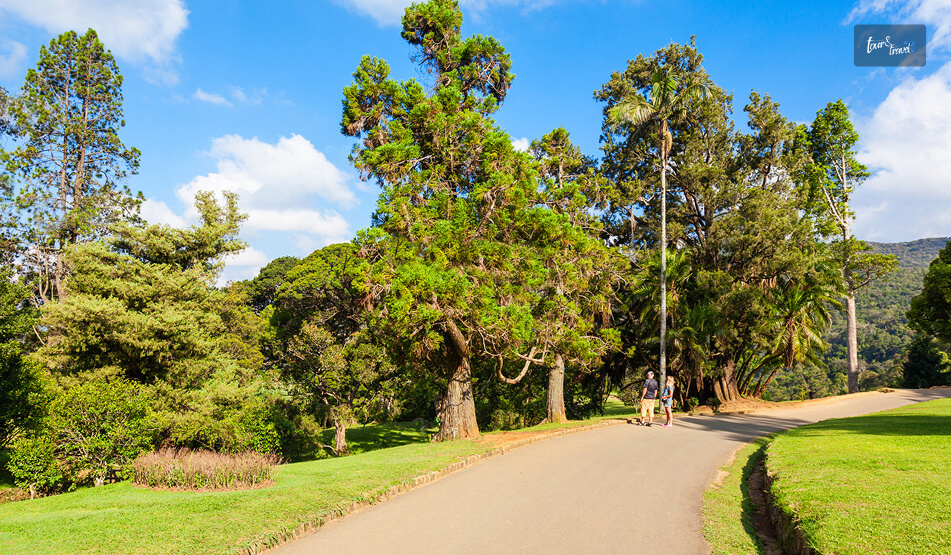
It was the most unhurried two hours in Sri Lanka at the Haggala Botanical Garden. 

These are the highlights of exploring the botanical garden. 

The Rose Garden

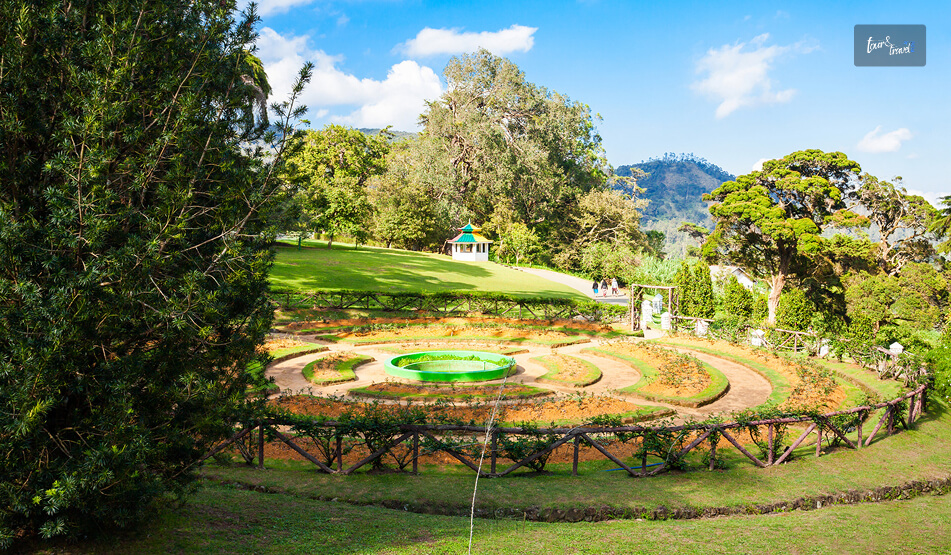
This is the section most people come for, and it is the one that stayed with me. 

Terraced rose beds climb a gentle slope, and even on a visit outside peak bloom I found enough color to justify the walk up. 

Locals I spoke to said mid-March through April is when the roses are genuinely at their best.

The Fernery And Orchid House

Past the roses, the path drops into shadier, damper terrain.

It is the fernery, thick with hanging vines and the kind of quiet you only get under a heavy tree canopy. 

The orchid displays nearby were smaller than what I later saw at Peradeniya, but the cooler climate here seems to suit certain varieties that don’t do as well lower down.

Hakgala Rock And The Nature Reserve

The garden sits right at the base of Hakgala Rock, part of the wider Hakgala Nature Reserve. 

I did not have time to explore the reserve itself on this trip.

However, the rock face looming over the garden is a constant, dramatic backdrop while you’re walking around.

It is worth pausing for a photo even if you are not planning to hike further.

Planning Your Visit: Fees, Timings And Getting There

Planning Your Visit Fees Timings And Getting There

Visitor Category

Adults (12+)

Children (5–12)

Foreign Visitors
 LKR 3,540
LKR 1,770

Local Visitors

LKR 200

 LKR 30

How To Reach Hakgala

The garden is about 10 kilometres from Nuwara Eliya town on the road toward Welimada and Badulla.

So, I took a tuk-tuk trip from where I was staying. The tuk-tuk cost around LKR 1500.

If you are combining it with Horton Plains National Park or the Pedro Tea Factory, both popular pairings, it is easy to build a single half-day loop out of Nuwara Eliya covering all three.

Best Time To Visit Haggala Botanical Garden

Elevation makes Haggala noticeably cooler than most of the island. That cool climate is exactly what makes the roses possible. 

Here is how I would break the year down.


Season

What’s blooming

My take

Mid-March to April

Peak rose and orchid bloom.

The single best window I would point a first-time visitor toward.

May to August

Southwest monsoon showers likely

Greener, quieter, and the mist adds its own charm.

September to November

Drier spells, good visibility

A dependable shoulder-season pick.

December to February

Cool, crisp mornings

Chilly at this elevation, and you need to pack a light jacket.

Tips From My Visit To Hakgala Flower Garden

  • Go early. I had the rose terraces nearly to myself before 9 AM. By late morning, tour groups had filled in the main paths.
  • Bring a light jacket even in the middle of the day. Nuwara Eliya’s hill-country chill is real, and Hakgala sits even higher than the town itself.
  • Rain can roll in quickly at this elevation. A few visitor accounts mention exploring in light rain and still finding it worthwhile, which matched my own experience with a brief afternoon shower.
  • Set aside two to three hours if you want to walk the full garden rather than just the rose terraces.

Nearby Places To Combine With Hakgala

Nearby Places To Combine With Hakgala

Hakgala rarely needs to be a standalone trip. 

On the same day, I paired it with a walk through central Nuwara Eliya, and it would slot just as easily into a longer hill-country itinerary.

  • Nuwara Eliya town and its colonial-era buildings
  • Pedro Tea Factory
  • Horton Plains National Park and World’s End.

You can also explore the wider Knuckles or hill-country circuit if you have more days to spare.

Haggala Flower Garden Offers A Slow And Delightful Experience

Haggala is not a dramatic, headline attraction the way Sigiriya or Adam’s Peak is.

It is a slow, cool, quietly beautiful stop and the kind of place that rewards an unhurried morning rather than a checklist visit. 

If you are already spending time in Nuwara Eliya for the tea country scenery, I would treat Hakgala as close to essential.

Share on Social Media

Sibashree is a travel, culture, and leisure writer who has been writing since the age of 12 and professionally since 2014. With more than a decade of travel writing experience and journeys across India and several parts of the world, she brings a deeply personal and thoughtful perspective to her work. A student of English Literature and Mass Communication, Sibashree has always viewed travel as more than movement — for her, it has been a way of understanding people, cultures, and herself. Her passion for spiritual exploration has also led her to many unusual and meaningful destinations over the years. Outside of writing, Sibashree enjoys watching European cinema, reading about global politics, and reflecting on the stories hidden within everyday places.

Leave a Reply

Your email address will not be published. Required fields are marked *

title-img Related

READ MORE Yala National Park Safari

What Is The Yala National Park Safari Price? Why Is It One Of The Top Things To Do In Sri Lanka?

BY  Sibashree Jun 16, 2026

I shared my experience of visiting the Kumana National Park recently. Now, it’s time to talk about the Yala National Park, with which the Kumana National Park shares a contiguous border.  The park is home to lush lagoons, open plains, forests, and dunes.  As a result, it attracts diverse wildlife and birds. Including elephants, Yala National Park has around 44 species of mammals and 215 species of birds.  In addition, the Yala National Park safari allows you to spot leopards as it has one of the largest populations of leopards. In just Block 1, you will see around 25 leopards.  However, this diversity has further posed a problem for the wildlife and ecology of the national park. Mongabay reports that Yala National Park had 380000 visitors in the first half of 2025.  Backed by the social media boom, this increasing number of visitors has further triggered jeep jams and the problems of speeding jeeps in the national park.  Conservationists plan to restrict these, and rightly so, to maintain the experience of the Yala National Park safari.  Nevertheless, in this article, I will talk about the Yala National Park safari price, my experience, location, transportation options, and more.  Let’s begin with a quick overview of the Yala National Park and the safari price details.  An Overview Of The Yala National Park  LocationSouth-Western Sri LankaSize- 979 Square Kilometers- Total Five Blocks with Block 1 as the Main Tourist Spot Best for- Birdwatching- Spotting Leopards- Watching Sloth Bears, Elephants, and Crocodiles Hours Open- 6 AM to 6 PMSafari Prices (Based on the Safari Blocks Covered)- LKR 16900 to LKR 29,700/Main Entrance - Palatupana Gate, Close to Tissamaharama Furthermore, if you are looking for the perfect accommodation, you can check my guide on where to stay in Yala National Park. Yala National Park Safari Price: A Detailed Breakdown  Yala National Park Various ZonesDurationSafari Price in 2026 (LKR)Block 1 (Palatupana)Half Day16,900/=Block 1 (Palatupana)Full Day28,100/=Block 1 (Katagamuwa)Half Day16,900/=Block 1 (Katagamuwa)Full Day28,100/=Blocks 4 and 5 (Galge)Half Day19,800/=Blocks 4 and 5 (Galge)Full Day29,700/= (Source: Yala National Park Official Website).  Where Is Yala National Park? How Can You Reach There? Between the mighty Indian Ocean and a dense jungle, the Yala National Park is an expansive wildlife zone in the southeastern region of Sri Lanka.  Furthermore, it is well-connected to all parts of Sri Lanka. From the southern surf towns such as Ahangama, Weligama, Mirissa, and Hiriketiya to the dramatic Ella and Nuwara Eliya in the highlands, it is easily accessible.  So, here are the details of how to reach the Yala National Park from various parts of Sri Lanka.  1. From The Southern Coast To Tissamaharama The surfing towns on the southern coast are well connected to the Yala National Park.  The best way to travel is to take a train from Mirissa to Colombo Fort Station and then walk to the Colombo Bastian Mawatha Bus Terminal to catch a bus to Kataragama.  From Kataragama, you can hire a 4x4 jeep to reach the Yala National Park.  Check the table below to know how you can reach the Yala National Park from Mirissa. Stage 1: Train from Mirissa to Colombo Fort Station - Time: Around 3 Hours- Ticket Price: LKR 250 OnwardStage 2: Taking a Bus from Colombo Bastian Mawatha Bus Terminal to Kataragama- Time: 5 Hours Onward- Ticket Price: LKR 750Stage 3: 4x4 Jeep Ride from Kataragama to the Yala National Park Travel Time- 30 Minutes to Katagamuwa Entrance- Around 1 Hour to the Main Entrance or the Palatupana Entrance- Around 45 Minutes to Galge EntrancePrice (Per Vehicle)- LKR 9000 to 18000  3. From Ella To Tissamaharama From Ella, you can either take a bus or a private transport to reach Tissamaharama.  Bus Ride The bus passes through Wellawaya and takes 4.5 hours to complete the journey. Furthermore, the ticket price will be around LKR 200.  Also, a local told me of a bus route from Bandarawela to Kataragama, having Tissamaharama and Ella as stopovers. However, I could not fact-check the availability of such services.  Private Transfer  For a premium and flexible travel experience, you can book a private transfer to cover the distance in a shorter time.  The journey is for 2.5 hours. However, the cost will be around LKR 10000.  Also, if you are planning to take a private transfer, choose Uber for a safe journey at a reasonable price.  By Train  There is no direct railway connectivity to Yala. However, if you are traveling from the southern coast, you can get off at Matara.  From Matara, you can take a tuk-tuk, bus, or taxi to reach the Yala National Park.  What Is The History Of The Yala National Park?  The history of Yala National Park as a protected wilderness is at least a century old. As an ecotourism zone, it is a bucket-list destination for anyone on a trip to Sri Lanka.  However, earlier, it was a hunting ground for the British colonial elites. However, at the beginning of the 20th century, the colonial administration took effective steps for the preservation of the park.  The Designation As A Wildlife Sanctuary The British government designated the area as a wildlife sanctuary in 1900. It was an attempt to restrict and regulate game hunting. The Designation As A National Park  Under the Fauna and Flora Protection Ordinance, Yala became a national park in 1938.  Thus, the core activity here became absolute wildlife protection from managed hunting.  Mid-Century Turmoil And Restoration  The park faced several challenges during the mid-to-late 20th century. Furthermore, during the 1970s and 1980s, Yala suffered from ivory hunting, illegal poaching, and agricultural encroachment along its borders.  DWC, or the Department of Wildlife Conservation, along with dedicated non-governmental organizations, launched sustained anti-poaching patrols and habitat restoration initiatives.  These endeavors established the delicate ecological equilibrium of the national park. Also, the population of the elephants and leopards made a recovery during this time span.  The 2004 Tsunami And Ecological Resilience  The coastal fringe of Yala was massively impacted due to the Indian Ocean tsunami on 26th December 2004.  However, fortunately, deer, leopards, and elephants had fled to higher ground hours before the tsunami hit.  Furthermore, the land has made a tremendous recovery over the last two decades. There has been a proper regeneration of the coastal scrub, showcasing the profound resilience of this coastal wilderness.  The Five Blocks Of The Yala National Park  The expansive area of the Yala National Park has five different geographical blocks for better management of the expansive area.  Have a look at the table below to understand the uniqueness of each block.  Blocks in the Yala National Park UniquenessBlock I (Palatupana)- The Crown Jewel of Yala- The Most-Visited, Wildlife-Dense, and Most Accessible Block of the National Park. - It features an Excellent Mix of open grasslands, monsoon forests, and Brackish Lagoons. Block II (Katagamuwa)- A Quiter, Transitional Zone- It Offers Exceptional Opportunities for Elephant Viewings and Excellent Birdwatching. Blocks III, IV, and V- The Deeper and Wilder Interior of Yala- These Northern Blocks Have Thick Vegetation, Minimal Tourist Infrastructure, and a Rugged Geology- Authentic Wilderness Experience Devoid of Jeep Convoys.  The Wildlife Experience I Had On The Yala National Park Safari  The Yala ecosystem is not just about the elephants and leopards. Furthermore, the ecosystem of Yala relies on a rich web of biodiversity, including hundreds of species.  1. The Sri Lankan Leopard  The Yala National Park does not have tigers or lions. Thus, Sri Lankan leopards rule as the undisputed predators of the zone.  Furthermore, Yala National Park is home to one of the biggest populations of Sri Lankan leopards. As a result, leopards are more visible here compared to different parts of India and Africa.  2. The Asian Elephants  Solitary bull elephants and large herds roam freely in the Yala National Park. These majestic creatures rely on inland lagoons and seasonal watering holes for bathing and feeding.  3. The Sri Lankan Sloth Bear  These animals are territorial and highly elusive. Furthermore, these shaggy, insect-eating animals are most frequently spotted during the fruiting season of the Palu tree. 4. Other Wildlife  The dry zone of the Yala National Park teems with wildlife. Along with these massive mammals, I could even spot a spotted  Deer (Chital) Sambar Deer Wild Boar Tufted Gray Langurs Toque Macaques Water Buffalo Water Monitor Lizards Mugger Crocodiles These animals were mostly visible near the water.  5. A Paradise For Birdwatchers  Yala National Park is a premier global destination for birdwatching. There are more than 215 bird species in the national park.  Furthermore, November to January is the ideal time for spotting the migratory waterfowl that fly to Sri Lanka to escape the strong winter of the Northern hemisphere.  Bird Categories in Yala National ParkKey Species to Spot in Yala National Park Endemic Species - Sri Lanka Junglefowl- Sri Lanka Grey HornbillWaterfowl and Waders- Painted Storks- Lesser Whistling Ducks- Black-Necked StorksPredators and Raptors- Crested Serpent Eagles- White-Bellied Sea EaglesVibrant Showstoppers- Green Bee-Eaters- Indian Peacocks- Malabar Pied Hornbills The Fascinating Yala National Park Safari Experience  The Yala National Park safari offers a sensory and intense experience. Furthermore, the safari experience begins before sunrise.  1. The Dawn Patrol  The safari began at 4 AM from Tissamaharama. It was still pitch black, and we took a sip of the local coffee.  Then, the cold morning breeze touched us, and we advanced with the jeep headlights piercing through the predawn mist.  Furthermore, by 5:15 AM, we reached the main Palatupana Gate. The drivers waited for the park rangers to issue permits.  Then, the gates opened at 6 AM, and the vehicles started roaring through the dirt tracks of Block I.  2. The Landscape And The Sighting  When the first rays of the Sun touch the Yala National Park, the landscape looks very African.  It has scattered grasslands, spindly thorn scrub, and flat plains. Furthermore, the air was thick with humidity.  Then, the driver spotted a leopard suddenly, and the driver made a coordinated dash across the park.  The leopard was standing tall across a massive granite boulder in the soft morning light.  3. Midday Solace At Patanangala As the day progressed, the wild creatures made a retreat deep into the thick shade with surging heat.  So, our jeep, along with many others, united at the Patanangala Beach picnic area.  In this part of the park, its rugged self became visible. The crashing waves of the Indian Ocean met the vast rocky outcrops.  Also, it was the place to stretch our legs and relax.  4. Exploring The Sacred Ruins In The Scrub  Along with rich wildlife, Yala National Park also stands out due to its deep historical and cultural footprint.  Especially in Block I of the national park, you will find some well-preserved ruins that depict the picture of an ancient civilization.  Sithulpahuwa Rock Temple This rock temple is around 2200 years old and is a prominent architectural feature of the Kingdom of Ruhuna.  Once, thousands of Buddhist monks used to live in this temple. Today, you can see its white stupas rise dramatically above the forest canopy from a massive granite peak. Furthermore, monks still live in this rock temple, and you can see leopards and tigers roaming in the courtyard.  Magul Maha Vihara Magul Maha Vihara is on the southern fringes of the Yala National Park. It is believed to be the ancient site where King Kavantissa married Princess Viharamahadevi.  You can admire the intricate moonstones and stone pillars of the Vihara.  What Is The Best Time For The Yala National Park Safari?  February to July, or the dry season in the southern coast of Sri Lanka, is the ideal time to plan a Yala National Park safari.  In these months, the grass in the park thins out, and the secondary waterholes dry up completely. So, the animals have to gather around the water in search of water.  Furthermore, November to April is the best time for birdwatching in the Yala National Park.  Also, remember that the Department of Wildlife Conservation typically closes Yala National Park for the entire month of September (sometimes extending into early October). Yala National Park Safari And The Overtourism Issues  The rising popularity of the Yala National Park, especially on social media, now impacts the intimate wilderness experience.  It feels like a rushed safari tour, and by sunrise, hundreds of high-clearance safari jeeps queue at the Palatupana Gate.  Moreover, drivers are under immense pressure from their clients to find the "Big Three." So, whenever there is a radio transmission about a leopard getting spotted, the jeeps get into a frantic race.  Furthermore, the rush of these jeeps is disrupting the ecology and the natural wildlife behaviors of the national park.  In an interview with Mongabay, warden Ravindra Kumara, while narrating the controversial case of the male leopard Lucas’ encounter with a jeep, mentioned, “Usually, when a safari jeep is close to an animal, jeep drivers have been advised to switch off the engine.  But this driver had turned on the engine, and it had scared away the animal. However, Lucas was spotted the following night near Yala junction, the animal’s usual territory, and is in good health.” However, the driver training programs conducted by the Department of Wildlife Conservation and the Wildlife and Nature Protection Society are proactive measures to avoid such unwanted disturbances.  In addition, the opening of remote blocks in the park can reduce the concentrated traffic in Block I.  So, Is The Yala National Park Safari Worth It?  Yes, the Yala National Park safari is absolutely worth the hype. I could see leopards softly walking through the scrub, elephant herds roaming, and peacocks dancing on open plains.  Furthermore, the shift in the landscape is dramatic.  However, the safari of this expansive area is quite demanding, and that is why you need to keep several things in mind. What Are The Things To Keep In Mind For A Yala National Park Safari?  The rest stops and toilets are limited, and you will find the facilities near the main gate and the Patanangala Beach.  Furthermore, you must carry cash, preferably LKR, to pay for the permits and other expenses at the park.

READ MORE day trips from Tokyo

What Are The Best Day Trips From Tokyo? Most Popular Ones You Will Love 

BY  Sibashree Mar 26, 2026

If you are like me, your first trip to Japan probably started off in Tokyo, surrounded by bright neon lights and an astounding number of people moving around to get from place to place. Tokyo is a logical starting point because of the many inexpensive daily flights that arrive, as well as its efficient public transportation, making it very easy to get around and communicate with those whom you meet there, because they speak some English. But let me tell you a little secret I learned from spending two different trips to Japan over the course of three weeks. Although I had fun in Tokyo, I’m definitely not a big progressive city person. The real beauty and the heart of Japan are found away from the chaos of Tokyo. The true essence of Japan can be experienced at its best in either the peaceful mountains high above the sea or in the salty air along the coast of Japan. So if you are planning on staying in Tokyo for more than three days, do yourself a favor and venture outside of the city limits.  These are my favorite day trips from Tokyo. You can travel to each of these destinations within 1 to 2 hours. What Are The Best Day Trips From Tokyo?  Tokyo is an incredible gateway. However, Japan’s true magic is often found in the places where the skyscrapers disappear.  Whether you want the spray of the ocean in Kamakura or the mountain air of Hakone, I promise that leaving the city for just a day will change how you see the country. From Mount Fuji to Kyoto, the Soul of Japan, the day trips from Tokyo are as diverse as they can be.  Here is a detailed account of my experience in those places.  1. Mount Fuji And Kawaguchiko: The Icon Travel Time: 2 Hours  How to Reach There: Highway buses from Shinjuku or Shibuya (~ÂĄ1,250–¥2,000 one way). If I can only recommend one escape, it will be Kawaguchiko, a town located right at the foot of Mt. Fuji.  "Shy" Fuji hides behind a curtain of clouds and can be quite elusive. While I visited, Fuji showed off for me on several occasions. I spent an entire day in this beautiful town, but would recommend an overnight stay at one of the many traditional ryokans situated on the lake if possible. There, you will notice the the juxtaposition of Fuji's reflection on Lake Kawaguchi at sunrise will be a once-in-a-lifetime experience. Highlights From My Visit Climbing the 398 steps of Chureito Pagoda was strenuous. However, the meditation-like calm through the forest made it worthwhile. I was fortunate enough to see the iconic site of the Red Pagoda with Mt. Fuji as a backdrop, as the clouds rolled in and covered the summit of Fuji. HĹŤtĹŤ noodles are a local specialty and are made up of thick, flat noodles cooked in a Japanese miso broth. Eating them will feel like a warm hug! So, don’t forget to try it.  2. Nikko: A Place Of Mist And Masterpieces Travel Time: 2 Hours How to Get There: Tobu Railway from Asakusa to Tobu-Nikko Station. When you visit Nikko, you will see all that it has to offer in the stunning, misty forests and cedar trees. Moreover, the detailed and ornate shrines seem to be jewelry boxes.    Insider Tip:  Arrive before 9 am at Lake Chuzenji to witness how the morning light creates an incredibly peaceful scene on the water.  If you arrive later than 9 am, visit the Toshogu Shrine first, which is where Shogun Tokugawa Ieyasu is buried and features the famous three monkeys, "See no evil, hear no evil, speak no evil". Many people come to see Kegon Falls, but it can be crowded due to the high tourist volume.  Unless you arrive at dawn, I would recommend skipping Kegon Falls and enjoying the calm waters of the lake instead. 3. The Coastal Soul Of Japan: Kamakura Travel Time: 1 hour How to Get There: JR Yokosuka Line from Tokyo Station (ÂĄ940 one way). Kamakura is also popular as the "Kyoto of the East," and I can see why.  Although it is an hour from Tokyo, when you are there, you will be surrounded by the smell of salt and incense from the temples instead of exhaust from busy streets. Be sure to see the Great Buddha (Daibutsu) at Kotoku-in.  This is a large bronze hollow statue located outside.  Standing there, surrounded by trees and soft sea light, I felt a sense of peace and tranquility.  After visiting the Great Buddha, I walked to Yuigahama Beach to watch the surfers and the sunset before enjoying a meal of sukiyaki or shabu-shabu. 4. Hakone: A Breath of Mountain Air Travel Time: 2 Hours How to Get There: Odakyu “Romancecar” from Shinjuku. I recommend the Hakone Free Pass. Tokyo is the pulse of Japanese culture, and it is in Hakone where you'll find peace after the city's frenzied pace. Hakone is a beautiful blend of modern and ancient.  The first stop for my visit was at the Hakone Open-Air Museum, where I walked among sculptures created by some of the most famous artists in the world, surrounded by natural beauty all around me.  Then, I took the Hakone Ropeway across the Owakudani Valley.  It is an active volcanic area where steam rises out of the ground, creating a picture of a living canvas.  On clear days, you may see Mt. Fuji as well.  The day was capped off with a boat ride on Lake Ashi aboard a vessel that resembled a "pirate ship."  I was hesitant about it being cheesy, but the sights were gorgeous. 5. The Easy Escape To Yokohama  Travel Time: 30 Minutes How to get there: JR Tokaido or Keihin-Tohoku Line from Tokyo Station (ÂĄ480). When I need to relax from the chaos of Tokyo, I tend to go to Yokohama.  Yokohama is the 2nd largest city in Japan. However, it has a much more relaxing atmosphere due to the harbor.  I enjoy taking a stroll along Minato Mirai, which is another word for "harbor view," while enjoying the ocean breeze.  For something "quirky", I went to the Cup Noodles Museum to create my own cup of noodles and to learn about the history of Nissin Food Products.  However, the highlight was visiting China Town, which is the largest in Japan.  My recommendation is to arrive at China Town around 4:00 or 5:00 PM.  It will be early enough to beat the dinner rush and late enough to see the entrance of all the glow from the lanterns.  Take a bag of roasted chestnuts and enjoy the view of the skyline from the water while riding on the Cosmo Clock 21 Ferris Wheel. 6. A Trip Back In Time To Kawagoe Travel Time: 1 Hour How to get there: Tobu Tojo Line from Ikebukuro or JR from Shinjuku. If you want a taste of the Edo period without trekking all the way to Kyoto, go to Kawagoe.  It’s a walkable town full of clay-walled warehouses and wooden merchant houses. When I arrived at 8 AM, I heard the Toki no Kane (Bell of Time) tolling in the stillness of the morning.  I went back 200 years in time.  If you have time to go to Candy Alley, everything is made from sweet potatoes, cakes, chips, and even ice cream!  I know it sounds strange, but I assure you that it is really good! 7. Kyoto: The Soul Of Japan Travel Time: 2 Hours (by Shinkansen) How to get there: Tokaido Shinkansen from Tokyo Station (ÂĄ13,320 one way). I usually tell people to stay at least two days in Kyoto, but if a day trip is all you can manage, do it. It is expensive, but it is worth every yen. To appreciate Kyoto fully, you should focus on finding peace and serenity rather than simply marking off temples from a to-do list.  Instead of fighting the crowds at the bamboo groves, I found my peace by sitting in the wonderful gardens of Kennin-Ji Temple and breathing the incense they burned there. 8. Enoshima: Islands And Icons  Travel Time: 2 Hours How to get there: Odakyu Line from Shinjuku to Katase-Enoshima Station. Enoshima is where Japan’s coastal charm meets its spiritual side.  It’s a small island with a bridge and shrines dedicated to the goddess of the sea. Prepare to take many steps as you make your way to Iwaya Caves on the opposite end of the island.  The sound of waves'll surround you as you leave the noise of the city behind.  Furthermore, inside the caves, it’s a different world! After you leave the caves and head back, stop at a vendor and buy some grilled fish or seafood so you can enjoy the smoky aroma of the grilled fish while walking through Enoshima Island. 9. Chichibu: Mountains And Moss Travel Time: 2 Hours How to Get There: Seibu Line from Ikebukuro to Seibu-Chichibu Station. Chichibu is an outdoorsy place if you love the outdoors!  It's got mountains and has a strong cultural heritage.  If your timing is right in the spring, Hitsujiyama Park gets huge patches of pink and white moss phlox in bloom. This area has deliciously filling meals, including miso potatoes and waraji katsu (a pork cutlet that’s named after a straw sandal because of how large it is). 10. Karuizawa: The Alpine Retreat Travel Time: 1 Hour How to get there: Hokuriku Shinkansen from Tokyo Station. Finally, there is Karuizawa. This is where Tokyo’s elite found an escape from the summer heat, and it still feels incredibly sophisticated. Renting a bicycle is one of the best ways to experience this area.  I spent my first morning biking through beautiful pine tree forests until I arrived at Kumoba Pond. The pond has such calm water that it feels like looking into a huge mirror!  In the winter, it turns into a beautiful, snowy retreat perfect for relaxing after spending several days in the city.  Read Also: Is The Japan Rail Pass Worth It In 2026? Should I Buy Or Avoid It As A Conscious Tourist? What Are The Things To Do In Oahu For Free? A Guide For Budget Travelers Festivals Of Light And Color: Experiencing Japan’s Vibrant Matsuri

READ MORE hikkaduwa

What Is Special In Hikkaduwa? Uncovering What Is Great, Okay, And Ugly In This Sri Lankan Resort Town 

BY  Sibashree Jul 13, 2026

During my trip to Sri Lanka, Hikkaduwa, the resort town, was surely one of the biggest highlights of the southwestern region.  I took a train journey from Colombo to reach Hikkaduwa, the epicenter of dark tourism in Sri Lanka.  It was the place where the 2004 Boxing Day Tsunami had hit the most! However, while this keeps the mood somber and humbling while visiting Hikkaduwa, the town also offers some delightful experiences.  It is a hotspot for scuba diving and turtle spotting like other southwestern beach destinations, such as Mirissa Beach, Bentota Beach, Unawatuna, and Ahangama and Weligama.  Despite so many attractions, this resort town is now facing a serious dip in its tourism industry due to the US-Iran conflicts.  A report published by The Island Online on 13th May 2026 suggested that there has been a drop of around 80% in tourist arrivals due to this ongoing global tension.  While I wish for the end of the war and the global crisis (including the conditions in Hikkaduwa) soon, here I pen down my experience in Hikkaduwa.  I loved a lot of things about it and also felt some things could have been better. So, here is an honest confession.  The Things I Loved Doing In Hikkaduwa Hikkaduwa is not an idyllic tropical escape. It is an action-packed beach destination for snorkeling, scuba diving, and swimming with the adorable turtles.  Hikkaduwa also has the Tsunami Museum, which is a must-visit to learn about the calamity that changed the course of the human race.  Also, it shows the resilience of the human race in surviving such a rampage.  Nevertheless, here are the best things to do in Hikkaduwa.  1. The Train Journey From Colombo To Hikkaduwa  The journey in a third-class train from Colombo Fort to Hikkaduwa had set the mood right for the delightful experiences ahead.  The distance of 95.14 km by train took around 2 hours to cover. The compartment was windy, and I also got a seat for myself.  However, once the train started running, I stood close to the door, and the views of the Indian Ocean were iconic.  The third-class ticket cost me LKR 200. However, if you are traveling in second-class and first-class compartments, the ticket price will be LKR 400 and LKR 800, respectively.  2. Spotting The Sea Turtles In Hikkaduwa  The adorable sea turtles were the reason behind my visiting Hikkaduwa.  I visited the turtle hatchery first, where I found 3-day-old turtles swimming. Then, I went down the beach to find them on seagrass.  The Sea Turtle Hatchery & Rescue Center in Hikkaduwa remains open from 9 AM to 6 PM. Furthermore, the ticket price was 2000 LKR for foreigners and LKR 500 for locals.  April to July is the best time to spot these turtles as it is their nesting season. Also, if you want to spot them on the beach, be present in front of Hikka Tranz at dawn.  3. Exploring The Coral Reefs At Hikkaduwa  You will find the coral reef of Hikkaduwa just in front of the main hotel strip. So, you can spot them by just walking off the beach.  You can also snorkel to explore the reef. Also, there are delightful provisions for taking a glass boat tour.  These tours cost between LKR 3000 and LKR 6000 based on the duration of 30 minutes to 1 hour.  Furthermore, the Hikkaduwa coral reef is a shallow fringing reef with an average depth of 1 to 5 meters, harboring over 60 species of hard coral and 170 species of reef fish. Moreover, it has the designation of a marine national park, and it is home to green and hawksbill sea turtles and other adorable marine animals. 4. A Visit To The Ambalangoda Mask Workshop And Museum Hikkaduwa was again an eye-opener, showing the cultural richness of Sri Lanka. I have cherished the Tamil Culture in Jaffna, and of course, Kandy was like the textbook.  Hikkaduwa, on the other hand, made me familiar with the popular demons in Sri Lankan folklore. Maha Sona was the most powerful among them, and Reeri Yakseya was the most cruel.  Also, there are other demons associated with various disorders. It is said that these disorders can be cured only by exorcism.  The exorcists wear different masks of demons and dance to the drum beats. They also make offerings to the demons.  They believe that the demons will leave the one they have attacked if they are happy with the offerings.  The Ambalangoda Mask Workshop and Museum has a brilliant display of these masks. It is the cradle of Sri Lankan mask making, and the Wijesuriya family has been in charge of the museum for five generations now.  The museum also has a library and workshop, where seeing the art of mask making was quite an experience.  Moreover, the museum remains open from 8:30 AM to 5:30 PM, and entry is free.  5. Shopping In Hikkaduwa The Hikkaduwa Market was delightful. For me, the best buy was a shell turtle statue.  Furthermore, many shops had colorful masks, and each of them was unique.  During shopping, I also had the chance of meeting the locals in Hikkaduwa. I especially cherished the conversations with an old gemstone shop owner.  He shared how he has been witnessing the changing tourism scenario in this resort town.  6. Scuba Diving Scuba diving is one of the biggest attractions in Hikkaduwa for sure. It is a delightful experience to go deep into the water and spot the marine life.  However, I loved diving to find out the mast and rigging of an old sailing ship.  7. River Tours I traveled around 50 minutes from Hikkaduwa for a boat tour on the Madu Ganga River.  It is in a Ramsar wetland and estuary on the southwest coast of Sri Lanka, located in Balapitiya.  The boat took us through a narrow tunnel with mangroves on both sides. During the journey, we could spot vampire bats, crocodiles, and giant lizards.  Furthermore, the 2-hour boat tour cost me around LKR 6000 to 15000.  While the mangrove tunnels were the first stop, we also visited the Cinnamon Island and enjoyed a fish therapy in an enclosed pool for LKR 900.  Moreover, visiting the Kothduwa Purana Raja Maha Viharaya was a unique cultural experience.  Do not forget to bring binoculars for these boat tours, as there is a lot to see from a distance.  8. Visiting The Hikkaduwa Tsunami Museum The Tsunami on 26th December 2004 was one of the biggest natural disasters in Hikkaduwa and other parts of the eastern and southern coasts of Sri Lanka.  The death toll was 30,196, and the waves engulfed the “Queen of the Sea” holiday train with 1700 passengers inside.  The site now has a giant Buddha Statue as a symbol of peace.  Many locals visit this statue and the Tsunami Honganji Viharaya, a place of worship to remember their loved ones who have lost their lives in the tsunami.  After visiting the Tsunami Honganji Viharaya, I headed toward the museum.  The museum explains the geographical process of how the tsunami happened and how Hikkaduwa survived after that.  Entry to the museum is free, and it remains open from 8 AM to 8 PM.  Hikkaduwa Things That Were Okay (But Could Have Been Better) The first thing that could be better about Hikkaduwa was the roads. It was fun walking on the beach.  However, walking down the streets was a task, and sometimes it felt like passing through a maze.  The buses ran even at night, and because of the road conditions, they made the strangest noise. Also, the tuk-tuks were a menace, making taking each step a task.  Furthermore, despite Hikkaduwa being a popular base and stopover for anyone traveling from Colombo to Galle, in reality, planning trips around it is a task.  You can still make it to the Yala National Park.  However, if local tour operators try to convince you of long-haul trips to Dambulla Royal Cave Temple, Pidurangala Rock, Sigiriya Rock Fortress, or Polonnaruwa, don’t fall prey to them if you don’t have a long travel plan.  What I Did Not Like About Hikkaduwa Hikkaduwa is famous for its moonstone mines, turtle tourism, and Ayurvedic herb gardens. However, all of these disappointed me greatly.  1. The Growing Turtle Tourism  I came to Hikkaduwa for the turtles, joining crowds feeding this local industry.  Enterprising "turtle whisperers" hustle for tips, while numerous hatcheries operate nearby.  I envisioned secluded beaches and wild hatchlings safely reaching the sea. Instead, fishermen sell wild eggs to these hatcheries.  While they successfully incubate eggs and care for injured mutants, the magic is gone.  Hatchlings miss that epic first journey, and the world feels a little duller for it. 2. The Herb Garden Experience  Being from the land of Ayurveda, I was keen to experience how the southern neighbor is adding its own twist to it.  However, the experience was disappointing to put it politely, and the ones demonstrating the qualities and medicinal properties of local herbs, spices, and fruits were not well informed.  Moreover, they were more interested in selling miracle potions to “Foreigners” rather than offering insights or knowledge sharing.  3. The Moon Stone Mines  Watching the men at work at the moon stone mines was a decent experience.  However, I did not like how they dealt with the pricing part as I was checking out some jewelry at the workshop on the mine property.  The charges were bizarre, and I knew it as I had already visited a gemstone shop in the market and bought some souvenirs.  So, I knew the actual pricing, and I did not like the fact that, given a chance, they would extract more money from a first-timer or a novice.  Will I Still Visit Hikkaduwa Again? Of Course!  Despite some “Okayish” and “Not-So-Great” experiences, I would love to visit Hikkaduwa again.  Why? For the mangrove boat rides, the time spent with the turtles, and discovering a different side of human history in the Tsunami Museum.  If not anything else, I will return for the train journey that allows me to enjoy the views of the Indian Ocean to the fullest!