
Ruwanwelisaya: Standing Beneath Anuradhapura’s Great White Stupa

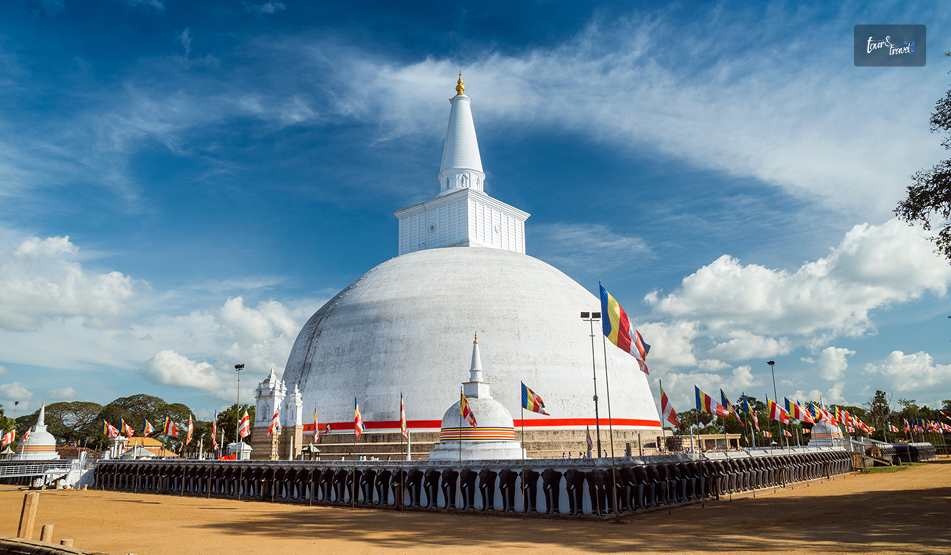
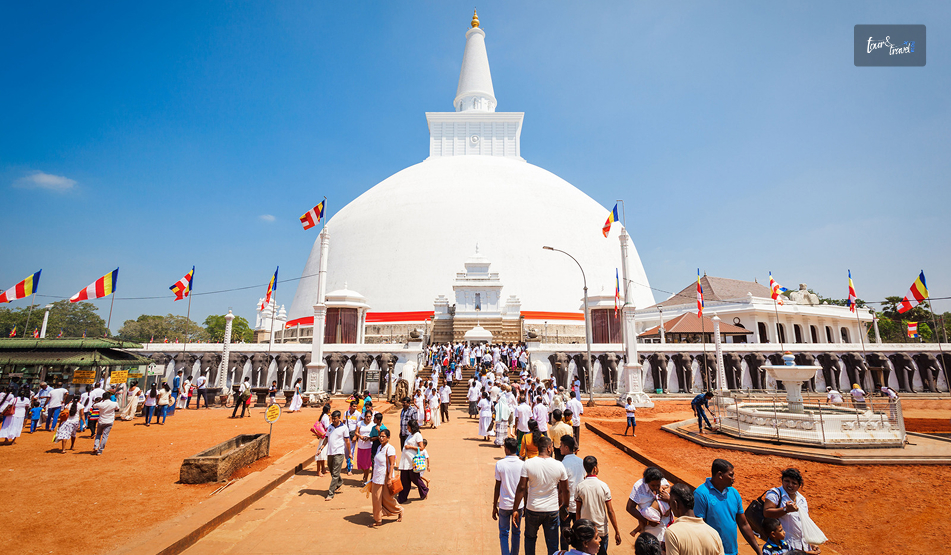
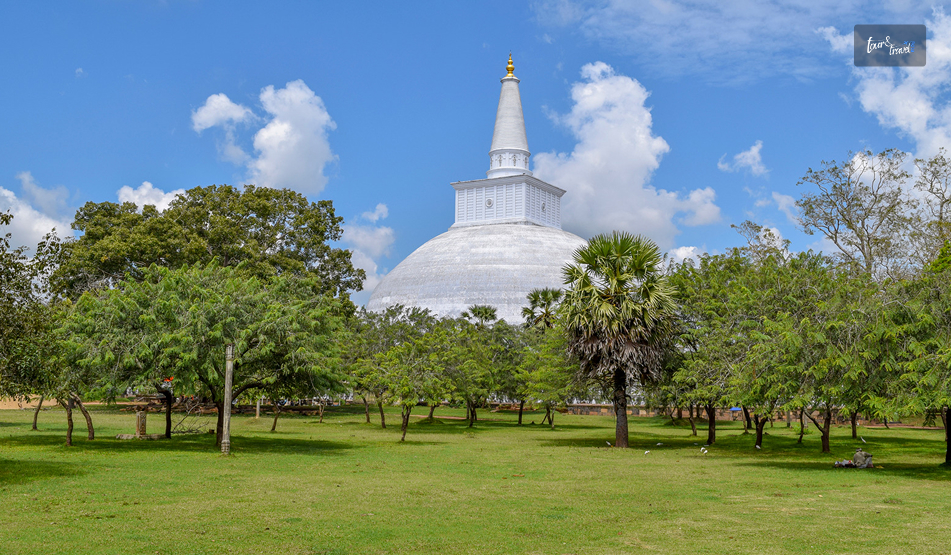
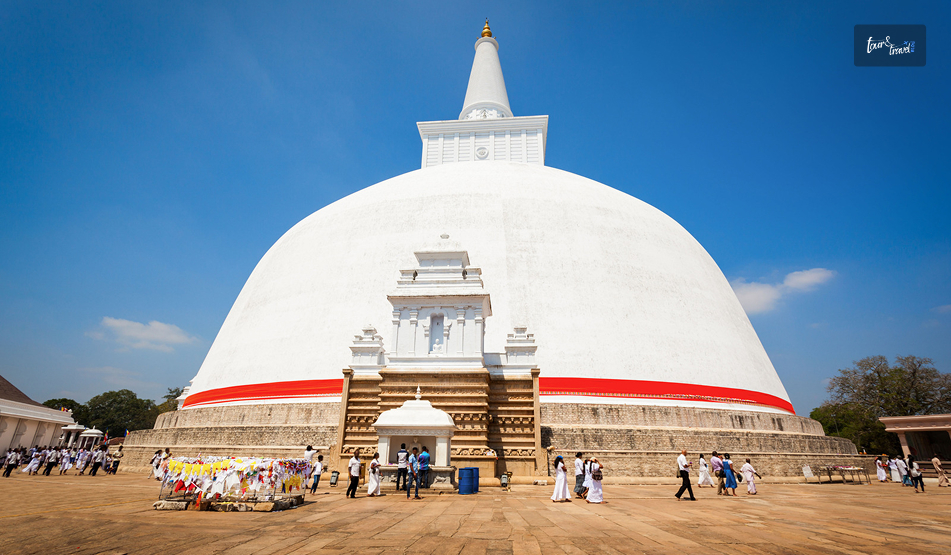
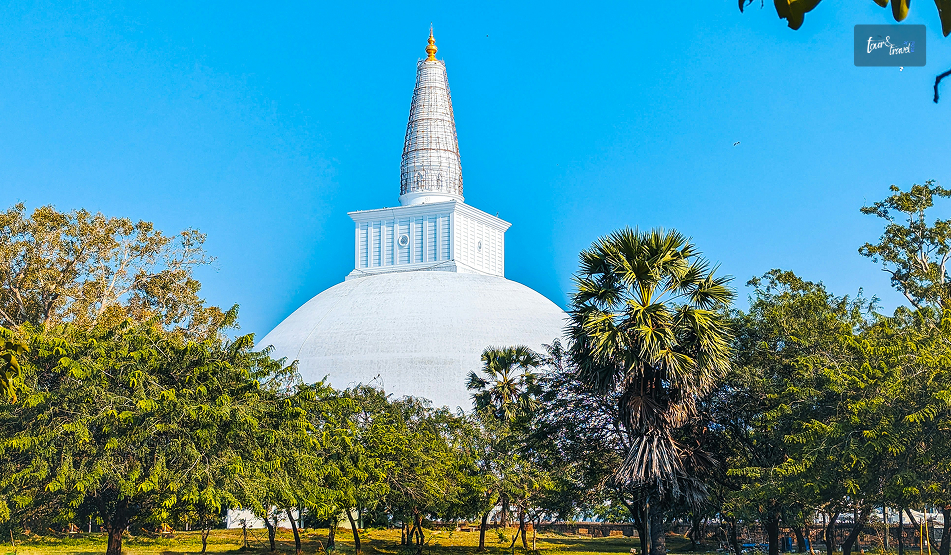
Ruwanwelisaya, or Ruwanmeli Maha Seya, won me over with its height from a distance of 100 meters.  

From there also, I could not fit it into a single frame. 

Also, the most astonishing feature was the frieze of stone elephant heads running the entire base of the stupa.  

It took me around 10 minutes just to walk the perimeter counting them. I counted up to two hundred and then lost a count of the elephant heads.  

Then, I saw the marble courtyard where white-clad pilgrims were circling clockwise.  

Also, the heat radiating off the stone by mid-morning reminded me of an old saying frequently uttered by my grandmother, Thamma, 

She used to say in Bengali, “Kosto na korle kesto mele na.” Roughly means, to receive the blessings of the divine, you have to put some hard efforts.  

Ruwanwelisaya At A Glance 

Detail Information 
Other Names Ruwanweli Maha Seya Maha Thupa Swarnamali Chaitya 
Built by King Dutugemunu. He begun the construction around 140 BC and then his brother,,  King Saddhatissa completed it.  
Height 103 meters 
Circumference 290 meters 
Status One of the Atamasthana (8 sacred sites) and Solosmasthana (16 sacred sites) of Sri Lankan Buddhism 
UNESCO status Part of the Sacred City of Anuradhapura, inscribed 1982 
Access Included in the Anuradhapura Sacred City ticket (foreign visitors) 
Dress code Pilgrims wear white clothes.  Also, shoulders and knees must be covered, and you need to remove your shoes and hats.  

King Dutugemunu: The King Who Never Saw His Stupa Finished

Ruwanwelisaya: Standing Beneath Anuradhapura’s Great White Stupa

You cannot separate the story of King Dutugemunu from the Ruwanwelisaya stupa.  

He unified Sri Lanka in the 2nd century BC after defeating the Chola ruler Elara.  

According to the chapters 22 to 32 of Mahavamsa, or the Great Chronicle, Dutugemunu began construction of the stupa around 140 BC. 

It was an act of religious devotion meant to enshrine one-eighth of the sacred body relics of Lord Gautam Buddha. 

However, he died before the work was complete. King Saddhatissa, his brother was the successor.  

The younger brother, had the unfinished structure wrapped in white cloth so the dying king could see it appear complete.  

This part of the history is seen as a later embellishment as many historians, though.  

Still, when the local guide told me story, it touched me.  

The Completion Of The Stupa And Later Renovations  

Saddhatissa finished the stupa. 

Then, the subsequent kings renovated it. King Nissanka Malla in the 12th century is one of those kings to undertake this renovation after Saddhatissa. 

However, by 19th century, the stupa was in ruins.  

Again, a restoration campaign started in 1893 by the monk Naranvita Sumanasara Thera. 

The renovation was public funded and the Ruwanweli Seya Restoration Society took the charge of it.  

So, what we see today is the restored form in 1893 and later, in June 1940, the stupa got its new pinnacle.  

Why Is It Called The ‘Great Stupa’?

Ruwanwelisaya: Standing Beneath Anuradhapura’s Great White Stupa

Ruwanwelisaya, or the Maha Thupa, literally means ‘the Great Stupa.’  

It is among the Atamasthana, meaning the eight sacred places of Anuradhapura. It is even the most significant of these eight sites.  

The stupa is within the Mahamevnawa Park, close enough to the Sri Maha Bodhi and the ruins of the Lovamahapaya. 

So, I completed all three in the same walk without quite planning to. 

Walking The Site: What To Expect

Ruwanwelisaya: Standing Beneath Anuradhapura’s Great White Stupa

As I said, the imposing scale of the stupa was the first thing I noticed.  

The second thing I saw was the elephant wall.  

Here is a brief highlight on what made awestruck in the stipa complex.  

The Elephant Wall 

A retaining wall rings the base of the stupa. 

It has hundreds of elephant heads and forequarters. 

The distance between the heads are very less. So, from a distance it reads as a single continuous herd holding the dome up.  

A local guard told me that the exact count was 344.  

However, as I mentioned, I could not finish the counting after 200.  

The Marble Courtyard And Vahalkadas 

The stupa has a wide, pale courtyard and vahalkadas ring the stupa at four cardinal points.  

Vahalkadas are carved stone frontispieces with figures of elephants, horses, lions, and dwarfs. 

Walking barefoot across the marble was a difficult task, especially in the late morning of the dry season.  

However, I managed it hopping between the shaded patches. 

The Evening Atmosphere 

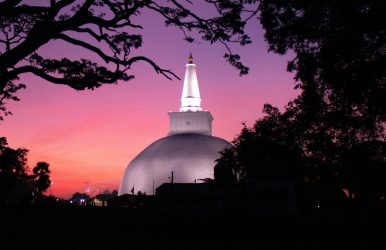
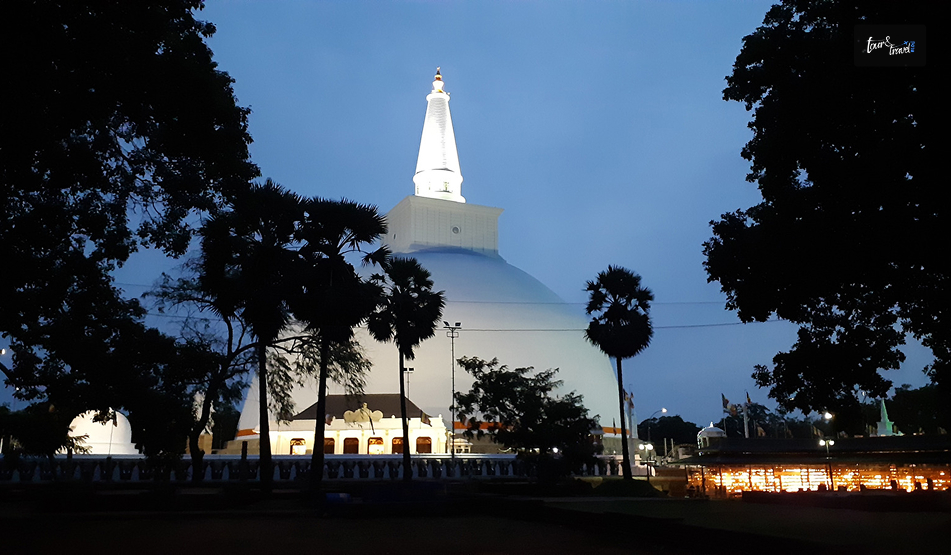
The stupa had a great impact on me, and I could not help but come back for a visit in the evening.  

It was looking more divine with its floodlights creating a sheer contrast against the sky.  

The stupa complex was busier in the evening, and the devotees were circling the stupa clockwise while chanting quietly. 

Tickets And What They Cover

Ruwanwelisaya: Standing Beneath Anuradhapura’s Great White Stupa

Ruwanwelisaya does not need a separate ticket. 

It is part of the Anuradhapura Sacred City ticket that foreign visitors need to enter the main archaeological zone.  

As of 2026, pricing for that combined ticket runs from roughly US$25 to US$30 per adult. 

The ticket covers Ruwanwelisaya alongside Jetavanaramaya, Thuparamaya, Abhayagiri, Lovamahapaya, and the twin ponds.  

It does not cover Isurumuniya, the Sri Maha Bodhi enclosure, or Mihintale, each of which has its own separate ticket. 

Ticket Approximate price (As of September 2026) Covers Ruwanwelisaya? 
Anuradhapura Sacred City ticket US$25–30 Yes 
Combined Cultural Triangle ticket US$50 Yes (Along with Sigiriya Rock Fortress, Dambulla Royal Cave Temple and Polonnaruwa) 
Isurumuniya (separate) 500 LKR No 
Sri Maha Bodhi enclosure Offers a free entry. However, you can offer a small donation.  No 

Opening Hours And Best Time To Visit

Ruwanwelisaya: Standing Beneath Anuradhapura’s Great White Stupa
  • The main archaeological sites, Ruwanwelisaya included, are generally open from around 7:00 AM to 6:00 PM daily. 
  • Early morning is quietest and coolest for the walk around the courtyard and elephant wall. 
  • Poya (full moon) days, especially June’s Poson Poya, bring the largest crowds of pilgrims and the most atmospheric evening lighting. 
  • Dry season, from May to September, offers the most comfortable conditions for the barefoot courtyard walk. 

How To Reach Ruwanwelisaya?

Ruwanwelisaya: Standing Beneath Anuradhapura’s Great White Stupa

Ruwanwelisaya is inside Anuradhapura’s Sacred City zone. 

It is about a 1 km walk from the Eastern Gate car park and close to the Sri Maha Bodhi.  

You can explore the zone by rented bicycle (roughly LKR 200–300 per day). 

It is also the most practical way to cover the site because the individual monuments are at a distance from each other. 

I underestimated the distances on foot and regretted it by early afternoon. 

A Simple Half-Day Route Around Ruwanwelisaya 

Time Stop Notes 
7:00 AM Sri Maha Bodhi Quietest at dawn, most devotional atmosphere. 
8:00 AM Ruwanwelisaya Elephant wall, courtyard, main stupa. 
9:30 AM Thuparamaya Smaller, older stupa nearby. 
10:30 AM Jetavanaramaya Once the tallest stupa in the ancient world. 
Evening Return to Ruwanwelisaya Floodlit and busiest with local devotees after dark. 

What Ruwanwelisaya Represents Today 

More than two thousand years after Dutugemunu started the construction, Ruwanwelisaya is still an active place of worship. 

It is not a museum.  

The restoration endeavors of the elephant wall and dome go on.  

Also, pilgrims keep circling it in white on every Poya day of the year.  

Of everything I saw across Anuradhapura, it is the site that made the clearest case for why this ancient capital is still called sacred rather than simply historic.

Share on Social Media

Sibashree is a travel, culture, and leisure writer who has been writing since the age of 12 and professionally since 2014. With more than a decade of travel writing experience and journeys across India and several parts of the world, she brings a deeply personal and thoughtful perspective to her work. A student of English Literature and Mass Communication, Sibashree has always viewed travel as more than movement — for her, it has been a way of understanding people, cultures, and herself. Her passion for spiritual exploration has also led her to many unusual and meaningful destinations over the years. Outside of writing, Sibashree enjoys watching European cinema, reading about global politics, and reflecting on the stories hidden within everyday places.

Leave a Reply

Your email address will not be published. Required fields are marked *

title-img Related

READ MORE Jaffna travel itinerary

Jaffna Travel Itinerary For 5 Days: What Are The Places To Visit And Local Transport

BY  Sibashree Jan 13, 2026

The city of temples. The Tamil heart of Sri Lanka. The cultural hub of Sri Lanka.  All these things are true about Jaffna, the northern city. It’s not just about the Nallur Kandaswamy Kovil or the Naguleswaram Temple. There are two temples on average in the streets of Jaffna. Along with the temples in Jaffna, the food, the festivals, and the warm hospitality make it a city to be explored, felt, and soaked in. Had I not been to Jaffna, I would have probably loved the average “3-day Jaffna travel itinerary” every blog is offering. However, a city that wakes up to the sound of the temple bells and the smell of jasmine and follows the custom of Jaffna Siesta, cannot be explored in three 3 days. You will at least need 5 days to know the spirit of Jaffna. Also, it’s cruel to say that you can walk to the Jaffna Fort at noon. So, the average Jaffna travel itinerary you are going through now is unrealistic, and I am not sure how authentic they are. So, here are the things to do in Jaffna for 5 days and how to explore the city. Jaffna Travel Itinerary: It All Starts With The Colombo To Jaffna Train Journey If you want an iconic train journey from Combo to Jaffna, take the Yal Devi Express from Mount Lavinia. The train starts from Mount Lavinia, and the Combo Fort is the 5th station on this route. You can board the train from Colombo Fort at 6:40 AM. The train will reach Jaffna at 2:33 PM, and it is the 31st station on the route. The last or the 34th station on the route is Kankesanthurai. The ride in this AC Saloon car costs LKR 2800 per person. You can also take the 444421 InterCity Express from Mount Lavinia to Kankesanthurai. This train departs from the Combo Fort Station at 5:45 AM and reaches Jaffna at 11:49 AM. The ticket price is LKR 3200 per person. This train ride is not just about traveling to Jaffna from Colombo. Here, you will pass through the Elephant Pass, which has expansive lagoons. Also, as a war memorial and as the military base of the First Battle of Elephant Pass (Operation Aakaya Kadal Veli or Air-Sea-Land by the LTTE), it is an important landmark for cultural tourism in Jaffna. Getting Around Jaffna: Why Do I Need A Scooter For Rent?  You can take a scooter for rent for a budget-friendly and flexible experience in Jaffna. Be it the Casuarina Beach or other beaches of Jaffna or the historical Jaffna Fort, a scooter or moped will give you the ultimate freedom to make the itinerary for Jaffna travel. The charges for a bike rental will be around LKR 2500 per day. If you don’t ride and need a more relaxed experience, you can take a tuk-tuk on hire, and the cost will be around LKR 4000-5000 per day. 5-day Jaffna Travel Itinerary: Soaking In The True Spirit Of Jaffna From exploring Jaffna City to exploring the islands and temples, there is a lot to do in the Northern City of Jaffna. Also, culinary tourism in Jaffna is a real thing! So, let’s make the most of these 5 days in Jaffna. Day 1: Arrival At Jaffna And Exploring The City  How about starting your day in Jaffna with the famous Jaffna coconut water or the signature ice cream at Rio Ice Cream? Here are the things you can do once you reach Jaffna after a long train journey from Colombo. 1. Morning: Check-In And Visit Rio Ice Cream For The Legendary Welcome  View this post on Instagram A post shared by Rio Ice Cream (@official.rioicecream) Rathinam Industrial Organisation(RIO) is a legendary landmark in Jaffna. It is like a community center where the locals love to have some refreshment in the middle of the day or at the end of the day to fight the soaring temperature. Special Rio Sundae with the ultra-sweet syrup and nuts is the main attraction of Rio Ice Cream. Also, the ice cream here is completely natural and chemical-free. 2. Afternoon: Visit The Jaffna Public Library  The Jaffna Public Library is a must-visit if you want to know about the local Tamil culture and heritage. It became a part of the Jaffna Town Development Board on 1st January 1935. As of today, the library has a collection of more than 117199 books, 37968+ in the lending section, and more. The library remains open from 8:30 AM to 6 PM from Tuesday to Sunday. On public holidays and Mondays, only the study hall and the magazine and newspaper sections remain open from 8:30 AM to 5:15 PM. However, the public viewing hours are from 4 PM to 6 PM. 3. Evening: Visit The Jaffna Fort For Sunset Walk On The Ramparts  Visiting the Jaffna Fort and walking on its ramparts after sundown are the best ways to familiarize yourself with the city's history. You can explore the walls and the barracks where thousands of civilians and military personnel used to live. Furthermore, you can enjoy the beautiful view from the city and the Jaffna lagoon from the ramparts. A Brief History Of The Jaffna Fort Built in 1619 by the Portuguese colonialists. Serving as the base for combating three Sri Lankan rebellions against the rule  Got captured by the Dutch in 1658  Got the famous defensive triangle in 1792  The British took control of the fort in 1795  Sri Lanka became independent in 1948  However, even after the independence, the Fort has been at the center of friction between the Sri Lankan government and the Liberation Tigers of Tamil Eelam (LTTE or Tamil Tigers). So, 1990-2009 was a volatile year for Jaffna, and the Jaffna Fort witnessed many occurrences. However, post 2009, the restoration work for the Jaffna Fort was started with the financial aid of the Dutch Government, and the Jaffna Fort still stands today because of that. 4. Having Dinner At Malayan Café (Dosas And More)  View this post on Instagram A post shared by りかරිකා (@rk_itooo) Having dinner at the Malayan Café is the quintessential Tamil experience you want in Jaffna. The decor is quaint with marble top tables, and steaming hot dosas and Idlis here are served on banana leaves. You will also get parathas and chutneys here. Don’t forget to bring cash because it does not have a digital payment facility. Day 2: Hopping The Delft And Nainativu Islands  Let me share one update when you are making a trip to the Delft and Nainativu Islands. Only one boat is available from the Kurikadduwan Jetty at 8 AM. So, if you miss the boat, unfortunately, your entire day is ruined. Nevertheless, here is how you will spend day 2 in Jaffna. Morning In Delft Island  The Portuguese Fort and the ruins of the Old Stupas are the primary attractions on Delft Island. You must also see the iconic Baobab Tree and the wild horses roaming on Delft Island. Take a ferry from Delft Island to reach Nainativu. Afternoon At Nainativu Nagapooshani Amman Kovil  The Nagapooshani Amman Temple has Nagapooshani Amman, a form of Goddess Durga, as the presiding deity. The statue of Goddess Nagapoosani here is accompanied by a Shiva Lingam and the ten-headed statue of Ravana at the base. It features a Dravidian architecture with some modern features, as the current structure was rebuilt between 1720 and 1790 after the Portuguese destruction in 1620. Returning To Jaffna By Boat And Having Seafood Dinner At Mangos Take the return boat from Nainativu, and the last ferry is available at 4:30 PM. Then, end your day on a relaxing note with a hearty seafood dinner at Mangos. Day 3: Soaking In The Spiritual Vibe Of Northern Sri Lanka  Start your day three in Jaffna with a visit to the Nallur Kandaswamy Kovil early in the morning. Be a part of the 10 AM Puja.  Then have traditional crab curry and rice for lunch before starting a drive to Point Pedro. If ordering Crab Curry, know that one portion is usually enough for two people. It is rich, spicy, and heavy.  The distance between Jaffna and Point Pedro is around 32 km. Known as Paruthithurai in the local Tamil language, Point Pedro is the literal top of Sri Lanka. Despite being a crucial maritime getaway, Point Pedro has a pristine landscape, and it has maintained its authentic Tamil vibe. Vallipuram Alvar Kovil and Sakkotai Cape sign are important stopovers between the Jaffna to Point Pedro journey. The Vallipuram Alvar Kovil is one of the oldest Hindu temples in Jaffna. Archaeologists found a 2nd-century gold plate here, and the temple is dedicated to Lord Vishnu. The Sakkotai Cape is the northernmost point of Sri Lanka. It has a concrete sign and an inscription, “Unity in Diversity is the Strength of Sri Lanka.”  The famous concrete sign saying "Point Pedro" is actually at Sakkotai Cape, a few kilometers away from the Point Pedro town center. Don't get confused by Google Maps. Day 4: Exploring The Ruins, Springs, And Myth Of Jaffna  You can start your day four in Jaffna with a sacred bath at the Keerimalai Freshwater Springs next to the ocean. The water here is believed to have healing power. In the midday, you can travel to Dambakola Patuna from Jaffna. It will take around 34 minutes. It is the place where Sanghamitta, the Buddhist daughter, and Great King Ashoka brought a sapling of the Bodhi Tree in the 3rd Century BCE. Finally, in the afternoon, you can explore the mysterious mini-stupas or the Kantarodai Ruins, around 12 km away from Dambakola Patuna. It is an archaeological site, and you must also visit the ancient Kadurugoda Vihara here.  Day 5: Getting Familiar With The Local Life Of Jaffna And Departing For Colombo  On day 5, explore the local Jaffna market for buying some Jaffna specials, including palmyra jaggery and curry powder. Enjoy your last feast in Jaffna with Dosa and Vadai. Then, you can plan your return to Colombo. What Are The Expert Tips For Jaffna Travel Itinerary?  Did you know that the Sri Lankan Navy runs the boat to Delft? It always remains overcrowded, and the passengers wait at the Kurikadduwan Jetty. So, if you want to catch the boat at 8 AM, you have to get there by 7:30 AM. Do you want to know more such expert tips for your next trip to Jaffna? Check out the following points.  1. Bring Your Passport  When you are traveling from Jaffna to the nearby islands, you will have to cross military or navy checkpoints. So, when you are from any other country, you will have to show your passport. 2. Sunday Is Dead  Jaffna celebrates Sundays as a real holiday, and most local shops and markets remain closed on Sundays. So, choose a weekday if you want to explore the City Markets. 3. Cash Is King When You Are In Jaffna You will get ATMs in Jaffna town. However, when you are driving to Point Pedro or taking a ferry to Delft Island, you will need cash.  Even small shops and the markets in Jaffna may not always accept cards. So, you have to carry small coins such as 100 and 500 LKRs.  4. You Must Cover Up At Nallur Your clothing has to be respectful when you are in Nallur Kovil. If you are a woman, you have to cover your knees and shoulders. Also, men must be shirtless when entering the temple. If you do not follow the clothing norm, you will be turned away at the gate. 5. Book Return Trains Early  If you are traveling from Colombo to Jaffna by train, you will have to book the tickets for Yal Devi and other passenger trains well in advance. The first and second class tickets get booked fast. Ideally, you must book the train tickets 30 days before starting your journey. 6. Drink "Nelli" Cordial  Instead of Coke, try the local Nelli (Gooseberry) crush. It’s a Jaffna specialty and incredibly refreshing in the heat.  You can even drink the big coconut water. 7. Respect The "No Photo" Signs  Photography is not allowed in the inner sanctum of the Jaffna Kovils or temples. The priests are vigilant. So, do not even try breaking the norms. Also, if you're taking photos of the locals, always seek permission. Authority Voices: What Experts Say About Traveling To Jaffna? The Common Wanderer (Travel Bloggers): “Jaffna feels like the Sri Lanka of 20 years ago. No smoothie bowls, no yoga retreats—just raw culture, heat, and the most incredible hospitality.”  Rough Guides: “The journey to Delft Island is a rite of passage. The choppy ferry ride and the desolate coral landscapes make you feel like you’ve reached the edge of the world.”  Chef Peter Kuruvita: “To understand Sri Lankan food, you must go North. The cuisine here is uncompromised by tourism.”  Jaffna Travel Itinerary: Frequently Asked Questions (FAQs)  Here are the frequently asked questions and answers about the Jaffna travel itinerary. 1. Is Jaffna Safe For Tourists?  Yes, Jaffna is a safe city for tourists. The strong presence of Tamil culture and a conservative society make it an ideal location for family trips. Also, according to Numbeo, the crime rate in Jaffna is 50, which is moderate. However, Jaffna has been hit by civil wars time and again, and the rampage of Cyclone Ditwah in November 2025 has been devastating. Jaffna is still recovering from the aftermath. 2. What Is The Best Way To Get Around Jaffna?  Hiring a Tuk-Tuk is the most comfortable way to get around Jaffna. You can even book a scooty or moped to explore Jaffna at your own pace. However, for the island visits, you will have to rely on the ferry services.  3. Can I Do Delft And Nainativu In One Day?  Yes, you can visit Delft and Nainativu in one day. However, to make your plan a success, you will have to start early from the Kurikadduvan beach. Once you reach Delft, you can book a Tuk-Tuk or a moped to explore its important landmarks. Then, take the ferry to reach Nainativu Island. 4. Is There A Dress Code For The City?  There is no official dress code for the city of Jaffna. However, it is a culturally rich city with a Tamil conservative society. So, you must opt for modest clothing such as sarees, full pants, long skirts, and tops and shirts with sleeves. 5. Can I Find Beer Or Alcohol In Jaffna?  Yes, you can have beer or alcohol in Jaffna. The Thalsevana Resort on the Kankesanthurai (KKS) Beach is the best place to have a chilled beer. You will also find beer in the hotels. However, alcohol in Jaffna is expensive. You can do some duty-free shopping at the airport. Furthermore, for the most authentic experience, you can try local brands such as Lion Lager or local spirits like Arrack. 6. Do They Speak English In Jaffna?  Yes, people speak English in Jaffna, especially when you are interacting with someone associated with the hospitality industry, the medical profession, or the legal field. Also, you will find many people in Jaffna City speaking English. However, when you explore the villages or remote areas, people may not be fluent in English. 7. What If I Am Vegetarian?  Even if you are a vegetarian, the Jaffna cuisine has many delicacies for you. You can have Idli and dosa, which are vegetarian and vegan.  Also, Rasam, Sambar, and the curries made using pumpkin, drumsticks, and other vegetables are quite delicious. Vegetarian food is available in Jaffna in abundance and with a variety because of the strong Tamil presence in the city. Most people here worship Lord Shiva and Vishnu.  8. How Long Is The Ride From Colombo To Jaffna?  A journey from Colombo to Jaffna takes around 7 hours if you are traveling by the Yal Devi AC saloon car or bus. However, you can also take a flight from Colombo to Jaffna, and the travel time is around 1 hour and 30 minutes.  9. Is The Water In Jaffna Safe To Drink?  No, the water in Jaffna is not safe to drink because saltwater intrusion and groundwater contamination are quite high. The groundwater of Jaffna is contaminated by agrochemicals, sewage, and harmful bacteria. So, it is safe to drink bottled water and water from filter dispensers.

READ MORE where to stay in mirissa

Where To Stay In Mirrissa, Sri Lanka In 2026? Know The Best Accommodation Options

BY  Sibashree Jun 1, 2026

Mirissa Beach has been one of the most sought-after destinations if you want to explore the south coastal lifestyle of Sri Lanka.  You can enjoy Mirissa with salt on your skin and a cold Lion beer in your hand. Furthermore, it is one of the most magical places to watch the sunset in Sri Lanka.  It initially started as a sleepy surf stopover, and then it had a handful of guesthouses and beach shacks.  Today, it is a small tourist town that buzzes with smoothie bowls, boutique stays, and a skyline that now brushes the palms. During my first visit to Sri Lanka, Mirissa, still pristine, was the place to track tides and enjoy rice and curry for lunch. The beer and BBQ culture after dark was still an occasion.  Also, as a backpacker, a family guesthouse near the Matara Highway was the accommodation I could manage at that time.  However, today, Mirissa has changed. Despite the same south-coastal rhythm, the pace of life here has become faster and the accommodations smarter.  So, here is a practical guide on where to stay in Mirissa.  Where To Stay In Mirissa? My Quick Picks  Before I get into the details about where to stay in Mirissa, here is my quick sneak peek into the top picks.  Top PickMirissa Beach VillaBest ValueD Canal HouseTop VillaVilla Vista, Mirissa Best for FamiliesCasa MariaBudget OptionBanana Bunks Where To Stay In Mirissa? A Detailed Overview  Based on the kind of experience you want, these are the best places to stay in Mirissa. I have picked them based on the pricing, amenities, and overall hospitality.  1. Mirissa Beach Villa ( My Top Pick) The Mirissa Beach Villa is a testament to the quintessential slow living style of the southern coast of Sri Lanka.  It has a white-washed facade and arched verandas. Furthermore, its classy interiors have hand-crafted teak furniture, soft linens, and splashes of tropical color. So, the moment you step in, you experience the warmth. Furthermore, the Mirissa Beach Villa never feels pretentious despite its elegance.  Furthermore, it has six bedrooms that are open terraces. Some of them face the Indian Ocean, and some the garden.  You can also enjoy your time in the dreamy infinity pool here.  2. D Canal House: The Best Value Option  D Canal House is stylish and peaceful. Furthermore, it is more personalized than other stays in Mirissa.  Also, it feels like a tropical hideaway in comparison to a hotel. Furthermore, it is surrounded by waterways and coconut palms.  Another great thing is that you can take just a short walk from D Canal House, and you will reach Mirissa Beach.  Along with its closeness to nature, D Canal House also boasts typical Sri Lankan artistry.  The whitewashed walls, terracotta floors, and bursts of local color in the form of handwoven textiles and painted tiles! Everything here is very local!  Moreover, D Canal House has rooms and bungalows, and each has its own verandah overlooking the canal and the garden.  In addition, the saltwater pool is the perfect spot to spend an afternoon. 3. Villa Vista Mirissa: The Best Villa Experience You Want Villa Vista is perched high above Weligama Bay. It is a multi-level sanctuary with a polished concrete, timber, and glass structure.  It opens to the sea and the jungle.  Furthermore, Villa Vista is a part of The Serendipity Collection, offering the promised privacy.  Also, the suits in Villa Vista are minimalist, and the open-plan living spaces are airy. Moreover, it has an infinity pool that is elevated above the palms.  Moreover, Villa Vista stands out because of the details it takes care of. The furnishings here are locally crafted, and the walls slide away to allow the salty air in.  In addition, it has a private chef and a concierge team taking care of all your requirements. You can even opt for optional in-villa spa treatments.   4. Casa Maria: The Best Place To Stay For Families   Casa Maria is bright, airy, and charming. The whitewashed facade of the hotel looks like a slice of coastal Europe translated into the southern coast of Sri Lanka.  The rooms here are simple, and that is what offers the maximum comfort. It has white linens, concrete floors, and wide verandas overlooking the jungle and the pool.  Moreover, it offers an aesthetic sense of space with three pools dotted around the property and plenty of quiet corners to unwind. Here, the family room is the best option. It is spacious, comfortable, and carefully designed for kids and parents who want a more relaxing experience without compromising the charm of a boutique hotel.  5. Banana Bunks, The Best Budget Option In Mirissa  Banana Bunks is a short walk away from the happening cafe scene of Mirissa. It is also very close to Coconut Hill.  Also, if you want to know where to stay in Mirissa on a budget, Banana Bunks is the place you must choose.  Here, the rooms have bright, earthy tones, and they are well-maintained. Furthermore, the beds here are comfortable, and the bathrooms are generous.  Furthermore, some of the rooms here have amenities such as outdoor bathtubs and open-air showers.  In addition, you will find leafy communal spaces, a small pool, and an easy connection to Petti Petti Club.  The Petti Petti Club is the beachfront sister spot of Banana Bunks, and it is one of the coolest places to hang out in Mirissa.  How Long Should You Stay In Mirissa? The duration of your stay in Mirissa will depend on your itinerary.  If you are planning a short trip, two nights are enough to explore the beach and enjoy the local cuisine and sunset scenes before heading to the Hiriketiya Beach, the fascinating Ella, and Udawalawe.  However, if you want to enjoy a slow traveling experience, you can plan a stay of 3 to 5 nights here and sink into the rhythm.  You can spend your time here enjoying surfing and whale watching. You will also love the long, lazy afternoons.

READ MORE Kudawella Beach

Where Is Kudawella Beach? What To Do In Kudawella Beach For Beginners?

BY  Sibashree May 5, 2026

Very close to the Hiriketiya Beach, Kudawella Beach is a pristine, small, and beginner-friendly beach for surfers.  However, even if you are not a surfer, you can visit this hidden gem to find the turtle nests and the surrounding mangroves.  Also, at Kudawella Beach, you can enjoy the beauty of the Indian Ocean or just laze around on the sand.  Here is more about this beautiful, sickle-shaped beach on the southern coast of Sri Lanka.  Where Is Kudawella Beach? How To Reach Kudawella Beach As I have mentioned, Kudawella Beach is on the southern coast of Sri Lanka, and it stretches from west to east.  Furthermore, the beach is around 10 km away from Dickwella, the closest major town to the beach.  Moreover, if you are already visiting the Hiriketiya Beach, you can just take a 10-minute tuk-tuk ride to reach the Kudawella Beach.  The most popular way to reach the Kudawella Beach is to take a direct car or taxi from Colombo, which is at a distance of around 160 km.  The journey by road will take close to 5 hours, and the taxi fare will be over 30000 LKR.  However, I was already in Ella and had a day after visiting the iconic Nine Arch Bridge and exploring all the other top attractions in Ella.  So, I took a bus from Ella to Galle. The bus #31 was moderately crowded, and I was enjoying the local experience.  That bus from Ella to Kudawella Beach took around 6 hours, and the ticket price was LKR 350.  What Are The Things To Do In Kudawella Beach?  Kudawella Beach is a place that offers you the ultimate flexibility.  Yes, there are a few hotspots when you are on the beach. However, you can spend your entire day without doing anything.  Moreover, it is a delightful place for amateur surfers.  Still, here are a few things to do in Kudawella Beach, along with surfing and chilling.  1. A Walk To The Hummanaya Blow Hole I loved walking to the Hummanaya Blow Hole on the eastern side of the Kudawella Beach. However, to see the water shooting up, you have to reach the viewing point at the top of a cliff.  The cliff also has a safety barrier.  It is the only blowhole in Sri Lanka and the second-largest in the world, shooting the water at a height of 25-30 meters when the water forcibly enters a narrow cavern.  I saw the blowing taking place at least 5-6 times during the short moment I halted there. The water shoots up as the sea movement builds pressure in the tunnels in the rock.  2. A Walk To The Nilwella Beach If you want even a more idyllic retreat, you can visit the Nilwella Beach from the Kudawella Beach.  This beach has blonde sand, and the waves here are gentle.  Moreover, I loved walking across the beach to reach a rocky island. The rocky island had many palm trees and pandanus trees.  There was also a hiking trail, and as I advanced, I found many little coves and unique geographical shapes.  3. Kayaking Around Mawella Lagoon Mawella Lagoon was pretty, and the water was covered by beautiful lily flowers.  Furthermore, there are many hotel rooms and massage rooms near the lake where you can chill or enjoy a relaxing massage session.  However, just behind the Kudawella Beach, this lagoon is also ideal for kayaking around.  It cost me around 8000 LKR, and I spotted many birds such as storks, beeaters, and kingfishers there.  I heard that sometimes you can also spot crocodiles here.  Kudawella Beach: The Best Spot For Surfing For Beginners  As I have mentioned, Kudawella Beach is a beginner-friendly surfing spot.  Unlike Hiriketiya, you will not find outer waves here. You can only surf here at the beach break, which is further on the inside of the bay.  So, it is safer than Hiriketiya Beach.  In fact, even in the dry season from November to March, the waves seldom reach a height of more than 4 feet.  However, you have to be watchful of the few rocks in the water. Having said that, during the dry season or the peak surfing season, the water of the Indian Ocean is crystal clear.  So, you will be able to see the rocks clearly.  Moreover, on the Kudawella Beach, there are two surf rentals. However, when I visited, there was a longer queue in front of the Saranga at Kudawella Surf School, and its surfboard-shaped signboard also looked pretty cool.  What Is The Best Time To Visit Kudawella Beach?  November to March, or the dry season, is the best time to visit the Kudawella Beach.  Long hours of sunshine make these months ideal for beach activities. However, there can be sudden rainfalls. So, you have to carry your rain gear.  However, the wet season from March to August, despite having fewer crowds, is not ideal as there can be harsh storms and heavy rainfall.  Where To Stay Near The Kudawella Beach?  When I visited Kudawella Beach, it was still very pristine, and thus it is a quintessential beach on the southwestern coast of Sri Lanka.  You will find only a few hotels here.  Also, if you want to find an accommodation here, you can stay on the beachfront or in hotels near the lagoon.  Here are some of the places where you can stay.  Sisi Place The Sisi Place is on the hilltop at the west end of the beach. It is the most budget-friendly option here with clean and comfy rooms.  Simply Peace  Choose Simply Peace if you are looking for a luxury accommodation near the lagoon.  It is a beautiful pool where you can relax. Furthermore, it has a garden where you can enjoy birdwatching.  Calma I loved the pastries and coffee at the on-site cafe of Calma. With a sand front, it exudes a quintessential Balinese bungalow aesthetic.  Moreover, you can take a short tuk-tuk ride from Kudawella Beach to Hiriketiya Beach. There, you will find more diverse accommodation options, including Airbnbs.