
Abhayagiri: Walking The Forgotten Monastery That Once Rivalled The Pyramids

It was around 8 AM when I reached Abhayagiri. 

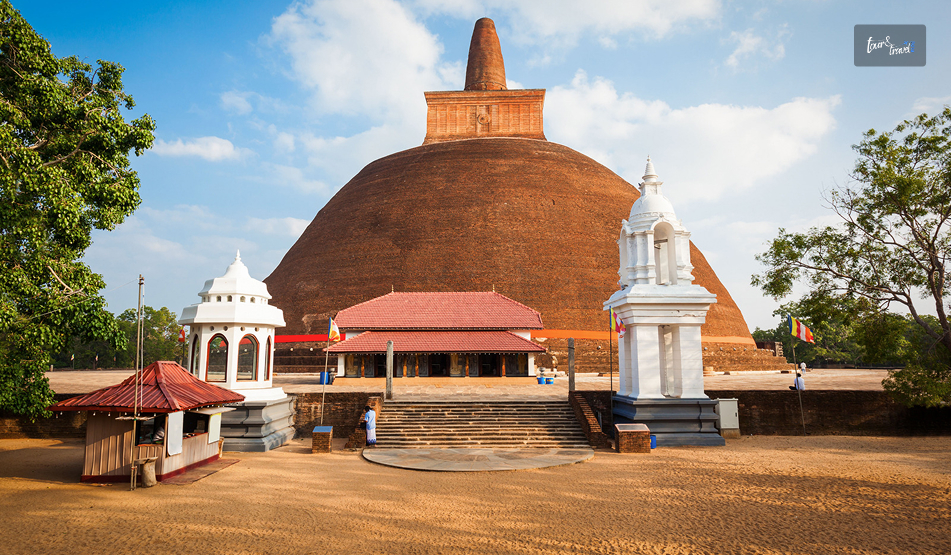
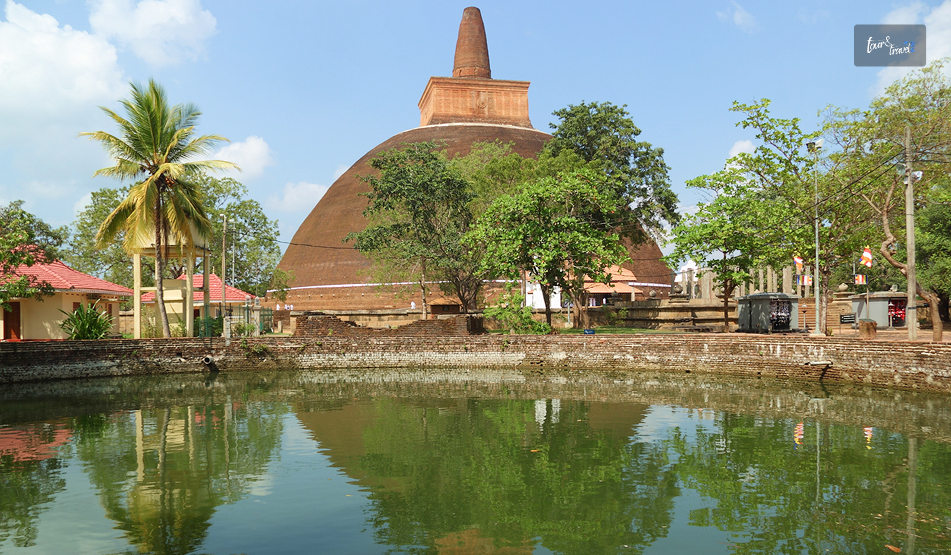
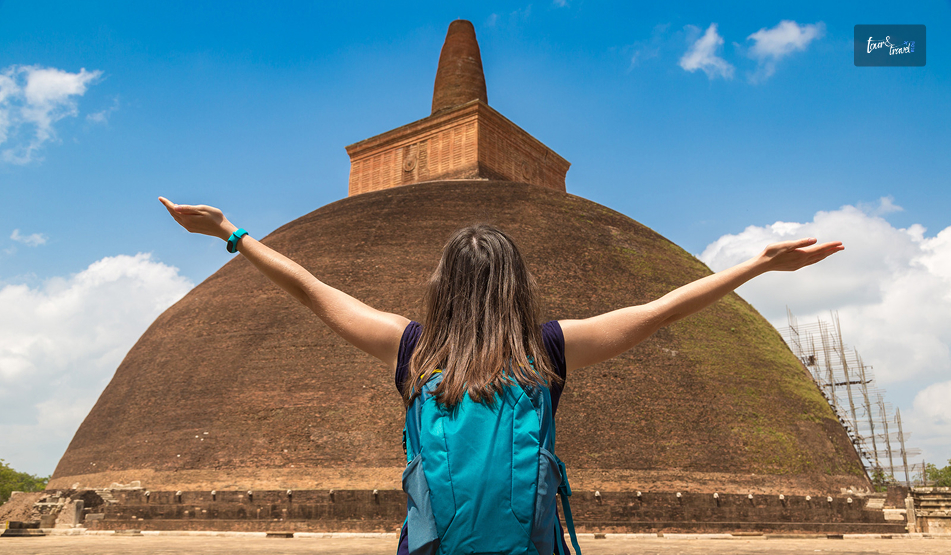
The heat was still bearable, and I noticed the top third of the stupa rising over the trees while waiting in the ticketing queue.  

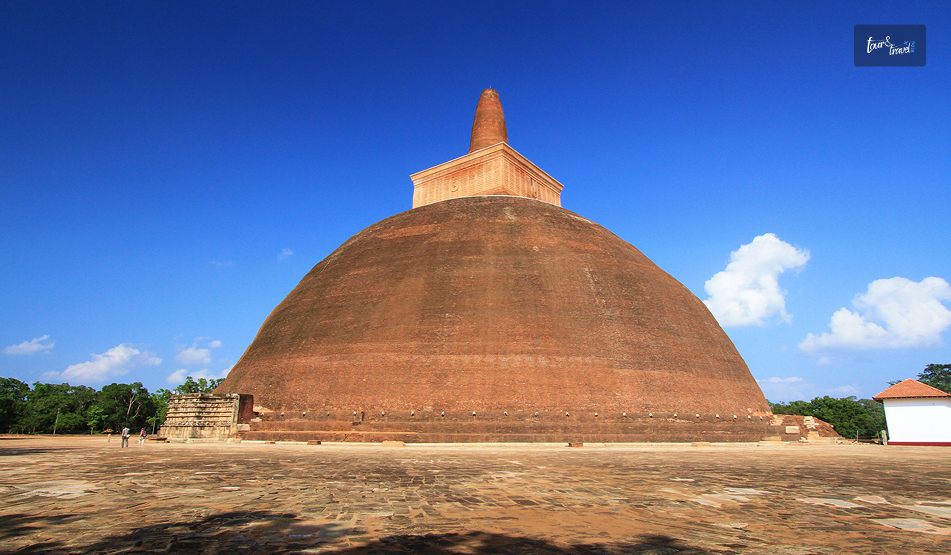
It was a massive brick-red dome. 

I had already spent a day in the southern half of the Sacred City of Anuradhapura, exploring Ruwanwelisaya and Jaya Sri Maha Bodhi.  

So, I had an image in my mind of what a Sri Lankan dagoba looked like.  

However, Abhayagiri changed my perception within minutes.  

For me, it was the site that helped me understand the actual scale of Anuradhapura.  

The scale is beyond the fact that it is the tallest stupa standing.  

Furthermore, the ponds, the moonstones, and the collapsed monastic halls scattered through the forest show how it used to be a small city of five thousand monks.  

Abhayagiri At A Glance 

 Fact   Detail 
 Location   Northern sector of the Sacred City, Anuradhapura Archaeological Park, North Central Province  
 Built   1st century BCE, by King Vattagamini Abhaya (Valagamba), during his second reign  
 Original height  More than 100 meters, comparable in scale to the pyramids of Giza and to the nearby Jetavanaramaya.  
 Current height   Around 75 meters after multiple restorations 
 Tradition  Uttara Vihara (“Northern Monastery”), historic centre of Mahayana and Vajrayana influence within Sri Lankan Theravada Buddhism  
 Status   Part of the Sacred City of Anuradhapura UNESCO World Heritage Site (inscribed 1982)  
 Major restoration   15-year Central Cultural Fund/UNESCO project completed and unveiled in June 2015  
 Nearby structures  Kuttam Pokuna (Twin Ponds) The Abhayagiri Museum The Samadhi Buddha Ratnaprasada One of the finest surviving moonstones of Anuradhapura  
 Hours    5 AM to 7 PM 

The Story Behind The Abhayagiri Stupa

Abhayagiri: Walking The Forgotten Monastery That Once Rivalled The Pyramids

Abhayagiri is not just another Stupa in the Sacred City of Anuradhapura.  

There is a significant religious and political story behind its existence.  

A King’s Debt, And A Monastery Named After A Grudge 

The origin of the monastery goes back to the reign of King Vattagamini Abhaya or Valagamba.  

The king had to leave Anuradhapura due to an invasion around 103 BCE.  

He had to spend 14 years in hiding before he could reclaim his throne. This part of the story is very similar to the Ramayana.  

Lord Ram had to spend 14 years in exile on his father’s command after he became the King of Ayodhya.  

After 14 years of exile and defeating the demon King Ravana, he returned to Ayodhya.  

Nevertheless, King Vattagamini Abhaya was mocked by a Hindu ascetic, Giri, during his exile.  

So, when he got his throne back, he built the monastery on the hermitage of Giri.  

Then, he named the place Abhayagiri, a fusion of his own name with Giri’s.  

You may not believe every detail of the story. However, the monastery was one of the largest Buddhist institutions in the ancient world.  

Splitting From The Mahavihara 

Abhayagiri broke away from the older, conservative Mahavihara tradition. 

The dispute was over the use of Sanskrit texts alongside Pali scripture.  

Also, there were differences about how the monks should engage with the lay community.  

Over centuries, Abhayagiri did not limit itself to being a monastery.  

It was very much like a university and not a single monastery.  

It built connections with Buddhist institutions in India, China, and Java. 

Moreover, it was the first monastic centre in Sri Lanka to have the tooth relic of the Buddha. 

Then, the relic eventually moved to what is now the Temple of the Tooth in Kandy.  

It also became the country’s main center for Mahayana and, later, Vajrayana thought, running in parallel with Theravada orthodoxy for close to 1000 years. 

From Ruin To Restoration 

Abhayagiri fell into decline after Anuradhapura was no longer the capital. 

Also, over centuries the stupa lost around a third of its original height, with the uppermost brickwork collapsing.  

In recent times, the Department of Archaeology of Sri Lanka has been continuing the restoration work of this stupa.  

The most significant among these restoration efforts was a fifteen-year Central Cultural Fund project in collaboration with UNESCO.  

The restoration work ended in June 2015.  

When I visited, there was still scaffolding on one section of the dome. 

So, when you plan a visit, please check with the locals regarding the restoration work.  

Also, take your photos from the paved approach on the eastern side rather than directly underneath, where the working platforms tend to sit. 

What You Will Actually See When You Visit

Abhayagiri: Walking The Forgotten Monastery That Once Rivalled The Pyramids

Abhayagiri is not just a standalone historical monument. 

It is a forested archaeological zone that takes a genuine hour or two to walk properly. 

It took more time for me, as I was exploring the carving details, and here I have discussed the most remarkable things I saw at Abhayagiri.  

The Stupa Itself 

The stupa is the epicenter of the complex.  

Up close, the brick construction and the sheer footprint of the base make it obvious why 19th-century surveyors compared it to the Giza pyramids rather than to other stupas. 

Kuttam Pokuna Or The Twin Ponds 

The two rectangular bathing tanks are genuinely one of the best-preserved pieces of hydraulic engineering anywhere in the ancient city.  

They were restored once in 1885 under British colonial archaeologist Robert Wilson Ievers and again in 1955 by the Department of Archaeology.  

The Moonstone And The Samadhi Buddha 

You will find the sandakada pahana, or the most elaborately carved moonstone, on the northwest side of the stupa.  

This semi-circular moonstone sits before a staircase.  

It has carvings of flame motifs, four animals, a vine scroll, and a lotus at the center in the quintessential Anuradhapura style.  

From there, the Samadhi Buddha was a short walk away. 

In this statue, Lord Buddha is meditating, and it is a significant piece of period culture.  

Ratnaprasada And The Guard Stones 

Ratnaprasada is to the west of the main stupa.   

It was once the largest structure in the whole monastery and housed its more ascetic monks.  

Today, you can mostly see the remains of the foundation work. 

However, it has one of the finest surviving guardstones in the country, carved with a naga king figure.  

The Abhayagiri Museum 

The museum is around 300–400 metres south of the stupa. It was established in memory of the Chinese monk-pilgrim Faxian (Fa-Hsien). 

He studied at Abhayagiri in the early 5th century CE and left one of the only outside written accounts of the monastery at its peak.  

It houses artefacts recovered during the site’s excavation and restoration work. 

Also, it is a useful stop for context before or after walking the ruins. 

However, it requires its own separate entry ticket, distinct from the main Sacred City pass. As a SAARC visitor, I had to pay $12.  

Entry Fees And Tickets

Abhayagiri: Walking The Forgotten Monastery That Once Rivalled The Pyramids
 Ticket  Foreign Adult Price (2026)   Notes 
 Anuradhapura Sacred City combined ticket.  $30 Covers:  Abhayagiri Stupa Jetavanaramaya Ruwanwelisaya Thuparamaya Lovamahapaya Kuttam Pokuna The Moonstone The Abhayagiri Museum  
 Isurumuniya, Sri Maha Bodhi, Mihintale   Ticketed separately  Not included in the main Sacred City ticket. 
 Anuradhapura New Town entry   $3  Separate from the Sacred City archaeological zone  
 Local/SAARC visitors  Free for the Sacred City itself   A separate small fee applies for the SAARC Visitors ($12) for the Abhayagiri Museum.    

Recent Developments Worth Knowing About

Abhayagiri: Walking The Forgotten Monastery That Once Rivalled The Pyramids

Anuradhapura as a whole has had a steady stream of coverage through 2026. 

Most of it is about accessibility and ticketing rather than the archaeology itself.  

There have been repeated revisions in Sri Lanka’s broader Cultural Triangle pricing.  

Furthermore, Sri Lanka’s Department of Archaeology continues to run active protection and monitoring work across the Anuradhapura Sacred City sites. 

These include Abhayagiri’s monastic ruins, moonstones, and guard stones, under its ongoing chemical conservation and maintenance divisions.  

A Half-Day Itinerary Around Abhayagiri 

 Time  Stop  Notes 
 8:00 AM  Arrive and hire bicycles or a tuk-tuk.   Buy your combined ticket at the Archaeological Museum first if you have not pre-booked. 
 8:30 AM  Abhayagiri Stupa  Enjoy the best light and coolest temperatures of the day.  Approach from the eastern paved courtyard.  
 9:15 AM  Moonstone and Samadhi Buddha   A short walk northwest and east of the stupa, respectively. 
 9:45 AM  Ratnaprasada and guard stones   Easy to miss, and it is set slightly back from the main path.  
10:15 AM Kuttam Pokuna (Twin Ponds)   Worth ten minutes just for the stonework and water channels. 
 10:45 AM  Abhayagiri Museum  Requires a separate ticket.  
 11:30 AM  Onward to the rest of the Sacred City or Mihintale   Both are feasible as a half-day add-on if you started early. 

Where Abhayagiri Fits Into A Wider Sri Lanka Trip 

Are you building out a full Cultural Triangle itinerary? 

You can visit Abhayagiri with the other major Anuradhapura stupas and with Mihintale, the hill where Buddhism is traditionally said to have arrived in Sri Lanka. 

The most convenient way to explore the entire circuit is to keep an entire day for Anuradhapura, including Abhayagiri, Ruwanwelisaya, Jetavanaramaya, and Sri Maha Bodhi. 

Mihintale will be a half-day add-on to your itinerary, and the following morning you can head to the Sigiriya Rock Fortress and Polonnaruwa.  

Having said that, Abhayagiri isn’t the single most photographed structure in the Cultural Triangle. 

Sigiriya and the Temple of the Tooth get more attention in most guidebooks or travel itineraries.  

However,  of everywhere I visited in Anuradhapura, it is the one that most convincingly puts you inside the ancient city rather than just looking at a monument within it.

Share on Social Media

Sibashree is a travel, culture, and leisure writer who has been writing since the age of 12 and professionally since 2014. With more than a decade of travel writing experience and journeys across India and several parts of the world, she brings a deeply personal and thoughtful perspective to her work. A student of English Literature and Mass Communication, Sibashree has always viewed travel as more than movement — for her, it has been a way of understanding people, cultures, and herself. Her passion for spiritual exploration has also led her to many unusual and meaningful destinations over the years. Outside of writing, Sibashree enjoys watching European cinema, reading about global politics, and reflecting on the stories hidden within everyday places.

Leave a Reply

Your email address will not be published. Required fields are marked *

title-img Related

READ MORE Jaffna Sri Lanka travel guide

Jaffna Sri Lanka Travel Guide: Is Visiting Jaffna In Sri Lanka Worth It? 

BY  Sibashree Oct 24, 2025

You know what’s so special about visiting quaint and offbeat places? These are the places to make quirky and personal connections.  Jaffna has not been an exception. Let me share a story! It was exploring the Jaffna Public Market. An old lady jokingly refused to sell a tourist a kilo of dried fish. She said, “You don’t look like someone who appreciates the smell of sun-dried fish!” By the end, she laughed and gave him a small bundle for free. The whole thing was so warm. An old lady, who is probably talking to a person for the first time, is very cordial in her behavior. You will not get this shopping experience in any shopping mall or supermarket. Another highlight was when a priest offered me some sweets at the Nallur Kandaswamy Kovil. There were hundreds of visitors, and I don’t know why he came up to me and offered the sweets. He said, “For you, even if you are a stranger, my blessings are for you!” I had tears in my eyes. With moments like this, Jaffna will always remain one of the most beautiful places in the world. It’s not just about the scenic beauty, but the warmth and inclusivity.  In addition, the recent inauguration of the International Cricket Stadium at Mandaitivu Island will be a new landmark of the city. With a capacity of 40000 spectators, it will promote national integrity and more tourism through sports.  Here, I will talk about how to reach Jaffna, the places to visit, the safety quotient, cultural exploration, and more! Keep reading this Jaffna, Sri Lanka travel guide.  You can also follow our Jaffna travel itinerary to plan your trip better.  Cultural Exploration In Jaffna, Sri Lanka: Why Is It So Special? The origin of Jaffna’s name takes us back to its Tamilian roots. There was a blind musician called Yalpanan who used to play an instrument called Yal. Thus, the place got its name as Yalpanam or Yalpanapattinam, meaning the Port of the Iyre.  Furthermore, the historical evidence suggests that Tamil Presence here dates back to at least 300 B.C. Archaeological sites such as Pomparippu are a telltale of the Tamilian presence.  Jaffna was the capital of the Jaffna Kingdom in the medieval days before European colonization happened here.  Moreover, thanks to the Tamilian culture in Jaffna, in recent times, it has become a favorite destination of Indian travelers. A Tour and Travel World report suggests a 325% increase in the searches among Indian travelers.  Direct accessibility to Jaffna from various parts of South India via flights is another reason why Jaffna is so popular among Indian tourists.  You will get flights to Jaffna from cities such as Hyderabad, Thiruvananthapuram, Madurai, and Chennai.  Top 10 Unknown Cultural Things About Jaffna, Sri Lanka 1. Traditional Tamil musical performances during temple festivals.2. Unique Jaffna-style architecture in homes and temples.3. Palmyrah palm-based crafts and products.4. Indigenous Tamil martial arts demonstrations.5. Local storytelling traditions passed down orally.6. Community-led cultural tours and workshops.7. Traditional Tamil wedding customs.8. Seasonal harvest festivals like Thai Pongal.9. Local folklore and legends tied to historical sites.10. Ancient Tamil inscriptions found in temple ruins. Food Culture And Culinary Tours In Jaffna, Sri Lanka  View this post on Instagram A post shared by Kandy Bites by Chef Ceylon (@kandy_bites_) Jaffna cuisine is known for its spicy flavors and unique Tamil dishes. Popular items include Jaffna crab curry, Kool (seafood soup), Odiyal Kool, and Palmyrah jaggery sweets.  Food tours in Jaffna offer cooking classes, market visits, and traditional meal experiences with local families. However, the traditional delicacies of Jaffna tell the stories of the tradition, history, and resilience of Northern Sri Lanka. In addition, Jaffna City, in recent times, has played an important part in changing the food trends of the country and ensuring a lesser reliance on expensive imports.  The increased use of Palmyrah jaggery, palmyrah flour, or even palmyrah vinegar, typical Jaffna ingredients, in Colombian food is an example of how Jaffna is emerging as a crucial destination in the country's food landscape.  Colombo, in fact, now has a Kaachai Varai or Jaffna Market from where seafood, spices, and other ingredients are sourced. This endeavor supports the local fishermen, farmers, and producers.  Moreover, Jaffna is an important location for hands-on culinary tours in northeastern Sri Lanka. For example, celebrated Australian chef Peter Kuruvita conducts a culinary tour in the northeast part of Sri Lanka, and Jaffna is one of the destinations.  On this tour, you will get to know about the art of cooking in clay pots over an open fire. Overall, getting familiar with the local food is one of the top cultural things to do in Jaffna Sri Lanka.  A 3-Day Culinary Tourism Itinerary In Jaffna View this post on Instagram A post shared by ALIYAA (@aliyaa_kl) It’s time to experience the eclectic nature of Jaffna food, where Tamilian, Muslim, and European influences have merged. Here is a 3-day culinary tourism itinerary in Jaffna.  DaysActivitiesDay 1• Arrival in Jaffna and checking in• Having Jaffna-style idiyappam with coconut sambol and mutton gravy• Exploring the Jaffna Market, a gold mine of dried fish and palmyrah jaggery, tamarind, and spices unique to the region.• Trying palm treacle sweets, vadai, and murukkuDay 2• Having Jaffna crab curry or nandu kool (crab soup) with red rice• Pairing the food with poriyal and rasamDay 3• Visit Nallur Kandaswamy Kovil and try nelli juice or Indian gooseberry drink• Booking an Airbnb or a local guide experience and learning to cook pittu, prawn curry, and other local delicacies If you want to extend your culinary tour in Jaffna, you can plan a day trip to Delft Island, where you will find the best coconut toddy and island-style seafood delicacies. Also, you can attend a palmyrah tapping demonstration or explore the northernmost markets in Point Pedro.  A 5-Day History-Focused Itinerary In Jaffna View this post on Instagram A post shared by VIEW LANKA TOURS (@viewlankatour) Mentioned in the ancient Tamil scripture as Naga Nadu, or the land of the Nagas, Jaffna has been ruled by the Pandya, Chola, and Rajarata kingdoms. Later, it also became a colony of the Portuguese and British.  Here are the historical places in Jaffna to see within a 5-day travel itinerary.  DaysActivitiesDay 1• Arrive in Jaffna from Colombo by car or train• Checking into the hotel• Breakfast with traditional Tamil food• Visiting the Jaffna Fort (1618)• Lunch• Visiting the Jaffna Public Library• Walking along the Jaffna Lagoon waterfront near the Dutch Fort AreaDay 2• Breakfast and a visit to Nallur Kandaswamy Kovil• Visiting the Minister’s House or Manthiri Manai• Lunch• A drive to Keerimalai Springs and Naguleswaram Temple• Return to Jaffna TownDay 3• Travel north to Dambakolapatuna Temple, at a distance of 35 km• Lunch and exploring Kankesanthurai• Visiting the 2000-year-old site of Kandarodai (Kadurugoda) Buddhist Monastery• Visiting the St. Mary’s CathedralDay 4• Taking an early ferry to Delft Island (Neduntheevu) from Kurikadduwan Jetty.• Visiting the Delft Fort (Portuguese-Dutch) ruins, Queen’s Tower lighthouse, and Baobab Tree• Spotting the wild ponies• Having local seafood for lunch• A ferry ride to Nainativu Island and spotting places like the Nagapooshani Amman Kovil and Nagadeepa Viharaya• Return to JaffnaDay 5• Breakfast and visiting the Chunnakam Market• Visiting the Jaffna Archaeological Museum• Visiting Point Pedro and attractions such as the Old lighthouse• Farewell dinner A 5-Day Cultural Itinerary In Jaffna Attending the Palmyrah workshop was a memorable event in my Jaffna tour. Also, Point Pedro, the northernmost part, offered the most culturally vivid experience. DaysActivitiesDay 1• Arrival in Jaffna• Exploring the Jaffna Public Library after breakfast• Walking through the Old Park• Exploring Jaffna Fort• Visiting Nallur Kandaswamy Kovil in the eveningDay 2• Visiting Point Pedro Market• Driving to the Palmyrah Handicraft Centre• Having a home-style Tamil Meal• Visiting Manthiri Manai (Minister’s Palace) and Sangilean Thoppu, believed to be the remains of the ancient Jaffna Kingdom’s royal complex.• Attending a Bharatanatyam or Naddu Koothu performanceDay 3• A ferry ride from Kurikadduwan Jetty to Nainativu Island (Nagadeepa)• Visiting Nagapooshani Amman Kovil (Hindu temple) and Nagadeepa Viharaya (Buddhist temple)• Trip to Delft Island (Neduntheevu)• Exploring colonial ruins: the Delft Fort, Queen’s Tower, and Baobab Tree• Ferry ride to JaffnaDay 4• Having kothu roti and Sombol for breakfast• Visiting St. Mary’s Cathedral and Ariyalai Hindu Temple• A visit to the Jaffna Archaeological Museum• Exploring the Chavakachcheri Heritage Houses• Taking part in a home-cooking demonstration with a local familyDay 5• Attending a Palmyrah workshop• Visiting the Kandarodai (Kadurugoda) Buddhist Monastery• Exploring Keerimalai Springs and Naguleswaram Temple• Seafood meal• Shopping in the afternoon Cultural Etiquettes For Foreign Tourists Tourists should dress modestly, especially when visiting the temples in Jaffna.  Shoes must be removed before entering religious sites.  Photography should be respectful, and permission should be sought when capturing images of locals or ceremonies. Must Visit Destinations In Jaffna, Sri Lanka If you want the best cultural and historical experience in Jaffna, don’t miss a visit to the following places.  1. Nallur Kandaswamy Temple Nallur Kandaswamy Temple is the cultural and spiritual epicenter of Jaffna. Dedicated to Lord Murugan, it shows a unique Dravidian-style architecture. Also, the Nallur Kandaswamy Temple festival in July-August attracts a lot of visitors.  2. Jaffna Fort Built by the Portuguese in 1618, the fort is an example of quintessential European military architecture, and it was later occupied by the Dutch.  It overlooks the Jaffna Lagoon, and it is a favorite of photo enthusiasts.  3. Delft Island View this post on Instagram A post shared by Audrey Potvin (@audreypotvin) A popular day-trip destination, Delft Island in the Jaffna Peninsula is known for its Dutch remnants, and it is a great place for spotting ponies.  4. Casuarina Beach As the person in charge of our hostel said, I visited the Casuarina Beach after 5 PM. He said, “The quiet at the beach just before sunset is something unbelievable.” I experienced the magic.  The birds were coming home, and the soft white sand, like a blank canvas, was changing colors every second.  5. Keerimalai Springs Located by the sea, the Keerimalai Springs and Keerimalai Naguleswaram Temple are a unique combination of spirituality and scenic beauty.  The water of these springs has healing properties.  6. Point Pedro View this post on Instagram A post shared by Meerza Iqbal (@meerzaiqbal) Point Pedro has a historic lighthouse, and it is the northernmost tip of Sri Lanka. Furthermore, it has the most vibrant markets for buying fresh seafood produce.  Here, you can also meet the fishermen and have an understanding of their unique ways of living in Point Pedro, as it has the most beautiful beaches in Jaffna.  7. Jaffna Library Tragically destroyed in 1981, the newly built Jaffna Library stands as the symbol of resilience. It is one of the most revered libraries in Asia, and it was first built by the Jaffna Town Development Board on 1st January 1935.  It has a collection of 844 books, 30 magazines, and newspapers.  8. Nagadeepa Vihara View this post on Instagram A post shared by Thambu Illam~Hotel in Jaffna🌴 (@thambu_illam) Nagadeepa Vihara is the place where Lord Buddha visited for the second time. He also ended the dispute between two Naga Kings fighting over the ownership of an ornate throne.  Mahodara and Chulodara, these two Naga kings, became devoted followers of Lord Buddha.  9. Manthiri Manai View this post on Instagram A post shared by FOX Resorts (@foxresorts) Manthiri Manai, or the Minister’s Mansion, stands out thanks to its unique Indo-Islamic and European architecture. Located at a distance of just 1 km from Point Pedro, Manthiri Manai is an archaeologically protected site, and it is said to be the residence of the minister of the medieval Jaffna Kingdom.  How To Reach Jaffna, Sri Lanka? Bandaranaike International Airport in Colombo is the gateway for Jaffna to the rest of the world. From there, you can take a flight to the Jaffna International Airport. Buses and trains are also available from Colombo to Jaffna.  I took the Jaffna train from Colombo Fort. The journey is scenic. However, I remember the 7-8-hour journey for the social experience. People are talking about cricket, sharing coconuts, or humming local tunes.  However, buses departing every 3-4 hours from Colombo to Jaffna are the cheapest option. The ticket price starts at around 1,348.26 Sri Lankan Rupee.  Top Hotels, Resorts, And Stays In Jaffna, Sri Lanka  1. Jetwing Jaffna – Centrally located with modern amenities and rooftop dining.2. North Gate by Jetwing – Offers luxury accommodations near the railway station.3. Subhas Hotel – Historic hotel with spacious rooms and traditional cuisine.4. Thambu Illam – Boutique guesthouse with cultural ambiance.5. Green Grass Hotel & Restaurant – Budget-friendly with local food options. 10 Sustainable And Ethical Travel Tips For Jaffna Sri Lanka 1. Support local businesses and artisans.2. Use refillable water bottles.3. Avoid single-use plastics.4. Respect cultural norms and dress modestly.5. Participate in community-led tours.6. Stay in eco-friendly accommodations.7. Minimize energy and water usage.8. Avoid disturbing wildlife.9. Learn basic Tamil phrases.10. Share positive travel experiences to promote responsible tourism. Jaffna Nightlife And Evening Activities The nightlife in Jaffna is about rejuvenation and introspection. This is the best time of the day to attend temple rituals, enjoy local dining experiences, and attend cultural performances.  Furthermore, Evening walks along the beach and exploring the markets are some delightful experiences in the evening. Best Seasons To Visit Jaffna, Sri Lanka The best time to visit Jaffna is from December to March. You must avoid the monsoon season from October to November due to heavy rains.  Festivals like Thai Pongal in January offer cultural immersion opportunities. Also, July-August is the month of the Nallur Kandaswamy Temple festival.  Budget And Affordability For A 7 Day Travel Vacation in Jaffna, Sri Lanka Jaffna is a budget-friendly destination. You will get diverse food, transportation, and accommodation options. The entry fees to the museums and cultural places are also quite reasonable.  Furthermore, the travel expenses will depend on the type of traveler. Here is a quick breakdown. Types of TravelerExpenses (Approximately)Solo Traveler$300–$400Couple$600–$800Family of 4$1000–$1200 Crime Rates And Safety Tips For Tourists Jaffna is a safe place to travel. The crime rate in different aspects is low to moderate, and here are some essential data (Source: Numbeo) related to crime in Jaffna.  Crime Index46.64Safety Index53.36Level of Crime50:00Armed Robbery35.71Things from Car Stolen46.43 Is Visiting An Off-Beat Location Like Jaffna Worth It? Yes, Jaffna is a must-visit destination to experience the rawness and cultural richness of Northern Sri Lanka. It is a budget-friendly destination with a Tamil origin and a colonial past.  Furthermore, food here is an extension of who the people are. Simple and soulful! Also, the Jaffna tells the story of human resilience and how it has survived a war-torn past! Jaffna Travel Guide: Frequently Asked Questions (FAQs) Here are the frequently asked questions and answers about the Jaffna travel guide. 1. How Many Days Are Enough In Jaffna? Three to four days are enough if you want to explore the major cultural and historical sites. However, if you want to explore the local markets and have a deep cultural connection with the local people, you will need at least 5 to 7 days.  2. Which Part Of Sri Lanka Is Most Beautiful? I cannot pick any particular part of Sri Lanka as the most beautiful, as it has the ancient rock fortress of Sigiriya, a UNESCO World Heritage Site. On the other hand, Kandy, a significant religious hub, is a popular tourist destination.However, Jaffna in northern Sri Lanka stands out with its spiritual vibe, history, and cultural richness. It is a coastal destination with a diverse tourism profile. 3. What Language Is Spoken In Jaffna?  Tamil is spoken in Jaffna. However, it is a little different from the Tamil language spoken in India. The Tamil language here is heavily impacted by the Jaffna dialect.  Read Also: Luang Prabang Travel Guide: Why I Loved It? (Activities, Attractions, History, Itinerary, And More) Cheapest Places To Travel Around The World In 2025: Traveling On A Shoestring Learn All About the Best Solo Trip in India Right Here!

READ MORE Dunhinda Falls

Dunhinda Falls: The Misty “Bridal Fall” Of Badulla

BY  Sibashree Aug 27, 2026

My shoes were soaked when I reached the viewing platform at Dunhinda Falls.   The trail was dry, but the fine spray drifting off the waterfall made my clothes and shoes wet.   So, no wonder the waterfall got its name from this mist.   Also, enjoying a view of this waterfall will be more delightful with the construction of the viewing center at Dunhinda Falls getting started.   This platform will be a replacement for the 50-year-old existing viewing platform, which has been in a deteriorated condition for a long time.   So, as Dunhinda Falls gets decked out with a new platform, I want to share my story and practical details about a visit to it.   What Is The Meaning Of Dunhinda?   The name Dunhinda comes from Sinhala words for mist or smoke. So, the name is a direct reference to the spray that surrounds the base of the falls.  Dunhinda also has another name, “Bridal Falls.” This name comes from the shape of the cascading water, which looks similar to a bridal veil.   The local traditions suggest that the indigenous Veddha people once inhabited the area.   There is also a story about a giant fern becoming lodged at the top of the falls during the reign of King Rajasinghe, damming the water and flooding Badulla town.  Then, a local hero cleared it to protect the town.   Where Is Dunhinda Falls? Dunhinda Falls is at a distance of around 5 Km from Badulla town in the lower central hills of Sri Lanka's Uva Province.  Badulu Oya, running through Badulla itself, has formed this beautiful waterfall. The height of the waterfall is around 64 meters.   Despite not being among the tallest waterfalls in the country, it is one of the most beautiful in the country.   It stands out with its sheer volume and the dramatic mist that it throws up as it crashes into the pool below.   Overall, this waterfall, at a distance of around 243 km from Colombo and 110 km from Kandy, is a natural stop if heading toward or through Badulla on a hill-country route.   How To Reach Dunhinda Falls  From Badulla Town, you can take a tuk-tuk, taxi, or self-driven car to Dunhinda Falls. I took a tuk-tuk, and it took around 15 minutes to complete the journey.   The tuk-tuk cost me around LKR 400, and the route followed the Bandarawela–Badulla road before turning onto the Mahiyangana road toward "Dunhinda Junction," roughly 5 km from Badulla.   If you are coming from Ella, expect the drive to take under an hour, and from Colombo, the Southern Expressway offers the fastest approach before joining the hill-country roads.   Public transport such as buses and tuk-tuks run from Badulla town. However, you will have to wait for a while.   There is a parking area near the trail entrance for those driving themselves.  The Trek To The Falls  The beautiful trek route to the Dunhinda Falls makes it a delightful experience and something beyond a quick photo stop.   From the entrance gate, a forest path of roughly 1 to 1.5 km led to the falls, passing through genuinely lush terrain with birds and butterflies.  Also, I met a few curious monkeys along the way.   The trail was safe, though sections can turn muddy after rain.  So proper footwear matters more here than at some of Sri Lanka's roadside waterfalls.   Along the way, look out for Kuda Dunhinda, or "Small Dunhinda." It is a secondary waterfall visible from a viewpoint on the same path.  What I Found At The Falls? I found an observation platform above the natural pool at the base of the Dunhinda Waterfalls.   Located at the end of the trail, the platform offered a full view of the water dropping through a narrow gap in the rock face before crashing down.  I did not attempt to swim in the pool. The pool has submerged rocks and strong currents in the water.   Also, if you want to have some refreshments, you will find small stalls of snacks, herbal drinks, and simple souvenirs.   Best Photo Spots  The observation platform gives the classic, full-height view of the falls. It is by far the easiest spot to shoot from without getting drenched.   For a slightly different angle, the viewpoint overlooking Kuda Dunhinda partway along the trail offers a quieter composition. Here, you have less spray to contend with.  Overcast mornings tend to produce the most even light for photographing the mist itself.  Harsh sun can blow out the brightest parts of the spray and lose the detail that makes this waterfall distinctive in the first place.  Nearby Attractions Badulla town itself is worth a short visit for its colonial-era architecture and the Muthiyangana Temple, one of the island's older Buddhist sites.   If you have more time, Ella is under an hour away and opens up the wider hill-country circuit, including the Nine Arch Bridge, Ravana Falls, and Little Adam's Peak.   For wildlife-focused travelers, Udawalawe National Park is a feasible day trip from Badulla for those wanting to pair the waterfall with a safari.  Where To Stay Near Dunhinda Falls  Badulla town has a reasonable spread of guesthouses and small hotels.  The options are enough to make it a comfortable overnight base without needing to push on to Ella the same day.   Staying in Badulla also means an early start on the trail before the mid-morning heat and any afternoon rain sets in. It makes for a more pleasant walk through the forest.   Do you want to stay somewhere with more restaurants and traveler infrastructure? Ella is close enough to use as a base instead.  It is ideal for a half-day excursion rather than an overnight stop.  Safety And Practical Notes  The trail, while generally safe and heavily used, does involve some uneven and occasionally muddy footing.  So trainers or light hiking shoes are a better choice than sandals.   Resist the urge to swim in the main pool at the base.  The currents are stronger than they look. There have been drownings here in the past.  That is why the observation platform is the recommended vantage point.   Bring small notes for the entrance fee and any snacks along the trail.  Entrance Fee And Facilities There is an entry fee of LKR 200 payable at the gate before the trail begins. Also, there are basic toilet facilities and a parking area for those arriving by vehicle.   The fee structure is modest. It goes toward maintaining the path and the observation platform at the base.   There is no formal visitor center.  Best Time To Visit The Dunhinda Falls   The waterfall changes its character with the seasons.   June and July are the safest months, when trail conditions are dry.   However, in the wetter months, particularly from around November to March, the falls are at their most dramatic and full.  The trek itself gets muddier.   If your priority is photography and volume, aim for right after the rain. However, if it is a comfortable walk, the mid-year months are the best.  Also, early mornings from 7 AM to 8:30 AM and late afternoons from 4 PM to 5:30 PM are the best.

READ MORE chilaw

How Chilaw, Sri Lanka, Turned A Quick Stop Into Two Extra Days: Know The Fishing Town

BY  Sibashree Aug 21, 2026

Chilaw drew my attention with the smell of drying fish at the harbor. As I reached the fishing town, I heard a low chant drifting out of a Shiva temple.  Chilaw, which almost a year back had a Korea FAO Sustainable and Innovative Fisheries and Aquaculture Programme (KOFAF) to boost the shrimp aquaculture of Sri Lanka, is a fishing town first.  Then, it is a pilgrimage site and almost as an afterthought, a beach destination.  Overall, it felt so unpolished and real in a way that many famous coastal stops in Sri Lanka have lost for a long time. How To Reach Chilaw, Sri Lanka And Get Around?  Chilaw is around 52.9 km away from the Bandaranaike International Airport. By road, the journey is around 1.5 hours to 2 hours.  The town's own railway station is about 3 kilometres from the centre, with regular services connecting to Colombo along the coastal line. ModeEstimated Time From ColomboApproximate Cost (LKR)NotesCar / Taxi2 Hours8000-15000(Based on Vehicle Type)Most FlexibleEasiest Way to Combine Chilaw with Anawilundawa and Marawila in One LoopUber2 HoursUber Go Intercity: 12016Uber Sedan: Intercity: 12629UberXL Intercity: ₹16062(Source: Uber.com) Best for First-timers.Safer for Solo, Women Travelers. Train (Colombo Fort–Puttalam line)Around 2.5 to 3 HoursThird Class Tickets: 180Second Class Tickets: 400First Class Tickets: 750(Source: Sri Lankan Railways.)The Station is roughly 3 km from the Town CentreA Tuk-Tuk Covers the Last StretchBus2–2.5 Hours150-300Regular Services along the Coastal RouteIt is the Cheapest Option Once you reach Chilaw, you can move around in tuk-tuks. From the town center, you can take a short ride to the fish market and near St. Mary's Church. You can even ferry to Anawilundawa and back after a half-day trip.  However, here, I had to negotiate a lot with the drivers. You must also fix the price upfront so that they do not end up adding more to the price during the trip.  What Are The Top Attractions In Chilaw?  Chilaw does not offer a resort trip like Bentota or Hikkaduwa. It mostly has simple guesthouses as accommodations.  Also, if you want to focus on the quieter beach experience, you can stay in the larger properties in Marawila.  Still, Chilaw is not like a typical touristy or bucket-list destination, and here are the places I visited during my stay.  1. Munneswaram Temple Like the Pancha Bhoota Sthals in India, Sri Lanka also has its five ancient Ishwarams dedicated to Lord Shiva.  Munneswaram is one of them.  The temple is a complex of five temples, dedicated to Shiva, Ganesha, Ayyanayake, Kali, and, notably, a shrine to the Buddha as well.  This temple once again reminded me that the religious traditions of Sri Lanka have always been inclusive. Also, they have often overlapped with each other, rather than staying separate.  Why Is The Munneswaram Temple So Special?  The temple has a mythological association with the Ramayana. It is said that Lord Ramachandra worshipped Lord Shiva here for penance after killing Ravana, who was an ardent Shiva devotee and a Brahman.  Along with the mythological connection, the temple also stands out with its ambiance. As I entered the temple, the incense smoke rose over the Dravidian-style gopuram.  Also, there was a practiced calm even if the priests and devotees moved between the shrines.  However, the temple bustles with energy and human presence during the annual Munneswaram festival.  It is usually held in August, and the entire town seems to reorganise itself around the procession. 2. Chilaw Lagoon And The Sand Spits Chilaw picks its own rhythm from the lagoon. It is fringed by sixteen species of mangrove and reaches close to four metres at its deepest point before opening into the Indian Ocean. I took a late-afternoon boat out with a local fisherman who moonlights as a guide.  I spotted egrets lifting off the mangrove roots, and the occasional splash of a mullet. Also, with absolutely no other tourists in sight, it was the most peaceful 1 hour in Chilaw.  The lagoon isn't just scenic. It is a working fishery that supports well over a thousand families in the area, and you feel that livelihood everywhere. I saw the nets drying along the banks to the small jetties where boats are unloaded each morning.  Nearby, the Chilaw sand spits offer a quieter, more unusual landscape for birdwatchers, with shifting sandbanks that host wading birds you won't easily spot elsewhere on this coast. Regarding the charges, you have to negotiate directly with a fisherman at the jetty rather than book through a formal operator. My boat ride cost me LKR 500.   So, this is still very much an informal, word-of-mouth arrangement, and that is why there will be a lot of negotiations regarding the trip duration and the charges.  3. Anawilundawa Wetland Sanctuary If you are staying in Chilaw, do not skip a half-day trip to Anawilundawa, located between Chilaw and Puttalam.  This 1400 hectares area is a Ramsar Site, and it has three distinct ecosystems. You will find a  mangrove swamp, coastal saltwater belt, and freshwater lakes. Also, the biodiversity numbers are amazing. 150 Bord Species 20 Mammal Species 70 Types of Butterflies Moreover, half of the freshwater fish species in Sri Lanka call Anawilundawa Wetland Sanctuary their home.  I made a mistake by not taking a guide with me for the wetland visit.  A local birder pointed out species from the boat that I would have completely missed on my own, including a painted stork colony that was, frankly, worth the whole detour. If birdwatching is even a mild interest, hire a guide at the entrance.  It is inexpensive and transforms the visit. The entry is free, and the guide cost will be around LKR 1500 for two hours. Also, the sanctuary remains open from 6 AM to 6 PM.  4. Faith Along The Coast: Churches And Kovils Home to the Munneswaram Temple, Chilaw also harbors a Catholic heritage.  The St. Mary's Church in the town centre is a prominent example, and its architecture and quiet courtyard make it worth a stop even outside service hours.  A short drive away in Thalawila, St. Anne's Church draws thousands of pilgrims each July for its annual feast, one of the larger Catholic gatherings on this stretch of coast, complete with processions and all-night vigils. What struck me most, wandering between kovils, churches, and small unnamed shrines tucked down side streets, was how unremarkable this coexistence felt to the people living it. Nobody made a point of it.  It was simply how the town worked. 5. Beaches, Toddy Taverns, And The Fish Market Chilaw beaches are not the typical postcard frames you will find on the southern coast.  Silver Beach, the most prominent among them, is right in town. I loved an early evening walk there.  Also, nearby Marawila offers a longer, quieter stretch of sand if you are willing to drive twenty minutes north. For a real sense of the town, though, skip the beach and get to the Chilaw fish market before 7 AM.  It was loud, slippery underfoot, and completely unstaged. Furthermore, when the boats came in, auctioneers shouted prices, and vendors were already frying fresh catch on the spot.  I ended up having a breakfast of string hoppers and coconut sambol from a stall two feet from the water, and it remains one of the best meals of the trip. Later, I visited one small family-run toddy tavern. It served fresh fermented palm sap alongside coconut-based snacks.  It was strong, and I just took a few sips. Though it is a slice of daily Chilaw life, it is not for someone who is not used to it.  What Is The Best Time To Visit Chilaw?  Being on the west coast, Chilaw follows a different rhythm than the south or east. SeasonMonthsConditionsDry SeasonDecember–MarchSunny and low-humidity weather conditions are the best for lagoon trips and wetland walks.ShoulderApril, NovemberTransitional months offer fewer crowds, and the weather can be mixed.Southwest MonsoonMay–OctoberHeavier rain makes birdwatching and boating harder to plan around.Munneswaram FestivalUsually AugustThe town reorganises around the temple procession.So, it is worth timing a visit around. Combining Chilaw With Nearby Stops Route SegmentApprox. Driving TimeBest Known ForColombo to Chilaw2 hoursMunneswaram Temple, fish marketChilaw to Anawilundawa30 minutesWetland sanctuary, birdwatchingChilaw to Marawila20 minutesQuieter beach stretchChilaw to Puttalam45 minutesPuttalam Lagoon, salt pansPuttalam to Wilpattu National Park30–45 minutesLeopard sightings, natural "villu" lakes This makes Chilaw a natural half-day or overnight anchor for a longer west-coast loop rather than a single-purpose day trip. Why Chilaw Is Worth It Chilaw is not a destination that announces itself.  There is no single landmark that makes it onto every Sri Lanka itinerary, no beach that dominates Instagram feeds.  What it offers instead is texture. It has a working fish market, a thousand-year-old temple complex, mangrove lagoons, and a religious diversity that's lived rather than performed.  If you are the kind of traveller who would rather stumble into a real town than tick off a famous one, Chilaw is worth far more than the quick pass-through I originally planned.