
What Are The Things To Do In Jimbocho Book Town? Visit The Best Book Stores And Cafes 

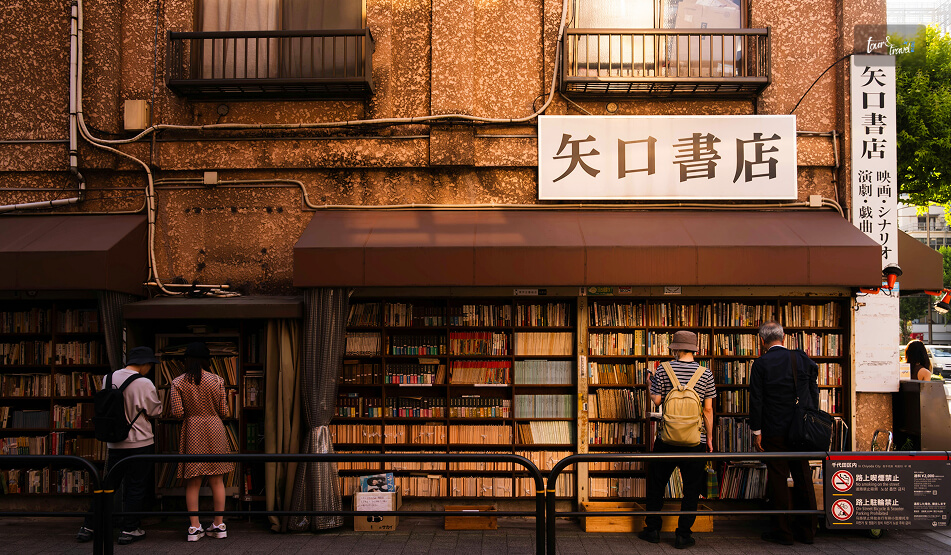
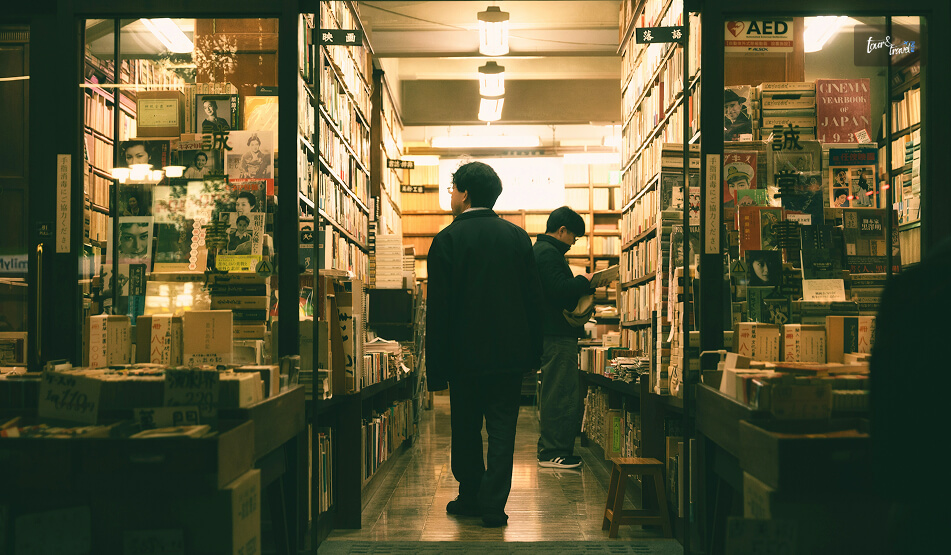
Jimbocho Book Town is a massive book district or book town with more than 400 book stores. 

It is one of the oldest and biggest in the world and is often uttered with respect equal to the Kaifeng and China book towns. 

Also, it is a great place for dark academia fans, students, and readers, as they will find most of the second-hand books in Japan here. 

Furthermore, it’s not just about the love for the book and the “intellectual” aspect of it. 

Time Out has named it the best neighborhood in the world in 2025. 

But do you know about the best book stores and cafes in the Jimbocho Book Town? Here is a detailed list. 

However, let’s talk about the history, accessibility, and the best things to do in this book town. 

Jimbocho Book Town: A Neighborhood That Survived World War II

Jimbocho Book Town_ A Neighborhood That Survived World War II

The Kanda-Jinbōchō area started getting many law schools in the late 19th century and early 20th century, and this is how the book town came. 

Many bookshops opened then, and students of the law schools often sold their old books to these shops at a cheaper rate. Thus, this concept of second-hand books came. 

New students used to buy these books because they were cheaper. 

Furthermore, it is nothing short of a miracle that this book town survived the bombing and destruction during World War II. 

Jimbocho started flourishing as a book town once World War II was over, and today, it is the most fascinating place for bibliophiles. 

Furthermore, Shūeisha (Jump Manga Magazines), Iwanami, and many other leading publication houses have their headquarters in the Jimbocho Book Town. 

Moreover, the curry restaurants and cafes here have been hosting the most famous authors for the longest time. 

I must mention Ladrio in this context. It was built in 1949 as the reading room of a bookstop. It was also the first place that brought Viennese coffee to Japan. 

Now, it was more than an elevation in the texture and flavor. The whipped cream helped to keep the coffee warm for longer as the intellectuals here took part in debates and hot discussions. 

How To Reach The Jimbocho Book Town? 

How To Reach The Jimbocho Book Town

The central location of Jimbocho in Tokyo makes it easy to visit. You can take a ride on the Subway network to make this commute. 

Reach Jimbocho Book Town By Subway 

The nearest subway station is the Jimbocho Station. You will take the subway to the station on the following lines. 

  • Toei Mita Line
  • Tokyo Metro Hanzomon Line
  • And, Toei Shinjuku Line

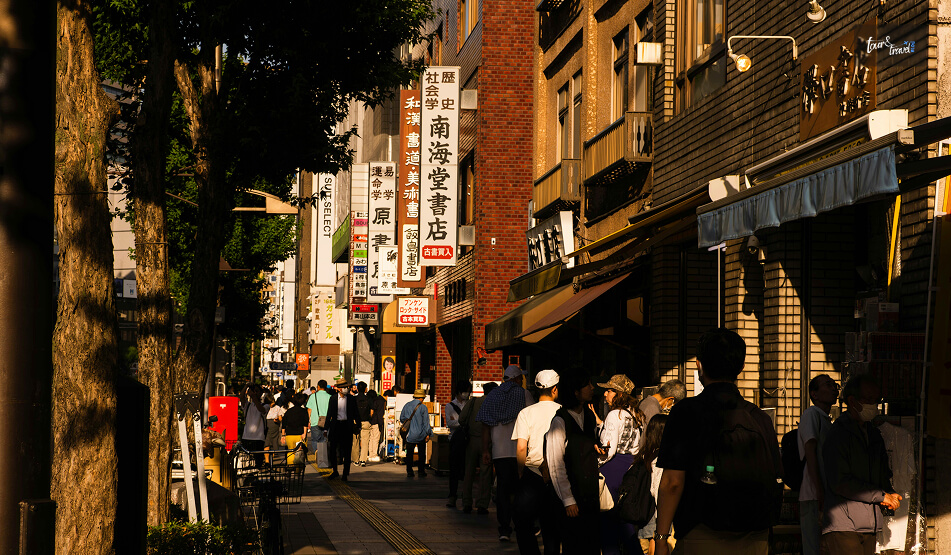
Moreover, once you reach the subway station and exit from A5 or A6, you can find the book stores along Yasukuni-dori. 

Reach Jimbocho Book Town From Shinjuku And Shibuya

The journey through the Toei Shinjuku Line from Shinjuku Station is the easiest way to reach the Jimbocho Book Town. It does not need any transfer. 

Furthermore, the travel time is about 15 minutes. 

On the other hand, from Shibuya Station, you can take a ride through the Tokyo Metro Hanzomon Line to reach Jimbocho Station within 20 minutes.

Reach Jimbocho Book Town From Tokyo Station

From Tokyo Station, you have to take a Rapid ride on the R Chuo Line and reach Kanda Station. 

Then, you have to reach the Toei Mita Line or the Toei Shinjuku Line to complete the journey in 5 minutes.

Shopping For Old And Rare Books And Magazines: The Best Thing To Do In Jimbocho Book Town 

From antiquarian books and documents to specialized books and first editions, you will find all the books in the Hakusan-dori and Yasukuni-dori intersections of the Jimbocho Book Town. 

Starting from the Meiji Era(1868-1912) to today, it has been a book town par excellence. 

Furthermore, the Aozora Kohon Ichiba, or the annual Kanda Used Book Festival, draws book lovers across the globe to the Jimbocho Book Town.  

This festival is held in late October or early November, and it was celebrated from October 24th to November 3rd in 2025.  

What Are The Book Stores You Must Visit In The Jimbocho Book Town? 

What Are The Book Stores You Must Visit In The Jimbocho Book Town

Do you think that the Jimbocho Book Town only has Japanese books? You will get books in various languages in the book stores here. 

Here are the book stores you must visit. 

1. Kitazawa Book Store 

The Kitazawa Book Store is the best book store to find English books and classics in the Jimbocho Book Town. 

It started in 1902 and has thus completed more than 125 years in serving as a beacon of Western literature connoisseurs in Jimbocho Book Town. 

You will mostly find foreign and humanities-related books here. 

2. Magnif Zinebocho

Magnif Zinebocho is a paradise for readers and lovers of retro magazines. You will mostly find lifestyle and fashion magazines from the last few decades here. 

Though it mostly sells Japanese retro magazines, you will also find magazines that overcome language barriers. 

Furthermore, the Mondrian artwork on the bookstore’s facade is really impressive, and you will find retro magazines such as Olive and Relax.

3. Books Tokyodo

Built in 1890, Books Tokyodo is one of the oldest book stores in the Jimbocho Book Town. Here, you will find books of different genres from the bygone eras and modern times. 

Furthermore, it is one of the book stores that has helped to create a community of book lovers, and that is the most cherished thing about it. 

4. Komiyana Tokyo

The history of Komiyana Tokyo goes back to 1939. It is a dedicated 4-story building with each floor offering distinct attractions to book and art lovers. 

You will find here books on history, Japanese art, Western art, and fashion. 

Furthermore, it has the widest collection of photo books, and most of them are by the original photographers or painters. 

Also, watch out for the weekend “Garage Sale” behind the shop. 

You never know when you can find a diamond. 

5. Bohemian’s Guild 

The Bohemian’s Guild is a great place to find vintage books on visual art and design. 

Furthermore, the bookstore has been there since the Taisho era (1912-1926).

The first floor of the store has all the books and a warm lighting that, along with the brown wooden floor, creates an inviting atmosphere. 

Furthermore, on the second floor, the book gallery allows you to explore the lithographs, paints and prints.  

What Are The Best Cafes To Visit In The Jimbocho Book Town? 

Kissaten, or the coffee house culture of Japan, is unique. The best cafes in the Jimbocho Book Town allow you to get familiar with that. 

Furthermore, the cafes here celebrate the history and origin of the book town. So, here are my favorites.

1. Sabouru

With an origin in 1955,  Sabouru stands out with its unique Showa-era charm and nostalgic vibe. 

You must try the cream soda here, and it is available in seven colors. They also make an excellent strawberry juice smoothie. 

Moreover, the adjacent Sabouru 2 is a popular place here to have classic “Japanese Napolitan Spaghetti.” 

2. Milonga Nuova

Built in 1953, Milonga Nuova is a paradise for Tango lovers. 

Furthermore, the charcoal-roasted coffee here hits different, and that is often accompanied by the signature desserts. 

Moreover, you will find more than 30 varieties of imported beers here. 

Along with these cafes, Jimbocho Book Town also has various curry restaurants. From Mandala to Bondy, these restaurants celebrate the tradition started in the Meiji era. 

The book lovers found it very convenient to eat curry with one hand while the other hand was busy holding the book or flipping the pages. 

Read Also:

Share on Social Media

Meet Sibashree Bhattacharya, a travel enthusiast who has a decade-long experience in transcending virtual barriers with her words! Her deep love for travel is apparent from her travel escapades to the mountain, often taking her readers on a journey, her words acting as Portkey! Fun fact: Sibashree loves to dive deep into the history of the places she is about to visit, making her travels even more wholesome. If you were wondering how her articles are not short of time travel, this answers it!

Leave a Reply

Your email address will not be published. Required fields are marked *

title-img Related

READ MORE cherry blossom kyoto japan

Cherry Blossom Kyoto Japan: 2026 Season And The Top Viewing Spots 

BY  Sibashree Mar 27, 2026

The cherry blossom season has arrived in Japan. The Japan Meteorological Agency has announced the arrival of the most coveted season in the country on 19th March, 2026.  The somei-yoshino tree of the Yasukuni Shrine had more than 60 blossoms open then, and that prompted the announcement.  So, the recent warm weather has caused the arrival of the cherry blossom season earlier than last year.  However, the season of cherry blossom in Kyoto arrived a few days later on 23rd March, 2026. So, currently, the fervor around the cherry blossom Kyoto Japan is at its peak.  With the country now becoming irresistible with the blooms taking over the parks and roads, here is more about the cherry blossom season in Kyoto and the best viewing points.  When Is The Cherry Blossom Kyoto Season? Timing a trip to the cherry blossom Kyoto season or to see Sakura is a crucial exercise. The beauty and charm of these flowers are fleeting.  So, the when part of it is equally important as the where part.  Check out the table below for an idea about when the cherry blossom season arrives in Kyoto and how it progresses.  Cherry Blossom Season Months Budding and Blooming of Cherry Blossoms Kaika or the First Blossoms Late March Early April Mankai or Full Blooms by 7th AprilMid-AprilPetals Start to Fall and Create Petal Carpets Everywhere However, like 2026, the season can arrive early or even a little late.  The variation happens because the present temperature impacts the budding and blossoming of flowers.  If the weather is warmer, the flowers will blossom earlier than the average season. On the other hand, if there is a cold snap, the flowers will arrive late.  However, Kyoto has an advantage in this regard thanks to its diverse microclimates. Also, it boasts different cherry blossom tree varieties spread across different elevations.  So, even if you miss the cherry blossom scene at any of the shrines in Kyoto, you may find the flowers at any other place.  What Are The Places To See Cherry Blossom In Kyoto? Kyoto and all of Japan celebrate the cherry blossom season. It is enriching to witness such a deep bond between the people there and nature.  They love clicking pictures of flowers, picnicking under the trees, and just soaking in the happiness and beauty the flowers bring.  However, if you want to experience the best of the cherry blossom scene, you need to know about the places with the best views.  1. The Philosopher’s Walk (Tetsugaku-No-Michi) The Philosopher’s Walk is a canal-side stone walkway winding its way along the base of Hikoshiyama (Eastern Mountain Range). I began my day here.  The name has significance, and legend has it that Professor Kitaro Nishida of Kyoto University (an early 20th-century philosopher) walked this route daily for meditative purposes. Thus, it’s now known as the “Philosopher’s Walk.”  When I first set foot on the Philosopher’s Walk, I could see why he was always walking there each day.  The entire length of the pathway is lined with hundreds of cherry trees leaning above the water, creating a ceiling of pale pink blooms.  I found myself continually distracted while walking to the shop, eat, or visit the small shrines draped throughout the landscape.  Even with hundreds of people visiting this site daily, I felt as if I were walking alone, contemplating life.  There is nothing that compares to the silence created by having cherry blossoms fall off branches and drift gently down into the slow-moving canal below.  I felt as if I had achieved a moment of peace, not as a tourist but rather as an individual taking time out of their busy lives to think quietly, like all the others on the path. 2. Maruyama Park (Maruyama-Kōen) The Philosopher's Walk is for reflection, and Maruyama Park is the place to be to party!  The number of people in the park and how electric the atmosphere felt, I have to believe it is the most popular place to view blossoms in all of Kyoto.  It serves as a hub of hanami (flower-viewing) culture within the city. A huge, famous weeping cherry tree serves as the main attraction of the park.  Seeing the tree in person was an overwhelming experience for me because its branches seemed to flow downwards like water from a fountain.  The portion of the park that surrounded the tree became a festival site.  I saw blue tarps lying all over the park, and the universal sign of hanami gatherings with friends and family, eating, drinking, and just being together under the flowers.  The edge of the park had many food stalls offering various foods like yakitori and sweet dango. 3. Shimbashi Street (Shirakawa-Dori) Later, as I headed to find Shimbashi Street in the Gion neighborhood, my guidebook boldly said that Shimbashi was the “most beautiful street in Asia.” When you first step into Shimbashi, you feel the essence of Kyoto’s refined beauty throughout the street.  Cherry trees line the street and form a thick canopy above the walkways, and beside the traditional wooden buildings, streams flow gently through the area.  Many of the wooden buildings along the way hold exclusive ryotei (expensive) restaurants, and the whole atmosphere feels as if it were pulled from a time before us.  The most exciting thing for me was the ‘parade’ of kimonos that I observed as I strolled.  Locals and couples routinely have their picture taken in a kimono (professional photo), and the vibrant colours of the silk kimono against the soft pastel cherry blossom trees made a beautiful visual transition from the past to the present.  I ended up discovering a small bistro at the end of Shimbashi Street that had cherry blossoms providing a tunnel effect above.  Eating lunch (al fresco) under the blooming tunnel while watching the many young couples walk past in traditional clothing was certainly the highlight of my time in the city.  It was both romantic and timeless and contained an ideal balance between the two. 4. To-ji Temple With the sunlight fading, I headed to the To-ji Temple.  The To-ji Temple is known for its five-story pagoda, which has the tallest wooden tower in Japan. However, what I was more excited to see was the massive, beautiful, weeping cherry tree. A trip to To-ji Temple in the evening is highly recommended.  They flood the entire grounds with bright white flood lights when it gets dark outside.  The weeping cherry tree illuminated with pink lighting is stunning against the night sky and the outline of the ancient pagoda.  Also, the weeping cherry took up most of the memory on my camera.  I spent a fair amount of time walking around the grounds. There are many other cherry blossom trees around the grounds that also have the same beautiful effect from the lights at night as well. They take on an almost ghostly, pearl-like quality that you can only get from external lighting at night. 5. Kiyomizu-Dera Temple No visit to Kyoto would be complete without going to see the Roji temple, aka the "Pure Water Temple."  However, viewing it in cherry blossom season looks like such a different experience from what I saw.  The main hall has a huge terrace about 97 feet long, which is one of the best places I found to view it. As I looked down from this height, I could see all across the surface of the mountain, where there were many different types of cherry trees blooming or not blooming along the slopes.  The pink blossoms (the cherry trees' flowers) create a nice light-coloured contrast with the dark, weathered wood of the temple architecture.  When I walked down the ramp toward the exit, I noticed there were more clusters of trees planted near the pond at the end of the flower field.  I saw the reflection of trees on the surface of the pond.  The temple complex is enormous, and the scale of the cherry tree blossoms in this area is impressive.  6. Arashiyama Last, I traveled to the far west side of the city to Arashiyama. It is about 8 km from downtown and is a really refreshing and beautiful area filled with nature. While standing just north of the Togetsu and looking up at the mountain beside me, I could see a dense tapestry of hundreds of cherry trees interlaced with evergreen trees. They made a perfect background for the Hozu River below me, with its many small boats full of people renting out their time to experience the beauty of the flowers from the water's side.  I was envious that I had not scheduled more time to experience this part of Japan.  I also thought that this (the hills full of flowers) was very similar to the Yoshino slopes.  On my way out of the area, I stopped at the Tenryū- ji Temple. I saw some incredibly large, mature cherry trees. These, along with the well-kept Zen gardens, appeared to be glowing against each other. Walking through Kyoto in the spring taught me that the cherry blossom isn't just a flower. It’s a vibe that settles over the entire city.  Is Osaka Or Kyoto Better For Seeing Cherry Blossom?  It’s difficult to pick a favorite between Osaka and Kyoto for the cherry blossom season. The vibes are very different.  While Kyoto has these iconic spots for seeing cherry blossoms, Osaka also has the Osaka Castle Park.  Furthermore, the scene in Kyoto is more traditional with temples, historical atmosphere, and the weeping cherry trees.  On the other hand, Osaka is more about picnics and exploring amazing food stalls.  However, Osaka is less crowded than Kyoto in the cherry blossom season. That is one advantage.  Also, Osaka is less expensive than Kyoto.  So, if you want less crowd and you are on a budget travel, Osaka will be your go-to place. Read Also: Is The Japan Rail Pass Worth It In 2026? Should I Buy Or Avoid It As A Conscious Tourist? What Are The Best Day Trips From Tokyo? Most Popular Ones You Will Love Is an Mt Fuji Day Trip From Tokyo Worth It? How To Plan It?

READ MORE things to do in nuwara eliya

What Are The Things To Do In Nuwara Eliya? Know Why It Is Worth Visiting

BY  Sibashree Mar 24, 2026

The train departed the moist jungle and slowly had a rhythmic ascent to the central highlands. The visual completely changed, and there was a complete change in the air.  It went from high humidity tropical to cold, fresh pine scent breezes.  The jungle changed as well, from lush jungle trees to neat rows of green tea bushes. And, finally, I arrived at  Nuwara Eliya, a small city at an altitude of 1,889 meters. It is also called "Little England,” a term left over from the time of the British. It is a surreal combination of red-brick Victorian post offices and Tudor-style homes. Furthermore, it has a setting for the extremes of dramatic waterfalls and successive mountain peaks.  This misty highland getaway should not be left out of your Sri Lanka travels, whether you are into the history of buildings, enjoy areas with natural beauty, or have an appreciation for tea. Overall, there are diverse things to do in Nuwara Eliya. Also, if you are visiting from India, you can opt for the IRCTC package in association with the Sri Lankan Airlines, to visit Nuwara Eliya with Negombo, Kandy, and Colombo.  You can even explore the things to do in Trincomalee on this trip.  Moreover, you can combine your Nuwara Eliya trip with a visit to the Ambuluwawa Tower.  What Are The Things To Do In Nuwara Eliya? A Town Of Two Worlds Nuwara Eliya reminds you of the rich history and diversity of Sri Lanka.  You can relax with a round of golf on one of the golf courses in Asia.  Furthermore, as the Sun sets, you can stand on the top of a cliff and enjoy the views of the mountains.  The lifestyle and culture here are so different from the lower elevation regions.  1. Exploring The Architectural Heritage: Looking Back At Time  Nuwara Eliya's connection to Britain is more than mere embellishment, but rather its essence.  The downtown area of Nuwara Eliya resembles a small village in the Cotswolds, but with tropical vegetation growing nearby. The Nuwara Eliya Post Office The Nuwara Eliya post office is one of the most photographed buildings in Sri Lanka.  Built in 1894, this pink-brick Victorian structure is still in use today and is located at the centre of Nuwara Eliya city.  The post office is traditionally a popular choice for tourists to purchase a postcard (with a scenic image of the misty hills) and send it back home with the Nuwara Eliya postmark on it. The Grand Hotel And Hill Club To get a real feel for how the elite lived during the time when colonialism was at its height, you will want to check out The Grand Hotel.  The Grand Hotel was formerly owned by Sir Edward Barnes, who was the Governor of Ceylon.  The Grand Hotel is noted for its High Tea service.  High Tea is served on the beautifully manicured lawn or in the lavish tea lounge and consists of 2-tiered stands of cucumber sandwiches, scones with clotted cream, and, of course, the best Ceylon tea.  Located next door to The Grand Hotel is The Hill Club, which has a strict jacket-and-tie dress code and is an example of traditional old-world decorum. 2. Enjoying The Tea Experience: From Buds To Cup Aspects like climate and altitude make Nuwara Eliya an ideal place to grow tea and give its tea a unique and delicate floral flavor.  This high-grown tea is referred to as the "Champagne of Ceylon Tea" due to its light golden appearance. Pedro Tea Estate Located a little bit from the city center, this estate has one of the most manual factory tour processes. It is so delicate that the processing has to happen at night, and that is when the air is cooler.  During the tour, you get to see 19th-century machinery that is still used to wither, roll, and dry the leaves.  When you are done with your tour, you get to sit at the outdoor deck of the Lovers Leap Ethical Tea Boutique, sip a fresh brew, and watch the fields from which the leaves were plucked. Damro Labookellie Tea Centre  It is the largest tea Centre in the country and is also one of the oldest.  The journey to the estate is an experience in itself. It features a multitude of hills and tea.  3. Natural Wonders: Parks And Waterfalls  Nuwara Eliya has abundant water and lush greenery.  The combination of high elevation and significant rainfall results in an environment that stands out distinctly from the rest of the island.   Victoria Park   This park, named to commemorate Queen Victoria’s Diamond Jubilee, is arguably the most well-preserved park in South Asia.  It serves as a haven for bird enthusiasts seeking to spot rare species such as the Indian Blue Robin and the Pied Thrush.  During the spring months (March to May), the park bursts forth with vibrant colors as roses and dahlias reach their peak bloom.   Gregory Lake   Initially constructed to produce electricity for the town, Gregory Lake has transformed into the city's main recreational area.  Visitors can rent swan-shaped pedal boats, go jet skiing, or enjoy a pony ride along the shoreline.  The pathway along the lake has small chalets offering street food, making it an ideal location for a late-afternoon walk as the mist gently settles over the water. Lovers Leap Waterfall Accessible via a short hike through the tea estates, Lovers Leap is a 30-meter waterfall with a tragic legend.  Folklore tells of a royal prince and his lover who leapt from the top to remain together forever.  Today, it provides a serene escape and a panoramic view of the town below. 4. Enjoy The High-Altitude Adventure: Horton Plains   No visit to Nuwara Eliya is truly complete without spending a day at Horton Plains National Park.  This UNESCO World Heritage site is a tranquil, windswept plateau situated roughly an hour's drive from the city.   World’s End  The highlight of the 9-kilometer circuit hike within the park is World’s End, where the plateau suddenly drops off, plunging nearly 880 meters straight down.  On a clear day, the breathtaking view stretches all the way to the southern coastline.  Pro Tip: It's essential to reach the park entrance by 6:00 AM. By 9:30 AM, a thick "curtain of mist" typically descends and obscures the scenery.   Baker’s Falls   During the same hiking loop, you'll come across Baker’s Falls, named after the renowned explorer Sir Samuel Baker.  This waterfall has unique ferns and rhododendrons around, providing a refreshing, misty break amid your trek. 5. Local Flavors And Markets   Although the hotels serve sophisticated British cuisine, the heart of Nuwara Eliya’s food culture lies within its markets.   The Bale Bazaar   Locally referred to as the "Winter Market," this spot is ideal for finding quality cold-weather clothing, such as jackets, sweaters, and scarves, at affordable prices.  Given the significantly cooler climate compared to the rest of Sri Lanka, the market is essential for both locals and tourists who may not be prepared for the chill. Adma Agro Strawberry Farm   Nuwara Eliya stands out as the only region in Sri Lanka that successfully cultivates strawberries.  At Adma Agro, visitors can indulge in fresh strawberries with cream, strawberry pancakes, or thick milkshakes while enjoying a view of the greenhouse rows.  This experience is a defining treat of Nuwara Eliya. Remember These Practical Tips Before Trying The Things To Do In Nuwara Eliya  The ideal time to go is between February and April.  The city is especially vibrant in April as it celebrates the Sinhalese and Tamil New Year.  During this month, the city features horse races, flower exhibitions, and car races. Just be ready for larger crowds and increased prices during this peak season. Furthermore, Nuwara Eliya is the coldest place in Sri Lanka, and the nighttime temperatures can drop to 10°C. So, bring a jacket.  Also, most budget accommodations lack central heating, so having a warm fleece and sturdy walking shoes is crucial for navigating the hills. Moreover, the train trip from Kandy to Nanu Oya (the station for Nuwara Eliya) is one of the most beautiful in the world.  From Nanu Oya, it’s just a quick 15-minute tuk-tuk or bus ride to reach the city center.

READ MORE Ella, Sri Lanka

What Are The Things To Do In Ella, Sri Lanka? A Narrative Of My Days In Ella

BY  Sibashree Mar 24, 2026

Ella is one of Sri Lanka's most beautiful towns.  Also, Ella is a place where many of my favorite Sri Lankan adventures are.  My first sighting of the famous Nine Arch Bridge, one of my first hikes at Ella Rock, standing at the edge of the roaring Diyaluma Falls, and many more.  Perhaps the most famous train ride in the world, from Kandy, passes through Ella as well. Ella is a quaint and beautiful town and is a great place to escape the heat of the southern coasts. However, over the last decade, this quaint little hamlet has become a large tourist destination.  Unfortunately, the growth has also brought some concrete eyesores to the village.  There is still plenty of magic to be discovered here, if you are willing to move beyond the Instagram hotspots. Having undertaken two comprehensive visits to this beautiful hill-country retreat, I have compiled the ultimate portfolio of things to do in Ella, Sri Lanka. What Are The Things To Do In Ella, Sri Lanka?  Despite the changes in Ella, Sri Lanka, the mountain ranges are just as majestic as they were years ago. Furthermore, the tea served is still some of the finest in the world. Moreover, people here are still warm.  And the most fascinating part?  Ella always brings out the explorer in you. How can you avoid the lure of riding in an open-air train or leaning over the edge of a waterfall?  Here is more about the exciting things to do in Ella, Sri Lanka.  1. Riding The Iconic Kandy To Ella Train The Kandy to Ella train ride is the best thing you will do in Sri Lanka.  The train passes through tea plantations and crosses gushing streams.  And you cannot expect less from a route that has been labelled by many as the most picturesque train ride in the world.  However, the train ride also allows you to indulge in the local vibe with local vendors hawking through the rush and the local boys singing and playing drums during the journey.  Also, the Nanu Oya to Ella scratch is the most beautiful in the entire route. Also, don’t go for a 1st class ticket and reserve a 3rd class class to enjoy the views through open windows.  2. Admiring  The Famous Nine Arch Bridge It’s astonishing to think that a single bridge could drive tourists in droves to a small town, but the Nine Arch Bridge is an engineering marvel that demands to be seen.  Standing 24 meters high and spanning 91 meters, it was completed in 1921 using only brick, rock, and cement, and there is no metal at all. When the mist hangs low in the valley, the bridge takes on a moody, mystical feel.  You can walk along the tracks or look down from the tea plantations below, but my favorite view is from the cafe platforms in the surrounding hills.  Watching the blue train slowly crawl across the arches is a sight I’ll never forget. 3. Hiking The Mighty Ella Rock  The hike to the mighty Ella Rock starts from the Ella railway station. It was a walk with waterfalls and small homes on the way.  Then, the steep ascent began.  After reaching the top, you will get a beautiful view of Adam’s Peak and Ella Gap. 4. Watching Sunset At Little Adam’s Peak The hike to Little Adam’s Peak is a gentler alternative to the hike to Ella Rock.  I walked through the lush tree plantations, and once I reached the top, the panoramic view before my eyes was nothing short of a movie frame.  Plan your hike in the late afternoon to enjoy the most amazing sunset views from Little Adam’s Peak. 5. Chasing The Diyaluma Falls I started from Ella to Poonagala, the starting point for the Diyaluma Falls hike, by taking a tuk-tuk.  The tuk-tuk took 1.5 hours.  Furthermore, from Poonagala, it was a downhill hike to the Upper Diyaluma Falls, which had a 220-meter drop.  There are natural infinity pools right at the edge where you can swim during the dry season.  From the upper Diyaluma Falls, it is another 30-minute hike to the Lower Diyaluma Falls.  6. Feeling The Mythological Connection At Ravana Falls  Ravana Falls is right by the road south of Ella.  Locals say that King Ravana took Princess Sita and hid her in the caves behind Ravana Falls.  Furthermore, you can see the Ravana Falls from the road. However, it is best if you hike to the second and third tiers.  7. Taking A Seat With Sir Thomas Lipton Tea is the lifeblood of this region, and a visit to Lipton’s Seat is a journey to the source.  This is the exact spot where tea mogul Sir Thomas Lipton used to sit and survey his empire.  On a clear day, you can see all the way to the south coast. Even on the foggy day I visited, sipping a fresh cup of Ceylon tea (the best I’ve ever had) while the clouds swirled around the summit was incredibly atmospheric. 8. Taking A Tour Of The Dambethenne Tea Factory When you go to the high country, you must learn the actual science of the making of your brew. I visited the tea company founded by Lipton himself in 1890 and saw how it was picked, wilted, fermented, and graded. All of these were new to me as an individual who drinks a lot of tea.  About 80% of this tea is sold in Colombo and then exported around the world. I especially found the fermenting room to be extremely interesting. 9. Feel The Adrenaline Rush At Flying Ravana If you need a break from the hiking, Ella recently opened Sri Lanka’s first-ever zip-line.  It stretches half a kilometer across the hills and hits speeds of 80kmph.  For around $20 USD, it’s one of the best value adrenaline fixes I’ve ever found. It’s located near the 98 Acres resort, making it a perfect way to end a trip to Little Adam’s Peak. 10. Mastering The Art Of The Curry At Ella, Sri Lanka  In my opinion, Sri Lanka has the best food (after my country, of course)! If you want to bring back a little bit of Sri Lanka to your home country, then you should try taking a cooking class.  Also, if you don’t have enough time, just try the food streets.  For me, it was a brilliant consolidation of my food tour in Jaffna. Though the food in Ella is creamier and less spicy than in Jaffna.  11. Witnessing The Grandeur Of Bambarakanda Falls The Bambarakanda Falls is the tallest waterfall in the country, and it falls from a height of 241 meters.  You can take a short hike or a tuk-tuk to reach the Bambarakanda Falls from Ella.  Then, stand at the base and feel the sheer power of that vertical drop.  Moreover, to enjoy the best flow of this waterfall, plan a visit between April and September.  12. Spotting The Elephants At Udawalawe Like the Kaudulla National Park, the Udawalawe National Park is also a great place for spotting elephants in the wild.  Ella is the base for a safari in the Udawalawe National Park.  I opted for an early morning safari, and I spotted adorable baby elephants with their mothers.  Don’t Forget To Party And Chill In Ella, Sri Lanka  Like Jaffna, a backpacker’s dream, Ella has also emerged as a hub for backpackers and budget travelers.  Ella Town is still a great place to unwind, and places such as Cafe Chill are at the epicenter of these scenes.  You can have some really good burgers and Lion Beer at some of these recognized cafes.  Moreover, when you spend time at these cafes, you don’t rush from one place to another, but study the local culture and understand how a country, ridden by cyclones, endless civil wars, and financial crisis, can still be the land of sunshine.