
Osaka Food: Know What To Eat In The Streets Of Osaka 

Osaka food is slowly and steadily surpassing Tokyo as the poster for Japanese cuisine. 

Furthermore, it has been just a few days since La Cime in Osaka became the best restaurant in Japan in the Asia’s 50 Best Restaurants list in 2026.  

However, the soul of the Osaka food lies in the streets. The Dotonbori neighborhood was especially the best when I visited. 

In fact, I was so much in love with the street food here that I chose to cancel the previous booking and chose a hotel in Dotonbori instead. 

Also, the Dotonbori Market was the epicenter of my food exploration in Osaka

Moreover, how can you ever forget what Anthony Bourdain had to say about food in Osaka? He said, 

I’m a big believer in winging it. I’m a big believer that you’re never going to find the perfect city travel experience or the perfect meal without a constant willingness to experience a bad one. 

Letting the happy accident happen is what a lot of vacation itineraries miss, I think, and I’m always trying to push people to allow those things to happen rather than stick to some rigid itinerary.

So, let’s explore Osaka food at its best in Dotonbori.

What Are The Best Osaka Food You Can Try On The Streets? 

Osaka, despite its funky and vibrant appearance, has a history that goes back to the Edo Period in the 17th century. 

Furthermore, it was a major trading hub during that period. Also, it was the same time when Osaka earned the nickname “Japan’s Kitchen.” 

Moreover, Dotonbori extends across a canal that reaches out to the sea. So, you will always find fresh seafood in the local delicacies. 

  • Ramen
  • Udon
  • Torikara
  • Takoyaki

These are some of the delicacies served by the local vendors in Osaka. 

However, just mentioning these names does not justify the tangible experience of Osaka food. 

I saw a big red octopus getting dressed and served, and the lobsters were irresistible. 

Nonetheless, these are the best street foods you can try in Osaka. 

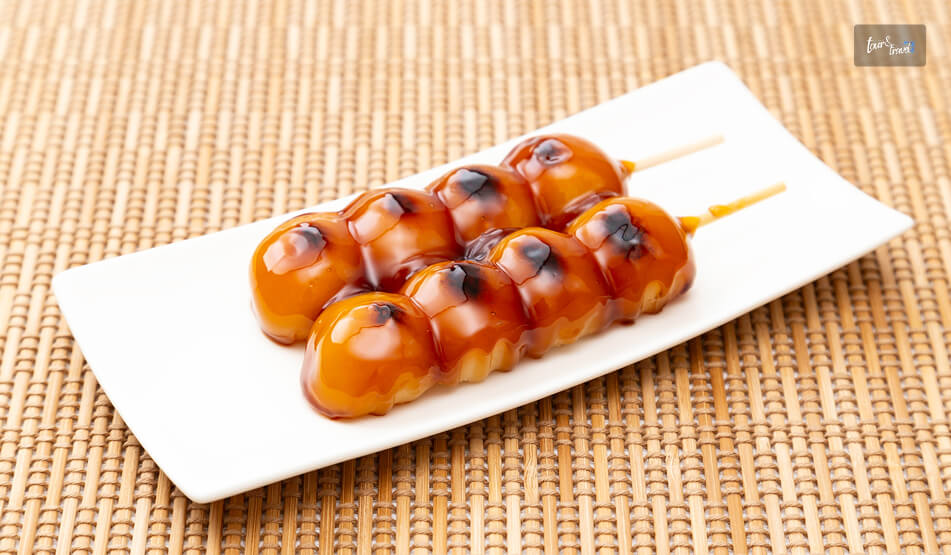
1. Mitarashi-Dango

Mitarashi-Dango
  • Pocket-Pinch: 150 JPY 

Mitarashi-Dango is the most comforting street food you will try in Osaka. Furthermore, these are great for budget-friendly travelers and backpackers like me. 

These rice balls are sweet and chewy, and have a hint of burnt taste due to the unique browning process that takes place once the rice balls are boiled and cooled. 

Furthermore, the glaze of the sweet soy sauce makes it perfect! 

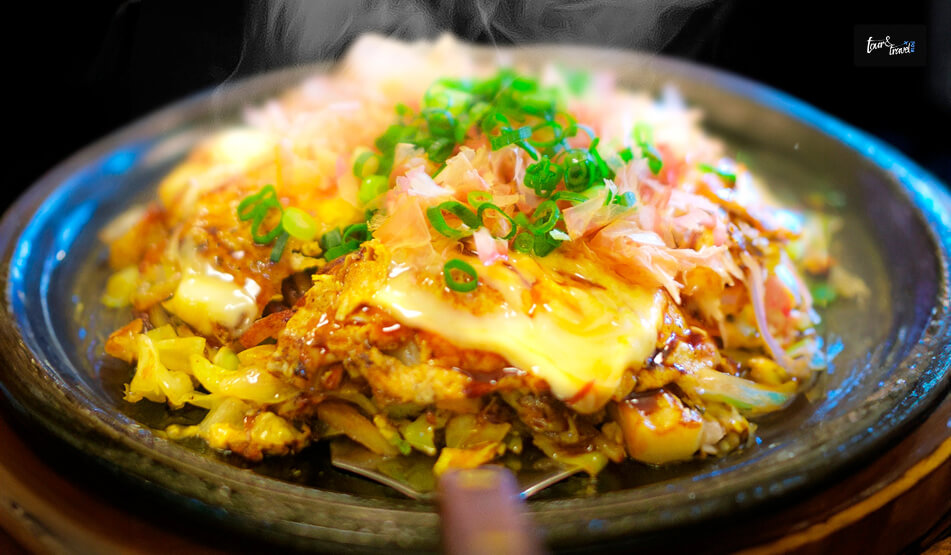
2. Okonomiyaki

Okonomiyaki
  • Pocket-Pinch: 400-450 JPY 

Do you like frittata? Then, you will love these Japanese savory pancakes even more. 

Okonomiyaki has all the flavors. However, you never feel heavy after having them.

Furthermore, these pancakes are simple, as cabbage, flour, and eggs are the main ingredients. 

However, the local street vendors add seafood and scallions to the dish for more flavor and color. 

Also, they serve it with barbecue sauce. 

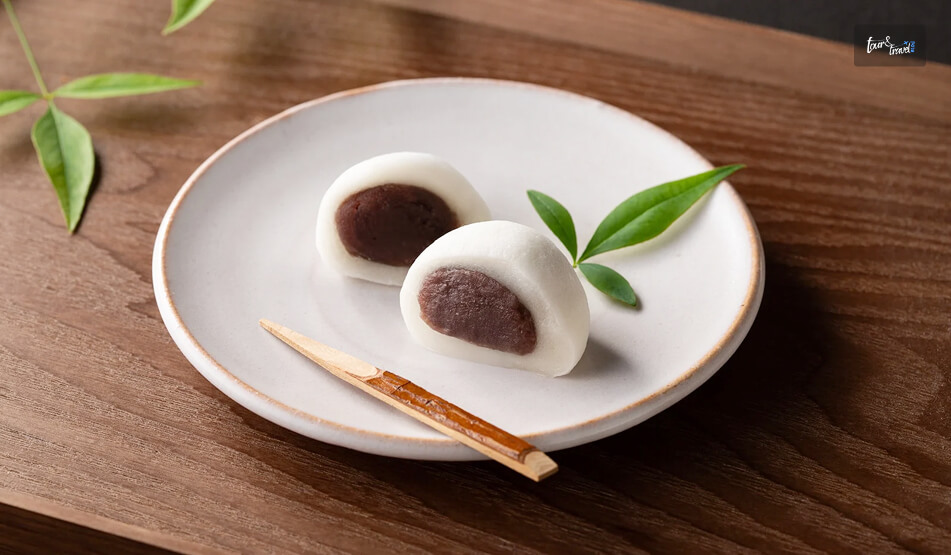
3. Daifuku Mochi

Daifuku Mochi
  • Pocket Pinch: 350-400 JPY

Mochi, the round rice cake, is a staple Japanese delicacy. 

It has the chewiness of Mitarashi-Dango. However, it has filling as the daifuku part of the name suggests. 

I loved the ones with strawberry filling, and you can also try them with other fruits. 

4. Torikara

  • Pocket-Pinch: 300-400 JPY

If the USA has its deep-fried chicken, Japan also has Torikara. 

I loved them, and the fried potatoes and the variety of sauces will be the most amazing additions. 

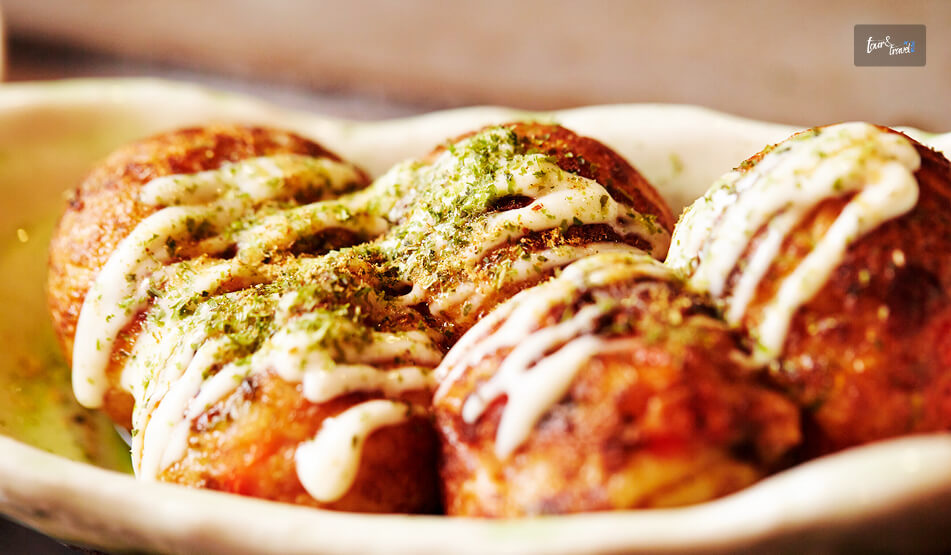
5. Takoyaki

Takoyaki
  • Pocket Pinch: 700-800 JPY 

Takoyaki is probably the most famous street food of Osaka and Japan. 

Japanese people love these octopus balls, and that’s why the Takoyaki stalls in Dotonbori are countless. 

Furthermore, the scallions and flakes of dried fish sprinkled on top make the dish really amazing. 

Moreover, the batter is gooey, and it will melt in your mouth. 

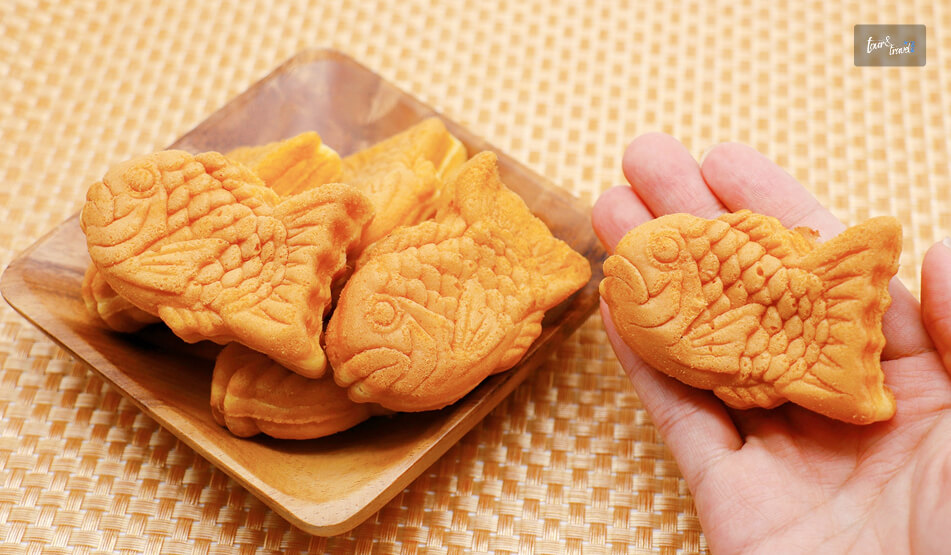
6. Taiyaki

Taiyaki
  • Pocket Pinch: 300 JPY

This is a fish-shaped pastry and my silent favorite among everything I tried in Osaka. 

The smell is irresistible, and the main attraction is to see it getting ready in front of your eyes. 

You can have this vanilla-flavored pastry with cheese, custard, and hamburger meat. However, the red bean paste is the ideal choice if you want to follow the grammar of East Asian cuisine.

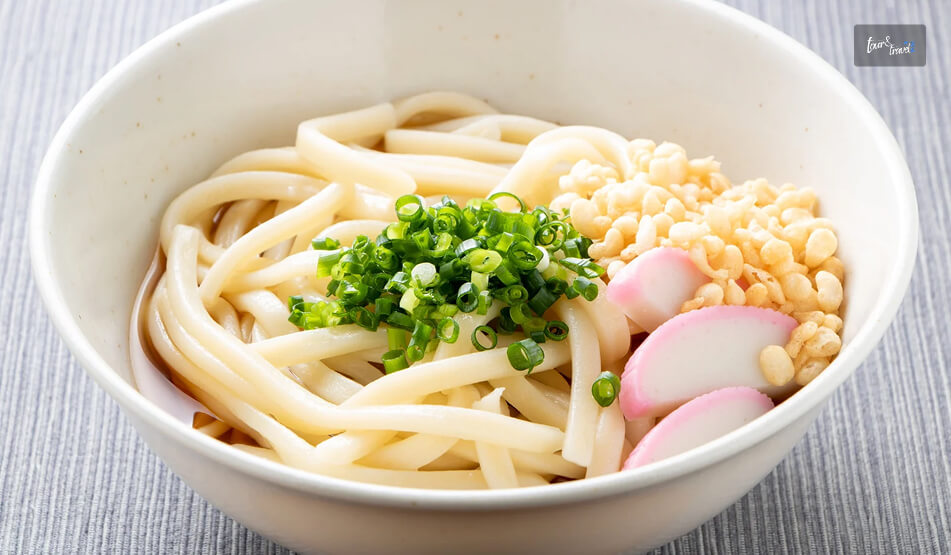
7. Udon

Udon
  • Pocket Pinch: 650 JPY

The hot broth and noodles! I know that I have kept you waiting for the longest time to find this lethal combination on my list. 

The noodles in Udon are thick, and with the right seasoning, their taste grows on you. That’s why you can eat udon every day and not get bored. 

Furthermore, there are many variations of udon, such as the curry udon, yaki-udon, nabeyaki udon, and tempura udon. 

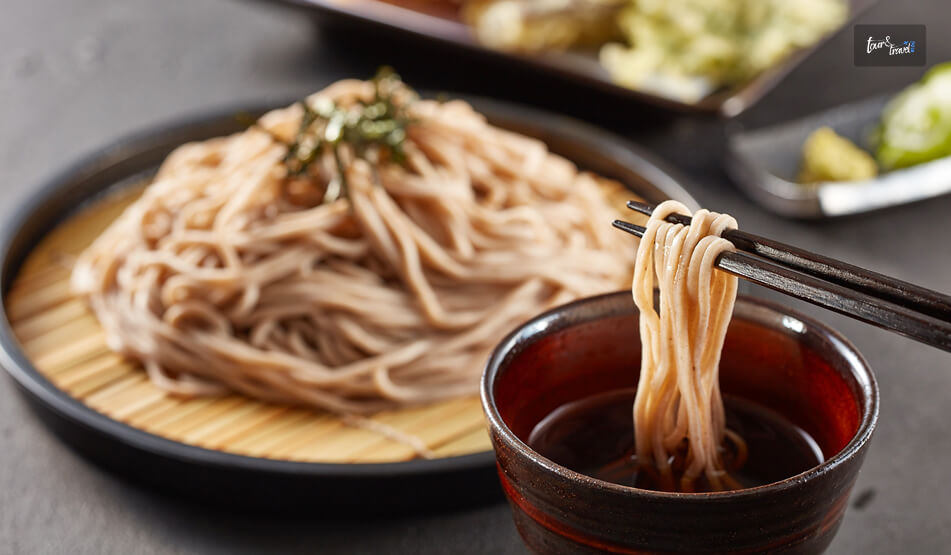
8. Soba

Soba
  • Pocket Pinch: 400 JPY

Soba has buckwheat noodles in hot broth. Furthermore, these noodles are darker and thinner. 

Furthermore, the simplicity of the dish and flavors make it a perfect palate cleanser. 

I loved a bowl of soba with scallions. 

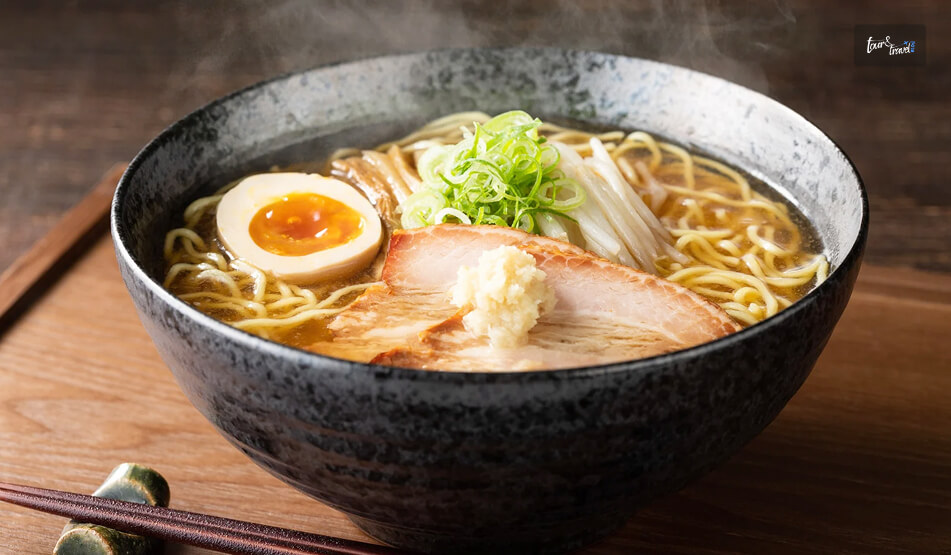
9. Ramen

Ramen
  • Pocket Pinch: 700-800 JPY

Ramen, of course, is the quintessential wheat noodles the whole world has been eating for quite some time now. 

I tried different variations of ramen in Osaka. However, I loved the one with pork the best. 

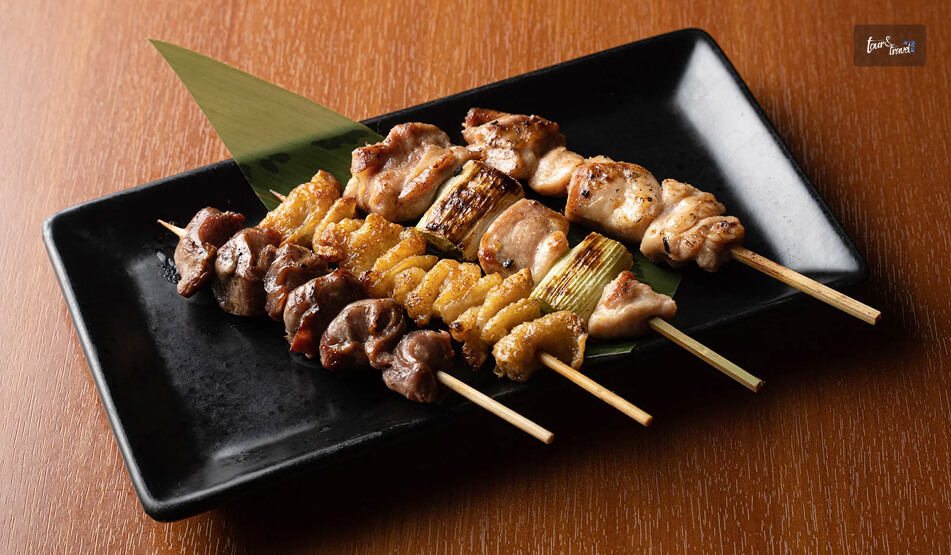
10. Yakitori

Yakitori
  • Pocket Pinch: 1000-1100 JPY

Yakitori is the Japanese take on grilled meat. 

Furthermore, you will get many variations in the meat used here. You will get bone meat, chicken skin, seafood, and many other varieties here. 

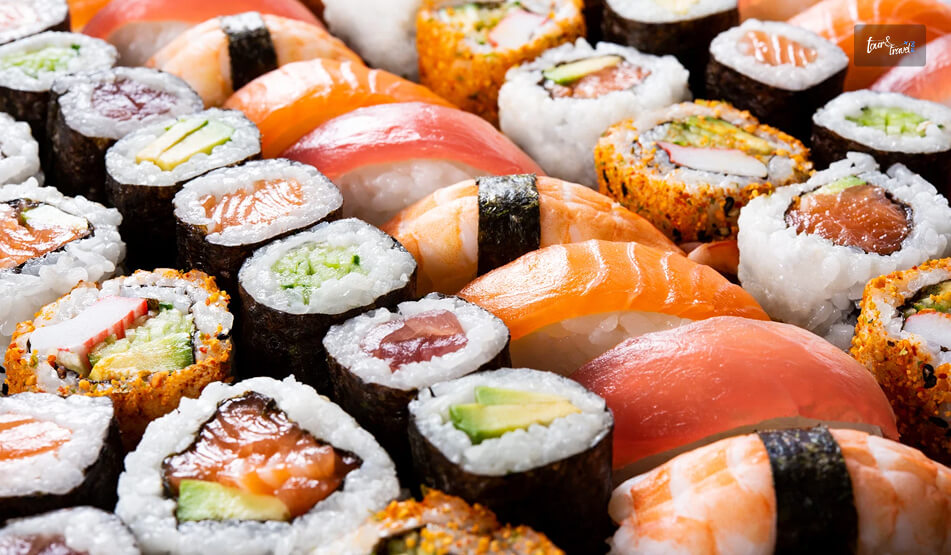
11. Sushi 

Sushi 
  • Pocket Pinch: 1200 JPY

If Sushi is an emotion, then it runs in the veins of Osaka. 

From sea urchin to tuna, eel, and salmon, Osaka spoils you with choices in sushi. 

Furthermore, the art of eating sushi is something that you need to understand. It is just not about gulping down some food. 

It’s also about being a part of the Japanese culture. 

12. Taiko Manju

  • Pocket Pinch: 100-150 JPY

You may think that Taiko Manju and Taiyaki are the same, but the origin and texture are very different. 

Despite the use of the same ingredients, Taiko Manju is fluffier. Furthermore, their drum shape is inspired by the taiko drums, which are integral parts of Japanese festivals. 

Read Also:

Share on Social Media

Meet Sibashree Bhattacharya, a travel enthusiast who has a decade-long experience in transcending virtual barriers with her words! Her deep love for travel is apparent from her travel escapades to the mountain, often taking her readers on a journey, her words acting as Portkey! Fun fact: Sibashree loves to dive deep into the history of the places she is about to visit, making her travels even more wholesome. If you were wondering how her articles are not short of time travel, this answers it!

Leave a Reply

Your email address will not be published. Required fields are marked *

title-img Related

READ MORE Jaffna beach guide

The Ultimate Jaffna Beach Guide: What Are The Best Beaches Near Jaffna, Sri Lanka? 

BY  Sibashree Jan 9, 2026

The northernmost major city of Sri Lanka is famous for its beautiful Hindu temples, such as the Nallur Kandaswamy Kovil and Naguleswaram Temple (Keerimalai). It also stands out with its unique sculptural scenario and great food.  However, very few people talk about the beautiful beaches of Jaffna, such as Kankesanthurai and Casuarina. During my trip to Jaffna, I loved the white sands, calm shallow waters, and Palmyra trees. Also, the Jaffna beaches are a paradigm shift from beach towns like Mirissa.  You will not get the vibrant nightlife or the maddening crowd. The vibe is pristine and slow. And with the Sri Lanka Tourism Development Authority (SLTDA) focusing on Jaffna now for the diversification of the country’s tourism profile, these beaches are going to play a vital role.  In this Jaffna beach guide, I will talk about the most prominent beaches, the amenities, expert tips, and more.  What Are The Best Beaches Near Jaffna Sri Lanka? The beaches in Jaffna show a contrasting vibe in comparison to the beaches near Colombo, such as Bentota or Unawatuna. The Colombo beaches are touristy and offer watersport activities such as parasailing, diving, and surfing.  On the other hand, the shallow water of Jaffna is ideal for swimming. Also, the golden sands of the Colombo beaches are replaced by the soft white sands.  Overall, the beaches in Jaffna focus more on tranquility and show the slow-paced vibe of the city. You know Jaffna Siesta is a real thing!  1. Casuarina Beach (Karainagar) Casuarina Beach Entrance Fee: 500 LKR (Foreigners), 50 LKR (Locals) Distance from Jaffna: 21 Kms As you reach the Casuarina Beach, a wide stretch of casuarina trees, creating a canopy over your head, welcomes you. The beach gets its name from these trees.  The stretches of the soft white sand of the beach are also surrounded by palm trees. Furthermore, the west-facing is known for beautiful sunset views.  What Are The Things To Do In Casuarina Beach?  Casuarina Beach is a place to relax. The shallow water here is ideal for swimming. You can go to the middle of the ocean, where you will find fishermen in action.  The fishermen ride in a raft-like boat. You can join them and have a conversation about their daily lives and how they survive the sea. For me, it was pretty much the “Riders to the Sea Moment.” Also, Kamban, a middle-aged fisherman of Jaffna, shared something about the impact of the Civil War here. He reminded me of a Reuters report published many years back. It talked about how the Puthumathalan beach, around 113 km from Jaffna, was filled with broken medicine bottles, pieces of clothes, and rusty cooking pots as the aftermath of the civil war.  Nevertheless, Kamban said, “You know, we did not have any food. We could not go out for fishing, and we never knew who would be the next to take a bullet.  We are now recovering and getting tourists. Still, we need more support, and the fear will remain among people of my generation and the next one.” Today, Casuarina Beach has some beach clubs and resorts offering water sports activities such as snorkeling and jet skiing.  Still, I feel, it’s a place to relax and ponder over how the locals are showing resilience to maintain the glory of a city devastated by the Sri Lankan Civil War.  Also, the Casuarina Beach is the place to try the authentic food of Jaffna. I loved the crabs and vadai here.  How To Reach Casuarina Beach From Jaffna?  The most convenient way to reach the Casuarina Beach is to take a private taxi to Jaffna. The cost will be around 1200 LKR.  2.  Kankesanthurai (KKS) Beach Entry Fee: Free Distance from Jaffna: 19 Km How to Reach: Take Tuk-Tuks from Jaffna The Kankesanthurai is a navy-maintained beach with sparkling blue water. It is also just 10 minutes away from the Keerimalai Freshwater Springs, one of the iconic landmarks in the spiritual and cultural landscape of Jaffna. Also, the nearby Thalsevana Resort is a place to relax and try authentic Jaffna cuisine while indulging in the beauty of the pristine beach.  You can swim in Kankesanthurai. However, you need to be careful about the current. However, this beach is more popular for the snorkeling activities and is famous for the Keerimalai to Kankesanthurai Walk.  Kankesanthurai (KKS) Beach Snorkeling  Kankesanthurai, with its shallow water and some marine life and corals visible, is a decent snorkeling site. I saw some sea turtles while swimming at Kankesanthurai beach.   The water here is warm, and the calm conditions make it beginner-friendly. May to September is the best time for snorkeling in Kankesanthurai.  However, there is no established snorkeling facility here. So, you need to bring your own gear, including fins and masks.  So, if you want a proper snorkeling experience, you can explore alternative locations in Sri Lanka, such as the Nilaveli Beach of Pigeon Island, which also has the Pigeon National Park.  The Coral Island of Trincomalee and the southern coastal spots such as Hikkaduwa & Mirissa are some of the best locations to try snorkeling in Jaffna.  Keerimalai To Kankesanthurai Walk The distance between Keerimalai and Kankesanthurai is just around 2 km. So, when you start from Keerimalai and walk north toward Kankesanthurai, you will reach your destination in 25-30 minutes.  There is no marked beach trail for the walk. However, as you proceed, you will experience amazing coastal views and fishing activities, especially near the pier and shorefront.  However, if you want to beat the heat, you can take a tuk-tuk to reach the beach from Keerimalai. Manalkadu Sand Dunes: The Hidden Gems Near Jaffna  Manalkadu sand dunes are the ideal location for an off-the-grid camping experience in Jaffna. Also, at times, I want absolute silence around me. Being an introvert, too many interactions and activities often drain me.  Stargazing in those moments works like a therapy for me. If you are also like me and want the world around you to “Shut Up,” you must try stargazing at Manalkadu.  The long chain of sanddunes here stretches to meet the sea, and this is a geologically striking feature. The desert-like setup and the sand dunes offer some “interesting perspectives” for photography, especially while watching the sunset.  And the best way to experience stargazing at Manalkadu? Try off-grid camping here.  Camping At Manalkadu And Stargazing  I set up my tent on the Manalkadu beach, and the wild, open area with almost no light pollution offered the best stargazing experience. Of course, it was not as vivid as stargazing in Great Barrier Island.  Still, the spontaneity and simplicity won me over. However, Manalkadu is not a formal camping or stargazing site. So, you will need to bring your tent, telescope, red light, water, and other essentials.  Also, we spotted some fishing huts on the beach. We sought their permission, and they happily agreed. In fact, they shared their meal with us, allowing me to spend more time stargazing and enjoying the silence. Things To Pack For Camping At Manalkadu  Manal Kadu means sand jungle in the Tamil Language. True to its name, it is a pristine place where desert, jungle, and the sea co-exist.  Also, it is called the “Swimming Pool of the North.” Nevertheless, since it has a primitive setup, you need to carry some essentials.  Tent Sand Anchors or Stakes Plenty of Food and Water Nearby Portable Stove Cooking Gear Headlamp or Lanterns First-Aid Kit Power Banks Trash Bags The Quiet Alternatives: Jaffna Beaches Do you want to enjoy a sunset stroll by the water with no one around? Visit the quieter alternatives such as the Charty Beach and Akkarai Beach. 1. Charty Beach The Charty Beach is on Velanai Island, and it is a 15 km drive from Jaffna City. You will reach the beach from the city within 30 minutes after a journey through the Jaffna–Pannai–Kayts Road.  The warm water here is ideal for swimming, and you can even try near-shore paddling. Changing Facility• Nearby Huts• Rest ShadesFood And Snacks• Local EateriesAccomodation• AC and Non-AC Rooms at Charty Beach ResortLifeguard• Not Available Ideal Season • May to SeptemberBest Time to Visit in a Day• Early Morning• Late Afternoon 2. Akkarai Beach  Take a drive for around 30-40 minutes to reach the Akkarai Beach in Thondamanaru. Lying along the Palk Strait, it stretches toward the Indian coastline.  It is very close to the Lord Murugan Temple and the Thondamanaru Bridge.  Parking FeeFreeResting AreasBenches and Shaded SpotsWashroomFreshwater Wash AreasSwimming ConditionNear-Shore Swimming with the Sandy Bottom Deepening GraduallyLifeguardsNot Available. So, Don’t Swim when the Current is Strong.  Best Months May to SeptemberBest Time to Visit in a Day• Early Morning• Late Afternoon Beach Amenities And Safety Guide Once again, the Jaffna beaches are not the luxury tropical getaways you are looking for. So, you must have a clear idea about what to expect at these pristine beaches.  Also, learn about the safety infrastructure before getting into the water.  1. Basic Beach Amenities  Casuarina Beach has paid changing rooms. However, other beaches have no makeshift provisions for changing and resting.  So, you must carry beach umbrellas and folding chairs if you don’t want to sit on the sand.  There is no official presence of a lifeguard or support on these beaches. Network coverage is decent. However, you can face connectivity issues if the weather deteriorates.  The beaches in Jaffna are accessible from Jaffna City by tuk-tuk and other vehicles. However, in Casuarina Beach, you will have to pay a small fee for entrance and parking your vehicle.  2. Safety And Norms Do not go very far into the ocean water, as there can be strong currents, and there is no formal lifeguard support.  Also, be careful while walking barefoot on the sand,d as there can be seashells and seaweeds.  In addition, dress modestly, shorts and T-shirts are fine! Also, do not leave trash behind.  Exploring The Jaffna Coastline: Know The Expert Tips  Want to explore the coastal beauty of Jaffna to the fullest? Follow these expert tips.  1. Go On Weekdays You will find local buses packed around the Casuarina Beach, and the noise of loud music can be an annoying factor.  Choose a Monday or Tuesday for your ocean visit to spend some moments of quietude. 2. Bring Reef Shoes The Charty and KKS beaches have sharp dead coral very close to the water's edge. So, your feet may get a cut if you don’t wear reef shoes.  3. Have Navy Food  When you are visiting the Kankesanthurai (KKS) beach, you don’t need to eat at a beach shack. You can walk into the Thalsevana Holiday Resort run by the military.  Enjoy a hygienic and tasty lunch and cold beer there while enjoying the ocean view. 4. Riding On Manalkadu? You Will Need A 4X4  You can drive a scooter to Manalkadu. However, you have to park it on the hard road. You cannot take it to ride onto the sand dunes, and the wheels will get stuck.  5. Morning Is The Best Time For The Beach Visit  You cannot visit a beach in Jaffna at noon. The Northern Sun is scorching. So, plan a visit between 7 AM and 8 AM or after 4 PM.  6. You Can Wade In Akkrai But Cannot Swim  The water at the Akkarai Beach is usually knee-deep. So, you can wade through the water of this beautiful beach.  However, swimming does not look like an ideal activity here.  7. Changing Rooms Are Basic The Casuarina Beach has changing rooms. However, these rooms are just concrete stalls with a bucket of water.  You will have to bring your towel and toilet paper.  8. Respect The Fishermen Most beaches in Jaffna are like a workspace for the fishermen. So, there will be fishing boats and nets on the shore.  You cannot step on or lie on them. Do not tamper with them.  9. Drink Thambili To Stay Hydrated  Jaffna beaches do not have places serving fancy cocktails. The best refreshment is to drink the King Coconut or Thambili water.  It replenishes the micronutrients, and it is a must-have when the Sun is scorching. What Are The Authority Voices On Jaffna Beaches And Coastline?  “Casuarina Beach is named after the shady trees that line it, offering a rare respite from the scorching Northern sun. It’s the closest Jaffna gets to a holiday vibe.” - The Lonely Planet.  “Don’t expect the polished tourism of the South. Jaffna’s beaches are raw, working coastlines where fishermen outnumber tourists—and that is their charm.” - Rough Guides.  Jaffna Beach Guide: Frequently Asked Questions (FAQs)  Here are the frequently asked questions and answers about the Jaffna beaches.  1. Can Foreigners Swim In Jaffna Beaches? Yes, foreigners can swim in Jaffna beaches. Casuarina and KKS beaches get many foreign visitors. The KKS beach offers free entry. However, for the Casuarina Beach, the entry fee is 50 LKR for locals and 500 LKR for foreigners. Also, the amenities at the Jaffna beaches are basic. So, a foreigner looking for a luxury beach experience or the resort vibe can feel disappointed.  2. Is It Safe To Wear A Bikini At Jaffna Beaches? There is no formal restriction regarding wearing bikinis at Jaffna beaches. However, the social setup of Jaffna is conservative. So, there can be stares, and you may feel out of place. So, wear shorts and T-shirts while swimming. 3. Are There Sharks In Jaffna?  You will rarely see sharks in the waters of Jaffna. However, you will find sea turtles and coral reefs in the waters here. The water here is very shallow.  4. Which Is The Cleanest Beach In Jaffna?  Kankesanthurai (KKS) is a navy-maintained beach, and it is the cleanest in Jaffna. It also has the Thalsevana Holiday Resort, run by the military. You can have food and drink here.  5. Can I Surf In Jaffna? No, you cannot surf in Jaffna. The water here is shallow and calm like a lagoon. If you want to surf in Jaffna, you can go to Arugam Bay on the East Coast.  6. Are There Hotels On The Beaches Of Jaffna?  Yes, though not frequently, there are some hotels on the beaches of Jaffna. For example, KKS has the Thalsevana Holiday Resort and the Charty Beach has the Tilko Charty Beach Resort. Furthermore, there are smaller guesthouses near the Casuarina beach.  7. What Is The Best Time Of Year To Visit Jaffna Beaches?  May to September is the ideal time for exploring the northeastern beaches of Jaffna. Jaffna has dry weather conditions in these months, and the calm water is ideal for swimming and snorkeling. Jaffna experiences heavy rainfall from October to December. So, avoid these months.

READ MORE Hurulu Eco Park

Hurulu Eco Park Safari: Exploring The Wilder Side Of Sri Lanka

BY  Sibashree Mar 16, 2026

After Kaudulla National Park and Dehiwala Zoo, the Hurulu Eco Park was another destination for me to explore Sri Lanka’s wildlife.  If places such as Jaffna in northern Sri Lanka and Kandy in Central Sri Lanka have been the cultural hubs of the country, these parks have shown how people have lived here since eternity in collaboration with nature and wildlife.  The Hurulu Eco Park is especially very close to Habarana, the epicenter of cultural and historical landmarks such as the Sigiriya Rock Fortress, Pidurangala Rock, Ritigala Forest Monastery, and Ritigala Forest Reserve.  The distance between Habarana and the Hurulu Eco Park, at the edge of the Hurulu Forest Reserve, is just around 3 to 4 kilometers. However, despite the short distance, this eco park is quiet and understated.  Also, you know what makes Hurulu Eco Park different? Here, you relish the art of slow traveling and the scent of wet soil after a fresh spell of rain.  Furthermore, elephants are the heart of this eco park, and watching them grazing through the golden light is a delight.  Here is more about this beautiful eco park in Sri Lanka.  Hurulu Eco Park, Sri Lanka: Quick Details  Hours Open7 AM to 6 PMLast Time to Enter5 PMPark Entrance Fee- $15-25 for an Adult- $5 for Children above 6 Years- Free for Children below 6 YearsSafari Cost$65 OnwardSafari DurationAround 3 HoursBest Time to VisitDecember to June Where Is Hurulu Eco Park And How To Reach?  In Sri Lanka’s North Central Province, Hurulu Eco Park is between the landmarks such as Polonnaruwa (1 hour and 15 minutes), Anuradhapura (1 hour and 50 minutes), Dambulla (45 minutes), and Sigiriya (45 minutes).  So, often there is a safari add-on to explore these ancient cities and the cultural landmarks.  Furthermore, as mentioned, it is closest to Habarana. So, ideally, it should be your base.  Habarana also has many budget, mid-budget, and luxury accommodations. Moreover, most hotels in Habarana, Dambulla, and Sigiriya offer door-to-door safari facilities.  You can expect a pick up around one hour before the safari time.  Moreover, you can take a train from Trincomalee, Kandy, or Colombo to reach Habarana Junction. From there, you can take a 10-minute tuk-tuk ride to reach the eco park.  However, online booking for these train tickets may not work most of the time.  The Landscape Of Hurulu Eco Park  Hurulu Eco Park is a mix of open plains, rock, and jungle.  Furthermore, as a part of the dry evergreen forest area of Sri Lanka, it functions as an important corridor for elephants roaming between Minneriya and Kaudulla National Parks.  So, you can easily spot Sri Lankan elephants here, especially the mothers and babies making small groups and moving.  Along with elephants, you can also spot peacocks, spotted deer, macaques, langurs, and many birds here.  What I Saw At Hurulu Eco Park  I was initially disappointed the day I had to visit the Hurulu Eco Park. I thought that the tropical rain would mess up my safari experience.  However, I opted for an afternoon safari, and by the time I reached Hurulu, except for the heavy dampness in the air, everything was fine.  Also, the mud on the track was not a problem to start the safari in full swing.  After a few turns in the park, I could spot a herd of elephants, and they were winding up leaves and fruits with their trunks. Moreover, they were flapping their ears.  Then, after waiting for 15 minutes, the herd passed by and we continued our safari.  We passed through rocks, canopies, and bushes. I spotted a peacock and monkeys before reaching an open land. And that was the moment of the entire safari.  At least 25 elephants were grazing, and the younger ones were rolling in the mud.   Finally, the air became cooler, and the sky started getting red. So, our jeep driver planned a return.  How To Plan A Safari In The Hurulu Eco Park?  Safaris in Hurulu Eco Park include a guide, a jeep, park entry, and a pickup and drop off from Hurulu Eco Park.  Morning safaris are the best, ideally starting from 7 AM. Furthermore, like me, you can also opt for an afternoon safari at 1 PM.  Furthermore, each jeep carries about 6 tourists. Also, you must carry some water, wear sunscreen, and a hat. What Is The Best Time To Visit Hurulu Eco Park? The best time to visit Hurulu Rco Park is between December and June. Especially, February to April is the ideal time to see the lush landscapes and the biggest elephant herds.  Furthermore, the number of jeeps is quite low in these months.  Again, from May onward, the conditions become drier, and the elephants start moving from the Kaudulla National Park to the Minneriya National Park. So, in Hurulu Eco Park, you will notice smaller herds of elephants.  Moreover, from October to January is the wet season, and the jungle becomes the most vivid. So, these months are the best for photographers.  Photography Tips For Hurulu Eco Park  You will find a mix of open plains, forest shades, and red earth in Hurulu Eco Park. So, the landscape is challenging yet interesting for photographers.  Furthermore, for photography, you must bring a 70-200 mm lens. It is ideal to capture wildlife, and the wider lens is the best to frame the color and scale of Hurulu Eco Park during the golden hour.  Moreover, after the rain, the conditions become more ideal for photography. Grey elephants, red dust, and the green foliage create wonderful frames.  Again, the light filters through the tree branches becomes low in the late afternoon. So, you can capture the texture and warmth of the Hurulu Eco Park. Things To Keep In Mind For A Visit To Hurulu Eco Park  Do not use single-use plastic bottles during the safari to minimize the impact on the environment, wildlife, and marine life.  Furthermore, keep the water use to a minimum level to reduce the pressure on water resources.  Moreover, collect your souvenirs from the local shops and eat at the local eateries to help the economy of the community.

READ MORE things to do in nuwara eliya

What Are The Things To Do In Nuwara Eliya? Know Why It Is Worth Visiting

BY  Sibashree Mar 24, 2026

The train departed the moist jungle and slowly had a rhythmic ascent to the central highlands. The visual completely changed, and there was a complete change in the air.  It went from high humidity tropical to cold, fresh pine scent breezes.  The jungle changed as well, from lush jungle trees to neat rows of green tea bushes. And, finally, I arrived at  Nuwara Eliya, a small city at an altitude of 1,889 meters. It is also called "Little England,” a term left over from the time of the British. It is a surreal combination of red-brick Victorian post offices and Tudor-style homes. Furthermore, it has a setting for the extremes of dramatic waterfalls and successive mountain peaks.  This misty highland getaway should not be left out of your Sri Lanka travels, whether you are into the history of buildings, enjoy areas with natural beauty, or have an appreciation for tea. Overall, there are diverse things to do in Nuwara Eliya. Also, if you are visiting from India, you can opt for the IRCTC package in association with the Sri Lankan Airlines, to visit Nuwara Eliya with Negombo, Kandy, and Colombo.  You can even explore the things to do in Trincomalee on this trip.  Moreover, you can combine your Nuwara Eliya trip with a visit to the Ambuluwawa Tower.  What Are The Things To Do In Nuwara Eliya? A Town Of Two Worlds Nuwara Eliya reminds you of the rich history and diversity of Sri Lanka.  You can relax with a round of golf on one of the golf courses in Asia.  Furthermore, as the Sun sets, you can stand on the top of a cliff and enjoy the views of the mountains.  The lifestyle and culture here are so different from the lower elevation regions.  1. Exploring The Architectural Heritage: Looking Back At Time  Nuwara Eliya's connection to Britain is more than mere embellishment, but rather its essence.  The downtown area of Nuwara Eliya resembles a small village in the Cotswolds, but with tropical vegetation growing nearby. The Nuwara Eliya Post Office The Nuwara Eliya post office is one of the most photographed buildings in Sri Lanka.  Built in 1894, this pink-brick Victorian structure is still in use today and is located at the centre of Nuwara Eliya city.  The post office is traditionally a popular choice for tourists to purchase a postcard (with a scenic image of the misty hills) and send it back home with the Nuwara Eliya postmark on it. The Grand Hotel And Hill Club To get a real feel for how the elite lived during the time when colonialism was at its height, you will want to check out The Grand Hotel.  The Grand Hotel was formerly owned by Sir Edward Barnes, who was the Governor of Ceylon.  The Grand Hotel is noted for its High Tea service.  High Tea is served on the beautifully manicured lawn or in the lavish tea lounge and consists of 2-tiered stands of cucumber sandwiches, scones with clotted cream, and, of course, the best Ceylon tea.  Located next door to The Grand Hotel is The Hill Club, which has a strict jacket-and-tie dress code and is an example of traditional old-world decorum. 2. Enjoying The Tea Experience: From Buds To Cup Aspects like climate and altitude make Nuwara Eliya an ideal place to grow tea and give its tea a unique and delicate floral flavor.  This high-grown tea is referred to as the "Champagne of Ceylon Tea" due to its light golden appearance. Pedro Tea Estate Located a little bit from the city center, this estate has one of the most manual factory tour processes. It is so delicate that the processing has to happen at night, and that is when the air is cooler.  During the tour, you get to see 19th-century machinery that is still used to wither, roll, and dry the leaves.  When you are done with your tour, you get to sit at the outdoor deck of the Lovers Leap Ethical Tea Boutique, sip a fresh brew, and watch the fields from which the leaves were plucked. Damro Labookellie Tea Centre  It is the largest tea Centre in the country and is also one of the oldest.  The journey to the estate is an experience in itself. It features a multitude of hills and tea.  3. Natural Wonders: Parks And Waterfalls  Nuwara Eliya has abundant water and lush greenery.  The combination of high elevation and significant rainfall results in an environment that stands out distinctly from the rest of the island.   Victoria Park   This park, named to commemorate Queen Victoria’s Diamond Jubilee, is arguably the most well-preserved park in South Asia.  It serves as a haven for bird enthusiasts seeking to spot rare species such as the Indian Blue Robin and the Pied Thrush.  During the spring months (March to May), the park bursts forth with vibrant colors as roses and dahlias reach their peak bloom.   Gregory Lake   Initially constructed to produce electricity for the town, Gregory Lake has transformed into the city's main recreational area.  Visitors can rent swan-shaped pedal boats, go jet skiing, or enjoy a pony ride along the shoreline.  The pathway along the lake has small chalets offering street food, making it an ideal location for a late-afternoon walk as the mist gently settles over the water. Lovers Leap Waterfall Accessible via a short hike through the tea estates, Lovers Leap is a 30-meter waterfall with a tragic legend.  Folklore tells of a royal prince and his lover who leapt from the top to remain together forever.  Today, it provides a serene escape and a panoramic view of the town below. 4. Enjoy The High-Altitude Adventure: Horton Plains   No visit to Nuwara Eliya is truly complete without spending a day at Horton Plains National Park.  This UNESCO World Heritage site is a tranquil, windswept plateau situated roughly an hour's drive from the city.   World’s End  The highlight of the 9-kilometer circuit hike within the park is World’s End, where the plateau suddenly drops off, plunging nearly 880 meters straight down.  On a clear day, the breathtaking view stretches all the way to the southern coastline.  Pro Tip: It's essential to reach the park entrance by 6:00 AM. By 9:30 AM, a thick "curtain of mist" typically descends and obscures the scenery.   Baker’s Falls   During the same hiking loop, you'll come across Baker’s Falls, named after the renowned explorer Sir Samuel Baker.  This waterfall has unique ferns and rhododendrons around, providing a refreshing, misty break amid your trek. 5. Local Flavors And Markets   Although the hotels serve sophisticated British cuisine, the heart of Nuwara Eliya’s food culture lies within its markets.   The Bale Bazaar   Locally referred to as the "Winter Market," this spot is ideal for finding quality cold-weather clothing, such as jackets, sweaters, and scarves, at affordable prices.  Given the significantly cooler climate compared to the rest of Sri Lanka, the market is essential for both locals and tourists who may not be prepared for the chill. Adma Agro Strawberry Farm   Nuwara Eliya stands out as the only region in Sri Lanka that successfully cultivates strawberries.  At Adma Agro, visitors can indulge in fresh strawberries with cream, strawberry pancakes, or thick milkshakes while enjoying a view of the greenhouse rows.  This experience is a defining treat of Nuwara Eliya. Remember These Practical Tips Before Trying The Things To Do In Nuwara Eliya  The ideal time to go is between February and April.  The city is especially vibrant in April as it celebrates the Sinhalese and Tamil New Year.  During this month, the city features horse races, flower exhibitions, and car races. Just be ready for larger crowds and increased prices during this peak season. Furthermore, Nuwara Eliya is the coldest place in Sri Lanka, and the nighttime temperatures can drop to 10°C. So, bring a jacket.  Also, most budget accommodations lack central heating, so having a warm fleece and sturdy walking shoes is crucial for navigating the hills. Moreover, the train trip from Kandy to Nanu Oya (the station for Nuwara Eliya) is one of the most beautiful in the world.  From Nanu Oya, it’s just a quick 15-minute tuk-tuk or bus ride to reach the city center.