
Demodara Railway Loop: Know The Routes, Train Time, Ticket Price, And More 

Demodara Railway Loop, nestled in the mountains near Ella, Sri Lanka, is one of the most iconic rail routes in the world. 

Furthermore, you will get the most amazing views of the Nine Arch Bridge and the train plying through it from the Demodara Railway Loop. 

Also, since 2024, this beautiful railway loop has been protected under the New Heritage Management Program. 

Moreover, opening on 21st March, 1921, this railway loop has been celebrating more than 100 years of heritage and history. 

So, here is a brief account of my beautiful train ride in the Demodara railway loop. 

Why Is The Demodara Loop Famous? 

Why Is The Demodara Loop Famous

Between Ella and Uduwara stations, Demodara is a beautiful railway station in the Uva Province of Sri Lanka. 

While extending the railway line to Badulla, the authorities faced a serious challenge due to the steep altitude. 

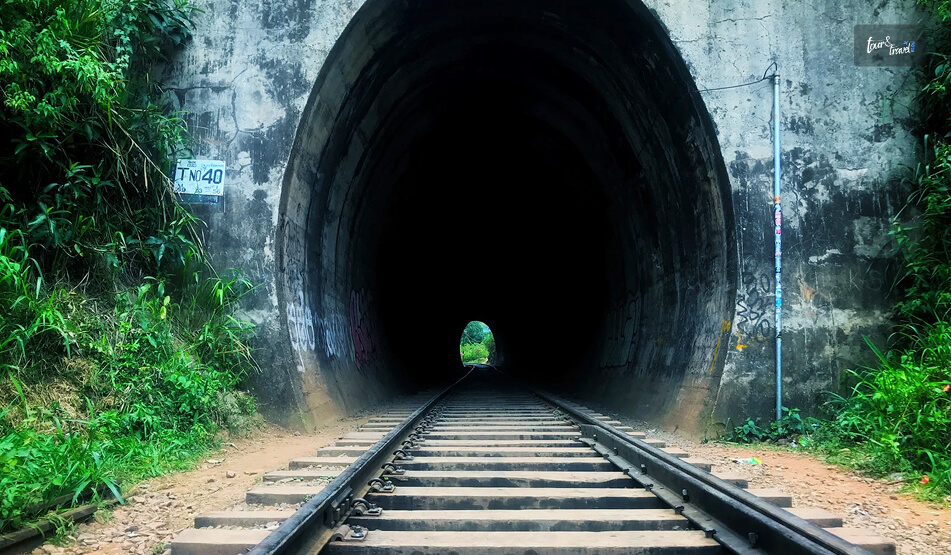
Furthermore, it is famous as the only railway station in the world to be built in a tunnel (Tunnel 42) through which the train passes. 

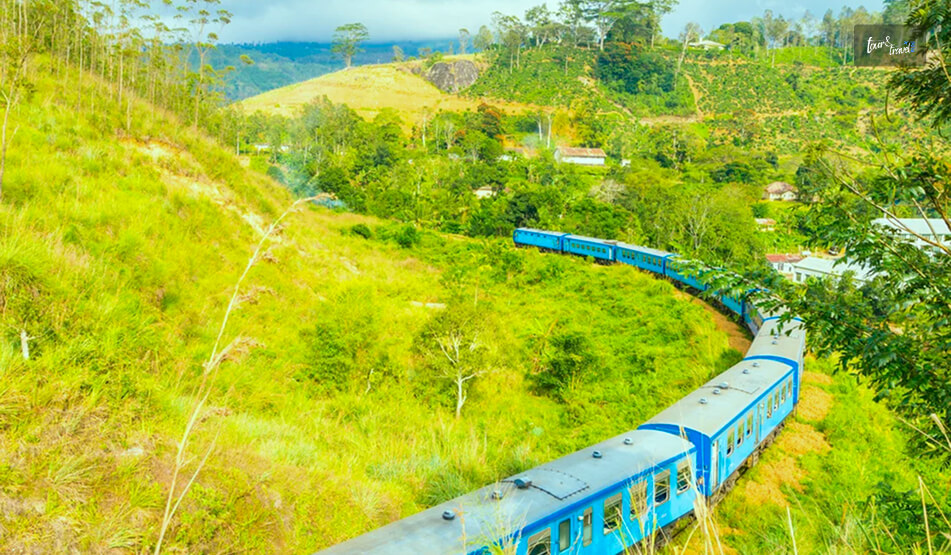
Moreover, this loop, with a length of 441 feet, passes through a 360-degree loop, offering the most amazing views of the surroundings. 

Also, it is interesting to know that the design of the Demodara Railway Loop was originally inspired by a Kanyan turban. Then, British and Ceylonese engineers put up the structure.

Devapura Jayasena Wimalasurendra was the engineer who conceptualized the idea. 

In addition, if you miss the train from Ella to Demodara, you can also enjoy a 9 km hike. The hike continues through tea estates, and then you will meet the iconic Nine Arch Bridge on the way.  

Then, you can take a train back from Demodara to Ella. However, I fortunately got to board the trains both times. 

A Train Ride In The Demodara Railway Loop 

A Train Ride In The Demodara Railway Loop

Unlike the Kandy-Ella train ride, a train ride in the Demodara Railway Loop was peaceful. 

Also, you could relax even after you saw the train coming out of the tunnel and ascending. It moves very slowly through the loop. 

As the train was almost empty and as Sri Lanka demands everything the Travel LowDownUnder philosophy teaches you, I boarded a 3rd class compartment. 

I was happy as there was nobody to stop me from peeping through the doors on both sides of the train, and soaking in the beauty of the surrounding lush tea estates. 

Also, it was amazing to enjoy a train ride across the iconic Nine Arch Bridge. Moreover, when the train was passing through the Nine Arch Bridge, I could see locals, especially children, standing and waving from the banks of the railway lines. 

Overall, it was a comfortable and delightful experience!

Insider Tip: When you are traveling from Ella to Demodara, stand near the window or gate on the left side in the direction the train is moving. 

From there, you will get amazing views of the Nine Arch Bridge. 

Train Time And Ticket Price On The Demodara Railway Loop 

If you are traveling from Ella, you will get two trains to the Demodara Railway Loop. So, here are the details of the train timings and ticket prices (Source: Sri Lankan Railways). 

Train NameDepartureArrivalTicket Price (LKR)
11005 Special 1005 -Ambewela – Badulla 09:30 – 12:1611:25 AM11:40 AMAC Saloon Car: 2500
– Second Class Reserved Seats: 1700
– Third Class Reserved Seats: 1200
11015 Special 1015 -Ambewela – Badulla 15:00 – 17:464:55 PM5:10 PM– AC Saloon Car: 2500
– Second Class Reserved Seats: 1700
– Third Class Reserved Seats: 1200

Why Is This Iconic Ride In The Demodara Railway Loop Worth It? 

Beyond an engineering marvel, the Demodara Railway Loop is an example of historical railway innovation. 

Furthermore, when riding in a quiet train carriage, you can enjoy the uninterrupted views of the surrounding mountains and valleys. 

Also, this train ride allows you to pass over the Nine Arch Bridge, one of the iconic heritage sites of Sri Lanka. 

Moreover, as I was traveling solo, I experienced the joy, spontaneity, and independence backed by the quiet experience.

If You Want To Walk From Ella To Demodara 

I got to know about the Demodara Railway Loop at the Kadugannawa Railway Museum. It was raining for a few days in Ella, and seriously, I needed to do something to get out of the lull. 

So, I decided to take a train ride from Ella to Demodara through the Demodara Railway Loop. 

I got the train. However, if you miss the train,” go for a 9 km walk through the countryside and tea-covered hills. 

The tea shops, nearby hills, and occasional spotting of peacocks in the bush will keep you entertained. 

Moreover, as you descend from Demodara to Ella, you will get sweeping views of paddy fields.

Share on Social Media

Sibashree is a travel, culture, and leisure writer who has been writing since the age of 12 and professionally since 2014. With more than a decade of travel writing experience and journeys across India and several parts of the world, she brings a deeply personal and thoughtful perspective to her work. A student of English Literature and Mass Communication, Sibashree has always viewed travel as more than movement — for her, it has been a way of understanding people, cultures, and herself. Her passion for spiritual exploration has also led her to many unusual and meaningful destinations over the years. Outside of writing, Sibashree enjoys watching European cinema, reading about global politics, and reflecting on the stories hidden within everyday places.

Leave a Reply

Your email address will not be published. Required fields are marked *

title-img Related

READ MORE things to do in unawatuna

What Are The Things To Do In Unawatuna With Family? Know Why You Will Love Unawatuna

BY  Sibashree Jun 1, 2026

The southern coast of Sri Lanka is the perfect relaxing getaway with golden sands, a vibrant local life, and a rich colonial heritage.  Be it the surfing paradise of the Hiriketiya Beach or the whale-watching hotspot, Mirissa, the southern coast is the most happening.  You can add to that the world-class culinary scene, the palm-fringed shorelines, and a laid-back bohemian energy.  Also, if you are looking for the combination of all these in a single spot, Unawatuna is the place to visit.  It has beginner-friendly waves, a deep colonial history, and a beachfront with a swinging rope.  In this article, I will discuss the best things to do in Unawatuna, top accommodation recommendations, and practical logistics to help you maximize your time in this tropical haven. Where To Stay In Unawatuna?  Unawatuna, being one of the premier beach destinations in Sri Lanka, has an excellent range of accommodations.  The accommodations here range from rustic, budget-friendly hostels to high-end luxury boutiques. Epic Unawatuna Epic Unawatuna, with its beautiful rustic charm, shows a heavy influence of the Dutch colonial architecture.  Furthermore, it offers air-conditioned rooms and exceptionally friendly staff.  Also, it is very close to the beach. Kingfisher Unawatuna It is an amazing beachfront hotel that has spacious rooms and large beds. Furthermore, it is on a quiet beachfront ideal for swimming.  Furthermore, it has an excellent in-house restaurant that is famous for serving top-notch, fresh seafood. What Are The Things To Do In Unawatuna With Family?  The Unawatuna Beach is at the epicenter of the attractions in Unawatuna. From exploring this beach to a day trip to Galle Fort, a lot of activities await you here.  1. Unwinding At Unawatuna Beach  Unawatuna Beach, with its golden sand, is one of the most popular beaches in Sri Lanka.  Furthermore, thanks to the protection of the offshore reef, the water here remains safe and calm. So, swimming here is safe throughout the year.  Moreover, in the daytime, you can rent a sunbed here, enjoy fresh coconut water, and enjoy the view.  At night, the beach gets transformed into a happening zone. The social scene here allows you to enjoy music, fresh seafood barbecues, and sunset cocktails right on the water's edge. 2. Dining At Bedspace Kitchen  After spending the evening at the beach, you can dine at Bedspace Kitchen. Which is in a tranquil garden oasis very close to the main road. It serves the best fusion cuisine, and it sources organic and fresh ingredients from local producers. So, by dining here, you can support the local community.  You must try the black pork curry and the gourmet burger. Its other specialties include fragrant coconut lemongrass soup and pumpkin gnocchi.  However, it has limited seats and remains quite crowded. So, you must book a table here in advance.  3. Witness The Iconic Stilt Fishermen Of Koggala At a distance of 10 minutes from Unawatuna Beach, along the coastal road toward Mirissa Beach, you will find Koggala.  South of Unawatuna, Koggala is the place to see one of the most striking cultural traditions of Sri Lanka, Stilt Fishing.  Here, fishermen use a traditional method to catch the fish. They balance atop a crossbar tied to a wooden pole driven deep into the reef, patiently waiting to catch small fish. The 2004 tsunami has altered the shoreline and made traditional fishing very difficult. However, the fishermen are still following this practice.  Many locals now rent their family stilts to men who pose for photographers to earn a livelihood. For visiting the Koggala Beach from Unawatuna and photography, the pocket pinch will be around 500 LKR.  4. Fall In Love With Dalawella Beach  Dalawella Beach, very close to Unawatuna, has low-bending coconut trees, dramatic rock formations, and a beautiful shoreline.  The rope swing here is a rage on Instagram, and it is one of the most popular photo spots along with the Nine Arch Railway Bridge in Sri Lanka.  Moreover, it is less crowded than Unawatuna.  5. Support Conservation At The Habaraduwa Sea Turtle Hatchery Sea turtles are frequent in the coastal waters of Sri Lanka. At the Habaraduwa Sea Turtle Hatchery, you will find rare species such as: Green Turtles Hawksbill Loggerhead Olive Ridley Leatherback Turtles. The hatchery is a non-profit organization that works toward protecting these majestic creatures.  The volunteers here rescue injured turtles caught in fishing nets and treat them. They also purchase eggs from local poachers to ensure they can hatch safely away from predators.  Moreover, once hatched, the baby turtles are nurtured for up to four days before being safely released into the ocean water. 6. Take A Day Trip To Galle Fort Galle Fort is just a tuk-tuk ride of 15 minutes from Unawatuna. It is designated as a UNESCO World Heritage Site. The Portuguese constructed it originally, and then extensive fortification happened in 1663 by the Dutch.  So, when you step here, it feels like traveling back to the Colonial Era.  Moreover, the fort here is an architectural marvel.  It has centuries-old Dutch villas, grand churches, and narrow cobblestone streets lined with trendy contemporary boutiques, art galleries, and upscale cafes. Moreover, the fort is an architectural marvel, featuring centuries-old Dutch villas, grand churches, and narrow cobblestone streets lined with trendy contemporary boutiques, art galleries, and upscale cafes. Also, the must-see attractions here are: The Galle Lighthouse Dutch Reformed Church Outer Stone Ramparts.  7. Learn To Surf At Bona Vista Bay While the Weligama Beach, Arugam Bay, and Mirissa Beach are more famous for world-class breaks, Bona Vista Bay is suitable for beginners.  It is a sheltered cove between Unawatuna and Galle. The waves here are gentle, and you will find many local surf schools on the beachfront offering certified instructors and affordable board rentals. Moreover, the surf lesson cost here is 2000-3000 LKR, and the board rental cost is between 300 and 500 LKR per hour.  What Is The Best Time To Visit Unawatuna? October to April, or the local dry season, is the best time to visit Unawatuna. However, February to April is the peak tourist season here.  During these months, the sea is calm, and the clear skies here make the time ideal for exploring.  From May to September, Unawatuna faces high rainfall and rough seas. Also, many businesses remain closed temporarily in these months.  How To Reach Unawatuna?  You can reach the southwestern coast of Unawatuna via different modes of transportation.  By Train A train ride through the southwestern coast offers the most affordable and scenic train ride. It is well connected by the Colombo Fort to Matara Railway Station, and Galle Fort Station is where you need to get down.  Also, from Galle Fort, you can take a tuk-tuk ride for 15 minutes, and it will cost around LKR 320.  By Bus  You can hop on a local coastal bus to reach Unawatuna from nearby beach towns such as Mirissa or Hikkaduwa.  Moreover, the bus ticket price is around 50 LKR, and a bus ride offers the most authentic cultural experience.  You will also get a bus from the Maharagama Bus Station, which is just 15 km south of Colombo City Center.  Here, the bus ride will take around 2 hours, and you will love the highway journey in a luxury AC bus.

READ MORE Anuradhapura

What Are The Best Places To See In The Sacred City Of Anuradhapura, Sri Lanka? 

BY  Sibashree Apr 21, 2026

Anuradhapura is a part of the Golden Triangle of Sri Lanka along with the Dambulla Royal Cave Enclave, Polonnaruwa, and Sigiriya Rock Fortress.  Furthermore, the Sacred City of Anuradhapura, a UNESCO World Heritage Site, was built from the “cutting of a Bodhi Tree” or the “Tree of Enlightenment.”  Before 993, when it was abandoned due to an invasion, it was the political and religious capital of Ceylon, the previous name for Sri Lanka.  Also, if Jaffna attracted me with its Tamil Culture and Hindu Temples, Anuradhapura was a great calling because it was the first place to adopt Buddhism outside India, the country I belong to.  Moreover, Jetavanaramaya, the early 4th-century BCE Stupa, was once the “third-largest man-made building in the world,” with an original height of 122 meters.  However, while the Jetavanaramaya Stupa continues to evoke awe with its grandeur and mystery, the other ruins and remains of Anuradhapura also wait to tell you the history and cultural richness of the region.  So, here is a brief discussion on the places I visited in Anuradhapura.  What Are The Places To Visit In Anuradhapura?  I was staying in a guest house near the Sacred City of Anuradhapura. I rented a bicycle from my guest house for LKR 500, and I took the back route as the staff in the guesthouse guided me.  Off the main road, the cycling experience was beautiful, and I loved spotting the roaming peacocks and little children waving at me.  Beyond the charming views and ambiance, I noticed one more thing. In Anuradhapura, the past and the present walk side by side.  There have been no evictions of the locals in the name of preserving or promoting the ancient ruins and remains in a UNESCO World Heritage Site.  Nevertheless, after talking to the local children for a while, I reached the entrance of the Anuradhapura Sacred City. The entry fee was around 9500 LKR or INR 2800.  However, remember that the ticket includes archaeological sites such as Jetavanaramaya, Abhayagiriya, Ruwanwelisaya, and Thuparamaya. So, if you want to explore other sites such as the Isurumuniya Viharaya, you will need to pay separate fees.  Nevertheless, these are the places I visited in Anuradhapura.  “This sacred city was established around a cutting from the 'tree of enlightenment', the Buddha's fig tree, brought there in the 3rd century B.C. by Sanghamitta, the founder of an order of Buddhist nuns.  Anuradhapura, a Ceylonese political and religious capital that flourished for 1,300 years, was abandoned after an invasion in 993.  Hidden away in dense jungle for many years, the splendid site, with its palaces, monasteries, and monuments, is now accessible once again.” - UNESCO World Heritage Convention.  1. Abhayagiri Vihara Stupa Complex The Abhayagiri Vihara Gargantuan Stupa is magnificent, and the brick stupa creates a contrast against the bright blue sky and the lush greenery of Anuradhapura.  King Vattagamani Abhaya or Valagamba founded this Stupa in the first century BCE. This prominent center of Mahayana Buddhism remains an active place of worship.  Also known as the Northern Monastery or Uttara Vihara, it changed the course of Buddhism in Sri Lanka by deviating from the monolithic tradition of Theravada Buddhism.  Moreover, the Abhayagiri Vihara Stupa is the first Stupa in Sri Lanka to house the tooth relic of Buddha.  Also, the Abhayagiri Dagoba or Stupa at the epicenter of the Abhayagiri Vihara Complex is one of the largest stupas in Sri Lanka.  The Structure And Architecture Of The Abhayagiri Vihara Apart from the Stupa or Dagoba, most parts of the Abhayagiri Vihara are in ruins. There were living houses for the monks and students, libraries, dinner halls, and meeting halls surrounding the Stupa.  Here is a detailed overview of the structures as I saw them. However, the heat will be scorching, and you will find langur monkeys roaming around.  So, try to be there by 6 AM, when the gates open, or after 4 PM. The Sacred City remains open till 8 PM. However, it will take you around an entire day if you want to explore the major ruins of the Anuradhapura Sacred City. The Dagoba Or The Stupa  The Stupa or Dagoba in the Abhayagiri Vihara is in a well-preserved condition. The massive bell-shaped structure of the stupa has a height of around 120 meters, and at its widest, the circumference is close to 350 meters.  The dome, made of brick and lime mortar, has four entrances, and you will find a Devatakotuva or a cylindrical spire and Hataraskotuva or a square-shaped structure as the crowns of the Stupa.  Image Houses, Refectories, And Sub Shrines  I saw the remains of various refectories, image houses, living complexes, and sub-shrines around the stupa.  Among the smaller stupas, the Indikatu Seya and Silasobbhakandaka Cetiya are the most common.  Meeting Halls The remains of the meeting halls or Uposathagharas have been found in the complex.  These Uposathagharas were multi-storied, and Ratnaprasadaya or the jewel mansion was most prominent among them.  Congregation Hall The Sannipatasala, or the congregation hall near the southern entrance of the stupa, is the largest hall in the complex.  The image of Nagaraja, or the king of snakes, or Virupaksha, the protector of the Western Direction, was found in this congregation hall, which is now in ruins.  You can see this image at the Abhayagiri Museum.  Abhisheka Mandapa Or Anointing Pavilion The Abhisheka Mandapa had a stepped entrance, and people believe it to be the place where the statues of Lord Buddha and other Bodhisattvas were consecrated.  Some even consider this the bathing house or Snanghara.  Stone Slabs  Many stone slabs with inscriptions in Nagari Script have been found in this site.  Again, there are two moon stones in Anuradhapura, and one was found at the Queen’s Pavilion and the other at Mahasena’s Palace.  These moon stones are significant features of Buddhist stupas or shrines, as these semi-circular stone structures depict the Buddhist Samasara.  The Dining Room The dining room or hall of the Abhayagiri Vihara has a stone-clad trough, and it is ideal for storing or serving rice that could feed 5000 monks.  Furthermore, there was a dining area, hearths, underground channels, grinding stones, and a sundial in the site Faxian or Fa-Hien described as the dining hall.  The dining hall also has two courtyards.  The Bodhi Tree Shrine The Bodhi Tree Shrine, or the Bodhighara is a subsidiary shrine of the Abhayagiri Stupa. As a token of Buddha’s enlightenment, Sanghamitta, a Buddhist nun from India, brought saplings of the Bodhi Tree.  She planted the saplings in Abhayagiri, and many patrons built small aediculae-like shrines around these trees.  These sub-shrines had images of Lord Buddha in a meditative or Samadhi posture and his footprints.  Moreover, excavation of Buddha statues took place in the Bodhighara sites, and one of them is from the 3rd century BCE, and these resemble the sculptures of the great Gupta dynasty in India.  You can visit the Anuradhapura Archaeological Museum if you want to see these Buddha statues. The Ponds  The tanks and reservoirs near the living quarters were the main sources of water for the complex.  However, water in these reservoirs or tanks came from the Kuttam Pokana or Twin Ponds to the far east of the Stupa.  Moreover, these rectangular ponds were built by Aggabodhi I in the 6th or 7th century CE, and they have shallow ridges, and the inner walls are made of polished stone.  However, for me, the most fascinating thing was the stone slab with the motif of a hooded cobra.  Also, this hooded cobra or Naga establishes a deep connection with India, as Nagas and water have deep connections in Indian mythology.  As I walked further, I came across the Elephant Pond or Eth Pokuna. It is the largest artificial tank in Sri Lanka, and it is the main water supply for all the tanks and reservoirs in the Vihara Complex.  Here also, I noticed a depiction of a hooded cobra on a stone slab.  At the end of exploring the Abhayagiri Vihara Stupa Complex, I must tell you that you must read a little about the place before a visit.  Otherwise, it will be difficult for you to catch up when the guide shares the details.  2. Jethawanaramaya Stupa You will also find the Jetavanaramaya Stupa in the Sacred City of Anuradhapura. It was one of the largest man-made structures in the world, and it ranked only after the Great Pyramids of Giza.  The original height of this structure was 122 meters, and after restoration, the height is now 71 meters.  The stupa, built by King Mahasena in the 3rd Century AD, is a part of a large Jetavana Vihara complex that used to house around 200 monks. Also, like the Abhayagiri Vihara, it has a brick architecture.  This once again indicates how ancient Anuradhapura was a hub of brick production. In fact, Ruwanwelisaya, the most sacred stupa of the country inside the Anuradhapura Sacred City Complex, also had a brick architecture.  However, for the recent restoration, they used cement in the outer layer of the stupa.  Moreover, massive excavation works have taken place in the Sacred City of Anuradhapura, and the gold panels showing the imagery of the Bodhisattva and the partial inscriptions of the Prajñāpāramitā Sutra.  Now, Prajñāpāramitā Sutra is the foundational text of Mahayana Buddhism. This shows how the Jethawanaramaya Stupa was the hub of different Buddhist thoughts and schools. However, you can see these gold panels now at the Colombo Museum.  Also, I came to know about another fascinating thing from a monk here, that the stupa used to have a diamond in the crown. It used to turn aside lightning during the monsoon season.  3. The Gleaming White Ruwanwelisaya Stupa  The Ruwanwelisaya Stupa is most famous among the locals and followers of Buddhism.  Now, unlike the Ritigala Forest Monastery, the Ruwanwelisaya Stupa or the other stupas in the complex are live hubs of Buddhist practices.  Also, the Ruwanwelisaya Stupa is especially famous for housing the remains of Lord Buddha.  Originally, the Ruwanwelisaya Stupa was much smaller than the Jethawanaramaya Stupa. However, thanks to continuous maintenance, it now stands at a height of 100 meters.  Now, this was my experience in the ancient ruins of Anuradhapura. If you want to explore more, you can visit the Kaudulla National Park, at a distance of less than 2 hours, and the Hurulu Eco Park, at a distance of 1 hour and 50 minutes.   Location And How To Reach Anuradhapura?  Anuradhapura City is located on the banks of the Malwathu Oya. It is the capital of the central-west region of Sri Lanka and the district of Anuradhapura.  Anuradhapura is a 4-hour journey from Colombo and Kandy.  Once I explored the top attractions in Kandy, I took a minivan, which cost me LKR 1600. Now, you will also get private and public buses.  However, I had luggage and wanted to keep the schedule flexible. So, I chose the minivan.  Things To Remember For A Trip To Anuradhapura The Sun is merciless in Anuradhapura, even if you visit the Sacred City in winter. It becomes unbearable past 11 AM.  So, you have to really start early.  Also, carry water and wear full-sleeve clothes to maintain the dignity of the place and protect your skin from the Sun.  Moreover, as I have mentioned, visiting a place like Anuradhapura demands preparation. So, study well and have basic ideas about these stupas beforehand. 

READ MORE Hurulu Eco Park

Hurulu Eco Park Safari: Exploring The Wilder Side Of Sri Lanka

BY  Sibashree Mar 16, 2026

After Kaudulla National Park and Dehiwala Zoo, the Hurulu Eco Park was another destination for me to explore Sri Lanka’s wildlife.  If places such as Jaffna in northern Sri Lanka and Kandy in Central Sri Lanka have been the cultural hubs of the country, these parks have shown how people have lived here since eternity in collaboration with nature and wildlife.  The Hurulu Eco Park is especially very close to Habarana, the epicenter of cultural and historical landmarks such as the Sigiriya Rock Fortress, Pidurangala Rock, Ritigala Forest Monastery, and Ritigala Forest Reserve.  The distance between Habarana and the Hurulu Eco Park, at the edge of the Hurulu Forest Reserve, is just around 3 to 4 kilometers. However, despite the short distance, this eco park is quiet and understated.  Also, you know what makes Hurulu Eco Park different? Here, you relish the art of slow traveling and the scent of wet soil after a fresh spell of rain.  Furthermore, elephants are the heart of this eco park, and watching them grazing through the golden light is a delight.  Here is more about this beautiful eco park in Sri Lanka.  Hurulu Eco Park, Sri Lanka: Quick Details  Hours Open7 AM to 6 PMLast Time to Enter5 PMPark Entrance Fee- $15-25 for an Adult- $5 for Children above 6 Years- Free for Children below 6 YearsSafari Cost$65 OnwardSafari DurationAround 3 HoursBest Time to VisitDecember to June Where Is Hurulu Eco Park And How To Reach?  In Sri Lanka’s North Central Province, Hurulu Eco Park is between the landmarks such as Polonnaruwa (1 hour and 15 minutes), Anuradhapura (1 hour and 50 minutes), Dambulla (45 minutes), and Sigiriya (45 minutes).  So, often there is a safari add-on to explore these ancient cities and the cultural landmarks.  Furthermore, as mentioned, it is closest to Habarana. So, ideally, it should be your base.  Habarana also has many budget, mid-budget, and luxury accommodations. Moreover, most hotels in Habarana, Dambulla, and Sigiriya offer door-to-door safari facilities.  You can expect a pick up around one hour before the safari time.  Moreover, you can take a train from Trincomalee, Kandy, or Colombo to reach Habarana Junction. From there, you can take a 10-minute tuk-tuk ride to reach the eco park.  However, online booking for these train tickets may not work most of the time.  The Landscape Of Hurulu Eco Park  Hurulu Eco Park is a mix of open plains, rock, and jungle.  Furthermore, as a part of the dry evergreen forest area of Sri Lanka, it functions as an important corridor for elephants roaming between Minneriya and Kaudulla National Parks.  So, you can easily spot Sri Lankan elephants here, especially the mothers and babies making small groups and moving.  Along with elephants, you can also spot peacocks, spotted deer, macaques, langurs, and many birds here.  What I Saw At Hurulu Eco Park  I was initially disappointed the day I had to visit the Hurulu Eco Park. I thought that the tropical rain would mess up my safari experience.  However, I opted for an afternoon safari, and by the time I reached Hurulu, except for the heavy dampness in the air, everything was fine.  Also, the mud on the track was not a problem to start the safari in full swing.  After a few turns in the park, I could spot a herd of elephants, and they were winding up leaves and fruits with their trunks. Moreover, they were flapping their ears.  Then, after waiting for 15 minutes, the herd passed by and we continued our safari.  We passed through rocks, canopies, and bushes. I spotted a peacock and monkeys before reaching an open land. And that was the moment of the entire safari.  At least 25 elephants were grazing, and the younger ones were rolling in the mud.   Finally, the air became cooler, and the sky started getting red. So, our jeep driver planned a return.  How To Plan A Safari In The Hurulu Eco Park?  Safaris in Hurulu Eco Park include a guide, a jeep, park entry, and a pickup and drop off from Hurulu Eco Park.  Morning safaris are the best, ideally starting from 7 AM. Furthermore, like me, you can also opt for an afternoon safari at 1 PM.  Furthermore, each jeep carries about 6 tourists. Also, you must carry some water, wear sunscreen, and a hat. What Is The Best Time To Visit Hurulu Eco Park? The best time to visit Hurulu Rco Park is between December and June. Especially, February to April is the ideal time to see the lush landscapes and the biggest elephant herds.  Furthermore, the number of jeeps is quite low in these months.  Again, from May onward, the conditions become drier, and the elephants start moving from the Kaudulla National Park to the Minneriya National Park. So, in Hurulu Eco Park, you will notice smaller herds of elephants.  Moreover, from October to January is the wet season, and the jungle becomes the most vivid. So, these months are the best for photographers.  Photography Tips For Hurulu Eco Park  You will find a mix of open plains, forest shades, and red earth in Hurulu Eco Park. So, the landscape is challenging yet interesting for photographers.  Furthermore, for photography, you must bring a 70-200 mm lens. It is ideal to capture wildlife, and the wider lens is the best to frame the color and scale of Hurulu Eco Park during the golden hour.  Moreover, after the rain, the conditions become more ideal for photography. Grey elephants, red dust, and the green foliage create wonderful frames.  Again, the light filters through the tree branches becomes low in the late afternoon. So, you can capture the texture and warmth of the Hurulu Eco Park. Things To Keep In Mind For A Visit To Hurulu Eco Park  Do not use single-use plastic bottles during the safari to minimize the impact on the environment, wildlife, and marine life.  Furthermore, keep the water use to a minimum level to reduce the pressure on water resources.  Moreover, collect your souvenirs from the local shops and eat at the local eateries to help the economy of the community.