
World’s End, Sri Lanka: Chasing the View Before the Clouds Roll In

Nobody tells you how early a ‘5 AM start’ actually feels until you are standing in the dark outside your Nuwara Eliya guesthouse, breakfast pack in hand, waiting for a tuk-tuk.  

But that is the deal with World’s End. 

The view is clear from about 9 AM to 10 AM. 

After that, clouds roll in off the valley and swallow the whole thing whole.  

I had heard this enough times before arriving that I did not question the alarm. And I am glad I did not. 

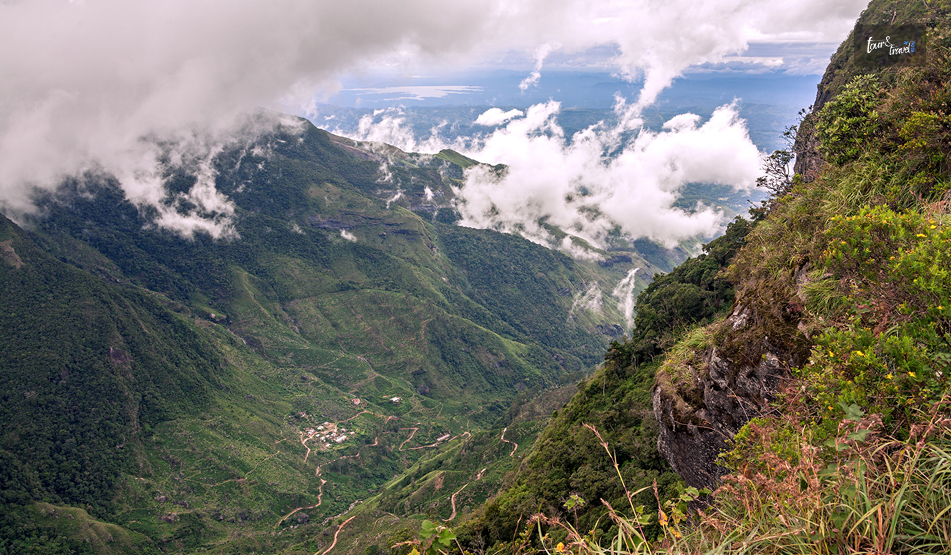
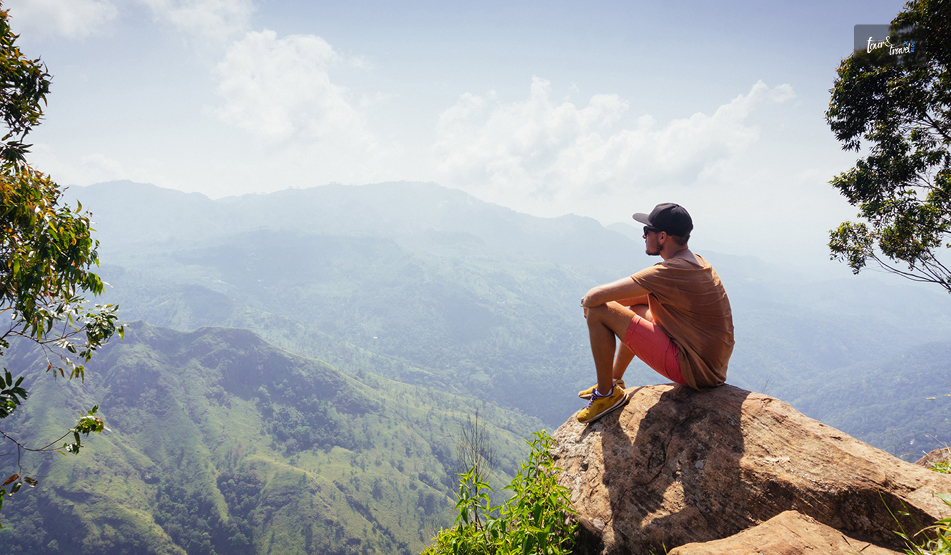
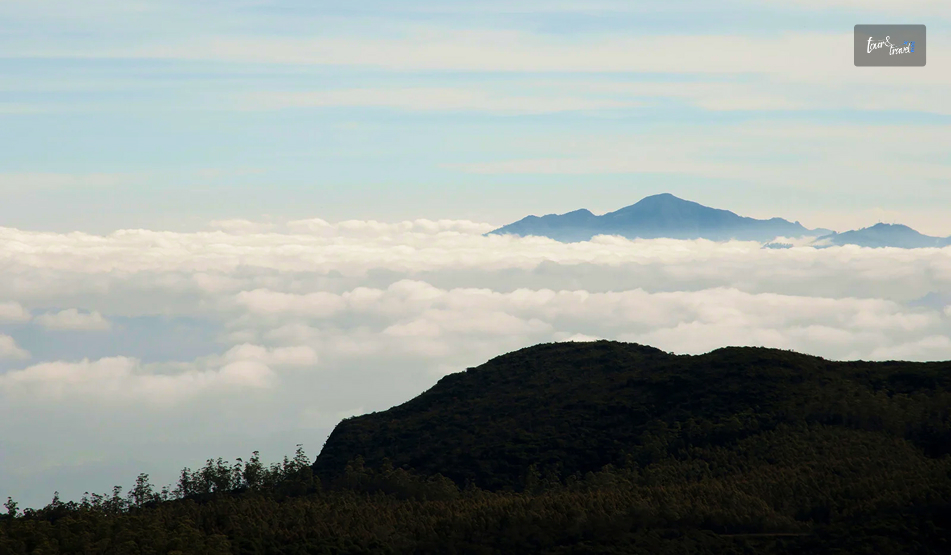
By the time I reached the escarpment, the drop in front of me was still clear enough to see the coast, some 80 kilometres away. 

World’s End is a sheer escarpment inside Horton Plains National Park, in Sri Lanka’s central highlands.  

You have to take a circular hiking trail to reach it, and the same route also takes you to Baker’s Falls and a smaller companion viewpoint called Mini World’s End. 

It has become one of the most-hiked routes in the country precisely because the effort-to-reward ratio is so favourable. 

It is a manageable walk for a view most people only expect to earn after a serious trek. 

World’s End, Sri Lanka: At A Glance 

Location Horton Plains National Park, central highlands  
Elevation at start About 2,100 metres  
Drop at World’s End Approximately 870–880 metres  
Circular trail distance 9–9.5 km (Red Bridge → Mini World’s End → World’s End → Baker’s Falls → back)  
Typical hike duration 2.5–4 Hours  
Park hours 6 AM to 6 PM  
Best time to visit January to March (Driest Months). You must arrive by 6 AM regardless of season.  
Nearest base Nuwara Eliya  

Why The Early Start Actually Matters

World’s End, Sri Lanka: Chasing the View Before the Clouds Roll In

This is not exaggerated marketing. World’s End genuinely clouds over by mid-morning most days, often as early as 9 AM. 

The park opens at 6 AM, and the guidance from pretty much every guide, driver, and fellow hiker I spoke to was the same. 

Get there at opening, start walking immediately, and don’t dawdle at Mini World’s End if clear skies at the main viewpoint are your priority.  

I reached World’s End a little under an hour and a half after setting off and had maybe twenty clear minutes before the first wisps of cloud started drifting up from the valley below. 

There is no public transport directly to Horton Plains from Nuwara Eliya. 

So you are looking at a hired tuk-tuk, car, or a pre-booked tour. 

The PickMe app works if you would rather arrange it yourself the night before.  

Whatever you choose, the pre-dawn logistics are worth planning a day ahead, since most hotels won’t have breakfast ready at 4:30 AM and will instead hand you a packed breakfast to eat on the trail. 

The Hike Itself

World’s End, Sri Lanka: Chasing the View Before the Clouds Roll In

The full loop runs roughly 9 to 9.5 kilometres and is considered moderate rather than difficult. 

It is mostly flat with some gentle inclines.  

It is well-marked, and it is notably the only national park in Sri Lanka where you are allowed to walk the trail without a mandatory guide.  

From the Red Bridge entrance, it is about 2 kilometres to Mini World’s End. 

Then on to the main viewpoint, before the trail loops back via Baker’s Falls, one of the widest waterfalls in the country, and a good spot to slow down once the pressure of beating the clouds is behind you. 

Along the way, expect sambar deer grazing close to the trail. 

They are genuinely unbothered by hikers here. 

I also spotted purple-faced langurs, giant squirrels, and a decent range of highland birdlife.  

Leopards are present in the wider Horton Plains area, but sightings are rare enough that I would not build any expectations around it. 

Mini World’s End Vs. The Main Event 

It is easy to treat Mini World’s End as a warm-up and rush past it. 

However, it is worth a few minutes on its own terms. 

A smaller drop, fewer people at that hour, and in some ways a calmer view than the more crowded main viewpoint! 

Some hikers reverse the usual direction of the loop specifically to hit World’s End last rather than first. 

Either way works, but going clockwise from Red Bridge (Mini World’s End, then World’s End, then Baker’s Falls) is the standard and the one most guides default to. 

Planning Your Visit

World’s End, Sri Lanka: Chasing the View Before the Clouds Roll In

World’s End earns its reputation honestly. 

It is one of the few views in Sri Lanka that lives up to the hype, provided you respect the clock.  

The hike itself is forgiving enough for most fitness levels. 

Also, the wildlife along the way is a pleasant bonus, and the payoff at the escarpment, on a clear morning, is the kind of view that makes the 5 AM alarm feel like a fair trade. 

Entry Fees 

Expect to pay in the region of USD 20–25 per foreign adult visitor. Also, you will have to pay a separate vehicle fee if you are driving or being driven in. 

The total for a couple with a hired tuk-tuk can run well over what the headline entry fee alone suggests. Fees are collected in USD or LKR at the park entrance. 

What To Pack 

Pack layers as it is cold enough at 2,100 metres before dawn to want a proper jacket. However, you will likely be down to a T-shirt by mid-hike.  

Add sturdy shoes, water, the breakfast pack, and a hat for once the sun burns through.  

The terrain does not demand technical gear, but the temperature swing from predawn to midday catches people out. 

Best Time Of Year 

January to March is generally the driest and most reliable stretch for clear views. 

However, the daily mist pattern matters more than the season. 

Even in the driest months, arriving after 9 AM risks losing the view entirely. An early start in a wetter month can still pay off. 

Where This Fits In A Sri Lanka Itinerary 

World’s End is a natural pairing with a Nuwara Eliya stay. It is often combined with tea estate visits, Adam’s Peak, or the train journey onward to Ella.  

Given the early start and 3–4-hour round trip, I would treat it as a dedicated half-day rather than trying to combine it with much else that same morning. 

By the time you are back at the entrance, most of the day’s clear-view window has already closed anyway.

Share on Social Media

Sibashree is a travel, culture, and leisure writer who has been writing since the age of 12 and professionally since 2014. With more than a decade of travel writing experience and journeys across India and several parts of the world, she brings a deeply personal and thoughtful perspective to her work. A student of English Literature and Mass Communication, Sibashree has always viewed travel as more than movement — for her, it has been a way of understanding people, cultures, and herself. Her passion for spiritual exploration has also led her to many unusual and meaningful destinations over the years. Outside of writing, Sibashree enjoys watching European cinema, reading about global politics, and reflecting on the stories hidden within everyday places.

Leave a Reply

Your email address will not be published. Required fields are marked *

title-img Related

READ MORE chilaw

How Chilaw, Sri Lanka, Turned A Quick Stop Into Two Extra Days: Know The Fishing Town

BY  Sibashree Aug 21, 2026

Chilaw drew my attention with the smell of drying fish at the harbor. As I reached the fishing town, I heard a low chant drifting out of a Shiva temple.  Chilaw, which almost a year back had a Korea FAO Sustainable and Innovative Fisheries and Aquaculture Programme (KOFAF) to boost the shrimp aquaculture of Sri Lanka, is a fishing town first.  Then, it is a pilgrimage site and almost as an afterthought, a beach destination.  Overall, it felt so unpolished and real in a way that many famous coastal stops in Sri Lanka have lost for a long time. How To Reach Chilaw, Sri Lanka And Get Around?  Chilaw is around 52.9 km away from the Bandaranaike International Airport. By road, the journey is around 1.5 hours to 2 hours.  The town's own railway station is about 3 kilometres from the centre, with regular services connecting to Colombo along the coastal line. ModeEstimated Time From ColomboApproximate Cost (LKR)NotesCar / Taxi2 Hours8000-15000(Based on Vehicle Type)Most FlexibleEasiest Way to Combine Chilaw with Anawilundawa and Marawila in One LoopUber2 HoursUber Go Intercity: 12016Uber Sedan: Intercity: 12629UberXL Intercity: ₹16062(Source: Uber.com) Best for First-timers.Safer for Solo, Women Travelers. Train (Colombo Fort–Puttalam line)Around 2.5 to 3 HoursThird Class Tickets: 180Second Class Tickets: 400First Class Tickets: 750(Source: Sri Lankan Railways.)The Station is roughly 3 km from the Town CentreA Tuk-Tuk Covers the Last StretchBus2–2.5 Hours150-300Regular Services along the Coastal RouteIt is the Cheapest Option Once you reach Chilaw, you can move around in tuk-tuks. From the town center, you can take a short ride to the fish market and near St. Mary's Church. You can even ferry to Anawilundawa and back after a half-day trip.  However, here, I had to negotiate a lot with the drivers. You must also fix the price upfront so that they do not end up adding more to the price during the trip.  What Are The Top Attractions In Chilaw?  Chilaw does not offer a resort trip like Bentota or Hikkaduwa. It mostly has simple guesthouses as accommodations.  Also, if you want to focus on the quieter beach experience, you can stay in the larger properties in Marawila.  Still, Chilaw is not like a typical touristy or bucket-list destination, and here are the places I visited during my stay.  1. Munneswaram Temple Like the Pancha Bhoota Sthals in India, Sri Lanka also has its five ancient Ishwarams dedicated to Lord Shiva.  Munneswaram is one of them.  The temple is a complex of five temples, dedicated to Shiva, Ganesha, Ayyanayake, Kali, and, notably, a shrine to the Buddha as well.  This temple once again reminded me that the religious traditions of Sri Lanka have always been inclusive. Also, they have often overlapped with each other, rather than staying separate.  Why Is The Munneswaram Temple So Special?  The temple has a mythological association with the Ramayana. It is said that Lord Ramachandra worshipped Lord Shiva here for penance after killing Ravana, who was an ardent Shiva devotee and a Brahman.  Along with the mythological connection, the temple also stands out with its ambiance. As I entered the temple, the incense smoke rose over the Dravidian-style gopuram.  Also, there was a practiced calm even if the priests and devotees moved between the shrines.  However, the temple bustles with energy and human presence during the annual Munneswaram festival.  It is usually held in August, and the entire town seems to reorganise itself around the procession. 2. Chilaw Lagoon And The Sand Spits Chilaw picks its own rhythm from the lagoon. It is fringed by sixteen species of mangrove and reaches close to four metres at its deepest point before opening into the Indian Ocean. I took a late-afternoon boat out with a local fisherman who moonlights as a guide.  I spotted egrets lifting off the mangrove roots, and the occasional splash of a mullet. Also, with absolutely no other tourists in sight, it was the most peaceful 1 hour in Chilaw.  The lagoon isn't just scenic. It is a working fishery that supports well over a thousand families in the area, and you feel that livelihood everywhere. I saw the nets drying along the banks to the small jetties where boats are unloaded each morning.  Nearby, the Chilaw sand spits offer a quieter, more unusual landscape for birdwatchers, with shifting sandbanks that host wading birds you won't easily spot elsewhere on this coast. Regarding the charges, you have to negotiate directly with a fisherman at the jetty rather than book through a formal operator. My boat ride cost me LKR 500.   So, this is still very much an informal, word-of-mouth arrangement, and that is why there will be a lot of negotiations regarding the trip duration and the charges.  3. Anawilundawa Wetland Sanctuary If you are staying in Chilaw, do not skip a half-day trip to Anawilundawa, located between Chilaw and Puttalam.  This 1400 hectares area is a Ramsar Site, and it has three distinct ecosystems. You will find a  mangrove swamp, coastal saltwater belt, and freshwater lakes. Also, the biodiversity numbers are amazing. 150 Bord Species 20 Mammal Species 70 Types of Butterflies Moreover, half of the freshwater fish species in Sri Lanka call Anawilundawa Wetland Sanctuary their home.  I made a mistake by not taking a guide with me for the wetland visit.  A local birder pointed out species from the boat that I would have completely missed on my own, including a painted stork colony that was, frankly, worth the whole detour. If birdwatching is even a mild interest, hire a guide at the entrance.  It is inexpensive and transforms the visit. The entry is free, and the guide cost will be around LKR 1500 for two hours. Also, the sanctuary remains open from 6 AM to 6 PM.  4. Faith Along The Coast: Churches And Kovils Home to the Munneswaram Temple, Chilaw also harbors a Catholic heritage.  The St. Mary's Church in the town centre is a prominent example, and its architecture and quiet courtyard make it worth a stop even outside service hours.  A short drive away in Thalawila, St. Anne's Church draws thousands of pilgrims each July for its annual feast, one of the larger Catholic gatherings on this stretch of coast, complete with processions and all-night vigils. What struck me most, wandering between kovils, churches, and small unnamed shrines tucked down side streets, was how unremarkable this coexistence felt to the people living it. Nobody made a point of it.  It was simply how the town worked. 5. Beaches, Toddy Taverns, And The Fish Market Chilaw beaches are not the typical postcard frames you will find on the southern coast.  Silver Beach, the most prominent among them, is right in town. I loved an early evening walk there.  Also, nearby Marawila offers a longer, quieter stretch of sand if you are willing to drive twenty minutes north. For a real sense of the town, though, skip the beach and get to the Chilaw fish market before 7 AM.  It was loud, slippery underfoot, and completely unstaged. Furthermore, when the boats came in, auctioneers shouted prices, and vendors were already frying fresh catch on the spot.  I ended up having a breakfast of string hoppers and coconut sambol from a stall two feet from the water, and it remains one of the best meals of the trip. Later, I visited one small family-run toddy tavern. It served fresh fermented palm sap alongside coconut-based snacks.  It was strong, and I just took a few sips. Though it is a slice of daily Chilaw life, it is not for someone who is not used to it.  What Is The Best Time To Visit Chilaw?  Being on the west coast, Chilaw follows a different rhythm than the south or east. SeasonMonthsConditionsDry SeasonDecember–MarchSunny and low-humidity weather conditions are the best for lagoon trips and wetland walks.ShoulderApril, NovemberTransitional months offer fewer crowds, and the weather can be mixed.Southwest MonsoonMay–OctoberHeavier rain makes birdwatching and boating harder to plan around.Munneswaram FestivalUsually AugustThe town reorganises around the temple procession.So, it is worth timing a visit around. Combining Chilaw With Nearby Stops Route SegmentApprox. Driving TimeBest Known ForColombo to Chilaw2 hoursMunneswaram Temple, fish marketChilaw to Anawilundawa30 minutesWetland sanctuary, birdwatchingChilaw to Marawila20 minutesQuieter beach stretchChilaw to Puttalam45 minutesPuttalam Lagoon, salt pansPuttalam to Wilpattu National Park30–45 minutesLeopard sightings, natural "villu" lakes This makes Chilaw a natural half-day or overnight anchor for a longer west-coast loop rather than a single-purpose day trip. Why Chilaw Is Worth It Chilaw is not a destination that announces itself.  There is no single landmark that makes it onto every Sri Lanka itinerary, no beach that dominates Instagram feeds.  What it offers instead is texture. It has a working fish market, a thousand-year-old temple complex, mangrove lagoons, and a religious diversity that's lived rather than performed.  If you are the kind of traveller who would rather stumble into a real town than tick off a famous one, Chilaw is worth far more than the quick pass-through I originally planned.

READ MORE Adam's Peak

Adam’s Peak (Sri Pada): Climbing Sri Lanka’s Sacred Mountain

BY  Sibashree Aug 21, 2026

It was two in the morning, and I started climbing Adam’s Peak. I was in a line of pilgrims, and the line stretched as far as I could see with my torchlight. All the guides about climbing up this sacred mountain tell you about climbing the 5500 steps. However, nothing prepares you for the experience you will have in conquering them in pitch darkness.  Furthermore, the crowd itself was a reflection of how inclusive Sri Lanka is in its religious practice. It was a gathering of people from four different religious beliefs.  The reasons for everyone’s climb were not the same. However, that did not quite clash with each other.  That is the beauty of the Indian Subcontinent, and Sri Lanka sets an example each time I visit it.   Nevertheless, in this guide, I will talk about my experience of reaching the summit of Adam’s Peak and all the details you need to know.  Adam’s Peak: Some Quick Facts You Need To Know AttributeDetailsLocationInside Peak Wilderness Protected Area, Central Highlands, Sri LankaElevation2,243 Metres (7,359 Feet)Local NameSri Pada ("Sacred Footprint") or SivanolipaathamalaiReligious SignificanceSacred to BuddhistsHindusMuslims ChristiansTotal StepsRoughly 5,500 Stairs via the Popular Hatton RouteAverage Hike Time3 to 5 Hours for the Ascent1.5 to 2 Hours for the DescentPilgrimage SeasonDecember (Unduvap Poya) to May (Vesak Poya)Best Months to ClimbJanuary to March for Dry Weather and Clear Sunrise ViewsCostFree (No Entry Fee or Permit Requirements) What Makes Adam's Peak Sacred Mount Pedro is the tallest mountain in Sri Lanka. However, Adam’s Peak has the highest spiritual significance.  The local name for the peak, Sri Pada, or "Sacred Footprint,” itself sets your expectations high.  Rising 2243 meters in the Central Highlands of Sri Lanka, Adam’s Peak has a rock formation at the summit resembling a large footprint, which is claimed by four separate religions. The Mystery Of The Footprint At The Adam’s Peak Summit The Buddhists believe that the sacred footprint at the summit is of Lord Buddha. On the other hand, Hindus believe that the footprint is of Lord Shiva.  Some Christians think the footprint is of Adam. He set his first footprint here after falling from the Garden of Eden. Muslims also believe Adam, the first prophet in their religion, has left this footprint.  Furthermore, there is a different Christian belief that the footprint belongs to St. Thomas.  Again, the locals call it the “Mountain of Saman,” as they think the mountain is associated with Saman, a significant figure of worship in local traditions.  Irrespective of the religious significance of Adam’s Peak, pilgrimage to the summit has continued for over a thousand years. A Brief History Of The Pilgrimage Some of the earliest recorded efforts to conquer Adam’s Peak go back to the reign of King Vijayabahu I in the eleventh century. He built wayside rest houses along the route. Later, various rulers expanded the mountaintop shrine, built roads, and installed the iron chains that still assist climbers on the steepest sections near the summit. Another fascinating local belief is that the chains in the steep sections of the route belonged to Alexander the Great. Also, you will find a mention of Adam’s Peak in the writings of the Chinese traveler Ma Huan. He described Adam’s Peak as a place rich with precious stones. Along with the religious significance, the richness of gems is another reason why this peak has drawn visitors from far beyond Sri Lanka. Where Is Adam's Peak Located? https://maps.app.goo.gl/CZeW7kGZ8rTZG2Xc8 The sacred mountain is in the southwestern part of the Central Range in Sri Lanka. It is at a distance of around 40 km from Ratnapura.  However, the more popular trekking route is through Hatton, which is just at a distance of 32 km.  The landscape surrounding the mountain is delightful and quintessential of the Sri Lankan Central Highlands. You will see tea plantations and rainforest.  Moreover, Dalhousie, or Nallathanniya, is the village at the base of this mountain. Most trekkers start their journey from this village itself.  It is an easy base to reach from Hatton, Maskeliya, or Ratnapura, depending on which direction you're coming from. Getting To The Trailhead Hatton is the main transport hub for this side of the mountain. It is well connected by train on Sri Lanka's scenic hill-country line as well as by bus from Kandy, Nuwara Eliya, and Colombo.  From Hatton, local buses and shared taxis run the remaining stretch to Nallathanniya. During peak pilgrimage season, you will get extra buses heading to the base.  If you are driving yourself, the roads narrow considerably in the final approach to Dalhousie, and parking fills up quickly on weekends and full moon nights. Choosing Your Route To Adam’s Peak Just as pilgrims of four different religions want to conquer Adam’s Peak, there are six trails that lead to Adam’s Peak.  However, as I have mentioned, the Hatton route via Nallathanniya is popular with travelers. It is also the easiest.  The route is around 5 km one-way, and the staircase on this route is well-maintained for a safe ascent.  The Kuruwita-Erathna, Ihala-Maliboda, and Ratnapura routes are longer, less developed, and used mainly by more experienced or locally guided hikers rather than casual visitors. The Night Climb Most pilgrims start the climb to the summit at around 2 to 3 AM. This reminded me of the walk and the queue for visiting the Tirupati Balaji Temple and Aruanchalam Temple in India, as both of these are located at hilltops.  Nevertheless, with the ascent starting at 2 AM to 3 AM, you can reach the summit before sunrise at around 6 to 6:15 AM.  Depending on your fitness level and the number of stops you are taking at the tea shops along the way, the total duration to complete the ascent will change.  Also, very few people talk about the descent, which is actually way harder, and my knees had a hard time.  The reward of all this hardwork is the sacred "Shadow of Sri Pada" on a clear morning.  Difficulty And Fitness Considerations The climb to Adam’s Peak is moderate to hard. There is no technical scrambling.  However, the stone stairs are relentless, and they test different muscles than a usual hiking trail. So, basic fitness is important, and only reasonably fit adults can complete the ascent in three to four hours. Having said that, mental endurance is most important here.  I passed pilgrims well into their seventies moving slower but steadily upward alongside groups of teenagers.  The descent deserves just as much respect as the climb. The repetitive downward impact on knees and quads catches many first-timers off guard, and rushing it is a common way to end up sore for days afterward. What Is The Best Time To Climb Adam’s Peak From the Unduwap Poya (full moon) in December to the Vesak Poya in May is the official pilgrimage season for climbing Adam’s Peak.  It is the dry season in Sri Lanka.  The entire route gets decked up during this season. The strings of lights, the tea stalls, and rest huts open all night make the ambience festive.  However, if you want to avoid the crowd, you can plan a climb between June and November.  Skip the monsoon months and slippery stone steps.  Crowds And Timing Within The Season If you want to join the pilgrims in the peak season, you must avoid the following days. Full Moon Days Weekends The Week Around the Sinhala New Year in Mid-April. Also, the months of January and February remain the busiest.  So, if you are planning a quieter climb in the festive season, aim for a weekday in early December or late April instead. What To Pack And Expect Comfortable, broken-in walking shoes matter more here than technical hiking gear, since the trail has no scrambling but plenty of relentless stairs.  Nights on the mountain get cold, particularly in December and January. So, a warm layer is worth the extra weight in your bag.  The entry is free, though donations are welcomed at the temple near the base. Moreover, you must carry cash for tea, snacks, and simple meals from the stalls lining the route during the season. Nearby Places To Combine With Your Visit Hatton and the surrounding tea country make a natural base before or after the climb. You can combine Adam's Peak with a trip through Nuwara Eliya or onward toward Ella via Sri Lanka's scenic hill-country rail line.  If you have a rest day built in, the tea estates around Maskeliya and Dalhousie are worth exploring at a slower pace once your legs have recovered from the descent. Guides And Group Climbs To Adam’s Peak Hiring a guide is not necessary on the main Hatton route, since the path is obvious and well-populated during the season. However, having a guide can add real value for first-time climbers who want context on the mountain's history and the shrines passed along the way.  Many guesthouses in Nallathanniya and Hatton can arrange a local guide on short notice.  Also, joining a small group climb is a good option for solo travelers who would rather not do the pre-dawn ascent entirely alone.

READ MORE Jaffna Cultural Guide

A Jaffna Cultural Guide: How To Experience Tamil Culture In Jaffna? 

BY  Sibashree Jan 6, 2026

With the Sri Lanka Tourism Development Authority (SLTDA) planning to diversify the tourism offerings, Jaffna, the northernmost part, comes into the limelight. Jaffna is the place to know about the local Tamil culture and heritage of the country.  Jaffna has beautiful temples, and the Jaffna temple etiquette shows how the people here are sincere about their customs and traditions. Also, major festivals such as the Nallur Annual Festival are celebrated around the temples here.  On the other hand, the Jaffna food scene is a celebration of locally-sourced ingredients such as fresh seafood, palm flour, and roasted spices.  SLTDA is proactively improving the infrastructure without compromising the sustainability aspect. Thus, in 2026, Jaffna is going to emerge as an eco-tourism leader, which promotes its culture and heritage.  Also, during my last visit, I found Jaffna to be a rhythm. I woke up with the sound of temple bells at 5 AM and the smell of jasmine and roasted curry powder. As I crossed the Elephant Pass, it was a paradigm shift from the greens of the Sinhalese South. Suddenly, I was in a sun-drenched, rugged terrain of palmyrah palms and limestone.  The humble and soft curves of the Buddhist Stupas were replaced by the towering Gopurams of the Hindu temples.  Life moves at a gentle pace here, and everyone works together, keeping a century-old tradition and heritage alive.  In this Tour and Travel Blog, I will talk about how to experience Tamil culture in Jaffna, every day, through festivals, temple visits, and more.  How To Experience Tamil Culture In Jaffna? Reading The Streets And Daily Rituals  Taking a walk down the streets of Jaffna is the best way to learn about the local Tamil culture. And the best part is the inclusivity.  It does not matter the social strata you belong to. The customs, festivals, and temples are accessible to all. Nevertheless, these are the daily rituals and road customs that offer insights into the culture of Jaffna. 1. The Kolam (Doorstep Art) I walked along the lanes of Jaffna at dawn and saw women sweeping their doorsteps and drawing intricate geometric patterns with white rice flour. It is called the Kolam.  Kolam has deeper spiritual and environmental implications. Kolam at the doorstep is a gesture of non-violence or Ahimsa. Also, the design is made using rice flour, which ants and birds eat. Thus, the first act of the day becomes about giving.  Furthermore, during a special festival or wedding in the house, the white lines are bordered with Kaavi (red brick powder). The red lines offer spiritual protection from evil eyes.  Also, if you see a house with no Kolam for many days, it means that the family is mourning. It signifies that the rhythm of joy has paused for a certain period for the family. 2. The Pottu And Vibuthi (Forehead Markings) Pottu and Vibuthi are two different types of forehead markings, and these are the visual language of faith. a. Vibuthi (The Ash) Vibuthi means three horizontal lines drawn on the foreheads of the devotees of Shiva. It means the burning away of the ego and the impermanence of life.  Also, the followers of Lord Shiva often smear ash on their forehead after a morning temple visit.  b. The Sandalwood Paste It is a yellow dot made of sandalwood paste. Many people even smear the sandalwood paste on the entire forehead. It signifies mental clarity and cooling. c. Pottu (The Dot) Pottu, often red (vermillion), the dot symbolizes the "third eye" or the seat of Shakti (divine power). It means that a woman is married.  You will also notice black dots (with Kajal/Kohl) on the forehead of young children as a mark to ward off evil eyes.  3. The Home Visit Etiquette And Tamil Hospitality Customs The Tamil hospitality customs are warm and welcoming. However, when you visit a Jaffna home, you have to follow certain social norms.  Follow The Evil Eye Or Drishti Rule  You cannot praise the beauty and health of a child excessively when visiting their home. It is considered a bad omen or an act of jealousy. If you want to adore a child, praise them briefly and share your good wishes.  The Plate Rule Of Eating  It does not matter how much you liked the food. You cannot polish your plate. Contrary to Western culture, here, leaving a polished plate means that you are still hungry or the host failed to provide enough.  The custom is to leave a tiny, symbolic amount of food on the plate. It shows that you have been provided with an abundant amount of food. 4. Caste & Conservatism: Managing Expectations In my Jaffna travel guide, I have talked about the cultural richness of the Sri Lankan northern city. However, beyond the cosmopolitan buzz of Colombo, a socially conservative vibe reigns in this region of Sri Lanka.  So, PDA or public displays of affection, even holding hands, can draw uncomfortable stares from the older generation.  Furthermore, you cannot wear short skirts or shorts in public. Your clothing has to be modest, and usually your knees and shoulders should be covered.  Temple Culture Beyond Sightseeing: A Jaffna Cultural Guide The Nallur Kandaswamy Kovil is the majestic spiritual and cultural heart of the city. However, the village kovils or the smaller temples are the places where local communities gather, and the atmosphere is very intimate.  The Archana Basket Ritual At The Temples  You can buy a small wicker basket near the temple entrance. It contains bananas, a coconut, flowers, and betel leaves.  Once you enter the temple, you have to hand it over to the priest at the inner sanctum. He will offer the basket to the deity and chant a blessing.  Furthermore, the priest will return with a flaming lamp (Aarti). Hover your hands over the flame and then touch your eyes to receive the light’s blessing. The Temple Sound: Nadaswaram And Thavil When you are in Jaffna, you don’t have to look for music. The music will find you. The sound of Nadaswaram or a long wind instrument exudes a piercing and soulful melody.  Then, the Thavil or drum has a thundering sound, and it is heard during every major temple festival. Nallur Festival Traditions And Jaffna Festival Calendar FestivalMonthWhat to ExpectThai PongalJanuaryA harvest festival where "Pongal" (rice and milk) is boiled until it spills over, symbolizing abundance.Nallur FestivalAugustA massive 25-day celebration culminating in a grand chariot procession where thousands of men pull the deity's carriage.DeepavaliNovemberThe Festival of Lights; homes have oil lamps, and the city exudes the scent of traditional sweets. Immersive Cultural Experiences For an immersive cultural experience, you must meet a traditional weaver in Inuvil and see how artisans create the most intricate textiles on hand-operated looms from cotton and palmyrah fibers.  Also, you must give the restaurants a miss for the day. Visit a local homestay where you can have cooking lessons. Grind spices using a stone grinder or Miris Gala and feel the aroma.  Do you love Bharatanatyam Dance? Visit an art school like the Jaffna Kalai Thoothu. You can watch students rehearse this ancient, highly disciplined classical dance form. You can even join sessions such as the Vibrant Rhythms of Jaffna, where you can also try some moves.  The Authority Voices On The Jaffna Cultural Guide Anuk Arudpragasam (Booker Prize Shortlisted Author): “Jaffna is a place of memory. The culture here isn't just performed; it is held onto tightly as a way of surviving history.” (Context: Discussing the resilience of Tamil culture post-war). The "Jaffna Boy" (Local Cultural Blogger): “To know Jaffna, you must wake up before the sun. The culture lives in the sweeping of the front yard and the drawing of the Kolam before the heat sets in.” Serious Eats (Culinary Authority): “The hospitality in Jaffna is aggressive in the best way possible. You do not just 'eat' here; you are fed.” A Jaffna Cultural Guide: Know The Expert Tips  “Saptingala” or “Have you eaten?” This is the common term I have heard from the locals I encountered. Seldom have I come across a city where people are so caring, even in casual greetings.  However, it’s safe to say “Yes.” Otherwise, they will feel obligated to feed you. Apart from these gestures, some other things you need to keep in mind when you are in Jaffna. 1. Don’t Touch The Head The head is the most sacred part of the body. So, you cannot pat a child on the head. Furthermore, you cannot touch a priest or monk randomly.  2. Use Your Clean Right Hand  You have to keep your right hand clean. You must use your right hand for shaking hands, eating, giving money and gifts, and pointing.  3. Men And Shirts  You will often find older men not wearing a shirt in their house. There is nothing offensive about the custom. In the hot and humid north, it is a tradition that ensures comfort.  4. Don’t Photograph Women Bathing In Holy Places Keerimalai Springs is a holy bathing place, and local women often take a bath in sarees at public wells. You must not photograph them.  It is a daily ritual for them and not meant for any tourist show.  5. The Quintessential Jaffna Siesta  Most shops and house doors are closed between 1 PM and 4 PM. It is the Jaffna Siesta time. It once again shows how life in Jaffna moves at a different pace than the rest of the world.  6. Gold Is Security  Women in Jaffna roam around wearing massive amounts of gold jewelry. It is their financial security. Also, Thattam or the gold coin jewelry is especially famous here.  It is disrespectful if you ask a woman whether the ornaments she is wearing are real or not. It is always real.  7. The Jasmine Rule  During my stay in Jaffna, I always wore a string of fresh jasmine flowers in my hair. It was one of the reasons why I connected with the local people very quickly.  A Jaffna Cultural Guide: Frequently Asked Questions (FAQs) Here are the frequently asked questions and answers about the Jaffna cultural guide.  1. What Is The Main Religion In Jaffna?  Hinduism is the main religion in Jaffna. Furthermore, people here are mostly devotees of Lord Shiva and Murugan. The religious beliefs of the people here impact the local culture, food, and daily rhythm. 2. Can I Shake Hands With Local Women? The Jaffna society is conservative. So, most women here will not be comfortable shaking hands with you at the first meeting. You can fold your hands and say “Vanakkam” with a smile for a perfect greeting.  3. What Language Do The People In Jaffna Speak? Tamil is the primary language in Jaffna. People here rarely speak the Sinhalese language.Furthermore, you will find people speaking in English in hotels and other facilities. However, as you explore the villages, you will find very few people speaking English.  4. Is Jaffna Culture Similar To India?  Yes, the culture of Jaffna is very similar to that of Tamil Nadu in South India. In fact, if you visit Jaffna from Colombo, you will experience a huge cultural shift. The Tamil people in Jaffna are very protective and proud of their distinct identity, cuisine, and dialect.  5. Can I Enter A Home In Jaffna If I Am Invited? Yes, it is a huge honor to visit a home in Jaffna on invitation. Just remember to take off your shoes at the gate or door. Furthermore, when you visit a home in Jaffna, you can carry flowers and sweets as gifts. You must not carry alcohol as a gift if you are visiting a home in Jaffna for the first time. 6. Why Is Vegetarian Food So Common In Jaffna?  Vegetarian food is very common in Jaffna due to the strong Hindu influence. Many locals are vegetarians here due to religious beliefs. Also, many local Tamil families here follow the custom of eating vegetarian food on Tuesdays, Fridays, and other holy days. 7. Is It Rude To Leave Food On My Plate In Jaffna? No, it is not rude to leave food on your plate when you are eating in Jaffna. In fact, when you leave a little amount of food on your plate, in Jaffna, it means that the host has served you an abundant amount of food. If you polish your plate off completely, the host may serve you another mountain of rice, considering you are not full yet.