



Here’s What I Found Out About Aha Airlines!

Aug 8, 2023

Last Updated on: Aug 29, 2025

Travel Blog

Did you know Aha Airlines were one of the lowest-cost-carrier airlines that operated mostly during the pandemic? It was founded in September 2021. However, it closed down its operations in August 2022, which was quite predictable.

The price they were charging for flights was pretty low, plus, as a regional carrier, people will only book tickets if they need to go somewhere specific, while most prefer to make a road trip! I was hoping you could read this article to learn about what else I found about Aha Airlines.

The low-cost airlines were trying to create bundle packages for travelers visiting Reno and Tahoe. Yet, the issue was with the specificity of the destination, which ended in fewer passengers booking Aha Airlines. Aha Airlines suffered from bankruptcy, and the parent company ExpressJet filed it on 22 August 2022.

Here’s What I Found Out About Aha Airlines!

Aha Airlines
Image Source: www.oregonlive.com

Aha Airlines headquarters were based in Reno, an interesting hub. However, it is quite justified. There are two aspects to the hub selection considering the airlines operate regional aircraft, which means they have limited demand.

The second aspect is that several low-cost carriers are major in the market. They act as competitors for popular routes such as Las Vegas. Therefore, it is better to restrict flights to small cities located in the Western U.S.

The company did not charge anything to print a boarding pass printed on normal receipt paper. The brands did not use the typical boarding cards used by other airlines. They are cutting costs from every angle to make their service as cheap as possible, given it is a brand-new carrier!

What Are Aha Airlines?

What Are Aha Airlines?
Image Source: travelupdate.com

The brand Aha Airlines was launched on 24 October 2021 in the United States. The name Aha comes from the acronym “air-hotel-adventure.” It was identified as the leisure brand of ExpressJet Airlines, which only provided regional services.

The Aha Airlines flights were short-hop at an attractive, affordable price, where the focus was to partner with resorts and hotels to earn more value from the vacation packages! The Aha Airlines fleet was based in Reno, Nevada, and mostly operated by ExpressJet.

The fleet of Aha Airlines consisted of ERJ-145 regional jets, which are quite smaller than ERJ-175 planes. ERJ-175 planes, along with CRJ-200s, are the ones which are used by SkyWest that serve the local airport. These planes rank low on space scale, seating arrangements, and other services.

Flight Details

Aha Airlines flight details
Image Source: travelupdate.com

The Aha Airlines destinations covered are Pasco or the Tri-Cities, Redmond, Eugene, Medford, Arcata-Eureka, Fresno, and Bakersfield, Ontario. There are other smaller airports where there might be no other flight services available. Hence, Aha Airlines provides flights to Reno-Tahoe non-stop.

There were 13 cities in which Aha Airlines operated; the plan was to expand to 20 destinations once they established their market. The flight operated by the airline was Embraer ERJ-145 which had a capacity of 50 passengers, and they owned 5 of those.

The Airlines charged $30 for checked baggage or carrying personal items. According to many passenger reviews, it was stated that getting your luggage checked in is better than carrying it in the flight cabin.

The Benefits Of Booking With Aha Airlines

  • One of the benefits of booking with Aha Airlines was that you would never face any traffic considering it is a regional-based carrier. You could go 2 to 3 hours earlier and do your check-in even though they have the facility to check in online! Alas, there is no way you can avail of it anymore.
  • Aha Airlines do not charge anything to print their boarding pass, even though it is more of a receipt than a boarding card.
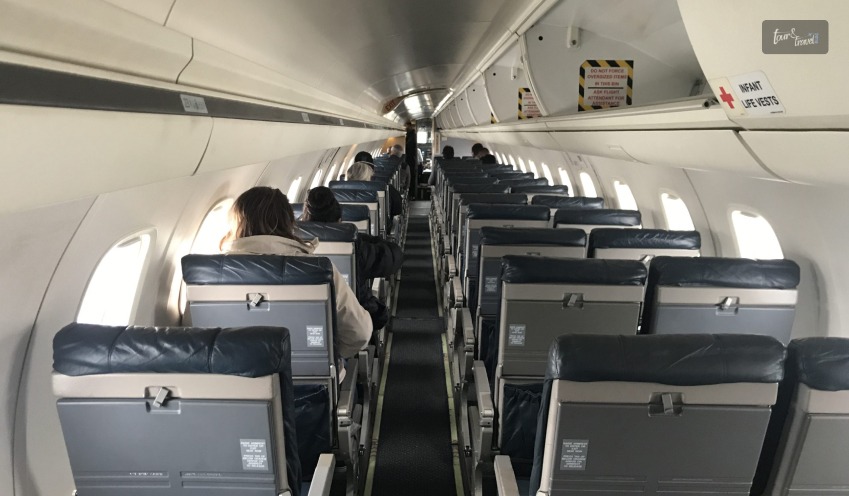
  • If you are traveling solo, it will be easier, considering the cabin’s layout is 1-2. The window aisle is cool for solo travelers.
  • The leg space in front of the seats is quite spacious compared to other low-budget carriers. The window placements are also good, as they are at an appropriate height.
  • The flight attendants were quite relaxed in their approach as they offered passengers to sit anyplace they liked, as many seats were empty. Especially on weekdays, the crowd could have been better.
  • There were also options for water and snacks served by the Flight attendants, with choices between graham cracker squares or granola bars.

The Drawbacks That I Noticed

  • The flights have tiny overhead bins, which is a way of restricting carry-on luggage.
  • There is less security even though there is a justified reason that there are a limited number of people. However, it cannot be a reason for scarce security!
  • The locations selected to provide service, such as Reno and Tahoe, cannot be an appropriate reason for the airlines to get a satisfactory number of visitors. People only sometimes vacation or go on trips, leading to fewer travelers booking flights.
  • There were goof-ups by staff which can be a red flag for a company operating on limited grounds. According to a review posted by Family Flus Free, the gate number printed on travelers’ boarding receipts was wrong, creating a commotion.
  • They did not even apologize for it. Instead, an announcement was made for all passengers to come to a different gate.
  • The airline’s ERJ-145 flights were tiny, with a cabin layout of 1-2! The place for walking is restricted.
  • The cabin overhead is so low that anyone with a height of 5ft 10 in will have an issue standing upright.
  • There is another option of keeping the carry-on baggage under your seats. However, it will pose serious trouble for placing your legs. People with longer legs will have serious problems with their feet!

Honest Review

Based on all the information and Aha Airlines reviews, I realized that the flights of Aha Airlines might have worked well during the pandemic, especially when there was an emergency need to travel; however, later, it failed miserably.

With so many options for connecting flights and major airlines providing offers and deals, only some people will choose a regional low-cost carrier airline that might not be effective in their long-term plan.

Conclusion

Now you know why Aha Airlines did not have an effective run, especially even with the reasonable pricing of the tickets. It is about the experience and the market demand for their services as a regional low-cost carrier.

Apart from visiting Reno-Tahoe, only a little use has been found of the Aha Airlines! So, Comment below about your favorite low-cost airline in the U.S. and why!

Read Also:

Share on Social Media

Sagnika Sinha is a content writer who is passionate about writing travel vlogs, entertainment and celebrity articles and literature-based pieces. With a 4 years experience in teaching, she loves reading books. A procrastinator by nature, she loves travelling, listening to music, planting and gardening.

Leave a Reply

Your email address will not be published. Required fields are marked *

title-img Related

READ MORE

Welcome To Biscayne National Park: Enjoy Kayaking and Canoeing At This Watery Wonder

BY  Sibashree Jul 10, 2024

If you are in Florida and want to give it all for your active pursuits, your path must lead to the Biscayne National Park. With the third longest coral reef, the watery wonderland is a beautiful coexistence of wildlife, water trails, hiking spots, and life under the water.   Also, did you know that as you visited Florida’s Biscayne National Park, you made a little contribution to the local and national economy? The National Park Service says,   “The South Florida national parks, comprised of Big Cypress National Preserve, Biscayne National Park, Dry Tortugas National Park, and Everglades National Park, were collectively visited by 2.9 million people who spent $242.5 million and supported over 3,250 jobs in South Florida. The cumulative benefit to the South Florida economy was over $352 million.”   So, is the allure palpable enough? Are you already invested in the wildlife, islands, water sports, and the urge to do a little good for the local community? Pack your bags and set in! Meanwhile, let me do all the legwork and make all the plans to join you at the park.   Things To Know About Biscayne National Park  Before I share the details about the kayaking and canoeing fun at the Biscayne National Park, I want to present a brief overview of the park.   A visit to this park is truly a one-of-a-kind experience, and it’s like a microcosm of the universe with the falling together of land and water ecosystems.   It’s time to know the park at a glance before you plan a visit.   Biscayne National Park (Things To Know)  Best Time to Visit  Late November to April  Address 9700 SW 328th Street, Sir Lancelot Jones Way, Homestead, FL 33033  Operating Hours  7:00 AM–5:30 PM, 7 days a week (except holidays) Size 172,971 acres Coral Reef Length  72,000 acres of the northernmost range of the Florida Reef Number of Visitors (in 2023) 571,242  Entrance Fee None Phone 305 230-1144 Alerts & Conditions  Updated regularly  Safety Concerns Mosquitoes and occasional storms Nearby Accommodation Facilities You can stay in tents and make the most of your camping experience. The camping spot is available on a first-come, first-served basis.  Otherwise, you can drive west for half an hour and find hotel chains in Homestead.  I know you can’t wait to have a slice of the national park ripe with outdoor adventure. So, let’s delve deeper into the water and have some kayaking fun and more!   Kayaking, Canoeing, And More! Exploring The Watery Wonderland Of The Biscayne National Park   95% of the Biscayne National Park has water. So, water activities and exploring the water ecosystem are the most amazing things about the place.   You can go canoeing on the open water across the coastal line and reach the stretches of mangroves. Further, you can explore the artificial islands by canoeing and kayaking.   However, to have the most amazing canoeing experience and paddle with the current, you must get a tide table for the visitor center first.   So, let’s start paddling and kayaking!  Jones Lagoon Eco-Adventure Clear Water Paddling  Fee: $109  Age Limit: 12+ for Shared Trips  Duration: 3.5 Hours  Get surrounded by the most amazing marine life during this clear water paddling trip. You will meet the sea turtles, Roseate Spoonbills, and baby sharks on your trip.   Kayakers also love the Jones Family Historic District and Lagoon because of its historic importance. It features on the National Register of Historic Places.  The Jones Family Historic District consists of Porgy Key and Totten Key. The Jones family stayed there during the 1800s and started growing limes and pineapples.   Also, in the early 20th century, they sold their property stretching over a whopping 277 acres and became millionaires. It was a rare incident then in this part of the world for an African American to have this fortune.   Debris Cleanups with Guided Jones Lagoon Paddle  Fee: $50  Age Limit: 12+  Duration: 6 Hours  How about enjoying the beauty and diversity of Biscayne National Park and contributing to its conservation simultaneously?   This debris cleanup and Jones Lagoon paddle trip involves cleaning the debris across the mangrove coastal line and enjoying a relaxing paddle through Jones Lagoon.  At the end of the trip, you will return to the Dante Fascell Visitor Center and unload the debris.   Kayak the Mangroves  Fee: $39  Age Limit: 6+ for Shared Trips  Duration: 1.5 Hours  The mangrove stretch at Biscayne National Park is home to many animals. It is also one of the longest bordering mangrove stretches on the left of the eastern shoreline of the United States.   So, it’s time to meet the tree crabs, fish, animals, and snakes residing in the mangroves. The best part of this tour is that it is partially guided.   The naturalist will guide you for the first half an hour, and from there, you can paddle on your own and take charge of how you want to enjoy the trip.   Sail, Paddle, And Snorkel At Biscayne National Park  Fee: $209  Age Limit: 8+ for Shared Trips  Duration: 6 Hours  This trip involves exploring through the mangrove forest, kayaking, and snorkeling. The trip starts from the Dante Fascell Visitor Center in Homestead.   Snorkel and Paddle  Fee: $209  Age Limit: 12+ for Shared Trips  Duration: 6 Hours  This snorkel and paddle trip at Biscayne National Park is the best to experience aquatic diversity. The rays, dolphins, and sea turtles  await to welcome you to their lives. Further, an encounter with the coral reef is going to be the best experience you can think of.   Also, if you are a birder, you cannot just miss the Roseate Spoonbills while padding. The mangrove forests stretching through the route once again speak of the biodiversity present in the park.  Your guide on the Captain of the National Park will explain the nature of the inhabitants, how they coexist, and the history of the place. It’s the best chef’s kiss you can expect on a trip.   Kayaking Through The Seagrasses of Stiltsville  Fee: $109  Age Limit: 12+  Duration: 3 Hours  Must-Have: Prior Kayaking Experience  As you paddle through the water, the Stiltsville houses on the seagrass banks will be your roadmap to history. This ride is also about the most delightful encounter with the wildlife at Biscayne National Park.   You will even learn why these seagrass banks are important for the ecosystem of the national park. Do you have this thing for everything quaint? The sunken barge on this route stands as a remarkable piece of eulogy.   For the trip, you will start from Coconut Grove and  kayak to the bay to start paddling.   You Can’t Miss The Third Longest Coral Reef At The Biscayne National Park Biscayne National Park promises you a kaleidoscopic experience with the third-longest coral reef in the world. The living coral reef, with its rhythmic movements and embrace of the pork fish and nurse sharks, presents an unforgettable visual experience. The soft corals in the reef dance to the current and create movements.   It’s mesmerizing to know how the polyps make the most beautiful structures by collecting calcium from seawater. In some parts, the coral reef looks like the most vivacious flowers, and in other parts, it will appear like elk antlers or mountains.   On and around the reef, you will also come across the following creatures:  Sea fans  Sea whips  Bright sponges  Christmas tree worms  Fish, shrimps, crabs (They visit to eat the algae gathered on the coral reef.)  Overall, it’s a rainbow of colors with red, purple, orange, and green dominating the spectrum.   How To Visit Biscayne National Park?  You can visit the Dante Fascell Visitor Center of the Biscayne National Park from the US Highway 1 (from north and south) or the Florida Turnpike (from north).   Reaching The Biscayne National Park From North  From Florida Turnpike  First, choose exit 6.  Then, reach the exit ramp and take a left turn to continue moving south to SW 328th Street.   Now, take a left turn on the 328th Street.  Further, drive for four miles to reach the end of the road.  Find the park entrance on your left.  From The US Highway 1  You have to drive south toward Homestead, take SW 137th Avenue, and turn left. You will reach SW 328th Street after a five-mile drive. From here, you will have to take a left turn and drive for four miles. Once you get to the end of the road, you will find the park entrance on your left.   Reaching The Biscayne National Park From South  You can reach the Biscayne National Park from US Highway 1 while traveling from the south.   Then, drive north and reach Homestead. There, you take a right turn on SW 344th Street. Further, continue for four miles until the road near the Homestead Speedway takes a northern turn.   Next, reach the SW 328th Street and head east. Now, you will have to drive for four miles to reach the end of the road. The entrance of the Biscayne National Park will be on your left.   Fun Facts About The Biscayne National Park   The series of sandy, low-lying, and small islands here are known as keys.  Eliott Key is the largest key or island in the Biscayne National Park.  Boca Chita Key is the most popular island here. Also, it is known for its 65-foot lighthouse constructed in the 1930s.   See You There!  Biscayne National Park is a destination that will spoil you with choices. The kayaking and canoeing activities are there, and you can also take a deep dive to have a one-on-one with the fascinating marine life.   If you want more outdoor pursuits in the water, you can try swimming and fishing.   Further, the park does not disappoint wildlife lovers and tourists who love exploring history. The Jones Family Historic District at the park features on the National Register of Historic Places.   Also, the dolphins, birds, turtles, and fish are there to offer you the most amazing wildlife experience.   And the list is endless! The things to do and see at the Biscayne National Park! So, let’s quickly wrap up my guide and plan a visit to the park. See you there soon!   Biscayne National Park FAQ  What Is Biscayne National Park?  Biscayne National Park in Florida is one of the most visited National Parks in America. It is known for its diverse ecosystem and historical importance. Further, it has the third-largest coral reef in the world.   How Do I Access Biscayne National Park?  You can reach Biscayne National Park through US Highway 1 or the Florida Turnpike if you are driving from the north. If you are traveling from the south, you will have to take US Highway 1.  What Activities Can I Do at Biscayne National Park?  At Biscayne National Park, your outdoor pursuits are going to be endless. You can enjoy the following activities.  Snorkeling  Diving   Kayaking  Paddling   Exploring the mangroves  Visiting coral reefs  The park also offers opportunities to experience the best marine life by observing manatees, sea turtles, and various marine creatures.  What Landmarks Can Be Found In Biscayne National Park?  Biscayne National Park has the following landmarks.  Maritime Heritage Trail  Stiltsville  Living Coral exhibit at the Dante Fascell Visitor Center  Is There Scuba Diving At Biscayne National Park?  Yes, you can do scuba diving in clear waters at Biscayne National Park. You will  encounter coral reefs, vibrant marine life, and shipwrecks while scuba diving.   When Did Biscayne National Park Become A National Park?  In 1968, Biscayne National Park was established as a national monument. Years later, in 1980, it got the designation of a National Park.   Also read Enjoy The Best Amusement Park In Cancun. The 4 Best Parks In Cancun You Have To Visit. From Hiking To Stargazing: The Top 10 National Parks In Utah!

READ MORE national parks in utah

From Hiking to Stargazing: The Top 10 National Parks in Utah! [A Travel Checklist]

BY  Abdul Aziz Feb 23, 2024

Welcome to the country of red rock canyons, expansive views framed by arches and sandstone spires. Spreading national forests, vast wilderness areas, quaint state parks, and five national parks in Utah make up more than seventy-five percent of its land area that is open to the public. The southern portion of Utah is home to all the state's national parks. The "Mighty Five" are worth the hype, from the breathtakingly steep yet sublime Zion Canyon to the mind-blowing hoodoos of Bryce and the famous Delicate Arch. Additionally, these parks offer at least a dozen hidden gems, peaceful trails, and less-traveled roads for every must-see highlight. How, then, can one outwit the masses? The easiest solution is to leave when other people aren't. This may mean a trip in the winter, when the temperatures are much more bearable than in the sweltering summer, and the snow adds an extra magical quality to the hoodoos. Since all national parks in Utah are accessible year-round, you can schedule a stargazing expedition or a sunrise tour. However, bear in mind that the hours of local eateries and visitor centers change if you visit during the off-season, which runs roughly from November to February. Despite this, you can find cheaper lodging during this time. Here, being proactive pays off very well. Popular hikes have permits that sell out months in advance. The most sought-after lodges and campgrounds (particularly those inside the park) frequently have a year-long waiting list. You can make a lot of these reservations at www.recreation.gov. The top attractions of the national parks in Utah, listed from east to west, include must-see locations, undiscovered treasures, and insider advice for maximizing each trip. National Parks in Utah How many national parks in Utah, you ask? The answer is easy because they call it the “Mighty 5” for a reason. Here, we are listing all the state parks in Utah that you could plan a visit to. We are also going to help you with all the stuff you must pack when planning a trip. Zion National Park With its soaring canyon walls and hanging gardens, Zion National Park, the first of the national parks in Utah and the 13th in the United States, is a popular destination on many people's bucket lists. The park's main road now closes to private vehicles during peak season (March to October) due to its increasing popularity, requiring visitors to take a shuttle. One advantage is that you can bike this almost flat, picturesque drive. You can rent bikes and e-bikes in nearby Springdale (check out Zion Cycles). Two to six months in advance of your trip, you must apply for a permit if you plan to hike the popular Angels Landing trail. If possible, stay at Zion Lodge or in neighboring Springdale. Make reservations up to 13 months in advance for any lodging in or around Zion. Explore the park's Kolob Canyons area or the more sedate paths off Kolob Terrace Road when you're ready to forgo the tourist traps. Bryce Canyon National Park At Bryce, the main draw is the bizarre spires that have been formed over millions of years. Ultimately, this location has the highest concentration of these hoodoos worldwide. The best (and quickest) way to satisfy your thirst for hoodoo views is to take the main park drive and take the Navajo Loop from Sunset Point or the Queen's Garden Loop from Sunrise Point. Try a portion of the 23-mile Under-the-Rim Trail or one of those trails down to Fairyland Loop for a more immersive hike. Take the back entrance into Bryce Amphitheater via Tropic Trail from the small town of Tropic to have some hoodoos all to yourself. While there, you can also have lunch at i.d.k. Barbecue a state favorite. Bike the dirt Thunder Mountain Trail or the paved Red Canyon Path to discover a more sedate hoodoo landscape. The historic Lodge at Bryce Canyon is the perfect base camp for exploring the park; however, if reservations are unavailable, consider lodging at one of the nearby hotels in Bryce Canyon City. We also think Under Canvas Bryce's campsites are great. Capitol Reef National Park The quietest of the national parks in Utah boasts a magnificent environment that is attributed to the Waterpocket Fold, a 100-mile geologic wrinkle in the earth. Petroglyphs and the historic Fruita Orchards, which the park still cares for, are two of the area's unique attractions. Try the fresh pies at Gifford Homestead, which is close to the park entrance and made with local fruit, such as apples or peaches.  Take a leisurely stroll along the former main highway through Capitol Gorge. Or brave the steep trail to Cassidy Arch, where there are rumors, that Butch Cassidy escaped the law. If you have a decent 4WD car, you, too, can escape (from other travelers). Notom-Bullfrog Road intersects with Burr Trail Road, another backcountry route, and leads to Lake Powell. Burr Trail leads to Boulder, the starting point for Grand-Staircase Escalante National Monument and the location of Hell's Backbone Grill, possibly the best restaurant in Utah. It stays open in spring through fall. You should make reservations in advance. If you stay in one of the lodges in this small town that is only five minutes from the park, Boulder is close, but Torrey is closer. Canyonlands is divided into five distinct districts, each providing a unique experience. Island in the Sky is a place of expansive vistas. Don't miss Mesa Arch or Shafer Trail Viewpoint. The Needles District is a great place to go hiking. It's only about 20 miles south of the Island in the Sky as the crow flies (two hours drive). One of the best hiking routes is the action-packed Cave Spring Trail. It features a replica of an 1880s cowboy camp and mushroom-like rock formations. Canyonlands National Park Get lost in the Maze. Other worthwhile stops in this backcountry district are Chocolate Drops and the Land of Standing Rocks. See amazing petroglyphs, including floating "holy ghosts," by traveling to the non-contiguous Horseshoe Canyon unit. For a rafting adventure, head to the River District, which is at the base of the canyons formed by the Colorado and Green Rivers. The best place to stay for most of the park's district is Moab, which provides quick access to the park's rivers, the Needles, and Island in the Sky. Arches National Park Arches, the inspiration behind Ed Abbey's famous Desert Solitaire, has evolved significantly since 1968. Because of its increased activity, the park service is currently testing a timed entry system that will require reservations in advance from April to October 2023. However, it is possible to avoid a Disneyland experience. If you arrive before sunrise or remain past sunset, you will be rewarded with quieter trails and golden light that casts a glow over the arches. Be an early bird or a night owl. This is feasible because Moab's closest lodging options are situated sufficiently near the park's entrance. If you would prefer not to get up early, reserve a campsite at Devils Garden up to six months in advance or take a ranger-led tour to see the Fiery Furnace area, which is accessible only with a permit. Travel Checklist When Visiting the National Parks in Utah Planning a trip to the national parks in Utah is as fun as it is a massive plan to come up with. You must be well prepared for the weather you will be subject to both in the day as well as night. The few days that you will spend here will be nothing short of an adventure. Here is a list of things that you must have with you if your destination includes the national parks in Utah. Hardy Water Shoes The red desert dirt in Utah can be extremely sticky. You should invest in good water shoes if you intend to go river rafting, canoeing, or kayaking. When participating in water activities, flip-flops are not advised. They will become stuck in the mud and either break or get sucked down the river.  Your feet will be safe if you hike the rocky Virgin River through the Narrows in Zion National Park wearing rubber-toed shoes covered with firm soles. (Near Zion's Springdale entrance, you can rent an entire dry gear outfit, including shoes.) Blacklight Flashlight Scorpios are nocturnal creatures that hide during the day. Use your black light to identify them; the light from it causes these odd creatures to glow. Don't worry too much about scorpions because there is only one species in the Southwest that is thought to be deadly. Sun Protection The strength of the Utah sun only needs to be experienced once, especially in the desert, where there isn't much shade to be found. There will be certain hikes you take or picnic tables you sit at where there isn't a single spot to hide from the sun and heat of the desert. If possible, bring a wide-brimmed hat to cover your entire face. That would be better than a baseball cap. Next, cover all exposed skin, including the back of your neck, with sunscreen. Don't forget to wear sunglasses for eye protection. Polarized lenses will improve your vision and shield your eyes from burns. Recall that at 8,000 feet, you are closer to the sun than you are at sea level. If you're going to be on the water, get some sunglasses straps. It's annoying to watch your new shades drift away with you. Rain Jacket You might wonder, who takes rain jackets into the desert? Yes, we do. Each time we come to town. Even the desert experiences occasional, albeit brief, bursts of rainfall. You want a jacket that will keep you dry and warm when it pours, and the temperature drops. Hiking Boots Bring a pair of supportive, water-resistant, and breathable hiking boots to maximize your experience. These will make it easy for you to travel both dry and wet trails, allowing you to go farther than you otherwise could have. They also shield your feet from trail stones, cactus needles, and maybe even snakebites. Here's a staff member who can't stop gushing about his Sportiva Synthesis Mid GTX to get you started on your research. Vasque Skywalks GTS was highly appreciated by our friends at Backpacker.   Water Bottle Carry a sizable water bottle that you can fill with your garden hose prior to packing if you intend to go camping. With the jug, you can travel with water wherever you go. This means you can cook, stay hydrated, and make coffee in the morning even if you find yourself at a campsite without water. A water pump is typically available at campsites so you can replenish as needed. Hydration The air in the desert is so dry that perspiration quickly evaporates. Often, sweating is invisible to you. By staying hydrated, you can prevent dehydration, which can cause headaches as well as more severe ailments like heat stroke and cramps. Make a drinking plan of 5 to 1 liter for each hiking hour. Make sure to continue drinking even when you are not recreating. You are hydrated if your urine is clear. We adore carrying our CamelBak with us so we can continue to sip while we’re out and about. If you find yourself severely dehydrated or in need of quick hydration recovery, mobile IV therapy in Houston or at any needed location can be a lifesaver. These services offer on-site hydration solutions that can help replenish your body's fluids and electrolytes efficiently while you're still enjoying your outdoor activities Warm/Cool Clothes Temperatures in the national parks in Utah desert can vary by up to 30 degrees in a single day. So, pack light clothing for the day and warm clothing for the evenings. Include a winter hat for when the sun sets, and the cooler air moves in. As for national parks in Utah, this is particularly crucial in the fall, winter, and spring. Temperatures here can drop sharply after precipitation and sunset. Maps There are an amazing variety of trails and overlooks in each of Utah's five national parks. Having a map is beneficial. You can either get your maps in advance and get them now, or you can wait until a park ranger hands you one at the entrance station. Get the NatGeo Utah National Parks Map Pack, which includes detailed topographic maps, at REI.com or download free PDF maps. Star Chart/App The national parks in Utah have some of the darkest skies. You can recognize some of the formations you might not have noticed otherwise with the help of a star chart. Particularly so if you are traveling from an urban area. Alternatively, you can make use of technology and download the SkyView app for Android or iPhone. This app allows you to point your phone at objects to identify stars and other objects. In contrast to the 500 stars in an urban sky, you might be able to see up to 15,000 stars in a desert. It's a long way off! Tablecloth The little things add up to a significant impact. Pull out your tablecloth when you stop for lunch at the weathered picnic table by the side of the road, and you'll go from rustic to elegant in an instant. Additionally, by avoiding leaning against the table, you'll prevent difficult-to-remove splinters. Bug Spray Rather than swatting insects, spend more time taking in the beauty. These days, there are many bug sprays made from natural ingredients that are safer for kids to use if you don't want to use harsh chemicals. Our choice is the Sawyer 20% Picaridin Insect Repellent, which is great for families. According to Consumer Reports, this formula offers the best defense against mosquitoes. In addition to being highly effective against ticks and biting flies, Sawyer's insect repellent won't harm tools or equipment. Wrapping Up The national parks in Utah serve as a living example of the amazing natural beauty and geological marvels that abound in the American Southwest. These protected landscapes preserve the natural heritage of the area. They also provide an opportunity for visitors to engage with the profound forces that have shaped the Earth over millions of years. The terrain ranges from the majestic red rock formations of Arches and Canyonlands to the captivating canyons of Zion and Bryce Canyon. The national parks in Utah invite us to discover, value, and safeguard the delicate wonders that make our planet truly remarkable. They serve as entry points to adventure, education, and environmental stewardship. In addition to creating lifelong memories, experiencing Utah's breathtaking scenery also helps to continue the legacy of conservation, guaranteeing that these natural treasures will be appreciated for many years to come. If you have thoughts to share or questions to ask about national parks in Utah, please leave a comment below. We would love to hear from you! Read Also: From Festivals To Spas: The Top Things To Do In Park City Utah From Museums To Parks: The Top Attractions In St George Utah A Guide To Adventure And Nature: The Best Things To Do In Moab Utah For Outdoor Enthusiasts

READ MORE influence of heat and humidity on traveler

How Heat And Humidity Affect Travelers More Than They Realize

BY  Sibashree Oct 3, 2025

Summer trips always look amazing online! The sunshine, beaches, and iced lattes in some cute café. But the part people don’t talk about? Heat and humidity hit way harder than most of us expect.  They drain energy, shift moods, and sometimes completely disrupt plans. I’ve had days where I thought, “oh, it’s just jet lag,” but nope… it was the sticky weather knocking me down.  With a little prep, though, what feels like a nightmare can be manageable, even fun. In this article, we will take a look at the influence of heat and humidity on traveler, which might help you to combat heat on your next trip!  The Hidden Strain: Influence Of Heat And Humidity On Traveler When the temperature rises, your body essentially goes into overdrive. Sweat is meant to cool us down, but in humid air, it just clings to our skin. Gross, right?  So instead of cooling off, you’re trapped in your own little sauna. I’ve felt exhausted just dragging a carry-on across a station. Why it matters when traveling: Energy tanks way quicker than usual. That “ugh, I can’t keep my eyes open” feeling might be an early sign of heat stress. Risk of heat exhaustion creeps up faster than you’d think. Planning ahead honestly makes or breaks a trip. Humidity: The Unseen Travel Companion Humidity isn’t just annoying—it feels like the air’s sitting on your chest. Breathing gets heavier, and if you’ve got asthma or any heart issues, it’s even worse. Here’s what I’ve noticed in sticky climates: Walking tours feel like a marathon. Clothes stay damp and clingy, which is just irritating. People (me included) get cranky way quicker. Best trick? Save the big stuff for morning or later in the evening. Midday sightseeing in humid spots is just asking for misery. Dehydration: The Traveler’s Silent Enemy This one sneaks up on everyone. We usually think, “I’ll drink when I’m thirsty.” Nope—that’s already too late in hot, humid weather. Watch out for: Headaches or dizzy spells Random fatigue or snapping at people Dark pee (it’s a massive clue) Weird muscle cramps What’s helped me: Chug more water before flying out. Load up on hydrating foods, such as melons, cucumbers, and even peppers. Toss electrolyte packets in your bag. Keep salty snacks on hand for balance—nuts, crackers, etc. How Heat And Humidity Disrupt Travel Plans The influence of heat and humidity on traveler can be massive. Extreme heat and high humidity majorly disrupt travel plans by causing delays, cancellations, and affecting health risks across air, road, and rail transportation.  The combination of both heat and humidity can create a dangerous condition for both infrastructure and human health.  Even a perfect itinerary gets scrambled when it’s too hot or sticky. Travel FactorWhat HappensSafety HackFlightsPlane air dehydrates you + hot landings zap energyDrink more before/after flightsSightseeingWalking tours drain twice as fastTake shade breaks every hourHealth IssuesStuff like asthma or high BP can flareKeep meds handy + stay coolSafety RisksHeat exhaustion sneaks in suddenlyLearn the early warning signs Skipping crowded spots at noon isn’t “being lazy.” Honestly, it’s just being safe. So, How Can You Prepare For Travel In Hot And Humid Weather? First things first, you have to check and monitor the conditions. Always try to check the weather forecasts for your destinations. As for the other routes, consider adjusting your itineraries to avoid the peak heat.  Secondly, you have to stay hydrated. Drink water as much as possible. On the other hand, you have to avoid excessive alcohol and caffeine. These two can often lead to major dehydration issues.  Thirdly, you have to dress properly. Always try to wear lightweight, loose-fitted, and breathable clothing. Wear sunscreen and a hat.  After that, you have to be heat-conscious. If you are traveling to a significantly hotter climate, acclimate yourself by limiting strenuous activity during the hottest parts of the day. Lastly, you must check your vehicle. This is not tough. You just have to perform preventative maintenance on your car's cooling system, tires, and AC to prevent breakdowns. Hyperhidrosis And Travel Discomfort Here’s something that doesn’t get talked about much—hyperhidrosis. Essentially, it means your body sweats excessively. In humid places? Brutal. A museum tour or even standing in line feels like torture. I came across the Center for Hyperhidrosis, and they’ve got solid tips. Simple stuff like packing breathable fabrics, always having water on hand, or even knowing where to duck into AC can totally change the game. Packing Smart For Hot And Humid Destinations Your suitcase can save you or make things worse. I’ve learned (the sweaty way) to pack light and practically. Loose, light-colored clothes A wide hat + UV-blocking sunglasses Cooling towel (seriously, it helps) Reusable water bottle Electrolyte tabs or coconut water Lightweight long sleeves for the sun without roasting Spending five minutes thinking about this before you fly saves you days of “ugh why didn’t I bring that?” later. Practical Strategies For Staying Safe To avoid the influence of heat and humidity on traveler, a little tweak in the planning would do the job. Traveling in the heat doesn’t mean canceling fun! Here’s what you can do!  Get used to the heat a bit before the trip. Don’t cram every minute—build in shady pauses. Sunscreen, always (sunburn makes cooling harder). Listen to your body—dizzy? Nauseous? Stop. Avoid peak crowds; they trap heat like ovens. Recognizing Emergencies Before They Escalate Heatstroke isn’t just being “too hot.” It’s serious and can get dangerous fast. Here are the signs that you must watch out for!  Red flagsIf it happensConfusion or faintingFast heartbeat out of nowhereHigh temp but no sweatJust feeling your body shut offGet shade immediatelyUse water, cold cloths, whatever’s handyCall for medical help—don’t wait it out Traveling Smart Despite The Heat Heat and humidity are part of summer travel; no escaping them. But they don’t have to wreck the trip. The influence of heat and humidity on traveler can be devastating.  So, hydrate, pace yourself, dodge the worst midday sun, and you can still love every moment—whether that’s hiking, exploring ruins, or wandering city streets. At the end of the day, it’s not just where you go—it’s how well you prep to actually enjoy it without the heat knocking you flat.