

Everything About Breeze Airways: Breeze Airways Reviews, Features, And More!

May 10, 2023

Last Updated on: Nov 11, 2025

Travel Guides

The Breeze Airways are a team of hospitality, aviation, and tech enthusiasts who believe that flying is the greatest opportunity and privilege in the world. They also believe that flying should be both a great experience and accessible to everyone.

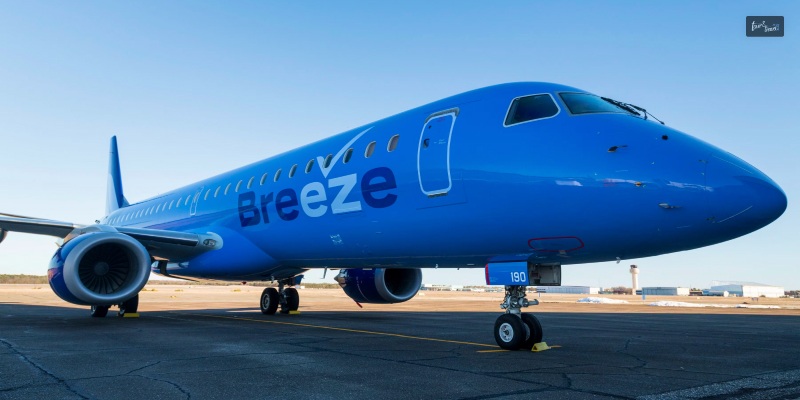
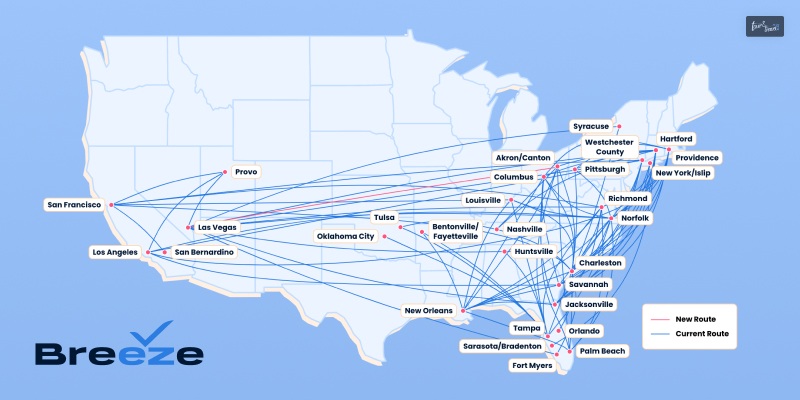
The Breeze Airways™ is a relatively new airline that merges kindness with technology. They provide non-stop services between the under-served routes across the United States of America. They work to provide travelers with affordable fares.

Keep reading till the end to find out more information on breeze airways reviews!

About Breeze Airways

Breeze Airways is a relatively novel American low-cost airline which has its headquarters in Utah’s Cottonwood Heights. The airline was originally established by David Neeleman. It was launched on 27th May of the year 2021. Its inaugural flight was from Tampa International Airport to Charleston International Airport. The Breeze Airways reviews state that they are an amazing airline.

Keep reading till the end to find out more about breeze airlines reviews!

Leadership Team

The Leadership team of Breeze Airways consists of the following people: David Neeleman as the founder and CEO; the president is Tom Doxey; the chief operations is overseen by Mike Wuerger; Natalie Atwood as the Chief People Officer; the general counsel being John Varley; the chief financial officer being Trent Porter and Lukas Johnson as the chief commercial officer.

Breeze Airways Destinations

Here are the following list of destinations where Breeze Airways extends its services to:

StateCities
AlabamaHuntsville
ArizonaPhoenix
ArkansasFayetteville
 CaliforniaLos AngelesSan BernardinoSan FranciscoSanta Ana
ConnecticutHartford


Florida
Fort MyersJacksonvilleOrlandoSarasotaTampaVero BeachWest Palm Beach
GeorgiaSavannah
KentuckyLouisville
LouisianaNew Orleans
MainePortland
NevadaLas Vegas
New YorkIslipSyracuseWhite Plains
North CarolinaRaleigh
OhioAkronCincinnati/CovingtonColumbus
OklahomaOklahoma CityTulsa
PennsylvaniaPittsburgh
Rhode IslandProvidence
South CarolinaCharleston
TennesseeNashville
TexasSan Antonio
UtahProvo
VirginiaNorfolkRichmond
West VirginiaCharleston

BreezePoints Rewards Program

Breeze Airways very recently started a rewards program for their users in the United States. The Breeze Airways reviews state that they have a points program. It is very straightforward, where one point equates to one cent. A user earns points based on a certain percentage of the cost of their base fare.

Tip: Is breeze airways safe? Their airline is completely safe to use.

Earning Of BreezePoints

The Breeze Airways awards points are based on the cash cost of the base fare and other forms of ancillary fees. A user can earn points based on the following rates:

  • For economy tickets, the fares earn 2% of the base fare.
  • For premium economy tickets, fares earn about 4% of base fare.
  • The carry-on and checked baggage purchases earn 4%. The oversized bag fees, however, do not earn points.
  • The pet-in-cabin purchases also earn 4%.
  • The seat selection purchases earn 4%.

They also effectively indicate how many points a user earns for a flight on the “Payment and Summary” screen when a user checks out.

Keep reading just a bit more to find out about breeze airways review!

Expiration Of BreezePoints

The BreezePoints generally expire 24 months – from the original issued date. There’s no way to extend the validity of these life points.

For instance, if you earn 500 points from downloading of the application of Breeze in the month of May 2021, then you must make sure to use up those 500 points by the month of May, 2023 (and this is to be done even if you earn additional BreezePoints.

Breeze Airways Reviews

Here are a few breeze airways reviews left by people who have already used their services:

Delta Platinum Medallion flyer for over 10 years, and Northwest before that. I gladly take Breeze anytime possible from Fort Myers, Sarasota, Charleston and Hartford. Planes are new, seats are spacious and comfortable, the lavatories are larger then the phone booths on most legacy carriers where if you are 6′-2″ or taller good luck hitting your head on the fuselage ceiling. Love Breeze hope they expand service and show what flying should be like.

– G. Marko

Breeze is a new airline and I imagine a lot of their flights might get shuffled around. I see a common theme from the reviews are connections that don’t have direct flights otherwise. It’s possible that this review may not stand the test of time, but I for now, I had an amazing experience. My seat reclined super far and I could not have had better sleep in a newer plane. I plan to urge my travel partners to add Breeze into their systems ASAP so I can book easier for work.

– S. Thomas

Our family of 6 flew out of Akron to Tampa. From booking flights, customer reps at both airports, aircraft condition, flight staff, comport on board to special requests-zero issues and only praise for Breeze. My wife an I travel a lot and using Breeze was the most pleasant recent experience we’ve had vs. other major airlines. Flight cancellations/delays are not specific to one airline-watch the news these days. Staff shortages are now the norm. All Airline apps have their issues in our experience. We will use Breeze as much as possible when available for our domestic destinations.

– Bryan Bryce

Breeze turned out to be a great airline. Staff was great, plane was clean and very nice, seats were roomy. Plane was on time going and just about 20 minutes late leaving Las Vegas . All of our luggage went to a different airport in Florida but they were in contact with us before we reached the terminal and stayed in contact until they had it delivered to our house by the next day. I will definitely be using Breeze in the future!

– Richard Licare

Editor’s Two Cents

Yes, in my perspective! An excellent airline is Breeze Airways. They have unbeatable low prices, and their onboard amenities are on par with those of any other airline. particularly if, like me, you spring for an Extra Legroom seat.

I had no complaints whatsoever regarding this flight, and I can’t wait to use Breeze once more. Unfortunately, given their busy schedule, I’m not sure when I’ll get the chance to do so. They should rank higher on my list of the greatest US airlines to fly with if they can expand their route network into something more substantial. It’s not a very convenient airline to fly with until that happens.

Above all, you must realize that a Breeze Airways seat with extra legroom isn’t all that superior to a regular seat. Additionally, since this airline primarily operates shorter routes, you might want to reconsider paying the extra cost for even a small amount of additional space. Maybe it’s not even worthwhile.

Pros

The E195 Extra Legroom seats have a luxurious appearance thanks to their white leather-like covering. Look-wise, it’s very similar to Virgin America First Class.

It’s an amazing bargain. The guy in front of me mentioned to his seatmate that he paid $134 for his last-minute ticket, and I paid only $124 for my seat.

The extra benefits that come with the seat, like priority boarding, complimentary snacks, a free checked bag, etc., are good. For a Southwest Airlines Business Select seat, you would still receive less for a much higher price.

Cons

If your flight is less than an hour, it’s probably not worth it to pay extra for an Extra Legroom seat. There is some additional legroom, but not much.

The actual seats are comparable to those in basic economy. No additional padding or lower back support will be provided.

The snacks offered in these first-class seats are comparable to those found in regular economy on almost all US airlines.

To Wrap It Up!

That is all for information regarding Breeze Airways and their operations. Thank you for reading up till here. I hope you found the information useful. Let me know in the comments your thoughts on the same.

Read Also:

Share on Social Media

Sagnika Sinha is a content writer who is passionate about writing travel vlogs, entertainment and celebrity articles and literature-based pieces. With a 4 years experience in teaching, she loves reading books. A procrastinator by nature, she loves travelling, listening to music, planting and gardening.

Leave a Reply

Your email address will not be published. Required fields are marked *

title-img Related

READ MORE dark tourism in India

Dark Tourism in India Exploring Shadows and Must-Visit Sites

BY  Sibashree Sep 30, 2024

India is leading the dark tourism scenario With an expected CAGR of 5.1% (2024-2034),. Dark tourism in India thrives as it is the land of history and heritage. Also, travel a few miles, and you will get to know folklore or common myths related to paranormal activities.  So, dark tourism in India takes you to places associated with human tragedy or something that raises our curiosity. Endless warfare and the rule of various dynasties have drenched its soil in blood from time immemorial. Further, superstitions and oppressive customs in various parts of the country have caused human casualties that can give you a chill down your spine.  However, dark tourism in India or any part of the world is not just about people’s fascination with the macabre or its inclination to encounter the grey zone. Many dark tourism sites like the Cellular Jail in the Andaman and Nicobar Islands or Jallianwala Bagh tell the tales of a collective past.  So, these are often popular destinations for educational tourism or excursions. With endless stories and mysteries spread in every corner, India will spoil you with the choices of dark tourism spots. Here is a list of places you just can’t miss! Dark Tourism In India: These Are The Places You Need To Visit  For me, dark tourism in India is like communicating with the past. These places and the remnants there convey a message that can trigger our moral emotions such as empathy, gratitude, disgust, or sadness. Further, these moral emotions can change our perspective about ourselves, various communities, and society.  Moreover, curiosity is present in people’s love for the occult. Some categories of dark tourism, such as ghost tourism, thana tourism, and disaster tourism, especially urge many to get into the shadows. We absolutely agree with Karan Anand, the Head of Relationships at Cox & Kings. So, which places does dark tourism in India take us to? Here is a curated list! 1. Port Blair Cellular Jail | Kala Pani | The Prison Of Death Location: Andaman and Nicobar Islands  One of the most prominent witnesses of British atrocities in the country, the Port Blair Cellular Jail tops almost all the lists of dark tourism in India.  The British government made a hell of concrete in 1906 in the form of a prison, and it was almost impossible to escape or come out of it.  Vinayak Damodar Savarkar, a freedom fighter in India, was the only person who had escaped the Port Blair Cellular Jail.  The British Raj sent convicts with the highest punishment to this jail. Once, this jail housed as many as 80000 prisoners, and among them, at least a few hundred were the freedom fighters. The freedom fighters received the “Kalapani ki Saza” to lead a life of isolation.  Constructed in the shape of a starfish, the Port Blair Cellular Jail is witness to inhuman tortures and genocides. Along with the atrocities of the British Raj, it has also seen the genocides operated by the Japanese.  When at the Cellular Jail, don’t forget to attend the “Light & Sound” show in the evening. It is like time travel, giving you goosebumps.  2. Jallianwala Bagh Location: Amritsar City, Punjab The 13th of April 1919 saw one of the worst examples of British acts of barbarity in India. Innocent people had gathered at Jallianwala Bagh in Amritsar City to peacefully protest against British rule. Jalianwala Bagh was blocked from all sides, and Brigadier-General Dyer ordered his men to open fire at these innocent and unarmed people. The 1650 rounds of firing continued for 10-15 minutes, taking the lives of more than 500 people.  Today, when you visit Jallianwala Bagh, you can see many bullet holes struck in the structures there. In 1951, a memorial was built here to pay respect to the Indian revolutionaries. Further, in 2019, the inauguration of the Yaad-e-Jallian Museum took place. The museum depicts the most authentic account of the massacre.  A century later, in 2019, an official acknowledgment of “regret” came from British Prime Minister Theresa May on the Jalianwala Bagh massacre. This substantiates how grave and gruesome the act of mass killing was.  3. Roopkund Lake  Location: Uttarakhand Located at a 5000-meter altitude, Roopkund Lake is one of the most popular trekking destinations in Uttarakhand, India.  However, you can see hundreds of human skeletons near the lake, named  the “Lake of Skull.”  Researchers have found that around 200 pilgrims died of heavy snowfall in the place in the 9th century. So, there are so many skeletons around the lake. Roopkund Lake is also known as the “Mystery Lake,” and there are stories about the pilgrims getting turned into stones or the Goddess getting angry.  However, Veena Mushrif-Tripathy, a member of the 2004 investigation and a professor of archaeology at Deccan College in Pune, mentioned that the theory of the pilgrims was reasonable as there were no traces of weapons.  4. Shaniwar Wada Location: Pune, Maharashtra Shaniwar Wada, built in 1732 by Bajirao I, is a historically significant fort and stands out for its architectural excellence. This fort was once the seat of the Maratha Peshwas. This fort became a tourist attraction after the 2015 magnum opus of Sanjay Leela Bhansali, Bajirao Mastani. However, Shaniwar Wada is a favorite dark tourism in India destination because of a popular ghost story or folklore associated with it. Narayanrao, the son of Bajirao I, was killed by his uncle Raghunathrao in 1773 in this fort. Since then, people have experienced paranormal activities in the fort. Many have claimed to have encountered the dead prince.  5. Kuldhara  Location: Jaisalmer, Rajasthan How about visiting a village abandoned by its people around 200 years ago? Kuldhara, the cursed village of Jaisalmer, was the residence of the Paliwal Brahmins. They left the village because of water scarcity and the high taxes imposed by Diwan. Another story is about Salim Singh, the local prime minister, who wanted to marry the daughter of the village head. The villagers did not agree to his demands and vacated the place overnight. They also cursed the place, saying that no one could settle there.  Further, some even associate the overnight evacuation with paranormal activities. Whatever the reason, many people have tried but failed to spend a night in this village. Today, abandoned houses, temples, and other architecture speak of excellence, craftsmanship, and intrigue. It is also a favorite destination for movie-makers and photographers today. Films like “Agent Vinod” are shot here. Moreover, the village is now a “Protected Monument of the State Archaelogy Department.”  6. Dumas Beach Location: Surat, Gujarat Dumas Beach is one of the most haunted places in Gujarat. With its black sand and paranormal activities, this beach transforms into a hellish spot as the Moon shows up.  The beach was earlier a cremation ground. The black color of the sand comes from the ashes of those corpses. While we could not see the moving orbs or any prominent paranormal activity, I felt eerie at the beach. Also, I can’t explain, but there is something very depressing about this beach. It feels like you can hear the whispers of the lost here, and someone will suddenly appear in the shadows.  There have been reports of many tourists going missing from Dumas Beach. Also, one day, local people discovered the corpse of a man at the beach. His tongue was popping out. To date, no explanation has been found behind these tragic incidents.  7. Bhangarh Fort In the Aravallis, the Bhangarh fort has the remains of a deserted marketplace, Havelis, and temples. The architectural excellence of the fort is beyond question, and it speaks of a prosperous past.  However, Bhangarh Fort is the most haunted place in India. It has stories and myths enough to scare you to bits.  Bhangarh Fort Story: 1 The Archaeological Survey of India has banned entering or staying in the Bhangarh Fort after the Sunset. According to the local people, no one entering the fort at night has been able to come out alive. The fort becomes a site of paranormal activities in the darkness.  Bhangarh Fort Story: 2 Guru Balu Nath used to meditate at this place. When Raja Madho Singh visited him with a request to build a fort here, he agreed on one condition. He asked the king to promise that the shadow of the fort would not touch him. Despite the king’s promise, it did not happen. Furious, the hermit cursed the castle and the village.  Bhangarh Fort Story: 3 No house in the area has a roof. People believe that the roofs of those houses were destroyed due to the curse of the hermit. All attempts to rebuild the roofs went in vain. Many of those roofs also collapsed, causing human casualties.  Bhangarh Fort Story: 4 (Accidents And Deaths) Three people once decided to stay in Bhangarh Fort at night. They had a powerful torch, but one group member fell into a well. The two others rescued him and took him to the nearby hospital. However, they met with a fatal accident on the way to the hospital and lost their lives.  Do you want to explore more sites that are suitable for dark tourism in India? Visit the Taj Palace Hotel in Mumbai, Union Carbide Factory, Bhopal, Sites Of Indus Valley Civilization, Savoy Hotel, Mussoorie, and Gandhi Smriti, Delhi.  Listen to hushed murmurs and the stories these places have to share to make a journey to the past!  Also read Top 10 Most Popular Paraguay Food That You Must Try. Top 13 Famous Wonders Of India That You Must Visit! [Updated 2024]

READ MORE Great Barrier Island camping tips

The Best Great Barrier Island Camping Tips: Ultimate Guide To The Best Camping Spots On Great Barrier Island, New Zealand 

BY  Sibashree Nov 17, 2025

Spotting the burrows of the black petrels at Glenfern Sanctuary and the hillside was like magic! The burrows had eggs in a cream shade with tan freckles. They almost looked like the eggs of a hen, though slightly larger. Also, some chicks were chirping their hearts out inside the burrows. They looked like those squishy dog toys. Now, spotting birds is one of the most fulfilling activities when you are camping on Great Barrier Island, New Zealand. Furthermore, if days were about hiking and spotting the birds, the nights were about indulging in the surreal beauty of the celestial bodies at this designated Dark Sky Sanctuary. Moreover, camping in Great Barrier Island is a true off-grid and remote experience. No Streetlight!  No Public Rubbish Bins!  And, No Powered Camping Sites!  It’s just you, the camping tent, and the rugged beauty of New Zealand’s Hauraki Gulf. Hi, in today’s blog, I will talk about the Great Barrier Island camping tips. Here, you will learn about the must-book DOC sites, the non-negotiable biosecurity rules, and everything else you need to plan your adventure.  Camping In Aotea, Great Barrier Island: Setting The Right Mindset For Biosecurity And Sustainability View this post on Instagram A post shared by Department of Conservation (@docgovtnz) Aotea isn't a place that just hands you its beauty. It's a place that makes you earn it. It's a true adventure that rewards you for being self-sufficient.  It's the thrill of waking up to the raucous call of a Kākā parrot, not an alarm clock. It's the magic of watching the Milky Way rise over the dunes at Medlands Beach, and the peace of having a rugged, white-sand cove all to yourself.  Also, it is one of the rare islands that serve as sanctuaries, and with 60% of its area protected by the Department of Conservation, Great Barrier Island demands the utmost care for biosecurity and the adoption of sustainable practices. So, before you want to explore the best camping spots on Great Barrier Island New Zealand, you have to build your mindset. This is your invitation to join a small community of travellers who value wild, authentic, and responsible adventure.  1. Offering The True Off-Grid Experience  The campsites of the Great Barrier Island are exactly what the island is. They are not powered, and they have basic amenities. Furthermore, open fire is not allowed in these campsites. So, you will have to bring fuel-powered or gas cookers. Furthemore, the Department of Conservation camping sites have only a specific number of tents. So, you need to make the booking well in advance. Contact the Department of Conservation (DoC) at 0800 275 362. 2. The Golden Rule: "Pack In, Pack Out”  Zero waste and recycling are important for the sustainability and environmentally friendly practices of the Great Barrier Island. However, the island does not have public rubbish bins. So, whatever you carry to the island, you will have to take it back. You must use the official Orange Council bags with stickers for trash disposal. 3. Biosecurity Is Most Important  Protecting the Kauri trees from the infamous “Kauri Dieback disease” and the island's endemic animals requires a high level of biosecurity. So, when you leave for the Great Barrier Island from Auckland, you will have to check for ants and rats. Also, when you leave Great Barrier Island, check the tents and packs for skinks. In addition, the Phytophthora Agathidicida attack on the kauri trees has been a serious concern. Stopping the soil movement is crucial to stopping the attack of this dieback disease. Soil movement can happen through pigs, footwear, and vehicles. Therefore, the Department of Conservation (DoC) cleaning stations play an important role in cleaning and removing soil from your gear and footwear before entering a kauri forest on Great Barrier Island, New Zealand. In addition, you have to stick to the marked routes when hiking through the best Great Barrier Island hiking trails. 4. How To Book The Camping Sites: DOC Vs. Private  If you are camping in any of the DoC sites, you have to make the booking online well in advance. Private camping sites can be booked directly. Here is the step-by-step guide for booking a DoC Campsite on the Great Barrier Island. First, visit the Department of Conservation site for the particular campsite. For example, let’s talk about the Akapoua Bay Campsite. On the dedicated Akapoua Bay Campsite page, you will get to know about the campsite and the fees. The fees for the Akapoua Bay Campsite are $18 per night for adults, $9 per night for children ages 5 to 17, and $0 per night for infants ages 0 to 4. In addition, you can book a campsite pass from the Department of Conservation of New Zealand. It will give you access to all the bookable and non-bookable campsites in the country. If you need any assistance in booking the campsite pass, you can avail of that at a service tax of $10. For adults, the camping pass will cost $295.00 (365 nights), and for children between 5 and 17 years, the pass will cost $147.50. Moreover, for children below 5 years, the camping pass is free. If you need any assistance regarding the booking of the 1-year campsite pass or a pass for any specific site, you can contact Whakatū/Nelson Visitor Centre at +64 3 546 9339 or email them at nelsonvc@doc.govt.nz. The Kauaeranga Visitor Centre (+64 7 867 9080/kauaerangavc@doc.govt.nz) also offers the same assistance. What Are The Best Camping Spots On Great Barrier Island New Zealand?  View this post on Instagram A post shared by Department of Conservation (@docgovtnz) Digital detox has been a trending thing these days, and if you want to truly experience that and shut all the noise in your head, the camping spots on the Great Barrier Island will be the best for you. Further, the real magic of camping on Aotea starts after sunset. You haven't lived until you've watched the Milky Way rise over your tent from the dunes at Medlands. However, along with the Medlands Beach, there are 5 other DoC campsites in the Great Barrier Island, New Zealand. Here are the details. 1. Akapoua Bay Campsite  The sheltered waters of Port FitzRoy have a beautiful camping ground, which is like a gateway to the many walking tracks of the Great Barrier Island, New Zealand. From waking up with a 60-second dash of a cold shower to exploring the paths graced by the pohutukawa trees, the Akapoua Bay Campsite will offer you a peaceful and off-the-grid experience. The maximum number of campers on this site can be 75. Moreover, the camp is hosted from Christmas to the end of January. 2. Harataonga Campsite  This campground is very close to Harataonga Beach. So, it is an ideal camping site for swimmers and snorkeling enthusiasts. It can accommodate 120 campers, and this campsite is surrounded by bush and farmland. and camping takes place between Christmas and mid-February. Harataonga is for the romantic escape. 3. Awana Beach Campsite  The Awana Beach Campsite is a surfer’s dream. It has beautiful dunes and farmlands around. It can accommodate 120 campers, and the campground remains open from Christmas to the end of January. The only problem with this camping site is mosquitoes. So, you have to carry mosquito repellents. 4. Medlands Beach Campsite  The sound of the waves at Medlands. This is the music you will listen to when you go to sleep or wake up at the Medlands Beach Campsite. Medlands is like an all-rounder. It is ideal for families and surfers alike. The campsite remains open from Christmas to mid-February, and it can accommodate 120 campers. 5. The Green Campsite  You can boat in or walk in the Green Campsite, which remains open from 1st December to the end of February. With a capacity of accommodating only 30 campers, this campsite has a rich history associated with whaling, kauri logging, and timber milling. The waters of the Whangaparapara Harbour make it an idyllic retreat, and it is also the base of the Aotea Track. 6. Whangapoua Campsite  The Whangapoua Campsite is a surfer’s paradise, and it is located on the edge of the Whangapoua estuary. It is also a favorite camping site for fishing. With an accommodation capacity of 150 people, this campsite remains open from Christmas to the end of February. However, the biggest highlight of this camping site is the views of Rakitu Island and Mount Hirakimata. A Comparison Summary Table Of The DoC Camping Sites On The Great Barrier Island, New Zealand  DoC Campsite Access Landscape Facilities Activities Dog Access Fees Akapoua Bay Campsite Campervan, Car and Caravan Coastal Boat Launching, Cooking Shelter, Cold Shower, Non-Flush Toilets for Men and Women Boating, Fishing, Walking, and Tramping No Adults: $18 per night, Children of 5-17 years, $9 per night, and Children below 5 years: free Harataonga Beach Campervan, Car and Caravan Coastal Cooking Shelter, Cold Shower, Non-Flush Toilets for Men and Women Swimming, Snorkeling, Fishing No Adults: $18 per night, Children of 5-17 years, $9 per night, and Children below 5 years: free Awana Beach Campsite Campervan, Car and Caravan Coastal Cooking Shelter, Cold Shower, Non-Flush Toilets for Men and Women Kayaking and Canoeing No Adults: $18 per night, Children of 5-17 years, $9 per night, and Children below 5 years: free Medlands Beach Campsite Campervan, Car and Caravan Coastal Boat Launching, Cooking Shelter, Cold Shower, Non-Flush Toilets for Men and Women Fishing, Surfing, Swimming No Adults: $18 per night, Children of 5-17 years, $9 per night, and Children below 5 years: free The Green Campsite Boat, Foot Coastal Cooking Shelter, Non-Flush Toilets for Men and WomenHiking, Boating No Adults: $18 per night, Children of 5-17 years, $9 per night, and Children below 5 years: free Whangapoua campsite Campervan, Car and Caravan Coastal Cooking Shelter, Cold Shower, Non-Flush Toilets for Men and WomenFishing, Surfing No Adults: $18 per night, Children of 5-17 years, $9 per night, and Children below 5 years: free  Insider Tips For Camping At DoC Campsites On The Great Barrier Island If you are camping in a caravan or campervan, remember that the gravel roads leading to the camping sites, especially the Harataonga Campsite, are steep and winding. Also, the sites are off-the-grid. Furthermore, the campervans are not usually allowed on the beaches. The Best Private & Unique Camping Options On The Great Barrier Island View this post on Instagram A post shared by Department of Conservation (@docgovtnz) 1. Great Barrier Island Campground  The Great Barrier Island Campground, spanning over an area of 12 square acres, is an ideal camping ground for access to different beach activities. The camping site is located at a distance of just 200 meters from the beach. The camping fee at the Great Barrier Island Campground is $10 per person per night. You can contact them at 021 298 8905 for booking. 2. Mickeys Place  The O'Shea Family farm in Awana houses the Mickey's Place camping ground. It is a family-friendly camping site with the following facilities. A Communal Cooking Area  Flush Toilets  Showers  Patrick, Sean, and Mickey are the hosts of this campsite, and you can contact them at 09 4290 140. 3. Stray Possum  Stary Possum in Tryphena is an ideal camping site for backpackers. If you are camping here, you will have access to the kitchen, toilets, and showers of the adjacent Stray Possum Lodge. This camping site has 14 tents, and you can call 09 4290 109 for booking details. 21 Essential Great Barrier Island Camping Tips  I promised you tips, and here they are. Do not go to Great Barrier Island without reading this checklist.  • Packing And Food  1. Bringing a Gas Cooker  Open fires are banned in the Camping sites of the Great Barrier Island. So, you will have to bring a gas burner for preparing your food. 2. Packing Your Food  Groceries are not available everywhere, and they are even very expensive. So, it is better to collect and pack the groceries you will need before leaving Auckland. 3. Bringing a Good Chilly Bin  You will need this insulated chest for storing warm and cold food items. 4. Bringing a Red-Light Torch  The island is a Dark Sky Sanctuary. A red torch lets you stargaze without ruining your night vision.  5. Bringing Cash  EFTPOS (debit) is unreliable, and many camping sites only accept cash. 6. Packing Warm Clothes  The weather can suddenly become cold, even on summer days. So, you will have to pack layered clothes.  7. Carrying Mosquito and Insect Repellent  Sandflies and mosquitoes are notorious on Great Barrier Island. So, you will have to carry an insect repellent.  • On-Site & Facilities  8. Cold Showers  Most shower stations on the Great Barrier Island are cold water shower stations. This is great as the dash of cold water in the morning, literally works as the eye opener. 9. Long-Drop Toilets  The long-drop toilets are basic and waterless. Using these pit toilets can be challenging for some campers. 10. Drinking Water  The tap water available at these sites is not ideal for drinking unless it is purified or boiled. 11. Pet-Friendly  The DoC camping grounds are not accessible to dogs. This is crucial for the protection of wildlife, the safety of the pets, and soil movement, causing the resurrection of pets and parasites affecting the local flora and fauna. 12. Booking  The slots for camping sites such as Medlands, Akapoua get sold more than 6 months in advance for the Christmas and New Year periods. So, it is indeed a year-long planning. 13. Alcohol Rules  The consumption of alcohol can be banned in various camping sites, especially during the peak seasons. So, check with the camping site authority. • Transport & Logistics  14. Having a Vehicle  Having a vehicle is a must for moving around the rugged and large Great Barrier Island. You cannot walk between the sites.  15. Renting a 4WD (or 4WD-Capable)  The roads to various campsites are challenging. The road to Harataonga, especially, is very difficult. So, you will have to rent a 4WD-capable vehicle. 16. The Motorhome/Campervan Reality  The gravel roads are narrow, steep, and winding, and if you are planning to camp in a large RV, you will definitely struggle. 17. The Dump Station Nightmare  There is only one dump station in Claris, and it is only for black water or toilet waste. You will have to carry your grey water or sink with you. 18. Freedom Camping  Freedom camping on the Great Barrier Island, New Zealand, is a fascinating idea. However, the reality is quite different. It is heavily restricted, and sticking to the DoC sites is the best option.  • Safety & Etiquette  19. Using a Paper Map  Mobile network and GPS will not function in various parts of the Great Barrier Island. So, you will have to carry a paper map. 20. Tell Someone Your Plans  If you are hiking on the Great Barrier Island, you have to keep someone informed. The wilderness and remote locations of the hiking trails can throw many challenges, despite having an easy to moderately difficult level.  21. Being a Good Neighbour  You must respect the quiet, off-grid, and nature-first vibe of the Great Barrier Island. So, you have to keep the noise level down. How To Reach The Aotea Great Barrier Island With Your Camping Gear? For campers, especially the ones with campervans, traveling by the ferry from SeaLink is the best option. It is the only mode of transportation in which passengers and cars are both transported. It is a 4.5-hour picturesque journey from Auckland. Your Great Barrier Island Camping Adventure Is Calling Camping on the Great Barrier Island, New Zealand, is the right mix of adventure, soaking in nature, and cherishing the off-the-grid living of the island. However, it’s not going to be easy with the amenities at the campsites being basic, and even the gravel roads posing challenges for the big RVs and campervans. Also, you will have to take care of biosecurity and all the sustainability guidelines to ensure that the island, a sanctuary of wildlife, does not get impacted negatively. Conservation as a pristine sanctuary is the reason why camping in the Great Barrier Island allowed us to see a billion more stars and birds than I have ever seen in my life.

READ MORE Gates of the Arctic National Park

Explore Human History And Wildlife With Backcountry Camping In Gates Of The Arctic National Park

BY  Sibashree Aug 12, 2024

Gates of the Arctic National Park is where the Brooks Range and the Tundra landscape come to life with wilderness and vivid topography. This national park is a place of topographical diversity with the coexistence of mountains, glaciers, rivers, lakes, and marshy lands.  A home to nomadic people for more than 13,000 years, the Gates of the Arctic is a prominent example of how human lives can be dependent on wilderness or nature. Many visitors love backpacking and trekking in this national park. Further, many stay in camps in the backcountry to experience its rich wildlife despite the challenges. Do you want to know why camping in the backcountry is worth the hardship? Does the national park have camping sites? Find the answers to all your questions in this guide.  Knowing The Gates Of The Arctic National Park (Why Camping Here Is A Great Experience) The Gates Of The Arctic National Park is a paradise for wilderness travelers. The intriguing land of Tundra, embraced by jungles, mountains, and rivers, makes camping in the backcountry worth all the effort.  Gates Of The Arctic Geography You can explore the arctic geography of this national park by trekking or by air. Tundra peaks and the Schwatka Mountains region of the Brooks Range ensure a humbling experience. You trek to Mount Igikpak, a glacier-carved peak with an 8,510-foot elevation. Another mountain to have glaciers in this region is Mount Arrigetch. Even backpacking and trekking to Mount Doonerak have a distinct charm, as the mountain is the quintessence of wilderness and unadulterated beauty.  Further, this national park has six designated wild rivers. Those are: Alatna River John River Kobuk River Noatak River North Fork of the Koyukuk River Tinayguk River Alatna and Noatak are great for canoeing. If you want more adventurous pursuits, you can try rafting in Nigu (to the north) and Kobuk (to the west).  Gates Of The Arctic Wildlife  The Gates of the Arctic is home to many mammals and birds. The Alaska Department of Fish and Game says,   “Forested southern foothills rise to limestone and granite peaks more than 7,000 feet high in this remote wilderness park. North of the peaks, clear water rivers run through glacier-carved valleys; and Tundra, covered with wildflowers during the brief northern summer, stretches toward the Arctic Ocean. Many of the nearly 500,000 member Western Arctic caribou herd migrate through the park each fall. Brown and black bear, wolf, Dall sheep, lynx, moose, wolverine, and red fox live here year-round. In the spring, the park hosts migratory birds from Europe, South America, Asia, tropical archipelagos, and the continental U.S.” Other animals found in this national park are grizzly bears, Dall sheep, and musk oxen. Among the birds, Tundra swans, common loons, and golden eagles are the most common.  Further, if you enjoy the playfulness of aquatic animals, watch out for graylings, trouts, sheefish and salmon.  Gates Of The Arctic And Human History  The Gates of the Arctic is a prominent place for archaeological research. The study and interpretations of the museum collections depict how people have been surviving in the Brooks Range for around 13000 years now.  Along with Inupiat, Nunamiut, and Athapaskan descendants, you will also find many non-native Alaskan people in this region. These people have always been dependent on fishing and hunting. The wilderness of the Gates of the Arctic is the foundation of their livelihood.  What Is The Best Camping Near Gates Of The Arctic National Park? With marshy lands and tussocks, Arctic Tundra has a vulnerable landscape and it is difficult to find a steady spot for setting up camps or tents. Also, the existence of wildlife in a remote location and dense vegetation make the space unsuitable for camping.  So, there is NO CAMPING SITE in the Gates of the Arctic National Park. There are designated areas in the backcountry for camping. However, you will have to strictly adhere to the rules and regulations of the national park when putting up a tent.  You must also attend the orientation program and be particular about the gear, food, and safety essentials to be carried.  With permission from the park authority and the National Park Service, you can set up tents near the Arctic Interagency Visitor Center in Coldfoot or around Wiseman and Bettles communities.  However, while camping in the backcountry, you will have to keep the following factors in mind.  Be respectful to the local communities like the Koyukon Athabascan Indians or Nunamiut. Their livelihood depends on the wilderness.  There are no provisions for running water, a dump station, or restrooms. Your phone network will be unavailable in this location. You have to carry all your trash back as you leave the camping site. You cannot adulterate the pristineness of the location.  If you have plans for camping in the backcountry near the Gates of the Arctic, summer is the best season. The temperature is a little moderate on these days, and sunnier days make all outdoor pursuits in the park easier for you.  Did You Know?  The Gates of the Arctic National Park is the second-largest national park in the USA. It stretches over 13,000 square miles. You can see aurora borealis from this park if you visit between November and March.  July and August are the best months to visit Gates of the Arctic National Park for hiking and backpacking.  Bob Marshall, a wilderness advocate, named this national park “Gates of the Arctic.” Final Words  Unlike popular national parks like the Biscayne National Park or the Kenai Fjords National Park, the Gates of the Arctic National Park does not have many visitors yearly. In 2023, only 11,045 tourists flocked to this place. (Source) With a diversity in topography and wildlife and an association with human history, this park has much to explore. However, the extreme trekking conditions and wilderness make it far from an easy excursion or trekking experience. Despite the absence of campgrounds in this park, you can camp in the backcountry at the designated spots in the fields. However, only an experienced backpacker should try it with proper orientation and extra safety measures. Have you ever been to this wild and intriguing national park? Do you have any camping experience in the backcountry? Don’t forget to share your experience with us!  Gates Of The Arctic National Park FAQs  Can You Camp In The Arctic National Wildlife Refuge? Only backcountry camping is possible in the Arctic National Wildlife Refuge. The absence of roads, villages, or facilities makes this area unsuitable for having designated campsites. Backpacking and hiking are the best ways to explore this vast landscape with rich wildlife and geographical interests.  Can You Stay In Gates Of The Arctic National Park? You can stay or try backcountry camping near the Gates of the Arctic National Park. Undefined terrains, wilderness, and a lack of modern amenities make it risky to put up camps in the national park. Even to camp in the backcountry, you will need the highest outdoor survival skills. The arctic ecosystem, topography, and weather conditions are different, and if you are confident enough to stay in the backcountry, plan in advance and get in touch with the Park and Preserve authorities for updates and advisories.  How Much Does It Cost To Visit The Gates Of The Arctic National Park? You don’t have to pay entry fees to visit the Gates of The Arctic National Park. However, you must attend the backcountry orientation program at any of the visitor centers.  In this way, the Gates of The Arctic National Park is different from other national parks as most of them demand an entrance fee.  How Difficult Is It To Get To The Gates Of The Arctic National Park? The Gates of the Arctic is a wilderness park. So, as you enter the park, hiking is the best way to explore. Remember, it is home to the Schwatka Mountains region of the Brooks Range and the highest peak here is Mount Igikpak with an 8,510-foot elevation.  So, exploring the national park is not going to be a cakewalk. A lack of established trails further makes hiking difficult.  Further, there are six designated rivers, including Koyukuk and Dietrich, in this national park. So, you will have to pass through multiple meandering river crossings. The water levels of these rivers keep fluctuating throughout the season. They are furious throughout the spring season. Tussocks, marshy lands and dense vegetation are other hurdles to your fast movement while trekking.  Do you want to visit the backcountry? You can take a bush plane operated by permitted pilots with knowledge of the region.  What Is Special About Gates Of The Arctic? The Gates of the Arctic is special because of its geographical uniqueness, rich wildlife, and significance in human history. The glacier-carved valleys, rivers, and ancient trails make the Gates Of The Arctic a favorite destination for backpacking and hiking. Thanks to its geographical typicalness, you will meet many animals and birds. The adorable grizzly bears will be seen feeding, and the musk oxen are another unique animal you must watch out for. If you are a birder, you will love watching the golden eagles, Tundra swans, or common loons.  Near the Nigu River or throughout the park, you will find stone fences and camping rings. These are a testament to how Inland Eskimos or Nunamiut have lived in this region for thousands of years. They survived on fishing and hunting.  In addition, as I pen this guide, I must tell you that the Gates Of The Arctic National Park is going to celebrate its 45th anniversary of designation next year. First, it became a national monument on 1st December 1978. In 1980, it became a national park and preserve. Also read Italy: Is Florence flat or hilly? Ultimate Guide to Your Next Family Vacation in Israel. The Glaciers of Wrangell-St. Elias National Park: Experience The Magnificence Of Nature.