


What Is Campbell Island/ Motu Ihupuku Known For? Tour Of An Isolated Sanctuary In New Zealand

Jun 30, 2025

Last Updated on: Jul 10, 2025

Travel Guides

Campbell Island, a UNESCO World Heritage Site, is home to sea lions and many other species of endangered animals and birds. 

However, the Department of Conservation (DOC) has identified that growing temperatures in this region and increased rainfall are posing threats to the rich ecosystem here. 

“Extensive rainfall events and slips will potentially have the biggest impact on nesting birds. We’d also like to find out more about how sea level rise and storm surges will affect sea lions.”

– Drew Bingham, Principal Science Advisor, the Department of Conservation. 

It’s indeed a grave concern, as it is home to many marine and terrestrial animals and is even crucial for global environmental conservation. 

Also, it has fascinating stories of history and human intervention to share. So, the changing weather conditions of the island put a lot at stake. 

Nevertheless, Campbell Island is a popular destination for tourists seeking adventures in the subantarctic zones. Hundreds of people visit this destination every year. 

And in this Tour and Travel Blog, we will discuss what’s so special in Campbell Island, a fascinating story of shark attack and survival, and everything else you need to know. 

What Is The Best Time To Visit Campbell Island? 

What Is The Best Time To Visit Campbell Island 

One of the best Subantarctic Islands of New Zealand, Campbell Island, is ideal for a visit from November to March. These months make the island ideal for traveling because of:

  • Long daylight hours
  • Mild weather and calmer sea
  • Ideal for cruising along the coastline
  • Great for spotting wildlife such as seals, penguins, and albatrosses

Moreover, the temperature in these months ranges between 5 and 12 degrees Celsius. 

Do you want to know more about the weather of Campbell Island throughout the year? Have a look at the table below.

MonthsHighest TemperatureLowest TemperatureDays of Rainfall
January13616
February12714
March11617
April10518
May9420
June7319
July7218
August6419
September7318
October8420
November9517
December11616

What Is Campbell Island Famous For? Know Why It Is Worth The Adventurous Journey

Captain Frederick Hasselburgh discovered Campbell Island in 1810. With time, it became an important location for scientific observation, whaling, and sealing. 

It was also used as a coastwatching station after World War II. With time, Campbell Island became a UNESCO World Heritage Site, and today, it has emerged as a popular subantarctic region for the following reasons. 

1. Dramatic Geographical Features 

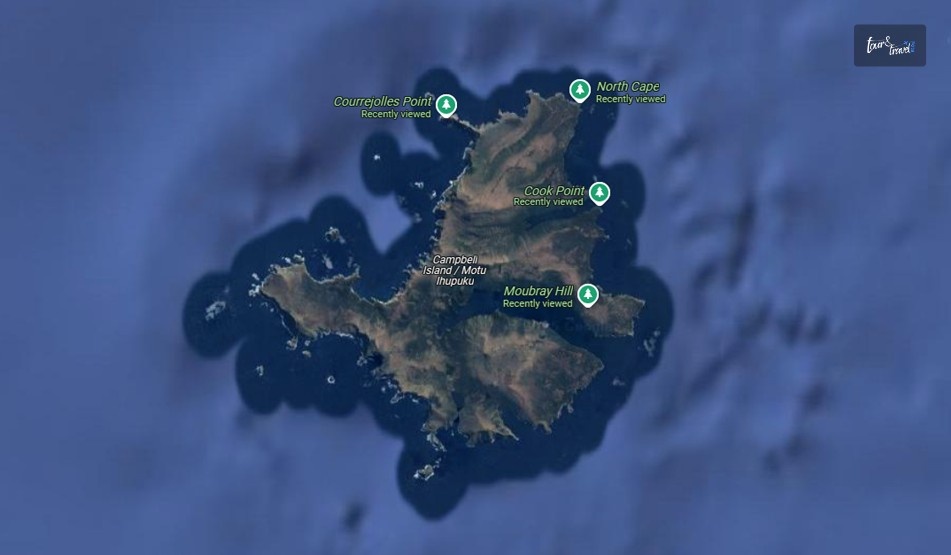
  • Area: 113 Square Kilometers
  • Population: Uninhabited
  • Shape: Oval
  • Highest Point: Mount Honey (568 Meters)

The uninhabited Campbell Island features deep coastal bays, rocky outcrops, and steep cliffs. 

Further, thanks to its volcanic origin and the cooling and solidification of lava over a million years, this island has geographical features such as:

  • Peat bogs
  • Freshwater lakes 
  • Volcanic craters

Furthermore, due to its volcanic origin, this island has become home to many unique ecosystems uncommon in the subantarctic region. 

2. Campbell Island And Its Rich Natural Heritage

Campbell Island has many endangered species of plants and animals. They have contributed to the biodiversity of the island. 

Campbell Island cabbage (Azorella selago) is the most prominent name when we talk about the diversity of flora on the island. It worked as a source of food for explorers and settlers. 

Among the endangered fauna here, the Campbell Island teal birds are the most prominent. Other popular species are the yellow-eyed penguin, petrels, and albatross. 

Furthermore, elephant seals, dolphins, and various species of fish here speak volumes about the rich marine life. 

3. Conservation And Restoration Efforts In Campbell Island

The New Zealand government established the Campbell Island Nature Reserve in 2001. It banned human habitation and various development works here. 

Also, the Department of Conservation has played a critical role in protecting the delicate ecosystem of the island. 

In this context, the rat eradication program from 2001-2003 has been a milestone achievement. 

With all these conservation efforts, the island now has a growing bird population. Also, many other islands have taken Campbell Island as the benchmark for ecological restoration and development.

What Are The Things To Do In Campbell Island? 

A close interaction with nature and adventurous activities have been the best things to do on Campbell Island. 

You can also enjoy a cruise tour along the coastline. 

Things to Do in Campbell IslandWhat’s So Special about Them?
Birdwatching• Southern royal albatrosses (Campbell Island is home to the largest breeding population.)
• Black-browed albatrosses
• Grey-headed albatrosses
• Endangered bird species such as Campbell snipe and Campbell teal
• Terns
• Pipits
• Giant petrels
A visit to the Campbell Island National ParkYou will love the tree ferns and orchids here. 
Zodiac cruisingCruise along the coastline to spot elephant seals and various bird species. 
Hiking to Mount HoneyOnce you reach the mountain top, you will love the panoramic view of the island. 
Hiking to Northwest BayIt is a 16-km hike to explore the natural landscape of the island. 
Col Lyall BoardwalkYou will spot Southern Royal Albatrosses as you walk the boardwalk. 

Campbell Island Shark Attack: What Happened In 1992?

Mike Fraser, a meteorologist from New Zealand, encountered a great white shark attack while snorkeling near Campbell Island. 

The shark cut off his right forearm, and his left arm was also severely injured.

After a dramatic rescue mission and a 2,000-kilometer helicopter flight, Mike Fraser was saved. 

He then underwent prolonged medical treatment and got prosthetic arms. It’s great that he survived.

Campbell Island: Frequently Asked Questions (FAQs)

Here are the frequently asked questions and answers about Campbell Island. 

1. Can You Go To Campbell Island?

Yes, you can go to Campbell Island. However, due to the remote location of this UNESCO World Heritage Site, you have to visit the island on a guided expedition cruise. 
You can also visit the island on a helicopter. 

2. How Many People Live On Campbell Island?

There is no permanent human population on Campbell Island. 

3. Is Campbell Island Predator Free?

Yes, Campbell Island is predator-free. It had the largest rat eradication movement from 2001 to 2003. 
In May 2003, the Department of Conservation declared Campbell Island predator-free. 

4. Does It Snow On Campbell Island?

Yes, the high peaks of Campbell Island, with Mount Honey being the highest, experience snowfall during spring and winter. 

Read Also:

Share on Social Media

Sibashree is a travel, culture, and leisure writer who has been writing since the age of 12 and professionally since 2014. With more than a decade of travel writing experience and journeys across India and several parts of the world, she brings a deeply personal and thoughtful perspective to her work. A student of English Literature and Mass Communication, Sibashree has always viewed travel as more than movement — for her, it has been a way of understanding people, cultures, and herself. Her passion for spiritual exploration has also led her to many unusual and meaningful destinations over the years. Outside of writing, Sibashree enjoys watching European cinema, reading about global politics, and reflecting on the stories hidden within everyday places.

Leave a Reply

Your email address will not be published. Required fields are marked *

title-img Related

READ MORE Beaches

Beaches Beyond The Sand: The Wildest Coastal Secrets On Earth

BY  Sibashree Sep 25, 2023

Beaches are among nature's greatest wonders, drawing millions of visitors each year. With their scenic vistas and the soothing sounds of waves, beaches offer a sense of calm and tranquillity. However, beneath their beauty lie many mysteries and surprises. From the endless motion of tides and currents to the minute particles that make up the sand, beaches hold remarkable secrets. In this article, we explore some of the most fascinating yet unknown facts about beaches that will leave you astonished. The Sand Shifting Spectacle Have you ever noticed how the arrangement of sand on the beach appears to change with every visit? This is no illusion - and is always on the move. Prevailing winds and waves continuously transport sand particles up and down the coast. It's estimated that over 100 million tons of sand shift globally every year! More perplexing, sand migrates in large belts called sand shadows that stretch for miles underwater. Intricate currents carry the grains long distances before depositing them in new locations. So the sand formations we see today were not here years ago, showing the dynamic nature of beaches. The Micro Marvels Up close, each grain of sand is a minute miracle. Under a microscope, their shapes - rounded, angular, or elongated - tell stories of the forces that wore them down from rocks and polished their edges during travel. More incredible than their structures are their constituent elements. Most beach sands contain over 90% silica in the form of quartz. But other common yet tiny components include corundum (a mineral harder than quartz), zircon, rutile, and monazite. These durable crystals withstand erosion to eventually materialise as multicoloured specks within the ordinary sand. Such compositional diversity packed into one scoop of sand bursts our perception of its simplicity. You can learn more about beaches by following Westhampton Beach news. The Invisible Border Control: Beaches What truly demarcates where the land ends and sea begins is another enigma, revealed only at high or low tides. Known as the shoreline, this boundary between water and Earth is governed by complex tidal patterns. Differences in tidal ranges around the globe also make for head-scratching sightings. In places like the Bay of Fundy in Canada, tides vary by over 16 meters - high enough to submerge harbours! On the contrary, tides along the Atlantic coast of the USA are a mild 1-2 meters. Consequently, defining the coast is tricky business, because the ocean's fluid occupation and abandonment of shore spaces change throughout each day. The Living Beach Combers Lurking within the beach sands is a whole unseen universe teeming with critters. A single handful contains multitudes of crabs, clams, snails, worms, and more - true beachcombers that sift nutrients from the grains. Some, like the mole crab, have adapted shovels and gills for life underground. Others, like sand dollars, appear to glide gently over the ocean floor but are, in fact, filtration agents. Their collective work supports a delicate food web that cascades to shorebirds, fish, and more. Together, these coastal colonisers form an integral living fabric woven into the very landscape we walk upon, often unnoticed. The Secret Of White Sand Beaches Most travellers envision picturesque white sand beaches when dreaming of tropical paradise destinations. However, few realise that the white sand that creates such idyllic shores is far from a natural geological phenomenon. Its genesis can be attributed to an unlikely source - the excrement of colourful reef inhabitants known as parrotfish. Parrotfish play a vital role in marine ecosystems through their prolific feeding habits. With their specialized beak-like jaws adapted for grazing coral structures, they consume vast amounts of dead coral rubble. However, their digestive systems cannot break down the indigestible coral skeleton remnants. As a result, kilograms of crushed coral limestone are processed and expelled from the fish in the form of fine white granules. To Wrap Up These are but a few astonishing truths behind our literal and metaphorical shorelines. Indeed, beaches hold more puzzles and poetry than first meets the eye. Their ever-shifting sands, microscopic marvels, cryptic borders, and thriving undercover life form a picture far richer than their placid outward appearance projects. The more we learn to look, the deeper the discoveries and wonder we gain from nature’s simple yet most complex creations – the beach. Read Also: Best Beaches In Costa Rica For Family Vacation A Guide To Traverse City Beach – 10 Best Beaches To Explore These Are The Closest Beaches To Ohio That You Need To Go For A Dreamy Vacation!

READ MORE card-img

Things to Do in Greenville, SC For Adults: Paranormal Walk And Food Tourism

BY  Sibashree Nov 20, 2024

South Carolina had its first “South Carolina Travel and Tourism Week” in 2024. Gov. Henry McMaster announced the 19th to 25th May as the South Carolina Travel and Tourism Week, and it celebrated the role of tourism in the economic growth of the county.  The governor further announced how the state has achieved an economic impact of $29 billion. In this context, we must tell you that Greenville has been one of the most important counties for the growth of tourism in the state.  Also, the US News and World Report has included Greenville in the top 5 places to live in the US in 2024-25. In addition, the county is experiencing a major boom in the real estate sector.  So, along with exciting things to do in Greenville, SC, the best infrastructure and amenities make the county one of the travel highlights of the season in the USA. There are many things to do in Greenville, with history tours, culinary tourism, paranormal walks, etc. However, at Tour and Travel, we have handpicked three activities most suitable for adults.  Let’s talk about these things in detail.  Paranormal Walk: Unique Things To Do In Greenville, SC https://www.instagram.com/p/CjgOxyVp_ik/?img_index=1 Greenville Ghost Tours Contact Number: +1 864-475-7705 Have you ever been on a ghost tour? Paranormal investigator Gabe Mathews is a certified professional, and he will take you on a ghost walk to downtown Greenville. Greenville Ghost Tours LLC, the tour business conducting this walk, is recognized by the City of Greenville. Also, these ghost tours are quite popular in the local community.  Did you know that many participants in these tours have identified paranormal activities and presence in the forms of orbs, EMF readings and EVPs? Further, the program primarily has two activities. Walking Tour of Greenville Downtown for 90 Minutes 30 Minutes of Paranormal Investigation at Springwood Cemetery Moreover, these ghost tours are kid-friendly. Still, the stories of gore, deaths, and ghosts can be intimidating for them. So, parental discretion is necessary when kids participate in these tours. Food Tourism: One Of The Most Exciting Things To Do In Greenville, SC The year 2024 has been promising for the food tourism scenario in Greenville, SC. The Greenville's History & Culinary tours and Gather GVL have been honored at the “USA Today 10Best Readers' Choice Awards.” Gather GVL features at number 5 on the list of best food halls. On the other hand, “Greenville History & Culinary Tours” finds the 8th place on the list of “Best Food Tours” in the country.  So, exploring the food scenario of Greenville, SC, will be one of the most exciting things to do in Greenville. Let’s have a brief idea about Gather GVL and Greenville History & Culinary Tours at first and then we will move into some of the best eateries in Greenville.  1. Gather GVL, Greenville https://www.instagram.com/p/CtwoxLcOvl8/ Contact Number: +1 864-501-5008 Gather GVL, a food hall, is like a uniting ground. People of all ages visit Gather GVL, and the plenty of sitting options add to its laid-back charm. Further, it’s a pet-friendly food hall where the entire family can enjoy their favorite meal with their furry friends.  You will find more than ten food and beverage vendors in Gather GVL. The place is a vibrant collection of shipping containers, bringing food lovers together.  The most famous delicacies available here are lobster rolls, sushi and burgers.  2. Greenville History & Culinary Tours https://www.instagram.com/p/C6MZmCZsLCo/ The culinary tours in Greenville are great for the connoisseurs. As the most exciting things to do in Greenville, SC, these tours cater to people with different tastebuds.  If you want to try the edgiest dishes from the leading chefs here, you must join the "At the Chef's Table" tour. Further, you can go for a “BBQ Trail Tour” or try farm-fresh meat delicacies in the countryside.  Do you want to experience the food scene of the best eateries and drinking places in Greenville? Check out the details.  Farm Fresh FastPhone Number: (864) 518-1978Specialty: Bison Burger, Crispy Thai Pork Wrap, Korean BBQ ChickenFork and PloughPhone Number: +1 864-609-4249Specialty: Fish & Chips, Blackened Salmon Caesar SaladBetween The TreesPhone Number: +1 864-603-1630Specialty: Blueberry Pearl Sugar Muffins, Lobster Croquettes, Trio - A Brick Oven CafePhone Number: +1 864-467-1000Specialty: Bruschetta, Baked Caprese, Wood Fired WingsFireforge Crafted BeerPhone Number: +1 864-300-4809Abanico Tapas BarPhone Number: +1 864-509-6834 Meat, smoky flavors, and sweet potatoes rule the food scenario in Greenville, SC. I am a great fan of sweet potato crunch. It has the perfect balance of sweet and savory.  Bucky’s Bar-B-Q is one of the best places to have sweet potato crunch, and you can contact them at +1 864-329-0054.  Visiting The Museums Of Greenville, SC Visiting the museums and historic sites is one of the best things to do in Greenville, SC. The Upcountry History Museum is a great place to unearth the stories of the county and the human lives here.  So, let’s have a detailed idea about what awaits at this celebrated Greenville museum. Upcountry History Museum https://www.instagram.com/p/C767nDEuprc/?hl=en Phone Number: +1 864-467-3100 Operating Hours: Sunday: 1 PM to 5 PM, Tuesday to Saturday: 10 AM to 5 PM Located at Heritage Green in downtown Greenville, SC, this museum has interactive displays. Also, the semi-permanent exhibits and dynamic programs make the museum fun for kids and adults.  “Admission: Adults $12Seniors (65 and up) And College Students With ID $11Children Between 3-18: $9Children Up to 2: Free”The museum remains closed on Monday.  Upcountry History Museum: Gearing Up For The Christmas Celebration  https://www.instagram.com/p/C04dNrROPct/?hl=en&img_index=1 With the nip in the air, we are heading towards the biggest celebration in the world. The Upcountry History Museum is also gearing up for the festive season with “White Christmas: The Exhibition.” This exhibition will start on 16th November and end on 2nd February 2025. This exhibition is a chance to travel back and celebrate the famous 1941 song “White Christmas.” Bing Crosby gave the first live performance of White Christmas on the radio 17 days after the Japanese attack on Pearl Harbor. In 1942, the song was featured in the movie Holiday Inn, and it won the Academy Award for “Best Original Song.” Further, in 1954, a full-fledged movie on White Christmas was made in Berlin. That year, it became the highest-grossing movie.  Nevertheless, the exhibits at the White Christmas exhibition at Upcountry History Museum will be: Movie Costumes by Edith Head Sheet music Movie props Replica backdrops, etc. So, visiting the Upcountry History Museum will be one of the best things to do in Greenville, SC, this Christmas.  Also read Top 13+ Famous Wonders Of India That You Must Visit. Top 10 Most Popular Paraguay Food That You Must Try. Top Tips For Motorbike Rental In Phuket – A Guide To Exploring The Island On Two Wheels.

READ MORE card-img

Whales And Sea Lions! Exploring Wildlife At Kenai Fjords National Park 

BY  Sibashree Jul 29, 2024

Kenai Fjords National Park is a place rich in biodiversity. Like the Dry Tortugas National Park, it also harbors a diverse marine ecosystem and a wide range of birds.   Further, it is an elusive land of glaciers, icy lands, rocky mountains, and green canopies. It is also the park where you can take part in activities like hunting, fishing, petting at Exit Glacier, boating, and kayaking. However, the most fascinating activity to do here is watching wildlife.   Here, I will be your guide in finding out how the wilderness comes alive at Kenai Fjords National Park.   Exploring Kenai Fjords National Park Wildlife   The Kenai Fjords National Park has one of the highest footfalls among the national parks of America. In 2023, 387,525 people visited this National Park thanks to its wildlife and the most dramatic landscape with glaciers, mountains, ocean, and valleys. (Source)   Further, the Alaska Department of Fish and Game explains why and how the geographical features of the National Park make it rich in wildlife and biodiversity. Also, about the habitat, it says,   “The park contains shallow bays and estuaries, and deeper marine habitats. Regional currents drive nutrients into outer Resurrection Bay, making that area especially rich in fish and an early location for spring bloom of plankton and algae. Cliffs and rocky shores create nesting sites for birds and haul-out areas for marine mammals.”  Do you want a slice of wildlife at this park where whales and mountain goats cohabit in the most amazing way? So, let’s explore.   However, if you are more interested in amphibians and reptiles, the Everglades National Park will be your go-to destination.   Whales At Kenai Fjords National Park Wildlife  Watching the whales is one of the best activities to do at Kenai Fjords National Park. So, you can see the whales here throughout the year.   Also, the table below presents a sneak peek into the different species of whales and their best viewing time.  Type of Whale  Best Viewing Time  Humpback Whale Mid-May to August Orca or Killer Whale Mid-May to June Gray Whale Mid-April to May Fin Whale May to September  You can easily spot whales on the surface of the water. Also, as they spout, fluke dive, breach, or spyhop in the water, you will get to know about their playful nature.   The National Oceanic and Atmospheric Administration (NOAA) ensures that cruising companies and visitors maintain respectful behavior when they are on whale-watching trips.   Other Sea Mammals At Kenai Fjords  Kenai Fjords is home to many sea mammals along with various species of whales. Don’t forget to catch a glimpse of Dall’s Porpoises, harbor seals, sea otters, and sea lions.   Dall’s Porpoise  Dall’s Porpoises look like orcas but are faster. They eat lanternfish, octopus, and squid.   Harbor Seals  You will find these cute sea mammals resting around active glaciers. They also stay on ice floes. They love to eat shellfish and fish.   Sea Otters  You will spot the playful sea otters swimming on their back in the water. They love fish, crabs, sea urchins, and squids.  They are furry, and the funniest thing is to see them using their bellies as tables. For sure, you will want to grab a soft toy version of these sea mammals.   Stellar Sea Lions   Steller sea lions are an endangered species, and they stay on the icy shore of the sea. They have reddish fur, and they are 6-8 in height.  These mammals survive on fish and mollusks.   Birds At Kenai Fjords  From the NPS archive, a historical document on Kenai Fjords National Park says,   “Kenai Fjords provides habitat for at least 191 species of birds. The black oystercatcher spends most of its time feeding in the rich intertidal zone. Tufted and horned puffins nest in rock crevices along the coast. Bald eagles patrol the waters in search of salmon and other fish.”   It’s time we meet the birds and learn briefly about them.   Horned Puffins  These beautiful birds have unique black horn-like markings over their eyes. The touch of red on the tip of their beaks further makes them easily distinguishable.  You must visit the Kenai Fjords from mid-May to August to catch a glimpse of these birds.   Bald Eagles   You may catch bald eagles preying on fish and waterfowl. They get their name from their white-feathered head.   Peregrine Falcons  Known for excellent hunting abilities, peregrine falcons have a vibrant touch of yellow around their eyes and on their beaks.   Along with these birds, you can also see birds like the common murre, black-legged kittiwake, and cormorant at Kenai Fjords National Park.   Land Mammals At Kenai Fjords  Mountain goats and brown and black bears are common at Kenai Fjords. The mountain goats have split hooves for a better grip on the mountains and on the snowy land.   Further, many people visit the Kenai Fjords only to meet black and brown bears. These bears love eating fish, berries, and other vegetation.   The Kenai Fjords National Park Is Changing Continuously  Global temperature changes and glacier melting have challenged the vast wilderness at Kenai Fjords National Park. Further, the movements of crustal plates beneath the Earth's surface make the landscape and its ecosystem volatile.   So, there is nothing permanent about the animals found in this park, which stretches over 1000 square miles of water and land. Also, it is impossible to know about all the species inhabiting this area thanks to the geographical nature and dramatic differences in weather conditions across seasons.  Nevertheless, as you take a tour of this rich national park on a cruise or explore its various parks, make sure to abide by the safety norms. Respect nature and its inhabitants!  This is the best way to experience the natural abundance the park is known for.   Do you have plans to visit the Kenai Fjords anytime soon? What do you find the most amazing thing about it? Don’t forget to share your ideas with us!   Wildlife At Kenai Fjords National Park: FAQs  What Animals Can You See In Kenai Fjords National Park?  Kenai Fjords wilderness is vivid. As you take a cruise trip or explore the National Park, you will notice the seals first, comfortable on the floating ice in the sea. Further, the male and female sea lions make their presence felt on the icy seashore.   Kenai Fjords is home to many notable species of marine and land mammals. Also, you will find various birds here.  Whales, sea otters, Dall's porpoise, gray wolves, minks, and mountain goats are common animals here.   Birds such as puffins, bald eagles, and peregrine falcons will greet you as you visit this beautiful national park.   Can You See Bears In Kenai Fjords National Park?   Located at the edge of the Kenai Peninsula, Kenai Fjords has black and brown bears. Black bears are easily spotted, and they are more timid than brown bears.   The National Park Service has a set of safety guidelines, including not attracting bears with food and garbage and avoiding their personal space. Follow the norms to make your interaction with the bears delightful.   Can You See Northern Lights In Kenai Fjords National Park?   Yes, you can see the Northern Lights in Kenai Fjords National Park during the autumn and winter seasons. The night sky of Kenai Fjords looks like the most amazing mélange of green, purple, blue, and green shades.   If you are a religious soul, you must visit the Virgin Mary Russian Orthodox Church with the Northern Lights dancing in the sky. It’s the most divine experience.   For a spiritual journey, watch the lights over the Seward boat harbor.   When To See Whales In Kenai Fjords National Park?  You can see whales in Kenai Fjords National Park throughout the year. However, if you want to watch a specific species of whale among the varieties seen here, you must plan a trip according to the right season.   The best time for watching gray whales is March and April. In these months, gray whales migrate to this part of the world through the Gulf of Alaska.  Do you want to watch the humpback whales? You can see them from May to October. They flock in large numbers from Mexico and Hawaii. They live in the water here, as they can find nutrient-rich food for them throughout the summer.   In addition, orcas, or killer whales, are seen in mid-May and June. Moreover, if you are lucky enough, you will also see minke whales and fin whales in this area.   What Is Special About Kenai Fjords?   Your Alaska trip is incomplete without a visit to Kenai Fjords National Park, where you can see the best of the marine world.Also, it is home to Northwestern, Aialik, and Holgate tidewater glaciers. Glaciers move relentlessly into the sea.   Further, it is the most picturesque landscape where mountains, an ancient icefield, valleys, cascading falls, forest canopies, and the great Pacific Ocean coexist. Thanks to this coexistence, Kenai Fjords National Park is rich in biodiversity. You will find humpback whales, sea otters, mountain goats, and many species of birds in the National Park.   Designated as a National Park in 1980, Kenai Fjords National Park also protects various archeological and historical remains. The park has many prehistoric, protohistoric, and historic sites.   Archeologists still conduct surveys in this park to learn more about the human way of living and why it has changed over the years.   Also read Things To Do In Rocky Mountains National Park. Top 10 National Parks In Oregon That You Need To Explore In 2023! What Is The Best Time To Visit Glacier National Park? Find The Answer Here!