

Why Is Bentota Beach, Sri Lanka, Famous? Know About Bentota Beach, River Safari, And More

With the One Love Reggae Festival returning to Bentota Beach, Sri Lanka is now preparing to be a vibrant cultural stage for music lovers from around the world. 

The event is slated from 7th to 9th August, and with a laid-back coastal atmosphere, will function as a major tourism catalyst for Bentota. 

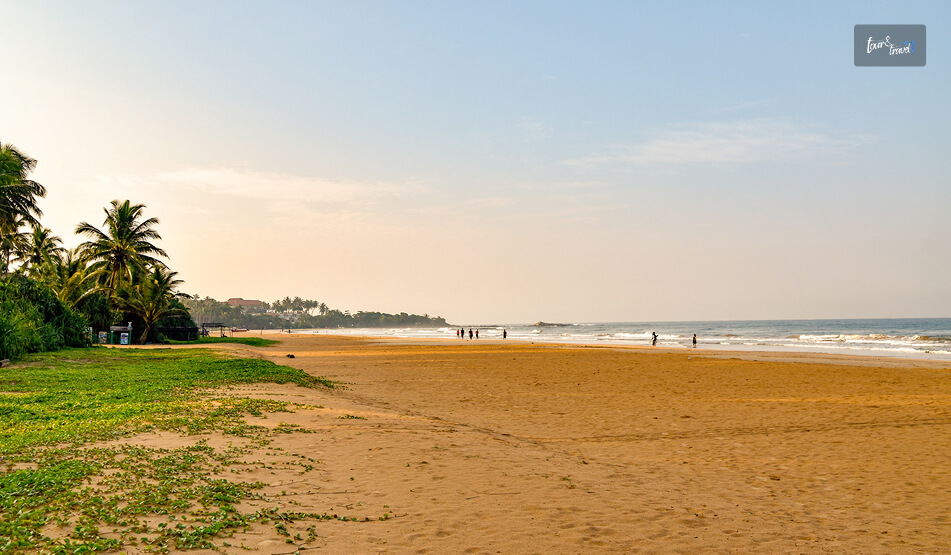
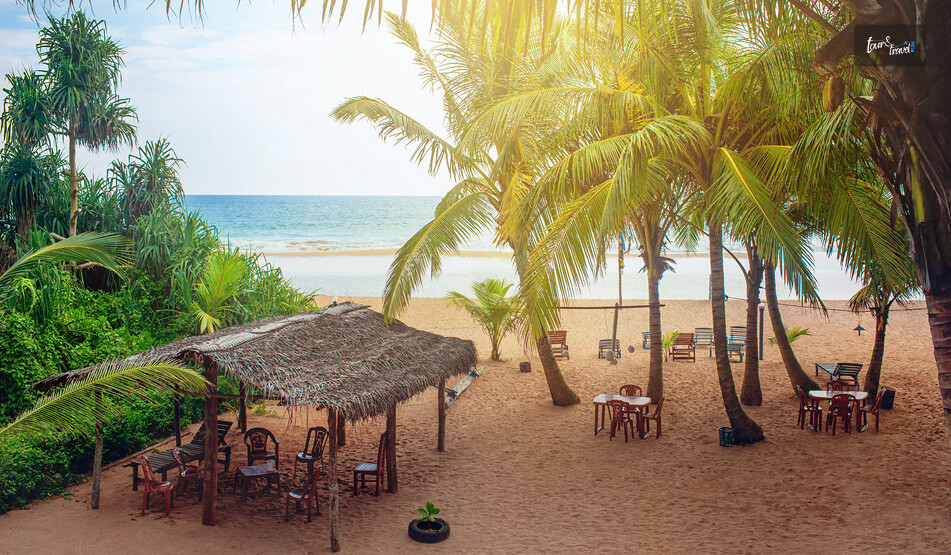
Nevertheless, Bentota Beach has always been a popular, idyllic destination in Sri Lanka due to the calm waves of the Indian Ocean and soft golden sands. 

Furthermore, it is a gateway to the Sinharaja Forest Reserve, a UNESCO World Heritage Site, and another UNESCO World Heritage Site, Galle Fort

However, for me, the most striking thing about Bentota was the safari on the Bentota Ganga. With dramatic landscapes and surrealism awaiting you in every nook, this was one of the highlights of my trip to Sri Lanka

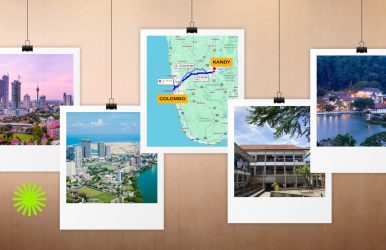
Also, very close to Colombo, just a 2-hour drive away, this beach stands out even if tourists show more interest in popular variations such as Tangalle Beach and Mirissa Beach

Here is more about why Bentota Beach is worth visiting and what the top attractions are. 

What Are The Things To Do In Bentota? 

The heavenly sunset views of Bentota Beach, the most anticipated boat safari on Bentota Ganga, and a relaxing experience in the Ayurveda Herbal and Spice Garden!

Furthermore, if you want an adrenaline rush, you can take part in activities such as parasailing, banana boating, jet skiing, and more!

1. Water Sports At Bentota Beach

Water Sports At Bentota Beach

Bentota has many beaches, such as the Ventura Beach or the Moragalla Beach, where the ocean meets the Bentota Ganga River. 

However, together, they are known as the Bentota Beach, and together they look like a long stretch of fine white sand. 

A specific stretch of sand is parallel to Bentota Lagoon, which is more commonly called the Bentota Ganga. 

It is known as the Paradise Island, looking like a narrow and long peninsula stretching out into the ocean. 

Also, it is ideal for the following watersports. 

  • Windsurfing
  • Waterskiing
  • Diving
  • Canoeing
  • Snorkeling
  • Fishing

Moreover, centers such as Diyakawa Water Sports and Sunshine Water Sports Center help with the best gear, training, and guidance. 

2. Visiting The Kosgoda Sea Turtle Conservation Project

Visiting The Kosgoda Sea Turtle Conservation Project

I mentioned the Kosgoda Sea Turtle Conservation Project when visiting Kalutara. 

However, it is way closer to Bentota, and it is situated at a distance of just 9 km. So, it is just a road journey of 9 km or 15 minutes south by road. 

It remains open from 8:30 AM to 6:30 PM, and the ticket price is LKR 500 for locals and LKR 1000 for foreigners. 

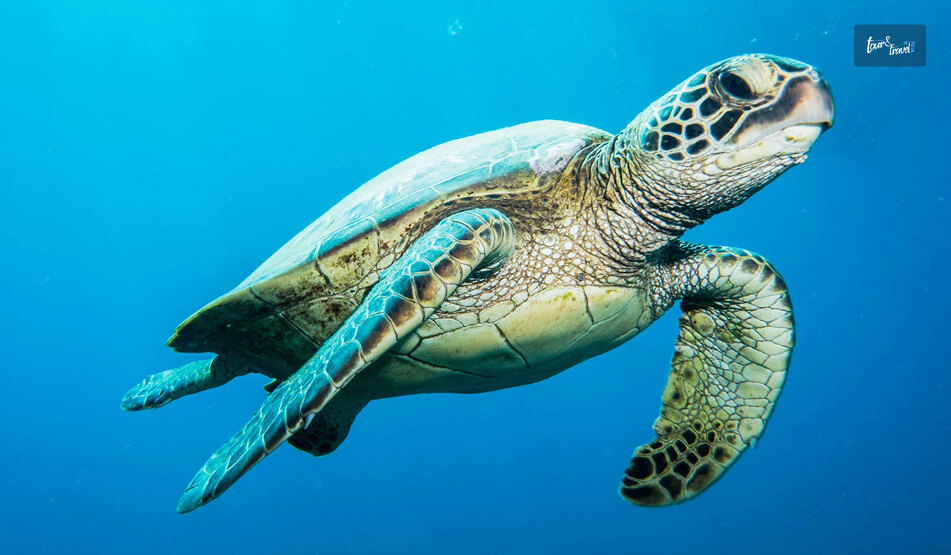
It is a vital wildlife sanctuary on the southwestern coast of Sri Lanka. Established in 1981, it aims to protect endangered sea turtles from extinction caused by poaching and habitat loss.

The hatchery monitors local beaches to rescue vulnerable eggs. 

It buries them safely in protected sand nests until they hatch. Impressively, the project cares for all five sea turtle species that visit Sri Lanka.

  • The Green Turtles
  • Loggerhead Turtles
  • Hawksbill Turtles
  • Olive Ridley Turtles
  • Leatherback Turtles. 

The sanctuary also rehabilitates turtles injured by fishing nets.

However, for me, the most exciting experience in the sanctuary was releasing newborn hatchlings into the Indian Ocean at sunset. 

This hands-on experience funds the project while raising global awareness about marine conservation.

Overall, it was a great experience learning about the marine ecosystem and how these adorable marine creatures play an important role in maintaining the balance. 

If you want to watch and study them further, Sri Lanka has many other destinations such as the Dalawella Beach, Dickwella Beach, and Mount Lavinia Beach

3. The River Safari On Bentota Ganga 

While many people are more excited about the watersports, I visited Bentota for the water safari. 

It was late afternoon, and the Sun was getting mellower. Fortunately, the hotel I was staying in had the provision for booking a boat safari. 

The boat progressed through the jungle. Also, I could spot eagles flying high and some snakes in the water. 

I was looking for crocodiles, but this time, I did not find one. 

Moreover, the roots of the trees got entangled, and the roots created some eerie formations that looked straight out of Apocalypse. 

Having said that, the river safari was not just an opportunity to spot the wildlife. I also saw the traditional fishing techniques and prawn farming in the wetlands surrounded by mangrove forests. 

Another interesting stop was the Cinnamon Island. I spotted old and young men cutting sleek sticks of cinnamon. I bought a few bottles of cinnamon oil from them. 

It was a 1.5-hour safari, and it cost around LKR 2500. 

4. Exploring The Bentota Market 

Exploring The Bentota Market

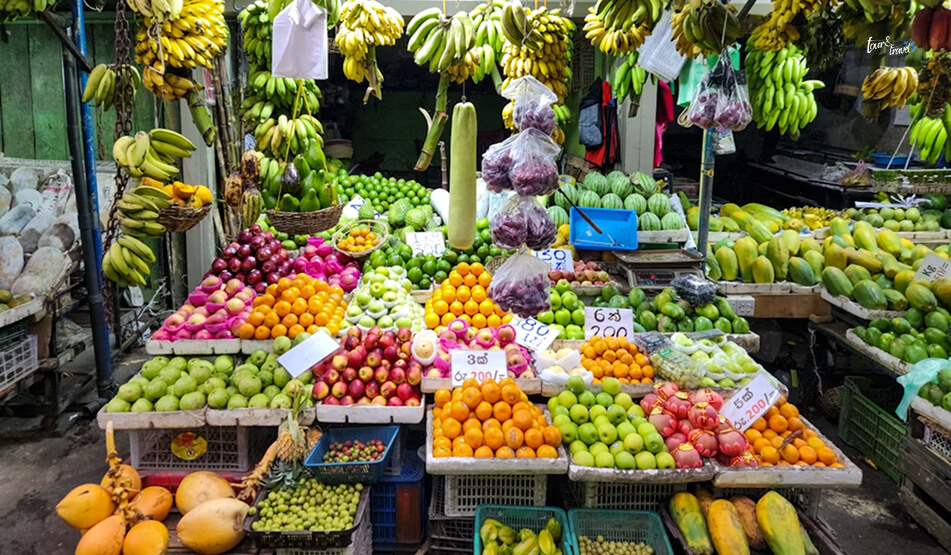
The Aluthgama town is around 3 km away from Bentota, and the Monday market here is amazing. 

I had a talk with Manjula, a college student and a local vendor who helps her mother, Hiruni. 

“People from different parts of the southwest coast come here. This is a market mostly dominated by women. So, I love being a part of the market. 

The vendors sell various products, including clothes, vegetables, groceries, and other knick-nacks. 

I also found the place to be a great spot for socializing. Women were interacting with each other when buying exotic fruits and fresh vegetables. 

Moreover, I collected some cinnamon sticks, spices, and clothes as souvenirs. 

5. Enjoying The Benefit Of Herbal And Spice Treatment 

Bentota is famous for traditional Ayurveda and health treatment. The oils and massage solutions here have spices and local herbs. 

The medicines and solutions also have cardamom, cinnamon, seeds, fruits, bark, and leaves. 

So, if you want to enjoy the ultimate Sri Lankan spa experience, Bentota is the ideal place. 

The big hotels and resorts have spas offering traditional treatments and therapies. Furthermore, there are some specialized Ayurveda centers. 

Where To Stay In Bentota Beach? 

Where To Stay In Bentota Beach

From budget guesthouse Hotel Hemadan to 5-star hotel Taj Bentota Resort, the accommodation options in Bentota are diverse. 

Furthermore, if you want an artistic and boutique experience, you can choose options such as Taj Bentota Resort and NH Bentota Ceysands. 

Based on the accommodation you choose, the cost of staying in Bentota will be between LKR 13000 and 60000 per night. 

Share on Social Media

Sibashree is a travel, culture, and leisure writer who has been writing since the age of 12 and professionally since 2014. With more than a decade of travel writing experience and journeys across India and several parts of the world, she brings a deeply personal and thoughtful perspective to her work. A student of English Literature and Mass Communication, Sibashree has always viewed travel as more than movement — for her, it has been a way of understanding people, cultures, and herself. Her passion for spiritual exploration has also led her to many unusual and meaningful destinations over the years. Outside of writing, Sibashree enjoys watching European cinema, reading about global politics, and reflecting on the stories hidden within everyday places.

Leave a Reply

Your email address will not be published. Required fields are marked *

title-img Related

READ MORE ahangama

Ahangama: Why Is It More Than Just Another Beach Town In Sri Lanka? 

BY  Sibashree Apr 7, 2026

If you could only cover the beaches in Sri Lanka, you would know how Sri Lanka, despite being a smaller country, carries the spirit of the subcontinent, “Unity in Diversity.”  If the beaches in Jaffna were a lesson to understand the livelihood of the local fishermen, the Hiriketiya Beach, with its unique horseshoe shape, has been a surfer’s delight.  Now, I am going to talk about Ahangama, another popular beach town in Sri Lanka, famous for its cool vibe and surfer breaks.  Earlier, it was known for its 19th-century Buddhist temple and the art of stilt fishing. However,  this beach town, in the southern coast of Sri Lanka, is now also known as a lifestyle destination.  The likes of Condé Nast Traveller are backing its charm as a cool fishing town.  Also, today, you may even ditch the best hotels in Galle, one of the major cities near the beach, thanks to the cafes such as The KIP, Marshmello Cafe or La Cafe Bistro.  Nevertheless, while surfing is Ahangama’s claim to fame and the budding food scene is the most happening thing right now, here are more things you can plan here.  What Are The Things To Do In Ahangama? Ahangama is now emerging as a really cool place, as, despite being a beach town in Sri Lanka, it has the right amenities for digital nomads.  While the surf and beaches offer the right dose of relaxation and the diverse communities offer the most eclectic experience, it also boasts many air-conditioned co-working and co-living spaces.  In fact, despite Galle getting more attention, if you are planning to try things to do in Galle, Ahangama, around 20 km away, will be a better base due to the presence of cool hotels, good food, and cafes.  Nevertheless, it is not just about breaking the waves.  Here are tons of other things to do in Ahangama. 1. Hitting The Surf The reef breaks of Ahangama are the best for intermediate and advanced surfers. The waves on the south coast are world-class.  Kabalana Beach itself is a great place to start your surfing expedition in Ahangama. Furthermore, you will easily get board rentals for around 800 LKR, and the sessions usually cost around 4000 LKR.  You can also surf near the Kabalana Rock, Sticks Surf Break, Rams Right, and Midigama.  2. Some Adventure At The Lamana Skatepark Lamana Skatepark is one of the best places if you want to experience the party scene in Ahangama.  Local skaters hit the bowl here daily. However, the live bands and the DJ music add some spunk to the air.  3. Swimming With The Turtles Dalawella Beach, a short tuk-tuk ride from Ahangama, is the place where you can swim with giant sea turtles.  Here, meeting the sea turtles was a different experience from how I saw them at the Sea Turtles Conservation Centre near Mount Lavinia Beach.  Also, some of the turtles here were around 50 years old, and they weighed around 200 kgs.  You can rent a snorkeling mask for around 300 LKR. However, stay away from feeding these turtles,  4. Safari At The Udawalawe National Park If nothing else, I will remember Sri Lanka for the endless and most delightful encounters with elephants.  I had mentioned spotting the elephants at the Udawalawe National Park as one of the best things to do in Ella.  However, as Ella is just 58 km away from Ahangama, you can also plan a safari if the latter is your base.  Along with the baby and mother elephants, you will also love spotting peacocks, monkeys, and buffalo here.  Moreover, when you are in Ella, don’t miss the iconic train ride on the Nine Arch Bridge.  5. Climbing Devil’s Rock With jungle walkways and eerie rock formations, the Devil’s Rock feels like a piece of Jurassic Park in Sri Lanka.  You will find this group of scary rocks as you go east from Ahangama and stop just before Midigama.  However, the only catch is that you will have to swim through the water with a medium current and during the low tide to reach Devil’s Rock.  The hike is also quite strenuous. So, it may not be the best thing to do in Ahangama if you are not a pro swimmer or fit hiker.  6. Scuba Diving In Unawatuna You have done diving in Raja Ampat, the Maldives, or Bali. However, scuba diving in Unawatuna is something different.  While you cannot expect the grandeur of these diving sites at Unawatuna, you can definitely find the Lord Nelson Shipwreck, exotic micro critters, coral reefs, and more in the water, at a temperature of around 20 degrees Celsius.  You can reach Unawatuna by taking a drive for just 15 minutes from Ahangama.     7. Cruising To Ying Yang Shack The term “hidden gems” has become so cliché these days! However, places like Ying Yang Shack can still keep the magic of the phrase alive.  Here, you literally take a ride in a handmade boat, and our boatman confided that he had made this boat with his brother.  I, along with the other riders to the Ying Yang Shack, had a chilled beer in my hand as our boatman cruised through the water and talked about the lush greenery.  I also spotted a monitor lizard and majestic eagles.  Then came the sunset, and our boatman started singing, and his voice echoed as the bats and birds filled the red sky.  The day ended well as his family made the most delicious and spicy BBQ meal for us. Where Is Ahangama? Ahangama is located in the Galle District of Southern Sri Lanka. It is located between Unawatuna and Midigama.  Furthermore, this surfing and swimming paradise is located at a distance of around 3 hours from Colombo.  How To Reach Ahangama? The Bandaranaike International Airport is the closest to Ahangama. The distance is around 143 km, and that can be covered by a car in around 3 hours.  Furthermore, you can take a train from the Colombo Fort Station and take a train to Ahangama via Galle.  In addition, you can take a tuk-tuk ride from Midigama or Weligama to reach Ahangama. Why Is Ahangama More Than Just A Beach Town In Sri Lanka?  The elite food scene and the amenities for digital nomads make it more than just a beach town in Sri Lanka.  With brunch spots such as Black Honey and dining spaces such as Coco Kitchen, it can now beat Galle for trying local and fusion cuisines in Sri Lanka.  Moreover, it offers a steady 30-80 Mbps internet connection, and the cafes and air-conditioned coworking spaces here have the infrastructure to support the lifestyle of digital nomads.  Ahangama: Frequently Asked Questions (FAQs)  Here are the frequently asked questions and answers about Ahangama Beach Town. 1. Is Ahangama Better Than Mirissa?  It is hard to pick a favorite between Ahangama and Mirissa. Ahangama is famous for its surfing breaks and a laid-back vibe. On the other hand, Mirissa has a classic beach vibe, and it is more famous for whale watching.  2. Should I Stay In Ahangama Or Weligama? Ahangama is your go-to place if you want to enjoy a boho-chic vibe during a beach holiday. On the other hand, Weligama is more of a hub for surfers who are beginning their journey.Also, despite a happening nightlife, Ahangama is a quieter retreat at night as compared to Weligama.  3. What Is The Ahangama To Mirissa Distance?  The distance between Ahangama and Mirissa is around 16 km. The travel time to cover the distance is around 32 minutes by road. However, you can also take a train from Ahangama to Mirissa and travel the distance in 19 minutes. 

READ MORE Japanese shrines to visit

What Are The Best Japanese Shrines To Visit? Celebrating Nature Spirits And Inherent Spirituality

BY  Sibashree Mar 31, 2026

I am eager to engage with the traditional cultures of Japan through my visit to Japanese shrines. When you walk right through the enormous torii gate, something almost magical happens to your inner being. Leaving the hectic modern life behind, you enter a space where time appears to move at a different pace, and that is when you experience a certain tranquility. Situated in a Japanese Shinto shrine are rich traditions and a belief system that make the shrine a very sacred place. Moreover, the shrine is the perfect place to practice and get some understanding of the age-old Shinto rituals. Along with that, every visit to a Shinto shrine, I take a whiff of the smell of burning incense or cedar, or just have a glance at the bright red cedar floor in the forest, and each time I get a different insight into how primitive communities have transformed the land. Although it is really tough to designate the best Japanese shrines to visit, I would like to show you the ones that left a deep impression on me. You can visit most of these shrines on a day trip from Tokyo. But before that, let's talk about the Shinto religion in Japan and what makes Shinto shrines so priceless. The Shinto Religion In Japan: A History Rooted In Nature Shinto is an indigenous religion of Japan and is the oldest form of worship in Japan.  It differs from most Western religions in that there is no central text for Shinto, nor is there a single historical founder of the faith.  Rather, Shinto grew out of the relationship that early Japanese people had with the land and their environment.  While Shinto is less about trust through a prescribed belief (or doctrine), it is more about lifestyle, and in particular, how to live life in harmony with nature. 1. The Core Belief Of Kami At the heart of Shinto lies a philosophy of the universe where various forms of nature (of the divine) are inhabited by divine spirits known as kami (in Shinto).  The kami can take on many different forms, from mountains, trees, rocks, and waterfalls to winds, rains, fertility, and much more.  Furthermore, in Shinto, people believe that after humans die, they become kami themselves.  As a result, it is a profoundly beautiful and cyclical view of existence where our forebears continue to be present with us to influence and guide our lives in the landscape we live in today. 2. Rituals, Offerings, And Evolution At The Best Japanese Shrines To Visit  Shrines are where kami (gods) receive worship from believers in Shintoism.  Because kami can be both good and bad for human beings. So, people can make offerings in hopes of receiving blessings from them.  Shinto uses purification and prayers as a method of avoiding bad kami through Shinto rituals.  There are no founders, no scriptures, or no absolutes in Shintoism, and it has no preaching or strictures.  Instead, Shinto relies on time-honoured traditions to help ensure the spiritual well-being of its followers, or for them to receive good fortune. As a matter of fact, Shintoism was Japan’s official religion from the 1870s until the 1940s.  It was officially separated from Buddhism at that time. Shintoism continues today to be an important part of Japanese culture and exists amicably with Buddhism. What Are The Features Of The Shinto Shrines To Visit In Japan?  Shrines are places where worshippers come to honor the kami.  If you are staring at a map or walking on a street, you can recognize these locations by their shrine-related words. Shinto shrines in Japan end in –jinja, –jingu (this one is reserved for Imperial shrines), or –taisha.  As I travel to a new town, one of my favourite things to do is try to find these suffixed words, as I know there are shrines nearby, and I have a quiet place to relax. 1. The Types Of Shinto Shrines  Each type of Shinto shrine has a different spiritual purpose to accomplish. In the table below, I have tried to divide the shrines into different categories.  Types of Shinto ShrinesWhat They MeanImperial ShrinesHistorically funded and overseen by the government.Sengen ShrinesDedicated specifically to the deity of Mt. FujiInari ShrinesThese are for the kami of rice and prosperity (easily spotted by fox statues).Tenjin ShrinesThese shrines worship the kami of Sugawara Michizane, a famous scholar and politician.Hachiman ShrinesDedicated to the kami of war and protection. 2. Distinct Architecture Of The Shinto Shrines  Torii gates are the easiest and most recognizable way to mark Shinto shrines.  These gates are entrance accessories to the shrines, and are usually made of wood painted in the color combination of bright orange and black. Although some can be made of stone.  After the gate, you will find the worship hall (haiden), where you can offer prayers. Furthermore, the main sanctuary (honden) is the most sacred.  Also, you will see shimenawa or sacred straw ropes and komainu or guardian lion-dogs in the architectural features of the shrines.  Moreover, ema are small wooden plaques where visitors express their innermost desires to the gods and hang them to be read. What Are The Best Japanese Shrines To Visit?  There are about 80,000 Shinto shrines in Japan. However, based on the shrines I have visited, I have made choices of which I consider to be the most attractive places to visit for any traveler. 1. Fushimi Inari Shrine, Kyoto  Probably the most widely recognized image of Japan is Fushimi Inari Shrine.  It is well-known for its thousands of vermillion torii gates "tunnel" that lines the 4 km track going up Mount Inari.  Being the main shrine of all shrines, Inari, the god of rice and sake, is deeply significant.  I advise you to hike a bit more on the mountain. The lower section is very crowded, but the upper trails have a serene atmosphere where you can enjoy the fox statues of the deities in an unhurried manner. 2. Meiji Shrine, Tokyo Meiji Jingu is the most magnificent Imperial shrine in Tokyo.  It is also quite different from the flashing neon lights of the nearby Harajuku.  It is a shrine devoted to Emperor Meiji and Empress Shoken.  Moreover, a forest of more than 100,000 trees surrounds it. To me, this shrine stands for the "hopefulness" of Shinto.  Moreover, it's a place where you can stroll along wide gravel paths, look up huge sake barrels that brewers have given. Also, if you're lucky, see a Shinto wedding ceremony carried by a slow, graceful bridal party crossing the courtyard.  3. Toshogu Shrine, Nikko The Toshogu Shrine in Nikko is a very bright and gaudy place with the use of various colors and gold.  This shrine is the final resting place of Tokugawa Ieyasu, the founder of the Tokugawa Shogunate.  Detailing here is mindblowing, and you will notice the elements such as "See No Evil" monkeys and the "Sleeping Cat" carving.  It is a one-of-a-kind place as it has preserved numerous Buddhist features even after the Meiji-era separation of the two religions. Thus, it is a combination of a regal and an eccentric style, which is a wonder in itself. 4. Itsukushima Shrine, Miyajima Located on Miyajima Island near Hiroshima, Itsukushima is world-famous for its "floating" torii gate.  The shrine stands on stilts over the water, so it looks like it's drifting in with the tide.  It's a classic example of Shinden-Zukuri design.  The thing is that I always go at sunset when the gate fades into shadow against the Seto Inland Sea.  That moment feels deeply quiet, almost sacred.  It seems hard to ignore how powerful that stillness can be. And the colors shift with the light. Making it one of Japan's most striking photo spots. 5. Nezu Shrine, Tokyo Nezu Shrine is perfect if you want some respite from the crowded temples of Kyoto.  There's a small tunnel of torii gates like Fushimi Inari, and a koi pond that glows under the Sun.  The buildings flash red and gold, kind of like Nikko's Toshogu, but it is smaller and simpler.  Moreover, late April brings wild azaleas up the hillside and pink waves rolling through purple hillsides. You don't see that everywhere. 6. The Sengen Shrines Of Mt. Fuji Located in the area of Fuji Five Lakes, I was quite impressed by two shrines that are a must-see for me.  Fujiyoshida Sengen Shrine is right at the foot of the mountain and was the old point for pilgrims who started climbing the volcano.  It has a very ancient feel thanks to huge cedar trees that surround and stone lanterns.  Close to it is the Arakura Sengen Shrine that gives the "typical" Japanese photograph. It has a red five-tiered pagoda with Mt. Fuji towering in the background.  If you decide to go to the top, you will have almost 400-step stair climbing, but the panorama is breathtaking. 7. Kumano Nachi Taisha, Nachisan This shrine is the main shrine of about four thousand Kumano shrines and is located on the Kii Peninsula.  It is extremely beautiful because it is very close to Nachi Falls, which is the highest waterfall in Japan.  Also, it is quite a spiritual experience to witness the vivid red pagoda of the shrine contrasting with the white thundering falls and the misty mountains.  Moreover, it is one such place of worship along the old Kumano Kodo pilgrimage route. Read Also: Haneda Vs Narita: Which Tokyo Airport Should You Choose For Your Next Trip? Are You Planning A Trip To Osaka? This Is Your Quintessential Guide Is an Mt Fuji Day Trip From Tokyo Worth It? How To Plan It?

READ MORE cherry blossom kyoto japan

Cherry Blossom Kyoto Japan: 2026 Season And The Top Viewing Spots 

BY  Sibashree Mar 27, 2026

The cherry blossom season has arrived in Japan. The Japan Meteorological Agency has announced the arrival of the most coveted season in the country on 19th March, 2026.  The somei-yoshino tree of the Yasukuni Shrine had more than 60 blossoms open then, and that prompted the announcement.  So, the recent warm weather has caused the arrival of the cherry blossom season earlier than last year.  However, the season of cherry blossom in Kyoto arrived a few days later on 23rd March, 2026. So, currently, the fervor around the cherry blossom Kyoto Japan is at its peak.  With the country now becoming irresistible with the blooms taking over the parks and roads, here is more about the cherry blossom season in Kyoto and the best viewing points.  When Is The Cherry Blossom Kyoto Season? Timing a trip to the cherry blossom Kyoto season or to see Sakura is a crucial exercise. The beauty and charm of these flowers are fleeting.  So, the when part of it is equally important as the where part.  Check out the table below for an idea about when the cherry blossom season arrives in Kyoto and how it progresses.  Cherry Blossom Season Months Budding and Blooming of Cherry Blossoms Kaika or the First Blossoms Late March Early April Mankai or Full Blooms by 7th AprilMid-AprilPetals Start to Fall and Create Petal Carpets Everywhere However, like 2026, the season can arrive early or even a little late.  The variation happens because the present temperature impacts the budding and blossoming of flowers.  If the weather is warmer, the flowers will blossom earlier than the average season. On the other hand, if there is a cold snap, the flowers will arrive late.  However, Kyoto has an advantage in this regard thanks to its diverse microclimates. Also, it boasts different cherry blossom tree varieties spread across different elevations.  So, even if you miss the cherry blossom scene at any of the shrines in Kyoto, you may find the flowers at any other place.  What Are The Places To See Cherry Blossom In Kyoto? Kyoto and all of Japan celebrate the cherry blossom season. It is enriching to witness such a deep bond between the people there and nature.  They love clicking pictures of flowers, picnicking under the trees, and just soaking in the happiness and beauty the flowers bring.  However, if you want to experience the best of the cherry blossom scene, you need to know about the places with the best views.  1. The Philosopher’s Walk (Tetsugaku-No-Michi) The Philosopher’s Walk is a canal-side stone walkway winding its way along the base of Hikoshiyama (Eastern Mountain Range). I began my day here.  The name has significance, and legend has it that Professor Kitaro Nishida of Kyoto University (an early 20th-century philosopher) walked this route daily for meditative purposes. Thus, it’s now known as the “Philosopher’s Walk.”  When I first set foot on the Philosopher’s Walk, I could see why he was always walking there each day.  The entire length of the pathway is lined with hundreds of cherry trees leaning above the water, creating a ceiling of pale pink blooms.  I found myself continually distracted while walking to the shop, eat, or visit the small shrines draped throughout the landscape.  Even with hundreds of people visiting this site daily, I felt as if I were walking alone, contemplating life.  There is nothing that compares to the silence created by having cherry blossoms fall off branches and drift gently down into the slow-moving canal below.  I felt as if I had achieved a moment of peace, not as a tourist but rather as an individual taking time out of their busy lives to think quietly, like all the others on the path. 2. Maruyama Park (Maruyama-Kōen) The Philosopher's Walk is for reflection, and Maruyama Park is the place to be to party!  The number of people in the park and how electric the atmosphere felt, I have to believe it is the most popular place to view blossoms in all of Kyoto.  It serves as a hub of hanami (flower-viewing) culture within the city. A huge, famous weeping cherry tree serves as the main attraction of the park.  Seeing the tree in person was an overwhelming experience for me because its branches seemed to flow downwards like water from a fountain.  The portion of the park that surrounded the tree became a festival site.  I saw blue tarps lying all over the park, and the universal sign of hanami gatherings with friends and family, eating, drinking, and just being together under the flowers.  The edge of the park had many food stalls offering various foods like yakitori and sweet dango. 3. Shimbashi Street (Shirakawa-Dori) Later, as I headed to find Shimbashi Street in the Gion neighborhood, my guidebook boldly said that Shimbashi was the “most beautiful street in Asia.” When you first step into Shimbashi, you feel the essence of Kyoto’s refined beauty throughout the street.  Cherry trees line the street and form a thick canopy above the walkways, and beside the traditional wooden buildings, streams flow gently through the area.  Many of the wooden buildings along the way hold exclusive ryotei (expensive) restaurants, and the whole atmosphere feels as if it were pulled from a time before us.  The most exciting thing for me was the ‘parade’ of kimonos that I observed as I strolled.  Locals and couples routinely have their picture taken in a kimono (professional photo), and the vibrant colours of the silk kimono against the soft pastel cherry blossom trees made a beautiful visual transition from the past to the present.  I ended up discovering a small bistro at the end of Shimbashi Street that had cherry blossoms providing a tunnel effect above.  Eating lunch (al fresco) under the blooming tunnel while watching the many young couples walk past in traditional clothing was certainly the highlight of my time in the city.  It was both romantic and timeless and contained an ideal balance between the two. 4. To-ji Temple With the sunlight fading, I headed to the To-ji Temple.  The To-ji Temple is known for its five-story pagoda, which has the tallest wooden tower in Japan. However, what I was more excited to see was the massive, beautiful, weeping cherry tree. A trip to To-ji Temple in the evening is highly recommended.  They flood the entire grounds with bright white flood lights when it gets dark outside.  The weeping cherry tree illuminated with pink lighting is stunning against the night sky and the outline of the ancient pagoda.  Also, the weeping cherry took up most of the memory on my camera.  I spent a fair amount of time walking around the grounds. There are many other cherry blossom trees around the grounds that also have the same beautiful effect from the lights at night as well. They take on an almost ghostly, pearl-like quality that you can only get from external lighting at night. 5. Kiyomizu-Dera Temple No visit to Kyoto would be complete without going to see the Roji temple, aka the "Pure Water Temple."  However, viewing it in cherry blossom season looks like such a different experience from what I saw.  The main hall has a huge terrace about 97 feet long, which is one of the best places I found to view it. As I looked down from this height, I could see all across the surface of the mountain, where there were many different types of cherry trees blooming or not blooming along the slopes.  The pink blossoms (the cherry trees' flowers) create a nice light-coloured contrast with the dark, weathered wood of the temple architecture.  When I walked down the ramp toward the exit, I noticed there were more clusters of trees planted near the pond at the end of the flower field.  I saw the reflection of trees on the surface of the pond.  The temple complex is enormous, and the scale of the cherry tree blossoms in this area is impressive.  6. Arashiyama Last, I traveled to the far west side of the city to Arashiyama. It is about 8 km from downtown and is a really refreshing and beautiful area filled with nature. While standing just north of the Togetsu and looking up at the mountain beside me, I could see a dense tapestry of hundreds of cherry trees interlaced with evergreen trees. They made a perfect background for the Hozu River below me, with its many small boats full of people renting out their time to experience the beauty of the flowers from the water's side.  I was envious that I had not scheduled more time to experience this part of Japan.  I also thought that this (the hills full of flowers) was very similar to the Yoshino slopes.  On my way out of the area, I stopped at the Tenryū- ji Temple. I saw some incredibly large, mature cherry trees. These, along with the well-kept Zen gardens, appeared to be glowing against each other. Walking through Kyoto in the spring taught me that the cherry blossom isn't just a flower. It’s a vibe that settles over the entire city.  Is Osaka Or Kyoto Better For Seeing Cherry Blossom?  It’s difficult to pick a favorite between Osaka and Kyoto for the cherry blossom season. The vibes are very different.  While Kyoto has these iconic spots for seeing cherry blossoms, Osaka also has the Osaka Castle Park.  Furthermore, the scene in Kyoto is more traditional with temples, historical atmosphere, and the weeping cherry trees.  On the other hand, Osaka is more about picnics and exploring amazing food stalls.  However, Osaka is less crowded than Kyoto in the cherry blossom season. That is one advantage.  Also, Osaka is less expensive than Kyoto.  So, if you want less crowd and you are on a budget travel, Osaka will be your go-to place. Read Also: Is The Japan Rail Pass Worth It In 2026? Should I Buy Or Avoid It As A Conscious Tourist? What Are The Best Day Trips From Tokyo? Most Popular Ones You Will Love Is an Mt Fuji Day Trip From Tokyo Worth It? How To Plan It?