Where Is Barbados? Are you planning a trip to Barbados? Do you know the best time to visit Barbados?
Read the article to learn more about how you can prepare for this trip and enjoy it to your heart’s content.
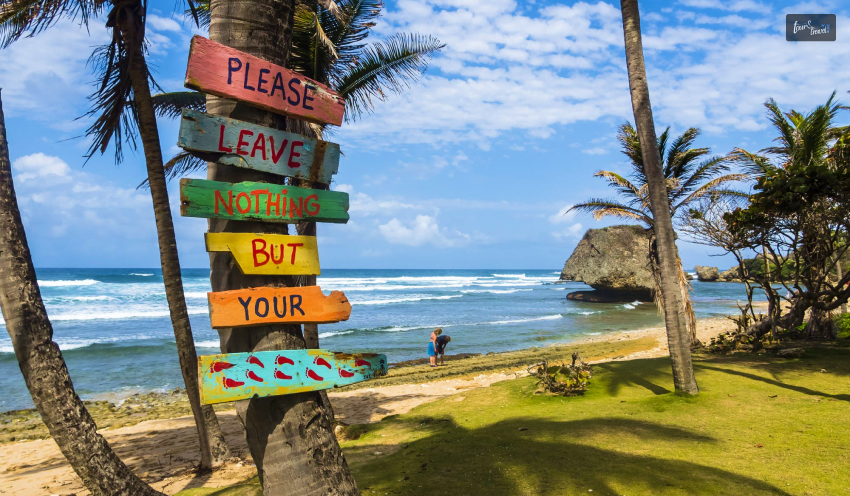
When you visit Barbados, several geographical elements start from land, ocean, hills, and others, creating picture-perfect beautiful places!
For example, if you visit the north part of the Island, you will be able to see Mount Hillaby!
The Island also offers coral across 300 feet around the Island creating thick covers. What else can a person want when planning to enjoy the beauty of the place?
Read the article to learn all about the features of Barbados and how you can plan your trip around it.
Don’t Believe Them!! This Is The Best Time To Visit Barbados!
Image Source: www.bradtguides.com
Want to know what is the best time to visit Barbados? You need to learn more about the place and how you can get there.
Further, it is also important to know what type of events you want to attend because that will help you decide when you visit.
The high season is between December and April, when more tourists visit Barbados!
Mostly, people try to catch up with the dry time of the year when there is less rainfall; during December, it is a mix of holidays and vacations!
Also, remember to snorkel, as it is one of the coolest activities to perform in Barbados.
During February and March, people can visit the zipline, relax at the beach, and travel across the inland Flower Forest Botanical Gardens!
What Is The Best Time To Visit Barbados?
Image Source: lp-cms-production.imgix.net
No one can decide whether or when you can go traveling!
So, decide for yourself when is the best time to visit Barbados, considering there is something happening across the whole year in Barbados.
I promise you won’t be bored! You must also confirm who you are going with and what activities you want to attend.
This will help you streamline your trip plans, and you start packing your bags and book your tickets accordingly.
However, to avoid the rain on vacation, you should visit Barbados between December and April!
It is known as the dry season. The temperature is around 30 degrees, with very little rainfall.
What Are The Events You Can Attend In Barbados?
Image Source: assets.vogue.com
But I suggest you experience the rain as well. During the wet season between May and November, you will experience the Island, the nature, and the beauty of the culture.
There is so much to do, you guys! Keep reading.
Holetown Festival
Image Source: www.lickrishfoodtours.com
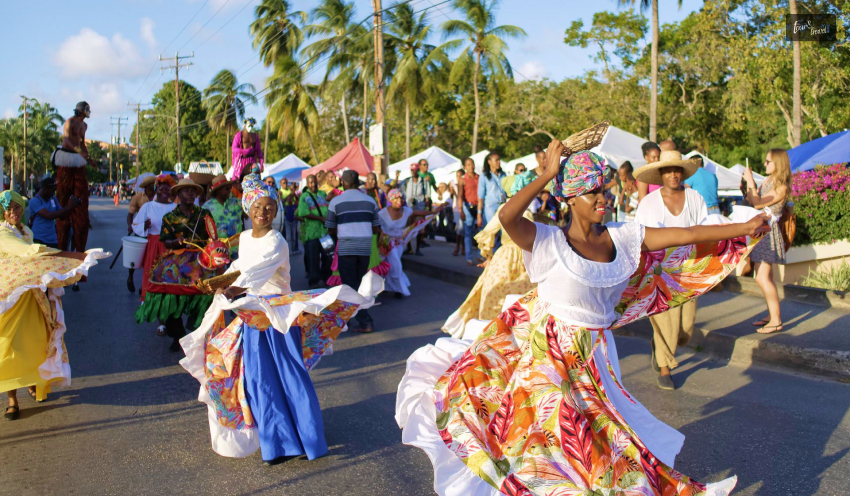
During February, the festival of Holetown is celebrated to commemorate the first time the Britishers came and occupied them, only to be reminded how the people stood strong!
This happened in 1627, while the tradition developed in 1977 when the people of Holetown celebrated a week long festival!
Several activities, such as the Steel Band Concert, Parade, Opening Gala, and the Street Fair, integrate a feeling of community! It mostly takes place in the second week of February.
Oistin Fish Festival
Image Source: pbs.twimg.com
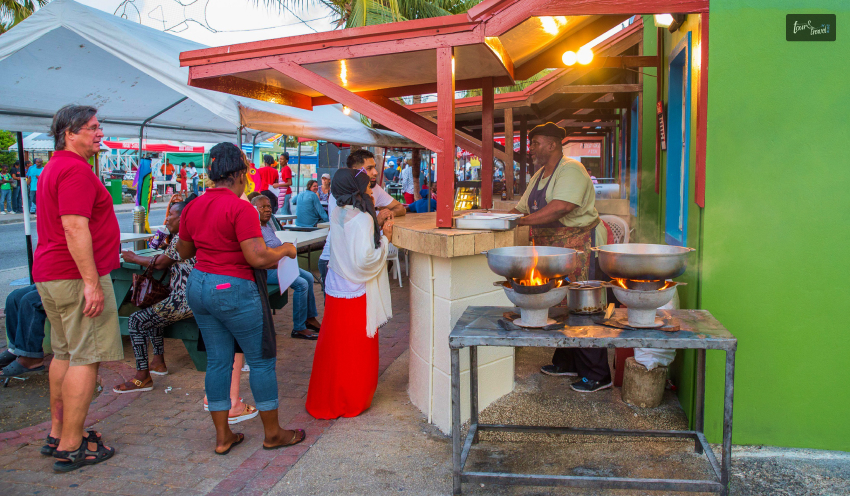
This festival or event takes place every Easter weekend across the fishing village of Oistins, where they celebrate the annual Fish festival with music, food, and drinks!
During this weekend, fish is the main dish; however, you will find other varieties.
The whole village comes alive during this time as the atmosphere is filled with Caribbean music while tourists and natives enjoy fried fish such as tuna and mahi-mahi.
Different meats are also prepared, which are sold along with local drinks.
Oistin is a popular spot which people frequently visit, both locals and tourists! Do not let the fish festival go if you plan to visit Barbados in March!
Crop Over
Image Source: static.wixstatic.com
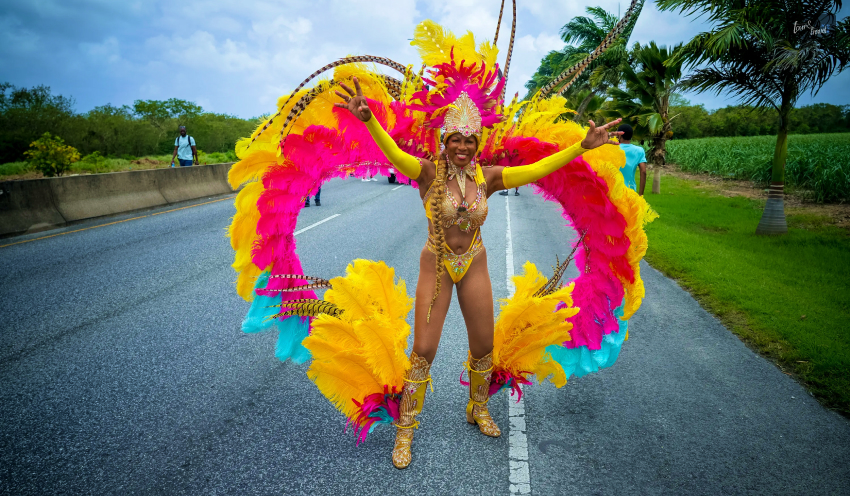
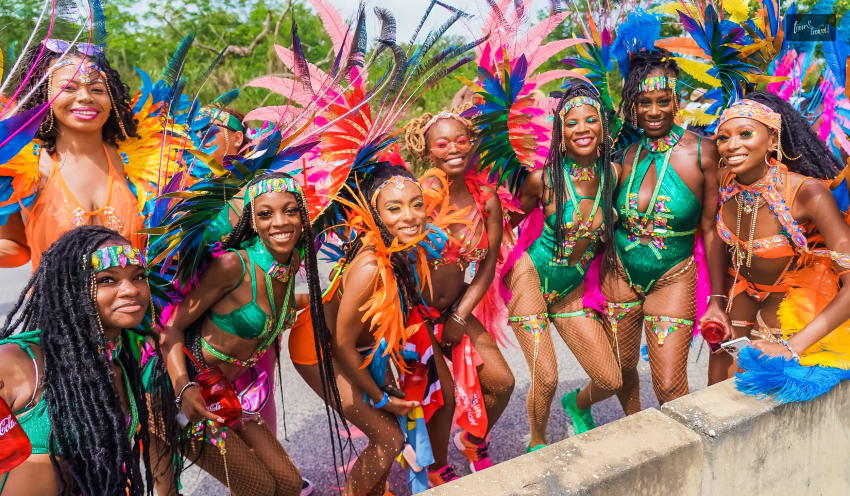
One of the largest events annually in Barbados is crop over. It all started during the slavery period when the enslaved people celebrated with singing and dancing at the end of the sugar cane harvest.
Over the years, the event has evolved into a long-duration of carnival events!
For six weeks, the people of Barbados make merry with singing competitions, content, and parties.
It is one of the most anticipated aspects of the event, especially after the harvest; people are excited to experience the masquerade band parades across Bridgetown’s streets.
The natives love the event, and as a tourist, you will love the energy pulsating through the city.
During Kadooment, the people covered their bodies with jewels and feathers so natives and visitors could attend it.
You can experience the heritage and culture of the Island when you visit in August. If you are a people person, you should call!
Barbados Food And Rum Festival
Image Source: www.craneresidences.com
The festival is all about showcasing internal and local cruising and some beverages prepared by the natives who are experts in the industry.
The festival starts on the 24th and continues till the 27th.
Barbados is known as the culinary capital of the Caribbean, and it is expected that the people of Barbados know about good food and the appropriate drink that will go along.
Mixologists and experts from the region get involved in the festivities.
If you are a foodie or a connoisseur of drink, visiting Barbados in October is the best time to attend this event.
Independence Celebration
Image Source: upload.wikimedia.org
In 1966, on30 November, the Island of Barbados gained its independence; hence, it is marked as a significant day in their history.
They celebrate this momentous day by raising their national flag and playing and singing the national anthem, along with a happy vibe.
There are people gathered across the Island who celebrate the independence by performing various activities!
A grand parade will be organized at the Garrison Savannah, sporting contests, community-based events, and religious ceremonies.
As a visitor, you will experience the best community as you learn more about the culture, the people, and the native traditions.
There will also be a showcase, which the National Independence Festival of Creative Arts anticipates.
The local talents are displayed on this day for their creativity, along with beautiful decorations along the town buildings with blue and gold colored lights.
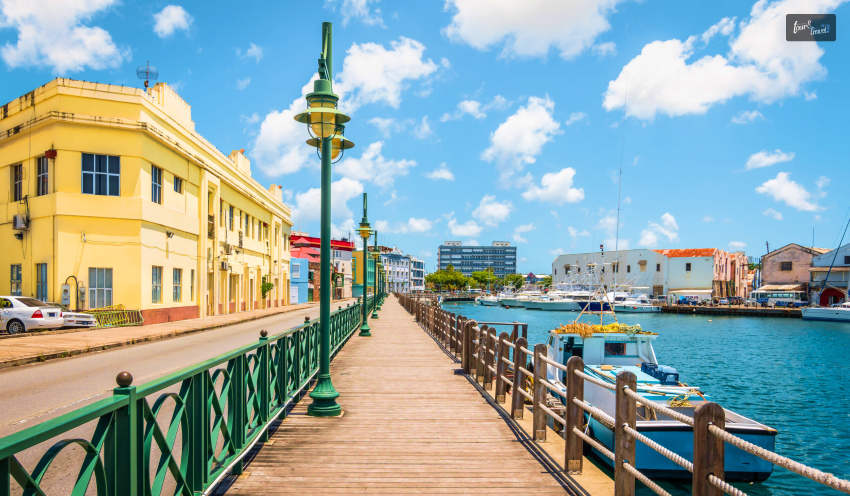
Throughout Bridgetown, it feels like a party as business owners, customers, and staff all get involved in the celebration by decorating! Where Will You Stay?
Pack Your Bags Now!
Now that we have told you all about the best time to visit Barbados tell me, will you do something about it?
To experience the feeling of community, culture, and togetherness, you must visit the beautiful Island.
The activities you can partake in and the food you eat will take you to a melancholy celebration of the new and the old.
Comment down below about which time you want to visit Barbados!
Sagnika Sinha is a content writer who is passionate about writing travel vlogs, entertainment and celebrity articles and literature-based pieces. With a 4 years experience in teaching, she loves reading books. A procrastinator by nature, she loves travelling, listening to music, planting and gardening.
Spain, with its vibrant culture, historical landmarks, tantalizing food, and picturesque landscapes, is a country that captures the heart of every traveler. If it's your first time visiting, the prospect can be both exciting and a little daunting. How do you navigate this unfamiliar yet enchanting territory?
Don't worry. These five insider tips are just what you need to make the most of your trip and create unforgettable memories. Here's what you should keep in mind.
1 - Understand Spanish Culture
Familiarize yourself with Spanish customs and norms before your trip. Spanish people are known for their laid-back lifestyle and love for socializing. In Spain, meal times are later than what you might be used to; lunch typically starts at 2 p.m., and dinner at 9 p.m. or later.
Siestas are a real thing, with many shops closing in the afternoon for a few hours. The nightlife is vibrant and starts late. And one more thing: remember the Spanish love for celebrations and festivals — you might just find one happening during your visit!
2 - Explore Iconic Landmarks
Spain is rich in history and boasts of numerous World Heritage sites. From the royal palaces in Madrid, the iconic Sagrada Familia in Barcelona, the Alhambra in Granada, to the historic old town of Toledo, there's a lot to see.
You should — of course — prioritize your itinerary according to your interests and time constraints, but don't miss out on these marvels.
3 - Discover Hidden Gems
While tourist hotspots are great, the real charm of Spain lies in its hidden corners. Venture off the beaten path and explore local markets, try a cooking class, take a flamenco lesson, or visit a local vineyard. These unique experiences will give you a taste of authentic Spanish life.
If you're documenting the trip, going off the beaten path also gives you a chance to capture moments and sights that most travelers never get to experience. There's plenty of good public transportation in Spain, but if you'd like to explore, it can be smart to rent a car or charter a Yacht. The latter is easier than you might think, as the SeekSail website shows.
4 - Optimize Your Itinerary
Don't make the mistake of cramming too much into your itinerary. Spain is a country to be savored. Traveling between cities can be time-consuming, so it's better to explore a few places thoroughly rather than trying to see them all.
Remember to plan your day around the Spanish rhythm. You should take advantage of the late morning to explore, relax during the siesta hours, and soak in the nightlife.
5 - Pack Appropriately
Spanish weather can be quite variable. Summers can be scorching hot, while winters are cold, especially in the north. Pack light, breathable clothing for summer and layers for winter. Don't forget comfortable shoes for all the walking you'll be doing!
Remember, traveling is all about immersing yourself in the local culture and stepping out of your comfort zone. Use these tips to truly engage with Spain's captivating charm. And who knows, you might even come back home with a touch of the Spanish zest for life!
Read Also:
The 5 Most Historically Significant Buildings
5 Ideas For Wine Tours In Barcelona- Make It Happen
The next location we planned to cover during a USA tour was New Orleans. This time, we discovered how a city with a rich culture cares so much about children.
Along with its heritage, architecture, and a culture that feels like a warm embrace, the kid-friendly activities also make this Louisiana city a popular tourist destination.
However, this time as I pen the things to do in New Orleans with kids, my heart feels heavy. A deadly terror attack on Bourbon Street and the police shoot-out following that have taken the lives of at least 14 people on 2nd January 2025.
Still, the city is on the mend, and everyone is hoping high for the stability of the tourism economy of the city. It’s difficult, considering the city has yet to recover in tourism and finances since the COVID-19 days fully.
Apologies for the grim start! However, as travelers, you cannot disassociate so easily, especially when you have just visited a place.
Nevertheless, it’s time for some cheer, and shifting focus to the best things to do in New Orleans with kids can greatly help. So, let’s discuss it.
Fun Things To Do With Kids In New Orleans | Enjoying The Graceful Embrace
December to January and February to May are the best times to try fun things to do with kids in New Orleans. And guess what! There are a lot of free activities awaiting your little ones here. I have discussed them in a different Tour and Travel guide.
Nevertheless, here, let’s focus on the unique things to do with kids in New Orleans.
1. Audubon Zoo Visit
https://www.instagram.com/p/C4qRCaVrNPe/?img_index=1
Location: 6500 Magazine Street, New Orleans
Contact Number: (504) 861-2537
Hours Open: 10 AM to 5 PM (Tuesday and Wednesday Closed)
Audubon Zoo Admission: $35 for Adults and $25 for Children
Audubon Zoo is one of the topmost family attractions in New Orleans. It is a wonderland of Audubon animals and birds. The place is filled with mammals, reptiles, and birds. From the majestic African Lions and Asians Elephants to the Aldabra Tortoise, you will find everything here.
However, for me, the most delightful creatures in the zoo are the Caribbean Flamingos. They are as colorful as their country of origin.
I also loved the Malayan Sun Bears. They are adorable with the cutest expressions. You will even find Malayan tigers here.
Furthermore, we thoroughly enjoyed The Dinosaurs at the Audubon Zoo section. I was not willing to visit the section at first. Yes, I know! I am in my thirties, and I still have my phobia!
Nonetheless, my kids insisted, and I had to take them to the section with 50 life-like dinosaurs growling and making moves. However, this special exhibit program has now ended.
Moreover, if you are in New Orleans for a long span or have plans of staying here, you can allow your kid to be a camper at the Audubon. They can become young experts in animals and they will love to spend some time with their favorite creatures.
2. A Day at Jackson Square | Best Things To Do In New Orleans With Kids
Jackson Square gets its name from Andrew Jackson, the seventh president of the USA and a New Orleans battle hero. So, a visit to Jackson Square at the heart of the French Quarter is like taking a walk down memory lane.
Here, you will also find Pontalba Apartments and many other oldest buildings in the city. Rented places are easily available in these buildings.
As you appreciate the old-yet-young vibe of the space or recall the history of New Orleans, let your little one enjoy the jazz music, live performances, and entertainment events here.
Moreover, if you are lucky enough, you can be a part of the art festivals here.
A stone’s throw away from Jackson Square is the St. Louis Cathedral. It is the oldest cathedral church in North America, and its steeples watch over the French Quarter.
3. A Ghost Tour | Exciting Things To Do In New Orleans With Kids
Well, if your little one loves Halloween and everything spooky, you can definitely take them on a family-friendly ghost tour. These tours are especially popular among adventurous children in their pre-teens.
Tour Organizers like Viator, offer Spooky Family-Friendly Ghost Tour in New Orleans in the French Quarters.
Now, these ghost tours are very much ingrained in the spirit of New Orleans. The LaLaurie Mansion or the New Orleans French Quarter was infamous for the mistreatment of slaves.
Supernatural activities and the stories around them started flowing after a neighbor saw a troubling incident. The neighbor saw a lady chasing a slave girl, who jumped from the roof of the mansion as an escape.
Despite the presence of modern boutiques, quaint restaurants and a reimagined and bustling French Market, the spooky vibe simply refuses to go away!
4. Spending Time By The Mississippi River
There is something special about New Orleans. And as they say, the Mississippi River is the manifestation of the heart of New Orleans. It’s welcoming and embracing, and its culture and heritage surpass the geographical boundaries.
Further, like the Mississippi River which destroys, restores and builds the banks, New Orleans believes in making a forward move even in the toughest conditions. The recent terror attacks and the means of recuperation are burning examples.
So, if you want your little one to know about the true spirit of New Orleans, allow them to sit and relax by the Mississippi River for a while.
They will love sitting on the steps and watching the boats passing in the water. It is very close to the French Quarter, but a complete contrast in its spirit.
Moreover, your little ones will be elated to have beignets here. You will find the best beignets at Café Du Monde Riverwalk (Contact Number: +1 504-218-7993) here. The coffee there was good and just the way I like it.
5. A Visit To The Louis Armstrong Park
Location: 835 N. Rampart St, New Orleans
Hours Open: 8 AM to 6 PM
Entry Fee: Entry is Free for a Walk in the Park
A visit to Louis Armstrong Park is not ideal for very young children. However, kids in their teens or growing up years with an interest in Jazz music will love this place. It is very close to the French Quarter, and inside the park, you will find Congo Square.
Congo Square is the place where slaves used to unite during the 1800s. Furthermore, your kids will love looking at the ducks in the pond of Louis Armstrong Park.
Moreover, the Mahalia Jackson Theater inside Louis Armstrong Park is a popular place to visit for artists and music lovers. It gets its name from Mahalia Jackson, a gospel singer of New Orleans.
Also read
Why Include Whale Watching In Your LA Itinerary.
Traveling On A Budget: Tips For Affordable Adventures.
From Cocktails To Kickflips: Must-Try Activities In San Diego.
Does Tennessee have a beach? No, it does not.
For the longest time, I have been planning a long beach holiday. And something or else will always turn up ruining the plan.
The kids have their exams and there are family commitments. So, our beach vacation was always limited to Douglas Lake or Cherokee Lake.
However, I had done my research on the closest beach to me and this time, we had a long weekend.
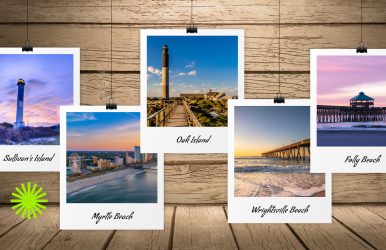
So our road led to Sullivan’s Island, the closest beach to Knoxville, TN. Having said that, there are many beaches near Knoxville TN.
For example, Myrtle Beach in South Carolina is one of the most popular ocean beaches near Tennessee. We also have Folly Beach in South Carolina and Oak Island in North Carolina.
In today’s Tour and Travel blog, we will talk about the beaches close to Knoxville TN, and tell you why they are most suitable for the ultimate Tennessee beach vacation.
What Is The Closest Beach To Knoxville Tennessee?
Our journey to the closest beaches to Knoxville TN will start from Sullivan’s Island, as promised.
However, before taking you on a tour of these beaches, I wanted to share the best time to visit the closest beach from Knoxville TN.
Knoxville primarily has two tourist seasons. You can visit the closest beach to Knoxville, TN between March and June and September to November.
So, let’s begin the ultimate Knoxville beach journey. Here we go!
1. Sullivan’s Island, South Carolina
Distance from Knoxville: 380.4 Miles
Travel Time: 6 Hours
I was looking for ocean beaches within 6 hours of me, and I found out Sullivan’s Island. It is a barrier island with an area of around 8.91 km².
Further, Sullivan’s Island, the closest beach to TN, stands out with its local history. It has Fort Moultrie, built in 1776 and it still tells the story of how it protected the city from the cannonball attacks of the warships.
Moreover, Sullivan’s Island is important in the history of literature. Edgar Allan Poe was stationed at Fort Moultrie between November 1827 to December 1828.
2. Myrtle Beach, South Carolina
Distance from Knoxville: 412 Miles
Travel Time: 6 Hours 46 Minutes
Sitting in Knoxville, I was looking for beaches within 7 hours of me. I found the name of Myrtle Beach in South Carolina.
Myrtle Beach is nothing short of a fantasy island and it was once the hub of pirates. Further, Myrtle Beach is associated with the Indigenous people and roaming ghosts.
A visit to Myrtle Beach is incomplete without exploring the Ripley’s Aquarium of Myrtle Beach. Further, you must spend some time at the Myrtle Beach State Park, and Myrtle Beach Pinball Museum.
3. Folly Beach, South Carolina
Distance from Knoxville: 383 Miles
Travel Time: 6 Hours 35 Minutes
Folly Beach, one of the closest beaches to Knoxville, is the ultimate destination to stay, eat, play. and explore!
Further, life on Folly Beach revolves around outdoor activities. From a casual stroll on the beach to more adventurous activities like surfing, boating, kayaking, and biking, Folly Beach offers you the opportunity to enjoy the best beach vacation.
Moreover, Folly Beach is a wonderful melting pot of modern entertainment and exploring wildlife. You can attend the Annual Folly Festivals and take part in birdwatching and exploring wildlife.
Blu Restaurant And Bar, Bert's Market, and Bounty Bar are some popular places to eat on Folly Beach.
4. Kiawah Island, South Carolina
Distance from Knoxville: 396.5 Miles
Travel Time: 6 Hours 30 Minutes
Kiawah Island with a majority of marshland, is located at a distance of 6 hours and 16 minutes by car from Knoxville.
To emphasize the adventure, let me tell you that the beach is often used for native wildlife watching!
Several locations across the beach are perfect if you are looking for wildlife spotting! The two locations popular for this purpose on the beach are Canvasback Duck Pond and Marsh Island Park.
What’s more, there are two scenic observation towers in Kiawah where you will get a 360-degree view of the sea and land!
If you are a hiker or like to bike, this beach is perfect! They have natural paths for these types of adventures.
For accommodation, there is a private 2nd story deck that you can rent to enjoy some stunning ocean views.
There is one popular restaurant called Jasmine Porch where you can splurge on good food, especially the Low-country favorites such as shrimp and grits, she-crab bisque, fresh seafood, po’boys, and burgers!
5. Isle Of Palms, South Carolina
Distance from Knoxville: 383 Miles
Travel Time: 6 Hours 30 Minutes
There is a playground for children, so this is the perfect destination if you have kids.
There is also a picnic area, so if you plan to spend the whole day out, you can go to this beach. For accommodation, there is a single-family cottage which is well decorated!
Food is another important part of the vacation, so I suggest the Sea Biscuit Cafe! Try out the seafood omelets, shrimp, and gravy because these are the low-country options.
6. Hilton Head, South Carolina
Distance from Knoxville: 411 Miles
Travel Time: 6 Hours 32 Minutes
You have to visit this beach for the best sunsets across the water! In a distance of 6 hours, 26 minutes from Knoxville, the coastal paradise is someplace to be visited.
If you are planning on staying the night, there is a resort rental that you can book. You can enjoy the outdoor and indoor pool, a tiki bar, etc.
You must catch the coastal area food, especially crab cakes, sandwiches, shrimp, grits, and salads.
7. Oak Island, North Carolina
Distance from Knoxville: 441.5 Miles
Travel Time: 7 Hours 14 Minutes
If you are looking for a scenic beach, Oak Island is the place to visit for all adventurous activities.
Water sports are quite famous here, along with that, you can see Fort Caswell, used in the 1800s and 1900s. This is one of the beaches near Knoxville TN!
You will take 7 hours and 8 minutes to reach the beach and can visit the island lighthouse, which is situated just beside the fort.
There is a perfect walk to enjoy Oak Island Nature Center at the beach, so if you are a nature lover, you know where to go!
Further, adventures such as kayaking are the thing to do as an outdoor adventure sport. Many family homes and rentals are at a distance of the March beach, providing incredible views across the beach.
If you visit the beach, you must try out scrumptious food items such as steak, chicken, and pasta, apart from the delicious seafood.
8. Wrightsville Beach, North Carolina
Distance from Knoxville: 442 Miles
The beach is a little farther from Knoxville, TN, as it takes about 7 hours and 23 minutes.
There are three beaches in Wilmington: Kure, Carolina, and Wrightsville. All the beaches qualify as some of the best beaches near Knoxville.
Apart from common activities such as shopping and dining, there are interesting activities to perform, such as going on catamaran cruises, visiting the History Museum, and attending fairs and seasonal festivals.
The Fred and Alice Stanback Coastal Education Center organizes educational programs and treasure hunts for children.
IIn terms of food, you will find some of the best cheeseburgers at this closest beach to Knoxville, TN! If you are a picky eater, you will find various options, from steaks to seafood platters.
9. Kure Beach, North Carolina, Closest Beach To Knoxville, TN
Distance from Knoxville: 449.5 Miles
Travel Time: 7 Hours 30 Minutes
The beach at Kure is beautiful, apart from the North Carolina Aquarium, which is situated at Fort Fisher.
Significant features are located at the beach, such as a nature play area, an adventure reef, and touch tanks.
This beach is located at a distance of 7 hours and 31 minutes.
Apart from the beach, you can also visit places such as the historical site of the Civil War Museum, the Fort Fisher State Site, beach cruises, a dog park, and a playground in front of the beach.
You cannot miss the food such as burgers, sandwiches, seafood and pasta! I am already drooling!
10. Tybee Island, Georgia: Closest Beach To Knoxville, TN
Distance from Knoxville: 434 Miles
Travel Time: 7 Hours
The beach is located at a distance of 6 hours and 55 minutes by road from Knoxville. Some of the place’s main attractions are the restaurants and the quaint little shops.
The beach is popular for people finding their relaxing haunt near Tennessee. Considering, it is the closest beach to Tennessee!
It is a low-key beach situated just outside of Savanah! Apart from relaxing on the beach, you can also access different amenities in Savanah, such as museums, historic architecture, upscale shops, ghost tours, and other attractions perfect for family outings.
Beautiful rentals are close to the beach and a 1-minute distance from where you can enjoy some stunning visuals.
The food available in and around the place is quite popular! One such restaurant is located near the waterfront called Bubba Gumbo.
The seafood Gumbo is their signature dish! You can also order fried fish, jambalaya, burgers, and crab cakes. They also popularly serve shrimp.
11. Simon’s Island, Georgia: Closest Beach To Knoxville, TN
Distance from Knoxville: 491.2 Miles
Travel Time: 7 Hours 32 Minutes
The beach is situated at a distance of 7 hours and 42 minutes from Knoxville, TN! The beach Oasis is a perfect place to relax, especially with all the amenities present to make your life easier.
The Neptune Park Fun Zone here is for family attractions.
You can also find a store to rent accessories for water sports restaurants, and several shops provide you with good food and the necessary equipment for the beach vacation, such as sunscreen, sunglasses, and others.
There is one family beach rental along with its private swimming pool. The rental can host a family, which is pretty close to the lighthouse.
You cannot miss the delicious food available on this closest beach to Knoxville, TN! Once such a restaurant opens, Porch offers fried catfish, shrimp, and fried chicken.
Read Also:
Top 8 List Of National Parks In North Carolina – Travel Guide
Closest Beach To Nashville – Top 10 Beaches You Can Visit
Top 10 Beaches In Gloucester In Massachusetts – Travel Guide
The Perfect Getaway: Discovering The Closest Beach To Disney World!







 Related