








I Had No Idea When To Visit Mauritius Till I Went There THIS Time!

Oct 27, 2023

Last Updated on: Aug 26, 2025

Travel Guides

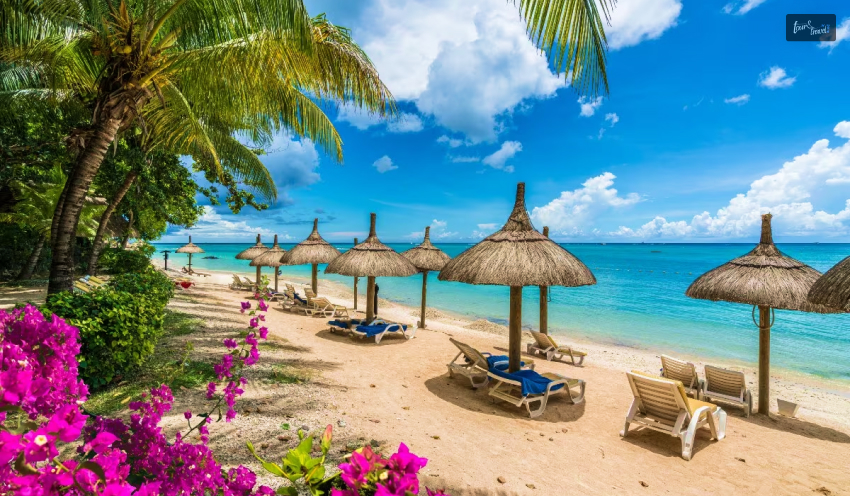
Mauritius! I had the amazing experience of going to this island country recently, and let me tell you, it was an experience of a lifetime.

Initially, I was confused about which time to plan it out for. The temperatures and weather in Mauritius are at odds with the rest of the world because of its position in the middle of the ocean. But, when I got there, lucky as I was, I had arrived just before peak season. I got to know about their culture, their food, and most importantly, the best time to visit Mauritius.

Here I will describe to you what Mauritius has to offer in each of the months of the year. If you want to know about Mauritanian weather the year around, make sure to stick it out to the end. Plan your trip then on, accordingly.

The Best Time To Visit Mauritius

The Best Time To Visit Mauritius
Image Source: images.news18.com

Mauritius is known for its sunny beaches and beautiful nature treasures. I am here to give you a season-by-season breakdown of the island. Keep reading!

January To March

January to March
Image Source: www.lexpressproperty.com

In Mauritius, January is considered one of the hottest and wettest months of the year. Despite the high rainfall, the island is still quite busy due to the influx of tourists from the Christmas period. You can expect heavy rainfall during late afternoons, and there is a possibility of torrential storms during this month.

Similarly, February is also quite hot, humid, and rainy in Mauritius. However, the rain usually doesn’t last long and clears up after a few hours. Though not perfect for a beach vacation, February has fewer crowds than January. It is important to note that there is still a chance of cyclones during this month.

March marks the Holi Festival, also known as the ‘Festival of Colours’ on the island. This annual celebration is held in honor of Lord Krishna, a Hindu deity. During the festivities, people line up on the streets and cover themselves with vibrantly-colored powder, creating a jovial atmosphere. Despite being a humid month, March sees less rainfall than January and February.

April To June

April To June
Image Source: media1.thrillophilia.com

The month of April is a hot and humid season, making it an ideal time for sun-seekers. However, the Easter holidays make the island quite busy. If you prefer a quieter beach vacation, it’s better to plan your trip outside of this period. April is also the beginning of the best time of the year to indulge in surfing or snorkeling in the crystal-clear waters.

May is officially the start of winter in Mauritius, but the temperature remains comfortable, and the humidity drops. This month is popular among tourists as there are reasonable travel specials on Mauritius accommodations. The evenings can get chilly, so it is recommended to pack some warmer clothes.

June is a cooler month in Mauritius compared to the humid weather at the beginning of the year. If you prefer hot weather, then June may feel much cooler. The trade winds start to increase, and like in May, the evenings can become a little colder. It’s the perfect time for kite surfers.

July To September

July To September
Image source: www.eventsmauritius.mu

July is also considered a cooler month in Mauritius. If you want to enjoy the best possible weather during this period, it’s recommended to visit the North of the Island. Despite the lower temperatures, July is still a popular time of the year due to school holidays in the Northern Hemisphere.

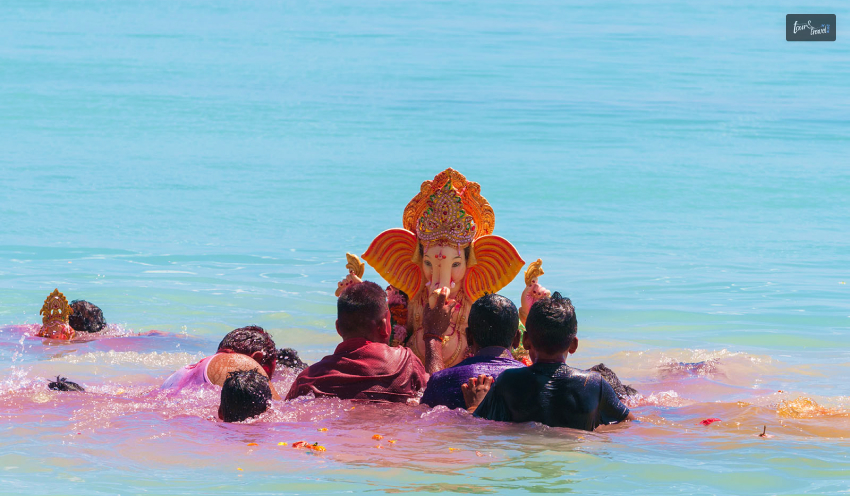
I visited Mauritius in August. In Mauritius, August is a month with mild temperatures and no rainfall, making it perfect for sunny days without the scorching heat. I would recommend you stay on the west or north coast during August as these areas provide more shelter from the wind. This month marks the Ganesh Chaturthi Festival, a festival honoring the God Ganesh, and you can see statues of the Elephant God all around the island during the celebration.

September is considered the unofficial beginning of peak season in Mauritius. At this time, the strong trade winds start to die down, and the temperatures rise, ushering in the summer months and longer days of sunshine. Despite this, September still offers some quiet beaches, good deals on flights, exciting tours in Mauritius, and discounts on accommodations.

October To December

October To December
Image Source: www.mauvillas.com

October is the driest month of the year in Mauritius, and it tends to be a busy time at the most popular destinations on the island. This month is also significant as it is the time for the Hindu festival of Diwali, also known as the Festival of Lights. During this festive period, candles and lamps light up the island in a soft glow, making it a beautiful sight to behold.

November is characterized by a significant increase in humidity and temperature. The month offers more sunshine, but it’s also associated with an increase in rainfall. It’s a perfect time for scuba diving enthusiasts who want to catch a glimpse of the seasonal turtles, particularly the Green turtle and the Hawksbill turtle, which are commonly spotted during this period.

In December, the last month of the year, Mauritius experiences a surge in global activities, and the island is no exception. Humidity levels rise, and heavy rainfall is expected, mostly in the afternoons. The sea temperature is warmer, making it ideal for water sports such as windsurfing, kayaking, and scuba diving. However, it is advisable to plan your beach holiday well in advance to avoid the high demand during the festive season.

Things To Do When Visiting Mauritius

Things To Do When Visiting Mauritius
Image Source: planetofhotels.com

Mauritius is absolutely gorgeous most of the time, and visiting it is a must, whether solo or with family. Here are some things you can try once you decide to try this island country for your next trip:

Snorkeling At Blue Bay Marine Park

Snorkeling At Blue Bay Marine Park
Image Source: static2.tripoto.com

If you’re interested in witnessing the beautiful marine life of Mauritius, snorkeling is an excellent way to do so. By snorkeling at Blue Bay Marine Park, you’ll have the opportunity to closely observe the amazing underwater world of Mauritius that has been hidden for centuries. This excursion will transport you to a different world, allowing you to explore something that is beyond your imagination.

Cave Sea Kayaking At Albion Caves

Cave Sea Kayaking At Albion Caves
Image Source: images.squarespace-cdn.com

Kayaking in Mauritius offers a unique and adventurous experience. One such experience is kayaking across the cave sea, providing you with an exclusive opportunity to witness the beauty of the caves. If you are fascinated by caves and enjoy exploring their hidden stories and interesting designs, then you should definitely try a kayaking tour at Albion Caves.

Walks With Lions At Casela Park

Walks With Lions At Casela Park
Image Source: toursmauritius.mu

Have you ever considered taking a walk with the king of the jungle? If so, Casela Park in Mauritius offers an opportunity to experience the wild side of the jungle by taking a thrilling walk with lions. This excursion in Mauritius promises to give you an adrenaline rush and an unforgettable experience that you may have never imagined!

Wrapping Up

If you are planning to visit Mauritius and want to know more I hope this article helped. My Experience of Mauritius and knowledge of it will help you select your trip timing better.

If you have thoughts to share or questions to ask, please leave a comment below. I would love to hear from you!

Read Also:

Share on Social Media

Abdul Aziz Mondol is a professional blogger who is having a colossal interest in writing blogs and other jones of calligraphies. In terms of his professional commitments, he loves to share content related to business, finance, technology, and the gaming niche.

Leave a Reply

Your email address will not be published. Required fields are marked *

title-img Related

READ MORE Guide To Indiana National Parks

A Guide To Indiana National Parks – Latest Guide

BY  Mashum Aug 2, 2021

Indiana state is famous globally as the “Covered Bridge Capital” because there are 32 covered bridges alone in Historic Parke County, which are discoverable through a road trip. Apart from the Indiana national parks, the state is also famous by the name of “great lakes state” since it shares 40 miles of shoreline with Lake Michigan.  The four national parks in Indiana are renowned as outdoor adventure destinations, namely the Indiana Dunes National Park, President Lincoln’s Boyhood Cabin, George Roger Clark, and the Lewis and Clark Historic Trail. Of the four national parks, Indiana Dunes National Park is a must-see destination. Indiana Dunes National Park and George Rogers Clark National Historical Park are national parks in the term's true meaning. And, the other two national parks in Indiana, i.e., Lincoln’s Boyhood National Memorial and Lewis and Clark National Historic Trail, are the two memorial sites in Indiana, recognized for their routes of historical significance or original trails by the National Historic Trails. Let’s check more details about each of the national parks in Indiana and see how we can spend our day if we plan a trip there. The Four Noted Indiana National Parks 1. Indiana Dunes National Park:  Of the four celebrated Indiana national parks, this one is an unmissable destination if you are in the state. The national park shares 15 miles with the southern shore of Lake Michigan. Indiana Dunes National Park is spread over 15,000 acres and has a lot to offer.  Your search for rare species of birds will end here, along with 1,100 native plant species and the fun of flying kites on the sandy beach. You will feel enchanted with every step you take in this national park as this place is among the most biologically rich areas in the nation.   The park offers 50 miles of trails over rugged dunes, sunny prairies, mysterious wetlands, peaceful forests, and meandering rivers for hikers. Shall we now check out basic information about the national park to plan our tour accordingly? Directions To The Park: You can access Indiana Dunes National Park through Interstate 94, the Indiana Toll Road, U.S. Highway 12 & 20, Indiana State Road 49, and several other local roads. To visit the Indiana Dunes Visitor Center, you need to take Indiana State Road 49, between U.SD. Highway 20 and Interstate 94. Operating Hours Of The National Park: This Indiana national park has general areas that are open throughout the year but have specific hours of operation. The standard working hours of the general areas of the national park are Monday to Sunday from 06:00 am to 11:00 pm. The entrance to the Indiana Dunes National Park is through the west beach. The hours of operation of this portion of the park is Monday to Saturday from 07:00 am to 09:00 pm. Weather News: Usually, July is the warmest month in the national park, and January is the coldest month. June month witnesses the heaviest rainfall with 4.66 inches of rain on average. Entrance Fees To The Park:  West Beach - Standard Entrance Fee $6.00, Senior Pass Entrance Fee $3.00, Access Pass Entrance Fee $3.00, Bus Entrance Fee $30.00. Dunewood Campground - Standard Camping Fee $25.00, Senior Pass Camping Fee $12.50, Access Pass Camping Fee $12.50. This campground is 1.5 miles from the beach and boasts 67 campsites made for both RVs and tent camping.  One-half of the site is open for reserve, and the other half is given on a first-come-first-served basis. You will find showers and restrooms at the campground but no water or electric hookups.  Indiana Dunes Visitors Centers:  Dorothy Buell Visitor Center - This Indiana national park visitor center is open on all days except New Year’s Day, Thanksgiving Day, and Christmas Day. The operation hours are 09:00 am to 04:00 pm Central Time (Due to covid-19). At Dorothy Buell, you will view lobby displays, read brochures about Porter County, Dunes State Park, Indiana, and Indiana Dunes National Park. You can also shop in the Eastern National Bookstore and enjoy watching educational displays and two short orientation videos. Paul H. Douglas Center For Environmental Education - This visitor center is open from 09:00 am to 05:00 pm Central Time during Summers and from 09:00 am to 04:00 pm during Winters. This center is your gateway to the magnificent Paul H. Douglas Trail via Miller Woods. You will find a natural environment all through the center through its hands-on educational exhibits, animals, lectures, Nature Play Zone, ranger-guided hikes, and crafts. Popular Activities To Do At The National Park: Hiking. Picnic at the beach. Birding. Swimming. Fishing and Paddling. Geocaching. Horse Riding on the equestrian trails. Camping (Between April 1st to October 31st). Biking. Snowshoeing and cross country skiing. Shuttle Bus Services: During the summer period, on weekends, you can take the services of free shuttle buses from the Dunewood Campground to the beaches. You can stop at sites like the Miller Train Station, Marquette Park, Lake Street Beach, and The Douglas Center.  Pet Friendliness: Indiana Dunes National Park is completely dog-friendly. You can take your pet to almost all trails and other parts of the park, besides a few exceptions. For example, you cannot take your pets on Glenwood Dunes Trail’s equestrian part, in the lifeguard area of the West Beach, and the Pinhook Bog Trail. You can enjoy a free public wi-fi facility at the Indiana Dunes Visitor Center. 2. George Rogers Clark National Historical Park:  Located on Southwest Indiana and beside the Wabash River, George Rogers Clark National Historical Park is one of the small Indiana national parks, which has a few monuments, a picnic spot, statutes, and a visitor center as its main center of attraction. The national park is about an hour tour in total.   Why Was George Rogers Clark National Historical Park Built? George Rogers Clark National Park was built in the 1920s in memory of an American Colonel named George Rogers Clark, who captured Fort Sackville in 1779 and his army with help from French residents of the Illinois country. The capture of the fort guaranteed the United States a claim to the frontier, which is approximately an area as big as the original 13 states. The National Park is a memorial built to commemorate Clark’s success for his unmatchable success for the revolutionary war’s 150th anniversary. When you visit this national park’s visitor center, you will discover the fort’s history, how it was built, and how it felt living in the Pullman District. In addition, at the national park, you will be shown a 30-minute short film on the life of George Rogers Clark. Things To Do At The George Rogers Clark National Park A short walk around the nearby town of Vincennes will offer you the following things to do at this small Indiana national park: Dine at restaurants. Camping at Campgrounds. The Old Cathedral. State Historic Sites. Shops to shop. Antique Stores. There are particularly no campgrounds at George Rogers Clark National Park. But, visitors can find campgrounds for RV and tent camping at the Ouabache Trails Park, located in Vincennes.  Space For Pets: Your leashed pets can accompany you on the walkways around the Memorial and the visitor center, but their entry inside any buildings is strictly prohibited. Operating Hours: The park is open for visitors on all seven days of the week. At the same time, it is closed on most of the federal holidays except Independence Day, Labor Day, and Memorial Day. Timings for the Park District: George Rogers Clark Memorial is from 09:00 am to 04:45 pm on demand. Weather At The Park: The weather inside the national park is very much typical for the Midwest. Summer months can be hot and humid, and winters quite cool. Entrance Fees To The Park: For a George Rogers Clark National Park tour, there is no entrance fee charged.  The Visitors Centers To Visit: This Indiana national park has one visitor center with the same name as the national park. This center has a small exhibit area. You will be shown a short 30-minute introductory movie titled “Long Knives,” which tells about the backstory of George Rogers Clark and his military campaign. No drinks or food are allowed at the visitor center or Memorial. Services offered here are charging stations, restrooms, bookstores, and drinking fountains. 3. Lincoln Boyhood National Memorial:  In the southern part of Indiana and Lincoln City, you will find the third Indiana national park, named Lincoln Boyhood National Memorial. This is where former President Abraham Lincoln grew from youth to manhood before becoming the 16th President of the United States of America. Operating Hours Of The Lincoln Boyhood National Park: All visitors are allowed to tour the national park grounds and visit all the outside areas daily, between sunrise and sunset. Once you arrive at the park, there are plenty of things that you can do, such as two miles of trails, watching the sculptured panels on the outside of the Lincoln Memorial Visitor Center, visiting the Cabin-Site Memorial, the Pioneer Cemetery, and the Living Historical Farm. Unfortunately, the park is closed on almost all federal holidays. Weather At The Park: The climate in Southern Indiana is moderate, with a touch of warmness and moistness. The summers are warmer and winters cooler. It rains the most during Spring. Visitor Center At The Park: The Lincoln Boyhood park has a Memorial Visitor Center built in 1943 with two memorial halls and a connecting cloister. In the Memorial Court, you will find the works of E.H. Daniels and five sculptured panels that mark significant periods in Abraham Lincoln’s life. Taking a tour of the whole Memorial will take up to 30 to 60 minutes. There is also an orientation film shown at the visitor center every half an hour from 08:00 am to half an hour before the day’s closing. The Museum artifacts and exhibits speak about Abraham Lincoln’s life.  This national park is all about Lincoln’s family, boyhood, and frontier life in this Indiana national park area. During summers, the visitor center is open on all seven days from 09:00 am to 04:00 pm except for the federal holidays. And, at the time of the Fall season, the timings are 07:00 am to 03:00 pm. Place For Pets At The Park: Visitors are permitted to bring in their pets inside the park, but with certain restrictions. The pets must be restrained at all times on a leash, which should not be longer than six feet in length.  The pets are only allowed on the 2 miles of hiking trails and roads in the park and barred from entering public buildings. Things You Can Do At The Park: It will take at least two hours to complete a tour of the whole park. The indoor activities at the park include: Watching the Park Film at the Memorial, titled Forging Greatness and Lincoln in Indiana, which is 14 minutes in length. Paying a visit at the Lincoln in Indiana Museum, which would take around 15 to 30 minutes. The outdoor activities include: Hike the Trail of Twelve Stones, a type of front-country hiking of 20 minutes. Hike the Boyhood Trail, which is another front-country hike of 10 to 15 minutes. Visiting the Lincoln Living Historical Fa, you'll find a re-created homestead with outbuildings, log cabins, field crops, gardens, livestock, and split rail fences.  For kids of 05 years and above, there is a Junior Lincoln Boyhood Ranger Program. Lincoln Spring, which is an obscure waterway. The entry to the Lincoln Boyhood Indiana national park is free. 4. Lewis And Clark National Historic Trail:  The Lewis and Clark National Historic Trail is nearly 4,900 miles long, starting from Pittsburgh, Pennsylvania, to the Columbia River mouth, which is near the present-day Astoria, Oregon. This Indiana national park follows the historic incoming and outgoing routes of the Lewis and Clark Expedition along with the preceding section initiating from Pittsburgh, Pennsylvania, to the Wood River in Illinois. This Trail connects 16 U.S. States and many Tribal lands. Today, visitors are allowed to explore the whole Trail using varied transportation methods and interpretive means, following the approximate route of the Corps of Discovery, i.e. Lewis and Clark Expedition Members.  Places To Visit In Lewis And Clark National Park:  Lewis and Clark National Historic Trail Visitor Centers and Museums: At Lewis and Clark Historic Trail Museums and Visitor Centers and Cultural Centers, visitors can learn more about the expedition and experience blissful and diversified landscapes and communities on the Trail. Directions To The National Park: You will find the Lewis and Clark Indiana national park visitor center inside the DOI, National Park Service. Weather At The Park: The summers are sweltering, so you must drink plenty of water and wear sunscreen when stepping out for a tour of the Trail. The winters are icy, with ice settling on trails and sidewalks. Since this Trail covers 16 U.S. states, you must watch the weather prediction of the state you are planning to visit. The Final Thoughts We hope that the above comprehensive guide on Indiana national parks is a one-stop solution and a valuable guide for you if you plan a trip to any of the four national parks and trails. From serenity to beautiful natural landscapes, from magnificent and ancient monuments to rare species of animals, you will find every part of each of the four national parks surprising. More Resources: A Guide To National Parks In Georgia – Latest Guide 8 Best Bachelor Party Destinations To Visit In 2021 A Guide To National Parks In Michigan – Latest Guide 2021

READ MORE statue of liberty view point

Statue Of Liberty View Point – Top Spots To See The Statue Of Liberty (Free Spots Too)

BY  Barsha Nov 23, 2022

There are so many things that most definitely be on your NYC bucket list! And one of those things happens to be visiting the Statue of Liberty viewpoint. Yes, there is more than one. Today, we will be discussing all the best spots to see this historical symbol of emancipation. And not just see - we have also determined where you can take the best pictures.  Come on! Lady Liberty is iconic in NYC! So you can’t just ignore her. It only makes sense to take a few photos of the original First Lady of America. What we liked to call ‘one for the gram!’  Keep reading to find out all the best spots to check out the Statue of Liberty. Snap a few shots for the gram - you just have to stick to the very end!  Visiting The Statue Of Liberty View Point - 10+ Spots To See The Statue Of Liberty (Free Spots Too) There’s no accurate answer to the very popular ‘how to see the statue of liberty?’ question! Located literally in the south of Manhattan, this Lady of Liberty prefers to chill in the middle of the water. It makes the nearby areas perfect for taking aesthetic photos! But isn’t that the best part of visiting New York? So many people visit the city that never sleeps in the hope of living a free life. Isn’t that what the Statue of Liberty stands for? When people cross the Atlantic Ocean towards the United States Of America, they see the Statue of Liberty. It gives them hope of the promised land where class doesn’t matter.  So without wasting any more time, scroll down to find out which is the best Statue of Liberty viewpoint!  Brooklyn Bridge: You don’t need to look for Statue of Liberty views. You can enjoy one of the best views of the Statue on your visit to the Brooklyn Bridge. The Bridge is iconic pop culture and the best part? You can enjoy stunning views of the city skyline. The Bridge serves as a beautiful Statue of Liberty view point. You don’t have to spend a single penny on the same! Read More: Great Places To Take Pictures In London Battery Park City Esplanade: The view of Statue of Liberty from Battery Park in Lower Manhattan is truly one of the best views of the Statue you will get to witness. When you are walking the long stretch of the beautiful seaside sidewalk, it will feel like you have simply stepped inside a black-and-white movie. Plus, it’s the perfect spot for one of those caught-in-the-camera-very-candid pictures! One World Observatory: The historic World Trade Center happens to be another beautiful Statue of Liberty view point. It is also located in the Lower Manhattan region. You just have to reach the One World Observatory. Unfortunately, you have to pay around 43 dollars for a basic ticket to the Observatory. But that’s fine because it’s NYC, baby! Green-Wood Cemetery: The Green Wood Cemetery is hauntingly beautiful in its own way, but you also get some crazy views of the Statue of Liberty from here. The twisted cobblestone pathways, the graves of famous figures such as Jean-Michel Basquiat or Horace Greeley, and even the breathtaking views of the Statue - all come together to make this place a must-visit on your trip to the city that never sleeps.  Louis Valentino Jr. Park & Pier: Another Statue of Liberty view point based in Brooklyn, the Louis Valentino Jr. Park & Pier, is located in the Red Hook waterfront, the industrious neighborhood of Brooklyn. This one’s also free, so there’s no reason why you won’t check out the best symbol of American liberty from this spot. You can also enjoy stunning views of Staten Island, Governor’s Island, and the city skyline. Museum Of Jewish Heritage: The Museum Of Jewish Heritage is one of the lesser-known spots that offer crazy views of the Statue of Liberty. Another one of the Battery Park Statue of Liberty views, the Museum is entirely devoted to honoring Jews and as a Holocaust remembrance. If you love history, then you can’t miss out on this spot.  Staten Island Ferry: One of the fun yet lesser-known things to do in New York is to take the ferry from Manhatten to Staten Island. You do not just get to enjoy breathtaking views of the City skyline and Staten Island, you will also have the best view of the Statue of Liberty while you are commuting between Staten Island and Manhattan.  Governor’s Island: If you are ready to invest around 3 dollars, you can visit Governor’s Island - And you will find yourself at the perfect Statue Of Liberty view point. You just need to reach the hills here and explore the trails. You might just find yourself enjoying not just stunning views of the Statue but also that of the entire Lower Manhattan! Liberty State Park:  There’s no mystery behind this one. Everyone knows that the Status of Liberty is located in the waters of New Jersey. So New York is not the only place with stunning views of this iconic statue, even the state of New Jersey has some crazy unexplored views. You can also try out some canoeing in the timeless Hudson river.  Brooklyn Heights Promenade: Another beautiful Statue Of Liberty view point in Brooklyn, the beatific Brooklyn Heights Promenade, sits proudly over the Brooklyn Queens Expressway or BQE. The beautiful esplanade definitely needs a visit as it offers stunning views of the New York Harbor and the Brooklyn Bridge Park.  Read More: Traveling To New York? Here Is Where You Should Stay And It’s A Wrap!  You might have been looking for the one perfect Statue Of Liberty view point, but we have managed to provide you with so many options! One Statue, multiple viewpoints, and that, my friend, is the best part of New York! You don’t have to be happy with one when you can have several - be it your Cosmopolitan or the perfect viewpoint.  So tell us, what do you think about visiting the Statue of Liberty? And if you already have, what was your experience like? Tell us in the comments below! Read Also: Does New Jersey Have Good Nightlife? Let’s Find Out! Best Restaurants In Honduras To Visit While Traveling Which Is The Best Time To Visit Spiti Valley? – Travel Guide

READ MORE Two-Way Itinerary

Ensuring Approval: The Power Of A Well-Crafted Two-Way Itinerary For Visas

BY  Abdul Aziz Mar 6, 2024

When you apply for a visa application when traveling to any country of the world, you have to submit certain documents. Hence, among them, a two-way itinerary is a must. This will show the embassy of the target country that you have planned your entire trip. Moreover, it will also disclose that you fulfilled your purpose of visiting the state and coming back to the origin.  Apart from this, when applying for various types of visas, you need other documents. Therefore, you must show your passport, photos, visa application form, cover letter, invitation letter, proof of stay, and enough financial sources. Consequently, be sure to check the guidelines of the concerned embassy through which you are applying. This article will explain everything you need to know about the two-ways itinerary for visa application. Therefore, hold on and read the following blog post. What is a two-way itinerary for a Visa Application? Its alternative names are transport booking, round-trip itinerary, or confirmed flight itinerary. This is a document the embassy needs during the visa application process. Moreover, you have to fill out a visa application form and there is a section in that form that asks you for your travel plans. This means that you have to disclose your exit and arrival countries along with other details. An itinerary is of two kinds, one-way and two-way itinerary. The one-way itinerary is when you leave for your target country and have no intention of coming back to your hometown. However, the embassy may ask for a return or two-way itinerary to show that you will be back home soon. Furthermore, it acts as evidence to present that you won't start staying illegally there after your visa expires. Besides, a two-way itinerary unfolds your flight details. This may include the place you are going, the date and time when you are departing, and how long are you planning to stay. Moreover, it is also important to share whether you will stay in a hotel or at the house of a host, such as a friend or a family member. What is proof of itinerary? You need an itinerary when applying for a visa application. This may fall into two categories. However, it is important to have a proof of itinerary to show it to the respective personnel. A POI is a confirmed ticket. The embassy gives you a confirmation code or approves your itinerary at the time of your visa application. This means that you have booked or reserved your tickets. Importance of Two-Way Itinerary: Why It Is Essential The importance of a two-way itinerary is beyond the horizon. However, it is not a real ticket. When applying for the visa application, you have to prove to the embassy that you have purchased your flight tickets. However, the officials are aware of the fact that buying an actual ticket upfront may cause you more money to lose. There are many reasons for getting a dummy ticket instead of an actual one. For instance, your visa application may get rejected or delayed due to some obvious reasons. Moreover, you are unable to have a tentatively scheduled trip. Therefore, buying an actual ticket is a bit risky especially when you have to lose a huge amount of money before your trip. On the other hand, a two-ways itinerary for visa application will save you from the trouble of the ‘no refund’ or ‘no cancellation’ policies of some embassies. Therefore, it is advisable to go with a round-trip itinerary or fake flight ticket when submitting the documents. If your visa gets approved, you can buy the actual ticket and start your journey. There are also other alternate methods through which you can compensate for this segment of your visa application process. They are mentioned beneath in detail. Related: 5 Leading Golden Visa Programs For Wealthy Investors Step-by-step Guide to Get a Round-Trip Flight Itinerary When applying for a visa to a Schengen or any other country, you need to fill out a form. Moreover, the form may have several sections that you need to complete. One of them is putting your round-trip flight itinerary information. Therefore, be sure to follow the steps mentioned below to get the procedure right. The first step is to provide information related to your flight reservation and hotel booking. This will help the embassy confirm the sites you are visiting and the place of your stay. Therefore, you need to include this information in the form as well as in the itinerary. What is the itinerary for the US visa? The itinerary for the US visa is the same as for other countries. Moreover, it may also show your inner flights scheduled. For instance, you are headed from the US to India. The inner flights may disclose where you will be traveling in India such as Mumbai, Delhi, or Agra. Secondly, you have to show your return ticket. This is especially important if you want to commute by other means instead of a flight. For instance, if you have any plans to come back on a train or want to experience the road adventure. It is one of the most important requirements of the process to provide proof of onward travel. Irrespective of the information listed above, you can also briefly discuss your travel plans. For example, this may include your daily activities or the events or business meetings you intend to attend. The second last step is to submit your visa application, along with all the other supporting documents. For instance, the flight reservation document, place of stay or invitation letter, and daily schedule of the trip. Lastly, wait patiently for the response from the embassy. It may usually take fifteen days. However, in rare cases, the embassy may take a month to reject or approve your application. Always seek a logical reason if your application is rejected. Besides this, you can look for other methods to get an itinerary. You can buy cheap flight tickets or search for airlines that offer refundable tickets. However, all these methods come with their pros and cons.  Read Also: From Sunrise To Sunset: A Day’s Itinerary For Exploring Benidorm Viva Las Vegas: Your Ultimate Travel Itinerary For An Unforgettable Trip! Temples, Markets, And More: Your Ultimate Bangkok Itinerary