


Puerto Rico Vs Dominican Republic: Which One Should Be The Next Travel Destination?  

The sound of Latin music fills the air! The Spanish language and a passion for baseball! The beautiful beaches and great food!  

All these things are common in the Dominican Republic and Puerto Rico.  

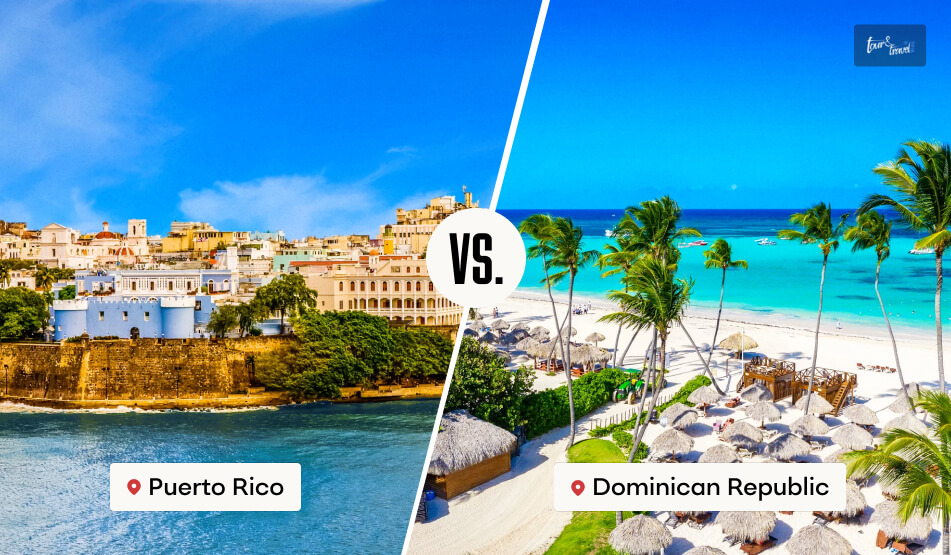
So, when there is a Puerto Rico vs Dominican Republic comparison, it’s really difficult to pick a favorite. Both Spanish cities, with their signature rum and tropical rainforest,s are ready to win over you.  

Still, here is a comparison you need to read before you pick Puerto Rico or the Dominican Republic as your favorite.  

Puerto Rico Vs Dominican Republic Weather: When Is The Best Time To Visit?  

Puerto Rico Vs Dominican Republic Weather When Is The Best Time To Visit

Puerto Rico and the Dominican Republic have similar tropical weather conditions. December to April is the ideal time for visiting these islands, as it is the dry season.  

The daytime temperatures range between 70 and 80 degrees Fahrenheit in these months. However, these balmy and dry conditions are very much a part of the appeal of these places.  

Moreover, if you are okay with a little humidity, you can plan a visit in September or November.  

Puerto Rico Vs Dominican Republic: History  

The discovery of these islands by Columbus happened almost at the same time. While Columbus discovered the Dominican Republic in 1492, Puerto Rico was discovered by him in 1493.  

Furthermore, both places have a rich history of Spanish colonization. Still, each of these places has distinct historical accounts.  

1. The History And Historical Sites Of The Dominican Republic  

The History And Historical Sites Of The Dominican Republic

Santo Domingo, the present capital of the Dominican Republic, was the first European colony in the Americas.  

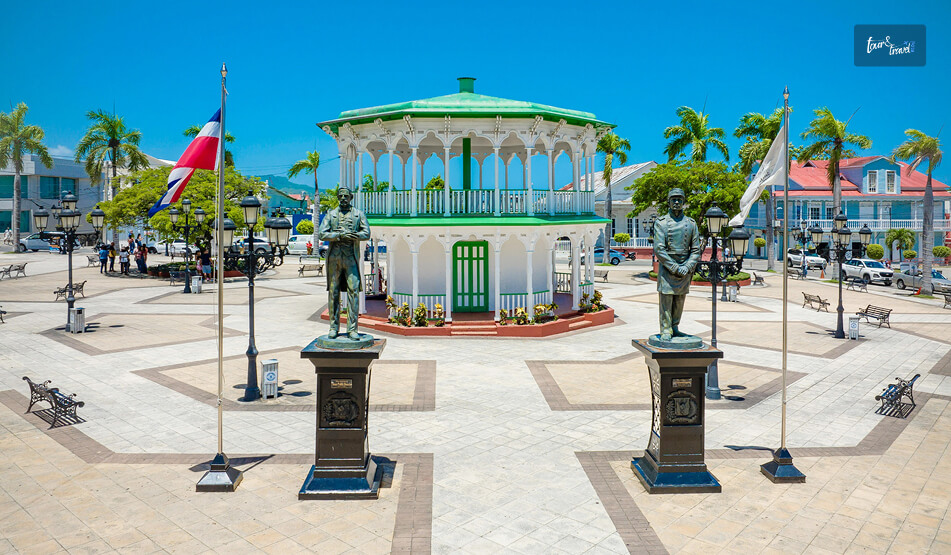
Also, Puerto Plata, on the northern coast, is home to the Fortaleza San Felipe. It was built in 1577. It was a prison once, and now it functions as a museum that has all the military artefacts from the 18th and 19th centuries.  

You must also visit the Casa Museo General Gregorio Luperón here. Nestled in a Victorian building, this museum has many period exhibits. Also, as the name suggests, it focuses on the struggles of General Gregorio Luperón, a hero in the struggle for independence.  

After exploring the historical sites, you can visit the famous Umbrella Street. Here, you can explore the chocolate museum, coffee bar, and the museum of tobacco.  

2. History And Historical Sites Of Puerto Rico  

History And Historical Sites Of Puerto Rico

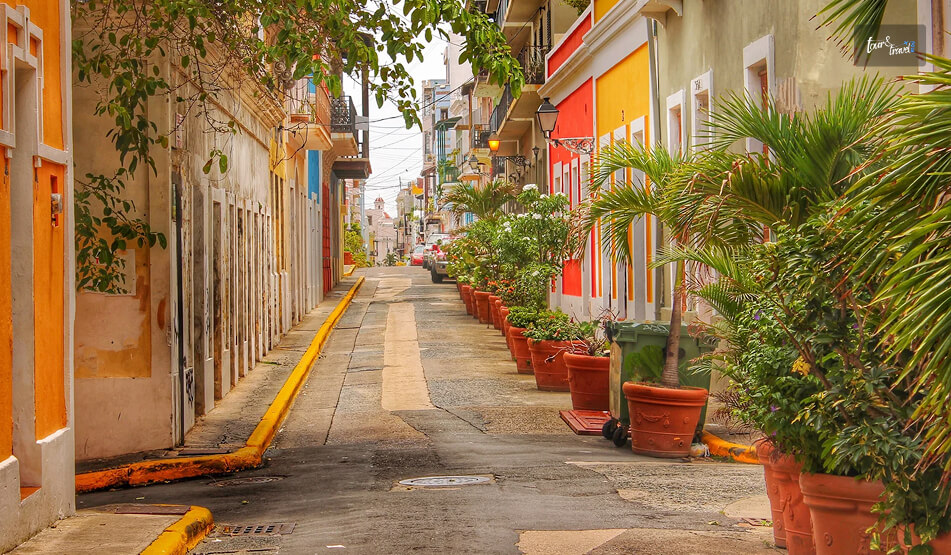
Old San Juan, a UNESCO World Heritage Site, is a testament to the rich history of Puerto Rico. It has cobblestone streets, picturesque forts, and heritage architecture.

The oldest executive mansion, and the oldest still-in-use executive mansion in the Americas, is La Fortaleza. It is the Governor’s residence in Old San Juan.

Furthermore, you can visit the San Felipe del Morro Fortress, a UNESCO World Heritage Site, here. Another major draw is the El Capitolio, or the seat of government in Puerto Rico.

In addition, the Fortín de San Gerónimo and Fortín San Cristobal have a history dating back to the 1700s or during the Spanish colonization.

After exploring these historical sites, El Paseo de la Princesa and San Juan’s Promenade, with street vendors and fountains, add to the fun vibe of Puerto Rico.

Puerto Rico Vs Dominican Republic Culture

Though the Spanish language dominates both these islands, Puerto Rico and the Dominican Republic have distinct dance forms. The Dominicans are the masters of bachata or merengue.

On the other hand, Puerto Rico is home to bomba or Salasa. Though these music and dance forms are very much African, there is a difference that the connoisseurs can notice.

Puerto Rico Vs Dominican Republic Outdoor Adventures

Puerto Rico and the Dominican Republic are rich in coastal experiences. You will love sailing and kayaking here.

However, they offer similar yet different experiences in exploring the wildlife, beaches, and spotting the marine life.

1. Puerto Rico Vs Dominican Republic: Nature And Wildlife Experience

Tropical forest, swimming holes, and birds are the main highlights of the nature and wildlife experience in Puerto Rico and the Dominican Republic.

Enjoy the hikes and wildlife spotting.

Wildlife And Nature Adventure In Puerto Rico 

Wildlife And Nature Adventure In Puerto Rico

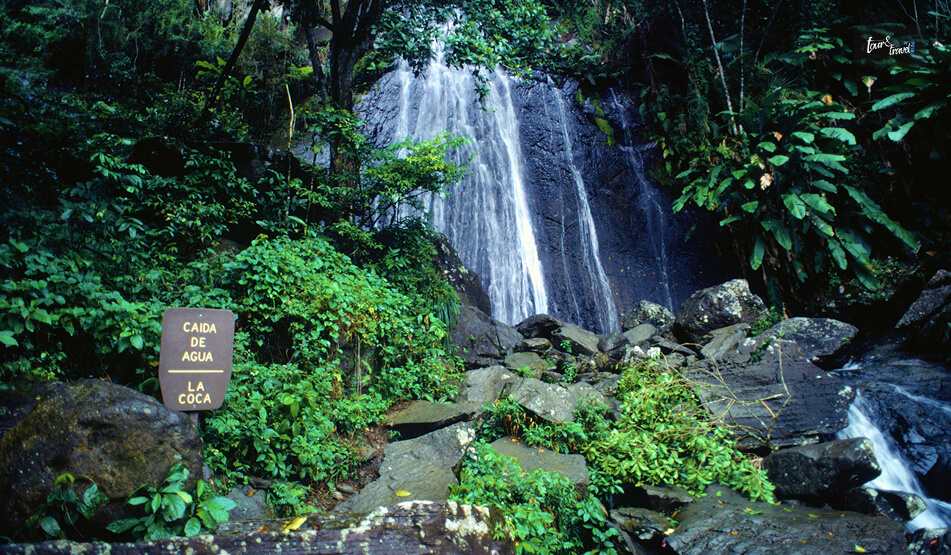
In Puerto Rico, you can explore El Yunque, which is the only U.S. National Forest designated as a tropical rainforest. You can hike through the trails here and try some zipline adventure.

As you hike through the trails, you will find many birds and tropical plants here. 

In addition, you can enjoy your moments in the natural rock slides and cool down in the swimming holes. 

Moreover, take ATV rides and enjoy your off-road vehicle moments through jungle trails and beaches. 

Wildlife And Nature Adventure In The Dominican Republic 

Wildlife And Nature Adventure In The Dominican Republic

On the other hand, the Dominican Republic has the El Choco National Park. It is home to bata, lizards, tropical birds, and many endemic plants and animals. 

Furthermore, Monkeyland is a reserve for squirrel monkeys. Also, the Manatee Reserve is the place to paddleboard and spot the sea cows. 

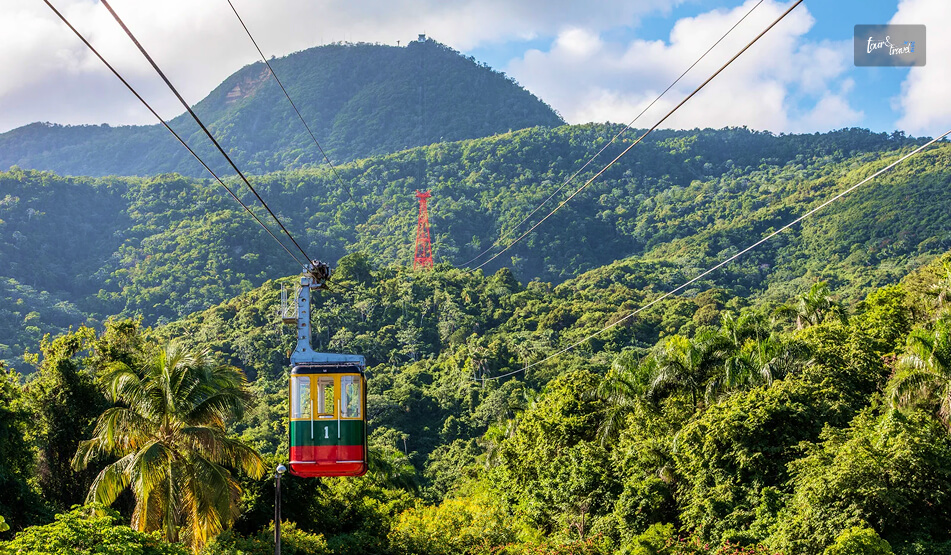
Want some more adventure? You can explore the Isabel de Torres National Park.

Here, you will find the only cable car in the Caribbean. It will take you around 2625 feet above sea level. 

Enjoy the views of the Atlantic waves, the rainforest, and Puerto Plata while ziplining. 

Also, you can take your journey forward from here. Walk through the dense forest and pass deep canyons, deep rainforest to find waterfalls such as the Damajagua Waterfall.

In addition, you will find swimming holes, lagoons, and rock chutes functioning as natural slides.

2. Puerto Rico Vs Dominican Republic Beaches

Puerto Rico Vs Dominican Republic Beaches

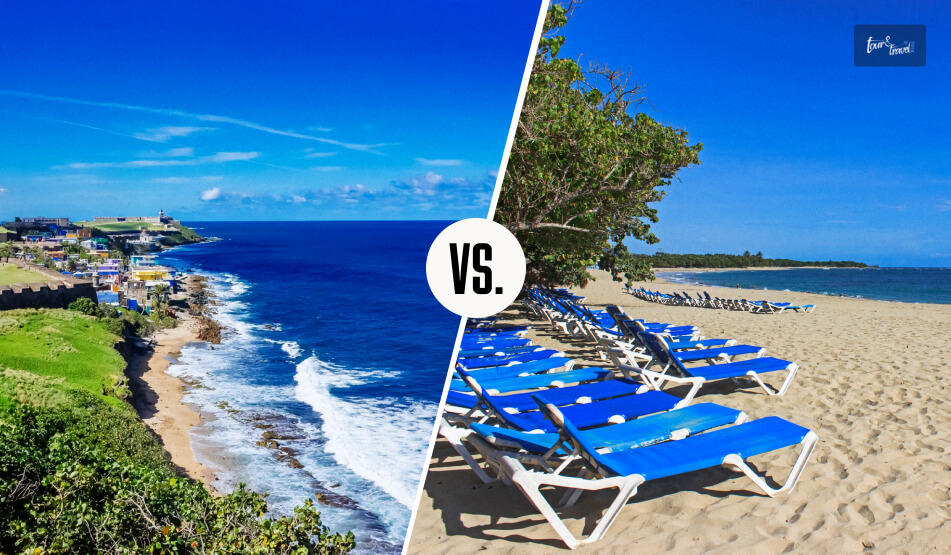
Here, the difference is visible among the beaches. The beaches in the Dominican Republic have white sand. 

On the other hand, the beaches in Puerto Rico have golden or black sand.

Playa Dorada is located on the northern coast of the Dominican Republic, where the Atlantic Ocean waves create a rougher experience than the beaches further south.

The gentle, light-golden sand has palm trees, and kite-surfers are enjoying themselves in the water. 

For a more unique experience, head to Cayo Arena, often referred to as “Cayo Paraíso” for clear reasons. The vibrant corals, plentiful sea creatures, and diverse underwater marvels draw numerous divers and snorkelers. 

In Puerto Rico, it’s not necessary to travel far from San Juan to discover great beaches. Escambrón Marine Park is just ten minutes from downtown and is favored by surfers as one of the top spots for beginner-friendly waves on the island. 

Right by the Puente de Hermanos is Playita del Condado, a beautiful city beach in Puerto Rico. It is located in a small cove, creating a beautiful combination with the expansive Condado Beach. 

In just another ten minutes, you will arrive at the stunning Isla Verde Beach. The golden sands are sheltered by towering palm trees, with numerous restaurants, bars, and shops in close proximity. 

Surfers should also check out the appropriately named Surfer’s Beach in Aguadilla. A top surfing spot in Puerto Rico is located on the north side, featuring a beautiful point break, particularly during winter. 

3. Whale Watching In Puerto Rico Vs Dominican Republic 

Whale Watching In Puerto Rico Vs Dominican Republic

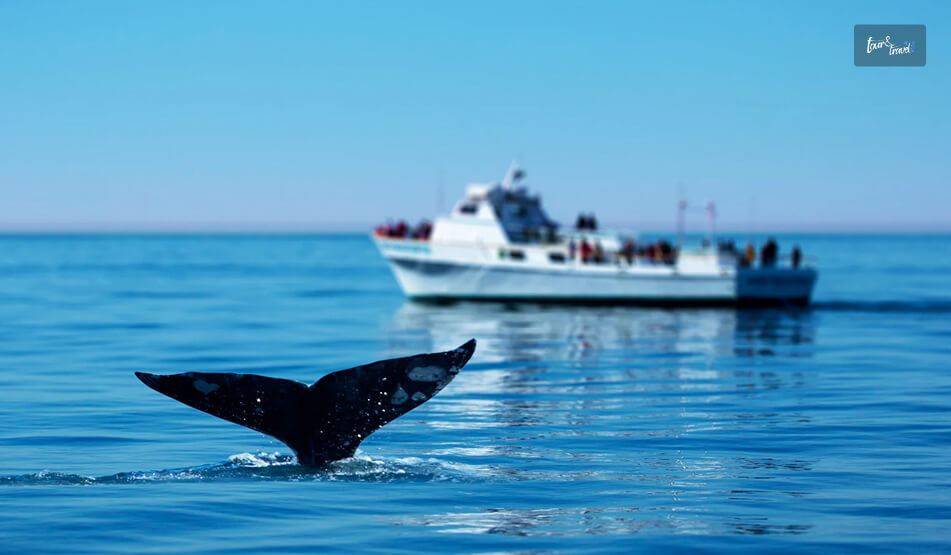
Observing whales is an excellent experience for all tourists in the Dominican Republic. Thousands of humpback whales travel into nearby waters each year from December to March. 

The finest way to observe these incredible creatures is through boat tours departing from Puerto Plata.

Around 300 whales have been observed simultaneously in Samaná Bay, while Silver Banks is also a key location. 

Puerto Rico isn’t widely recognized for whales, yet the resort town of Rincon, located on the west coast, is the focal point for them.

From the historic El Faro Lighthouse, you might spot whales from the shore. 

Culinary Experiences: Food And Drink In Puerto Rico And Dominican Republic 

The unofficial national dish of Puerto Rico is arroz con pollo, meaning “chicken with rice.” It has a Moorish Spain origin, which in turn connects further back to pilaf from Asia. 

In the Dominican Republic, the national meal known as La Bandera showcases the hues of the country’s flag. Drawing from Spanish culinary traditions, it consists of white rice, red beans, and meat, usually chicken or beef. 

Indeed, the food of the two nations is alike, with a significant distinction being the Dominican inclination towards meat, while Puerto Ricans prefer seafood. Nevertheless, they both have a fondness for plantains. 

Street food plays a significant role in everyday life in both nations. Puerto Rico is famous for its food trucks, and its culinary landscape has produced numerous celebrity chefs. 

1. Empanadillas 

Empanadillas

The Dominican Republic has food stalls that offer popular snacks like chicharrón (pork crackling).  

If that doesn’t suit your preference, consider trying the empanadas and yaroas, a high-calorie mix of fries, root veggies, meat, cheese, and toppings. 

Like on several Caribbean islands, tropical fruits are always available. Refreshing delights include fresh juices and shakes crafted from fruits like mango, papaya, passionfruit, pineapple, or guava. 

2. Morir Soñando 

In the Dominican Republic, be sure to sample morir soñando, a special blend of milk, orange juice, and ice. Its name translates to “to die dreaming,” possibly reflecting how divine it tastes. 

The beverage is so delicious that it has reached Puerto Rico, where it is enhanced with additional flavors like vanilla.

Choosing the best option, such as between Puerto Rico and the Dominican Republic, simply signifies the joy of experiencing both. 

3. Rum 

Numerous books have been authored regarding the significance of rum in the Caribbean.

Puerto Rico is currently closely linked to the Bacardi brand, whereas the Dominican Republic is recognized for Barceló and Brugal. 

Bacardi relocated to Puerto Rico from Cuba following the 1960s Revolution, bringing along its renowned light rum recipe and its yeast, too.

It currently produces approximately 70 percent of the rum from the Caribbean sold in the United States. 

You can visit the Bacardi Distillery and observe how rum is produced. You can also discover how to blend the ideal mojito or piña colada drinks while acquiring some bartending skills. 

Brugal was established in 1888, but the true commercial legacy of Dominican rum begins in the 1920s.

It was then that the Barceló family began making their own rum in the Spanish style. 

Currently recognized as Ron Barceló, their business has expanded into one of the largest rum exporters globally.

Brugal and Barceló provide distillery tours, with Brugal being the most accessible option in Puerto Plata. 

These islands are famous for their light rum in the Spanish style, which is matured in oak barrels to enhance its aromatic flavor.

Light rum is ideal for Caribbean cocktails, but there are many darker options available if you enjoy drinking it straight or mixed with cola in a Cuba Libre. 

Share on Social Media

Meet Sibashree Bhattacharya, a travel enthusiast who has a decade-long experience in transcending virtual barriers with her words! Her deep love for travel is apparent from her travel escapades to the mountain, often taking her readers on a journey, her words acting as Portkey! Fun fact: Sibashree loves to dive deep into the history of the places she is about to visit, making her travels even more wholesome. If you were wondering how her articles are not short of time travel, this answers it!

Leave a Reply

Your email address will not be published. Required fields are marked *

title-img Related

READ MORE natural drug detox

Nature’s Healing: How Camping Can Aid Drug Detoxification

BY  Sibashree Oct 22, 2025

I’ve got to say that recovering from any kind of addiction is a messy business. It’s never just about flushing things out of your system. It’s about fighting your thoughts, your habits, and all those little triggers.  Lately, I’ve noticed more people stepping outside to heal. Camping, of all things, has become one of those hidden gems in detox. Being out there, far from traffic noise and glowing screens, surrounded by trees and honest silence? It hits differently. Some even find it just as helpful as staying in a structured facility like the detox clinic. The Therapeutic Power Of Nature Have you ever stepped outside and just felt your shoulders drop? Nature does that.  Science loves to back this up, and Harvard even found that twenty minutes in fresh air can lower cortisol, the nasty stress hormone that spikes during detox. And honestly, that relief matters. Stress is like gasoline poured straight on withdrawal. When you’re camping, you can’t help but notice how calm things get. No alarms, no rush. Just breathing, listening, thinking.  It’s almost strange how fast you start noticing yourself again. For folks coming out of a storm of substance use, that reconnection to your emotions, your body, your thoughts isn’t just nice, it’s necessary. Camping Facilitates Natural Drug Detox By Improving Sleep Cycles  Camping improves your internal body clock as you are continuously exposed to the natural light cycle. So, by regulating your internal clock, you will get more sleep.  Furthermore, during camping, you remain busy with physical activities. You are hiking through trails, setting up the tent, cooking, and doing other recreational activities or survival chores. This is also crucial for improving your sleep cycle and quality.  Moreover, when camping in remote areas, you cannot use your phone, and you are also away from the daily stressors. With no pressure of deadlines and ETAs and all the chaos in your head vanishing in the thin air, you actually get a better sleep.  Community And Support There’s something wild about how people open up under the stars. I’ve seen it, how those late-night talks by a campfire, voices crackling right alongside the flames, do the magic. That’s a real connection, and it’s gold during detox. A big part of healing is not doing it alone. Most programs preach about support networks, but in the woods, that happens naturally.  You gather wood together, laugh over burnt marshmallows, and share your stories without judgment.  The National Institute on Drug Abuse even says social support can make or break recovery. Makes sense as feeling seen keeps you anchored when cravings hit or the loneliness creeps in. No clinic room can fully replace that kind of bond. Physical Activity And Mindfulness Camping gets your body moving, whether you plan it or not. You set up a tent, haul water, and climb a hill.  Little things that make you tired in a good way. That movement pumps out endorphins, which do wonders for mood, especially when detox brings anxiety or sadness along for the ride. Then there’s the quiet stuff, too. You find yourself being mindful without calling it that! Staring at a lake, flipping fish over a grill, sitting in silence until time just fades! It grounds you.  That kind of focus pulls you away from cravings and teaches you how to ride emotions instead of running from them. Funny how stillness can feel like a workout for your mind. Disconnecting From Technology Let’s be honest. We live glued to screens now. Scrolling when we’re bored, anxious, lonely, or anytime you name it. But camping forces a break.  The first few hours feel weird, almost twitchy without your phone, then a calm sets in. You start talking more, thinking more. Maybe even remembering what silence sounds like. People in recovery deal with enough mental noise already, and research shows that too much screen time can make anxiety and depression worse.  So, cutting that off, even for a weekend, resets something inside you. Suddenly, you’re aware of how addicted we all are to distraction more than anything else. Structured Activities And Goal Setting Some camping programs add a bit of structure, such as goal setting, small group reflections, maybe even creative tasks.  It’s not rigid like rehab, just guided enough to keep you focused. When done right, it helps you rebuild a sense of direction. There’s actually data from the American Psychological Association saying people who set specific, meaningful goals reach them more often.  And out there, surrounded by nature, those goals feel a bit more real. People talk about dreams they’d forgotten or things they want back in life. It’s refreshing—and it sticks. Camping: Setting The Rick Backdrop For Healing After Addiction Recovery Camping won’t magically erase struggle, but it changes the backdrop in a way that makes healing possible. It mixes nature’s quiet strength with genuine community and gentle self-discipline. It is kind of the opposite of everything that fed addiction in the first place. For many who’ve tried both, it’s a beautiful complement to formal detox options like those at the Detox Clinic.  Out there, in the dirt and sunlight, recovery starts to feel less clinical and more human again. Maybe that’s why so many find clarity under a canopy of stars instead of beneath a roof. Furthermore, camping boosts your self-sufficiency. If you are a solo backpacker, you have to dig the soil and set up the tent, light the fire, and do everything else. So, camping is a great confidence booster. You understand that you survive on your own and how strong you are.  All these help us create a positive image of ourselves in our minds. So, you don’t need to rely on any external stimulator or drugs anymore.  In addition, an inclination toward drugs arises from negative thoughts about our capabilities. Camping helps us overcome logistical and physical challenges. So, we become more confident about our abilities. 

READ MORE transformative travel experiences

Adventure Awaits: The Path To Fulfilment Through Exploration

BY  Sibashree Oct 22, 2025

You ever feel like life’s just looping on repeat? Same mornings, same coffee, same everything.  At some point, most of us start craving something that shakes that pattern, and we need something raw and real. That’s where adventure holidays sneak in.  They don’t just change your surroundings, they mess (in a good way) with how you see yourself. For anyone coming out of alcohol rehabilitation centres, that shift can mean the world.  It’s like flipping a switch, a chance to rebuild confidence, piece life together again, and actually feel alive instead of just existing. Here is more on how transformative travel experiences help us. The Psychology Of Adventure Adventure does something strange to your mind. It wakes it up. Think hiking in the Himalayas or rafting wild rivers in New Zealand. It’s not just adrenaline. It’s therapy in disguise.  A study by the University of Northampton found that roughly 90% of people felt stronger, more fulfilled after “residential outdoor trips on nature connectedness.” That’s almost everyone. Makes sense, though! When you’ve climbed that mountain, or even survived that one terrifying wave, something in your head just changes. Most folks find that once they’re out there, facing new challenges, limits stretch. You go from “I can’t” to “wait, maybe I can.”  And that’s where growth lives. Especially for anyone recovering from addiction, every small win whispers, see, change is real. It’s not easy, but it’s honest work, and that’s the beauty of it. Examples Of Adventure Holidays Are you looking for transformative travel experiences? You can explore the following activities and adventures. 1. Trekking In Patagonia Now this one’s stunning. Honestly, otherworldly! Glaciers that glow blue, winds that test your patience, and trails that humble you real quick. There’s something about being surrounded by that much untamed beauty that resets your brain. 2. Surfing In Costa Rica It is not your average beach trip. Warm waves, laughter echoing off the water, and even falling feels kind of freeing.  Learning to surf teaches patience. You wipe out a dozen times, but when you finally ride that wave — yeah, it changes something inside you. 3. Safari In South Africa There’s silence out there that words can’t touch. Watching a lion cross the grasslands or an elephant just being! Time slows down. And for a moment, you’re reminded how big life actually is. 4. Mountain Biking In The Alps It’s chaos and calm rolled into one. The climbs are brutal, the paths unpredictable, but man, those views. Finishing a tough trail feels like winning back a part of yourself you didn’t even know you’d lost. 5. Kayaking In The Norwegian Fjords This one’s magic. Paddling between steep cliffs that look carved by gods is a one-of-a-kind experience. It’s almost too quiet. The rhythm of your paddle turns into a kind of meditation. You start thinking, really thinking, about where your life’s going next. Transformative Travel Experiences And Building Connections And Community The Funniest thing about adventure trips is that you show up thinking you’re doing it for yourself, but you end up building these unexpected friendships.  People you’ve never met start to feel like family after a few shared challenges (or shared blisters). Late-night talks, bad coffee, shared laughs! That’s the stuff you remember.  On a trek route, when a shepherd you meet or your guide shares a slice of cheese with you or pours a cup of coffee, you know you have met the divine.  And especially for folks fresh out of rehab, that connection? It’s gold. Suddenly, you’re not alone.  You’re with people who get it. Who nods instead of judging you. Those friendships stick even long after the trip’s done. Sometimes, they’re the reason you keep pushing forward later on. When you are straight out of rehab, all you seek is getting included or becoming accepted. These things often become difficult when you are back amidst your family and friends. Back in their minds, they somehow go completely prejudice-free.  However, when you are meeting new people on a journey, these new people do not know you, and they accept you as who you are at present.  Embracing Change And Personal Growth Through Transformative Travel Experiences Adventure is messy. You can plan every detail and still have everything go sideways, and that’s the point. It forces you to adapt, breathe, and trust yourself again.  Somewhere between the scrapes, the missed turns, and the quiet sunsets, you find clarity. You remember what you want. For people healing from addiction, that moment hits deeper. Stepping outside, feeling tested but not defeated, it rewrites your story.  You’re not “recovering” anymore, and you’re living. And the things you pick up out there, including patience, grit, and gratitude, they stay long after you’re back home. At the end of it all, adventure holidays aren’t really about travel. They’re about renewal. They crack open the shell of routine and let the light in again.  Whether you’re trekking Patagonia’s wild path or gliding through Norway’s fjords, you don’t just move through landscape. They move through you. So yeah, if life’s been feeling heavy or stuck, maybe it’s time to pack a bag. The world’s out there, waiting with rough edges and all. And if you let it, adventure might just hand you back the best version of yourself. Transformative Travel Experience: More Than A Buzzword  “What that transformation is will be different for every traveller: some will be about traversing exterior landscapes, and some will be about traversing interior landscapes.” - Arnie Weissman, the Editor-in-Chief of Travel Weekly, said this in a report on the BBC. So, while connecting with new people and new locations, you are actually taking a step forward and soaking in every experience mindfully.  However, to indulge in a transformative travel experience, make sure that you don’t overestimate your travel plans. You must keep it spontaneous and slow-paced so that you have enough time for journaling, taking photos, drawing a picture or whatever makes your travel moments unforgettable.  Moreover, with transformative travel experiences, you can free yourself from self-pity. While meeting new people, you will know that many are living under conditions worse than yours. So, you will be thankful for what you have right now. 

READ MORE influence of heat and humidity on traveler

How Heat And Humidity Affect Travelers More Than They Realize

BY  Sibashree Oct 3, 2025

Summer trips always look amazing online! The sunshine, beaches, and iced lattes in some cute café. But the part people don’t talk about? Heat and humidity hit way harder than most of us expect.  They drain energy, shift moods, and sometimes completely disrupt plans. I’ve had days where I thought, “oh, it’s just jet lag,” but nope… it was the sticky weather knocking me down.  With a little prep, though, what feels like a nightmare can be manageable, even fun. In this article, we will take a look at the influence of heat and humidity on traveler, which might help you to combat heat on your next trip!  The Hidden Strain: Influence Of Heat And Humidity On Traveler When the temperature rises, your body essentially goes into overdrive. Sweat is meant to cool us down, but in humid air, it just clings to our skin. Gross, right?  So instead of cooling off, you’re trapped in your own little sauna. I’ve felt exhausted just dragging a carry-on across a station. Why it matters when traveling: Energy tanks way quicker than usual. That “ugh, I can’t keep my eyes open” feeling might be an early sign of heat stress. Risk of heat exhaustion creeps up faster than you’d think. Planning ahead honestly makes or breaks a trip. Humidity: The Unseen Travel Companion Humidity isn’t just annoying—it feels like the air’s sitting on your chest. Breathing gets heavier, and if you’ve got asthma or any heart issues, it’s even worse. Here’s what I’ve noticed in sticky climates: Walking tours feel like a marathon. Clothes stay damp and clingy, which is just irritating. People (me included) get cranky way quicker. Best trick? Save the big stuff for morning or later in the evening. Midday sightseeing in humid spots is just asking for misery. Dehydration: The Traveler’s Silent Enemy This one sneaks up on everyone. We usually think, “I’ll drink when I’m thirsty.” Nope—that’s already too late in hot, humid weather. Watch out for: Headaches or dizzy spells Random fatigue or snapping at people Dark pee (it’s a massive clue) Weird muscle cramps What’s helped me: Chug more water before flying out. Load up on hydrating foods, such as melons, cucumbers, and even peppers. Toss electrolyte packets in your bag. Keep salty snacks on hand for balance—nuts, crackers, etc. How Heat And Humidity Disrupt Travel Plans The influence of heat and humidity on traveler can be massive. Extreme heat and high humidity majorly disrupt travel plans by causing delays, cancellations, and affecting health risks across air, road, and rail transportation.  The combination of both heat and humidity can create a dangerous condition for both infrastructure and human health.  Even a perfect itinerary gets scrambled when it’s too hot or sticky. Travel FactorWhat HappensSafety HackFlightsPlane air dehydrates you + hot landings zap energyDrink more before/after flightsSightseeingWalking tours drain twice as fastTake shade breaks every hourHealth IssuesStuff like asthma or high BP can flareKeep meds handy + stay coolSafety RisksHeat exhaustion sneaks in suddenlyLearn the early warning signs Skipping crowded spots at noon isn’t “being lazy.” Honestly, it’s just being safe. So, How Can You Prepare For Travel In Hot And Humid Weather? First things first, you have to check and monitor the conditions. Always try to check the weather forecasts for your destinations. As for the other routes, consider adjusting your itineraries to avoid the peak heat.  Secondly, you have to stay hydrated. Drink water as much as possible. On the other hand, you have to avoid excessive alcohol and caffeine. These two can often lead to major dehydration issues.  Thirdly, you have to dress properly. Always try to wear lightweight, loose-fitted, and breathable clothing. Wear sunscreen and a hat.  After that, you have to be heat-conscious. If you are traveling to a significantly hotter climate, acclimate yourself by limiting strenuous activity during the hottest parts of the day. Lastly, you must check your vehicle. This is not tough. You just have to perform preventative maintenance on your car's cooling system, tires, and AC to prevent breakdowns. Hyperhidrosis And Travel Discomfort Here’s something that doesn’t get talked about much—hyperhidrosis. Essentially, it means your body sweats excessively. In humid places? Brutal. A museum tour or even standing in line feels like torture. I came across the Center for Hyperhidrosis, and they’ve got solid tips. Simple stuff like packing breathable fabrics, always having water on hand, or even knowing where to duck into AC can totally change the game. Packing Smart For Hot And Humid Destinations Your suitcase can save you or make things worse. I’ve learned (the sweaty way) to pack light and practically. Loose, light-colored clothes A wide hat + UV-blocking sunglasses Cooling towel (seriously, it helps) Reusable water bottle Electrolyte tabs or coconut water Lightweight long sleeves for the sun without roasting Spending five minutes thinking about this before you fly saves you days of “ugh why didn’t I bring that?” later. Practical Strategies For Staying Safe To avoid the influence of heat and humidity on traveler, a little tweak in the planning would do the job. Traveling in the heat doesn’t mean canceling fun! Here’s what you can do!  Get used to the heat a bit before the trip. Don’t cram every minute—build in shady pauses. Sunscreen, always (sunburn makes cooling harder). Listen to your body—dizzy? Nauseous? Stop. Avoid peak crowds; they trap heat like ovens. Recognizing Emergencies Before They Escalate Heatstroke isn’t just being “too hot.” It’s serious and can get dangerous fast. Here are the signs that you must watch out for!  Red flagsIf it happensConfusion or faintingFast heartbeat out of nowhereHigh temp but no sweatJust feeling your body shut offGet shade immediatelyUse water, cold cloths, whatever’s handyCall for medical help—don’t wait it out Traveling Smart Despite The Heat Heat and humidity are part of summer travel; no escaping them. But they don’t have to wreck the trip. The influence of heat and humidity on traveler can be devastating.  So, hydrate, pace yourself, dodge the worst midday sun, and you can still love every moment—whether that’s hiking, exploring ruins, or wandering city streets. At the end of the day, it’s not just where you go—it’s how well you prep to actually enjoy it without the heat knocking you flat.