

Top 10 Most Romantic Restaurants in Rome for the Perfect Date Ever!

May 18, 2024

Last Updated on: Jul 22, 2026

Travel Blog

Are you planning to go on a romantic date with your partner? If you visited the room recently, you could create your special location or look forward to planning the birthday dinner or the anniversary dinner that you have been preparing for a long time. So, let’s go through the most romantic restaurants in Rome!

You can organize a perfect romantic dinner or a romantic afternoon lunch in Rome by visiting these restaurants with your partner. With losing love and romance all around, I am sure your partner will be impressed.

Let me share with you some of the most romantic restaurants in Rome where you can have a nice dinner or lunch with your partner!

Top 10 Most Romantic Restaurants in Rome for the Perfect Date Ever!

Top 10 Most Romantic Restaurants in Rome for the Perfect Date Ever

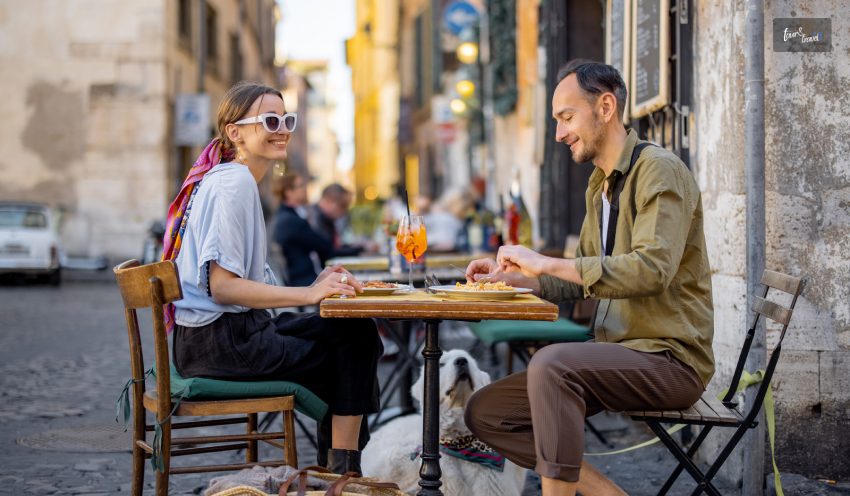
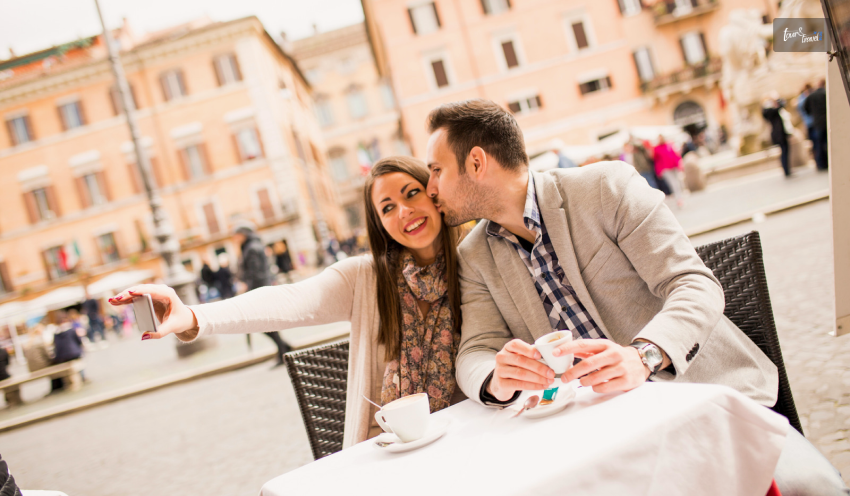
If you plan to go to Rome, you must go on a romantic dinner date or show up in the street and check out small cafes with your partner. With charming culture, beautiful pieces, and historic landmarks, the room is embodied in romance.

An eternal city with history and idyllic places for couples to spend some time alone, we can share centuries-old fine dining establishments with you. There are also little restaurants that were the charming and romantic aspect of the city. Let me share with you some of the most romantic restaurants in Rome!

I am sharing with you the names of restaurants we created to give you the perfect place to enjoy yourself. For a special occasion, there are several things to do with your partner in this beautiful and romantic city.

Antico Arco

Antico Arco

The restaurant is one of the most romantic in Rome and is situated in the Trastevere neighborhood, the mecca of restaurants. If you walk towards a fine dining institution from Piazza Garibaldi, you will enjoy panoramic views across the city!

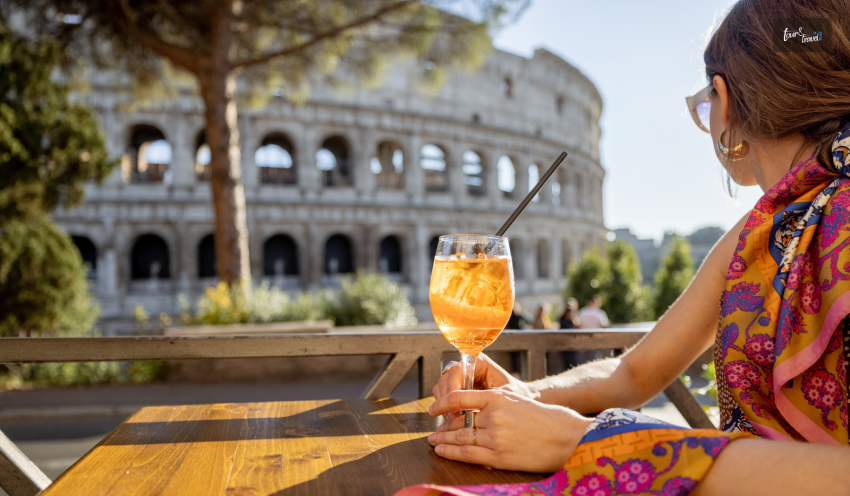
What’s more, you can also catch a glimpse of the Colosseum while walking down this street. These beautiful views add to your romantic evening out! The classic Italian fare is quite elegantly presented with a modern twist and good quality food.

You must try the risotto, which has rotating toppings based on the Chef’s preferences! It is one of the most popular items, along with spritz and prosecco! I would ask you always to remember the truffles. You will love the wine here as they have some of the best collections.

Aroma

Aroma

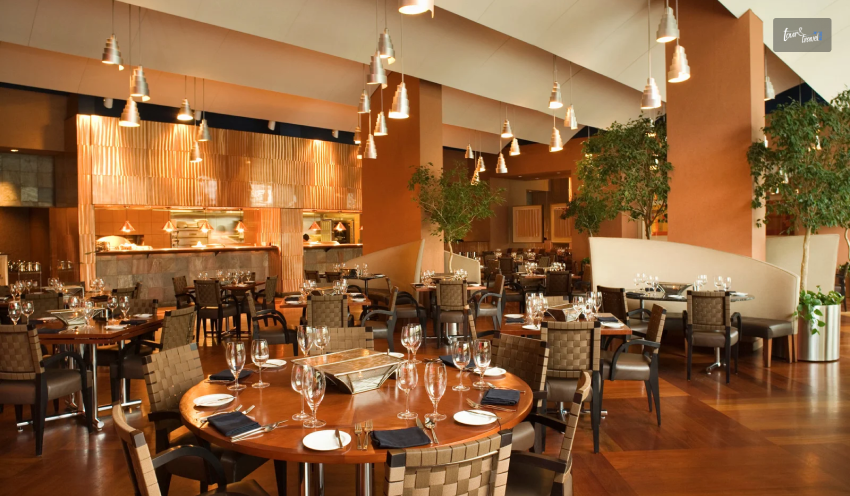
The restaurant Aroma offers Roman cuisine and is situated on the top floor of The Relais & Chateaux Hotel! It is an airy and bright fine-dining restaurant, and the view alone can take your breath away. Both traveling and local customers visit this restaurant, with Colle Oppio on near the horizon!

The environment and ambiance of the dining spaces are quite chic, so it is perfect for your date. The seating is limited, so making reservations before you go is better! The intimate environment is ideal for the dates when you go in the evening.

This restaurant serves traditional Roman dishes with seasonal ingredients. Its classic and modern sensibilities create a beautiful setting for a romantic dinner with stunning views. Once you enjoy Rome, are you wondering how many days in Venice you should spend?

Imago

Imago

The Michelin-starred restaurant is so in demand that reservations must be made months in advance! It is an intimate restaurant on the sixth floor of Hotel Hassler, and from there, you can enjoy a panoramic view of the historic city of Rome.

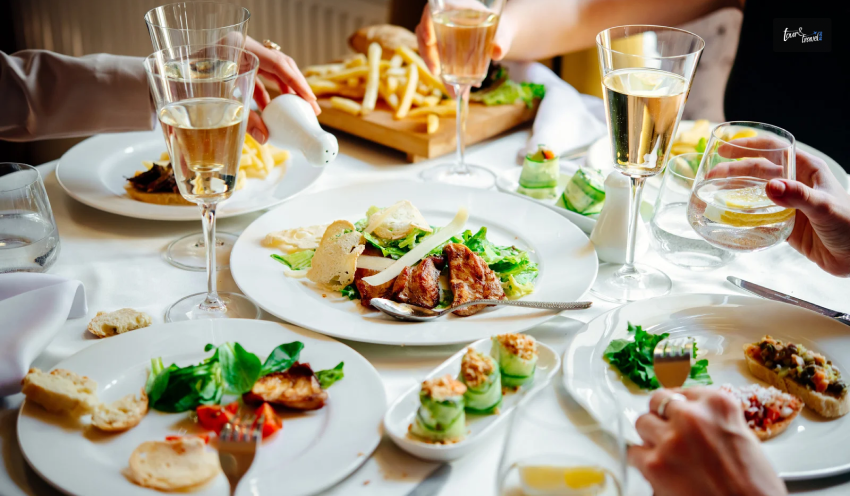
You can spend a romantic evening with your partner, drinking wine and eating traditional Italian food. Yes, it is expensive, so you can plan this date around a birthday dinner or anniversary dinner date! The food is impressive, thought-provoking, and delicious, even though it has a modern twist.

The Library

The Library

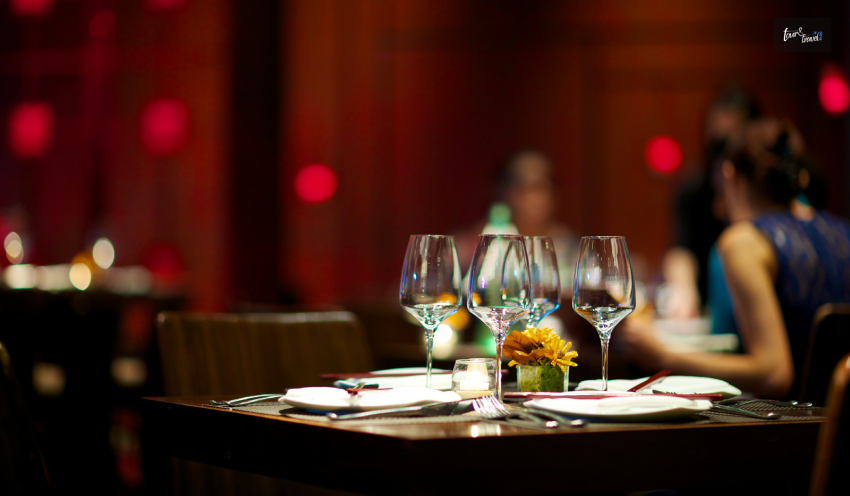
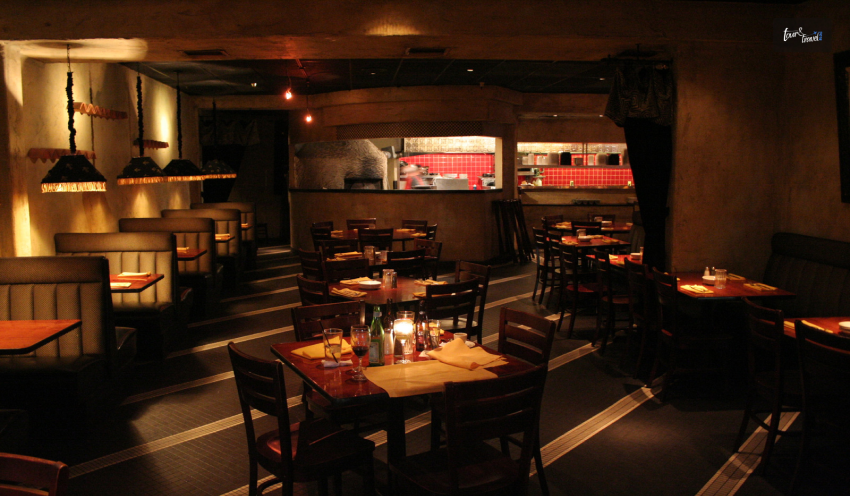
If you expect to go on the most romantic dinner date in Rome, the library checks all the boxes! In a dimly lit dining room, complete with candlelit tables, and traditional Italian songs, which a singer performs, this classic restaurant is the perfect representation of Italian culture.

This is so romantic that, at a certain point, you might find it easy to indulge in delicious food that only has Parmesan cheese in a regional Italian dish or delightful pasta! It might have a fine dining reputation, but it is quite casual for grabbing a meal.

Situated in an alley just off the main street, grabbing a table is very easy. Even if you can, you must wait; it is brief. After all, you are in Rome, so you will have a good time, but you must wait a little as per the traditions.

About 10 minutes from the restaurant, Piazza Navona is nearby, so you can enjoy an indulgent meal by taking a romantic stroll with your partner around it. You will also find the Trevi fountain and the Pantheon, which is quite close!

Strolling the streets with your partner will be memorable. Several wine bars and cafes are nearby, where you can continue the night considering the good weather! If you are wondering about the weather in Italy in October, read my next blog to know more!

Ristorante Mirabelle

Ristorante Mirabelle

A rooftop restaurant with a truly elegant dining room is a perfect place to spend a romantic evening with your partner. The restaurant is located at Hotel Splendide Royal and offers a panoramic view of Rome.  

Apart from the view, the first thing you notice is the delicious food and drinks available there. Mirabelle has one of the best-tasting menus in the room, and the sommelier-curated Wine list is quite impressive.

You must explore the impressive menu if you and your partner are wine enthusiasts. Why don’t you start by ordering a drink before your meal is brought to you? The historic city of Rome is beautiful; hence, you will spend a beautiful dinner enjoying the view.

I would suggest trying their traditional Italian food. However, they have some of the best gluten-free dining options in the room. If you are a health enthusiast, this is the place you should go in a city dominated by Arancini and pasta.

Il Pagliaccio

Il Pagliaccio

Do you like tasting food with a twist? This restaurant will impress you and your partner with a romantic meal. It is a Michelin-starred restaurant, so you know you will be getting superb food in an intimate setting. Chef Anthony Genovese offers modern cuisine with a wide spectrum of influences.

It is one of the most romantic restaurants in the city and should be at the top of your list, especially for visiting at night. Remember to snag a reservation at least a few weeks or months before. The restaurant is upscale, so rest in peace!

If you and your partner are foodies, this is the best place to go. Apart from the restaurants, do you wonder what are the best places to go in Italy? Let me share that in my next blog!

Retrobottega

Retrobottega

The modern, sleek, and fun restaurant has no sense of limitations when it comes to romance and companionship. Of course, as a young couple, you can visit historic cafes in trattorias of Rome! It is a novelty that you can’t stop enjoying. However, every restaurant must be 100 years old.

The Retrobottega restaurant is in a beautiful location, very close to Anna Varna and Pantheon! So, they are within walking distance of the restaurant! You can stroll before or after a romantic dinner date with your partner. The gorgeous cobblestone street is perfect for walking hand-in-hand with your lover!

You must make a reservation at this restaurant for the weekend. The clientele is young, hip, and well dressed, so you can dress to impress. The restaurant keeps its silverware in a drawer everywhere, so impress your date with that information!

I would suggest that you try their five-course tasting meal. There are also a la carte options! If you are non-vegetarian, I would suggest you taste the cuttlefish, veal, or wild boar tartare; they are quite popular.

Zia Restaurant

Zia Restaurant

Filled with superb restaurants and the trust of your neighborhood, it is the best place to have a romantic dinner with your partner. Zia is a classic Italian restaurant that offers modern presentation and cooking techniques.

The dining room, food, and ambiance are sleek and sexy. So, if you have a fun and adventurous partner, this is a perfect place to bring them to date. The design of the lounge and the dining room is inspired by Scandinavian minimalism and contrasts with the historic Roman trattoria design.

Their seasonal menu keeps changing. However, Italian cuisine goes well beyond pasta. If You Are an Amit lover, you can have a hearty Cut of lamb or even pulled pork with delicacies like sweet bread. They use fresh and organic produce in their food and create each dish with an inventive modern twist. The price of the menu is not exorbitant, but they are indulgent.

Adelaide Ristorante & In Salotto

Adelaide Ristorante & In Salotto

If you plan to go on a romantic date with your partner down the street of Via dell’Arancio, you must stop at one of the most romantic restaurants in Rome. In Hotel Villon, you can go for fine dining, known as Adelaide. The setting is modern and elegant, thus creating a beautiful setting for you and your partner.

The dining room and lounge are open-air, and you can sit in them all year round, as they are quite comfortable. The boutique hotel and the restaurant are small, so it is better to make reservations when you visit this hotel.

Their menu is quite popular concerning Italian cuisine, but they have beautiful twists! Spaghetti is another popular dish in this restaurant. Remember, there is a wine list, delicious cocktails, and classics such as Negroni. This place is perfect for celebrating your love on a hot summer day!

Per Me

Per Me

The outside setting of this restaurant is perfect, especially when you sit at the table on the Roman street of the Vicolo del Malpasso with your love! With the moderate setting, you can sit on the sidewalk if the temperature is lower and enjoy the food by Chef Giulio Terrinoni.

The interior is elegant and minimal, so you can have a romantic dinner with your partner. It is a one-Michelin-starred gastronomical delight with its famous tapas-style snacks, Tappi! You can try the “Primi Passi,” which comprises five of the Chef’s iconic dishes.

Finishing Off…

In short, the restaurants in Rome are romantic because of the locale. However, the Michelin-starred restaurants, the fine dining options, and the small cafes create a magic you want to share with your partner.

With traditional Roman street food or rooftop terraces, offering delicious and traditional Italian food is perfect for a romantic dinner date.

Comment on which restaurant you would like to check out the next time you visit and why. Of course, you can choose any!

Learn More About:

Share on Social Media

Mashum Mollah is the feature writer of Search Engine Magazine and an SEO Analyst at Real Wealth Business. Over the last 3 years, He has successfully developed and implemented online marketing, SEO, and conversion campaigns for 50+ businesses of all sizes. He is the co-founder of Social Media Magazine.

Leave a Reply

Your email address will not be published. Required fields are marked *

title-img Related

READ MORE card-img

How To Start A Travel Blog With A Headless CMS? Smart Tips

BY  Sibashree Aug 14, 2025

❌ Generic Templates ❌  Limited Flexibility across Channels These are the first two things you must leave behind if you are planning to start a travel blog these days. Also, it is now just about building a travel blog site, but the idea is to start a travel blog with a headless CMS and ensure optimized conversions.  Digital content endeavors to convert all the time, but it's not enough to generate persuasive copy and aesthetically pleasing designs and leave it at that.  The ability to adjust, pivot quickly based on real-time metrics and a strategic push at the appropriate time during the buyer's journey is essential.  Unfortunately, many CMS options fail to provide such access and flexibility. Yet a headless CMS allows for an in-depth design and the structure needed to create, experiment, and execute content intended for conversion across any channel.  With content modeling, an API-first approach, and componentized efforts, teams can design conversion-ready, optimized digital experiences along the way. Here’s more on how we can have absolute control over content presentation and structure with the help of a headless CMS.  Why Conversion Is Limited In Legacy Content Systems? Legacy content management systems (CMS) keep content tied to pages and templates. When a marketer wants to change the components or layouts, the messaging, or the targeting, it's usually an impossibility.  Furthermore, content displays differently on mobile than on desktop, and unless developers are on board to change visibility across devices or channels, brands suffer from amateur impressions.  In addition, when small changes need to be made, it requires dev time, which prevents even the simplest, most timely turnaround pieces.  Thus, when marketers have access to A/B performance, they're not always set up to make real-time changes.  Storyblok Labs product experiments showcase innovative ways to solve these limitations with faster, more flexible testing and deployment.  This is why conversion-centric content should be done as quickly and easily as possible. A headless CMS removes the content from the delivery, which allows for a more responsive experience. Why Do I Need To Start A Travel Blog With A Headless CMS? Creating content that converts doesn't just rely on what you say. It relies upon how quickly and efficiently you say it, test, and iterate at every stage of the funnel.  When people can change their minds with the click of a button and attention spans are shorter by the second, the ability to create and implement content with flexibility has never been more paramount.  You can no longer just create a landing page and wait to see what happens; in modern marketing, everything must be iterated, personalized, and perfected in real time based upon performance feedback. 1. A Headless CMS Offers Flexibility And Helps Find A Brand Voice A headless CMS provides the flexibility, framework, and agility necessary to produce content that advocates for high conversion rates with the ability to pivot just as quickly as your audience.  Because a headless CMS separates content from the front-end experience, both developers and marketers can create content modules that are highly reusable, each module attributable to a unique conversion goal.  You can test them with rapid A/B measurement campaigns. Moreover, you can easily assemble and deploy across all channels and touchpoints without upsetting the entire campaign plan.  The production time is cut down dramatically. Content silos are avoided. Compliance with best practices for brand voice and user experience becomes easier to control. 2. Ensures Better Assessment And Lesser Time For Content Production With personalization opportunities driven by behavioral data, along with the flexibility of integration with A/B testing tools, analytics platforms, and CRM/log-in pathways, every piece of content becomes interactive, trackable, and meaningful.  Marketing teams can assess specific measurements for particular audience segments, remove underperforming pieces mid-campaign, and apply successful formulas across global regions and departments, all from the same source of management. The possibilities for immediacy are especially valuable when it comes to major product debuts, last-minute holiday campaigns, or intense customer acquisition strategies.  Here, time is of the essence, and success depends on a failsafe launch at a selected moment. Being able to iterate while content goes live makes all the difference.  Within a headless CMS, your content machine is reactive to your business needs instead of responding to the consumer, continually changing, substantiating findings, and improving conversion attempts at every step. Start A Travel Blog With A Headless CMS For Future Convenience And Use (Understanding The Technicalities) A headless CMS supports the notion of creating content as fragments that can be used anywhere down the line.  For example, rather than creating hero banners and testimonial boxes, these "components" can instead be tagged as hero banners, testimonials, recommended features, CTAs, or pricing tables.  In addition, you can tag them with metadata for conversion. Mention who it's for, what part of the funnel it serves, and what campaign it connects to.  So, it is like a content marketing workshop. You can assemble the essentials to meet the campaign goal by selecting the existing high-performing blocks of content.  It creates a greater quality assurance requirement and allows those approving the messaging to not deviate from branding and past successful communications. The Benefits Of Using A Headless CMS For Travel Blogs When you start a travel blog with a headless CMS, the blogs become your brand with personalized storytelling and picking the right sub-niche for your travel blog.  Thus, you build stronger connections with a specific reader base and establish authority quickly.  1. Personalization Drives Conversion Rates Up By Using A Headless CMS For A Travel Blog Personalization drives conversion rates. Several different content pieces can be served based on segmentation data; thus, the same API connection can read geographic location or read CRM segmentation and serve a different headline, picture, or limited-time offer.  Thus, a new user can get one offer and a CTA. Furthemore, returning users can have a different CTA with various testimonials of their previous experience and industry.  A headless CMS makes it easier to let technology help people at scale with personalization that quickly drives them down the conversion path. 2. Iterating Quickly And Testing With Single Changes There is no final design for conversion; it requires ongoing updates based on what works and what doesn't. A headless CMS encourages rapid, modular designing that enables A/B testing or multivariate testing at the element level.  Marketers can test one element, a CTA, for example, or a product highlight against another product highlight to see which does better, and they can monitor the effectiveness in real time.  Because these elements are modular and exist apart from the overall design, they can be changed and adjusted without redoing an entire page or complicated experience. This allows marketers to pivot quickly and often for stronger conversions. 3. Minimizing Redundant Channel-Specific Content Paths to conversion don't just exist on websites; they exist in email, mobile apps, landing pages, digital ads, and more.  A headless CMS allows for omnichannel delivery from one content source, meaning that the message can be the same.  But because the content does not align with the design, you can update copy, style, and tone for each channel.  This decreases redundancy, increases content operations efficiency, and ensures that channel-specific experiences are as effective as possible to drive conversion. 4. Using An Integration With Analytics Sites To Drive Decisions About Content Elements No effort to optimize large content pieces can be realized without performance data. A headless CMS integrates with analytics sites, A/B testing sites, and customer data platforms (CDP) to give teams the power to see how well certain pieces of content work on what channels and for what demographic segmentation.  Marketers can discover which elements of an ad drive clicks, what subheadings have reduced bounce rates, and which CTAs have the highest conversion rates.  These results go back to the elements in question. Thus, it allows you to make quick changes and more intelligent repurposing of popular content pieces. Over time, this creates a scalable library of assets that have all been assessed for conversion. 5. Easing Inter-Departmental Collaboration Content that converts doesn't just involve the marketing team. It requires insight from design, content, development, and analytics teams as well.  A headless CMS makes this process seamless by offering a content repository, in different formats, that allows everyone to contribute.  The marketers can make their piece of the puzzle for the larger campaign using out-of-the-box components. The designers can ensure a universal, consistent design across teams. Moreover, the developers can build a connected and responsive front end, no matter the content.  Distributing these efforts allows for faster flows, greater accuracy, and increased experimental, data-backed content conversion opportunities. 6. Enabling Scaling Efforts Without Quality Decrease As brands grow, so do their campaigns and content needs for varied audiences. A headless CMS is intrinsically scalable, as it allows teams to replicate and pivot effective tactics from product to product and market to market.  Campaigns following templates and modules known to convert can easily be used for similar campaigns. Thus, the production time will go down.  Scaling is integral to maintaining conversion successes as it requires more resources over time. 7. Forming Credibility Through Speed And Consistency Speedy and effortless digital experiences create conversions. If a webpage takes too long to load or has a disjointed layout riddled with out-of-date resources, potential converters become frustrated and return to search for better resources elsewhere.  With a headless CMS, developers have complete control over the front end to create fast-loading and mobile-responsive efforts that increase usability.  Moreover, with a modular approach, updates can occur in seconds, without concern for disconnected segments because of out-of-date information.  This speed and consistent access create credibility, one of the most important factors for turning interested parties into buyers. 8. Conversion-Focused Funnels By Modular Assembly Of Content Perhaps the greatest advantage of a headless CMS is the unlimited ability to create hyper-targeted, conversion-based funnels based on specific buyer personas or short-term campaign needs.  When using a standard CMS, the content will be in silos based on general form templates.  Be it lead acquisition or collateral acquisition, email nurturing and lists, product nurturing or reactivation.  If creating a funnel exists within the marketer's realm, they can specify how the content flow should happen to generate the desired response.  For example, if a product funnel is for converting cold traffic, you will use short-form copy, images, or overview videos to create the awareness phase.  The interest phase can be a compilation of FAQ blocks, testimonials, or lists of advantages.  The action phase can use product comparisons, expiring discounts, or friction-free lead gen forms, all pulled from pre-vetted and modular content blocks. With a headless CMS, teams can be thoughtful and experimental about the funnels available to them.  One funnel does not have to serve all journeys. Instead, thoughtful, conversion-oriented experiences can be the way out based on user reaction and intent indicators. These are like live customizations, not just one-time executions.  With a headless CMS, content is a powerful tool for business growth and not an afterthought. 9. Decreased Time To Launch For Conversion-Focused Efforts One of the best ways to convert audiences is to get to them while the getting is good. When interests are hot, campaigns need to be ready, or else audiences will lose their interest or even worse convert to a competitor.  With a headless CMS, the time to launch dramatically goes down. Instead of creating something brand new and untested, teams can utilize a library of components.  There's no need to reinvent the wheel every single time, and efforts can launch in minutes as long as the used assets come from pre-existing libraries. 10. Ability To Change Without Starting Over When Consumer Actions Change Consumer action changes what works today might not work tomorrow. Thus, one of the greatest benefits of utilizing a headless CMS is the ability to change without starting over.  Marketers can relaunch certain components that didn't perform well. They can even try something similar with different layouts without having to start brand new.  Components can be: Geo-targeted Segmented Dependent upon what occurs without disrupting other campaigns in process.  This means conversion efforts are fluid and malleable, able to change without compromising the overall experience of the brand. Start A Travel Blog With A Headless CMS And See How Conversion Starts With Flexible Infrastructure Do you have a brand wanting to boost performance, grow fast, and provide the best omnichannel experience? The degree of flexibility that comes with a headless CMS is not only a technical advantage; it's a strategic necessity.  It allows teams to operate faster, test more effectively, convert more easily, and build a content operation. The overall process is reflective of the dynamic, data-driven nature of our digital world. When conversion reigns supreme, this is how to create effective digital experiences.

READ MORE London Music Trip Travel Guide

The London Music Lover’s Travel Itinerary: Venues, Vinyl & Vibes

BY  Sibashree Aug 18, 2025

For those who travel by sound as much as sight. London doesn’t just host music, it holds it. It moves through the brickwork, hums beneath your morning coffee, and shows up when you least expect it.  If you're flying in with rhythm on your mind, don't waste time chasing tourist noise. Here’s a curated London music trip travel guide for music lovers who want to feel the city, not just see it. Your Ultimate London Music Trip Travel Guide: Follow This Itinerary You came for music in London, and if you did it right, you didn’t just watch it—you walked through it.  In London, every borough speaks its own tempo. The key is listening closely, not just for the big nights, but for the quiet tracks in between. Nevertheless, here is a standard London music trip travel guide for four days.  Day 1: Arrival & Warm-Up Walks Start with the echoes. Land, check in, and resist the urge to overschedule. Instead, walk. London’s music history isn’t just locked up in venues—it’s in the corners of Soho, the secondhand shops of Camden, and the quiet plaques on buildings that once held chaos and brilliance. Head to Denmark Street, once known as Tin Pan Alley. You don’t need a guitar to appreciate it—just time and a bit of reverence. Nearby, walk past the former Astoria (now long gone, but not forgotten), then duck into Sounds of the Universe in Soho. The vinyl is deep-cut, globally sourced, and fiercely curated. Grab a late bite nearby and keep it lowkey. You’re just getting started. Day 2: Vinyl Crates & Iconic Stages Go digging, then go big. Start the day in Notting Hill with a stop at Honest Jon’s Records. It’s been around since the '70s and the staff have that rare, quiet encyclopedic knowledge that reminds you music people don’t need to shout. Flip through dub, jazz, garage, and everything in between. Then cross town and hit Rough Trade East in Brick Lane. Even if you're not buying, the energy is unmistakable. There’s usually a live session or interview playing somewhere in the background. You feel part of something—even as an observer. As the evening rolls in, book a Cirque Le Soir table before you head to The O2 Arena. Yes, The O2 is huge. But some nights deserve scale. Whether it’s a legacy tour or a one-night-only show from an artist on the brink, this is where spectacle meets sound.  The acoustics are sharp, the production is heavy, and if you’re lucky, you’ll leave changed. Now, why the table? After a concert, artists love to celebrate. And where do they go? The table will make sure you have access. Day 3: The Cultural Cut Where sound meets soul. Dedicate the day to Southbank. Start with the Southbank Centre. Between Royal Festival Hall, Queen Elizabeth Hall, and the Purcell Room, you’ll catch everything from full-scale orchestras to left-field jazz sets to spoken word that leaves the room quiet in the best way. The best part? The space itself. Brutalist buildings softened by river light, steps where kids blast drill next to older couples sipping rosĂ©, and that unspoken code that says, we all came for something real. After, stop into BFI Southbank or one of the nearby cafĂ©s. There’s a quiet, creative current in this stretch of the city. Lean into it. Day 4: A Goodbye With Texture Leave on the right note. Spend your final morning in Camden. Walk along the canal. Listen for the street musicians who don’t just perform—they pour. Visit the Jazz CafĂ© if it lines up, or just stop by outside and take in the marquee. A lot of names you know started here when no one else did. Before heading to the airport, swing by Flashback Records or Sister Ray. One last flip through the bins. One last moment to chase something unexpected. That’s what music travel is really about—not the big plans, but the small finds that find you. Day 5: Visit The Victoria & Albert Museum The Victoria & Albert Museum is the place where history meets music. The rarest and exclusive musical collections are often on display at the museum.  Here, you will find the works of Freddie Mercury, David Bowie, and many other musical geniuses representing genres such as opera, rock n roll, and others.  Also, the museum stands out with its unique collection of musical instruments. In fact, the collection of musical instruments here is the biggest in the world.  Day 6: Visit Abbey Road Are you a Beatles fan? You surely know what to visit in London. Abbey Road Crossing is the place where the Beatles' album was shot.  Furthermore, the crossing is close to Abbey Road Studios, where the Beatles recorded many of their iconic songs. The studio is still active as a recording facility, and you can also reserve a guided tour of the studio to learn about the history of music in London.  Day 7: Pay A Visit To The 100 Club The 100 Club in London was known as the Feldman Jazz Club from 1942 to 1964. In 1964, the club was renamed “The 100 Club” and since then, it has been a popular venue for live music shows and events.  Furthermore, throughout decades of its operation, The 100 Club has been hosting iconic performances such as Sex Pistols, BB King, Muddy Waters, Eddie Grant, and the list goes on! Moreover, located at 100 Oxford Street, 100 Club London is the oldest individual setup in the world.  Day 8: Watch A Performance At Royal Albert Hall Our London music trip travel guide will be incomplete without attending a live performance at the Royal Albert Hall.  Located at the northern edge of South Kensington, the Royal Albert Hall can accommodate 5272 visitors.  Queen Victoria opened the hall in 1871, and since then, it has been graced by all the prominent musicians and artists from around the world.  Furthermore, the hall has a distinct Italian architecture, and the first British Marathon was run at the Royal Albert Hall in 1909. 

READ MORE Best Places To Visit In London

Discovering London’s Hidden Gems: Best Places To Visit In London

BY  Abdul Aziz May 12, 2023

London is the capital city of England and the United Kingdom, located in the southeast of the country. With a population of over 9 million people, it is one of the most populous cities in Europe and the world. London has a rich and diverse history, dating back to its founding by the Romans over 2,000 years ago. Throughout the centuries, it has been a center of trade, commerce, culture, and politics, and has played a pivotal role in shaping the modern world. With London Attraction tickets, you can explore London which is a global hub for finance, business, media, and the arts. It is home to some of the world's leading universities, museums, and cultural institutions, as well as numerous iconic landmarks and attractions. Some of the best places to visit in London include Buckingham Palace, the Tower of London, Big Ben, the London Eye, and the Houses of Parliament. It is also home to some of the world's leading museums, including the British Museum, the National Gallery, and Tate Modern. In addition to its history and culture, London is also a vibrant and diverse city with a thriving food scene, nightlife, and fashion. From traditional fish and chips to trendy street food markets, there's something to suit every taste. The British Museum The British Museum is one of the world's greatest museums, with a vast collection of over 8 million objects from all corners of the globe. The museum is home to the Rosetta Stone, the Parthenon sculptures, and the mummies of Ancient Egypt, as well as countless other treasures. Admission to the museum is free, although some special exhibitions may require a fee. The Tower Of London The Tower of London is a historic fortress located on the north bank of the River Thames. It was founded by William the Conqueror in the 11th century and has served as a royal palace, a prison, and a treasury over the centuries. Today, visitors can take guided tours of the Tower's various buildings and learn about its fascinating history. Be sure to see the Crown Jewels, housed in the Jewel House, which are some of the most valuable objects in the world. The National Gallery The National Gallery is one of London's premier art museums, with a collection of over 2,300 paintings dating from the 13th century to the 19th century. The museum's highlights include works by Leonardo da Vinci, Rembrandt, Vermeer, and Van Gogh, as well as many other masterpieces. Admission to the museum is free, although some special exhibitions may require a fee. Buckingham Palace Buckingham Palace is the official residence of the British monarch and has been the London home of the royal family since 1837. Visitors can take a tour of the State Rooms, which are used for official occasions and receptions, and see the Changing of the Guard ceremony, which takes place daily during the summer months and every other day during the winter. The Tate Modern The Tate Modern is a modern art museum which is located on the south bank of the River Thames. The collection of the museum includes works by Picasso, Warhol, Dali, and many other contemporary artists. Admission to the museum is free, although some special exhibitions may require a fee. The West End The West End is London's theater district and is home to some of the city's best-known musicals, plays, and other performances. From long-running shows like The Phantom of the Opera and Les Misérables to new productions, there's always something to see in the West End. Be sure to book tickets in advance, as shows often sell out. The London Eye The London Eye, a huge Ferris wheel, is located on the southern bank of the River Thames. This place offers great views of the city skyline and is one of London's most popular attractions. Tickets can be purchased in advance online, and it's a good idea to book a time slot to avoid long waits. Hyde Park Hyde Park is one of London's largest and most beautiful parks, with over 350 acres of green space to explore. It's a popular spot for picnics, jogging, and relaxing, and it's also home to many famous landmarks, including the Diana Princess of Wales Memorial Fountain, the Serpentine Lake, and the Speakers' Corner. The British Library The British Library is the largest library in the world, with over 170 million items in its collection. It's home to some of the most important literary and historical documents in existence, including the Magna Carta, the Gutenberg Bible, and manuscripts from authors such as Shakespeare, Jane Austen, and Charles Dickens. Visitors can explore the library's exhibitions and attend talks and events, as well as access the library's reading rooms for research purposes. St. Paul's Cathedral St. Paul's Cathedral is a historic church located in the heart of London. Designed by Sir Christopher Wren in the 17th century, it is one of the city's most iconic landmarks. Visitors can take a guided tour of the cathedral's interior, including the Whispering Gallery, which offers stunning views of the nave and climb to the top of the dome for breathtaking views of the city. London is a city full of history, culture, and excitement, and there are countless other places to explore beyond this list. From the colorful streets of Notting Hill to the trendy neighborhoods of Shoreditch and Dalston, there's always something new to discover in this vibrant city. Read Also: 6 Things To Do At The Beach This Fall 10 Best Days Out In London For Football Fans 10 Best Places To Travel In June – Travel Guide 2022