

What Is The Best Luang Prabang Food Tour? (With A Luang Prabang Food Tour Itinerary)

Nov 4, 2025

Last Updated on: Nov 11, 2025

Travel Guides

I was having sticky rice with steamed hot freshwater fish cooked in banana leaves at Tamarind Restaurant. I took the first bite and I closed my eyes. It was a moment to cherish, to feel!

The taste was similar yet distinctly different from what I usually have at home. Sticky rice is the soul of Lao cuisine, and it is related to community sentiment, as every village has its own rice field. And the fish was a game of perfect balance, and the spiciness was just right to titillate the taste buds, but not overpowering. 

Furthermore, as I explored the villages and went a little way away from the town center, I found food cooked in bamboo hollows. Another important aspect of Lao cuisine is the art of fermentation. 

From sun-dried fish and meat to fermented vegetables and salted lime, a Lunag Prabang food tour is an experience curated with love. Also, to cherish the authentic flavors of Laos, you have to try the street food here. It’s not Vietnamese, not Thai, but simply Laotian. 

I will talk about these street food delicacies shortly. However, before that, let’s find out what makes the food in Luang Prabang Special. 

Cooking Techniques And Ingredients That Make Food In Luang Prabang Special 

Cooking Techniques And Ingredients That Make Food In Luang Prabang Special

Food in Luang Prabang and Laos stands out for its distinctive techniques and ingredients. Check out the table below for a brief understanding.

Techniques/IngredientsUse in Luang Prabang Food
Fermentation• Key to Local Laos Flavors
• Used in Picked Vegetables, Soy, and Fish Sauce
Grilling• Grilling over Charcoal Gives the Fish or Meat a Distinct Flavor
HerbsCommon Herbs Used Are:

• Mint
• Lemongrass
• Coriander
• Kaffir Lime
• Galangal
Sticky Rice Steaming• Rice is Cooked in Bamboo Baskets over Boiling Water. 

What Is The Best Street Food In Luang Prabang Laos? 

What Is The Best Street Food In Luang Prabang Laos

Have you tried something as “interesting” as a honeycomb cooked and charred in banana leaves? I have. And the smell of charcoal and honeycomb got blended with the whiff of lemongrass and grilled fish. 

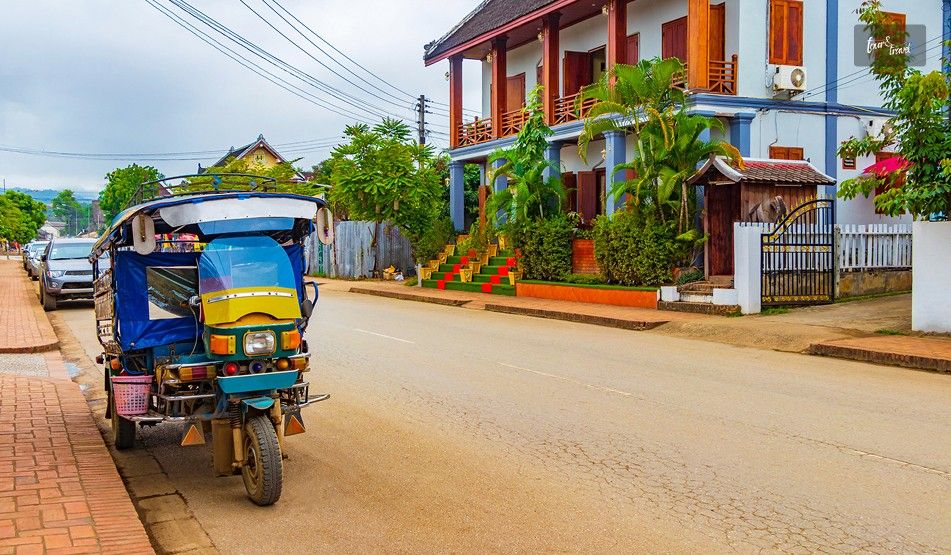
This is what my senses caught first as the tuk-tuk dropped me at the morning market in Luang Prabang. Another thing I found special about the morning market was the presence of women in large numbers. Most vendors were women. 

I saw a lady whose face looked like a painting with all the creases, but her smile was all about silent resilience. I went to her stall and ordered a bowl of khao soi. It was bliss with the right amount of pork, herbs, and tomatoes. 

The sky was still pale pink, and I saw monks in saffron robes pass quietly collecting alms. My breakfast moment suddenly became about discovering everyday spirituality in the rhythm of food. I closely felt that breakfast is not just food for the people here, it’s about gratitude, humility, and connecting to the origin. 

Now, my stories of Luang Prabang will never end. It’s like the silent river that flows and does its magic by touching the lives on its route. So, let me share with you brief details about the best street food in Luang Prabang you cannot miss.

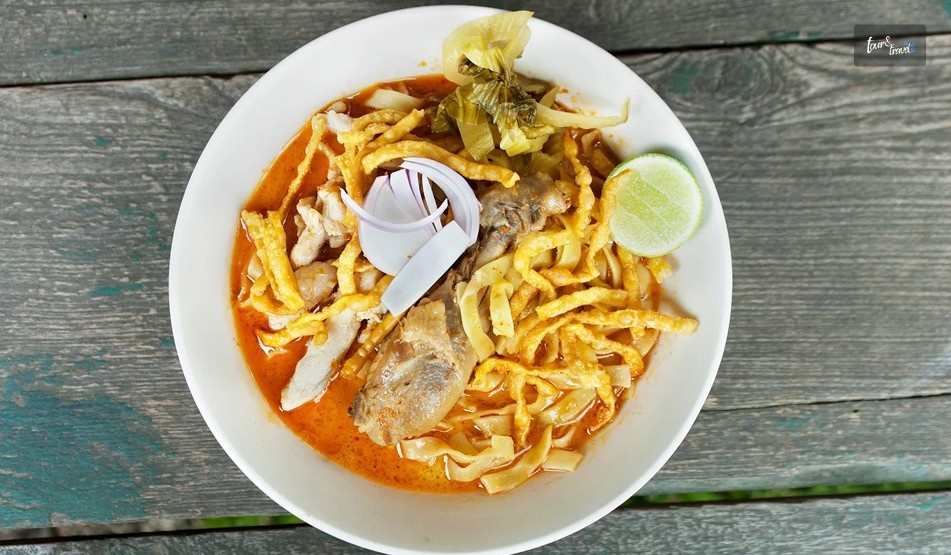
1. Khao Soi Luang Prabang

Khao Soi Luang Prabang

Everyone loves Khao Soi in Luang Prabang. This pork soup with fermented soy and tomatoes is the perfect breakfast delicacy here. 

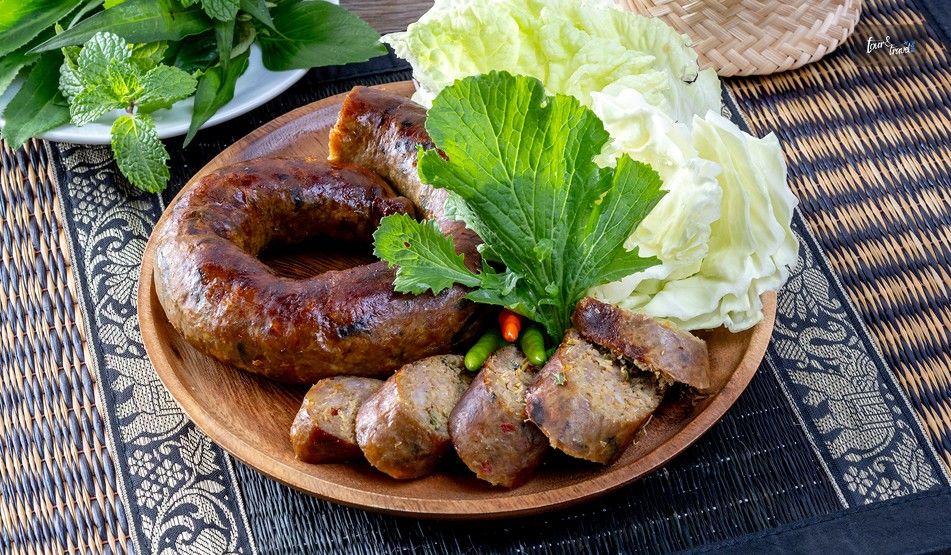
2. Lao Sausage (Sai Oua)

Lao Sausage Sai Oua

It is a pork sausage delicacy. In these sausages, the pork meat is infused with lemongrass, galangal, and herbs. 

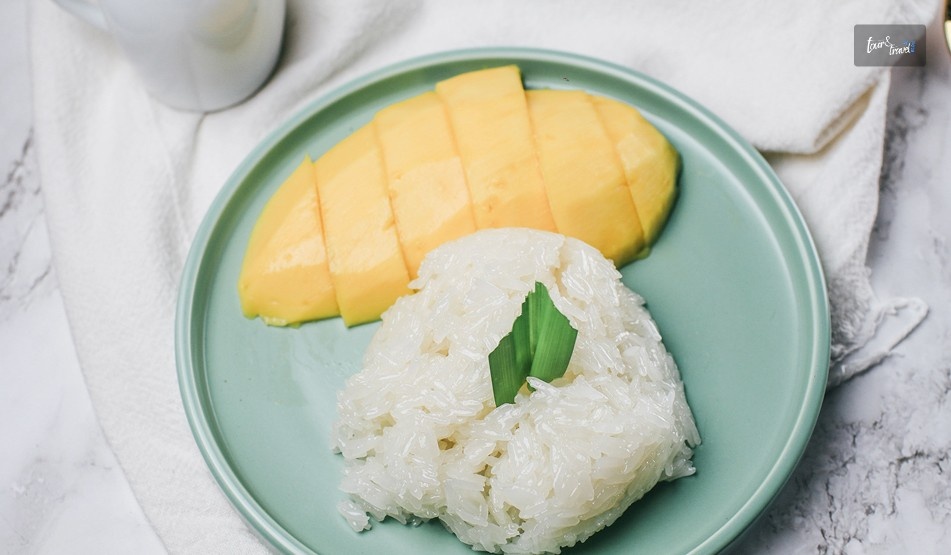
3. Sticky Rice (Khao Niew)

Sticky Rice Khao Niew

You cannot imagine a complete Lao meal without sticky rice. I love to have sticky rice with fish. 

4. Grilled Mekong Fish

In Luang Prabang, they use fresh riverwater fish to make this dish. They marinate the fish using local herbs and grill it on charcoal for a distinct flavor. 

But do you know why grilled fish in Luang Prabang tastes even better? Mr. Somchai, a Mekong fish griller, said, “We catch fish at dawn and grill them by sunset. No freezer, just fire.

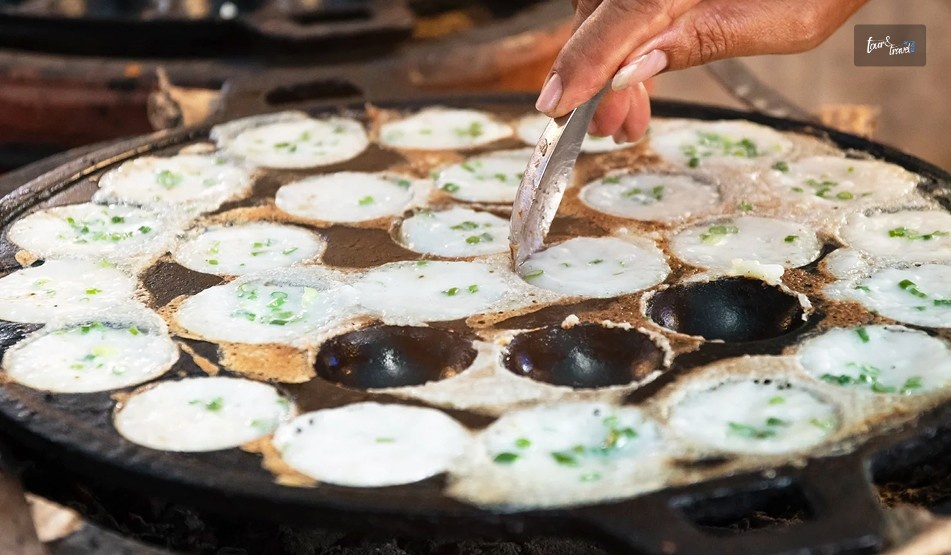
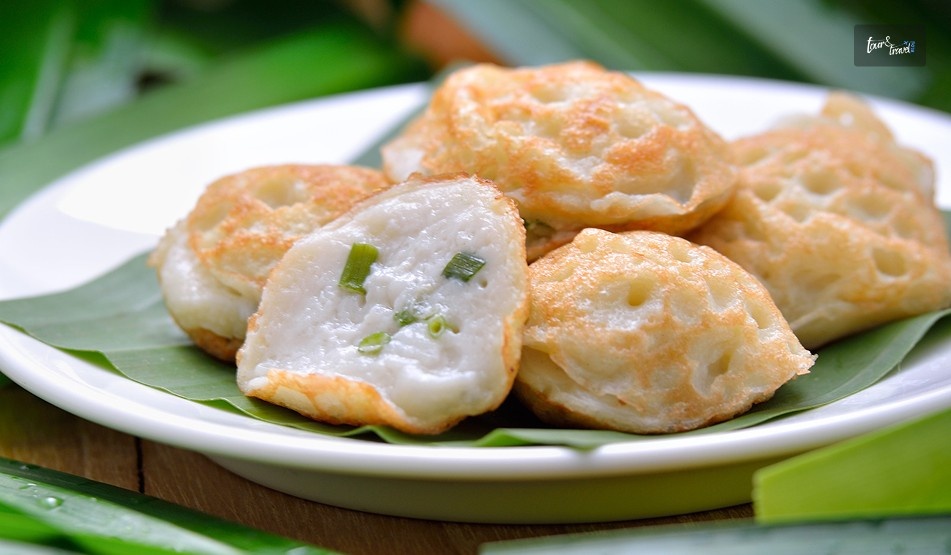
5. Coconut Pancakes (Khanom Krok)

Coconut Pancakes Khanom Krok

The coconut pancakes are also the most unique in flavor. It has a crispy outer layer, which is complemented by the creaminess inside. 

These pancakes are served with spring onions. 

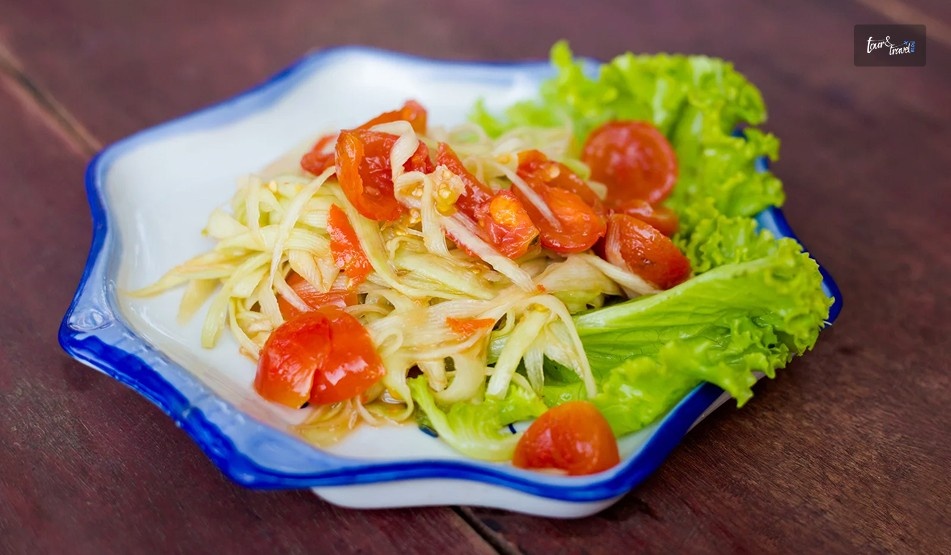
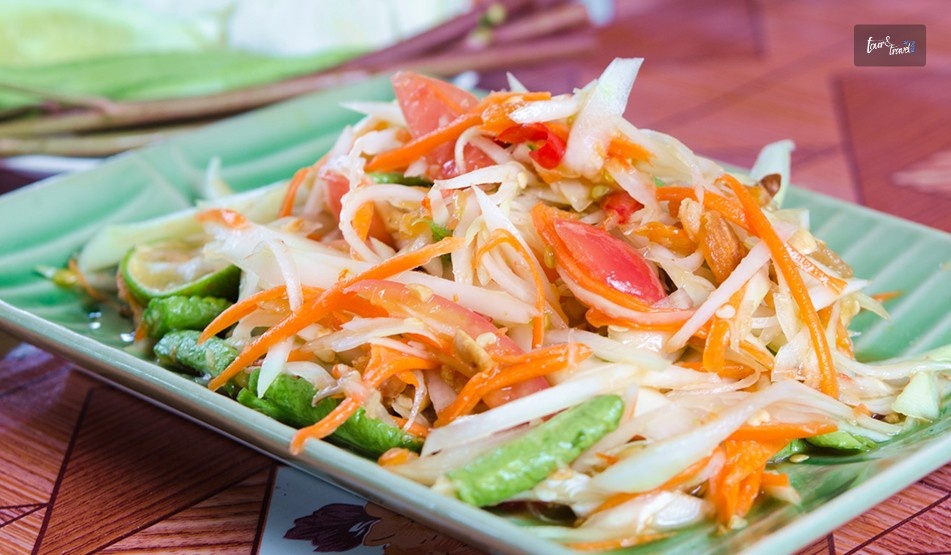
6. Papaya Salad (Tam Mak Hoong)

Papaya Salad Tam Mak Hoong

If you love the pungency of fermented fish, this crunchy salad will be your instant favorite. The raw papayas used in the salad give the dish the right crunch. 

Furthermore, the fermented fish sauce and the use of lemon add the right balance of flavors to the salad. 

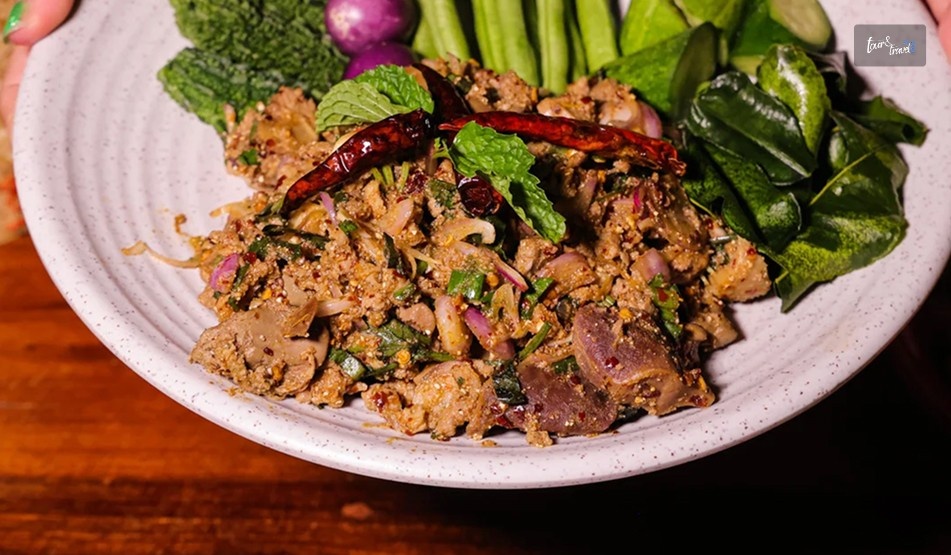
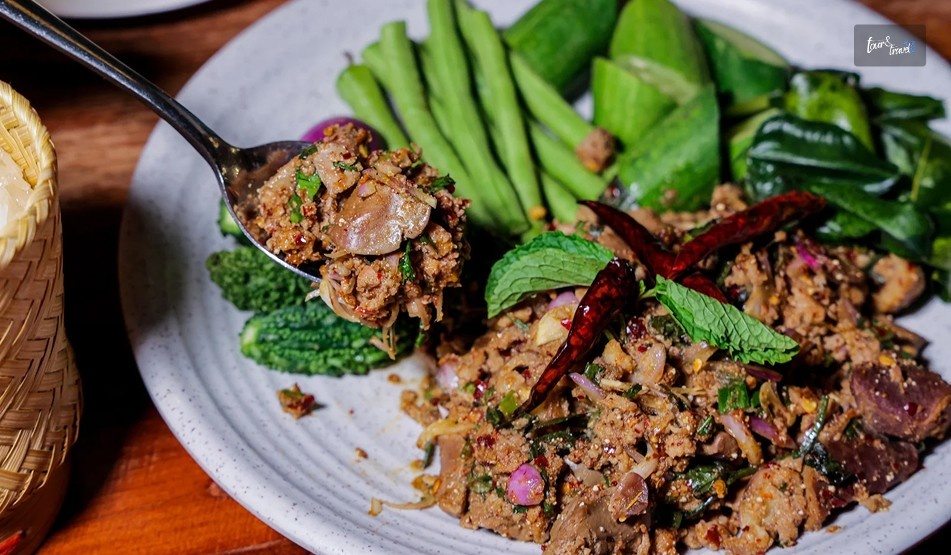
7. Larb (Laap)

Larb Laap

Larb is a comfort food. It’s a salad with minced meat, lime, mint, and rice powder. It has the right balance of salty, sour, and spicy flavors. 

It is the national dish of Laos and a common staple in everyday food and festivals. 

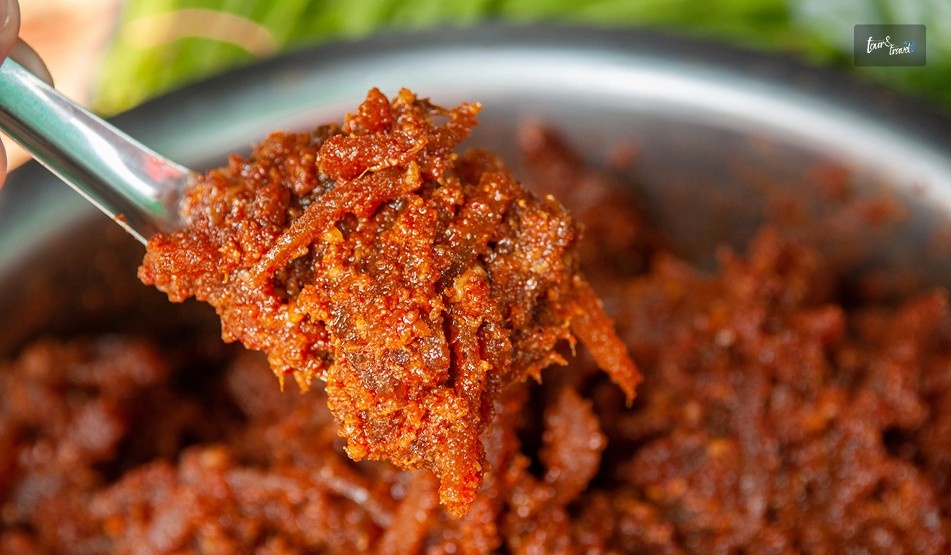
8. Jaew Bong

Jaew Bong

Jaew Bong is more like a condiment or a side served with dishes like fried seaweed. It is a smoky chilli paste with strong flavors of garlic and buffalo skin. 

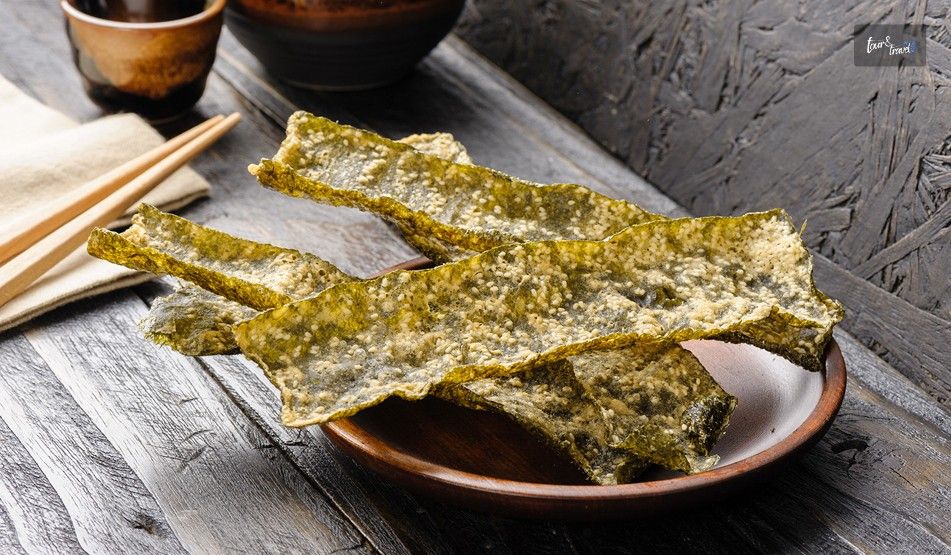
9. Fried Seaweed (Khai Paen)

Fried Seaweed Khai Paen

I liked the umami flavors of the fried seaweed or Khai Paen here. It was served with roasted sesame seeds, which added just the right amount of nutty balance to the dish. 

Also, the fried seaweed dish came with Jaew Bong.

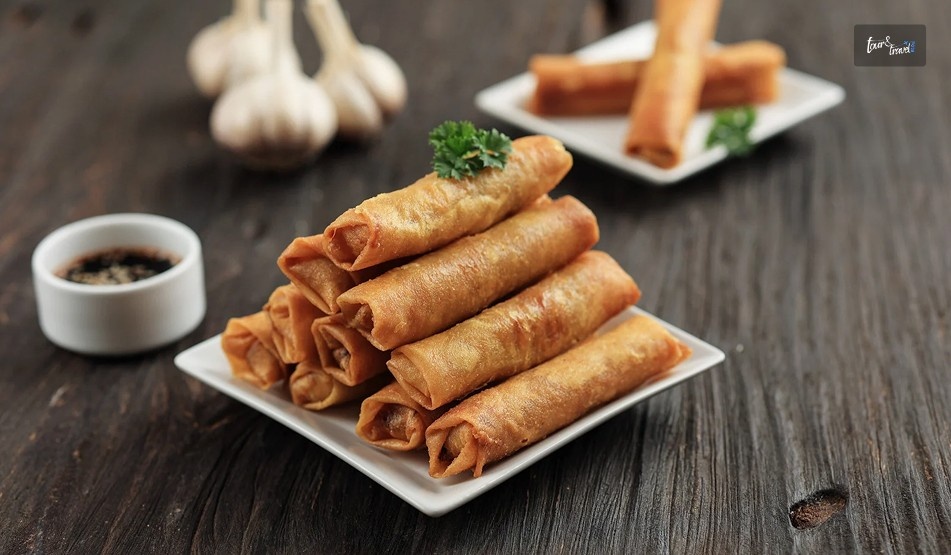
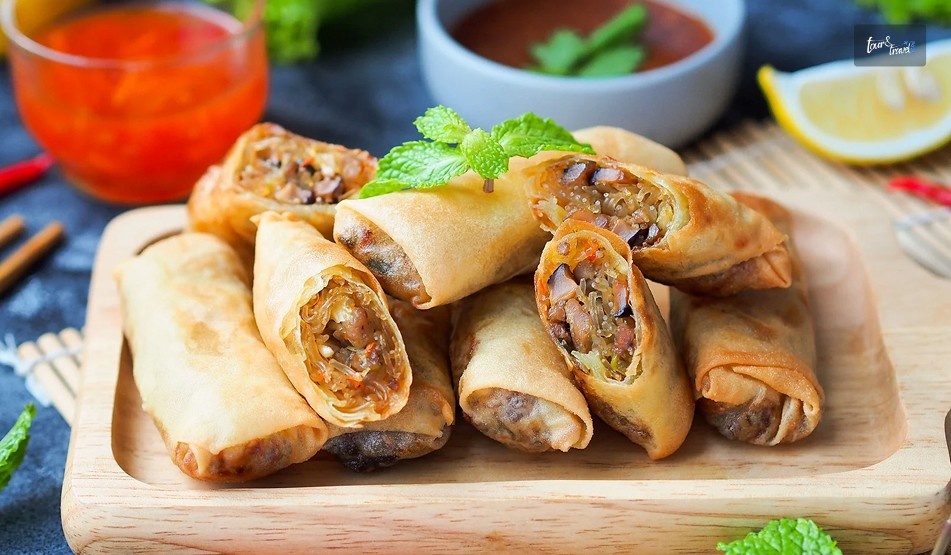
10. Spring Rolls

Spring Rolls

Spring rolls are my favorite, and I love the ones with fish stuffing the most. So, at Luang Prabang, a hub of freshwater fish, I had to try these spring rolls. 

I had the fried ones with the vermicelli, giving the outer layer the right amount of crunch. 

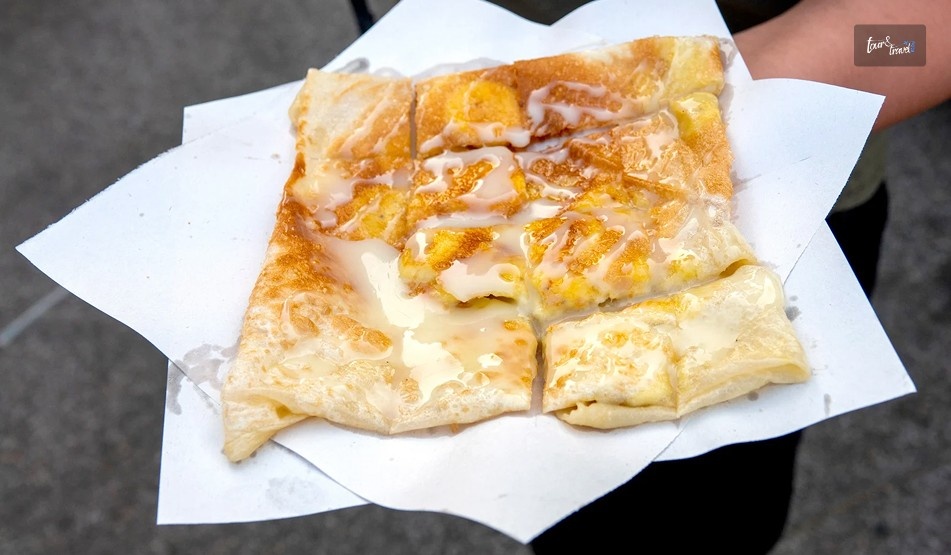
11. Banana Roti

Banana Roti

Traditionally, a banana roti is a flatbread with banana slices and a condensed milk topping. The bread’s crispiness balances the banana filling’s moisture. 

The banana rotis are also served with chocolate syrup and sugar. I even tried the ones with an egg filling.

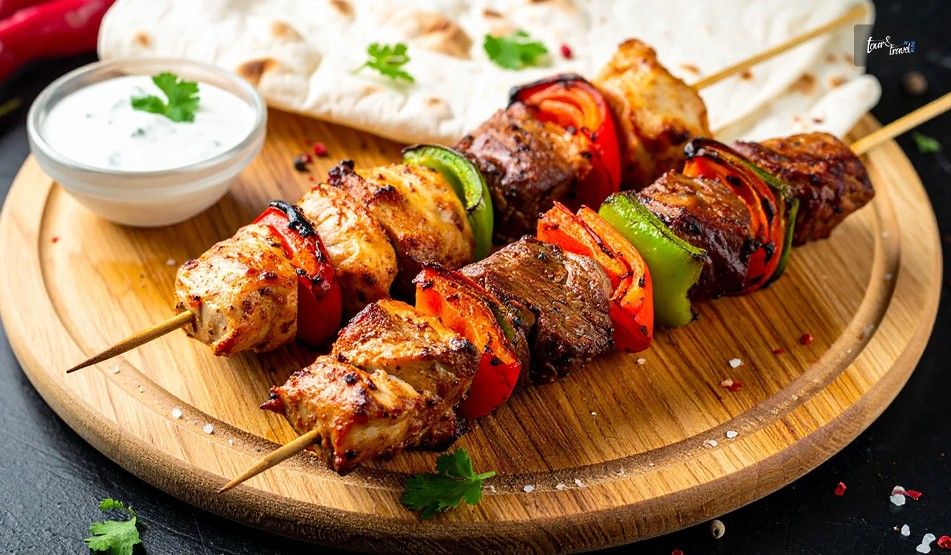
12. Grilled Chicken Skewers

Grilled Chicken Skewers

Now, the grilled chicken skewers here are different, mostly because of the prominent presence of lemongrass. And honestly, the amount of lemongrass used was a bit too much for my taste. 

However, it’s the way the locals love it. 

13. Lao Coffee

Lao coffee, for me, was like the desert I could have every day and not get bored with. It is rich and sweet as it uses condensed milk. 

However, the use of condensed milk does not overpower the strong aroma of coffee.

14. Fruit Shakes


View this post on Instagram


A post shared by Escaping Abroad (@escapingabroad)

The food stalls in Luang Prabang have some amazing fruit shakes. I loved the dragon fruit shakes here the most. However, mango and pineapple shakes are also easily available. 

15. Rice Cakes With Coconut

If the morning market treated me with the best khao soi, the night market treated me with the best rice cakes with coconut. 

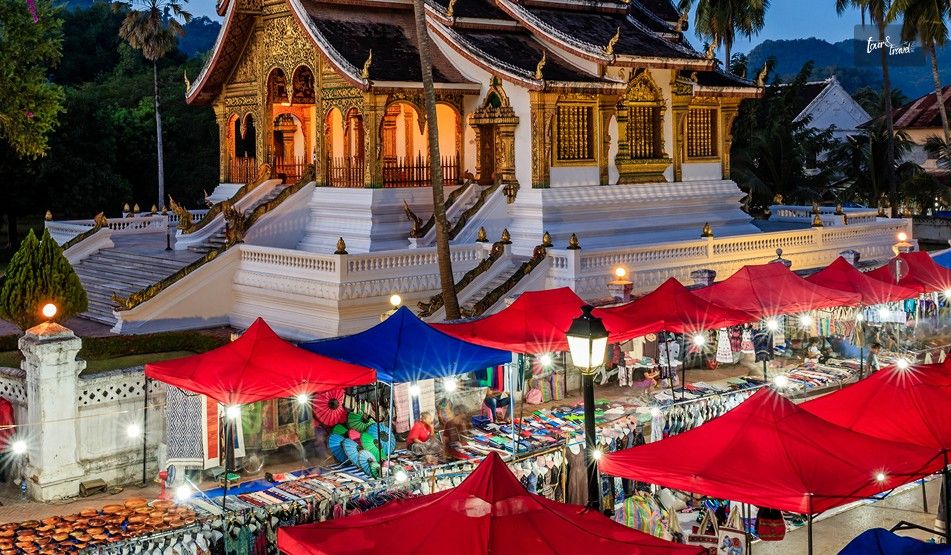
The Sun dipped, and the night market became alive with gold and red lanterns adorning the stalls. I could smell a mix of chili smoke, coconut milk, and sticky rice roasting on bamboo skewers.

At a stall, I was sitting on a wooden bench with the locals, and I was waiting for my vegetarian buffet with stir-fried greens, bamboo shoots, and pumpkin curry to be served. Suddenly, the lady vendor of the stall smiled and nodded, and handed me a few rice cakes with coconut. 

The dessert was as delightful as the night air in Luang Prabang, and despite many requests, the lady did not take any money for the rice cakes. Rather, we started having conversations and shared a laugh. Some soft Lao music was being played at a distance. So, my dinner moment at the night market became an act of bonding. 

Almost one year later, I read an article about the distinct nature of food in Laos in the South China Morning Post. I could relate to what Saeng Douangdara, a Lao-American chef based in Los Angeles, said, 

For Lao people, food holds a central place. It serves as a unifying force that brings people together.” 

Overall, I think the way people approach food here stems from the fact that it is a Buddhist land. It’s all about gratitude and mindful consumption. 

How To Take The Best Food Tours In Luang Prabang? (Some Ideas To Explore)

How To Take The Best Food Tours In Luang Prabang Some Ideas To Explore

My local guide and the tuk-tuk drivers completely curated my food exploration journey in Luang Prabang. I became friends with Seng, a local tuk-tuk driver. He said, 

The best food isn’t in restaurants—it’s in the alleyways. Follow the locals.” My morning food tour in Luang Prabang to the market became all the more special by participating in the alms-giving ceremony. 

You have to experience the profound meaning behind the restraint and silence of the entire experience to understand why it is spiritually elevating. Also, the night market has a charm of its own, and the morning and night markets both need to be explored on foot. 

However, if you want a more luxurious tour, you can opt for something like Marriott Bonvoy Tours and Activities. Professional food guides conduct these tours, and the tour includes more than 15 tastings. It is a movable tour with many spots around the Old City.

Furthermore, Asia Tours conducts a food tour in Luang Prabang with organic farm visits and learning to cook from a local chef. Also, Thrillophilia conducts a tour with a street food walk, cultural storytelling, and exploring vegetarian-friendly options. 

Street Food Map & Walking Route In Luang Prabang

If you ask me, I will tell you to keep the Luang Prabang food tour spontaneous, and you must listen to your local guide. 

However, you can also follow this simple walking route map for a Luang Prabang food tour. 

  • Taking a tuk-tuk or a walk to the Morning Market near Wat Mai
  • Heading to Ban Phanluang for grilled fish stalls
  • Exploring the night market at Sisavangvong Road
  • Trying local drinks and Lao Tapas at Utopia Bar

Morning Vs. Evening Market Guide Luang Prabang

Morning Vs. Evening Market Guide Luang Prabang

Here is a brief comparison between the morning and night markets in Luang Prabang.

CriteriaMorning MarketNight Market
Timing• Opens at 5:30 AM• Starts around 5:00 PM
Best for• Fresh Produce
• Herbs
• Breakfast Items
• Grilled Meat
• Souvenirs
• Desserts
Must Try Items• Khao Soi
• Sticky Rice
• Coconut Pancakes
• Lao Sausage
• Banana Roti
• Grilled Fish

A 2-Day Luang Prabang Food Tour Itinerary 

Making an itinerary for a food tour is difficult, as you cannot rush it. The idea is not to consume as much as you can. It’s about cherishing the flavors, the cultural content, the bonding, the tradition, and the people behind it. 

Still, here is a 2-day itinerary for the Luang Prabang food tour. 

DaysActivities
Day 1• Exploring the morning market at Phousi Road and participating in the alms-giving ceremony

• Having coffee at Le Banneton

• Lunch and cooking class at Tamarind Restaurant

• Exploring the Night Market Food Alley
Day 2• Mekong Breakfast Cruise

• Dara Market Visit

• Lunch at Khaiphaen Restaurant

• Visiting Whisky Village and trying Lao Lao Whisky

• Dinner at Manda de Laos

Luang Prabang Food And Buddhist Rituals 

The Tak Bat Ceremony, or the alms giving ceremony, makes the food tour in Luang Prabang associated with Buddhist rituals. Monks are offered fruits and sticky rice at dawn. 

Furthermore, food becomes the core of community celebration during festivals such as Pi Mai Lao or Lao New Year. In these festivals, the local people prepare food for monks. 

In addition, food tour organizers such as A Chef’s Tour organize a Luang Prabang Food Tour, including a Monk Blessing Ceremony.

Vegetarian Options In Luang Prabang Food 

Vegetarian Options In Luang Prabang Food

The vegetarian food options in Luang Prabang are many due to its Buddhist roots. You have to just say “Bor Sai Nyam” or “No Meat” to vendors to get vegetarian food. 

Here are the alternatives or vegetarian versions for the popular staples in Luang Prabang. 

Common FoodVegetarian Alternative
Larb• Options with mushrooms and tofu are available. 
Papaya Salad• Request not to use fish sauce in the dressing
Spring Rolls• Use veg fillings
Fruit Shakes• Avoid dairy products in the fruit shakes

Sticky rice, the staple item in the Luang Prabang food, is already a vegan item. You can have it with any veg side or fried seaweed without the chilli and buffalo skin paste. 

Estimated Food Prices In Luang Prabang 

Estimated Food Prices In Luang Prabang

The budget of your food tour will depend on the places you eat. For example, the same dish brought from a street stall will cost at least 10000 LAK when you eat at a top-grade restaurant. 

Furthermore, some delicacies such as the coconut pancakes or coconut rice cakes may not be available at all restaurants. 

DishStreet Stall PriceRestaurant Price
Khao Soi10,000 LAK (\$0.50)30,000 LAK (\$1.50)
Lao Sausage15,000 LAK (\$0.75)40,000 LAK (\$2.00)
Grilled Fish25,000 LAK (\$1)60,000 LAK (\$3.00)
Larb25,000 LAK (\$1.25)70,000 LAK (\$3.50)

Things To Keep In Mind For A Delightful Luang Prabang Food Tour

  • Arrive at the morning market before 6 AM to talk to the local vendors and have freshly made coconut pancakes, steamed sticky rice, and khao soi. Arriving before the crowd helps to have authentic conversations with the local vendors. 
  • You must follow where the locals are heading. A smart tip: Find the food stalls in the alleys near the temples. You will often notice long queues in front of those shops. 
  • Also, most street foods cost between 5,000 and 20,000 LAK. So, carry small change. 
  • Make sure that the vendor at the food stall you visit is wearing gloves, and use clean utensils. 
  •  Keep your behavior respectful while taking part in an alms-giving ceremony or food tours blessed by monks. 

Luang Prabang Food Tour: Frequently Asked Questions (FAQs)

Here are the frequently asked questions and answers about the Luang Prabang food tour. 

1. What Is The Most Famous Street Food In Luang Prabang?

Khao Soi, or the pork noodle soup, is the most famous street food in Luang Prabang. It is a popular breakfast item. However, it is a wholesome dish with pork, tomatoes, and subtle flavors. 

Unlike traditional Thai Khao Soi, the Luang Prabang Khao Soi does not use coconut-based curry. Instead, it has fermented soybean paste. 

2. Is Street Food Safe In Luang Prabang?

Yes, street food is safe in Luang Prabang. However, you have to visit food stalls that locals frequent. Also, drink bottled water. 

Most importantly, when trying local liquors at the Whisky Village or local stalls, take your guide’s suggestions. 

3. Can I Join A Food Tour As A Vegetarian?

Yes, you can join a food tour as a vegetarian. You can always replace the minced pork or fish in springroll stuffing or choose tofu and mushrooms in larb. 

Just mention, Bor Sai Nyam or no meat to the vendor. In addition, you can customize the spice level in your food with adjustments in spice levels or ingredients. 

Share on Social Media

Meet Sibashree Bhattacharya, a travel enthusiast who has a decade-long experience in transcending virtual barriers with her words! Her deep love for travel is apparent from her travel escapades to the mountain, often taking her readers on a journey, her words acting as Portkey! Fun fact: Sibashree loves to dive deep into the history of the places she is about to visit, making her travels even more wholesome. If you were wondering how her articles are not short of time travel, this answers it!

Leave a Reply

Your email address will not be published. Required fields are marked *

title-img Related

READ MORE things to do in santo domingo

What Are The Unique Things To Do In Santo Domingo, Dominican Republic? (The Site Of The First Cathedral In The Americas)

BY  Sibashree Sep 8, 2025

Santo Domingo, “The Capital” of the Dominican Republic, harbors the most happening Caribbean city life along with architecture that goes back centuries.  Further, with the whiff of cigars, the art galleries, and the most happening gastronomic scene, Santo Domingo offers the most vibrant experience.  However, in this Tour and Travel Blog, we will discuss the Zona Colonial or the Colonial City of Santo Domingo, its unique attractions, and the things to do in Santo Domingo.  The Key Areas Covered Are:What Is Santo Domingo Most Famous For? What Are The Unique Things To Do In Santo Domingo? My Ultimate Bucket List1. Visiting The Ozama Fortress2. Exploring The Colon Park3. Visiting Columbus Lighthouse4. Exploring The Ladies Street5. Feeling The Connection At Our Lady Of The Incarnation6. A Session With History At The Cathedral MuseumA Food Tour: Where To Eat In Santo Domingo?Is It Worth Visiting Santo Domingo?Things To Do In Santo Domingo: Frequently Asked Questions (FAQs) What Is Santo Domingo Most Famous For?  Santo Domingo is most famous for its Colonial City of Santo Domingo. It was inscribed as a UNESCO World Heritage Site in 1990.  Christopher Columbus arrived here in 1492, and after that, it became the “site of the first cathedral, hospital, customs house and university in the Americas.”  It was established as a colonial town in 1498, and it is called the “First permanent establishment of the New World.”  Moreover, the Dominican Republic got its capital, Santo Domingo de Guzmán, from the Colonial City of Santo Domingo.  Also, with its Plaza Mayor and the unique grid pattern, it became the benchmark of new American cities. The establishments, which have especially served as the model, are: Palace of the Viceroy Real Audiencia (Royal Court of Justice) Chancery  Cathedral Moreover, Santo Domingo is the place where Leyes de Indias, or the first laws of the West Indies, were first proclaimed.  In addition, the social fabric, traditional architecture, and the symbolic value of the architecture and the Colonial City of Santo Domingo are well-preserved even today, standing the test of time.  What Are The Unique Things To Do In Santo Domingo? My Ultimate Bucket List Visiting Santo Domingo has now become easier than ever with direct flight connectivity to Las Americas International Airport (SDQ) in Santo Domingo from CDMX or Ciudad de México.  So, there will not be annoying stopovers, and the journey will be more comfortable. Nevertheless, once you reach the first city of the New World, you can explore the following iconic landmarks.  1. Visiting The Ozama Fortress A Spanish architecture built under the guidance of Fray Nicolás de Ovando, the Ozama Fortress has a quintessential medieval vibe.  Many people refer to this as the “Walled Fortress,” as it is, of course, the “first permanent military structure in America.”  The 21-meter central tower of the fortress stands tall, while the canons facing the Ozama River, which were used to drive the pirates away, are still inside the fortress.  2. Exploring The Colon Park Parque Colón or the Plaza de Mayor is the epicenter of the Colonial City of Santo Domingo. It has an impressive statue of Columbus in the middle, and it is surrounded by the iconic architecture of the Colonial City, such as the Cathedral of Santo Domingo and the Cathedral Museum. Every corner of this place is Insta-worthy.  3. Visiting Columbus Lighthouse El Faro a Colón or the Columbus Lighthouse is a 37-meters high architecture, honoring Christopher Columbus, the man who discovered America.  The cross-shape of this lighthouse refers to America’s Christianization.  John Paul II inaugurated this structure in 1992, and today it is a museum and a popular venue for conferences and temporary exhibitions.  4. Exploring The Ladies Street Las Damas Street or Ladies Street has the distinction of being the “first street of the colonial city.” The government of Nicolás de Ovando built this street.  It got its name as ladies used to walk here, and today, the street has notable locations such as the Trampolín Museum, House of Hernán Cortés, and the Cocoa Museum.  5. Feeling The Connection At Our Lady Of The Incarnation The Minor Basilica of Santa María de la Encarnación, or the Primate Cathedral of America, Our Lady Of The Incarnation Cathedral, impresses with its unique Gothic architecture.  Inside the church, you will find Pagan, Christian, and Apostolic details.  6. A Session With History At The Cathedral Museum The Cathedral Museum celebrates the history of the First Cathedral of America through exhibits and objects related to the cathedral.  This museum has candelabras, paintings, and many other exhibits dating from the 16th to the 19th century. The museum also has a souvenir shop for collectibles.  A Food Tour: Where To Eat In Santo Domingo? View this post on Instagram A post shared by Ajualä (@ajualard) Santo Domingo has many cafes and eateries, especially around the Plaza Mayor. However, if you are looking for a fine dining experience, you can try the following places.  Places to Eat in Santo DomingoAddress and Contact DetailsSpecialtyMorisoñandoAddress: Las Américas Int'l Airport, Route 66, Cargo CityPhone: +1 829-659-5555 / Dominican Cuisines such as Travesía Callejera and Lambi. AjualäAddress: Calle Andrés Julio Aybar 13, Santo DomingoTelephone: +1 829-545-7503• Creole Duck• Kingfish Eyes• White Fish with Wild MushroomsLarimarAddress: Torre Altri Tempi , Av. Roberto Pastoriza 412, Santo DomingoTelephone: +1 849-449-1394• Shrimp Rice and Crab• “Black Truffle Cream with Mushroom Threads” Is It Worth Visiting Santo Domingo? Yes, Santo Domingo is worth visiting. There is something astonishing about how the city, with its colonial past in its heart, grows as one of the vibrant epicenters of Caribbean life.  Today, the Colonial City of Santo Domingo stands as the guardian angel, who watches over the city and adds wind beneath its wings to have modern infrastructure developments, the swankiest mall, restaurants, and hotels.  So, for anyone interested in the Colonial past or the history of America, Santo Domingo is a must-visit. Things To Do In Santo Domingo: Frequently Asked Questions (FAQs) Here are the frequently asked questions and answers about things to do in Santo Domingo.  1. Do They Speak English In Santo Domingo? Yes, many people in Santo Domingo, especially in tourist areas, speak English. However, Spanish is the official language of the Dominican Republic.  2. Is It Safe To Walk Around Santo Domingo At Night? While Santo Domingo is not dangerous at night, there have been instances of crime against tourists at night. So, stick to exploring areas such as Zona Colonial and use apps such as Cabify and Uber for a safe ride.  3. Can You Drink The Water In Santo Domingo?  The Santo Domingo Tourism has confirmed that you cannot drink tap water in Santo Domingo. You have to drink water from packaged bottles available at local shops, hotels, and restaurants.  4. Can You Wear Shorts In Santo Domingo? The Dominican Republic Tourism says that you should wear shorts at the beach. However, for casual strolling across the city or visiting its important landmarks, you must wear regular casual daytime wear. Also, Dominicans love to dress up, and especially in the evening, you will notice everyone decked up in nice outfits.  5. Does Santo Domingo Have A Nightlife? Yes, Santo Domingo has a vibrant nightlife. The Zona Colonial, with its old heart, is the epicenter of all nighttime fun. Furthermore, you will find upscale clubs in Avenida Venezuela, and Maleco is the place where you can catch stunning live performances.  6. What Is The Best Time To Visit Santo Domingo? December to April is the best time to visit Santo Domingo. Lower humidity, less rainfall, and moderate temperatures make these months ideal for tourists.  Read Also: Unique Things To Do In Montreal: Things You Must Not Miss In Canada’s Cultural Capital Unique Things To Do In Tuscany: What Is A Must-See In Tuscany? Valladolid Mexico: Exploring The City That Was Built In 1543

READ MORE Raja Ampat diving season tips

Raja Ampat Diving Season Tips: When To Go For Mantas, Whales, And Sunshine? 

BY  Sibashree Dec 29, 2025

Timing is not just a tip to remember for divers in Raja Ampat. A change of season and the difference? It’s as big as having a glass boat ride to a Manta cleaning station and a bumpy trek through monsoon winds.   Known as the "Last Paradise," Raja Ampat sits at the heart of the Coral Triangle. Here, the seasons do not just mean the weather. The seasons also dictate the challenges the waters will throw at you and the giants you will meet.   In this guide on Raja Ampat diving season tips, I will start with a short answer about the diving seasons and then give you the details.   The Short Answer: Peak Vs. Off-Peak Season For Diving In Raja Ampat   Feature Peak Season (October – April) Off-Peak Season (May – September) Sea Conditions Calm, glassy water Choppy in the South, calm in the North Visibility Excellent (15m–30m) Variable (can be lower near islands) Marine Life Manta Rays, Whale Sharks, and Dolphins Resident Reef Life, Macro, "Walking" Sharks Crowds High (Book 12-18 months early) Low (Peaceful dive sites) Price Premium Potential discounts (10-20% off)  Have you already booked your dates? Check our guide on Raja Ampat diving trips for a detailed itinerary planning.   The Two Main Seasons Of Diving In Raja Ampat: A Detailed Breakdown  The character and conditions of the dive sites in Raja Ampat change in dry and wet seasons.   The Dry Season (October to April) The Wet Season (May – September)  • Low Winds  • Calm Water  • Ultimate Raja Ampat Liveaboard Season  • Ideal for Spotting Reef and Oceanic Mantas • High Southern Winds  • Misool Becomes Inaccessible  • Dampier Strait is Accessible  • Ideal for Spotting Snapper and Barracuda  Raja Ampat Marine Life Calendar  For you, the best diving season in Raja Ampat Indonesia depends on the kind of marine animal you want to encounter. Here, I will give you details about the Oceanic and Reef Manta Ray season, the whale and dolphin migration season, and the season for walking sharks and macro life.   1. Manta Ray Season (Oceanic Vs. Reef)  December to March is the best season for spotting these marine animals.   Manta Sandy cleaning station is great for Reef Manta sightings. Magic Mountain in Misool is one of the sites where you will find Oceanic and Reef Mantas together.   Furthermore, Dr. Setyawan, in a report published by Conservation International on 9th October 2024, has shared some interesting facts about the Reef Mantas. He mentioned that   “...reef manta rays can travel hundreds of kilometres, and there aren’t any obvious barriers to movement between these three regions in Raja Ampat.”  2. The Whale And Dolphin Migration (November – December)  You will find Pilot Whales and different dolphin species in the deep channels of the Dampier Strait in November and December.   3. Walking Sharks & Macro Life (Year-Round)  The endemic Walking Sharks, or Raja Ampat Epaulette Sharks, are visible in the water year-round. Night dives are the best to watch these marine creatures in action.   You will also spot the Pygmy Seahorses and Nudibranchs across all seasons.   Regional Differences: The Misool Vs Dampier Strait Season  Let’s check out the regional differences in Raja Ampat across seasons. 1. Dampier Strait (North/Central)  Sheltered by large islands, the Dampier Strait offers safe diving conditions even when the wind is high.  So, you can dive here safely in all seasons.   2. Misool (South)  Thanks to the southern monsoon, crossing Misool is dangerous in the wet season. The frotier is wilder than the north and central zones.   Raja Ampat Diving Season Tips For Liveaboard Vs. Resort  There is no "bad" time to visit Raja Ampat, only the "wrong" region for the season. If you want Mantas and luxury liveaboards, aim for January. If you want solitude and budget-friendly resort stays, June in the Dampier Strait is a hidden gem.  1. The Komodo Switch And The liveaboard Season   In May, about 80% of the liveaboard fleet sails west to Komodo National Park to follow the dry weather. If you want a luxury boat experience, you must visit Raja Ampat between October and April.  2. Choose Diving Resorts For Off-Peak Season Diving   If you are traveling in the summer, between June and August, you must choose the land-based resorts in the Dampier Strait. These resorts offer stability, and you can take shorter boat rides to reach the dive sites. Enjoy the low-season pricing.   What Are The Expert Tips For the Raja Ampat Diving Season?  You cannot fear the rain when you are diving in Raja Ampat. Also, the consistent temperature of the water in Raja Ampat makes diving possible, especially in the Dampier Strait sites.  Here are some other things to remember if you are diving in Raja Ampat.   Expert Tips What It Means Don't Fear the Rain It is a rainforest; it rains even in the dry season. The fish don't mind, and you're already wet.  The "Green Water" is Good Lower visibility often means plankton, and dense plankton is the "dinner bell" for Manta Rays. Book Christmas Early This is the busiest window, and some boats sell out 2 years in advance.  Currents and Moons For the most intense fish action, book your trip during the New or Full Moon.  Surface Intervals Use sun protection in the dry season and bring a windbreaker for the wet season boat rides.  Water Temp is Constant It stays 28 to 30 degrees Celsius all year. A 3mm wetsuit is plenty.  Check Boat Locations Ensure your preferred boat hasn't already moved to Komodo for the summer. Flight Reliability Pad your travel schedule in July/August, as wind can delay small island hops or ferries.  Raja Ampat Diving Season Tips For Photographers: The Lens Guide  Seasons  Ideal Lens What to Capture  October to April Wide Angle • Perfect for Capturing Mantas  • Sweeping Schools of Fish  Split Shots with Blue Skies  May to September Macro Lens • Fluctuating Visibility  • Perfect to Focus on Pygmy Seahorses, Blue-ringed Octopus, and Ornate Ghost Pipefish.  Late April and Early October (The Shoulder Season Secret) Macro Lens  • These are Sweet Spots, and You Get to Frame the Calm Transition of the Marine Animals.   • Still, the Crowd of the Big 5 is Not Intense as the December and January Holidays.   Raja Ampat Diving Season Tips: Frequently Asked Questions (FAQs)  Here are the frequently asked questions and answers about the Raja Ampat diving season tips.   1. What Is The Absolute Best Month To Dive Raja Ampat?  January is the absolute best or the prime month to dive in Raja Ampat. You get peak visibility, around 25 to 30 meters in the water, and it is the ideal month to spot Reef and Oceanic Mantas due to plankton increases.  Furthermore, all the regions, the south, the central, and the north, remain accessible this month.   2. Can I Dive Raja Ampat In August? Yes, you can dive in Raja Ampat in August. In fact, August is a great month if you want to explore Cape Kri and Blue Magic without the crowd. However, if you are diving in Raja Ampat in August, stick to the sites in Waigeo, Gam, and Mansuar and along the Dampier Strait in the North and Central zones. 3. When Is The Best Time For Whale Sharks In Raja Ampat? October to April is the best time to see Whale Sharks in Raja Ampat. You can find them in Misool and the Dampier Strait sites. However, for a better and more certain visibility of Whale Sharks, you must visit Triton Bay, south of Raja Ampat. The Full Moon Nights are ideal for spotting Whale Sharks.  4. Is The Wet Season Cheaper In Raja Ampat? Yes, the wet season is cheaper in Raja Ampat as it is the off-peak season for diving. In the diving resorts, mostly concentrated around the Dampier Strait Region, you will get a discount of around 10-15%. There is also a hefty discount on the diving packages. On the other hand, the liveaboards will offer around 20-30% discount in the wet season.  5. What Is The Water Temperature Like Year-round In Raja Ampat? The year-round water temperature in Raja Ampat is around 28 to 30 degrees Celsius. One of the best things about diving in Raja Ampat is the incredibly stable, bathtub-warm water. Because the archipelago is located just one degree from the equator, you won't experience the dramatic temperature drops or "thermoclines" found in other parts of Indonesia, like Komodo or Bali.  6. Do I Need A Dry Suit Or A Thick Wetsuit In The Off-season? No, you don’t need a dry suit or thick wetsuit to dive in Raja Ampat, even in the off-season. It is because the temperature of the waters here hovers around 28 to 30 degrees Celsius throughout the year. A 3mm thick wetsuit is enough if you are doing deep diving. It ensures that your body does not lose temperature rapidly. It also protects you from the irritants in the water and helps in buoyancy. 7. Does Visibility Change With The Seasons In Raja Ampat? Yes, visibility changes with the seasons in Raja Ampat. However, remember that having clear water does not mean the ideal condition for spotting the marine life in Raja Ampat. In the dry season, from October to April, the visibility is around 15 to 30 meters. Still, from December to March, nutrient-rich currents flood the archipelago. This creates "green" or "particulate" water. While this might frustrate wide-angle photographers looking for a pure blue background, it is the "dinner bell" for Manta Rays and Whale Sharks.Furthermore, during the wet season, from May to September, the visibility is 10 to 20 meters. However, this is an ideal time for many photographers as the water is clearer due to the lack of plankton blooms. 8. When Do The Liveaboards Move To Komodo? The famous Indonesian Switch, or the transition of liveaboards to and from Komodo, happens twice a year. In April and May, the peak diving season in Raja Ampat approaches its end. So, 80% of the liveaboards in Raja Ampat move toward the Komodo National Park. These liveaboards often pass through the Banda Sea and the Forgotten Island, where you can spot hammerhead sharks in late April and May. Again, these liveaboards return in September and October as Komodo starts getting heavy rainfall, but the water of Raja Ampat becomes still. On the way, you can spot deep-sea pinnacles and incredible whale shark encounters in Triton Bay or the Banda Sea.  9. Is It Safe To Visit Raja Ampat During The Monsoon? Yes, the rainy season does not mean a complete shutdown for tourists to Raja Ampat. In fact, the central zone (Dampier Strait) and areas such as Waigeo/Gam remain quite accessible even in high winds due to the protection of huge land masses. However, the diving sites in the southern zone of Misool are risky in these months.  10. When Is The Best Time For Underwater Photography In Raja Ampat? The best time for underwater photography in Raja Ampat will depend on the kind of backdrop you want. The waters of Raja Ampat always amaze you with an impressive marine life. October to November is the time for the best all-round photography experience. You will get calm seas, returning Mantas, and massive schools of baitfish. Great for wide-angle and split shots. Also, for a truly unique photographic subject, aim for the Full Moons in October and November. This is when the reefs often experience mass coral spawning. It is a spectacular nighttime event that turns the water into a "snow globe" of biological activity.Again, January and February are ideal for framing the Manta action. Plankton blooms can create "green" water, but offer world-class Manta displays. These are the months for macro specialists. The months of March and April offer peak visibility. You will now find the clearest water of the year (30m+). Ideal for large reefscapes and blue backgrounds.Finally, June to September is ideal for shooting the empty reef and macros in action. 

READ MORE Limited Mobility

5 Tips To Travel For Seniors With Limited Mobility

BY  Ankita Sep 7, 2023

Aging parents often need extra assistance when traveling, whether it's for a family vacation or for a necessary medical procedure. If your parents fall into this category, don't worry - there are ways to make traveling easier for them. Let's check the 5 tips to travel for seniors with limited mobility you should know. The Common Types of Wheelchairs for Seniors The first step is to choose the right wheelchair. For traveling, you'll want to find a lightweight option that can be easily transported. There are three types of wheelchairs: manual, electric, and foldable. 1. Manual Wheelchairs Manual wheelchairs are the most common type - they're also the least expensive. If your parent is able-bodied and only needs a wheelchair for short periods of time, this might be the best option. 2. Electric Wheelchairs Electric wheelchairs like the Jazzy power wheelchair are more expensive than manual ones, but such a vehicle offers a number of advantages. They're easier to maneuver and require less effort to use, which can be helpful for seniors with limited mobility. Electric wheelchairs can also get features like cup holders and storage baskets, which can be handy when traveling. 3. Foldable Wheelchairs Foldable wheelchairs are a good option if you're traveling by car or plane. They're easy to transport and take up less space than other types of wheelchairs. Many foldable wheelchairs also have features like adjustable leg rests and reclining seats. This can make the vehicle more comfortable for seniors with limited mobility. 5 Tips to Follow When Traveling with Seniors with Limited Mobility Whether it is about finding wheelchair support Moscow or looking for teeth whitening Vaughan, traveling with seniors is quite challenging. However, with the right tips by your side, you can always make it easier. 1. Choose the Right Destination Before booking your tickets, make sure to do your research on the destination. Consider things like the weather, accessibility, and attractions that would be suitable for your parent. When in doubt, always err on the side of caution and choose a destination that is known to be senior-friendly. 2. Prepare for Emergencies Make sure to pack a first-aid kit and any medications your parent might need. It's also a good idea to have an emergency contact list on hand in case of any unforeseen circumstances. 3. Make a List of Bare Essentials To make packing easier, sit down with your parent and make a list of items they will need for the trip. This should include clothes, toiletries, medications, and any other essential items. 4. Pack Light This means only bringing the essentials and leaving behind any unnecessary items. This will make it easier to pass through airports and train stations, as well as reduce the risk of lost luggage. Make sure your parent is comfortable and has everything they need before leaving on your trip. 5. Bring a Wheelchair If your parent is mobility-impaired, then it's essential to bring along a wheelchair. This will help them get around easily and avoid any potential injuries from walking long distances. What to Bring with You When Traveling with Elderly Seniors? A first-aid kit A wheelchair Comfortable clothes Portable ramp Snacks and drinks Entertainment (books, music, etc.) Emergency contact information Frequently Asked Questions Is Traveling with Seniors Safe? Yes, traveling with seniors is safe as long as you take the necessary precautions. Make sure to plan your trip ahead of time and pack everything your parent will need to stay comfortable and safe. What Are the Best Wheelchairs for Traveling? The best wheelchairs for traveling are lightweight and easy to fold. This way, you can easily transport the wheelchair in a car or on public transportation. Look for a wheelchair that has large wheels for smooth maneuverability over different types of terrain. Should I Rent a Wheelchair? If you plan on traveling with a senior with limited mobility, it is a good idea to rent a wheelchair. This way, you will not have to worry about carrying the wheelchair around with you everywhere you go. You can also find wheelchairs that are specifically designed for traveling, which may be more comfortable for your parent. Conclusion Traveling with aging parents can be a challenge, but it is possible to make it work with some planning and preparation. By following our handy tips, you can make sure that your trip is enjoyable for your seniors. Read Also: Why Travel Trailers Are The New Vacation Norm Must Pack Business Travel Packing List Along With Tips Three Ways Traveling Can Open Your Mind And Heart